A Flood Day to Dry Hard

The news tells me that today there is an excessive heat warning in place in Wakayama. My oh-so-reliable weather application tells me that it will be cloudy all day. The gods split the difference. As I exit the bus unprepared for anything other than heat or cloud, the heavens split open in a thunderous rage of fury.
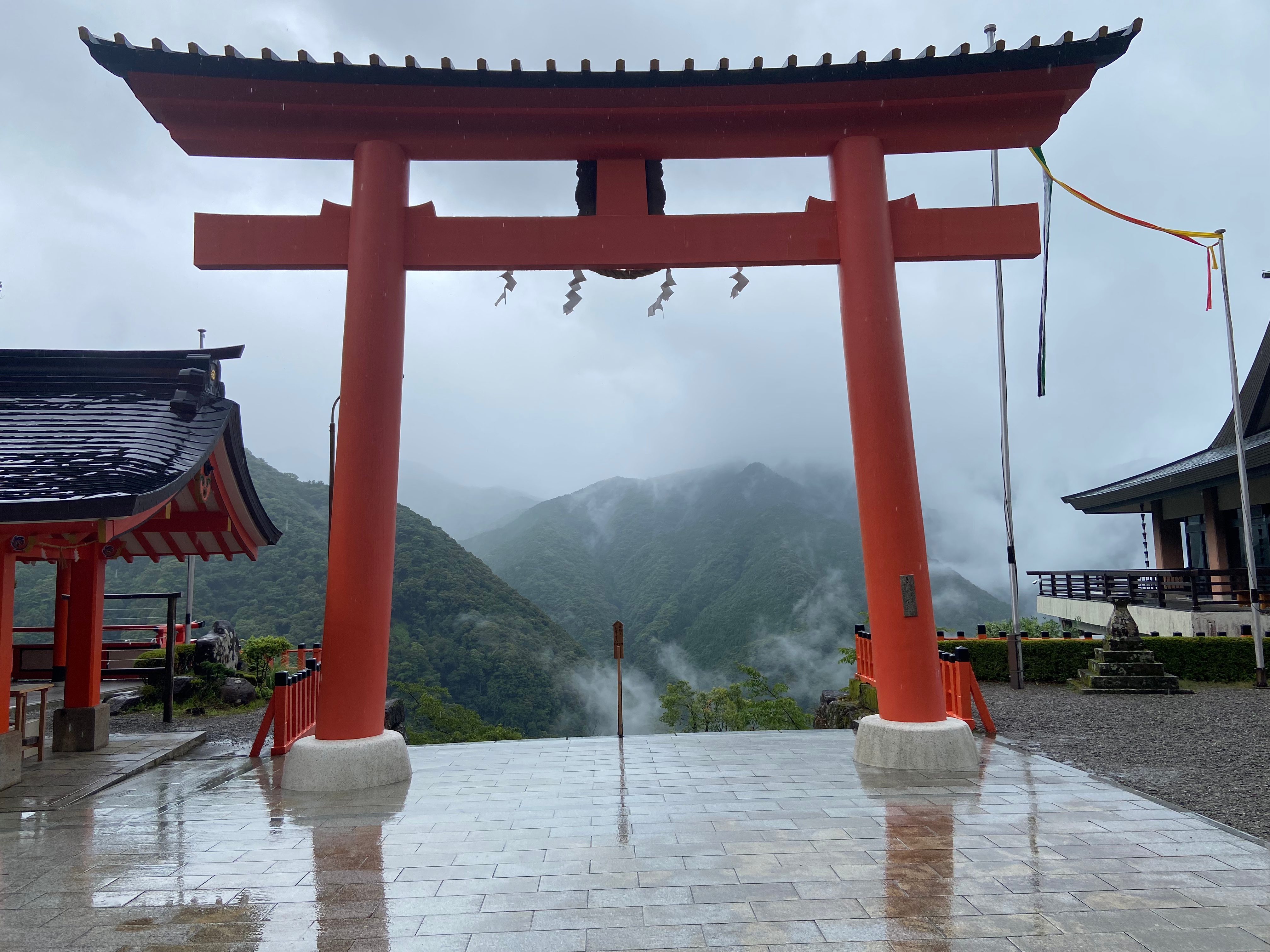
I am at Kumano-Nachi Taisha. As the thunder rolls over the sky I manage to take just one photograph of a torii gate and the mountains beyond, right then, before the rain catches up with the thunder. Luckily for me, there is a shop, so I enter, purchase, then poncho up.

I duck inside the Treasure Hall. No photos allowed, but I explore freely. I wrote about the Nachi Pilgrimage Mandala yesterday, but seeing the real thing up close is something else. I enjoy the other art, artefacts, simple objects from a time lost in the past. Most of the treasures here were discovered in 1918, but are from around the 10th century, with the shrine itself being 1,700 years old.

Stepping out of the Treasure Hall, the rain has intensified fivefold, and some of the ground has already flooded. People cower with umbrellas.
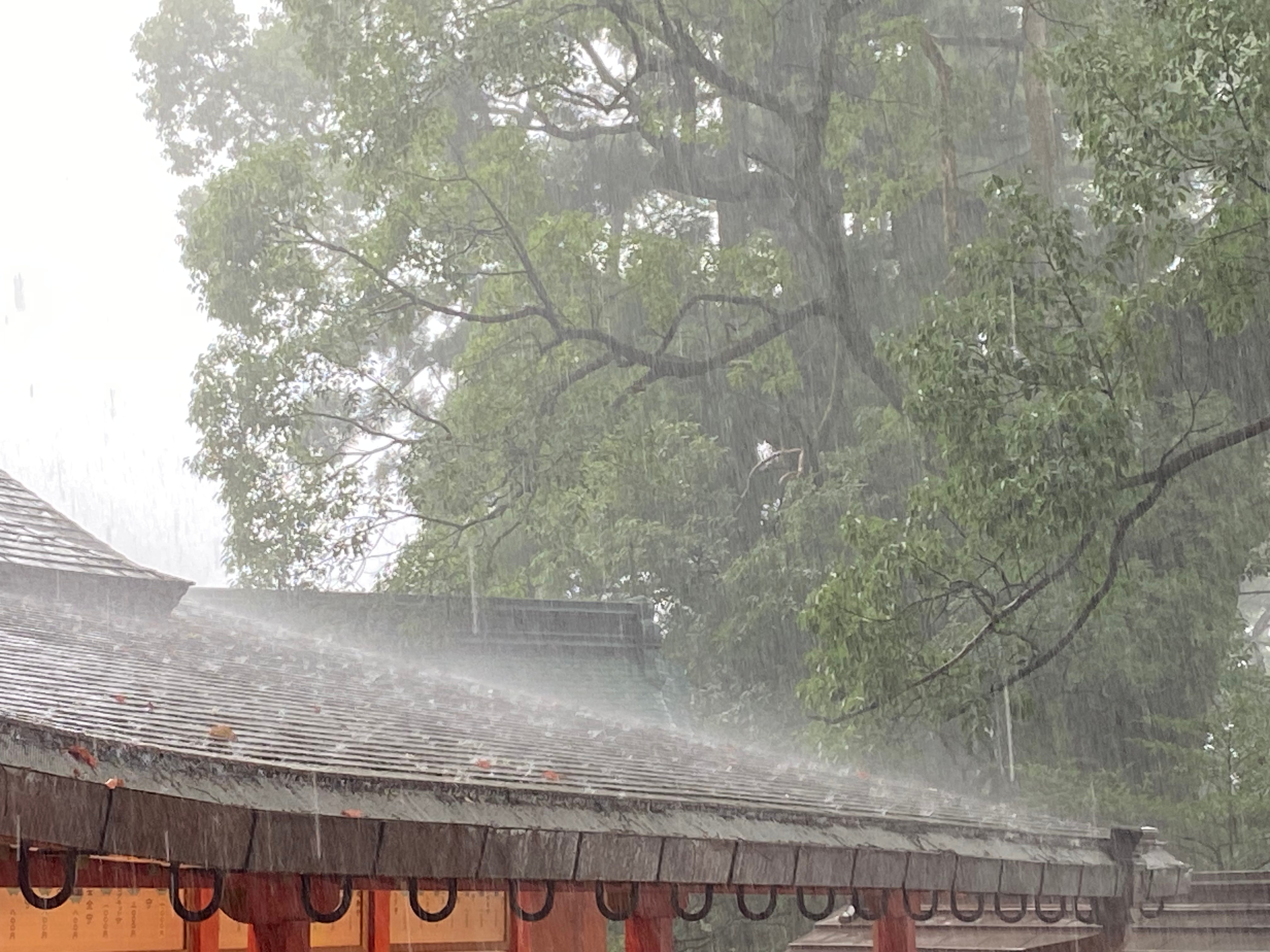
The rainwater crashes down and smashes into the roof of the shrine like a torrent of broken glass, slicing through the air with a merciless, unyielding force. I have never experienced rain like it. The raindrops actually hurt.

I came for the waterfall. Or so I believed. Right now, I feel like I’m inside one. I struggle to see where the waterfall could even be in comparison to the falling water. A monk passes me, dressed in dark blue. He carries an umbrella and seamlessly manoeuvres the flooding and the puddles, calm as you like.

Legend has it that the first emperor of Japan, Emperor Jinmu, found the waterfalls when his boat landed on the Kii Peninsula and he saw something shining in the mountains. At the time, he had been following a Yatagarasu (a mythical three-legged crow sent by the gods as a guide).

I follow the path down the mountain toward Nachi Falls. The sky bellows with more thunder, the road is full of water. Am I walking in the rain? Or am I swimming in a river? At points the water is knee-high. The drains can’t handle it. I can barely handle it, but I persevere.
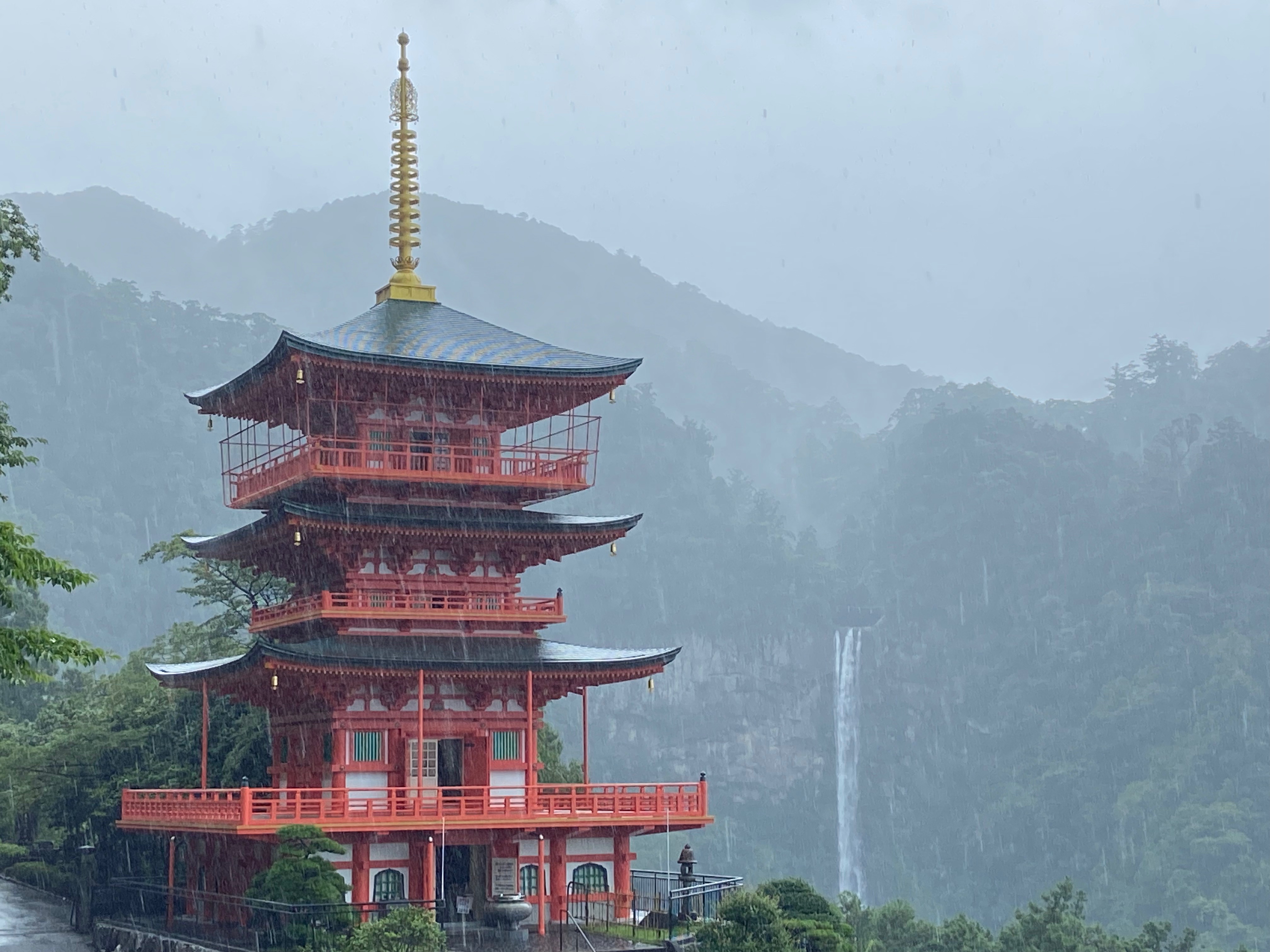
I make it to the pagoda view, the one that’s often featured on the cover of a largely poorly written guidebook. They’ve never featured it in the rain. I enjoy my photograph very much.

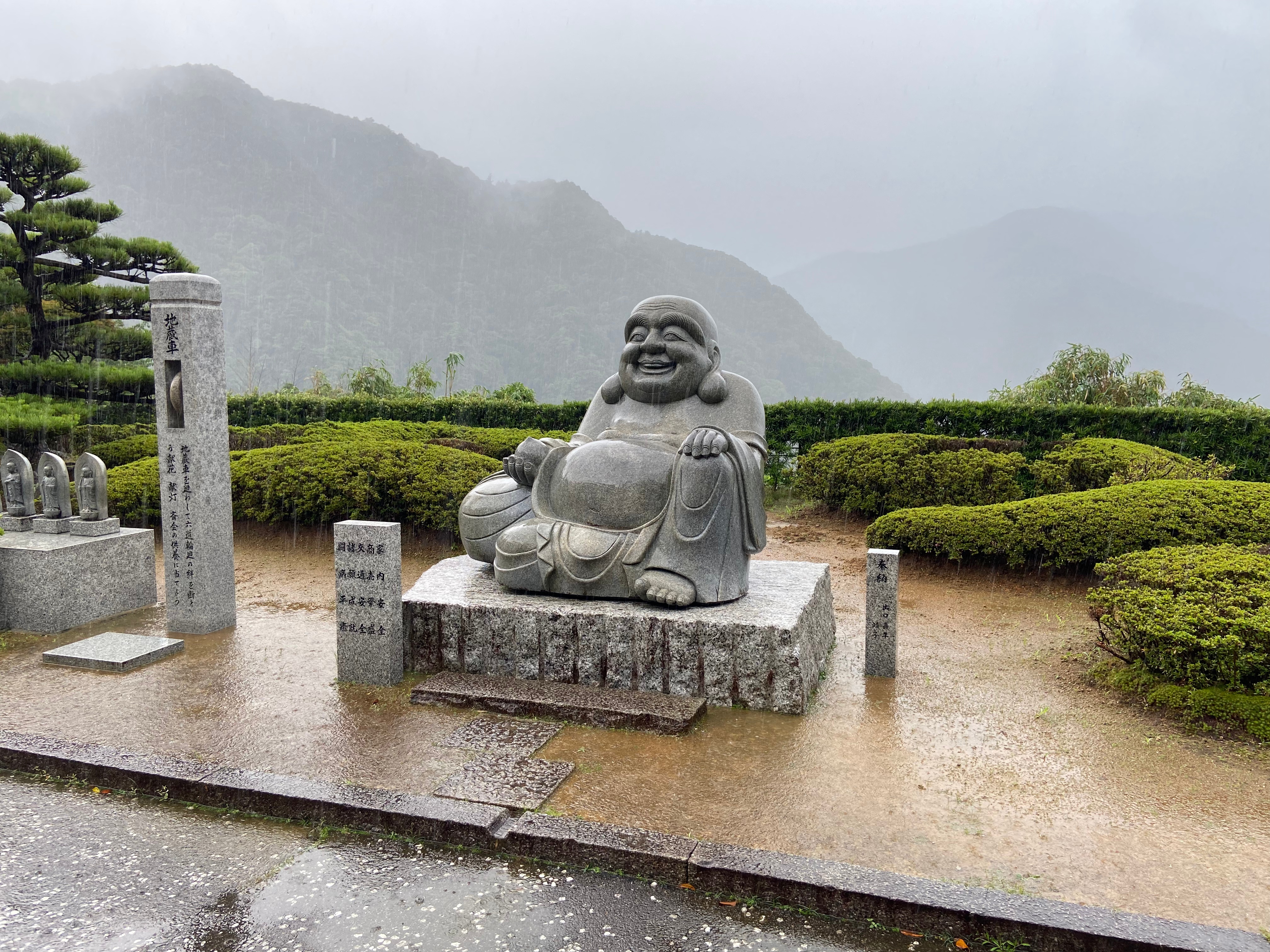
Beside the pagoda sits a big statue of Hotei. God of fortune. The Laughing Buddha. Naturally, despite my soaking wet legs and shoes and inability to understand the point of it all, I rub his massive belly. Good luck and prosperity coming my way, again.
I venture on, down flooded sloped paths and dangerous steps, and eventually, I do arrive at Nachi Falls. The heavier rain drowns out the sound of the waterfall. There’s a story of some star-crossed lovers that leapt from the top of the waterfall in the belief that they would be reborn into Kannon’s paradise. I also know that this is one of the Top Three Waterfalls in Japan, a UNESCO World Heritage Site, and also plummets 133 metres, making it the tallest in Japan.

I head down some slippery steps, careful to hold the handrail. Below, the waterfall itself. Having already taken a spectacular photograph of the rain-soaked pagoda pavilion with Nachi Falls as a backdrop, I find it to be immensely difficult to capture the waterfall from up close, due to the intense rain and heavy flooding.

I stumble back up stone steps to a bus stop. Typically, upon arriving back at Kii-Katsuura Station, the rain suddenly stops. At the Turtle Boat back to my hotel, I stand at the dock. A Japanese salaryman stands beside me, perfectly dry. He glances at my poncho and then at the sky.

From the boat, I see a crow in the air. It looks as though it has three legs, but it’s just the tail feathers, fanned out in silhouette against the sky. Something that could easily be mistaken for three legs.
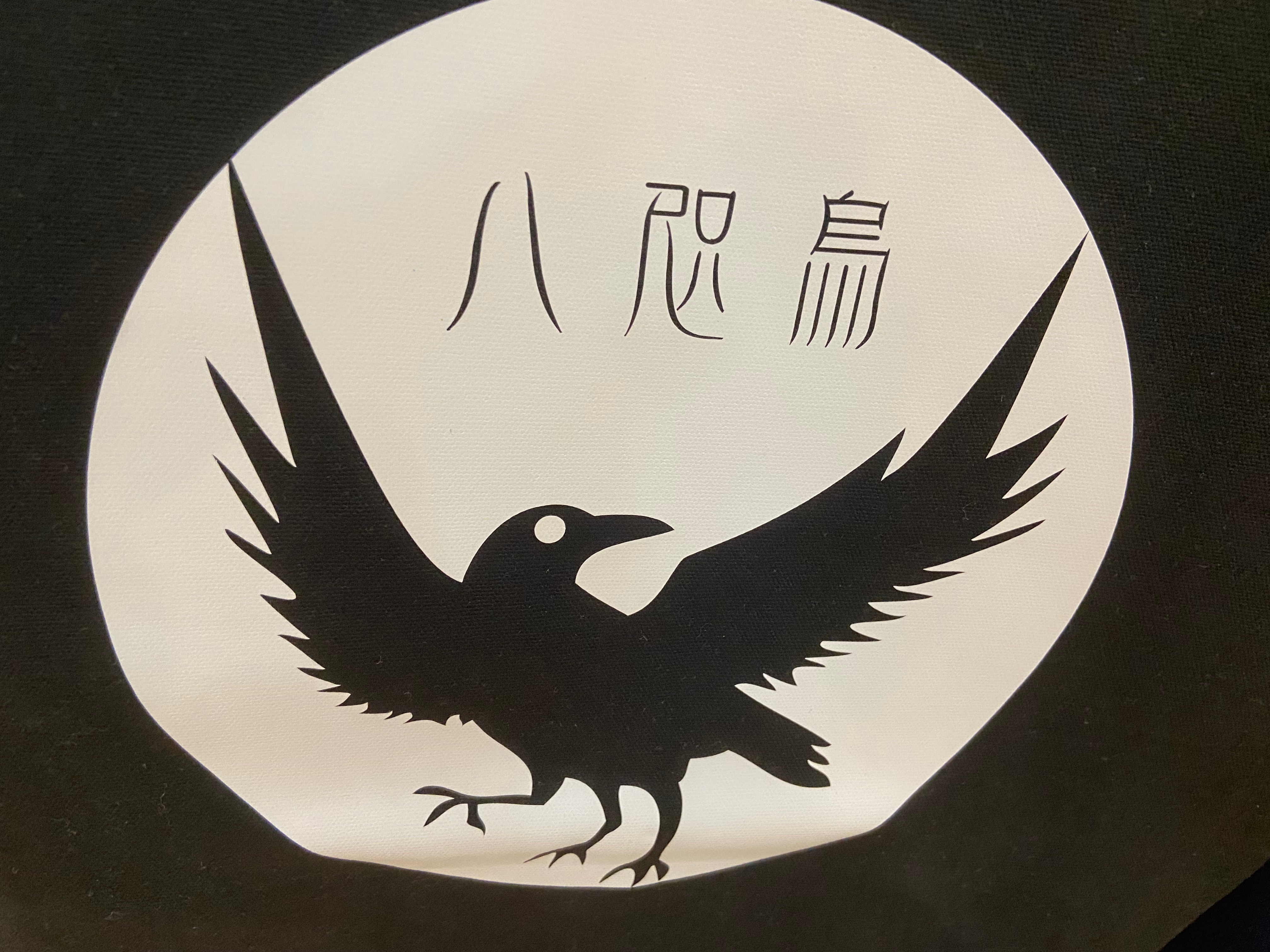
Back at the hotel, I hairdryer my shoes for two hours whilst waiting for my laundry to wash and dry, before heading out in search of a crow to photograph. In the end, all I find is this lousy t-shirt.

Swings and Sound and Boats

My hotel offers a ‘classic’ help-yourself breakfast, so I opt for a bowl of rice, pickled cucumber, a pot of natto, a salad, and a couple of croissants. Natto for breakfast—enough to wake even the dead! I add mustard to rid myself of its abhorrent taste.

The day is gloomy with the threat of rain, yet curiously, I can’t seem to locate my umbrella—this is becoming a regular occurrence. The rain halts, I absentmindedly leave my umbrella outside a shop, and upon exiting, it slips my mind entirely. Now, sans umbrella, I’m left fervently hoping the rain stays at bay. But as expected, the very instant I step out of the hotel, the rain begins to pour.

Today, I only have two things on my sightseeing list, and they’re quite a distance apart. Given that I’m in Japan, the journey between them is sure to unveil something intriguing along the way—perhaps even a shop shaped like a boat.

boatshop

I head into Arc City and visit the Hamamatsu Museum of Musical Instruments. It’s the largest municipal museum of musical instruments in Asia and was the very first of its kind to open in Japan. The museum boasts an incredible display of 1,200 musical instruments. Admission costs just ¥400.

Most instruments come with two sets of headphones. I thoroughly enjoy examining each instrument, studying its unique shape, and imagining how it might have sounded in use. I then choose a pair of headphones to listen to its actual sound—A great way to kill a morning.

instruments

The museum showcases instruments from across the globe, with expansive sections categorised by continent. Here, I delve into a wealth of musical knowledge. My particular fascination lies with transverse flutes, shakuhachi flutes, and Japanese taiko and tsuzumi drums. Moreover, I uncover an intriguing fact: the very first Japanese-made piano originated here in Hamamatsu. This revelation perhaps accounts for the abundance of music shops, Romantic-era traffic lights, museums, and two concert halls.

In the ‘hands-on room,’ I indulge in playing a variety of instruments, but the spinet piano steals my heart as a favourite. Lost in the museum’s captivating exhibits, time slips away unnoticed, and I find myself leaving after two or three hours.

Outside, the cicadas persist in a symphony of their own, undeterred by the torrential rain. Amidst the deluge, there’s at least one person seemingly relishing the downpour:

rainingagain

Seeking refuge from the weather, I find solace inside Hamamatsu Station. Ascending seven escalators to the 8th floor of the shopping complex, I reach a bookshop. In Japan, lingering or sitting down to read books in a bookstore is perfectly acceptable. Similarly, spending hours browsing magazines in a convenience store is considered normal. I pass fifteen minutes here before descending, only to discover that the storm has worsened.

Everyone at the station appears as ill-prepared as I am. Umbrella-less, they huddle together, patiently awaiting the rain’s cessation. I hastily make my way to Seven Eleven, purchasing my sixth umbrella for ¥540. The surrounding buildings are shrouded in a white mist of cascading water—an unexpected sight, especially considering my plans to visit the beach today.

actbuilding

As time passes, I find myself seated on the only bench in that deserted shopping arcade. With several hours to kill due to hotel cleaning schedules, I contemplate. During a storm like this, I can’t help but wonder if the safest haven might just be a shop shaped like a boat.

After a while, the rain subsides, prompting me to stroll to the beach, a journey of about an hour. This beach holds significance due to the Nakatajima Sand Dunes, and it serves as a conservation area for the nesting Loggerhead Sea Turtles. Every summer, these turtles come ashore to lay their eggs on this very beach.

“Prazer em recebê-los!” says a drawing of a Loggerhead Sea Turtle in fluent Portuguese.
“Nice to meet you, too!” I reply, in fluent English.

dune

These sand dunes rank among the three largest in Japan, and the wooden fences stand to protect their conservation. A warning sign sternly advises, ‘Do not damage the fences!’ The wind, notably stronger in this area, renders my umbrella ineffective—unless I’m keen on turning my sixth umbrella inside out.

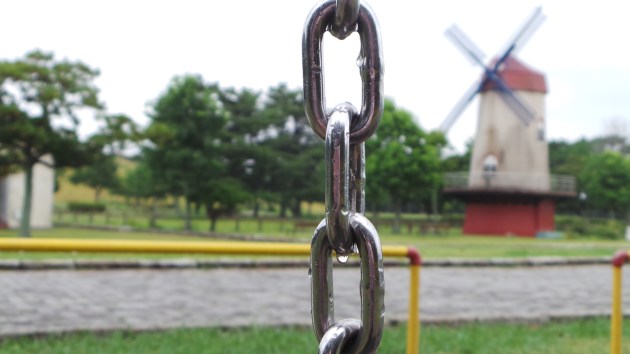
By the time I reach the sea, I am completely soaked. I was really hoping to see a turtle, but I sadly can’t find any; not too surprising really, they are a rare and endangered species. After the beach I head into a nearby park. There is a big man-made hill in the park built specifically as a tsunami evacuation point. There is also a windmill and a set of swings. I rest my legs for a while.

swing

On my walk back to the hotel, I pass a pachinko parlour called, ‘God’. I also pass dozens of construction sites promising modern skyscrapers; office blocks and apartments. It seems that the southern part of Hamamatsu is the last and latest to be developed, perhaps in four or five years this place won’t seem so desolate.

The rain stops just before I cross the river.

bridgebird

After walking for an hour, alone, my thoughts begin to wander and I drift off into daydream.

Upon returning to the hotel, I realise I can’t recall the journey here, yet here I am. After drying off, I dedicate some time to researching my trains for tomorrow. It appears I have yet another four-and-a-half-hour local train marathon to endure. However, I don’t mind; after forty-eight days away, I’m finally heading back home to Asakusa.

Nothing Happens Until Something Moves

I have to walk ten minutes from my hotel to a different hotel with my laundry. The rain is heavy; a super typhoon has hit, making the rain and wind stronger than any I’ve ever experienced. However, I need to do my laundry. The sky outside is the darkest grey. Eventually, I find the other hotel. Fortunately, the coin laundry is accessible directly from the street, saving me the awkwardness of entering a hotel where I’m not staying just to use their facilities.

The laundry room is accessed through a shutter door currently pried open by what looks like a rotten plank of wood, which is a little worrying. Outside, noisy construction work is taking place despite the weather. The noise makes it rather difficult to concentrate on my book. I plan to spend as little time as possible outside today, so there is no point traipsing back through the storm just yet.

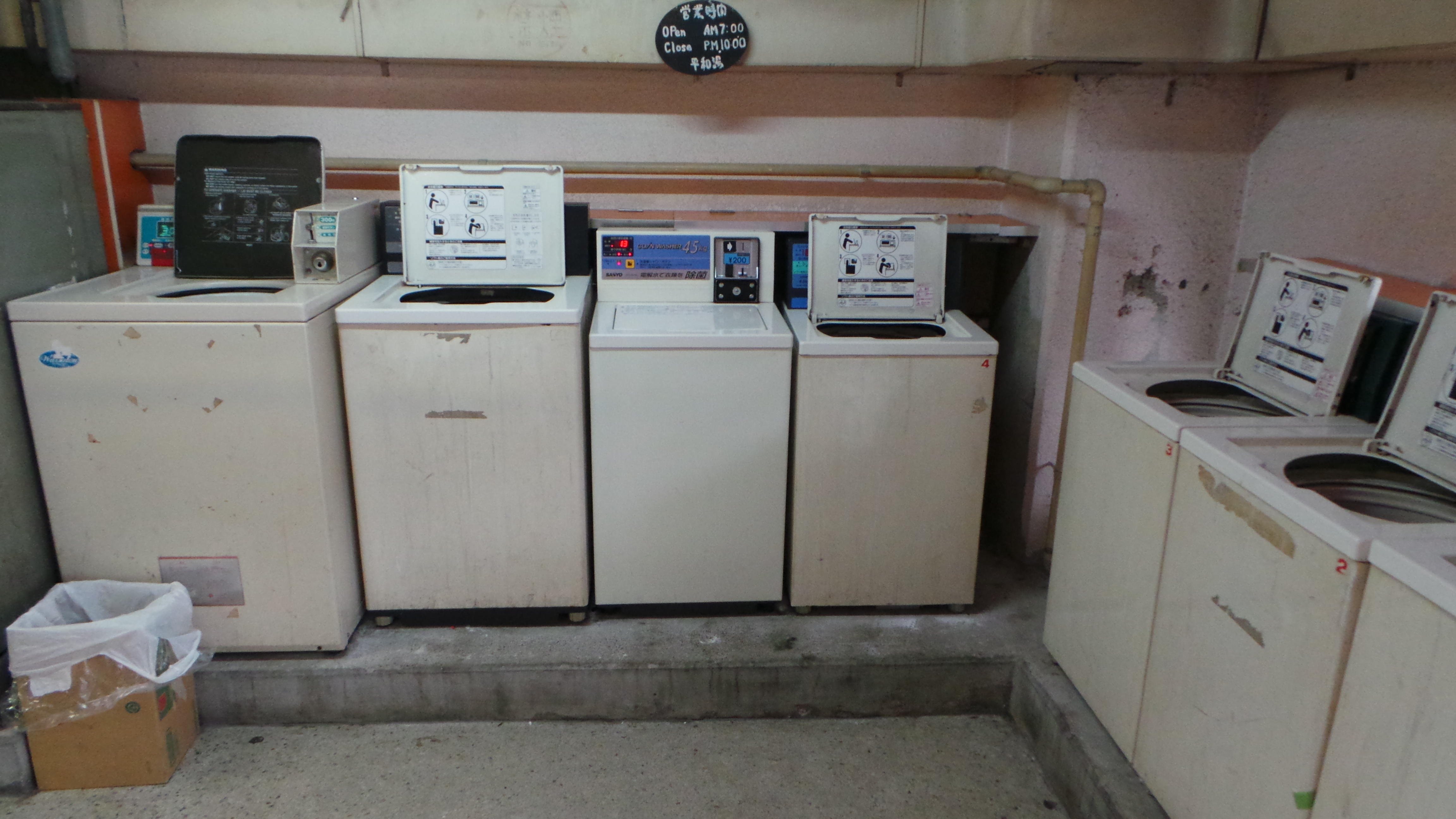
Inside the coin laundry, the room is dirty. The old vending machines no longer dispense detergent; luckily for me, I bought a ¥28 single-wash-sized pouch on the way here. I sit reading, waiting for my clothes, occasionally glancing up at the dirty walls.

laundrydecay

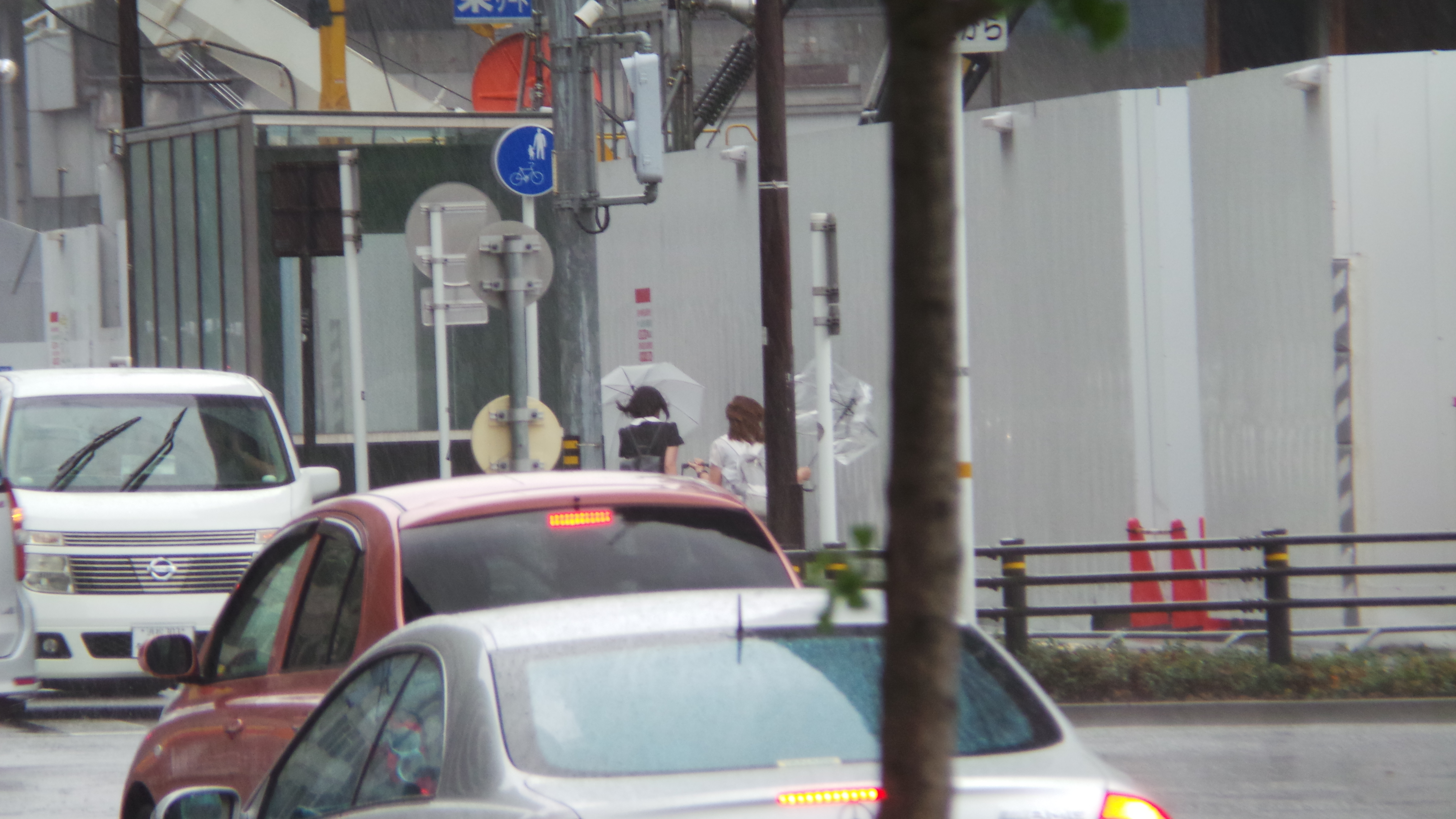
With the laundry done, I head back to the hotel as fast as I can. On the way, I notice abandoned inside-out umbrellas dumped on the street. I observe people ducking and diving into shelter, and I see areas of the pavement completely flooded. Meanwhile, the sound of sirens fills the air.

Back at the hotel, I sit by the balcony on the second floor of the lobby, quietly reading my book. I don’t mind rainy days, actually; I quite like the peace of sitting in silence and reading. It appears that a lot of people are holed up in the hotel today. Every now and then, someone walks to the window, sees that it is still raining, and then goes back to sit down. We are all waiting for the typhoon to pass.

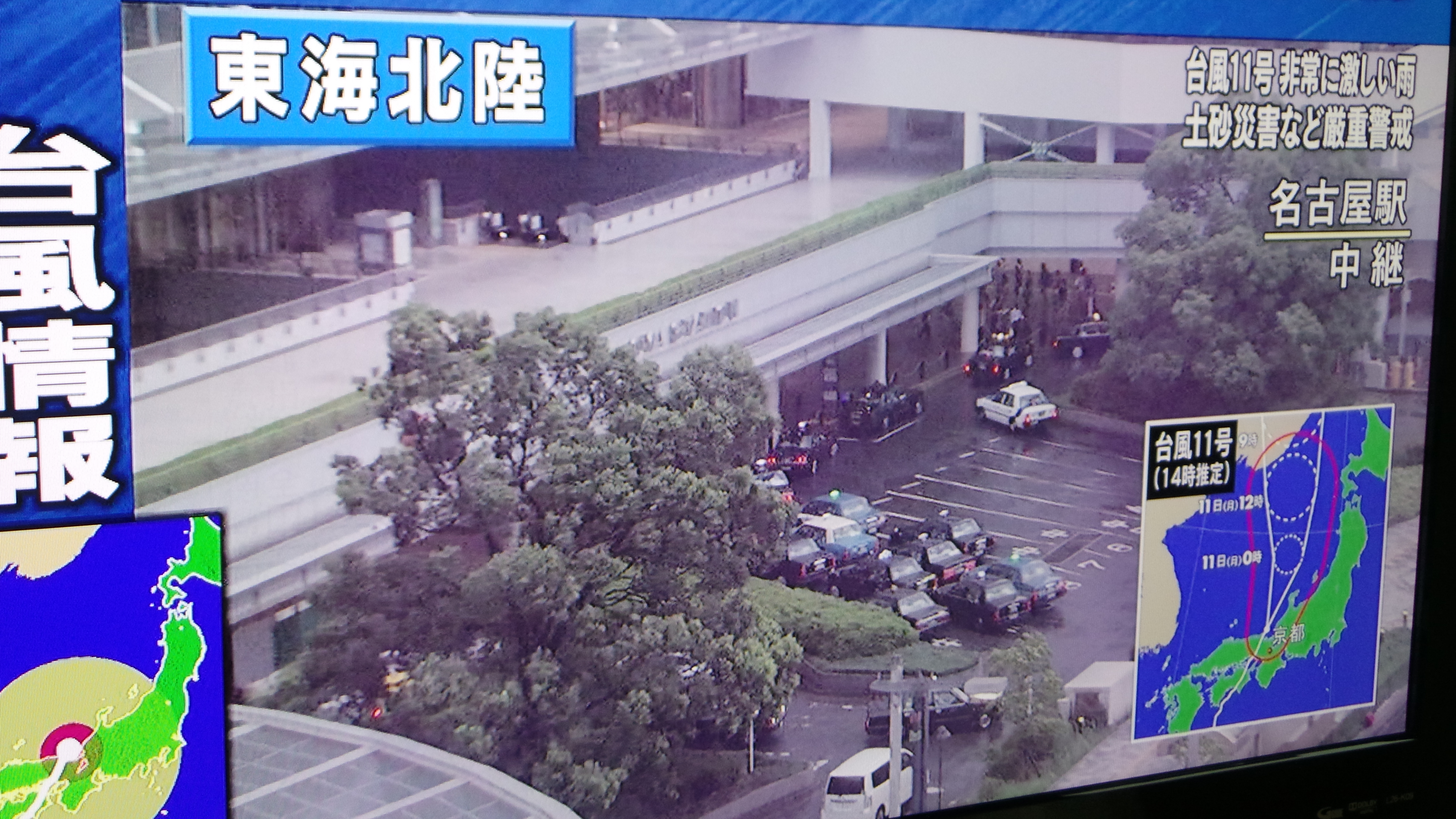
At 3 p.m., I am allowed back into my room. As I use the hairdryer on my shoes, I keep an eye on the news. After a short while, I hear the words, ‘Nagoya Station.’

nagoyast

There on the news is the train station, with taxis parked outside and rain falling. The typhoon has moved north, but the backlash of rain still falls. The bullet trains have all been cancelled.

Japan’s biggest broadcaster NHK seems to love this sort of stuff; for the next two hours, all they talk about is the typhoon. Cut to: Windscreen wipers frantically moving back and forth. Cut to: Drains overflowing. Cut to: Businessmen trying to juggle briefcases and carry an umbrella, only for it to whoosh inside-out. Cut to: All the bicycles blown over by the wind. Cut to: Rivers overflowing. Cut to: Trees shaking in the wind. This is about all I see for twenty minutes, then the footage repeats, and then repeats.

insideout

Outside, the rain looks like a white sheet being hung over the skyline. The wind is stronger now, blowing the rain sideways, making it very difficult to see the buildings in the distance. The last super typhoon I experienced passed miserably through the night; I never really got to see the chaos that it caused. Sitting here, I realise just how gloomy and grey today has been.

Eventually, the rain stops, and the wind dies down. At 7 p.m., I head out to the twenty-four-hour supermarket. On the way, I pass a sign about littering: a ten million yen fine and five years’ imprisonment. Inside the supermarket, a digitally transposed version of ‘Dreams’ by the Cranberries is playing. I buy some cheese and a small bottle of wine. At the self-service checkout, I scan the wine; a message pops up, ‘Are you over twenty? Yes/No.’ I press ‘yes’ and then finish and pay. There’s no one around to check, just press ‘yes.’ Honesty is the best policy.

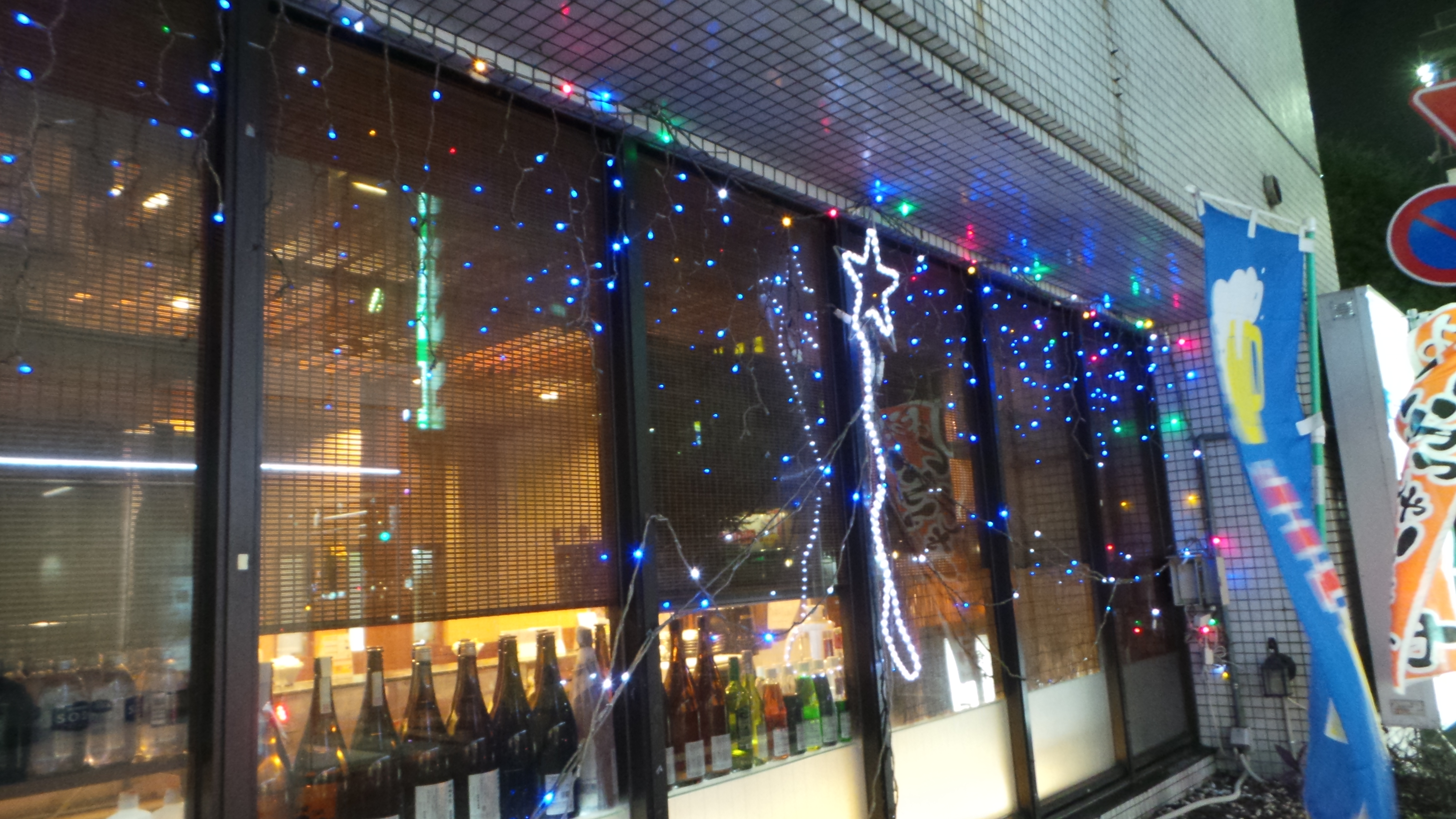
On the way back I pass a restaurant with a full set of Christmas lights. The full works.

christmaswine

Back at the hotel, I Skype with a friend from England. After that, I get deep into my reading until I finish my book. At 10 p.m., I head out to my nearest Family Mart to pick up some food. Inside Family Mart, that same Japanese song with the nice melody is playing. I can just make out a few words; hopefully, it will be enough to find out what it is.

When I return, I turn my attention to Japanese pop music. I listen to the top 30 songs in this week’s Billboard Japan Hot 100 chart. Oddly, Pharrell Williams with ‘Happy’ is at 29th. At 9th and 10th positions are two different songs from the same artist. A song from the anime Sailor Moon is in the top ten. AKB48 sister-band, SKE48, is number one. The song I am trying to find is nowhere to be heard.

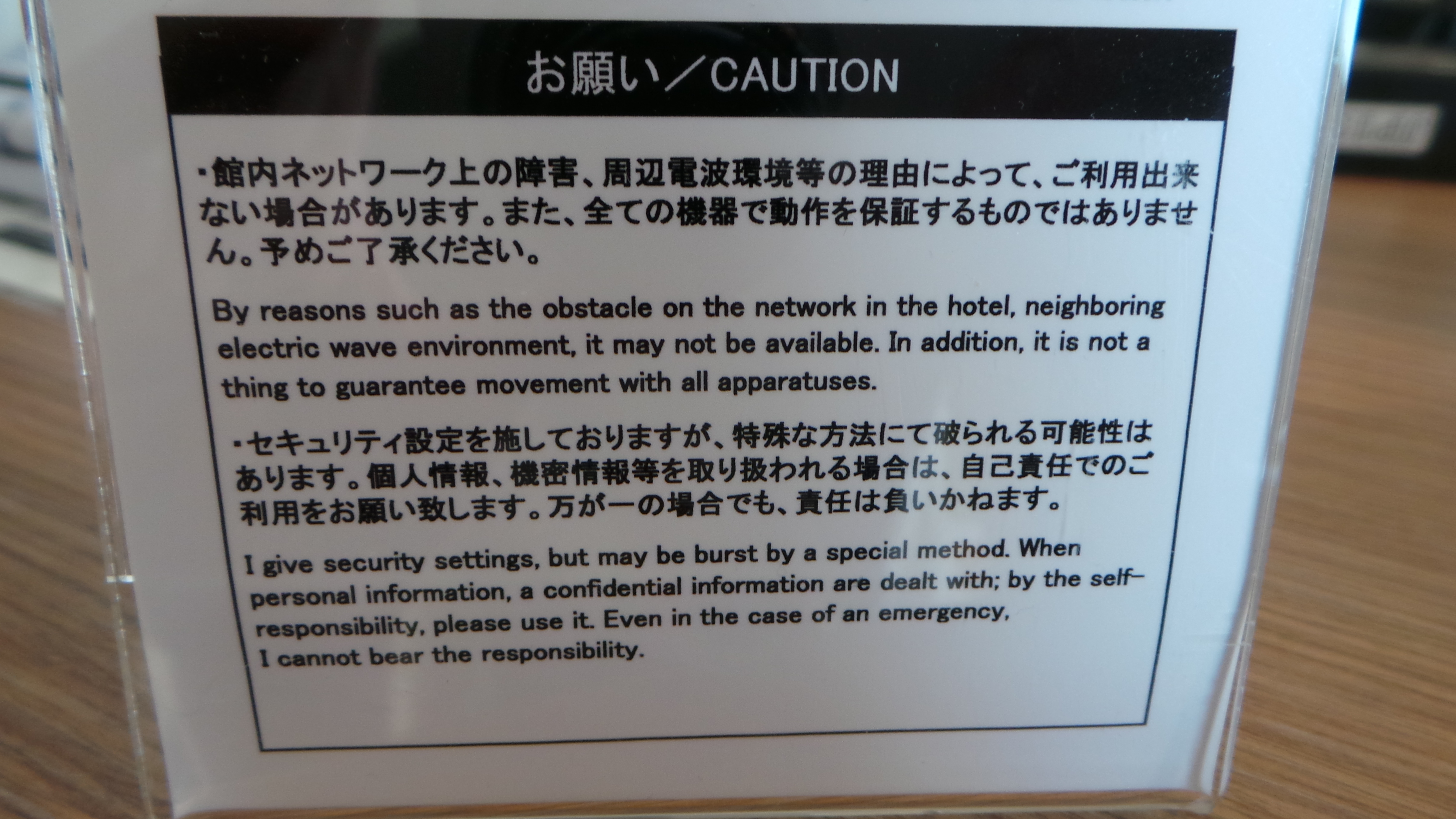
Instead, I find myself staring at this sign in my hotel room:

wirelessinternet

I do eventually find out the name of the song I keep hearing. It turns out to be a cover version of the other song I’ve been hearing, the one from Disney’s Frozen: ‘Let it Go’. It’s a Japanese version played on the piano, sounding very different from the English version—and a lot better, too. I spend the rest of my evening listening to various Japanese versions of ‘Let it Go’ on YouTube but can’t find the particular version I like. Maybe I shouldn’t have admitted that, though. I cannot bear the responsibility.

Sentient Pigs, Birthday Cake, Neon Electric Girl

Today is different. For some reason I don’t feel like myself, I cannot explain how I feel. I just don’t feel right. I decide to sell my second camera, a Nikon. Never used. My Samsung camera literally taking all of the action.

I take a bicycle. Thirty minutes later, I arrive at Reisen Park. I step into the ‘We buy and sell any camera’ shop and place my bulky Nikon on the desk. I hand the man all the wires, still locked inside opaque plastic. ‘Charger?’ he asks. Oh, I forgot the charger.

One hour later, I return to Reisen Park with the charger, and the sale concludes. In the park opposite, a stage appears to be taken down. I stop by a bookshop and use some of my camera money to purchase a book; there are so many books I need to read. I spend ¥1160 on the one I choose, ‘Kafka on the Shore’.

murakami[1]

Outside the rain drops like scattered gunfire, but you probably don’t care about the weather. I decide to grab an early lunch from the second floor of Hakata Station. I deliberately go via one of the shortest escalators in the World. Just for fun.

small_escalator[1]

Most restaurants in Japan display plastic models of their dishes outside. These models are crafted so meticulously that mistaking them for real food is easy if you didn’t know any better. The attention to detail is incredible. Taking a chance, I enter a restaurant that lacks these plastic models, leaving me clueless about what’s on the menu.

It is one of those restaurants where Japanese is the only language spoken, which is fine by me. I order a set meal of tuna on seaweed with rice, accompanied by something resembling coleslaw but with a different taste, miso soup, a spicy horseradish green condiment (the name escapes my memory), and a delicious red bean cake for dessert. Overall, it’s a nice meal.

After I leave, a woman chases me out of the restaurant with my forgotten umbrella.

epiclunch[1]

I return the bicycle to the hostel, just as the rain stops. I sit on the roof terrace and read eighty-six pages of Kafka on the Shore.

After reading, I take a stroll around at dusk. I walk toward Tenjin. I take a photograph of the city from the river, and then walk back. I was going to fill up space by talking about wasting electricity with all this neon, I will instead waste words telling you that Fukuoka is the sixth biggest city in Japan.

I realise on my walk back that I haven’t been on a train or bus for three days. Maybe I haven’t done anything but read for two. A Chinook passes over me. Ironically, I am on my way to meet a helicopter pilot.

neonriver[1]

At the bar, the manager pours me a free glass of ice cold rice wine. The helicopter pilot is with his wife. I talk to him for ten minutes, before sitting at the bar with my book. Not to disturb him as his food arrives. The helicopter pilot is Japanese, I met him last night in the same bar. His English is average. He told me to come back again today, “Not a problem,” I told him. “The bar is five minutes from my hostel.”

I sit at the bar for a while, eyeing the skewers of meat atop the glass counter. Eventually, the helicopter pilot’s daughter arrives. She’s studying English at university, and for the next two hours, we converse in English. Her eyes are a deep-set brown, strikingly profound. Her black hair has an unusual texture, reminiscent of straw to the touch.

I agree to meet her tomorrow over a bowl of Paella. She leaves. I pay for six Suntory whisky highballs and her orange juice, ¥2345. A nice clean number.

As I wander back via a Lawson Stores, I see these odd workers:

signalmen[1]

I see them everywhere, actually. They stand on roads, at entrances to car parks, and next to building sites. They wave on traffic and pedestrians with their red lightsabers. Sometimes there will be three or four, all standing on the quietest street next to a cement mixer or ladder. A very strange job.

Back at the hostel I have a craving for salt and vinegar crisps; another thing that I cannot find here. I sit in the lounge with a can of Suntory whisky highball, and talk with the Koreans. There is a Korean woman who is both the same age as me, and two years younger. East Asian age reckoning.

It becomes one of the Koreans’ birthday; an amazing cake duly arrives, bang on midnight.

birthdaycake[1]

One of the Korean guys is studying philosophy, and his sister is incredibly intelligent. We talk about philosophy, another thing I really miss doing. He quite likes my discussion on M-theory. We also talk a lot about sentient pigs.

The intelligent Korean girl tells me that my eyes look lonely.

Much Beppu About Nothing

I haven’t really done any touristy things during my last two days in Beppu. Instead, I have listened to far too much Blind Pilot and filled the rest of my days reading Haruki Murakami. In the evenings I have visited bars. On Friday night I got to the semi-finals of a Table Tennis tournament, only to be beaten by Yojiro. Today I will write about general things in Japan.

Vending machines. There are far too many Coca Cola vending machines for my liking. One is too many if I am completely honest. As a non-consumer of this particular brand of misery (reasons: child labour, worker rights, pollution, murder), I often find myself cycling around looking for a machine with the Suntory Boss brand. The best vending machines offer Coffee Boss Rainbow Blend, and if I am really lucky, Boss Ice Creamy Latte.

Vendingboss[1]

Vending machine coffee in the summer is mostly cold. I have always enjoyed cold coffee anyway. In the winter, the machine changes and the can of coffee is hot. In the vending machine above, Coffee Boss Rainbow Blend is on a Price Down!

In Japan, there are far too many silly notices and signs in English; most have terrible grammar and bad spelling. Presumably these signs are mistranslated when they are put through Yahoo! BableFish. Google is surprisingly unpopular amongst the Japanese people. For news, emails, and searches, almost everyone here uses Yahoo! Here is an example of a bad sign:

Umbrellastand[1]

I like umbrellas.

Yesterday I met a vegetarian couple. They decided before coming to Japan that being a vegetarian here would be ‘too difficult’, so they have chosen to eat meat while they are here. I don’t quite understand this logic. Admittedly, vegetarianism is somewhat uncommon here. I find that simply learning to explain that you don’t eat certain foods will get you by. I have even seen people with printouts in Japanese explaining their dietary requirements. There are ways, and there are also plenty of amazing vegetarian dishes here too.

I think I have mentioned it before, but the streets here are littered with cats. Here are some cats:

Catseverywhere[1]

There are a lot of things I miss about England. Eating cheese. Crust on my sandwiches. Coleslaw. Sometimes I really wish I could sit playing the guitar for a few hours, but I don’t have a guitar here, maybe I can rent one. I also mentioned the stars before. Never visible. So strange. Maybe it is just because of the weather. When I finally see the stars I will probably write a huge post about it.

I went for a late-night walk in the ocean last night. The ocean here appears clear or blue, depending on the time of day. Sitting on the beach at midnight with a few beers, followed by a walk in the warm ocean — even at midnight, the air here stays warm. Even during heavy rain, the air remains warm. I’m uncertain about the winter; time will tell.

Here is the ocean in the day time. Very blue:

Bluebird[1]

Walking around at night with a beer and not breaking the law is also amazing. Convenience stores are everywhere, so if you cant find any nightlife, you can buy a beer from Seven Eleven, finish it by the time you get to Family Mart, buy a beer, finish it by the time you get to Lawson Stores, et cætera. Basically if you walked to every 24-hour convenience store in one area buying one beer at a time, you would get nicely drunk. I count eight stores within ten minute walking distance from my hostel.

I enjoy the lampposts and traffic lights playing happy tunes. I like being in Japan and being from England. When most Japanese people ask me where I am from, their attitude changes when I say England. It is as though I have uttered some code word that makes people more friendly. “Ah, from England! You know Sherlock Holmes?” The other night a Japanese salaryman bought me a drink in a bar, he said it was because he, “Likes England so much.”

Random things are placed on the streets here. This is inside Beppu shopping arcade. Spot the Carnival Cutouts:

Bignose[1]

There are things I don’t like. I dislike being tall. The number of times I’ve smashed my head into the top of a doorframe surprises me; I’m amazed I haven’t suffered a mild traumatic brain injury. Although, maybe I will ten years from now. I often forget the occasional English word. Whilst talking to someone, I might suddenly draw a blank on a word I should know. It’s like there’s a void in my head where the word used to reside. At other times, I unconsciously substitute a Japanese word for an English one without even realising.

I hate inconsideration, but who doesn’t. I am in a four bedroom dormitory room trying to sleep. Someone comes in, sits down on his bed and starts to eat from a bento box (a lunchbox style Japanese meal; commonly with sections for rice, pickled or cooked vegetables, and a type of meat or fish). He is eating chicken, but I don’t eat chicken. Now, my room smells of chicken, and amidst this olfactory assault, all I can hear is him chomping loudly on his food. The hostel has a dining area and a lounge area, so please refrain from eating chicken in the dormitory room. Additionally, some people insist on loudly packing their suitcase for about an hour at 7 o’clock in the morning. It shouldn’t take that long and can be done the night before.

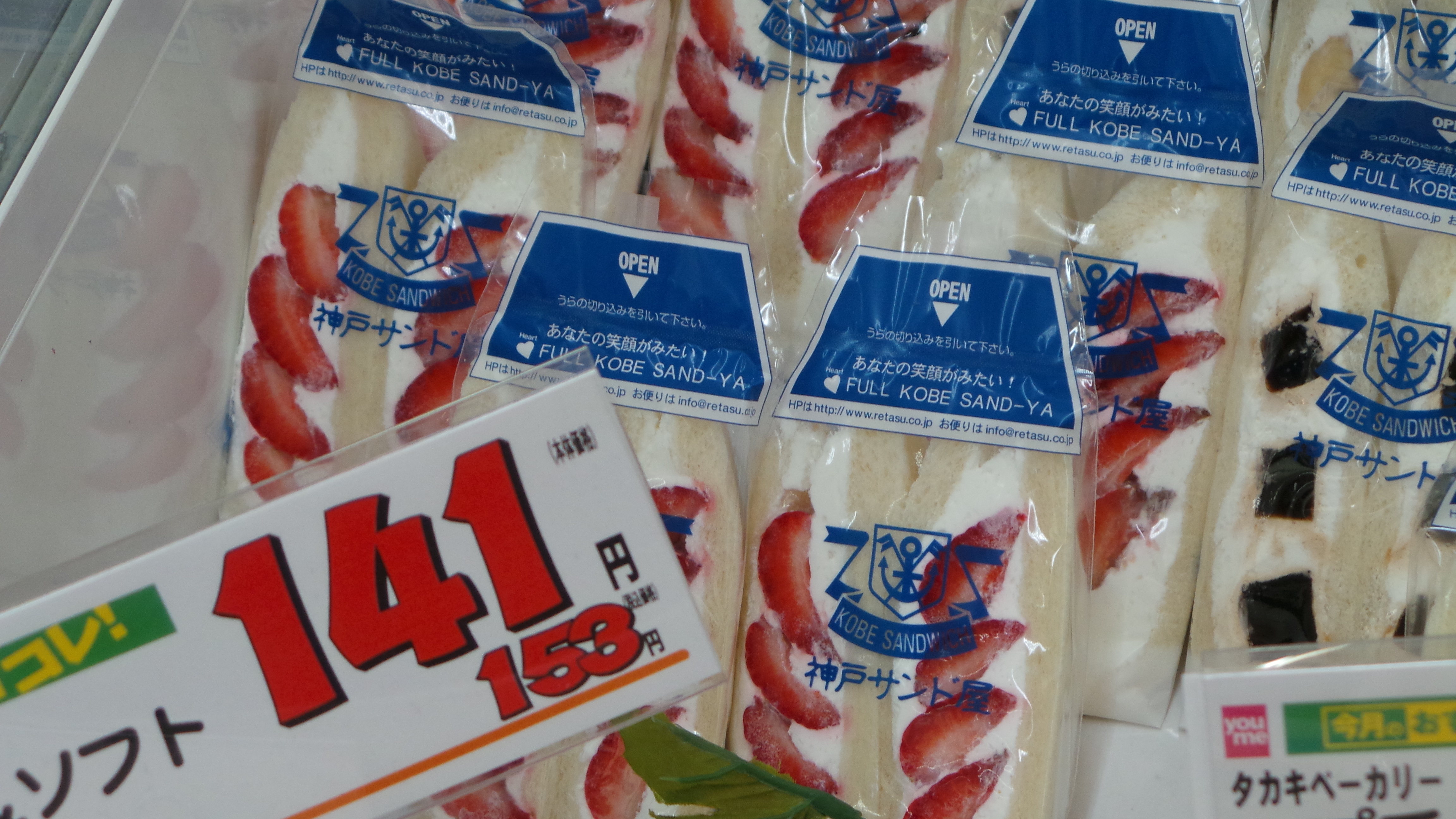
I went to the supermarket to photograph a bento box, but they had completely sold out. So instead, here is a photograph of some strawberry and cream sandwiches:

20140713_115654

Anyway, I have a bus to catch. Next stop: Fukuoka.