Under the Spreading Cherry Blossom Tree

As the heat of 23°C sweeps across Tokyo, it brings with it a sea of pink and white flowers. Spreading in every direction are sakura, flowers that only bloom for about a week of the year and are so delicately dependent on weather conditions that they could easily vanish in an instant. The problem with cherry blossoms is that they take a while to reach full bloom, and in previous years, 100% hasn’t quite been reached. This year I am fortunate, and the weather has been excellent. Today, the flowers are at their full potential and will stay like this for a few days or until it rains. If it rains, the flowers will wash away, sharing the same fate as a ludicrously named spider in a nursery rhyme.

I head toward the Sumida River, passing rows of flowers that line the river on both sides. The same river, but this week, offering an entirely different setting.
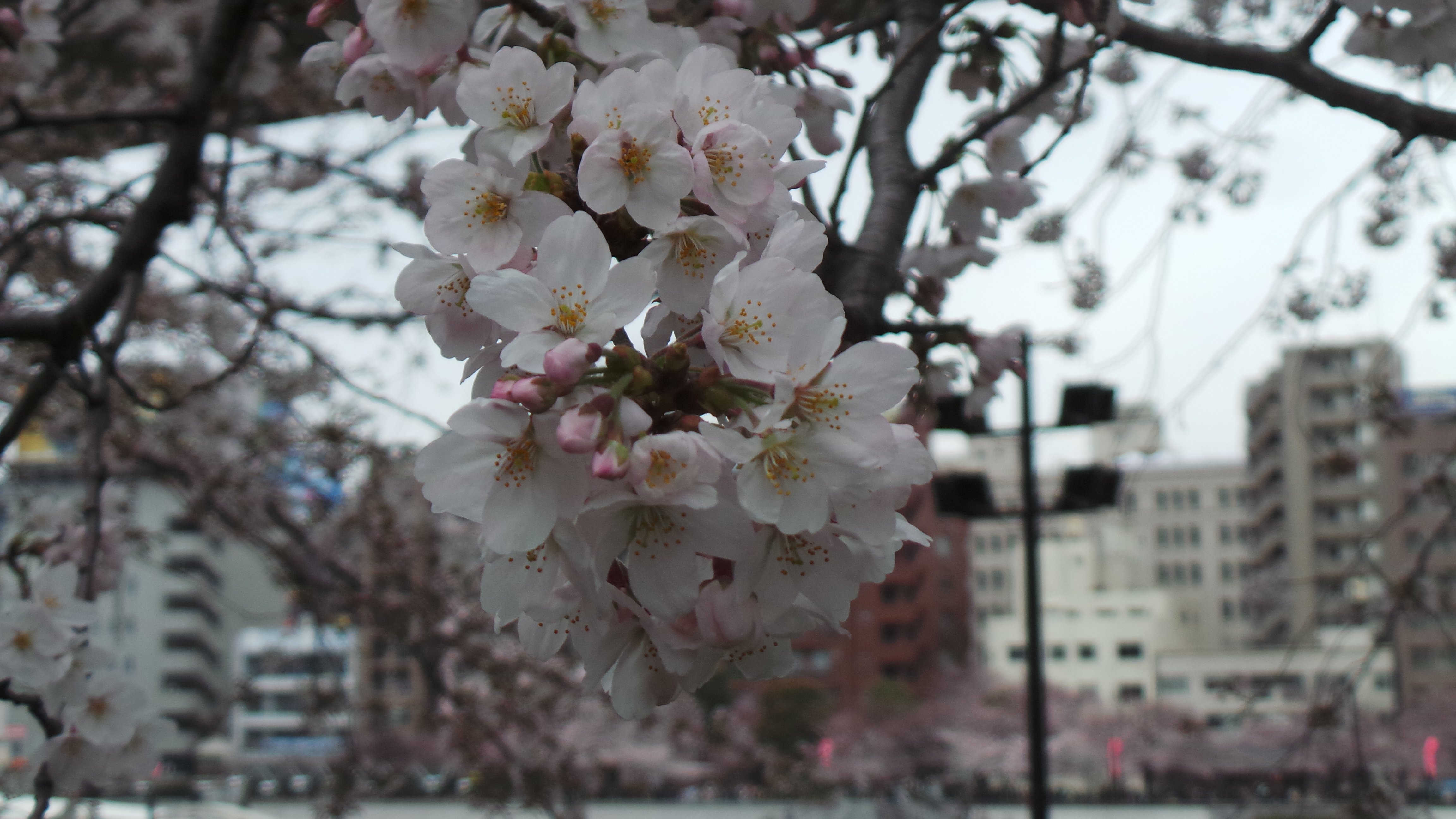
sumidasakura

I cross the river and head into Sumida Park. I have arranged to meet my friends for a traditional event known as hanami. I wander the park, passing large groups of people drinking alcohol as they sit shoeless on bright blue tarpaulin. As I traverse the verdant gardens, after a full thirty minutes, I arrive at the location of the first-ever cherry blossom viewing party of the Imperial Court. Just over the hill behind this historic location, sit my friends, drinking whisky at noon.

As I gaze at cherry blossoms and observe the other people here enjoying their little picnics of alcohol and snacks, I realise that a man from Pizza Hut is delivering a hot pizza to one of the groups at the bottom of the hill. I find it astonishing; firstly, how could the delivery man ever find the group that ordered, and secondly, if this were in England, the company would never deliver to a crowded park. They would insist on a postal address, and if that couldn’t be provided, they would simply refuse.
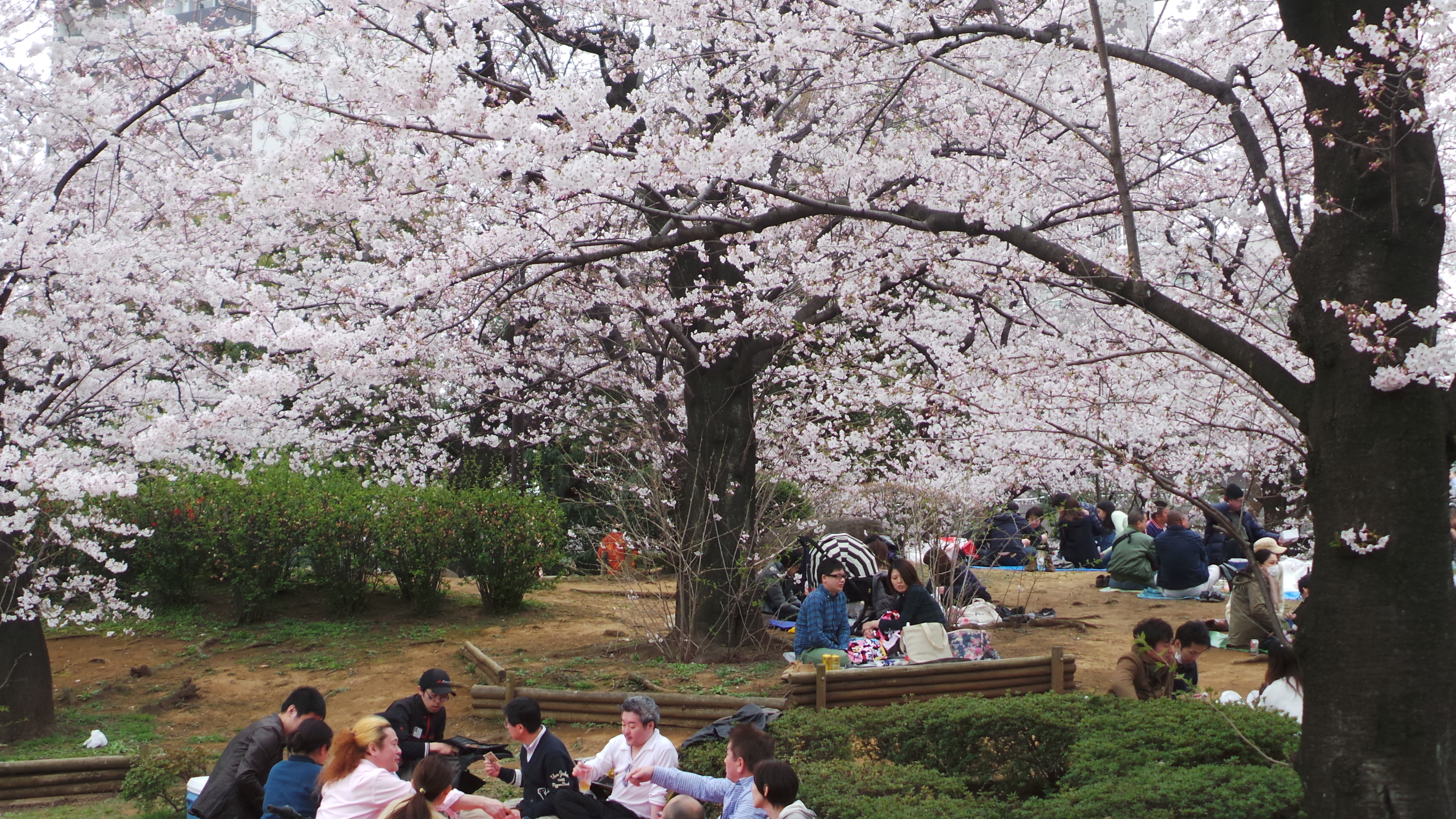
hanamipizza

We sit under a cherry blossom tree, mostly in quiet contemplation. The point of hanami is to enjoy the flowers, the alcohol, and the company of others. As I stare at the flowers, I recall a story about horses. In the past, many Buddhists would ask to be buried with sakura, so to shake the branches and release a snowfall of flowers, horses would be tied around a cherry blossom tree. This is actually the reason that raw horse meat in Japan is known as sakura.

Sakura also has a third meaning, a stooge. Many years ago, people would be allowed to view kabuki shows for free, in exchange for over-the-top laughter and applause. These stooges would sit in the audience to encourage the paying members watching the show to participate in applause. It is said that the applause blooms very quickly, spreads, then fades away, much like the flowers. Our party eventually fades away too, just like the flowers, and I take my leave and walk toward Asakusa, to look at some cucumbers.
cucumber

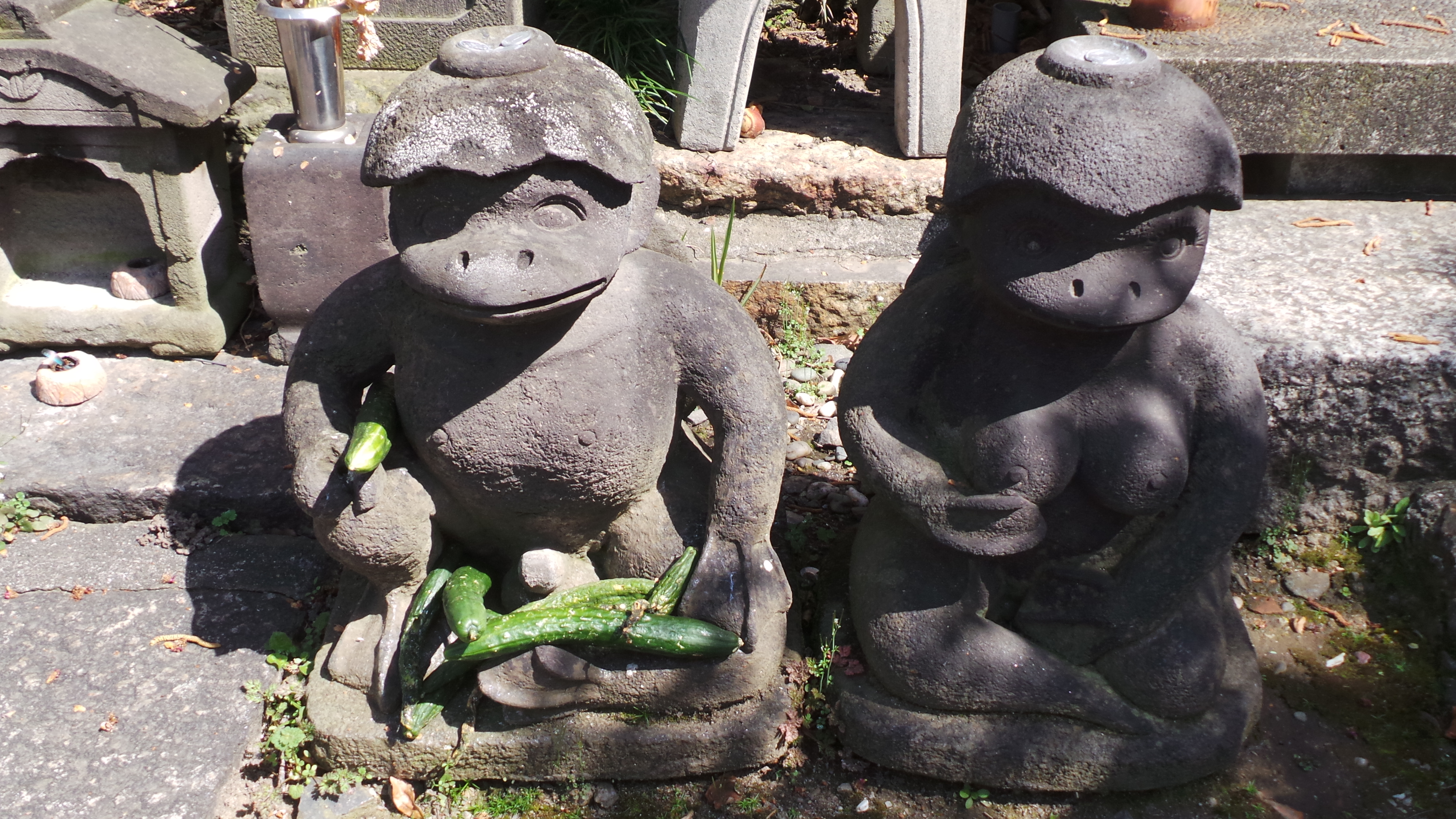
Within the grounds of Sogenji Temple sit a pair of perfectly preserved kappa. Child of the river and an imaginary animal said to help local people with float control, or so the confusing sign states. It is said that a kappa has a bowl on its head, always full to the brim with water. If the bowl becomes empty, then the kappa sadly dies. Apparently, eating cucumbers rehydrates the kappa, keeping it alive, which might explain the cucumbers. I bow at the kappa statues, hoping to see them bow back, thus spilling their bowls and killing them in the process, but nothing happens. Just a statue covered in cucumber, staring blankly at me. A man cutting the lawn tells me that there are limbs from an actual kappa inside the temple; however, I am not allowed to see them, and am given no explanation as to why not. It makes me wonder why he even mentioned it in the first place. Regardless, I leave the temple with a free cucumber under each arm.

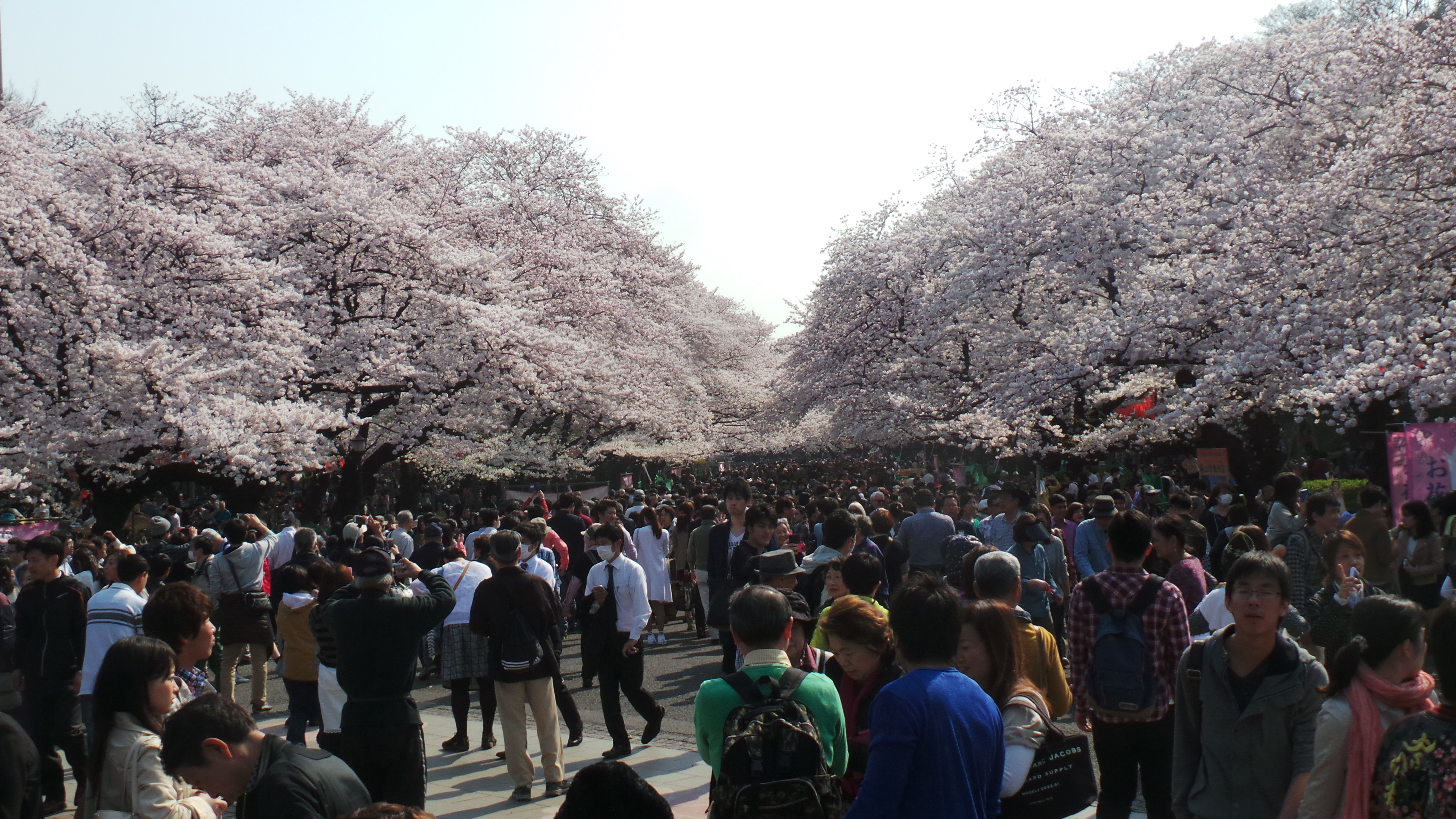
I turn back to cherry blossom viewing once more and head to the overly crowded Ueno Park.
uenosakura

The park has one of the best spots to view flowers in Tokyo, with endless rows of blossoming trees spreading from the middle of the park all the way to the Fountain of Frog. There isn’t much else to do here though; I have seen flowers already and am perhaps losing interest slightly. I instead wander away from the park, in search of something interesting.

Eventually, I stumble into Toeizan Kan’ei-ji Endon-in, a temple that features many graves of famous perished people, including that of a priest named Ryoozenji. The priest had a revelation in a dream, and upon waking, he invented a powerful medicine named Kintaien. This medicine cured every illness in the world, and he sold it at a drugstore that was owned by his nephew. All of the profits from this super drug, Ryoozenji spent on a library in the grounds of this very temple. I find it a little odd. If I had invented a drug that cured every illness in the world, I would have thought my profits would have stretched a lot further than a simple library. Still, the story of Ryoozenji isn’t the strangest thing at Toeizan Kan’ei-ji Endon-in.
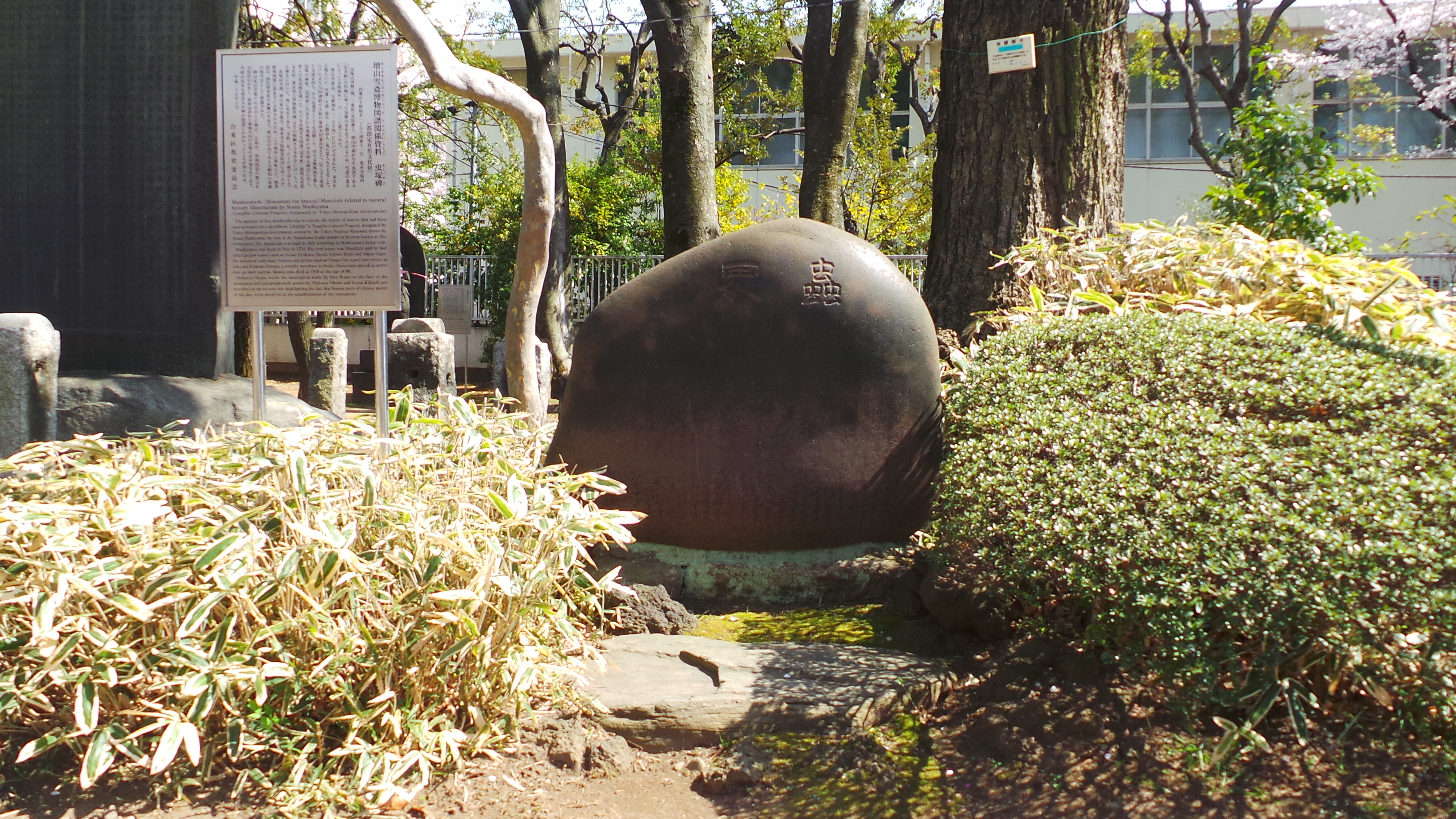
insectmon

Next to the copper bell sits a large stone surrounded by plants. I take a closer look and discover that this rock is a tomb that contains the souls of insects. Specifically, insects that were sketched by a lord in the Edo period. This type of monument is known as a Mushizuka and was built to console the spirits of various insects that were both drawn and used for science.

I leave the temple and return to Ueno Park. Most of the people in the park are gathered for hanami, but there is one area where the crowd seems to be oblivious to the beauty all around them, engaged in a protest of sorts. A man stands with a book and a microphone, shouting loudly and with anger, as fifty elderly Japanese men sit and watch in awe, nodding in agreement. I am not sure what the man is so angry about, perhaps the flowers, but regardless, he does his protest next to a sign that ironically says, “No protesting, no gathering, no advertising, and no politics.”
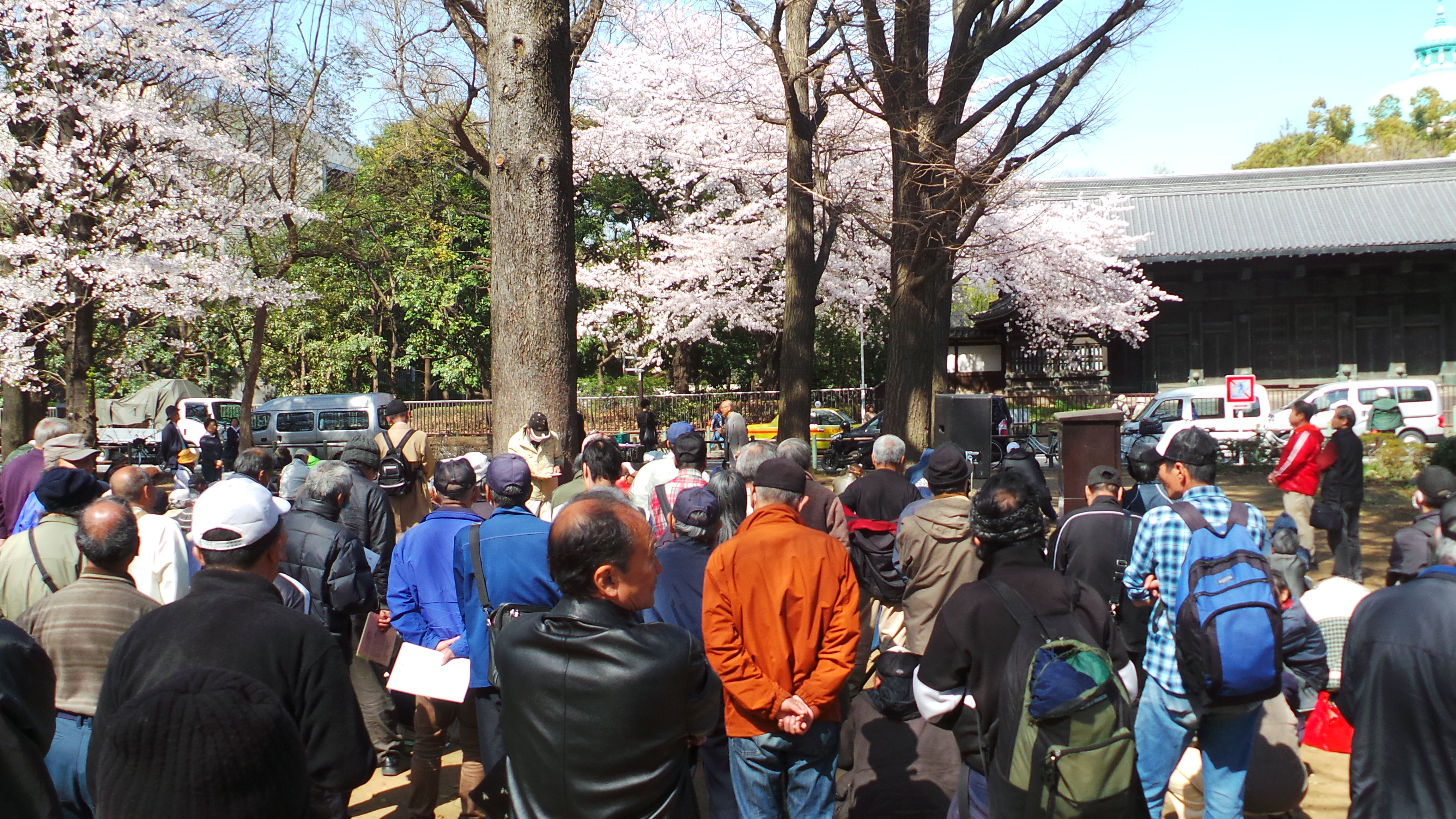
publicitystunt

I leave the park with a head full of cucumbers. As I wander down flower-covered roads, I turn onto Kappabashi Street, in the hope that I might meet an actual kappa. Obviously, nothing transpires, so my float control dilemma will have to wait until another day.
The Time Traveler’s Strife

Today, I decide to explore the Asakusa area once again. Recently, I engaged in a conversation with friends about Denbou-in Gardens, the secret gardens I visited, hidden in the grounds of Senso-ji Temple. Intrigued to discover more about this area and its hidden gems, I then heard a mention of the interestingly named Drawing Light Temple. Obviously, I wanted to find out more. In the blazing sunshine, I head to Asakusa once again and search for the temple.

It takes me about thirty minutes to wander through the huge complex of temples and shrines that make up the Senso-ji compound before I eventually find a rather obscure-looking tunnel with overhanging plants and nondescript flowers. Oddly, I have never seen this tunnel before, so for the second time in just over a fortnight, I have stumbled upon a new place in Tokyo, a city I have lived in for eight months now. Hidden beyond the foliage, on the other side of the tunnel, sits the impressive Drawing Light Temple.

lightdrawing

Built in 1609, this temple houses the goddess of protection from drawing light images. Fortunately, an English sign serves to remove any confusion and informs me that, “The Goddess in this temple protects against photography, portraits, and reflections.” Ironically, photography is allowed here. As I read the signboards about the history of this place, it becomes instantly apparent that if this temple was built in 1609, as the sign states, then it precedes the very first photograph, making it impossible for the goddess that resides here to know what she would be protecting against. It reminds me of the Flying God Temple, where people go to pray before they fly on an aircraft. The god there existed before aircraft were even invented. Even the story about the origin of Senso-ji, concerning the golden statue of Kannon fished from a lake, is riddled with confusion; the statue is no longer housed in Senso-ji Temple, and has never actually been seen by anyone who can prove it existed in the first place.

The inconsistencies and inaccuracies in religious narratives make me increasingly sceptical. Considering the possibility that religious stories and certain deities might be nothing more than fabrications is a notion I had never entertained before, but it now begins to take shape in my mind. What if it’s all untrue? I ponder this for a moment, and then, quite unexpectedly, I spot a magical cow.

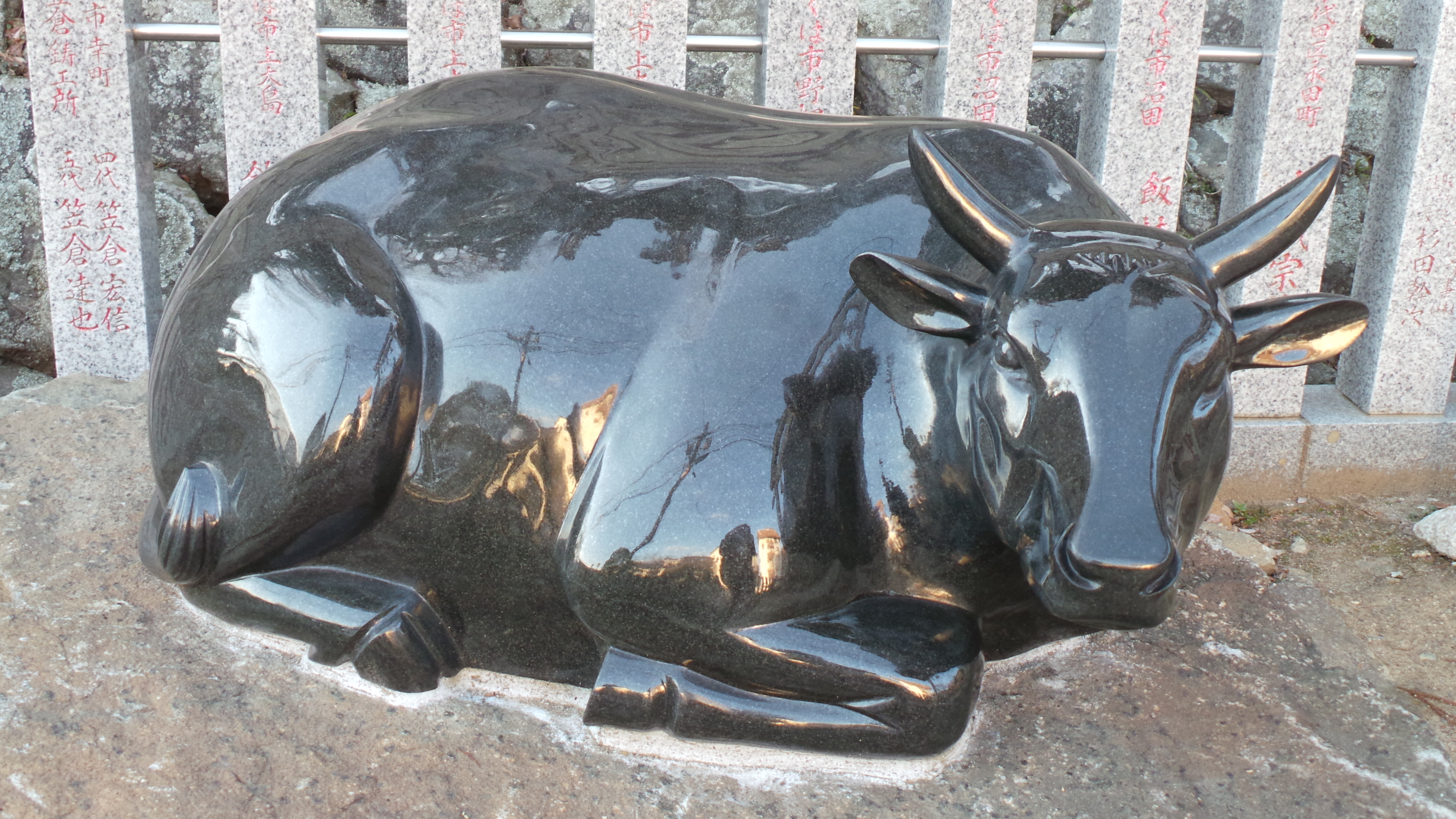
magcow

“Look closely,” says a sign next to the cow. I stare at the cow, not really sure what I am supposed to be seeing. Everything here looks perfectly normal – just a statue of a cow. Below the sign, there is a description in Japanese, which later translates to read, “As a way to protect the stolen soul, in the cow, your image will be hidden from the drawing of light.” I take a photograph of the cow, and oddly, my image isn’t present. Very strange. I take seven more photographs from various angles, yet each time, the scenery behind me is visible, but my own reflection is mysteriously erased.

Why a cow has been chosen to symbolise the absence of reflection is beyond me, but some sort of wizardry is at hand here – a trick of light, perhaps. Continuing my exploration of this hidden temple, I discover that it holds the origin of the story that a photograph can steal your soul. It was said that when this temple was built before photographs were invented, the thought of an image of a person being taken was a direct link to the spiritual world. This history has also spread to the rest of the Senso-ji area, where no mirrors can be seen at any of the temples or shrines. It makes me wonder if the Edo period in Japan was populated by time travellers, building temples everywhere that predict future inventions.

As I leave the Drawing Light Temple, I continue my exploration of the nearby area and discover another display of inconsistent historical information.

stonelantern

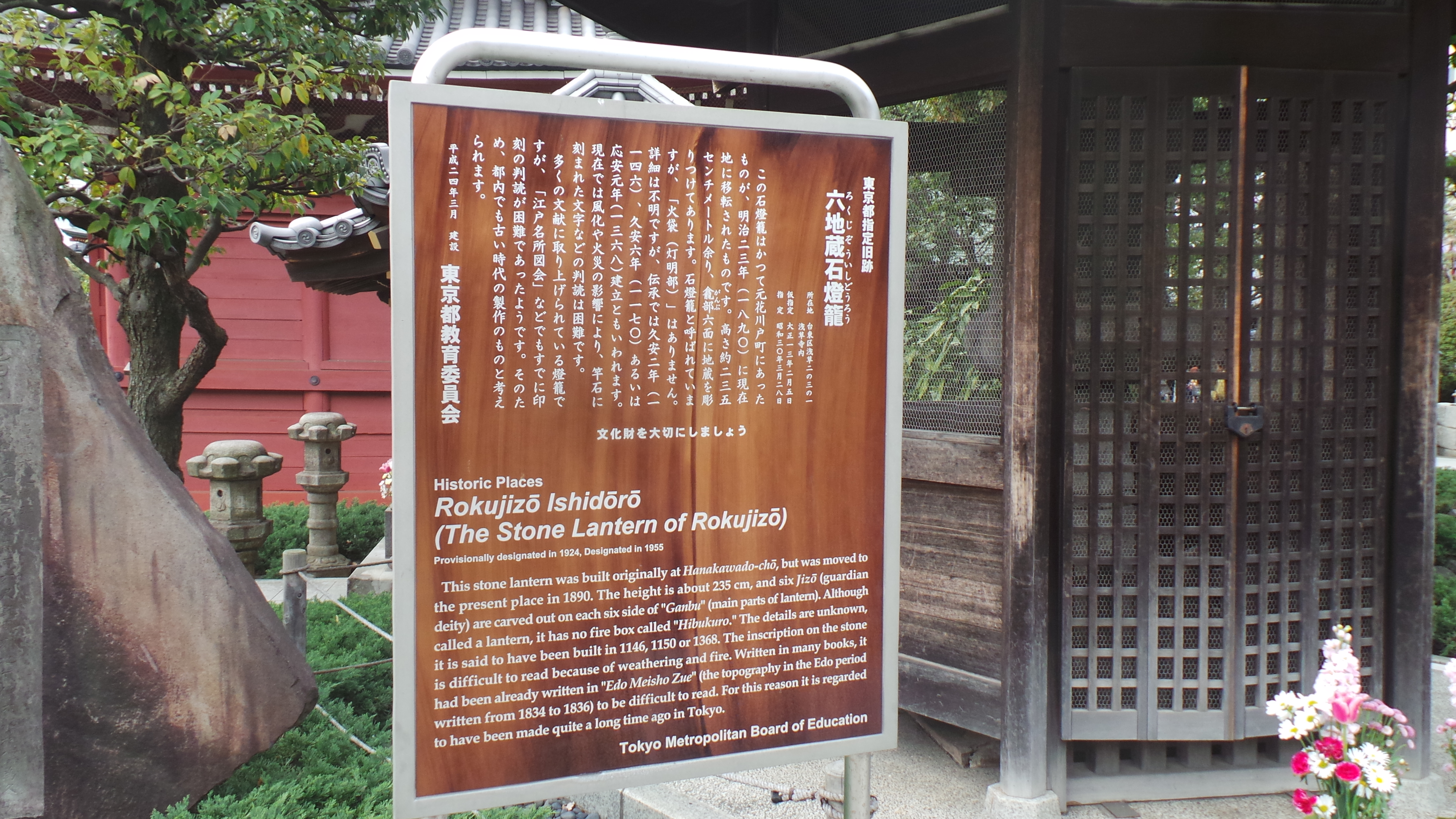
The Stone Lantern of Rokujizo was built in either 1146, 1150, or 1368, and already I find that there are too many contradictions. The sign even states that the details are unknown. Yet, the lantern itself features topography that wasn’t used until 1834. So somehow, the lantern features Japanese text that was first used 688 years, 684 years, or 466 years after it was originally built. My suspicions surrounding the history behind Senso-ji Temple are once again confirmed here.

I continue my tour and find a monument to Kume no Heinai. He was a samurai in the Edo period and a master of sword fighting. Over the years, he killed many people before eventually turning to a life of virtue. Heinai began to live in Kongo-in Temple, inside Senso-ji Temple, and devoted himself to Zen Buddhism. He held religious services in honour of the souls of the people he killed. One day, he ordered his followers to carve his figure in stone and bury it in a busy district of Asakusa, so that forever, people would step on him—presumably what he thought he deserved after years of killing. Oddly, Heinai was in good health the day the statue was ordered to be built; however, the next day, he died suddenly, as if his fate was already known.

My final stop is the peculiarly named, Bell of Time.

belloftime

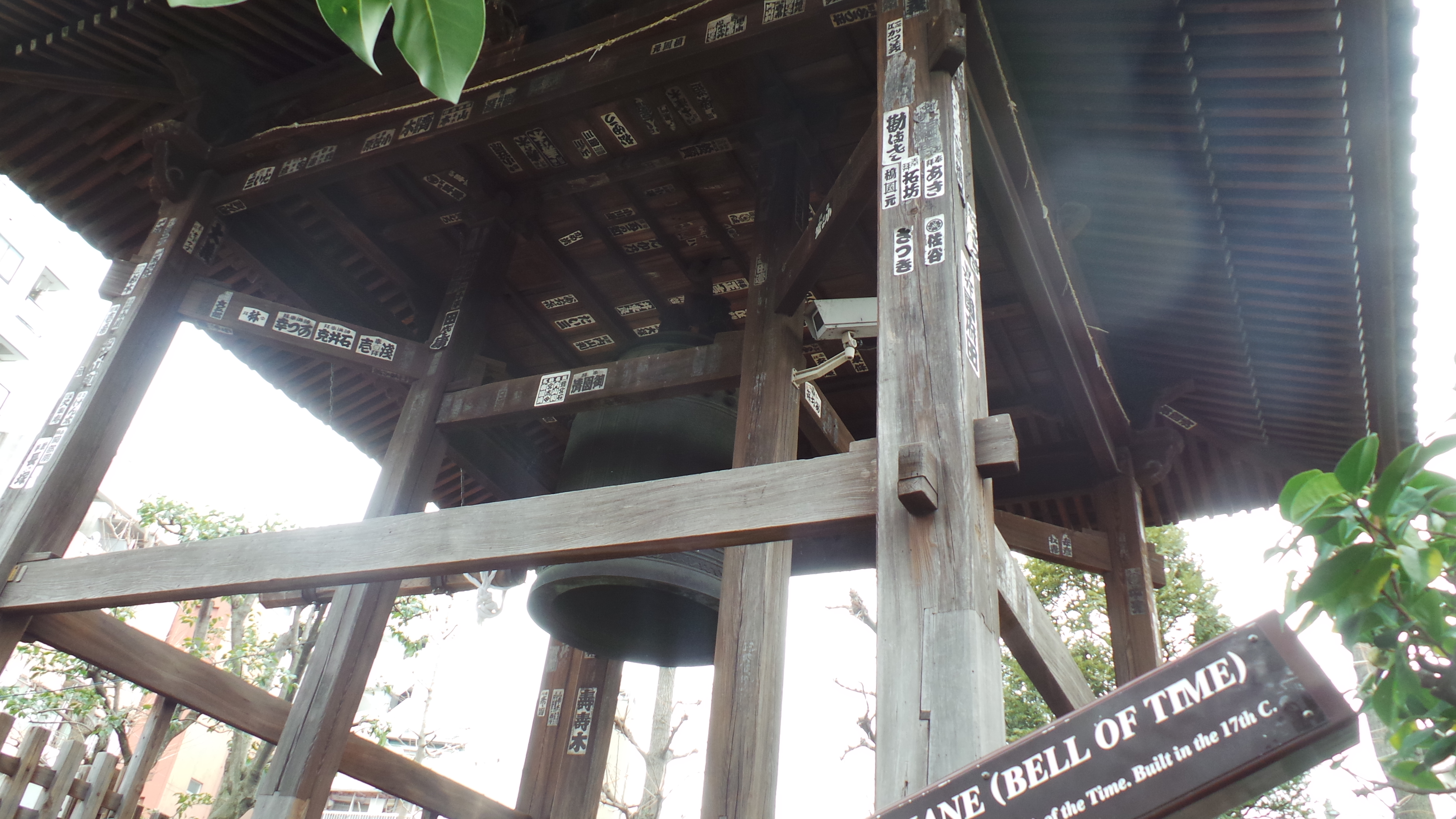
This innocent looking bell housed in a wooden structure, to the untrained eye, wouldn’t be significant. To my overactive imagination, this confirms my earlier suspicions that religion, or at least the area around Senso-ji Temple, was built by time travellers, and this bell was their time machine. Obviously, time travellers building temples sounds ridiculous, although the evidence is definitely here. If this isn’t the case though, then perhaps instead, religion is being used to make money here; exploiting the beliefs of innocent people, and making this area more attractive to tourists. It does seem from my brief attempt at investigating the area, that most of the information I have discovered is based entirely on lies.

Pot Without Season

The local elections are approaching, and this can only mean one thing: megaphones. It seems that in Japan, the person who can shout the loudest and for the longest time is most likely to receive the most votes during a successful election campaign. I’ve come to know this because, for the past three days, I have been rudely awakened by the sound of a man shouting ‘hello’ and repeating his own name over and over again.

Today, the man has decided to park his election truck outside my apartment. For ten minutes, he offers no information regarding his policy, no broken promises, or any reason to vote for him, other than his own name. Someone once told me that the reason for this shouting is to annoy younger voters, causing them to hate politics. Japan, with a larger number of elderly voters than young ones, makes me think that there might be some truth in these words.

electvan[1]

With a splitting headache, I decide the best thing to do today is to head to a park and relax, away from the shouting and the megaphones. I take my bicycle and cycle through Asakusa toward Ueno Park. Somehow, on Kappabashi Street, the man who was outside my house just twenty minutes previously has decided to park directly on my route to Ueno. It’s as though he’s following me, tormenting me. I need to escape this noise.

Japan is often described as a country of four definite seasons, or so a popular guidebook tells me. However, this doesn’t seem to be the case. This week has seen a day of snow, a day so full of rain that even an umbrella couldn’t protect me, and today, a day that is unusually warm. So warm, in fact, that as I enter Ueno Park, a wash of green leaves surrounds me, and standing out among the sea of green is a single tree adorned with white and pink blossoms.

sakura[1]

Cherry blossom season isn’t scheduled to begin for another month, yet one tree seems to have been confused by the recent strange weather, blossoming a month early. When I was told that every year, Japanese people go to the park or the river and take part in a festival known as ‘hanami’ (literally translating to mean ‘flower viewing’), I couldn’t really understand the appeal. Now, I am beginning to recognise the evanescent beauty of these flowers and the reasoning behind this spring festival.

I stand admiring the cherry blossom tree for a while before deciding that it’s warm enough for me to do one of my favourite things—exploring. I head in the direction of Kita Ward, a Tokyo ward without the annoying election campaign. Nishigahara is the area in this city that stands out for me. I spot a huge torii gate and a distant shrine, so I decide to investigate.

nanashashrine[1]

Nanasha Shrine was constructed to safeguard crucial documents related to the Age of Gods, recounting the mythology of how Japan was formed. Regrettably, in 1793, a fire engulfed these documents, conveniently erasing all evidence suggesting that Japan was created by mystical deities. Even a sign written in Japanese at the shrine’s entrance acknowledges the uncertainty, stating, ‘We can’t even be certain if the mythology is true, as the most important documents ever written were lost to fire.’

I continue exploring the Nishigahara area and stumble upon a vast park. Takinogawa Park boasts rock climbing facilities, an abundance of children playing football, and a dried-up pond that supposedly features a waterfall; the only element missing is the water. The park also showcases a very intriguing statue at its entrance, which, at first, I mistook for a misshaped tree.

stickman[1]

Hidden on a side path, there’s an ornamental display containing a rather old-looking piece of pottery. The pot is from the Yayoi period—an Iron Age era that began around 300 BC and lasted approximately six hundred years. These lightly decorated pots were the first in Japan to be made using a potter’s wheel; before this, all pots in Japan were crafted by hand.

I’m not sure why such a pot is on display in this small park in Nishigahara, or why it isn’t resting somewhere in a museum—protected from rain, theft, and stray footballs. Regardless, it does look rather nice. Even though it serves as an overlooked reminder of Yayoi Pottery and a memory of a distant past, I somehow enjoy its presence.

potterystatue[1]

A nearby sign states, ‘It may suggest that there was a place of ancient life in you,’ albeit, the sign is nowhere near the pot. Presumably, the sign is referring to the pottery, although this is simply my guess; I can see nothing else near the sign that could possibly relate to an ancient life in me. I note down the text on the sign before deciding that I’ve had enough of parks for one day. I turn around and cycle back in the direction of Asakusa.

On my way home, I make a brief stop for a sandwich outside Oku Station. Across from the station, I notice the strangest named hair salon I’ve seen in a while. Presumably, for the low cost of ¥1500, I can have my brains cut out. Even with my terrific megaphonic headache, the thought of my brains being severed by scissors is far too much to deal with right now.

cutbrains[1]

Brains intact, I arrive in Asakusa and find myself cycling down Orange Street. Despite taking this route many times this month, I hadn’t previously noticed that this street is lined on either side with bright, colorful Christmas trees. Perhaps they are a recent addition to Orange Street, but I will never know for sure. It feels to me that in Tokyo, all of the seasons have become blurred into one giant mess of time. I don’t even know whether today is Christmas Day, the middle of spring, or 300 BC.

The Age of the Gods

Today is National Foundation Day, the day that Emperor Jimmu was declared the very first Emperor of Japan, 2675 years ago. This marked a transitional period in the country’s history, ending what was known then as the Age of the Gods. It is often believed that before the accession of Emperor Jimmu, Japan was founded in an entirely different way.

It was once widely believed that the universe was engulfed in a chaos of sorts. The sound of particles moving around in a ball of confusion somehow created light. This light sat above the universe for a long time. Eventually, the particles began to fall, creating a blanket of clouds. From the clouds, five gods known collectively by the name Kotoamatsukami appeared from seemingly nowhere.

sunshinesumida

The five gods decided to cast four single droplets of water onto the oceans that formed on the planet below. Miraculously, these four drops materialised into huge land masses that are recognised today as the four main islands of the archipelago known as Japan.

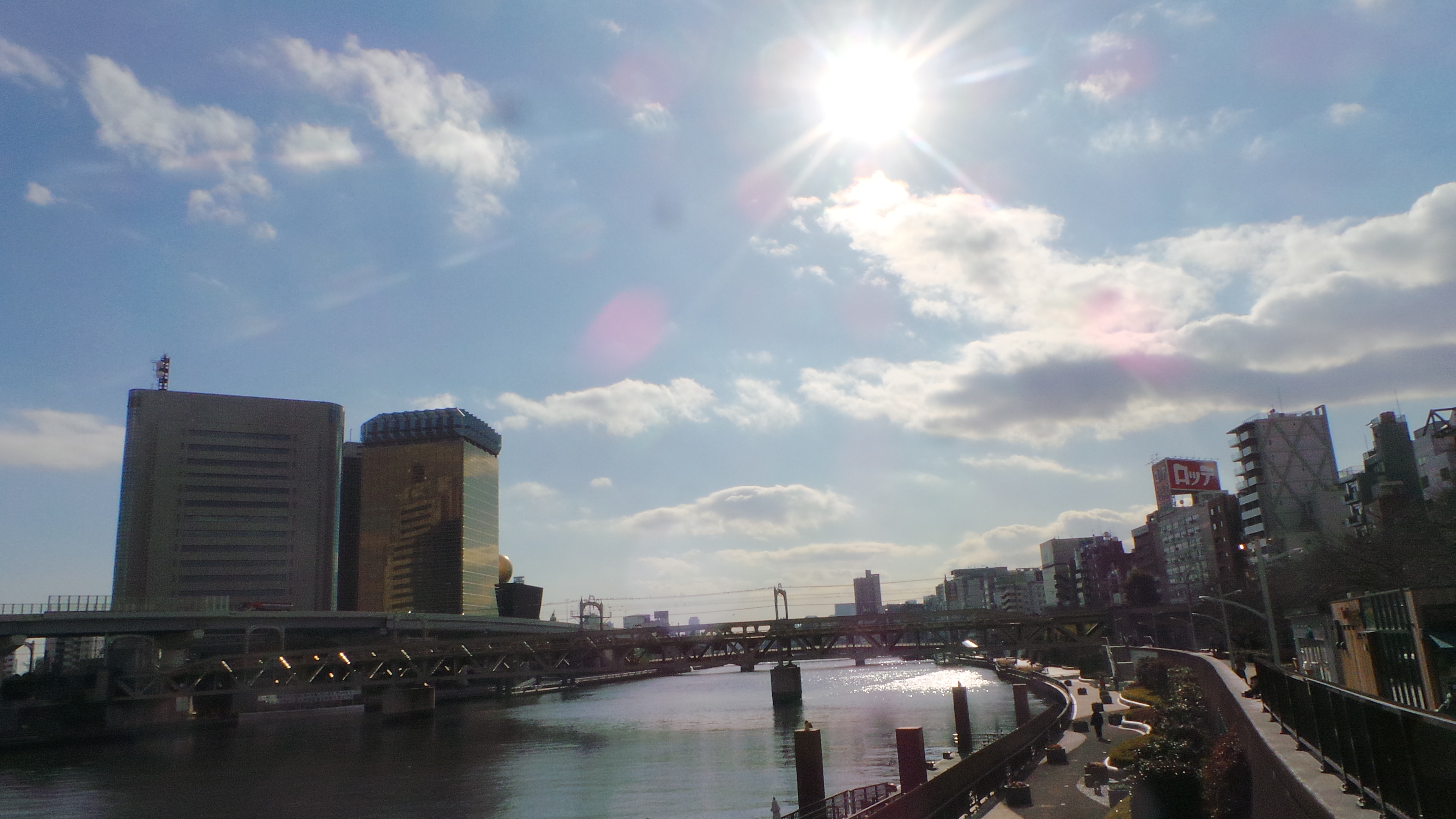
I take to the Sumida River to look at the sunshine and the clouds and think about the formation of the universe. The story of Japanese creation seems to completely exclude the genesis of all the other landmasses on the planet, but oddly, the theory is still believed today by some Japanese people. With no celebrations at all taking place, I decide to follow the path of the river in a new direction and end up in the area of Hashiba.

hashibagraff

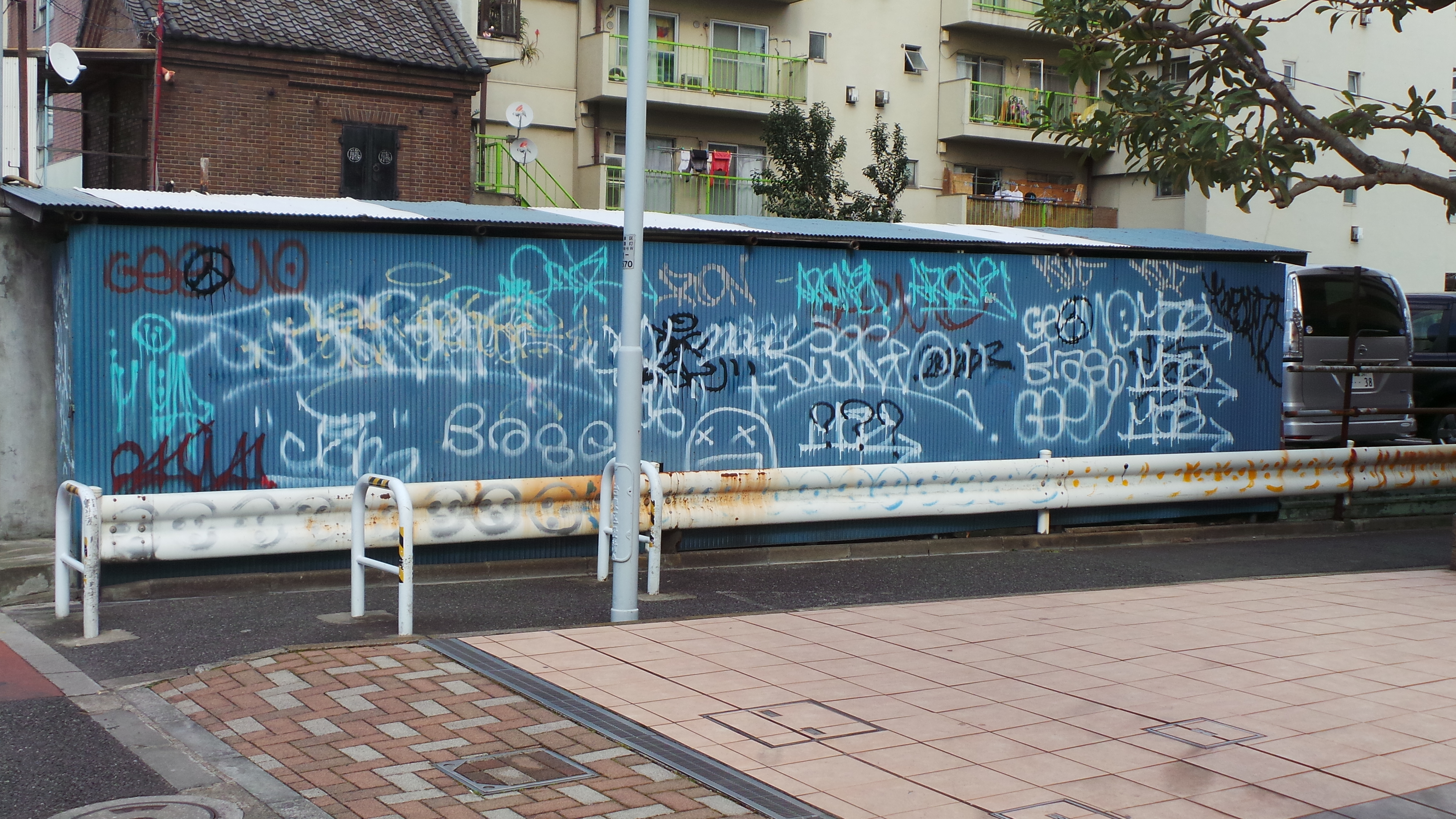
Hashiba is somewhat unusual. The first thing that strikes me is that there are no maps, no places of interest, and no tourists. Just plenty of graffiti. It always surprises me to see graffiti in Japan, something I had almost forgotten existed until today. The Hashiba area is connected to the river and was once used as a ferry terminal. A floating bridge existed here too, some time ago. Before that, this area was covered in overgrown fields.

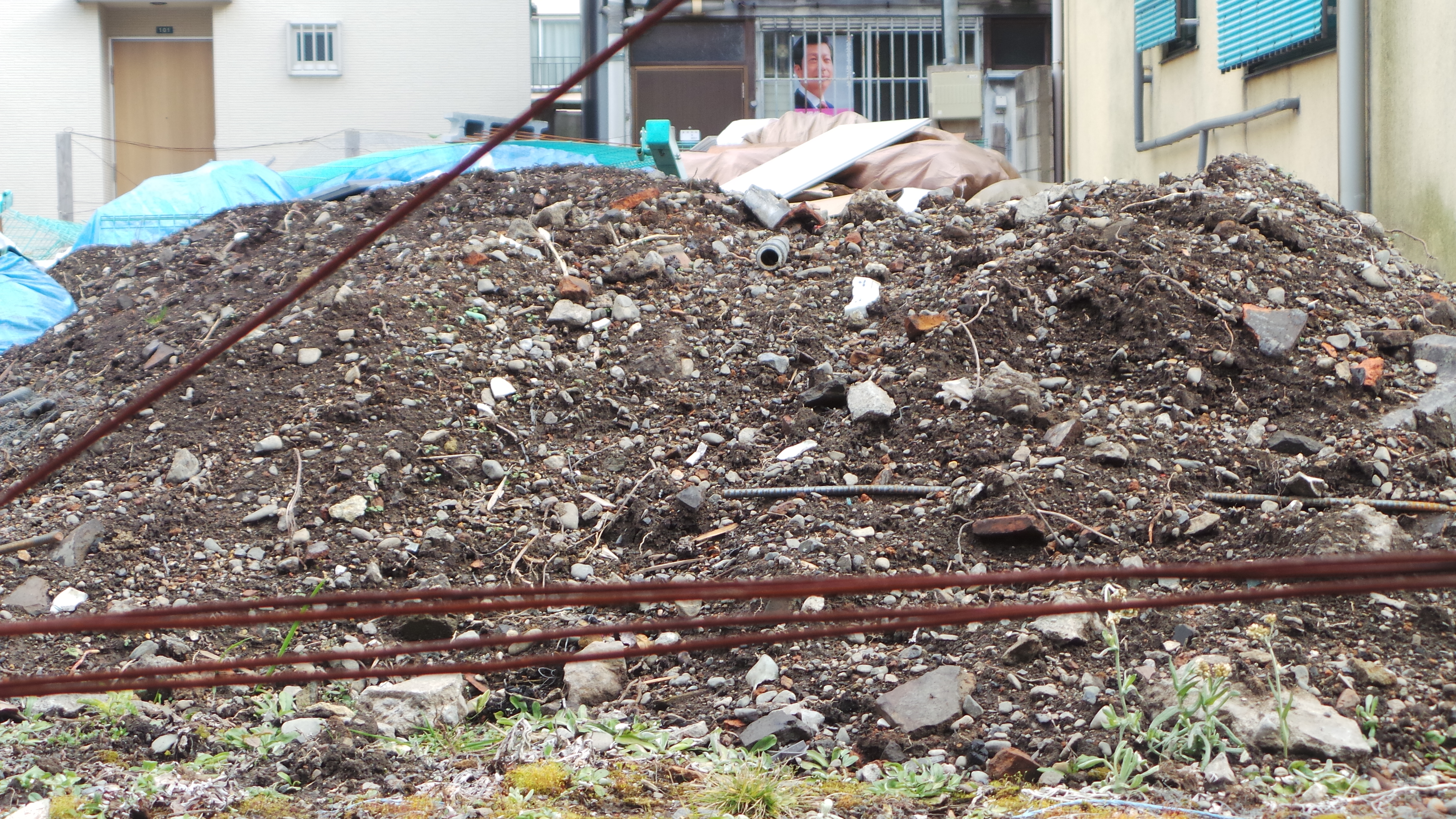
An older Japanese person I met with told me that he remembers coming here as a child to catch dragonflies and play in the long grass. The only sense of nature here now is the piles of dirt mixed with rubble, forgotten about and never removed.

nichirentrash

In this area, watching over the mounds of trash and the graffiti, sit election posters for the Komeito Political Party. The party was founded by members of the Nichiren sect of Buddhism and therefore does the unpopular act of mixing both politics with religion. I am not sure anyone is here to help Hashiba, though—a place that seems incredibly run down and feels almost absent of potential change.

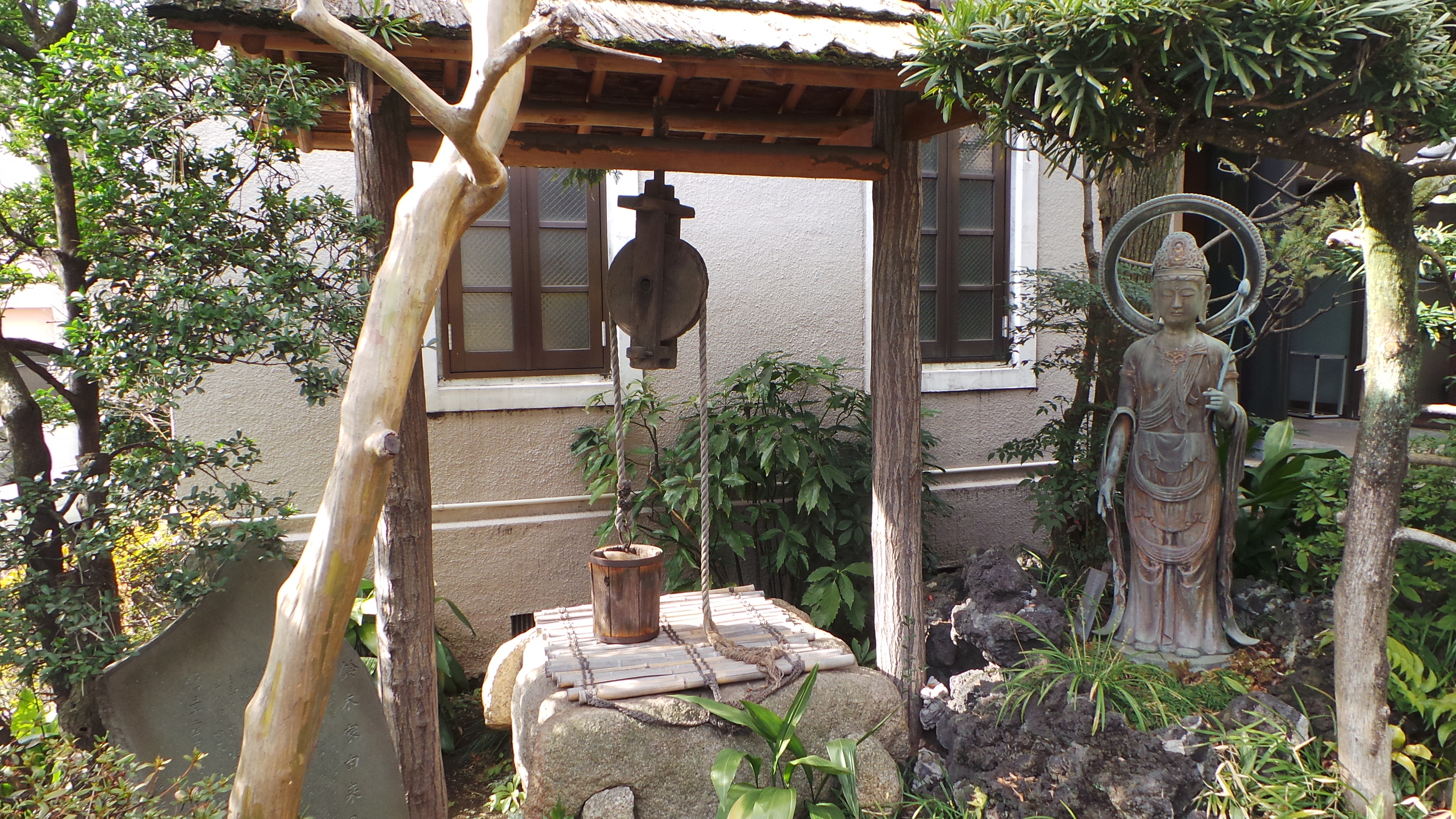
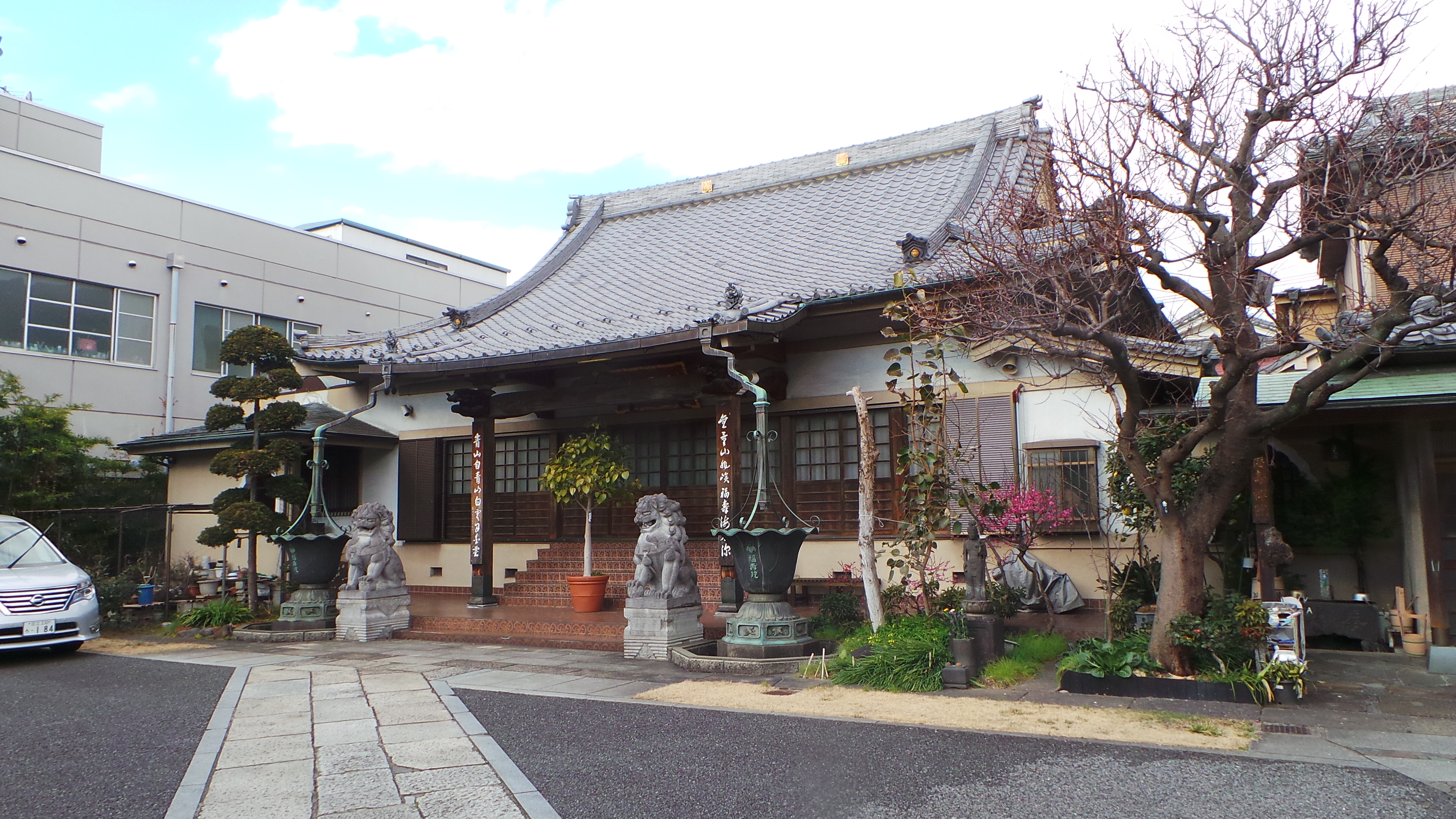
I decide to remain positive, to try to discover the good things about the area. Mixed amongst the negativity sits Hogenji Temple—a rather beautiful place with an old well, many stone statues, and a cemetery. For whatever reason, the grounds of the temple are filled with the sound of a loud chainsaw, disturbing the silence and further adding to my gloom-ridden impression of the area.

wellwell

Desperately trying to find a redeeming factor, I continue to explore. I wander around for a while until I eventually find a sign written in English. The sign is provided by the Tokyo Metropolitan Board of Education, which is usually a good indication that something important might be here. Finally, a point of interest. Finally, something to see.

What looks like another temple turns out to be a tomb. The tomb comes complete with its own nature in the form of beautiful trees and a huge aviary. As if deliberately trying to add to the contrast, the tomb also includes a basketball court.

andotoya

I discover that this is the final resting place of Ando Toya, a famous Confucian scholar. He was known for his time spent studying the Chinese language and teaching it to the people of Japan. He once said about the Chinese language, “It sounds like the chirping of birds. I can write, but when I open my mouth, I truly cannot speak.” This doesn’t quite explain the need for a basketball court here, but it does perhaps explain the aviary.

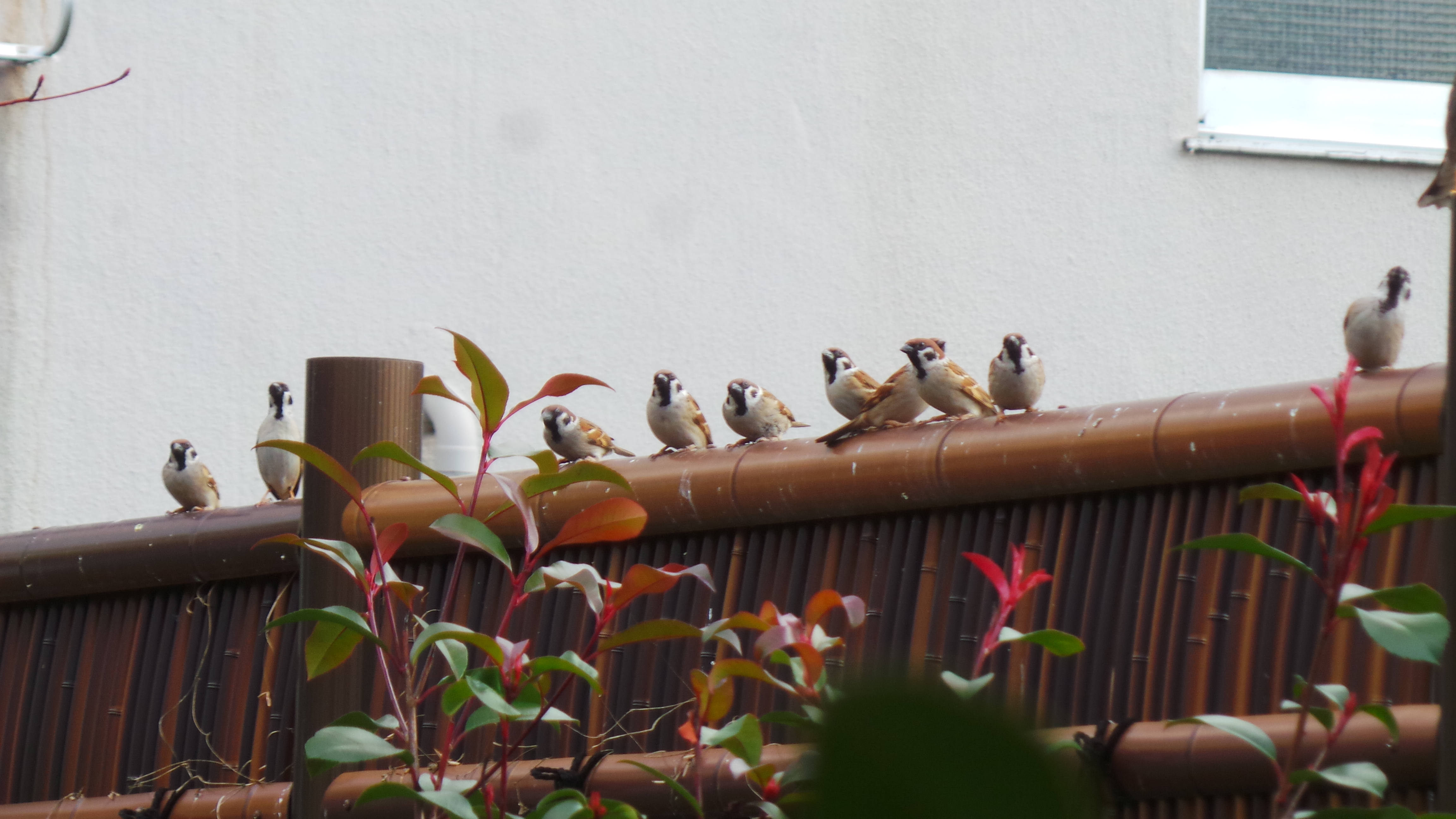
I stand in the grounds of Ando Toya’s tomb, staring in silence at the birds for almost a full hour.

sparrows

The beautiful sparrows chirp in their hundreds. The echoing of those words spoken by Ando Toya flows around my head. It makes me wonder if the birds are secretly trying to communicate with me in Chinese. Maybe they are.

A Mime to Kill (With Beans)

The snow came and went faster than a fleeting thought on a cold February morning. Despite the chill, a very famous festival is set to take place across Japan in two days’ time, known as Setsubun. The festival involves throwing roasted beans at demons and marks the penultimate day of winter, according to the Japanese lunar calendar. However, it doesn’t feel like spring is coming anytime soon; outside, it is cold, and patches of frozen white snow cover the city of Tokyo. Perhaps it will stay this way for another two months, or perhaps the unpredictability of Japanese weather will strike again.

The bean-throwing festival will be taking place at most of the temples and shrines in Japan. However, I have decided not to attend. Instead, a group of performing artists, some of whom have been featured in my previous posts, and a couple of whom I have randomly become friends with, are celebrating Setsubun in a very different way—with comedy, clowns, and plenty of balloons.

baloonmonster[1]

I arrive just as the event starts. It begins with a man dressed as a ninja performing tricks. He jumps over chairs, stacks some chairs, balances on chairs (his performance very much focused on seating), before being randomly attacked by a man wearing a sheep costume. The sheep man throws a single bean at the ninja; he overreacts in a classic comedy style before falling over and playing dead for the remainder of the proceedings. The sheep man has a costume made up entirely of balloons, the handiwork of my balloon artist friend, no doubt.

After the ninja fight, two demons emerge. One is dressed in white, presumably to represent good, and the other is dressed in black. The demon in black wears a target on his back, seems far too happy for an evil spirit, and appears to be enjoying standing around on his high stilts, smiling at everyone.

beanevil[1]

Suddenly, the attention shifts to a group of clowns standing on a balcony above a pachinko parlour. They start shouting in Japanese using megaphones. After exchanges are made between the clowns and demons that I can’t quite comprehend, people in the audience begin to laugh, a lot. An elderly woman on a bicycle with an impossible number of shopping bags sighs as she tries to weave through the crowds. I might just add, this whole festival is taking place on a busy shopping street and is perhaps causing a little too much chaos for some of the locals who just want to get to where they need to be.

After the shouting, all hell breaks loose. Paper bags are dropped from the sky by clowns in their thousands. Children and adults alike scramble to collect them from the floor. I raise my arm and catch one in mid-air. Everyone is rushing around, trying to salvage one of the decorated paper pouches. People are crashing into each other, forgetting about the safety of others. Regardless of the carnage, it’s actually a lot of fun.

beans[1]

The pouch I caught predictably contains roasted beans. After a while, everyone goes silent before a chant occurs. Following the chant, people start pouring beans into their hands and throwing them as hard as they can at the demon. His smile is quickly wiped from his face by roasted beans.

As I run out of beans, a little girl walks over to me and smiles. She takes my hand and pours beans into my palm. “Quickly! Throw!” she says before giggling off and returning to her parents. Eventually, everyone runs out of ammunition, and the event draws to a close. As people start to leave, the floor becomes a hunting ground for hungry pigeons. A man with a megaphone starts shouting at the birds, and they eventually fly away. The last thing that happens is all of the performers, clowns, demons, and mimes begin to clean the streets.

mimesweeper[1]

Something about seeing a mime hard at work sweeping the streets fills me with a sense of disappointment. It kind of spoils the character and takes away from the magic. I offer to help sweep using one of the many brushes, but I am shooed away, just like the pigeons.

I still have some of the afternoon to kill, so I head over to Senso-ji. It is the weekend, and there is usually something taking place around the temple. Sure enough, I find a street market, the usual man with his performing monkey doing some tricks, and strangely, for the first time ever, the temples and shrines in the complex are each holding some sort of service. I head into the main hall of Senso-ji Temple, and although it is very difficult to get close enough, I manage to sneak a quick photograph before being told once again to move on.

sensomon[1]

With nothing much else to do, and Asakusa now mostly quiet, I head home to eat some demon-killing beans.