Pot Without Season

The local elections are approaching, and this can only mean one thing: megaphones. It seems that in Japan, the person who can shout the loudest and for the longest time is most likely to receive the most votes during a successful election campaign. I’ve come to know this because, for the past three days, I have been rudely awakened by the sound of a man shouting ‘hello’ and repeating his own name over and over again.

Today, the man has decided to park his election truck outside my apartment. For ten minutes, he offers no information regarding his policy, no broken promises, or any reason to vote for him, other than his own name. Someone once told me that the reason for this shouting is to annoy younger voters, causing them to hate politics. Japan, with a larger number of elderly voters than young ones, makes me think that there might be some truth in these words.

electvan[1]

With a splitting headache, I decide the best thing to do today is to head to a park and relax, away from the shouting and the megaphones. I take my bicycle and cycle through Asakusa toward Ueno Park. Somehow, on Kappabashi Street, the man who was outside my house just twenty minutes previously has decided to park directly on my route to Ueno. It’s as though he’s following me, tormenting me. I need to escape this noise.

Japan is often described as a country of four definite seasons, or so a popular guidebook tells me. However, this doesn’t seem to be the case. This week has seen a day of snow, a day so full of rain that even an umbrella couldn’t protect me, and today, a day that is unusually warm. So warm, in fact, that as I enter Ueno Park, a wash of green leaves surrounds me, and standing out among the sea of green is a single tree adorned with white and pink blossoms.

sakura[1]

Cherry blossom season isn’t scheduled to begin for another month, yet one tree seems to have been confused by the recent strange weather, blossoming a month early. When I was told that every year, Japanese people go to the park or the river and take part in a festival known as ‘hanami’ (literally translating to mean ‘flower viewing’), I couldn’t really understand the appeal. Now, I am beginning to recognise the evanescent beauty of these flowers and the reasoning behind this spring festival.

I stand admiring the cherry blossom tree for a while before deciding that it’s warm enough for me to do one of my favourite things—exploring. I head in the direction of Kita Ward, a Tokyo ward without the annoying election campaign. Nishigahara is the area in this city that stands out for me. I spot a huge torii gate and a distant shrine, so I decide to investigate.

nanashashrine[1]

Nanasha Shrine was constructed to safeguard crucial documents related to the Age of Gods, recounting the mythology of how Japan was formed. Regrettably, in 1793, a fire engulfed these documents, conveniently erasing all evidence suggesting that Japan was created by mystical deities. Even a sign written in Japanese at the shrine’s entrance acknowledges the uncertainty, stating, ‘We can’t even be certain if the mythology is true, as the most important documents ever written were lost to fire.’

I continue exploring the Nishigahara area and stumble upon a vast park. Takinogawa Park boasts rock climbing facilities, an abundance of children playing football, and a dried-up pond that supposedly features a waterfall; the only element missing is the water. The park also showcases a very intriguing statue at its entrance, which, at first, I mistook for a misshaped tree.

stickman[1]

Hidden on a side path, there’s an ornamental display containing a rather old-looking piece of pottery. The pot is from the Yayoi period—an Iron Age era that began around 300 BC and lasted approximately six hundred years. These lightly decorated pots were the first in Japan to be made using a potter’s wheel; before this, all pots in Japan were crafted by hand.

I’m not sure why such a pot is on display in this small park in Nishigahara, or why it isn’t resting somewhere in a museum—protected from rain, theft, and stray footballs. Regardless, it does look rather nice. Even though it serves as an overlooked reminder of Yayoi Pottery and a memory of a distant past, I somehow enjoy its presence.

potterystatue[1]

A nearby sign states, ‘It may suggest that there was a place of ancient life in you,’ albeit, the sign is nowhere near the pot. Presumably, the sign is referring to the pottery, although this is simply my guess; I can see nothing else near the sign that could possibly relate to an ancient life in me. I note down the text on the sign before deciding that I’ve had enough of parks for one day. I turn around and cycle back in the direction of Asakusa.

On my way home, I make a brief stop for a sandwich outside Oku Station. Across from the station, I notice the strangest named hair salon I’ve seen in a while. Presumably, for the low cost of ¥1500, I can have my brains cut out. Even with my terrific megaphonic headache, the thought of my brains being severed by scissors is far too much to deal with right now.

cutbrains[1]

Brains intact, I arrive in Asakusa and find myself cycling down Orange Street. Despite taking this route many times this month, I hadn’t previously noticed that this street is lined on either side with bright, colorful Christmas trees. Perhaps they are a recent addition to Orange Street, but I will never know for sure. It feels to me that in Tokyo, all of the seasons have become blurred into one giant mess of time. I don’t even know whether today is Christmas Day, the middle of spring, or 300 BC.

The Adventures of Tin Toys

Yesterday, as I was walking around Yokohama, I noticed many interesting things on the numerous maps that adorned the streets. Having visited Yokohama only once before, I decided to stay the night and spend a second day exploring this historic city. While staring at the points of interest on the signs, one thing genuinely excited me: the Tin Toy Museum.

I begin my exploration by walking through the Yamate area. This place is characterised by interlocking stone pathways that bend and crawl at various steep degrees, reminiscent of my hometown with its steep hills and Western-style houses. Despite being a popular spot for tourists, locally known as ‘The Bluff,’ I am surprised to find that most maps in this hilly terrain are in Japanese. Needless to say, I get lost and eventually stumble upon a random Spanish-style house.

flutepiano[1]

There is no charge to enter the house, but upon entry, I am required to remove my shoes. Inside, I find a woman playing the flute, accompanied by another woman on the piano, seemingly without any apparent reason. While I recognise the melody, I struggle to put a name to it. As I wander around, I am afforded the opportunity to explore a genuine Spanish kitchen, complete with old cutlery. It surprises me to learn that the house was built by an American but designed by a British architect, adding a layer of complexity to its Spanish theme that I can’t quite comprehend. The Bluff is dotted with many houses of diverse styles, allowing visitors to freely wander and experience the architecture of different countries. From the balcony window, I catch a glimpse of what locals refer to as the ‘British House’ in the distance.

I make my way into the dining room, anticipating tables and chairs, only to be surprised by the presence of strange artwork that clearly doesn’t belong in this space.

hotair[1]

I leave the house, resuming my quest for the Tin Toy Museum. I meander through a cemetery for British soldiers and emerge on the other side. Stumbling upon the oldest wooden Christian church in Japan, I find it of little interest and continue walking for about an hour through maze-like streets. Finally, I locate a map in English. The Tin Toy Museum is on the opposite side of The Bluff, close to the house I visited earlier. I navigate steep hills and winding alleyways, and after another half-hour, I arrive at the museum, half-expecting it to be closed today.

At the entrance, I pay ¥200 and race inside.

oldrobots[1]

As I step inside the Tin Toy Museum, I’m greeted by the sound of The Beatles’ album ‘Help!’ playing from the speakers—an unexpected but delightful touch. The exhibition showcases over three thousand miniature toys produced in Japan between 1890 and 1960. Most of the toys, ranging from cars and rockets to robots, form the extensive personal collection of Teruhisa Kitahara, a man with a passionate affection for all things toy.

A sign next to some rather unsettling clowns reads, “Clown and circus toys are highly comical, perfectly capturing the lively movement of the circus. They are popular for their acrobatic flair.” Inside the museum, there’s a second exhibit called the ‘Mini-Mini Museum.’ Included in the ticket price, this small shoe-box-sized exhibit initially seems like a pointless distraction. However, as I explore, I discover it features even smaller toys than I could have imagined were possible to create.

naoko[1]

Back at the main exhibition, I find that JAXA astronaut Naoko Yamazaki has visited here too, and she appears to have forgotten a signed postcard of herself, left amongst Atomic Rockets and Space Ship X-7’s. I feel tempted to buy a remote control alligator for the price of a month’s rent, but I instead opt for a wind-up robot for ¥1242; quite expensive, but full of nostalgia, and I like robots.

I leave the museum and the Yamate area, heading for Yamashita Park. The park, situated on the waterfront, is unfortunately cast in shadow by the massive Hikawa Maru, an ocean liner that blocks the sunshine and seems unnecessarily colossal. Nowadays, it serves as another museum, overshadowing the park inconsiderately. Nevertheless, the reason for my visit to this park was sparked by a sign pointing to another point of interest that intrigued me – the Statue of the Guardian God of Water.

guardianofwater[1]

It’s no secret that I enjoy irony, so I find it incredibly amusing that the statue here stands within a construction site, placed in a small pond filled with bricks and completely devoid of any water whatsoever. I can’t imagine the statue is pleased with its surroundings.

My final stop in Yokohama is also within Yamashita Park – the Statue of the Little Girl with Red Shoes On. I didn’t have specific expectations, but the description on the sign proved accurate. The girl represents a children’s song from 1922 called ‘Akai Kutsu,’ written by Ujo Noguchi, translating to mean ‘Red Shoes.’

redshoes[1]

A young girl with red shoes, was taken away by a foreigner.
She rode on a ship from Yokohama pier, taken away by a foreigner.
I imagine right now she has become blue-eyed, living in that foreigner’s land.
Every time I see red shoes, I think of her.
And every time I meet a foreigner, I think of her.

I’m not too sure what the song is about, and the only explanation offered by the sign is that Yokohama City wants this statue to become a cherished landmark for its countless visitors. Sadly, most visitors seem to just walk along, not giving the statue a second glance.

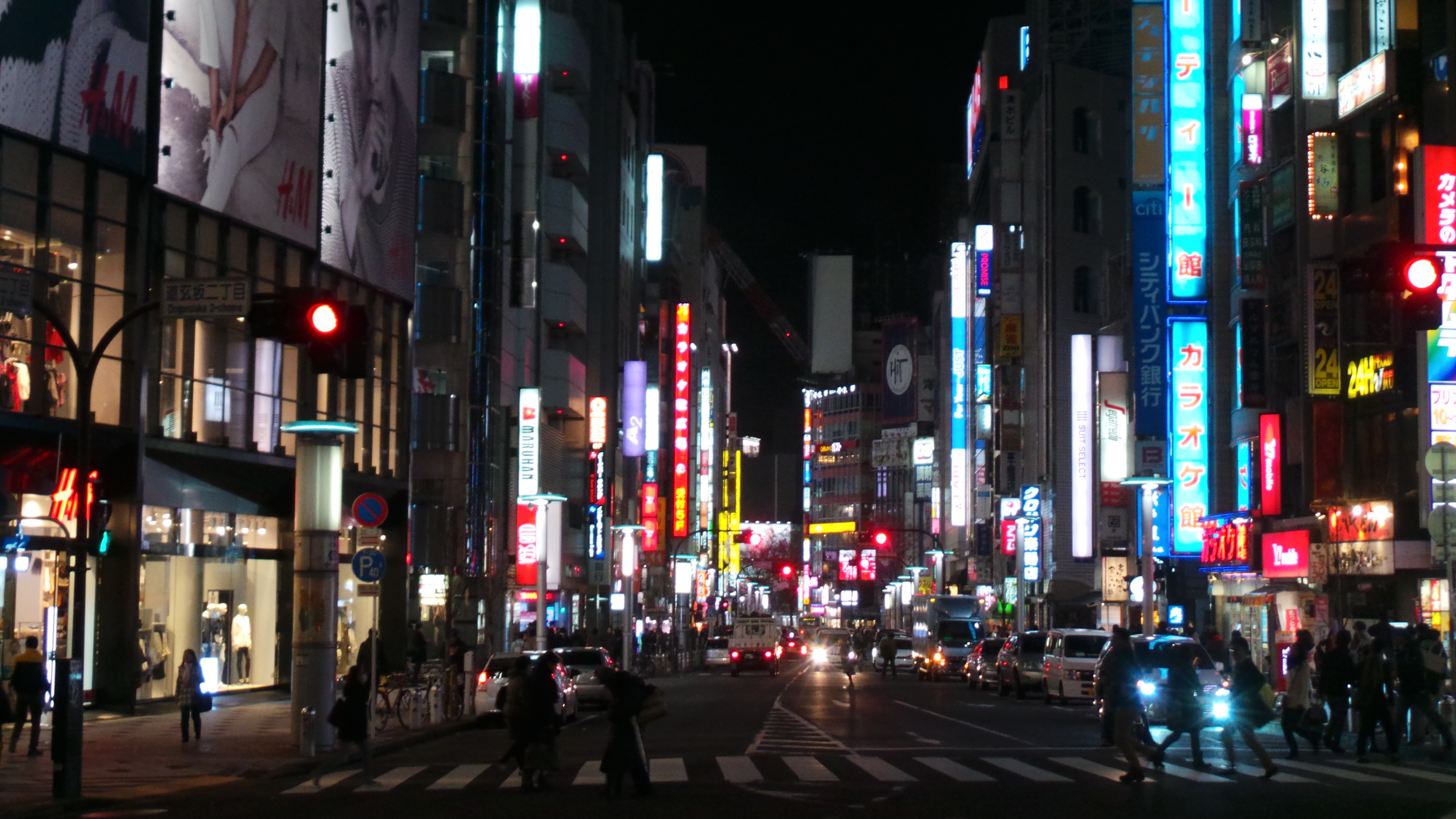
I decide that there is little else to do in Yokohama; despite having enjoyed two nice sightseeing days, it is time to head back to the reality of Tokyo. I take the train over to Shibuya. As I leave the station, I navigate through crowds of photographers capturing images of what once was and still is – just a crossing. The bright lights of Shibuya act as a neon reminder of what I was expecting Japan to look like before I arrived here nine months ago.

backtoshibuya

I wander aimlessly for a while through the busy nightlife before feeling overwhelmed by the lights and sounds, eventually making me feel dizzy. After a tiring few days, it’s time for me to go home. I buy some takeaway food for the train, taken away by a foreigner, and head back to Minowa.

Wig Trouble in Little Chinatown

I am a little way outside of Tokyo, in Yokohama. The area was once a quaint fishing town where nothing much really happened. After the Americans came with their ships, Yokohama opened Japan up to the world of foreign trade, and these days, Yokohama has become one of the major ports for trade in Japan.

My first stop is the site where the Japan-America Treaty of Amity and Friendship was concluded. The treaty, also known as The Treaty of Kanagawa, was signed in 1854 on this very piece of ground and effectively changed the way Japan dealt with people from other countries. The signing also gave birth to the flourishing city of Yokohama. A memorial made up mostly of mirrors is here now, and uneven ground at the centre of this historic spot has become the ideal place for rainwater to collect.

treaty[1]

With so much history in the area, Yokohama features many foreign buildings and places and is heavily influenced by various different cultures. It is one such culture that brings me here today – the Chinese. Today is, of course, Chinese New Year, so I thought the ideal place to celebrate would be in a city with its very own Chinatown.

Marking the entrance to Chinatown hangs a brightly coloured gate. The first thing I notice is that beyond the gate, the rows of Chinese restaurants and shops no longer resemble Japan. Tucked between two such restaurants sits a branch of Starbucks Coffee, instantly shattering the illusion that I might actually be in China. I make my way through the crowds and arrive at a temple.

chinatown2[1]

Yokohama Kanteibyo is a Taoist temple dedicated to the Chinese general Guan Yu, now recognised as the god of war and victory. Built in 1871 by Chinese migrants, the temple has been destroyed four times but always rebuilt, a common theme in Japan regarding temples. These days, the temple symbolises good luck and good fortune in business, attracting a crowd of Chinese residents and tourists celebrating the Chinese New Year.

Inside the temple, people queue up to pay ¥1000 for a piece of scented wood. The lit incense is then placed into a pot. Burning the first incense of the New Year is considered especially important in Chinese culture, with participants believed to invite prosperity for the upcoming year.

chinatown1[1]

After the incense, people retrieve their fortune, following a tradition similar to that of Japanese temples and shrines. Common themes emerge between the two cultures, such as celebrating the New Year by visiting a temple or shrine, offering the first prayer or burning incense, and enjoying traditional food. The notable distinction today is the upcoming Lion Dance.

I exit Yokohama Kanteibyo and step into the lantern-lined streets. Drawing in twenty-one million visitors annually, Yokohama Chinatown is the largest in Japan, boasting over six hundred shops and restaurants crammed into this compact area. Today, it seems like all twenty-one million have converged here, as both sides of the streets are teeming with people. The congestion makes it challenging for me to move freely.

chinatown6[1]

I find a decent spot in the crowd and wait. Despite the imminent Lion Dance parade, the road remains open for vehicles, creating a potentially dangerous situation. A traditional Chinese vehicle labelled ‘Family Mart’ manoeuvres through the throng, coming perilously close to running over someone. Each time a vehicle passes, a man with a megaphone urgently urges everyone to step back, causing chaos. Additional delays occur due to a problem with the head of the lion costume, pushing the Lion Dance to start an hour later than scheduled, finally commencing at half-past four.

Firecrackers, louder than the Big Bang, shatter the silence. The abrupt explosion of sound startles me, eliciting frightened cries from children in the vicinity. Soon after, a man adorned in a lion costume emerges, prompting cheers from the crowd. Accompanied by the rhythmic beats of drums, the lion commences its dance. I manage to observe the lion’s performance for approximately four seconds before it vanishes into a Chinese restaurant, presumably continuing to dance around inside.

chinatown3[1]

As the lion re-emerges from the restaurant, its head is removed, and the drumming ceases. This anticlimactic moment leaves me wondering if there’s more to come. I linger for a while, hoping for additional excitement, but the crowd has largely dissipated. The firecrackers echo once more, leaving the air tinged with a gloomy white smoke, and the lion resumes its dance into the next Chinese restaurant. Bored with the spectacle, I decide to bid farewell to Chinatown in search of something more intriguing.

Strolling around for approximately an hour, I stumble upon something of historical significance. In 1871, shortly after the signing of The Treaty of Kanagawa, a street named Nihon-O-dori was constructed. This street holds historical importance as the first modern street ever built in Japan. Originally, it was established as a division between the settlement of overseas migrants and the Japanese population.

justaroad[1]

The signboard reads, “This street presents the best opportunity to enjoy glimpses of Yokohama’s past.” I stroll along the entire thirty-six metres of the concrete street, attempting to savour glimpses of the past. However, my usual lack of enthusiasm is once again disrupted by the sight of a giant Ferris wheel looming in the sky above.

The Age of the Gods

Today is National Foundation Day, the day that Emperor Jimmu was declared the very first Emperor of Japan, 2675 years ago. This marked a transitional period in the country’s history, ending what was known then as the Age of the Gods. It is often believed that before the accession of Emperor Jimmu, Japan was founded in an entirely different way.

It was once widely believed that the universe was engulfed in a chaos of sorts. The sound of particles moving around in a ball of confusion somehow created light. This light sat above the universe for a long time. Eventually, the particles began to fall, creating a blanket of clouds. From the clouds, five gods known collectively by the name Kotoamatsukami appeared from seemingly nowhere.

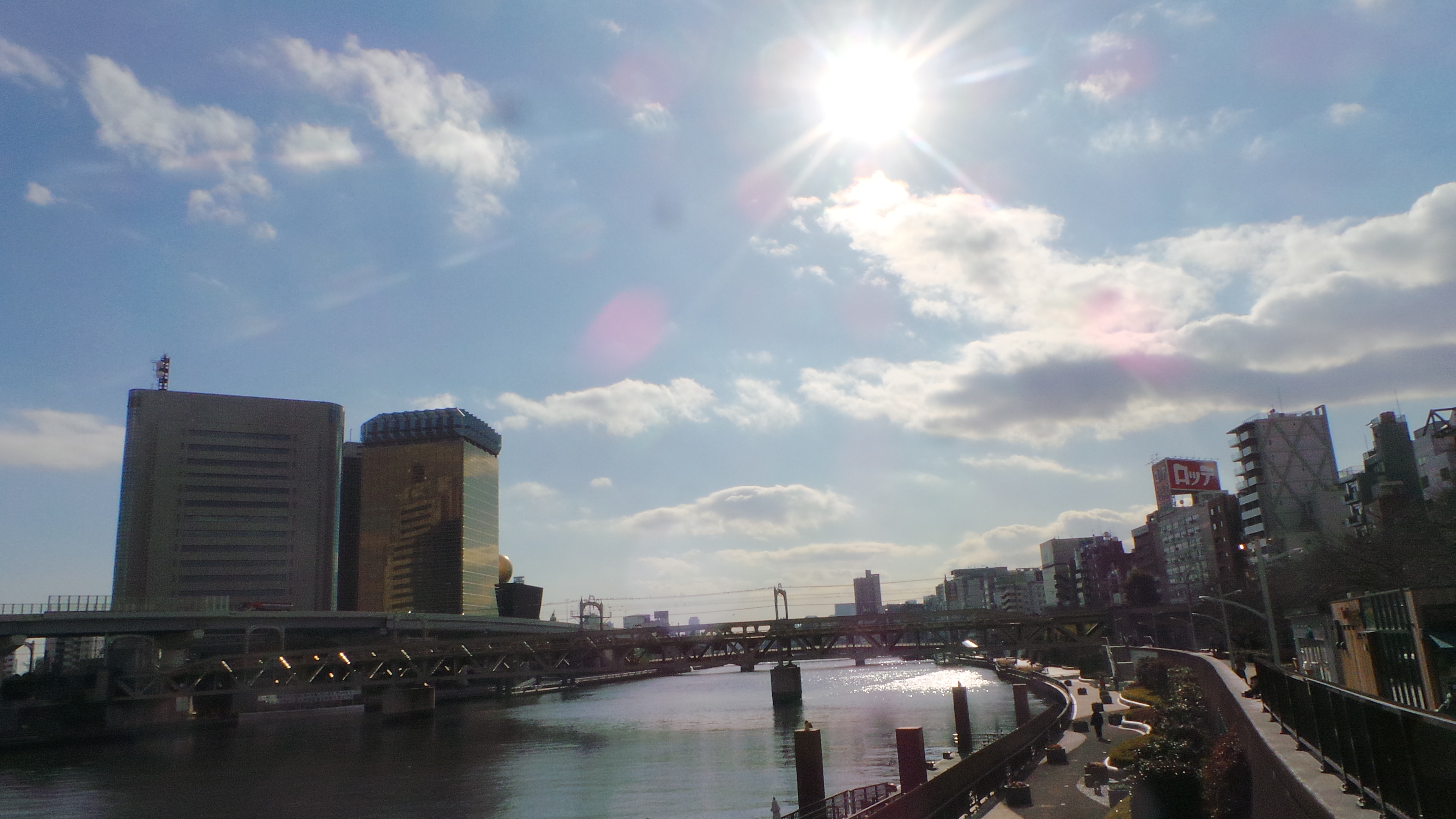
sunshinesumida

The five gods decided to cast four single droplets of water onto the oceans that formed on the planet below. Miraculously, these four drops materialised into huge land masses that are recognised today as the four main islands of the archipelago known as Japan.

I take to the Sumida River to look at the sunshine and the clouds and think about the formation of the universe. The story of Japanese creation seems to completely exclude the genesis of all the other landmasses on the planet, but oddly, the theory is still believed today by some Japanese people. With no celebrations at all taking place, I decide to follow the path of the river in a new direction and end up in the area of Hashiba.

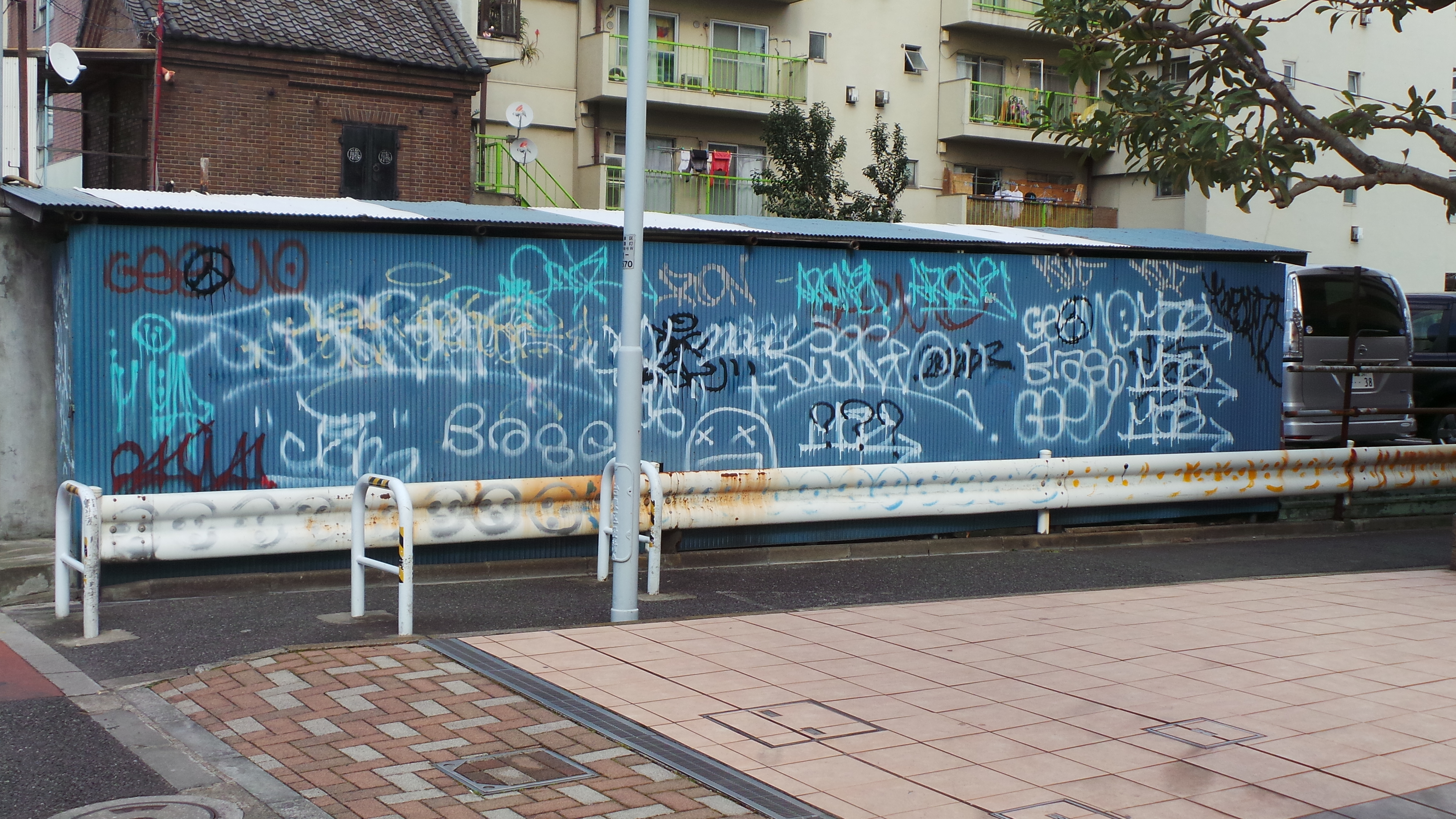
hashibagraff

Hashiba is somewhat unusual. The first thing that strikes me is that there are no maps, no places of interest, and no tourists. Just plenty of graffiti. It always surprises me to see graffiti in Japan, something I had almost forgotten existed until today. The Hashiba area is connected to the river and was once used as a ferry terminal. A floating bridge existed here too, some time ago. Before that, this area was covered in overgrown fields.

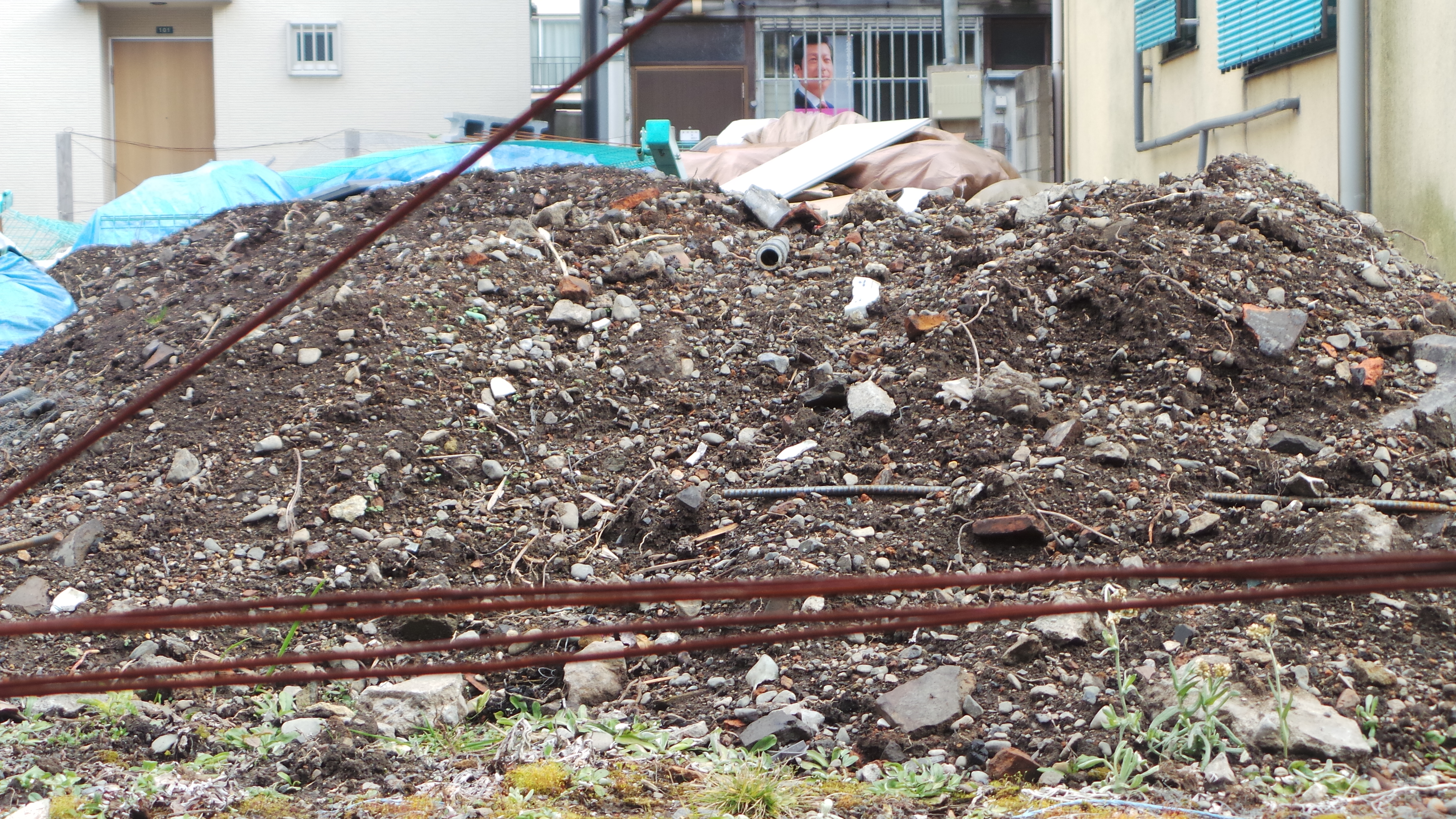
An older Japanese person I met with told me that he remembers coming here as a child to catch dragonflies and play in the long grass. The only sense of nature here now is the piles of dirt mixed with rubble, forgotten about and never removed.

nichirentrash

In this area, watching over the mounds of trash and the graffiti, sit election posters for the Komeito Political Party. The party was founded by members of the Nichiren sect of Buddhism and therefore does the unpopular act of mixing both politics with religion. I am not sure anyone is here to help Hashiba, though—a place that seems incredibly run down and feels almost absent of potential change.

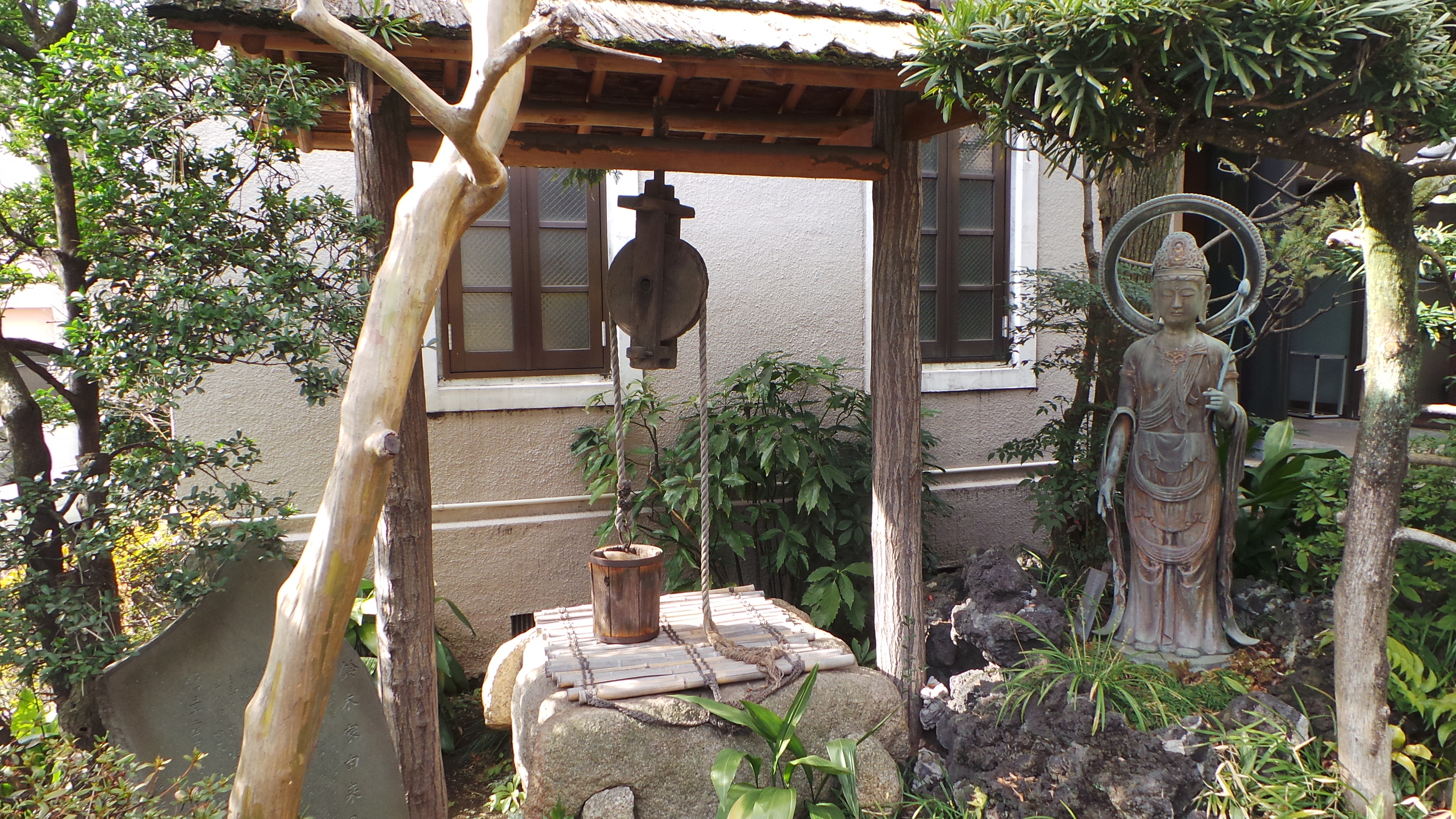
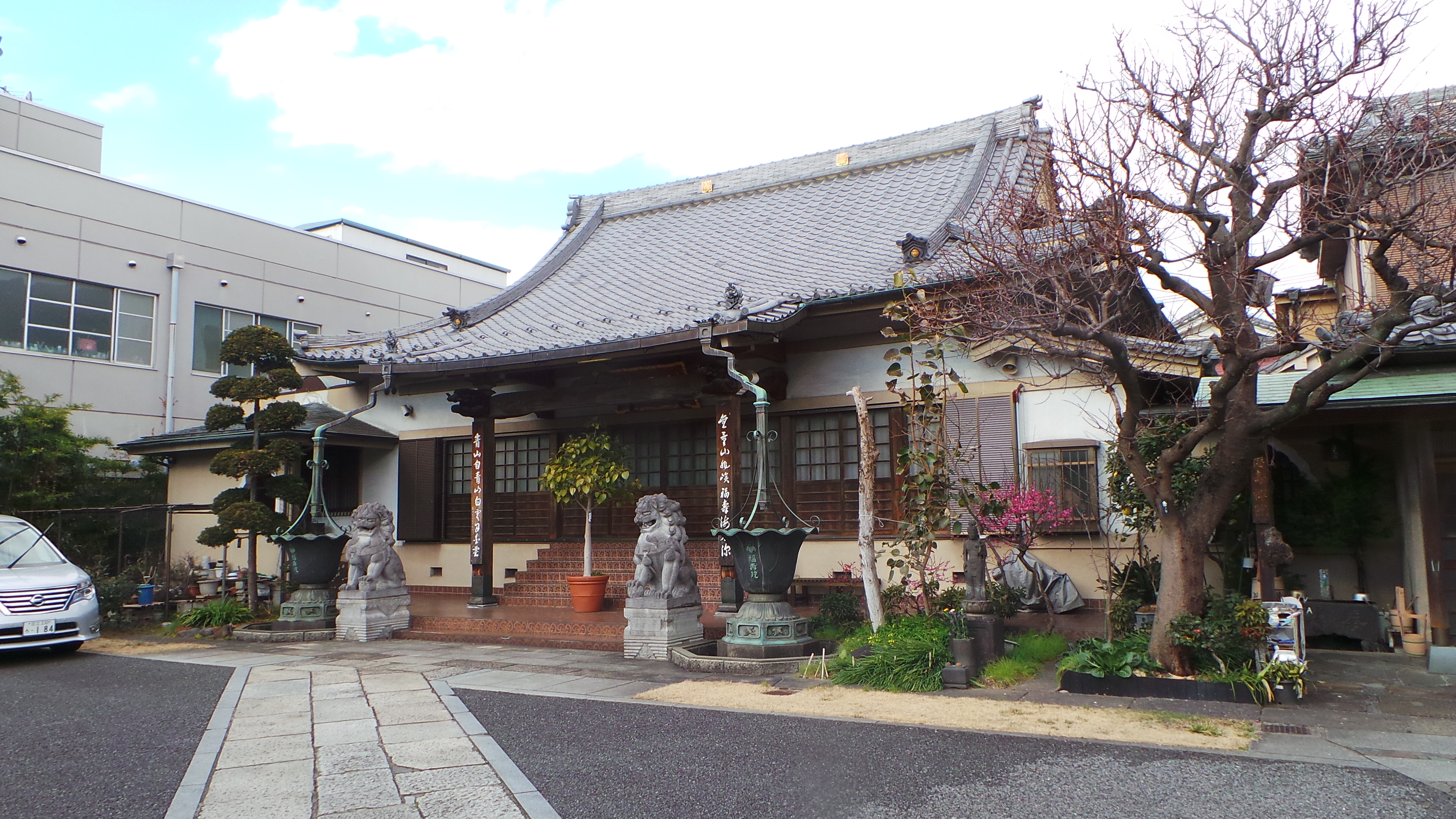
I decide to remain positive, to try to discover the good things about the area. Mixed amongst the negativity sits Hogenji Temple—a rather beautiful place with an old well, many stone statues, and a cemetery. For whatever reason, the grounds of the temple are filled with the sound of a loud chainsaw, disturbing the silence and further adding to my gloom-ridden impression of the area.

wellwell

Desperately trying to find a redeeming factor, I continue to explore. I wander around for a while until I eventually find a sign written in English. The sign is provided by the Tokyo Metropolitan Board of Education, which is usually a good indication that something important might be here. Finally, a point of interest. Finally, something to see.

What looks like another temple turns out to be a tomb. The tomb comes complete with its own nature in the form of beautiful trees and a huge aviary. As if deliberately trying to add to the contrast, the tomb also includes a basketball court.

andotoya

I discover that this is the final resting place of Ando Toya, a famous Confucian scholar. He was known for his time spent studying the Chinese language and teaching it to the people of Japan. He once said about the Chinese language, “It sounds like the chirping of birds. I can write, but when I open my mouth, I truly cannot speak.” This doesn’t quite explain the need for a basketball court here, but it does perhaps explain the aviary.

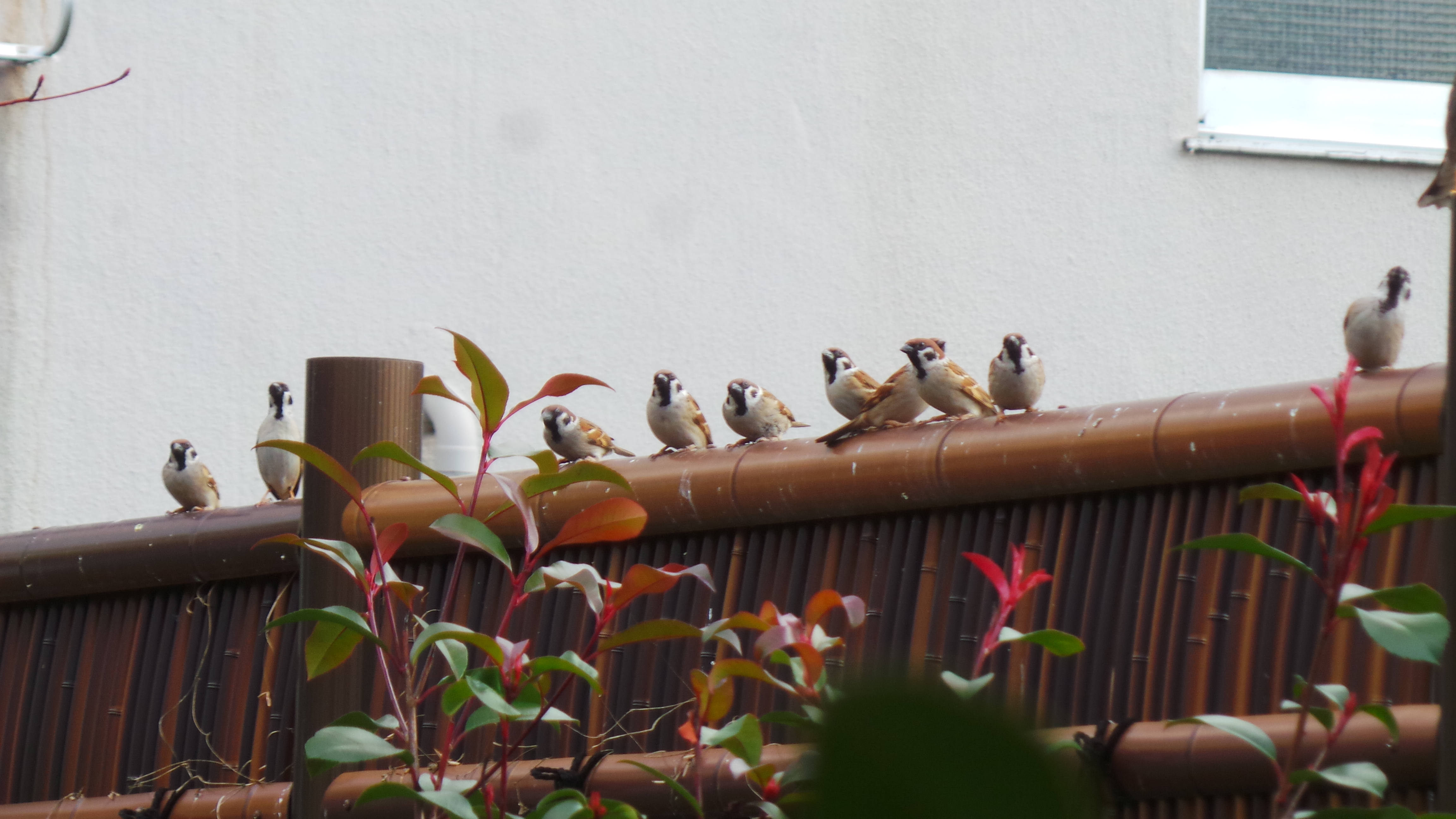
I stand in the grounds of Ando Toya’s tomb, staring in silence at the birds for almost a full hour.

sparrows

The beautiful sparrows chirp in their hundreds. The echoing of those words spoken by Ando Toya flows around my head. It makes me wonder if the birds are secretly trying to communicate with me in Chinese. Maybe they are.

A Handful of Salt

Sometimes in Japan (and the same can be said for life in general), I have absolutely no idea what is going on. Today, a red carpet has been placed in the middle of a busy road. Not only does this carpet obstruct many motorists who drive down here every day, but it actually stretches the entire length of Kappabashi Street – and Kappabashi Street is a very long street indeed. Is the head of state making a surprise visit? Is some type of awards ceremony about to take place, perhaps? Or is there no reason at all for this vermilion impediment? Only time can provide the answer.

redcarpet[1]

For the last few months, I have been trying my hand at a little private English conversation practice with just one student—a 71-year-old Japanese man who has lived in Asakusa all his life. With a keen interest in food and Japanese history, he has provided me with an endless source of knowledge about post-war Japan and the changing attitudes amongst Japanese people. I enjoy teaching him, and our conversations often cover an array of topics, such as Bonseki, China Syndrome, and foods I’ve never heard of before in my life. Today, we are heading out to try such a food.

He drives us across Tokyo to Yotsuya. On the way, he starts a conversation with the dashboard of his Toyota, instantly reminding me of something from a science-fiction movie. In Yotsuya, we visit a shop called Ariakeya. The shop specialises in selling just one dish—a Japanese delight known as ‘tsukudani’.

fishfish[1]

If I were to ask anyone to name three foods associated with Japan, tsukudani probably wouldn’t even get a mention; and, if I’m completely honest, I had never heard of it until last week. Tsukudani most commonly involves seaweed, meat, or fish (often pond fish) that has been simmered in soy sauce and mirin. It can be eaten up to a year after it is made. Many years ago, this was a staple food in Japan, but due to its high salt content, it has become somewhat less popular, with concerns about salt being bad for health and such.

The woman in the shop is very pleasant and can speak excellent English; she has even prepared an English menu for me in anticipation of my arrival. I am offered samples of various dishes before settling on my favourite, Maguro—cubes of tuna. Soft, but surprisingly chewy at the same time, the outside is extremely salty but very sweet. The middle offers a dryness that you would expect from marinated cubes of cooked tuna. Overall, the fish is pleasantly moreish.

As we leave the shop, I notice a small tray of salt outside the entrance to a restaurant, guarded by a shisa—an Okinawan dragon. Curious about the purpose of this salt display, I ask my student. In his usual enthusiastic way, he explains to me that many years ago, the Emperor of China lived in a Palace so big that the only way he could get anywhere fast was to ride around on the back of a bull. Inside the Palace, the Emperor had three thousand women, each in separate rooms. Every night, the Emperor would tour the Palace on the back of his faithful bull and decide which woman he would spend the night with.

bullsalt[1]

The women knew that the Emperor rode around on a male cow; I mean, everyone knew, it was hardly a secret. The women were all desperate to marry the Emperor, for the wealth and status they would receive if such a ceremony occurred. Finally being freed from their solitary rooms in the Palace was often considered a secondary incentive. Somehow, the women discovered that the bull liked eating salt, so every night, they would place saucers of salt outside their rooms. The bull would smell the salt, stop to eat, and hopefully, the Emperor would choose that room to spend the night. Somehow, this tradition of salt piles outside of rooms came over to Japan, and salt is now placed outside many restaurants. Bulls represent customers, or so the custom goes. The story made me wonder if the idiom ‘Like a bull in a china shop’ took any of its origin from the same story, but before I have time to ask, we are back in Asakusa, and I have a red carpet to inspect.

Back at Kappabashi Street, some women are singing in front of a man that I think is supposed to be a clown. Eventually, though, answers come, and the reason for the whole street being closed off becomes apparent.

kappacarpet[1]

A kappa (or at least a man dressed as one) follows the red carpet, walking the length of Kappabashi Street. The kappa stops intermittently to wave at the passing crowd, walking alongside an old woman carrying a scroll, and has a big red heart painted on its back. I have no idea why. No idea about any of this.

Back at home, I dine on my neatly wrapped packet of tuna cubes, which cost ¥432. Tsukudani is usually enjoyed with rice, but I will snack on this salty-sweet tuna as it is. Unfortunately, this type of food is not too pleasing on the eye; it might look like something you would serve to a domestic animal or a bull, but its taste suggests that this might be a bit of a waste. The tuna is, in fact, delicious and perhaps one of the best foods I have tried in months. The only problem, again, is the high salt content, but that shouldn’t put you off trying it at least once.

tunacube[1]

I seldom place links to other websites, but I genuinely enjoyed the food from Ariakeya, and they were very nice to me, so here is their shop:

http://www.ariakeya.com/