Parks and Simulation

It’s humid beneath my mask. It appears that it rained slightly this morning for the first time in weeks, but now it’s hot. I can’t begin to imagine what the summer will be like. I shouldn’t complain though, the unusually warm start to the winter is set to end later this week, and Japan will become enveloped in an icy-cold ambience.

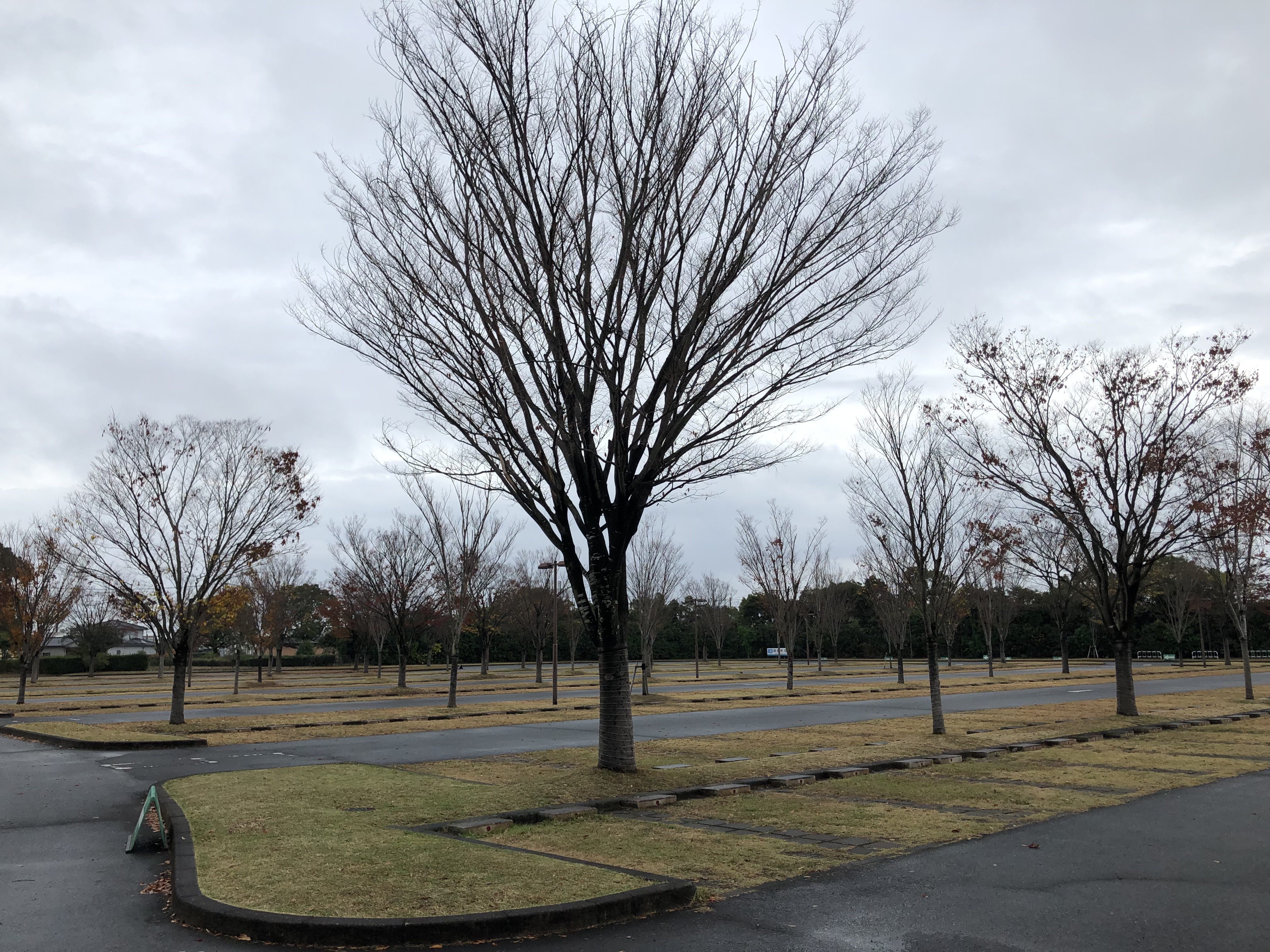
I take a train to Saga Prefecture, my first destination today, Yoshinogari Historical Park, an archæological site dating back to between the 3rd century BC and the 3rd century AD. I walk two kilometres from the nearest train station, and arrive at the entrance. The car park here is huge, empty, and covered in fallen leaves from the skeletal trees.
I arrive at the aptly named Entrance Zone. Each area of this park has a zone name. There is the Ancient Forest Zone, the Moat Encircled Village Zone, the Aztec Zone, and the Medieval Zone. I pay the ¥460 entrance fee, and note that the two day pass costs only slightly more, a reasonable ¥500.

After crossing a massive red bridge, I arrive at the park. The first thing that draws my attention are what appear to be loads of large wooden spike traps.
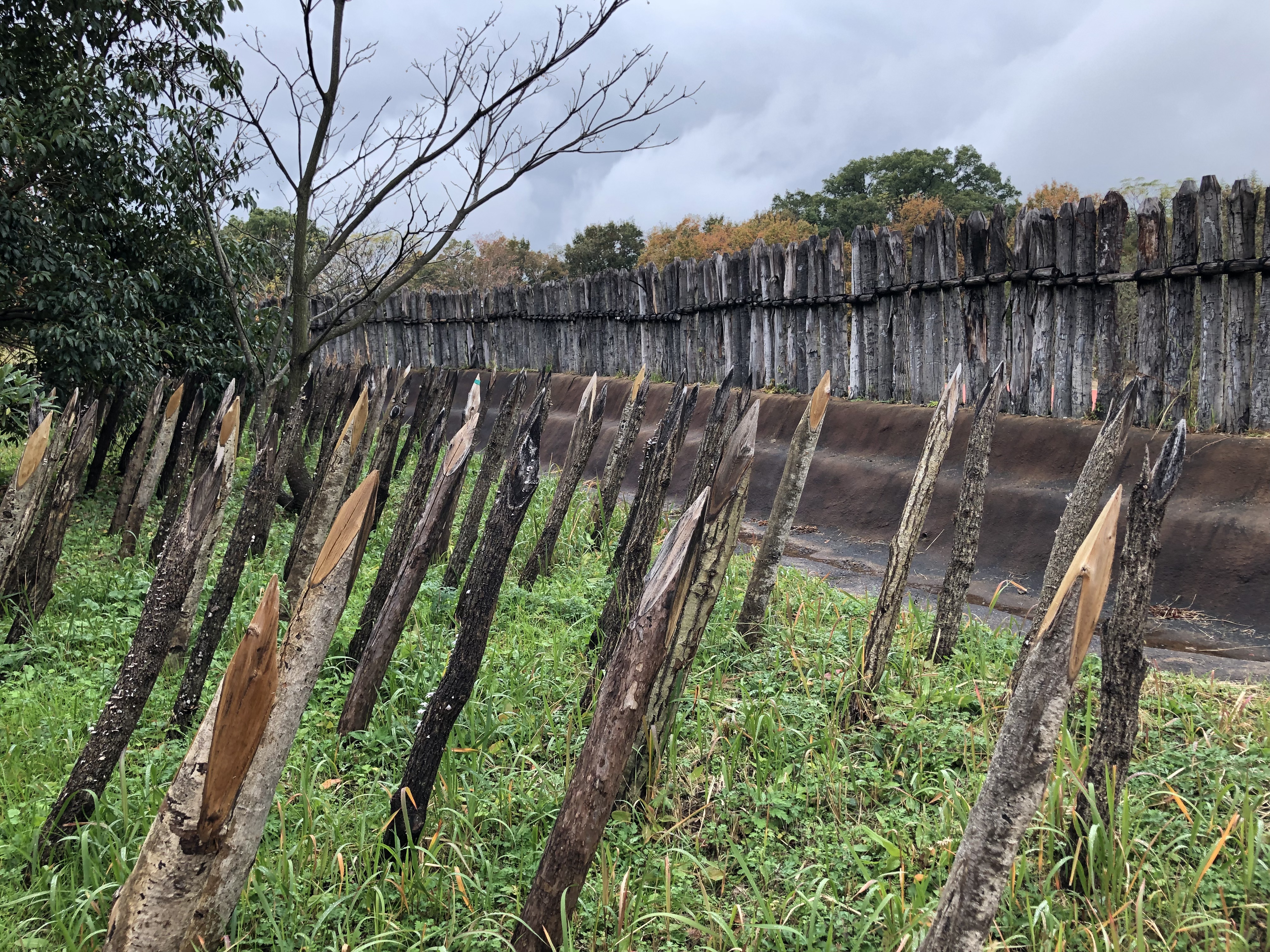
As rice cultivation increased, more people fought one another to control the water and occupy the land. People set up barricades with sharpened posts or tree trunks, especially around strategic areas such as the entrance to the village in order to strictly protect their properties. These stakes are called sakamogi.

I leave the abatises and wander further along the tree-lined path, passing what looks like straw statues of wild boar, before finding a small museum. The first thing I notice when entering the museum is the eagerly awaited return of a small fascination of mine, Carnival Cutouts.
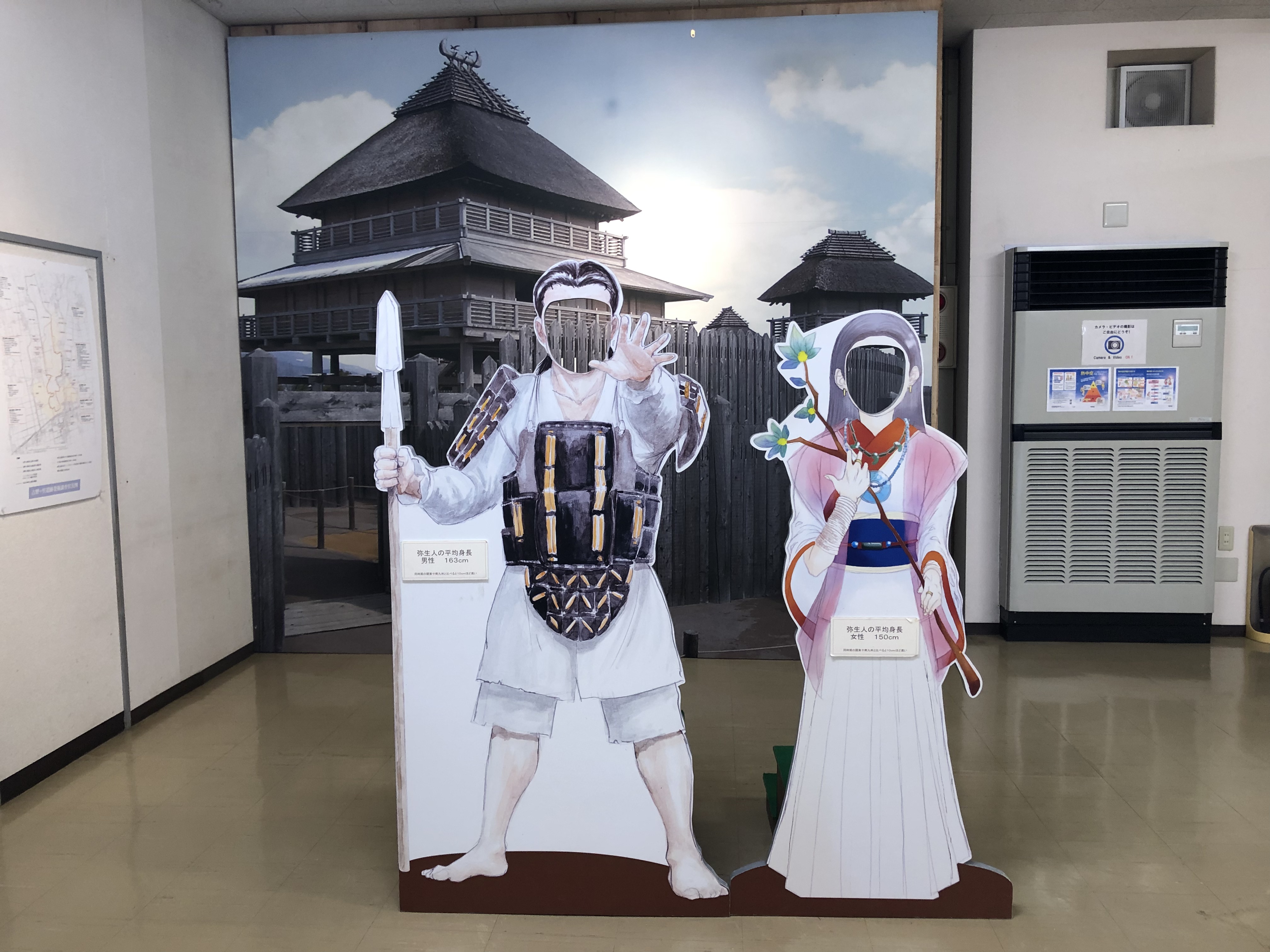
The museum itself contains loads of old pottery from the Jomon era, bronze daggers and bronze swords, the jaws of wild boar, deer skulls, hunting tools, arrowheads, stone daggers, and a 2,000-year-old human skeleton.

I leave the museum and in the distance I see some watchtowers. These watchtowers mark the entrance to the South Inner Palace, and were once manned by sentries.
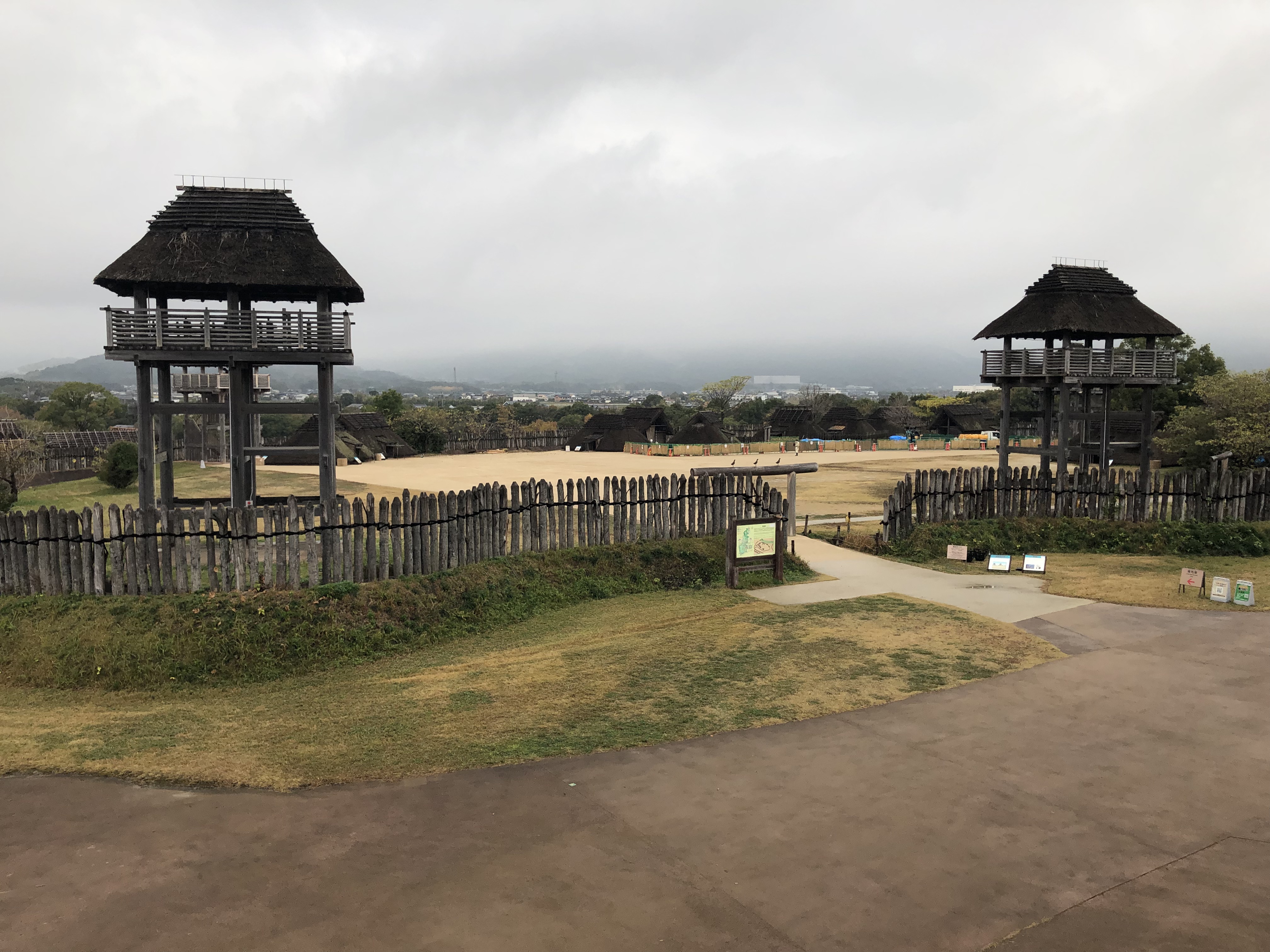
I climb up the slippery wet wooden steps to the top of the Gate Tower, this tower had guards with shields at its four corners. The tower offers a good vantage point to watch for people entering and leaving the enclosure.

I wander further along, passing the moat and fences that guard the Palace, to the houses beyond, to the zone known as Moat Village. This area contains the village that once housed each of the residents. From the kitchens to the main assembly halls, each house can be entered and fully explored.
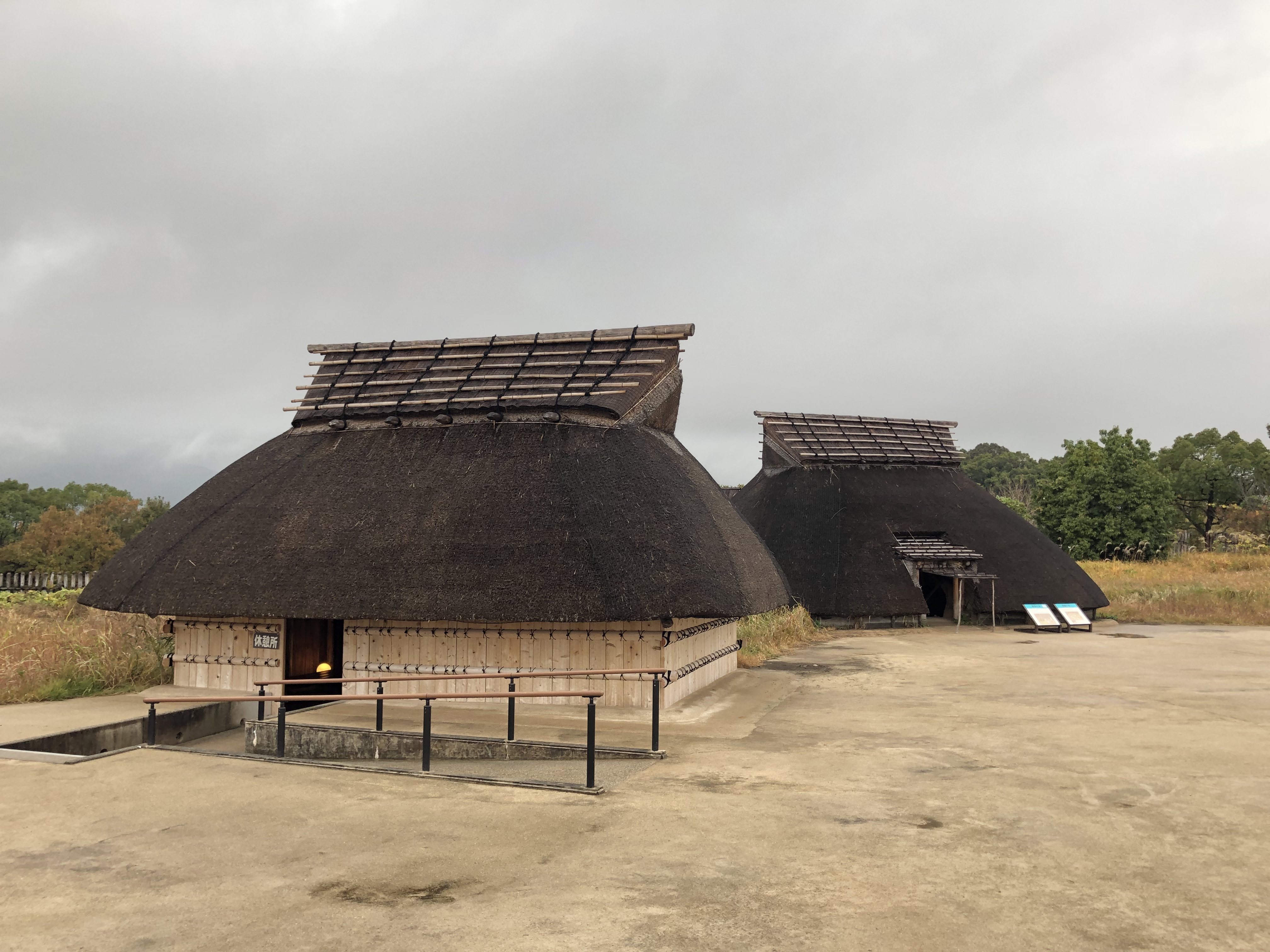
I visit the Brewery House, where women would brew sake for festivals and rituals by steaming rice from the years’ harvest. The Sericulture House, where precious silkworms were raised to produce silk thread to weave textiles. And finally, to the Barracks, where the soldiers who guarded the northern defences would rest.

I find a map only to realise that I’ve explored just a quarter of this giant historical site. Its sheer size is quite alarming. The map also shows that the park boasts four car parks, one at each corner of the site. Some Christmas lights are dotted around for good measure; evening illuminations, but I have other places to be. I wander in search of an exit and see a sign in desperate need of pluralisation.
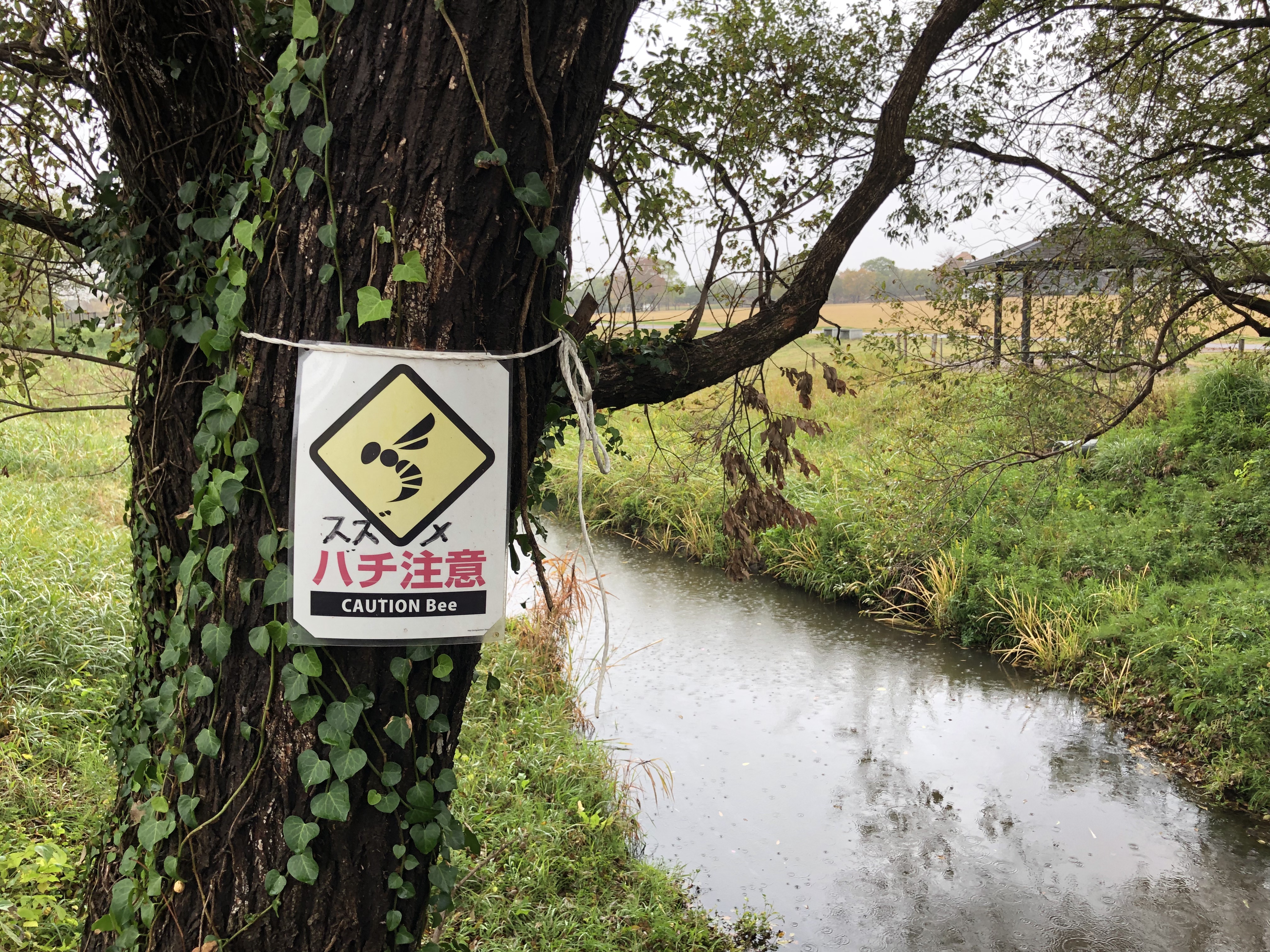
Suddenly the clouds burst and the unforeseen downpour leaves me completely soaked. I see a man who has been given the arduous task of sweeping up the fallen leaves, he’s equally soaked. I pass a golf course, two full sized football pitches, and a petting zoo, and wonder if these such things were here 2,000 years ago too.

Eventually I find an exit, walk two kilometres to the nearest train station, and hop on a train bound for Saga City. At Saga, the rain has stopped. I walk twenty minutes in the direction of the Saga Balloon Museum. Before I arrive, I spot a canopy of umbrellas that might have been useful thirty minutes ago.
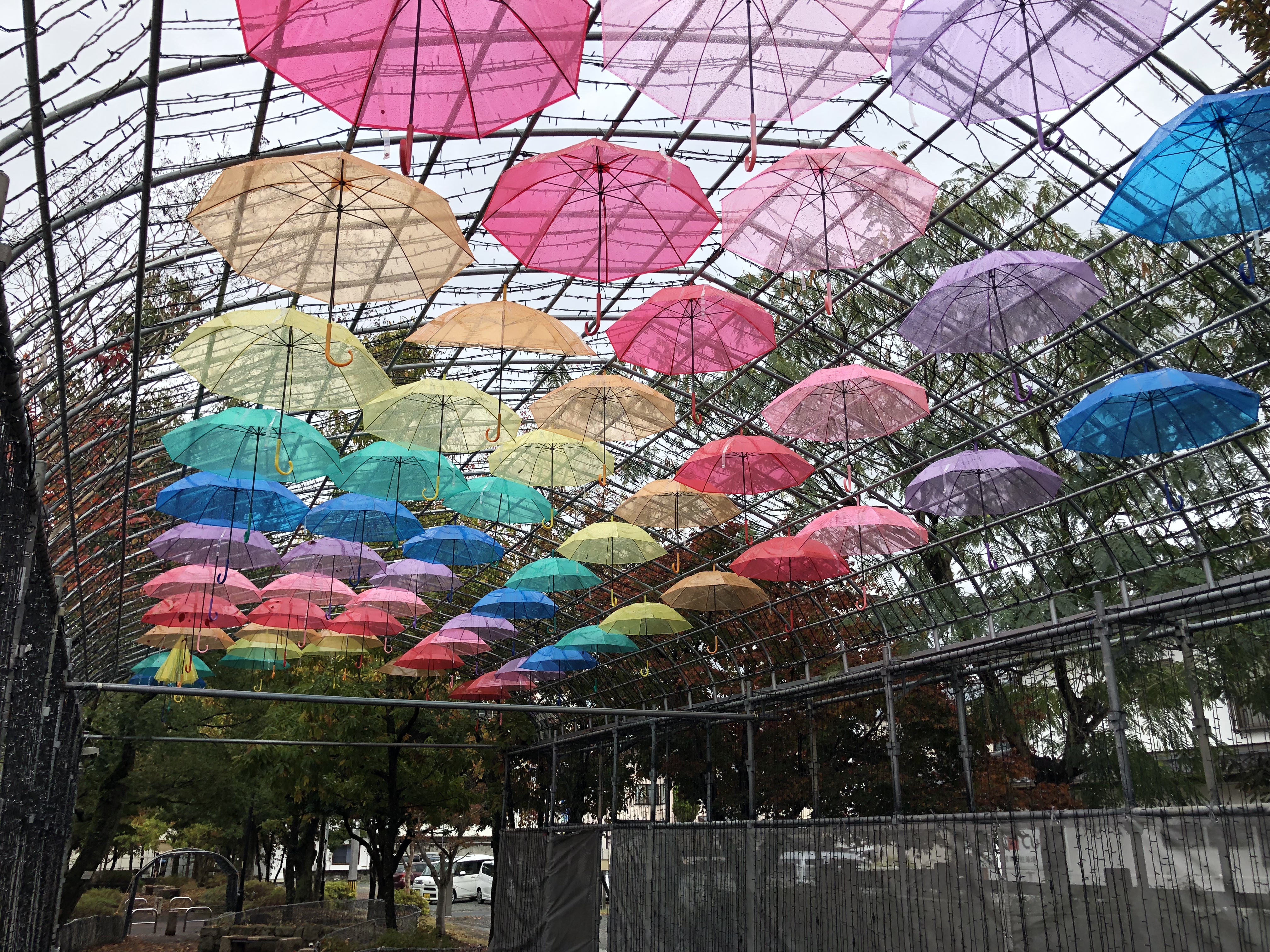
For some reason, Saga Prefecture is famous for hot air balloons. Inside the Saga Balloon Museum, I learn that the very first time a human being “flew in the sky like a bird” was in 1783, in Paris. In Japan, the first manned flight by a gas balloon was completed in 1877, in Kyoto, an event watched by 50,000 spectators. And in 1903, the Wright brothers flew an aeroplane, making the hot air balloon useless.

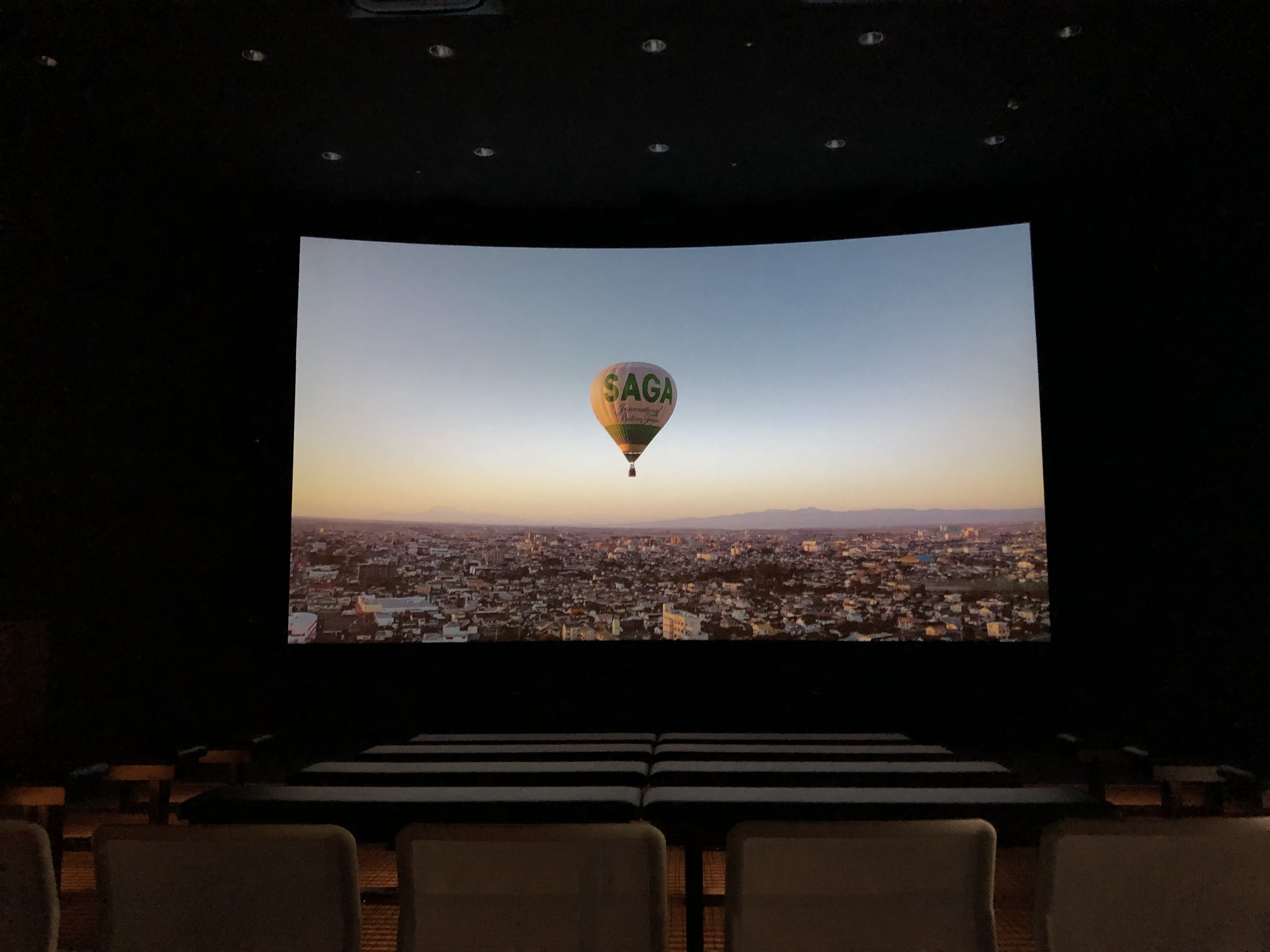
I take a seat in a small cinema describing itself as a “Super High-Vision Theatre” with a 280-inch screen. Here, I watch a film that claims to be so realistic that you will think that you’re there. I learn about balloons, what makes them fly, before leaving the cinema and heading up to the second floor. Here I get the opportunity to fly a hot air balloon myself, using the advanced simulator.
I stand inside the hot air balloon simulator and begin. I have 180-seconds to land the balloon in the target area, taking into account wind direction and wind speed, all the time sporadically pulling on a lever that releases pretend propane gas. When the lever is pressed down the balloon floats further upwards, when it’s released, the balloon slowly floats further downwards and catches in the wind. Apparently the trick is to control the lever early, anticipating the atmospheric conditions.

Landing the balloon within one metre of the target awards ‘S’ rank. The rest of the ranks rate down from ‘A’ to ‘E’ and the sign next to the machine offers the following encouragement, “Ride the wind and get a high rank!”
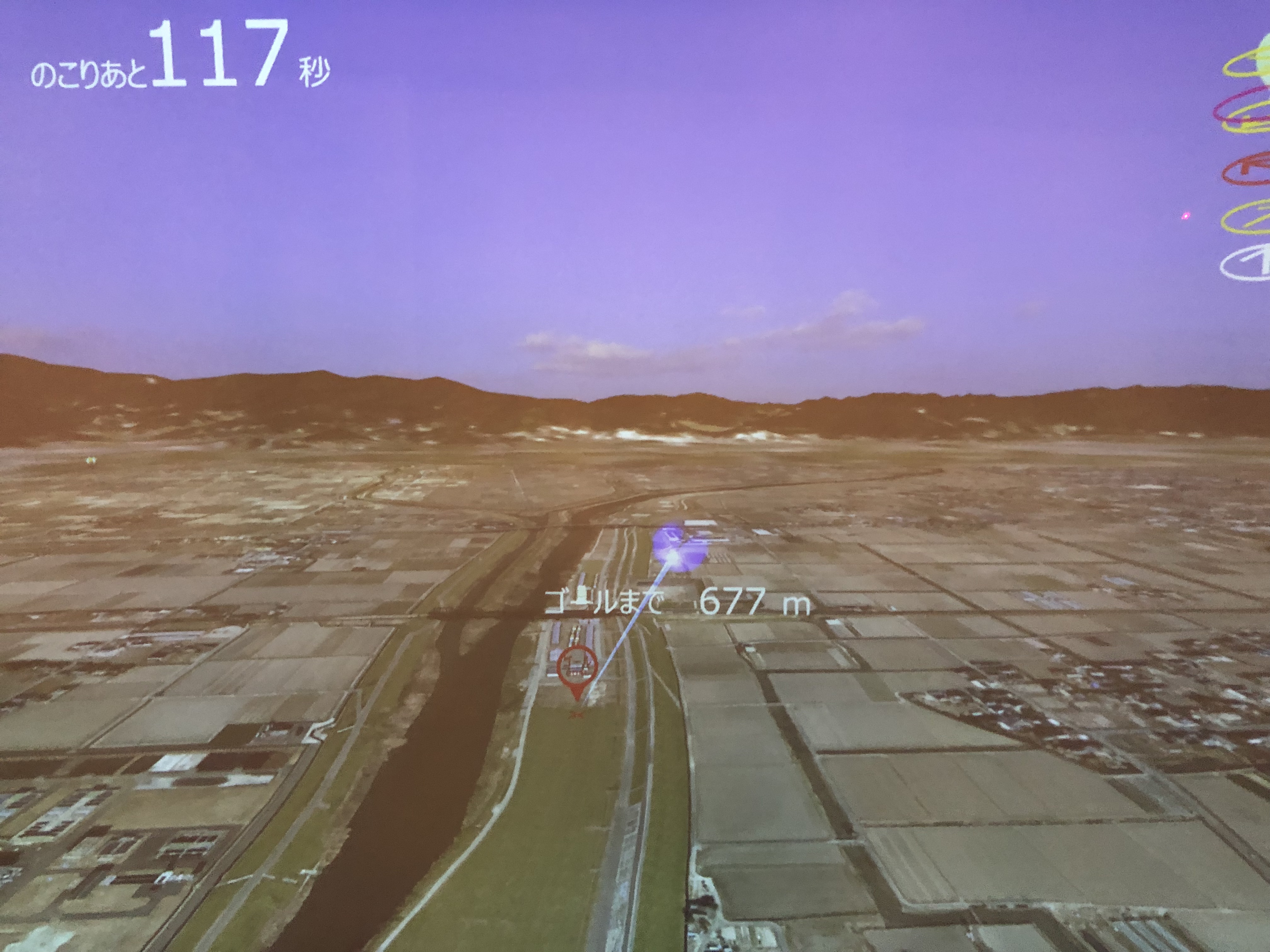
Obviously, I spectacularly crash the balloon into the sea.
The Lost Samurai

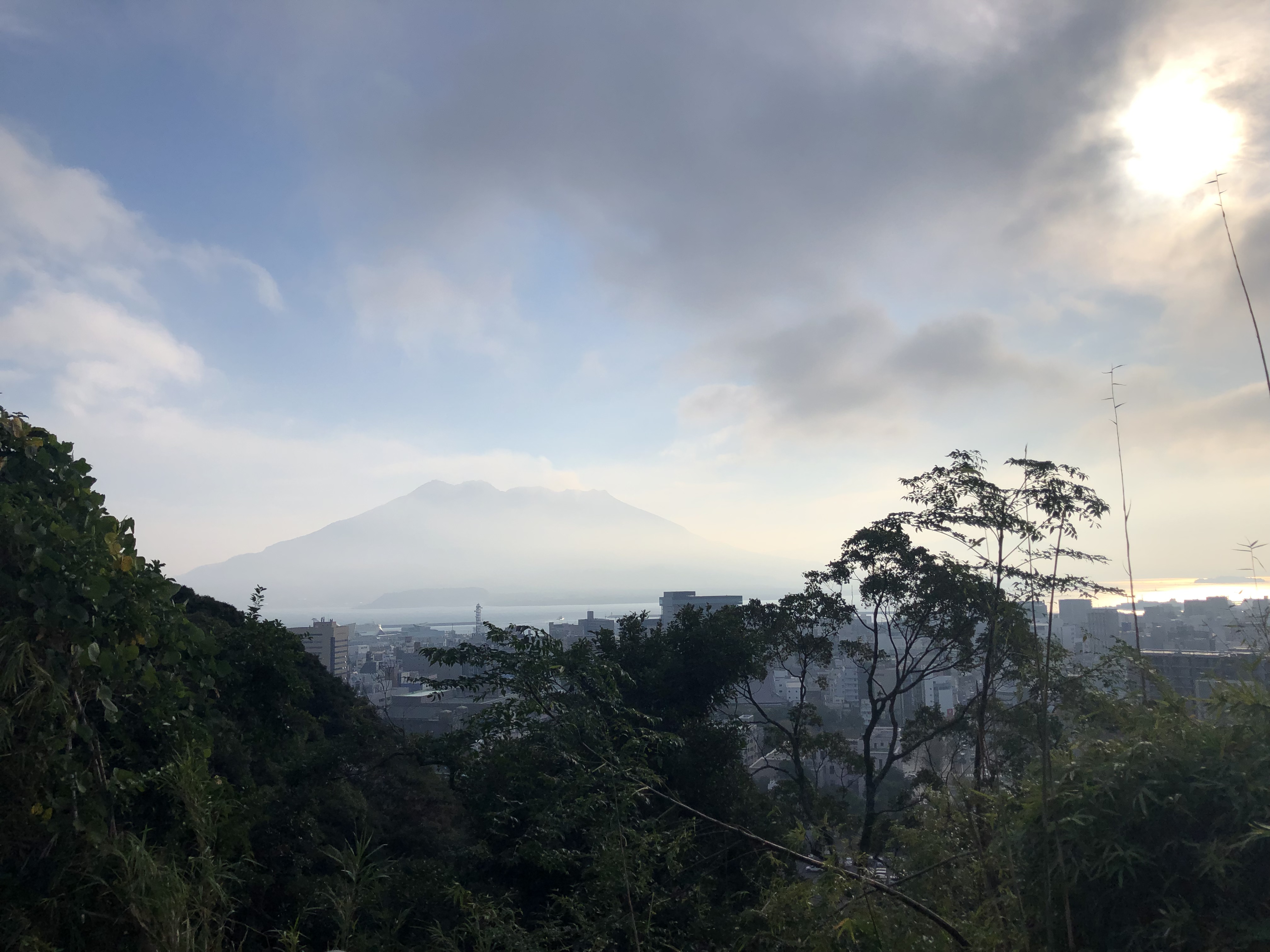
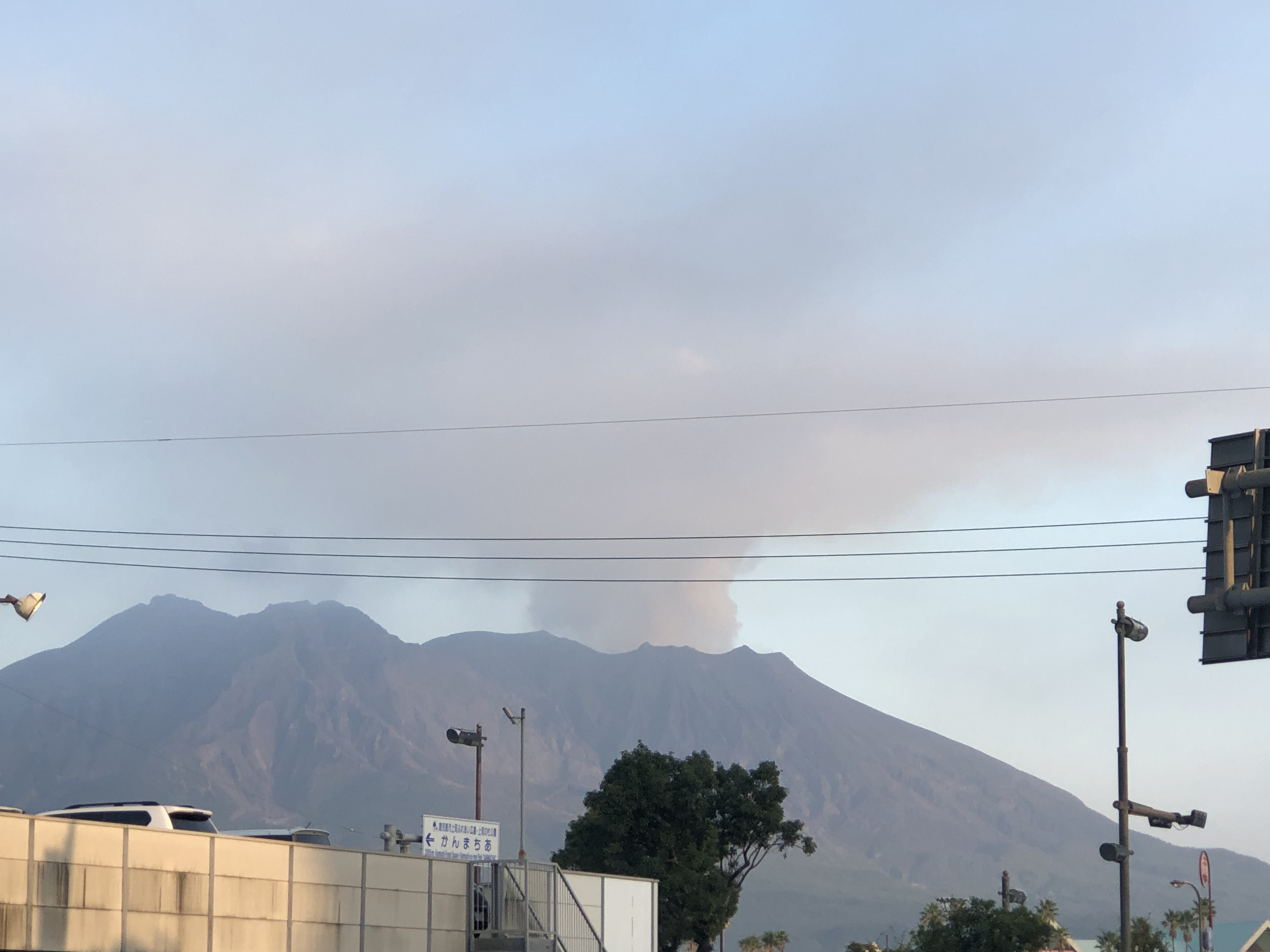
Many days fell away with nothing to show. Today, the first thing I notice as I step out of Kagoshima Station is the giant volcano that appears to be erupting in the distance. Kagoshima Prefecture is famous for Sakurajima, the most active volcano in Japan. It lurks ominously in the distance, alone, on its island surrounded by the water of Kagoshima Bay.

Sakurajima literally translates to mean Cherry Blossom Island, but don’t let the nice name fool you, this volcano is monstrous in size; standing at a colossal 1,117 metres above sea level, it can be seen from everywhere. Wherever I go in Kagoshima, the volcano seems to follow.

Today the Volcano Alert System is at level three. I am told to refrain from entering the danger zone and to pay attention to the future volcanic activity. The Volcano Alert System has five levels, they are:

5: Evacuate.
4: Evacuation of the elderly, et cætera.
3: Do not approach.
2: Do not approach the crater.
1: Caution advised around the crater.

I decide to try to get a better view, so head towards the Shiroyama Park Observation Deck. As I wander, I feel the streets here are much wider than I’m used to, the roads twice the size as usual. Tram lines criss and cross through the city streets whilst foghorns blast intermittently in the distance.

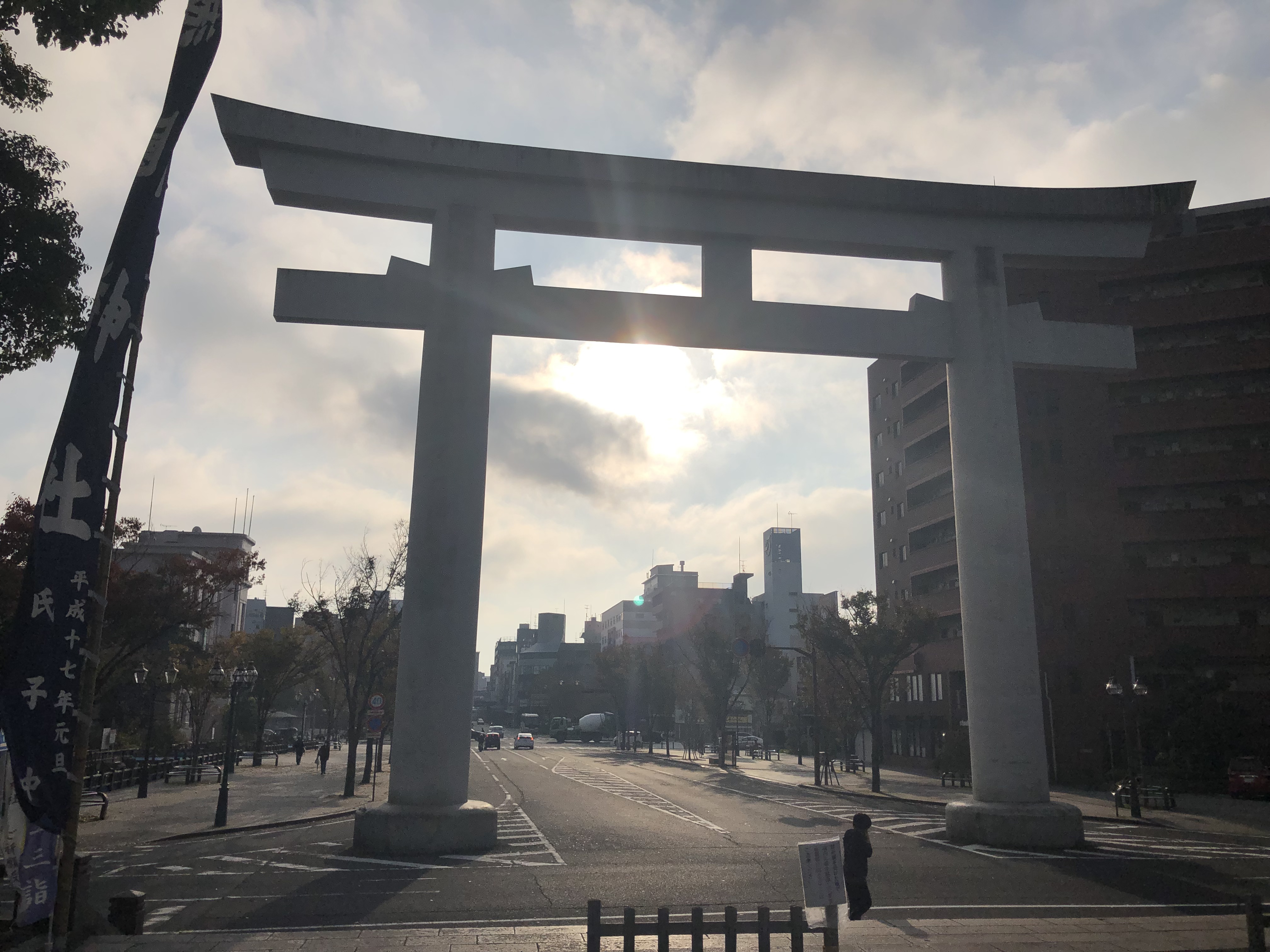
Before reaching the observation deck, I see a huge stone torii gate in the middle of one of the many large roads. I check my map to find it is simply named Big Torii. I’ve never seen such a gate before, usually torii gates are for people, it’s unusual to see traffic passing beneath.

After walking under Big Torii, I start to climb up some steep stone steps that spiral and meander, before finding myself 107-metres higher, at the top of Castle Mountain. In the distance, grey clouds roll over the hills bringing darkness from above, and I realise that I have selected the worse possible day to photograph the volcano.

I traipse back down the stone steps and into Central Park. The park isn’t that large, but somehow I can’t seem to find the statue that I’m here to see. I do another lap of the park, look for English signs, walk the park a third time only to realise that the statue isn’t even in Central Park.

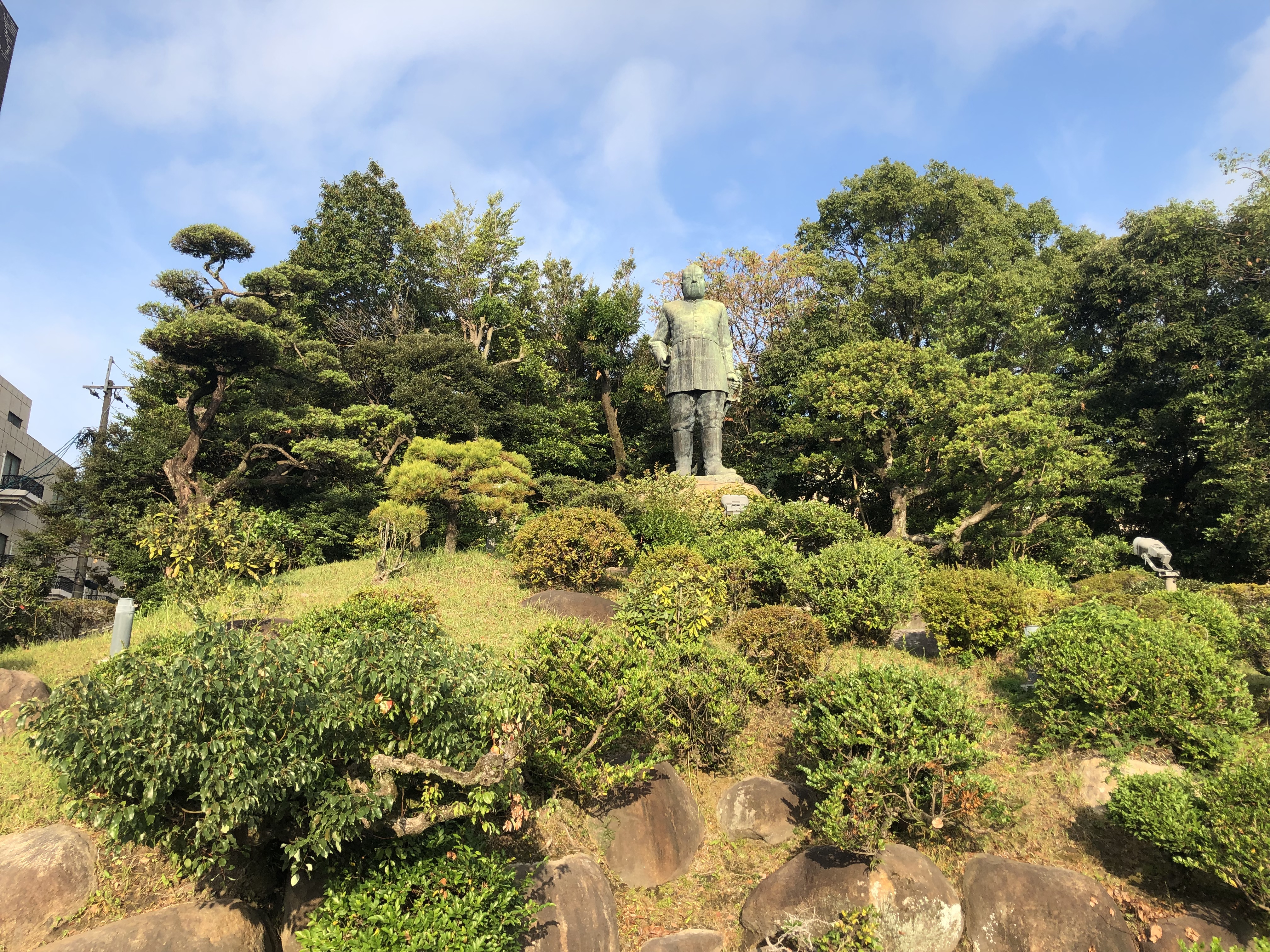
Eventually, I find the bronze statue of Saigo Takamori, betterwise known as The Last Samurai, and inspiration for the film of the same name. Saigo Takamori led the army of the Satsuma Rebellion against the Meiji government, and is one of the most influential samurai in Japanese history. The statue here is 8-metres high and took eight years to craft. There’s also a rather small statue of Hachiko the dog here, for no reason that I can ascertain.

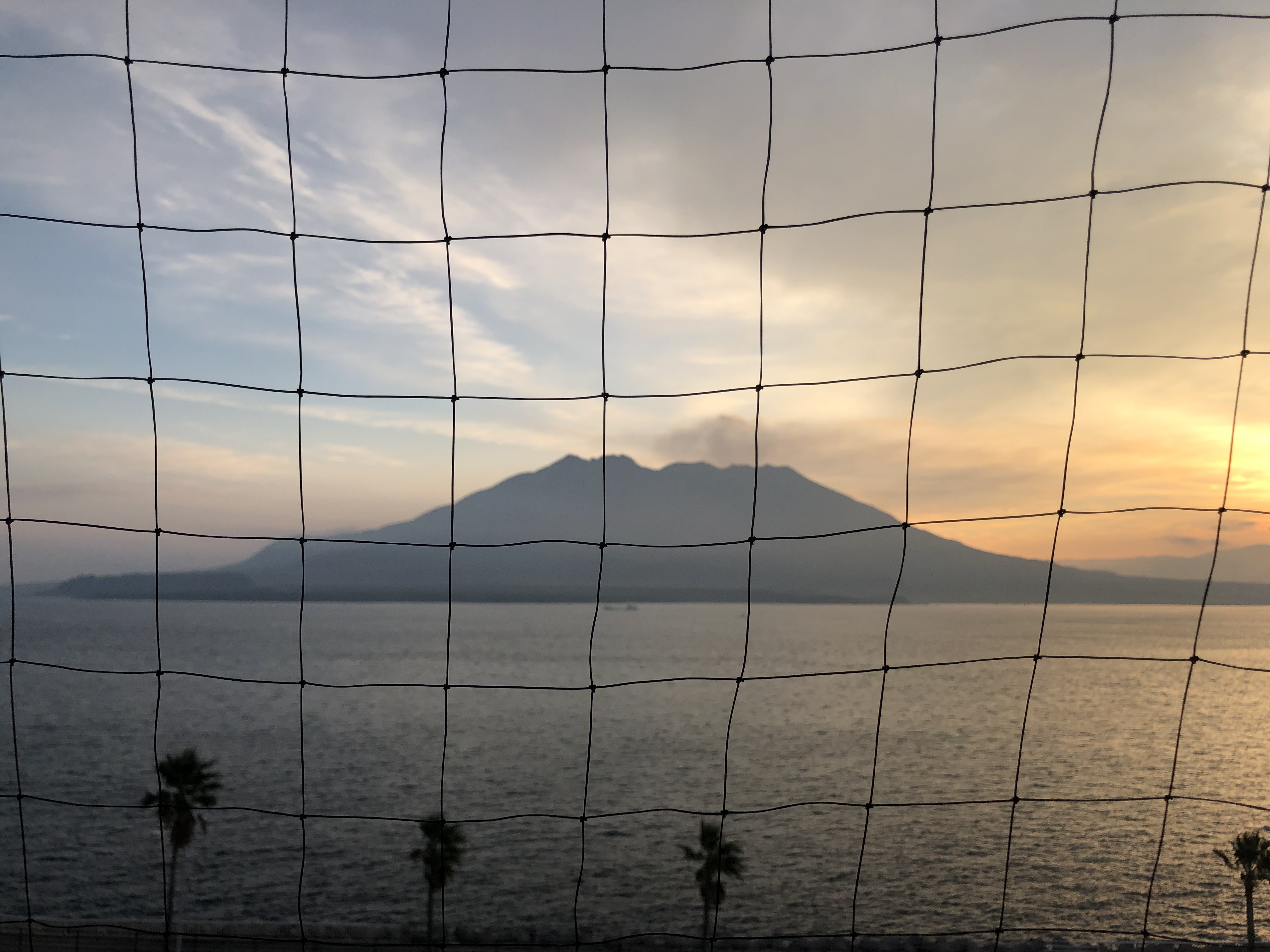
Still desperate for a better view and a decent photograph of Sakurajima, I head on down to the Amami Okinawa Ferry Terminal, the source of the foghorns I heard earlier. I find a nearby hotel with a balcony that faces out toward the volcano. The hotel room is a little pricey, but it does offer a pour-it-yourself beer server in the lobby, and it’s totally free.

The view from my balcony is slightly spoilt by a net, but good enough.

After helping myself to some lovely free beer, I end the day by walking around Kagoshima; the ubiquitous Sakurajima volcano continues to prowl in every direction, its omnipresence ever threatening, until the darkness of the night engulfs its existence.

The Time Traveler’s Strife

Today, I decide to explore the Asakusa area once again. Recently, I engaged in a conversation with friends about Denbou-in Gardens, the secret gardens I visited, hidden in the grounds of Senso-ji Temple. Intrigued to discover more about this area and its hidden gems, I then heard a mention of the interestingly named Drawing Light Temple. Obviously, I wanted to find out more. In the blazing sunshine, I head to Asakusa once again and search for the temple.

It takes me about thirty minutes to wander through the huge complex of temples and shrines that make up the Senso-ji compound before I eventually find a rather obscure-looking tunnel with overhanging plants and nondescript flowers. Oddly, I have never seen this tunnel before, so for the second time in just over a fortnight, I have stumbled upon a new place in Tokyo, a city I have lived in for eight months now. Hidden beyond the foliage, on the other side of the tunnel, sits the impressive Drawing Light Temple.

lightdrawing

Built in 1609, this temple houses the goddess of protection from drawing light images. Fortunately, an English sign serves to remove any confusion and informs me that, “The Goddess in this temple protects against photography, portraits, and reflections.” Ironically, photography is allowed here. As I read the signboards about the history of this place, it becomes instantly apparent that if this temple was built in 1609, as the sign states, then it precedes the very first photograph, making it impossible for the goddess that resides here to know what she would be protecting against. It reminds me of the Flying God Temple, where people go to pray before they fly on an aircraft. The god there existed before aircraft were even invented. Even the story about the origin of Senso-ji, concerning the golden statue of Kannon fished from a lake, is riddled with confusion; the statue is no longer housed in Senso-ji Temple, and has never actually been seen by anyone who can prove it existed in the first place.

The inconsistencies and inaccuracies in religious narratives make me increasingly sceptical. Considering the possibility that religious stories and certain deities might be nothing more than fabrications is a notion I had never entertained before, but it now begins to take shape in my mind. What if it’s all untrue? I ponder this for a moment, and then, quite unexpectedly, I spot a magical cow.

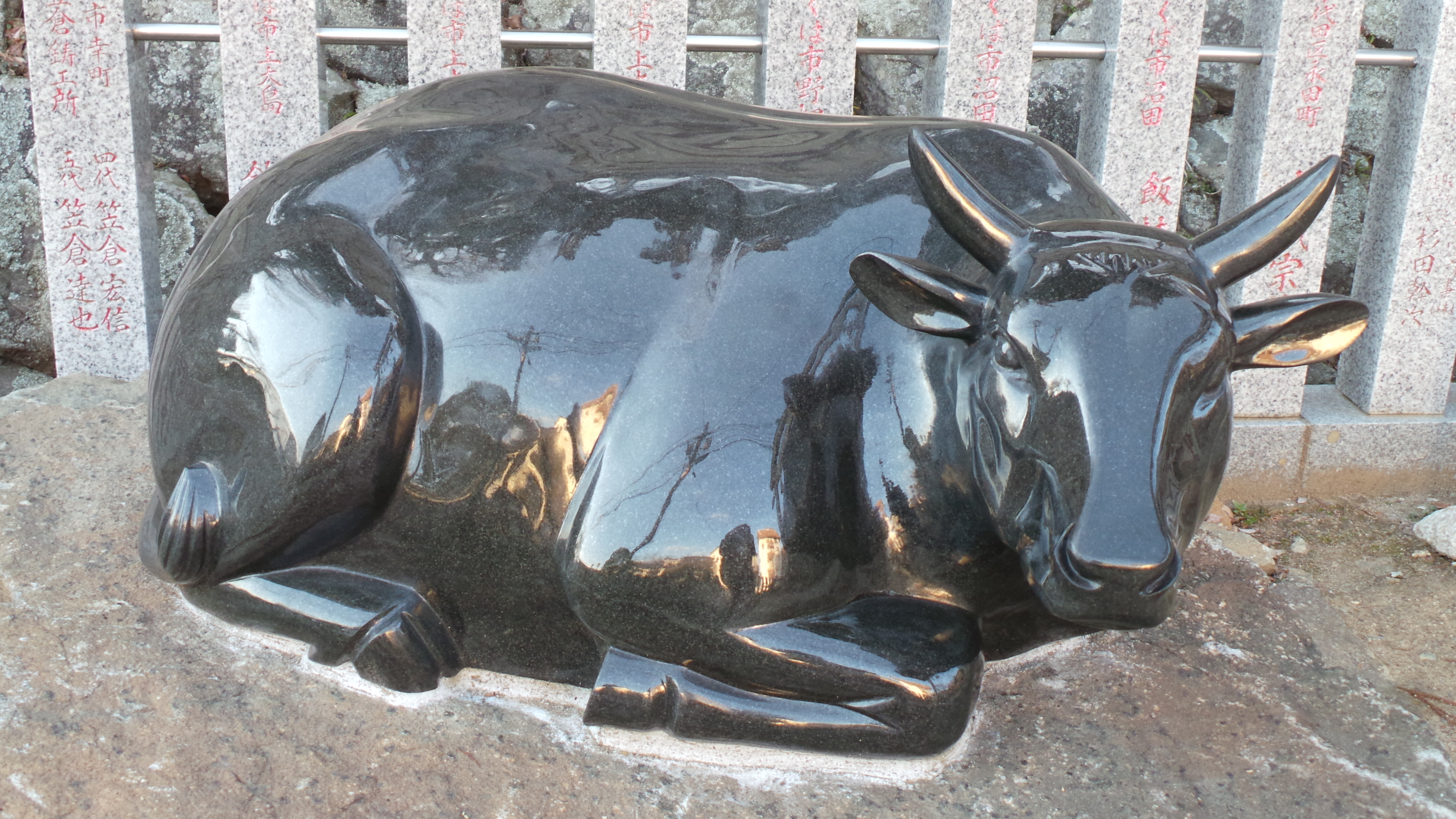
magcow

“Look closely,” says a sign next to the cow. I stare at the cow, not really sure what I am supposed to be seeing. Everything here looks perfectly normal – just a statue of a cow. Below the sign, there is a description in Japanese, which later translates to read, “As a way to protect the stolen soul, in the cow, your image will be hidden from the drawing of light.” I take a photograph of the cow, and oddly, my image isn’t present. Very strange. I take seven more photographs from various angles, yet each time, the scenery behind me is visible, but my own reflection is mysteriously erased.

Why a cow has been chosen to symbolise the absence of reflection is beyond me, but some sort of wizardry is at hand here – a trick of light, perhaps. Continuing my exploration of this hidden temple, I discover that it holds the origin of the story that a photograph can steal your soul. It was said that when this temple was built before photographs were invented, the thought of an image of a person being taken was a direct link to the spiritual world. This history has also spread to the rest of the Senso-ji area, where no mirrors can be seen at any of the temples or shrines. It makes me wonder if the Edo Period in Japan was populated by time travellers, building temples everywhere that predict future inventions.

As I leave the Drawing Light Temple, I continue my exploration of the nearby area and discover another display of inconsistent historical information.

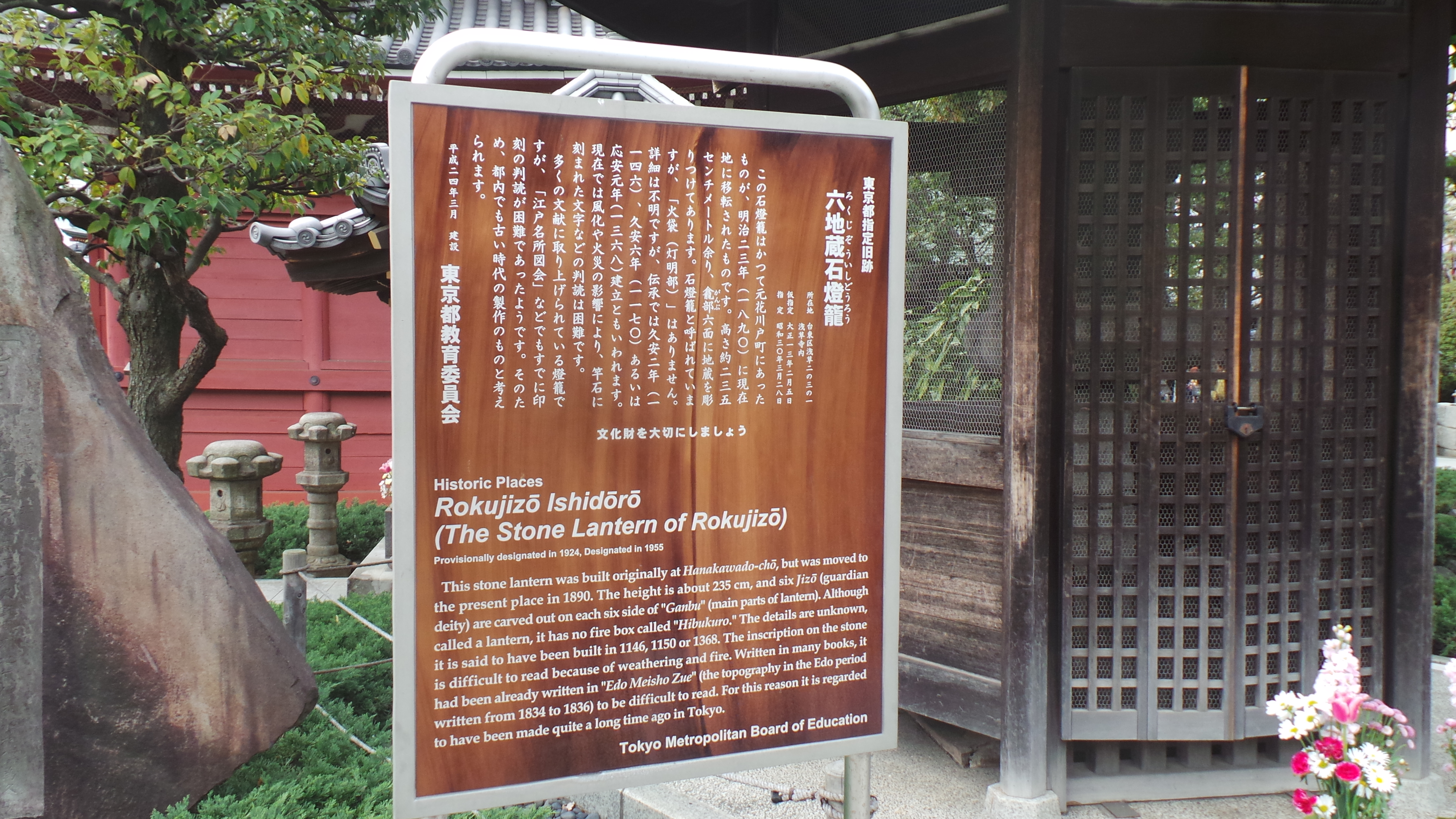
stonelantern

The Stone Lantern of Rokujizo was built in either 1146, 1150, or 1368, and already I find that there are too many contradictions. The sign even states that the details are unknown. Yet, the lantern itself features topography that wasn’t used until 1834. So somehow, the lantern features Japanese text that was first used 688 years, 684 years, or 466 years after it was originally built. My suspicions surrounding the history behind Senso-ji Temple are once again confirmed here.

I continue my tour and find a monument to Kume no Heinai. He was a samurai in the Edo Period and a master of sword fighting. Over the years, he killed many people before eventually turning to a life of virtue. Heinai began to live in Kongo-in Temple, inside Senso-ji Temple, and devoted himself to Zen Buddhism. He held religious services in honour of the souls of the people he killed. One day, he ordered his followers to carve his figure in stone and bury it in a busy district of Asakusa, so that forever, people would step on him—presumably what he thought he deserved after years of killing. Oddly, Heinai was in good health the day the statue was ordered to be built; however, the next day, he died suddenly, as if his fate was already known.

My final stop is the peculiarly named, Bell of Time.

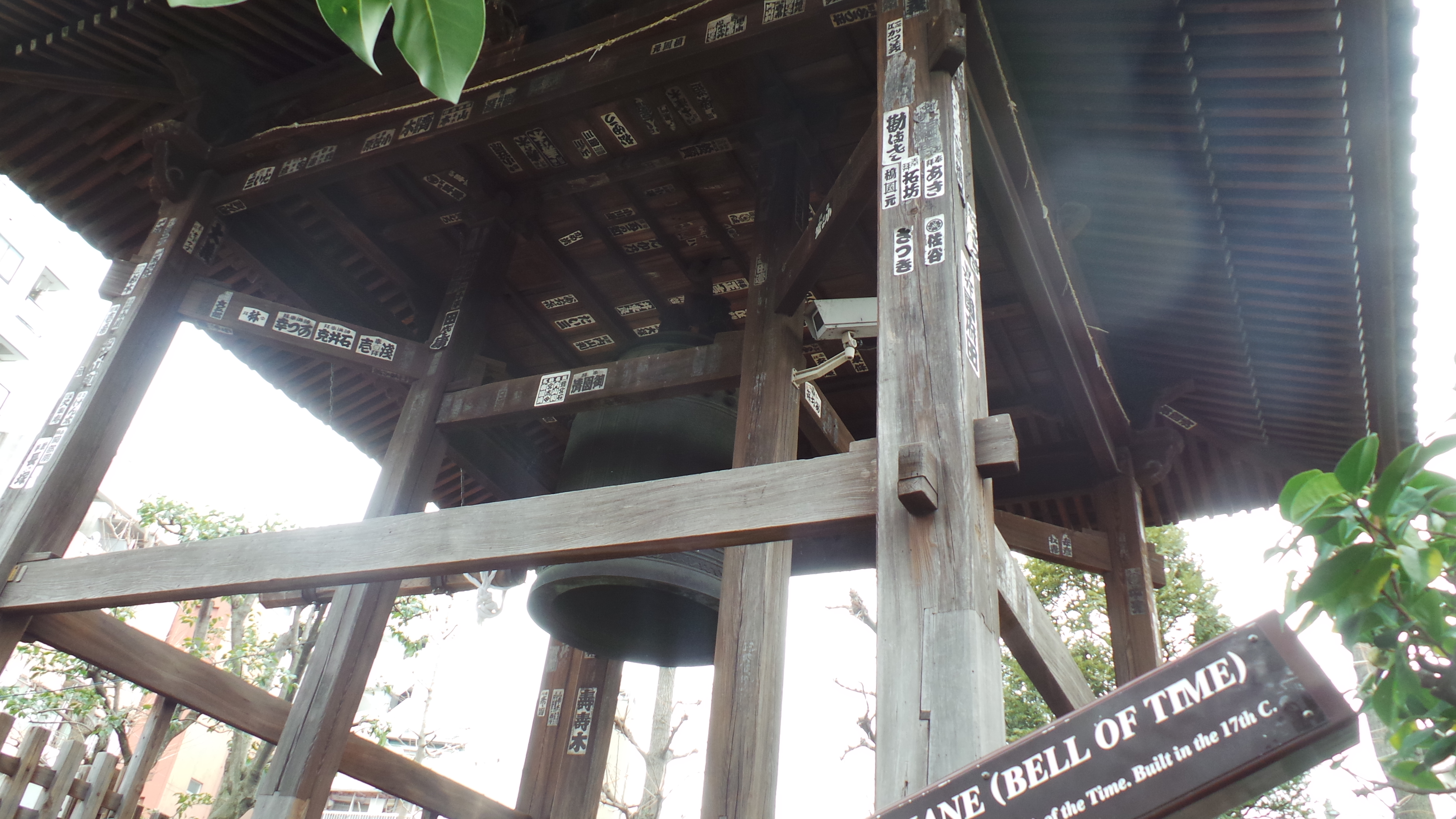
belloftime

This innocent looking bell housed in a wooden structure, to the untrained eye, wouldn’t be significant. To my overactive imagination, this confirms my earlier suspicions that religion, or at least the area around Senso-ji Temple, was built by time travellers, and this bell was their time machine. Obviously, time travellers building temples sounds ridiculous, although the evidence is definitely here. If this isn’t the case though, then perhaps instead, religion is being used to make money here; exploiting the beliefs of innocent people, and making this area more attractive to tourists. It does seem from my brief attempt at investigating the area, that most of the information I have discovered is based entirely on lies.

A Streetcar, Feigned Desire

I decide that despite the warm weather today, it would be a nice idea to explore the area around my own neighbourhood on foot, rather than heading further afield by bicycle. Looking at the map outside of my apartment, I notice a few points of interest that I had never previously given much thought. The first is the Toden Arakawa Streetcar, the last remaining streetcar that still operates in Tokyo. I wander five minutes from my home in that direction. As I approach, I follow the sound of silent electricity until I arrive at the tracks.

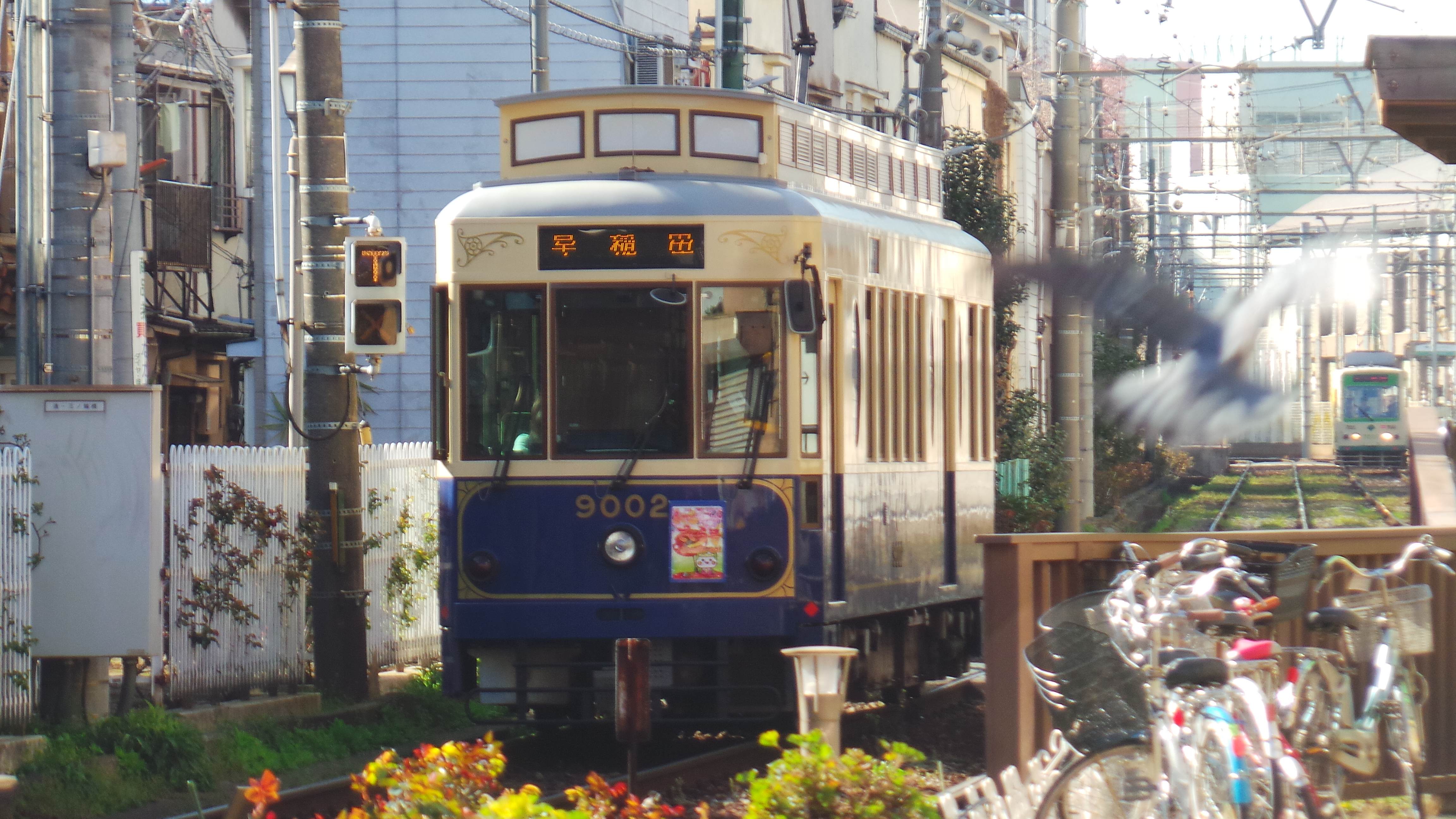
At the streetcar depot, nobody is waiting to ride. The only sign of life here, other than the movement of old trams, is a superabundance of starving pigeons waiting for their next meal. Opened in 1913, this streetcar somehow survived when all other streetcars were scrapped in Japan some fifty years ago. I consider taking the tram, but because there is no official timetable, I fear that if I do, I will end up in the middle of nowhere, with no way of getting back. Instead, I try to photograph this historic vehicle, but a blur of pigeon rudely interrupts my photography.

streetcar

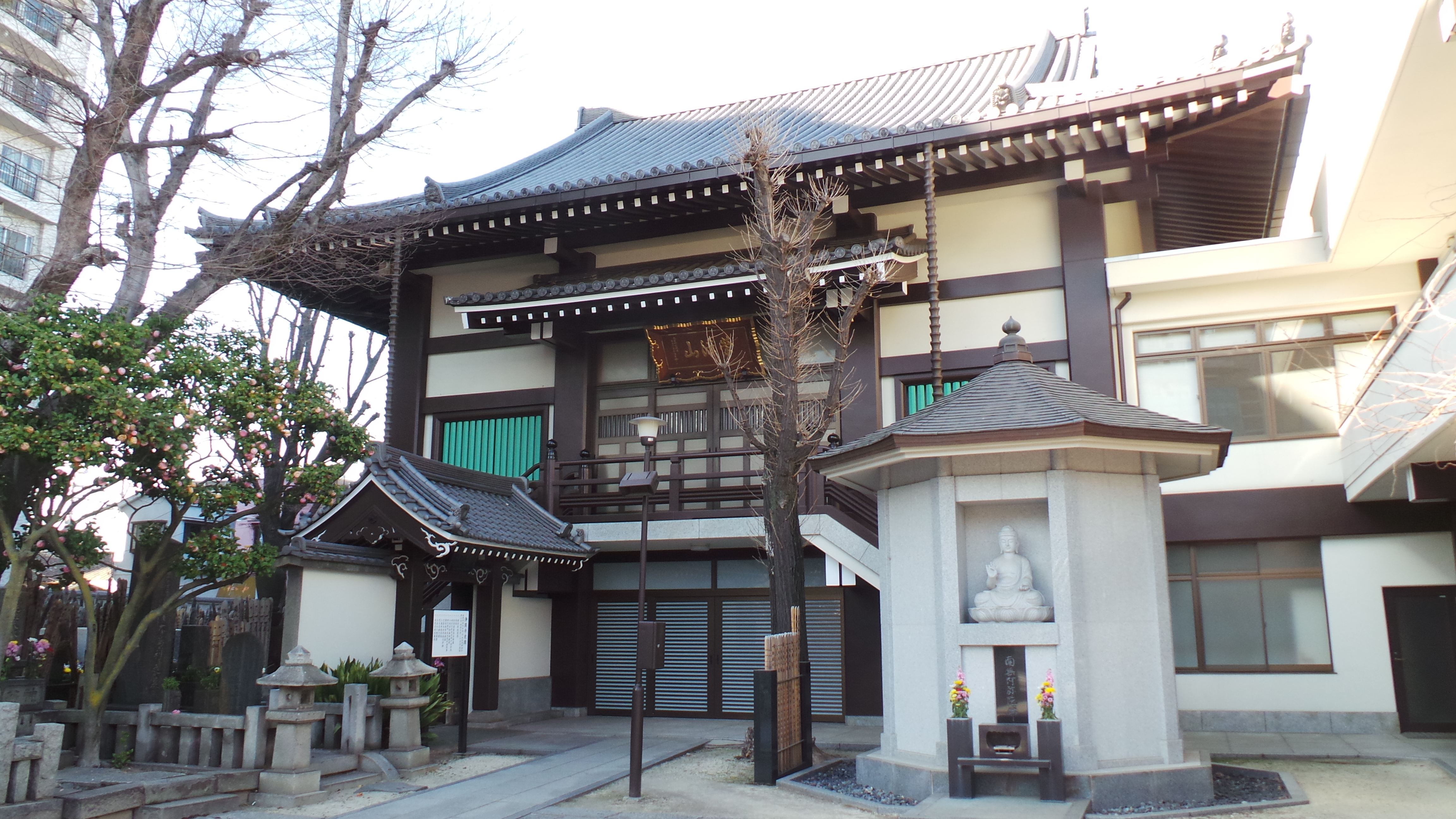
My next stop is at the nearby Jokan-ji Temple, a historical site and cultural asset of Arakawa. It becomes apparent as I enter the temple grounds that this temple contains some rather dark history. The temple dates back to 1665, and with such close proximity to the nearby Yoshiwara red-light district, it became known to the locals as the throw-away temple. A place to dispose of unclaimed or discarded deceased prostitutes.

The temple itself looks like any other temple, but beyond the shiny temple walls is a memorial to the unknown dead and a hidden entrance that leads into a vast cemetery.

prostitutetemple

The 1854 Tokai earthquake claimed many lives, including young women who had been sold by their parents to the Yoshiwara district. These prostitutes were often forced into this trade, considering themselves as living in hell, destined to eventually die and join the other women in a mass grave at Jokan-ji Temple. The deceased women were not granted a proper funeral or burial; instead, they were wrapped in a straw mat and left outside the temple gates for someone else to collect, burn, and add to the pile of death and ash.

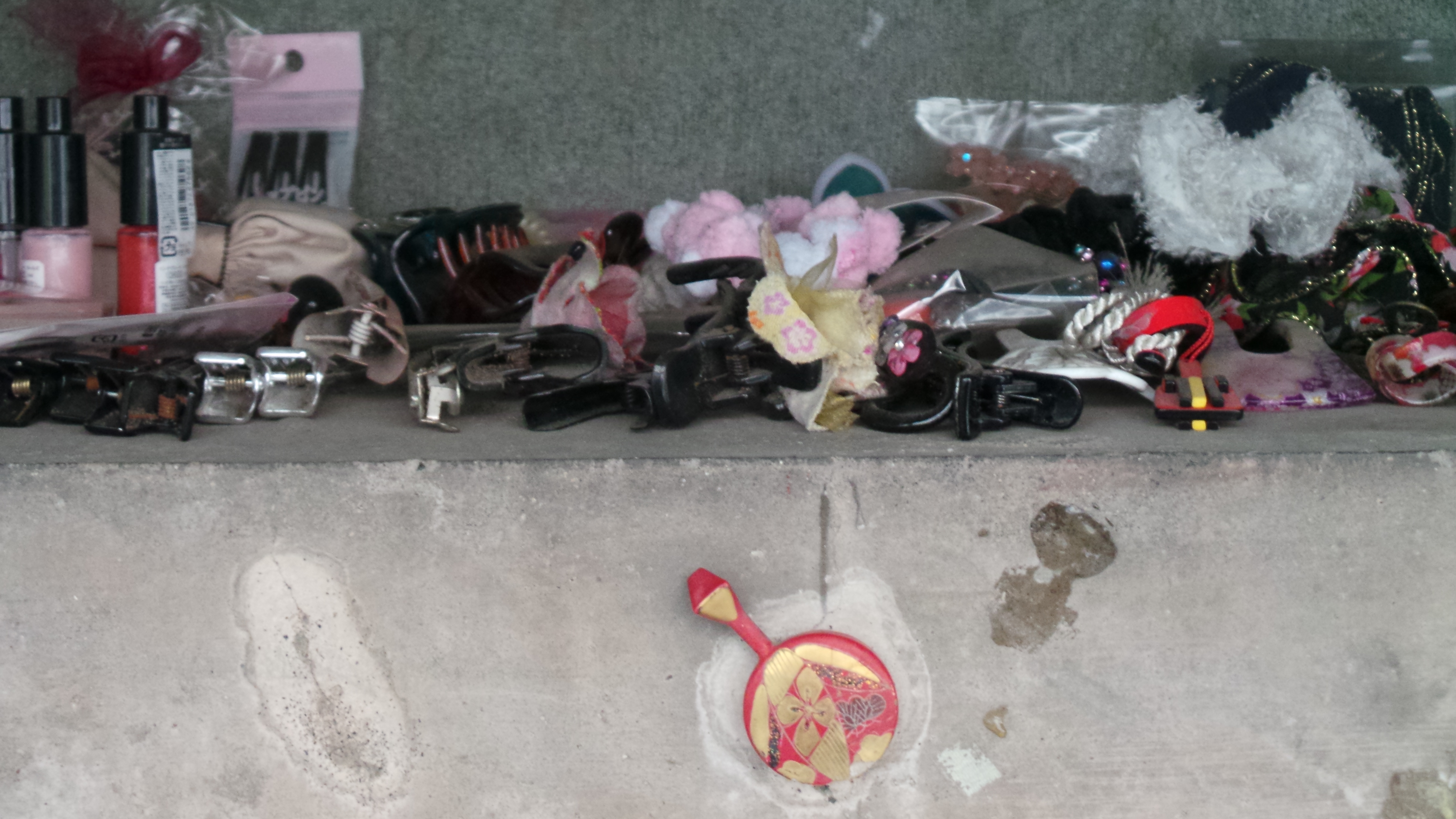
I stroll through the cemetery, and it becomes evident where the souls of the twenty-five thousand deceased prostitutes are laid to rest. A small tomb is adorned with artefacts related to prostitution. An inscription above the tomb reads, “Birth is pain, death is Jokan-ji.” Cosmetic products, hair clips, and makeup rest on top, leaving a haunting reminder of death. It is even possible to peer inside the tomb through an overly exposed metal grate, offering no dignity to the departed. Inside, a stacked pile of white urns extends down into oblivion.

cosmeticgrave

I leave the tomb with mixed feelings. I question why I even visited here; perhaps I should have simply boarded the streetcar and escaped the sense of doom and gloom. Another notable presence is a monument dedicated to the novelist Kafu Nagai, who used these deceased women as a source for his satire. I ponder on the motivations of someone writing about such a macabre subject, only to realise that, in my own way, I am no different as I write these words.

I depart from Jokan-ji Temple and start walking toward Minami-Senju, an area my friends have deemed extremely dangerous. As I approach, it appears to be like any other place I’ve visited in Tokyo: a Seven Eleven, a few shrines, a clean park, an old woman feeding a cat, bullet holes, a train station … Bullet holes?

bullettemple

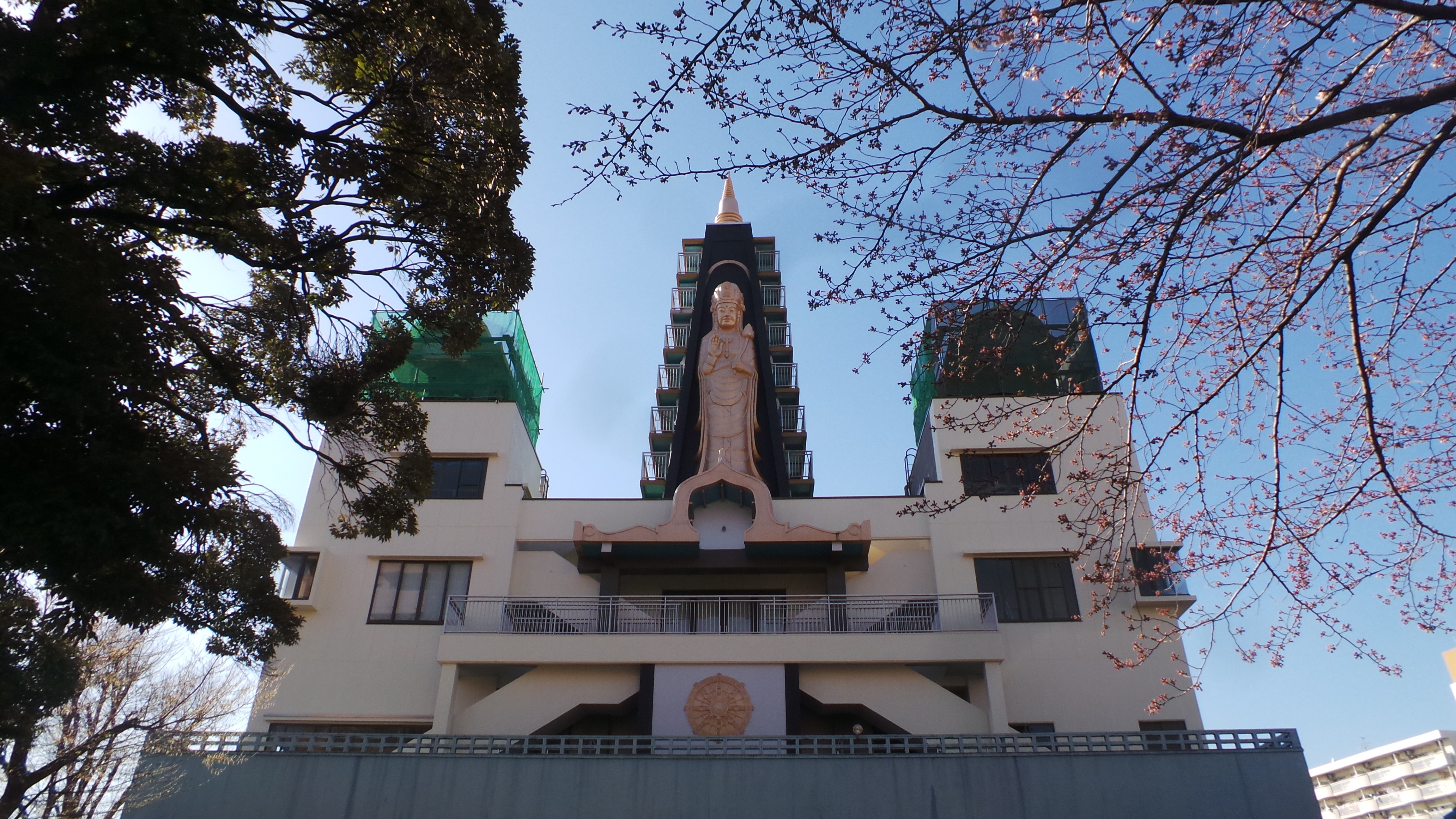
Entsu-ji Temple stands large, featuring a twelve-metre-tall golden statue of Kannon. What is remarkable about this temple is that it proudly serves as the new location for the Black Gate. Kuromon was previously the gate at the entrance to Akizuki Castle, but after a gunfight during the Battle of Ueno, the gate was damaged, hence the bullet holes. The gate was moved to this location in 1907. Not one to dwell on death and misery, I leave the temple in a rush and forget to take a photograph of the famous Black Gate.

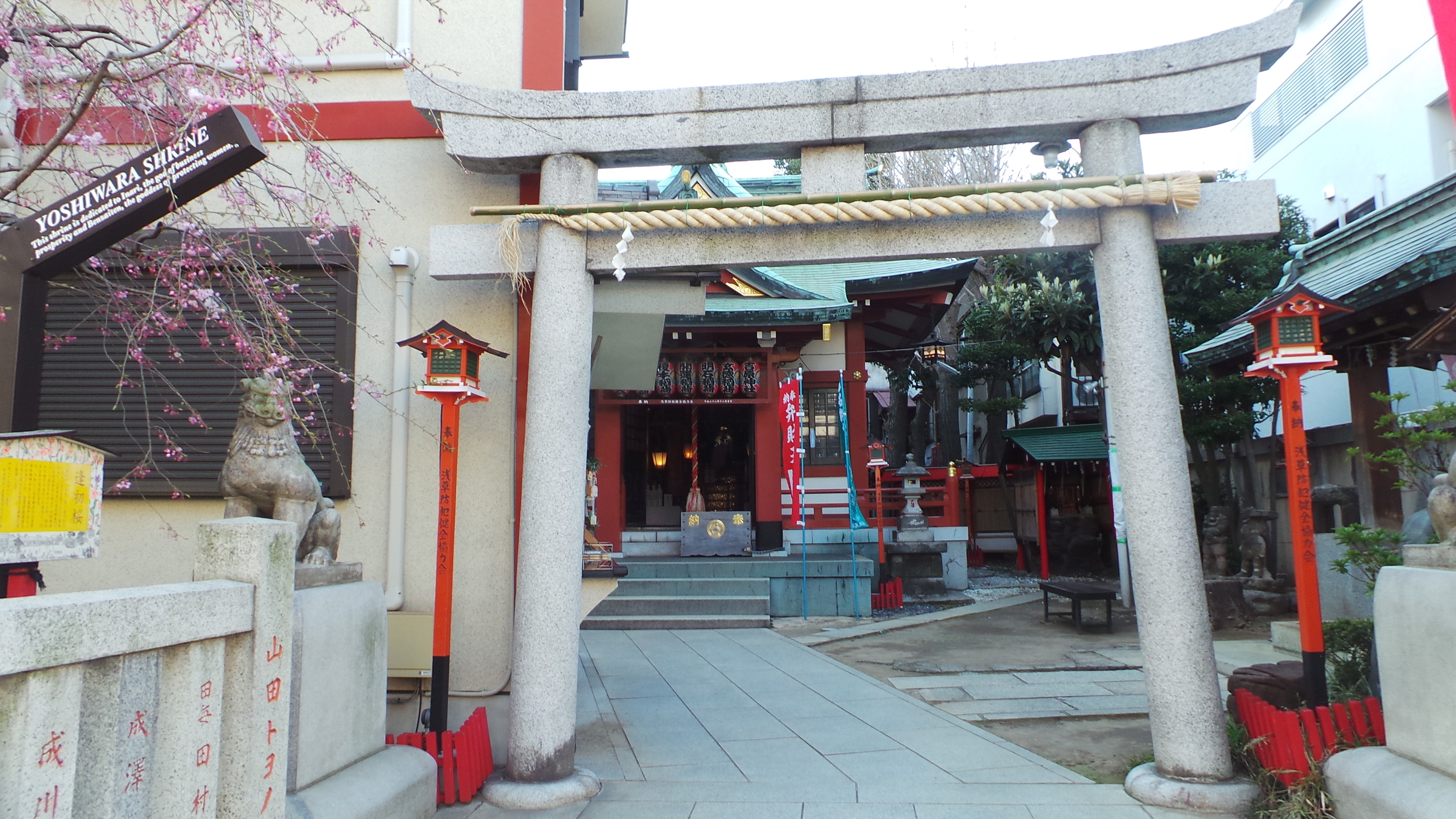
I head back in the direction of Minowa, and with prostitution on my mind, I take a stroll through the Yoshiwara area. What always strikes me as odd about Yoshiwara is that at one entrance to the legalised brothel district is a police station, and at the other end, there is a shrine that houses a goddess that offers protection to women.

yoshiwarashrine

Every day, when a prostitute finishes her shift, she will walk past this shrine and bow deeply. I have seen it so many times, due to this shrine being on my route from my home to Asakusa. In fact, I pass this shrine twice a day, and almost always see women here, praying, bowing, and hoping to not share the same fate as those other twenty-five thousand abandoned dead women.

Murder on the Tsukuba Express

Today, the weather is very warm, so I decide to take a train to Ibaraki Prefecture, to a little place called Tsukuba. At Tsukuba Station, I take a ¥720 bus that crawls for thirty minutes toward Tsukuba Mountain. Eventually, I get off the bus. The only tourists here are old Japanese women who have made the journey to this mountain to look at flowers.

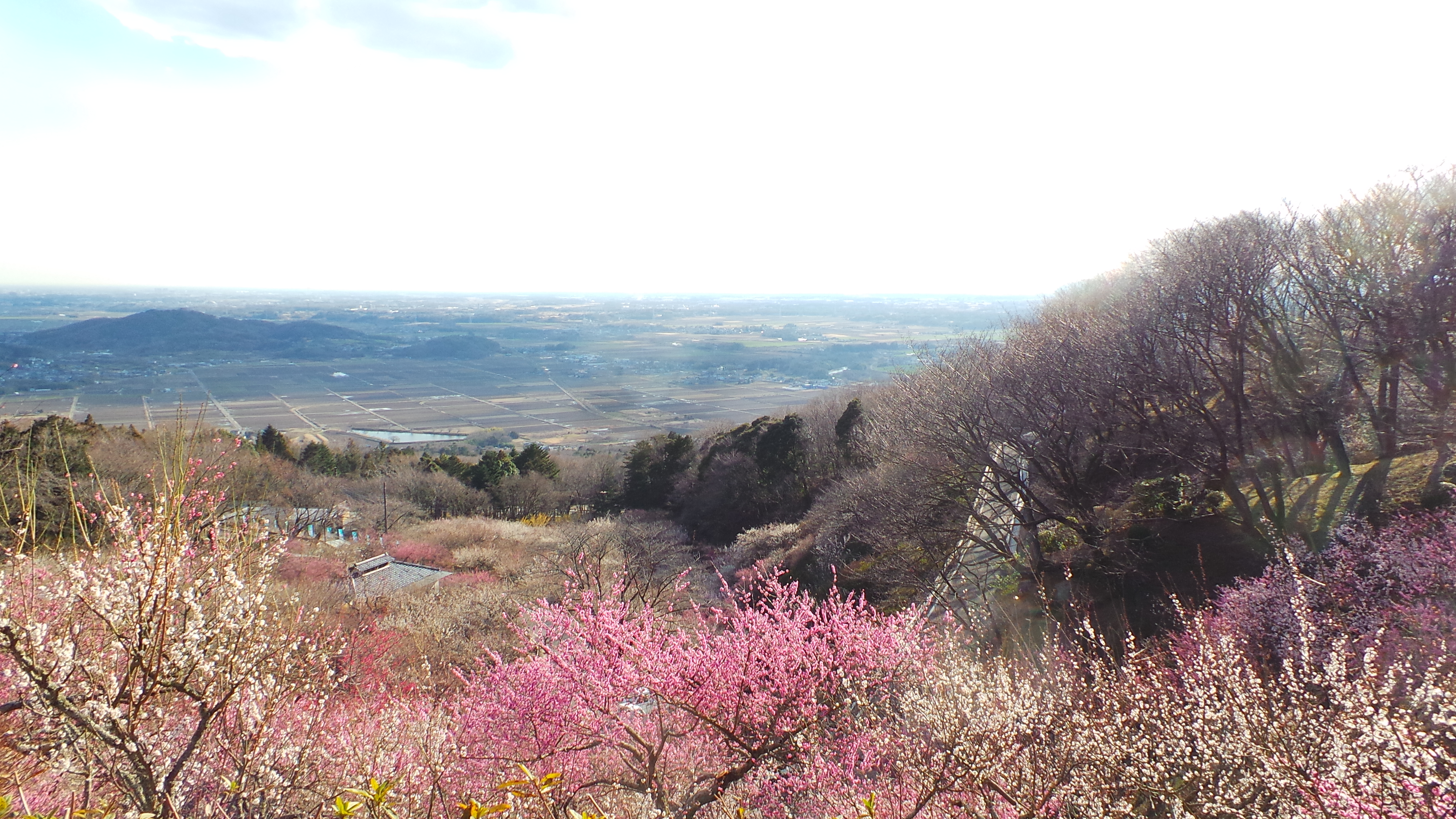
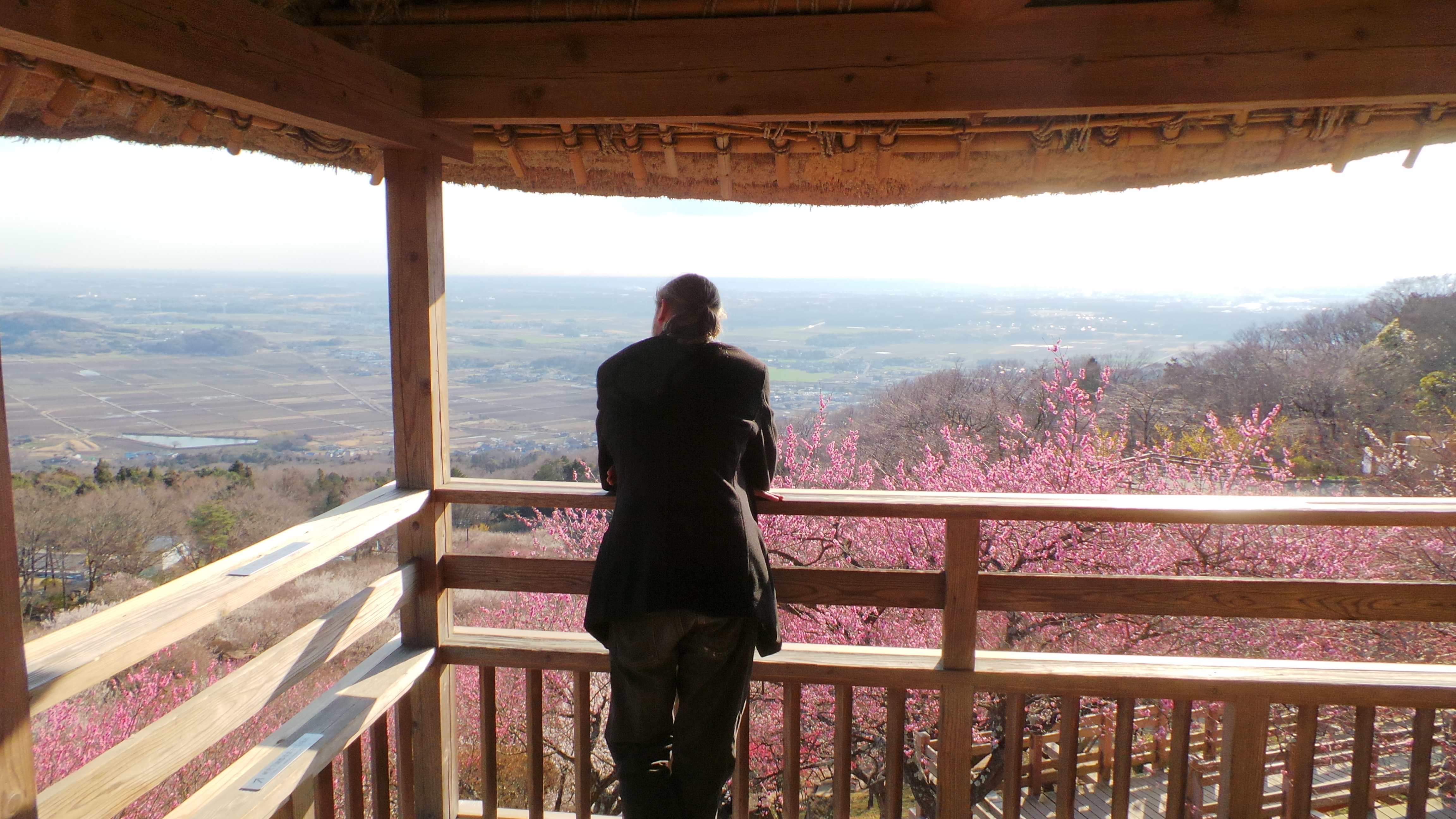
The first thing that strikes me as I stroll off the bus is the view. The day is relatively clear, and the distance is a sea of fields and countryside that seemingly spread forever before eventually blending into the whiteness of bright, sunlit clouds. One of the reasons I am here today, like the old women, is to look at flowers—flowers of beautiful pink and white. The other reason is that this steep mountain is steeped in history.

tsukuba5

In March 1864, an army was raised on this very mountain, led by a samurai named Fujita Koshiro. The army, known as Tsukubazei, opposed plans to close Yokohama Port and exclude foreign ships from entering Japan. Even the law to stop foreigners from entering Japan was considered barbaric; it was called the ‘Order to Expel Barbarians’.

The twenty-three-year-old leader led his army of samurai and farmers in what became a war against Emperor Komei. The battle was lost, and the entire army was beheaded. This event contributed to the ending of the Edo Period and the start of the Meiji Restoration.

tsukuba1

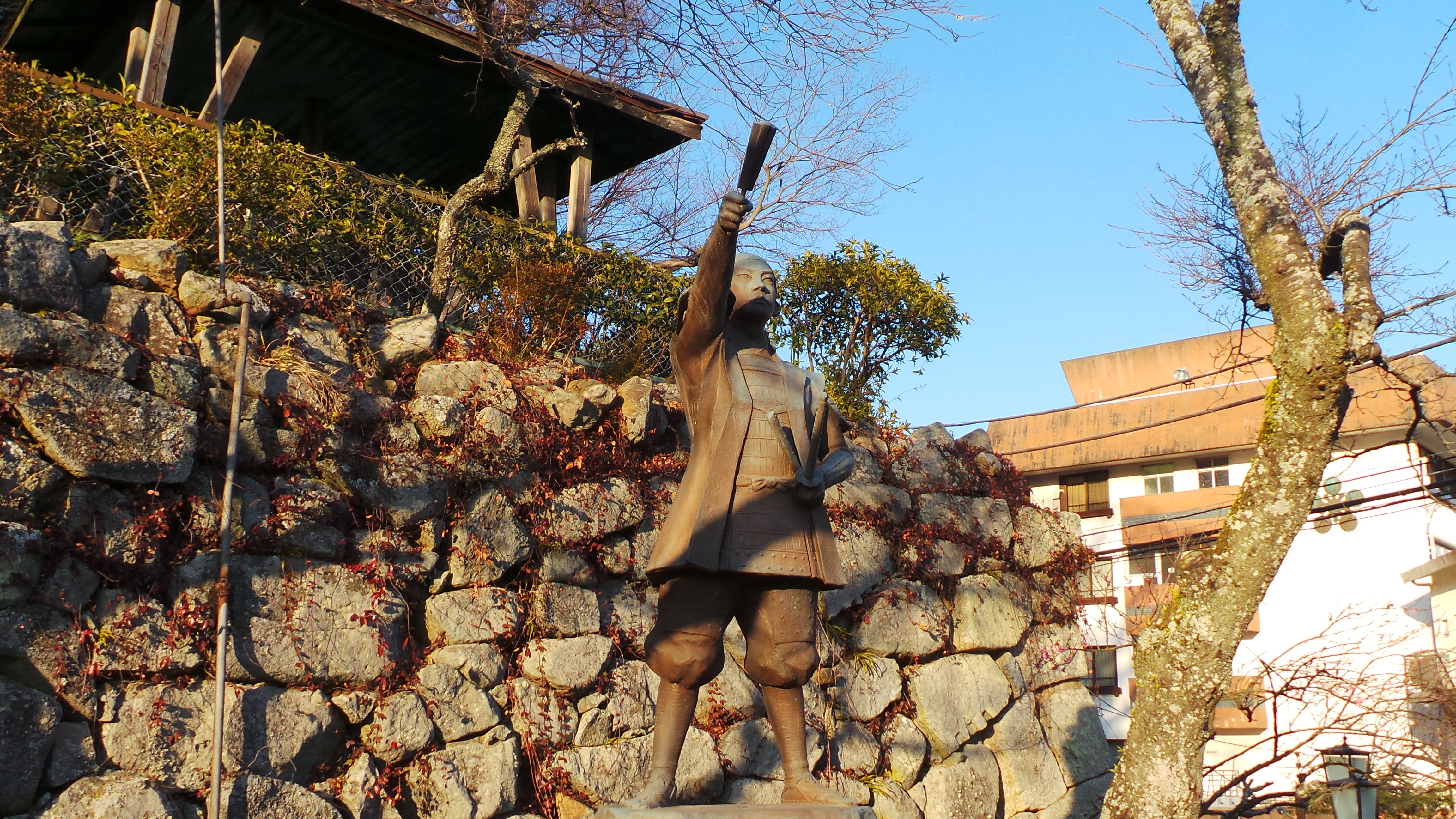
Still considered a terrorist, a statue of Fujita Koshiro stands proudly at the entrance to Tsukuba Shrine, a shrine said to house the god and goddess that protect from evil and illness. The shrine has been a place of worship for over 3000 years. I continue my walk through the mountain paths, passing a random telephone box with a huge statue of a frog on its roof, Omido Temple with its massive bell, the cable car service that isn’t running today (as usual), and a statue seemingly standing guard in a small car park.

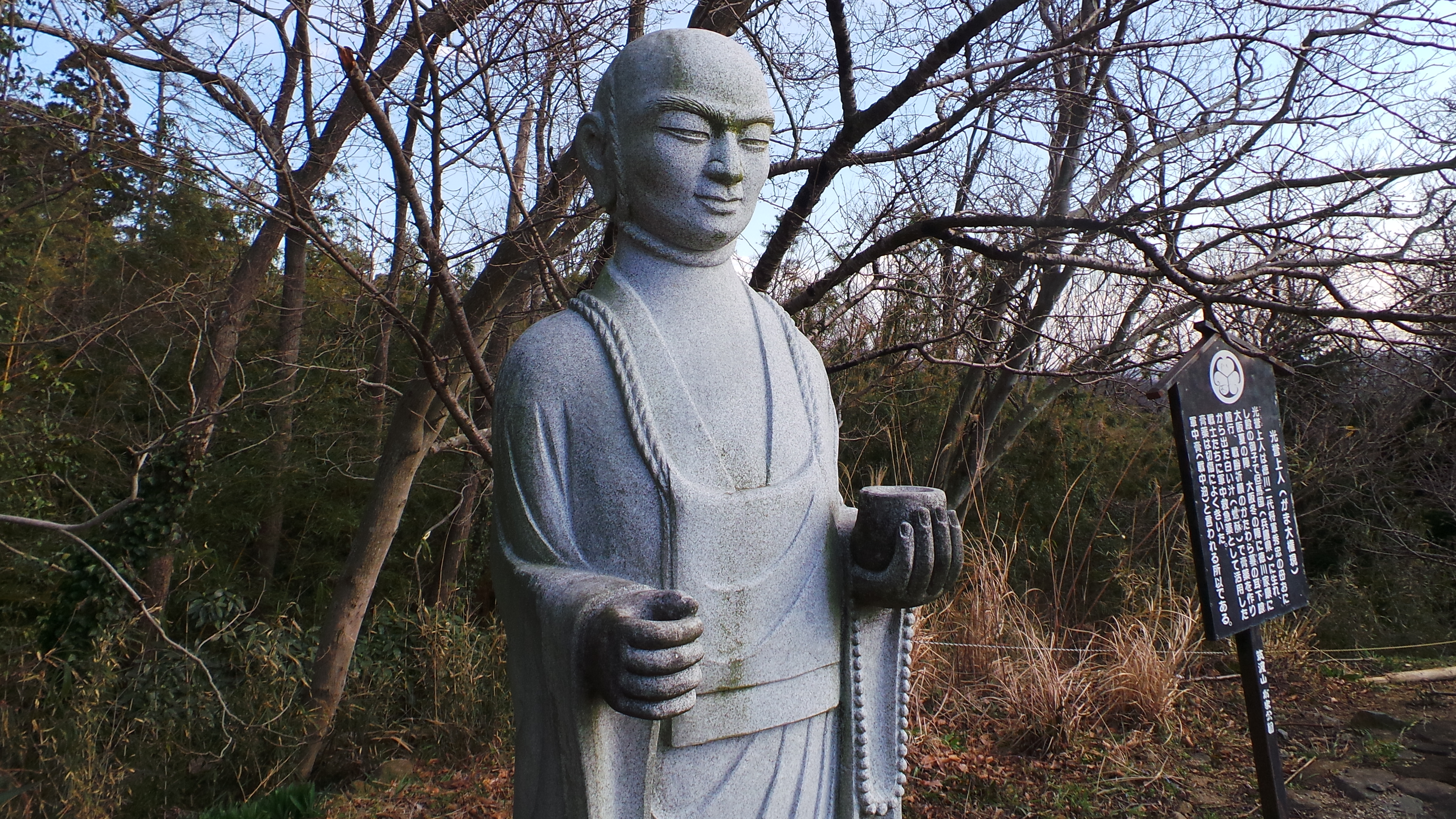
The statue is of a man carrying a cup of medicine. Using my amateur translation skills, the medicine is made from gamagairu, a giant frog said to live in this area; hence the telephone box. The medicine is taken from the ear of the frog and is said to have magical healing properties. That’s right, magical.

tsukuba9

People in England or America will be familiar with the expression ‘snake oil,’ a term used to describe health products that don’t actually work; a swindle of sorts. In Japan, a similar expression exists, and that is frog oil. Salesmen use a special sword that contains fake blood in its tip, pretend to cut their arm revealing a huge gash, then proceed to rub the frog oil on their skin. The wound disappears in an instant, and fools buy.

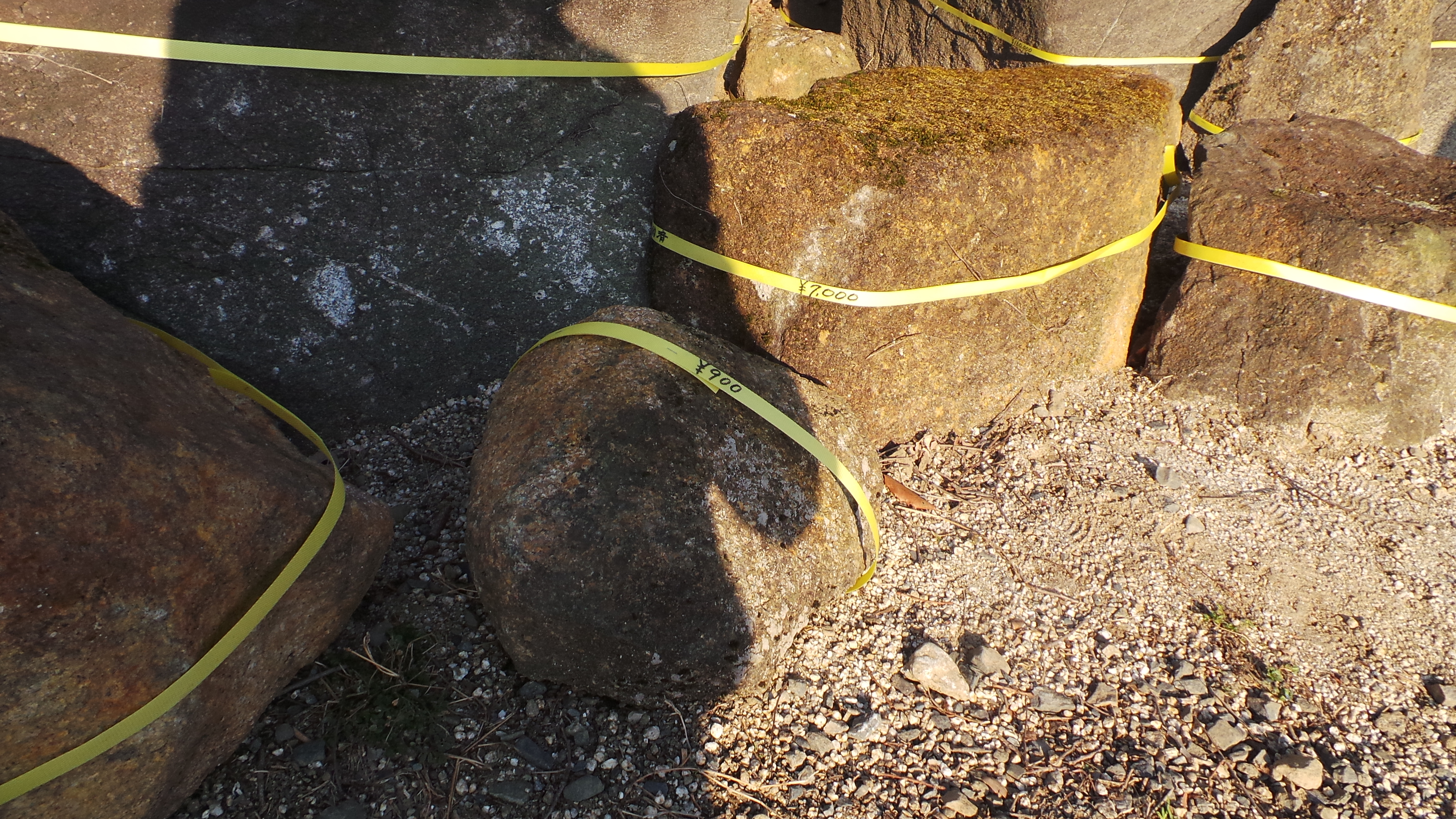
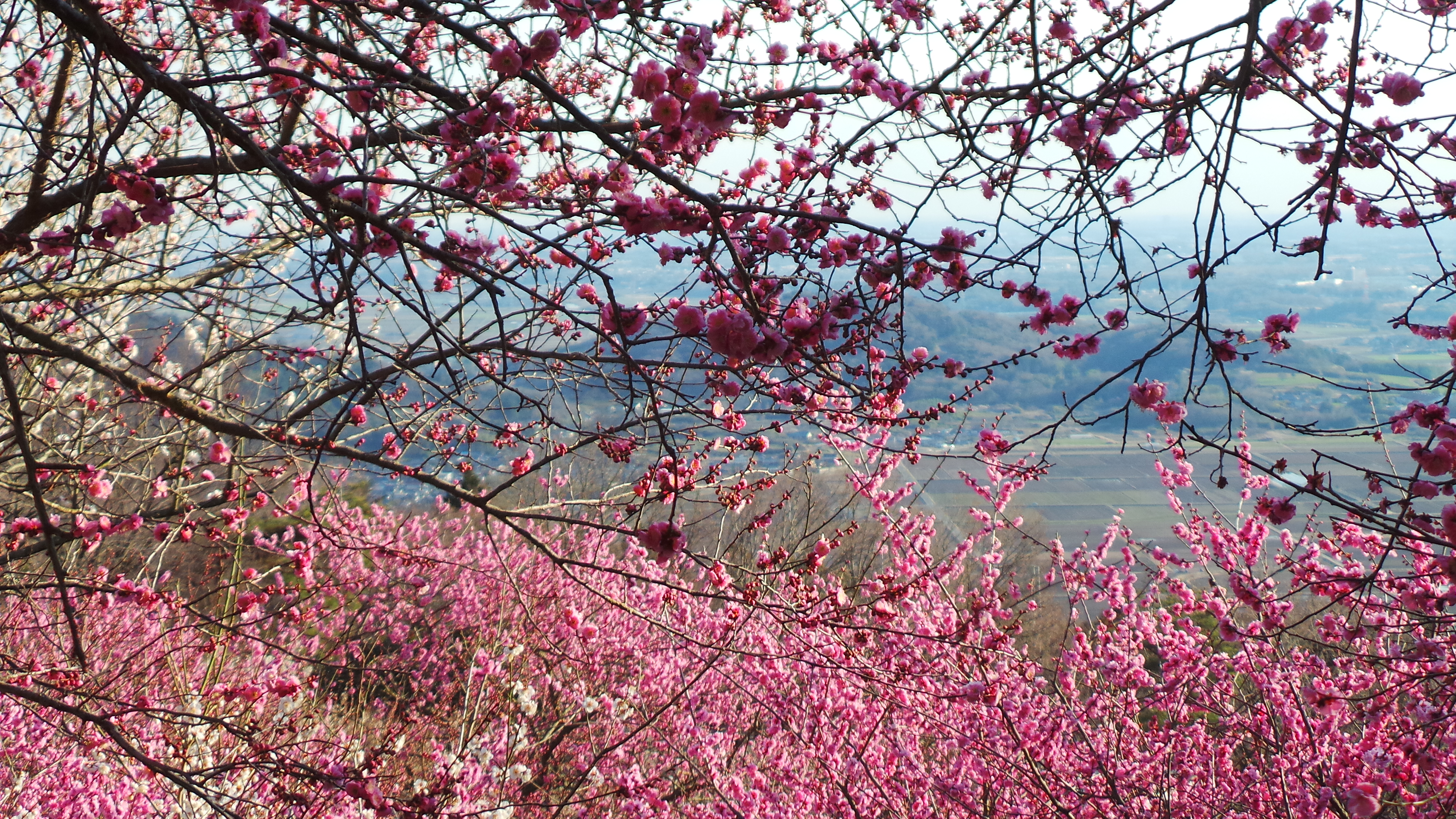
I continue my stroll and head in the direction of Mount Tsukuba Plum Blossom Gardens. These gardens are free to enter and feature over 1000 trees. Thirty kinds of flowers blossom in this area, and mixed in with the flowers are the famous rocks of Tsukuba. Rocks, I might add, that are for sale.

tsukuba2

I lug my rock up the mountain path and realise that I should have probably bought it on the way down. The flowers in the mountain are beautiful to see. Red plum is in full bloom this time of year, and white plum is apparently in half bloom. I walk through sweet plum groves and fresh-smelling flowers before arriving at Lookout Point Arumaya, a small mountain hut that looks as though it was stolen from a children’s fairy tale.

I stand, gazing in the direction of Mount Fuji, 155.6 km away and visible on a clear day. Today is such a day, but for whatever reason, the mountain remains invisible, as always; forever shrouded by the white layer of clouds that blend into the distant horizon.

tsukuba4

I stand in quiet contemplation in the small hut at the top of the mountain, admiring the beauty of the flowers and the endless nature. Staring out into the distance, I begin to wonder where it all went wrong. Before the thought connects, a Japanese man taps me on the shoulder, disturbing my moment.
“We made it from bamboo and straw, squashed real hard.”
“I’m sorry?” I say, confused.
“We made it from bamboo and straw, squashed real hard,” he repeats.
“I heard you, but what are you talking about?
“The walls, here,” he points at the walls of the hut, “We made it from bamboo and straw.”
“A bit of a fire hazard,” I tell him, but he doesn’t understand. The man remains fated to repeat his set phrase, the only phrase he knows in English. Time to go, I decide.

As I walk back down the mountain, I recall a story that a friend once told me.

tsukuba3

Many years ago in Japan, people were very poor. Many families lived in one house, grandparents, parents, and children together. When times became tough, and the families couldn’t afford to feed the young children, a sacrifice was made. Children were the priority, so what happened was that the parents would carry their grandparents to Tsukuba Mountain, abandon them, and go home to their children. The grandparents would starve to death on the mountain, so that the family could continue to feed the children. A sad tale of Tsukuba Mountain, and the many poor old people that perished in its lonely grip.

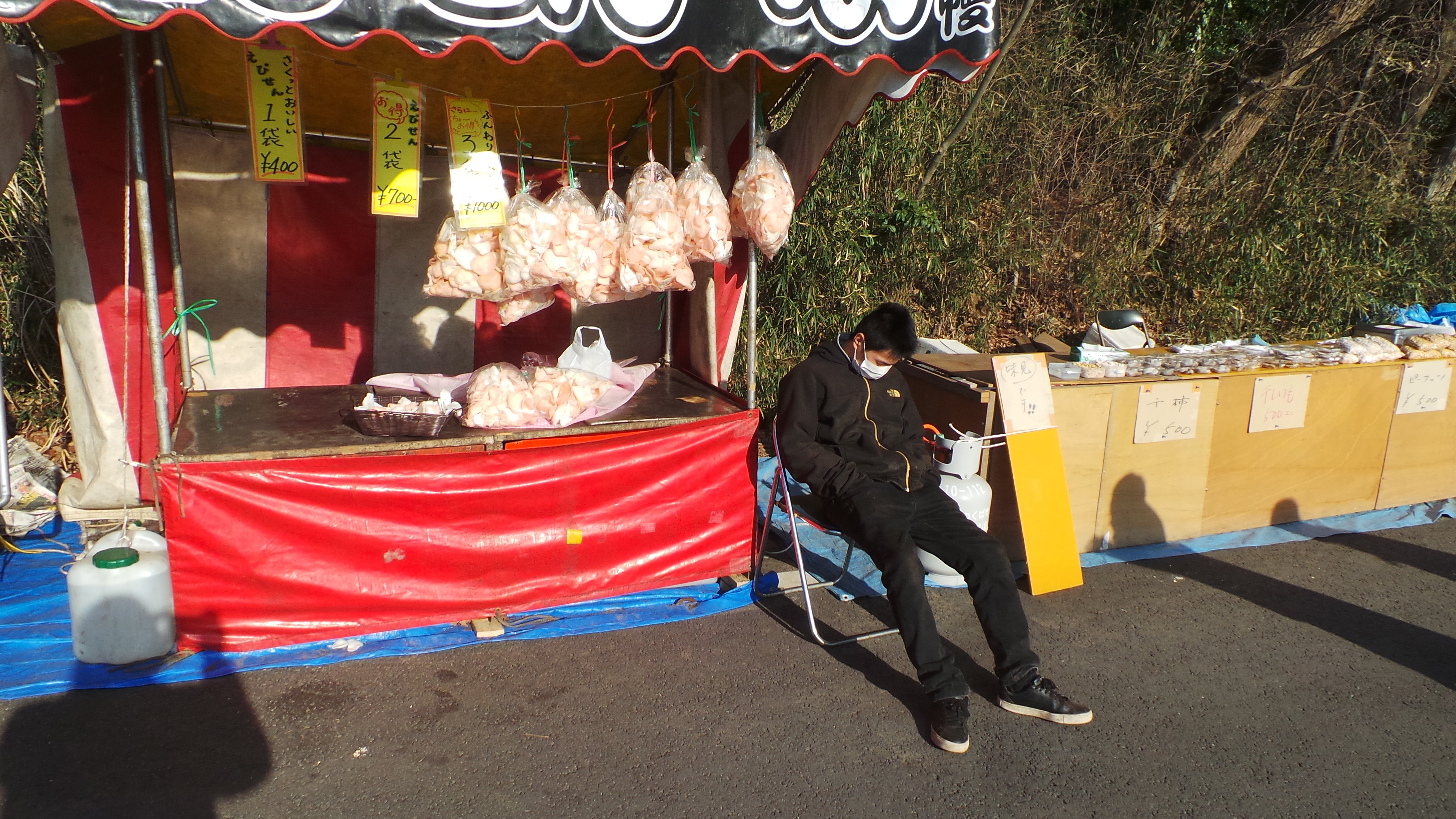
At the bottom of the mountain, most stores are closed. The men are sleeping from a hard day of selling snacks and frog oil; the only shop still selling anything is the Tsukuba Rock Shop.

tsukuba6

There are so many more sights to see on this 877-metre-tall mountain. The place is littered with things to do. Unfortunately, I wasted far too much of my limited time in the mountain hut and end up running back, rock in hand, toward the bus stop. I make the last bus with seconds to spare and head back toward Tsukuba Station.

On the Tsukuba Express train home, I read ‘The Hanging Stranger’ by Philip K. Dick and realise that this information has no relevance here, and perhaps never will.