Reflections on a Winter’s Day

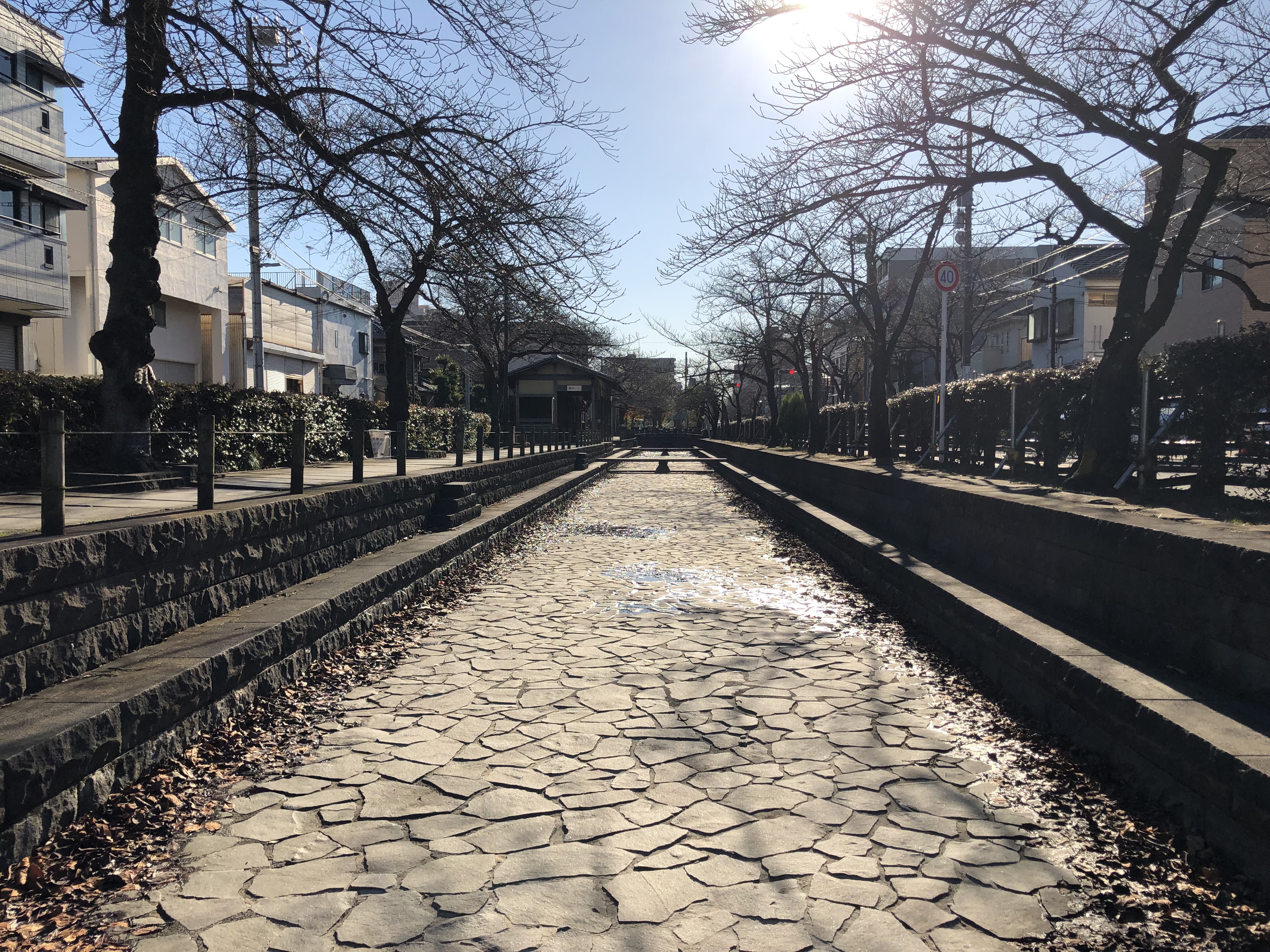
As I walk along Hikifune Water Park Street, a sense of nostalgia washes over me. It’s been five years since I lived in Katsushika Ward, Tokyo, and revisiting my old neighbourhood brings back a flood of memories. The winter morning air is crisp and chill, and my breath turns to white wisps of fog that swirl and still as I make my way to my first destination.

The street itself is unremarkable. It used to be a train line, but now it has been transformed into a park that stretches from the Arakawa River all the way to Ohanajaya. As I begin to walk its length, I can’t help but enjoy the sense of familiarity.

As I wander down the street, memories of my past come flooding back. On a late night walk home with a friend, we had stopped to rest on one of the park’s benches, halfway through our journey. My friend was convinced he heard the sound of a train echoing down the length of the park. It’s said that at night, a ghost train can be heard thundering down where the old train tracks once were, and I’ve heard similar accounts from others. It’s a story that has stuck with me, and one that has been corroborated by others who have experienced it.

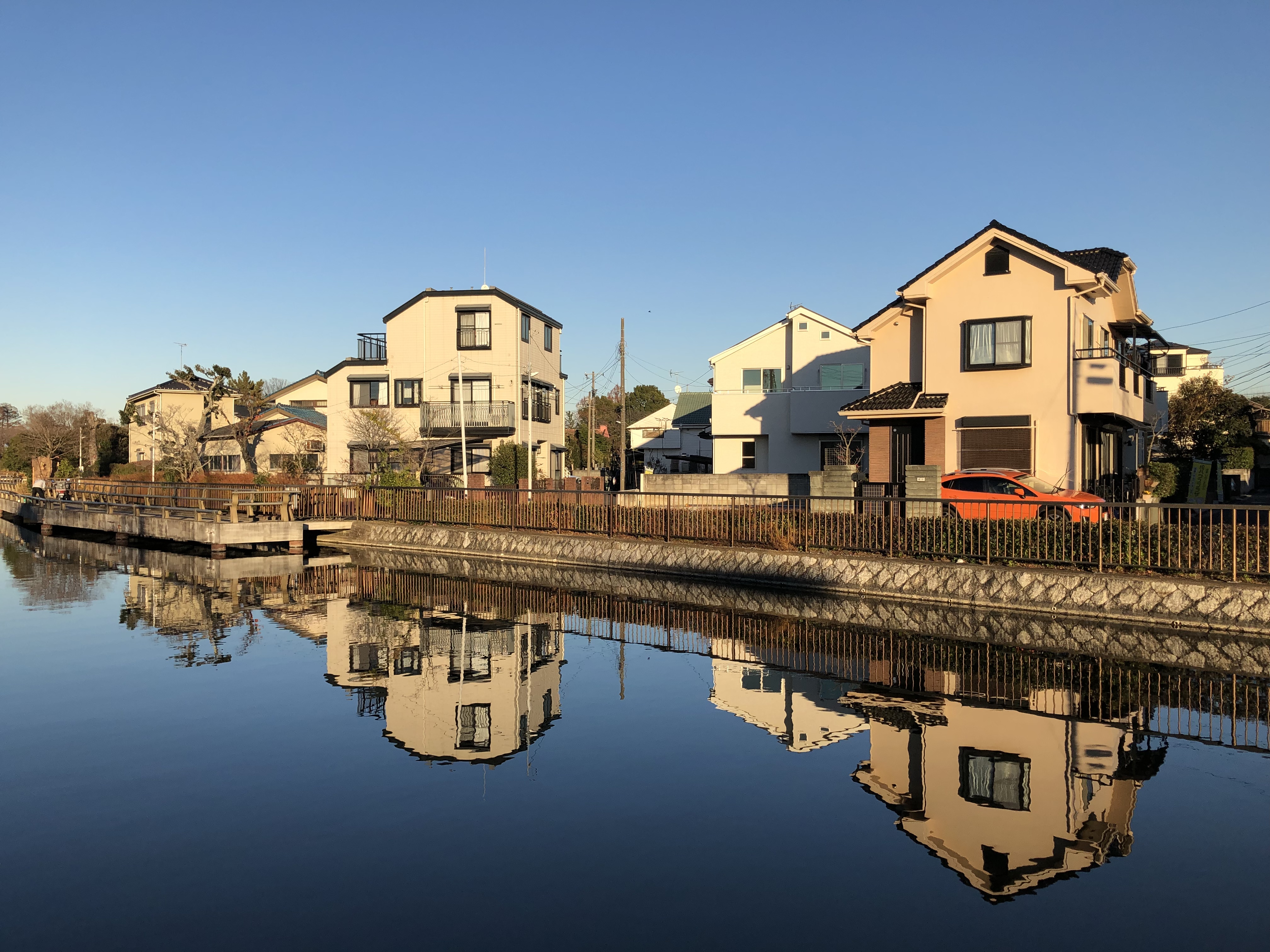
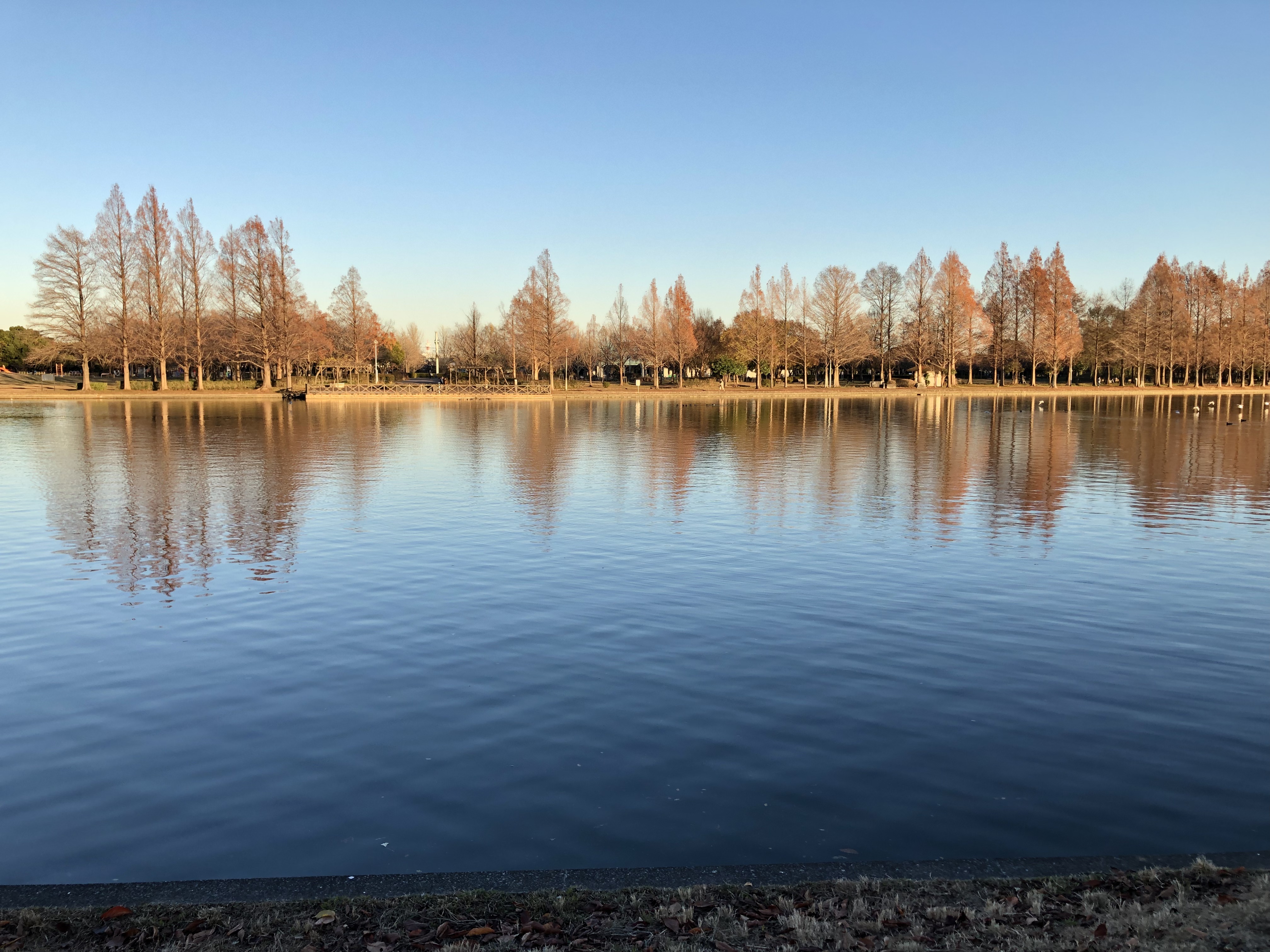
As I continue my leisurely walk, I pass Ohanajaya Station, its name, meaning “Tea and Flowers,” imparting a sense of charm. However, every time I pass by, the song “Govinda” by Kula Shaker runs through my head, as I rhyme its catchy refrain of “Ohana Jaya Jaya.” Eventually, I arrive at the picturesque inner reservoir of Mizumoto Park, my gaze drinking in the peaceful surroundings and the stunning reflection on the water’s surface.

Mizumoto Park is the largest park in Tokyo. Bursting with lush gardens and natural beauty, with a large pond at its centre. The park boasts an aquatic plant garden, a bird sanctuary, a babbling stream field, and three car parks. In early spring the park becomes awash with the gentle pink hue of the cherry blossoms.

I make my way over to one of the ponds and sit upon a bench for a time. I watch as a turtle gracefully swims through the water, its movements causing ripples to spread across the surface. The reflections of the surrounding trees dance and shimmer upon the water, creating a mesmerising visual display. The soothing sounds of chirping insects and rustling leaves add to the peaceful atmosphere, and I am content to sit and take it all in.

As I sit on this bench, surrounded by the tranquil beauty of the pond and the trees, a sense of melancholy envelops me. I reflect, thinking back on the year that has passed, and the ephemeral nature of time. I realise that I don’t have any plans or dreams for the future, and the thought fills me with a sense of sadness. All I know is that for now, I want to keep exploring the hidden corners of Japan and sharing my adventures through my words. But in this moment, the weight of my own insignificance and the impermanence of everything feels almost overwhelming.

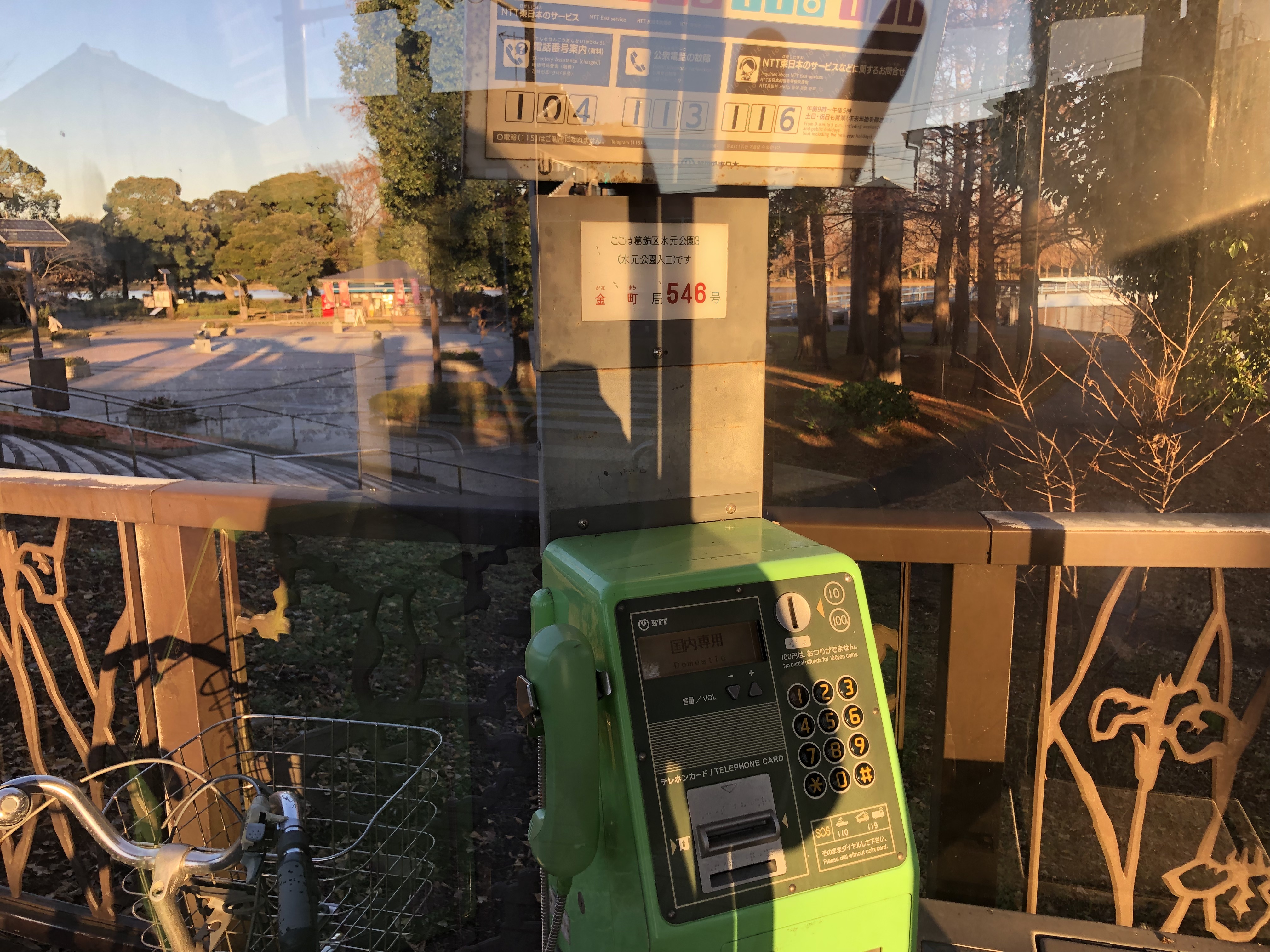
As I continue my peaceful walk through the park, I come across a telephone box nestled amongst the flowers. Legend has it that this particular telephone box is also haunted, and that at dusk a ghostly figure can be seen lurking inside. However, as I peer closer, the only ghost I find here is the reflection of Mount Fuji in the glass. It’s a breathtaking sight, and I stand for a moment, mesmerised by the beauty of it all. For some reason, the mountain is not visible to the naked eye here; it exists only in the glass of this haunted phone box.

As I wait for the sun to set and darkness to envelop the park, I am treated to a daily ritual at 5 o’clock. The speakers throughout Katsushika emit a creepy, slowed-down song accompanied by an eerie chime. The song echoes throughout the park, reminding me that the day is coming to a close and it’s time to return home. The pealing bell of the mountain temple beckons me, promising the sight of a bright, round moon shining down and illuminating the sky in twilight, filled with the brightest stars as the birds begin to dream.

Welcome to the Lunar Industries

Another intrusive start to the day in Japan. The ground rattles like teeth on an icy morning, the skyscrapers singing a chorus of concrete scraping together, pulled apart in directions against their will. It’s another earthquake, the strongest one I’ve felt so far. Suddenly, everything stops. Just as I begin to drift away, hoping to return to whatever fleeting memory lingers in my dream-filled head, the shaking resumes. This time, it lasts only a few seconds, but it’s enough to shatter whatever it was in my imagination that I desperately sought to remember.

I head outside to grab a can of Boss Coffee before taking a seat on the steps leading up to my front door. A homeless man, who resides in a cardboard castle outside the entrance to my apartment, stirs in his sleep. He coughs and groans before looking around and noticing me, perhaps awakened by the early morning shaking of the earth. The man speaks broken English and asks me the usual stagnant questions. It turns out he was once in a famous rock band, a drummer. Aged sixty-five but looking perhaps twice that, I can’t help but feel a little sorry for him. Without knowing his circumstances, I decide it would be rude to judge him any further. I want to ask him why he keeps sleeping where I would normally park my bicycle, but I think my English words might be lost on him. He tells me something is happening on Sunday in the arcade that runs close to my house. With its worn-out shops and shutters, it might well be the first activity this area has seen for months.

tissueboxbed[1]

After becoming fully awake, I can’t help but notice that the moon is still up. Although crescent, the moon’s light casts a shadow, revealing the clear roundness of its form, something I have never noticed before. I begin to wonder if I am still dreaming.

I cycle into Asakusa to find the streets littered with Australian tourists. It seems they have chosen to leave behind the glorious summer weather of their home country for the winter of Japan. Today is Australia Day, a celebration of the first British ships landing on Australian shores. I weave my bicycle between drunk people shouting and fighting on the street. I thought it was the English who didn’t know how to behave. Drunk before lunchtime, not even Mr. Sixty-Five-year-old homeless man can achieve that.

I head across the city for some exploring. Despite spending a lot of time in Asakusa, I’m continually surprised to discover new things every day. Today, I visit what was once a beautiful pond, now home to ghostly apparitions.

oldhagpond[1]

Ubagaike Pond is now enveloped in what looks like a construction site. The pond is completely dried up; only the old stone outline that makes up its shape remains. Many years ago, an old woman lived in a house close to the pond. She lived with her beautiful young daughter. The mother would send her daughter out into the streets to lure in gentlemen, hoping that they would spend the night in her daughter’s embrace. The unsuspecting gentlemen would join the daughter, and after lovemaking, when the pair were both sound asleep, the old woman would creep into the room. With a huge piece of stone, the mother would bash the man’s skull in before taking all of his possessions. This weapon was known then as a ‘stone pillow.’ One day, the old woman threw herself into the pond, an act that was out of character and has no bearing on the rest of the story. These days, at night, you can hear the quiet sobs of her daughter, or so the legend goes.

Back in the slums of Tokyo, I sit in my house, editing some writing that I have been working on, my mind rinsed clear by the haunting melody of Clint Mansell’s ‘Moon’ soundtrack. The drifting peace only lasts momentarily, though. At 5 p.m., the familiar sound of music penetrates my window. It seems that, despite the winter and occasional snowflake, ice cream is sold all year round in Japan.

aisukuriimu[1]

“Aisukuriimu, Aisukuriimu, Aisukuriimayoou.” Typically, the song occupies the space in my head usually reserved for contemplation and creative thinking. Every evening in Japan, I sit suffering in silence, with the ice cream song playing over and over in my mind, like a broken merry-go-round.

I leave the house after an hour of silent anger toward frozen milk and cream, and cycle as usual in the direction of Asakusa. For no reason, I decide not to cycle through the red-light district (my usual route) but take a different path. It leads me to the sound of live reggae music and a smattering of distant applause seemingly from nowhere. I decide to leave my bicycle and head down a narrow side street to locate the source of the music.

Moments later, I arrive at a small outdoor festival. The grounds of the festival seem to combine a swing park and a school playground.

fukushimafest[1]

The festival is here to raise awareness for the area of Fukushima, devastated in 2011 by the Tohoku Earthquake and tsunami. The area continues to struggle, with people living without homes, families not receiving proper support from the government, and rice grown in the area seldom purchased. This festival is described as a ‘Nation’s rallying call for the Fukushima area,’ and in my opinion, it’s a worthy cause.

Inside the swing park, small stalls sell hot food. Inside the school playground, ice is being fashioned into a snow house. Children play within the igloo, while others pose before it for photographs. Reggae music continues to play from the stage, a song about everything being ‘fine fine fine.’ It warms my heart to see this. Something about today has contained a subtle misery — earthquakes and homeless people. A community rallying together to help those in desperate need. Certain people getting drunk without a care in the world, blissfully unaware of the problems faced by others, lost to the oblivion of alcohol.

livereggae[1]

As I head back to the main road, my mind distracted by ice cream and lost in thoughts of others, I realise that I have completely forgotten where I left my bicycle.

Japanese New Year’s Eve

New Year’s Eve in Japan differs significantly from the celebrations and lively scenes I’m accustomed to in England. We kick off the evening at our favourite izakaya, where the owner, in his broken English, warmly greets us with, “Good morning this evening.” The atmosphere is festive, with people enjoying drinks and exchanging smiles all around. Among the options on the extensive Japanese menu is ‘Smile, ¥10, limited to ten per day.’ Fortunately, the stocks are plentiful, so I toss the owner a ten-yen coin in exchange for his wonderfully elaborate smile.

The television set above the bar is broadcasting the 65th annual Kohaku Uta Gassen.

NYtelevision[1]

Kohaku is a live talent battle between two teams of musical acts that have had a successful year in Japan. The white team consists of all male artists, while the red team is composed of all female artists. This exclusive, invitation-only event happens to be the most-watched show on NHK every year. Audience members cast their votes, and the only prize is pride for the winning team.

I was thoroughly enjoying a band of male vocalists singing, “La lalalala lalalala,” when out of nowhere, the owner of the izakaya switches channels to watch the latest episode of the popular pirate anime, One Piece. Food is then served to each of us in tiny bowls—traditional Japanese soba noodles, known as toshikoshi soba.

NYfood[1]

Soba noodles are notably thin and long, with the belief that their length symbolises a long life. It is also said that consuming these noodles helps ward off any lingering ghosts as the New Year arrives. The seasoning for the meal is served from a salt shaker crafted from a light bulb. While I’m unsure if this is part of the traditional way to eat Japanese soba, I find it quite appealing.

One Piece comes to an end, and the owner channel-hops, briefly settling on boxing before switching back to Kohaku. On the television, Idina Menzel graces the stage, singing ‘Let It Go.’ It’s quite rare for a non-native Japanese artist to be invited to perform at the event, but given the immense success of the movie Frozen in Japan, her appearance comes as no surprise. It’s at this moment that I’m hit with my first Tokyo Disneyland flashback.

We continue to enjoy our drinks, with people singing along to ‘Let It Go.’ Suddenly, the owner begins handing out gifts in small white envelopes.

NYsheep[1]

Next year marks the Chinese zodiac year of the Ram, or ‘sheep’ as my Japanese friend corrects me. I suppose interpretations vary across countries. The pendant I receive, if I’m completely honest, looks more like a goat. Regardless, I appreciate the gesture and the unexpected gift.

As midnight rapidly approaches, we finish our drinks and take a wander over to Senso-ji for Joyanokane. At the stroke of midnight, a priest will ring the bell 108 times, symbolising the 108 sins of Buddhism. Unfortunately for me, sarcasm is one of those sins. By merely staying and listening to the tolls of the bell, your body and mind are believed to be cleansed—an excellent way to start the year, if only we could get close enough to hear them.

nysenso[1]

It’s incredibly crowded here. People are queueing up to make their first prayer of the New Year. Others are here to shop at the many little food stores lining the route to the temple, while some are here to count down to the New Year. Our purpose is simpler—we are here to listen to the bells. Eventually, as the clock approaches midnight, we manage to get close enough to the temple, arriving at about two minutes to midnight.

The first bell chimes, and we cheer. Suddenly, as if a switch has been flicked, the plastic sheeting over the market stalls starts to shake. A ferocious wind appears out of nowhere, and the temperature drops to the lowest it has been since I arrived in Japan. It’s as if the gods are angry or trying to sleep, with the millions of people here disturbing their slumber.

It will probably take over two hours to queue and make our first prayer of the year, and the cold is too much to bear. We decide to postpone this ritual until tomorrow. Instead, we opt to get our fortunes for ¥100 each. Surprisingly, none of our group receives a bad fortune. I, personally, receive a ‘Good Fortune’ that says, ‘The linen robe turns into a green one.’ I’m not entirely sure what this means, but I presume it implies that I will turn into a kappa.

After receiving our fortunes, we go our separate ways. As I cycle home, the wind almost blows me off my bike.

Ticket to (almost) Ride

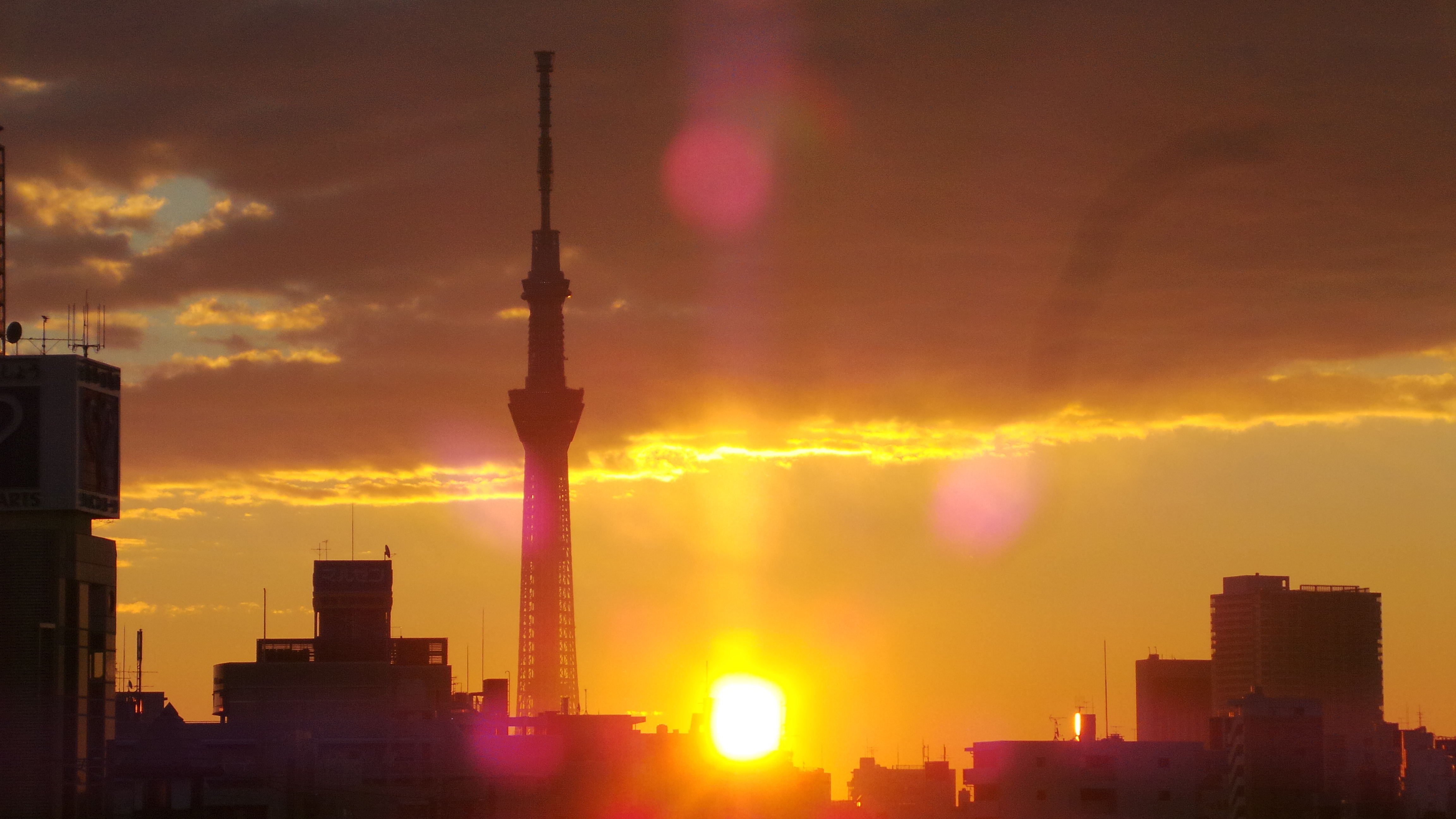
Today is Christmas Day. I wake up at 4 a.m. with a Christmas party hangover. It is too early to think, but I have things to do. Today, my friend Christine is arriving in Japan from England, and it is my job to act as a tour guide for the next few days. I walk to Nippori Station and arrive a little too early for my train. In order to kill time, I wander over the tracks to witness my second sunrise in Japan, the warm winter sun silhouetting Tokyo Skytree. My photograph is ruined by a smudge across my lens.

20141225_065945

Inside Nippori Station, it’s business as usual. Today might be Christmas, but for Japan, nothing changes. Salarymen dash to make their connections on the busy trains, Seven Eleven workers look exhausted from a heavy night shift, and ‘Let It Go’ blares from every speaker, as usual. It’s a normal business day here in Tokyo.

I take the Keisei Skyliner to Narita International Airport and wait. Eventually, my friend appears wearing a knitted Christmas jumper and a Santa hat. Despite seeing her in festive garb, it never really feels like Christmas. No trees and no snow; in fact, another clear warm day. There is no Christmas music in the airport either, just the constant drone of nonsensical announcements.

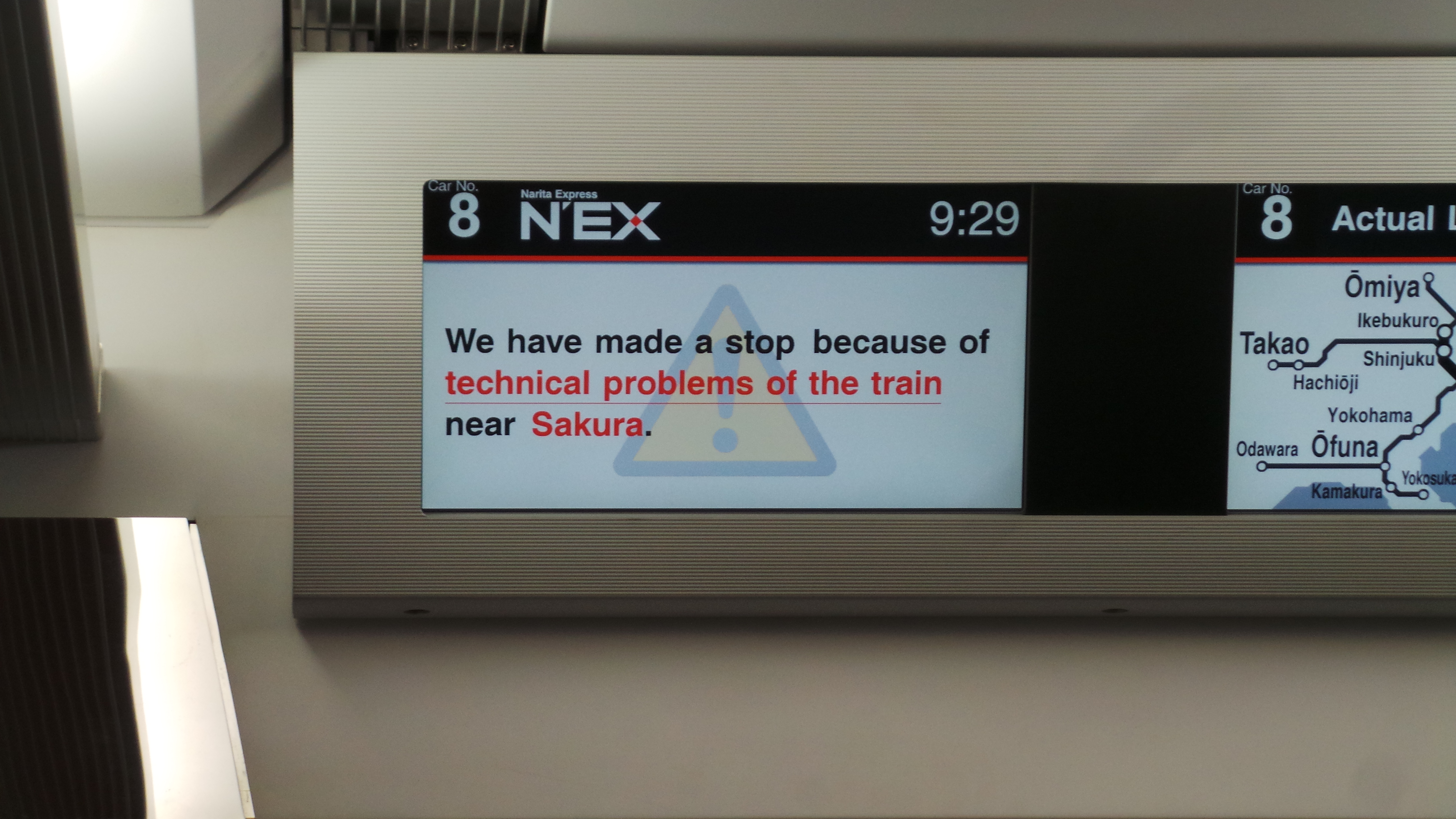
We take the Narita Express bound for Shinjuku Station. The Narita Express describes itself as ‘fast, convenient, and pleasant to ride,’ but never has a quotation been so far from the truth. On the train, Christine makes an offhand comment about whether things ever break in Japan. I tell her, ‘This is Japan,’ which translates to mean, ‘Things never break here.’ No less than five minutes later, our ‘pleasant to ride’ train crawls to a halt outside Sakura Station.

20141225_093039

We sit on the train for what seems like an hour before an announcement in Japanese tells us all to get off. A kind Japanese man sitting one row in front of us explains to us in English what is happening. We have to take a Sobu Line train from here to Chiba before continuing toward Shinjuku on local trains. For some unexplained reason, the Narita Express and the rapid line are out of action. Apparently, our ¥3390 tickets can be refunded in Shinjuku.

Not wishing to spend all day sitting on trains, we decide to get off close to Asakusa. We wander to Senso-ji Temple to get our fortune, something that I very much enjoy doing. Christine receives a ‘Bad Fortune’ and leaves it for the gods. We eat sushi at my favourite standing sushi restaurant before taking the train to Akihabara.

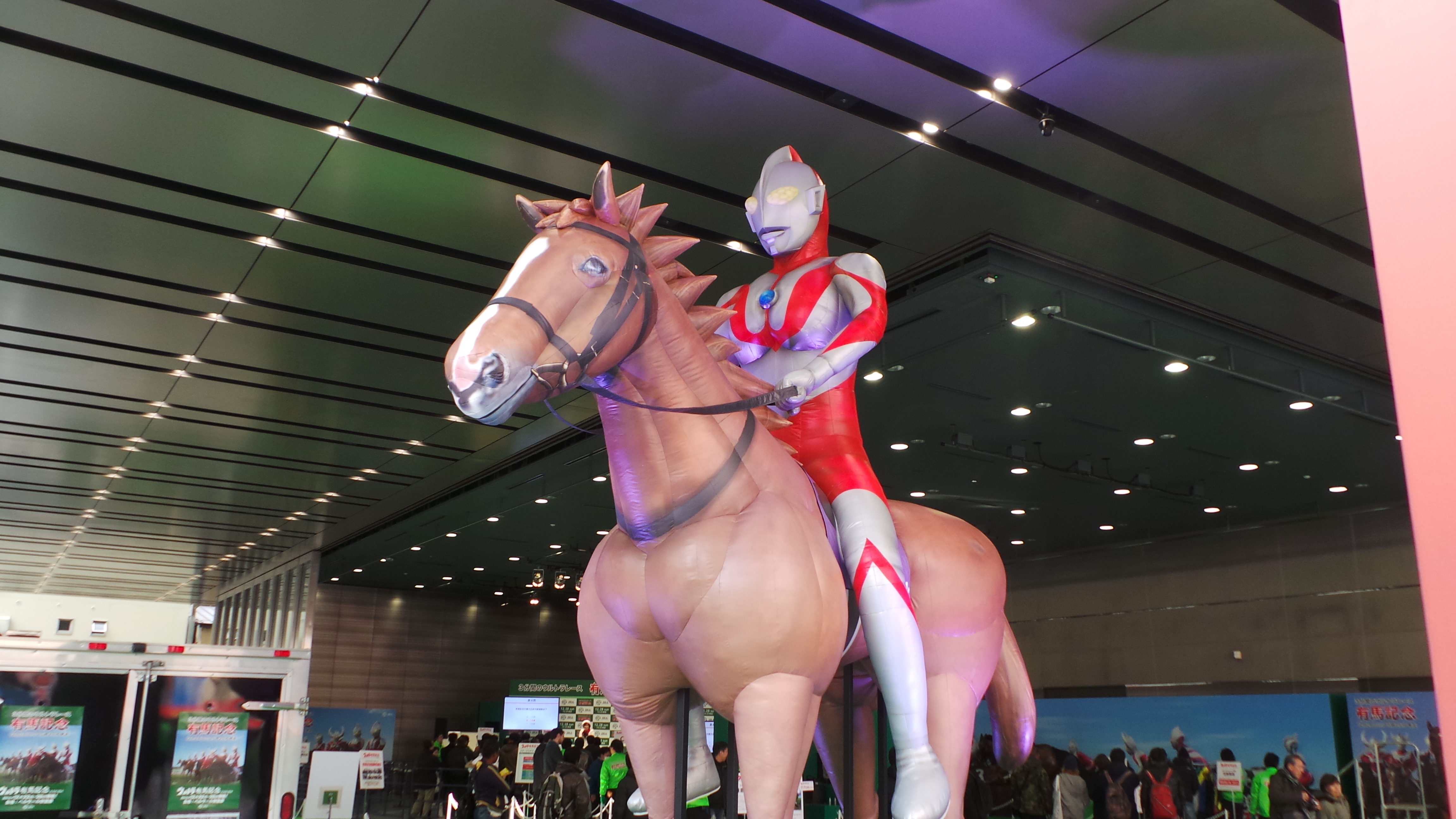
In Akihabara, for reasons that can’t be discerned, Ultraman is seen riding a horse.

20141225_133741

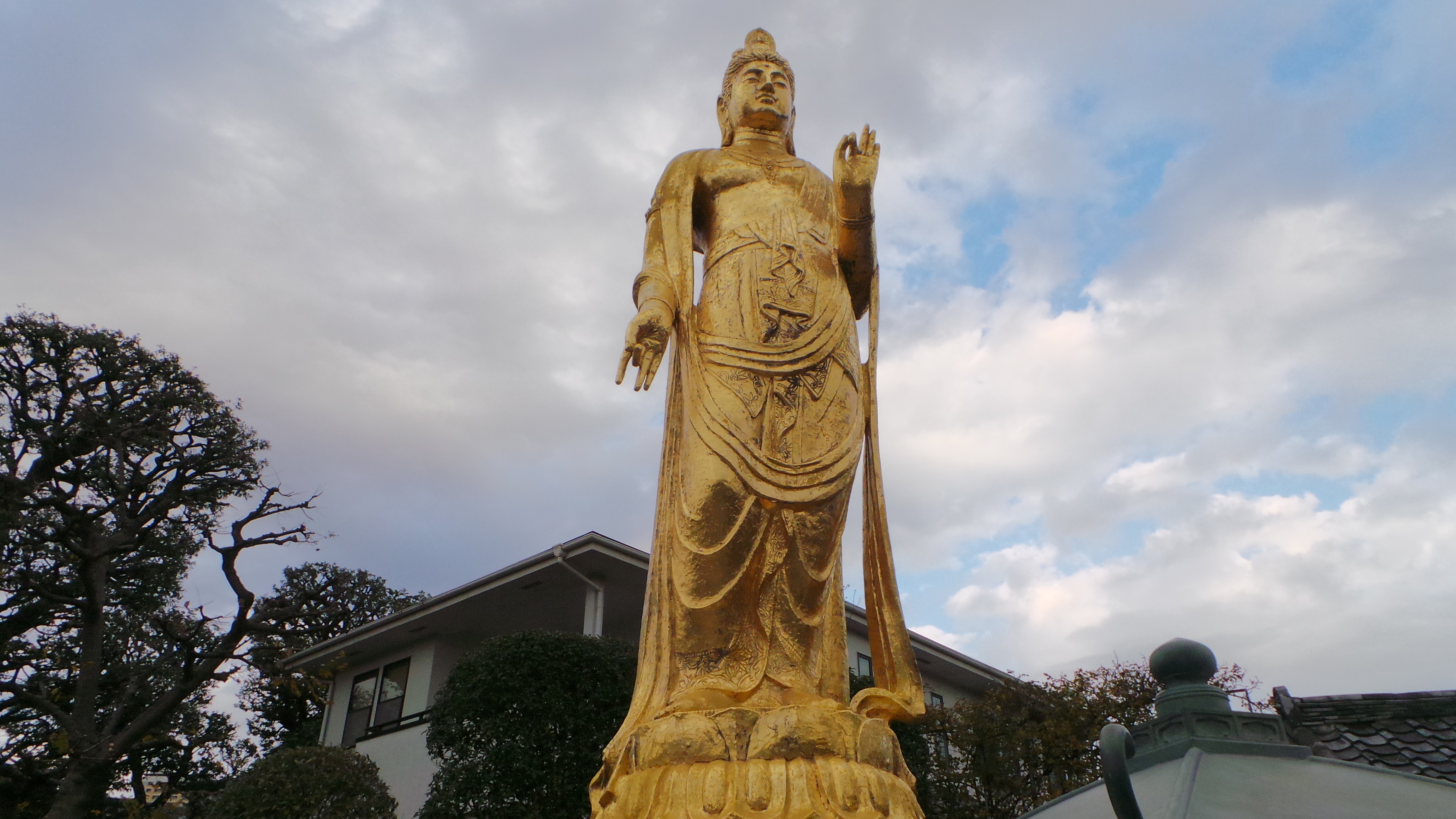
We hop on a Yamanote Line train and get off at a random station. Her choice is Nippori, my fourth visit to this station this week. We wander across the tracks and explore the many temples and shrines. Passing through Yanaka Ginza Street, we stop off at a small park. Tired and with feet hurting from too much walking, we take a breather at Zenshoan Temple. As we enter the temple grounds, in the distance stands a huge gold statue.

20141225_150326

The statue of Kannon is impressive, but what is potentially even more captivating is the Ghost Museum. Sadly, the museum featuring silk scroll paintings depicting ghosts and macabre ghost stories is only open during the summer months. There’s something about horror stories warming your blood, which is the reason for the seasonal opening hours.

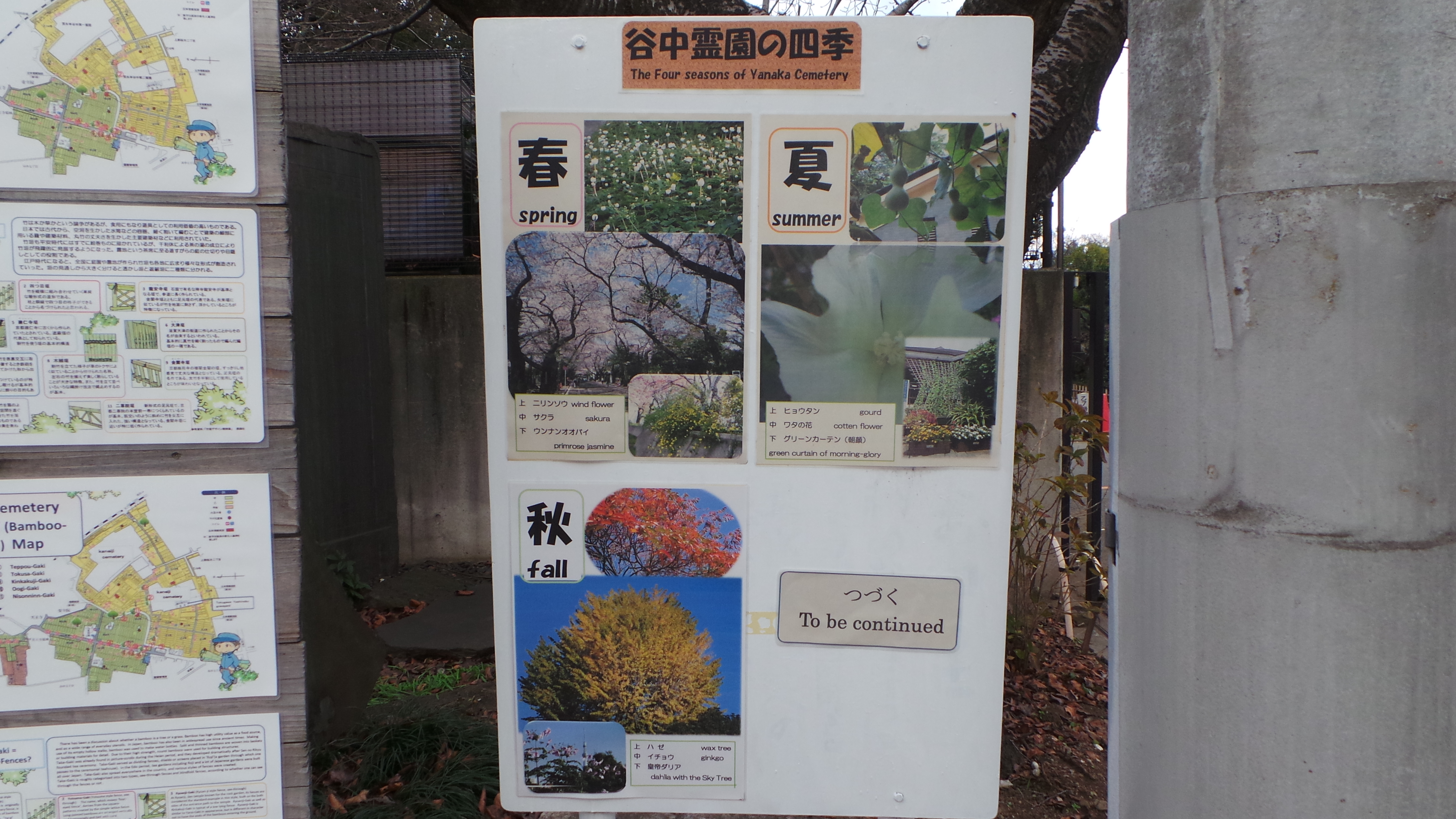
With all this talk of spirits, we take a wander through Yanaka Cemetery. I have visited here once before and found it incredibly peaceful, and do so now. There’s something about the perfect rows of decorated graves that is somewhat calming. Perhaps the quiet all around adds to this feeling. For some reason, the unfinished sign doesn’t display how winter should look here. The row of sakura trees and blossoming primrose jasmine in spring is a reason to once again walk among the dead next year.

20141225_151114

We head back to a hostel in Asakusa, the same one I had previously stayed at for eighty-two days. Tonight, the hostel is having a Christmas party, and Santa Claus will be arriving at half past eight by subway train. Exhausted from a long day and in need of my own bed, I decide to give the party a miss and head home.

Back in Minowa, I dine on Domino’s Pizza (four seasons) and a New York Cheesecake. I could post a photograph of a Japanese pizza from Domino’s, but it really isn’t any different from anywhere else. Instead, here are some instructions for Christmas decorations that I saw earlier today:

letsdecorate[1]

Merry Christmas.

Round, Round, Get Around, I Get Around

This weekend, a local event known as ‘A-Round,’ short for Asakusa Around, is taking place. Sixty-nine different stalls, cafes, and galleries have signed up for the event. I am fortunate enough to have been invited along for a small walking tour, hosted by my friend, local resident, and Japan expert, Gomez. We meet up at noon, and a group of five, including me, sets off on foot to explore some of the rich Asakusa history and to get a feel for some old Japanese culture.

aroundasakusa[1]

We wander the backstreets tucked away behind Senso-ji Temple, an area slightly out of the way and not commonly visited by tourists. Gomez takes us to his favourite karaoke bar, saying, “This bar stays open until 7 a.m. I often visit here.” We walk through an area that used to be heavily populated by geisha many years ago and is now home to the geisha headquarters. Gomez tells us, “If you hang around this area at night, you might even see a real geisha!”

Our first real stop of the tour is a small leather shop. Outside, snake skins, sea lion furs, crocodile leather, and boxes of leather scraps are hanging for sale at very low costs. Like the other participating stores, this shop has a blue banner outside with the words ‘A-Round.’ All stores taking part display this sign and are each having an open day of sorts—a nice way to increase trade and boost tourism.

gettingleather[1]

Inside, we are welcomed humbly, allowed to take photographs, and even given the opportunity to try a few things hands-on. Hanging from the ceiling of the shop is a huge black leather crocodile skin. The shopkeeper tells us that it’s the largest single piece of leather in Japan, measuring seven metres long. The store even breeds their own crocodiles specifically for leather production.

The next stop is a cafe called ‘Ameshin.’ The shop has been open for a little over a year and is run by artist and craftsman Shinri Tezuka. The cafe is all about candy, with candy-flavoured drinks served, and the spacious room nicely decorated with candy shaped like animals.

todaysfishis[1]

It turns out that the owner makes these sweet fish himself and has recently gained popularity by showcasing his craftsmanship at an aquarium in Nihonbashi. Today, just for us, he will make a fish from scratch.

He starts by rolling a ball of soft hot candy in the palms of his hands, forming it into a rough outline of a kingyo (goldfish). Next, using only his hands and a pair of scissors, Tezuka trims the candy to shape the fin. As he models the sweet, his strong concentration makes him look like he’s in a trancelike state.

fishart[1]

This traditional Japanese process is done at some speed. After just a few minutes, the outer part of the candy has started to harden, and soon it will be impossible to shape it any further. Tezuka finishes the kingyo by painting it with a natural pigment before adding eyes to finish. “It is a beautiful kingyo made from candy. It shines as though it is alive,” he remarks.

Next, we head down a street that once was a small stream, now completely dried up. The stream used to flow from the Sumida River, running along the area behind Senso-ji Temple and beyond, toward the Yoshiwara red-light district. Gomez tells us, “Many sailors would tell their wives that they were going by boat to the temple to pray; instead, they would continue down this stream and into Yoshiwara.”

oldriver[1]

We head to the studio of the famous Japanese bag maker Kichizo Yoshida. Founded in 1935, the company is known for big brand names like ‘Porter.’ I learn that Yoshida died twenty years ago, yet he continued to make bags right up until the day he died. Today, his legacy lives on, and the birthplace of his bags has been transformed into a modern-looking gallery, juxtaposed by the original tools and machinery he used when he first started out. We meet his sister, who is taking care of business. She lets us take some photographs and gives us a chance to do some stitching. “Heart and soul into every stitch,” she says.

Next, Gomez wants to show us two very different places. The first one is a shrine full of cats.

somanycats[1]

Most shrines in Japan represent something, perhaps a different god or some superstition. This one, however, represents the harmony of marriage through the medium of felines. Maneki Neko (fortune cats) are famous across the world, but they originated right here in Taito Ward, at Imado Shrine.

The shrine is family-run, and many generations ago, they made a living from crafting fox statues from the rich clay of the Sumida River. The family also had a pet cat. One day, seeking a change from the usual foxes, they decided to make clay cats modelled in the shape of their pet. These cats are what are known today as fortune cats and are seen outside many restaurants and some small businesses, often signifying a successful future.

fortunefavoursthecats[1]

The cat with the black spot, I am told, is male. Nowadays, people visit this shrine to hope for prosperity in marriage. Couples visit before they are wed, buy a circular piece of wood with two fortune cats engraved on one side, write a message on the back, and attach it to a tree.

After getting married, the couples return and attach a second wooden plate to the original to seal the marriage and receive good fortune. There are so many trees and so many wooden messages hanging here that I can only assume every man and woman in Tokyo has visited this shrine and is subsequently now married.

lovecats[1]

After the shrine, we visit Matsuchiyama Shoten, a fourteen-hundred-year-old Buddhist temple that sits at the top of a large hill. The temple is so high up that it even boasts its own cable car to help people reach the top. The hill famously appeared overnight, as if by magic. Then, a huge golden dragon appeared from heaven and landed on the hill. This event is somehow connected to a certain root vegetable: the radish.

Usually, at a temple, a small donation of coins is gratefully accepted. However, here they only accept donations of radishes. The people inside the temple are worshiping radishes. You can even buy radishes at a small stall near the entrance for ¥500 each, just in case you left yours in the supermarket. I discover that the radish is a symbol of health, family harmony, and heavenly golden dragons.

radishestemple[1]

Next, we wander back into Asakusa to Hatch, a small coffee shop with four floors of empty gallery space above and a lovely rooftop terrace. The gallery was supposed to be filled with paintings, but the owner got drunk and forgot to prepare. Instead of buying a coffee and admiring the artwork, we leave slightly disappointed.

Our final stop of the tour is by the Sumida River, in a large exhibition space close to the Azuma Bridge. Inside, there are many small stands, each selling different leather products. The shop that interests me the most sells leather artwork. The designer tells us that one piece of work takes three months to complete. All hand-etched using a soldering iron, he sits, burning detail into leather.

leatherart[1]

The piece above depicts the Sanja Matsuri, an annual festival held in Asakusa. His art comes with a pricey ¥300,000 tag. He’ll be waiting until the cows come home to get that kind of money …

The artist tells us he wants to spread the joy of Japan to the rest of the world. He is selling some lovely leather iPhone cases for ¥12,000; the detail is delightful, and they would make an excellent souvenir. He takes a photograph of our group, clearly humbled that we took the time to talk to him. After that, the tour concludes, and we each go our separate ways.

On my way home, I head through the area that we had walked through earlier today. A geisha in full makeup darts past me; her wooden shoes clanking on the hard pavement. I am stunned. This is actually the first time I have ever seen a practicing geisha freely wandering around. Other times I have seen them, they have been part of an event or exhibition. It appears that Gomez was right about this area.

blurgeisha[1]

After a few short minutes, I hear the sound of more wooden shoes on concrete and find that a second geisha is walking down the street. She moves elegantly but very fast, and although I take quite a few photographs, for some reason, they all turn out looking like a blur. Seconds after spotting her, she has floated away like an incredible ghost.