Swings and Sound and Boats

My hotel offers a ‘classic’ help-yourself breakfast, so I opt for a bowl of rice, pickled cucumber, a pot of natto, a salad, and a couple of croissants. Natto for breakfast—enough to wake even the dead! I add mustard to rid myself of its abhorrent taste.

The day is gloomy with the threat of rain, yet curiously, I can’t seem to locate my umbrella—this is becoming a regular occurrence. The rain halts, I absentmindedly leave my umbrella outside a shop, and upon exiting, it slips my mind entirely. Now, sans umbrella, I’m left fervently hoping the rain stays at bay. But as expected, the very instant I step out of the hotel, the rain begins to pour.

Today, I only have two things on my sightseeing list, and they’re quite a distance apart. Given that I’m in Japan, the journey between them is sure to unveil something intriguing along the way—perhaps even a shop shaped like a boat.

boatshop

I head into Arc City and visit the Hamamatsu Museum of Musical Instruments. It’s the largest municipal museum of musical instruments in Asia and was the very first of its kind to open in Japan. The museum boasts an incredible display of 1,200 musical instruments. Admission costs just ¥400.

Most instruments come with two sets of headphones. I thoroughly enjoy examining each instrument, studying its unique shape, and imagining how it might have sounded in use. I then choose a pair of headphones to listen to its actual sound—A great way to kill a morning.

instruments

The museum showcases instruments from across the globe, with expansive sections categorised by continent. Here, I delve into a wealth of musical knowledge. My particular fascination lies with transverse flutes, shakuhachi flutes, and Japanese taiko and tsuzumi drums. Moreover, I uncover an intriguing fact: the very first Japanese-made piano originated here in Hamamatsu. This revelation perhaps accounts for the abundance of music shops, Romantic-era traffic lights, museums, and two concert halls.

In the ‘hands-on room,’ I indulge in playing a variety of instruments, but the spinet piano steals my heart as a favourite. Lost in the museum’s captivating exhibits, time slips away unnoticed, and I find myself leaving after two or three hours.

Outside, the cicadas persist in a symphony of their own, undeterred by the torrential rain. Amidst the deluge, there’s at least one person seemingly relishing the downpour:

rainingagain

Seeking refuge from the weather, I find solace inside Hamamatsu Station. Ascending seven escalators to the 8th floor of the shopping complex, I reach a bookshop. In Japan, lingering or sitting down to read books in a bookstore is perfectly acceptable. Similarly, spending hours browsing magazines in a convenience store is considered normal. I pass fifteen minutes here before descending, only to discover that the storm has worsened.

Everyone at the station appears as ill-prepared as I am. Umbrella-less, they huddle together, patiently awaiting the rain’s cessation. I hastily make my way to Seven Eleven, purchasing my sixth umbrella for ¥540. The surrounding buildings are shrouded in a white mist of cascading water—an unexpected sight, especially considering my plans to visit the beach today.

actbuilding

As time passes, I find myself seated on the only bench in that deserted shopping arcade. With several hours to kill due to hotel cleaning schedules, I contemplate. During a storm like this, I can’t help but wonder if the safest haven might just be a shop shaped like a boat.

After a while, the rain subsides, prompting me to stroll to the beach, a journey of about an hour. This beach holds significance due to the Nakatajima Sand Dunes, and it serves as a conservation area for the nesting Loggerhead Sea Turtles. Every summer, these turtles come ashore to lay their eggs on this very beach.

“Prazer em recebê-los!” says a drawing of a Loggerhead Sea Turtle in fluent Portuguese.
“Nice to meet you, too!” I reply, in fluent English.

dune

These sand dunes rank among the three largest in Japan, and the wooden fences stand to protect their conservation. A warning sign sternly advises, ‘Do not damage the fences!’ The wind, notably stronger in this area, renders my umbrella ineffective—unless I’m keen on turning my sixth umbrella inside out.

By the time I reach the sea, I am completely soaked. I was really hoping to see a turtle, but I sadly can’t find any; not too surprising really, they are a rare and endangered species. After the beach I head into a nearby park. There is a big man-made hill in the park built specifically as a tsunami evacuation point. There is also a windmill and a set of swings. I rest my legs for a while.

swing

On my walk back to the hotel, I pass a pachinko parlour called, ‘God’. I also pass dozens of construction sites promising modern skyscrapers; office blocks and apartments. It seems that the southern part of Hamamatsu is the last and latest to be developed, perhaps in four or five years this place won’t seem so desolate.

The rain stops just before I cross the river.

bridgebird

After walking for an hour, alone, my thoughts begin to wander and I drift off into daydream.

Upon returning to the hotel, I realise I can’t recall the journey here, yet here I am. After drying off, I dedicate some time to researching my trains for tomorrow. It appears I have yet another four-and-a-half-hour local train marathon to endure. However, I don’t mind; after forty-eight days away, I’m finally heading back home to Asakusa.

The Other Side of the Tracks

I say goodbye to Nagoya after spending five days there, realising that I could have used my time better, particularly during three of those days. The travel costs me ¥1950 and takes two hours. During the train ride, I manage to read over half of my new book, ‘South of the Border, West of the Sun.’ Interestingly, it is around the time I change trains at Toyohashi Station that a scene in the book unfolds in Toyohashi itself. I’ve nearly given up trying to attribute too much thought or meaning to these coincidences.

I arrive at Hamamatsu just before two. I would have arrived a bit earlier if two of my trains hadn’t been running late – not very Japanese-like. It’s unexpectedly warm outside. Sitting on a dull, air-conditioned train is quite deceptive, especially after the frankly terrible weather in Nagoya for the last few days. I immediately notice the distinct lack of tall buildings here.

I find my hotel on the map, it is probably a five minute walk. I take an unnecessary shortcut through a small shopping arcade. There are no voodoo dolls hanging here, but there might as well be. Every shop is closed or abandoned, and there’s no music playing. “Welcome to Hamamatsu,” I mutter to myself.

hama2

I notice that a significant number of signs here are in Portuguese. “Você está aqui,” says the map. Perhaps Hamamatsu has a large Portuguese-speaking population. My suspicions are somewhat confirmed as I pass a Brazilian imported goods store and a small boarded-up Portuguese restaurant.

Opposite the front door of my hotel is a construction site. However, it seems to be a day off because there are no workmen with flashing red sticks. Inside the hotel lobby, there’s a cream grand piano. It serves as a nice centrepiece for the room, but it also appears slightly lonely and seldom used.

I can’t check in for another twenty minutes, so I leave my bag and take a quick walk around the block. Behind the hotel, there are some incredibly old-looking Japanese houses. I can’t quite tell if they’re still inhabited or not; they seem to have weathered quite a bit, as if the Big Bad Wolf has paid them a visit.

brokenhomes

On this side of the train tracks, I count two Seven Elevens and one Family Mart. Every now and then, the pavement bears etchings of musical instruments; they look old and worn, as if they were made many years ago.

At 3 p.m., I check in. This is the second hotel in Japan where I’ve stayed without any wireless Internet. I can’t believe it. The building itself resembles more of a block of apartments than a hotel. I decide to rent the hotel’s laptop for both nights at ¥500 per night, which is actually not that bad.

My room provides only the basic amenities, but the hotel does have ¥180 cans of beer on the vending machine floor, although it’s only Kirin Beer. The hotel information seems quite standard, except for one exciting detail: “We offer free curry and rice from 17:00 to 20:00.” There is a neat, hand-drawn ink line through this particular piece of information. Not available today, it seems.

The laptop itself loads sluggishly, which is a common issue I’ve encountered in Japan. It’s so old that it doesn’t recognise my camera, preventing me from uploading any photographs. I search for the nearest Internet cafe and after a considerable effort, it finally locates a Popeye Media Cafe. Perfect.

I head toward the Internet cafe, taking the underpass beneath the train tracks. On the other side, I’m greeted by shrubbery and flowers; it’s like entering a different world.

hama1

The area here is bustling with shops, restaurants, and people—a lively hub of human life. I navigate using a photograph of the map and the GPS on my camera. In Japan, pedestrian crossings typically emit a loud drone or a repetitive beep-beep, beep-beep, or one of two tunes, all permanently etched into my memory. However, not in Hamamatsu. Here, classical music resonates from the loudspeakers. I cross the road to the tune of Chopin’s Nocturne in E-flat Major, Op. 9, No. 2.

After some time, I finally arrive at my destination, thanks to Google. Looking around, I realise I’m in the middle of the woods. Insects buzz loudly and mechanically around me. Surprisingly, there’s not a media cafe in sight.

I walk through the woods for a while and stumble upon a castle. There’s always a castle, it seems.

hamcastle

It’s half past five, yet the castle gate stands wide open, tempting me to wander inside. This is one of the smallest castles I’ve come across—deserted, with only the castle tower and gates standing tall.

Right next door to the castle sits the Hamamatsu Municipal Museum of Art. They’re hosting a special exhibition for the next two weeks: ‘The Genesis of Ultraman 1966-1980.’ How interesting.

To return to the main roads, I need to trek through the Sakusa Woods. Roughly five minutes into the woods, a Suntory Boss vending machine appears, offering either a welcome reward or a disruption to the tranquillity, depending on one’s perspective.

bossofthewoods

After ten more minutes, I might be lost in the woods. Endless loops of footpaths and stone stairways wind back and forth. Occasionally, I catch glimpses of the city through the trees. However, every turn I take towards it seems to carry me further away.

After twenty minutes, I find myself back at Hamamatsu Castle. From there, I retrace my initial steps and eventually discover an exit. It’s no wonder this small castle has survived for so many years. None of the advancing armies could locate it amidst the tangle of woods.

Abandoning my search for the media cafe, I make my way back to the train station. Along the way, I pass by a massive Yamaha store, the Watanabe Music Company, a shop named Viola, and three guitar shops. There’s an unmistakable musical vibe to this city.

At the station, I make my way towards what appears to be the tallest building in Hamamatsu, known as ‘Act City.’ It turns out to be a vast concert hall, but the next performance isn’t until Friday. I ascend the steps to an area named ‘Chopin Hill’.

actcity

Standing proudly atop the steps is a statue of the Polish composer Frédéric Chopin—a 1:1 scale replica of the famous bronze statue crafted by Wacław Szymanowski. Interestingly, the original statue resides in Warsaw, which happens to be Hamamatsu’s sister city.

I stroll to the open terrace and enjoy a splendid view of the train station below. The city appears lively from this side of the tracks, even quite beautiful.theothersideofthestation

I head to Seven Eleven for some food and decide to sit outside the shop for thirty minutes, making use of their free wireless Internet to upload my photographs.

Just after 7 p.m., I leave the land of the living and return to the side of the train station that contains my hotel. The atmosphere is eerily silent. On my way back to the hotel, I encounter only one other person—a young woman who, amidst the desolation, could easily be mistaken for a ghost.

There is one positive thing though, the pavement this side seems to be fairly new, and very flat. The perfect surface for running on, or for running away from ghosts.

Nothing Happens Until Something Moves

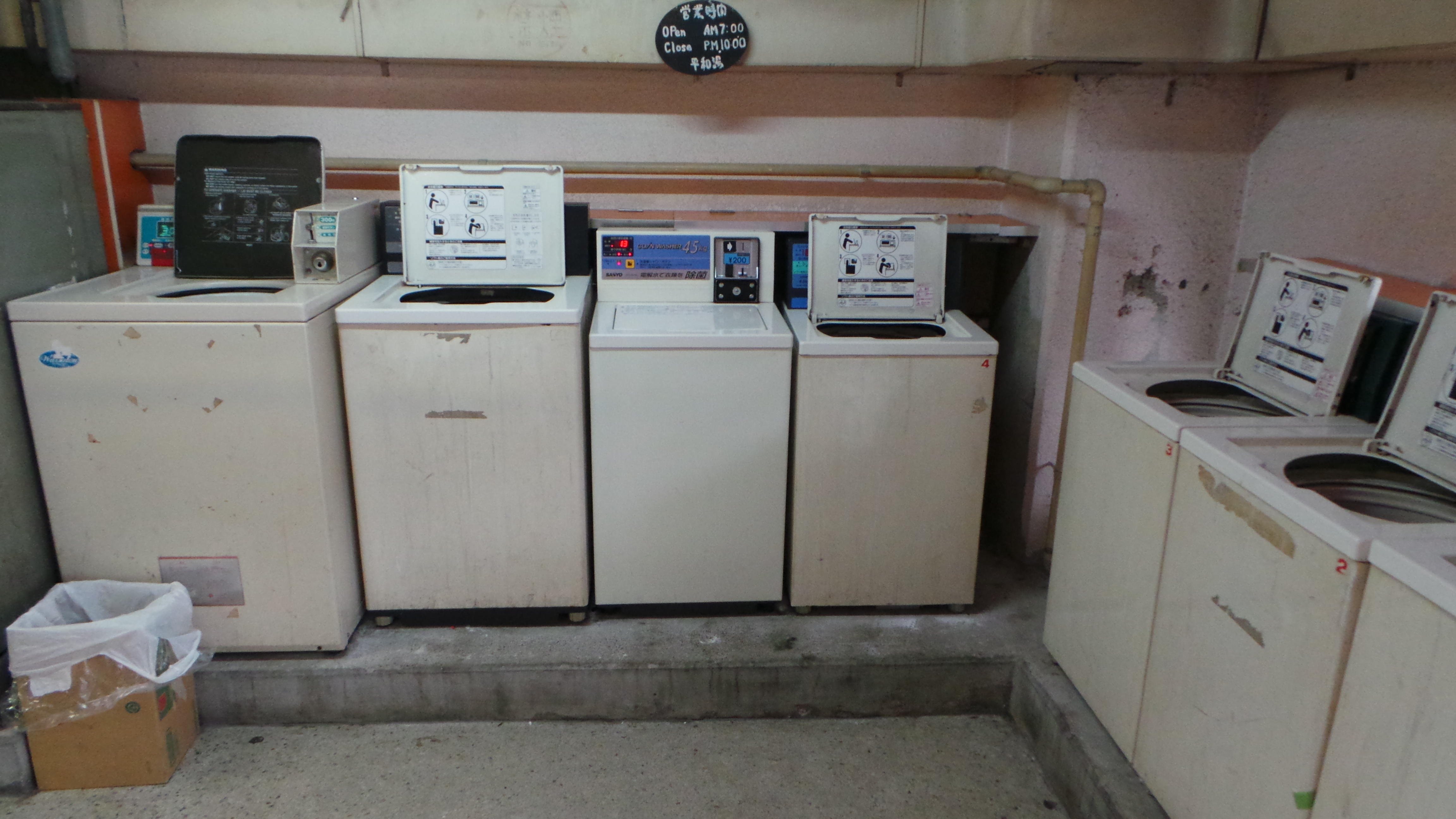
I have to walk ten minutes from my hotel to a different hotel with my laundry. The rain is heavy; a super typhoon has hit, making the rain and wind stronger than any I’ve ever experienced. However, I need to do my laundry. The sky outside is the darkest grey. Eventually, I find the other hotel. Fortunately, the coin laundry is accessible directly from the street, saving me the awkwardness of entering a hotel where I’m not staying just to use their facilities.

The laundry room is accessed through a shutter door currently pried open by what looks like a rotten plank of wood, which is a little worrying. Outside, noisy construction work is taking place despite the weather. The noise makes it rather difficult to concentrate on my book. I plan to spend as little time as possible outside today, so there is no point traipsing back through the storm just yet.

Inside the coin laundry, the room is dirty. The old vending machines no longer dispense detergent; luckily for me, I bought a ¥28 single-wash-sized pouch on the way here. I sit reading, waiting for my clothes, occasionally glancing up at the dirty walls.

laundrydecay

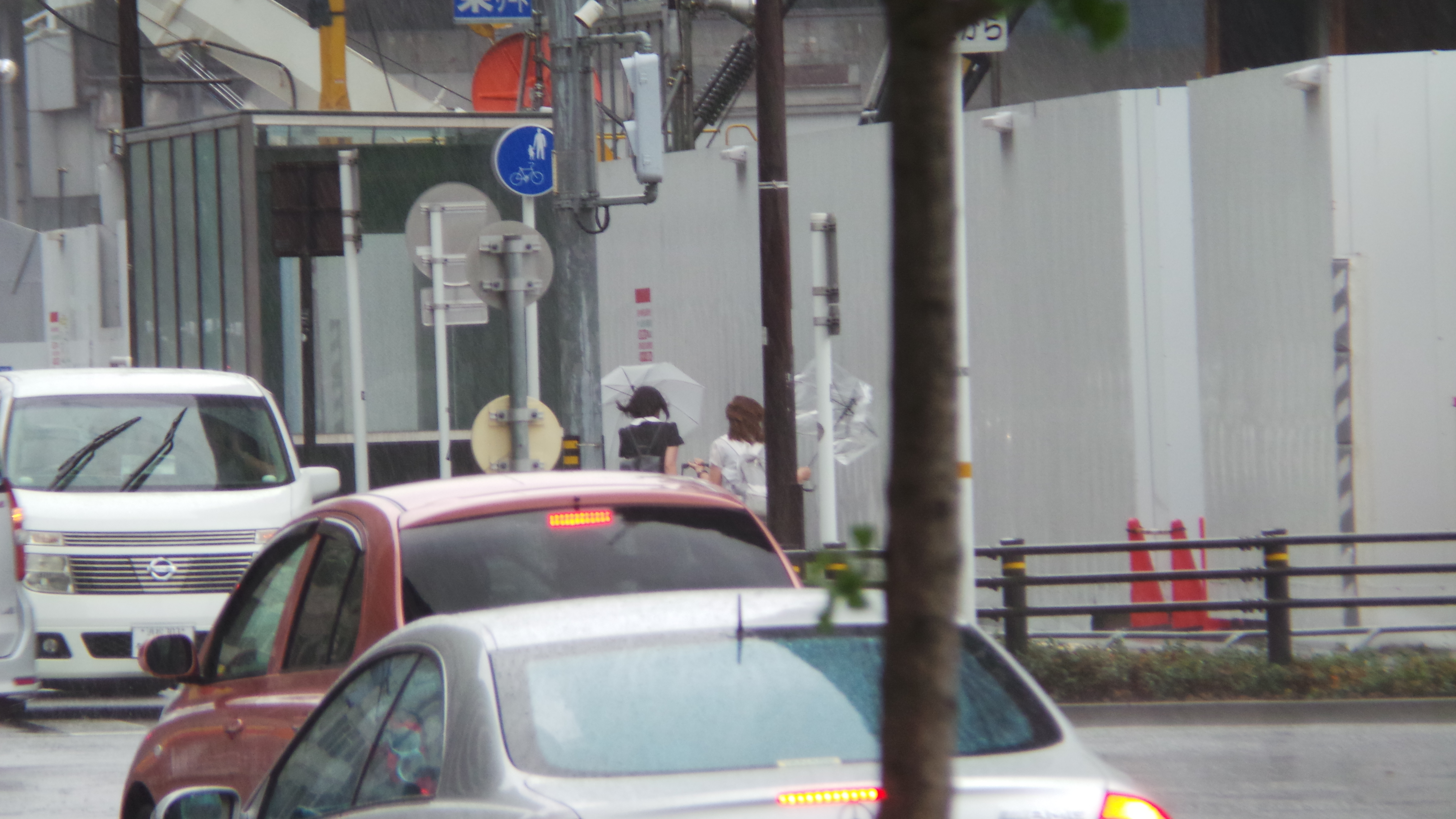
With the laundry done, I head back to the hotel as fast as I can. On the way, I notice abandoned inside-out umbrellas dumped on the street. I observe people ducking and diving into shelter, and I see areas of the pavement completely flooded. Meanwhile, the sound of sirens fills the air.

Back at the hotel, I sit by the balcony on the second floor of the lobby, quietly reading my book. I don’t mind rainy days, actually; I quite like the peace of sitting in silence and reading. It appears that a lot of people are holed up in the hotel today. Every now and then, someone walks to the window, sees that it is still raining, and then goes back to sit down. We are all waiting for the typhoon to pass.

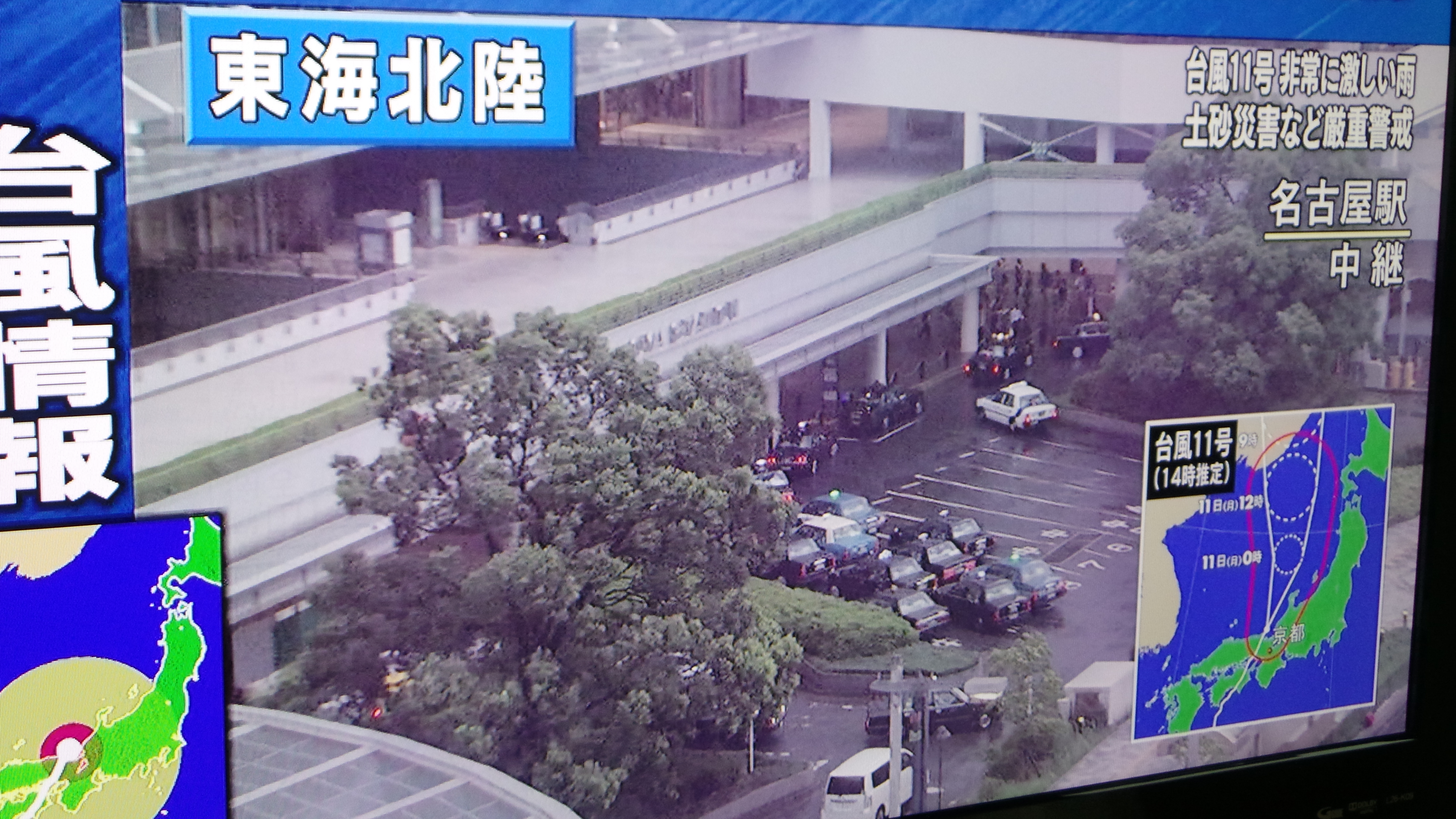
At 3 p.m., I am allowed back into my room. As I use the hairdryer on my shoes, I keep an eye on the news. After a short while, I hear the words, ‘Nagoya Station.’

nagoyast

There on the news is the train station, with taxis parked outside and rain falling. The typhoon has moved north, but the backlash of rain still falls. The bullet trains have all been cancelled.

Japan’s biggest broadcaster NHK seems to love this sort of stuff; for the next two hours, all they talk about is the typhoon. Cut to: Windscreen wipers frantically moving back and forth. Cut to: Drains overflowing. Cut to: Businessmen trying to juggle briefcases and carry an umbrella, only for it to whoosh inside-out. Cut to: All the bicycles blown over by the wind. Cut to: Rivers overflowing. Cut to: Trees shaking in the wind. This is about all I see for twenty minutes, then the footage repeats, and then repeats.

insideout

Outside, the rain looks like a white sheet being hung over the skyline. The wind is stronger now, blowing the rain sideways, making it very difficult to see the buildings in the distance. The last super typhoon I experienced passed miserably through the night; I never really got to see the chaos that it caused. Sitting here, I realise just how gloomy and grey today has been.

Eventually, the rain stops, and the wind dies down. At 7 p.m., I head out to the twenty-four-hour supermarket. On the way, I pass a sign about littering: a ten million yen fine and five years’ imprisonment. Inside the supermarket, a digitally transposed version of ‘Dreams’ by the Cranberries is playing. I buy some cheese and a small bottle of wine. At the self-service checkout, I scan the wine; a message pops up, ‘Are you over twenty? Yes/No.’ I press ‘yes’ and then finish and pay. There’s no one around to check, just press ‘yes.’ Honesty is the best policy.

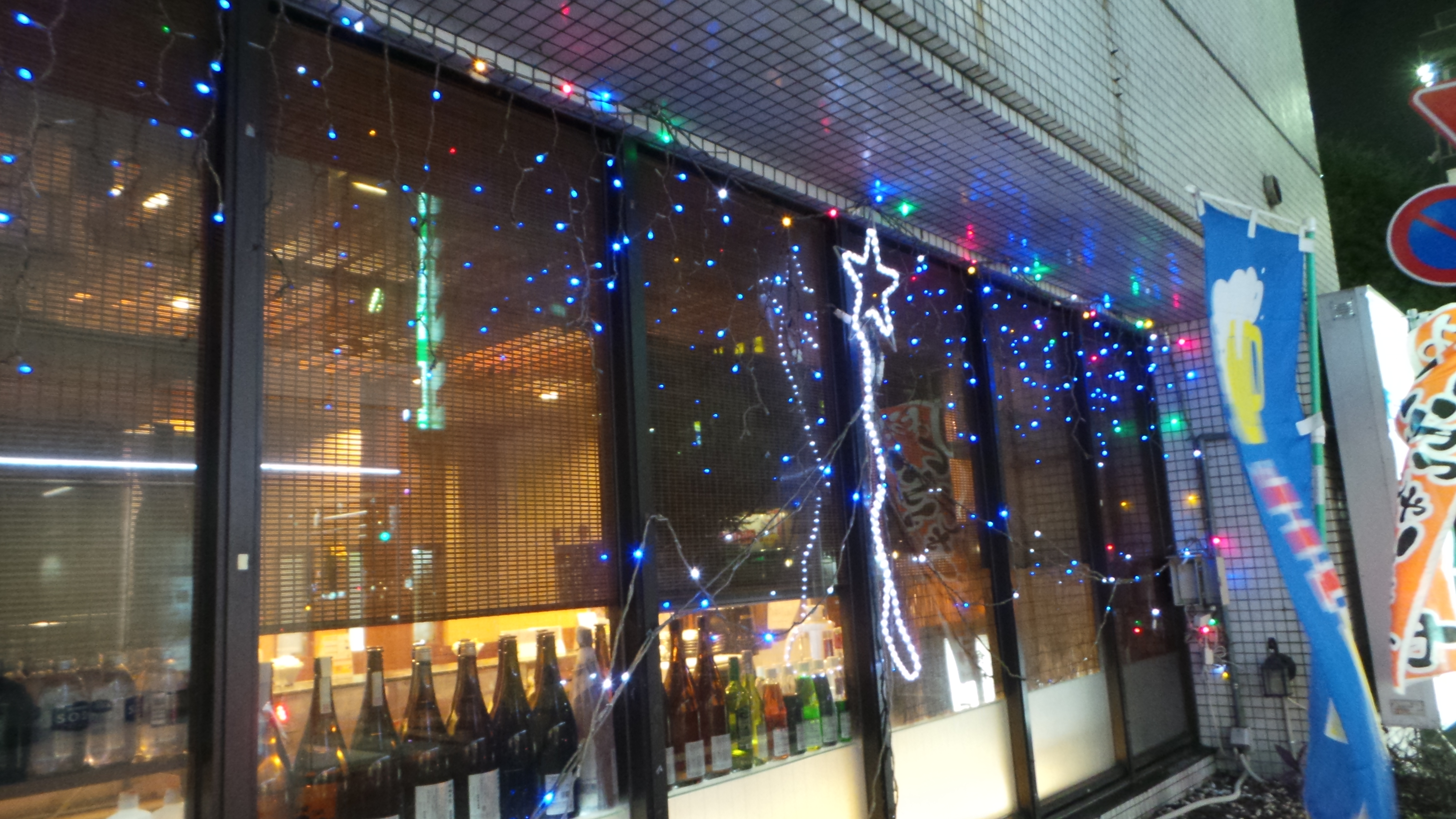
On the way back I pass a restaurant with a full set of Christmas lights. The full works.

christmaswine

Back at the hotel, I Skype with a friend from England. After that, I get deep into my reading until I finish my book. At 10 p.m., I head out to my nearest Family Mart to pick up some food. Inside Family Mart, that same Japanese song with the nice melody is playing. I can just make out a few words; hopefully, it will be enough to find out what it is.

When I return, I turn my attention to Japanese pop music. I listen to the top 30 songs in this week’s Billboard Japan Hot 100 chart. Oddly, Pharrell Williams with ‘Happy’ is at 29th. At 9th and 10th positions are two different songs from the same artist. A song from the anime Sailor Moon is in the top ten. AKB48 sister-band, SKE48, is number one. The song I am trying to find is nowhere to be heard.

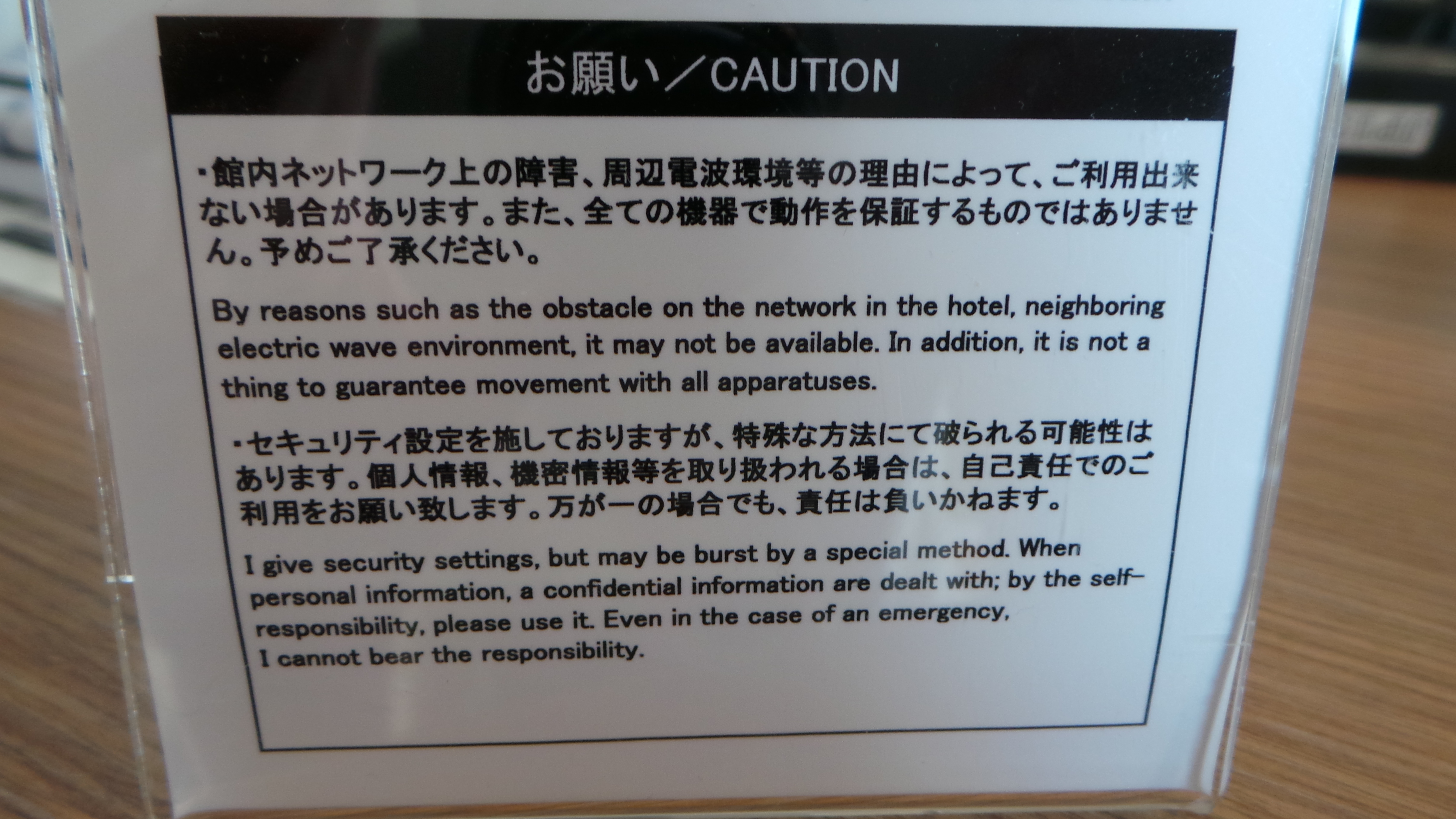
Instead, I find myself staring at this sign in my hotel room:

wirelessinternet

I do eventually find out the name of the song I keep hearing. It turns out to be a cover version of the other song I’ve been hearing, the one from Disney’s Frozen: ‘Let it Go’. It’s a Japanese version played on the piano, sounding very different from the English version—and a lot better, too. I spend the rest of my evening listening to various Japanese versions of ‘Let it Go’ on YouTube but can’t find the particular version I like. Maybe I shouldn’t have admitted that, though. I cannot bear the responsibility.

Robot Women, Fast Cars, Voodoo Dolls, and Dinosaurs

The queue for the Nagoya City Science Museum spills from the door. Inside, there is a snaked queue that runs eight rows deep. A screen on the wall tells me that every time slot for the world’s largest Planetarium has sold out, and it isn’t even 11 a.m. A shame, this was probably my best chance of seeing stars in Japan. The museum also has a special exhibit on at the moment, the Dragon Ball Science Event, and this is most likely the reason for all of the queueing chaos I am witnessing today.

nagoyascience[1]

To avoid wasting a day in a queue, I decide to take a look at the Electricity Museum, some two blocks away. I follow the signs and even find a map listing the museum, but for some reason, I can’t find it. I swing by the nearest Seven Eleven and connect to their free wireless Internet. Google Maps directs me to where I had just been walking, but nope. It doesn’t appear to be here. Perhaps closed down, who knows.

I swing by the Nagoya Musical Theatre to see what’s showing: the 5,000th performance of Beauty and the Beast. One thing I notice on my walk back toward Nagoya Station is that on nearly every street, there’s a building called ‘Toyota’. They seem to have infiltrated even the darkest Nagoya alleyways. Continuing my walk, it takes a somewhat dark turn. I wander into a lonely shopping arcade. All of the shops are closed or boarded up. Everywhere is silent. It’s as if this arcade is part of some other world. There hangs some incredibly macabre imagery.

voodoo[1]

A giant voodoo doll hangs from part of the roof, its belly split open, multi-coloured intestines bursting out, its mouth sewn up, and a giant needle stabbing into its neck. I have no idea what it begins to represent. The voodoo doll isn’t the only horrific image on this street. There’s also a giant multi-coloured face with a top hat and a satanic grin, a sinister-looking golden unicorn with eyes that seem to watch my every movement, and plenty of vampiric bats scattered around. As I pass through the arcade, my footsteps leave behind an echoed creak.

My next stop is a place called ‘Midland Square’. Inside there are many shops and restaurants. The official name for this skyscraper is the Toyota-Mainichi Building. This building is tall. The elevators take an alarmingly quick forty seconds to rise all the way to the top of this 247 metre structure. It also boasts the highest open-air observation deck in Japan.

Inside, there are posh restaurants, two car showrooms, a cinema, and sixty big brand stores such as Louis Vuitton and Vulcanize. These are all places where I’d never shop. Instead, I go and look at some cars. Displayed are a Toyota TS010 and a Toyota TS030 Hybrid.

toyota[1]

There’s an attractive young woman in a light brown suit wearing a mouthpiece. She speaks in Japanese, presumably about the vehicles. Something about her strikes me as odd—her voice doesn’t match her appearance, and her movements are very rigid. It’s entirely possible that she isn’t a human being but a very cleverly designed or disguised robot.

Next, I decide to visit the local gardens near my hotel—Noritake Gardens, to be precise. A sign at the entrance informs me that all animals must be kept in a cage; who exactly brings their caged dog to a public garden? This place is very famous as it’s the birthplace of modern pottery in Japan. There’s a spot marked on the map called ‘Chimney Gardens,’ so I head there and find six tall chimneys shrouded in foliage—the remnants of the pottery plant. The view of these historic chimneys is unexpectedly spoilt by a dinosaur.

chimneys[1]

For no reason that I can see, on the old grounds of this historic and award-winning site, stand three robotic dinosaurs. They move around, opening and closing their mouths, roaring at the children. This site holds industrial heritage significance, showcasing the conservation of a 110-year-old kiln that was used to develop the first Noritake plate. The company continues to trade today, and Noritake tableware remains a household name throughout Japan.

The remains of the factory wall can also be seen, reconstructed from the bricks of old kilns. Bricks were imported into Japan at the end of the Edo period, and the remnants of the red brick plant hold significant value as industrial heritage. However, this time, the remains of the wall are obstructed by a Tyrannosaurus Rex and Carnival Cutouts. Unbelievable.

brickwalls[1]

Also, for reasons I can’t explain, there are thousands of dragonflies here too. I’m not sure what it is about bricks that dragonflies like, but there are so many that everywhere I walk, I have to avoid being hit by one of these stray insects as they dart about without a care. No cages for the dragonflies.

My final stop today is Nagoya Castle. Every city I visit seems to have its own tower and castle. Nagoya Castle is probably a twenty-minute walk from Noritake Gardens. By the time I arrive, it’s 5 p.m., and the Genkan closed thirty minutes ago, bolted shut. The sign on the stone walls tells me not to climb, so it looks like I’m out of options. At least I can see the entire castle from a walkway over a busy intersection.

Nagoyacastle[1]

After visiting the castle, I return to the hotel and rent a laptop for three days for ¥3000. I spend three or four hours writing, and time drifts by. I’ve arranged to meet Nick at half past ten, a Canadian guy I met back in Asakusa who lives in Nagoya.

A guy in the Irish bar last night suggested I try Nagoya-style udon noodles. So, I decide to give them a second chance. I order a simple bowl of noodles with an egg mixed in for good measure. It’s a very cheap meal, ¥400 with a glass of water. On reflection, I still prefer every other type of noodle over udon.

I meet Nick outside Nagoya Station, and we walk half an hour across town to an international bar called ‘Shooters’. We drink and chat until last orders are called at half-past twelve, before walking back to Nagoya Station.

Nagoya is a huge city, yet I discover that Nick’s apartment is in the building directly across the road from my hotel.

Internet Cafes, Bullet Trains, Irish Bars

Grilled fish of the day is salmon for the third day in a row. After breakfast, I return to my room and return my room to a state that looks exactly as it did before I arrived, a hotel habit of mine. After that, I check out and head to Popeye Media Cafe to write things up.

The Internet cafe doesn’t only provide Internet access. The following items are offered at no cost (¥0): bath towel, body soap, shampoo, conditioner, hair dryer, hair iron, toothbrush, skin toner, shaving equipment (razor and shaving foam), drinks from three vending machines (offering ‘over 50 kinds of drinks!’), mobile phone charging, two plugs per person (‘you can plug in a device!’), wireless Internet, showers, and a sunbed. All of these amenities are complimentary.

They also have a ¥360 hot food vending machine, but that seems to be the only thing you need to pay for, other than time. The cafe also offers a library of comic books, better known as manga. The amount of manga on offer is insane, with bookshelves spread endlessly in every direction. Where there isn’t a private booth with a computer, there is a bookshelf. The cafe boasts an impressive 179 computers.

internetandmanga[1]

“I paid ¥980 for five hours, the day rate. I’ve actually been here twice before. Those times, I foolishly came during the evening and paid ¥805 for two hours and ¥1330 for three hours.

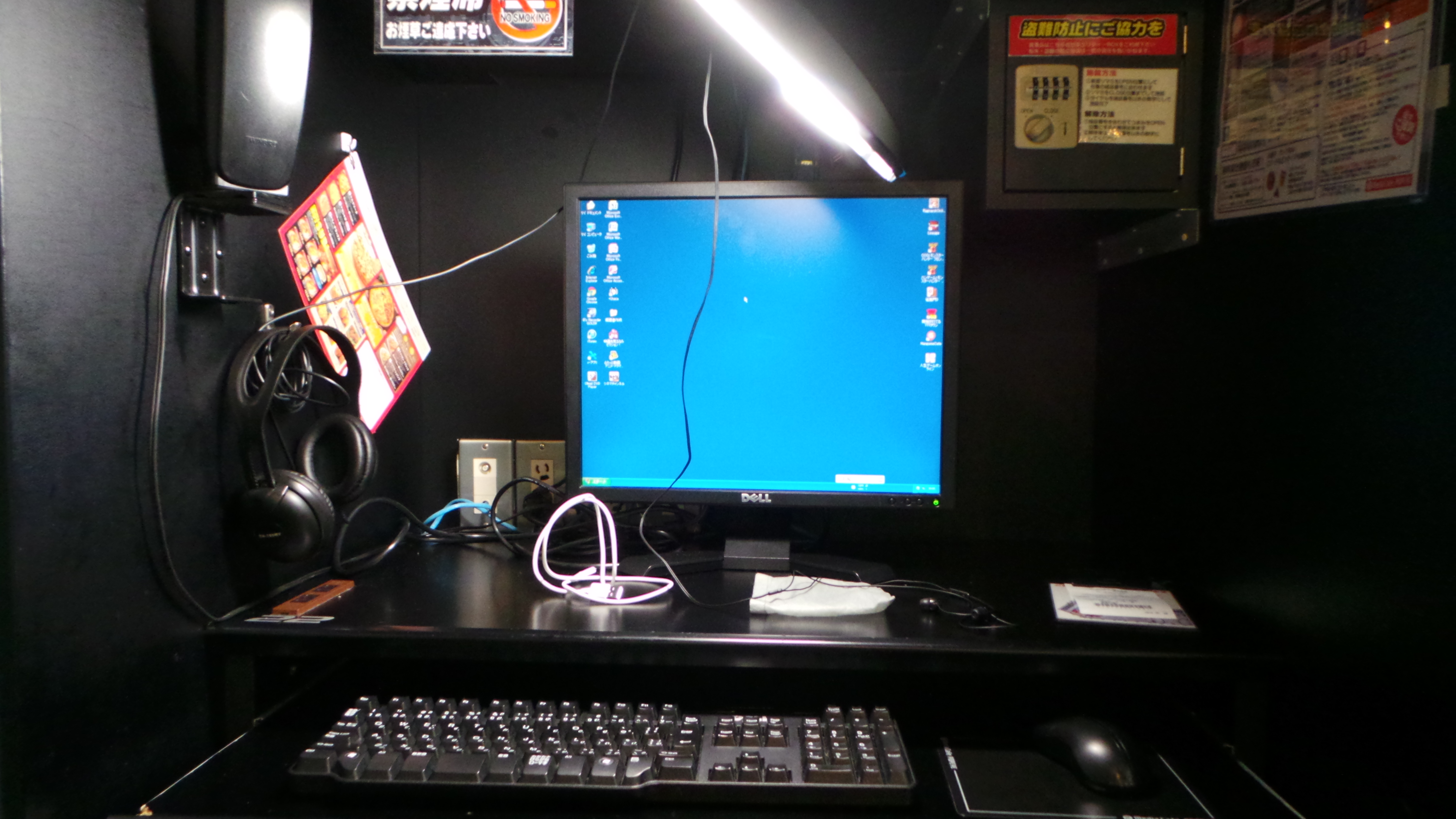
Today, I am assigned booth twenty-two. My computer runs Windows XP, and Google Chrome has already been downloaded. Next to my monitor is a menu for Domino’s Pizza. If I want, I can select a pizza from the menu, and the front desk will order it for me, handle the payment upon its arrival, and deliver it to my desk. The pizza will be added to my ‘check’ and paid for at the end.

I lounge in my reclining chair and write for five hours, all the while sipping on my free drinks. Today, I’m heading to Nagoya and can’t check into my hotel until 2 p.m. Might as well kill time by writing, that’s what I say.

20140804_200337

I like it here; dingy, comfortable chair, feels good. I can see how people can end up spending a whole night here. People actually do just that. Because of the free amenities on offer and the availability of private booths to rent for a special ‘all night’ rate, people actually sleep here. It works out cheaper than a hotel, and you can read all the comic books you desire.

When I’m done, I settle my bill and leave. Outside, the sun is far too bright, especially after sitting in the dark for five hours. At 3 p.m., I take the bullet train to Nagoya. It costs ¥6760 for a 52-minute journey. It’s twice as expensive as the local trains, but they take three times as long, and I can’t deal with that. I reserve a window seat to make use of the ‘free’ plug socket. I realise that this might well be my last ride on the bullet train for a while. It’s quite saddening, actually; the bullet train really is a treat.

I arrive in Nagoya at 4:02 p.m., precisely as stated on my ticket—efficient as always.

nagoyastation[1]

The station exits out into the heart of the city, and a beautiful city it is. Thunder sounds in the distance, threatening rain, with a few flashes of lightning in the sky, but I only have to walk for five minutes. It starts to rain ever so slightly just as I arrive at my hotel. The lift doors open as I approach, “Welcome in,” they say in a robotic female voice.

In my room, I find that I am given loads of free stuff: a comb, toothbrush, toothpaste, slippers to keep, a shower cap, razor, bottled water, cotton buds, tea, coffee, and my own individual wireless network. It feels like I am back at the Internet cafe. The complimentary toothbrush says, “Thank you for using me. Please relax slowly.”

Outside, Nagoya feels right, especially after Osaka and its indecipherable road layouts. Sometimes a place grabs you, giving an instant good feeling; Nagoya has just that. Some might think Nagoya is like everywhere else—tall buildings, concrete, and neon. They would be right. But something about the place, about my initial impression, draws me into the neon of the night.

neonnagoya[1]

I walk around for a good few hours. One of the things I enjoy about visiting a new place is thoroughly exploring the backstreets and restaurants—reconnoitering. I notice small rectangular holes cut into a wall, just the right size for a hand. On the other side of the hole is an anonymous person: a hand wrapped in a white glove, a small tray for exchanging objects or money. Worthless pachinko parlour prizes are discreetly swapped here for cash, with no one seeing anyone else’s face.

It’s 8 p.m. but feels like eleven. I step into an ‘Irish’ bar where American punk is playing, and ‘J Sports 2’ is showing a Japanese baseball game. Quite the Irish experience, indeed. I order half a Guinness and a Glenlivet 12 on the rocks; they each cost ¥600. The Guinness tastes poor at best, far from the standard I am used to from the pubs back home.

I am asked to pay up front, which is unusual here.

irishpub[1]

The music changes to the Libertines. I can’t complain. I consider the instructions on my receipt, ‘enjoy and enjoy and get dead drunk.’ After finishing my drinks, I stand up to leave. As I do, one of the barmen stops me. “It’s our eight-year anniversary. Please choose a colour,” he says.
“Okay …” I ponder the question for a moment. “Green,” I reply. The barman reaches into a box under the desk and pulls out a bright green t-shirt.
“This is free for you,” he tells me as he hands me the t-shirt. Amazing, even more free stuff. I thank him and leave.

Nagoya, the capital of Aichi Prefecture, is distinctly a business-centric hub. Everywhere I look, there are men in white shirts, black trousers, and black shoes—salarymen abound. The horizon is engulfed by a mix of black, white, and neon. Notably, Nagoya’s GDP accounts for 1% of the global economy. Toyota, too, began its journey here, in a town called Toyota, within a city, also named Toyota. It might seem like a kind gesture that the car manufacturer adopted the town’s name, but in reality, the city was initially called Koromo, only changing its name to Toyota in 1959. The town followed suit, renaming itself Toyota. Capitalism in Japan—a fascinating phenomenon.

With the Domino’s Pizza menu from earlier today lingering in my mind, I opt for another unconventional yet healthy choice for a traditional Japanese meal: Italian food. The menu is entirely in Japanese, but the waiter promptly prints off a fresh, crisp, English menu for me. I decide on a tuna pizza, which arrives with a lovely bowl of minestrone soup.

nagoyapizza[1]

As far as pizza goes, this is probably one of the greasiest I’ve ever had. But it’s good. Very good. I pay what seems like a lot and sneak a couple of the ‘free’ complimentary pieces of nutty caramel flapjack—very Italian. The bill comes to ¥2667, and I receive a delightful ¥333 in change.

Back at the hotel I fall asleep watching ‘Back to the Future’.