The Fat Sumo Halloween Special

My day begins with me being completely lost in Shinjuku, searching for an event called ‘Shinjuku Magic of Halloween.’ I was under the impression that the event starts with a massive street parade of people dressed in spooky costumes, but nothing of the sort appears to be happening. I give up searching and head back to the train station.

Outside Shinjuku Station, a television crew and a few people dressed up are standing in front of a big stage. With over two hundred entrances to the station, I have inadvertently stumbled upon the event I was here to see in the first place; and by the looks of it, the show is just about to start. Excellent timing as always. The lights come up, white smoke bellows from machines on either side of the stage, and the band comes out, much to the delight of the ghosts, witches, and Iron Man.

annabegins[1]

Today, I get the pleasure of seeing Anna Tsuchiya singing live. The former Kamikaze Girls actress-turned-model-turned-singer is simply amazing. I am about six rows from the front of the stage and have a great view. The music is great. The atmosphere is great. The weather is great. Anna sings two songs about Halloween in English before contractually mentioning the video game Psycho Break, the sponsor for the event.

For the third and final song, we get a little bit more from the smoke machines, and Anna sings her third single and first top-ten hit, ‘Rose’.

annasings[1]

After singing, she thanks the crowd, and the band leaves the stage. One minute later, the entire crowd has dispersed, and I am the only one standing at the stage. So much for the Halloween parade. I follow the rest of the crowd into the train station and head back to Minowa.

The day is still warm, so I decide on a mid-afternoon bicycle ride. I cycle over the Sumida River in a straight line for ninety minutes, stopping off at the odd shrine or temple along the way. Eventually, I arrive at the Arakawa River and cross over into Edogawa. I haven’t been here before today, and I can’t find anything to do. I cycle around for a while until the sun begins to set.

edogawasun[1]

After watching the sun from the bridge, it starts to cool down, so I race back to Asakusa.

Tonight, I have been invited to a party celebrating the one-year anniversary of a sumo restaurant. I have things to do first, though, so I arrive rather late; everyone is already drunk. Blind drunk. A few of my friends from the boat party are here too, and they are struggling to stand. A never-ending supply of glasses filled with a suspicious green liquid seem to be appearing from nowhere, and the familiar drinking chant of, “Yoi yoi yoisho,” makes its rounds. A sumo wrestler consumes a giant bottle of tequila in one go.

sumodrinking[1]

My masseur is here too; he tells me that my shoulders were the hardest he has ever had to massage in his entire career. Or at least I think that’s what he said; his slurs are somewhat difficult to decipher. I join in with the proceedings, enjoying the all-you-can-drink spread put on by the owner. Karaoke ends just as quickly as it starts, and bottles of spirits are passed around. I stay, drinking until I am dizzy, before deciding it is time to go home. As I leave, I am handed a gift bag filled with lovely souvenirs to go with my memories.

Bridges and Balloons

Today, I head into Asakusa, to the tax-free discount shop, Don Quixote. My plan is to finally buy my own bicycle. After browsing for a while, I decide to buy one of the faster ‘red’ coloured bikes. The woman in the shop calls for an English speaker, and within five minutes, all paperwork including the bicycle registration is completed for me. I pay ¥14,324 and become the proud owner of a bright red bicycle.

I cycle over the Sumida River toward Ryogoku. There is a row of parked bicycles, each with a bright purple sticker featuring today’s date. I want to park too, but for some reason, I can’t find any attendant or any machines. I try a bicycle parking lot, but oddly, the machine doesn’t want to accept my coins. No matter how many combinations I try or how much I hammer the buttons on the machine, a Japanese voice just continually thanks me. Instead, I decide to park inconspicuously by some balloons.

mynewbicycle[1]

Ryogoku is renowned as ‘Sumo Town’ and hosts the Edo Tokyo Museum. Here, a large sumo stadium stands tall, alongside shops specifically selling clothes for ‘larger’ individuals, and it’s common to spot many sumo wrestlers in full costume casually strolling around. I even pass by one sumo wrestler riding a bicycle, the man’s weight making the handlebars visibly strain and threaten to buckle.

The sumo stadium isn’t open, so I head into the adjacent Old Yasuda Garden. Free entry is a bonus. Originally built in 1688, the gardens have endured numerous changes. They were destroyed by an earthquake, completely remodelled, and marred by pollution from the Sumida River. They reopened in 1971, and the pond has now been designed to resemble the Japanese kanji character ‘kokoro’, meaning heart, mind, or spirit. Although I don’t see the resemblance. Ryogoku Sumo Hall sits idly in the distance, beyond a small red bridge.

YasudaGarden[1]

I wander through the garden for a while, relishing the escape from the bustling city, before hurrying back to retrieve my bicycle. I’m worried it might get removed, and if it does, a ¥5000 retrieval fee is required, almost half the cost of the bike itself.

I check out a nearby map and notice there’s a Fireworks Museum nearby, so I head in that direction. With fate as malleable as clay, the Firework Museum is closed today—typical. I check another map and find a Stationery Museum. Crossing the bridge back over the Sumida River, I discover that all trace of the Stationery Museum has been erased. My lucky day.

I continue cycling around, passing an amusingly named cafe called ‘Nob Coffee’ and a similarly amusingly named clothes shop called ‘Very International’ before spotting the most premature Christmas decorations I have ever seen.

OctoberChristmas[1]

I found it somewhat crazy when Halloween decorations started popping up everywhere by the end of September, in every shop, bar, and restaurant. However, these Christmas decorations take early celebrations to another extreme. I remind myself that it’s still the middle of October before darting off toward another sign. I’m attempting to find something else to do today—a day that, so far, holds no real plans, meaning, or motivations.

The ‘Kokucho Time Bell’ is marked as a place of interest, about ten minutes away from my current location. Sounds interesting enough!

KokuchoTimeBell[1]

The bell sits unusually in the middle of a children’s play park, positioned in front of a Nichiren Buddhist temple. There’s a famous Senryu—a three-line poem with seventeen syllables—about the bell that claims, ‘The bell of Kokucho reaches as far as Nagasaki.’ Considering Nagasaki is in Kyushu, over one thousand kilometres away, I highly doubt the accuracy of the poem.

After searching intensely for places of interest, I cycle back in the direction of Asakusa. Along the way, I cross a bridge and notice a plaque with some English writing. Intrigued, I double back to check out the text:

“The Yanagibashi Bridge was first built in 1698, the present bridge was erected in 1929. There are several explanations for the origin of the name, yanagi (meaning willow) bridge. One explanation is that willow trees stood at the base of the bridge. In the 19th century this neighbourhood was a bustling red-light district known in Japanese as Gay World. Yanabashi was the subject of art and literature at that time.”

gaybridge[1]

Once again, the willow is the symbol for a red-light district in Japan. The small river leading up to the bridge is dotted with numerous small boats housing little bars and restaurants. Intrigued, I decide to explore the area around the bridge, only to discover that Gay World and the red-light district have since been replaced by street after street of fashion shops.

As the night draws in, it’s time for me to head home. While cycling back, I make an exciting discovery—the light on my bicycle is powered by a gyroscope. It’s probably the most exciting thing that has happened to me all day.

Partly Mechanical, Hardly Human

Today I have a meeting with a robot. I take the Tokyo Metro Ginza Line to Aoyama-itchome Station. My destination is the Honda Aoyama Building. I arrive an hour early, so I decide to wander for a bit. I head to the NHK building but it doesn’t look like it’s for tourists, so I leave. I walk the length of Aoyama Cemetery. I kill time in the park. Eventually it is 3 o’clock, robot time!

I enter the Honda cafe. The ground floor of the building features a small stage, and a display of cars and motorcycles. As I wander around, every member of staff greets me with a cheery, “Hello,” and an overly practiced smile. The Honda Aoyama Building is free of charge to enter. There is a small shop selling surprisingly cheap drinks, the coffee is just ¥200 a cup, and hot too!

I take a seat five minutes before the exhibition is scheduled to begin. I am the only person here not wearing a business suit. Although there are thirty chairs, more than half remain empty. A factory construction line, depicting the process of building a car, plays on a large screen. I eagerly await its conclusion. Finally, when it ends, a woman appears, a door opens, and a strange machine drives itself onto the centre of the stage.

unicub[1]

The woman speaks only in Japanese, but luckily, the display screen shows English text. What I’m witnessing is a new Honda product called the ‘Uni Cub.’ This mobility device can travel at 6km/h. The machine cruises around the stage for a while before the woman giving the talk takes a seat on the device to demonstrate its capabilities.

I’m unsure of the control mechanism; she simply tilts her body in a particular direction, and the device responds by moving accordingly. It’s quite impressive, and I find myself wanting one. I snap a few photographs, but the other attendees seem less interested, probably here solely for the main event. After the Uni Cub’s display, the woman drives off the stage, vanishing into darkness through a doorway. The video screen then showcases some information about the Uni Cub. Two minutes later, ASIMO makes its appearance.

asimowaves[1]

ASIMO stands for Advanced Step in Innovative MObility, a humanoid robot integrated with Artificial Intelligence. Designed to assist people, ASIMO embodies Honda’s vision of harmonious coexistence between robots and humans. A concept drawing displayed on the screen illustrates a robot helping by carrying boxes up stairs—a representation of their goal. This aligns with Honda’s advertising slogan, ‘The Power of Dreams.’ However, despite their aspirations, ‘The Power of Dreams’ doesn’t seem to extend to comfortable seating. The chair I’m in during this demonstration happens to be the most uncomfortable seat I’ve ever experienced.

ASIMO demonstrates an array of skills: dancing, balancing on one leg, performing jumps with both feet off the ground, and showcasing impressive speed—he can run fast. His walking pace reaches 7km/h, slightly swifter than the Uni Cub. Interestingly, both ASIMO and the Uni Cub are constructed using the same technology. ASIMO stands at a height of 130 centimetres and weighs merely 50 kilogrammes.

asimolooks[1]

The presentation continues in Japanese, detailing Honda’s pioneering work in robotics, which commenced back in 1986. The earlier models—E1, E2, and E3—were primarily aimed at achieving human-like walking capabilities. Subsequent models, E4, E5, and E6, focused on mastering stair climbing. Gradually, a body, arms, and a head were integrated, culminating in Honda’s inaugural humanoid robot, P1. Subsequent iterations, P2 and P3, involved refining and automating various functionalities. Then, in October 2000, ASIMO made its debut, marking the pinnacle of Honda’s robotic advancements.

After additional discussions and visuals, ASIMO surprises us by showcasing its singing abilities. ASIMO’s remarkable skill in sign language communication comes to the forefront as it performs an original sign language song titled ‘Making Dreams Come True.’ A truly remarkable display of its multifaceted capabilities!

asimosings[1]

“The sky looks lovely today, The clouds flying lightly above.
I wonder, will tomorrow’s sky will [sic] be just as nice?
And how will our sky look in the future?
Let’s cherish our dreams today, and fulfil our dreams tomorrow.
Let’s combine our strength, and achieve our dreams together!”

After his song, ASIMO bids us farewell with a wave and a ‘Thank you.’ An opportunity arises for me to take a photograph alongside the humanoid robot. ASIMO stands, exhibiting human-like head movements and occasional speech. It appears that ASIMO can discern between Japanese and non-Japanese individuals. When a Japanese person approaches for a photographs, ASIMO addresses them in Japanese. However, when it’s my turn, he speaks to me in English, encouraging me to ‘Smile, smile,’ in a voice reminiscent of Pinocchio, the beloved Disney character, before counting down, ‘3 … 2 … 1 …’

hondastage[1]

The entire presentation lasted about twenty-five minutes. It was gratifying to witness the most advanced robot in existence. Following the presentation, I explore the small souvenir shop, which offers ASIMO stuffed toys, key rings, and other assorted junk.

On the train ride back to Asakusa, I think about the future of robotics. I really hope that someday in the near future, I will be cruising around on my Uni Cub with my very own ASIMO running alongside me.

Last Stop: This Town

Wednesday

Never have I been so happy to hear the monotonous drone from the speakers at Tawaramachi Station. Today I am back in Tokyo, back in Asakusa; my days of exploring are over for now. I have three nights in a hotel, before another long stay at the very first hostel I started at; the best hostel in the world. I don’t begin my stay there until Saturday, but I am eager to get back there as soon as possible.

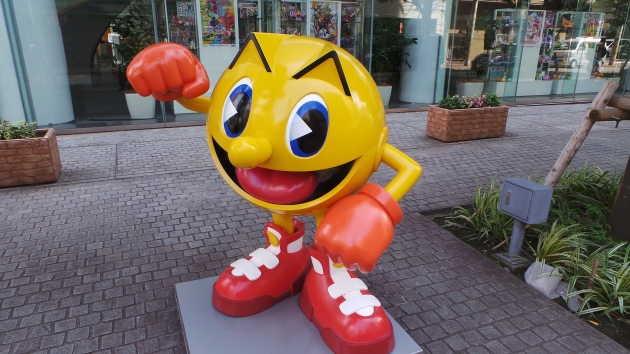
My hotel is in a previously undiscovered part of Asakusa, away from the temple and tourists. Next door is an Indian restaurant. After checking into my hotel I decide Indian food would be a good choice. My hotel, unlike in Hamamatsu, has wireless Internet. I can access the Internet from the Indian restaurant, which is a nice bonus. The food is actually very good. Like Pacman eating those little dots, I devour every little grain of rice.

pacman

After dinner I head out to the hostel. Today is Wednesday, the bar is open for guests, and I have nowhere else to go. My friend Hiro is the barman tonight, jazz musician and comedian. I say hello to people I know, and meet a few people I don’t. It would be fair to say that since leaving Kyoto I haven’t really seen many people, or had many conversations in English. Having a chance to speak to people tonight is just great.

I get a little drunk, and leave at midnight.

Thursday

Today I have made plans to meet Paul, a Scotsman I met in Fukuoka. I go for breakfast at my favourite cafe, Byron Bay. Still number one in Taito on TripAdvisor. I drink one of the ‘as seen on TV’ green tea lattes, and eat happy eggs on local bread. The owner tells me that since being featured on Moshimo Tours, she has been really busy every night. After breakfast and a nice catch up, I meet with Paul and we grab a train to Akihabara.

Paul and I head to a department store called Yodobashi Camera, an electronics chain store. This place is huge, has nine floors, and sells just about everything. Paul is shopping for headphones and this shop has thousands to choose from; the headphone display is set up in a way that you can plug them into your device and try them out. While Paul does this, I sit and play an electric piano. A homeless man sits down at the piano next to me and bursts into an amazing classical piece. He plays well, really well. It is a shame to see someone with so much talent going to waste. A real shame.

After our headphone expedition, we take a quick trip on the Yamanote Line to Yurakucho Station. Outside the station, we venture into another massive electronics chain store, Bic Camera. Our quest here is for the fabled Casio CA53W-1, the classic Casio watch with a built-in calculator. At midnight on December 31st, 1999, this Casio calculator watch was the only electronic device in the world challenged by the famous Millennium Bug. Widespread panic ensued when everyone with this watch seemingly travelled back in time to the year one-thousand. Unfortunately, our search for the watch ends in failure. Disheartened, we give up and head back to Akihabara by train.

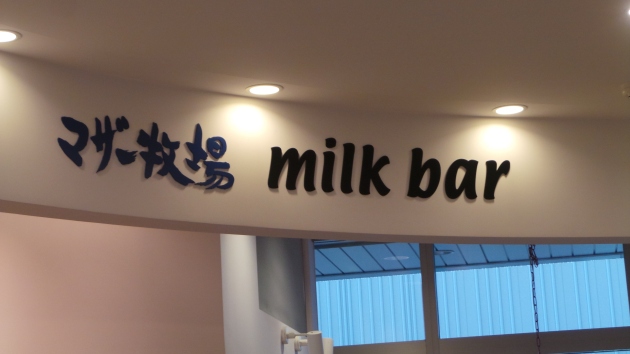
There was me, that is Luke, and my droog, that is Paul, and we sat in the Akihabara Milkbar trying to make up our rassoodocks what to do with the evening.

milk bar

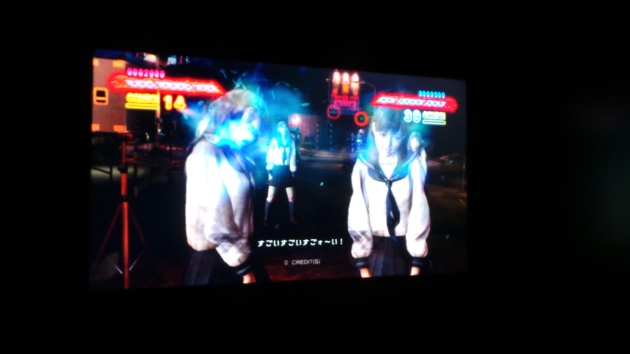
We decide to visit a video game arcade. Paul manages to win a t-shirt on a crane claw machine and kindly gives it to me as a present. After spending a few thousand yen, we head over to play some of the classic shooting games. The game we choose is a hybrid, blending the traditional shooting-monsters-with-a-gun style with a dance game where you hit buttons according to the rhythm. Surprisingly, this game also boasts a very in-depth storyline.

The game is of course the amazing, ‘Sailor Zombie: AKB48’.

The members of the girl idol band AKB48 have been turned into zombies, and our task is to defeat them. The most amusing part is when the zombies abruptly halt their attacks and break into song and dance, triggering the rhythm game. We play through our 15 continues, maybe an hour passes, before we finally give up.

AKBzombie

After the arcade, we opt for some Japanese Italian food at a Saizeriya restaurant. Then, around half past six, it’s back to Byron Bay for a quick Laphroaig before we head to the jazz night at the hostel. There, to my surprise, I bump into Yojiro, my friend and table tennis rival from Beppu.

After the jazz session, I share a few more drinks with Paul. Soon, our group expands with the arrival of an Australian named Sam, a Japanese gentleman, an Argentine girl, and Dagmar, a German girl I met just last night. Dagmar and I engage in a delightful hour-long conversation about The Curse of Monkey Island—I boast about having the courage and skill of a master swordsman! We spend a considerable amount of time amusing ourselves with pirate insults and banter, while everyone else around us remains clueless about the ‘code’ we’re speaking.

At midnight the six of us head out to A.S.A.B. and drink there until five in the morning.

Friday

My morning kicks off as usual, starting with a strong cup of coffee at Cafe Byron Bay, followed by not much else. The entire day unfolds without any noteworthy events. I meander through the streets of Asakusa, as if searching for something inexplicable. Eventually, I station myself outside Seven Eleven to tap into their wireless Internet. Unexpectedly, one of the comedians from the Moshimo Tours television show, Udo Suzuki, strolls by with a film crew in tow. Quick to grab my camera, I encounter the familiar scenario: a man materialises seemingly out of nowhere. “No photographs!” he insists, arms forming a cross to obstruct my lens.

After a day spent doing absolutely nothing, I return to Cafe Byron Bay for the fourth time in two days to meet Klaus, my German friend from Fukuoka, along with his girlfriend, Desi. We enjoy a few drinks there before deciding to venture across town to Nui, known as the finest bar in Asakusa. Nui truly lives up to its reputation. While I’ve been here several times before, I find myself repeatedly drawn back by its impressive interior design and reasonable menu. A Suntory whisky highball costs ¥500, and any cocktail is also ¥500—a great deal.

The three of us sit and talk until half past eleven before parting ways. A certain sadness sweeps over me as I bid farewell to Klaus and Desi—a feeling of melancholy I haven’t experienced in quite some time.

skytreeasak[1]

On the walk back to my hotel, I pass the illuminated Tokyo Skytree, “May the light connect the past and future, and reach the hearts of people.”

Internet Cafes, Bullet Trains, Irish Bars

Grilled fish of the day is salmon for the third day in a row. After breakfast, I return to my room and return my room to a state that looks exactly as it did before I arrived, a hotel habit of mine. After that, I check out and head to Popeye Media Cafe to write things up.

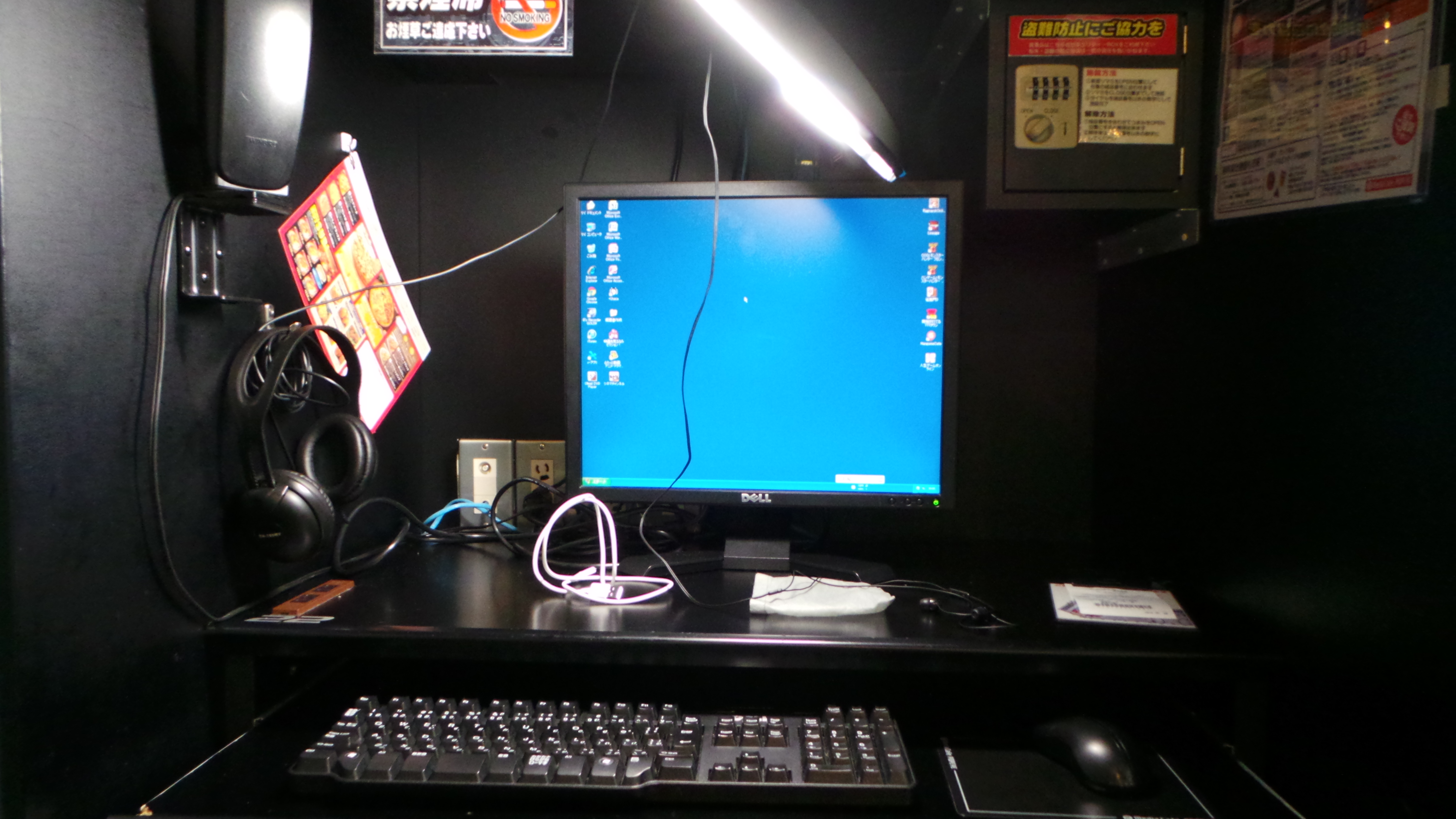
The Internet cafe doesn’t only provide Internet access. The following items are offered at no cost (¥0): bath towel, body soap, shampoo, conditioner, hair dryer, hair iron, toothbrush, skin toner, shaving equipment (razor and shaving foam), drinks from three vending machines (offering ‘over 50 kinds of drinks!’), mobile phone charging, two plugs per person (‘you can plug in a device!’), wireless Internet, showers, and a sunbed. All of these amenities are complimentary.

They also have a ¥360 hot food vending machine, but that seems to be the only thing you need to pay for, other than time. The cafe also offers a library of comic books, better known as manga. The amount of manga on offer is insane, with bookshelves spread endlessly in every direction. Where there isn’t a private booth with a computer, there is a bookshelf. The cafe boasts an impressive 179 computers.

internetandmanga[1]

“I paid ¥980 for five hours, the day rate. I’ve actually been here twice before. Those times, I foolishly came during the evening and paid ¥805 for two hours and ¥1330 for three hours.

Today, I am assigned booth twenty-two. My computer runs Windows XP, and Google Chrome has already been downloaded. Next to my monitor is a menu for Domino’s Pizza. If I want, I can select a pizza from the menu, and the front desk will order it for me, handle the payment upon its arrival, and deliver it to my desk. The pizza will be added to my ‘check’ and paid for at the end.

I lounge in my reclining chair and write for five hours, all the while sipping on my free drinks. Today, I’m heading to Nagoya and can’t check into my hotel until 2 p.m. Might as well kill time by writing, that’s what I say.
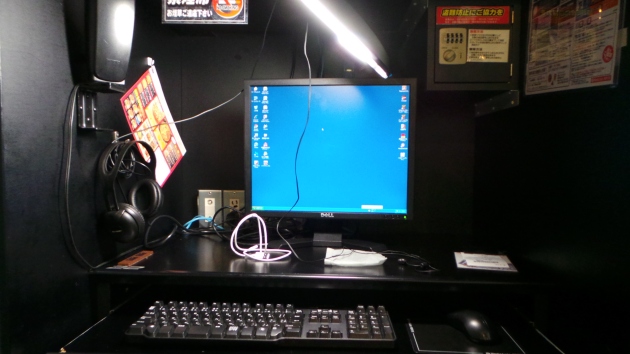
20140804_200337

I like it here; dingy, comfortable chair, feels good. I can see how people can end up spending a whole night here. People actually do just that. Because of the free amenities on offer and the availability of private booths to rent for a special ‘all night’ rate, people actually sleep here. It works out cheaper than a hotel, and you can read all the comic books you desire.

When I’m done, I settle my bill and leave. Outside, the sun is far too bright, especially after sitting in the dark for five hours. At 3 p.m., I take the bullet train to Nagoya. It costs ¥6760 for a 52-minute journey. It’s twice as expensive as the local trains, but they take three times as long, and I can’t deal with that. I reserve a window seat to make use of the ‘free’ plug socket. I realise that this might well be my last ride on the bullet train for a while. It’s quite saddening, actually; the bullet train really is a treat.

I arrive in Nagoya at 4:02 p.m., precisely as stated on my ticket—efficient as always.

nagoyastation[1]

The station exits out into the heart of the city, and a beautiful city it is. Thunder sounds in the distance, threatening rain, with a few flashes of lightning in the sky, but I only have to walk for five minutes. It starts to rain ever so slightly just as I arrive at my hotel. The lift doors open as I approach, “Welcome in,” they say in a robotic female voice.

In my room, I find that I am given loads of free stuff: a comb, toothbrush, toothpaste, slippers to keep, a shower cap, razor, bottled water, cotton buds, tea, coffee, and my own individual wireless network. It feels like I am back at the Internet cafe. The complimentary toothbrush says, “Thank you for using me. Please relax slowly.”

Outside, Nagoya feels right, especially after Osaka and its indecipherable road layouts. Sometimes a place grabs you, giving an instant good feeling; Nagoya has just that. Some might think Nagoya is like everywhere else—tall buildings, concrete, and neon. They would be right. But something about the place, about my initial impression, draws me into the neon of the night.

neonnagoya[1]

I walk around for a good few hours. One of the things I enjoy about visiting a new place is thoroughly exploring the backstreets and restaurants—reconnoitering. I notice small rectangular holes cut into a wall, just the right size for a hand. On the other side of the hole is an anonymous person: a hand wrapped in a white glove, a small tray for exchanging objects or money. Worthless pachinko parlour prizes are discreetly swapped here for cash, with no one seeing anyone else’s face.

It’s 8 p.m. but feels like eleven. I step into an ‘Irish’ bar where American punk is playing, and ‘J Sports 2’ is showing a Japanese baseball game. Quite the Irish experience, indeed. I order half a Guinness and a Glenlivet 12 on the rocks; they each cost ¥600. The Guinness tastes poor at best, far from the standard I am used to from the pubs back home.

I am asked to pay up front, which is unusual here.

irishpub[1]

The music changes to the Libertines. I can’t complain. I consider the instructions on my receipt, ‘enjoy and enjoy and get dead drunk.’ After finishing my drinks, I stand up to leave. As I do, one of the barmen stops me. “It’s our eight-year anniversary. Please choose a colour,” he says.
“Okay …” I ponder the question for a moment. “Green,” I reply. The barman reaches into a box under the desk and pulls out a bright green t-shirt.
“This is free for you,” he tells me as he hands me the t-shirt. Amazing, even more free stuff. I thank him and leave.

Nagoya, the capital of Aichi Prefecture, is distinctly a business-centric hub. Everywhere I look, there are men in white shirts, black trousers, and black shoes—salarymen abound. The horizon is engulfed by a mix of black, white, and neon. Notably, Nagoya’s GDP accounts for 1% of the global economy. Toyota, too, began its journey here, in a town called Toyota, within a city, also named Toyota. It might seem like a kind gesture that the car manufacturer adopted the town’s name, but in reality, the city was initially called Koromo, only changing its name to Toyota in 1959. The town followed suit, renaming itself Toyota. Capitalism in Japan—a fascinating phenomenon.

With the Domino’s Pizza menu from earlier today lingering in my mind, I opt for another unconventional yet healthy choice for a traditional Japanese meal: Italian food. The menu is entirely in Japanese, but the waiter promptly prints off a fresh, crisp, English menu for me. I decide on a tuna pizza, which arrives with a lovely bowl of minestrone soup.

nagoyapizza[1]

As far as pizza goes, this is probably one of the greasiest I’ve ever had. But it’s good. Very good. I pay what seems like a lot and sneak a couple of the ‘free’ complimentary pieces of nutty caramel flapjack—very Italian. The bill comes to ¥2667, and I receive a delightful ¥333 in change.

Back at the hotel I fall asleep watching ‘Back to the Future’.