Unusual Occurrences in the Desert

My breath rises in a twisting vortex of white as I stand at the platform of Matsue Station. The temperature hovers at zero on this early winter morning, and condensation drips from the pipes overhead. The chill in the air is palpable, and I can feel it seeping into my bones.

In Japan, no matter where I travel, I can be certain that I will come across iconic landmarks, picturesque bridges, majestic mountains, and ancient shrines. Today, my journey begins with a visit to the oldest shrine in the country, a place rich in history and tradition.
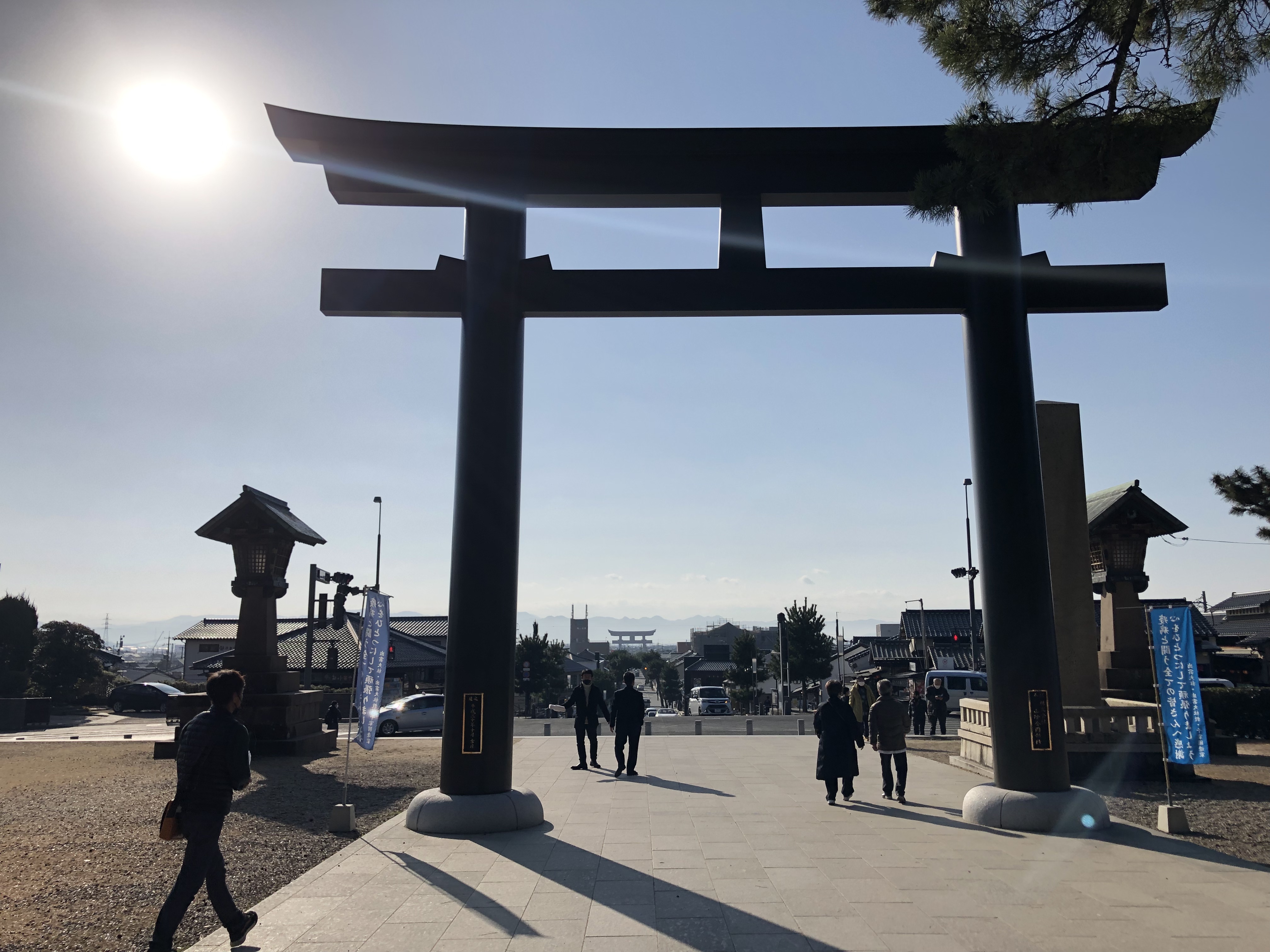
Izumo-taisha, also known as Izumo Grand Shrine, has a history dating back over 2,000 years. As I pass through a large torii gate the sun comes out, and despite the chill still lingering in the air, it begins to warm up, much to my delight.

The main shrine is located in the city of Izumo in Shimane Prefecture and it is dedicated to the god Okuninushi, who is the god of marriage and prosperity in Japanese mythology. The shrine’s main hall, known as the “Taisha”, is made of cypress wood and is one of the oldest structures in Japan. The shrine is so sacred that it’s said that all the other gods from all the other shrines from all over Japan meet up here every year for the entirety of October to hang out. This month is known across the country as the month without gods.
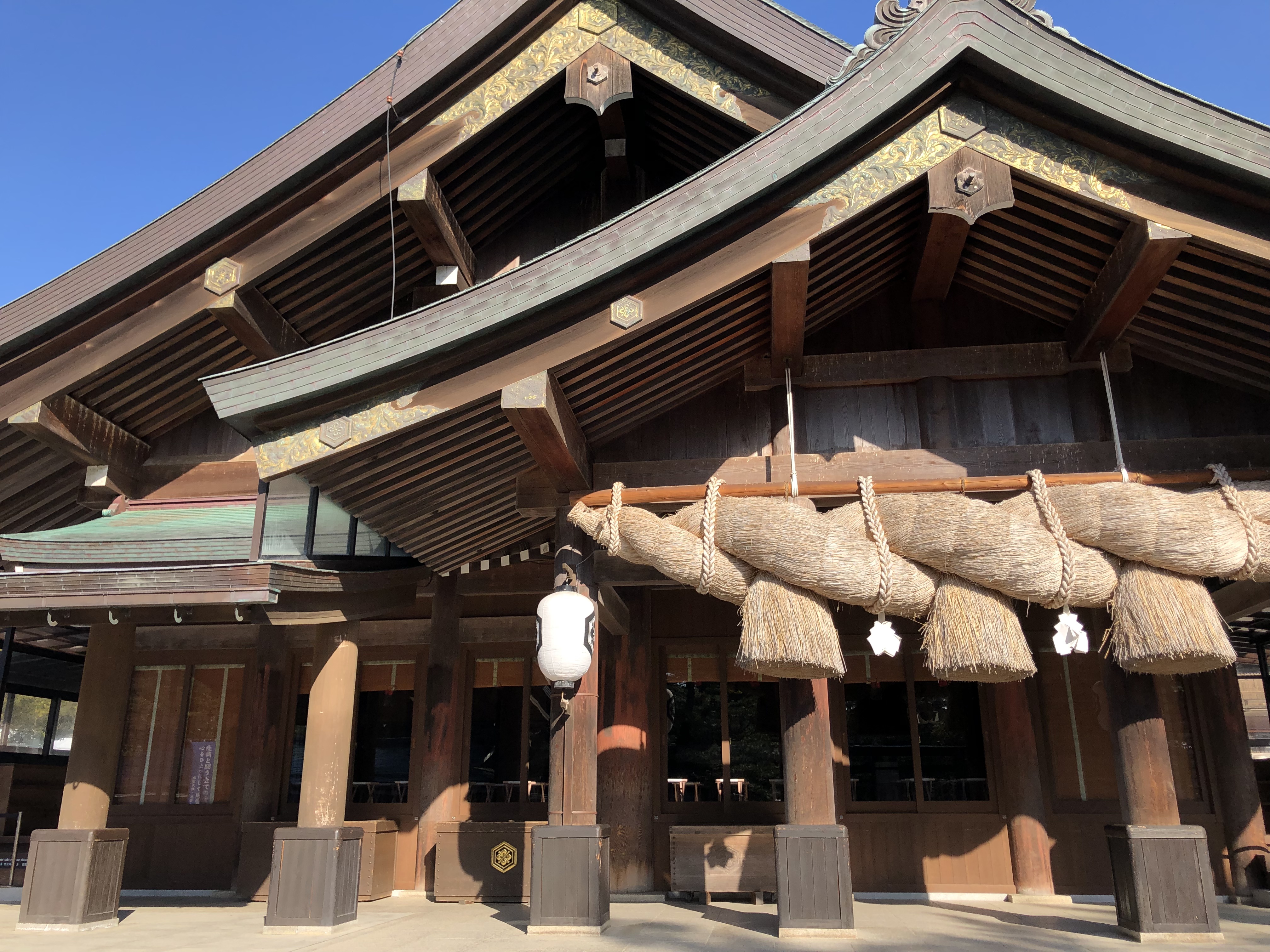
After wandering the shrine complex for a while, I return to the main road where I find small local shops selling ice cream, fish-shaped waffles, and powdered green tea rice cakes. The atmosphere is peaceful, and I decide to walk the length of the street, taking in the many stores and restaurants. After that, I arrive at the nearest train station. I need to travel three hours now to see a bridge.

The morning chill is now long gone, as I begin my walk to Eshima Ohashi Bridge, the weather is completely different from my cold start, 16 degrees and a clear blue sky greet me. As I reach the bridge I’m taken aback, much like the weather today, this bridge also defies reality, its unusual shape creates an optical illusion, like a twisted mirage, and it makes it seem as though the cars could quite easily fall off the road.
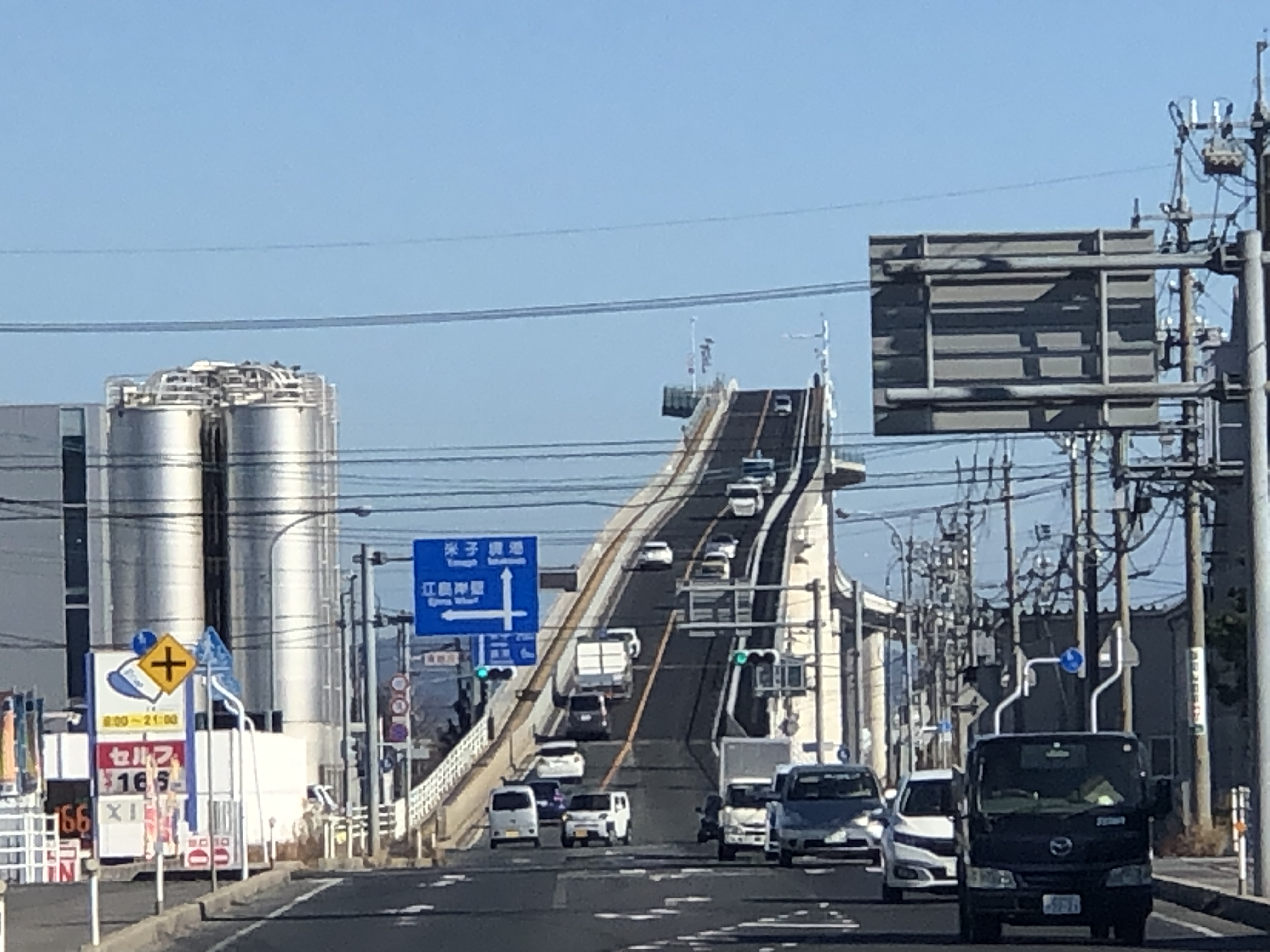
I cross the Eshima Ohashi Bridge over Lake Nakaumi. The bridge took seven years to build, and it is the largest rigid-frame bridge in Japan. It connects Shimane Prefecture to Tottori Prefecture, and as I traverse its frame, the clear sky allows for a great view of Mount Daisen, a dormant stratovolcano. At 1,709 metres tall, it is the highest mountain in this region of Japan.

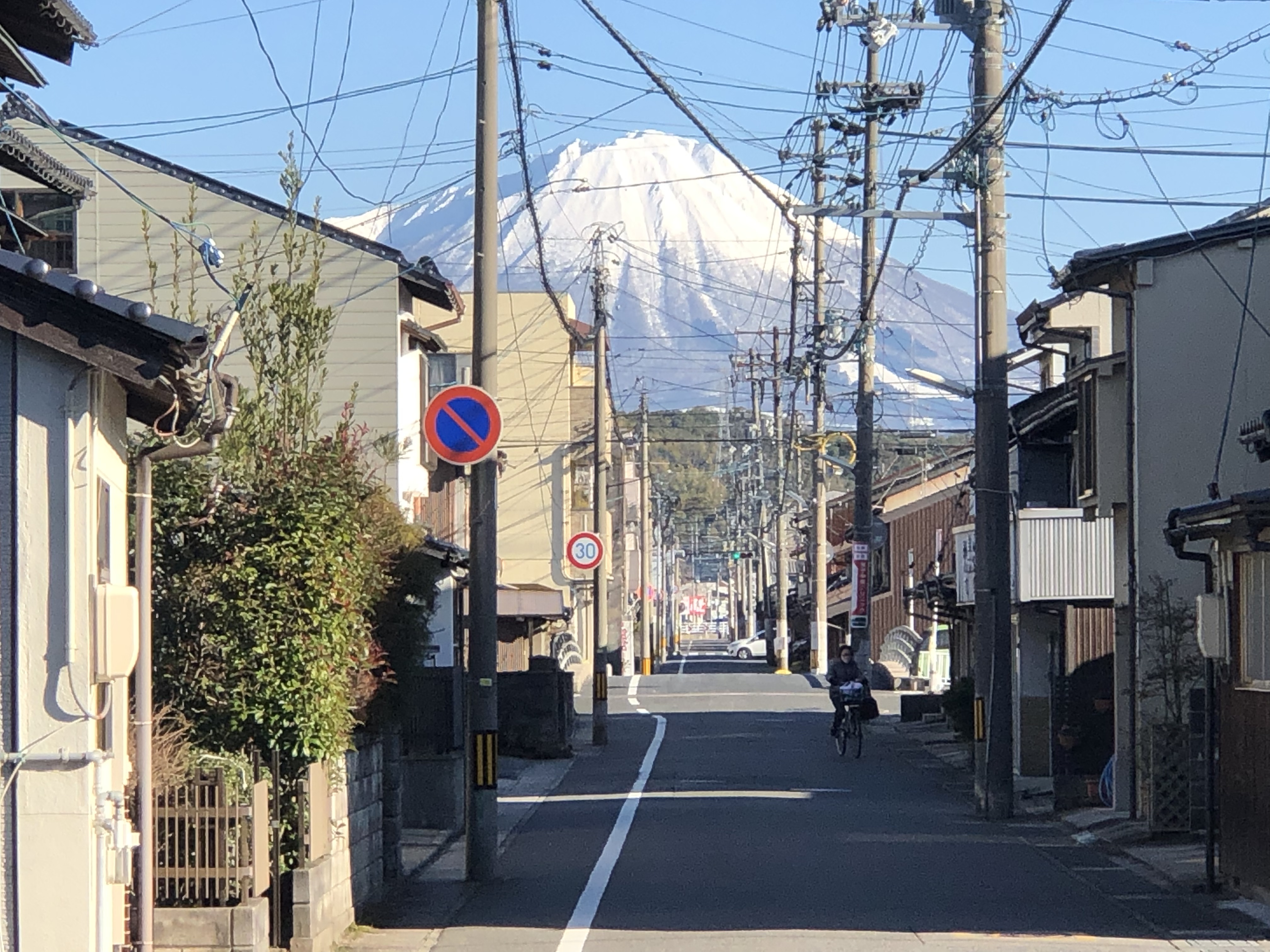
The mountain is an impressive sight, so I cross into Tottori, walk to the nearest train station, then take a train towards Mount Daisen for a better view, hoping to get a rare shot of it from the streets below. I do just that. The mountain is breathtaking from here, its snow-capped peak resembles Mount Fuji.
Having now visited a mountain, bridge, and shrine, I decide to find out what else Tottori has to offer. It turns out that Tottori is home to the only large desert in Japan. From Tottori Station, I have to walk for a little under six kilometres. Having wasted a lot of my day taking trains around the country, I have two pressing concerns. The first being that my phone battery is almost dead – I took far too many photographs of the bridge and mountain. The second concern is that it will be dark soon, and a desert at night, I imagine, isn’t going to be very photogenic.

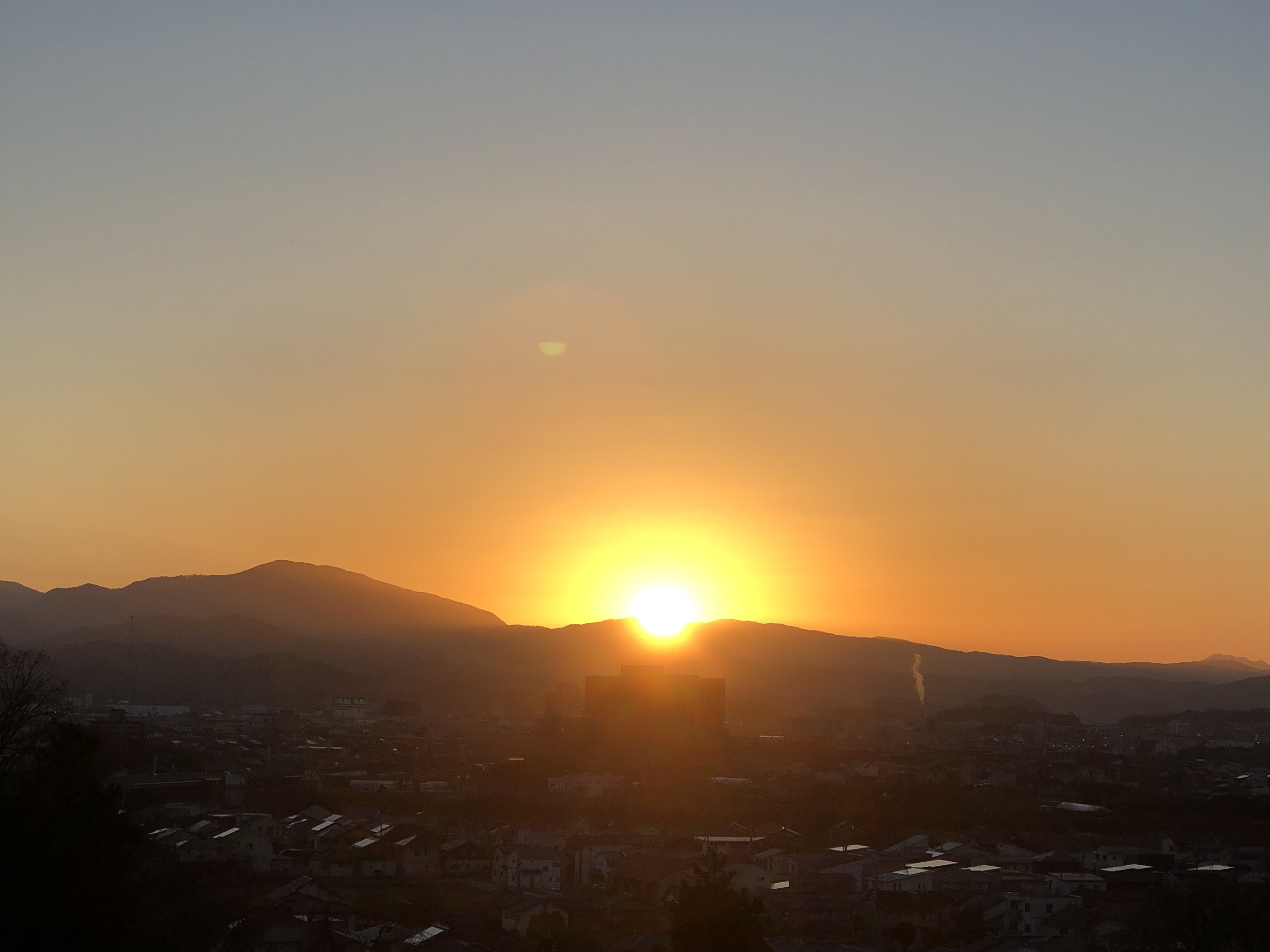
As I cross the Fukuro River, one of my concerns is confirmed, as I watch the sun begin to set above Lake Koyama, and darkness begins to engulf the sky. I have to pass through a tunnelled underpass for vehicles, dimly lit and without a footpath.
Eventually, I see a sign for Tottori Sand Dunes, and check my phone to find that I’m at one percent battery. The desert here is home to the largest sand dunes in Japan, stretching for 16 kilometres along the coast of the Japan Sea. The dunes are a unique geological formation, created by sediment being transported by the nearby Sendai River and deposited on the coast over thousands of years. The dunes are constantly changing shape due to the wind and weather. In the summer, there are even camels here to ride.

As I take out my camera to snap a photograph of the desert, my phone turns off. I’m not sure if I even captured the single photograph, and feel I might have made a wasted journey. Further darkness begins to cloud the air, and after walking on sand for a time, the chill from earlier returns, and at some point it begins to snow. I decide it’s probably a good time to head back to where I’m staying tonight in Matsue.
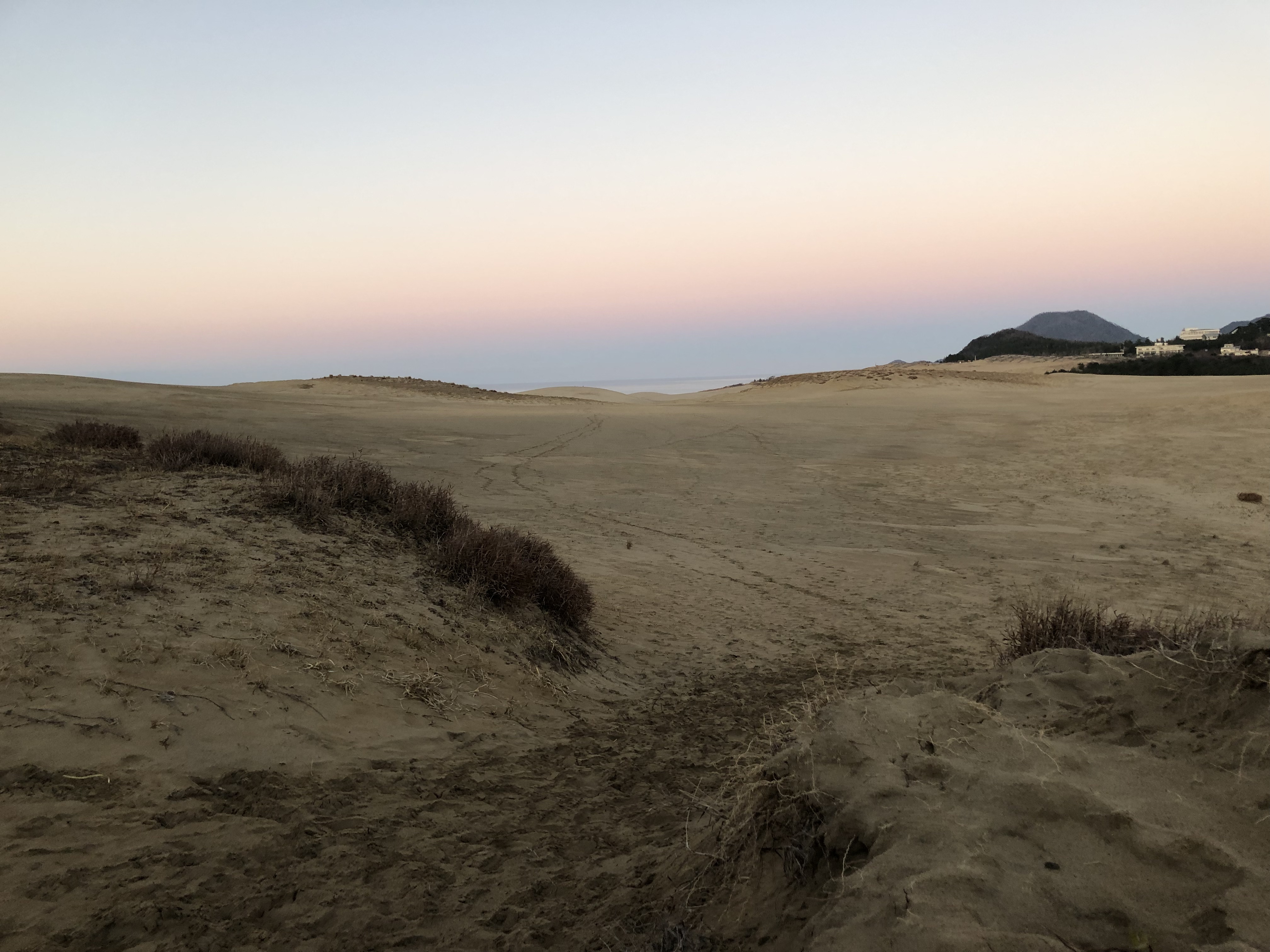
I pass back through the dimly lit underpass and try to retrace my steps back to the station, I look for street signs, but it seems as though they’ve deserted me, all maps and directions to Tottori Station seemingly removed at night, leaving me lost in the dark, and freezing in the snow, and experiencing yet another season on an unpredictable day. I see a man on his bicycle and ask him for directions. He takes out his phone, brings up a map, and tells me to go straight. So I go straight.

Eventually, I arrive back at Tottori Station and get the train to Matsue. I’ve completely lost count as to how many trains I’ve taken today, I think it’s twelve. At Matsue Station, there is no sign of any snow. Relieved, I return to my hotel to charge my phone before heading out for some food. On the way, I pass a piano on the street and decide to have a play.
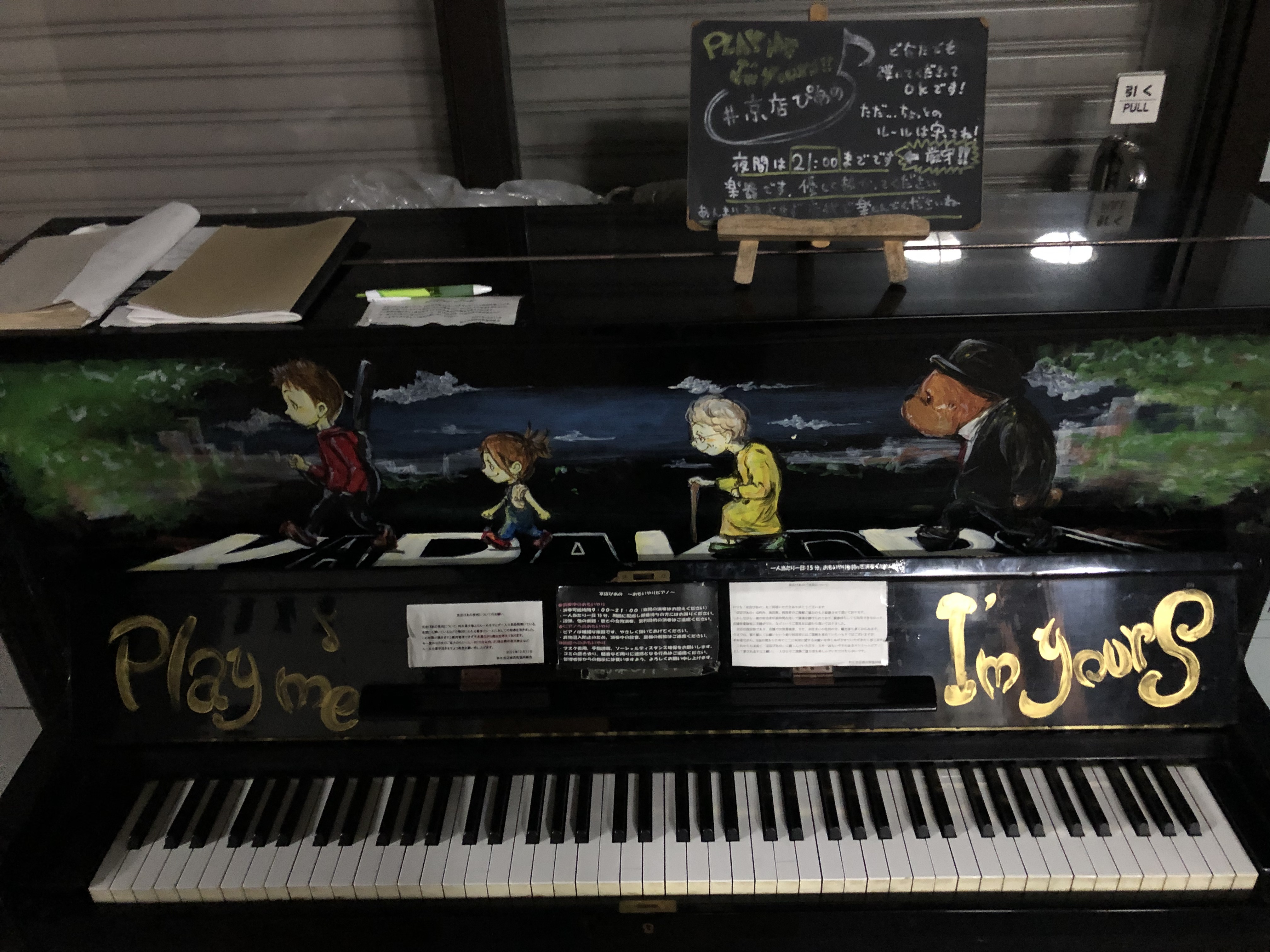
As my fingers grace the keys of the piano, I am enveloped in a symphony of sound. The notes swirl around me like a gentle snowfall. I play on until my hands are numb with cold.
Marriage on the Rocks

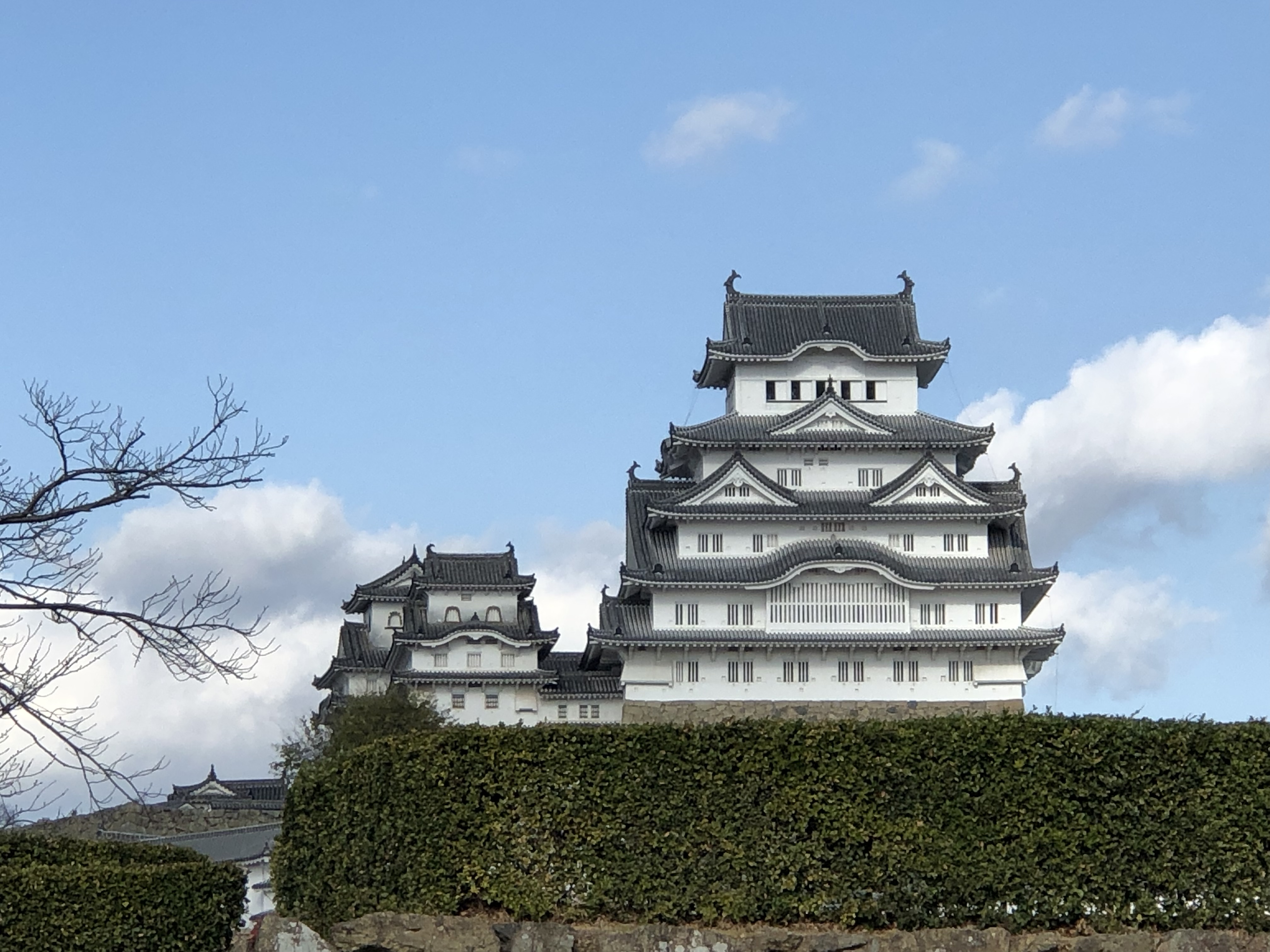
As the dawn breaks, I set out for Himeji, Hyogo Prefecture, my ultimate destination: a resplendent castle, the most visited in all of Japan and a UNESCO World Heritage Site. I had previously visited this castle back in 2012, but the main building was undergoing maintenance work at the time, and I was unable to catch a glimpse of its splendour. Instead, the cladding around the castle featured an image of its future state, once the five-year renovation of its roof and walls was finally complete. Today, I get to finally see the future for myself.

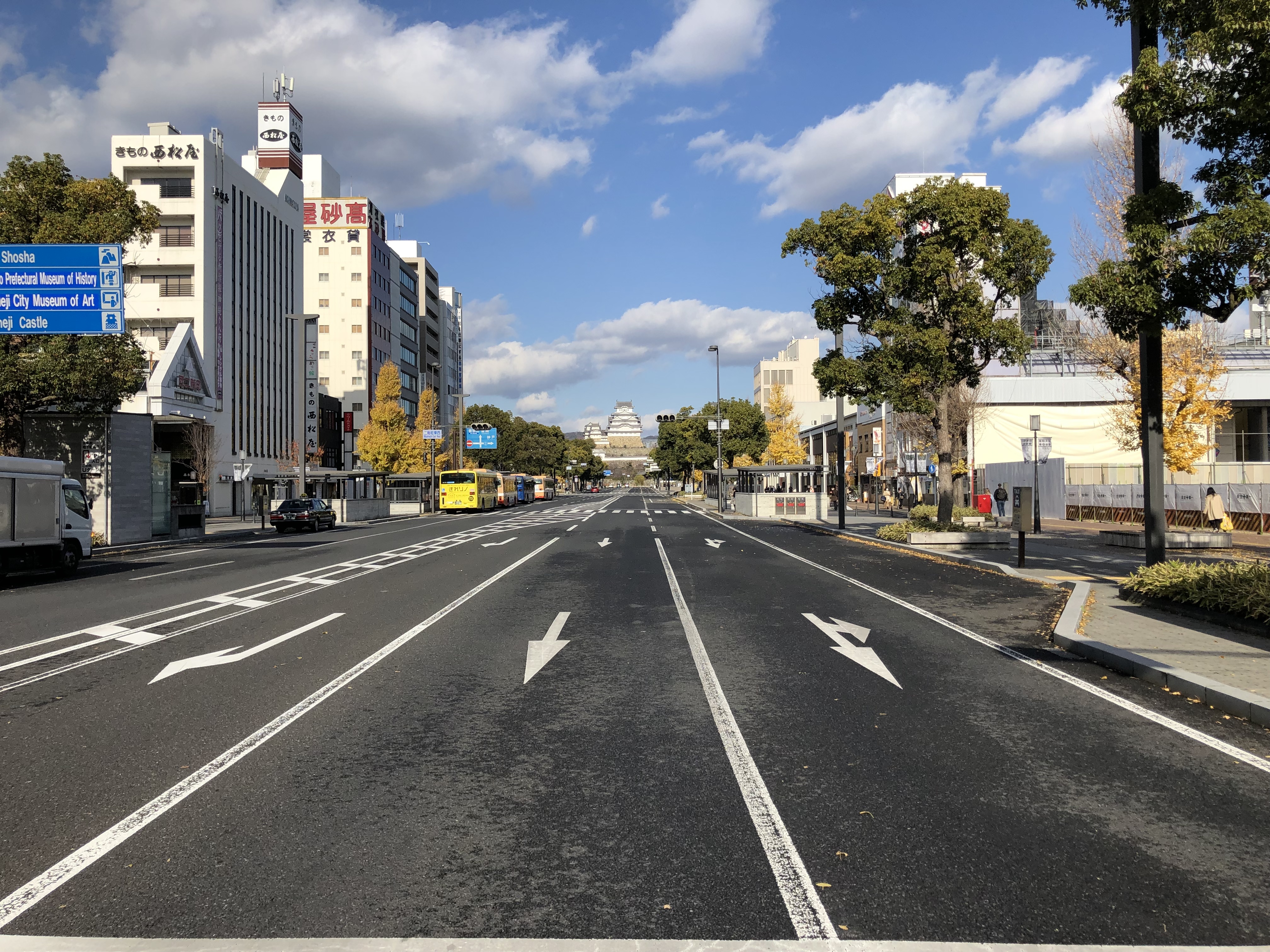
Leaving Himeji Station, I stroll along Otemae Street, a kilometre-long street running between the station and the castle. This charming street is lined with shops and restaurants, and the trees are neatly arranged on either side, their branches reaching skyward in a wild, untamed fashion. The empty roads are absent of cars, providing an unobstructed view of Himeji Castle, which rests atop a distant hill like a sentinel of the past.

Himeji Castle has earned itself the nickname “White Heron Castle,” due to its supposed resemblance to a bird taking flight, and because it is strikingly white. For the last 400 years, Himeji Castle has survived bombing during World War II and a multitude of devastating earthquakes and typhoons. It remains one of Japan’s best examples of 17th-century castle architecture.

The castle and its sprawling network of 83 buildings and gardens stretch across a vast expanse of 233 hectares. Even though I have visited before, the sheer size of the castle, along with the impeccably maintained grounds and gardens, is nothing short of breathtaking. It is a veritable kingdom of history and beauty, a realm that leaves one feeling utterly overwhelmed by its grandeur.

I bid farewell to the castle and embark on a journey by train to Osaka. From there, I transfer to a local line train bound for Ise City, Mie Prefecture. My journey is a long and tedious one, with my train halting at each of the 73 stations along the way, incurring a hefty cost and consuming three gruelling hours. At almost every station, the train is met with silence, as not a soul disembarks or boards. It is a complete waste of time. Halfway into my journey, the train is severed in two, and I am moved to the front carriages by the staff. As my truncated train pulls away, the express train bound for Ise City arrives at the platform, leaving me to rue my misfortune and wonder why this was not disclosed to me earlier.

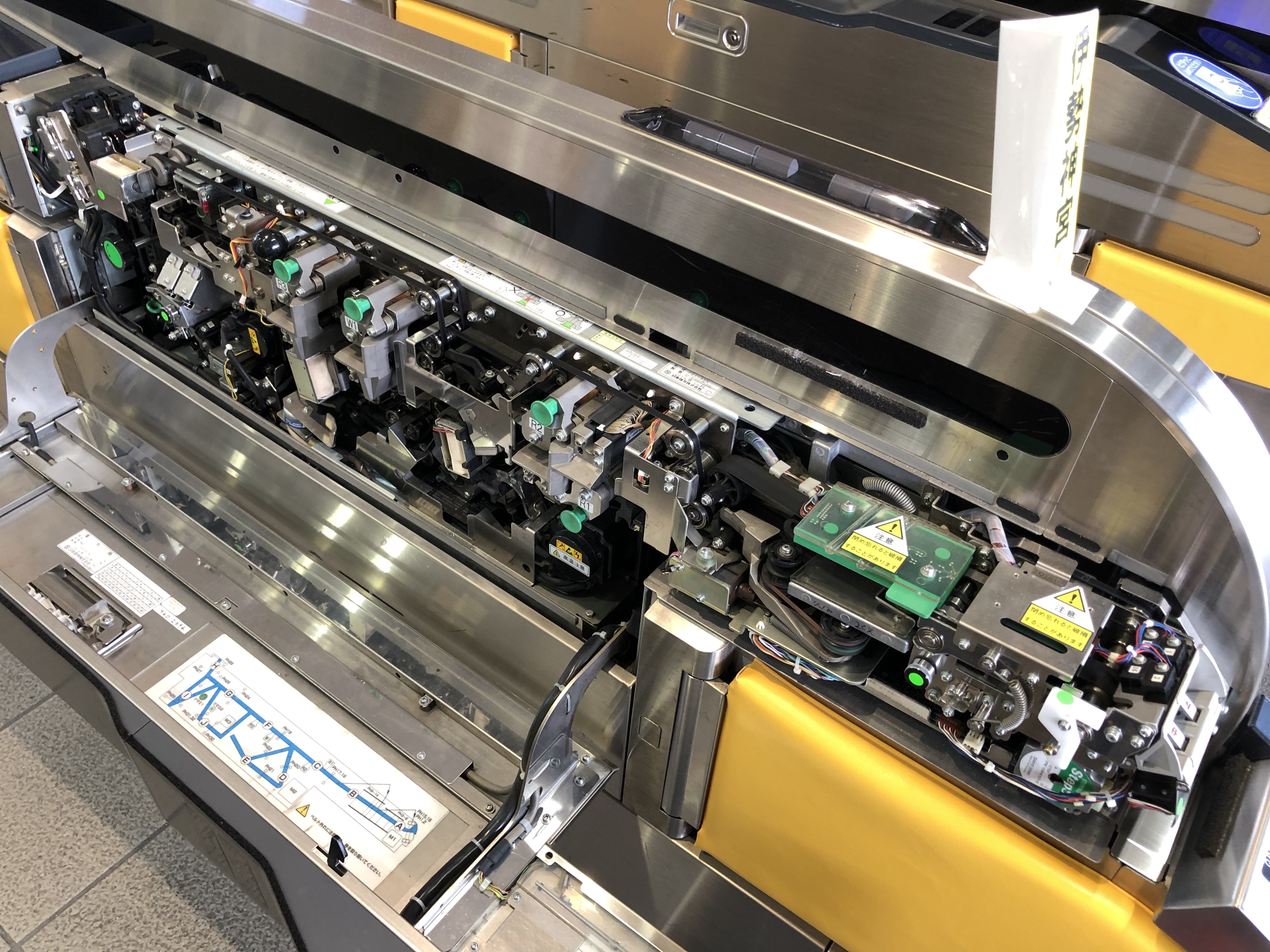
At last, I arrive at Ise Station, where I must transfer to a local line that operates on a limited schedule, running just once an hour. This train will bring me closer to my ultimate destination. Time is of the essence as I have only six minutes to make the switch, but as if to mock my efforts, my ticket gets swallowed up by the ticket machine at the transfer gate. A loud, flashing red notification blares out the ominous words: ‘Ticket jam! Ticket jam!’ It seems that my luck has taken a turn for the worse.

The staff member takes an age going through each and every intricate mechanism within the machine with a pair of tweezers, trying to find my lost ticket. He won’t wave me through because he can’t confirm that I have paid up to this station, I am stuck waiting for what feels like an eternity, and just as time seems to stand still, I miss my connecting train. After about ten minutes, I receive my ticket and the only solace I take is the fact that I got to see the immense inner workings of a Japanese ticket machine.

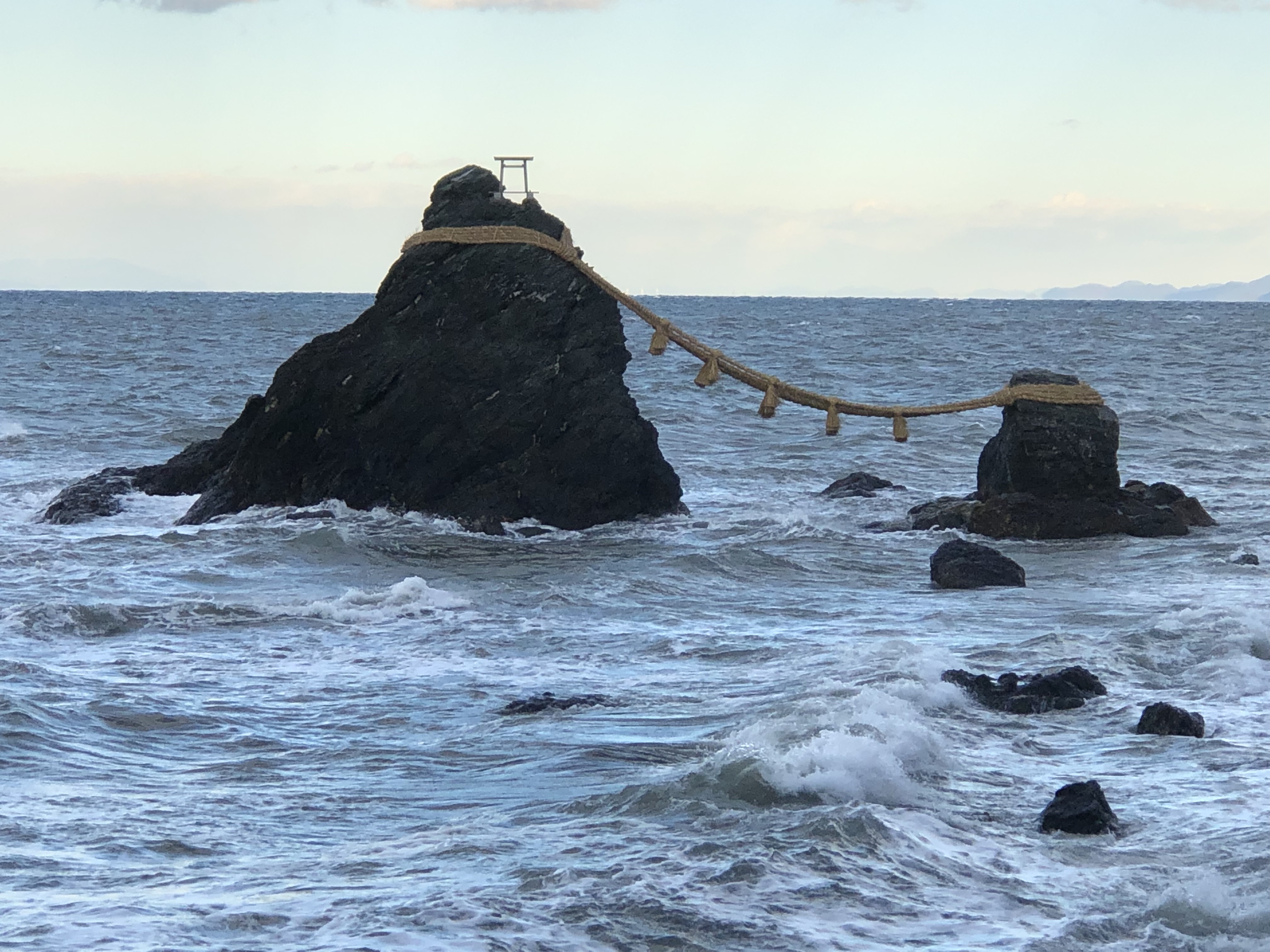
With no train for the next hour, I opt to walk the roughly eight kilometres to my destination, braving the ghostly chill in the air as I cross the Isuzu River. Eventually, I arrive at a place known by three different names: Futamiokitama Shrine, Meoto-iwa, and the Wedded Rocks. The rocks sit placidly in the water, with the small torii gate perched atop the larger rock like a crown. The gentle waves of Ise Bay add to the serene atmosphere of the scene.

The larger of the two rocks is said to represent the husband, while the smaller rock represents the wife. These two rocks are connected by a massive, thick rope, which, according to Shintoism, symbolises the unity of marriage between the two most important gods in Japanese mythology, Izanagi and Izanami. On a clear day, one can see the majestic Mount Fuji on the distant horizon, its frosted peaks a breathtaking sight above the graceful rocks below. However, my luck continues to abandon me as Mount Fuji is nowhere to be seen today. Perhaps I’ll see it later.

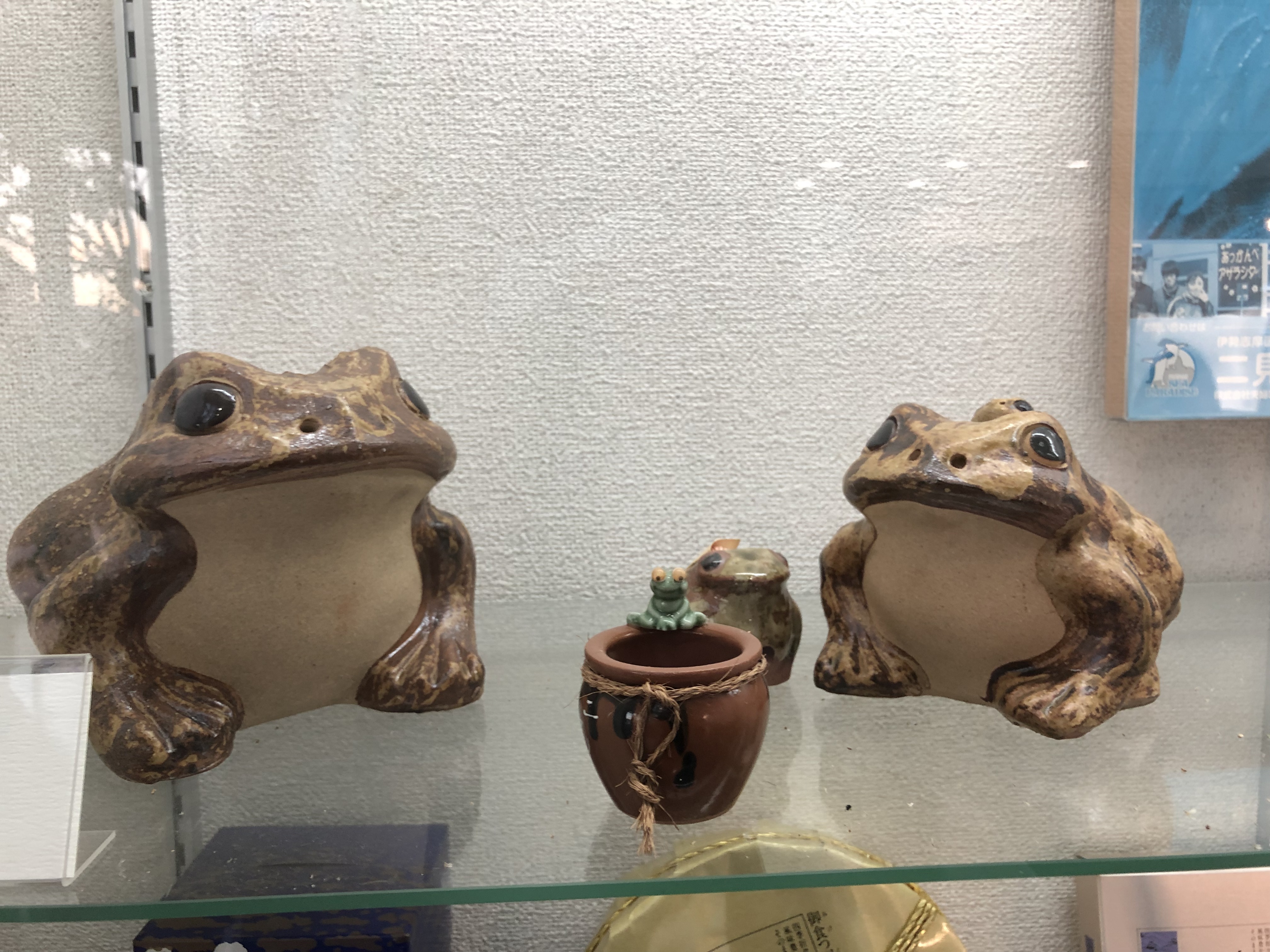
Seemingly unrelated to the story of Meoto-iwa, I also notice that sculptures of frogs are incredibly popular here – in fact, they seem to be absolutely everywhere!

The frogs here are a rarity, believed to have the power to grant specific wishes – particularly those related to returning home or recovering lost items. The Japanese word for ‘return’ or ‘go home’ is ‘kaeru’, which also happens to be the word for ‘frog’. It seems the presence of all these frog statues is simply because of a play on words. If only I had had one at the station with my lost ticket.

After all of my recent travels, I am completely exhausted and decide to take a break in Tokyo to reconnect with some old friends and participate in the New Year’s celebrations. I board a slow local train heading north to Nagoya, before switching to the high-speed bullet train bound for Tokyo.

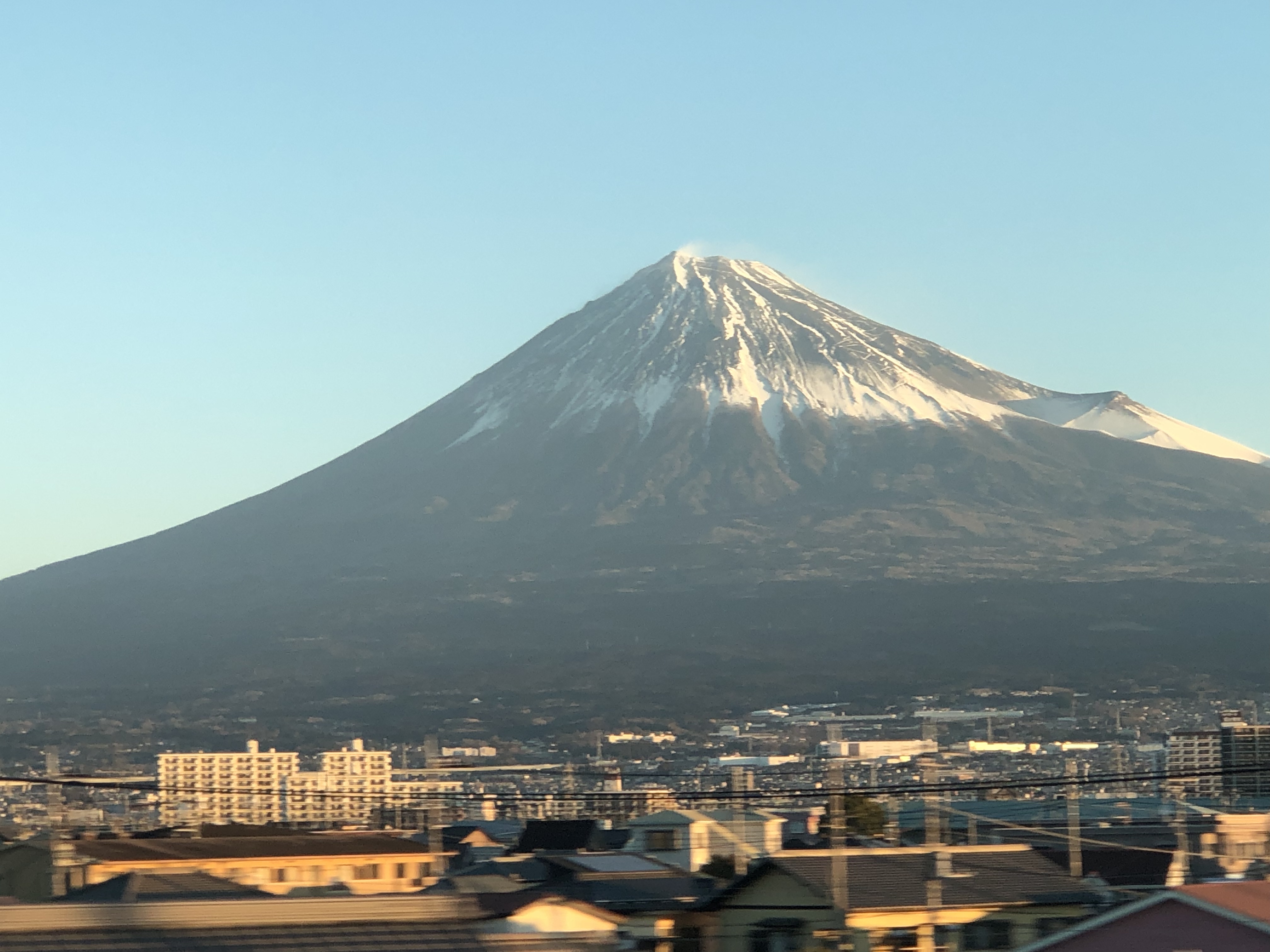
From the train, the graceful, snow-capped beauty of Mount Fuji greets me.

Heart-Shaped Rocks

The jaunty jingle on the bullet train signals my arrival in Nagasaki. It’s freezing cold as I leave the station. I enter a world of chaos and construction, maze-like fences guiding people around roadworks and frameworks for what looks like a development for a new plaza and station building. It takes me about ten minutes to escape the labyrinth and get out onto a main road.

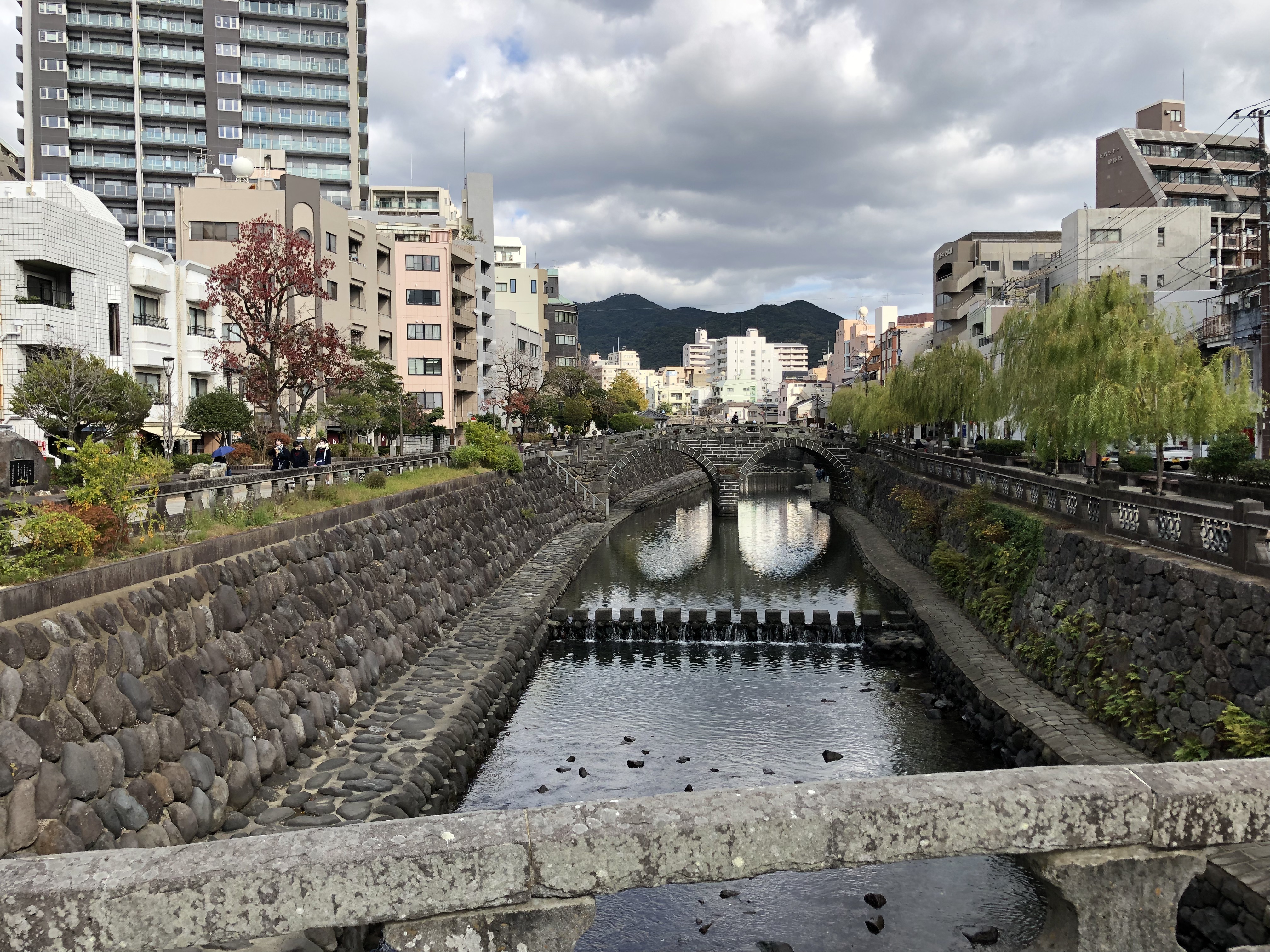
My first stop is along the Nakashima River, a river that runs through the middle of Nagasaki and divides the city into two. This river also features an abundance of historical stone bridges, including Fukuro Bridge. “It is unknown when it was built or who built it. It is said to be the second oldest stone arch bridge right after Meganebashi, but there is no evidence.”

Luckily for me, these two bridges are next to each other, so I photograph Meganebashi from Fukuro Bridge.

Built in 1634, Meganebashi Bridge is not only unique because it’s the oldest stone bridge in Japan, but also, because the reflection of the bridge on the river below makes it looks like a pair of glasses. Along with Nihonbashi Bridge in Tokyo and Kintai Bridge in Iwakuni, Yamaguchi Prefecture, this bridge is regarded as one of the three most famous bridges in Japan. It’s quite the spectacle.

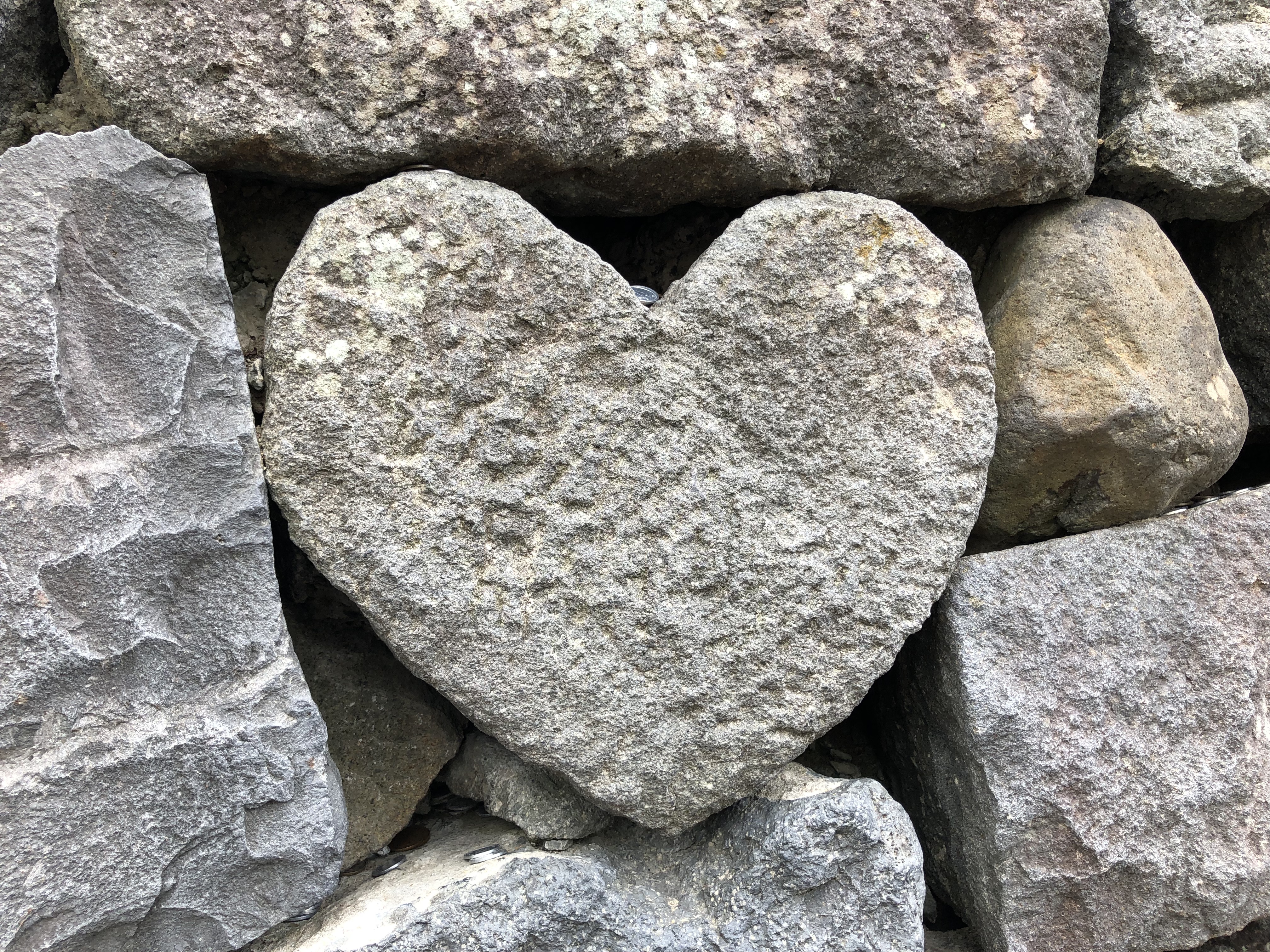
I wander further along the river and down some stone steps. Here I find four teenage girls posing in front of a wall, so I decide to see what all the fuss is about. It turns out they are making peace signs and taking photographs in front of a chunk of rock which is shaped like a heart.

I ask the girls to step aside so I can take a photograph. One of the girls says in Japanese, “That’s so cute!” Presumably because I, a man, am taking a photograph of a stone shaped like a heart, but I can’t be too sure. I find very little information on the origin of this stone, except that it’s just one of many hidden around Nagasaki.

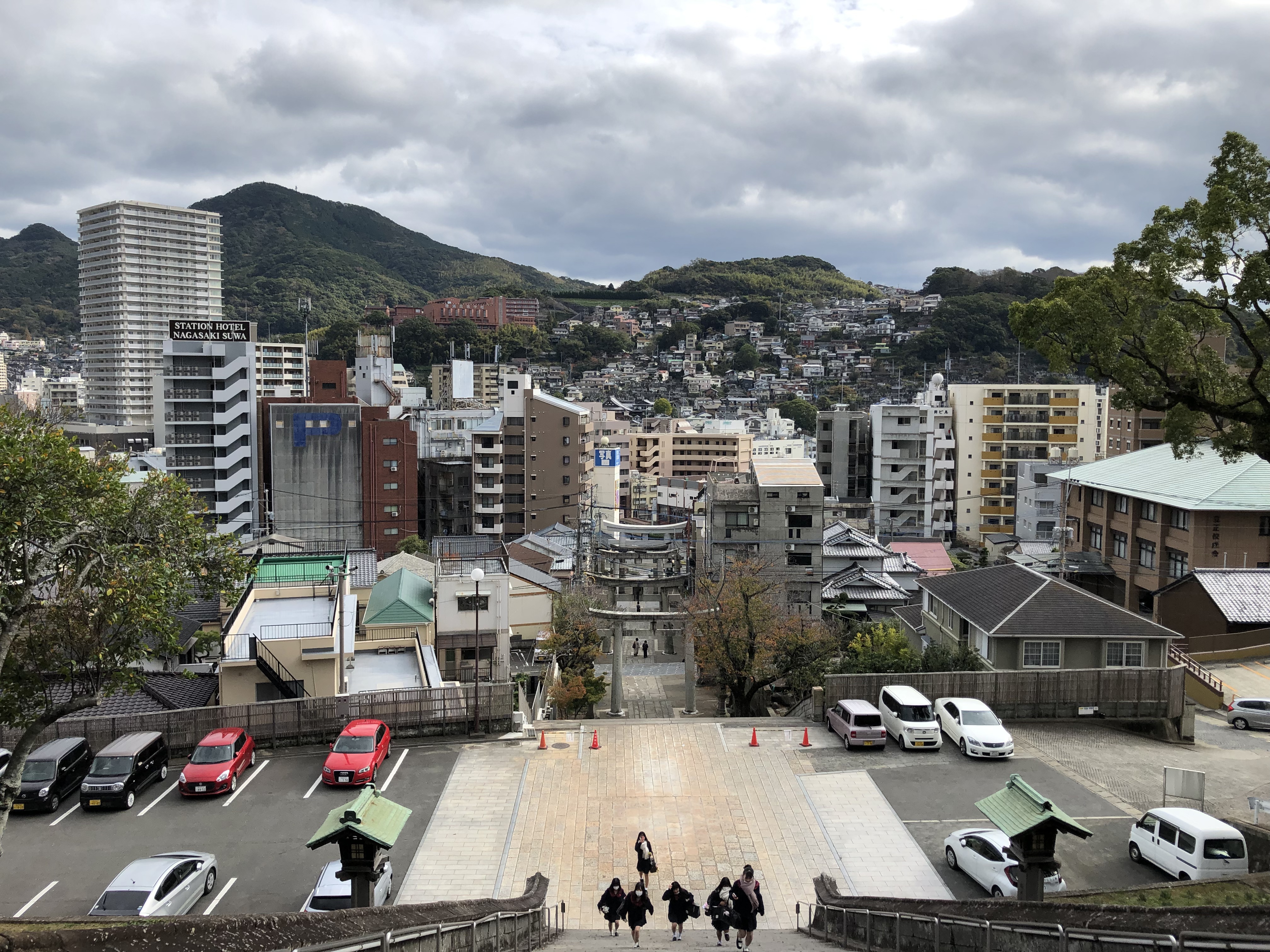
I walk back up the river to the entrance to Suwa Shrine. This shrine is one of the three most famous shrines in Nagasaki, and boasts a total of 277 steps that pass through four massive stone torii gates to reach the shrine complex. As I run up the 277 steps, in my head Bill Conti’s song ‘Gonna Fly Now’ spins around on my mind’s turntable.

Suwa Shrine doesn’t really have much to offer me, except for a one-hundred-year-old tea house, a nice little water feature, more steps, and a stunning view of the city and mountains beyond. The shrine was constructed in 1614 as a way to stop the spread of Christianity that was happening in Nagasaki at that time.

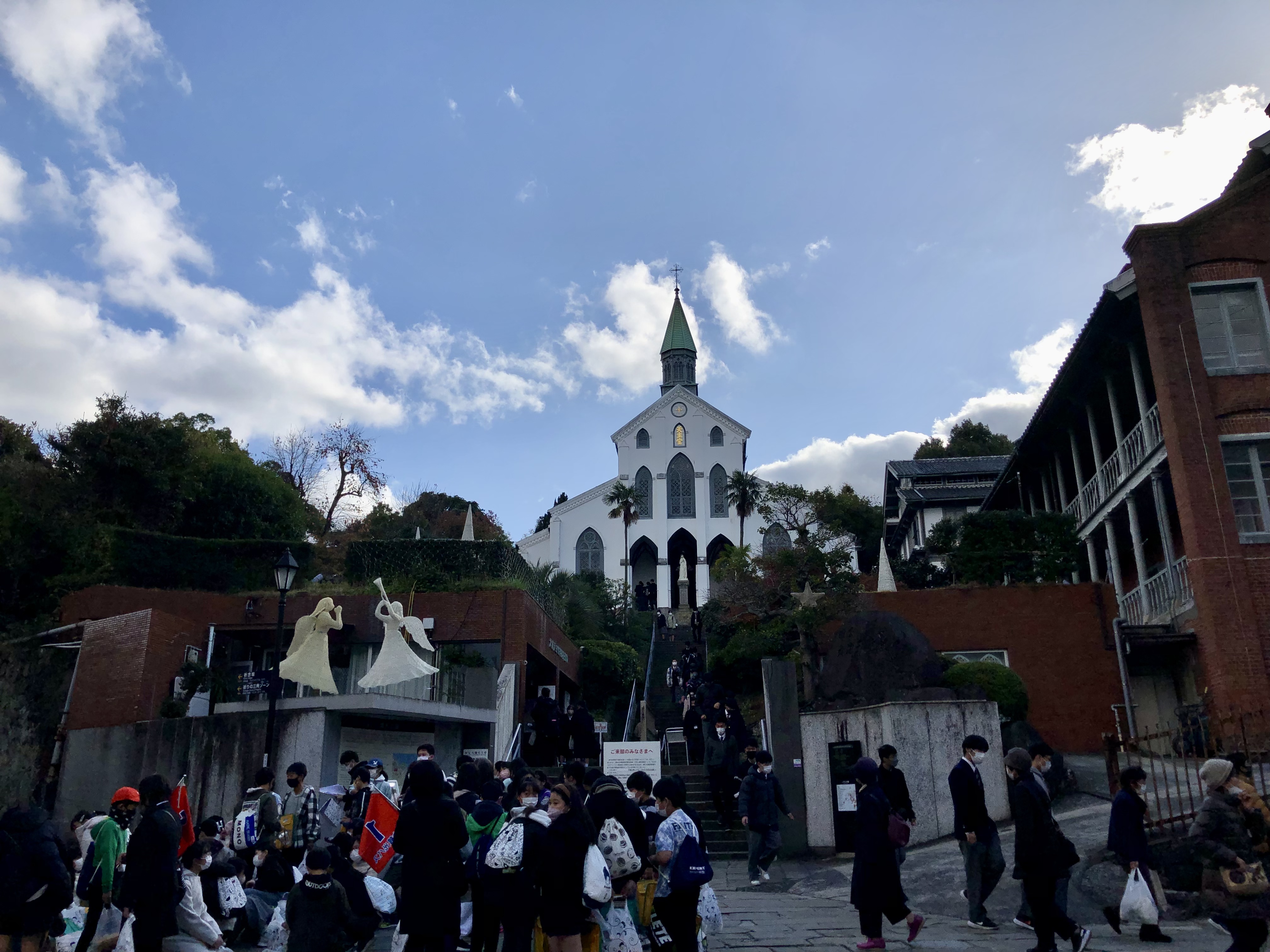
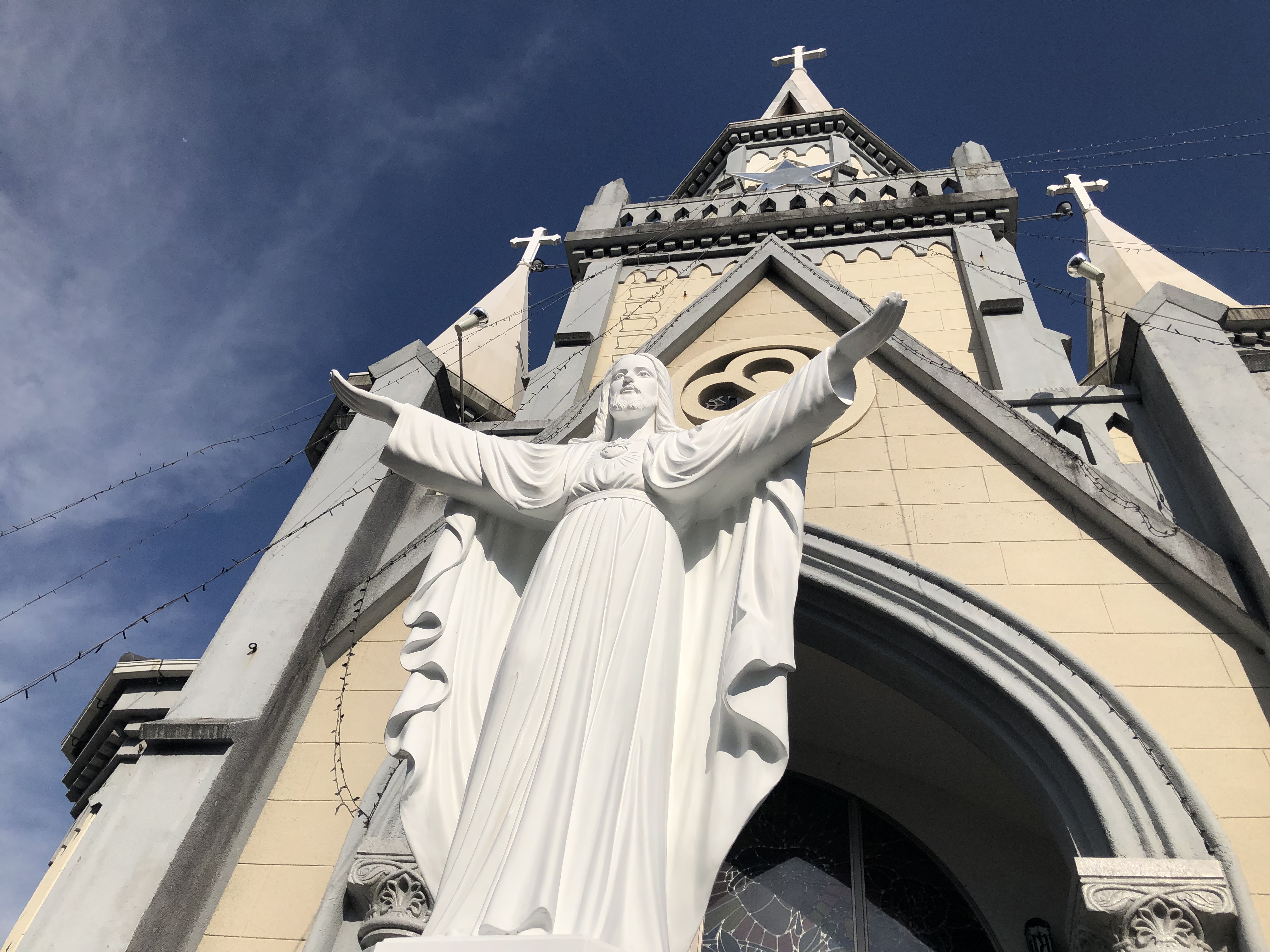
I leave the shrine down the stone steps, and wander four kilometres in the direction of Oura Catholic Church. A gothic-style church on a hill, overlooking Nagasaki Bay. I pay the steep ¥1000 entrance fee only to be greeted by signs saying no photographs. There’s a small museum, again no photographs. For whatever reason the area outside the church is extremely crowded. An extensive 28-page brochure written entirely in English is included in the ticket price, which does, in a way, make the ¥1000 cost somewhat tolerable.

Christianity first arrived on Japanese shores in 1549, but after learning that a Christian, Okamoto Daihachi, one of the trusted advisors to Shogun leader Tokugawa Ieyasu, had been secretly keeping his Christian faith hidden, Ieyasu ordered Okamoto to death by fire. This event also led to Nagasaki being the first place in Japan to ban all Christianity in 1612. Tokugawa Ieyasu later banned all Christianity across Japan two years later in 1614, the same year that Suwa Shrine was completed.

This led to an array of hidden Christians, especially in Nagasaki. Statues of the Virgin Mary were disguised as Kannon, the Goddess of Mercy; Christians posing as Buddhists to avoid execution. In 1853, Japan ended its policy of isolationism, and the borders opened for those from overseas. Foreigners residing in Japan were, at the time of this church’s construction, allowed to be Christian, but for the Japanese it remained to be illegal. Oura Catholic Church was built for those foreigners in 1864 and is the oldest surviving Catholic church in Japan.

The Japanese government finally lifted the ban on Christianity in 1873.

Hell and High Slaughter

My plan today was a visit to Ukiha Inari Shrine, a remote shrine with a hillside vista over the Chikogu Plains that offer stunning views of red torii gates and the meadows beyond. However, as I finally arrive at Tosu Station to switch trains, I find that my next train, the Yufu 3 Limited Express bound for Beppu, doesn’t depart for another six hours, so in desperate need of a plan, and a sudden change of itinerary, I rush onto a random train bound for Kurume.

Kurume is a small city in Fukuoka Prefecture. I flip a coin to let fate decide my direction, but woefully fail to catch the coin and it lands in the gutter of a drain. Today isn’t going very well and it’s still morning. I choose to go south. It doesn’t take long for my optimism to return though, for in the distance standing tall and proud, a mysterious white statue captures my attention, and essentially my destination decides on itself.

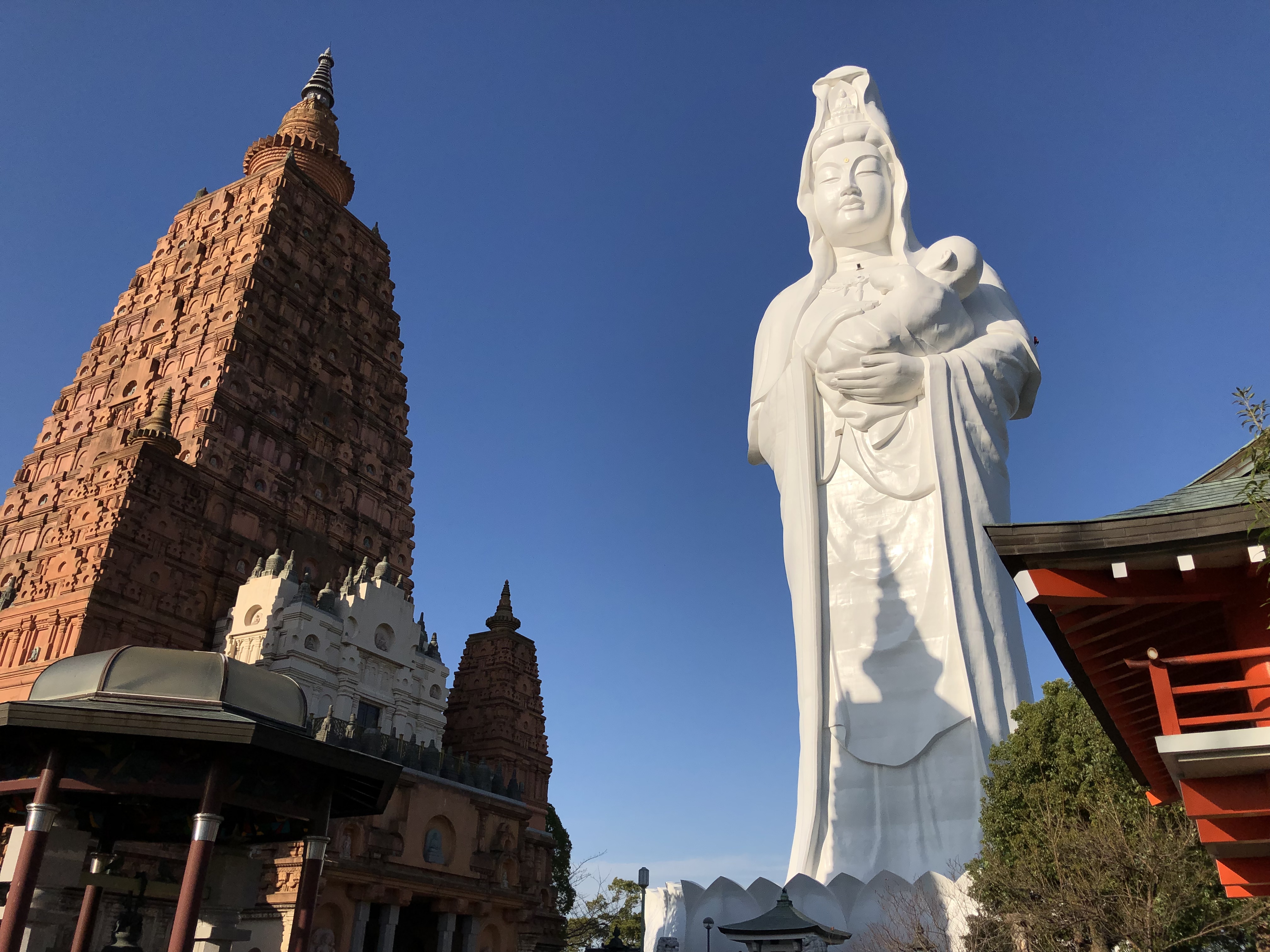
The statue can be seen from far and wide, and as I finally get close enough, it turns out to not be what I first thought, but instead a 62-metre tall statue of Kannon, the Goddess of Mercy. I always enjoy a good Kannon statue, not only does she save the souls of the suffering, but there’s often something rather unexpected to see.

The first thing that’s a little unusual is the 38-metre tall structure next to the Goddess. This replica of India’s Mahabodhi Temple, the Great Awakening Temple, is the first of its kind in Japan, and is based on the story that Buddha sat under a tree in India for seven days to meditate, became awakened, and then the original temple was built to honour that event. Why there is such a replica here in Kurume I have no idea. Also, and it may be a matter of perspective, but the Mahabodhi Temple is 24-metres shorter than Kannon, however, at every angle, the temple seems to tower over the Goddess.

As I approach the ticket office to enter Daihonzan Naritasan Kurume Temple, I inadvertently wake up a young Japanese woman; obviously this place doesn’t get a lot of visitors despite its massive car park that boasts space for 700 vehicles.

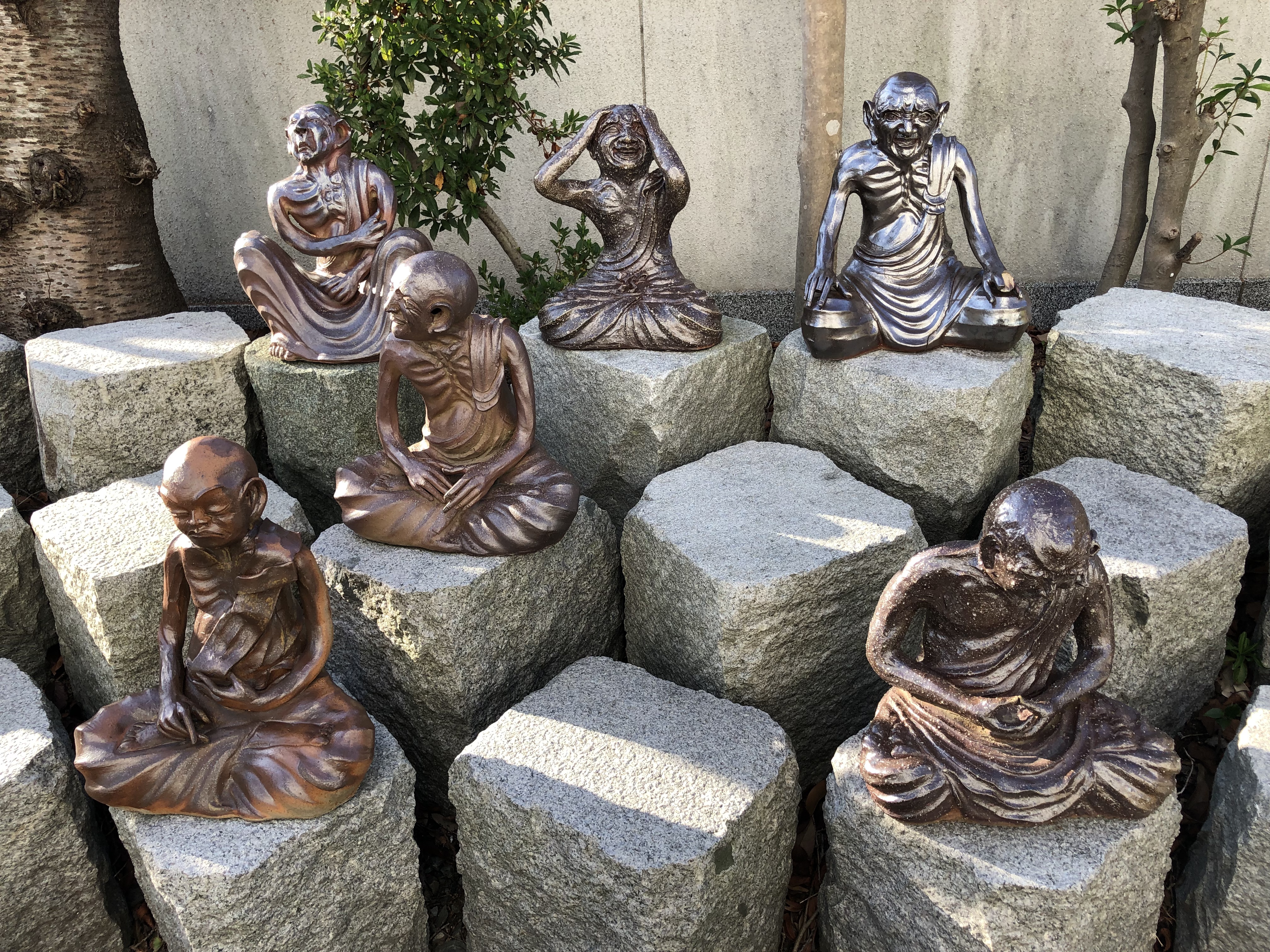
I take a seat on a small stone bench for a time, admiring the statue and contemplating, just like Buddha had once done. A statue of Ebisu disturbs my thinking, purely because he’s sitting on a cow next to a big pile of money. Distracted, I walk around the temple grounds, here there are numerous smaller statues depicting twisted souls in anguish.

I notice a shaft in the side of the Kannon statue, and decide to enter. Endless corridors greet me. Random artwork lines the walls, steep steps twist and turn through the statue, there is no elevator, and the climb to the top takes an age. From the top there are tiny windows that offer a nice view of the city below.

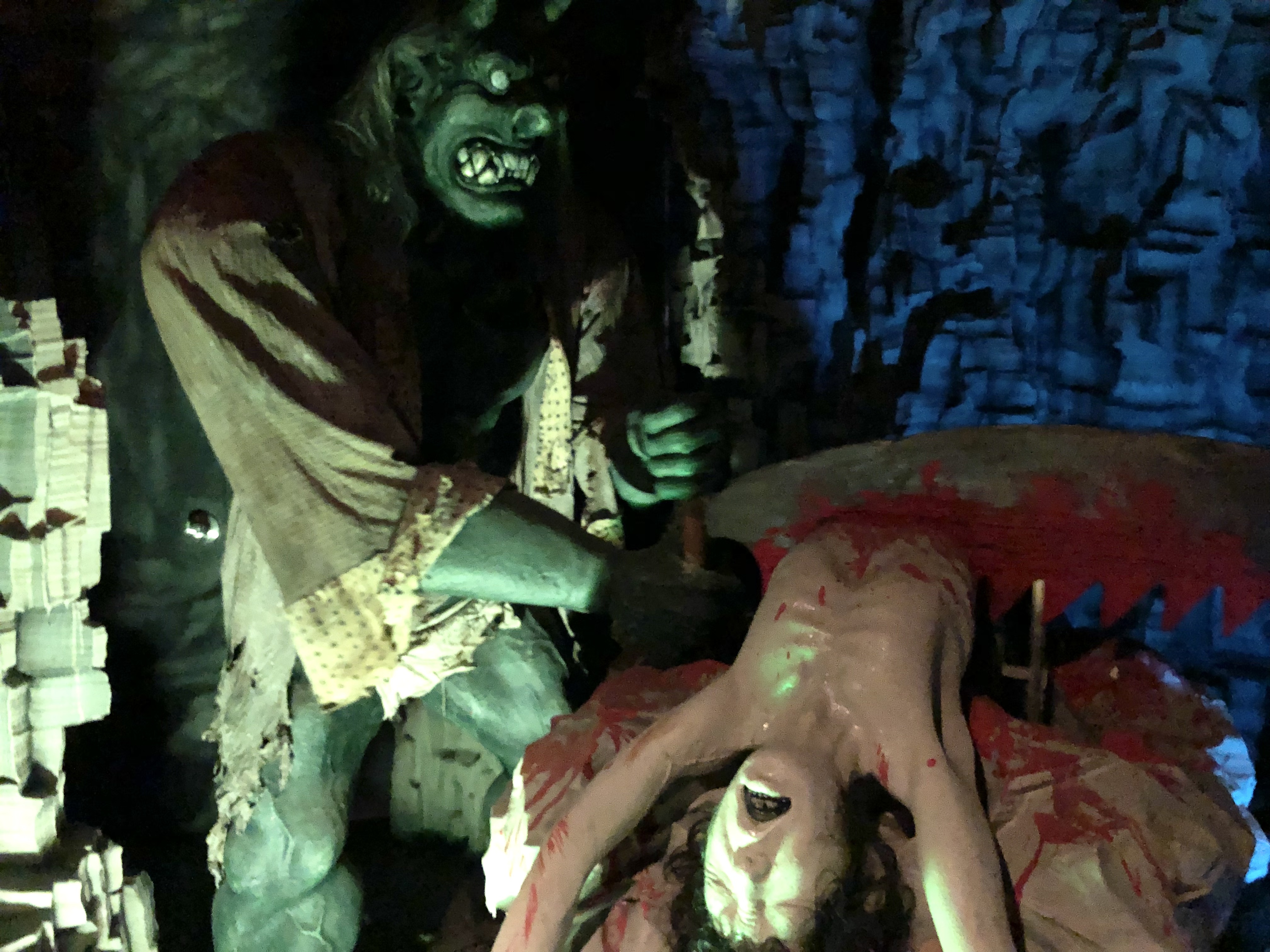
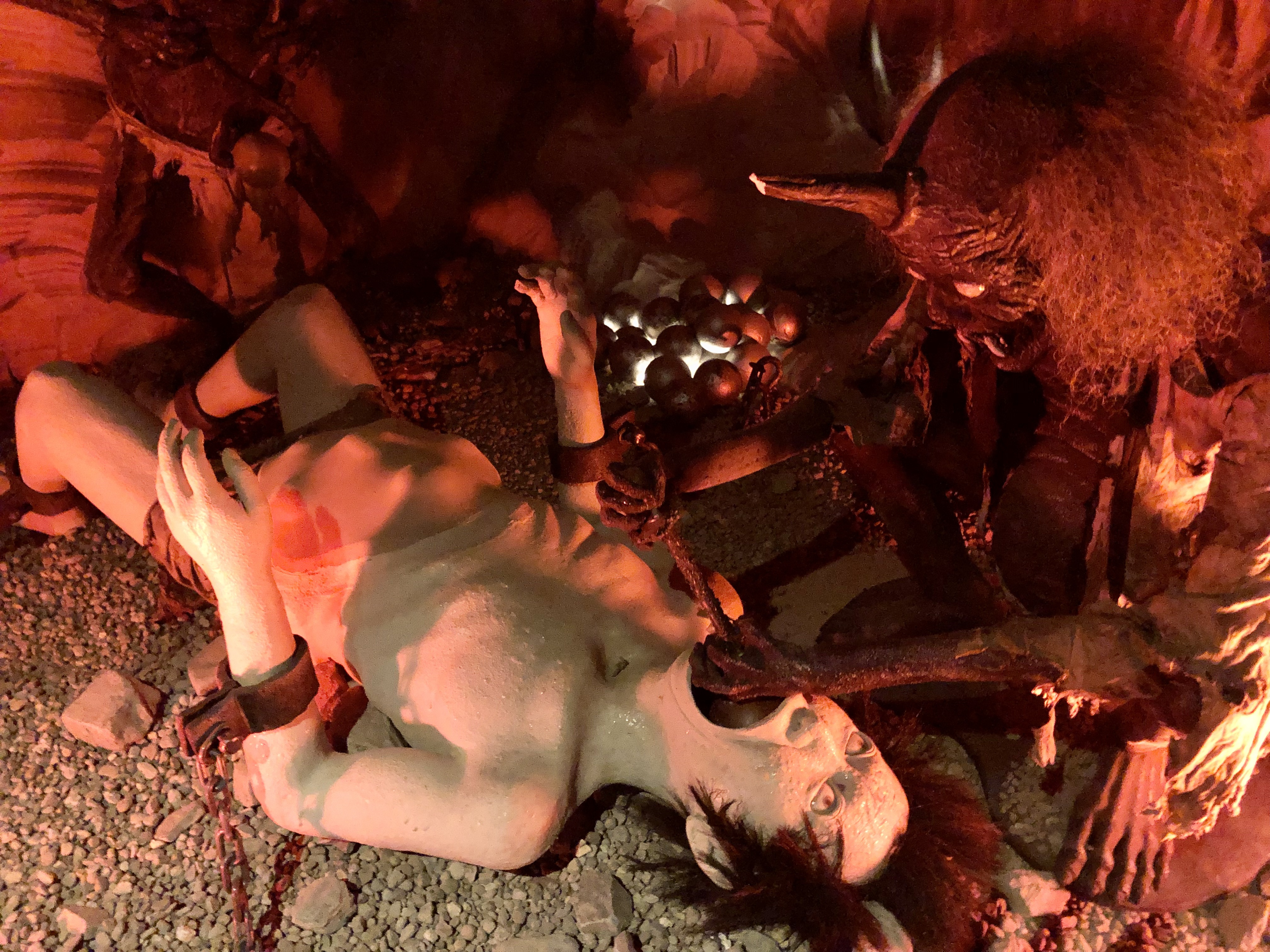
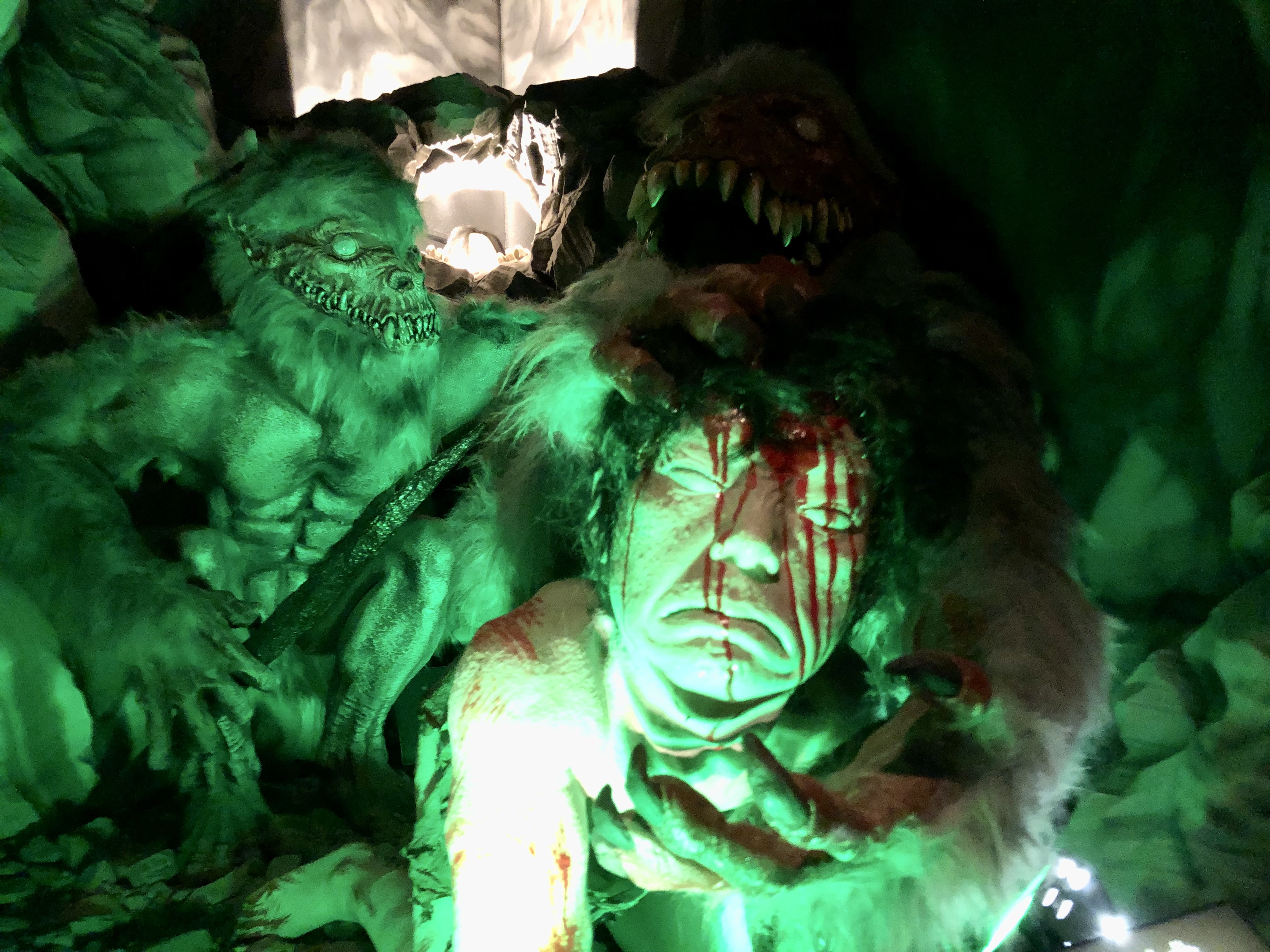
After admiring the landscape, I decide it’s probably time to leave now, and as I climb back down to the ground floor, I notice steps leading deeper down into a basement. As I further approach, I hear the creaky voices of evil spirits echoing down the lonely hall. A room here is marked either side by a pillar of skull heads. Inside are some lifeless effigies, but as I approach, I activate a sensor of sorts, and the first model begins to move.

This animatronic demon is sawing a naked man in half; the saw slides back and forth for as long as I watch. The man, despite his obvious injury is still alive, his screams are piercing and chilling, the sound effects of the saw all adding to the macabre scene. An absolute show of horror.

I move through the exhibits. A woman surrounded by spike traps gives me a jump scare as she screams into life. Two children covered in bruises and blood rotate on a platform as a demon with a sinister grin watches on. A man holding a huge boulder is about to smash in the head of a woman whilst a giant towers above. A chained up man is having a red-hot poker stuffed into his mouth.

I decide that this is one of the most harrowing things I’ve seen in my whole life. The passable realism of the statues blending with the authentic yet disturbing sound effects really adds to the eeriness evoked by this imagery. It seems that hidden beneath this innocent looking statue of the Goddess Kannon holding a baby, is a secret haunted house.

I take one last walk through what I learn to be the Hell Museum, before leaving the basement, the statue, and stepping quietly past the ticket gate as to not wake up the sleeping woman.

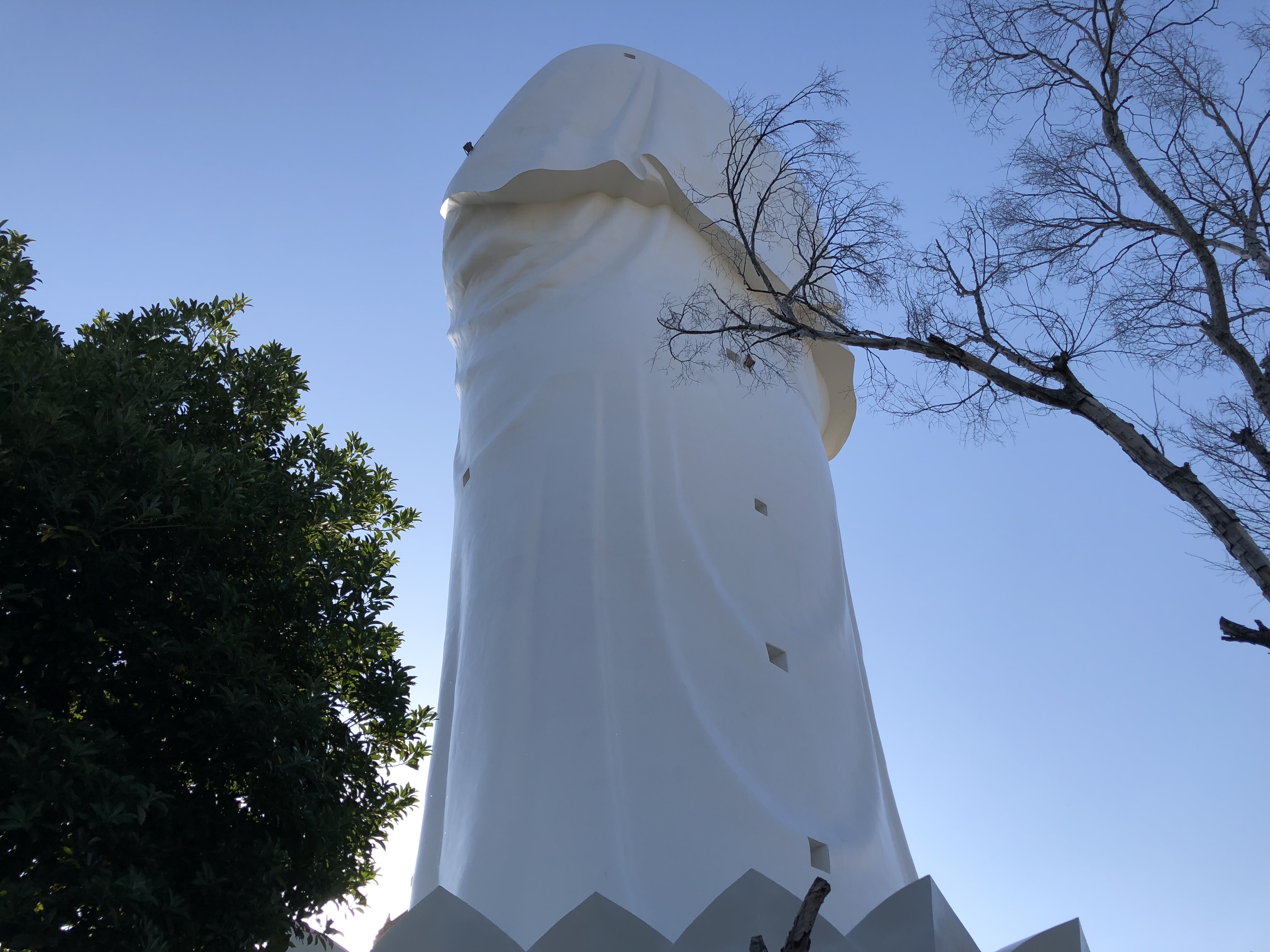
As I walk away, I look back at the statue, its phallic shape from behind visible for miles and miles, it makes me wonder if it was indeed designed that way, or just a misshaped mishap. I guess I’ll never know.

Flossed in Translation

I wake up early and resume my pilgrimage. My first stop is Jueiji Temple, which happens to be five minutes from my house. Inside the temple sits Hotei. He is often described as fat and happy. He certainly appears very fat and happy, as he is the god of abundance and good health. Awkwardly, I join a queue of people with my camera out. Yesterday, I didn’t take any photographs of the actual gods; I was more caught up in the stories of the temples.

Today, I wait patiently as people before me offer their prayers. They place coins in the gaping mouth of Hotei, though he certainly doesn’t need anything else to eat. One person even starts rubbing the statue’s body with his hand. Eventually, it’s my turn. I quickly snap a photograph before leisurely descending the stone steps to exit the temple.

pil21[1]

As I exit, a man chases me down the street. I stop, completely confused. He hands me a map of the pilgrimage trail. Brilliant, I think. No more confusing maps and getting lost. The only problem is that the map is written entirely in Japanese, and is therefore confusing and will most likely get me lost.

I head to my second stop, Shohoin Temple, also known as the Flying God Temple. I am here to meet the fourth god of seven, Ebisu. Ebisu is the god of fishers or merchants and is often depicted carrying a fish. In the temple, a sign says, “Ebisu is the god of candour, cheerfulness, and goog [sic] fortune.”

pil22[1]

Sitting beside the god are two statues of Arhat. These represent individuals who have undergone enough religious training to become worthy after attaining enlightenment. Arhat is often used as an honorific title for those blessed persons who have realised the ultimate truth. While the reason for these two statues sitting beside the sacred god of fishing isn’t explained, at least this temple features some English text.

I head over to Ryusen, to Bentenin Temple. This temple is difficult to find, located basically in a children’s play park and quite tiny. There is no activity here, no other pilgrims in sight. It’s as if this temple has either been missed off the route, or everyone is wandering around the side streets in search of this sacred spot. With no sign of a god anywhere, I snap a photograph that might be, but probably isn’t, the goddess Benzaiten; the goddess of knowledge, art, beauty, and music.

The goddess is usually depicted carrying a musical instrument, but this statue isn’t, which is the reason for my doubt.

pil23[1]

I head back to Asakusa. My pilgrimage is put on hold for another day, thanks to a trip to the dentist. I’ve now lost count of the number of times I’ve been to the dentist in Japan. It has become nothing more than a fortnightly inconvenience. Still, off I go, alone. As I sit in the waiting room at five to five, anticipating my half-past-four appointment, the wait is actually killing me.

An elderly woman enters, holding a wrapped present with a bow in tow. She hands it over to the receptionist, smiles, then bows. I find it unusual that someone would bring a present to the dentist. Next, a mother and daughter ask if they can ‘borrow’ one of the books for children. Again, a strange reason to make a visit to the dentist. Eventually, I am called, thirty minutes after my scheduled appointment time. Inside the ‘treatment room,’ the dentist holds up a gold bracelet that clearly belongs to a woman. “Luke-san, is this yours?” she asks, with genuine inquisition and lacking any sense of irony. What was supposed to be an amusing anecdote about dental floss has somehow descended into a gift-giving ceremony, a library, and a circus.

The dentist pulls out a ‘super sonic,’ as she calls it, and sprays water on my teeth. Next, she uses a scraping tool to clean, before finally flossing my teeth for me. Effectively, I have gone to the dentist to have my teeth brushed. Afterwards, the dentist gives me a packet of dental floss as a parting gift, wishes me a Happy New Year, and charges me just ¥740. Thank you, Japanese National Health Insurance.

I leave the dentist just as night begins to engulf the city. I head over to Senso-ji Temple. The crowds of people haven’t dispersed, and the New Year celebrations are still in full swing. For some reason, the first three days of the New Year are important days to visit temples and shrines, and because of this, queues of thousands are still waiting to pray for the first time this year. As I wander through the hordes of people, a man on stilts dressed as a giant sheep almost kicks me to the ground.

yearofram[1]

Still fatigued from seven days of intense sightseeing, I head home for another early night. Tomorrow, I will visit the final two gods of the pilgrimage, and finally, I can enjoy a much-needed break from exploring the city.