A Bear Called Kumamon

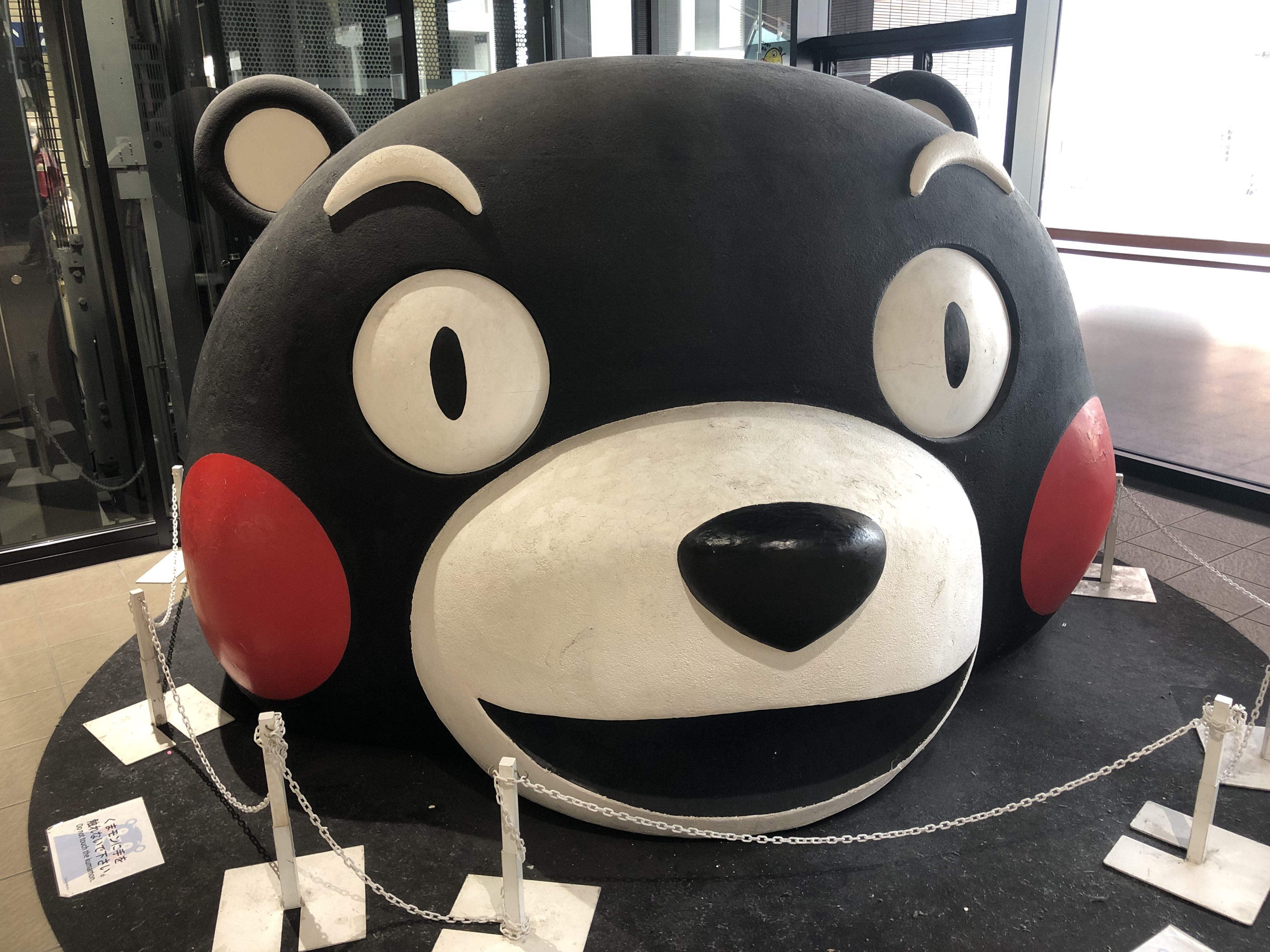
Kumamoto Prefecture is famous for mascots, and not just any mascot, the most famous mascot in all of Japan, Kumamon. In 2010, in a bid to help promote tourism in this region, Kumamon was created. His name literally means ‘Person from Kumamoto’ in the local dialect, and ‘Bear Person’ in Japanese characters. Despite Kumamon being a wide-eyed red-cheeked bear and not a person, the official website states that he is neither, and is in fact just a Kumamon.

Unsurprisingly, there are countless Kumamon within the train station, even a Family Mart doubles up as a souvenir shop selling official Kumamon goods, it’s a bit much.
Exiting Kumamoto Station, I instantly notice the cold. It feels as though I’ve entered a different climate. I start by taking a walk along the Shirakawa River, before returning to the city streets, heading in the direction of Kumamoto Castle. What strikes me as I wander is the complete lack of convenience stores in this area, I’ve been walking for about thirty minutes and I’m yet to see even one.

Eventually I do find a Seven Eleven, and as I enter the shop the heat hits me. It is so hot, the cold outside temperature contrasted to extremity. I’ve found this in Japan, in the summer the convivence stores are remarkably cold, with air conditioning turned down to a freezing blast. One cold day and they’ll switch to heating at full blast. Leaving Seven Eleven, I continue my walk, before spotting a giant statue of Kato Kiyomasa.
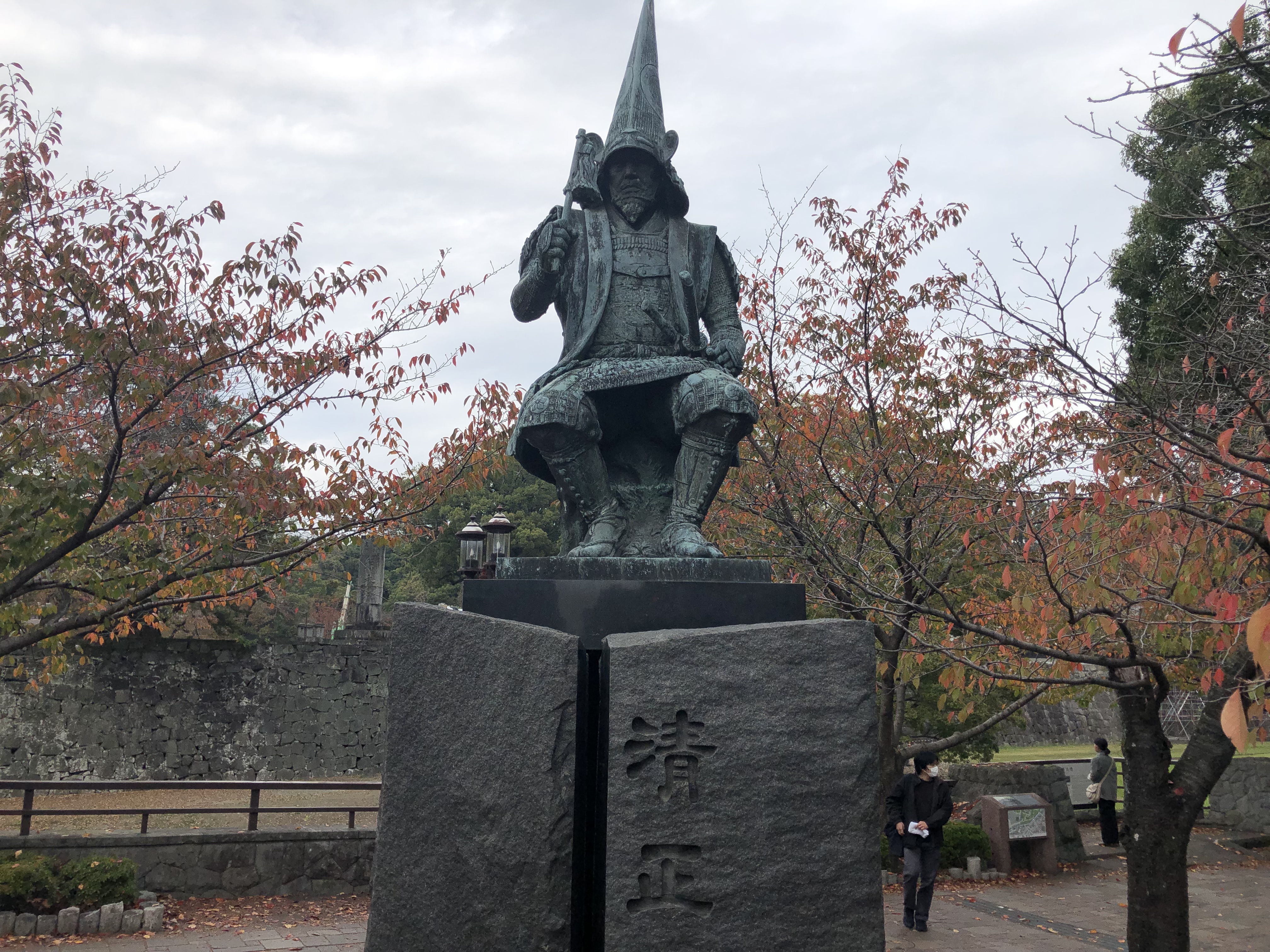
Kiyomasa was a fierce warrior, designer of castles, and was a general who led an army of 100,000 samurai into Korea. The sign next to the massive statue says, “He is wearing his trademark beard and a kind of tall black hat. The statue is slightly larger than life size.” I look back up at the Herculean statue. I look down at the tiny person next to the statue. I decide slightly larger is a huge understatement.

During the Japanese invasions of Korea (1592-1598) Kato Kiyomasa’s army were ordered to slice off the noses of those they had killed, pickle them in salt, and send them back to Japan. During the Battle of Hondo, Kiyomasa ordered his men to slice open the bellies of every pregnant Christian woman, and then to cut off their infants’ heads. Kiyomasa, it seems, was slightly barbaric. I decide to go and have a look at the castle he designed.
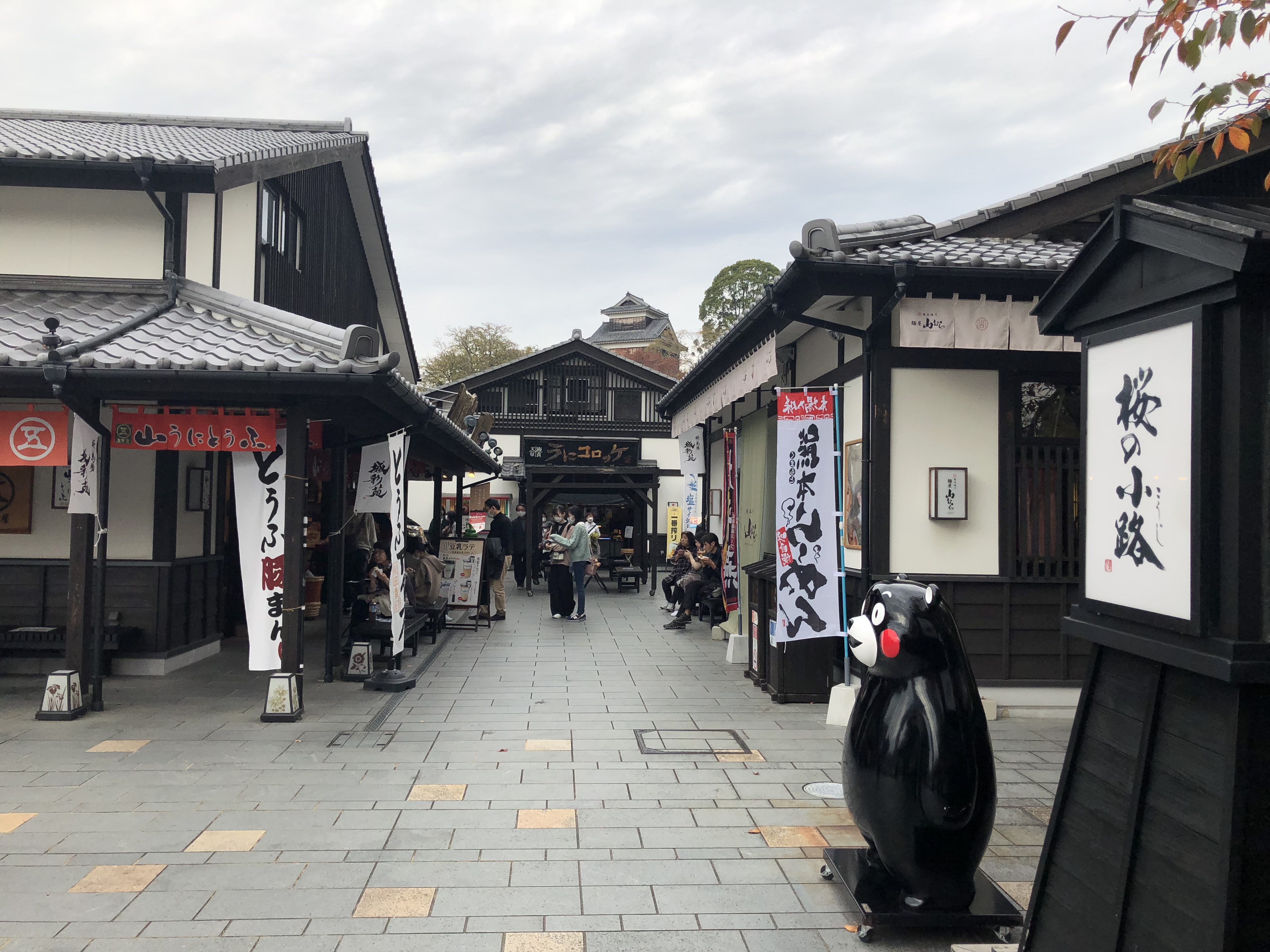
“Above the stone wall of the minor tower, there were iron spikes called shinobi-gaeshi, which were used to help keep out enemies, with various traps laid out in inconspicuous places. Searching for these is one of many ways to enjoy Kumamoto Castle,” states a sign at the entrance.

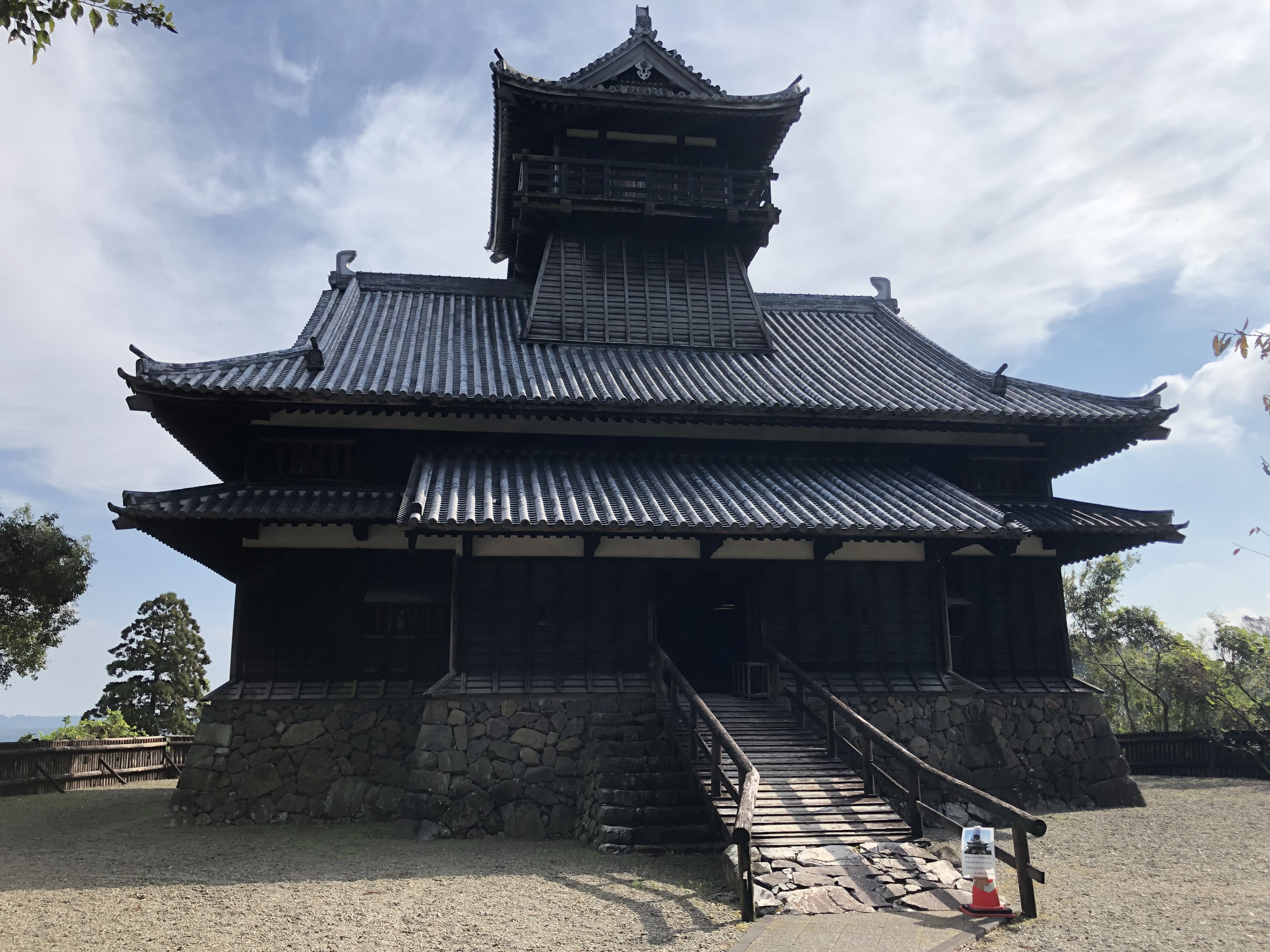
Kumamoto Castle was completed in 1607 by Kato Kiyamasa, and boasts its very own virtual reality technology. Here you can enjoy discovering Kumamoto Castle and its history through VR. You can even see the castle using virtual reality. I can see the virtual reality booths from the actual castle.

I leave the castle and head to the nearby Suizenji Jojuen Gardens.
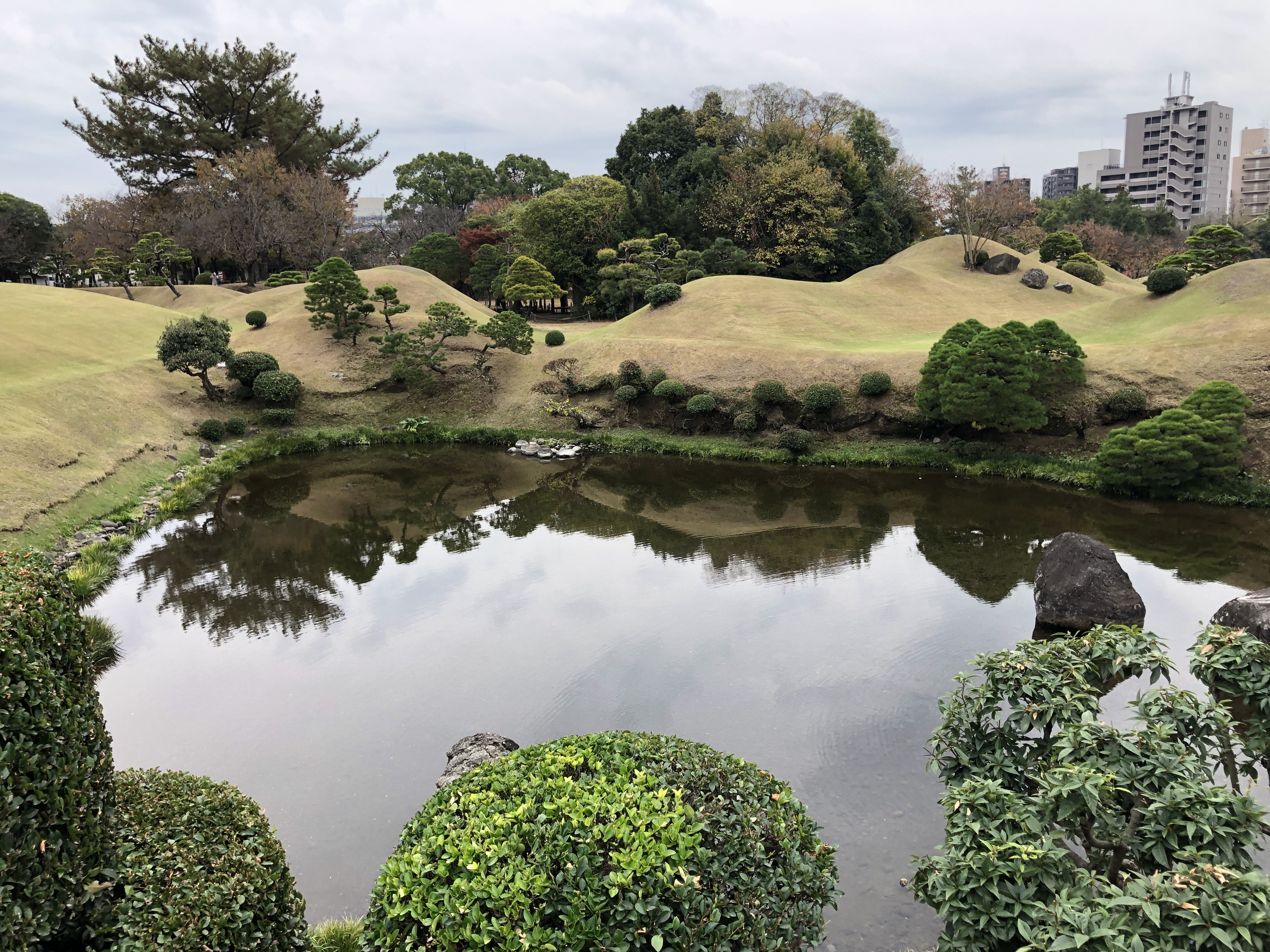
These gardens are on the southeast side of Kumamoto Castle and they are beautiful. There is a large lake in the middle, a small tea house, a Buddhist temple, and even an artificial mountain in the shape of Mount Fuji. I take a time to explore the gardens and their many attractions, lanterns, and monuments. Three old Japanese ladies stop to say hello to me as I stand reading a sign next to a tree.

Nagi, Tree of Matchmaking, regarded as an auspicious plant since ancient times, has two broad leaves that grow symmetrically like a couple at each point of the twig. The custom is for the female to keep the leaf behind her mirror; the strength of the leaf symbolising the strength of the relationship with her partner. The sign says, “A couple keeping a leaf can have a faithful married life without a two-faced relationship.”

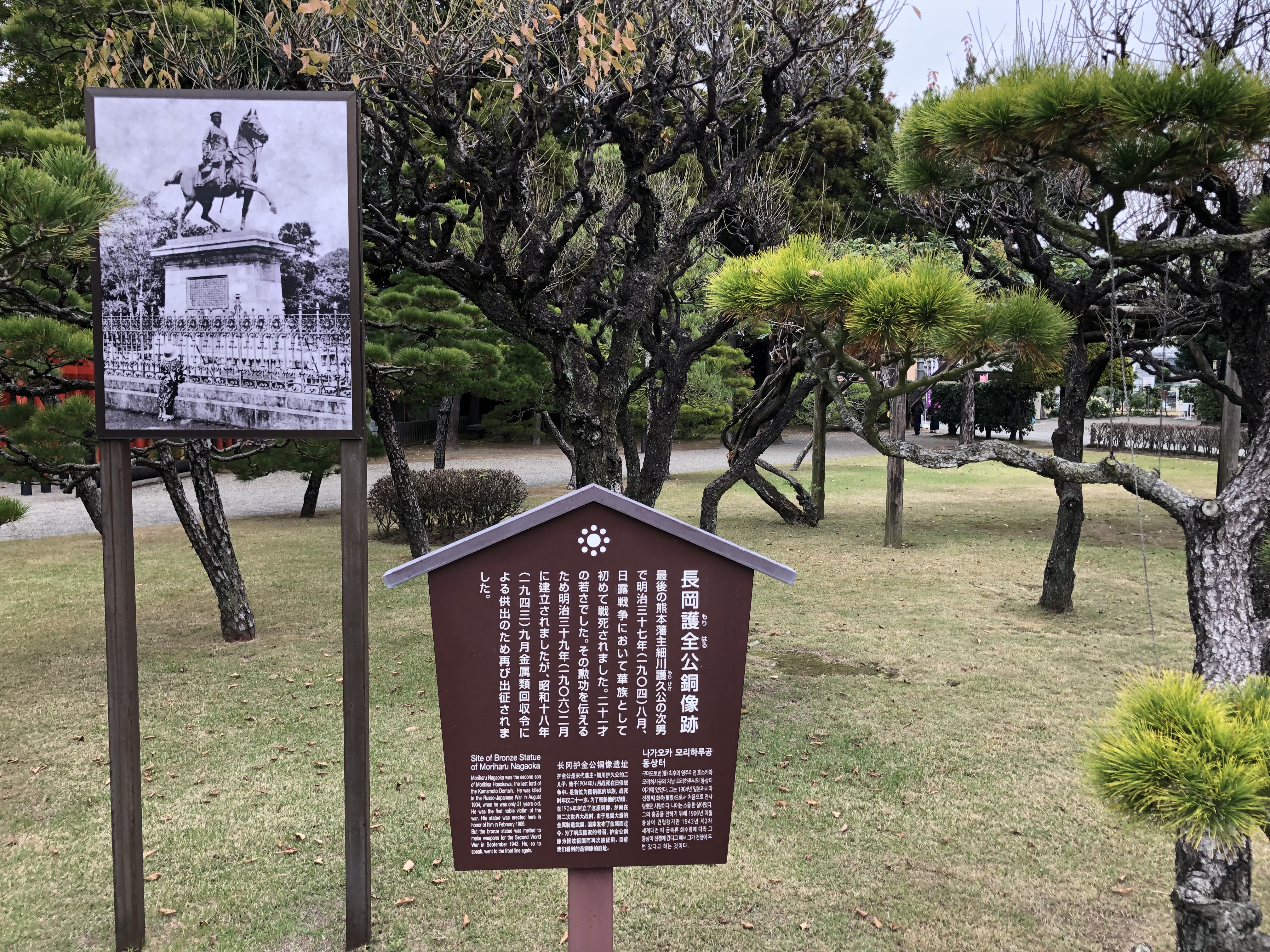
Next to the tree is the bronze statue of Moriharu Nagaoka, or at least that’s what’s supposed to be here. It seems that the enormous bronze statue has been stolen and replaced by an old photograph of the statue.
I leave the gardens and begin to walk in the direction of the Kumamoto Prefectural Government Office. I notice the pavements here are in somewhat disarray, and I keep tripping up on loose bricks. Some teenage Japanese guy approaches me and tells me he’s from Ibaraki Prefecture. He asks to take a photograph of me. I think he thinks I am somebody else.

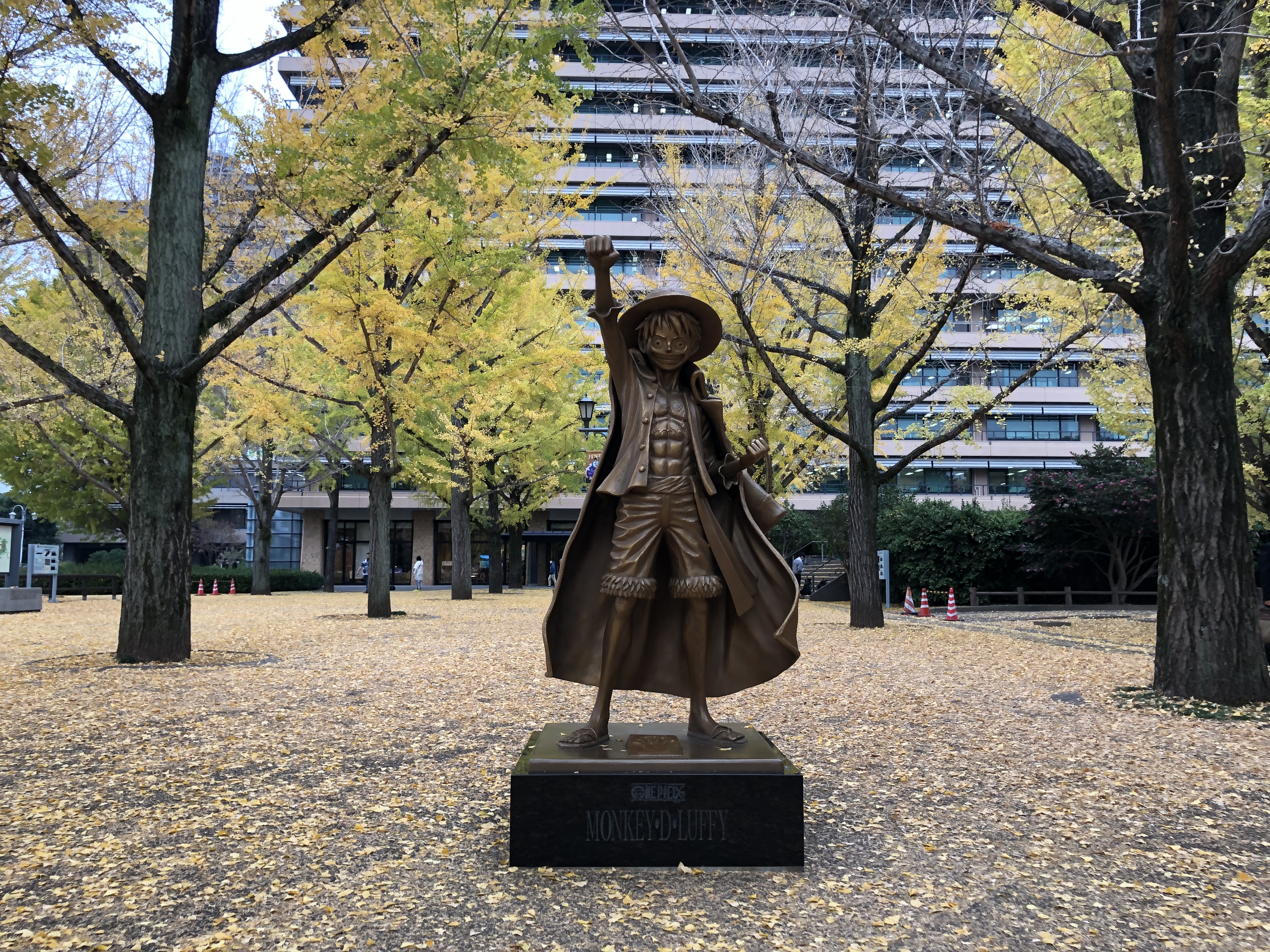
I pass police stations and car parks which are using Kumamon to advertise. I see a woman wearing a shirt that says, “Declare Bouncy Sanction,” whatever that means. I reach the grounds of the government office and wander straight over to where a crowd of people are having their photographs taken next to a statue of Monkey D. Luffy.

Luffy is the main character in One Piece, a pirate anime which first aired in 1999, and at the time of writing, there are 1,043 episodes. The show features Devil Fruits which when eaten give the characters superhuman powers. As I photograph the statue, a child approaches me and asks me how I am, “I’m very well thank you, and you?” is my reply.
“I’m happy good,” says the child.
I leave Luffy and start back in the direction of Kumamoto Station, getting a little lost in the process. My phone tells me that I have walked 40,000 steps today. My phone also tells me that I have just 3% battery remaining. After my phone dies I have no access to any maps, and it does, and I get further lost. Eventually, I do find the train station, and needless to say, I get back home in one piece.
The Lost Samurai

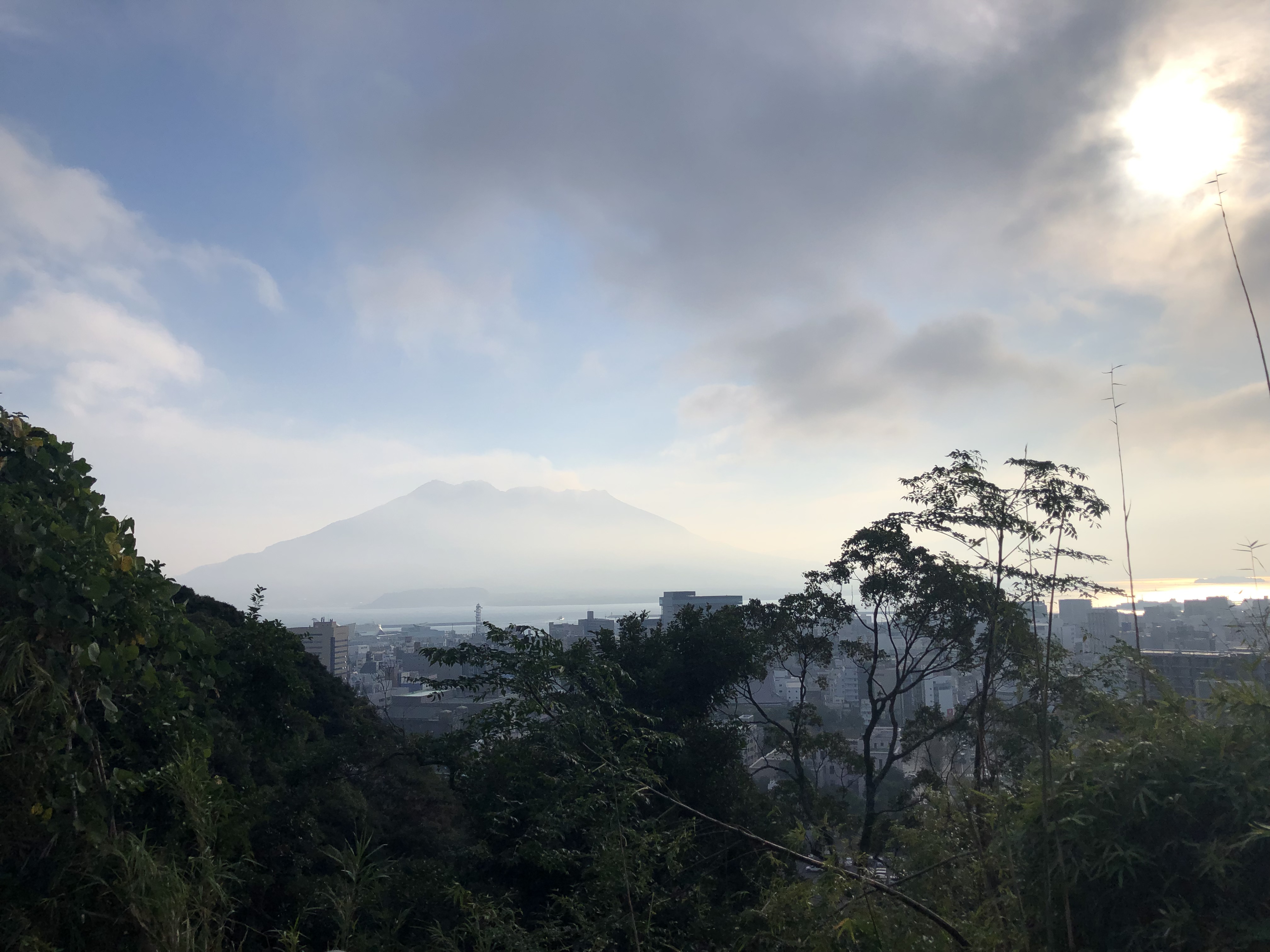
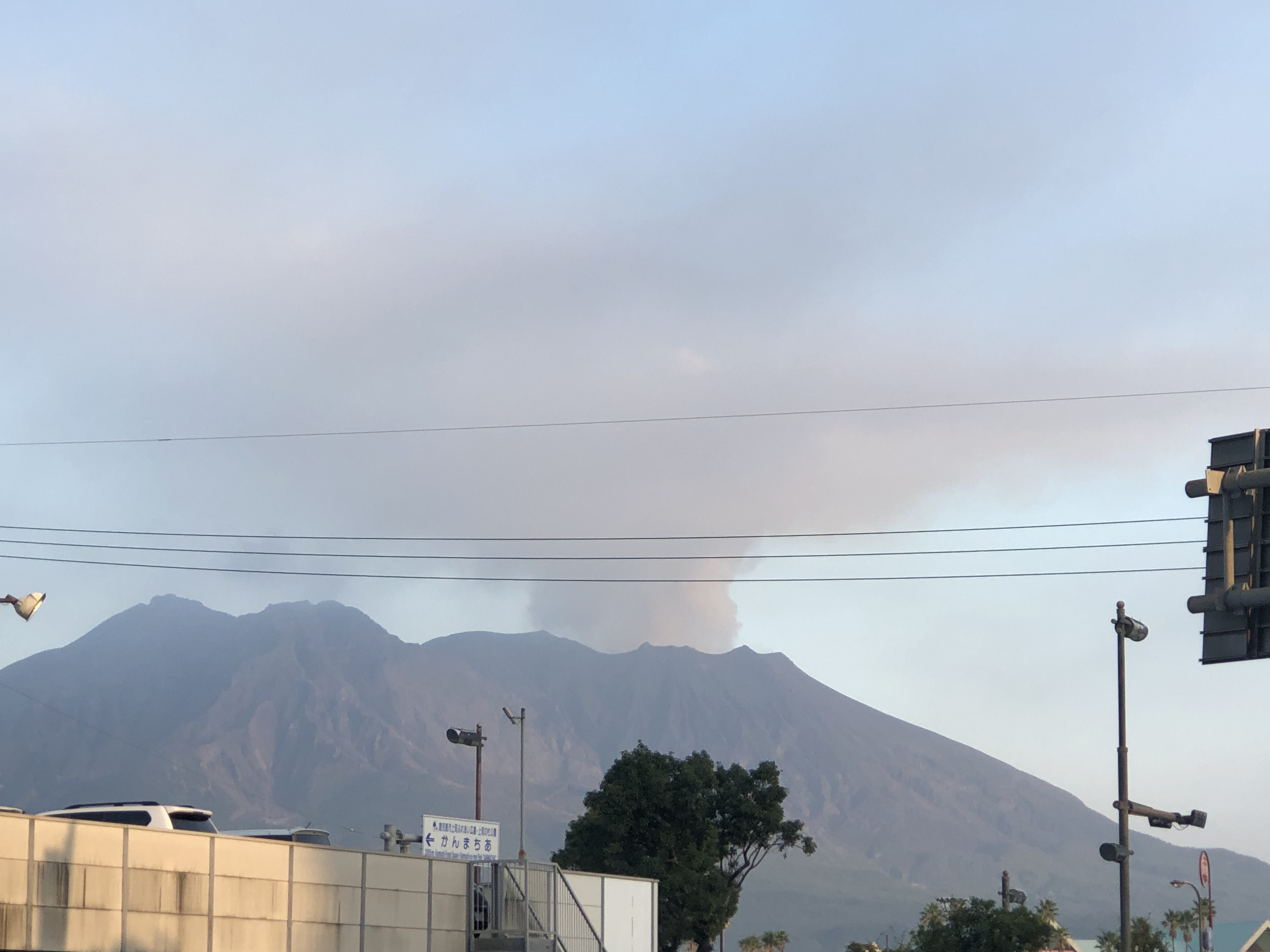
Many days fell away with nothing to show. Today, the first thing I notice as I step out of Kagoshima Station is the giant volcano that appears to be erupting in the distance. Kagoshima Prefecture is famous for Sakurajima, the most active volcano in Japan. It lurks ominously in the distance, alone, on its island surrounded by the water of Kagoshima Bay.

Sakurajima literally translates to mean Cherry Blossom Island, but don’t let the nice name fool you, this volcano is monstrous in size; standing at a colossal 1,117 metres above sea level, it can be seen from everywhere. Wherever I go in Kagoshima, the volcano seems to follow.

Today the Volcano Alert System is at level three. I am told to refrain from entering the danger zone and to pay attention to the future volcanic activity. The Volcano Alert System has five levels, they are:

5: Evacuate.
4: Evacuation of the elderly, et cætera.
3: Do not approach.
2: Do not approach the crater.
1: Caution advised around the crater.

I decide to try to get a better view, so head towards the Shiroyama Park Observation Deck. As I wander, I feel the streets here are much wider than I’m used to, the roads twice the size as usual. Tram lines criss and cross through the city streets whilst foghorns blast intermittently in the distance.

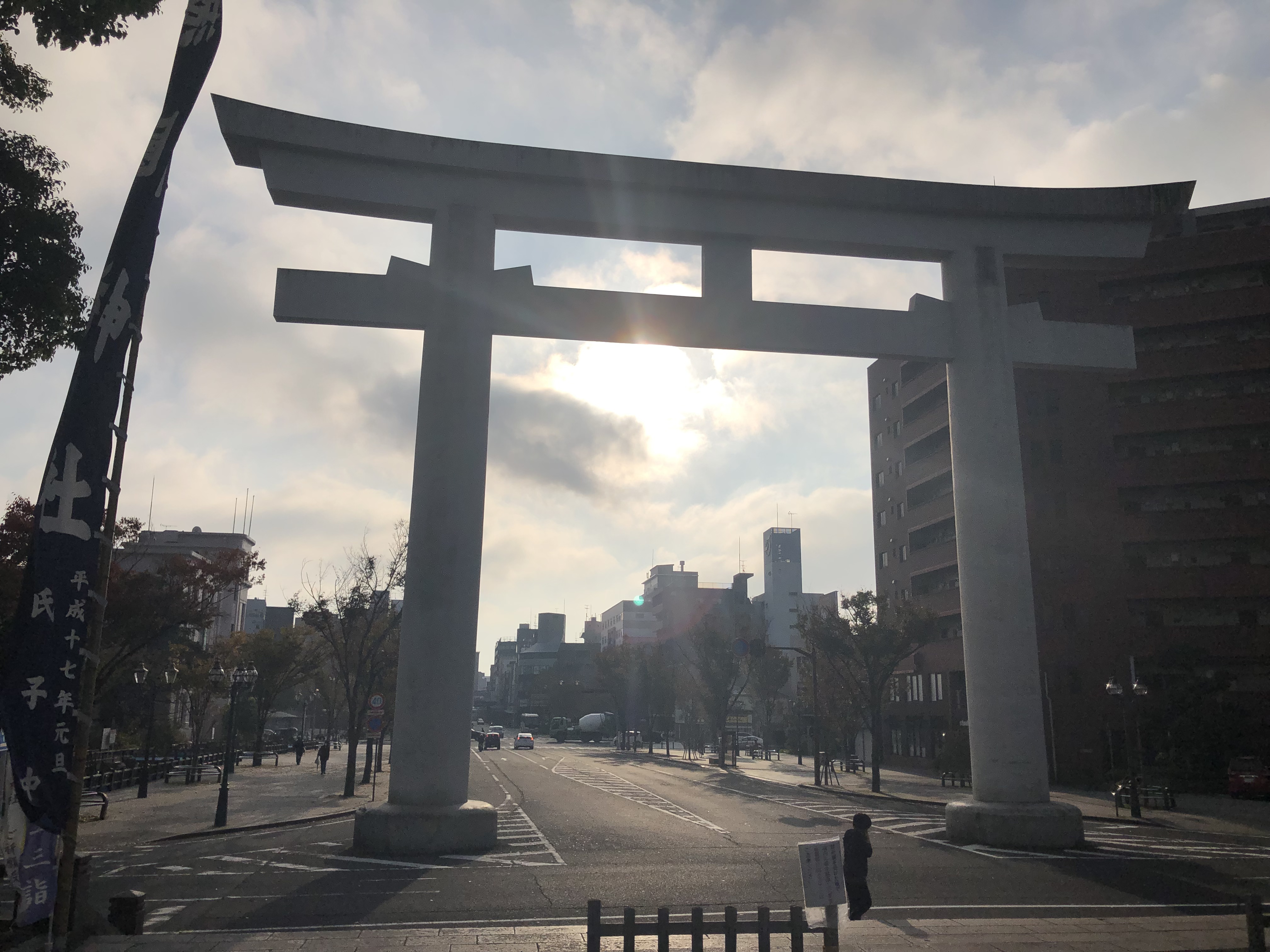
Before reaching the observation deck, I see a huge stone torii gate in the middle of one of the many large roads. I check my map to find it is simply named Big Torii. I’ve never seen such a gate before, usually torii gates are for people, it’s unusual to see traffic passing beneath.

After walking under Big Torii, I start to climb up some steep stone steps that spiral and meander, before finding myself 107-metres higher, at the top of Castle Mountain. In the distance, grey clouds roll over the hills bringing darkness from above, and I realise that I have selected the worse possible day to photograph the volcano.

I traipse back down the stone steps and into Central Park. The park isn’t that large, but somehow I can’t seem to find the statue that I’m here to see. I do another lap of the park, look for English signs, walk the park a third time only to realise that the statue isn’t even in Central Park.

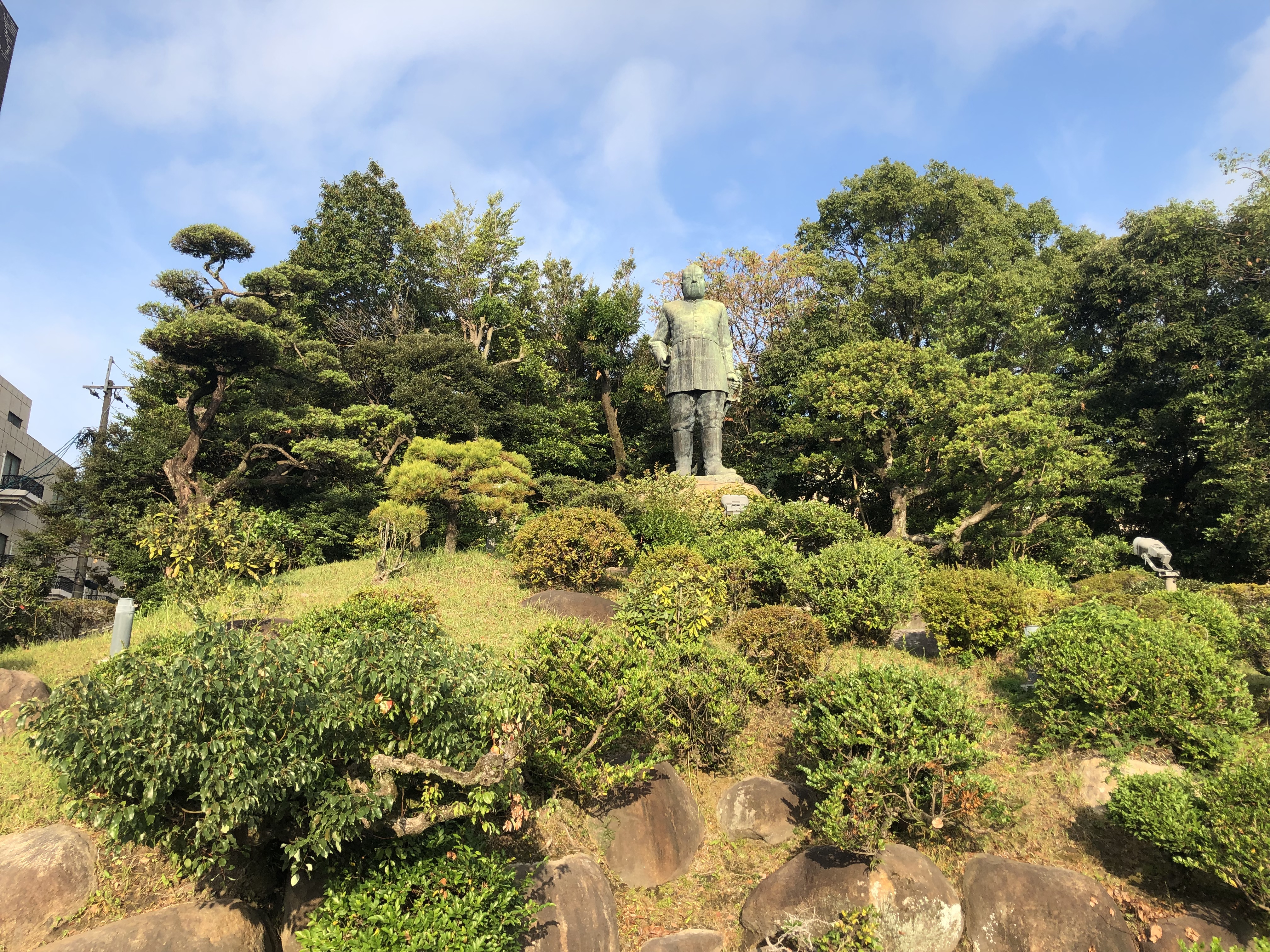
Eventually, I find the bronze statue of Saigo Takamori, betterwise known as The Last Samurai, and inspiration for the film of the same name. Saigo Takamori led the army of the Satsuma Rebellion against the Meiji government, and is one of the most influential samurai in Japanese history. The statue here is 8-metres high and took eight years to craft. There’s also a rather small statue of Hachiko the dog here, for no reason that I can ascertain.

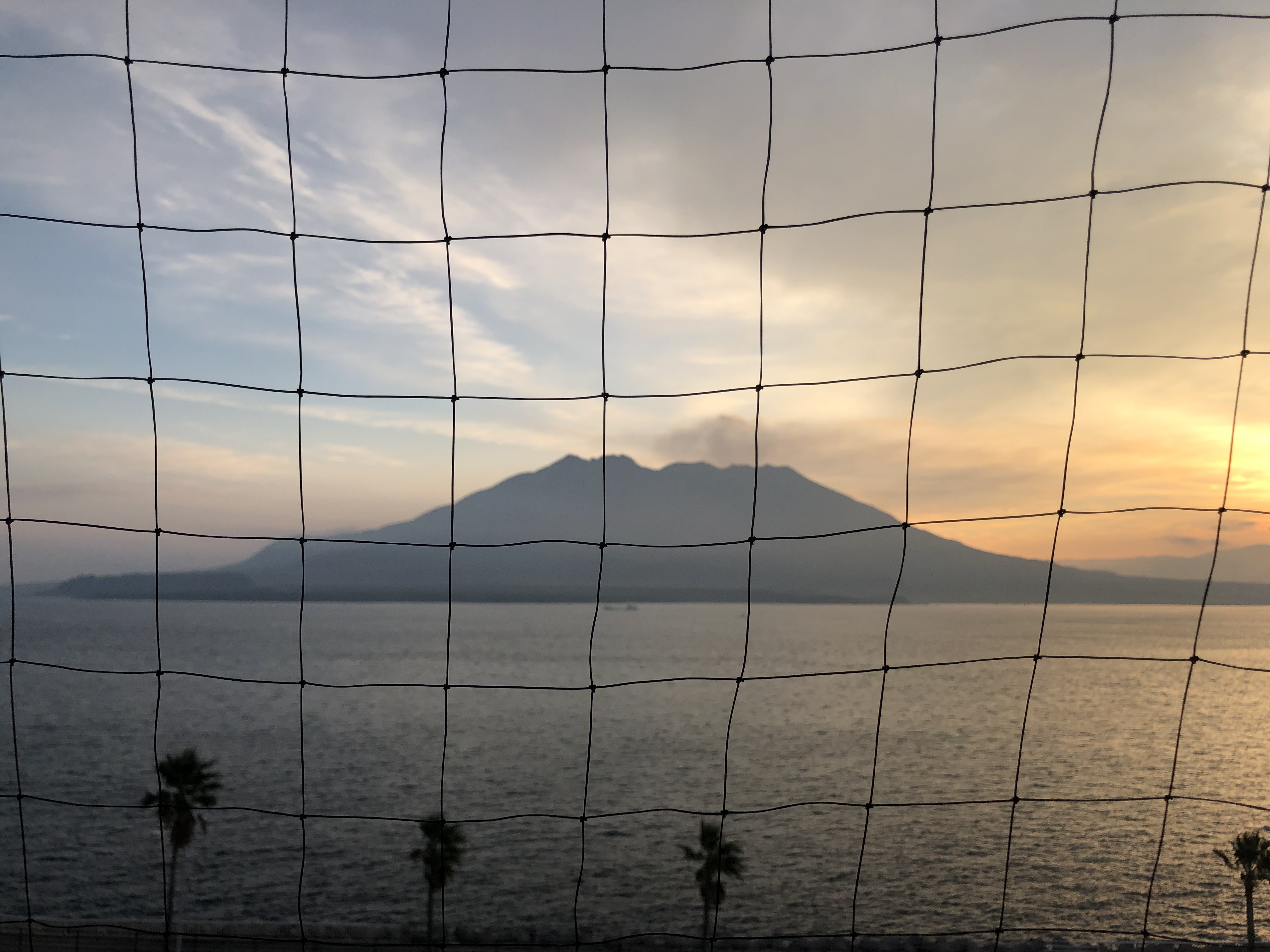
Still desperate for a better view and a decent photograph of Sakurajima, I head on down to the Amami Okinawa Ferry Terminal, the source of the foghorns I heard earlier. I find a nearby hotel with a balcony that faces out toward the volcano. The hotel room is a little pricey, but it does offer a pour-it-yourself beer server in the lobby, and it’s totally free.

The view from my balcony is slightly spoilt by a net, but good enough.

After helping myself to some lovely free beer, I end the day by walking around Kagoshima; the ubiquitous Sakurajima volcano continues to prowl in every direction, its omnipresence ever threatening, until the darkness of the night engulfs its existence.

A Bridge, Too Far

Today I’m going to walk across the sky. I leave my hotel in Miyazaki City at 8 o’clock sharp and cross the road to the bus stop opposite. My bus isn’t quite as punctual and arrives six minutes late. It’s a one hour drive to Aya Town, a place that describes itself as one of the most beautiful villages in Japan, a title that intends to enhance the added value of sightseeing and develop the regional economy, or so the flyer explains.

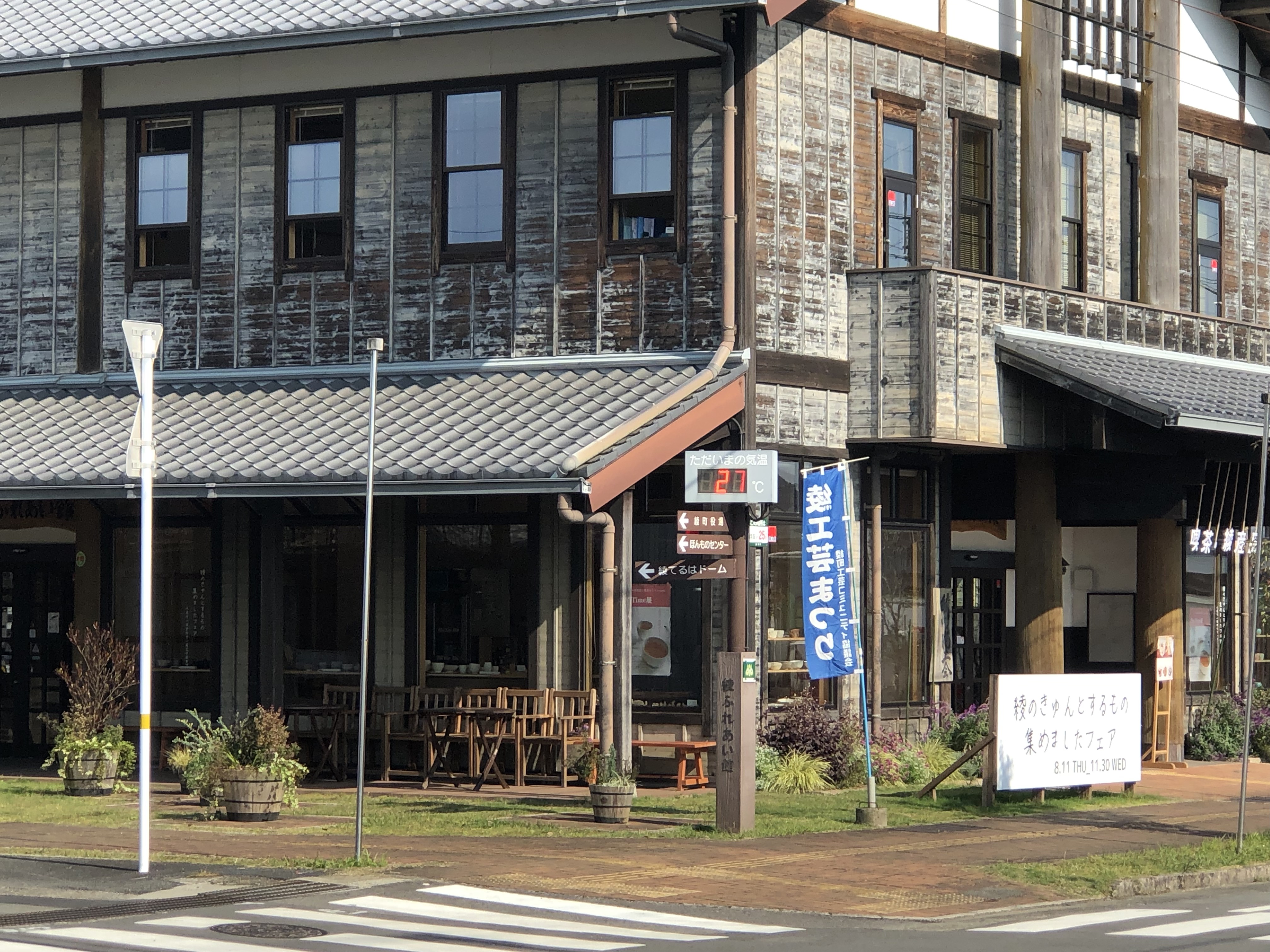
I arrive at Aya Bus Station, probably the smallest bus station I’ve ever seen. The town of Aya is located at the foot of the Kyushu Mountains, is incredibly rural, and over 75% of the total area is made up of forests, specifically warm-temperate evergreen broadleaf forests. Despite it being just after nine in the morning, and technically winter, a digital display screen accurately informs me that the temperature right now is 27°C.

I check the bus timetable but can only see buses here that go back to Miyazaki City, so I decide to walk; my destination a mere twelve kilometres away, up a mountain. The first hour of my stroll is along a straight country road passing rice fields and old houses, before it eventually turns into the aforementioned mountain forest.

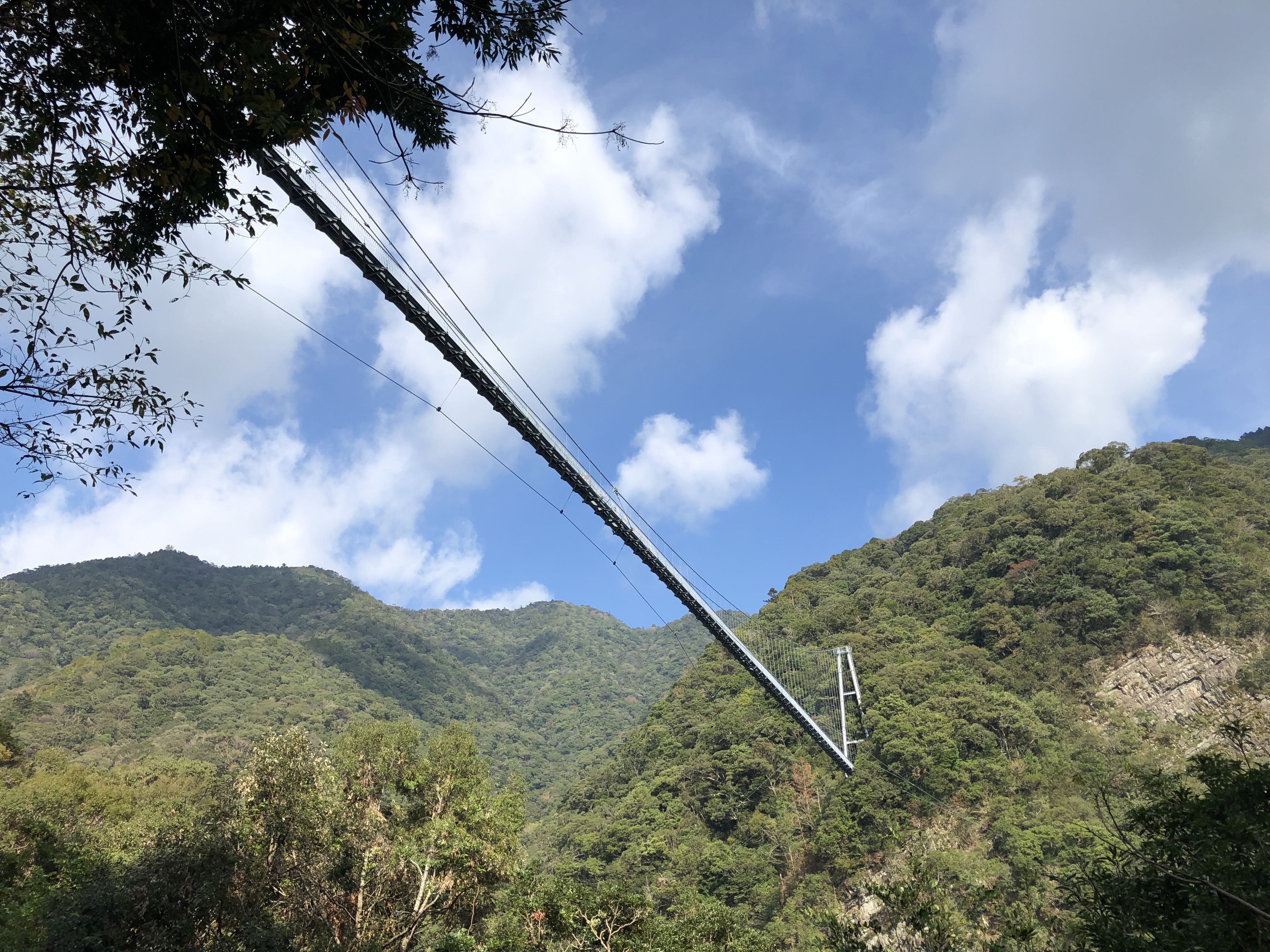
The forest is breathtaking, it meanders skywards further and higher into the mountains. Small waterfalls appear intermittently, the Hongo River below shines a cobalt blue, the track is steep but fair, and the only thing I have to complain about is the intense heat. The final kilometre becomes steeper still, but I go on, for above me, hanging majestically across the sky, sits a bridge.

To be entirely honest, I don’t like heights. Just gazing up at the bridge from below makes me unsteady. I wasn’t expecting the bridge to be so enormous. I squint and see tiny people on the bridge, their scale in comparison to its delicate metal frame is bewildering. I look up and stare and mutter to myself, “Not a chance. Not a chance.”

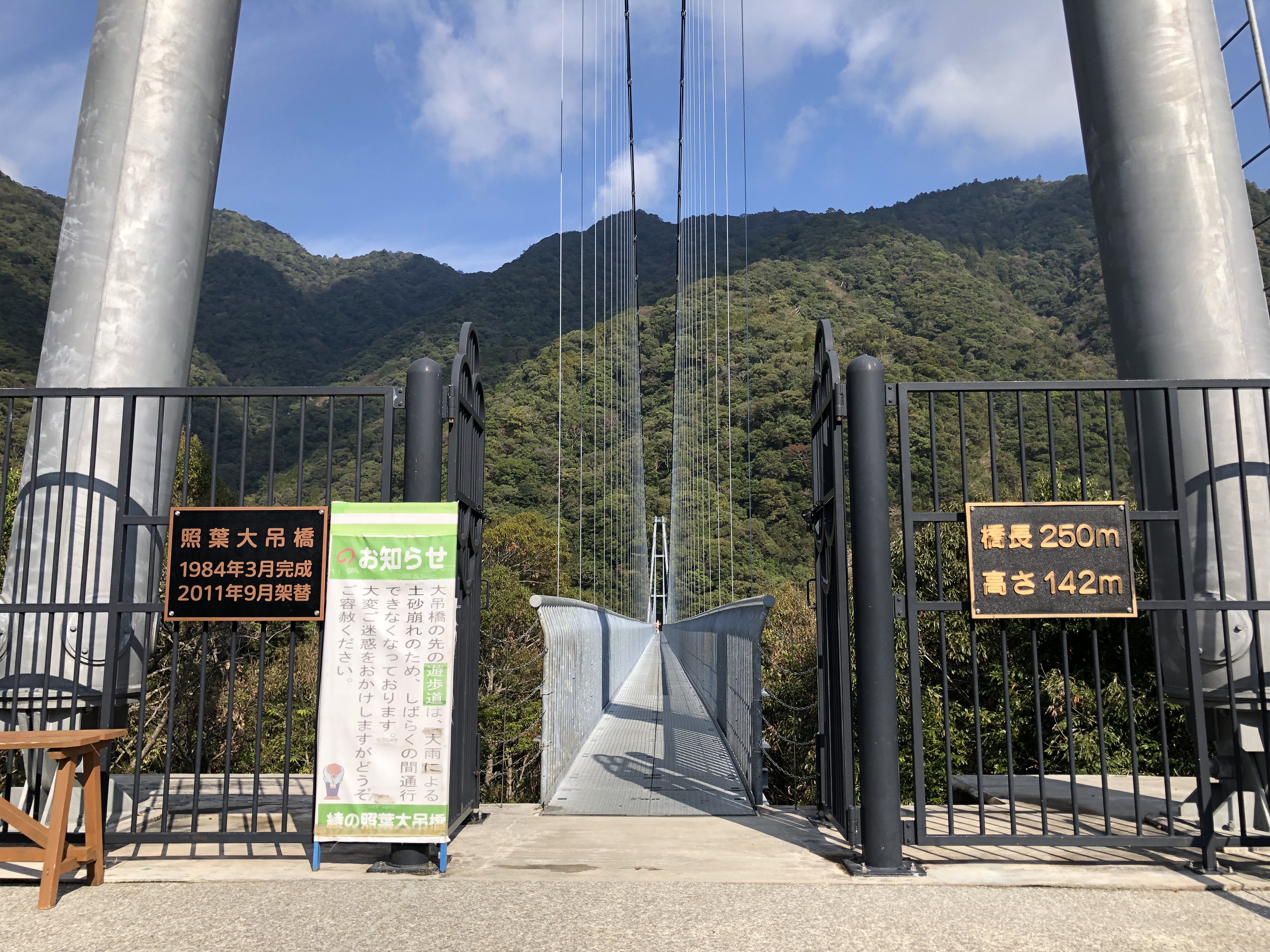
I’m not out of the woods yet, I discover that I still have another four kilometres to reach the actual entrance to the bridge, the four steepest of the kilometres. Hot, thirsty, and feeling as though I have walked for hours (I have), I long for nothing more than a vending machine, and as I finally reach the entrance to the bridge, the first thing I do is reach for a bottle of Pocari Sweat.

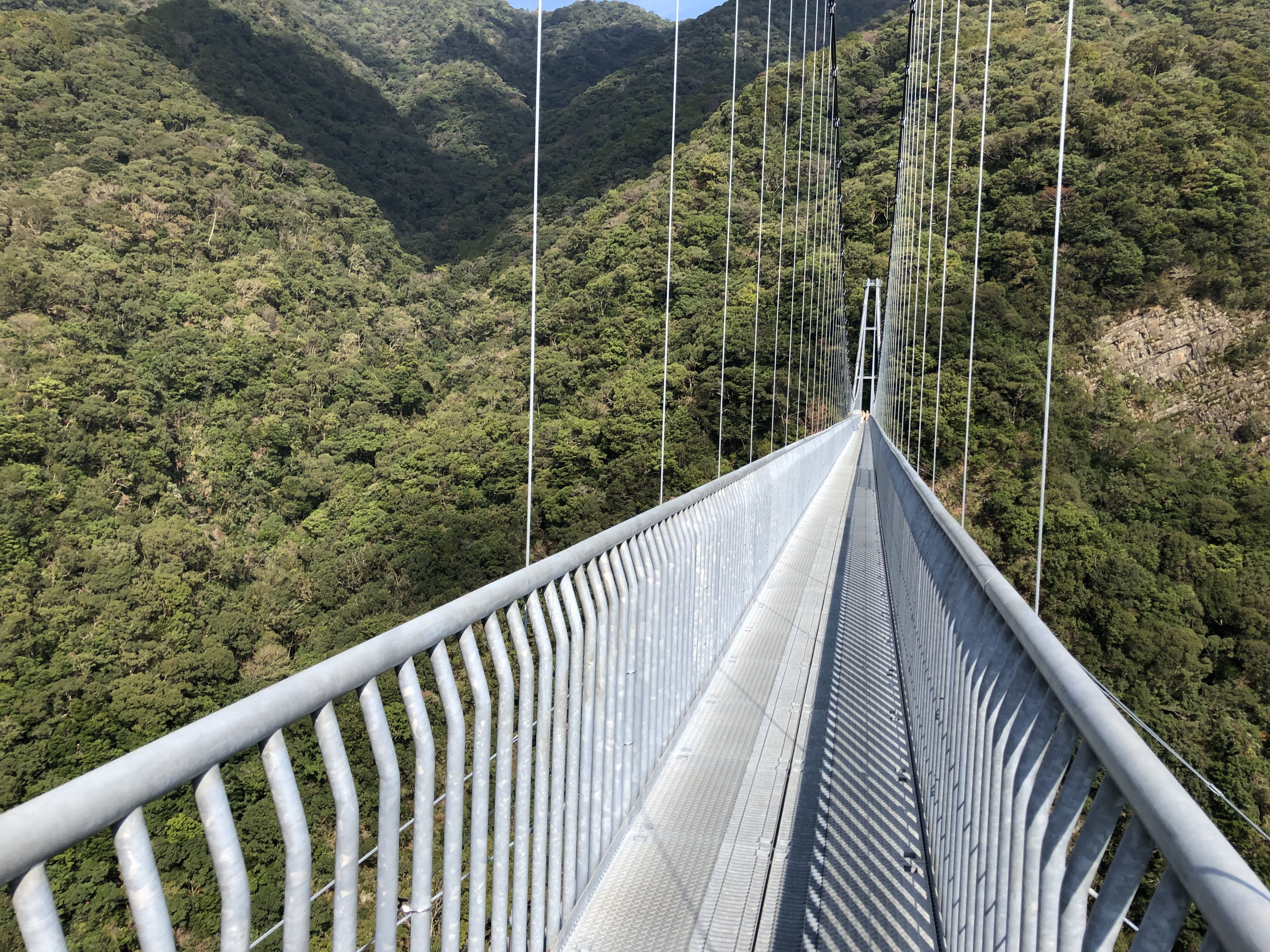
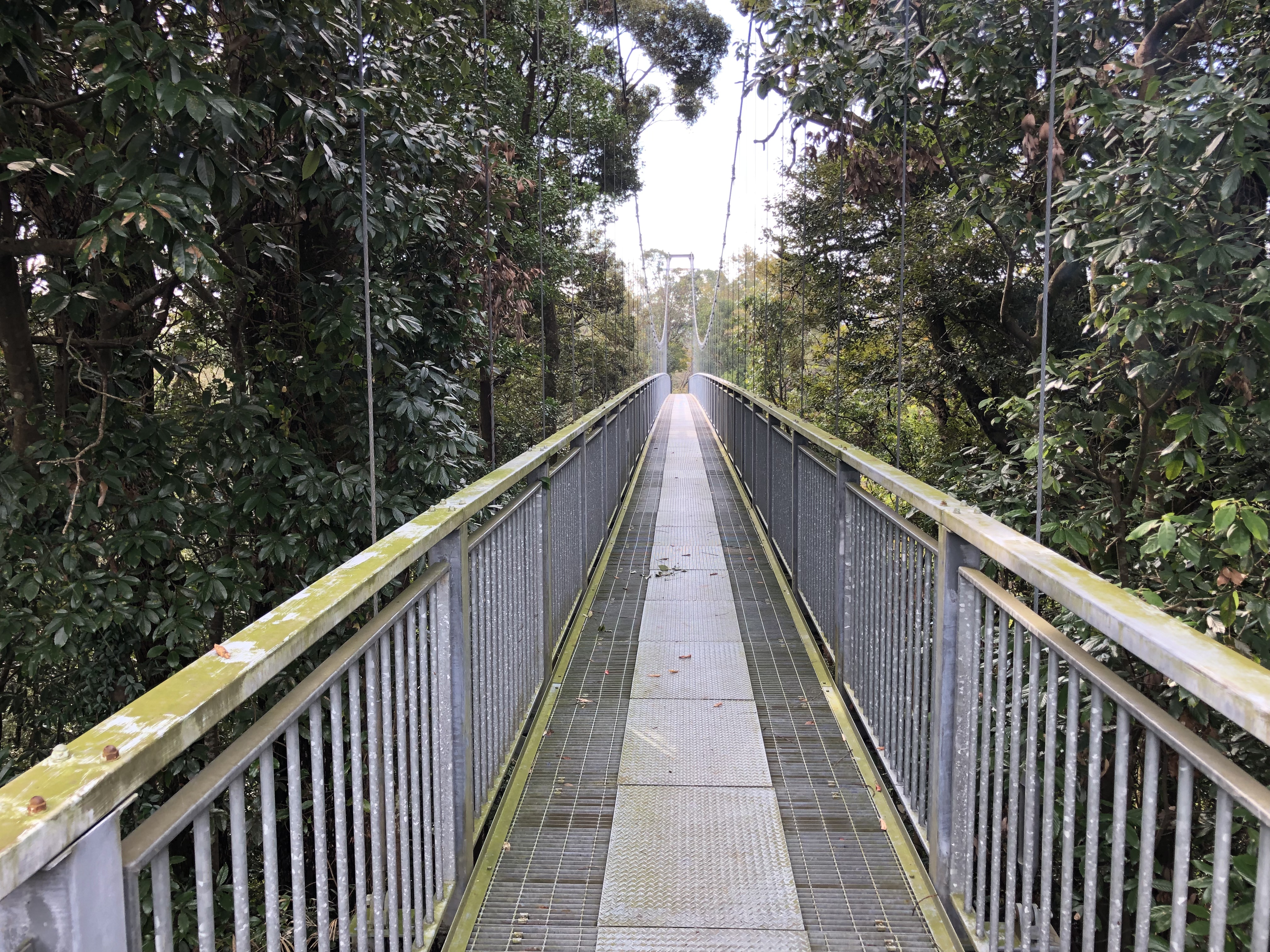
The Aya Teruha Suspension Bridge was original built in 1984, but due to safety concerns it had to be reconstructed in 2011. The bridge is a ridiculous 250 metres in length and its highest point 142 metres from the Ayaminami River below. The bridge had, up until a few years ago, held the records for being the longest bridge in the world and the highest bridge in the world.

“Not a chance,” I utter aloud once again, before stepping onto the bridge.

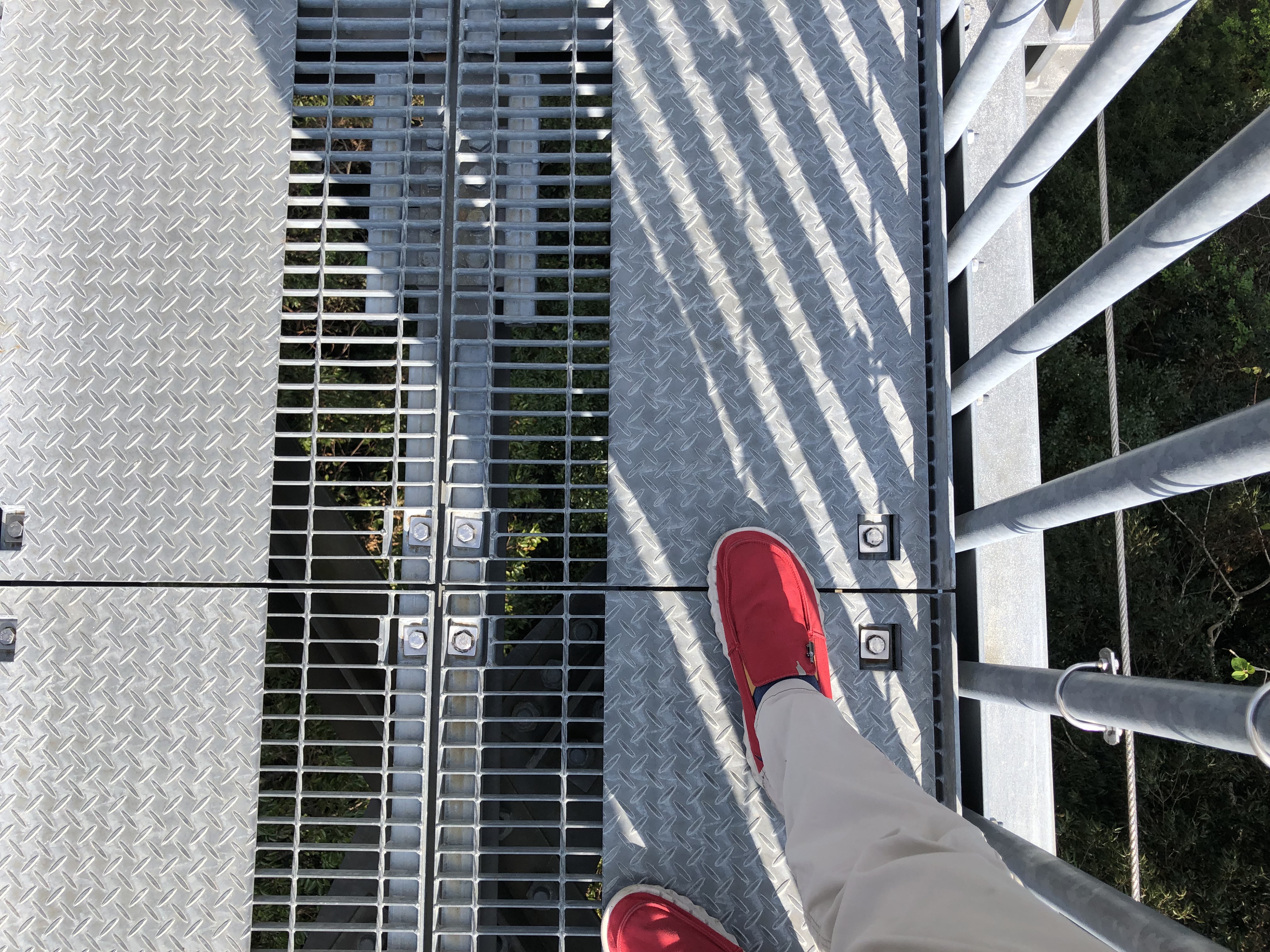
I stride along the bridge with ease. I look around and admire the view of the dark green glossy leaves that cover every inch of the mountains beyond, the hot bright sun dazzling in the blue sky above and painting the forest in its radiant glow, the bridge, with its grated walkway that spans its entire length; it makes me feel as though there is nothing beneath me, just the impending oblivion below, the anticipation of apprehension, panic washing over me, I become enveloped by the empty feeling of dread, that something here isn’t quite right. I suddenly feel lost and found in the same moment, the inevitable misery of the end, flickering in my thoughts, a cocktail of emotions swirling around, one step at a time.

I stop to let the feeling pass, it will pass, and it does. All the fear inside of me scatters away in a single moment, like a lonely sand castle collapsing on a desolate beach, suddenly, it is gone, and I return to myself.

As I reach the other side, the first thing I notice is the strong smell of the lucidophyllous trees. The second thing I notice is that the path ahead twists toward a long promenade that runs along the mountain slope then loops around, before eventually returning to its starting position, the Aya Teruha Suspension Bridge. I’m rather annoyed as I have to cross the bridge for a second time.

Back down the mountain I go, and some fifteen kilometres later I arrive at the entrance to Aya Castle.

Only built in 1985, this place describes itself as Japan’s oldest mountain castle, but it’s not; it isn’t even on a mountain. This is a reconstruction of a castle that was destroyed 700 years ago. Inside this wooden castle is a small museum commemorating feudal warriors and the history of Aya Town.

Leaving Aya Castle I wander back in the direction of Aya Bus Station, however, before I can leave, for whatever reason, I have to cross over yet another suspension bridge; this one is a lot shorter, but still high enough above the ground to once again trigger my fear of heights.

I decide that this is one bridge too many, it exceeds the limits of what is reasonable and acceptable. It literally is a bridge too far.

Death Becomes Here

Today is warm again, and I have arranged to go on a bicycle tour with three very close friends. We meet up at half-past one and cycle in the direction of Yanaka Cemetery. It might sound a little morbid, heading once again to this huge cemetery, but the reason we have settled on this location is that it is quiet, out of the way, and not packed full of tourists. Today might well be the last day we can view sakura, and I can’t think of a better way to enjoy the flowers than with my friends in an area that is free from the usual crowds.

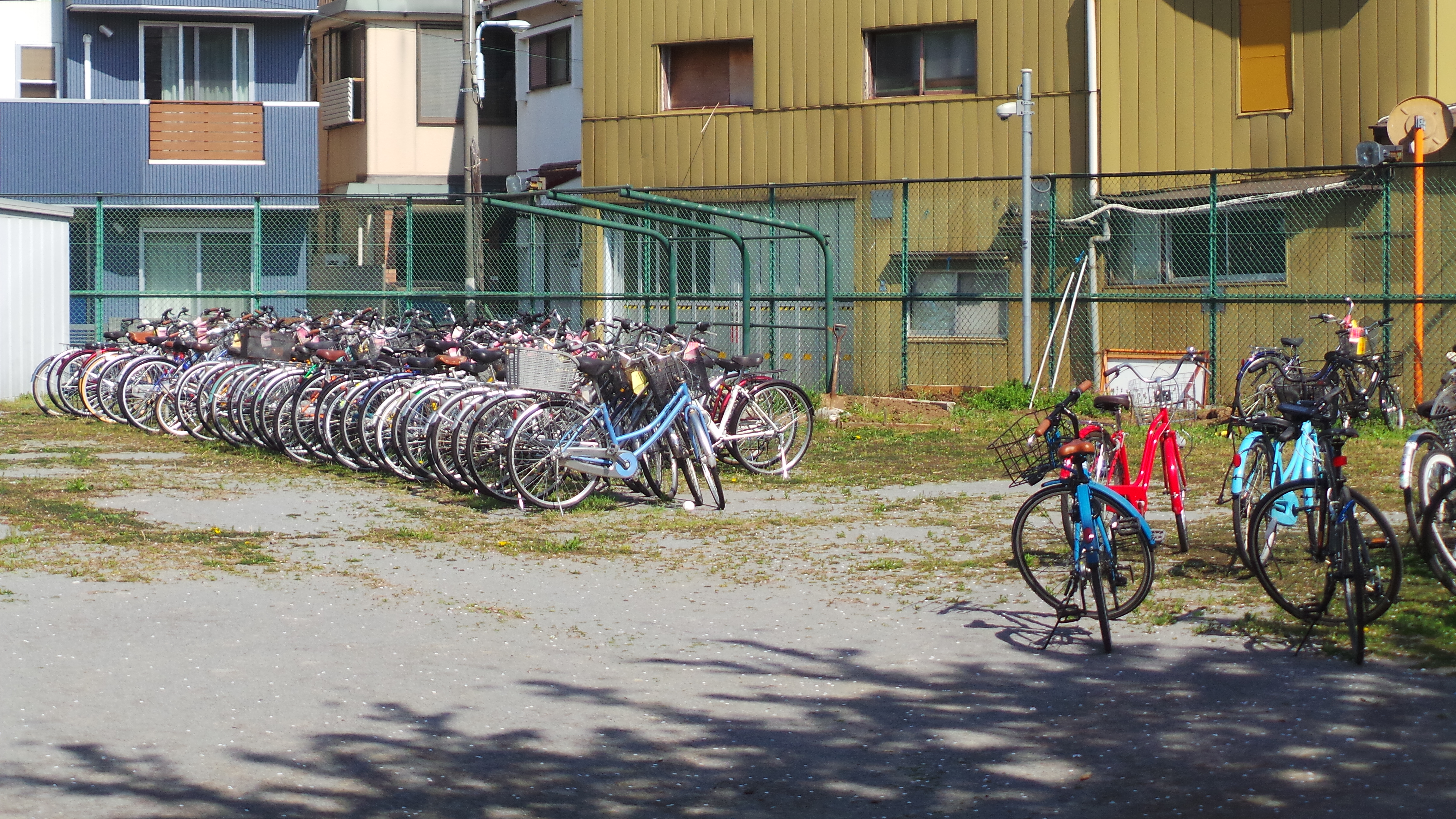
We decide, for whatever reason, to park our bikes in a zone where abandoned bicycles are collected and locked away. This fenced-off area charges a fine of ¥5000 to people who have left their bicycles illegally parked. After impounding our own bicycles, I worry that something might go wrong, and we too will have to pay the hefty fine when we return here later this afternoon. “Don’t worry about it,” says one of my friends, “we can just pretend that we don’t speak any Japanese, it’s no problem.”

illegalparking

We head through the cemetery, getting very lost in the process. The interesting thing about Yanaka Cemetery is that there are no bodies in the ground. Every grave here features a cremated corpse in an urn. Something about the blend of cherry blossom trees mixed in with the gravestones soothes me in a way that I can’t really describe. I really like this cemetery, and today is perhaps my tenth visit to this area since arriving in Japan.

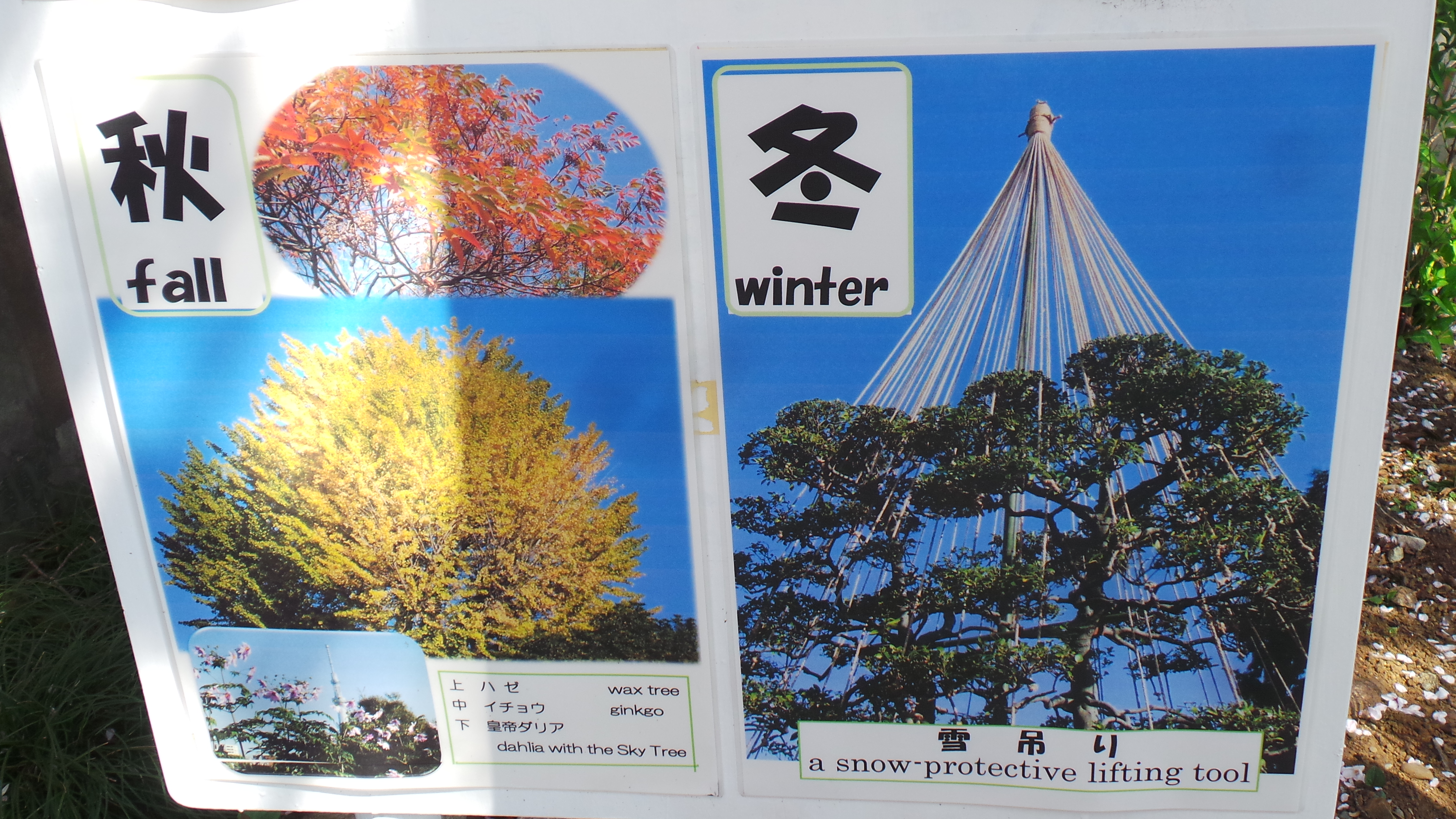
On the other side of the dead, there are some old houses and a street known as Cherry-blossom Avenue. I noticed a sign here a few months ago that displayed the four seasons of Yanaka Cemetery and various flowers. The section for winter was incomplete, but now, finding the sign, I can see that whoever is in charge here has finally updated the winter information, and it was worth the wait: a snow-protective lifting tool.

signcompleted

The photograph shows nothing resembling winter, and the sign is meant to depict the different flowers of each season (it doesn’t). I’m not certain if a snow-protective lifting tool is a genus of flowering plants or perhaps something more obscure; nevertheless, I am intrigued enough to make plans to return here next winter and investigate this peculiar seasonal tool.

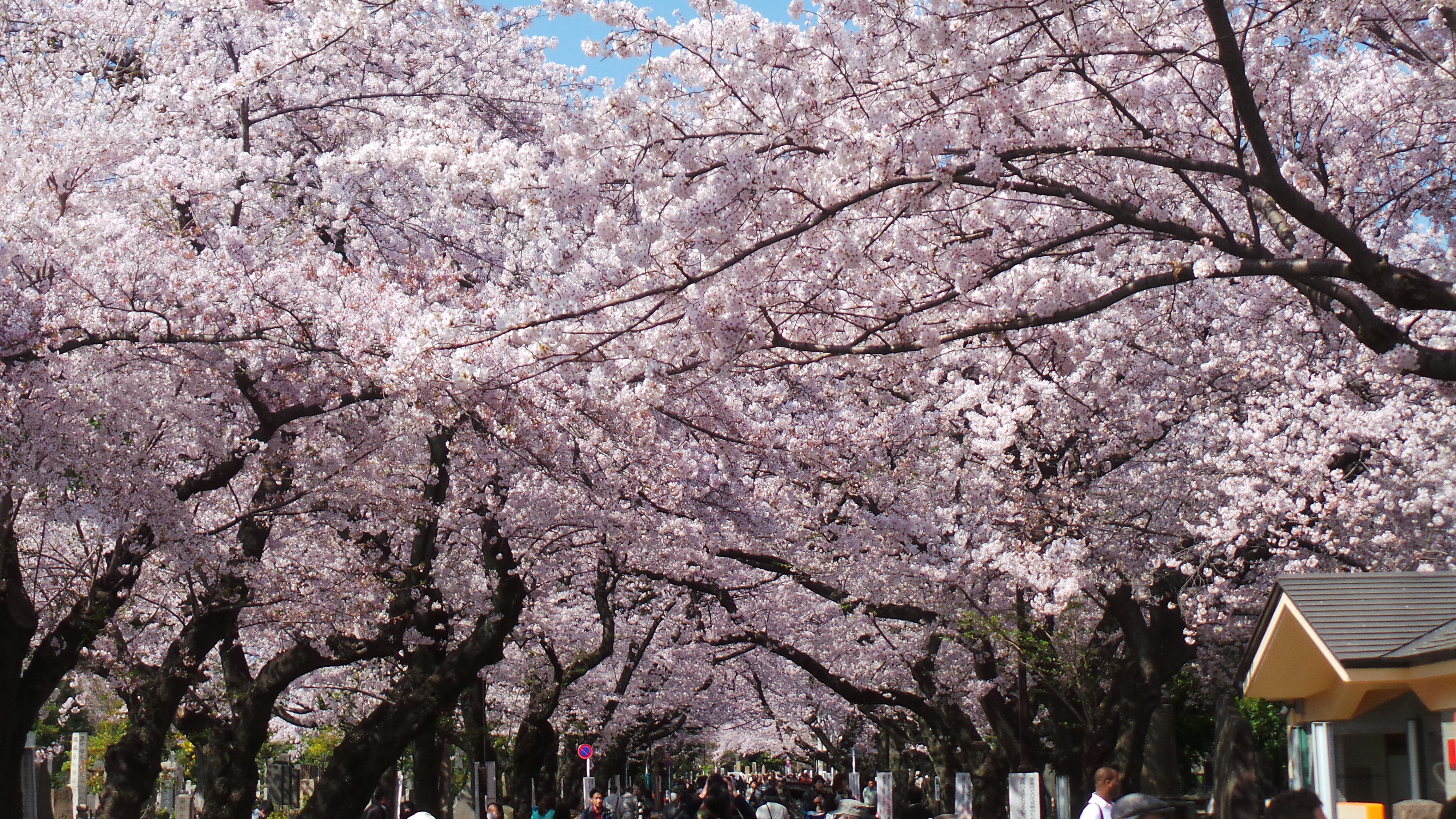
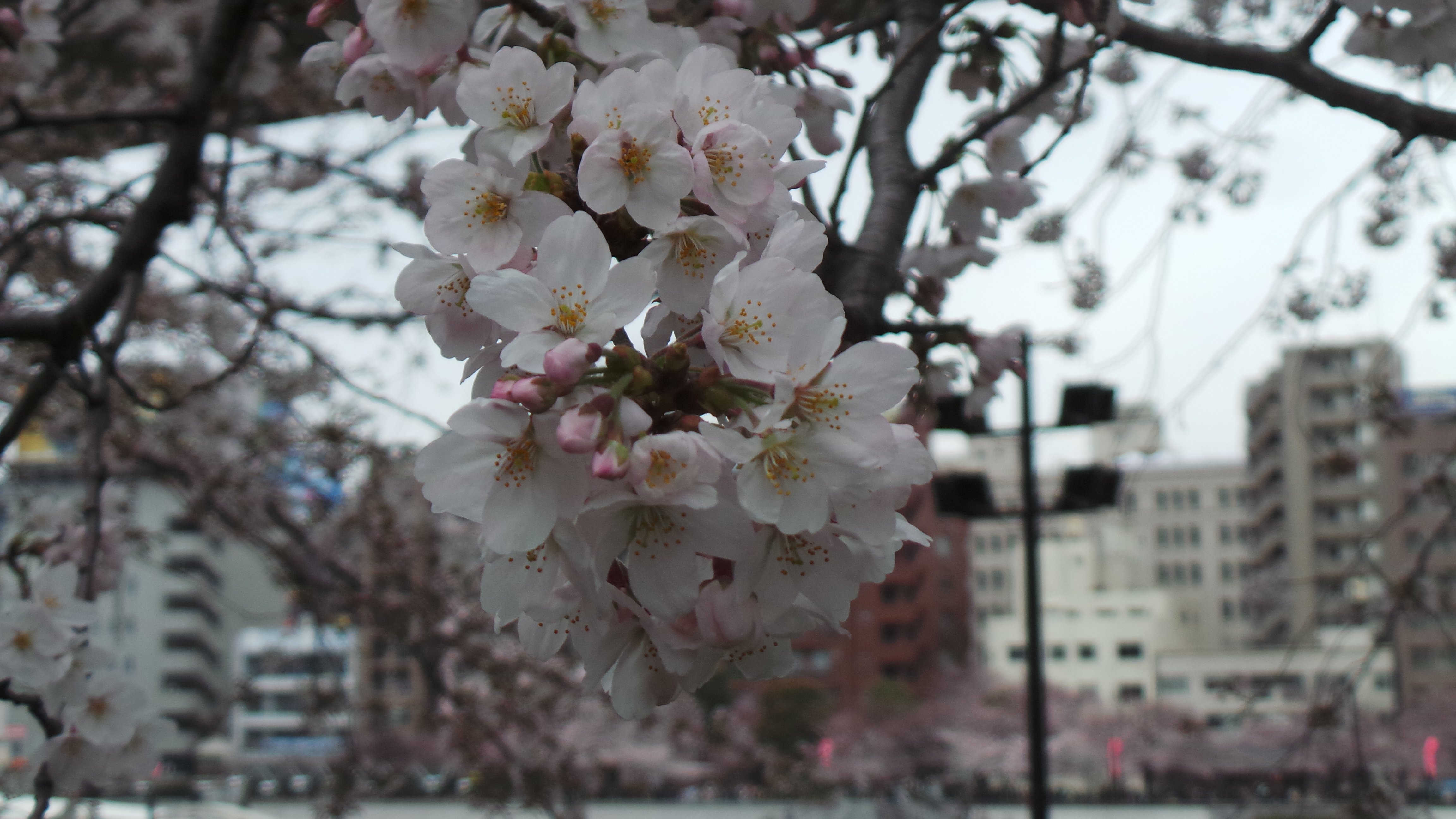
On Cherry-blossom Avenue, it is slightly more crowded than we had anticipated. Dozens of people meander the street, each side adorned with a wall of pink flowers arching over the tunnel-like path, creating an incredible sight. It’s unquestionably worth the visit, offering the most serene view of sakura I have seen so far. We continue our stroll on this lovely spring afternoon, relishing views under the canopy of blossoms.

sakuratunnel

On the other side of the street, we enter a very large temple. Tennoji Temple boasts a massive statue of Buddha and an ancient well that still functions today. One of my friends appears excessively excited about the well and immediately starts pumping water from the ground below. Apparently, the water has a metallic taste.

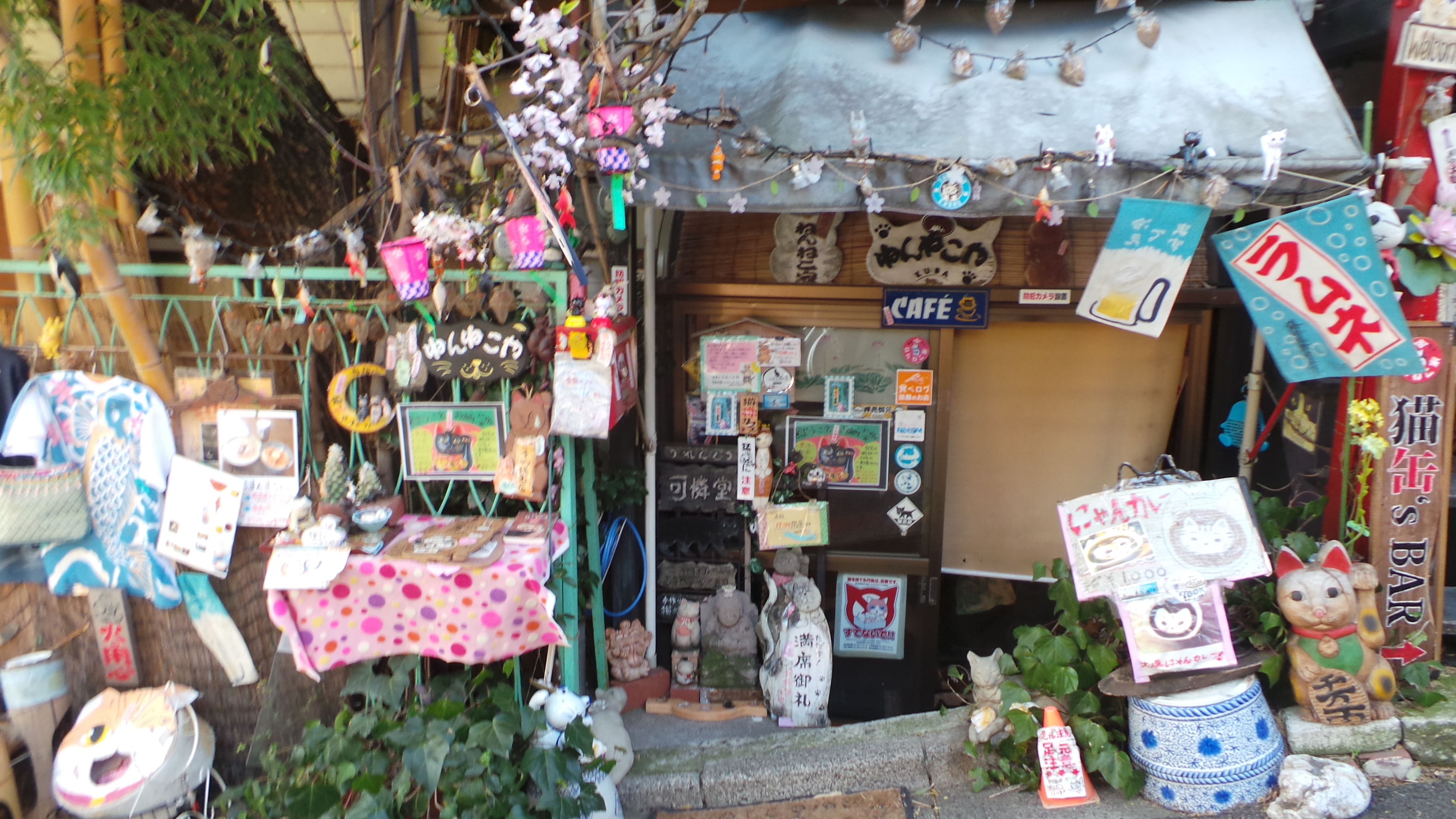
We leave the temple and the cherry blossoms behind us, heading down Yanaka Ginza Street. The market is an unusual bustle of crowds and tourists, drawn to the area for flower viewing and now wandering along this ancient street. Although tea houses, locally sourced products, and hand-made items are on sale, none of them capture our interest. In our quest for food, we stumble upon the knowledge that there’s a cat cafe nearby, and given our shared love for cats, we eagerly turn a corner and walk for ten minutes in a vague direction before finding a cafe adorned with cat paraphernalia. “Maybe this is the place?” I am told, with transparent obviousness.

catcafeagain

We wander into the deceptively small cafe and take a seat on the floor around a small table. Unlike the other cat cafe I have visited, this one doesn’t require us to pay any additional fee to eat with the cats. It feels more like someone’s living room than an actual cafe. Although the place is slightly pricey, perhaps the extra charge is used to subsidise the cost of cat food, care, and maintenance.

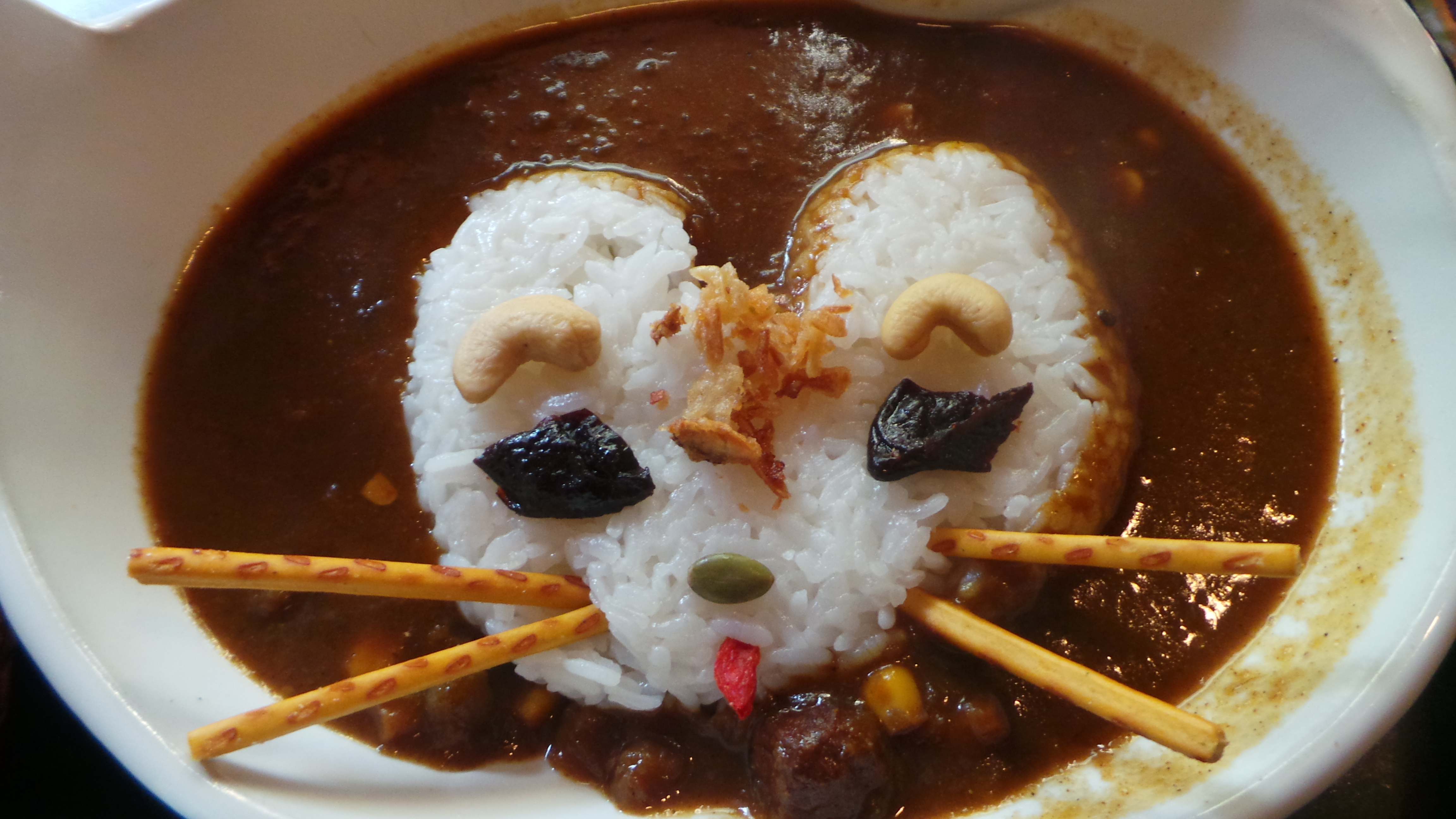
I order a vegetarian curry and wait. My friends, seemingly uninterested in real food, opt for a selection of cakes and sweets. As we sit and talk for a while, I completely forget that I am in the company of cats; perhaps the reason for this is that there is just a single cat here. Only one. Sleeping quietly under a heated table. Eventually, my food arrives, and a second cat appears from seemingly nowhere. Much to my surprise, my food looks nothing like any curry I have had before. Something is very different about it, and it takes me a while to realise exactly what it is.

catfoxcurry

As I dine on curry and rice shaped like a feline, or perhaps a fox, I begin to wonder if this is okay. Eating food in the shape of a cat, while surrounded by two actual cats, makes me feel very strange indeed. What would a cat think if it saw me eating one of its friends? Perhaps it would get angry, maybe even scratch at me. After finishing my curry, I attempt to pet the awake cat, but it runs away in fear, confirming my suspicions about eating cat-shaped food. The owner informs us that the manager of the cafe is, in fact, the sleeping cat. It makes me wonder if the cat even knows how to operate the antiquated till system (it doesn’t).

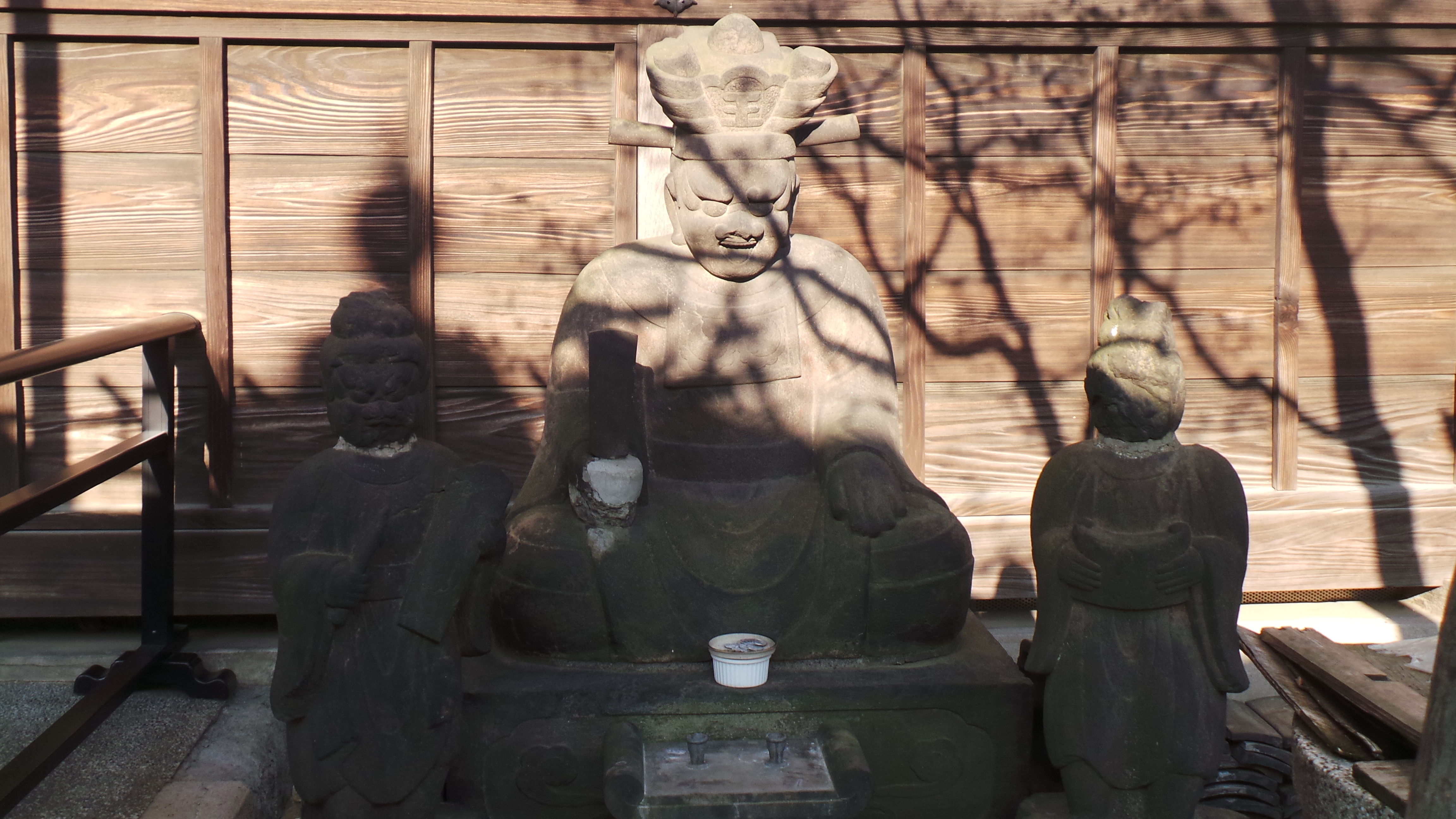
We set off in the direction of our bicycles, and along the way, we once again inadvertently stumble upon a temple. This particular temple houses the King of Hell, Enma-raja. The statue, carved from stone, depicts him with his servants sitting on either side. His servants are Shimyo and Shiroku, tasked with delivering the King’s judgment and recording it, respectively.

enma

It is believed that Enma-raja judges the conduct of the living and determines their destination after death. Rumour has it that if you tell a lie in front of the statue, the King of Hell will remove your tongue. Intrigued, I decide to test this out with a paradoxical statement, “You will cut out my tongue.” Nothing happens, indicating that I have told a lie, meaning the statue should cut out my tongue. But if it does, then I can’t have told a lie, and this creates a paradoxical loop. The logical conundrum continues endlessly. Eventually, the statue disintegrates in a quarrel of logic (it doesn’t).

It is quite fitting to find such a statue here, as the area of Yanaka is in the direction of the Ox Tiger, depicted with horns, sharp claws, and an evil demeanour. Because of this, it is considered an unlucky direction, and Yanaka shares the unfortunate possibility that it contains a demon gate—an invisible gate that leads directly to hell, known as a Kimon. Often, temples in Japan face the same direction as this Chinese zodiac symbol. This might explain why there are over thirty temples and shrines here, helping to purify the area and prevent an oni demon from showing up and killing everyone.

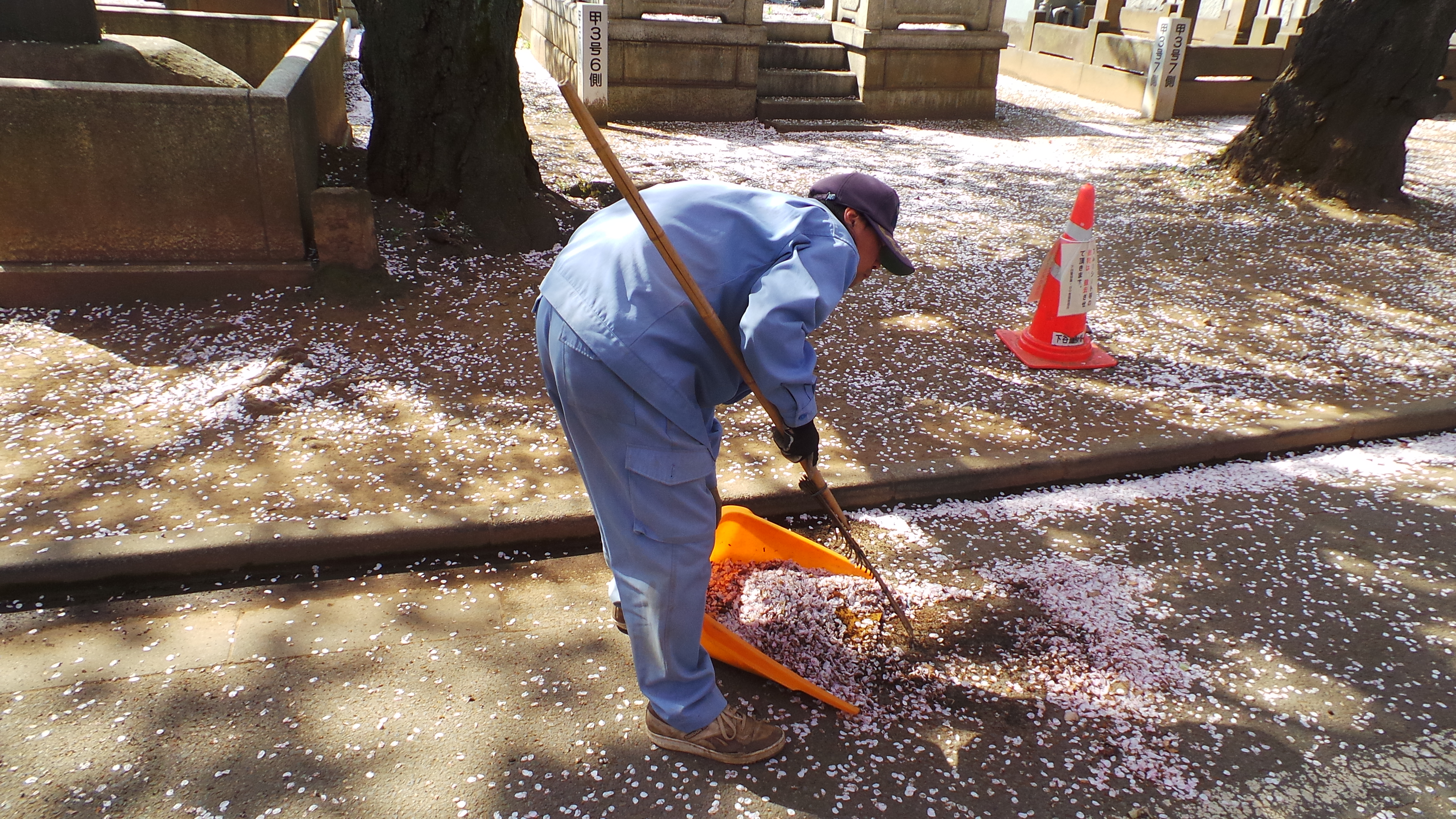
With death surrounding us, it is a pleasure to encounter something that brings a wry smile to my face. A man quietly sweeps up the fallen, dead petals of cherry blossom flowers that litter the floor. I watch eagerly as he sweeps. The area he cleans is instantly covered with petals within a minute of him finishing, and I fear for him; his job might be unavailing and endless.

foreversweeping

We eventually return to our bicycles, relieved to find them unharmed. However, a man looks confused as we stroll into the compound, unlock our bikes, and race toward the exit. Speaking in Japanese to one of my friends, he seems suspicious about our actions. “Next time, you should kindly ask for permission first,” is all he says. Fortunately, he doesn’t impose any penalties or cause any problems. As we cycle away from the cemetery towards Asakusa, it appears I had nothing to worry about, except perhaps for the sudden sharp pain that starts to shoot through my tongue.

Under the Spreading Cherry Blossom Tree

As the heat of 23°C sweeps across Tokyo, it brings with it a sea of pink and white flowers. Spreading in every direction are sakura, flowers that only bloom for about a week of the year and are so delicately dependent on weather conditions that they could easily vanish in an instant. The problem with cherry blossoms is that they take a while to reach full bloom, and in previous years, 100% hasn’t quite been reached. This year I am fortunate, and the weather has been excellent. Today, the flowers are at their full potential and will stay like this for a few days or until it rains. If it rains, the flowers will wash away, sharing the same fate as a ludicrously named spider in a nursery rhyme.

I head toward the Sumida River, passing rows of flowers that line the river on both sides. The same river, but this week, offering an entirely different setting.

sumidasakura

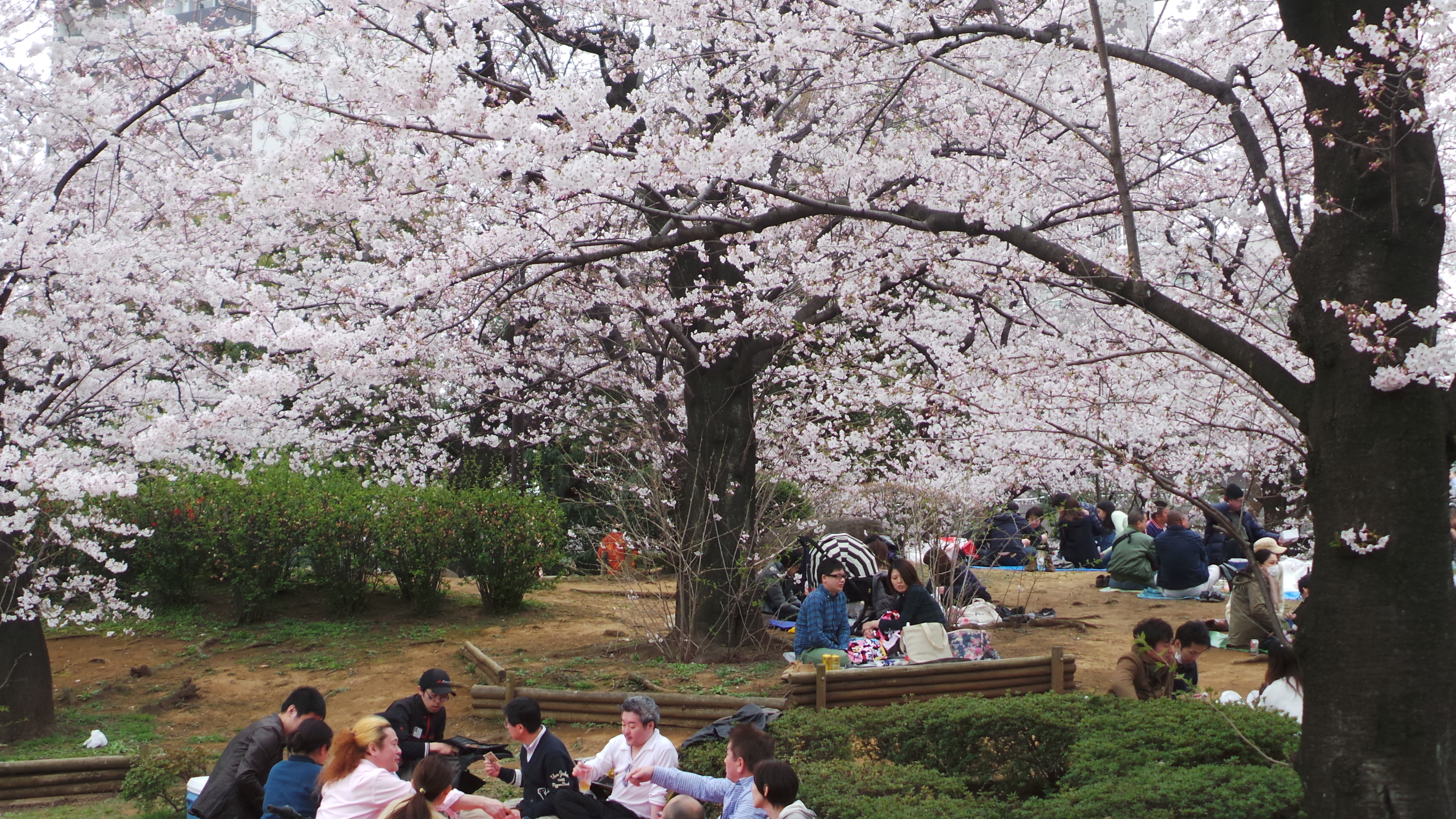
I cross the river and head into Sumida Park. I have arranged to meet my friends for a traditional event known as hanami. I wander the park, passing large groups of people drinking alcohol as they sit shoeless on bright blue tarpaulin. As I traverse the verdant gardens, after a full thirty minutes, I arrive at the location of the first-ever cherry blossom viewing party of the Imperial Court. Just over the hill behind this historic location, sit my friends, drinking whisky at noon.

As I gaze at cherry blossoms and observe the other people here enjoying their little picnics of alcohol and snacks, I realise that a man from Pizza Hut is delivering a hot pizza to one of the groups at the bottom of the hill. I find it astonishing; firstly, how could the delivery man ever find the group that ordered, and secondly, if this were in England, the company would never deliver to a crowded park. They would insist on a postal address, and if that couldn’t be provided, they would simply refuse.

hanamipizza

We sit under a cherry blossom tree, mostly in quiet contemplation. The point of hanami is to enjoy the flowers, the alcohol, and the company of others. As I stare at the flowers, I recall a story about horses. In the past, many Buddhists would ask to be buried with sakura, so to shake the branches and release a snowfall of flowers, horses would be tied around a cherry blossom tree. This is actually the reason that raw horse meat in Japan is known as sakura.

Sakura also has a third meaning, a stooge. Many years ago, people would be allowed to view kabuki shows for free, in exchange for over-the-top laughter and applause. These stooges would sit in the audience to encourage the paying members watching the show to participate in applause. It is said that the applause blooms very quickly, spreads, then fades away, much like the flowers. Our party eventually fades away too, just like the flowers, and I take my leave and walk toward Asakusa, to look at some cucumbers.

cucumber

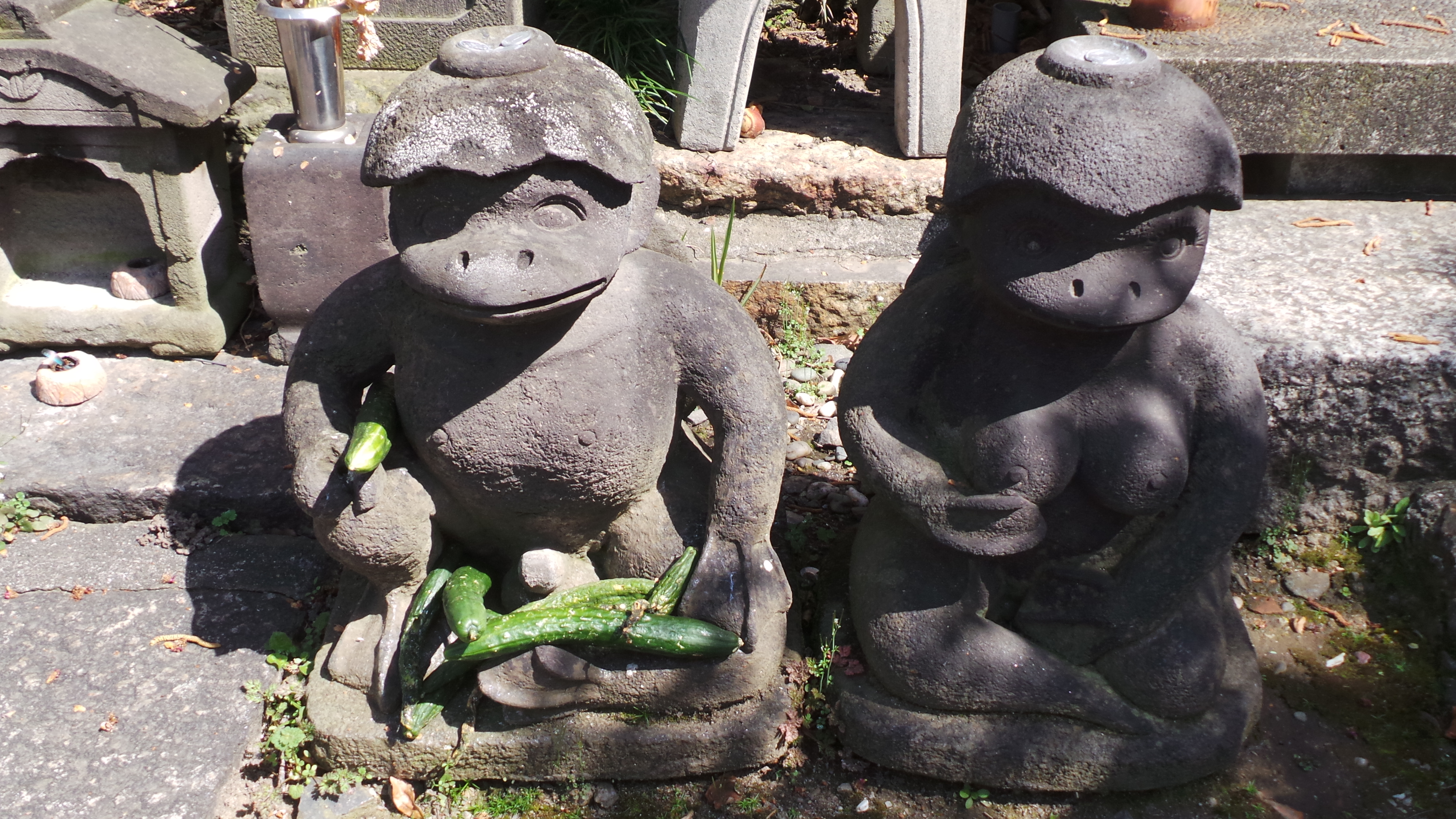
Within the grounds of Sogenji Temple sit a pair of perfectly preserved kappa. Child of the river and an imaginary animal said to help local people with float control, or so the confusing sign states. It is said that a kappa has a bowl on its head, always full to the brim with water. If the bowl becomes empty, then the kappa sadly dies. Apparently, eating cucumbers rehydrates the kappa, keeping it alive, which might explain the cucumbers. I bow at the kappa statues, hoping to see them bow back, thus spilling their bowls and killing them in the process, but nothing happens. Just a statue covered in cucumber, staring blankly at me. A man cutting the lawn tells me that there are limbs from an actual kappa inside the temple; however, I am not allowed to see them, and am given no explanation as to why not. It makes me wonder why he even mentioned it in the first place. Regardless, I leave the temple with a free cucumber under each arm.

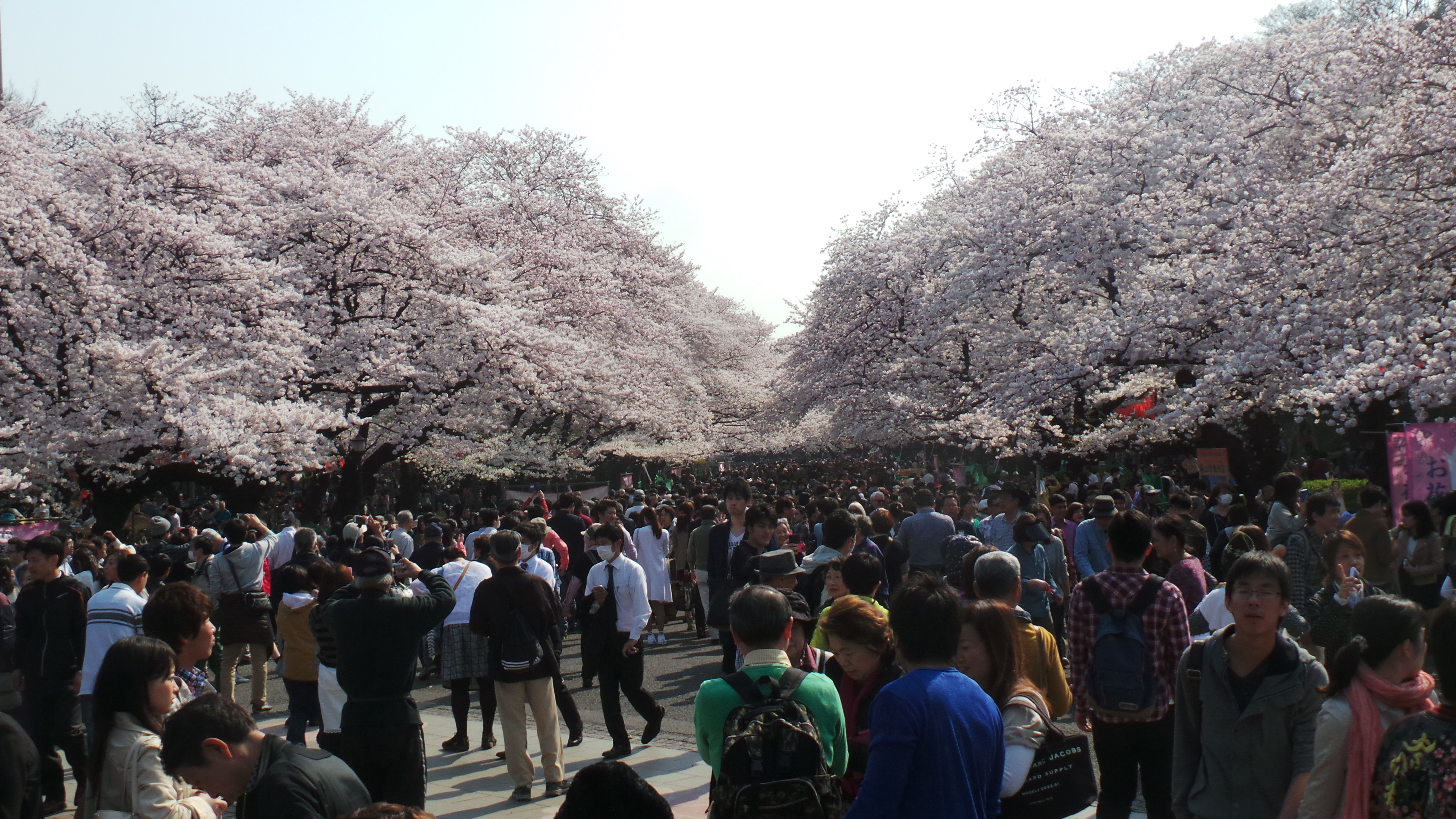
I turn back to cherry blossom viewing once more and head to the overly crowded Ueno Park.

uenosakura

The park has one of the best spots to view flowers in Tokyo, with endless rows of blossoming trees spreading from the middle of the park all the way to the Fountain of Frog. There isn’t much else to do here though; I have seen flowers already and am perhaps losing interest slightly. I instead wander away from the park, in search of something interesting.

Eventually, I stumble into Toeizan Kan’ei-ji Endon-in, a temple that features many graves of famous perished people, including that of a priest named Ryoozenji. The priest had a revelation in a dream, and upon waking, he invented a powerful medicine named Kintaien. This medicine cured every illness in the world, and he sold it at a drugstore that was owned by his nephew. All of the profits from this super drug, Ryoozenji spent on a library in the grounds of this very temple. I find it a little odd. If I had invented a drug that cured every illness in the world, I would have thought my profits would have stretched a lot further than a simple library. Still, the story of Ryoozenji isn’t the strangest thing at Toeizan Kan’ei-ji Endon-in.

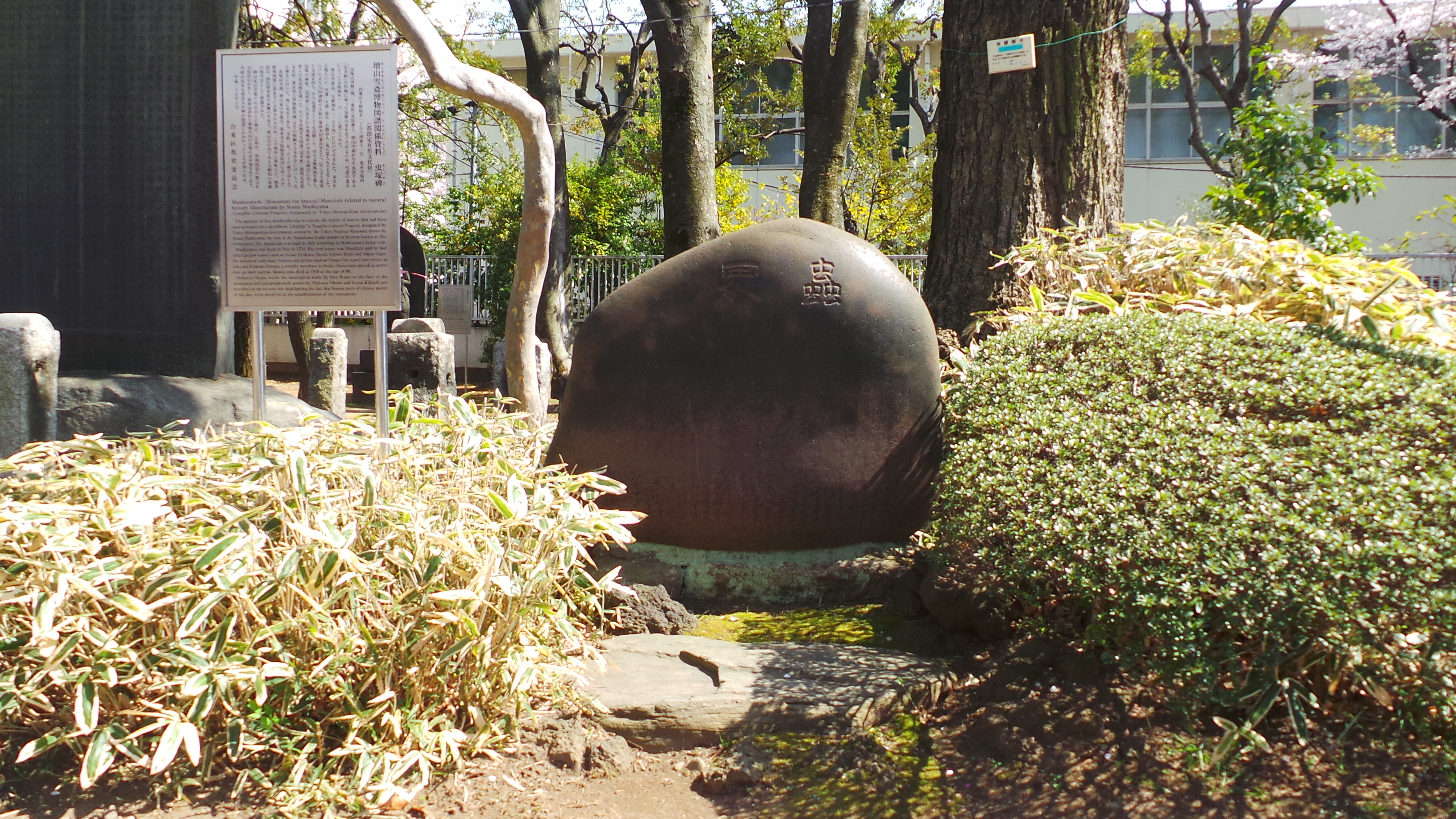
insectmon

Next to the copper bell sits a large stone surrounded by plants. I take a closer look and discover that this rock is a tomb that contains the souls of insects. Specifically, insects that were sketched by a lord in the Edo Period. This type of monument is known as a Mushizuka and was built to console the spirits of various insects that were both drawn and used for science.

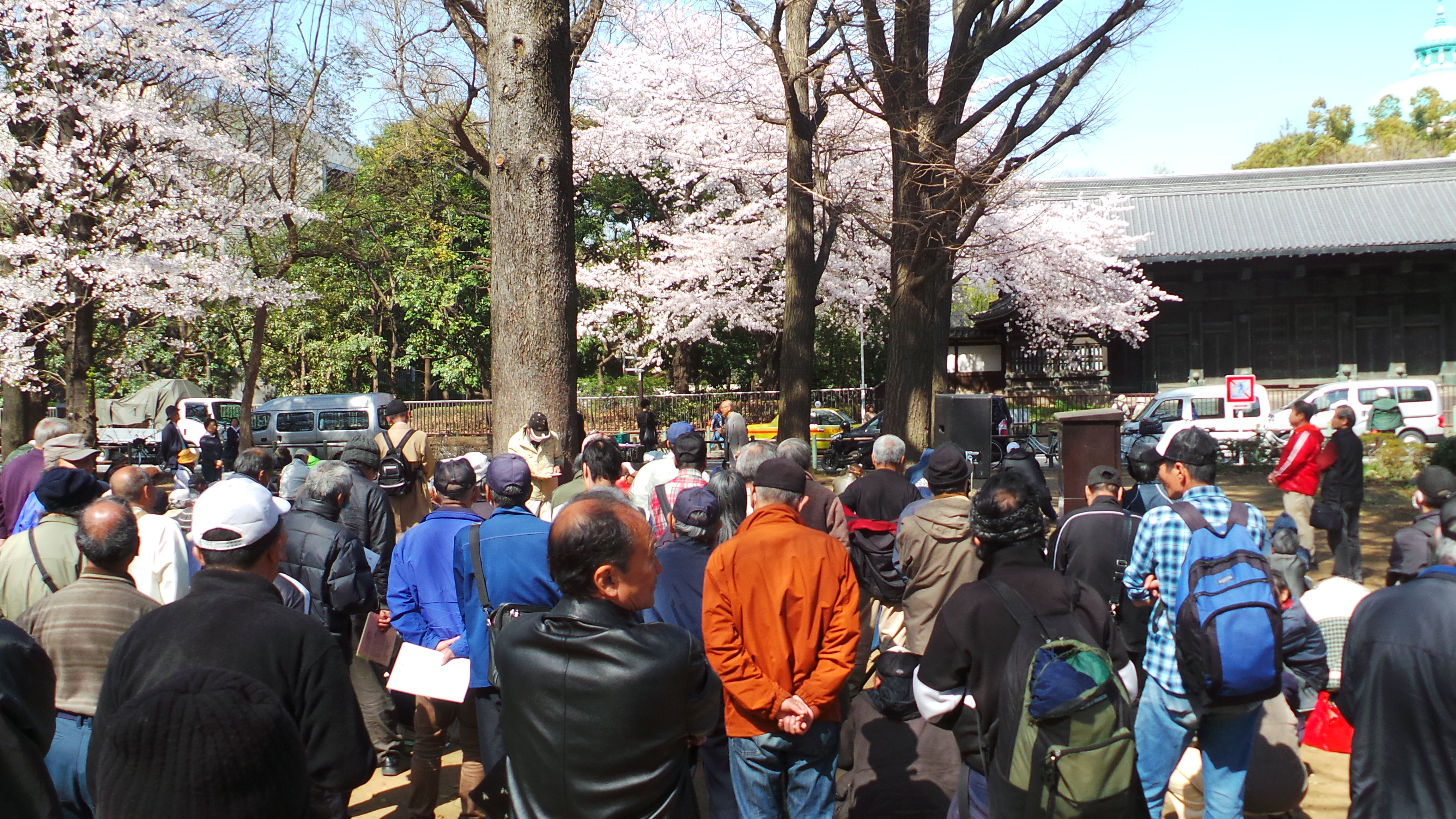
I leave the temple and return to Ueno Park. Most of the people in the park are gathered for hanami, but there is one area where the crowd seems to be oblivious to the beauty all around them, engaged in a protest of sorts. A man stands with a book and a microphone, shouting loudly and with anger, as fifty elderly Japanese men sit and watch in awe, nodding in agreement. I am not sure what the man is so angry about, perhaps the flowers, but regardless, he does his protest next to a sign that ironically says, “No protesting, no gathering, no advertising, and no politics.”

publicitystunt

I leave the park with a head full of cucumbers. As I wander down flower-covered roads, I turn onto Kappabashi Street, in the hope that I might meet an actual kappa. Obviously, nothing transpires, so my float control dilemma will have to wait until another day.