Bike to the Fuchsia

A cloudy yet hot day, with a cool breeze—a perfect setting for cycling. Today, I’m filled with motivation. My first stop is a small park along the way to yesterday’s failed destination, Dazaifu.

Inside this lovely park, three old ladies play bowls on a synthetic lawn while beautiful fuchsias wave in the wind near a natural stream. Japan currently recognises almost 110 species of fuchsia. These particular flowers boast the classic blend of purple and red hues.

As I arrive at Dazaifu around 3 p.m., the first thing catching my eye is a hill crowned with ruins. Parking my bicycle, I decide to climb it. From the hilltop, I’m greeted with a view of traditional Japanese houses in the distance. At the bottom of the hill lies Gakugyouin Temple.

shrine1[1]

I cycle around, admiring the greenery and scenery. In Tokyo, the greenery was often overshadowed by the buildings, but here, the mountains seem adorned with temples. A swarm of dragonflies gracefully drifts above an open allotment. This place exudes tranquillity, likely absent from any guidebooks. This is precisely the Japan I’ve yearned for since my arrival—a serene experience I hadn’t yet encountered.

Kanzeon-ji is a seventh-century temple, once the chief Buddhist temple in Kyushu. It houses a multitude of historical, artistic, and religious treasures. Beside it lies the ruins of the once-marvellous seven-story high pagoda.

kanzotemple[1]

Dazaifu is starting to remind me a lot of Kyoto. In eight days, I’ll be heading to Kyoto for one week. Then, I have two weeks without plans before I head back to Tokyo. The thought has crossed my mind to cycle back to Tokyo from Kyoto, stopping off at interesting places along the way. The two cities are only 367 kilometres apart.

The sign next to the temple mentions that the pagoda was restored in 741 A.D. at a scale of 1/10. Conveniently, that’s available to see outside the Dazaifu City Fureai Cultural Hall. That’s my next stop.

pagado[1]

I enter the cultural hall, and the woman at the desk seems startled by my presence. Politely, I ask if I can look around, and she agrees—it’s also free. Inside, there are various objects encased in glass, mostly old roof tiles. After a brief tour of the building, I take my leave.

Next, I cycle to Komyoten-ji Garden to see the Government Ruins—the remnants of the medieval Dazaifu Administrative Buildings. They rest within a vast public park at the foot of Mount Ono. As I arrive, I notice some boys playing football, using jumpers for goalposts. The goalkeeper rushes forward, expertly dribbling the ball past six players before scoring an excellent goal. Applause erupts from everyone watching.

govruins[1]

All the children in Dazaifu say ‘Hello’ to me. Surprisingly, there’s a distinct lack of tourists for such a historic place. Maybe I’m the first Westerner they’ve ever seen. With a wry smile, I reply to them, ‘Konnichiwa.’

As I cycle by, insects chirp loudly near one of the men employed to direct traffic. However, there’s no traffic on this road; I don’t sense a car has come this way for hours. He smiles warmly at me, signalling with a wave of his hand and a deep nod for me to continue.

As I pass Kaidan-in Temple, I see a sign for an Exhibition Hall. Carnival Cutouts wait for me outside. Inside, there’s no one present—no tourists, no staff members, no one to take my money. It’s just more objects enclosed in glass. A sign prohibits photography, but I snap a cheeky shot; no one will ever know.

pagodo2[1]

My final stop in Dazaifu is the Kyushu National Museum, seemingly tucked away in the woods. I leave my bike; I really should lock it up, but I don’t bother. There are more temples around here too.

A sign simply saying ‘Museum’ points up a mountain path. I follow the path for a good ten minutes before encountering a new sign, indicating that the museum is 2.1 kilometres away. Quite odd. I retrace my steps to my bicycle and head off in the new direction.

museumsign[1]

I cycle up into the mountain and reach the museum car park; a sign indicates ‘last entry 4:30 p.m., exhibitions open until five.’ Glancing at my watch, it reads 4:28 p.m. Swiftly, I park my bicycle in one of the bays intended for cars and start running up the many steps to the museum.

A man with a red lightsaber appears out of nowhere. He insists that I must cycle all the way to the top and park my bike in the designated parking area. I protest, saying, “But the museum closes in two minutes, and I came all the way from Hakata!”

He makes a phone call and speaks in Japanese for a few minutes. Afterward, he tells me they can still let me in. Lucky me. As I make the final approach to the Kyushu National Museum, its sheer size almost knocks me off my bike.

kyushunationalmuseum[1]

Opened in 2005, it stands as the first new National Museum to open in Japan in over 108 years. It’s also the first to emphasise history over art and boasts an on-site conservation centre, the largest in Kyushu. The museum primarily focuses on prehistory to the Meiji era.

Once inside, I ride the escalator to the 4th floor and pay a ¥420 entry fee. The rooms are impeccably clean; the glass seems polished on the hour. The museum is enormous. Separate rooms display various collections of historic artwork or fossilised ruins. Photography isn’t allowed here—not even an opportunity for a quick shot; two staff members stand guard in every section. With just twenty-five minutes to look around, I leave dead on closing time.

After the museum, I cycle 18.2 kilometres back to the hostel. It takes me an hour, stopping once for a bottle of Pocari Sweat, and a second time to photograph this building:

chesterhouse[1]

At the hostel, I realise that I’m starving. I decide to keep my stomach empty and write up some of the day’s events. At 8 p.m., I head back outside and run on my empty stomach, finding the red lights of traffic intersections providing nice little rest stops from time to time.

I run for almost fifty minutes, passing packed restaurants offering any choice of cuisine imaginable. Even though it’s been twenty-three hours since I had any food, nothing really draws me in; my appetite is oddly missing.

I see a random square:

randomsquare[1]

As I run, I notice some red lights in the sky that resemble a tower. Intrigued, I head in that direction. As I get closer, I spot planes floating by in the distance. A sinking feeling hits me; I might have circled back to Fukuoka Airport, recognising the tower used for Air Traffic Control. Oddly, I didn’t see any signs indicating the airport, though.

To my relief, my assumptions were false. I arrive at Hakata Pier, realising that the tower I saw was Hakata Port Tower. Calculating the distance, I note I ran for 5.7 kilometres to get here. Earlier today, I cycled at least forty kilometres. It’s surprising—I’ve never had so much energy.

hakatatower[1]

Fishermen line up along the pier, and finally, my appetite for food returns, specifically for fish. However, the only fish I find here are sandwiched between glass in another small, free aquarium. I scout out the area and stumble upon another temple—I seem to have come across quite a few of these today.

The pier looks picturesque at night, adorned with its myriad of lights. Entering the food court, I find that the only place with any appeal is a French restaurant. However, as I approach, the lights suddenly go out. Closed at nine o’clock sharp.

piershot[1]

I head back to Hakata and unexpectedly stumble upon the all too familiar Reisen Park. Spotting other runners doing laps around the park, I decide to join them for a while. When I finally locate the camera shop, I get my bearings.

The area around the park is bustling at night, with outdoor izakayas lining the streets. The enticing aroma of barbecued meats fills the air. I’m rather fond of the monument in the park, so I try to take a photograph, but unfortunately, it doesn’t turn out so well. Quickly, I make my way back to Hakata Station.

parkstatue[1]

I undo all the hard work of the day and opt for McDonald’s. It feels like I’m a death-row inmate having his last meal, as I’ve decided this will be my final indulgence in junk food for a while. It costs me ¥986, effectively for fish and chips.

As I walk back from the station to the hostel, it unexpectedly starts to rain—for a grand total of exactly five seconds. Umbrellas shoot up, and just as quickly, they come down. Since I don’t usually carry an umbrella on hot days, I get ever so slightly wet.

Back at the hostel, I find I still have an abundance of energy. It’s been a remarkably productive day. I spend a few more hours writing, followed by some reading. Then, I head to bed—stone cold sober.

Rice and Shime

I wake up at 11 a.m. Today, I’m heading to a place called Dazaifu, roughly fifteen kilometres away. Cycling on my one-speed bike in a straight line towards it, it should take me about an hour. Last night, the girl I met suggested I visit there—a kind suggestion.

As I set out, I discover a Domino’s Pizza just five minutes away from the hostel on the same road. I haven’t had one since arriving here—fifty days in Japan, only four pizzas so far. Tomorrow, it’ll probably become five.

A bit further along the road, near the Mikasagawa River, the skyscrapers start to disappear, and the sight of rice growing underwater becomes commonplace. Paddy fields full of semi-aquatic rice—it’s a picturesque sight, deserving a photograph.

rice[1]

Amidst the distraction of the rice fields, I suddenly realise that I am completely lost. In typical Fukuoka fashion, I see no maps, and signs pointing to Dazaifu have ceased to appear. Eventually, after cycling for about an hour, I find myself somehow at the base of a mountain.

For about ten minutes, I cycle without seeing another pedestrian. Eventually, a sign for a place called Shime catches my eye. My brain pauses for a second before a pun crashes into my consciousness. I decide to head there if only to make use of the pun: Rice and Shime.

shime[1]

It turns out Shime is up a hill—likely the same mountain I spotted earlier. I haven’t done much uphill cycling since Beppu, so my knees aren’t quite prepared for it. The footpath leading into Shime is in a state of disarray. Eventually, the incline transforms into a decline, and I find myself in a free fall into Shime. The wind is refreshingly cool on what is otherwise an alarmingly hot day.

overgrowth[1]

If you thought my post about Nishioita Station was exciting, wait until you hear about what Shime has to offer. Low-flying planes drift over and hang gracefully in the sky. At least I can follow the planes and track back to Fukuoka Airport; I know this isn’t far from Hakata, where I am staying.

I cycle around Shime, searching for anything of interest, but find nothing. Wikipedia confirmed it: ‘Although the town still has a railway station, the line is no longer used.’ Seems there’s no escaping Shime. Just as I decide to leave, I finally spot something noteworthy: a chicken wandering around in some mud.

torisan[1]

“Koke-kokko,” says the chicken in Japanese.
“Cluck-cluck,” I correct in English.

As I leave Shime, I find myself on the urban expressway, where all of the signs point to unfamiliar place names. I give in and revert to my plan of following the planes, soon arriving at the not very well-signed Fukuoka Airport.

fukuokaairport[1]

I see the same Chinook I saw yesterday, just landed. How very odd—I haven’t seen a Chinook in over fifteen years, and yet this week, I’ve seen the same one twice.

After cycling for a total of three hours, I arrive back at the hostel and indulge in a Seven Eleven lunch: a bottle of Pocari Sweat, a fruit salad, and, as usual, egg sandwiches.

After lunch, I do my laundry. In the Coin Laundry waiting area, there’s a rather odd set of photographs. I have no idea what they are showing. Alongside the images are some Japanese notices.

laundrycops[1]

I translate the notices back at the hostel. They read, ‘To prevent theft: if you notice any suspicious individuals, please contact the barnyard alternating Hakata police station if it was a robbery.’ There are also references to a theft in February, and still images captured by the 24-hour CCTV camera showing the criminal’s face. Named and shamed in a Coin Laundry.

After doing laundry and spending some time on Skype, I head to Hakata Station. Instead of taking the lift, I monotonously explore each of the ten floors. Hakata Station is a massive shopping centre with all sorts of shops, including the biggest bookstore I have ever seen.

There’s a record shop selling rare Japanese versions of classic albums. Perhaps there’s a profit to be made in reselling, but I don’t have the patience for that. I check for ‘Com Lag,’ but it’s the only Radiohead album they don’t have. The record shop also dedicates three entire aisles to the music of everyone’s favourite J-pop idols, AKB48. Crazy.

neonnight[1]

On the roof of the train station, I sit for a few hours, finishing off 159 pages of a Murakami novel. Night quietly sweeps in. The view at night is okay, but devoid of any stars. I ponder for a moment, questioning reality.

The Murakami book somewhat inspires me to make some changes in my life, specifically to start running more often.

On the tenth floor of Hakata Station, a Spanish restaurant.

seafoodpaella[1]

Paella and Rioja happen.

I jog back to the hostel, finding the late hours have already wrapped the city in silence, a stark contrast to the bustling streets earlier. Passing by the second Christmas tree I’ve seen since arriving in Japan, I can’t help but wonder why it’s there; it does seem a little early for such decorations.

christmastree[1]

The reflection of Lawson blue bounces off the glass beyond.

Drinking Bananas, Las Vegas, Going to Hell, Bananas, Drinking

Outside it is 32°C with 0% precipitation. The weather here goes from one extreme to another. The morning fog is long gone. I take a bike to the supermarket to buy a late breakfast. I buy egg sandwiches, yoghurt, a fruit drink made from real bananas, and some grapes. A normal size plastic container of grapes costs ¥1298. I opt for a small box costing me ¥198. it contains 11 grapes.

After breakfast I cycle along the coastline. I see a bright red building called, ‘Las Vegas’, so I decide to check it out. I discover why everywhere in Beppu is deserted. Everyone is here at Las Vegas, the place is packed. The noise of metal balls and the stench of cigarette smoke pours out of the door. Las Vegas is a nine story pachinko parlour. Pachinko is a recreational arcade game where players pay for balls, then fire them through a vertical pinball machine with no flippers. The balls bounce off pins and have a chance of activating in-game prizes that produce more balls.

VEGAS[1]

Gambling in Japan is illegal; although there are controversial plans to legalise it ready for the Tokyo 2020 Summer Olympics. At a pachinko parlour, players can ‘cash in’ their balls for novelty prizes. These prizes can then be taken off the premises and to a nearby ‘exchange centre’, where they are sold to the buyer for cash. The exchange centre then sells the prizes back to the pachinko parlour. This is a loophole in the law that the police know about but turn a blind eye to. Very strange. Beppu has more pachinko machines than people.

Leaving Las Vegas I see a sign for Kannawa, the area where six of the eight Hell themed hot springs are located. Having only visited Crocodile Hell, I decide to take the thirty minute uphill bicycle ride, instantly regretting it the moment my foot hits the pedal. At Kannawa I find a sign that says, “Put your good memories of Kannawa into a haiku. The selection is held four times a year; on each season, spring, summer, autumn and winter. A stone monument will be erected for the very best haiku of the year.” I scribble down a haiku and place it into the box:

Steam, one with the clouds,
my mind, drifts like the stream,
into the ocean.

I head to Kamado Jigoku, or Oven Hell. I pay my ¥400 entry fee. Inside, there is a statue of a great red demon standing on an enormous cooking pot. A long time ago they would cook using the 100°C steam. This is what the statue represents.

ovenhell[1]

Also at Oven Hell there are many different stoves heating very old metal kettles. There is also a pond that, “Changes colour a couple of times a year.” There are loads of pools of bubbling mud. If you blow something that burns and smokes into the mud, it causes the amount of steam to intensify. This is demonstrated by a staff member with an unnecessary megaphone and a cigarette. After touring the many pools I am given the opportunity to eat an egg boiled in the steam of Oven Hell.

eggssteam[1]

After Oven Hell I head for Umi Jigoku, Sea Hell. An explosion from a volcano 1,200 years ago created a pond of boiling water. For some unexplained reason, the pond is cobalt blue. This place shouldn’t really be described as a Hell. The area is full of natural beauty. There are no gimmicks here. No eggs here. No crocodiles. Just wildlife and scenery.

Cobolt_blue[1]

Sea Hell is massive. In random ponds float tropical water lilies, bananas grow inside a building labelled, “Hell emitting gas use greenhouse,” and random waterfalls and hot springs are surrounded by nature. Inside the gift shop the air conditioning is so cold. I stay here pretending to look at tacky souvenirs, while I secretly cool off from the heat of a hot summer’s day.

Bananas[1]

I decide to save the other five Hells for a rainy day. I quite enjoyed cycling here, but I enjoy the downhill cycling a lot more. On the way back to the hostel I see a sign for Beppu City Traditional Bamboo Crafts Centre. I take what I think is the correct road, but somehow end up at a baseball stadium. There are people outside hitting drums, and baseball players in full kit chanting. A very interesting warm up exercise indeed. I don’t find the museum.

Back at the hostel, Yojiro is on reception, meaning the music is good. ‘Round Here’ by Counting Crows blasts from the stereo. I work out that I have cycled 23.2 kilometres today. After a few hours relaxing and talking to other guests at the hostel, I head out to do my laundry. While I wait I buy a can of Suntory whisky highball from Seven Eleven. The staff member asks me to put my hand in a box and pull out a token. I have no idea why. I speculate that it’s because I used exact change for once. My ticket doesn’t win me anything.

I switch my laundry from washer to dryer then walk around the middle of Beppu; on the way I count four random cats. The cats here look healthy and lurk around the backstreets of Beppu at night. The lampposts are once again playing the Beatles, ‘Lucy in the Sky with Diamonds’. Back at the launderette, someone has taken out my dry laundry and folded it neatly and placed it into a basket. Thanks!

Laundry[1]

I head back out to an international bar, the owner here was the person that recommended the festival in Oita a few days ago. I chat to random people, mostly students from the nearby Asia Pacific University. They are Japanese but speak very good English. It’s actually a pretty nice bar, although quite small; and it does get a little smoky after a while. In Japan it is still okay to smoke in buildings, much to my displeasure. At some point in the night Yojiro randomly shows up at the bar and buys me a drink. Thanks Yojiro!

asahitower[1]

The night washes over me and eventually it is time to go. I leave the bar at around 3 a.m. In the distance Beppu Tower is illuminated with signs advertising Asahi. More beer is the last thing I need right now. Back at the hostel a Spanish guy is preparing to watch Brazil thrash Germany in the World Cup. I consider staying to watch the match, but instead I choose sleep.

Twelve Hundred Monkeys

Super Typhoon Neoguri is planning to slam into Kyushu in two days time. Bringing with it rain, wind, high tides, and destruction. Looking at the predicted trajectory, the eye of the storm is where I was yesterday, Nishioita Station. All of last night I was woken up by heavy thunder and flashes of lightning all around me. Since 4 p.m. yesterday afternoon it hasn’t stopped raining. Water on the pavement outside pours downhill toward the ocean. Typhoon ‘Wild Raccoon’ is coming.

eyeofthestorm[1]

On a much lighter note, I spend about half an hour drying my shoes with a hairdryer; before heading to the station. My shoes are still soaking wet. What a waste of time. At Beppu Station the rain suddenly stops and a little bit of sun comes out. I decide that I should probably go to the Monkey Park and Forest Therapy Road, while I still have the chance.

As I wait for my bus a 68-year-old Japanese woman approaches me and asks me the usual questions. “Where are you from?” “What is your age?” “Do you know Elizabeth, the Queen?” She is quite polite about it, however, and I am somewhat relieved when my bus finally arrives. The 68-year-old woman thanks me for that chat, and apologises for bothering me. I reply with my favourite Japanese phrase, “Tondemo gozaimasen.” It is a super polite expression meaning ‘no problem’. She is surprised to hear me say it.

The entrance to Mount Takasaki Monkey Land National Park is at the bottom of a mountain. The mountain is 628 metres high, and the monkeys are about halfway up. I pay my ¥510 entrance fee and begin to walk the rather easy path. There was an option to pay to take a small train to the top, but I would rather walk, immersing myself in the atmosphere of the woods.

monkey_steps[1]

I get to some stairs and there are wild monkeys wandering around all over the place. A sign tells me, “If you look into their eyes, they will perceive this as a threat and they will attack.” Not looking into their eyes is actually harder than you might think. At the Monkey Park there are Japanese monkeys everywhere. Just over 1,200 monkeys, to be almost exact. They wander around by my feet, pretending not to notice me, or just not caring about me being here.

There is a staff member speaking Japanese on a microphone. Randomly all of the monkeys in every direction scream, this occurs maybe every minute or so. The sound is deafening. It turns out I have arrived just before feeding time, and the monkeys are screaming because they know this and want their food.

feeding[1]

A crate of food is brought out and the screams get even more intense. From every direction monkeys run toward the food. The member of staff takes the makeshift wheelbarrow carrying the crate of food, and runs away from all the monkeys. They chase him, jumping into the crate to grab food before jumping out again, satisfied.

The monkeys find their own little private spots to enjoy their food. One sits down right next to my foot and munches on a miscellaneous vegetable; another monkey swings back and forth on a swing. I wander around taking photographs of monkeys before heading back down the mountain. I was hoping to go to Forest Therapy Road, but it turns out that the path up the mountain was the magical healing forest.

swing[1]

The next bus to Beppu is in forty-five minutes time. Not as lucky with the bus as I was yesterday. Through the mask of clouds in the distance I can make out Beppu Tower. It doesn’t look too far away so I begin to walk. Some 4.3 kilometres later and I arrive at the supermarket near my hostel. Inside, I head to a restaurant and have a delicious lunch of raw tuna and fried salmon on a stick.

Back at the hostel I watch the television show that aired on Fuji TV on Saturday, Moshimo Tours. I am on screen during the very opening scene of the show. I also appear in the background at the very end. I was going to share the link but it has already been removed from YouTube. Instead, here is another poor quality photograph of my computer monitor. I promise the next photograph will be better.

moshimoto[1]

After watching the show, I take a bicycle and travel for a few hours with no real destination. It suddenly becomes really foggy in Beppu. I start to head back to the hostel, just as the first few drops of rain begin to fall. I grab a snack (a cake) from Seven Eleven and retire to the hostel computer to research typhoons.

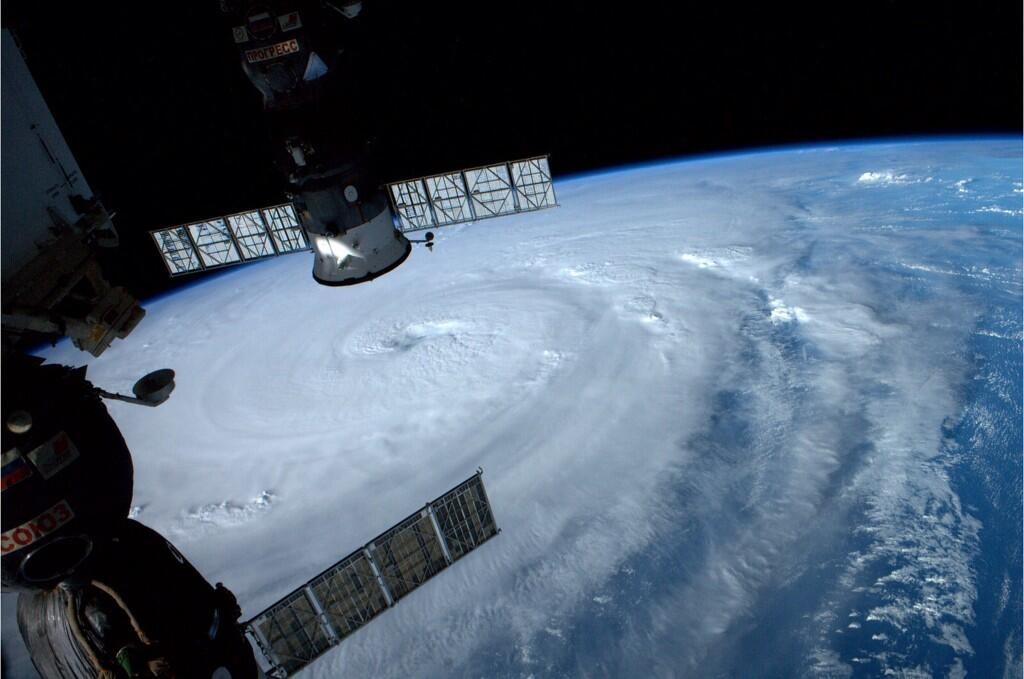
Reid Wiseman is an American astronaut living on the International Space Station. He took this photograph of Typhoon Neoguri. In a few hours it will hit the tiny island of Okinawa. Then a day after that it will come to Kyushu, the island I am on. If its course stays the same, it will pass directly through Beppu.

space

After a discussion with some of the locals, I’m undecided on whether to stay here in Beppu or take the train further north. Beppu has mountains behind it, which might act as a shield against the onslaught of wind. The exact path of the typhoon can easily change. Considering its size, most of Japan is likely to face the worst of it anyway, so attempting to escape it might have the opposite effect.

I think about the people in Okinawa. I also think about the monkeys on Mount Takasaki. Probably two of the worst places you can be during a Super Typhoon; on a tiny island, and halfway up a mountain.

Mostly Calmness

I am woken at 4:47 a.m. to an alarm coming from the direction of the ocean. I look out of the window, it is raining hard. I dart out of bed to check a computer. No active tsunami warnings. I have a look outside, the alarm is constant, the rain is heavy, but everywhere else is quiet. No one rushing around. No lights on in houses. No one else in the hostel awake.

I calm down from my initial panic and decide to take advantage of the onsen (hot spring) in the hostel; open 24 hours a day except during cleaning time. Thanks to the volcanic activity in Japan, there are lots of onsens all across the country. Onsen water is believed to have healing powers derived from its mineral content. I get out of the onsen and the alarms finally stop. I go for a nap.

hostelonsen[1]

In the hostel lobby I ask a few people what the sirens were all about this morning. Only one other person heard them. “If it was a tsunami warning you would know about it. Those things go on for ages,” he says. I tell him this morning’s sirens went on for at least an hour. He repeats, “Nah, if it was a tsunami warning you would know about it.” Not very helpful at all.

My original plan for today was a two hour bus trip to the top of Mount Aso; Japan’s most active volcano. It turns out though that due to heavy fog, the gate is closed and I wouldn’t have been able to ascend the crater. I decide to skip the volcano and head to Beppu Station. Outside the station there is even an onsen for hands. Beppu is part of Oita Prefecture. Today I take a train to Oita, the capital of the prefecture.

handbath[1]

¥280 later and I get off the train and go inside an indoor shopping arcade to shelter from the rain. This huge arcade is packed full of people. There are so many restaurants, so much choice. Usually I spend a long time wandering around trying to find a decent looking restaurant, but here there are plenty I would eat at. I wander down Smile Smile Street, with its restaurants sandwiched between wedding boutiques and pachinko parlours. There is also a random boat in the middle of Smile Smile Street.

As I wander back through the arcade in search of breakfast, I am drawn to a restaurant called ‘Vegetbar’. It is not that the restaurant is vegetarian that draws me to it, but the incredible menu. I have developed something of a sweet tooth since arriving in Japan, yesterday I discovered that supermarkets sell strawberry and cream sandwiches. I notice a big sign in the window of Vegetbar that says, “Pancakes Meet Vegetables.” I go inside and order them not really knowing what to expect.

vegetablemeetpancake[1]

Waiting for my food, if the anticipation doesn’t kill me then the food just might. A plate comes out and I like what I see. Vegetables have been blended up and added to the pancake mix. The green one was my favourite. Served with the pancakes is raspberry sorbet, whipped cream, and a pile of fresh fruit. After I while I forget that I am eating vegetable pancakes. Meal and a drink, ¥1280.

As I head out of the arcade, I watch a Japanese woman running to give another woman her change. In Japan it is customary not to leave a tip. The service is almost always exceptional; the service cost included in the price. Boarding the train, I realise that today is the first time since Sunday that I have really seen lots of people in one place. I also notice how good my skin feels; the healing power of onsen having the promised effect.

beppuarcade[1]

Back at Beppu the rain has stopped. I decide to see what the indoor shopping arcade here looks like during the peak lunch time rush. As you can see in the photograph above, the arcade is full of closed shutter doors and an absence of people. The most interesting thing about Beppu indoor shopping arcade is probably the Boss Coffee vending machine at the entrance. “The boss of them all since 1992.”

I head back to Beppu Station and hop on a bus bound for Kintetsu Beppu Ropeway. The Ropeway starts at 503 metres above sea level and is a cable car that takes you to the top of Mount Tsurumi, 1,300 metres high with excellent views. On a clear day you can see the islands of Shikoku. The bus twists and turns as it climbs up the mountain and eventually arrives at the Ropeway some twenty minutes later.

closedropeway[1]

Closed. The driver of the bus apologises and tells me where to stand for the return bus. I try to pay him the ¥420 for the fare but he refuses to take any money. Even the bus drivers are nice in Japan. I have to wait 25 minutes for a bus back to Beppu. The vending machine outside the closed Ropeway sells ‘Boss Ice Creamy Latte’ in a big can for ¥130. Every cloud. Speaking of clouds, it starts to rain again.

While I sit in the rain waiting for my bus, the cafe across the road is blaring out Japanese pop music. A few cars drive up to the entrance of the Ropeway, the passengers peek at the ‘closed’ sign before turning around and leaving. A wasted journey if not for the view. I take a bus back down the mountain and take in the beautiful scenery.

ropeway[1]

At the hostel I am surprised to see that working on the reception desk is my old friend Yojiro; the Japanese guy I met a few times in Tokyo. He arrived back here late yesterday evening and is having a party tonight at the Hot Bepper bar. I still haven’t been to this bar yet; it only opens on Friday and Saturday nights. He gives me a token for one free drink. I think about boiled eggs and wonder how real this ‘free’ drink will actually be.

I eat supermarket bought prawn tempura for dinner. Prawn on the Fourth of July. Brilliant. It gets to 6 p.m. and feeling that I’ve already done enough on what has been a very long day, I now have to get ready for a party.