Let’s Go to Space, Brother!

In 1994, Rokuon-ji Temple was designated as a World Cultural Heritage Site. The Golden Pavilion is adorned with gold foil on lacquer, making it a spectacular and breathtaking structure. Gleaming brightly in gold, it peacefully rests on an island in the middle of a lake, encircled by stunning Zen gardens. Even the vending machines here offer disposable cameras, beckoning visitors to capture the Golden Pavilion’s magnificence.

golden[1]

The entry fee is just ¥400, and the ticket, crafted from beautiful paper and adorned with expert calligraphy, adds to the experience. The path meanders through the belfry, past the abbot’s chamber, the pond, the Golden Pavilion, Galaxy Spring, and the Sekka-tei Tea House, all while being enveloped by the mysterious mountains in the background. It’s a wonderful route that takes me about twenty minutes at an unhurried pace. Along the way, small wooden shacks selling souvenirs entice tourists.

After visiting Rokuon-ji Temple, I catch a bus to Kyoto Station. From there, I walk back to Kawaramachi Station, passing by Kyoto Tower on the way, although I opt not to go inside. I’ve had my fill of 360-degree panoramic views this month; it’s enough to last me a lifetime.

kyototower[1]

As I walk away from Kyoto Tower, I notice some signs. One warns that bicycles parked on Kyoto’s streets will be removed, with a ¥2300 fine upon retrieval. Another indicates that Kyoto is a ‘no smoking’ city, imposing a ¥1000 fine on anyone caught smoking on the streets. A third sign highlights a ¥30,000 fine for littering. I appreciate Kyoto for these regulations, although the frequency of enforcing these fines remains uncertain. At times, it feels as if Japan exists within a vast panopticon.

I see a sign saying, ‘Now, Life is Living You.’ Beyond the sign lies the entrance to yet another temple: Higashi Honganji Temple. I cross over a moat of water filled with lily pads and approach this marvel. The temple also features a cleansing basin adorned with a water-breathing dragon—seems to be a common sight in Kyoto.

HigashiHonganji[1]

The Goeido Hall stands as the second-largest wooden structure in Kyoto and ranks amongst the world’s largest wooden buildings. Its garden is recognised as a site of National Scenic Beauty. The temple follows the Shinran sect of Buddhism. In 1532, a Nichiren Buddhism sect felt that the Shinran sect was gaining too much influence, leading to the burning down of the temple.

As I continue my walk toward Downtown Kyoto, I recall seeing a sign on the train yesterday, advertising an art exhibition at the Museum of Kyoto. Conveniently, the museum is just a ten-minute walk from my hostel. On the way, I pass by a shop called ‘Eggs and Things,’ where a queue of at least thirty women stands outside, enduring the 33°C Kyoto heat, boiling, much like the eggs. I walk up four seemingly random steps, cross a road, and then descend another set of four random steps. Amidst this confusion, a perplexing sign catches my eye.

level_difference[1]

At the Museum of Kyoto, I attend the opening of the ‘Space Brothers’ exhibition, which will run from today until September 23rd. Men from the Koyama Astronomical Observatory are currently giving a one-off presentation. The presentation is entirely in Japanese, with a man talking and pointing at a projector with a red laser pen. Television crews are also present, with five large cameras and two microphones on sticks, capturing every image and every word.

Space Brothers is a Japanese manga narrating the tale of two brothers aspiring to become astronauts. This exhibition marks the first large-scale showcase of the author Chuya Koyama’s work. It features over two hundred pieces of original illustrations. Alongside the artwork, there’s a collection of replicas of space uniforms and models of rockets, all loaned from the Japan Aerospace Exploration Agency (JAXA).

astronaught[1]

There’s an audio guide in Japanese narrated by two voice actors from the anime series. Spread across two floors, the exhibition showcases videos of the moon landing, real satellites displayed in glass boxes, model rockets, a dedicated section about Apo the dog, and genuine meteorites. All this is available for the ticket price of ¥1000. Even the museum restaurant offers a space-themed menu. Additionally, Pocari Sweat has a stand here where you can write a message to be sent to the moon during their upcoming interstellar flight next year.

As I make my way through the gift shop, I find myself tempted to purchase something. Normally, I wouldn’t bother, but this is space stuff. At a price of ¥1296, I buy ‘Space Bread’ and ‘Space Ice Cream’—foods that astronauts actually consume during missions to space or while floating about on the International Space Station. ‘In space, no one can hear you ice scream.’

spacefood[1]

I take my space snacks back to the hostel. The ice cream feels as light as polystyrene but surprisingly tastes delightful. It’s akin to chomping on soft vanilla ice cream-flavoured chalk that turns to powder with each bite. The texture is peculiar, yet it somehow retains the taste of ice cream. On the other hand, the bread tastes rather plain, like ordinary bread. Surprisingly, it still manages to maintain a fresh taste.

I sit on the roof terrace with my book for a while until suddenly, sirens begin wailing all around—loads of them. Three fire engines, a police car, and an ambulance rush to a building on the same block as the hostel. The 20-storey building appears to have a fire on the twentieth floor. Firefighters swiftly ascend to the roof, and one courageous fireman descends from a rope, abseiling onto the balcony below.

firefight[1]

Twenty minutes later, the fire is extinguished, the sirens cease, and the vehicles depart. I linger on the roof a little while longer, engrossed in my book, ‘Dance Dance Dance.’ In the distance, the sky echoes with the rumbling of thunder, seemingly serving as an early warning for the impending rain. The precise moment the thunder halts, raindrops begin to fall. Deciding to set aside my book as I’m getting soaked, I grab a hostel umbrella and make my way for some food. Taking refuge in the arcade, I escape from the rain’s downpour. Through the speakers, a saxophone cover of ‘Yesterday’ by the Beatles fills the space.

I opt for Earth food: Kyoto-style Okonomiyaki. Often likened to a pancake or referred to as a Japanese-style pizza, Okonomiyaki is distinct from both. It’s made of batter, cabbage, Okonomiyaki sauce, and shavings of smoked bonito. To complete the dish, small flakes of aonori, a dried seaweed, are sprinkled over the top.

Okonomiyaki[1]

My table features a section in the middle with an iron griddle where the cooked ‘pizza’ is promptly placed. Due to the heat, the fish shavings seem to come alive, moving around on the dish. I squeeze some mayonnaise over the top. While the food tastes good, I’m not particularly fond of the sauce. Nonetheless, the rest of the meal is fantastic. I decide to add a sprinkle of chili powder to give it an extra kick.

Some places serve Okonomiyaki with raw ingredients, allowing you to cook it yourself. It’s a ‘what you like’ dish, where you can request any topping or filling you desire. Not wanting to navigate the ordering process in Japanese, I simply pointed at the word ‘vegetarian’ on the menu. The meal, along with a glass of whisky, totals ¥1010.

I head back to the hostel and, as usual, wrap up the night at the bar.

Prelude to a Quiche

The Kaleidoscope Museum is a unique establishment with a fascinating twist. It proudly exhibits fifty distinct kaleidoscopes, chosen from an expanding collection of approximately 150 pieces. Among these are exceptionally valuable kaleidoscopes crafted by renowned artists from various corners of the world. I discovered that the term ‘kaleidoscope’ originates from Greek roots: ‘kalos‘ meaning ‘beautiful’, ‘eidos‘ meaning ‘form’, and ‘scopes‘ meaning ‘to look at’—a beautiful amalgamation that translates to ‘to look at beautiful forms’.

At the museum, visitors can freely pick up and use kaleidoscopes, ranging from finely crafted ones to those ingeniously made from plastic drink bottles. Among the assortment, my favourite piece doubles as a music box, serenading me with a tune while the images twirl before my eyes. Additionally, there’s a quaint shop within the premises offering kaleidoscopes, kits, and keychains. It’s a fantastic way to kick-start the day. Unfortunately, photography isn’t permitted, and I find myself constantly shadowed by a staff member. However, I manage to sneak a photograph of the inside of a kaleidoscope when she isn’t looking.

kaleide[1]

After leaving the museum, I walk for fifteen minutes, crossing the river to reach Yoboji Temple. I feel it’s only fair that my first temple is a Nichiren Buddhist one—the school of Buddhism I am familiar with. The Temple was built in 1548. It’s actually a rebuilding of two temples that previously occupied the area but had been burnt to the ground two years before.

In 1536, the warrior-monks of Mount Hiei attacked the city, burning down all 21 of the Nichiren Buddhist head temples in Kyoto, along with the entire southern half of the city and a substantial portion of the northern half. This event is known as the Tenmon Persecution. The temple itself is rather quaint.

Yoboji_Temple[1]

Not far from Yoboji Temple, I stumble upon a Paper and Printing Item Shop. The gallery is tiny, and a woman sits at the desk, watching my every move. I’m tempted to pull out my camera and capture a photograph of one of the ornamental fans or origami animals, but to avoid any hassle, I decide against it.

I choose to visit a shrine next. The road I stroll along is lined with various temples, shrines, plenty of walking routes, maps, and bus stops. You can literally shrine-hop by taking the bus if you’re feeling lazy. However, I prefer to walk, and I’m not inclined to see more than one temple and shrine a day. It can be a bit overwhelming to take in too much at once. I ascend about fifty concrete steps to reach Awata-jinga Shrine. Before entering, I participate in the purification ritual.

dragonfountain[1]

This tradition of cleansing is observed before entering a sacred space. The basin here features a water-breathing dragon, which also serves as the source of water for the ritual. I must admit, this is one of the most exquisite purification basins I’ve encountered at a Shinto shrine. I start by washing my left hand, then my right hand, and finally, my mouth.

Awata-jinga Shrine dates back to 794 AD and specialises in preventing illness. However, inside the shrine, someone is noisily using an electric saw, which disrupts the serenity of the moment for me. Nevertheless, the shrine itself is visually stunning. I descend the fifty or so steps and continue along a road lined with traditional Japanese-style houses.

Awata[1]

Downtown Kyoto bustles with tourists, drawn here to explore the shrines, temples, museums, galleries, restaurants, and the renowned souvenir shops the city offers. I spot three cat cafes and a lone dog cafe among the bustling streets. Purchasing a can of cold coffee from a vending machine, I encounter one of those machines that promises a prize if it lands on triple sevens. Miraculously, it does! I win any drink of my choice, and naturally, I opt for a second can of Coffee Boss Rainbow Blend.

It’s mid-afternoon, and feeling a bit peckish, I opt for a light bite to eat. Given the scorching 35°C temperature, I choose to stay in the cool shade of the shopping arcade. A sign catches my eye, indicating a vegan and organic cafe nearby. As I step inside, I’m greeted with a chorus of “Hello” from the other patrons. Taking a seat, I order a set meal featuring a vegan quiche.

vegan1[1]

My food promptly arrives—a serving of vegan quiche, accompanied by a delightful salad dressed in a delicious vinaigrette, a ramekin of squash, chickpeas, and peppers. Alongside it comes a bowl of leek, cabbage, and mushroom soup, complemented by glasses of cold water and cold green tea. The entire meal comes to ¥918. If I weren’t already full, I’d happily indulge in another slice of quiche—it was that delicious.

Outside the cafe, a guy on a bicycle whizzes past, blaring an air horn from the spot where a bell would typically be. The shopping arcade strictly prohibits vehicles, including bicycles. A bit further along, I encounter a television crew filming people and asking them why they enjoy eating crêpes. While tempted to participate, I realise I’m not particularly fond of eating crêpes.

crepefilming[1]

Back at the hostel, I settle on the roof with a can of Suntory whisky highball, delving into my fifth Haruki Murakami novel since arriving here sixty-two days ago. The air has cooled, and the refreshing breeze is a welcome relief. Japan has been grappling with a severe heatwave for the past week, and it seems it will persist right through until the weekend.

I read until 8 p.m. before heading to a nearby music shop for a free gig. A stage has been set up next to the ukuleles. The band performing is a two-piece folk band. Their sound is somewhat average. Nonetheless, it’s pleasant to experience some live music, even though the venue is rather unusual.

My night winds down at the hostel bar, talking to random people with their random ideas.

Cicadas of the Lost Park

Today, I wake up at 8 a.m. I go outside and take a short wander. It seems that Kyoto is still sleeping. I return to the hostel to steal a few more hours for myself. By 11 a.m., Kyoto still seems to be asleep; shops are closed, and nothing much is happening. I decide to do some sightseeing. I am fortunate to be staying in Downtown Kyoto; many places are within walking distance, which is very convenient as I am tired of trains. I walk from the hostel in a straight line along the same road for ten minutes, eventually arriving at Kyoto Imperial Palace Park.

The gardens here are quite impressive, featuring Omiya Palace, Sento Palace, multiple shrines, a peach grove, and, of course, the Kyoto Imperial Palace. The peach grove is odd; the peaches are within arm’s reach, so I could steal a few if I wanted to, but I don’t. The most appealing shrine is the Isukushima Shrine; it sits quietly over a lake.

giongardens[1]

There are signs in some areas of Kyoto Imperial Palace Park that say, “Not to be visited by tourists.” There are little to no other tourists here anyway; perhaps the signs have driven them all away. However, there are hordes of homeless people. Some paths are overgrown, others forgotten many years ago. I see one gardener delicately pollarding the branches of a tree. Just one gardener tending to a park 1.3 kilometres in length.

As for the Kyoto Imperial Palace, it lies behind a moat and a tall wall. The water in the moat has dried up, and the wall is too high to see the Palace beyond. Even if the wall weren’t there, it would be completely shrouded by trees anyway. I quite literally can’t see the Palace for the trees.

kyotopalace[1]

There is one thing I do like, and that’s the sound made by the cicadas. These little insects just love to sing, and the trees here are full of them. And there are a lot of trees; ten thousand trees in the Palace Park alone. The noise these insects make sounds alien to me, perhaps robotic, but calming. I spend a full hour wandering the park.

It is another hot day. Well over 30°C, as usual. A woman outside sprays water from a hosepipe around the path leading into her shop. I believe this is to keep the dust down. I cross the Kamo River; much like the Palace moat, it is dried up from the heat, the fish left behind for the birds. As I walk through the shopping arcade, I realise that there are loads of crêperies here; at least eight or nine shops selling pancakes. A sign in one of the pancake shops attempts to forecast the weather:

signwarm[1]

Back at the hostel, I sit opposite a guy as he flips through a Lonely Planet guidebook. “Where are you going today?” he asks, half for the sake of conversation, half for ideas of places to visit. He waits for me to list off all of the same places as everyone else, but I don’t.
“I’m going to a Kaleidoscope Museum,” I tell him proudly, and his expression fills with puzzlement. He desperately flicks through his guidebook, presumably the ‘Kyoto’ section, but to no avail.
“Hmmph,” he utters, suggesting that if it isn’t in his guidebook, then it doesn’t exist.

I walk halfway across the city, only to find that the Kaleidoscope Museum of Kyoto is closed on a Monday. “I’ll be back,” I say to the locked door with a shake of my head.

Kaleidoscope[1]

One thing I like about Kyoto is that on street corners, there are nice little plaques in English offering insightful history about the area—a nice touch. Feeling a little hungry, I decide to swing by a local cafe at the organic market. I pay ¥940 for a soybean croquette, a cheese croquette, and a beer. The food and drink aren’t particularly photogenic, so I skip taking a photograph.

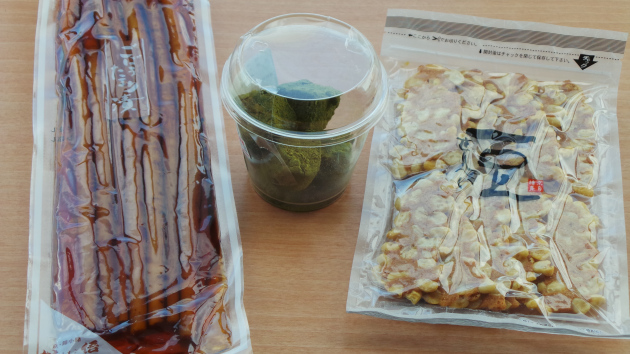
While I’m here at Nishiki Market, I decide to sample some of the local foods. With over a hundred shops and restaurants, they sell seasonal foods and Kyoto specialties like Japanese sweets, pickles, dried seafood, and sushi. I buy three different traditional Japanese snacks and take them back to the hostel.

snackssnack

On the left, I have Gobo Tamari Zuke, or pickled burdock root; marinated in sugar and soy sauce. I wish I had bought this in Okayama to go with the dandelion. In the middle, there’s some sort of matcha snack. It’s basically Turkish Delight coated in a fine green tea-flavoured powder, instead of the usual icing sugar. On the right, there’s a Japanese traditional cake with soybeans, said to have been made for approximately 150 years using the same traditional manufacturing method. According to the packaging, ‘One piece of one piece is the cracker which I baked carefully.’ The cake costs ¥400 and is my favourite of the three.

After trying my snacks and finishing my book, I head out for dinner.

I spot a gyoza restaurant, a food I am yet to try in Japan. Gyoza is a type of Japanese dumpling, usually filled with meat. This restaurant has an English menu outside, stating that one of the fillings they offer is shrimp. I order the shrimp gyoza along with a beer and a side of spiced cucumber. The cucumber dish arrives whilst I wait for my dumplings; the spices provide a good balance to what would normally be a dull snack. Three pieces of shrimp gyoza show up, although I was expecting at least five. After I finish my first three, a plate of ten fried dumplings is placed in front of me.

gyoza[1]

As I bite into the first of ten, I realise it is pork. The staff don’t speak English, but I manage to convey the message. My plate of pork gyoza is taken away, and I’m told it will take eight minutes for the shrimp. While I wait, I order a second beer. Eventually, I am handed a set of shrimp gyoza, albeit only five pieces instead of ten. Apparently, shrimp is twice as expensive as pork.

As I eat, I mishandle my chopsticks. One of the dumplings falls and lands in the saucer of soy sauce; the sauce splashes up and hits me in my left eye. It stings, and I spend the rest of my meal with tears rolling down one side of my face. After finishing my meal, I offer to pay for the wasted pork gyoza, unsure if it was my mistake or theirs. Admittedly, the restaurant is rather cheap. We compromise, and I pay a total of ¥1570 for eight pieces of shrimp gyoza and two pints of Asahi Beer.

I head back to the hostel’s bar and notice a guy reading ‘Women’ by Charles Bukowski. I share that I’m not a fan of Bukowski, only to find out that the guy is from Surrey. I end up spending the rest of the evening in the bar, discussing literature and politics.

Grandiose Encounters of the Third Class

I went without any Internet connection for a few days, so I couldn’t post anything. Here’s a summary of the last three days:

Friday – Fukuoka

Today, I met a German guy named Klaus. It’s his first day in Japan after spending a month in South Korea. He wants to stay here tomorrow night as well, but there are no available rooms in the hostel. I cancel my reservation for tomorrow night, and he takes my room. I wanted to start traveling early tomorrow anyway, as I have a fourteen-hour train journey to endure.

Klaus and I take a stroll around Hakata Station. I show him the sights, starting with the roof terrace. We then wander through the enormous indoor shopping complex, exploring various random gifts. I spot some excellent souvenir ideas. Later, we head for food—a classic dish of mixed vegetable and prawn tempura on rice, accompanied by a pint of Kirin Beer. Kirin isn’t my first choice for Japanese beer, but I don’t complain.

tenpura3[1]

Afterward, we head over to Tenjin Station because Klaus is really keen on seeing the giant cardboard train. I don’t mind showing him around as I have nothing else planned in Fukuoka. Klaus is quite funny, and his English is good, so I don’t have to speak slowly or anything. We enter the building where I thought the cardboard train was, but we can’t seem to find it. Unfortunately, I deleted the photograph, so I can’t prove to him that it was real. He starts doubting its existence altogether, and I begin to question it myself, still feeling a bit off-kilter from yesterday. We hesitate to ask anyone else about the train because it might sound absurd. “Excuse me, miss, could you point us in the direction of the giant cardboard stream locomotive, please?”

After an hour of searching, we eventually find it in a completely different building from the one I had sworn it was in.

Next, we head to an izakaya by the river. It’s the first time I’ve visited an outdoor izakaya of this style. We choose the most welcoming one. “Please, you are welcome,” the owner says with an honest smile. This place serves skewers of meat and noodle soup. Klaus and I do what Germans and Britons do best: drink.

klaus[1]

We meet a couple of Japanese people: two guys, one of whom had visited Berlin last year, so he and Klaus engage in conversation. Two girls, one of whom had spent six months studying English in Leeds, so she and I chat. As the night progresses, Klaus teaches me about South Korea, and I share my knowledge about Japan with him. We drink, joke, and before we know it, the night disappears.

Saturday – Okayama

I board my third and final train for the day at Shimionoseki Station, taking the JR Sanyo Line. The train is old, with uncomfortable seats, no toilet, and no vending machine. I wish I had more than one bottle of water. The train announcements are exclusively in Japanese. Am I even on the right train? How would I even know?

This ‘local’ train makes an astonishing 83 stops, taking a total of eight hours. Finally, at 9 p.m., I arrive in Okayama. I decided to break up my travel to Kyoto with a nice stopover in a pleasant-looking business hotel. I enjoy staying in a hotel once a month; it offers a refreshing change from the noise of a dormitory room. By using my Seishun 18 ticket, I save myself the ¥16,060 that the bullet train would have cost me. In exchange, I sacrifice 569 minutes of my life.

As I step off the train, the speakers are bellowing out the tune, ‘I’ve Been Working on the Railroad’. In fact, they play the tune every time a train pulls up here. You might go insane if you were a member of the station staff. Leaving the station, I realise just how exhausted I am from doing absolutely nothing but sitting on trains. It wears me out.

There is a really lovely fountain just outside the entrance. I believe it’s shaped to look like a dandelion.

dandy[1]

One thing I notice immediately about Okayama is the maps—they are everywhere, massive, and in English. My hotel is on the same road as the station, about halfway between here and Okayama Castle. I grab a well-deserved can of Suntory whisky highball for the walk.

The main road through Okayama is wide, with trams drifting through the middle of the lanes. Neatly pollarded trees, lit up by lamps, line both sides of the pavement, adding to the city’s charm. Finding my hotel, I notice it’s slightly more upmarket than I’m used to. The room is of average size, with a laid-out yukata on the bed and all the usual hotel amenities. Unfortunately, my view isn’t of the castle but of the train station. Oddly, the hotel exists in a time before the World Wide Web and does not offer Internet access.

After settling into the hotel, I decide to take a walk. I head into the park, passing a group of people exercising to music from a stereo in the street. The park is pitch black, but I can vaguely make out a lake in the middle. In the distance, I see the castle, illuminated by bright green lights.

okcastle[1]

Similar to the park, the castle exterior is pitch black, earning it the nickname ‘Crow Castle’. After visiting the castle, I step out of the park and into the light. Following the neon signs, I navigate interlocking side streets filled with restaurants. People stand outside, attempting to usher customers into their establishments. As I walk around with an empty can of highball, a trick I discovered, I notice that nobody wants someone with an open can of drink in their restaurant. Consequently, I am almost completely ignored by the touts.

I decide to dine at a small family-run restaurant. Surprisingly, they have Basashi (raw horse meat) curry on the menu, alongside natto curry. Opting for a fish curry, I’m asked by the owner, ‘Medium heat, medium curry, okay?’ I request it to be hot. He brings out the familiar chart with the five chili symbols. His chart looks like this:

One: For children.
Two: Mild curry.
Three: Extremely hot!
Four: Daredevil!
Five:

Five is left blank, presumably because no one orders a five. I ask for a three. ‘Three!!!’ he exclaims. His response makes me start laughing. When my curry arrives, the smell is enticing, and the heat level is just right. It costs ¥1019, including a small can of Kirin Beer. It’s a good meal, albeit with a substandard beer.

Sunday – Kyoto

After traveling for four hours on trains, I finally arrive in Kyoto. I switch to the subway line headed to Kawaramachi Station, and surprisingly, the subway train happens to be the nicest I’ve ridden all week. Remembering my station name won’t be an issue either. During my month in Tokyo, my local station was Tawaramachi Station—here, just a letter’s difference. Leaving the station, I walk directly into a massive shopping arcade that sprawls out in every direction.

I pass by a huge market where everything is produced and sourced locally. There are numerous vegan and organic restaurants here as well—my kind of place. Additionally, within the arcade, there are random temples dotted about. Seishinin Temple is sandwiched between a small shop selling calligraphy on wooden blocks and a shop selling human caricatures.

arcadetemple[1]

It is only 2 p.m. and I have one hour before I can officially check-in. I find the hostel and fill out all the necessary paperwork and pay. The hostel offers to look after my bags for an hour. As I hand over my one bag, the staff member gives me a bewildered look. “That’s it?!” He asks me with surprise in his voice.
“Yep, that’s it,” I tell him.
“Not very heavy,” he says, struggling to grasp the concept of my luggage.
“I like to travel light,” I offer as an explanation. His expression retains a sense of disbelief.

I have an hour to kill, so I decide to find some lunch. I head to a small restaurant across the road that offers natural organic food. Like most restaurants here, it has an English menu, probably due to the sheer volume of tourists. They offer free wireless Internet, and Björk’s music is coming out of the speakers. I order a salmon, mushroom, and cheese omelette over rice, served with a big salad, along with a green tea latte. Although the food doesn’t look too pretty, it tastes and smells amazing. The meal costs ¥1944. No complaints here—good food, good music, free Internet.

nomelette[1]

Kyoto was formerly the imperial capital of Japan for over a thousand years. Now, it serves as the capital of Kyoto Prefecture. It’s often referred to as the ‘City of Ten Thousand Shrines.’ I’m not certain if it actually has ten thousand shrines, but it wouldn’t surprise me one bit if it did. I’ve counted eleven already today, and they were all within the indoor shopping arcade.

I return to the hostel to retrieve my room key. The hostel is modern, featuring five floors and a roof terrace. I decide to explore the public areas. The lounge is adorned with small wooden boxes housing growing plants, adding a touch of nature. A huge glass bay window floods the dining area with natural light. The outdoor roof terrace is neatly arranged, complete with beer and cup noodle vending machines. It seems someone in the hostel has organised a weekly late-night running group, with a clear emphasis on ‘going for a beer afterwards.’ I have a feeling I’m going to enjoy my one-week stay here.

terrace[1]

The hostel also features a library, and unlike Fukuoka and Beppu, it has a lift. While I’m writing up my weekend, a Japanese guy who works here comes over and introduces himself. He seems quite a character and turns out to be one of the barmen at the hostel’s bar, which is located in the basement and stays open until midnight every evening. They also offer ¥400 beer on tap. Tonight, the hostel is hosting a monthly party, which is fantastic—another stroke of lucky timing. At the party, I discover that the other barman is my friend Shonosuke. I had no idea he was here. Brilliant!

Udon in (three-hundred and) Sixty Seconds

With the sun directly above me, there’s nowhere to hide from the heat. I anticipated the scorching conditions; the seat on my bright yellow bicycle was already burning when I first set off. I had to pour a bottle of water over it to cool it down; the water began to boil on the pavement. The tarmac here blisters and broils.

As I head toward Tenjin, I realise I’ve inadvertently chosen to wear a bright yellow shirt. I must look rather peculiar: a foreigner on a yellow bike, clad in yellow. Fortunately, I find a nice cycle path with newly laid tarmac, and my destination seems to have chosen itself.

yellowbicycle[1]

Inconsiderate pedestrians often walk on the cycle path, obstructing me without a care. I make a stop to let a taxi pass, as I usually do, and the driver nods in acknowledgement, as they typically do. Interestingly, here, even when the crossing light is on a pedestrian green, motorists can still turn left, but they must yield to pedestrians first. I’ve made it a habit to let taxis turn before me, especially when they have a passenger. I like to think I’m doing everyone a favour.

I cycle for what feels like an eternity until I reach a place called Ohahsi. Not much happening in Ohashi, so I spot a sign for Hakata Station and decide to head back. On my way, I come across a woman holding a sign that says, ‘Time Sale.’ I humorously decide to ‘buy’ five minutes. Additionally, I encounter an army of crossing guards—three people directing one vehicle. Absolutely insane.

triplesaber[1]

Attempting to find some eccentric Japanese electronics to write about, I discover that everything seems rather ordinary. Instead, I end up in a music shop on the seventh floor of Hakata Station. I spend about ten minutes practicing the piano, drifting away as I try to recall how to play the only song I can fully remember: ‘To Zanarkand’ by Nobuo Uematsu. It eventually comes back to me, but it was mentally challenging. The thought crosses my mind that I might have forgotten how to play the guitar by now.

I spend a while restaurant window shopping, stopping to admire the models of plastic food. A sign outside a Chinese restaurant catches my eye.

delicious[1]

Instead of dining in Hakata, I opt for Tenjin, thinking it would be a better choice. With tired legs, I decide to hop on a subway train for the first time in nearly a month. I’m surprised by how soft and springy the seats on the train are, probably because the bicycle seat is hard and uncomfortable.

I disembark at the last stop, Fukuoka Airport, realising I’ve taken the wrong train. Not to worry, it was just a two-stop ride, and I won’t be charged for my mistake. As everyone exits the train, I wait a moment while it’s cleaned, and then I board the same train heading back to Tenjin. Surprisingly, many others do the same, presumably having made the same mistake as me. One of the things I enjoy about subway trains here is that since the tracks are separate from the ticket gates, you can effectively ride the train all day, getting on and off as many times as you like. There’s not much purpose in doing so except to rectify errors.

Ultimately, I spend a full thirty minutes on the train, the same amount of time it would have taken me to walk. The fare for this brief trip amounts to ¥200.

In Tenjin Station, there is a train made out of cardboard. The detail incredible. The photograph doesn’t do the quality of this cardboard art justice though:

cardboardtrai[1]

I explore the thirteen floors of the train station, the overwhelming feeling I experienced on my first day in Fukuoka now just a fleeting thought.

I leave the train station and make my way to an indoor shopping arcade near the much-loved Reisen Park. There, I spot an udon restaurant—a Japanese dish I’ve yet to try. I opt for a mix of healthy and slightly indulgent choices by ordering a big set meal of udon served with vegetable and seafood tempura, on rice.

After placing my order, I notice I’m not offered a towel, something I’ve grown accustomed to in Japan. Typically, when dining at a restaurant, you’re almost always handed an ‘o-shibori,’ a wet hand towel to clean your hands before eating. Surprisingly, I’m also not given any water, and I sit waiting, feeling quite thirsty.

The drink I order takes five minutes to arrive, the food takes six.

udon[1]

The food turns out to be a bit of a puzzle; I have to assemble it myself. I pour the jug of sauce onto the tempura and then crack the egg on top, just for good measure. As I start sprinkling sesame seeds over the lightly battered vegetables and seafood, a Japanese man eating nearby tells me to stop.

He lifts the tray of sesame and wasabi to reveal a dip hidden underneath. ‘This,’ he points out, ‘is for udon.’ I express my gratitude for his guidance. Hopefully, I managed the tempura correctly. Once I finish my cold tempura served on warm rice, I move on to the ice-cold udon. Interestingly, the dip meant for the udon is warm, making everything seem quite backwards.

I find these thick wheat flour noodles a bit dull. I dip them, slurping and chewing at the seemingly endless strands. As I eat, my reflection stares back at me from the sauce. Hoping for a change, I mix some wasabi into the dipping sauce for a kick, but it doesn’t seem to make much difference to the dullness.

The food didn’t quite meet the usual standards I’ve come to expect in Japan. Perhaps my expectations were too high. The total cost of ¥1060, including a drink, offers good value for what was an average meal.

As I step outside the shopping arcade, the evening has settled in, casting a dark, starless sky. Walking along the river, I’m surrounded by crowds and vibrant bars. I pause to admire the numerous izakayas lining the riverbanks, each offering its own specialty food. It seems like an ideal place to unwind after a hectic workday or a leisurely Sunday afternoon spent in the sun.

izakayas[1]

Returning to Hakata Station to retrieve my bicycle, I encounter the same busker for the third consecutive day, stationed along my familiar path. Today, we exchange pleasantries. Judging by his accent, he’s a fellow Englishman. Our interaction has been evolving: yesterday, we greeted each other with a ‘hello,’ and the day before, it was a mere nod.

Back at the hostel, I make new friends. An Australian guy tells me that he went for a walk on the beach today and the sand was so hot that it burnt the soles of his feet. Blisters and broils.