International Food and Beverage Exhibition

Today, I am at Makuhari Messe Convention Centre for Foodex Japan. In its 40th year, the event stands as the biggest trade show for food and beverage in Asia, featuring three thousand exhibitors from seventy-nine different countries. I received a private invitation, allowing me to hand over a business card at the entrance and receive my journalist pass, thus saving me the ¥5000 public entry fee. The first challenge I encounter at the event is their strict no-photography policy. They even threaten ejection from the event for anyone caught taking photographs, sneaking in animals, or attending solely for free food and drink.

Naturally, I adhere strictly to the rules, refraining from releasing any concealed animals into the exhibition halls or taking sneaky snaps of the event from a balcony above.  And, of course, my primary purpose for attending is certainly not to indulge in the free samples of food and drink offered by the three thousand exhibitors. Today, all food and drink are complimentary, with stallholders actively encouraging me to sample their offerings.
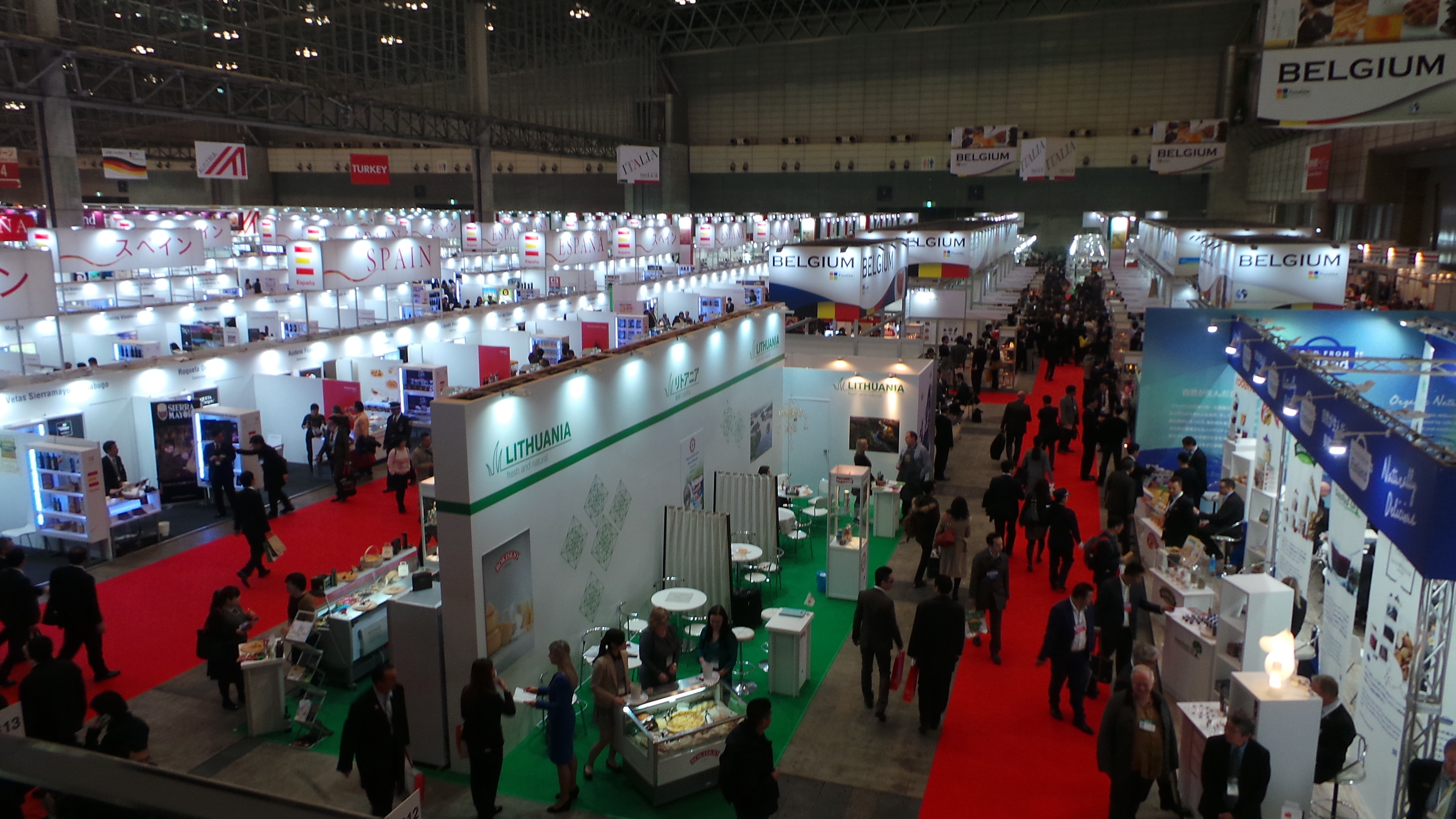
foodex5

I start with cheese. I seldom eat cheese in Japan, so when given the opportunity to be an official judge in a packaging and taste competition, I seize the chance. The competition involves comparing thirty-one cheeses from Japan. Just as I’m about to get serious about my judging responsibilities, the comedian in charge reminds me to take it seriously before asking me to select a wooden stick from a box. “Careful for electric shocks,” the man says, “this is high technology, like a supercomputer.” So much for taking things too seriously.

The cheese I have randomly selected is a Brazilian cream cheese made in Japan. I assess the packaging (somewhat basic) and evaluate the unique selling point of the product (non-existent). Next, I can choose any two other cheeses to rate in comparison. I opt for two cheeses that I’m eager to try. Following the rating, a taste test ensues, providing me with the opportunity to score the flavour and determine the likelihood of a future purchase. Interestingly, the cheese I selected, which appears to be the most expensive among the thirty-one, turns out to be the worst cheese I have ever tried.

After savouring the cheese, I crave a drink, prompting me to head for a cup of tea.
foodex3

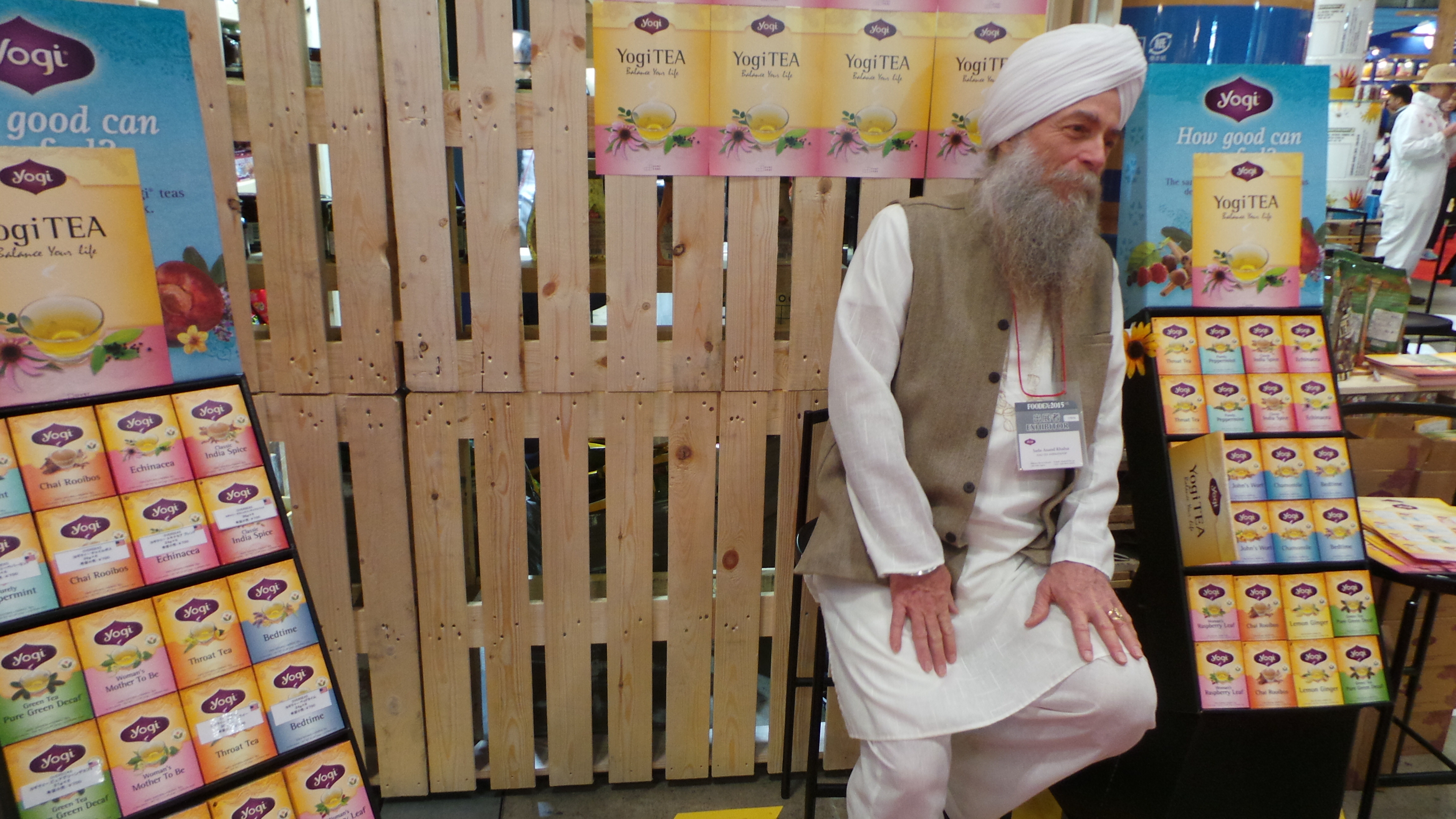
Unfortunately, the Yogi Tea stand offers their sample in the form of a tea bag. No hot water here. I have a chat with Sada-Anand Khalsa, a self proclaimed Yogi Tea Ambassador. His beard is better than mine, and his tea is apparently very wonderful. As I talk to him, he appears distracted, distant, and looks like he is about to fall off his stool. He’s probably had a few too many cups of his bedtime organic tea product, no doubt.

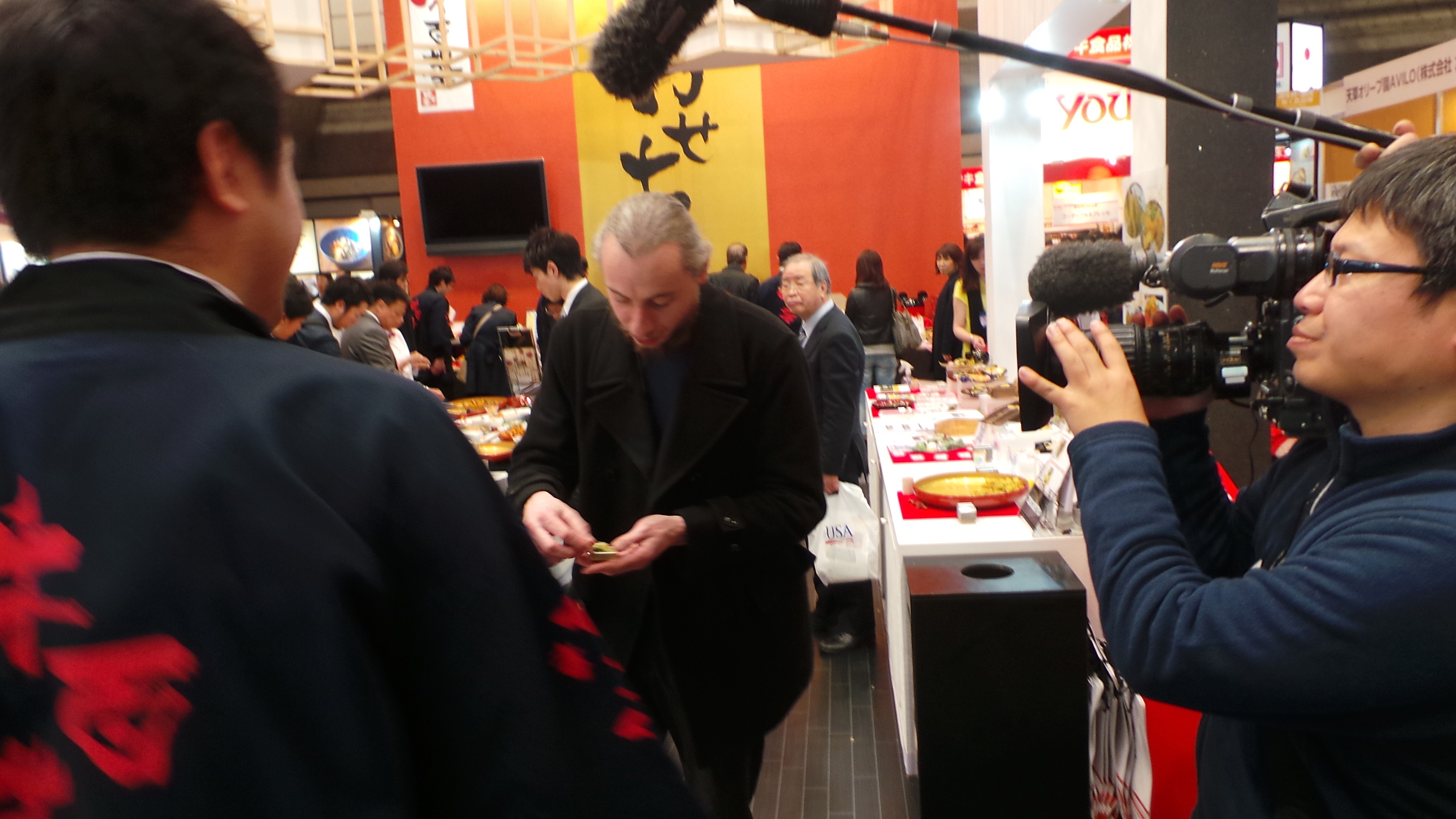
I continue exploring the red-carpeted route, treating myself to devil fruits and açaí berry smoothies. In Pakistan, I’m given the chance to try six-billion-year-old sea salt, and in Egypt, I indulge in some tasty salted peanuts. Upon reaching Japan, I find myself surrounded by microphones and cameras, as I become the subject of a television show—quite ironic, considering the event’s no photography or recording equipment policy. During the interview, I’m asked to sample Japanese food to capture my authentic reaction. However, they choose edamame, a dish I consume almost weekly, making it challenging for me to convey a genuine response to the familiar taste of beans.
foodex2

After the interview, I head to England to enjoy a scone. However, I notice that the stalls here are manned by individuals with uninviting expressions and disappointed faces. Unlike everywhere else I’ve stopped, where warm smiles and polite conversation welcomed me, it’s a different experience in England. Disheartened, I make the decision to leave and never return. Instead, I choose to visit the friendly land of Scotland for some delectable scallops. Later, I make my way to the welcoming Wales to enjoy a sample of a beer I’m already familiar with—Dark Side of the Moose.

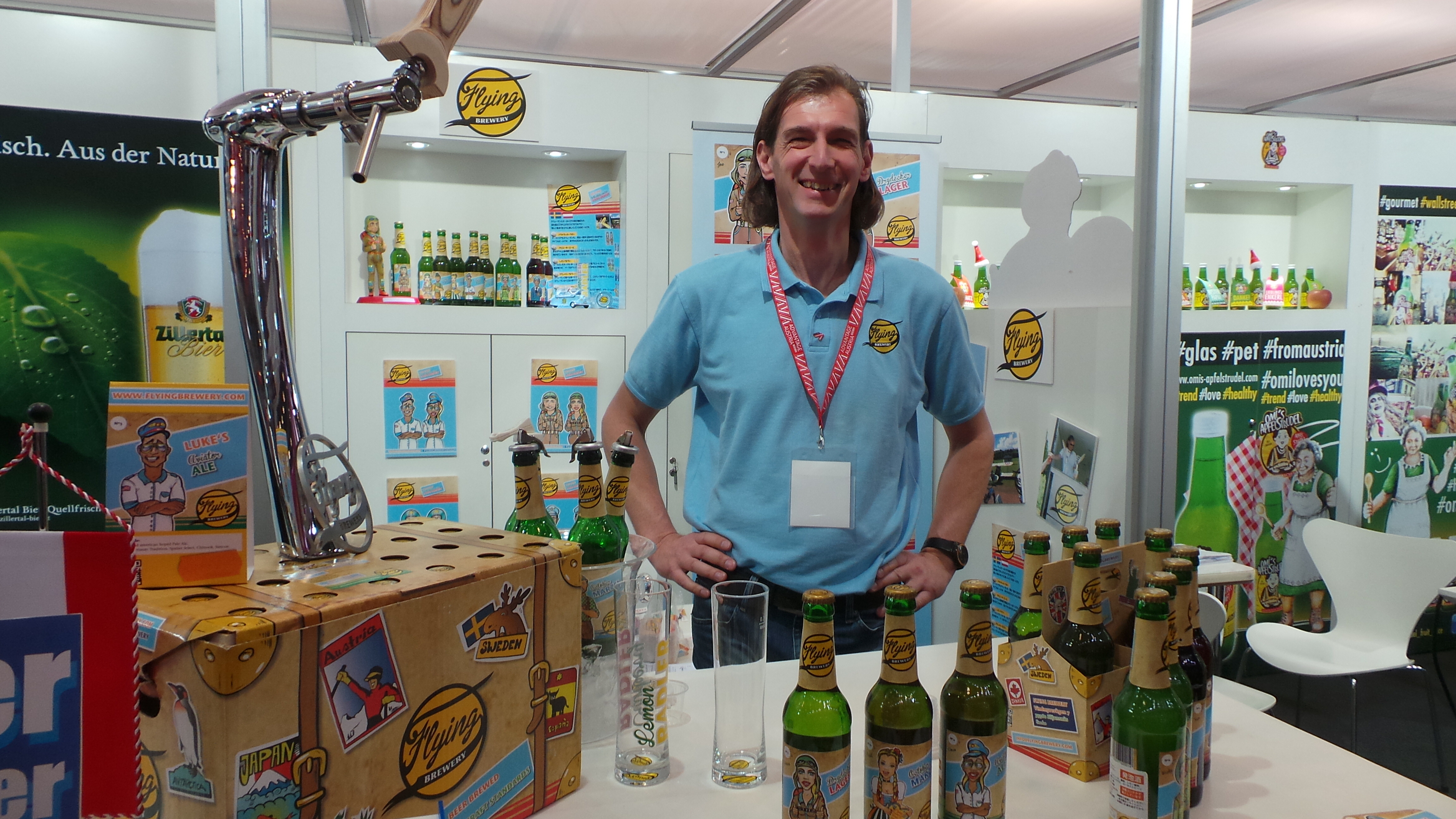
In Austria, I take a moment to chat with a friendly man about beer. The Flying Brewery proves to be wonderful and charming. After expressing a clear interest in sampling copious amounts of their free alcohol, the amiable man turns to his colleague and exclaims, “He wants to try them all!” This marks perhaps the turning point in my day, leading me into the delightful world of free alcohol. The beers here are fantastic, and I relish each and every one. The brewery even gifts me a set of twelve coasters and poses for a photograph. While a part of me considers that the journalist pass around my neck might have influenced their hospitality, another part of me believes that they are genuinely kind and passionate about their craft.
foodex4

With an ever-increasing thirst for beer, I head over to the only place that can satisfy my taste: Belgium. After wandering around in beer heaven for about an hour and sampling familiar delights such as Stella Artois and Hoegaarden, I move on to some of my favourite drinks—Delirium Tremens, Kriek, and Chimay.
“One more glass, sir?” says the man at the Chimay stand.
“Why, thank you, sir,” I reply, feeling very humbled and slightly drunk.

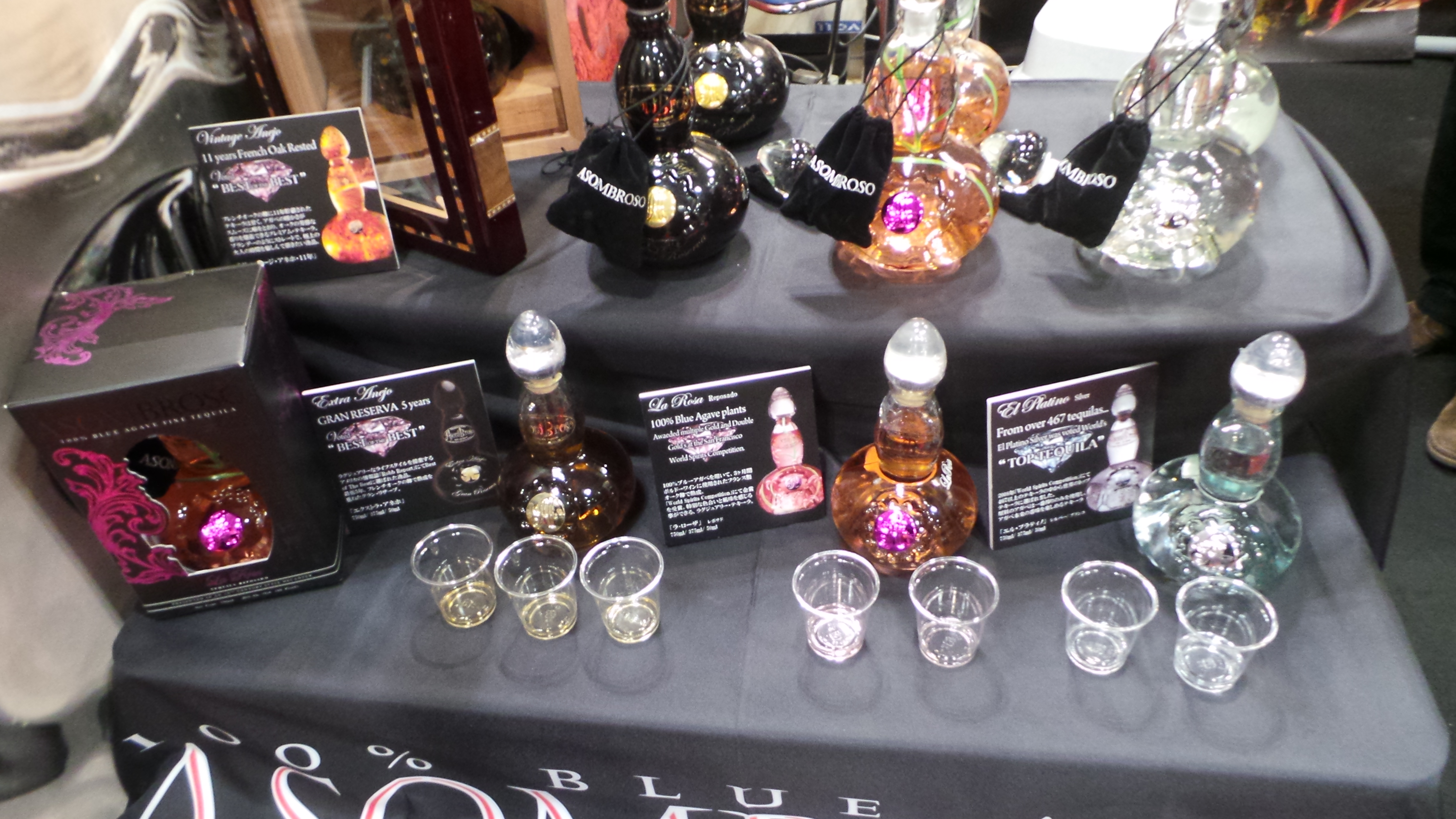
I continue to explore, observing snakes in bottles of miscellaneous liquid and engaging with companies solely present at the event to secure a Japanese distributor. After a bit of stumbling, I find myself in Mexico, enticed by amusingly shaped bottles of expensive tequila.
foodex1

AsomBroso is a luxury tequila from Tequila, Mexico, and one bottle costs around ¥7000. After sampling a small glass, I strike up a conversation with the friendly man manning the booth. A simple mention of the word ‘journalist’ earns me a second glass and an invitation to take a photograph of his display. The tequila is, in fact, the best I have ever tasted—good quality stuff.

In Finland, I chat with a nice lady about the health benefits of bilberry. In Indonesia, I indulge in fresh tuna sashimi. Thailand offers me samples of multiple hot sauces served with various delicious canapés. However, my favourite dish of the day comes from Malaysia—shrimp noodles in a spicy sauce broth that comes with a strong warning: ‘Extremely hot, eat carefully and very slowly.’ As I wander through multiple stores offering sweets, dried fruits, organic chocolate, and health products, I somehow take a wrong turn and end up in Australia. Unfortunately, there’s no attention from the yawning people here, no free samples, only misery.

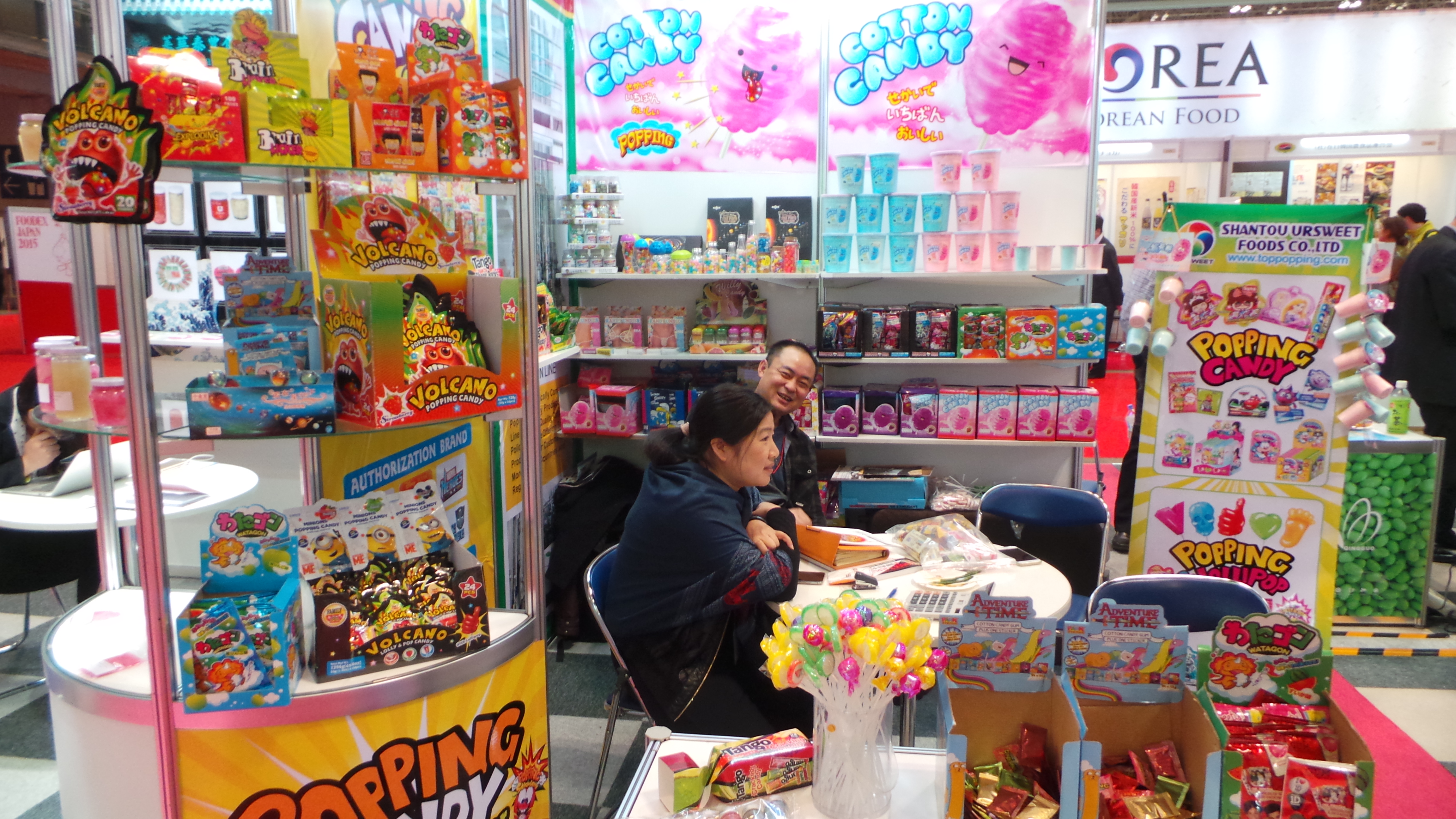
Finally, I explore what China has to offer. I am surprised by the contrast between China and Australia; the politeness expressed by the people here at such a late time in the day, and the complete lack of yawning and misery is a big surprise to me. Everyone wants to speak to me, everyone is friendly, and of course, everyone wants me to try their products. One store I particularly enjoyed was Shantou Sweet House Foodstuff.
foodex6

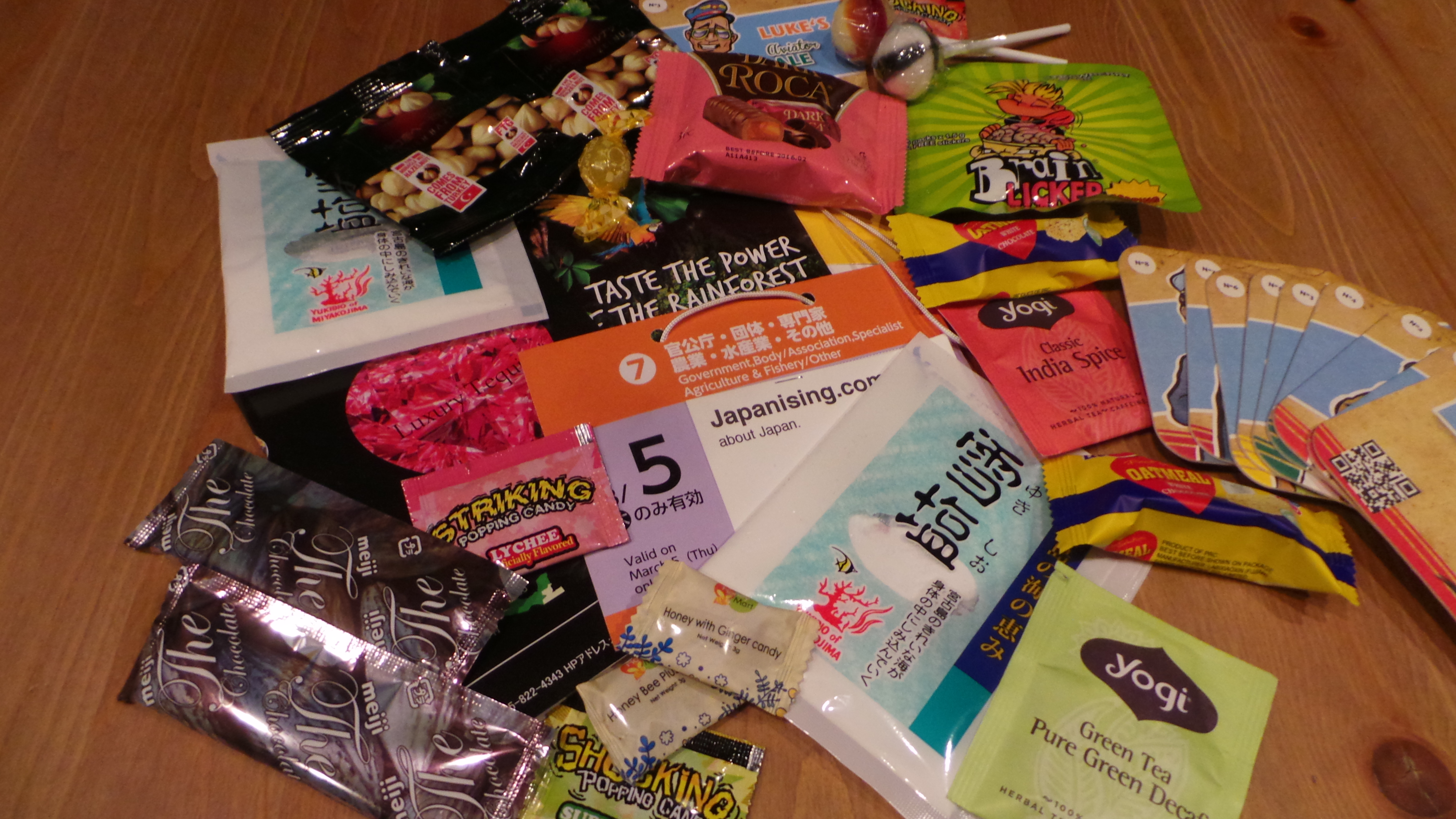
This Chinese confectioner offers many interestingly named products, such as Brain Licker, Nipple Lipstick Tooth Candy, and Plastic Fruity Sour Sour Stick. “Wait here for a moment,” says the stallholder, following our long conversation about sugar. He returns with a huge bag of sweets, including strawberry-flavoured popping candy that comes with two free stickers.

Leaving China, it feels like I’ve just been on a six-hour tour around the whole world. I exit the event and take the free shuttle bus over to Kaihin-Makuhari Station. For some reason, a woman in the train station hands me a free sample of a doughnut. Free samples are the last thing I can enjoy right now; food is the very last thing on my mind.
foodex7

Back at home, as I empty out my full pockets of the many free gifts and brochures, it reminds me of a lost childhood memory of Halloween. I still have an awful lot more food to eat, but I can’t really complain. I enjoyed the event, the food, the beverages, on what has been quite a wonderful day in Chiba.

Wig Trouble in Little Chinatown

I am a little way outside of Tokyo, in Yokohama. The area was once a quaint fishing town where nothing much really happened. After the Americans came with their ships, Yokohama opened Japan up to the world of foreign trade, and these days, Yokohama has become one of the major ports for trade in Japan.

My first stop is the site where the Japan-America Treaty of Amity and Friendship was concluded. The treaty, also known as The Treaty of Kanagawa, was signed in 1854 on this very piece of ground and effectively changed the way Japan dealt with people from other countries. The signing also gave birth to the flourishing city of Yokohama. A memorial made up mostly of mirrors is here now, and uneven ground at the centre of this historic spot has become the ideal place for rainwater to collect.

treaty[1]

With so much history in the area, Yokohama features many foreign buildings and places and is heavily influenced by various different cultures. It is one such culture that brings me here today – the Chinese. Today is, of course, Chinese New Year, so I thought the ideal place to celebrate would be in a city with its very own Chinatown.

Marking the entrance to Chinatown hangs a brightly coloured gate. The first thing I notice is that beyond the gate, the rows of Chinese restaurants and shops no longer resemble Japan. Tucked between two such restaurants sits a branch of Starbucks Coffee, instantly shattering the illusion that I might actually be in China. I make my way through the crowds and arrive at a temple.

chinatown2[1]

Yokohama Kanteibyo is a Taoist temple dedicated to the Chinese general Guan Yu, now recognised as the god of war and victory. Built in 1871 by Chinese migrants, the temple has been destroyed four times but always rebuilt, a common theme in Japan regarding temples. These days, the temple symbolises good luck and good fortune in business, attracting a crowd of Chinese residents and tourists celebrating the Chinese New Year.

Inside the temple, people queue up to pay ¥1000 for a piece of scented wood. The lit incense is then placed into a pot. Burning the first incense of the New Year is considered especially important in Chinese culture, with participants believed to invite prosperity for the upcoming year.

chinatown1[1]

After the incense, people retrieve their fortune, following a tradition similar to that of Japanese temples and shrines. Common themes emerge between the two cultures, such as celebrating the New Year by visiting a temple or shrine, offering the first prayer or burning incense, and enjoying traditional food. The notable distinction today is the upcoming Lion Dance.

I exit Yokohama Kanteibyo and step into the lantern-lined streets. Drawing in twenty-one million visitors annually, Yokohama Chinatown is the largest in Japan, boasting over six hundred shops and restaurants crammed into this compact area. Today, it seems like all twenty-one million have converged here, as both sides of the streets are teeming with people. The congestion makes it challenging for me to move freely.

chinatown6[1]

I find a decent spot in the crowd and wait. Despite the imminent Lion Dance parade, the road remains open for vehicles, creating a potentially dangerous situation. A traditional Chinese vehicle labelled ‘Family Mart’ manoeuvres through the throng, coming perilously close to running over someone. Each time a vehicle passes, a man with a megaphone urgently urges everyone to step back, causing chaos. Additional delays occur due to a problem with the head of the lion costume, pushing the Lion Dance to start an hour later than scheduled, finally commencing at half-past four.

Firecrackers, louder than the Big Bang, shatter the silence. The abrupt explosion of sound startles me, eliciting frightened cries from children in the vicinity. Soon after, a man adorned in a lion costume emerges, prompting cheers from the crowd. Accompanied by the rhythmic beats of drums, the lion commences its dance. I manage to observe the lion’s performance for approximately four seconds before it vanishes into a Chinese restaurant, presumably continuing to dance around inside.

chinatown3[1]

As the lion re-emerges from the restaurant, its head is removed, and the drumming ceases. This anticlimactic moment leaves me wondering if there’s more to come. I linger for a while, hoping for additional excitement, but the crowd has largely dissipated. The firecrackers echo once more, leaving the air tinged with a gloomy white smoke, and the lion resumes its dance into the next Chinese restaurant. Bored with the spectacle, I decide to bid farewell to Chinatown in search of something more intriguing.

Strolling around for approximately an hour, I stumble upon something of historical significance. In 1871, shortly after the signing of The Treaty of Kanagawa, a street named Nihon-O-dori was constructed. This street holds historical importance as the first modern street ever built in Japan. Originally, it was established as a division between the settlement of overseas migrants and the Japanese population.

justaroad[1]

The signboard reads, “This street presents the best opportunity to enjoy glimpses of Yokohama’s past.” I stroll along the entire thirty-six metres of the concrete street, attempting to savour glimpses of the past. However, my usual lack of enthusiasm is once again disrupted by the sight of a giant Ferris wheel looming in the sky above.

A Handful of Salt

Sometimes in Japan (and the same can be said for life in general), I have absolutely no idea what is going on. Today, a red carpet has been placed in the middle of a busy road. Not only does this carpet obstruct many motorists who drive down here every day, but it actually stretches the entire length of Kappabashi Street – and Kappabashi Street is a very long street indeed. Is the head of state making a surprise visit? Is some type of awards ceremony about to take place, perhaps? Or is there no reason at all for this vermilion impediment? Only time can provide the answer.

redcarpet[1]

For the last few months, I have been trying my hand at a little private English conversation practice with just one student—a 71-year-old Japanese man who has lived in Asakusa all his life. With a keen interest in food and Japanese history, he has provided me with an endless source of knowledge about post-war Japan and the changing attitudes amongst Japanese people. I enjoy teaching him, and our conversations often cover an array of topics, such as Bonseki, China Syndrome, and foods I’ve never heard of before in my life. Today, we are heading out to try such a food.

He drives us across Tokyo to Yotsuya. On the way, he starts a conversation with the dashboard of his Toyota, instantly reminding me of something from a science-fiction movie. In Yotsuya, we visit a shop called Ariakeya. The shop specialises in selling just one dish—a Japanese delight known as ‘tsukudani’.

fishfish[1]

If I were to ask anyone to name three foods associated with Japan, tsukudani probably wouldn’t even get a mention; and, if I’m completely honest, I had never heard of it until last week. Tsukudani most commonly involves seaweed, meat, or fish (often pond fish) that has been simmered in soy sauce and mirin. It can be eaten up to a year after it is made. Many years ago, this was a staple food in Japan, but due to its high salt content, it has become somewhat less popular, with concerns about salt being bad for health and such.

The woman in the shop is very pleasant and can speak excellent English; she has even prepared an English menu for me in anticipation of my arrival. I am offered samples of various dishes before settling on my favourite, Maguro—cubes of tuna. Soft, but surprisingly chewy at the same time, the outside is extremely salty but very sweet. The middle offers a dryness that you would expect from marinated cubes of cooked tuna. Overall, the fish is pleasantly moreish.

As we leave the shop, I notice a small tray of salt outside the entrance to a restaurant, guarded by a shisa—an Okinawan dragon. Curious about the purpose of this salt display, I ask my student. In his usual enthusiastic way, he explains to me that many years ago, the Emperor of China lived in a Palace so big that the only way he could get anywhere fast was to ride around on the back of a bull. Inside the Palace, the Emperor had three thousand women, each in separate rooms. Every night, the Emperor would tour the Palace on the back of his faithful bull and decide which woman he would spend the night with.

bullsalt[1]

The women knew that the Emperor rode around on a male cow; I mean, everyone knew, it was hardly a secret. The women were all desperate to marry the Emperor, for the wealth and status they would receive if such a ceremony occurred. Finally being freed from their solitary rooms in the Palace was often considered a secondary incentive. Somehow, the women discovered that the bull liked eating salt, so every night, they would place saucers of salt outside their rooms. The bull would smell the salt, stop to eat, and hopefully, the Emperor would choose that room to spend the night. Somehow, this tradition of salt piles outside of rooms came over to Japan, and salt is now placed outside many restaurants. Bulls represent customers, or so the custom goes. The story made me wonder if the idiom ‘Like a bull in a china shop’ took any of its origin from the same story, but before I have time to ask, we are back in Asakusa, and I have a red carpet to inspect.

Back at Kappabashi Street, some women are singing in front of a man that I think is supposed to be a clown. Eventually, though, answers come, and the reason for the whole street being closed off becomes apparent.

kappacarpet[1]

A kappa (or at least a man dressed as one) follows the red carpet, walking the length of Kappabashi Street. The kappa stops intermittently to wave at the passing crowd, walking alongside an old woman carrying a scroll, and has a big red heart painted on its back. I have no idea why. No idea about any of this.

Back at home, I dine on my neatly wrapped packet of tuna cubes, which cost ¥432. Tsukudani is usually enjoyed with rice, but I will snack on this salty-sweet tuna as it is. Unfortunately, this type of food is not too pleasing on the eye; it might look like something you would serve to a domestic animal or a bull, but its taste suggests that this might be a bit of a waste. The tuna is, in fact, delicious and perhaps one of the best foods I have tried in months. The only problem, again, is the high salt content, but that shouldn’t put you off trying it at least once.

tunacube[1]

I seldom place links to other websites, but I genuinely enjoyed the food from Ariakeya, and they were very nice to me, so here is their shop:

http://www.ariakeya.com/

Japanese New Year’s Day

This morning, my plan is to wake up early to catch the first sunrise of the New Year. In my usual tardy fashion, I oversleep and wake up at 7 a.m. with the sun shining through my window. Always next year, I suppose. I head over to Asakusa to meet Christine. The fierce winds of last night have completely gone, but it is still cold outside. In fact, I might see my first Tokyo snow rather soon. I notice that the usual New Year’s Day kebab wrappers, vomit, people asleep in the gutter, and smashed beer bottles are missing from the street. Instead, people are cheerfully whistling on their way to work, and there isn’t a speck of litter on the immaculate Tokyo pavements.

I take Christine to the train station to see her off. Perhaps it’s tiredness or a hangover; who knows? But, I take her to the wrong train station. After rectifying my mistake, we rush to the correct station, but Christine misses her train by two minutes. Luckily, the next train will be arriving in half an hour, and she somehow manages to get to the airport in time for her flight. With the rest of the morning to kill, I head home to do a little writing before heading to Kudanshita Station.

I head over to Yasukuni Shrine and join the queue of thousands of other people there for Hatsumode.

nyd1[1]

Hatsumode is traditionally the first visit to a shrine of the New Year. During this visit, the first wish of the year is made, and it is said that this very first wish is always granted by the gods. The entrance to the shrine is lined with the usual market of delicious-smelling food—something to tempt me on the way out, no doubt.

After making my wish, I take a wander around Yasukuni Shrine. This shrine is steeped in controversy as it houses the spirits of people who died in combat while fighting for Japan in wars between 1867 and 1951. Additionally, the shrine honours the souls of deceased war criminals. There is a museum here where you can read letters written by kamikaze pilots that were left for their loved ones before they died.

After exploring the shrine, I decide to indulge in some sticks of fried cheese, along with my favourite street food: strange-looking but delicious yakisoba, layered in seaweed. I don’t care that my food looks like garden worms. ¥600 well spent.

nyd2[1]

I wander through the markets in the shrine and decide to purchase an omamori, a Japanese amulet sold at religious shrines. This talisman will find its place in my house, offering good fortune and protection from evil spirits. Next, I pay ¥100 to receive my second fortune of the year. Unfortunately for me, my fortune is written in Japanese. I attempt to translate it myself, and I get the following message:

“Whoever meets in this fortune is brought happiness that appeared by virtue of good people. I will be appearing, but the eye of devotion remains out of sight, like a ball hidden in the stone.”

nyd3[1]

On the way out of the temple, a man dressed as a dragon tries to ‘eat’ my head; apparently, this creature can devour the evil spirits residing inside me and cleanse my mind. Free sake is also offered, with donations welcome. I decide to leave the shrine and head back to Minowa to enjoy traditional New Year’s Day food.

My meal consists of shiitake mushrooms, carrots, lotus root, potatoes, burdock root, konnyaku, and taro potato, all generously given to me by one of the Japanese people who live in my apartment. The food is absolutely delicious.

After dinner, I decide to do something completely unrelated to Japanese New Year’s Day traditions. I open a cardboard stocking of weird snacks that my friend Marcus kindly gave me as a Christmas present. My snacks are as follows:

Tamago Boro, translating to mean ‘egg biscuits’, are crunchy round snacks that taste nothing like egg, only sugar. For no apparent reason, the packet features a giraffe kicking a football.

Chibichan Noodle claims, “Chicken I do eat as it is!” and suggests not adding any water. “Please make a sound when you eat. Pori pori.” Apparently, that’s the noise it makes when you chew on this treat. Imagine a packet of supermarket instant noodles that have been crushed. Add the little sachet of chicken seasoning, and then eat them raw. That’s what Chibichan Noodle tastes like to me. Horrible.

Pirate Candy: just seven individually wrapped orange-flavoured boiled sweets. Nothing exciting, and nothing that ties in with an association to pirates, as far as I can see. The Japanese text here says, “Let’s aim to reach Candy Island. Let’s go!

nyd4[1]

Abeseika Melon: these melon-flavoured snacks look like small headache tablets and have the texture of chalk. “Please enjoy as much as possible after opening!” Surprisingly, this is actually my favourite of the six snacks. The sweet quickly dissolves in my mouth, leaving behind a bitter lemon flavour and what can only be described as a ‘citrus blast’.

Kureyon Shin-chan: this snack features a popular anime character produced by TV Asahi. These little colourful balls of white, yellow, green, and orange taste just like gobstoppers. Perhaps they are. Oddly, the company that produces this particular snack is called Punishment, Inc. Although, I’ll happily admit that I have terrible translation skills.

Karappa: Finally, we have Karappa, which sounds to me like the English word ‘crap.’ This light and crunchy ring-shaped corn snack has the flavour of ‘famous’ Umauma Sauce. It has the same texture as Monster Munch and tastes a lot like beef. Although, I am led to believe Umauma Sauce is the flavour of horse meat.

Japanese New Year’s Eve

New Year’s Eve in Japan differs significantly from the celebrations and lively scenes I’m accustomed to in England. We kick off the evening at our favourite izakaya, where the owner, in his broken English, warmly greets us with, “Good morning this evening.” The atmosphere is festive, with people enjoying drinks and exchanging smiles all around. Among the options on the extensive Japanese menu is ‘Smile, ¥10, limited to ten per day.’ Fortunately, the stocks are plentiful, so I toss the owner a ten-yen coin in exchange for his wonderfully elaborate smile.

The television set above the bar is broadcasting the 65th annual Kohaku Uta Gassen.

NYtelevision[1]

Kohaku is a live talent battle between two teams of musical acts that have had a successful year in Japan. The white team consists of all male artists, while the red team is composed of all female artists. This exclusive, invitation-only event happens to be the most-watched show on NHK every year. Audience members cast their votes, and the only prize is pride for the winning team.

I was thoroughly enjoying a band of male vocalists singing, “La lalalala lalalala,” when out of nowhere, the owner of the izakaya switches channels to watch the latest episode of the popular pirate anime, One Piece. Food is then served to each of us in tiny bowls—traditional Japanese soba noodles, known as toshikoshi soba.

NYfood[1]

Soba noodles are notably thin and long, with the belief that their length symbolises a long life. It is also said that consuming these noodles helps ward off any lingering ghosts as the New Year arrives. The seasoning for the meal is served from a salt shaker crafted from a light bulb. While I’m unsure if this is part of the traditional way to eat Japanese soba, I find it quite appealing.

One Piece comes to an end, and the owner channel-hops, briefly settling on boxing before switching back to Kohaku. On the television, Idina Menzel graces the stage, singing ‘Let It Go.’ It’s quite rare for a non-native Japanese artist to be invited to perform at the event, but given the immense success of the movie Frozen in Japan, her appearance comes as no surprise. It’s at this moment that I’m hit with my first Tokyo Disneyland flashback.

We continue to enjoy our drinks, with people singing along to ‘Let It Go.’ Suddenly, the owner begins handing out gifts in small white envelopes.

NYsheep[1]

Next year marks the Chinese zodiac year of the Ram, or ‘sheep’ as my Japanese friend corrects me. I suppose interpretations vary across countries. The pendant I receive, if I’m completely honest, looks more like a goat. Regardless, I appreciate the gesture and the unexpected gift.

As midnight rapidly approaches, we finish our drinks and take a wander over to Senso-ji for Joyanokane. At the stroke of midnight, a priest will ring the bell 108 times, symbolising the 108 sins of Buddhism. Unfortunately for me, sarcasm is one of those sins. By merely staying and listening to the tolls of the bell, your body and mind are believed to be cleansed—an excellent way to start the year, if only we could get close enough to hear them.

nysenso[1]

It’s incredibly crowded here. People are queueing up to make their first prayer of the New Year. Others are here to shop at the many little food stores lining the route to the temple, while some are here to count down to the New Year. Our purpose is simpler—we are here to listen to the bells. Eventually, as the clock approaches midnight, we manage to get close enough to the temple, arriving at about two minutes to midnight.

The first bell chimes, and we cheer. Suddenly, as if a switch has been flicked, the plastic sheeting over the market stalls starts to shake. A ferocious wind appears out of nowhere, and the temperature drops to the lowest it has been since I arrived in Japan. It’s as if the gods are angry or trying to sleep, with the millions of people here disturbing their slumber.

It will probably take over two hours to queue and make our first prayer of the year, and the cold is too much to bear. We decide to postpone this ritual until tomorrow. Instead, we opt to get our fortunes for ¥100 each. Surprisingly, none of our group receives a bad fortune. I, personally, receive a ‘Good Fortune’ that says, ‘The linen robe turns into a green one.’ I’m not entirely sure what this means, but I presume it implies that I will turn into a kappa.

After receiving our fortunes, we go our separate ways. As I cycle home, the wind almost blows me off my bike.