Show My Gear, the Policeman Said

I am standing in Seven Eleven, queueing up to buy my morning coffee. The man two before me in the queue smiles and nods as our glances cross. I don’t recognise him, yet he keeps his eyes fixed on mine, quietly staring. Eventually, he points to his eyes and says, “Your eyes are blue.” He seems to be in a state of amazement, “Europa?” he asks.
I decide not to correct him, despite me not being from one of the moons of Jupiter. “Yes,” I say, “England.”
He pauses for thought for a time before asking, “Are you happy?” His question catches me off guard, and I have to give it a certain degree of thought. Perhaps I look a little miserable because I am standing in Seven Eleven at 9 a.m. I eventually reply with a yes. “Good, you should be happy, have a nice day.” With that, he pays for his can of beer and leaves the store.

I cycle over to Asakusa, to Senso-ji Temple. To mark the four-year anniversary of the Great East Japan Earthquake, the temple has opened up its secret garden and gallery to the public. ¥300 to enter, and all the proceeds will be donated to support the ongoing recovery. A sign at the entrance says, “There, it is an old beautiful Japanese garden made 400 years ago, it can take a walk.”
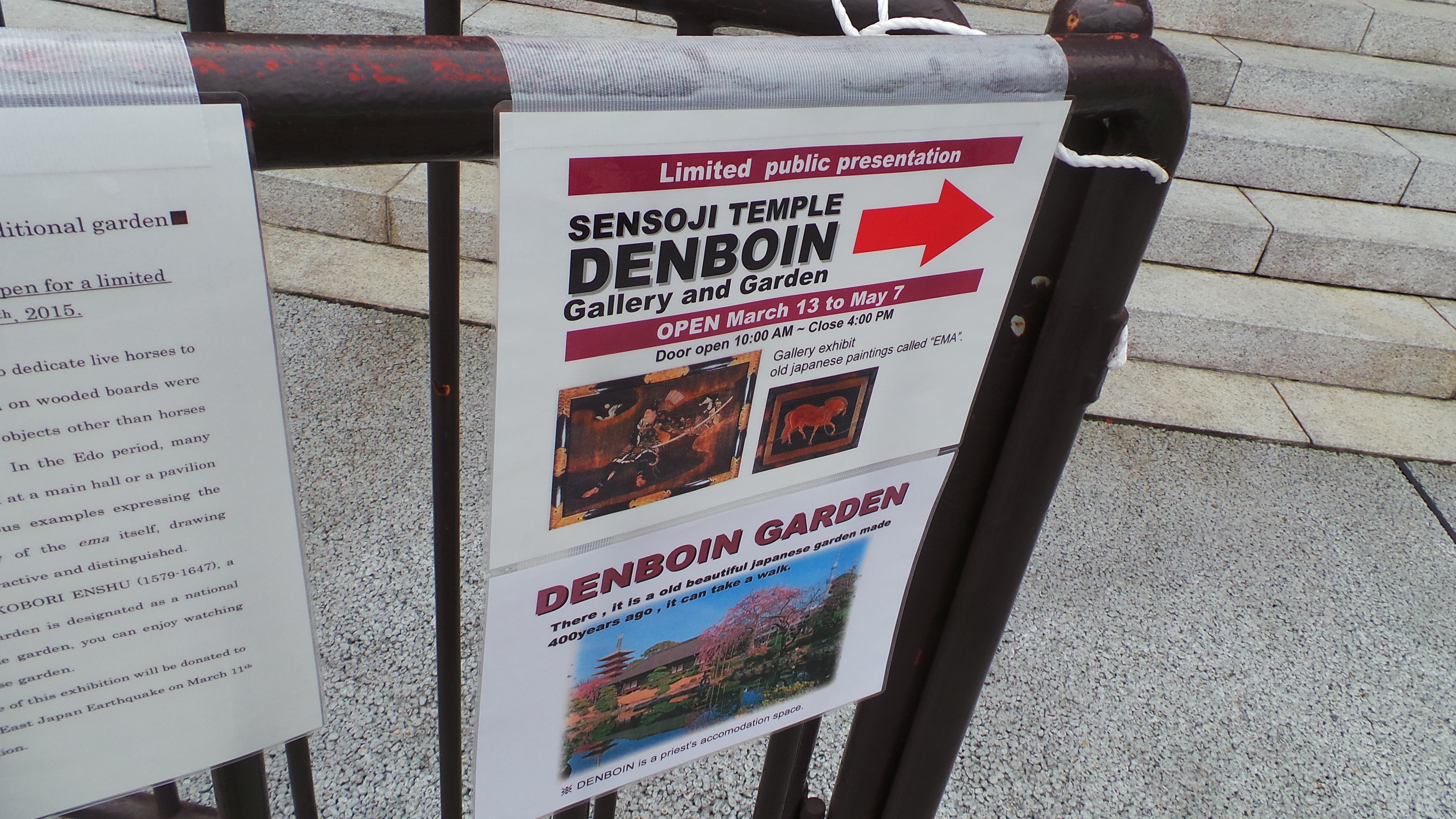
takeawalk

I have often seen these gardens on the maps around the temple, and even tried to find them once or twice, but to no avail. Now it is clear to me why; they were a secret. I start queueing just before they open at 10 a.m. Waiting in line once again, but with nobody asking me about being from Jupiter, I stay calm. Eventually, the doors open, and I pay my ¥300 entry fee.

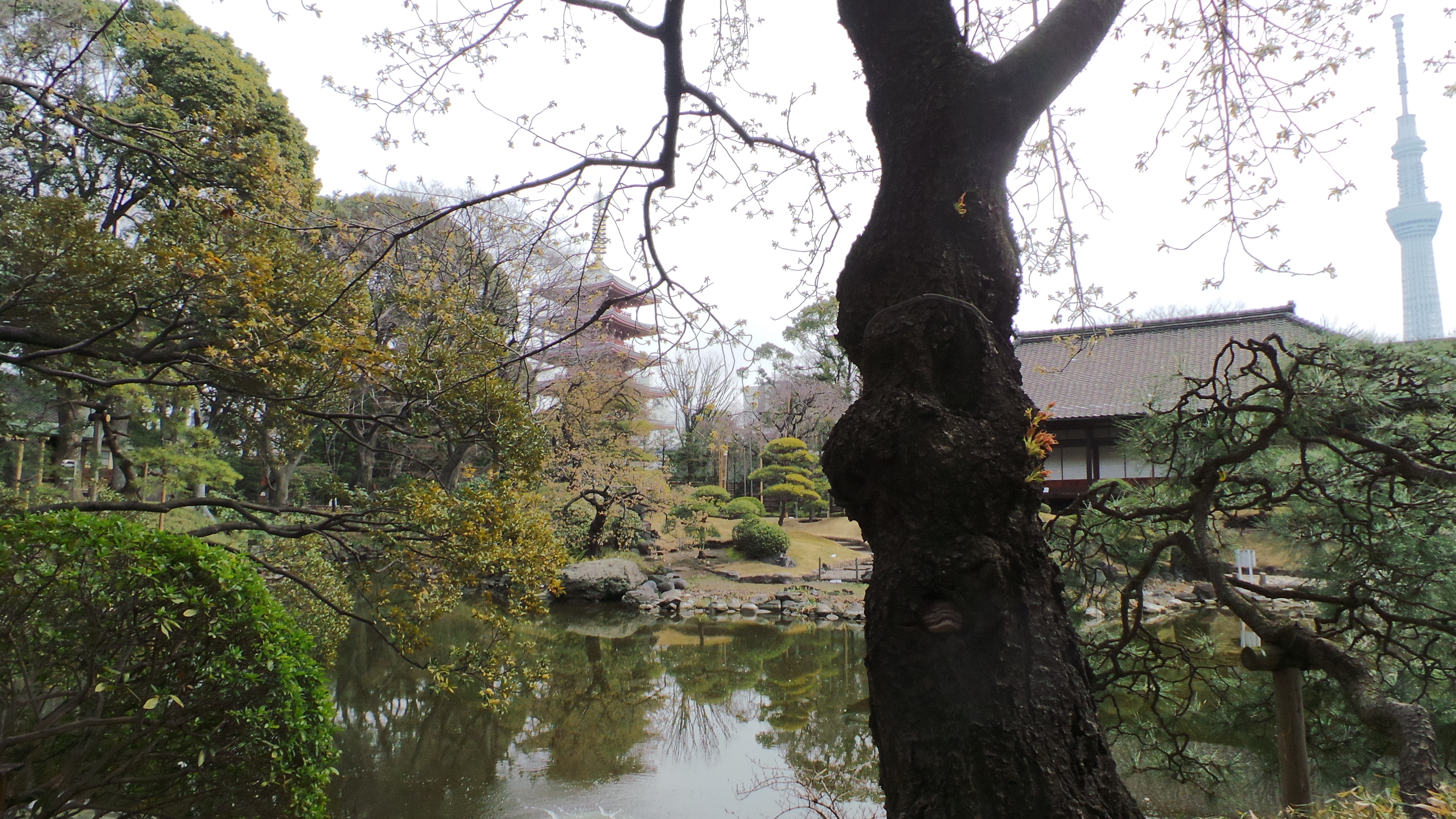
It isn’t just the gardens that are open to the public for the next two months, but also a gallery of artwork depicting samurai and legends. Good quality artwork; dated. No photography is allowed inside the gallery, but for anyone in Tokyo right now or in the coming months, I urge you to visit. It is for a great cause, and the artwork is stunning. After wandering around inside for a time, I head out into the gardens, where my breath is stolen away by the beauty.
sensogard

Why these gardens are normally closed is beyond me. Prior to the earthquake, the gardens were visited exclusively by noblemen. One thousand square metres of garden, made by an eminent gardener in the early 17th century, sit behind hidden walls. A small building known as Denbou-in stands in the garden, a place where priests from the temple would train in Buddhist discipline. It also became a lodging place for the many nobles that came here to visit. I wander around the circuit, following the route of the signs, and take great care with the multiple signs instructing me to, “Please stop walking, drink in the garden!”

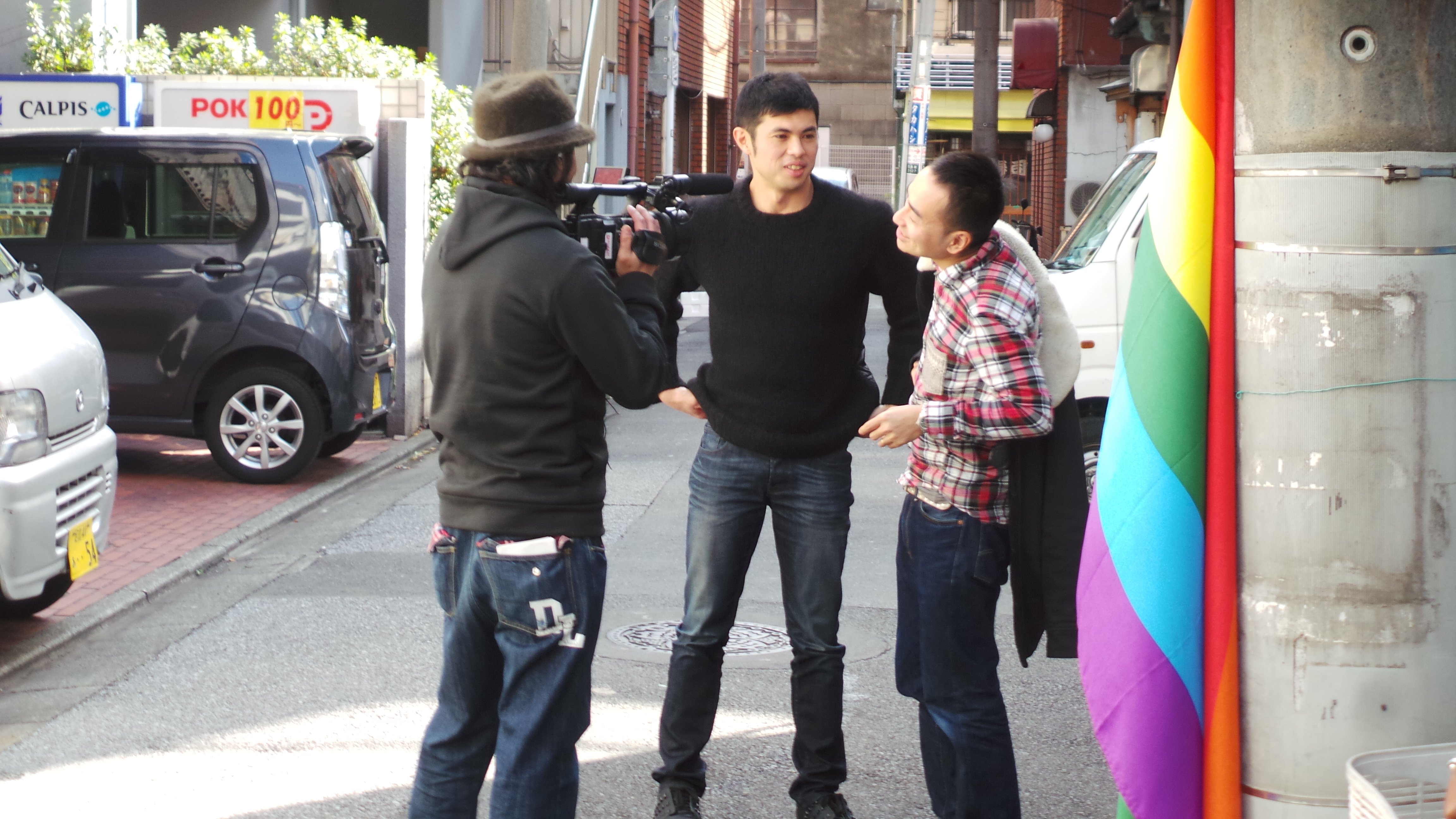
After enjoying the scenery, I head, as usual, to Cafe Byron Bay. Today, I am taking part in a television show starring Yoshio Kojima, a comedian I previously met back in August.
yoshiokojima

The show features a second comedian, Udai Iwasaki. Very little information can be found about this man. Apparently, he won an award in 2013 for being the funniest man in Japan. He is in a comedy group known as Kamomental, which translates to mean Duck Metal, and his blood type is AB. When researching Yoshio Kojima, I am not at all surprised to find a mention of his blood type, a slight obsession in Japan similar to horoscopes. For the record, his blood type is O.

The show is in English and is a tour of Yoshio Kojima’s favourite neighbourhood, Asakusa. “This coffee is very comfortable,” he says, sipping on his latte. Everyone gets interviewed about where they are from or why they came to Japan before Yoshio Kojima treats us to his famous catchphrase, performed again in English. After that, the show ends. I get a chance to talk to the comedians a little after the shooting. Both of them have excellent English ability and are both very nice people.
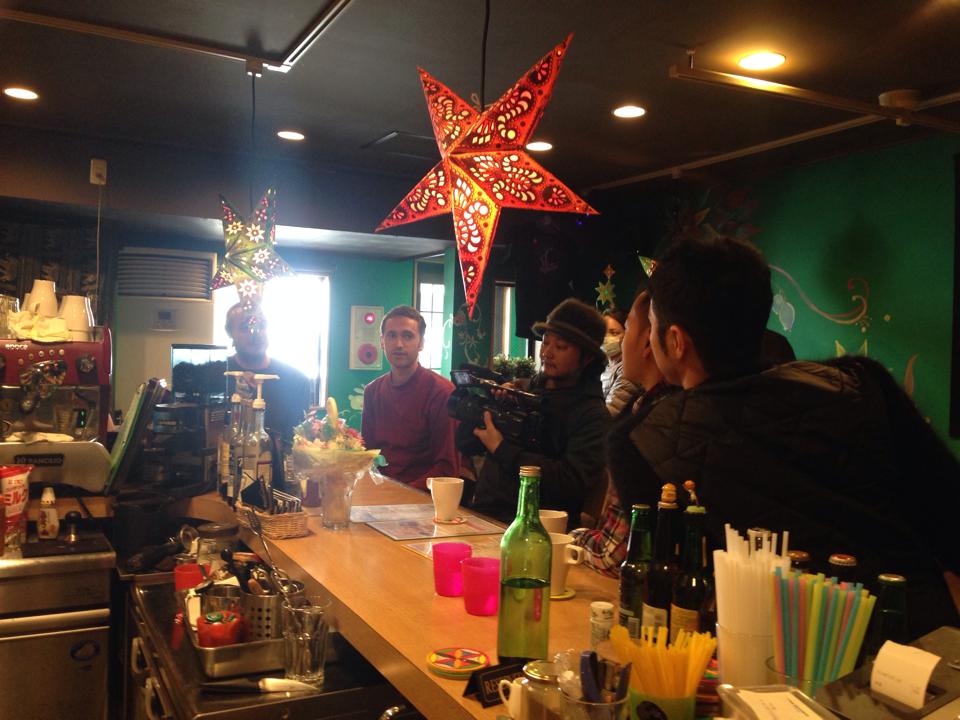
comedyshowagain

The show will air on CS TV Asahi on either May 10th or 24th, but the television people haven’t decided yet. Overall, the shooting was good fun, but I am not sure how much of myself will be included in the final cut.

I leave the cafe and start walking toward my house. As part of my application process to stay in Japan a little longer, I have to get my photograph taken. I find a photo booth that offers the size of photograph that I require, and after inserting my ¥900, I discover that the booth speaks two languages, Japanese and American. Call me naïve, but I didn’t know that there was a language called American. Regardless, a nice man speaks to me in English after I select this option, photographs are snapped, and finally, I am given the chance to modify my photographs. With summer just a few months away, I opt for the sun tan option. “Your photograph will be ready in nineteen seconds,” says the voice in English. Very precise.

As I near my house, two policemen surround me, and in broken English, they ask me for my identification, look at every card in my wallet, search my pockets, write things down, look at me with suspicion, then they apologise, get back on their one-speed bicycles, and disappear; presumably to harass somebody else. A part of me questions their selection process, and for whatever reason, I become adamant that it has something to do with me being from Europa.
The Age of the Gods

Today is National Foundation Day, the day that Emperor Jimmu was declared the very first Emperor of Japan, 2675 years ago. This marked a transitional period in the country’s history, ending what was known then as the Age of the Gods. It is often believed that before the accession of Emperor Jimmu, Japan was founded in an entirely different way.

It was once widely believed that the universe was engulfed in a chaos of sorts. The sound of particles moving around in a ball of confusion somehow created light. This light sat above the universe for a long time. Eventually, the particles began to fall, creating a blanket of clouds. From the clouds, five gods known collectively by the name Kotoamatsukami appeared from seemingly nowhere.

sunshinesumida

The five gods decided to cast four single droplets of water onto the oceans that formed on the planet below. Miraculously, these four drops materialised into huge land masses that are recognised today as the four main islands of the archipelago known as Japan.

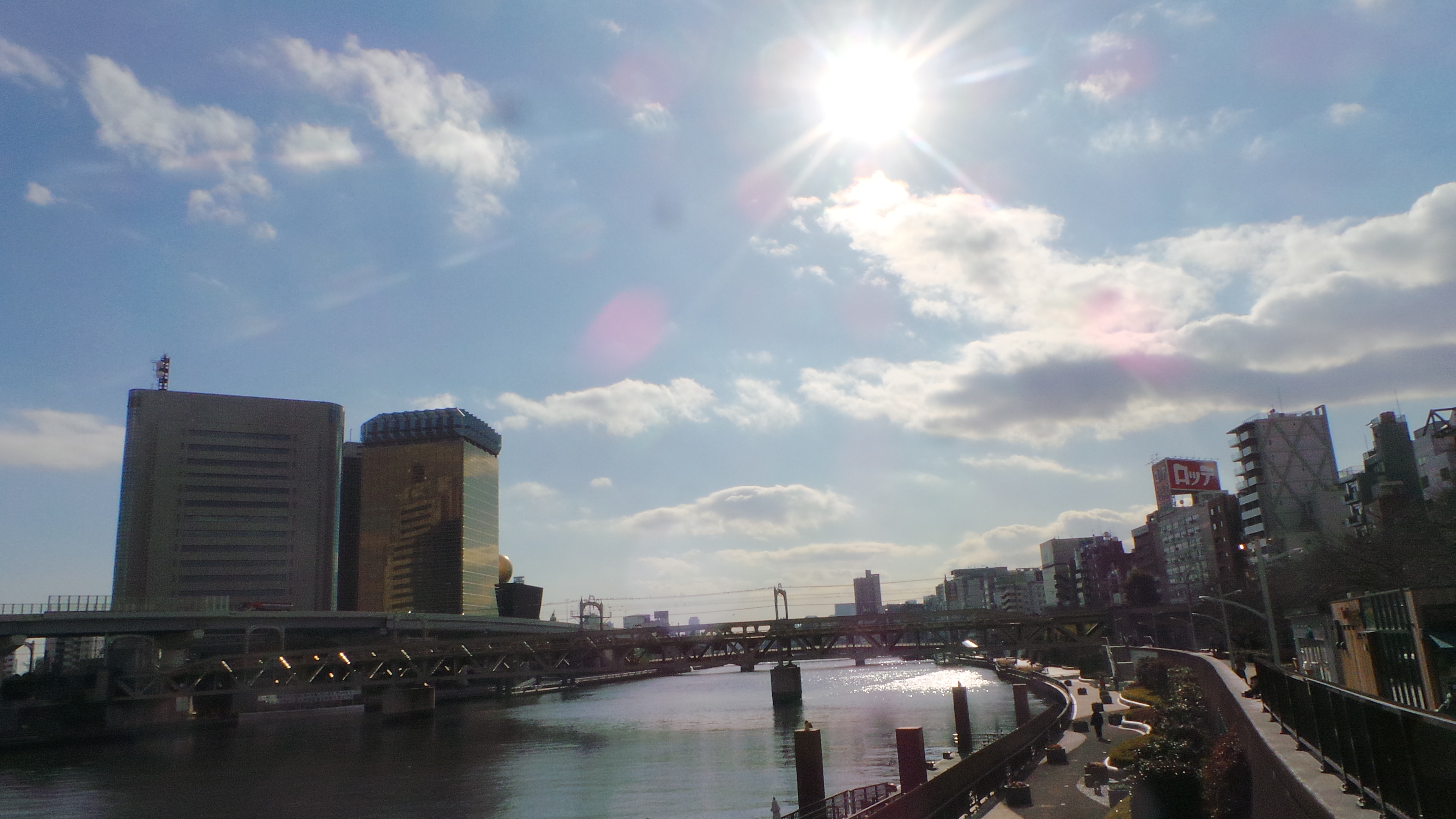
I take to the Sumida River to look at the sunshine and the clouds and think about the formation of the universe. The story of Japanese creation seems to completely exclude the genesis of all the other landmasses on the planet, but oddly, the theory is still believed today by some Japanese people. With no celebrations at all taking place, I decide to follow the path of the river in a new direction and end up in the area of Hashiba.

hashibagraff

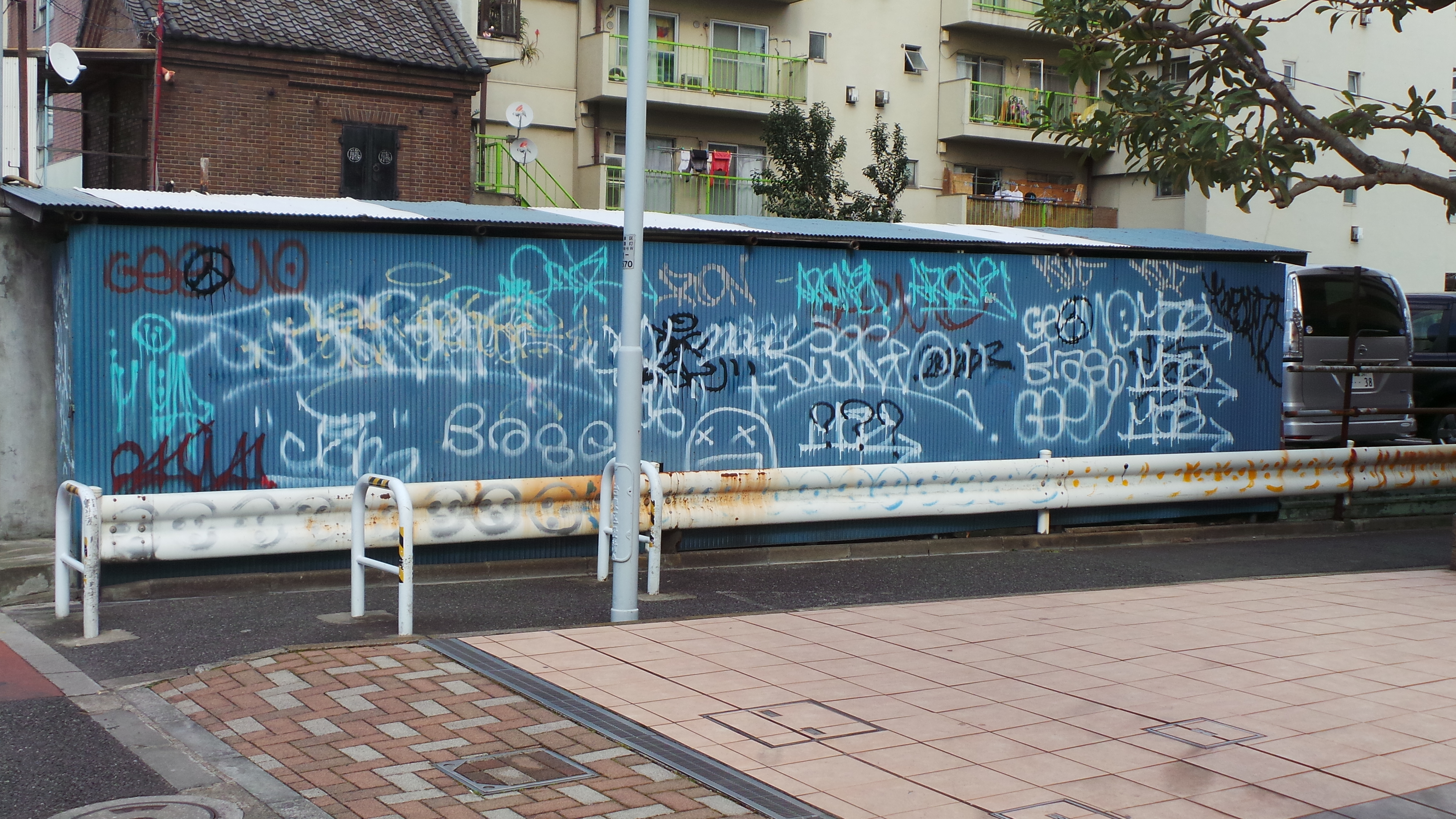
Hashiba is somewhat unusual. The first thing that strikes me is that there are no maps, no places of interest, and no tourists. Just plenty of graffiti. It always surprises me to see graffiti in Japan, something I had almost forgotten existed until today. The Hashiba area is connected to the river and was once used as a ferry terminal. A floating bridge existed here too, some time ago. Before that, this area was covered in overgrown fields.

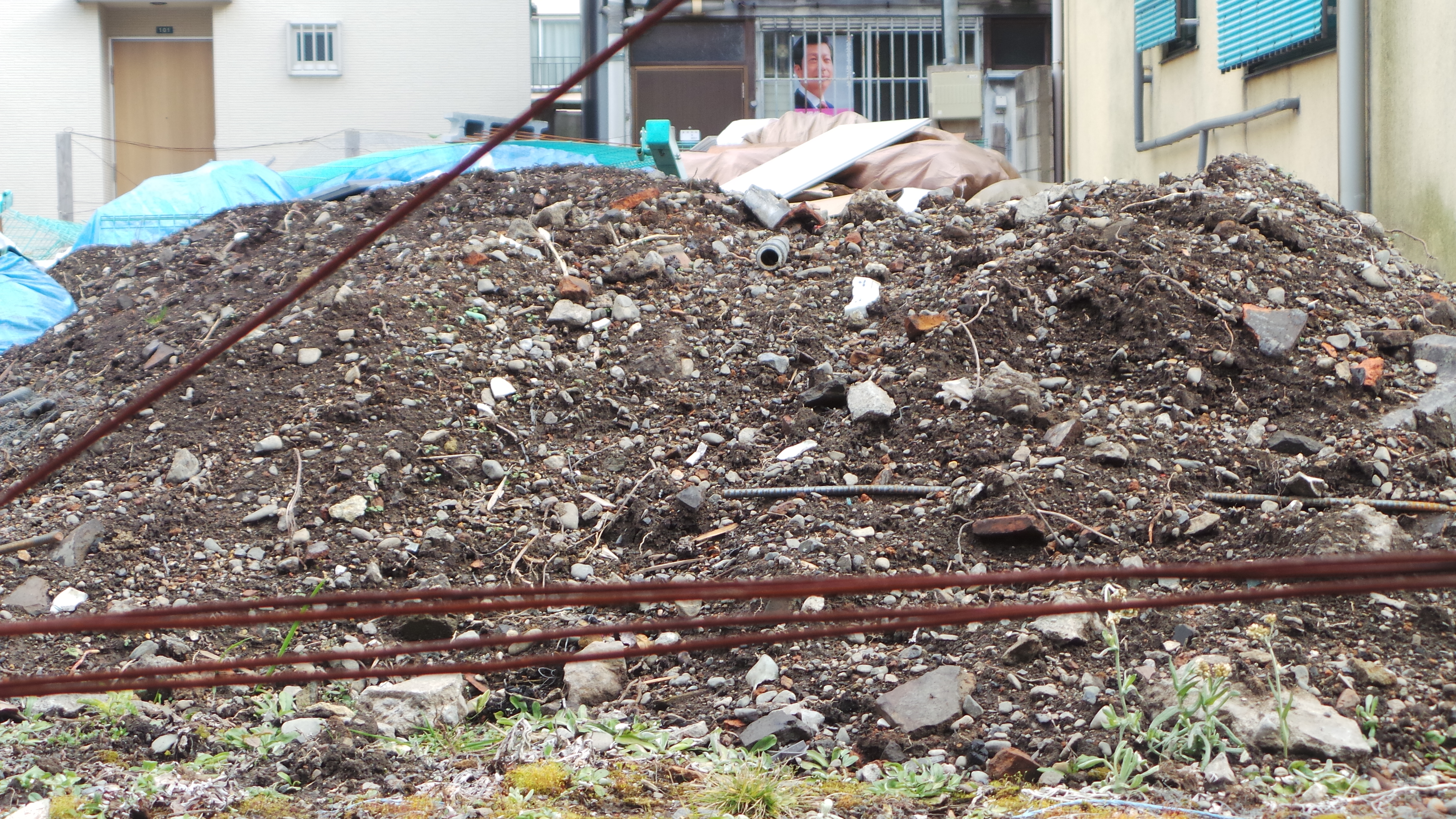
An older Japanese person I met with told me that he remembers coming here as a child to catch dragonflies and play in the long grass. The only sense of nature here now is the piles of dirt mixed with rubble, forgotten about and never removed.

nichirentrash

In this area, watching over the mounds of trash and the graffiti, sit election posters for the Komeito Political Party. The party was founded by members of the Nichiren sect of Buddhism and therefore does the unpopular act of mixing both politics with religion. I am not sure anyone is here to help Hashiba, though—a place that seems incredibly run down and feels almost absent of potential change.

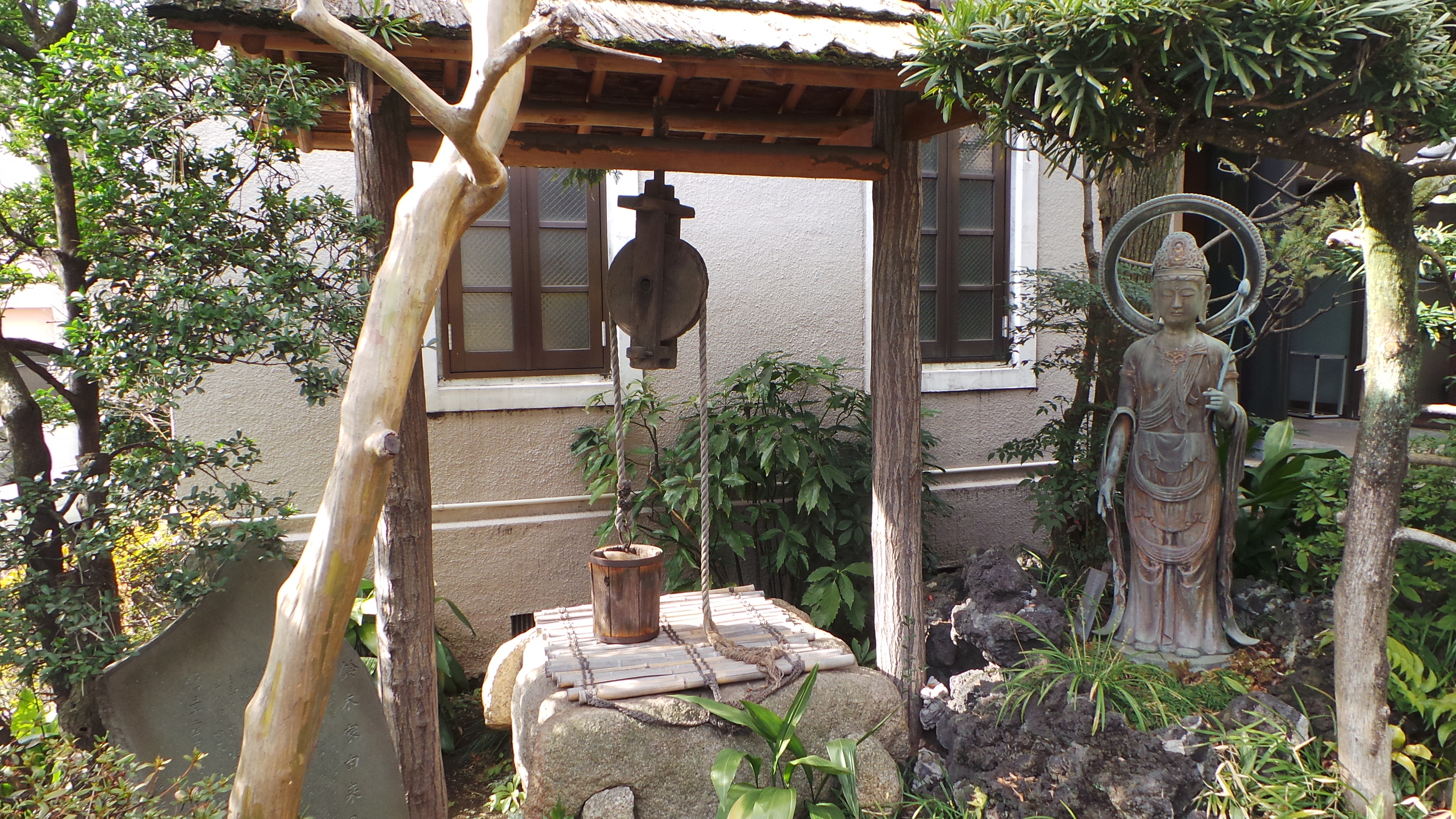
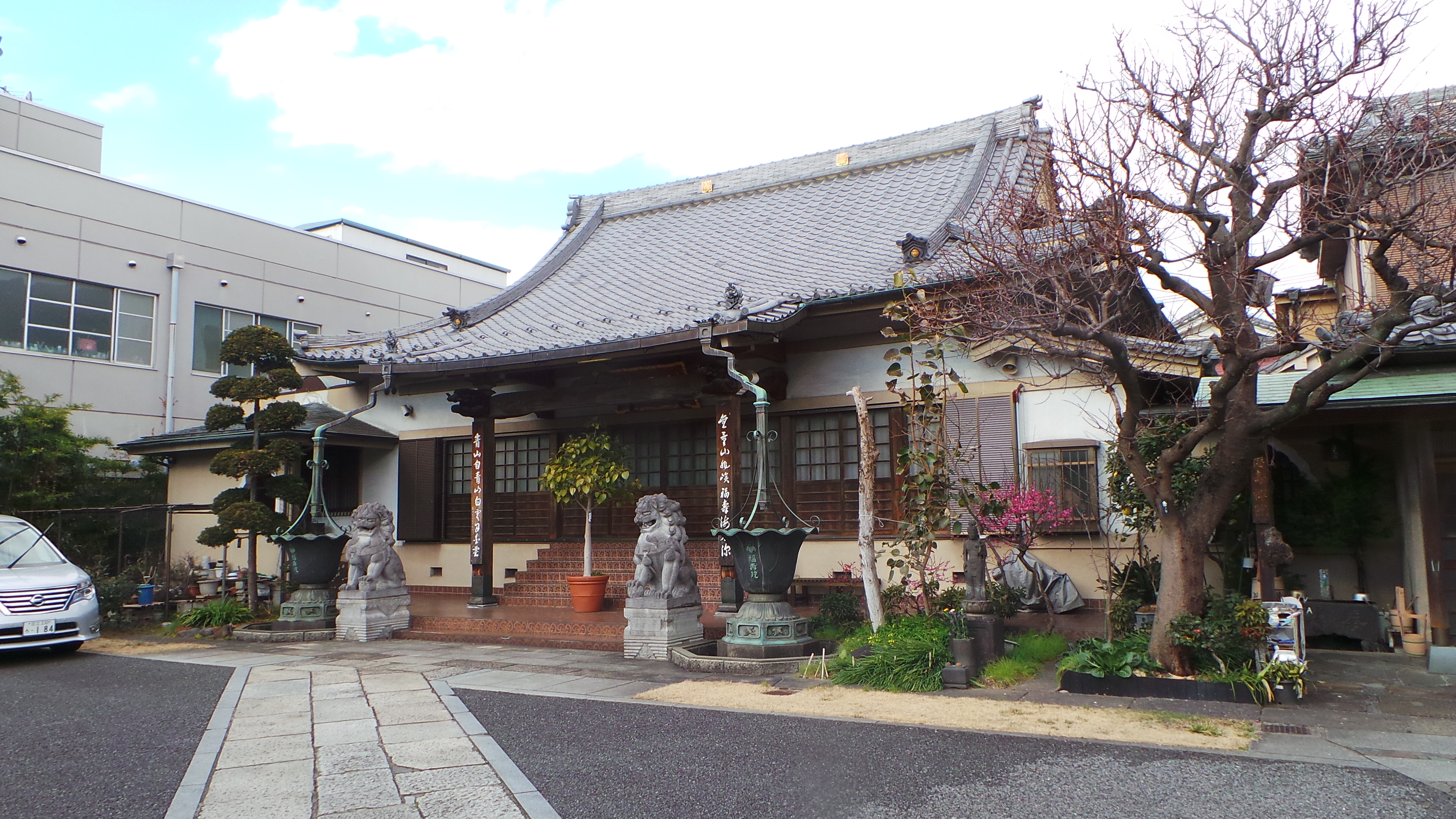
I decide to remain positive, to try to discover the good things about the area. Mixed amongst the negativity sits Hogenji Temple—a rather beautiful place with an old well, many stone statues, and a cemetery. For whatever reason, the grounds of the temple are filled with the sound of a loud chainsaw, disturbing the silence and further adding to my gloom-ridden impression of the area.

wellwell

Desperately trying to find a redeeming factor, I continue to explore. I wander around for a while until I eventually find a sign written in English. The sign is provided by the Tokyo Metropolitan Board of Education, which is usually a good indication that something important might be here. Finally, a point of interest. Finally, something to see.

What looks like another temple turns out to be a tomb. The tomb comes complete with its own nature in the form of beautiful trees and a huge aviary. As if deliberately trying to add to the contrast, the tomb also includes a basketball court.

andotoya

I discover that this is the final resting place of Ando Toya, a famous Confucian scholar. He was known for his time spent studying the Chinese language and teaching it to the people of Japan. He once said about the Chinese language, “It sounds like the chirping of birds. I can write, but when I open my mouth, I truly cannot speak.” This doesn’t quite explain the need for a basketball court here, but it does perhaps explain the aviary.

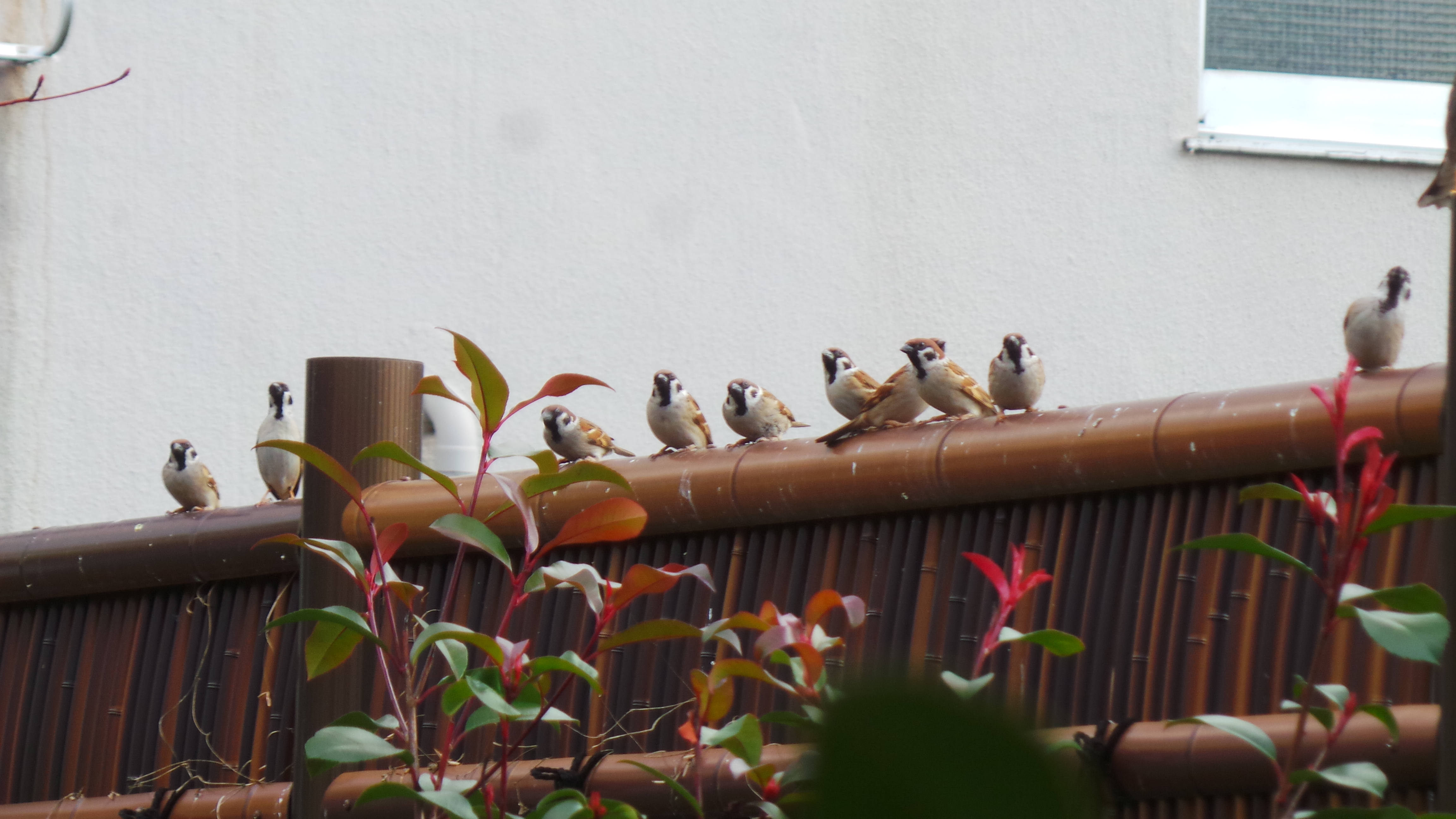
I stand in the grounds of Ando Toya’s tomb, staring in silence at the birds for almost a full hour.

sparrows

The beautiful sparrows chirp in their hundreds. The echoing of those words spoken by Ando Toya flows around my head. It makes me wonder if the birds are secretly trying to communicate with me in Chinese. Maybe they are.

Roasting the Masu-Bean

Another day, another post about the endless goings-on in the Asakusa area of Tokyo. I wander aimlessly toward Senso-ji Temple, walking with my head in the clouds as I follow the distant bellow of a beating drum. It somehow slipped my mind that today was the official festival of Setsubun, but here I am now, standing in the cold amongst the eager crowd.

Thousands of people wait in front of a wooden stage constructed specifically for the event. Poor carpentry makes the stage look out of place, perhaps even unfinished. I hadn’t planned on attending today, but with nothing else to do on this gloomy afternoon, and finding myself standing here, I decide it might be best to stick around and enjoy the spirit of this age-old festival.

setcrowds[2]

The television people are here, filming every second of the action. But sadly for me, and unfortunately for the television crew, the action is a little muted. First, an announcer takes to the stage and begins reading out names. Some get no reaction at all; other names cause the crowd to cheer with excitement. One name gets a huge reaction, but I was barely listening to a word the announcer was saying because I allowed myself to become distracted by a pigeon.

Eventually, the twelve celebrities waltz onto the stage. They each carry a large wooden masu box, usually reserved for large quantities of sake. At the announcer’s count, they all start throwing pouches of roasted beans into the crowd. Following the bean-throwing, each of the twelve ‘celebrities’ is given a chance to speak with the microphone, seemingly using the opportunity for self-promotion before thanking the crowds for attending.

animal[1]

The last person to speak on the badly erected wooden stage is Animal Hamaguchi, a famous Japanese wrestler who coached his own daughter, Kyoko. She went on to win two Olympic medals in wrestling. Kyoko was born in this area too, so it is no surprise that she was chosen to take part in the event.

After Animal has finished speaking, a man sings ‘When You’re Smiling’ by Louis Armstrong; he sings in very clear English. Some of the other guests join in too. Animal Hamaguchi decides to start shouting in Japanese and laughs deeply, much to the enjoyment of the people around me. Pigeons fly away in fear as his laughter echoes around the grounds of the temple. “Mwahahaha!”

The festival ends, and the crowds disperse. I decide to do a little exploring in the area close to my house. I walk to a small park and am surprised to see that there is another festival taking place, albeit a little stranger than one that encourages the throwing of roasted plant seeds.

crazycostumes[1]

The festival offers no explanation behind its meaning. The only clue here is an array of masked men and women. They march around the park, passing the swings and the slide before heading off toward the red-light district. I am completely oblivious as to what this festival is here to represent; my confusion further added to by all kinds of different Japanese costumes, including dragons, ghosts, foxes, demons, and flute-playing elephants.

After the festival, I decide to explore a little further. I stumble upon Tozenji Temple, said to house one of the six jizos of Tokyo. A jizo is a Buddhist saint in search of truth and enlightenment; they are also guardians of children. It appears that the statue of this saint has been stolen or is simply missing. The only thing of interest here is another large statue of Buddha.

zozenji[1]

After walking in almost a full circle, I arrive back in Asakusa and head over to the Sumida River. I stare into the glistening waters for far too long, looking directly at the reflection of Tokyo Skytree. The way the river shakes and shimmers distorts the image of the tower, and it does begin to take the form of a tree. After a while, I forget where I am, lost to the flow of time. It is only when my hands begin to feel frozen that I snap out of the trancelike state that I have allowed my mind to enter.

My head returns to the clouds, and I wander around like a lost child, looking for excitement. There isn’t even a jizo around to guide me. Eventually, I find a clothing store that displays a wonderful sign. I believe the sign is trying to tell people not to consume food or drink inside their establishment.

teat[1]

Unfortunately for the shop, a translation blunder instead suggests that lactation is forbidden, much to my amazement.

Journey to the Centre of the Buddha

It has gotten very cold as of late, but today offers rare blue skies and a warm winter sun. Today might be the last day hot enough to do anything practical before spring, so I decide to make the most of it with a day trip out of Tokyo. My destination is a little over two hours away by train: the city of Kamakura.

Outside Kamakura Station, I am approached by a poorly dressed Japanese man speaking in English with an American accent. He is banging on about Buddhism, or something. When I mention that I have things to do, he looks a little disappointed before wandering off to talk to some new people just off the train.

I wander through the city, its streets lined with souvenir shops, gift shops, and stores selling various mementos. At this point, I realise I haven’t taken a single photograph in Kamakura, so I decide to walk up to the first temple I see.

genjitemple[1]

Shu Genji Temple doesn’t exude much happiness. It was once the residence of Shijo Kingo, a renowned Nichiren Buddhist skilled in medicine. Following Nichiren’s death, Shijo Kingo attended the funeral but ultimately chose to end his own life to demonstrate his unwavering faith in the religion.

A little further from the temple, I spot a strange machine covered in stickers. The ‘Happy Capsule’ machine costs ¥100, and each capsule contains at least three prizes. I try to resist, but as if possessed by some demon from another world, I find that I have already inserted a coin.

nogarbage[1]

My capsule contains a small glass fish statue with fried eggs randomly painted on each side, a colourful ankle bracelet with a small relic in the shape of an ice cream, and a teddy bear with the word ‘Love’ written on it. I also receive a ‘Lucky Sticker,’ which I am free to add to all the other lucky stickers that litter the machine. Noting the sign for ‘No Garbage,’ I take another look at my happy prizes and stand for a moment, enjoying the irony.

Eventually, I arrive at the place I came here to visit, Kotoku-in Temple. It is home to a giant Buddha, the same Buddha featured in Rudyard Kipling’s poem ‘The Five Nations.

A tourist-show, a legend told,
A rusting bulk of bronze and gold,
So much, and scarce so much, ye hold,
The meaning of Kamakura?

kamabud[1]

I pay ¥200 to enter the grounds of the temple and stand for a while in awe. The Great Buddha of Kamakura was housed within a wooden temple three times. It was destroyed by strong winds twice but rebuilt on both occasions. Eventually, in 1498, it was destroyed for a third time by a tsunami and was never rebuilt. The Buddha survived and now sits outside in the cold of winter, patiently waiting for the seasons to change.

As I walk around the statue, I notice two windows located in its back. There is a sign in Japanese emphasising the importance of showing deep respect when walking around inside the Great Buddha. A man sits half asleep at a small booth, and a sign above displays a price of ¥20. For such a low price, I would be a fool not to enter. I squeeze my way into a small hole in Buddha’s side and take the steps up into his massive belly.

innerbuddha[1]

Inside the Great Buddha of Kamakura, the acoustics are fantastic. I speak softly to myself and find that my words are thrown around by the bronze interior, echoing off into infinity. However, a bit of graffiti inside slightly spoils the experience — a complete lack of reverence by some.

I exit the Buddha and leave the temple. On the way out, I spot a sign warning about a particular type of bird in the area that likes to steal food from tourists. I start heading back toward the train station, stopping off at a small food shop to enjoy a sweet potato croquette. All the while, I keep my eye out for the hungry birds. Unfortunately, the birds don’t materialise, which is a shame.

I decide to take a different route for variety, and eventually, I spot some steps that sweep up a mountain. Intrigued, I take a little detour to see where they might lead.

anothertemple[1]

I find myself standing in front of Amanawa Shinmei Shrine. The place is deserted, seemingly untouched for years, presenting a stark contrast to the other places I have seen in Kamakura. This shrine, founded in 710 AD, is the oldest Shinto shrine in the city and is dedicated to Amaterasu, the goddess of the sun and the universe.

The view from the shrine is stunning, offering a different perspective of the area. In the distance, I see mountains, old houses, and multiple temples and shrines. From the top of the steps, I can also glimpse the sea. As I am about to leave, I spot a small path carved into the side of the mountain above, and with nobody else around, I decide to investigate.

upthemountain[1]

As I climb, the path is relatively easy to follow, twisting around the mountain and becoming less obvious. I have to brush away cobwebs from my face as I follow the steep approach. With every step, I am careful not to lose my footing as the mud gets wetter and the path becomes steeper. After about five minutes of climbing, the overgrowth becomes too much, and I can’t continue. I stop and take a look around, taking in my surroundings, and realise that this was probably not a good idea.

I struggle to get back down, having to crawl a little to ease my way down from the path that has clearly not been used for years. I use my hands on the rocks as I work my way back to safety. I am slightly disappointed that I couldn’t find where it leads, perhaps to the sun goddess, or maybe just an escape route lost over time. There’s nothing for me to see, though, and eventually, I am back at the shrine, taking the steps back toward the main road.

I wander down deserted side streets that are full of old houses, some with massive gardens, others with disproportionately small ones.

mygarden[1]

Back at Kamakura Station, I get ready to endure another two hours sitting on trains. Day trips are fun but rather exhausting at the same time. It’s nice to escape, though, and see places that offer a difference. I think about climbing up that mountain path, feeling completely free for a short time—free from anything but my own eagerness to explore, or perhaps to escape altogether. I decide that my next day trip will be to a mountain of sorts, a place unlike those I have been discovering of late. Somewhere new and exciting, where I can rekindle my sense of adventure. A place flowing with natural beauty.

As I arrive back in Tokyo, a chill consumes the air. Above, thick clouds made of snow hover over the skyscrapers, lying in wait—almost ready to unleash their flakes of misery over the city.

Wheel of Misfortune

Today is the day that I finish my pilgrimage. One temple, one shrine, and the final two gods. I start off in the direction of Uguisudani. My previous attempt to find Motomishima Shrine here was marred by the fact that this area is a massive red-light district and couldn’t possibly be the location of a sacred shrine. Once again, as I stumble through alleyways of neon, I see no signs of a god; just prostitutes leaving hotels with presumably married Japanese men.

Eventually, I leave the area to find wireless Internet, stolen as always from a nearby Seven Eleven. I punch the name of the shrine into my GPS and am redirected to the same area I had previously wandered. It is an unusual location for a shrine, an area littered with over seventy love hotels, but somehow I find it sandwiched between Hotel Exe and Hotel Foxy.

lovehoteltemple[1]

Motomishima Shrine is home to Jurojin, the god of longevity. This deity is always accompanied by a wild deer, believed to symbolise long life. It is said that Jurojin shares the same body as another of the Seven Gods of Fortune, Fukurokuju, which, if you ask me, is a rather unfortunate fate.

It is fair to say that to reach this shrine, I had to jump through hoops. Inside, I walk through a hoop to reach the stone steps that lead to the god. Here, I pay my respects with a deep bow before taking my fortune for the last time this month, at a cost of ¥200. With all these fortune readings, it’s a surprise that I have any money left. Not to worry, though—I have a frog in my wallet, so all is well.

hoops[1]

“Whoever caught this fortune, please read. Further increases the happiness if familiar, money will come to the body when you strive daily and today. We are been obtained by loss. Performing without effort for others is within the range of possibility, always! Rather than hit the thing with the one person that you are waiting for, poor is a small problem, this time. You do not have to worry only for those who carried out jointly because the immediate profit will go up with your results. If you move a large bowl, results should come out.

“Whatever you do for other people, always take action for things in the future. Make yourself aware. Concentrate at the entrance; are you aware of the limits of their fitness? Also, the energy from long illness in the future will see recovery gradually. Concentration will add enhancement, especially to enhance the energy. No effort should not be in vain. Come back to be sure of the joy of tomorrow.”

Confused as to what all this means, I leave the red-light district and head over to Hoshoji Temple.

hoshoji[1]

Bishamonten stands guard here, carrying a scroll. Traditionally, he is the god of warriors and war, depicted with a spear and dressed in armour. However, the statue here deviates from the expected representation. Unfortunately, it is the only photograph I have of this temple, and I am certain I am in the right place. There are no signs of other statues of gods here, leaving me with no idea about the identity of this scroll-wielding warrior—most likely Shonin or someone else. No English signs, nothing else to guide me.

With all this good fortune flowing through my veins and having completed the pilgrimage of the Seven Gods of Fortune, one would expect that I’d actually receive some fortune. In reality, the opposite has occurred. Over the last few days, I have felt like a ghost, floating through life, completely devoid of any sense of belonging. Perhaps this is just a phase. A changing of the tides could erase all that I feel at this moment, and hopefully, that will happen. Maybe I should just move a large bowl. Right now, though, I am tired of walking around temples and shrines; it fills me with this strange empty feeling that is difficult to explain.

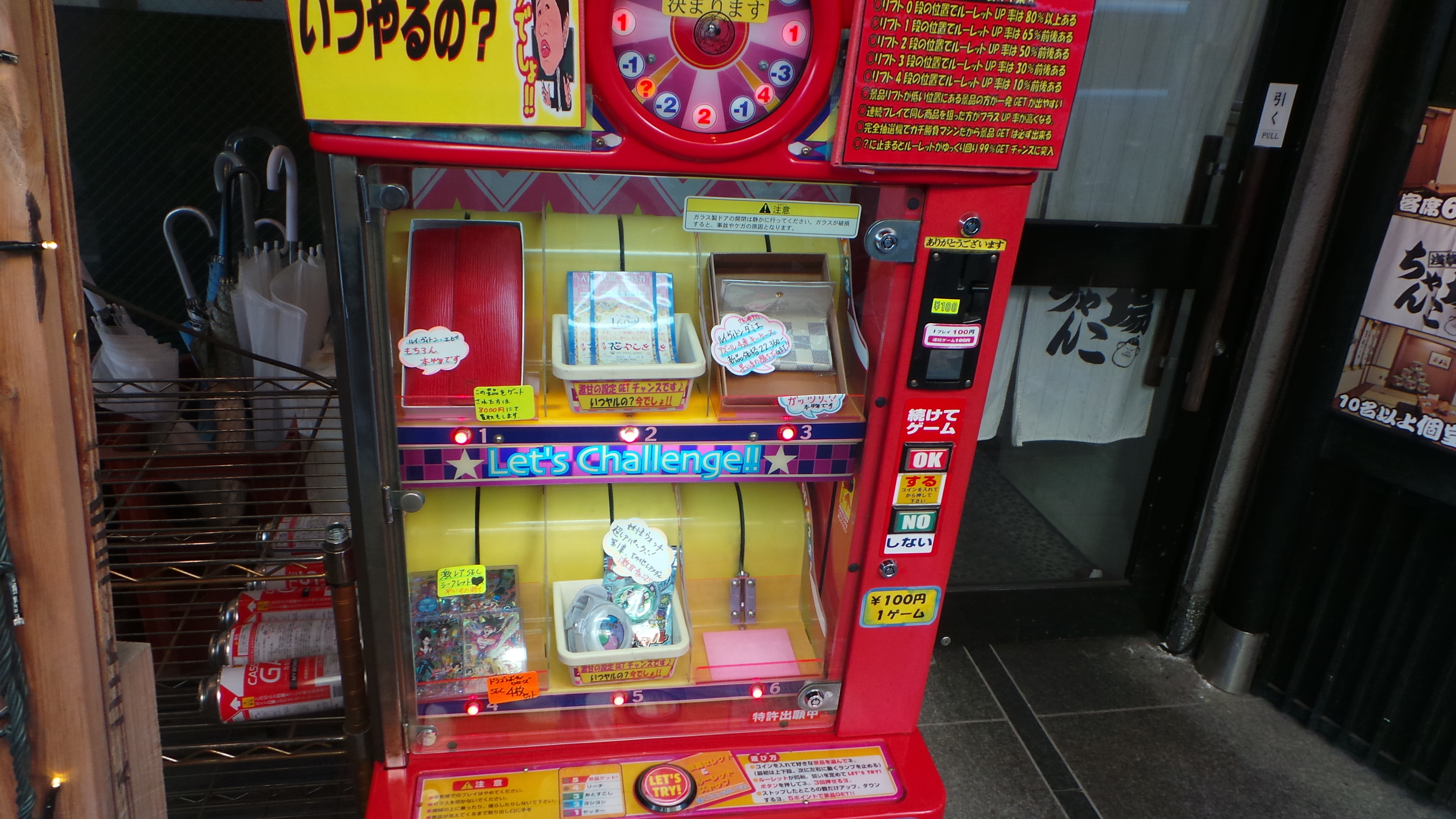
I wander back to Asakusa and am instantly drawn in by the flashing lights of a strange vending machine.

letschall

The machine costs just ¥100 and offers a chance to win excellent prizes. It’s called ‘Pocket Lifter,’ and presumably, it lifts money from my pocket by tricking me into thinking I can win one of the luxury prizes. Hidden behind its polished glass front are some trading cards, two Louis Vuitton purses, and tickets to Hanayashiki Amusement Park—the oldest amusement park in Japan. Despite seeing this park every day in Asakusa, I have yet to make the visit. However, Hanayashiki might have to wait a little while longer, as I am still somewhat traumatised by my recent visit to Tokyo Disneyland.

The machine says, ‘One-two-three-four-GET!’ Winning is as easy as counting. One of the Louis Vuitton purses can be won and sold for ¥8000 at a nearby shop, conveniently listed next to the prize—a gambling loophole once again exposed. Above the prizes, a wheel with bright flashing lights beckons, ‘Let’s Challenge!!’ How could I possibly resist? Keenly, I insert a ¥100 coin. ‘Thank you,’ the machine says as it swallows my money. The wheel spins and lands on the number one. The prize shelf moves up a fraction of an inch, then nothing happens. For a limited time only, I can get three tries for my money. I repeat the button-pressing process twice, and disappointment reoccurs twice more. No prizes, no amusement, no amusement park—just more bad fortune. Thanks, pilgrimage.