Fins Can Only Get Batter

Today, Christine and I head over to Tsukiji to visit a fish market. Outside the train station, the outer market is crowded with mostly tourists. It is fair to say that along the small streets lining the market, we are literally packed like sardines. Many small food stores sell fish caught fresh this morning, and the smell of fish is pleasant and anything but overpowering. The freshness of the food here can really be noted.

Buckets of huge tuna sit soaked in blood and ice. Live crabs try to escape their fate by crawling from weighing scales, and the hustle and bustle of the market is present at every turn.

bloodfish[1]

We wander the outer market and into what looks like a giant warehouse. This is the wholesale section of the market, and the biggest wholesale fish and seafood market in the world. People carrying huge white polystyrene boxes of frozen fish cruise past on electric bikes. Tuna that costs more than a house is on sale and on display. People are rushing. Market traders are yelling. It is all a bit overwhelming.

We wander the entire length of the wholesale market, which takes about twenty minutes at a hurried pace. At the other side of the market, we wander into a shrine to receive our fortune in the form of a sacred lot. One of the traditional cultures in Japan that you can experience at Japanese shrines and temples. We both pay ¥200 and both receive a ‘Very lucky’ fortune. We wonder if they are all the same.

After Tsukiji, we take the train over to Tokyo Big Sight. Outside Tokyo International Exhibition Centre, there are about one thousand people in cosplay, dressed as their favourite comic book characters.

comiket1[1]

Men dressed as women pose for photographs for a queue of excited otaku. A guy in a schoolgirl outfit follows us as we enter the main building. Today is Winter Comiket, a comic market event with a focus on independent manga artists. Ninety percent of the people here are men wearing glasses and conform seamlessly to the stereotype of a comic book fan.

Entry is free. Inside the West Halls, there are rows upon rows of small stands, each selling individual comic books. There is no stage. No other entertainment. Only comic books. I can understand the appeal to those who read manga, but for me, the event gives me very little satisfaction. In fact, Christine and I agree that it is all a little too much. The crowds are insane, and oddly, most of the comic books seem to feature covers that can only be described as pornography.

comiket2[1]

After ten minutes of wandering along endless rows of comics, we decide to leave. On the way out, we bump into Jeff. He is standing around playing with his ‘selfie stick’ with a disappointed look on his face. He only bought the stick today, but already, it has broken; perhaps through overuse, perhaps it was cheaply made.

We leave Tokyo Big Sight and walk across the Dream Bridge and the Teleport Bridge before arriving at Decks, Odaiba. We grab some cheap food at Yoshinoya, one of my favourite chain restaurants because it sells grilled eel with a bottle of beer at an extremely low price. After food, Jeff heads off, and Christine and I explore the area.

We are handed a flyer for the Tokyo Trick Art Museum. It looks interesting enough and is only ¥900, so we decide to take a look.

catflap[1]

The flyer says, ‘Do you want to play with Japanese ghosts and monsters? You can take funny photos. Don’t be scared. It is fun.’ The queue is mostly populated by families with children. Perhaps this isn’t for adults at all. Trapped in the queueing system, there is no going back, and eventually, we’re inside and being given a guided group tour of the museum, in Japanese.

We wander through the Edo area and the ninja house. At one point, we have to find a secret door; perhaps the most interesting thing in the museum. We take photographs in various positions, but they all turn out looking poor. We solve optical illusions, look at drawings from different angles, and get eaten by a whale. The best illusion is one of a vampire with a wine glass.

wineglass[1]

After the Tokyo Trick Art Museum, we head back to Asakusa, to Cafe Byron Bay, to drink wine. We opt for a relatively early night, tired from five days of constant walking around and sightseeing. Tomorrow, an eagerly anticipated trip to Tokyo Disneyland awaits.

Paint and Gunpowder

The four of us from last night absorb a new person into our group, a guy called Josh. We head out on foot toward Ueno Park. Today, the National Museum of Western Art is having a free admission day, and despite being in Japan, we consider it worth a look. We stroll inside and are asked to show our tickets. “Free admission day,” I tell the lady.
“You still need to get a ticket,” she informs me. We head out of the museum and to the ticket office. We ask for five tickets, and hand over no money before heading back inside and handing over the tickets to the lady. A rather trivial exercise.

museum[1]

The Museum of Western Art is the primary institution of its kind in Japan, emphasising paintings with a few sculptures thrown in for good measure. The museum is adorned with an abundance of macabre Baroque works, where death and torture seem to be popular themes. Amidst the horror, notable pieces include ‘The Last Supper’ painted by Marten de Vos, Vincent van Gogh’s ‘Roses’, and a rather disappointing collection of Claude Monet paintings. Not one to truly appreciate art, I find that Monet’s work looks terrible up close, especially ‘Water Lilies’, which, in my opinion, looks plain awful.

My favourite piece on display is Pablo Picasso’s ‘Couple’. Abstract expressionism has always been a preference of mine; I’ll take this over a bowl of fruit or a basket of flowers any day. Picasso painted this incredible piece at eighty-eight years old.

pablo[1]

We leave the museum and take a Yamanote Line train from Ueno to Ikebukuro. Outside the station, we need to head east. Josh turns out to be well-prepared, pulling out an actual compass and casually guiding us in the direction of east. This earns him the nickname ‘Compass Josh’ for the rest of the day, and he seems to take to the idea quite fondly.

The reason we are here is to visit a shop run by a company that has faced criticism for its practices, including accusations of contributing to infant mortality in underdeveloped countries due to its reluctance to spend extra profit on proper labelling for its baby milk formula. The shop sells a specific type of confectionery that is hugely popular in Japan. This two-fingered chocolate-covered wafer bar confection is available in many remarkable flavours, such as wasabi, strawberry cheesecake, and sakura.

While the others queue for their chocolate, I wander around outside and admire the street art.

ikart[1]

We head to a small coffee shop before making our way back to the train station. On the platform, two men are fighting. One guy stands up and walks away, his face dripping with blood, his eyes bruised. This is the first time I witness violence like this in Japan, and it comes as a bit of a shock.

I head home for a while to prepare for a performance this evening before meeting the others in Odaiba. Compass Josh’s partner, Jessica, has joined us, expanding our group to six. We explore the giant statue of Gundam before settling in the food court of Diver City, enjoying overpriced wine in undersized glasses. Outside Diver City, an extraordinary bus stop catches my eye, begging to be photographed.

extr[1]

Tonight in Odaiba, a special fireworks display is scheduled for 7 p.m. We wander around the area, with the evening darkness stolen by extravagant illuminations. There’s a feeling of forgotten Christmas lights here, and decorations that will likely remain year-round. Trees glisten, Tokyo Tower in the distance shines orange, and the Rainbow Bridge is bathed in a spectrum of light from red to violet.

We position ourselves on the balcony of the Decks building, a vast shopping mall offering a spectacular view of Tokyo Bay. At exactly seven o’clock, fireworks shoot into the sky, creating a dazzling display that lasts for ten minutes. Below us, boats are illuminated in various colours, their reflections shimmering on the water alongside the radiant Rainbow Bridge. Tokyo Tower continues to shine in the distance. The backdrop consists of a sea of lights from office buildings, adding to the immersive experience. In the foreground, the glow from the massive firework display warms the air, completing the enchanting scene.

odaibafireworks[1]

After the fireworks, we take the train back to Asakusa, passing by the Fuji TV building as it displays bright flashing text: ‘What a cool we are!’

Back in Asakusa, we part ways. I head to Cafe Byron Bay for a bonenkai, a ‘forget the year’ party widely celebrated here. The tap-dancing balloon artist, whom I first saw performing on the streets of Asakusa during my first week in Japan, is here to entertain. A belly dancer is also putting on a show. I perform with trumpet and guitar. Food is free and all-you-can-eat. Everyone gets very drunk. After the entertainment, we each give a speech about the year we’ve had and what we hope to achieve in 2015. My resolution and absolute aim are to publish a science-fiction novel.

After the end-of-year party, I head out with seven Japanese friends for a second night in a row of karaoke.

Tokyo and the Emperor of the Night

Christine and I meet up at 10 a.m., catching the Tokyo Metro Ginza Line to Shibuya. Today is once again warm, and all traces of Christmas Day are gone. There are no longer decorations outside shops, and the music of the festive season has been replaced by Taylor Swift, Oasis, and, of course, AKB48. Inside Shibuya Station, we spot another random horse.

shibuyahorse[1]

We head outside and into the scramble of people as we cross Shibuya Crossing. My opinion of the crossing remains unchanged; it’s just a road. Many tourists are gathered here, taking photographs of people walking along the intersection. This once again demonstrates the power of the guidebook — a simple mention of any place, and tourists flock there.

We wander through the chaos of Shibuya, passing bright lights and television screens practically shouting at us to buy things. However, there isn’t the usual post-Christmas shopping frenzy going on here; this is just a normal day in Shibuya. We decide to explore a building shaped like a castle, which turns out to be the Disney Store. The place is filled with stuffed toys and Italian puppets.

pinn[1]

With nothing worth buying and a planned trip to Tokyo Disneyland later this week, we leave the Disney Store empty-handed. Next, we walk to Harajuku Station and take a stroll down the trendy Takeshita Street, full of teen fashion and crêperies, before heading over to Meiji Shrine. While waiting to cross the road, I notice the monk who tried to scam me almost six months ago is still here, attempting to lure in tourists. I simply laugh at him and shake my head as he tries to hand me his gold Siddhārtha Gautama card

We wander into Meiji Shrine, a serene Shinto shrine dedicated to the spirit of Emperor Meiji. As we stroll along the path, absorbing the tranquil atmosphere, a friendly Japanese person notices us and begins to wave, their warm greeting adding a touch of local hospitality to our visit.
“Hello, welcome to Japan,” he says enthusiastically. “Are you American?”
“No, from England.”
“Ah, England! Where in England?”
“Close to Manchester,” I tell him, avoiding the need to explain the location of my unknown town.
“Ah, Manchester United,” he says, “Soccer.” He makes a kicking gesture, emphasising that soccer means football. The man modestly plays down my remarks about his English ability before going on his merry way.

We pass through wooden torii gates and by massive barrels of donated sake before heading to the main shrine.

meijisake[1]

The cleansing ritual has become second nature to me now, and Christine manages it perfectly, despite having only done it once before. We wander around looking for a place to get our fortunes, hoping to rectify the ‘Bad Fortune’ from yesterday, but it doesn’t appear that this service is offered here.

We wander the length of the shrine and exit on the other side, finding ourselves amidst the vibrant carnival that is Shinjuku. We stroll through Shinjuku Park Tower, the building that houses the Park Hyatt Hotel, famous not only in its own right but also well-known for its feature in the movie Lost in Translation.

We head to the Tokyo Metropolitan Government Building, only to be unexpectedly attacked by a masked assailant inside.

attacked[1]

The oni, a demon in Japanese folklore known as a ‘Blue Devil,’ surprisingly works for the Japanese Government. Guiding us, he directs to the lift, and we swiftly ascend to the 45th floor of the building.

From the panoramic observation deck, I can see Mount Fuji in the distance. Its snowy white peak blends seamlessly into the clouds, and if you didn’t know where the mountain sits on the horizon, you would never know it was there. Huge office buildings sprawl in every direction, making Tokyo look endless from this height.

govtbldgs[1]

I check out the tacky souvenirs and discover that my name in Japanese kanji can mean ‘Lapis Wings Eternal.’ However, given the multiple meanings kanji can have, I opt for a more impactful name. From the available possibilities, I decide that my name actually means ‘Nine Immortal Dragons.’

We leave the government building and make our way to Shinjuku Station. After queueing at the ticket office for about ten minutes, we hand over the tickets from our Narita Express debacle yesterday. We successfully manage to get ¥3800 of our ¥6780 refunded, a welcome bonus. With a sense of triumph, we decide that the Japan Railway Company will be covering the cost of our tempura lunch.

We wander through Shinjuku for a while before deciding to head back to Asakusa. I consider buying a coffee but can’t decide whether I want black coffee, black coffee, or black coffee.

Tullychoice[1]

Back in Asakusa, we meet up with some of the other people staying in the hostel, Jeff and Ajitan. The four of us head out for a quick drink at Nui before taking a taxi over to Ryogoku. We find ourselves at a bar called ‘Popeye,’ a delightful place boasting seventy-four different craft beers on tap. Following the bar, we return to Asakusa for some affordable Chinese food before ending the night with karaoke and all-around merriment.

Ticket to (almost) Ride

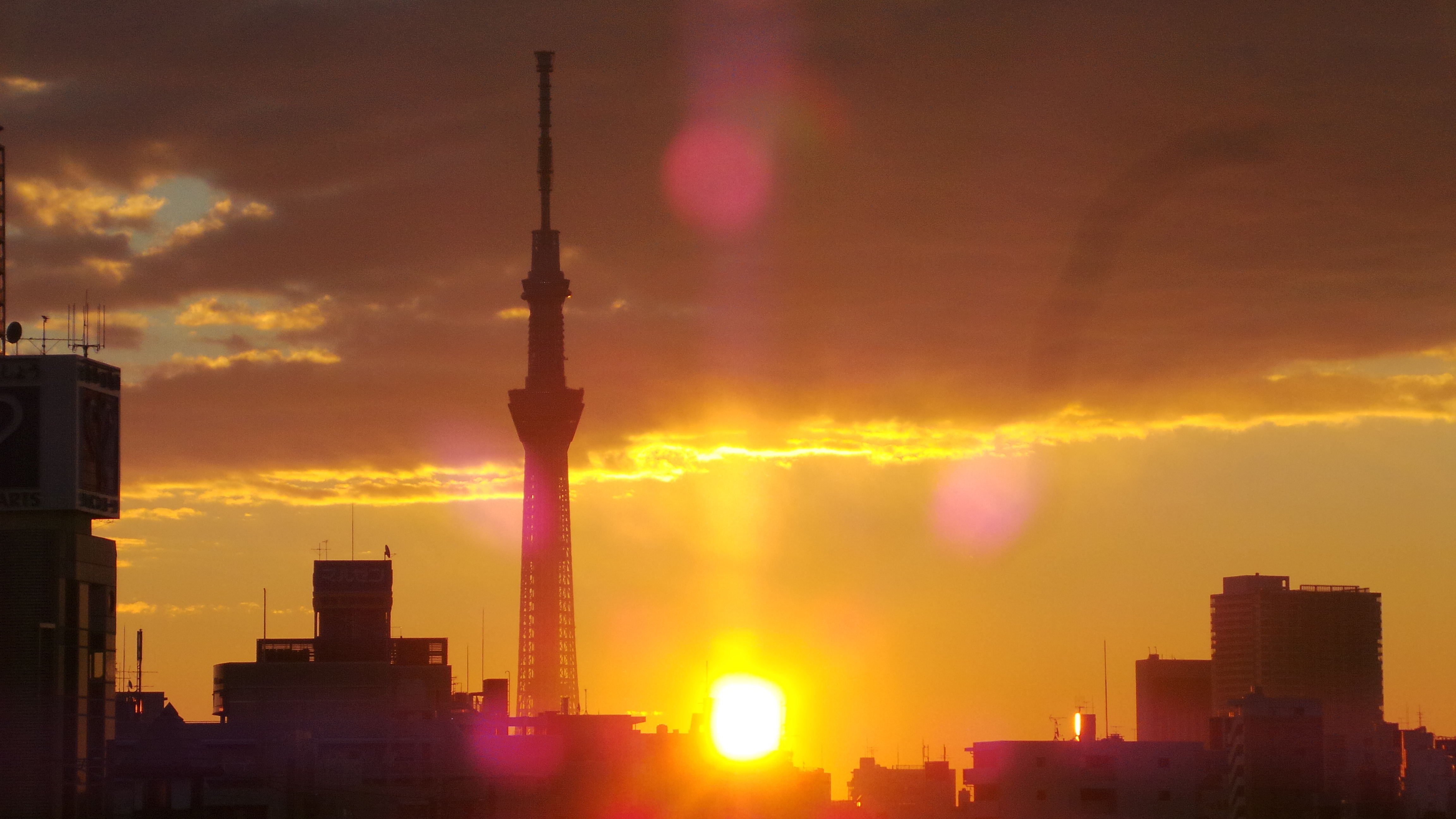
Today is Christmas Day. I wake up at 4 a.m. with a Christmas party hangover. It is too early to think, but I have things to do. Today, my friend Christine is arriving in Japan from England, and it is my job to act as a tour guide for the next few days. I walk to Nippori Station and arrive a little too early for my train. In order to kill time, I wander over the tracks to witness my second sunrise in Japan, the warm winter sun silhouetting Tokyo Skytree. My photograph is ruined by a smudge across my lens.

20141225_065945

Inside Nippori Station, it’s business as usual. Today might be Christmas, but for Japan, nothing changes. Salarymen dash to make their connections on the busy trains, Seven Eleven workers look exhausted from a heavy night shift, and ‘Let It Go’ blares from every speaker, as usual. It’s a normal business day here in Tokyo.

I take the Keisei Skyliner to Narita International Airport and wait. Eventually, my friend appears wearing a knitted Christmas jumper and a Santa hat. Despite seeing her in festive garb, it never really feels like Christmas. No trees and no snow; in fact, another clear warm day. There is no Christmas music in the airport either, just the constant drone of nonsensical announcements.

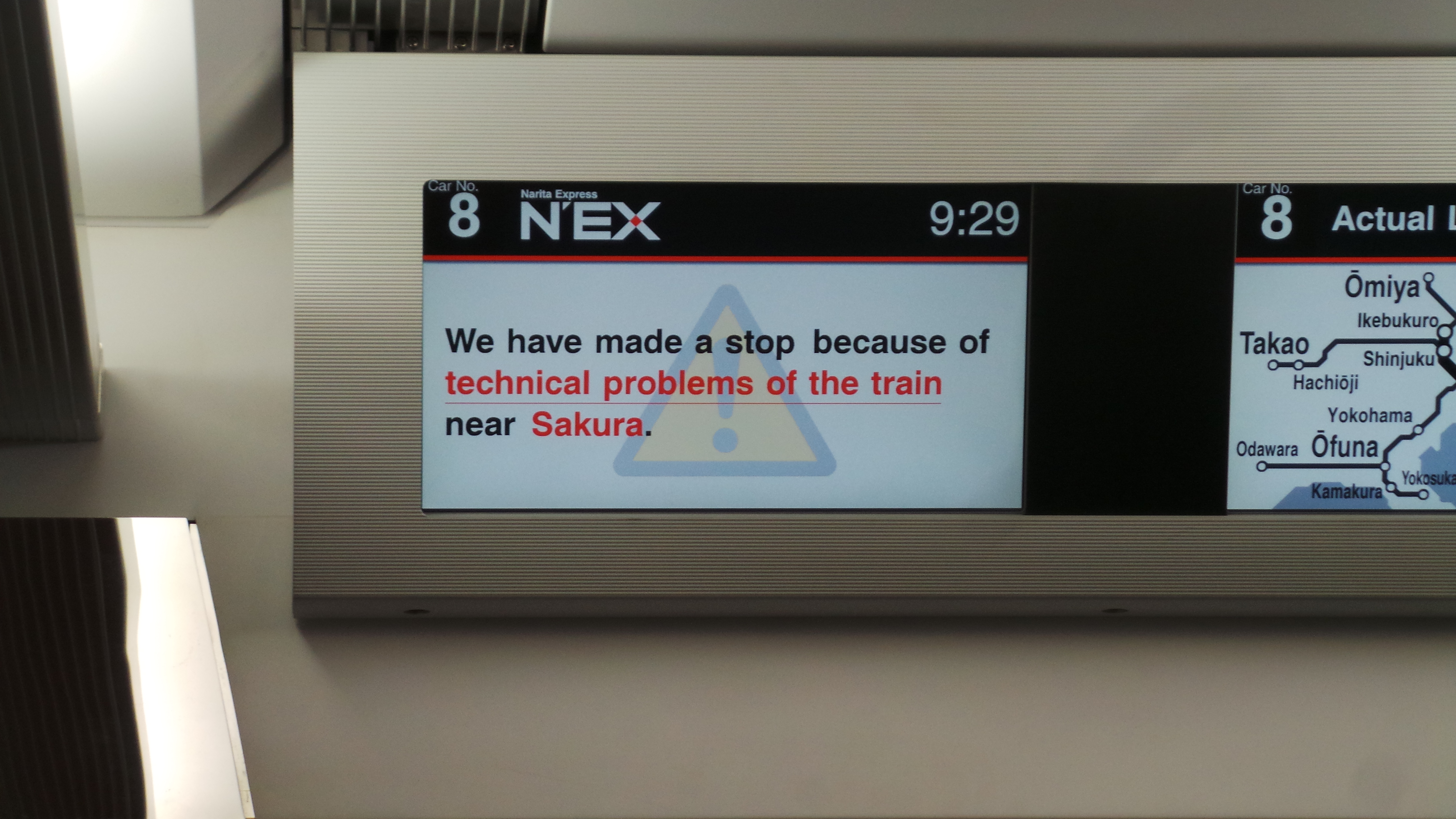
We take the Narita Express bound for Shinjuku Station. The Narita Express describes itself as ‘fast, convenient, and pleasant to ride,’ but never has a quotation been so far from the truth. On the train, Christine makes an offhand comment about whether things ever break in Japan. I tell her, ‘This is Japan,’ which translates to mean, ‘Things never break here.’ No less than five minutes later, our ‘pleasant to ride’ train crawls to a halt outside Sakura Station.

20141225_093039

We sit on the train for what seems like an hour before an announcement in Japanese tells us all to get off. A kind Japanese man sitting one row in front of us explains to us in English what is happening. We have to take a Sobu Line train from here to Chiba before continuing toward Shinjuku on local trains. For some unexplained reason, the Narita Express and the rapid line are out of action. Apparently, our ¥3390 tickets can be refunded in Shinjuku.

Not wishing to spend all day sitting on trains, we decide to get off close to Asakusa. We wander to Senso-ji Temple to get our fortune, something that I very much enjoy doing. Christine receives a ‘Bad Fortune’ and leaves it for the gods. We eat sushi at my favourite standing sushi restaurant before taking the train to Akihabara.

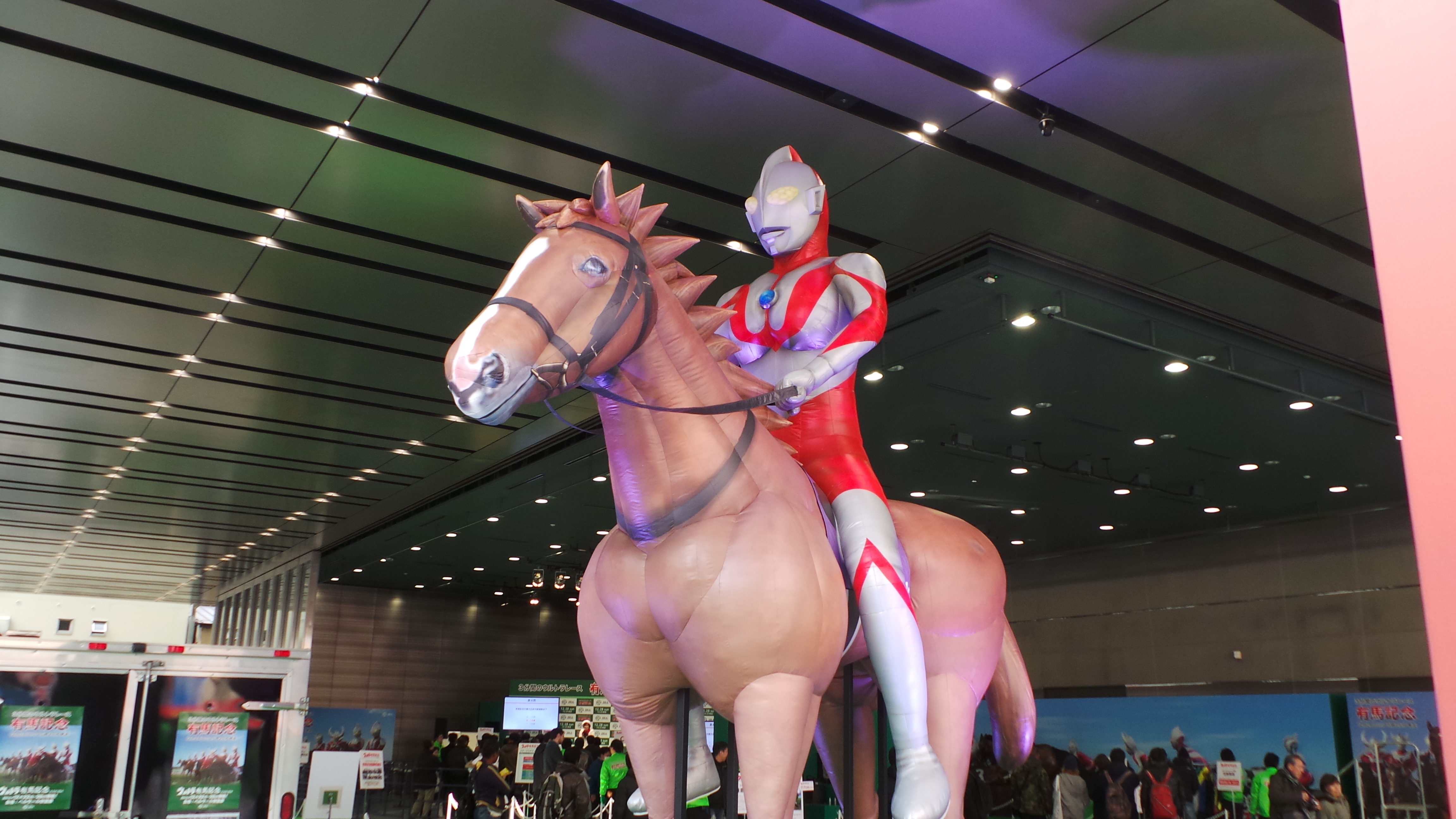
In Akihabara, for reasons that can’t be discerned, Ultraman is seen riding a horse.

20141225_133741

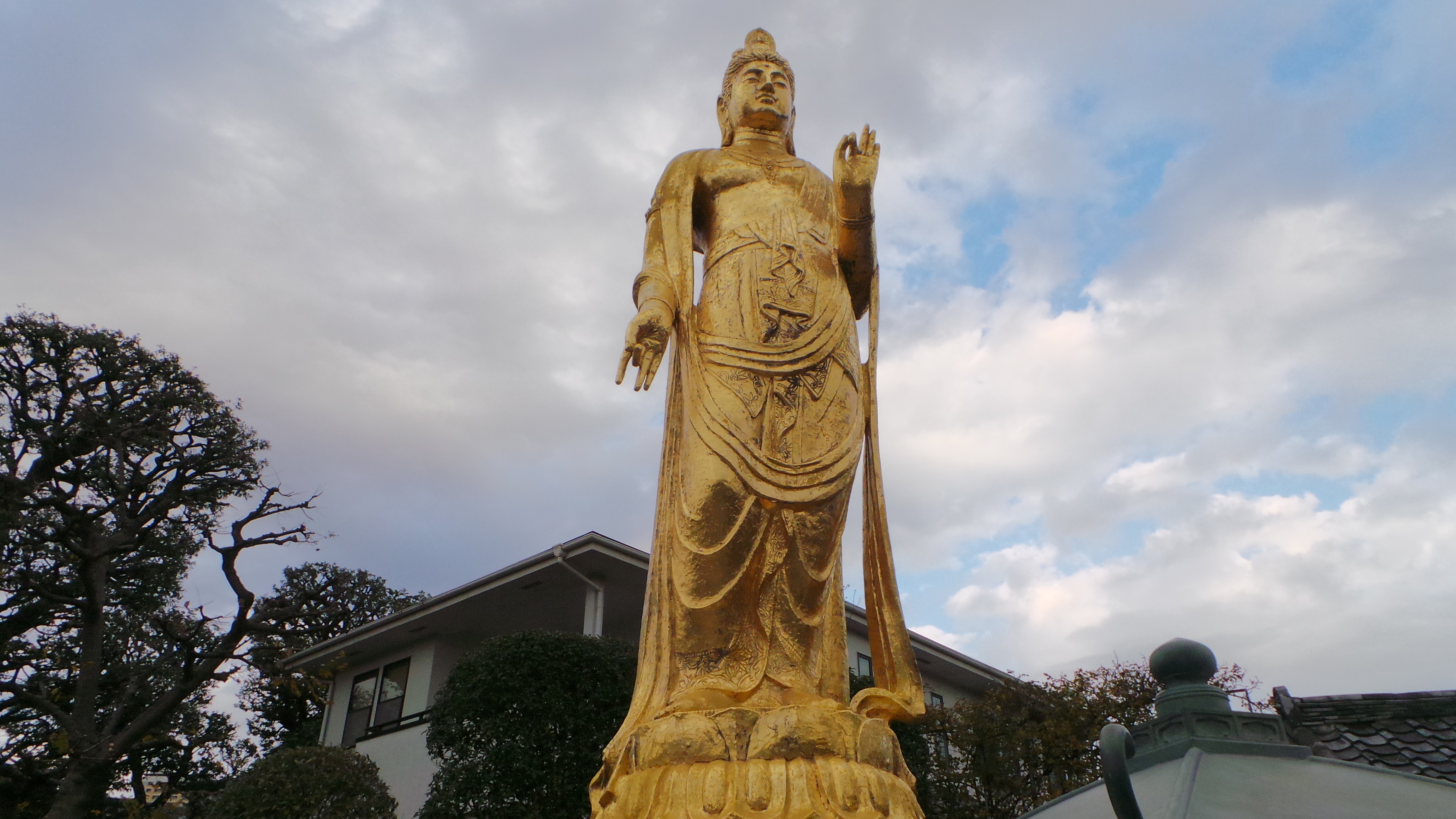
We hop on a Yamanote Line train and get off at a random station. Her choice is Nippori, my fourth visit to this station this week. We wander across the tracks and explore the many temples and shrines. Passing through Yanaka Ginza Street, we stop off at a small park. Tired and with feet hurting from too much walking, we take a breather at Zenshoan Temple. As we enter the temple grounds, in the distance stands a huge gold statue.

20141225_150326

The statue of Kannon is impressive, but what is potentially even more captivating is the Ghost Museum. Sadly, the museum featuring silk scroll paintings depicting ghosts and macabre ghost stories is only open during the summer months. There’s something about horror stories warming your blood, which is the reason for the seasonal opening hours.

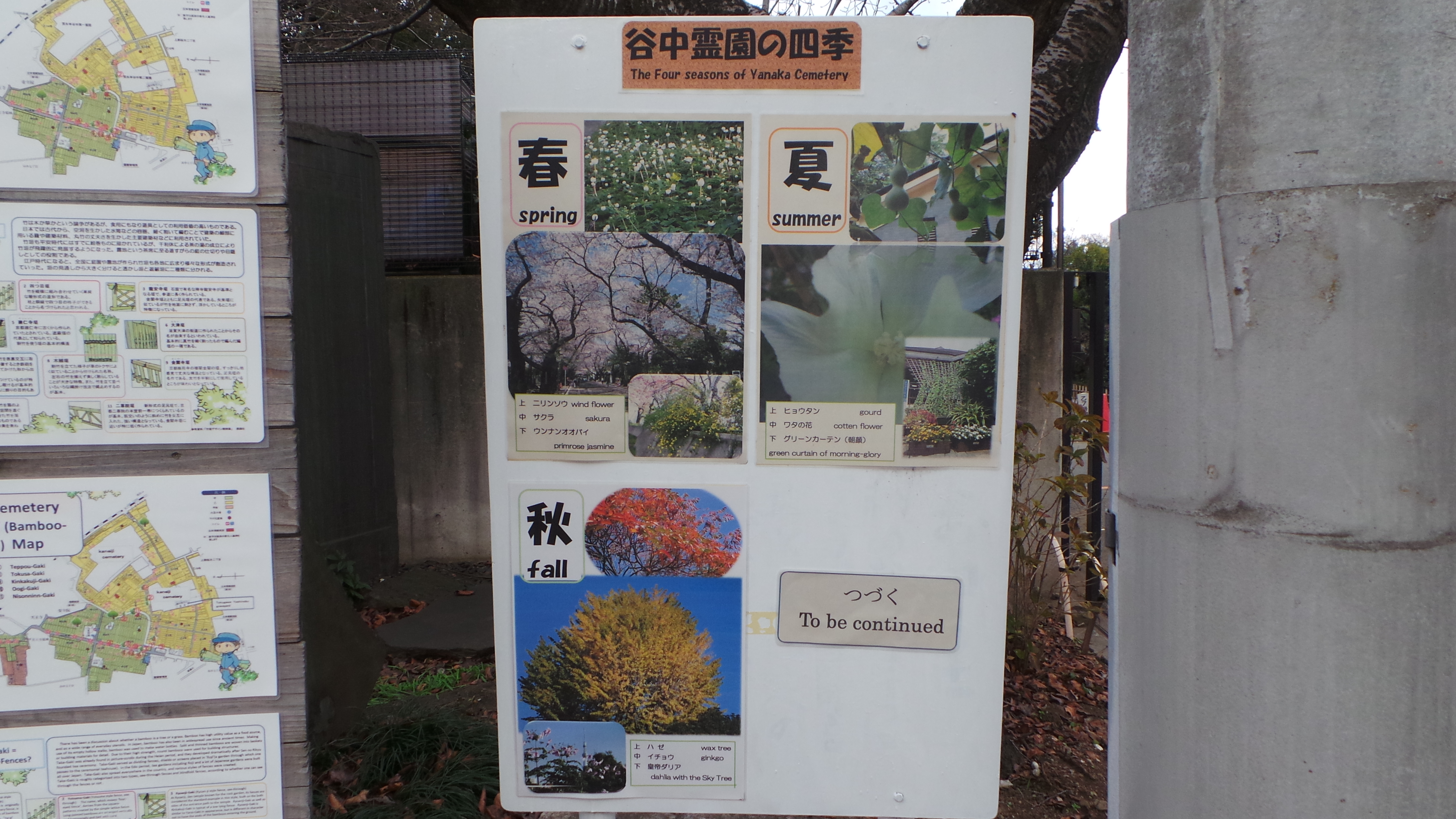
With all this talk of spirits, we take a wander through Yanaka Cemetery. I have visited here once before and found it incredibly peaceful, and do so now. There’s something about the perfect rows of decorated graves that is somewhat calming. Perhaps the quiet all around adds to this feeling. For some reason, the unfinished sign doesn’t display how winter should look here. The row of sakura trees and blossoming primrose jasmine in spring is a reason to once again walk among the dead next year.

20141225_151114

We head back to a hostel in Asakusa, the same one I had previously stayed at for eighty-two days. Tonight, the hostel is having a Christmas party, and Santa Claus will be arriving at half past eight by subway train. Exhausted from a long day and in need of my own bed, I decide to give the party a miss and head home.

Back in Minowa, I dine on Domino’s Pizza (four seasons) and a New York Cheesecake. I could post a photograph of a Japanese pizza from Domino’s, but it really isn’t any different from anywhere else. Instead, here are some instructions for Christmas decorations that I saw earlier today:

letsdecorate[1]

Merry Christmas.

A Wild Frog Chase

My morning starts with an unexpected knock at my bedroom door. Upon opening it, I find one of the Japanese men who live in my house standing there with a white carrier bag full of bread. Normally, I would find this unusual – a man at my door, giving me bread at 10 a.m. when I should be sound asleep. However, nothing is usual in my apartment. This same man, two weeks ago, gave me a box of laundry powder for no particular reason. Moreover, he believes I am fluent in Japanese. Not once has he engaged in a conversation with me in English. I simply nod, mutter some of my limited Japanese in his direction, and accept the loaf of bread.

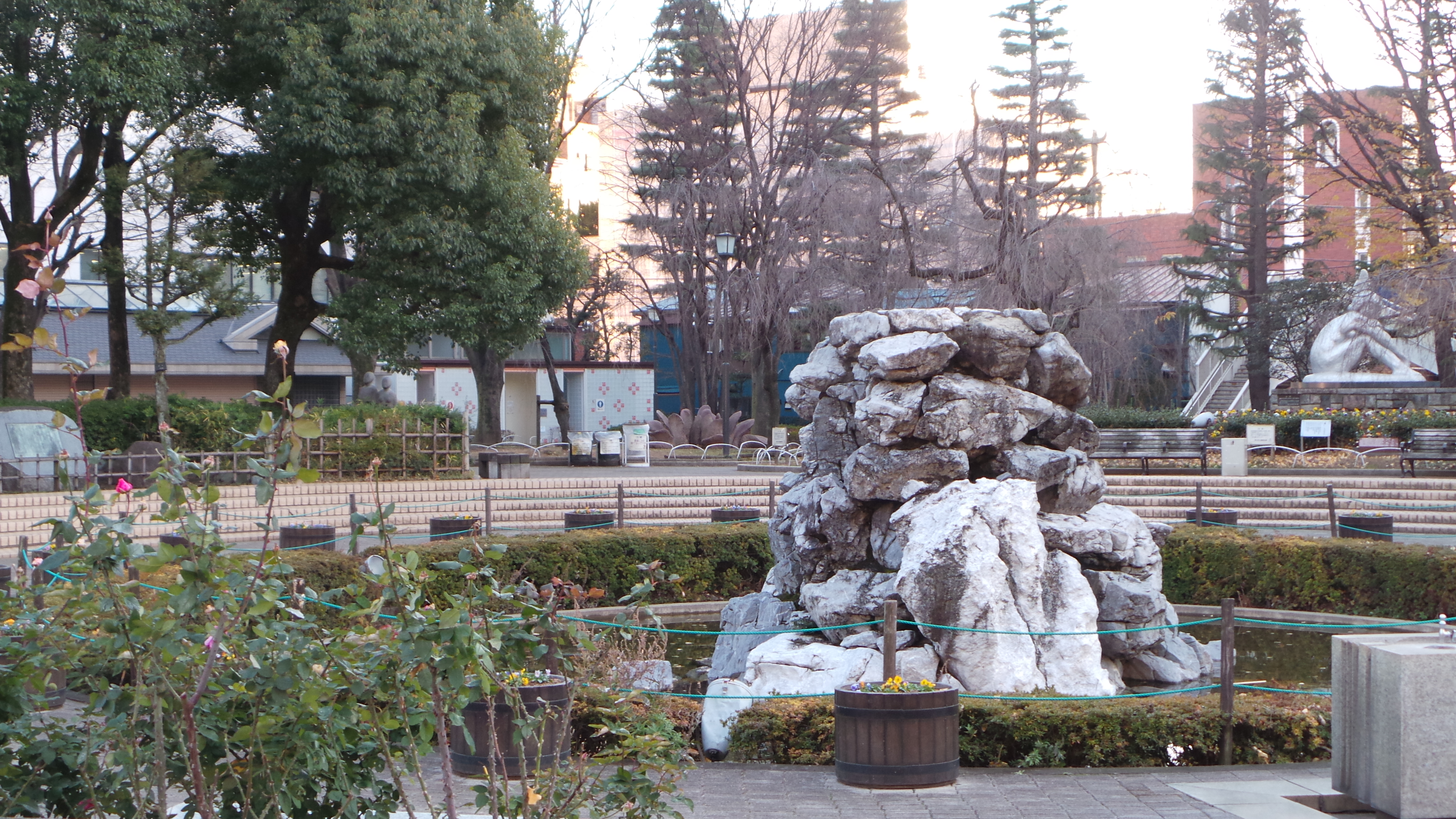
With the thought of the donated bread weighing on my mind, I decide to hop on my bicycle and head to the nearby Arakawa Park, a place I haven’t visited before.

Arakawapark

This park seems to have somehow partially escaped the shedding of its leaves. On one side, it is skeletally bare; on the other side, it flourishes with nature. Laundry powder and bread. It is no secret that since being in Japan, I have lost an extreme amount of weight. Week by week, I find myself becoming skinnier, although previously, I didn’t think such a possibility could even exist. Perhaps that offers an explanation for the bread. However, my clothes are in no way dirty and in need of additional laundry powder.

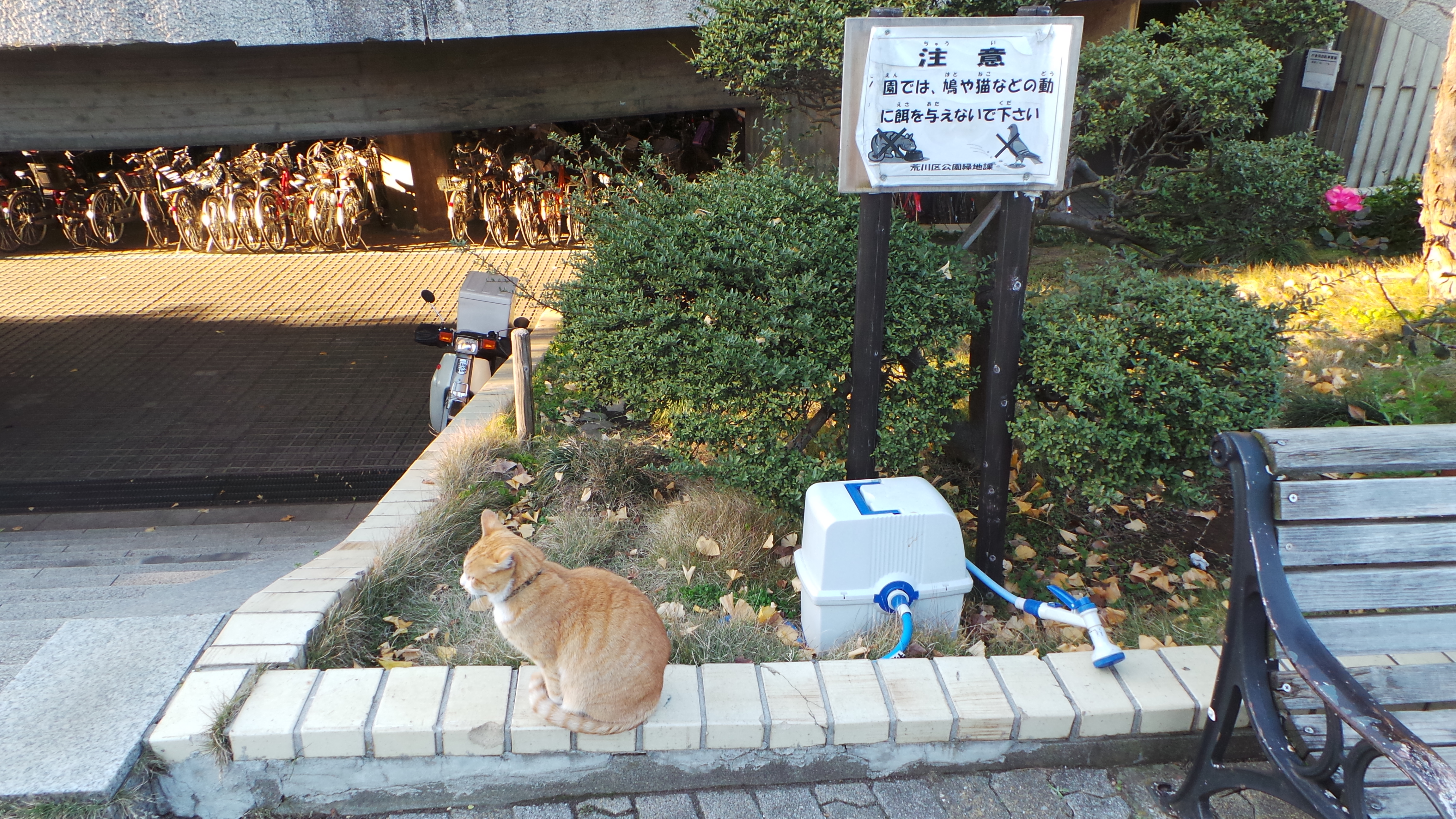
I park my bicycle and take a seat on a bench to read my book: Murakami’s ‘Super-Frog Saves Tokyo.’ After consuming the book from start to finish, I take a little wander around the park. I come across a sign that says, ‘Do not feed the cats or pigeons.’ Oddly enough, I’ve seen multiple signs about feeding pigeons, often adorned with amusing text in speech bubbles, such as, ‘Don’t feed me; I can get my own foods.’ However, this is the first time I’ve seen a sign specifically addressing not feeding felines. With perfect timing, a cat appears from nowhere and takes a seat directly in front of the sign.

dontfeedthecat

The ginger cat decides to follow me around the park, meowing at me for food. Cats of this colour seem to have a habit of trailing behind me. I wander amongst the threadbare trees and reach a stone gazebo. Beneath the shelter, the homeless roam – about ten in total, walking around seemingly without purpose, wearing threadbare clothing to match the trees. They resemble characters in the starting area of an online role-playing game: lost, confused, and not knowing where they’re supposed to go. It strikes me that these people, much like the poor cat, actually don’t have anywhere to go.

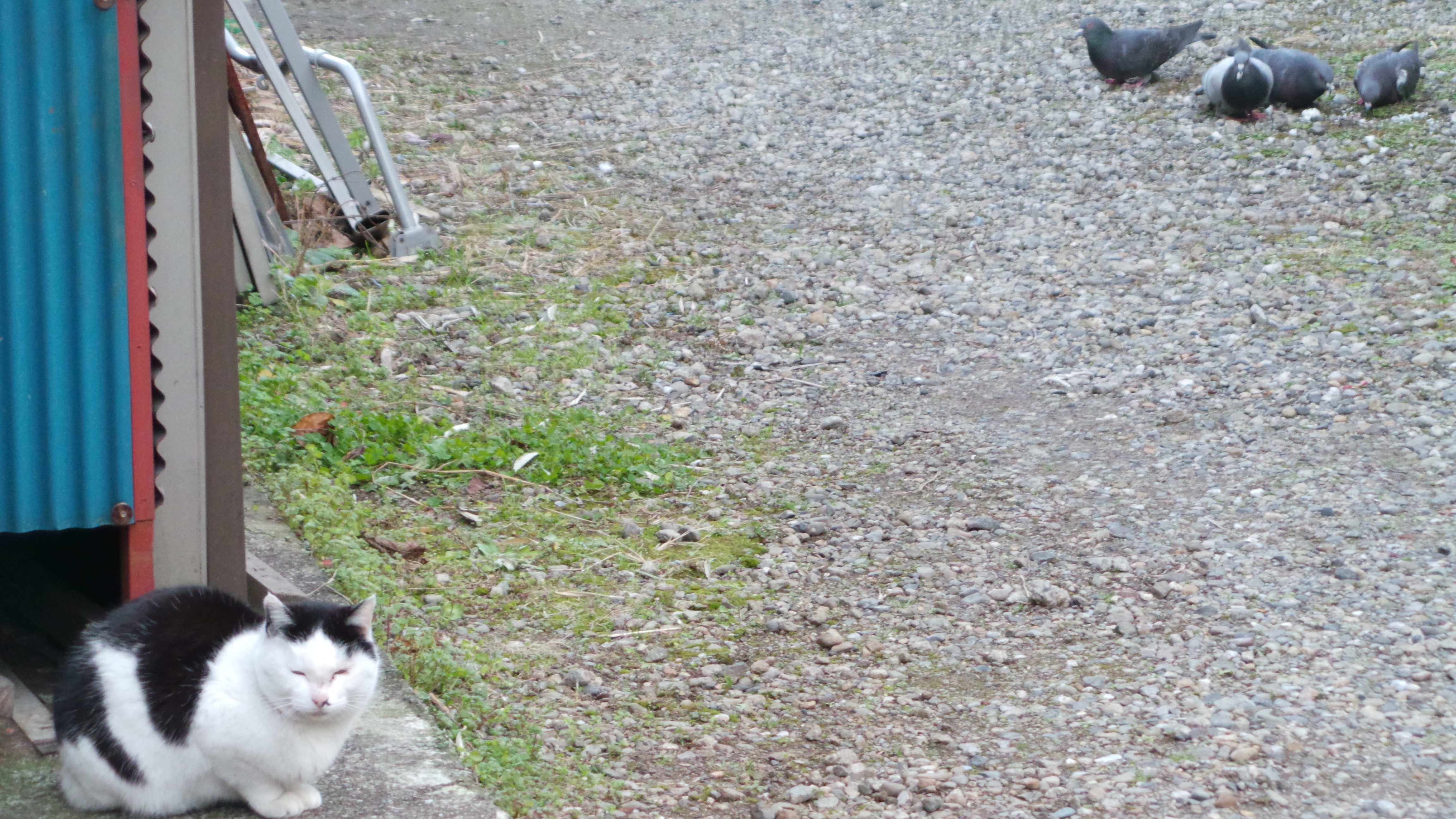
I leave the park and stop off at a nearby shrine, only to be chased away by two massive guard dogs on leashes. Clearly, this shrine doesn’t welcome tourists. A little further up the road, I realise that as this day becomes more about animals, a better choice of reading material today would have been Agatha Christie’s ‘Cat Among the Pigeons’ because, for a second time in an hour, that’s exactly what I see.

catsandpigeons

Leaving the stray cats behind, I cycle toward Nippori. One of my favourite things to do to keep myself occupied in Tokyo is cycling on warm days and exploring new areas. Without any real destination, I often pedal along, discovering random things that interest me. Today, the low winter sun provides the heat, and the opportunity to explore is seized.

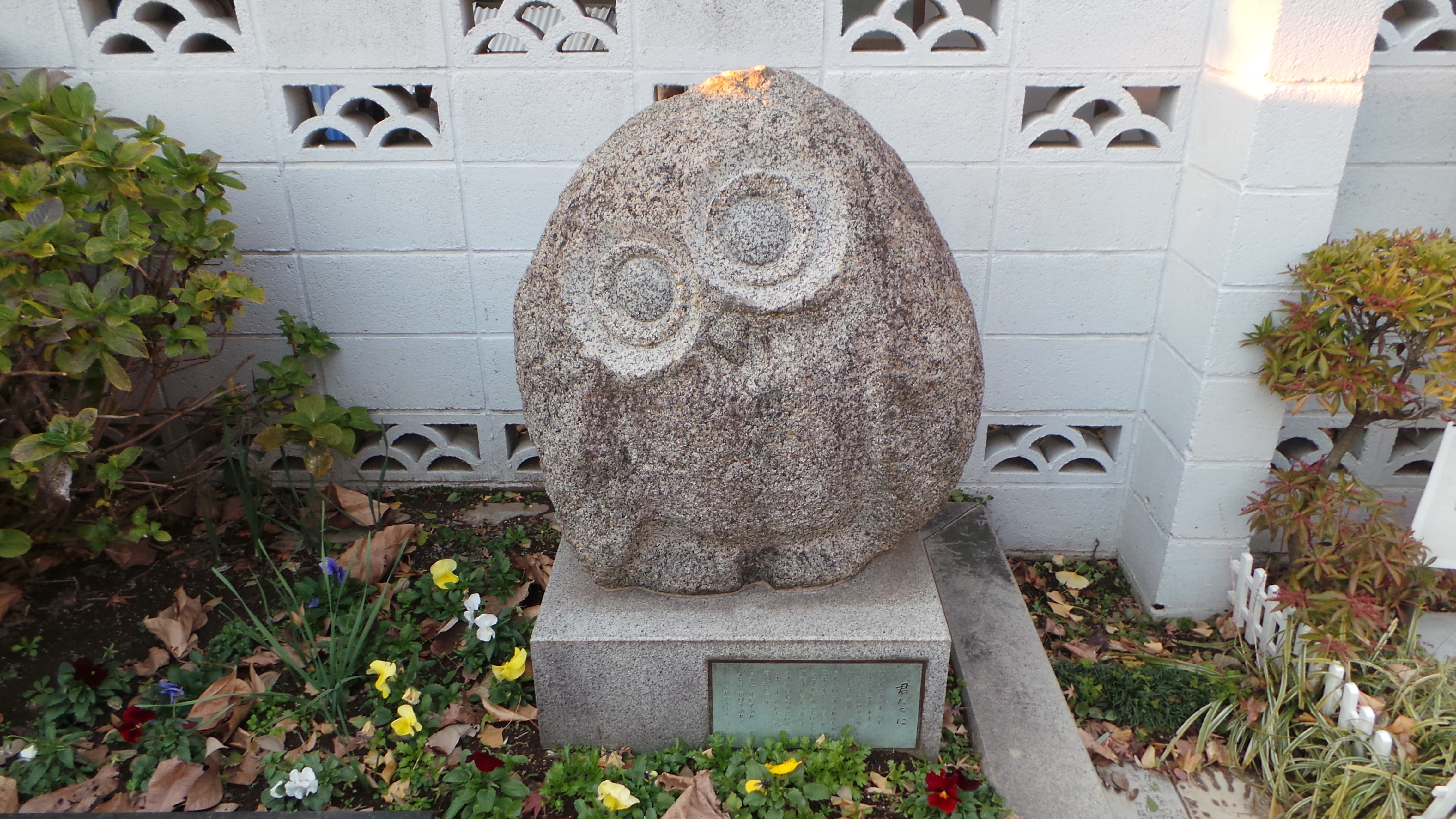
I cycle through Fabric Town, passing a couple of interesting shops along the way. Highlights include a leather shop called ‘Touch of Fleather,’ a shoe store named ‘And Shoes,’ and a textile shop simply called ‘Tomato.’ After arriving at Nippori Station, I carry my bicycle up some steps and over the tracks. On the other side of the tracks, I am greeted by another bird in the form of a giant stone owl.

owlmonument

The owl describes itself as a ‘Memorial Monument for Takamura Kotaro,’ a famous Japanese poet and sculptor. Why they chose to honour his life with a statue of an owl is beyond me, but it looks nice, so I thought I would include it. The owl sits on Suwadai Street, a peculiar street that is at an elevation higher than the skyscrapers beyond. Additionally, the street boasts fifteen different temples and shrines.

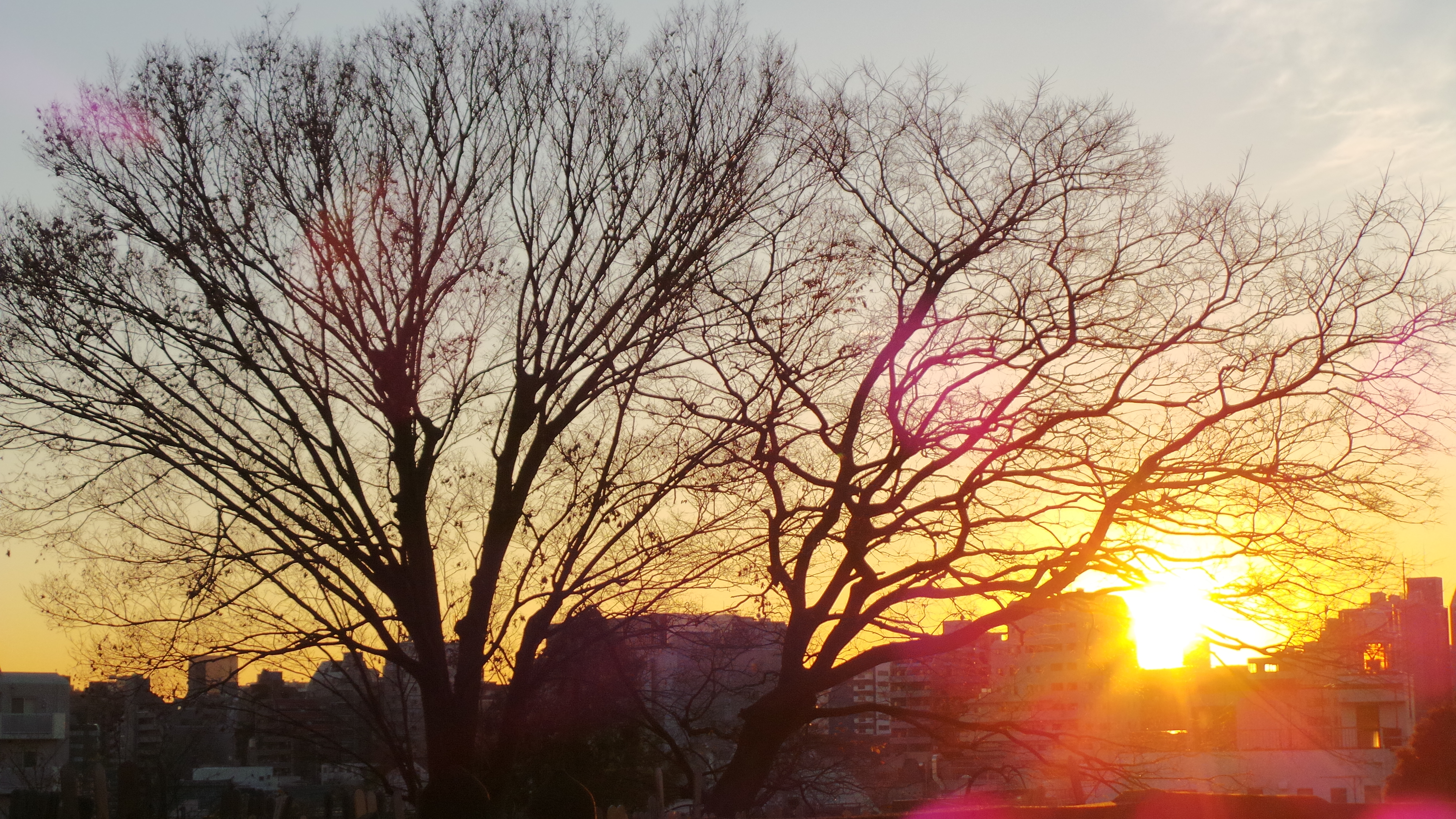
I check the GPS on my camera to make sure that I’m still in Tokyo. Up here, even though I am just twenty minutes from my house, it feels like I am in the middle of the countryside. The nature in this area is simply stunning. I see a few signs with directions to a viewing point. On a clear day, I can witness the spectacle of a Mount Fuji sunset, where the sun and the mountain share the horizon. Unfortunately, I can’t see Mount Fuji — the story of my life. Nevertheless, I do get to witness the setting sun over a distant Tokyo skyline.

Nipporisunset

I cycle away from the temples, shrines, and stunning views, heading into Yanaka. The area is still uphill and features many old houses surrounded by leafless trees. I end up at a small market along some narrow streets: Yanaka Ginza Street. Conveniently downhill, the opportunity to cruise along, engaging in window shopping, controlling the flow of bicycle wheels with intermittent braking, is an enjoyment in itself. Navigating between the crowds of people, I narrowly miss shoppers who are presumably there to buy things they don’t need to impress people they don’t care about. As I try to remember a quote from Palahniuk’s ‘Fight Club,’ I get distracted and almost crash into a woman carrying a baby. Naturally, the baby starts screaming in fits of hysteria, so naturally, I cycle away as fast as I can.

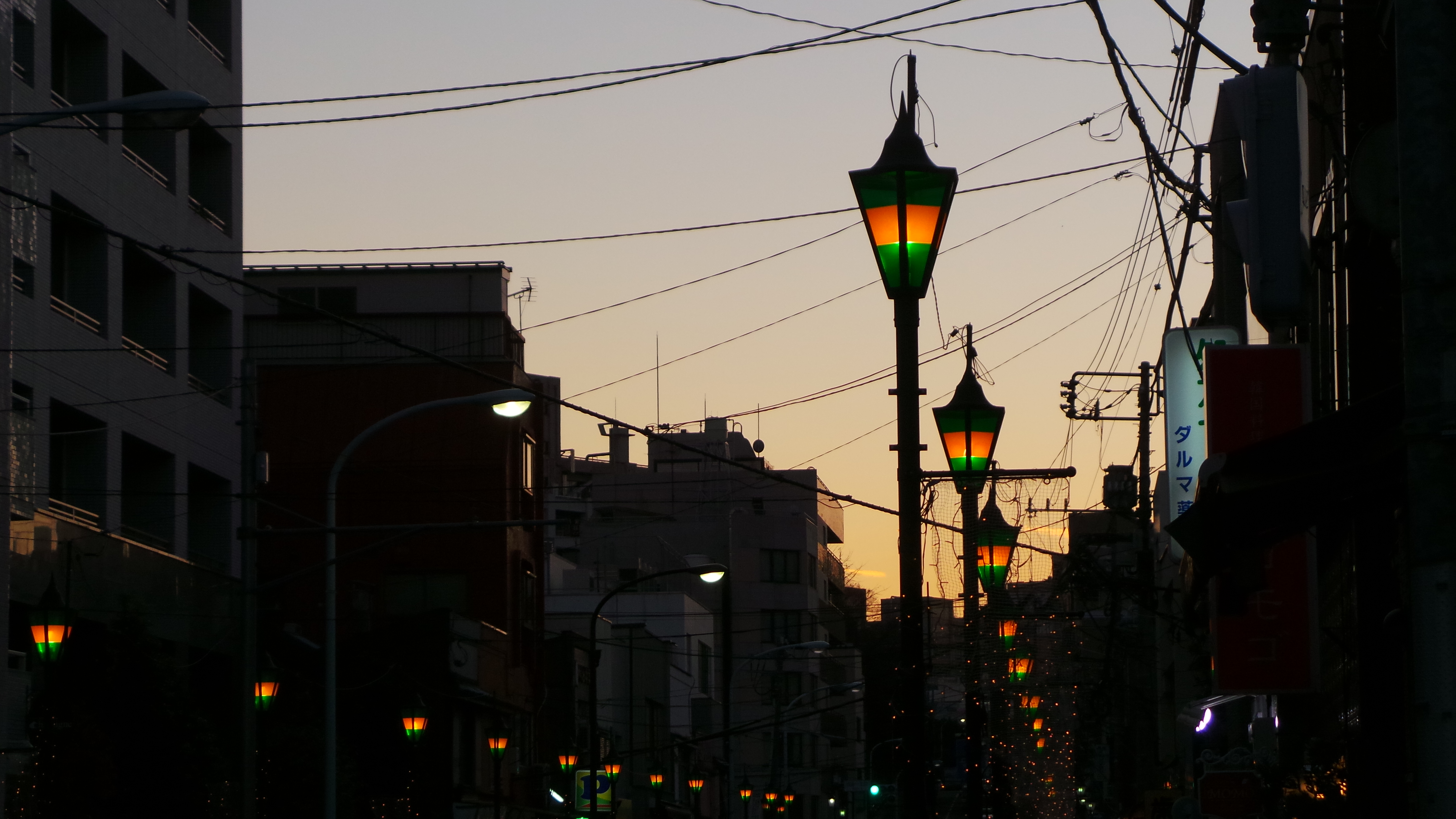
I continue cycling until I arrive at another new place, Nezu. The streets here are adorned with beautifully crafted old lampposts and festive Christmas lanterns.

Nezu

Apart from a full-size train carriage parked randomly on the footpath, there isn’t much else to see in Nezu, so I head back toward familiarity. Outside Ueno Park, I study the map, desperately looking for something of interest. Four museums, but all presumably closed today; that’s how these things usually go. Then, something on the sign catches my eye. Perhaps it’s because I read about a character called ‘Frog’ today, or maybe some other intuition takes over, but the moment I spot a tiny dot on the huge map of Ueno Park below a caption saying ‘Fountain of Frog,’ I know that this will be my final destination today.

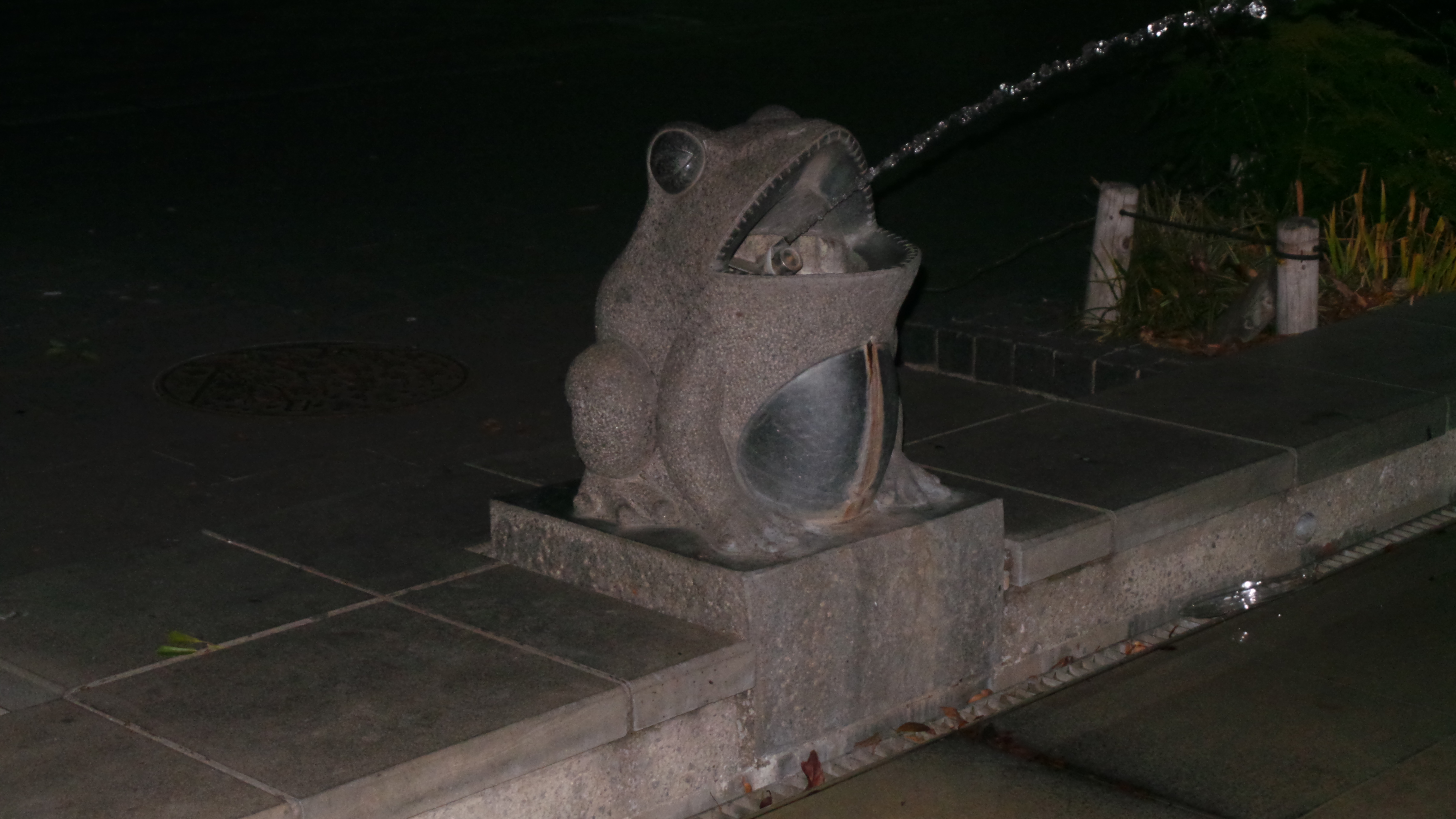
I search the park, passing dying crops and concrete views. After thirty minutes, the sun has completely set, and the weather has turned cold. Fierce winds chill the air but aren’t strong enough to dissuade my search. I cycle around the park, and each time I spot a map, I stop to double-check the location of the fountain. I often find that the fountain has changed its location from one map to the next, and on other maps, it has disappeared completely. Not one to give up on a personal challenge, I persist in my search for the elusive Fountain of Frog. Eventually, after forty-five minutes of cycling around Ueno Park, I find what I’ve been looking for.

frog

As it turns out, the Fountain of Frog is exactly what it sounds like: a small statue of a frog spitting water into an even smaller fountain. I head home, my mind filled with a sense of disenchantment. It’s a rather disappointing end to the day, but at least I have bread.