The Age of the Gods

Today is National Foundation Day, the day that Emperor Jimmu was declared the very first Emperor of Japan, 2675 years ago. This marked a transitional period in the country’s history, ending what was known then as the Age of the Gods. It is often believed that before the accession of Emperor Jimmu, Japan was founded in an entirely different way.

It was once widely believed that the universe was engulfed in a chaos of sorts. The sound of particles moving around in a ball of confusion somehow created light. This light sat above the universe for a long time. Eventually, the particles began to fall, creating a blanket of clouds. From the clouds, five gods known collectively by the name Kotoamatsukami appeared from seemingly nowhere.
sunshinesumida

The five gods decided to cast four single droplets of water onto the oceans that formed on the planet below. Miraculously, these four drops materialised into huge land masses that are recognised today as the four main islands of the archipelago known as Japan.

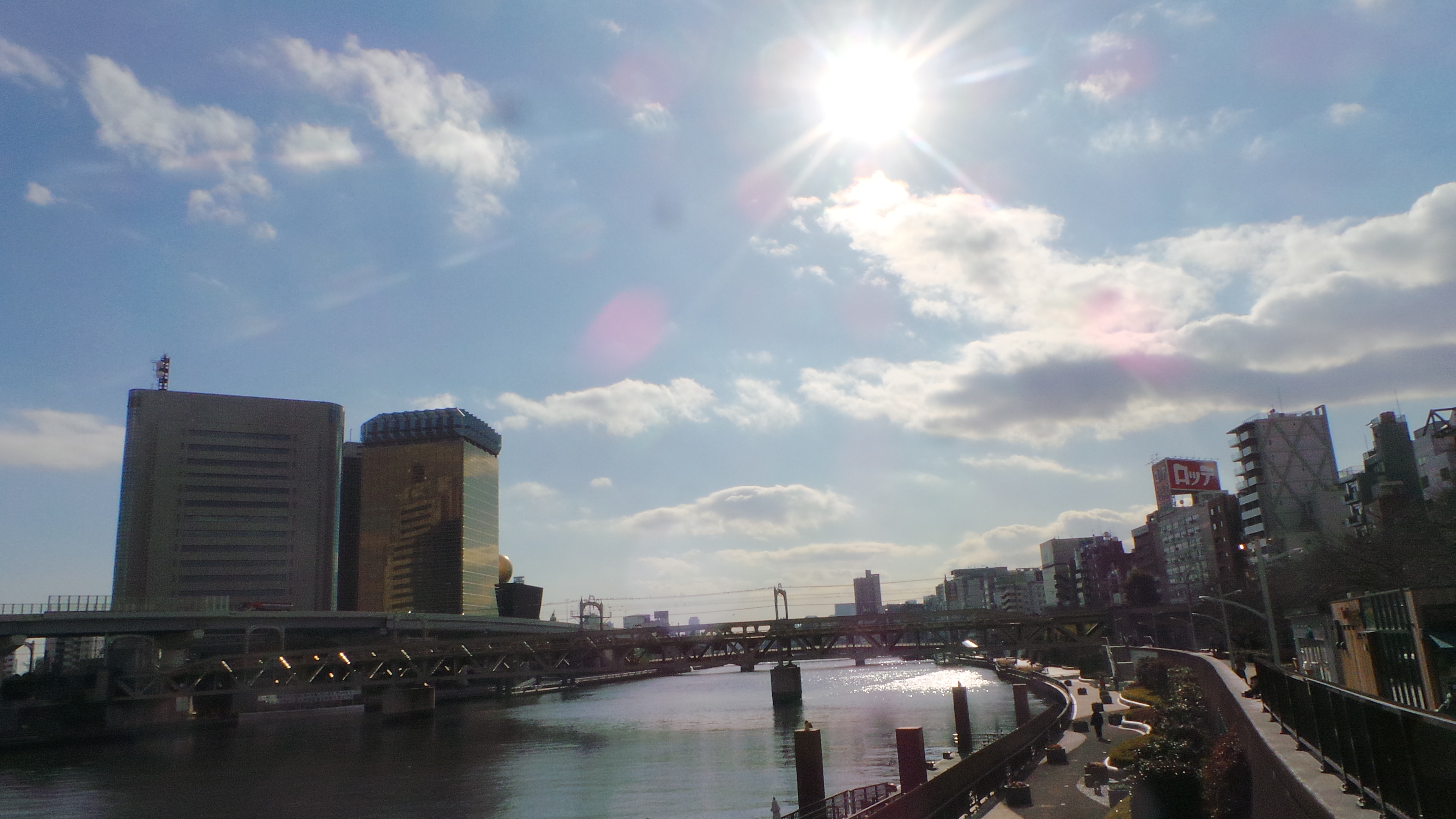
I take to the Sumida River to look at the sunshine and the clouds and think about the formation of the universe. The story of Japanese creation seems to completely exclude the genesis of all the other landmasses on the planet, but oddly, the theory is still believed today by some Japanese people. With no celebrations at all taking place, I decide to follow the path of the river in a new direction and end up in the area of Hashiba.
hashibagraff

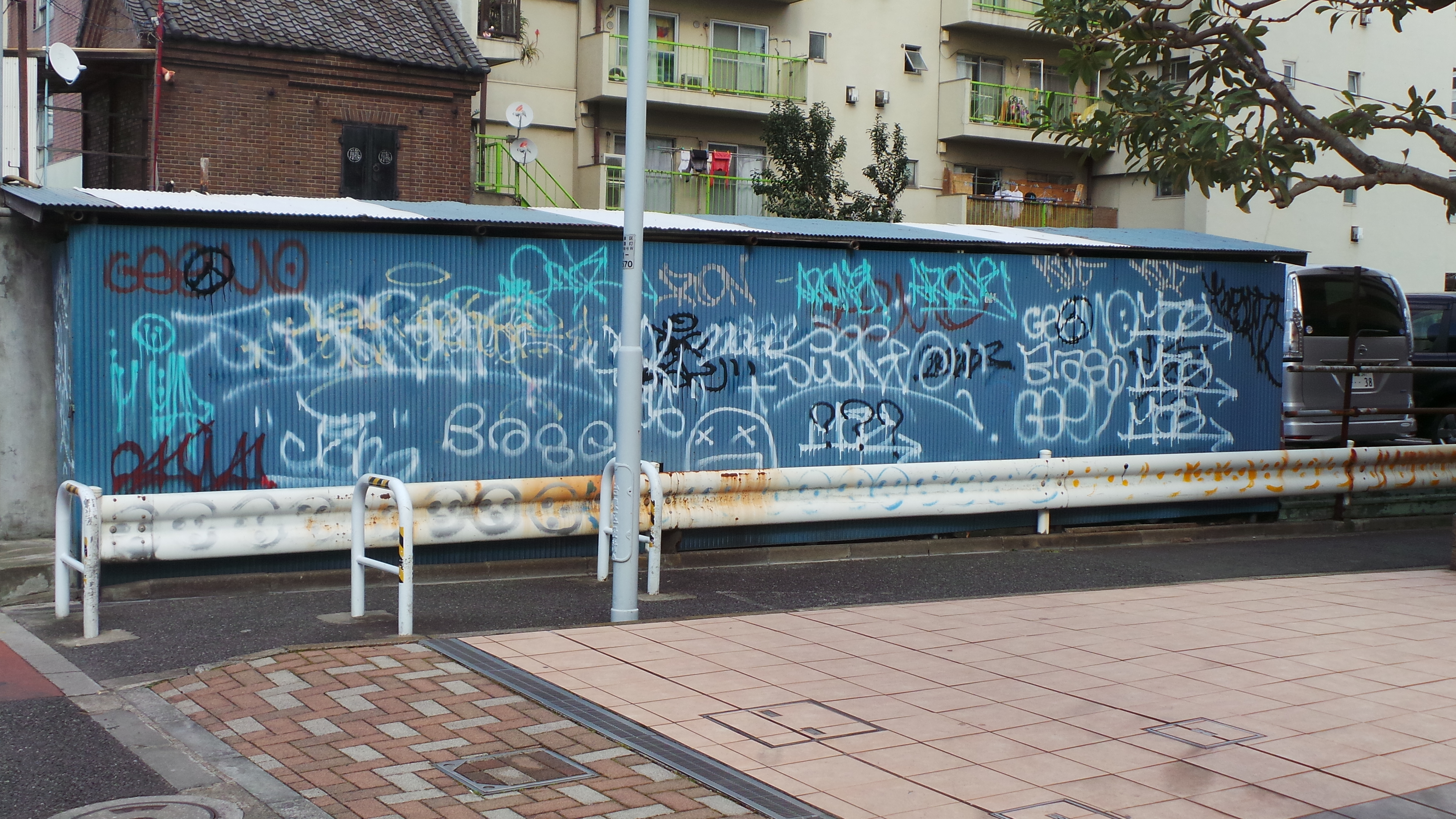
Hashiba is somewhat unusual. The first thing that strikes me is that there are no maps, no places of interest, and no tourists. Just plenty of graffiti. It always surprises me to see graffiti in Japan, something I had almost forgotten existed until today. The Hashiba area is connected to the river and was once used as a ferry terminal. A floating bridge existed here too, some time ago. Before that, this area was covered in overgrown fields.

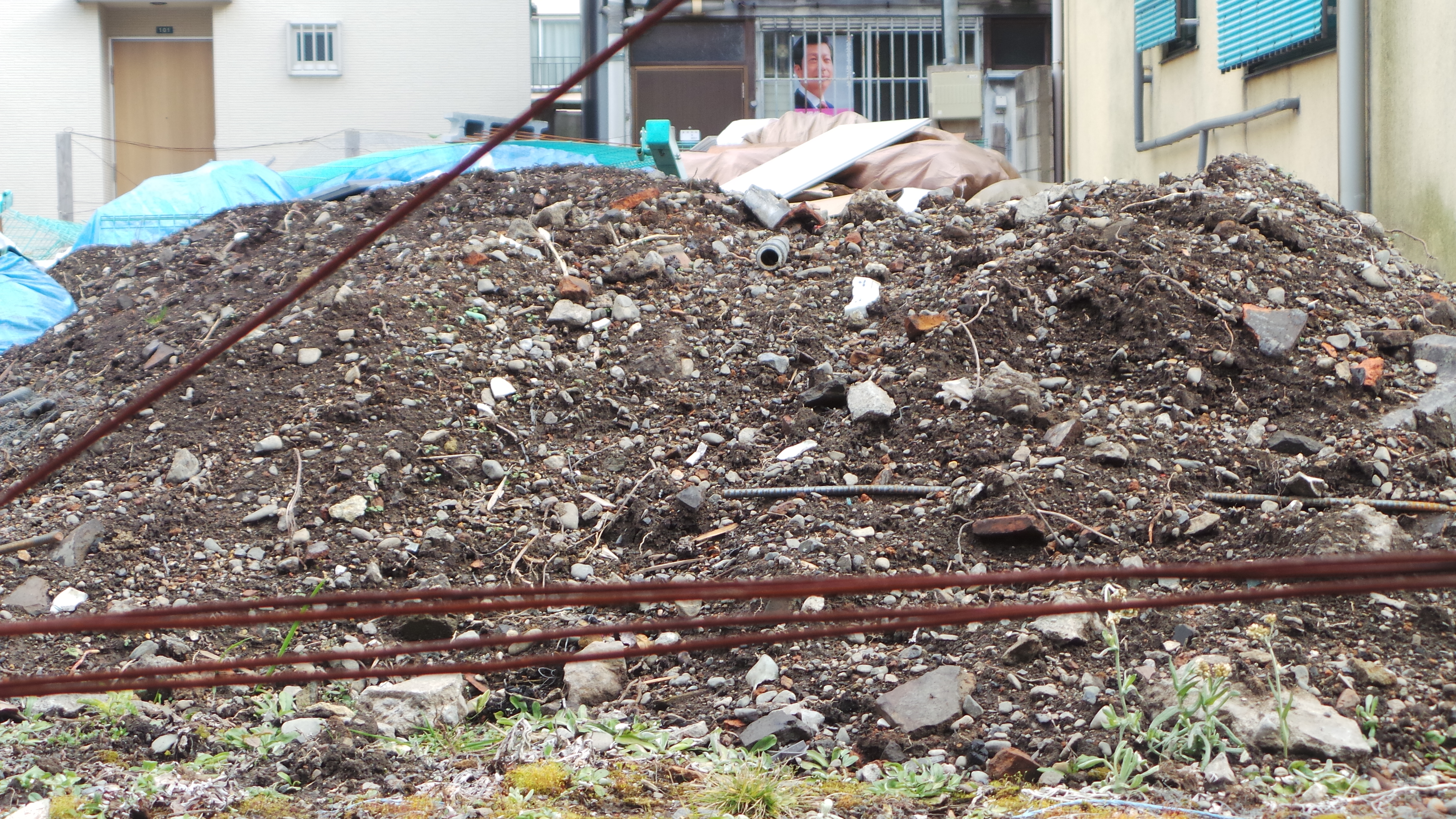
An older Japanese person I met with told me that he remembers coming here as a child to catch dragonflies and play in the long grass. The only sense of nature here now is the piles of dirt mixed with rubble, forgotten about and never removed.
nichirentrash

In this area, watching over the mounds of trash and the graffiti, sit election posters for the Komeito Political Party. The party was founded by members of the Nichiren sect of Buddhism and therefore does the unpopular act of mixing both politics with religion. I am not sure anyone is here to help Hashiba, though—a place that seems incredibly run down and feels almost absent of potential change.

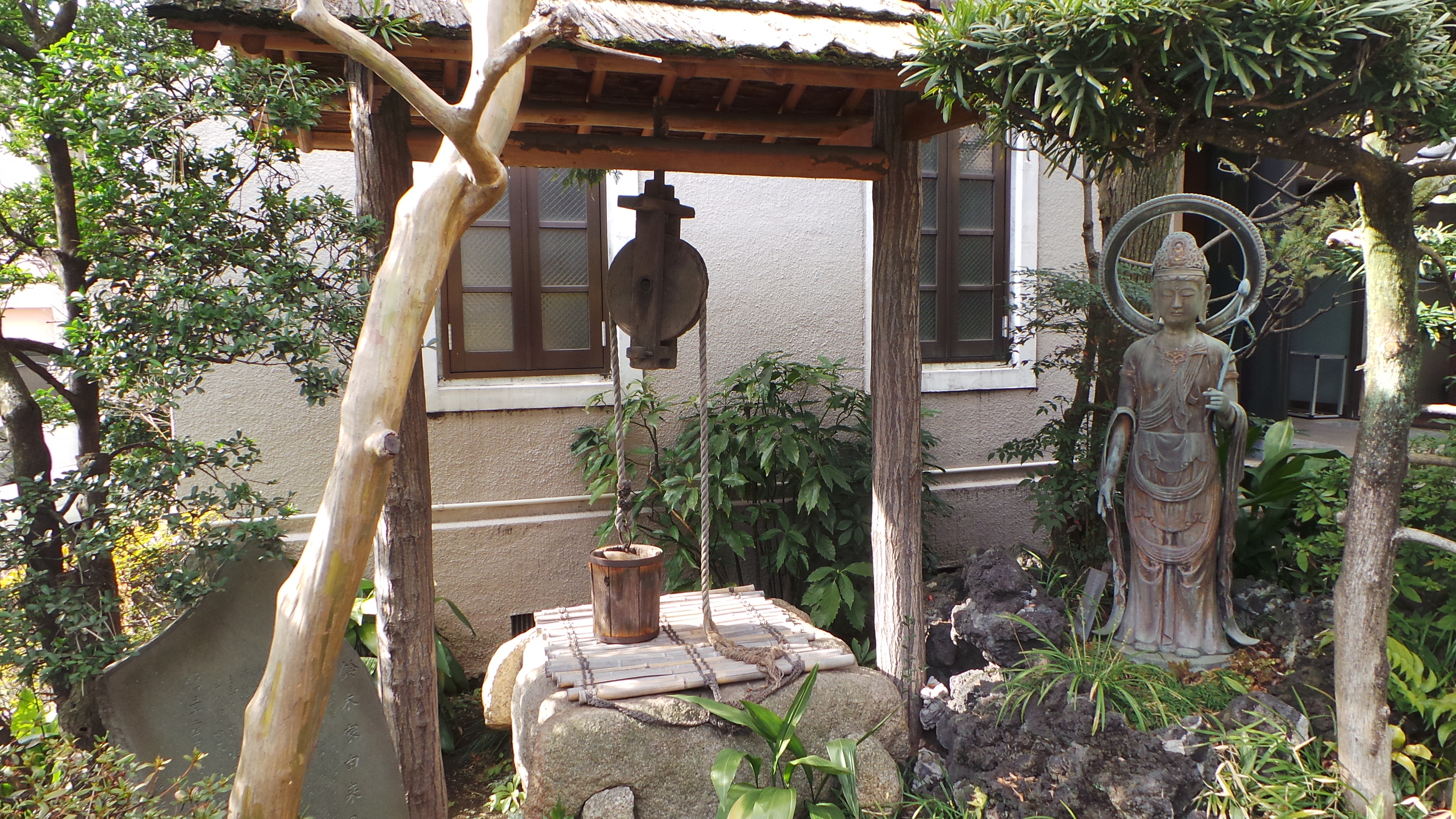
I decide to remain positive, to try to discover the good things about the area. Mixed amongst the negativity sits Hogenji Temple—a rather beautiful place with an old well, many stone statues, and a cemetery. For whatever reason, the grounds of the temple are filled with the sound of a loud chainsaw, disturbing the silence and further adding to my gloom-ridden impression of the area.
wellwell

Desperately trying to find a redeeming factor, I continue to explore. I wander around for a while until I eventually find a sign written in English. The sign is provided by the Tokyo Metropolitan Board of Education, which is usually a good indication that something important might be here. Finally, a point of interest. Finally, something to see.

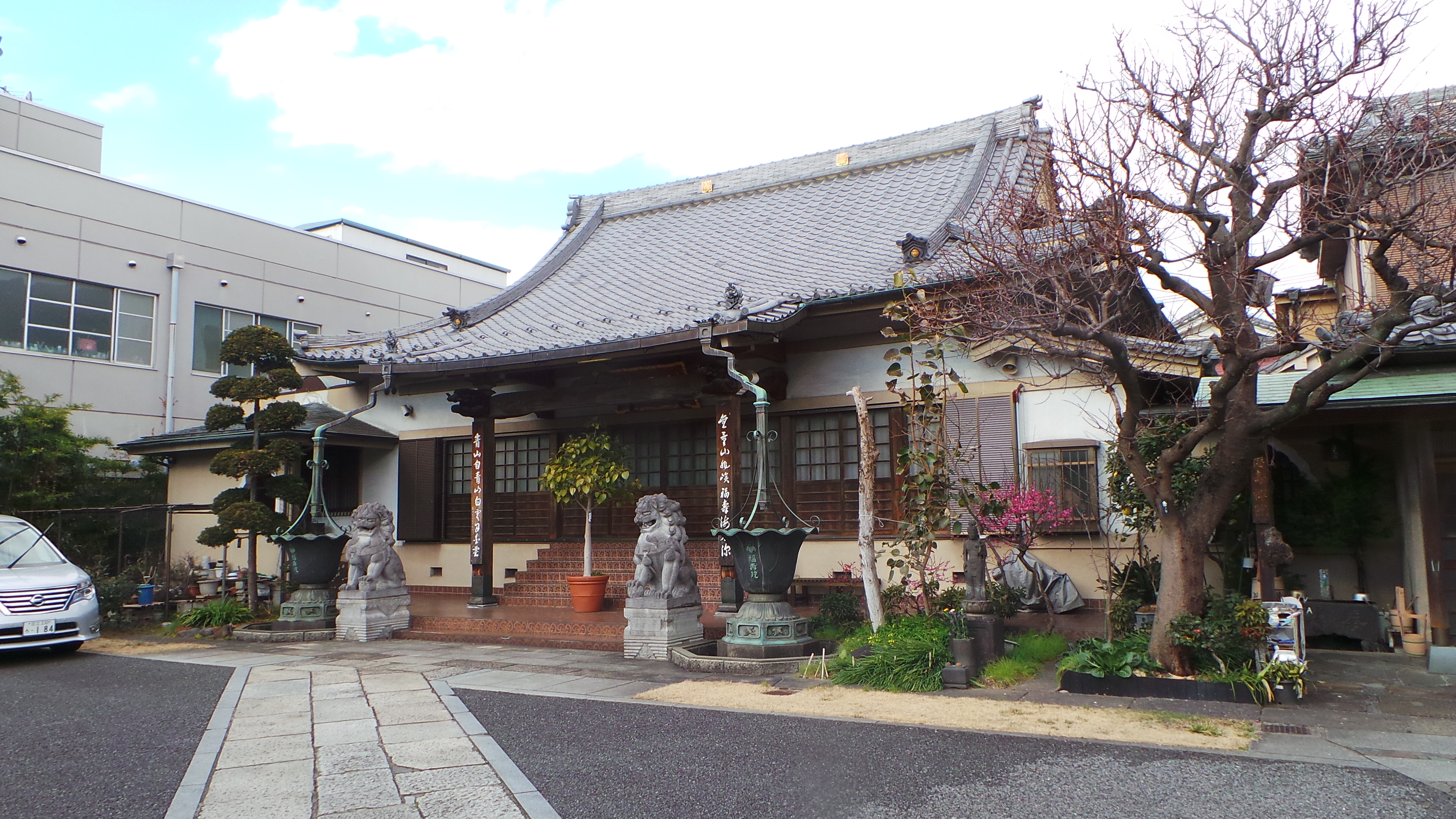
What looks like another temple turns out to be a tomb. The tomb comes complete with its own nature in the form of beautiful trees and a huge aviary. As if deliberately trying to add to the contrast, the tomb also includes a basketball court.
andotoya

I discover that this is the final resting place of Ando Toya, a famous Confucian scholar. He was known for his time spent studying the Chinese language and teaching it to the people of Japan. He once said about the Chinese language, “It sounds like the chirping of birds. I can write, but when I open my mouth, I truly cannot speak.” This doesn’t quite explain the need for a basketball court here, but it does perhaps explain the aviary.

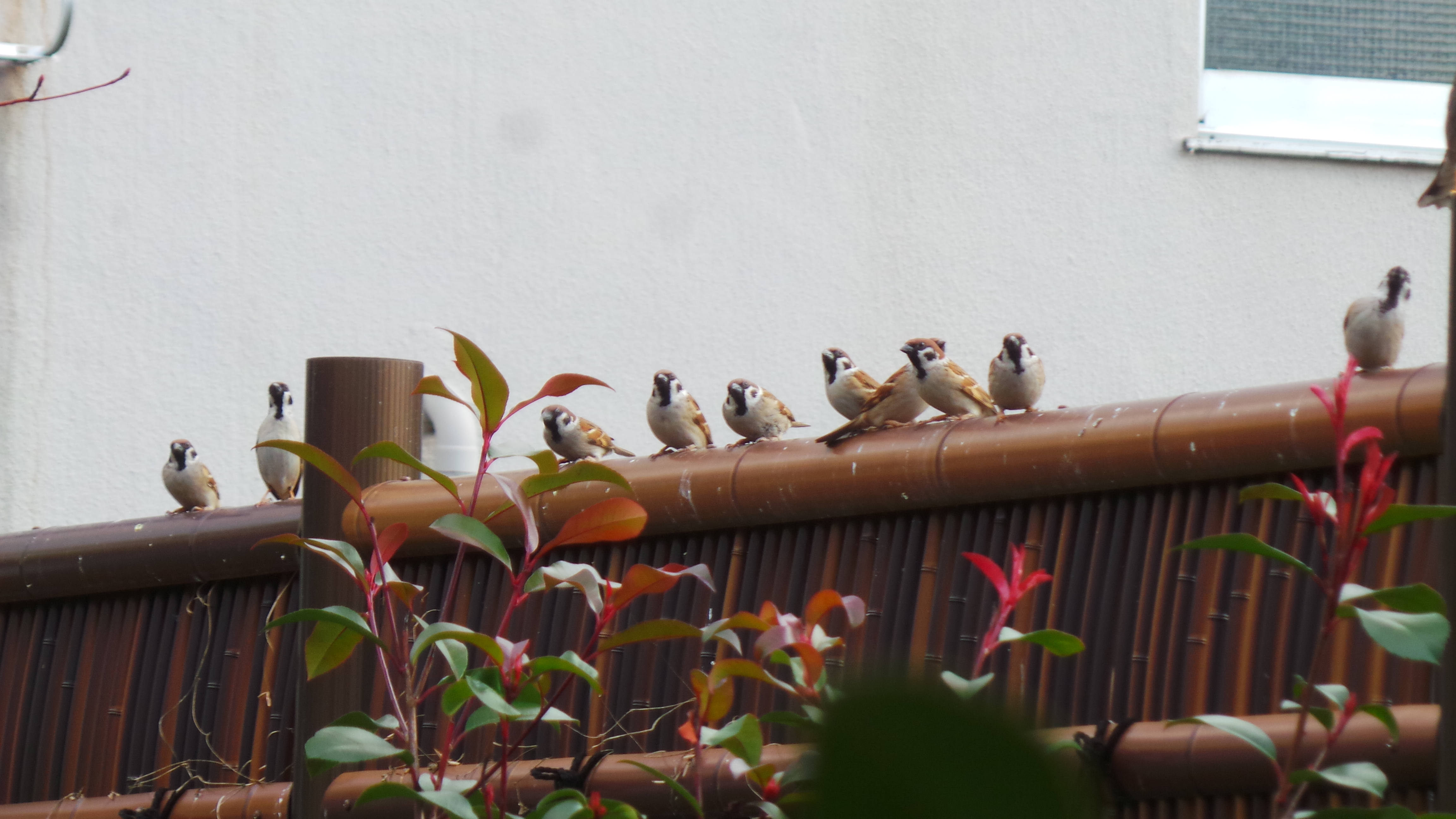
I stand in the grounds of Ando Toya’s tomb, staring in silence at the birds for almost a full hour.
sparrows

The beautiful sparrows chirp in their hundreds. The echoing of those words spoken by Ando Toya flows around my head. It makes me wonder if the birds are secretly trying to communicate with me in Chinese. Maybe they are.

Roasting the Masu-Bean

Another day, another post about the endless goings-on in the Asakusa area of Tokyo. I wander aimlessly toward Senso-ji Temple, walking with my head in the clouds as I follow the distant bellow of a beating drum. It somehow slipped my mind that today was the official festival of Setsubun, but here I am now, standing in the cold amongst the eager crowd.

Thousands of people wait in front of a wooden stage constructed specifically for the event. Poor carpentry makes the stage look out of place, perhaps even unfinished. I hadn’t planned on attending today, but with nothing else to do on this gloomy afternoon, and finding myself standing here, I decide it might be best to stick around and enjoy the spirit of this age-old festival.

setcrowds[2]

The television people are here, filming every second of the action. But sadly for me, and unfortunately for the television crew, the action is a little muted. First, an announcer takes to the stage and begins reading out names. Some get no reaction at all; other names cause the crowd to cheer with excitement. One name gets a huge reaction, but I was barely listening to a word the announcer was saying because I allowed myself to become distracted by a pigeon.

Eventually, the twelve celebrities waltz onto the stage. They each carry a large wooden masu box, usually reserved for large quantities of sake. At the announcer’s count, they all start throwing pouches of roasted beans into the crowd. Following the bean-throwing, each of the twelve ‘celebrities’ is given a chance to speak with the microphone, seemingly using the opportunity for self-promotion before thanking the crowds for attending.

animal[1]

The last person to speak on the badly erected wooden stage is Animal Hamaguchi, a famous Japanese wrestler who coached his own daughter, Kyoko. She went on to win two Olympic medals in wrestling. Kyoko was born in this area too, so it is no surprise that she was chosen to take part in the event.

After Animal has finished speaking, a man sings ‘When You’re Smiling’ by Louis Armstrong; he sings in very clear English. Some of the other guests join in too. Animal Hamaguchi decides to start shouting in Japanese and laughs deeply, much to the enjoyment of the people around me. Pigeons fly away in fear as his laughter echoes around the grounds of the temple. “Mwahahaha!”

The festival ends, and the crowds disperse. I decide to do a little exploring in the area close to my house. I walk to a small park and am surprised to see that there is another festival taking place, albeit a little stranger than one that encourages the throwing of roasted plant seeds.

crazycostumes[1]

The festival offers no explanation behind its meaning. The only clue here is an array of masked men and women. They march around the park, passing the swings and the slide before heading off toward the red-light district. I am completely oblivious as to what this festival is here to represent; my confusion further added to by all kinds of different Japanese costumes, including dragons, ghosts, foxes, demons, and flute-playing elephants.

After the festival, I decide to explore a little further. I stumble upon Tozenji Temple, said to house one of the six jizos of Tokyo. A jizo is a Buddhist saint in search of truth and enlightenment; they are also guardians of children. It appears that the statue of this saint has been stolen or is simply missing. The only thing of interest here is another large statue of Buddha.

zozenji[1]

After walking in almost a full circle, I arrive back in Asakusa and head over to the Sumida River. I stare into the glistening waters for far too long, looking directly at the reflection of Tokyo Skytree. The way the river shakes and shimmers distorts the image of the tower, and it does begin to take the form of a tree. After a while, I forget where I am, lost to the flow of time. It is only when my hands begin to feel frozen that I snap out of the trancelike state that I have allowed my mind to enter.

My head returns to the clouds, and I wander around like a lost child, looking for excitement. There isn’t even a jizo around to guide me. Eventually, I find a clothing store that displays a wonderful sign. I believe the sign is trying to tell people not to consume food or drink inside their establishment.

teat[1]

Unfortunately for the shop, a translation blunder instead suggests that lactation is forbidden, much to my amazement.

A Mime to Kill (With Beans)

The snow came and went faster than a fleeting thought on a cold February morning. Despite the chill, a very famous festival is set to take place across Japan in two days’ time, known as Setsubun. The festival involves throwing roasted beans at demons and marks the penultimate day of winter, according to the Japanese lunar calendar. However, it doesn’t feel like spring is coming anytime soon; outside, it is cold, and patches of frozen white snow cover the city of Tokyo. Perhaps it will stay this way for another two months, or perhaps the unpredictability of Japanese weather will strike again.

The bean-throwing festival will be taking place at most of the temples and shrines in Japan. However, I have decided not to attend. Instead, a group of performing artists, some of whom have been featured in my previous posts, and a couple of whom I have randomly become friends with, are celebrating Setsubun in a very different way—with comedy, clowns, and plenty of balloons.

baloonmonster[1]

I arrive just as the event starts. It begins with a man dressed as a ninja performing tricks. He jumps over chairs, stacks some chairs, balances on chairs (his performance very much focused on seating), before being randomly attacked by a man wearing a sheep costume. The sheep man throws a single bean at the ninja; he overreacts in a classic comedy style before falling over and playing dead for the remainder of the proceedings. The sheep man has a costume made up entirely of balloons, the handiwork of my balloon artist friend, no doubt.

After the ninja fight, two demons emerge. One is dressed in white, presumably to represent good, and the other is dressed in black. The demon in black wears a target on his back, seems far too happy for an evil spirit, and appears to be enjoying standing around on his high stilts, smiling at everyone.

beanevil[1]

Suddenly, the attention shifts to a group of clowns standing on a balcony above a pachinko parlour. They start shouting in Japanese using megaphones. After exchanges are made between the clowns and demons that I can’t quite comprehend, people in the audience begin to laugh, a lot. An elderly woman on a bicycle with an impossible number of shopping bags sighs as she tries to weave through the crowds. I might just add, this whole festival is taking place on a busy shopping street and is perhaps causing a little too much chaos for some of the locals who just want to get to where they need to be.

After the shouting, all hell breaks loose. Paper bags are dropped from the sky by clowns in their thousands. Children and adults alike scramble to collect them from the floor. I raise my arm and catch one in mid-air. Everyone is rushing around, trying to salvage one of the decorated paper pouches. People are crashing into each other, forgetting about the safety of others. Regardless of the carnage, it’s actually a lot of fun.

beans[1]

The pouch I caught predictably contains roasted beans. After a while, everyone goes silent before a chant occurs. Following the chant, people start pouring beans into their hands and throwing them as hard as they can at the demon. His smile is quickly wiped from his face by roasted beans.

As I run out of beans, a little girl walks over to me and smiles. She takes my hand and pours beans into my palm. “Quickly! Throw!” she says before giggling off and returning to her parents. Eventually, everyone runs out of ammunition, and the event draws to a close. As people start to leave, the floor becomes a hunting ground for hungry pigeons. A man with a megaphone starts shouting at the birds, and they eventually fly away. The last thing that happens is all of the performers, clowns, demons, and mimes begin to clean the streets.

mimesweeper[1]

Something about seeing a mime hard at work sweeping the streets fills me with a sense of disappointment. It kind of spoils the character and takes away from the magic. I offer to help sweep using one of the many brushes, but I am shooed away, just like the pigeons.

I still have some of the afternoon to kill, so I head over to Senso-ji. It is the weekend, and there is usually something taking place around the temple. Sure enough, I find a street market, the usual man with his performing monkey doing some tricks, and strangely, for the first time ever, the temples and shrines in the complex are each holding some sort of service. I head into the main hall of Senso-ji Temple, and although it is very difficult to get close enough, I manage to sneak a quick photograph before being told once again to move on.

sensomon[1]

With nothing much else to do, and Asakusa now mostly quiet, I head home to eat some demon-killing beans.

Welcome to the Lunar Industries

Another intrusive start to the day in Japan. The ground rattles like teeth on an icy morning, the skyscrapers singing a chorus of concrete scraping together, pulled apart in directions against their will. It’s another earthquake, the strongest one I’ve felt so far. Suddenly, everything stops. Just as I begin to drift away, hoping to return to whatever fleeting memory lingers in my dream-filled head, the shaking resumes. This time, it lasts only a few seconds, but it’s enough to shatter whatever it was in my imagination that I desperately sought to remember.

I head outside to grab a can of Boss Coffee before taking a seat on the steps leading up to my front door. A homeless man, who resides in a cardboard castle outside the entrance to my apartment, stirs in his sleep. He coughs and groans before looking around and noticing me, perhaps awakened by the early morning shaking of the earth. The man speaks broken English and asks me the usual stagnant questions. It turns out he was once in a famous rock band, a drummer. Aged sixty-five but looking perhaps twice that, I can’t help but feel a little sorry for him. Without knowing his circumstances, I decide it would be rude to judge him any further. I want to ask him why he keeps sleeping where I would normally park my bicycle, but I think my English words might be lost on him. He tells me something is happening on Sunday in the arcade that runs close to my house. With its worn-out shops and shutters, it might well be the first activity this area has seen for months.

tissueboxbed[1]

After becoming fully awake, I can’t help but notice that the moon is still up. Although crescent, the moon’s light casts a shadow, revealing the clear roundness of its form, something I have never noticed before. I begin to wonder if I am still dreaming.

I cycle into Asakusa to find the streets littered with Australian tourists. It seems they have chosen to leave behind the glorious summer weather of their home country for the winter of Japan. Today is Australia Day, a celebration of the first British ships landing on Australian shores. I weave my bicycle between drunk people shouting and fighting on the street. I thought it was the English who didn’t know how to behave. Drunk before lunchtime, not even Mr. Sixty-Five-year-old homeless man can achieve that.

I head across the city for some exploring. Despite spending a lot of time in Asakusa, I’m continually surprised to discover new things every day. Today, I visit what was once a beautiful pond, now home to ghostly apparitions.

oldhagpond[1]

Ubagaike Pond is now enveloped in what looks like a construction site. The pond is completely dried up; only the old stone outline that makes up its shape remains. Many years ago, an old woman lived in a house close to the pond. She lived with her beautiful young daughter. The mother would send her daughter out into the streets to lure in gentlemen, hoping that they would spend the night in her daughter’s embrace. The unsuspecting gentlemen would join the daughter, and after lovemaking, when the pair were both sound asleep, the old woman would creep into the room. With a huge piece of stone, the mother would bash the man’s skull in before taking all of his possessions. This weapon was known then as a ‘stone pillow.’ One day, the old woman threw herself into the pond, an act that was out of character and has no bearing on the rest of the story. These days, at night, you can hear the quiet sobs of her daughter, or so the legend goes.

Back in the slums of Tokyo, I sit in my house, editing some writing that I have been working on, my mind rinsed clear by the haunting melody of Clint Mansell’s ‘Moon’ soundtrack. The drifting peace only lasts momentarily, though. At 5 p.m., the familiar sound of music penetrates my window. It seems that, despite the winter and occasional snowflake, ice cream is sold all year round in Japan.

aisukuriimu[1]

“Aisukuriimu, Aisukuriimu, Aisukuriimayoou.” Typically, the song occupies the space in my head usually reserved for contemplation and creative thinking. Every evening in Japan, I sit suffering in silence, with the ice cream song playing over and over in my mind, like a broken merry-go-round.

I leave the house after an hour of silent anger toward frozen milk and cream, and cycle as usual in the direction of Asakusa. For no reason, I decide not to cycle through the red-light district (my usual route) but take a different path. It leads me to the sound of live reggae music and a smattering of distant applause seemingly from nowhere. I decide to leave my bicycle and head down a narrow side street to locate the source of the music.

Moments later, I arrive at a small outdoor festival. The grounds of the festival seem to combine a swing park and a school playground.

fukushimafest[1]

The festival is here to raise awareness for the area of Fukushima, devastated in 2011 by the Tohoku Earthquake and tsunami. The area continues to struggle, with people living without homes, families not receiving proper support from the government, and rice grown in the area seldom purchased. This festival is described as a ‘Nation’s rallying call for the Fukushima area,’ and in my opinion, it’s a worthy cause.

Inside the swing park, small stalls sell hot food. Inside the school playground, ice is being fashioned into a snow house. Children play within the igloo, while others pose before it for photographs. Reggae music continues to play from the stage, a song about everything being ‘fine fine fine.’ It warms my heart to see this. Something about today has contained a subtle misery — earthquakes and homeless people. A community rallying together to help those in desperate need. Certain people getting drunk without a care in the world, blissfully unaware of the problems faced by others, lost to the oblivion of alcohol.

livereggae[1]

As I head back to the main road, my mind distracted by ice cream and lost in thoughts of others, I realise that I have completely forgotten where I left my bicycle.

After the Form

Bang, bang-bang. Bang, bang-bang. Bang, bang-bang.

The repetitive yet timely sound of drumsticks hitting against stretched animal hide stirs me from peaceful dreams. Not one to miss out on an opportunity to write about whatever is parading by my house, emitting this loud but perfectly rhythmic noise, I decide that I will follow the source of the sound right after I wake up with a coffee.

I haven’t written for a while as I’ve been extremely busy researching and organising paperwork, the details of which will become apparent later in this post. But for now, drums. I head outside to find that whatever was causing the loud banging appears to move at astonishing speeds; either that, or I drink coffee a little too slowly. I jump on my bicycle and follow the distant echo of drums before eventually locating the source to a small shrine in Imado.

monksfuneral[1]

It seems that I have inadvertently started my day with a funeral. The five monks stand within the shrine grounds, chanting and maintaining a steady balance of drums. I head back home to pick up some paperwork before cycling over to Asakusa. Outside the train station, the same five monks pass me again. This is quite a walk from Imado, which adds confirmation to the pace of these speeding monks. I take a train over to Ueno Station. The usual random mascots are here, serving no clear purpose but to frighten me.

statuenomasc[1]

I change to the Yamanote Line and head to Shinagawa, a place I have only visited once before when I felt the need to stand inside the belly of a whale. This time, I am here to visit the Tokyo Immigration Information Centre. A note on their website claims that, ‘This is where all inquiries should first be made concerning immigration issues, wherever you are in Japan.’ Luckily for me, I am already in Tokyo; otherwise, this would have been quite the journey. Also, seeing as I am in need of information pertaining to immigration issues, it looks like I am heading to the right place; the so-called ‘centre of information.’

Much to my delight, as I leave the train, I find that a bus service regularly runs to the offices I am here to visit. Everything is running a little too smoothly.

busstopaliens[1]

I am greeted outside of the immigration office by hordes of people giving out paraphernalia advertising their respective companies or cults. A woman is spreading the joy of Christianity, a man hands me a document offering ‘Legal Support for Aliens,’ and another man is holding a sign demanding China stop the act of organ harvesting.

Inside the Immigration Centre, I head over to the Advice and Information Counter, take a ticket (147), and then find a seat. The woman at the counter is talking to a young French couple in broken English. Every few seconds, she lets out a yawn or scratches her head, illustrating her apparent boredom.

Eventually, the French couple leave. The woman at the counter presses a button, and the bright red display shows the number 145. She waits less than three seconds before pressing the button again, displaying 146. Without much delay, she presses it again, showing 147—my number. As I approach the counter, her finger hovers over the button to call the next number, her eyes filled with resentment that I might sit down before her within my three-second window. I take a seat just as she sighs. I understand that maybe I am the one hundred and forty-seventh person she has seen today, not counting the people she frantically skipped, but this is her job. To counter her obvious state of disregard, I greet her in an overly cheerful manner, smiling as I sit.

The woman I talk to speaks limited English, looks bored, and probably hates her job. I inquire about the application form that I should take in reference to the activities I want to pursue in Japan. My questions are generally ignored, and at one point, the woman randomly asks, “So you want to stay in Japan to study Judo?”
“No, I didn’t say anything about Judo.”
“Okay, but if you are studying Judo, you need to go to End Counter B, second floor.”
“Okay, I actually …” She cuts away my words with metaphorical scissors of despair.
“End Counter B,” she reiterates, “second floor.”

So much for the best place to visit for information and advice.

I head to the second floor, to End Counter B. As I approach, the woman, slightly more miserable than the last, looks me up and down and says, without any hint of emotion or benevolence, “Passport.” Just one word is all she spares me. I hand her my passport. She adds rather sternly, “What do you want?” I explain that I want to collect an application form for … Before I have a chance to finish my sentence, she says, “Application, go queue over there,” pointing to a line of about thirty people.

aliens[1]

I join the queue, wait thirty minutes, and then find out that I am in the queue for application checking. I am not here to have applications checked; I am here to collect application forms and ask for advice. So far, neither of these two things has transpired.

My third and final stop is back on the first floor. I wander over to the desk marked simply as ‘Information.’
“What?” asks the woman behind the counter.
“Excuse me, where can I collect an application form?”
“Here,” she says, as if wanting to add the word ‘obviously,’ but she conveys it only with her tone of voice. Eventually, she begrudgingly hands me an application form.
“Thank you,” I say. No response. My politeness falls on deaf ears. The woman just flashes me a frown that contains the absence of all the hope in the universe before trudging off into a sea of misery.

Three counts of rudeness in one hour. It is no surprise that the hundreds of people here, waiting with folders or loose paperwork, look so dejected. Of all my time in Japan, a country that prides itself on politeness and good customer service, this is the rudest I have been treated and the smallest I have felt. The service here is disgraceful, not helpful, and has filled me with no confidence at all going forward. Perhaps this is the hidden agenda: make everyone feel unwelcome so they never come back to complete their applications. Regardless, I have to come back, most likely next week.

Outside, I am handed more leaflets for various different things. A woman tries to give me a newspaper. I say I am fine. She asks me where in Canada I am from. I say I am not from Canada but England. She mutters something about Elton John and then walks off. After wasting what was effectively a whole day, I leave with none of the much sought-after advice I had taken the trip here to receive. Instead, just an application form that I could have quite easily downloaded online and printed out myself.

I head over to Asakusa in need of a drink. On the main road, a protest is taking place about atrocities caused by North Korea. The people here have megaphones and sound extremely angry as they shout in Japanese.

protesting[1]

Trying to take in their words, I can’t help but be distracted by the late January Christmas decorations that loom over the protest.

As I walk toward one of my favourite bars, an elderly woman on a bicycle drops her handbag but doesn’t realise it. “Excuse me!” I shout in Japanese before she has the chance to ride away. She stops her bicycle and looks back. I scoop up her bag and walk over to her, promptly passing her the handbag. She apologises and thanks me, nodding her head more times than I can actually count in Japanese. She is so thankful, so happy that I helped her, and at this moment, just a slight bit of the decency and politeness of this culture finally returns—the kind of decency that has made me love Japan but has almost been entirely washed away by the events and abhorrent treatment I had experienced this afternoon.