Schindler’s Lift

Recently I have been a little caught up with having a cold, taking numerous visits to the dentist, and a sudden urge to spend the remainder of my free time filling out multiple sheets of paperwork pertaining to banking and insurance. This morning, I head outside to discover that everything has fallen down. I lift my bicycle up from the floor, pulling it apart from the scattered mess of other fallen bikes. The temperature in Japan is freezing cold now. Two days ago, there was snow in central Tokyo. Today, a strong wind blows through the air. I take my bicycle, armed with winter clothes, and cycle to Asakusa.

I head over to Senso-ji, passing hordes of skeletal trees. For the next three days, a festival takes place. Something to do with badminton rackets, or so it seems.

badmin1[1]

Today is Hagoita-ichi, a festival of decorated battledores—old-style badminton rackets depicting characters from kabuki shows. There are about twelve different stores here, each selling these rackets at a high price. These decorated wooden boards are supposed to deflect evil; perhaps this is where the ‘bad’ comes from in badminton. The sport that these rackets are used for is something of a Japanese childhood game called ‘hanetsuki,’ very similar to badminton but played without a net. I suppose the evil is the shuttlecock, and hitting it toward your opponent is a way to deflect that evil upon others.

The traditional way that hanetsuki is played involves the use of face paint. If you lose a point, your opponent gets to rub paint on your face. If you were terrible at the game, I suppose after a while, your colourful face might begin to resemble one of the characters portrayed on the hagoita. These days, these rackets are mainly used for decoration purposes. Sandwiched between the stores selling badminton rackets are food shops, and one specific store that caught my eye because it looked so out of place.

daruma[1]

Daruma dolls are traditional Buddhist dolls depicting the image of Dharma, and they are considered a symbol of good luck. With white eyes that stare into nothingness, it is said that if you colour in one eye, you can make a wish. Once the wish comes true, colour in the second eye, and your Daruma is almost complete. The only thing left for the doll is to be returned to the temple it was bought from and burned. It feels slightly unfair to burn an object that has done its best to grant you a wish, but sadly, that’s just how these things go. As I am taking a photograph of the dolls, a man next to me is doing the same. His hat flies off his head in a gust of wind. Somehow, I manage to reach my hand up and catch his hat in mid-air, like a pro.

After the festival, I go to Akihabara for some Christmas shopping. In Japan, where Alcatraz-themed restaurants and robot cabaret shows are common, it’s no longer strange to find a cafe themed around a popular girl idol band. Akihabara is bustling with comic book stores, video game shops, and large electronic department stores. However, that’s not my reason for being here. Almost instinctively, I leave the station and head directly to the AKB48 Cafe and Shop.

akbcafe[1]

The last twenty-three single releases by AKB48 have consistently claimed the top spot on the charts, indicating their immense popularity among Japanese people. One clever marketing strategy involves including a ticket for a handshake with a band member with every CD purchase. Observing the guy in front of me in the queue buying over one hundred copies of the same CD, it’s clear that he’s a fan of handshaking. I exit the store with ten copies of ‘Kiboteki Refrain’, and I can’t help but feel like a weirdo. Nevertheless, I’ve managed to wrap up Christmas shopping for ten people in less than ten minutes.

Before returning to Asakusa, I make a detour to Yodobashi Camera to play some piano. However, after thirty minutes, I decide to leave because one of the staff members is giving me an ‘are you going to buy anything?’ sort of look. Outside Akihabara Station, somebody seems to have mixed their Christmas up with Easter.

dancingrabits[1]

For some unknown reason, it is not possible to open a bank account in Japan unless you have lived here for a minimum of six months. Since my time in the country has exceeded that quota by almost three weeks, I decide it’s about time to get my documents in order and take the plunge toward integration. But, I can’t just wander into a bank saying, “I have been here six months, give me a bank account!” First, I need to get myself a personal seal. Not the aquatic mammal I had been hoping for; this seal is more like a stamp and is known as an ‘inkan’.

I head over to a small inkan shop opposite Tawaramachi Station and take the escalator up to the second floor. The escalator provides me with amusement, and the title of this overdue blog post practically writes itself.

schindlerslift[1]

Inside the shop, there are wonderfully expensive stamps on display in high-priced cases. Since I am only getting this product for one reason – a bank account – I opt for the second cheapest option available. The woman draws a circle that takes up a whole page of A4 paper and asks me to write my name in the way I would like it to be engraved in the stamp. Horizontally or vertically? Kanji or katakana? I don’t really care, so I just scribble my name across the paper as quickly as possible, and with very little thought.

Next, I select a case, once again opting for one of the cheapest available, but still seemingly of high quality. Perhaps there is no such thing as bad quality inkan. I hand over ¥2950, the cost of both the inkan and the case. The woman informs me that it will be ready in thirty minutes, hands me a slip of paper, and asks me to bring it back with me when ‘my time is up’.

myinkan[1]

Half an hour later, I am the proud owner of my very own inkan. Naturally, I head home immediately and start stamping my name on everything I own.

The Amazing Kanda Adventure

I exit Kanda station and walk toward the area known as Jinbocho. On the way, I stroll along a street featuring thirty-six sports shops, all lined up next to each other. There is also a small festival taking place here, the 20th Kanda Sports Festival. I continue walking until I see a sign that suggests pluralisation came as an afterthought.

book[1]

Jinbocho is named after Nagaharu Jinbo, a samurai who used to live here in days gone by. Although they took his name, there is little to no information about him on the Internet. Perhaps I can find something about him in one of the many history books on sale here today.

Book Town is great. One side of the street is exclusively used book shops. Little lanterns line the length of the street, and outside the usual stores, a massive corridor of small bookcases stretches the length of the event. On a typical day of book shopping, you would be spoiled for choice, but today, at the 55th Kanda Used Book Festival, the sheer number of used books in one area surpasses that of anywhere else in the world.

bookstreet[1]

There is a shop specialising in only fashion books, another selling just manga comics, and another selling rare history books; they even have one book for sale for ¥350,000. There is something I find calming about walking the aisles of a bookshop. Nobody is here trying to lure me into their shop, nobody asks me to enter when I am already inside, and nobody inside is speaking. The squeaking sound of my wet shoes is the only thing disturbing the silence.

The bookshops seem to stretch endlessly. I notice some arrows painted on the floor, so I follow them to a small charity-run street festival. Rows of stalls offer various foods. One man sits at a table, seemingly designated for people to leave their used plates and cutlery. I glance at the man, and he just shrugs his shoulders; he doesn’t know why he’s sitting there either.

charityfest[1]

At the other end of the festival, more bookshops await. I browse a little longer before heading in the direction of Ogawa Square for my fourth street festival of the day. Today’s event is the Kanda Curry Grand Prix, where twenty different shops are all selling ¥500 curry in the hopes of attaining the grand prize. A polling station with an honesty policy is in place; if I wanted, I could continuously vote for the same shop over and over.

Kanda boasts over two hundred curry restaurants, making it the perfect choice of location for this competition. Outside every stall, a tout shouts at me to go buy their food. A woman in a maid outfit gives me a smile and points in the direction of the store she is here to promote. Soaking wet mascots wander around, and there is a stage featuring live music. Three young women are signing autographs for middle-aged men. The enticing smell of curry keeps me at Ogawa Square for half an hour before it is time to go.

toutskanda[1]

I walk back to Akihabara and take the Hibiya Line to Minowa. Every piece of advertising space on the train is for the same company. On Japanese trains, there are usually about thirty to forty adverts in each carriage; however, on this train, all signs exclusively advertise an urban park town. Very strange.

I grab some things from home before cycling over to Asakusa, specifically to Cafe Byron Bay for a Halloween party. At the cafe, I put on makeup in the hope of looking like a zombie. Friends come and go, some with costumes and others without. Free Halloween-themed sweets are on offer, and glowing plastic pumpkins litter the cafe.

pumpkin1[1]

At one point, I am asked to fetch a forgotten cake from a local bakery. While waiting at the traffic lights, I notice a little child with her mother also waiting to cross the road. They are looking at me, so I make zombie noises at the child; the child screams and hides behind her mother’s leg. All in the good spirit of Halloween.

Back at the cafe, two French chefs are here to cook for everybody, and they are excellent chefs. Canapés, crêpes, and tuna gratin are the highlights. We are then treated to some live music from a local act and enjoy some delicious cake.

cakehal[1]

As the party draws to a close, a Japanese friend of mine hands me a signed copy of his book. It is my favourite book of his, albeit the only one I have ever read; the others are written in Japanese. I find it difficult to show feelings of genuine gratitude dressed as a zombie, but I will absolutely treasure his gift.

After the party, we head out to another bar for an event known as ‘Trick or Drink!’ I try to stay in character at the bar, bumping into walls, mumbling, and dragging one leg as I walk. Homer Simpson is the disc jockey, and his music choice is better than I would have imagined. My sumo wrestler friend is here too, still taller than me but a lot less drunk than the last time we met.

sumohalloween[1]

After getting photographed with a sumo wrestler while dressed in zombie makeup, I decide there isn’t really much else left to do in the world, so I head home to sleep.

Eat Fish or Die Tryin’

I meet my friend Dagmar for breakfast at ten. At breakfast, I drink away my hangover with a bottle of a tasteless drink called ‘Delicious Water’ before heading out alone for the train. Someone told me yesterday that beneath the banks and office buildings between Mitsukoshimae Station and Otemachi Station, hidden deep underground, the Japanese government grows secret rice.

Somewhere along the Ginza Line, my train just powers down. All the lights extinguish, plunging the carriage into an abyss of darkness. The train drifts aimlessly towards Ueno Station and finally grinds to a haunting halt. The silence thickens, shrouding the dead train in an eerie stillness, an unsettling void that grips the carriage. Everyone remains silent, messing with their mobile phones, despite the obvious sorrow of the situation. It is all very worrying. About five minutes pass, and there is an announcement in Japanese, then nothing. A further five minutes, and the train starts up like nothing ever happened.

As I exit Mitsukoshimae Station, I accidentally wander into an adjacent department store.

maskmaskmask[1]

Inside the department store, there is a Mask Art Museum, and it is free. A nice but rather small exhibition. The store housing the museum is incredibly upmarket. I ask politely if I am allowed to take photographs, and lucky for me, it is fine. The exhibition actually ends today. Rather fittingly, all of the mannequins in this department store are wearing masks.

One thing I have noticed in Japan are the many strange museums. I believe I have previously mentioned the famous World Bags and Luggage Museum. A few other favourites of mine that I am yet to visit are the Gas Science Museum, the National Leprosy Museum, and the Parasite Museum.

I wander around for a while looking for the entrance to the secret underground rice bunker. It takes a while but I eventually find a huge office building that has every window on one side completely covered in plants. On the other side of the building I scare away an eagle pecking at a gold statue of Prometheus. This must be the place, I think to myself. It turns out it is.

prometheus[1]

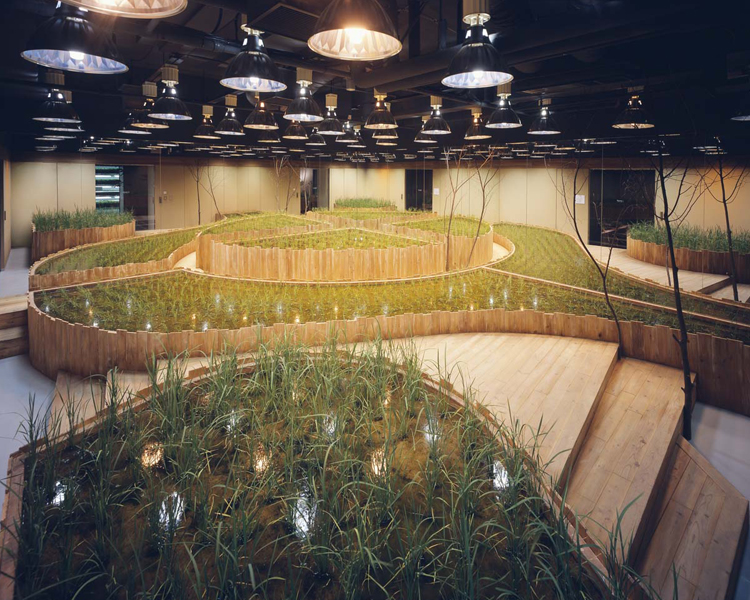
Deeply tucked away in the second basement level of a huge skyscraper, they grow rice. I am not entirely sure why they grow rice, but people are free to come and see it. Huge natural light shines from above. Rice grows. From what I was told, this area stretches under the whole business district, although it doesn’t. The size of the area was heavily exaggerated to me. The rice isn’t really that much of a secret; it’s not too well advertised, but no one is trying to hide the fact that it grows here either. In fact, I think it’s encouraged for people to come here and learn about rice cultivation. So, another urban myth shattered then.

ricetomeetyou

After looking at rice for a few minutes, I decide to walk to the Imperial Palace. I’m surprised by how close the stations are to each other in this area. Tokyo, Kanda, Shinbashi, and Nihonbashi Stations are literally within a five-minute walk of each other. Outside the Imperial Palace, about thirty elderly Japanese people are sitting and painting.

The Imperial Palace is home to Emperor Akihito, the last remaining monarch in the world to go by the name of Emperor. There isn’t really much else to see at the palace. The grass outside is cut immaculately, and the water fountains spray jets of water about two metres into the air. I notice there is a great view of Tokyo Station from the Palace car park, though. I wander to the nearby Ginza Station and take the train back to Asakusa.

tokyostation[1]

I decide to inspect a potential apartment. Small apartments in Japan are ironically referred to as “mansions.” These one-room coffin apartments offer little to no space and an equal amount of comfort. Another phenomenon in Japan is the grouping of shops, whole areas dedicated to selling one type of product. The area where the apartment is housed is completely surrounded by funeral shops. One street has eight shops in a row, all selling tombstones. I decide the area doesn’t quite feel right. Chimes sound from nowhere as I head back to the hostel, chiming five times signalling 5 p.m.

At 6 p.m., Richard, Luis, Remi, and I head to a nearby restaurant that serves fugu. Jokes are made about toxicity, tetrodotoxin, paralysis, and death. In reality, fugu poison is one-thousand two-hundred times stronger than cyanide; this is no laughing matter. The most poisonous part of the fish is the liver. Outside the restaurant, we watch our dinner for a while, graciously swimming around in a tank. In a moment, this beautiful blowfish will be killed on our behalf; we sure hope it doesn’t have a taste for revenge.

blowfishing[1]

There was a time when a fugu chef would have to pass a training course of ten years before being given certification to prepare fugu. These laws changed about three years ago, and now the rules state just a two or three-year course is required. We really hope that our chef today is of the older generation.

We take a seat in a tatami room. We order fresh blowfish sashimi. We also order diced blowfish sashimi just so I can make a pun about how we diced with death. Oddly, one of the options on the menu is hot sake with dried blowfish fin floating in the liquid. “We only serve the finest live domestic tiger blowfish,” says the menu. Served live? I certainly hope not. We wait anxiously for our food to arrive.

The poisonous fish is served in elegantly arranged translucent slices; it doesn’t look very threatening.

blowfish1[1]

A taste for revenge would be an overstatement. A taste of anything would be welcome. The food is the freshest fish I have ever tasted, of course; it has been dead just minutes. The food is also the least tasty fish I have ever had. It has no flavour at all; perhaps there is a subtle hint of death. I’m just glad we went to a cheap non-certified restaurant. It costs us just ¥5480 between the four of us for two dishes and four drinks.

I tried the sacred fugu of Japan and all I got was this lousy anecdote.

Last Stop: This Town

Wednesday

Never have I been so happy to hear the monotonous drone from the speakers at Tawaramachi Station. Today I am back in Tokyo, back in Asakusa; my days of exploring are over for now. I have three nights in a hotel, before another long stay at the very first hostel I started at; the best hostel in the world. I don’t begin my stay there until Saturday, but I am eager to get back there as soon as possible.

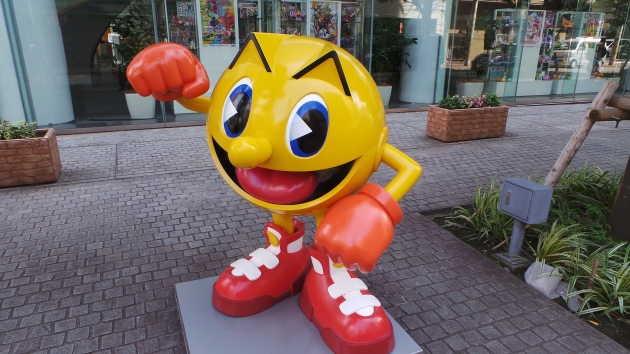
My hotel is in a previously undiscovered part of Asakusa, away from the temple and tourists. Next door is an Indian restaurant. After checking into my hotel I decide Indian food would be a good choice. My hotel, unlike in Hamamatsu, has wireless Internet. I can access the Internet from the Indian restaurant, which is a nice bonus. The food is actually very good. Like Pacman eating those little dots, I devour every little grain of rice.

pacman

After dinner I head out to the hostel. Today is Wednesday, the bar is open for guests, and I have nowhere else to go. My friend Hiro is the barman tonight, jazz musician and comedian. I say hello to people I know, and meet a few people I don’t. It would be fair to say that since leaving Kyoto I haven’t really seen many people, or had many conversations in English. Having a chance to speak to people tonight is just great.

I get a little drunk, and leave at midnight.

Thursday

Today I have made plans to meet Paul, a Scotsman I met in Fukuoka. I go for breakfast at my favourite cafe, Byron Bay. Still number one in Taito on TripAdvisor. I drink one of the ‘as seen on TV’ green tea lattes, and eat happy eggs on local bread. The owner tells me that since being featured on Moshimo Tours, she has been really busy every night. After breakfast and a nice catch up, I meet with Paul and we grab a train to Akihabara.

Paul and I head to a department store called Yodobashi Camera, an electronics chain store. This place is huge, has nine floors, and sells just about everything. Paul is shopping for headphones and this shop has thousands to choose from; the headphone display is set up in a way that you can plug them into your device and try them out. While Paul does this, I sit and play an electric piano. A homeless man sits down at the piano next to me and bursts into an amazing classical piece. He plays well, really well. It is a shame to see someone with so much talent going to waste. A real shame.

After our headphone expedition, we take a quick trip on the Yamanote Line to Yurakucho Station. Outside the station, we venture into another massive electronics chain store, Bic Camera. Our quest here is for the fabled Casio CA53W-1, the classic Casio watch with a built-in calculator. At midnight on December 31st, 1999, this Casio calculator watch was the only electronic device in the world challenged by the famous Millennium Bug. Widespread panic ensued when everyone with this watch seemingly travelled back in time to the year one-thousand. Unfortunately, our search for the watch ends in failure. Disheartened, we give up and head back to Akihabara by train.

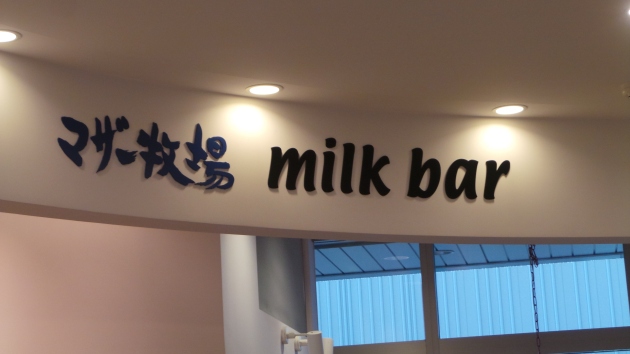
There was me, that is Luke, and my droog, that is Paul, and we sat in the Akihabara Milkbar trying to make up our rassoodocks what to do with the evening.

milk bar

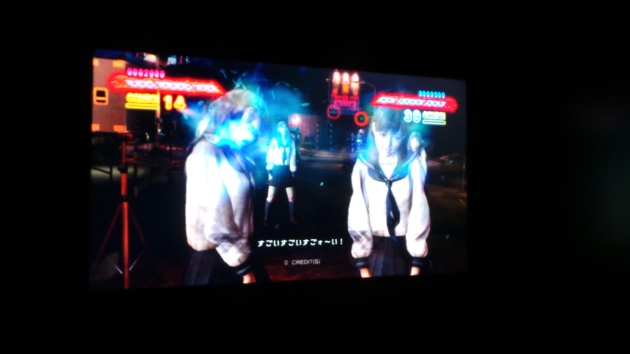
We decide to visit a video game arcade. Paul manages to win a t-shirt on a crane claw machine and kindly gives it to me as a present. After spending a few thousand yen, we head over to play some of the classic shooting games. The game we choose is a hybrid, blending the traditional shooting-monsters-with-a-gun style with a dance game where you hit buttons according to the rhythm. Surprisingly, this game also boasts a very in-depth storyline.

The game is of course the amazing, ‘Sailor Zombie: AKB48’.

The members of the girl idol band AKB48 have been turned into zombies, and our task is to defeat them. The most amusing part is when the zombies abruptly halt their attacks and break into song and dance, triggering the rhythm game. We play through our 15 continues, maybe an hour passes, before we finally give up.

AKBzombie

After the arcade, we opt for some Japanese Italian food at a Saizeriya restaurant. Then, around half past six, it’s back to Byron Bay for a quick Laphroaig before we head to the jazz night at the hostel. There, to my surprise, I bump into Yojiro, my friend and table tennis rival from Beppu.

After the jazz session, I share a few more drinks with Paul. Soon, our group expands with the arrival of an Australian named Sam, a Japanese gentleman, an Argentine girl, and Dagmar, a German girl I met just last night. Dagmar and I engage in a delightful hour-long conversation about The Curse of Monkey Island—I boast about having the courage and skill of a master swordsman! We spend a considerable amount of time amusing ourselves with pirate insults and banter, while everyone else around us remains clueless about the ‘code’ we’re speaking.

At midnight the six of us head out to A.S.A.B. and drink there until five in the morning.

Friday

My morning kicks off as usual, starting with a strong cup of coffee at Cafe Byron Bay, followed by not much else. The entire day unfolds without any noteworthy events. I meander through the streets of Asakusa, as if searching for something inexplicable. Eventually, I station myself outside Seven Eleven to tap into their wireless Internet. Unexpectedly, one of the comedians from the Moshimo Tours television show, Udo Suzuki, strolls by with a film crew in tow. Quick to grab my camera, I encounter the familiar scenario: a man materialises seemingly out of nowhere. “No photographs!” he insists, arms forming a cross to obstruct my lens.

After a day spent doing absolutely nothing, I return to Cafe Byron Bay for the fourth time in two days to meet Klaus, my German friend from Fukuoka, along with his girlfriend, Desi. We enjoy a few drinks there before deciding to venture across town to Nui, known as the finest bar in Asakusa. Nui truly lives up to its reputation. While I’ve been here several times before, I find myself repeatedly drawn back by its impressive interior design and reasonable menu. A Suntory whisky highball costs ¥500, and any cocktail is also ¥500—a great deal.

The three of us sit and talk until half past eleven before parting ways. A certain sadness sweeps over me as I bid farewell to Klaus and Desi—a feeling of melancholy I haven’t experienced in quite some time.

skytreeasak[1]

On the walk back to my hotel, I pass the illuminated Tokyo Skytree, “May the light connect the past and future, and reach the hearts of people.”

In a City of the Future it is Difficult to Concentrate

Breakfast from a Seven Eleven. The quality and selection of food in Japanese convenience stores is amazing. The Cheese Mushi Cake was actually quite pleasant; soft with a very light texture, softer than a sponge cake with a subtle hint of cheese. I wash it down with a blueberry yogurt drink. It is a wonderful time.

MUSHICAKE[1]

Today is laundry day; I grab some of the ‘free’ detergent from the reception and head up to the 4th floor of the hostel. The laundry room here is amazing. It costs me ¥200 to wash my clothes. Also in the laundry room random plugs litter the floor, there is a stone water fountain, and a bathtub full of colourful plastic balls.

I see Daisuke here, he is on his break and just chilling out in the laundry area. I ask him to take my photograph. Afterwards, he starts to pick up some of the balls and begins to throw them at me. We have a ‘fight’ for a short while before tidying up our multicoloured mess.

bathtub[1]

After laundry, I take a six minute train ride to Akihabara Electric Town. I go into a few of the shops looking specifically for models of Final Fantasy characters for a friend back home. In one shop I see Magic the Gathering cards next to the pornography. In another shop the lift is playing House of Cards by Radiohead. Elsewhere in Akihabara, the girl idol band AKB48 are doing a meet and greet, the queue of adult males is insane.

Inside the Club Sega arcade, elderly individuals sit alone whilst playing computer games, while men in suits attempt to win stuffed Pikachu’s from crane claw machines. Outside, a woman dressed in a maid costume hands out flyers for a maid cafe.

maid_entrance[1]

Akihabara is a little too much and the humidity is high today. I begin to feel a little dizzy so I head back to Asakusa. On my way back I see a sign saying, ‘In the stations, please refrain from putting a thing on the floor.’ At the hostel it’s 5 p.m. and Daisuke has just finished his shift. I join him in the lounge for a beer and he once again emphasises that I should go to the Robot Restaurant. Soon, I tell him.

I am invited out for a trip to Shibuya for some sightseeing and food. A group of six of us is randomly formed, including Conor, Grant, and Edwina from previous evenings; and we head out to Shibuya. This time I get the chance to see if people crossing the road looks any better during a busy evening surrounded by neon lights. I admit, it is a little better than the day time, but it is still just people crossing a road.

crosstwo1[1]

There are some quality English signs here in Shibuya. The highlights for me are a restaurant called the Raj Mahal, a dress shop called 1000% Wedding, and a drinking establishment called Gaspanic.

We search a while in Shibuya until we find a restaurant that we all agree on. We buy our meal tickets from the vending machine outside; I order the ‘no pork’ vegetarian ramen and a beer for ¥1380. After ordering we go inside, sit down and hand over our tickets. Eventually our food comes out. It looks pretty good and tastes pretty good. My ramen contains cabbage, spring onions, beansprouts, and noodles in an unidentifiable broth.

20140604_202620[1]

After lunch, the group splits. Conor and the others head off to check out a love hotel. Edwina, Grant and I head back to the hostel. On the train there is a sign advertising Suntory Strong Zero. The sign, for no apparent reason says, ‘Suntory Strong Zero 9% Wash You!’ On the way back to the hostel we stop off at the five-storey convenience store. At the store I buy a 135ml can of Asahi for ¥95. It is the smallest can of beer I have ever seen. I also buy a bottle of my favourite Japanese whisky.

At the hostel we do some drinking. Eventually the others return and we regroup for a few games of cards and some bad magic tricks. The night ends at around 2 a.m. We make plans for the following morning then go our separate ways to sleep.