Pot, Kettle, Snack

Today, I take the Toei Asakusa Line for the first time in my life. Each time the train starts, it sounds as if there is music coming from beneath the carriages. It turns out that the music is the scraping of the train on the tracks; it does sound rather tuneful, though, perhaps this is the intention. It reminds me of an experience I often have on the Tokyo Metro Ginza Line; between Aoyama-itchome and Gaienmae, the train intermittently makes the sound of a dog being strangled.

I change trains at Shinbashi Station and depart in the direction of Yokohama. The journey time is an hour in total, and I arrive in Yokohama at 10 o’clock sharp. Outside the station, it is 21°C, cold in comparison to what I am used to. I search desperately for a Seven Eleven so I can update my maps using the free wireless Internet, but it seems Family Mart has the monopoly here. I eventually find a sketchy map and head toward Yokohama Bay.

yokohama[1]

There is a theme park here, Cosmo World. I contemplate riding the giant Ferris wheel (not pictured) to get a decent view of the area, but I remember that I am alone, so decide to give the solitary capsule ride a miss. I head to Yokohama F.Marinos MM21 Training Centre, the stadium for the football team ‘Yokohama F.Marinos’. Outside the stadium, two of the star players sign autographs for a small queue of fans.

The reason I came to Yokohama today is to visit the Cup Noodles Museum. For no reason that will ever become clear to anyone, a dinosaur stands guard at the entrance to the museum, a Deinonychus. This is the type of dinosaur that the raptors were based on in the movie Jurassic Park. I sneak past the Deinonychus and head to the ticket office. “How many people?” a young woman asks me. It is painstakingly obvious that it is just me.
“One person,” I say, looking around me for answers, “I think,” I add, deadpan. I pay the ¥500, and I am given a rather glossy museum guidebook.

dinocup[1]

Inside the museum, I am given a cardboard hat featuring a cartooned yellow bird, presumably a mascot of sorts. There is every packet of instant ramen and every type of Cup Noodle that has ever been created, arranged in a huge timeline. Just to clarify, this museum is for the brand of cup noodle called ‘Cup Noodle,’ made by Nissin; it is not a museum of cup noodles.

Momofuku Ando invented chicken instant ramen in his shed in 1958. With the overwhelming success of his chicken noodles, he went on to invent the cup noodle in September 1971. Not satisfied with his achievements, at the age of 96, he invented the first ramen that can be consumed in space. There is a wonderful exhibition of his life, a model replica of his famous shed, and loads of crazy noodle-based artwork here too.

cupnoodle[1]

There are noodle workshops where I can make ramen noodles from scratch or create my very own products. I pay an additional ¥300 and join the queue. I wait forty minutes, and eventually, I am given the opportunity to design my very own brand of Cup Noodle. First, I am given a blank Cup Noodle cup and am free to write or draw whatever I want. I graffiti the front of my cup, so where it once said, ‘Cup Noodle Museum,’ it now says, ‘Cook Pass Babtridge.’ I find the available pens to be of slightly poor quality, which spoils the whole experience for me.

Next, I get to choose the broth and toppings. A sign boasts that there are a total of 5,460 flavour combinations. “Gotta mismatch ’em all!” After toppings are added to the noodles, the lid is sealed in place, and the cup is vacuum-packed. After I finish making my lunch, I go to the top floor of the museum and check out the restaurants. No prizes for guessing what is on the menu.

After the museum, I stumble across a rather odd-looking building down some rather old-looking stone steps. It looks like a set from a science fiction movie; perhaps it once was.

bricksandstone[1]

I head into a Yodobashi Camera store. The place is silent; no crowds, no people shouting at me to buy their stuff. It is the complete opposite of the store in Akihabara. On the sixth floor, middle-aged men are queueing to buy AKB48’s 37th Single, ‘Senbatsu Sousenkyo,’ which was released today and will most likely be number one in the Billboard Japan Hot 100 chart by the weekend.

Outside, I grab a can of Suntory Black Boss coffee from a vending machine and make my way back toward the station. On the way, I pass a huge ship that looks amazing. It is actually part of the Yokohama Port Museum, sadly not a museum of fortified wine. The ship was built in 1930 and is used for training exercises. Even though there is a massive ship here, it doesn’t look out of place.

boatyokohama[1]

At the station, I take three different trains, and an hour later, I arrive back in Asakusa. I am actually completely exhausted but can’t sleep. I play video games for a while, then head out at six for a Dal Vindaloo at my favourite Indian restaurant. As I eat, I remind myself that I am in Japan and should maybe try Japanese food once in a while.

After food, I head to the hostel bar to conclude the day. A young Australian woman tells me that I sound like Russell Brand. I strongly disagree.

Swings and Sound and Boats

My hotel offers a ‘classic’ help-yourself breakfast, so I opt for a bowl of rice, pickled cucumber, a pot of natto, a salad, and a couple of croissants. Natto for breakfast—enough to wake even the dead! I add mustard to rid myself of its abhorrent taste.

The day is gloomy with the threat of rain, yet curiously, I can’t seem to locate my umbrella—this is becoming a regular occurrence. The rain halts, I absentmindedly leave my umbrella outside a shop, and upon exiting, it slips my mind entirely. Now, sans umbrella, I’m left fervently hoping the rain stays at bay. But as expected, the very instant I step out of the hotel, the rain begins to pour.

Today, I only have two things on my sightseeing list, and they’re quite a distance apart. Given that I’m in Japan, the journey between them is sure to unveil something intriguing along the way—perhaps even a shop shaped like a boat.

boatshop

I head into Arc City and visit the Hamamatsu Museum of Musical Instruments. It’s the largest municipal museum of musical instruments in Asia and was the very first of its kind to open in Japan. The museum boasts an incredible display of 1,200 musical instruments. Admission costs just ¥400.

Most instruments come with two sets of headphones. I thoroughly enjoy examining each instrument, studying its unique shape, and imagining how it might have sounded in use. I then choose a pair of headphones to listen to its actual sound—A great way to kill a morning.

instruments

The museum showcases instruments from across the globe, with expansive sections categorised by continent. Here, I delve into a wealth of musical knowledge. My particular fascination lies with transverse flutes, shakuhachi flutes, and Japanese taiko and tsuzumi drums. Moreover, I uncover an intriguing fact: the very first Japanese-made piano originated here in Hamamatsu. This revelation perhaps accounts for the abundance of music shops, Romantic-era traffic lights, museums, and two concert halls.

In the ‘hands-on room,’ I indulge in playing a variety of instruments, but the spinet piano steals my heart as a favourite. Lost in the museum’s captivating exhibits, time slips away unnoticed, and I find myself leaving after two or three hours.

Outside, the cicadas persist in a symphony of their own, undeterred by the torrential rain. Amidst the deluge, there’s at least one person seemingly relishing the downpour:

rainingagain

Seeking refuge from the weather, I find solace inside Hamamatsu Station. Ascending seven escalators to the 8th floor of the shopping complex, I reach a bookshop. In Japan, lingering or sitting down to read books in a bookstore is perfectly acceptable. Similarly, spending hours browsing magazines in a convenience store is considered normal. I pass fifteen minutes here before descending, only to discover that the storm has worsened.

Everyone at the station appears as ill-prepared as I am. Umbrella-less, they huddle together, patiently awaiting the rain’s cessation. I hastily make my way to Seven Eleven, purchasing my sixth umbrella for ¥540. The surrounding buildings are shrouded in a white mist of cascading water—an unexpected sight, especially considering my plans to visit the beach today.

actbuilding

As time passes, I find myself seated on the only bench in that deserted shopping arcade. With several hours to kill due to hotel cleaning schedules, I contemplate. During a storm like this, I can’t help but wonder if the safest haven might just be a shop shaped like a boat.

After a while, the rain subsides, prompting me to stroll to the beach, a journey of about an hour. This beach holds significance due to the Nakatajima Sand Dunes, and it serves as a conservation area for the nesting Loggerhead Sea Turtles. Every summer, these turtles come ashore to lay their eggs on this very beach.

“Prazer em recebê-los!” says a drawing of a Loggerhead Sea Turtle in fluent Portuguese.
“Nice to meet you, too!” I reply, in fluent English.

dune

These sand dunes rank among the three largest in Japan, and the wooden fences stand to protect their conservation. A warning sign sternly advises, ‘Do not damage the fences!’ The wind, notably stronger in this area, renders my umbrella ineffective—unless I’m keen on turning my sixth umbrella inside out.

By the time I reach the sea, I am completely soaked. I was really hoping to see a turtle, but I sadly can’t find any; not too surprising really, they are a rare and endangered species. After the beach I head into a nearby park. There is a big man-made hill in the park built specifically as a tsunami evacuation point. There is also a windmill and a set of swings. I rest my legs for a while.

swing

On my walk back to the hotel, I pass a pachinko parlour called, ‘God’. I also pass dozens of construction sites promising modern skyscrapers; office blocks and apartments. It seems that the southern part of Hamamatsu is the last and latest to be developed, perhaps in four or five years this place won’t seem so desolate.

The rain stops just before I cross the river.

bridgebird

After walking for an hour, alone, my thoughts begin to wander and I drift off into daydream.

Upon returning to the hotel, I realise I can’t recall the journey here, yet here I am. After drying off, I dedicate some time to researching my trains for tomorrow. It appears I have yet another four-and-a-half-hour local train marathon to endure. However, I don’t mind; after forty-eight days away, I’m finally heading back home to Asakusa.

Withdrawal & I

Today, I have a rough plan: a day trip to Nara with a stop in Uji. Last night, I arranged to meet my friend Slavek at noon. He’s planning on going to Nara anyway, so we decided to travel together. I wake up at 11 a.m. with a hangover; I shouldn’t have stayed up until 4 a.m. drinking whisky and teaching people magic tricks.

Slavek and I walk to Kyoto Station. I’m pleased to find that he is a fellow fast walker, and his pace matches mine perfectly. It takes us ten minutes at a brisk stride. On the way, I stop off at Seven Eleven to withdraw a ¥10,000 note. Seven Eleven cash machines are the only ones that accept my card in Japan, and the minimum withdrawal here is ten thousand yen. We pay ¥240 and head to Uji by train. Slavek is a very clever guy with great English skills, a keen eye for both nutrition and politics, and he’s an avid Haruki Murakami reader. We have decent conversations. In Uji, we’re off to see the temple that is depicted on every ten-yen coin.

coins[1]

I’m fond of Japanese coins. The 100% aluminium ¥1 coin floats on water and sticks to any part of your face without falling off. The copper ¥10 coin brought us to Uji to see the temple. The ¥500 coin is the most valuable everyday coin globally, and it’s also the most interesting. When tilted at a certain angle, you can spot the kanji for ‘five-hundred-yen’ hidden in the grooved lines. Additionally, the word ‘Japan’ is discreetly engraved in 0.2mm across the coin’s face.

Amidst my blathering about coinage, we end up missing the stop for Uji. Getting off the train, we cross the platform and board another train bound for Kyoto Station. It’s an easy mistake, one forgiven by the Japanese train ticketing system. Finally arriving at Uji Station, we head to Byodoin Temple, the one featured on the ten-yen coin.

Byodin[1]

Byodoin is a UNESCO World Heritage Site, marking another off my list. It’s one of the few remaining examples of Heian temple architecture in Japan, dating back to its original construction in 998 AD. Surprisingly, it doesn’t seem to attract many tourists; in fact, most of the visitors I see here are Japanese. The temple features Japan’s most beautiful Pure Land Gardens among the few that remain, alongside a small museum, both covered by the entry fee.

The museum has won four architecture awards. Inside, it houses 52 wooden Bodhisattvas, the temple bell, the south-end Phoenix, and other historically noteworthy items. Additionally, the temple bell here is recognised as a national treasure. I discover that the golden phoenix here is the same one depicted on the rear side of the ¥10,000 note. More money musings. After exploring the museum, we hop onto a packed train filled with tourists heading to Nara:

emptytrain[1]

We arrive in Nara just after 3 p.m. It’s a warm afternoon, thankfully quite cloudy. Heading to Todaiji Temple, we pass a lovely pond with turtles swimming around. We also visit a few smaller temples and a five-storey pagoda. Kohfukuji Temple, part of the Historic Monuments of Ancient Nara, is sadly closed for reconstruction. Surprisingly, it closed in October 2010 and won’t be ready until 2018. Eight years to reconstruct a temple. Just nuts.

And then there are the deer. Sika Deer roam freely through the town, with an estimated 1,200 of them in Nara. You can purchase deer snacks and feed them to these creatures. I’ve been told that the deer bow when you feed them. We witness a herd waiting patiently at a red crossing light, only crossing when the light turns green. They’re remarkably tame.

deercrossing[1]

Todaiji Temple is the second-largest wooden structure on the planet. It was built during the Nara period on the instruction of Emperor Shomu. We pay our ¥600 entry fee and stroll through the gardens toward the temple. On the temple grounds, there used to be two 100-metre-tall pagodas, but they were destroyed during an earthquake. In 751 AD, these pagodas would have been the second tallest structures in the world, after the Egyptian Pyramids.

Some interesting facts about the temple: Emperor Shomu issued a law in Japan stating that the people should directly participate in the creation of new Buddhist temples across the country. Thanks to this law, 2,600,000 people were involved in the construction of the Great Buddha Hall and the statue inside.

bigwoodentemple[1]

Another interesting fact: the Great Buddha Hall is 1/3 smaller than the original, as it burnt down in 1180 AD and again in 1567 AD. That’s what you get when you build it entirely out of wood. I’ve noticed that nearly every temple I’ve visited in Kyoto has suffered the same fate of burning down and being rebuilt. Inside the hall stands the statue of the Vairocana Buddha, also known as the ‘Buddha that shines throughout the world like a sun.’

This is the world’s largest bronze image of the Buddha, towering at 14.98 metres. The construction of this Buddha nearly bankrupted the Japanese economy at the time, as it consumed all of the available bronze in the country. Sadly, behind the statue, there are many small gift shops that seem out of place and frankly spoil the ambiance of the scene.

bigbuddha[1]

It’s just after 5 p.m., so Slavek and I decide to grab some food in Nara. We end up eating far too much sushi, spending a total of ¥6436 at the restaurant. Later, we hop on the express train back to Kyoto, mistakenly using our tickets intended for the local train. During the journey, the conductor asks us to pay an additional ¥510 as a surplus charge for the express train. The express train takes about twenty minutes, half the time of the local train. Finally, we walk back to the hostel from Kyoto Station.

In the hostel bar, I enjoy ¥500 glasses of Suntory whisky highball. It’s not until my third drink that I inquire about the price of a double, as the standard highball is a bit weak for my taste. “It’s ¥500,” explains Daiki, the barman. So, after being here for five nights, I discover that a double whisky and soda costs the same as a single. If this holds true in all Japanese bars, I’m in luck. I also order some bar snacks—¥100 for mixed nuts. Daiki places a small bowl on a tiny set of scales, pouring nuts into the bowl until they reach the specified weight. Just nuts.

Prelude to a Quiche

The Kaleidoscope Museum is a unique establishment with a fascinating twist. It proudly exhibits fifty distinct kaleidoscopes, chosen from an expanding collection of approximately 150 pieces. Among these are exceptionally valuable kaleidoscopes crafted by renowned artists from various corners of the world. I discovered that the term ‘kaleidoscope’ originates from Greek roots: ‘kalos‘ meaning ‘beautiful’, ‘eidos‘ meaning ‘form’, and ‘scopes‘ meaning ‘to look at’—a beautiful amalgamation that translates to ‘to look at beautiful forms’.

At the museum, visitors can freely pick up and use kaleidoscopes, ranging from finely crafted ones to those ingeniously made from plastic drink bottles. Among the assortment, my favourite piece doubles as a music box, serenading me with a tune while the images twirl before my eyes. Additionally, there’s a quaint shop within the premises offering kaleidoscopes, kits, and keychains. It’s a fantastic way to kick-start the day. Unfortunately, photography isn’t permitted, and I find myself constantly shadowed by a staff member. However, I manage to sneak a photograph of the inside of a kaleidoscope when she isn’t looking.

kaleide[1]

After leaving the museum, I walk for fifteen minutes, crossing the river to reach Yoboji Temple. I feel it’s only fair that my first temple is a Nichiren Buddhist one—the school of Buddhism I am familiar with. The Temple was built in 1548. It’s actually a rebuilding of two temples that previously occupied the area but had been burnt to the ground two years before.

In 1536, the warrior-monks of Mount Hiei attacked the city, burning down all 21 of the Nichiren Buddhist head temples in Kyoto, along with the entire southern half of the city and a substantial portion of the northern half. This event is known as the Tenmon Persecution. The temple itself is rather quaint.

Yoboji_Temple[1]

Not far from Yoboji Temple, I stumble upon a Paper and Printing Item Shop. The gallery is tiny, and a woman sits at the desk, watching my every move. I’m tempted to pull out my camera and capture a photograph of one of the ornamental fans or origami animals, but to avoid any hassle, I decide against it.

I choose to visit a shrine next. The road I stroll along is lined with various temples, shrines, plenty of walking routes, maps, and bus stops. You can literally shrine-hop by taking the bus if you’re feeling lazy. However, I prefer to walk, and I’m not inclined to see more than one temple and shrine a day. It can be a bit overwhelming to take in too much at once. I ascend about fifty concrete steps to reach Awata-jinga Shrine. Before entering, I participate in the purification ritual.

dragonfountain[1]

This tradition of cleansing is observed before entering a sacred space. The basin here features a water-breathing dragon, which also serves as the source of water for the ritual. I must admit, this is one of the most exquisite purification basins I’ve encountered at a Shinto shrine. I start by washing my left hand, then my right hand, and finally, my mouth.

Awata-jinga Shrine dates back to 794 AD and specialises in preventing illness. However, inside the shrine, someone is noisily using an electric saw, which disrupts the serenity of the moment for me. Nevertheless, the shrine itself is visually stunning. I descend the fifty or so steps and continue along a road lined with traditional Japanese-style houses.

Awata[1]

Downtown Kyoto bustles with tourists, drawn here to explore the shrines, temples, museums, galleries, restaurants, and the renowned souvenir shops the city offers. I spot three cat cafes and a lone dog cafe among the bustling streets. Purchasing a can of cold coffee from a vending machine, I encounter one of those machines that promises a prize if it lands on triple sevens. Miraculously, it does! I win any drink of my choice, and naturally, I opt for a second can of Coffee Boss Rainbow Blend.

It’s mid-afternoon, and feeling a bit peckish, I opt for a light bite to eat. Given the scorching 35°C temperature, I choose to stay in the cool shade of the shopping arcade. A sign catches my eye, indicating a vegan and organic cafe nearby. As I step inside, I’m greeted with a chorus of “Hello” from the other patrons. Taking a seat, I order a set meal featuring a vegan quiche.

vegan1[1]

My food promptly arrives—a serving of vegan quiche, accompanied by a delightful salad dressed in a delicious vinaigrette, a ramekin of squash, chickpeas, and peppers. Alongside it comes a bowl of leek, cabbage, and mushroom soup, complemented by glasses of cold water and cold green tea. The entire meal comes to ¥918. If I weren’t already full, I’d happily indulge in another slice of quiche—it was that delicious.

Outside the cafe, a guy on a bicycle whizzes past, blaring an air horn from the spot where a bell would typically be. The shopping arcade strictly prohibits vehicles, including bicycles. A bit further along, I encounter a television crew filming people and asking them why they enjoy eating crêpes. While tempted to participate, I realise I’m not particularly fond of eating crêpes.

crepefilming[1]

Back at the hostel, I settle on the roof with a can of Suntory whisky highball, delving into my fifth Haruki Murakami novel since arriving here sixty-two days ago. The air has cooled, and the refreshing breeze is a welcome relief. Japan has been grappling with a severe heatwave for the past week, and it seems it will persist right through until the weekend.

I read until 8 p.m. before heading to a nearby music shop for a free gig. A stage has been set up next to the ukuleles. The band performing is a two-piece folk band. Their sound is somewhat average. Nonetheless, it’s pleasant to experience some live music, even though the venue is rather unusual.

My night winds down at the hostel bar, talking to random people with their random ideas.

Cicadas of the Lost Park

Today, I wake up at 8 a.m. I go outside and take a short wander. It seems that Kyoto is still sleeping. I return to the hostel to steal a few more hours for myself. By 11 a.m., Kyoto still seems to be asleep; shops are closed, and nothing much is happening. I decide to do some sightseeing. I am fortunate to be staying in Downtown Kyoto; many places are within walking distance, which is very convenient as I am tired of trains. I walk from the hostel in a straight line along the same road for ten minutes, eventually arriving at Kyoto Imperial Palace Park.

The gardens here are quite impressive, featuring Omiya Palace, Sento Palace, multiple shrines, a peach grove, and, of course, the Kyoto Imperial Palace. The peach grove is odd; the peaches are within arm’s reach, so I could steal a few if I wanted to, but I don’t. The most appealing shrine is the Isukushima Shrine; it sits quietly over a lake.

giongardens[1]

There are signs in some areas of Kyoto Imperial Palace Park that say, “Not to be visited by tourists.” There are little to no other tourists here anyway; perhaps the signs have driven them all away. However, there are hordes of homeless people. Some paths are overgrown, others forgotten many years ago. I see one gardener delicately pollarding the branches of a tree. Just one gardener tending to a park 1.3 kilometres in length.

As for the Kyoto Imperial Palace, it lies behind a moat and a tall wall. The water in the moat has dried up, and the wall is too high to see the Palace beyond. Even if the wall weren’t there, it would be completely shrouded by trees anyway. I quite literally can’t see the Palace for the trees.

kyotopalace[1]

There is one thing I do like, and that’s the sound made by the cicadas. These little insects just love to sing, and the trees here are full of them. And there are a lot of trees; ten thousand trees in the Palace Park alone. The noise these insects make sounds alien to me, perhaps robotic, but calming. I spend a full hour wandering the park.

It is another hot day. Well over 30°C, as usual. A woman outside sprays water from a hosepipe around the path leading into her shop. I believe this is to keep the dust down. I cross the Kamo River; much like the Palace moat, it is dried up from the heat, the fish left behind for the birds. As I walk through the shopping arcade, I realise that there are loads of crêperies here; at least eight or nine shops selling pancakes. A sign in one of the pancake shops attempts to forecast the weather:

signwarm[1]

Back at the hostel, I sit opposite a guy as he flips through a Lonely Planet guidebook. “Where are you going today?” he asks, half for the sake of conversation, half for ideas of places to visit. He waits for me to list off all of the same places as everyone else, but I don’t.
“I’m going to a Kaleidoscope Museum,” I tell him proudly, and his expression fills with puzzlement. He desperately flicks through his guidebook, presumably the ‘Kyoto’ section, but to no avail.
“Hmmph,” he utters, suggesting that if it isn’t in his guidebook, then it doesn’t exist.

I walk halfway across the city, only to find that the Kaleidoscope Museum of Kyoto is closed on a Monday. “I’ll be back,” I say to the locked door with a shake of my head.

Kaleidoscope[1]

One thing I like about Kyoto is that on street corners, there are nice little plaques in English offering insightful history about the area—a nice touch. Feeling a little hungry, I decide to swing by a local cafe at the organic market. I pay ¥940 for a soybean croquette, a cheese croquette, and a beer. The food and drink aren’t particularly photogenic, so I skip taking a photograph.

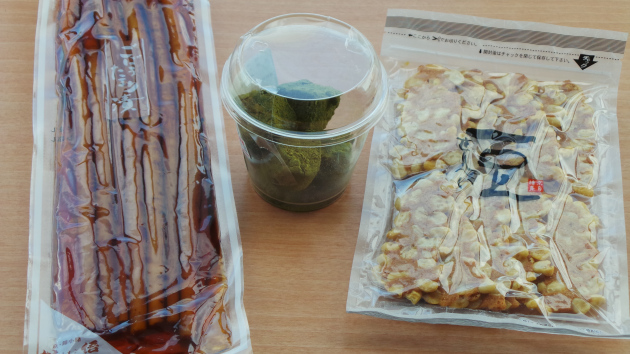
While I’m here at Nishiki Market, I decide to sample some of the local foods. With over a hundred shops and restaurants, they sell seasonal foods and Kyoto specialties like Japanese sweets, pickles, dried seafood, and sushi. I buy three different traditional Japanese snacks and take them back to the hostel.

snackssnack

On the left, I have Gobo Tamari Zuke, or pickled burdock root; marinated in sugar and soy sauce. I wish I had bought this in Okayama to go with the dandelion. In the middle, there’s some sort of matcha snack. It’s basically Turkish Delight coated in a fine green tea-flavoured powder, instead of the usual icing sugar. On the right, there’s a Japanese traditional cake with soybeans, said to have been made for approximately 150 years using the same traditional manufacturing method. According to the packaging, ‘One piece of one piece is the cracker which I baked carefully.’ The cake costs ¥400 and is my favourite of the three.

After trying my snacks and finishing my book, I head out for dinner.

I spot a gyoza restaurant, a food I am yet to try in Japan. Gyoza is a type of Japanese dumpling, usually filled with meat. This restaurant has an English menu outside, stating that one of the fillings they offer is shrimp. I order the shrimp gyoza along with a beer and a side of spiced cucumber. The cucumber dish arrives whilst I wait for my dumplings; the spices provide a good balance to what would normally be a dull snack. Three pieces of shrimp gyoza show up, although I was expecting at least five. After I finish my first three, a plate of ten fried dumplings is placed in front of me.

gyoza[1]

As I bite into the first of ten, I realise it is pork. The staff don’t speak English, but I manage to convey the message. My plate of pork gyoza is taken away, and I’m told it will take eight minutes for the shrimp. While I wait, I order a second beer. Eventually, I am handed a set of shrimp gyoza, albeit only five pieces instead of ten. Apparently, shrimp is twice as expensive as pork.

As I eat, I mishandle my chopsticks. One of the dumplings falls and lands in the saucer of soy sauce; the sauce splashes up and hits me in my left eye. It stings, and I spend the rest of my meal with tears rolling down one side of my face. After finishing my meal, I offer to pay for the wasted pork gyoza, unsure if it was my mistake or theirs. Admittedly, the restaurant is rather cheap. We compromise, and I pay a total of ¥1570 for eight pieces of shrimp gyoza and two pints of Asahi Beer.

I head back to the hostel’s bar and notice a guy reading ‘Women’ by Charles Bukowski. I share that I’m not a fan of Bukowski, only to find out that the guy is from Surrey. I end up spending the rest of the evening in the bar, discussing literature and politics.