Snake Placid

My bus drops me off on a remote mountain path, the lush green foliage surrounds me as I walk. Luckily, getting off at the completely wrong stop presents me with a great view of the Kintai Bridge, an expansive wooden bridge with five arches. Located in Iwakuni, Yamaguchi Prefecture, the Kintai Bridge is regarded as one of three best bridges in Japan, with its ornate timberwork dating back to 1673.

I stare at the bridge for a while and consider its unusual shape. I eventually come to the conclusion that it looks a bit like a snake. I glance down below at the tranquil blue water of the Nishiki River, before continuing on toward the entrance to Kintai Bridge. Here a woman in a ticket booth waves at me, distracted from the present situation, I wave back and begin to cross the bridge.
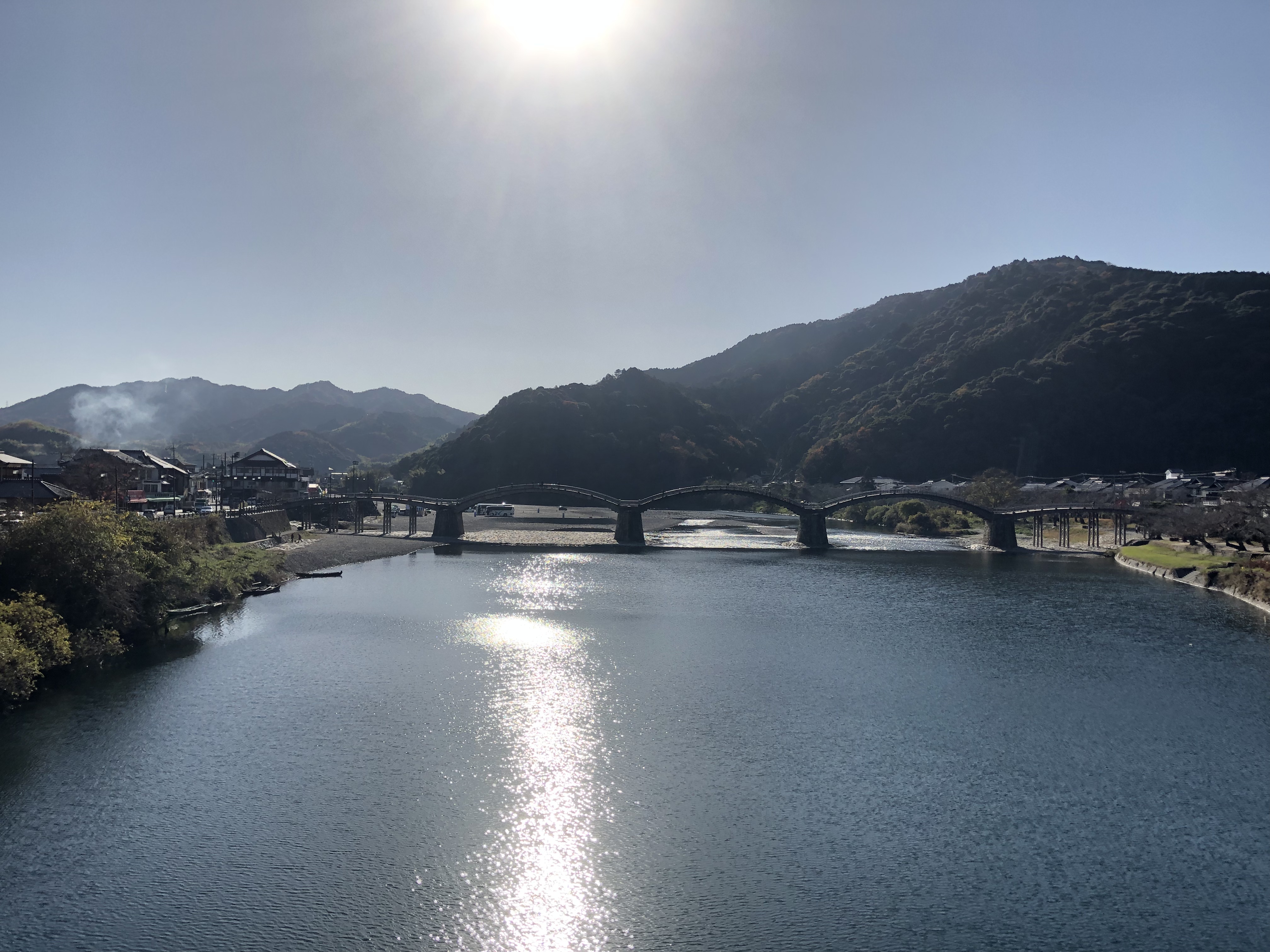
This renowned bridge is dreadful to walk across, its wooden steps curving up and down. The bright winter sun reflects off the polished woodwork and I have to focus on not toppling over. Kintai Bridge has been designated as a National Site of Scenic Beauty, the reason for this is hidden in its sophisticated construction. From the perspective of modern bridge engineering, the construction of the wooden arches are said to be so impeccable, despite their age. I think these modern engineers should try walking across the bridge in the blazing sunshine and then decide how sophisticated it is.

When I reach the other side of this 210 metre long bridge and see another ticket office, I realise the woman that waved at me was signalling for me to buy a ticket to cross the bridge. I apologise at this side and retroactively pay the ¥310 crossing fee. Slightly embarrassed, I continue on, and enter a nice looking park.
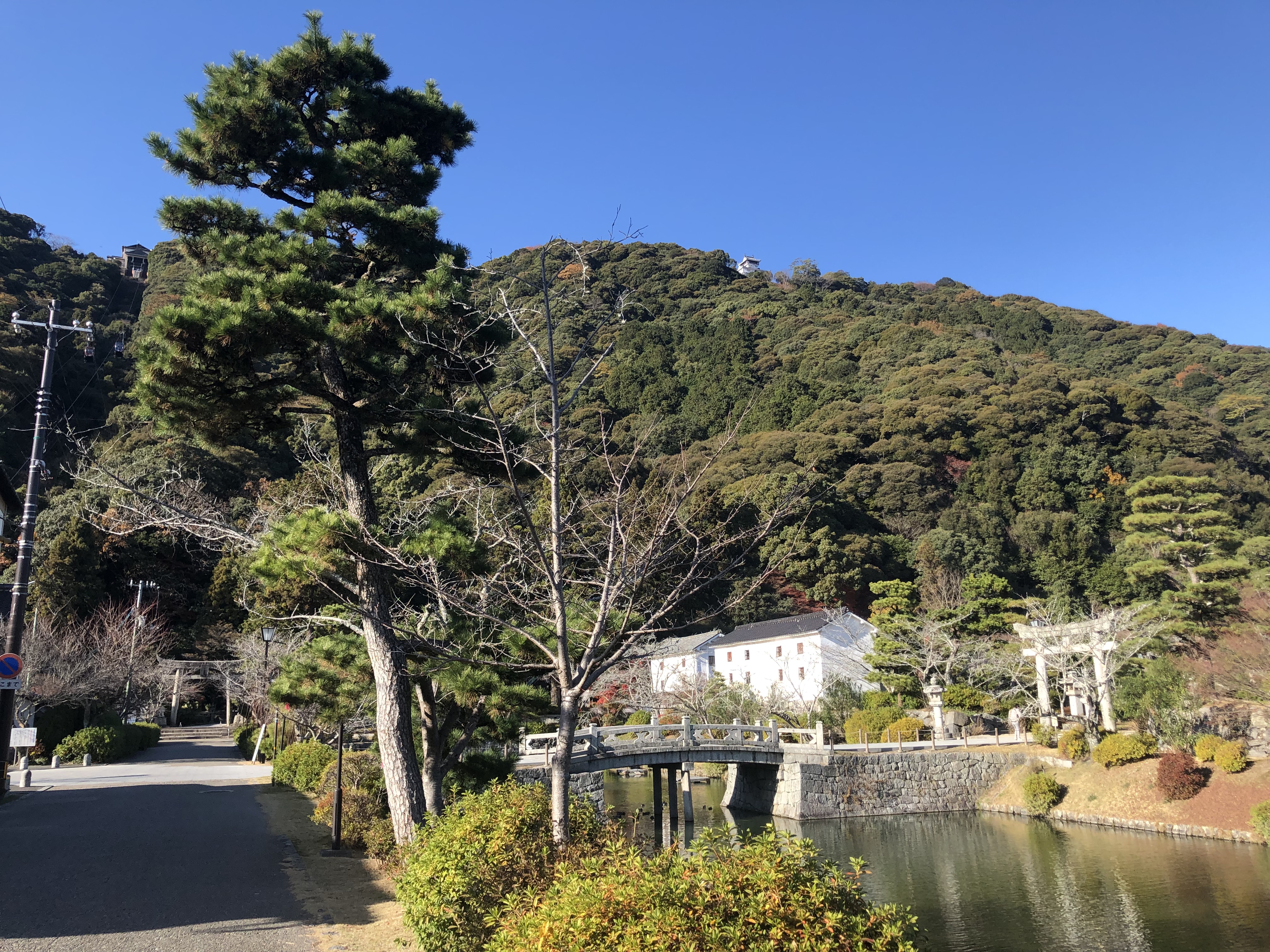
Kikko Park is a very charming leafy landscaped park. The area contains a few tasteful clothing stores, small coffee shops, and nice little restaurants. All of this is set to the backdrop of a mountain, a shrine with some nice bridges, and a few small canals. Atop the mountain, I can just make out the miniature outline of what looks to be a castle. There’s also a snake museum here.

After having my temperature checked and my hands sanitised, I enter the Iwakuni White Snake Museum. Here can be found everything there is to know about this special type of snake; a breakdown of its anatomy, snake skeletons, and real samples of its shed skin are on display here. There are even live snakes that I initially mistook to be made from plastic; it wasn’t until one of these enchanting snakes began to hiss and move its tongue that I realised it was real.
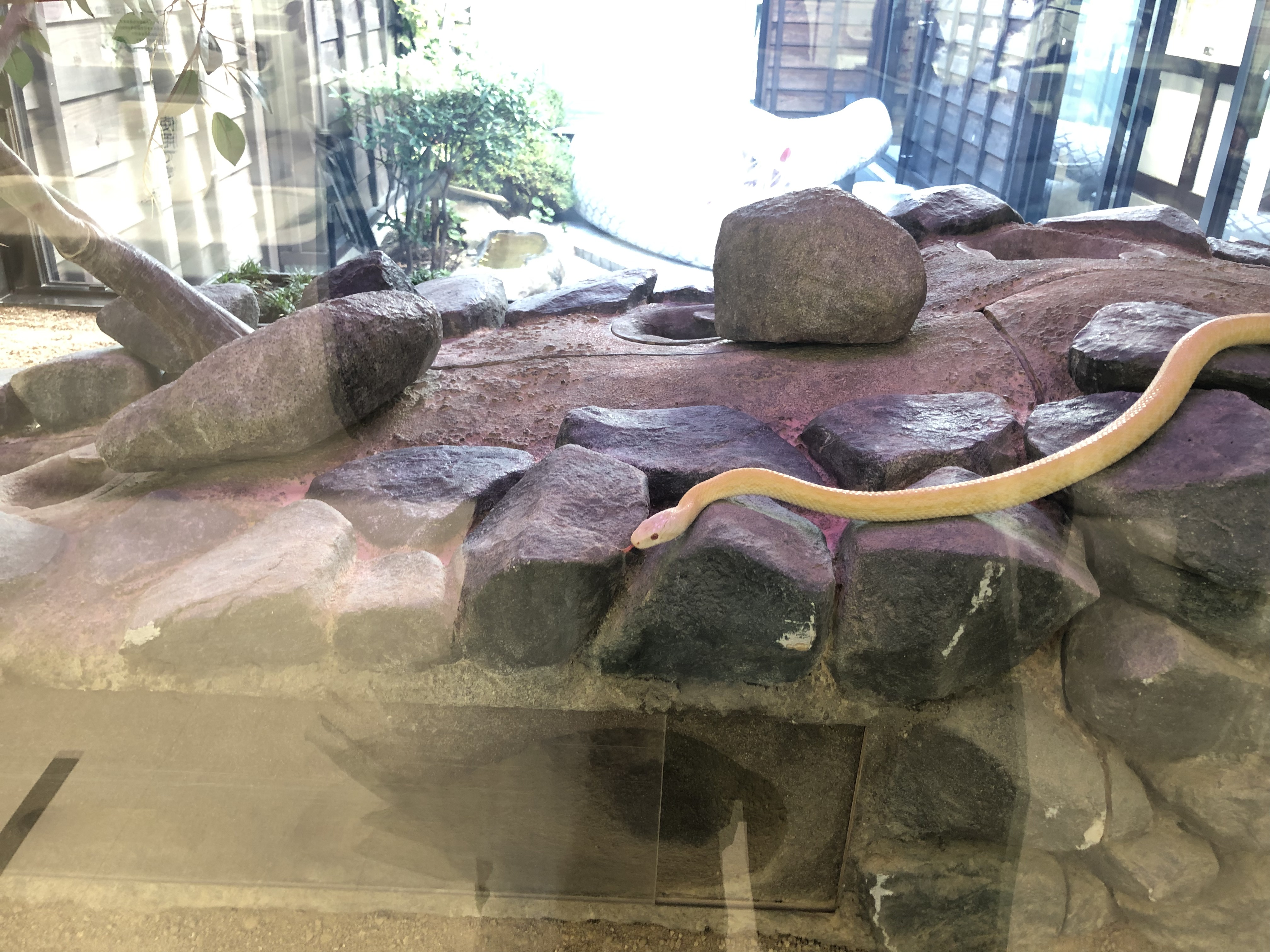
This albino mutation of the Japanese rat snake is glossy white with red eyes, and has been designated as a National Treasure by the Japanese government. It is said that stories about incidents involving these white snakes have been passed down through the ages. The interesting thing about the Iwakuni white snake is that it has a mild temperament, and does not harm human beings. I stare at the snake, regard its shape. I consider that it looks a bit like the bridge I crossed earlier.

Leaving the museum, I decide to check out the castle. It’s quite high up the mountain but luckily there is a ropeway that runs every fifteen minutes. I’ve never been on a ropeway before, but having previously conquered my fear of heights, I’m prepared to give it a go. A few moments later, I arrive at the Iwakuni Castle Ropeway Mountain Foot Station.
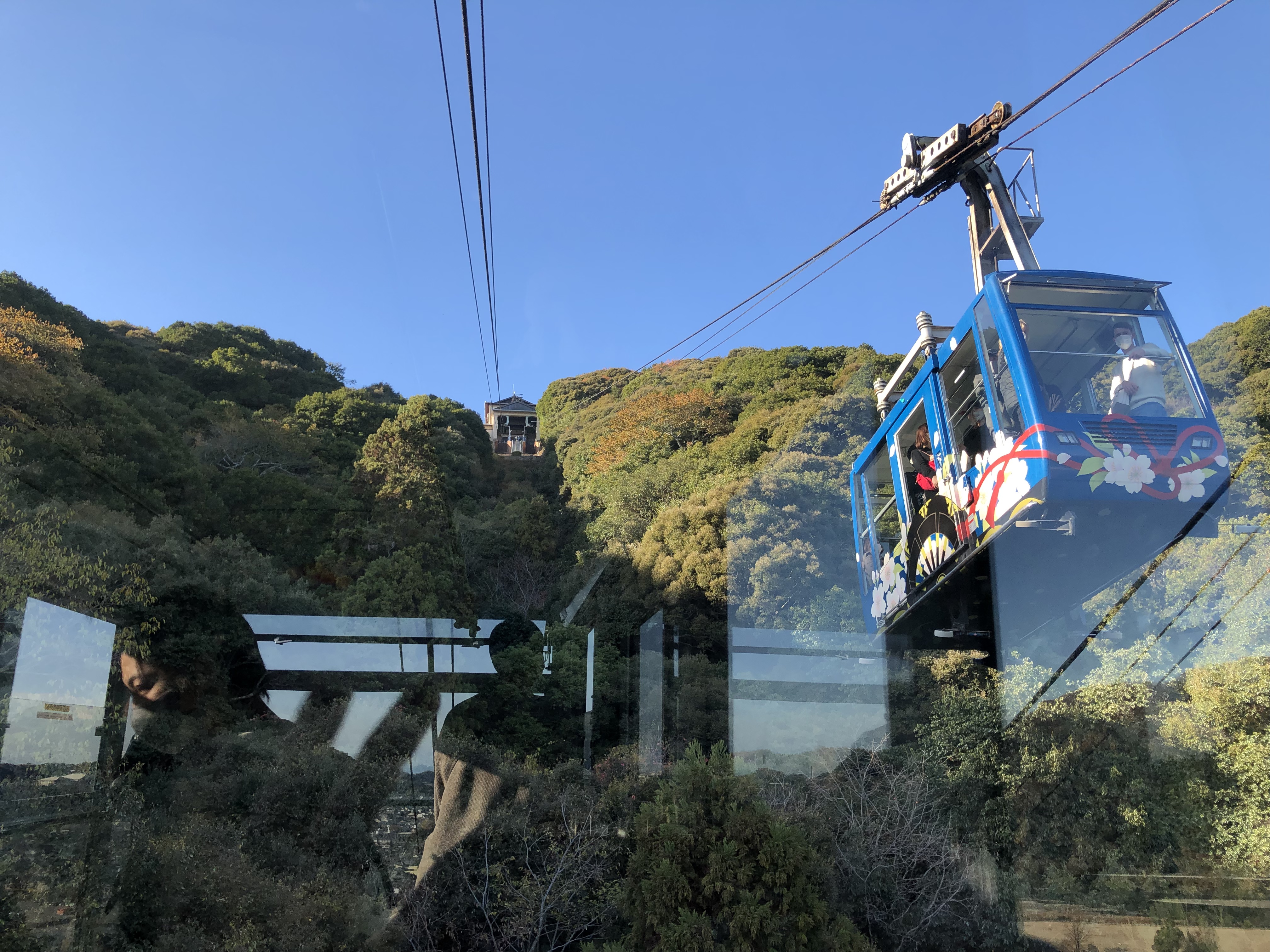
I buy a return ticket for ¥540 then instantly regret my decision once I see the ropeway; it doesn’t look safe at all. As I wait to ride, I become anxious when I watch the man who performs the safety checks simply put his head into our carriage, take a swift look around for less than a second, before telling us we are okay to enter. The ropeway fights its way up 200 metres of cable as it climbs to the top. There is a clock here, the Shiroyama Mechanical Clock, it plays a lively melody as the cable car pulls into the station; I recognise the tune but can’t quite place it.

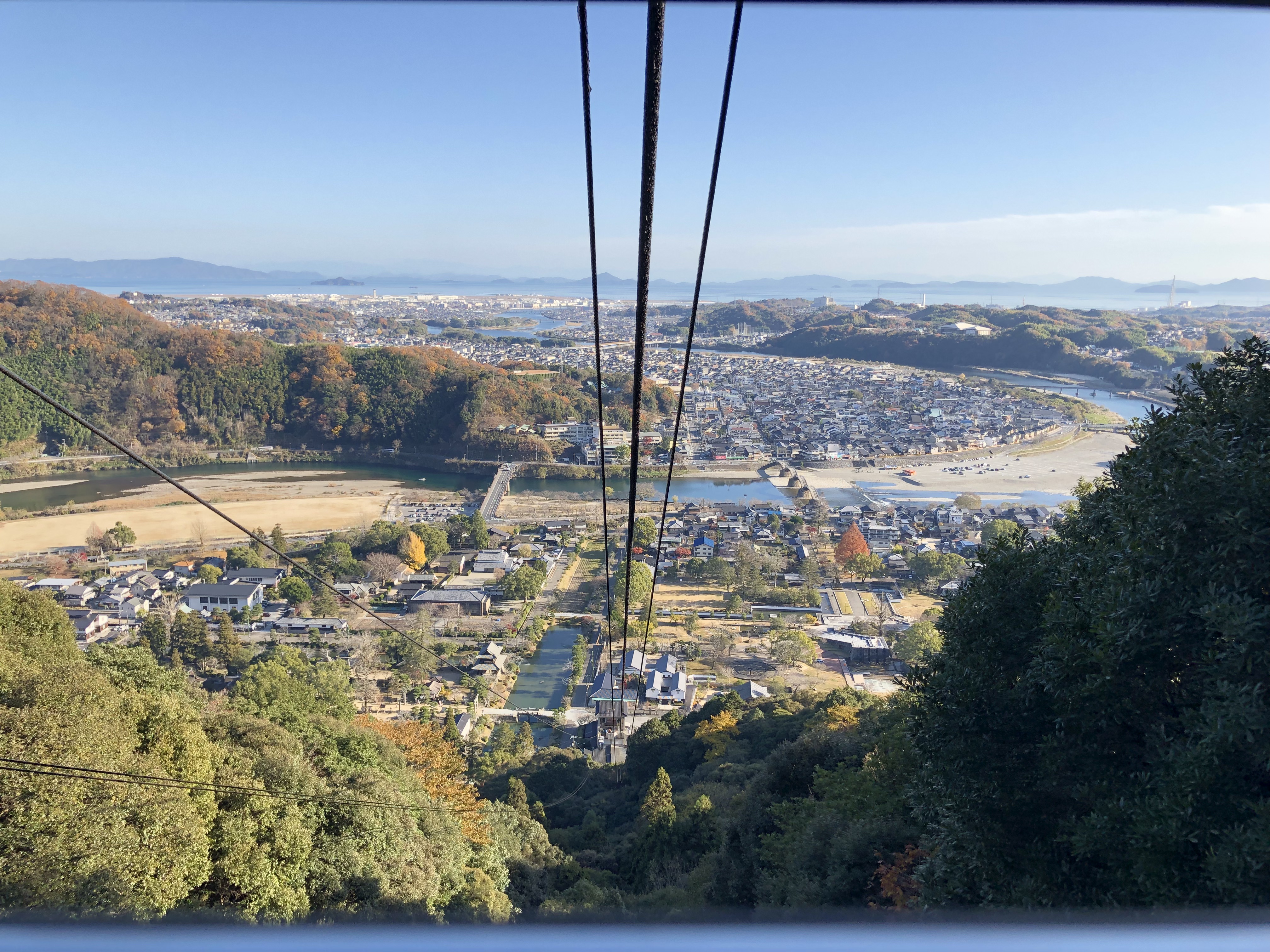
The view from the top is stunning. I stand here for about ten minutes, enjoying the warm weather and admiring the wonderful view. The wind periodically pushes with gentle nonchalance; the occasional hovering of a zephyr adding a cooling breeze to an afternoon encased beneath the vibrant sky. In the distance, I can see the Seto Inland Sea and even the islands of Shikoku beyond.
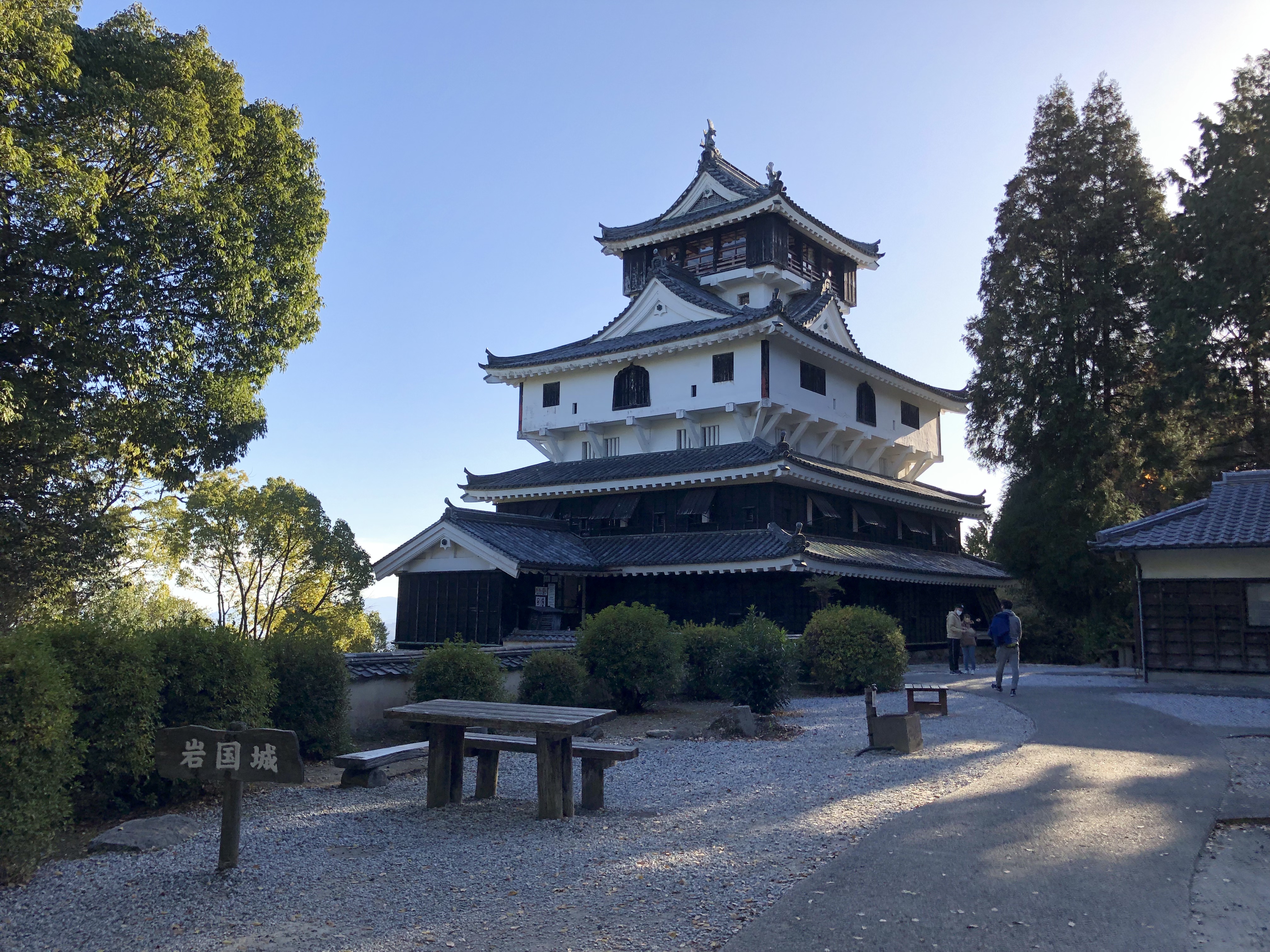
A sign says the castle is an eight minute walk away. The area is awash with vibrant colours, the maple and ginkgo leaves turning various shades of red and yellow. I pass a rather disconcerting sign telling me to, “Beware of pit viper!” — so much for the friendly snakes. I continue on, passing the largest dry moat in Japan, before after a steady twenty minute hike, I arrive at the castle.

The castle is extremely crowded with elderly Japanese people travelling with their tour groups. This particular castle is know as ‘Yamajiro’ which is a word to describe any castle built on a mountain and at least 150 metres high. I once again admire the view from this mountain castle, before turning around and heading back to the ropeway.
As I make my way back down the mountain, the forest whispers to me with the snapping of twigs beneath my feet. The sound captures my attention, and for the first time I truly take in the vast expanse of the forest surrounding Iwakuni Castle. I also realise, with a start, that there is no protective fence separating me from the dizzying drop to the valley below.

Back at the ropeway entrance, I arrive a little early. Eventually, the Japanese tour group begins to arrive in droves, and before long, a line of over thirty people snakes behind me. As we are set to depart, we manage to squeeze in twenty three of us into the tiny cable car; social distancing out of the window completely. As we slowly begin to descend the mountain, the weight of us makes the ropeway creak, squeak, and screech as we swing unnaturally from side to side.
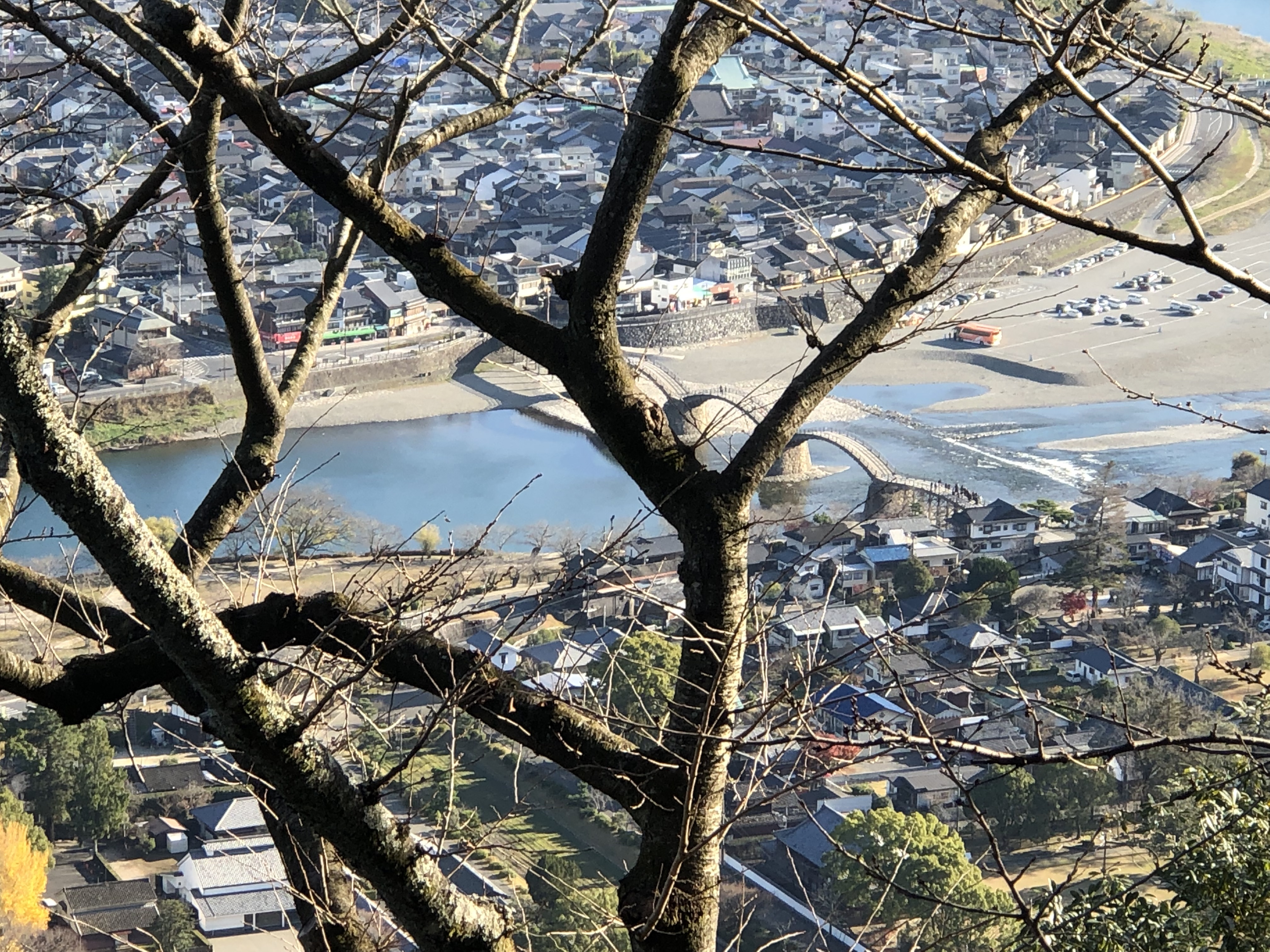
The cable car crashes into an overgrown tree branch on the way down, the sound and shaking startles me, and much like a snake, I jump out of my skin.
Virtual Insanity

Today I’m still in Huis Ten Bosch, at a place called Fantasia City of Lights. The sign here says that this otherworldly experience features the latest and greatest in digital sound technology. Once again, and a pattern I’ve found within this theme park, is that this City of Lights has absolutely nothing to do with the Netherlands.

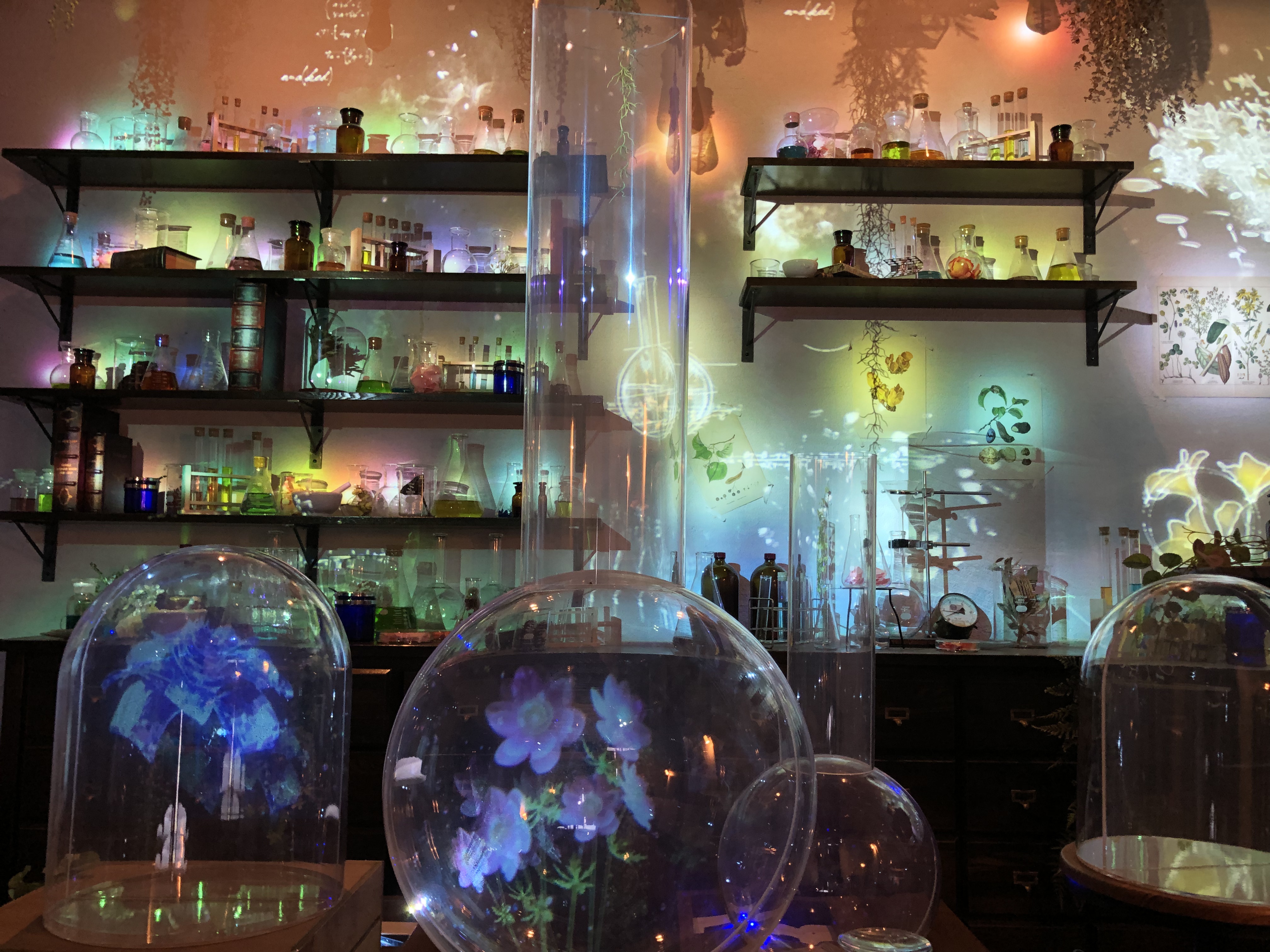
My first stop today is Flower Fantasia, a soothing space with the theme of a secret laboratory that makes flowers from lights. The laboratory is the first thing I see when I enter so isn’t that much of a secret. Holographic flowers shimmer with iridescence as they dance around in vials, test tubes, and flasks. A screen on the opposite wall projects visuals of mathematical equations and flowers, it doesn’t really make any sense.

The next section is where I can discover fragrances of lavenders, chamomiles, geraniums, calendulas, and roses. A sign instructs me to gently open the Petri dishes to uncover a digital flower. The fragrances, however, don’t come close to infiltrating my mask. There’s a pathway of blooming flowers that follow my footsteps and decorate the floor below, and some interactive artwork on a wall where flowers blossom before my eyes.

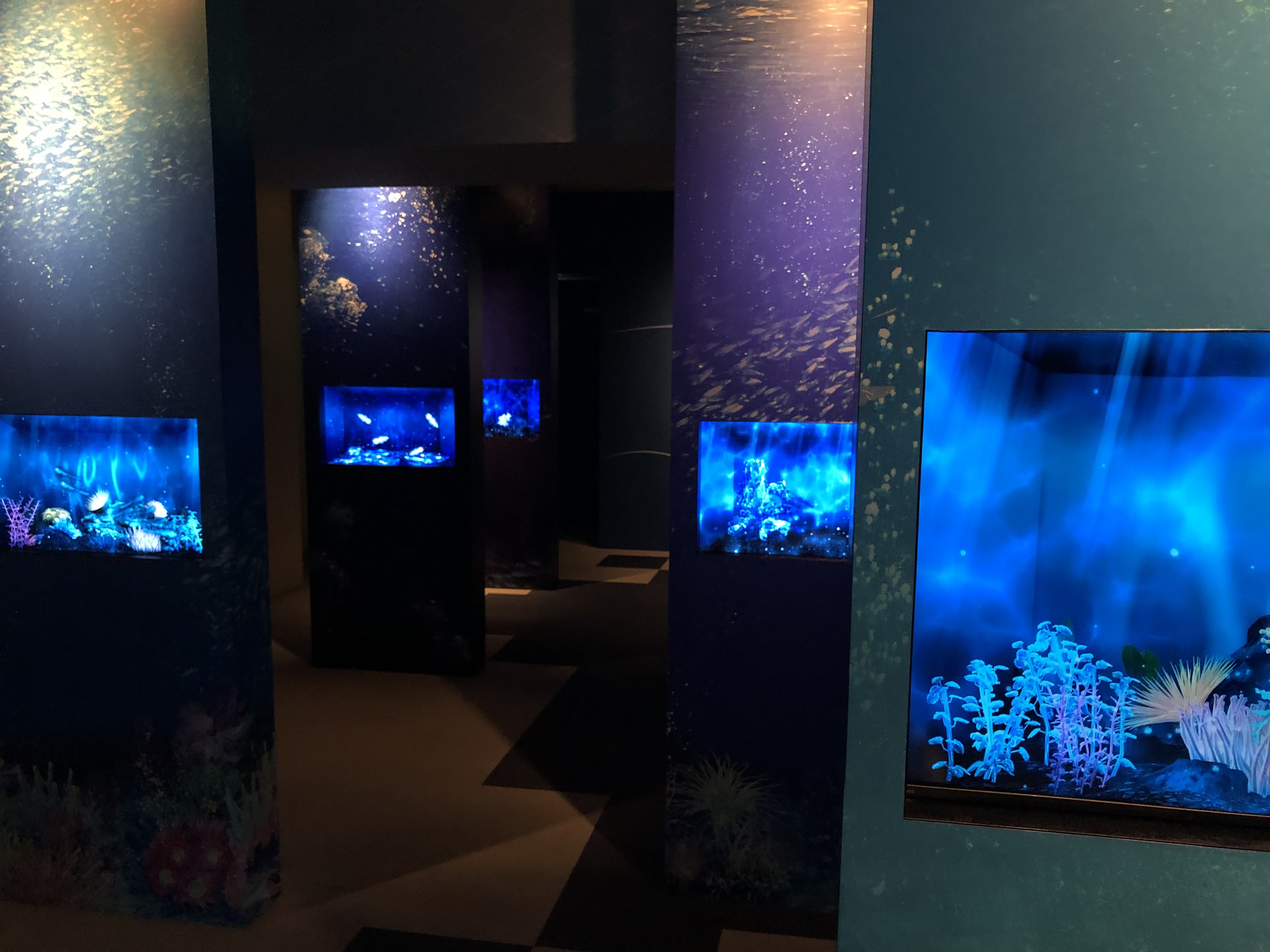
I leave the blooming flowers and head towards the next exhibit. Aquarium Fantasia is a thrilling space to experience the colourful world of the deep sea. A lady dressed in a traditional Dutch klederdracht tells me to, “Please Enjoy!” The first thing on show here is a digital aquarium. The fish in the many tanks have been replaced by holographic images; at least in this aquarium, it’s impossible to forget to feed the fish.

There’s rather a lot of information in the next few sections, facts about the ocean, about it being the origin of all lifeforms. “Even when recreated and enhanced digitally, this underwater world hints at possibilities for vitality.” I pass through a huge shark tunnel, an ‘underwater’ tunnel that passes through the aquarium. Digitally enhanced sharks swim around. A sign at the other end asks me to deliberate the fact that the ocean is an ephemeral world that can’t last forever. I contemplate that one day this may not be an aquarium, but instead a digital museum for absent oceans and forgotten aquatic habitats.

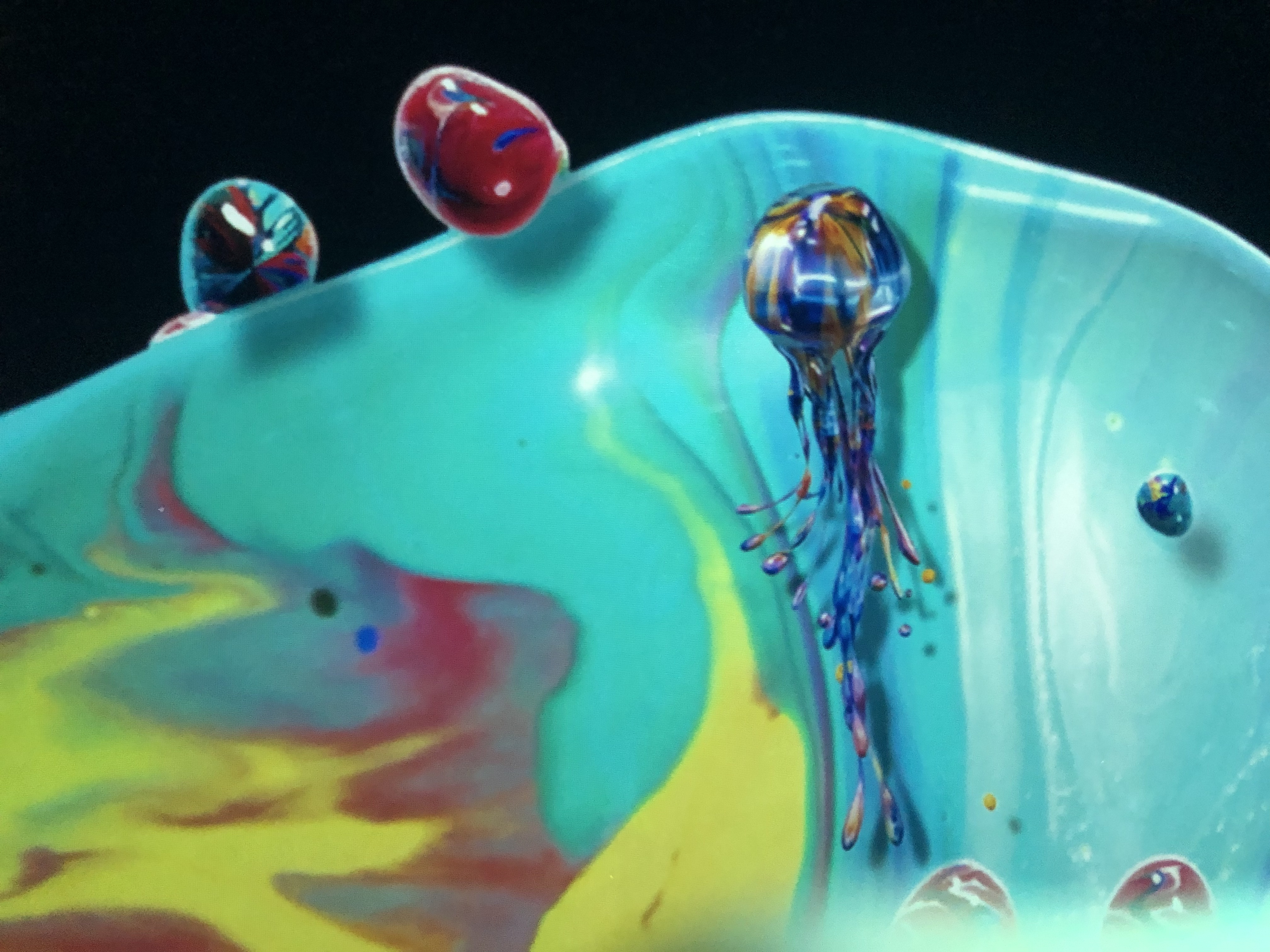
In the next room there is a hands-on interactive activity, and I instantly forget about the fleeting impermanence of the ocean. The instructions are very simple. “How to play: Stir the fluids to create a jellyfish.”

I can swipe my fingers around on the walls and what looks like paint mixes together and eventually creates a jellyfish. Each time I try the activity, a jellyfish of variable size and colour is formed, before gliding away into the mystical underwater world, where its body dissolves back into the currents of time.

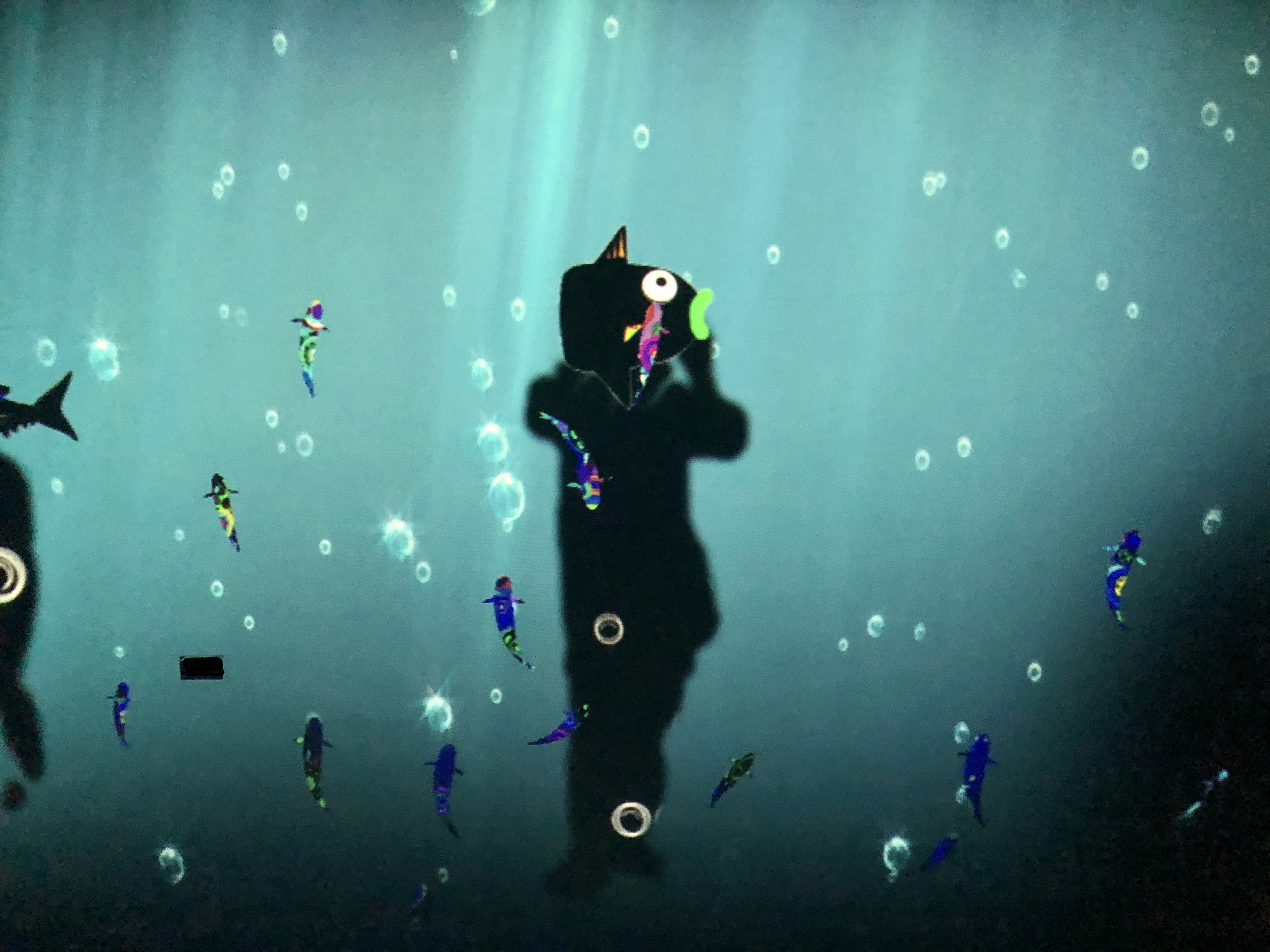
After enjoying the fluidity of this transient expression of art for far too long, I move onto the next interactive exhibition, and my favourite of the day. The instructions are once again short and easy to follow. “How to play: Become a fish.”

As I enter a dimly lit room, my silhouette is cast onto the wall. I become a fish, without much effort at all. Fish swim around on the floor and walls, I can step on their shadows and watch them swim away, or move my head to chase off the ones that swim on the walls. Every three minutes a large shoal of colourful sardines travels around the entire room, illuminating the area in a swirling digital aquarelle of glistening fish.

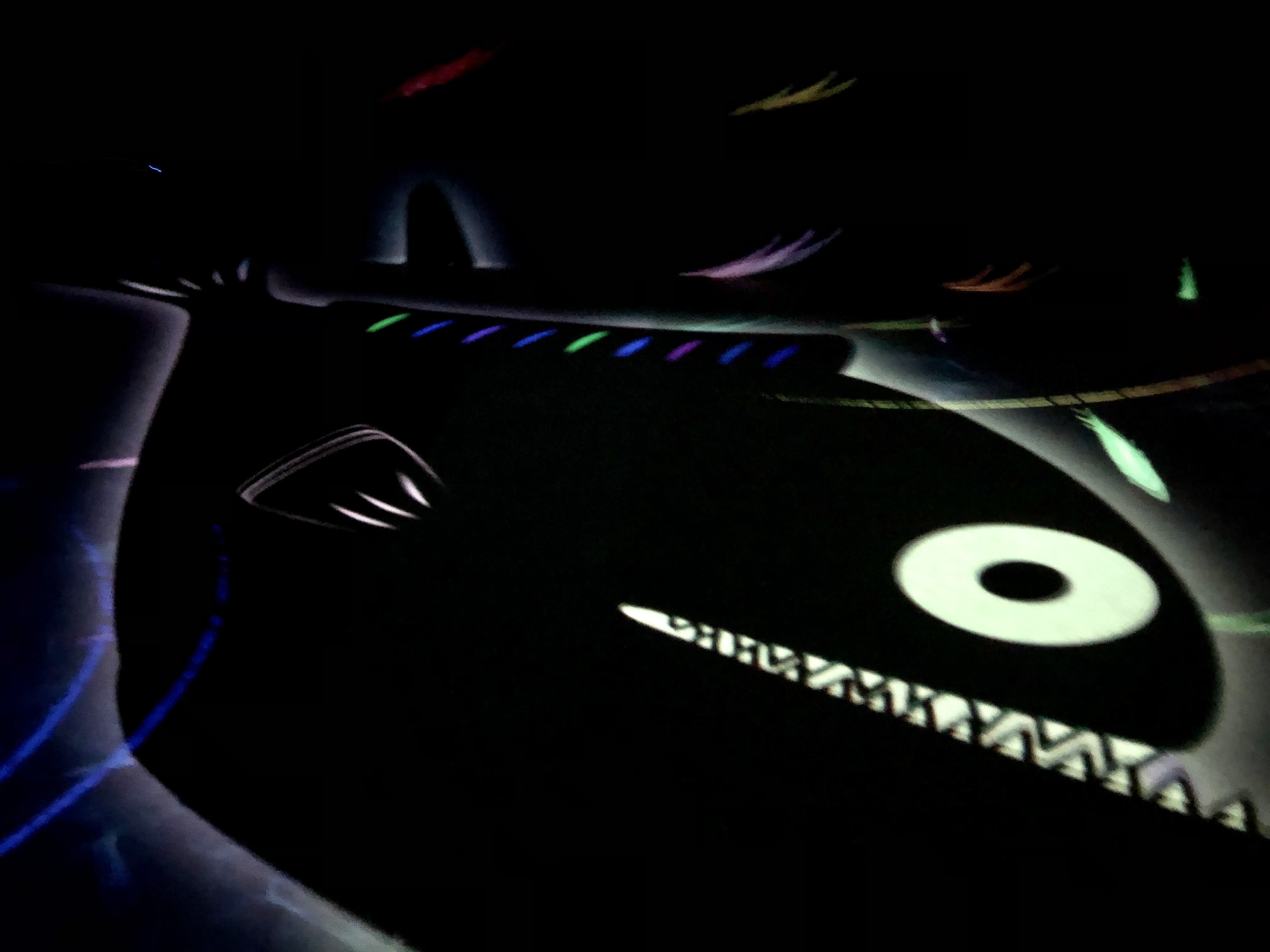
As the shoal of fish weave together like an underwater miracle, they come together to form the shape of one giant fish. This is when the exhibition takes a somewhat dark turn. Where once was a kaleidoscopic multitude of multicoloured sardines, now becomes a sinister black shark that chases me around the room.

After being devoured by the shark, I move onward through the aquarium. There are reminders here that all life originated from the ocean. How life and the ocean have coexisted through time. Once sign asks, “What is life? What does it mean to exist?” Questions that are teased but left unanswered. A section on technology, about how the lines between real and virtual begin to blur as the actual world adapts to real-life qualities. “How will we go on to define our existence?”

The final section opens up into a large theatre. As I take my seat alongside the darkness, I contemplate my own reality, before reminding myself that I am sitting in a virtual aquarium, inside a slightly Dutch theme park, in Nagasaki, Japan.

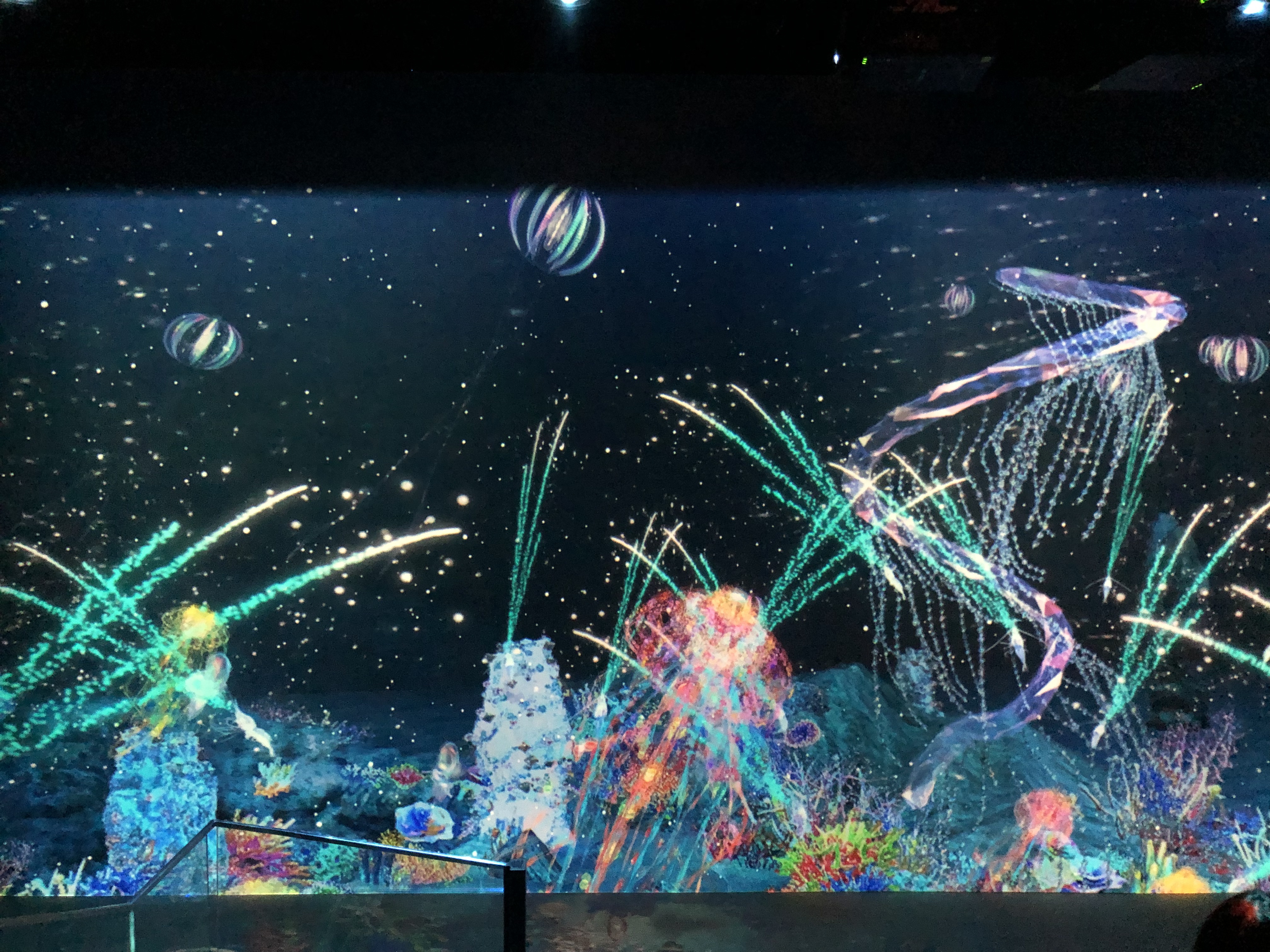
After a while, a short film about the unexplored deeper reaches of the ocean begins. The deeper we dive, the more sunlight is absorbed. The last to dissipate is blue light, which gives the underwater world its colour. This film explores what the bottom of the ocean could look like, if only we were able to see it. The film simulates forward motion, as though I am swimming under the sea. The large surround sound system bellows out noises of the ocean. There’s some weird crystal thing that comes to life, some flowery patterns give birth to various new lifeforms that become tangled and interwoven like the fabric of a false euphoria, and the entire film suddenly becomes a psychedelic three-dimensional underwater nightmare.

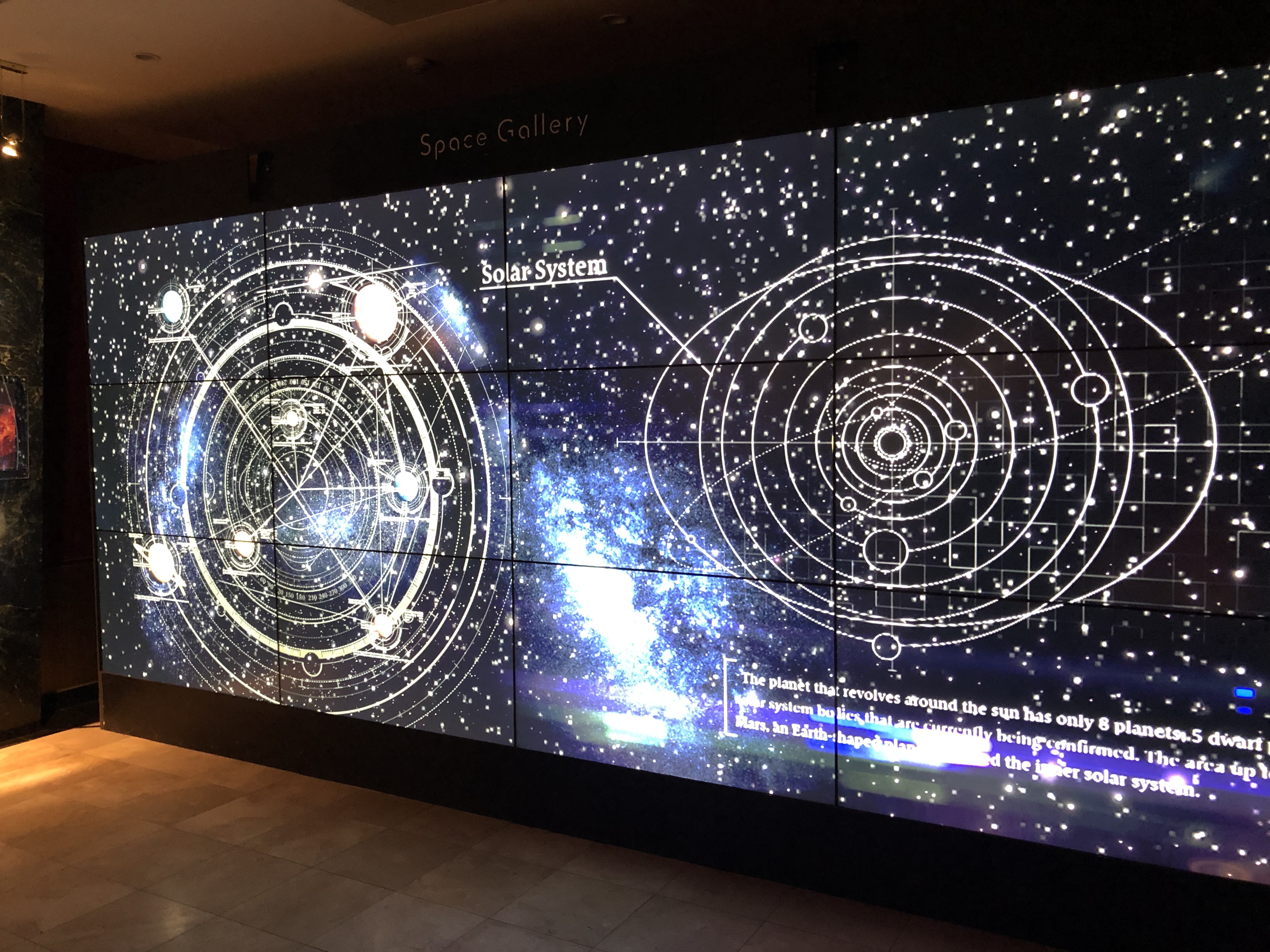
My third and final stop in Fantasia City of Lights is the one I am most anticipating, Space Fantasia. Our solar system and planetary information is displayed on a giant screen for a while. Next, a show titled ‘2101: Galaxy Odyssey’ starts, and what claims to be a self aware artificial intelligence guides us into the next room.

There is some sort of stage and we are asked to volunteer to play a game. Only two of the ten here raise their hands. We then have to wait and watch whilst they struggle to complete the challenge. I glance at my flyer, it states that the duration of this wacky space adventure is twenty-five minutes in length, and specifically states that, “You can’t leave halfway.”

Stars form on the ground to form constellations, and the lines where astrology and astronomy meet begin to blur, as the only constellations relevant to this game are not Cassiopeia, Orion, or Ursa Major, but are the twelve of the zodiac. As the two volunteers jump around, every time they match stars to form a constellation, everyone applauds. They score seven out of twelve. “Superb!” someone shouts.

We then move onto the third and final room, another theatre.

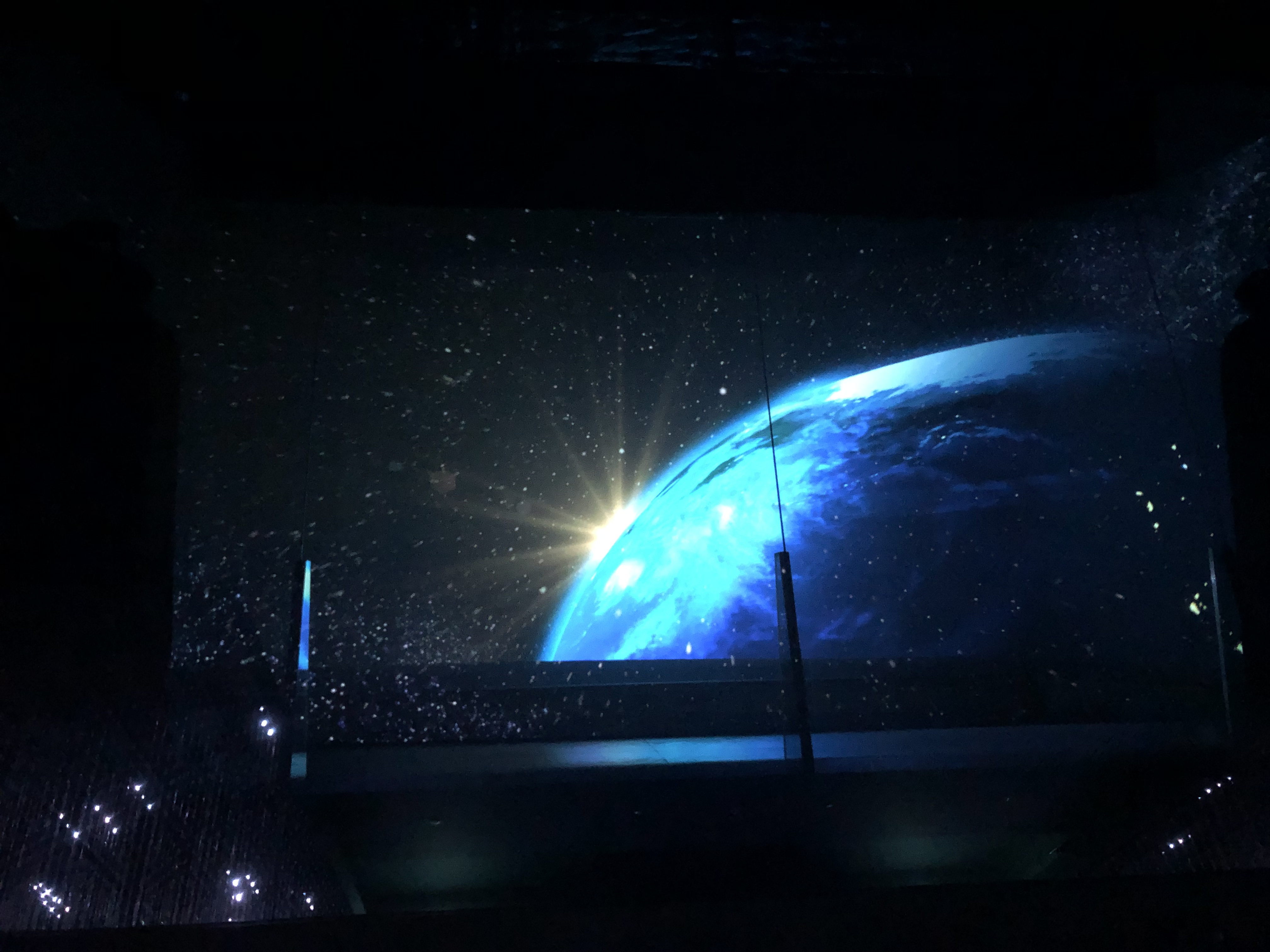
We fly through space and learn about various clouds of dust and gas. The Butterfly Nebula appears on the screen, turns into a butterfly, then flies away. The Swan Nebula appears on screen, turns into a swan, then flies away. The Bubble Nebula appears on screen, and I see where this is going. After the bubble floats away we sit through a firework display in space, some Galactic Cherry Blossoms, the Engraved Hour Glass Nebula, before finally returning to Earth.

Walking in a Weird Wonderland

Today I’m at Huis Ten Bosch, Nagasaki Prefecture. This Netherlands themed park features life-size replicas of Dutch architecture. Opened in March 1992, this crazy theme park of 152 hectares makes it the biggest in Japan. It initially cost 3 billion dollars to build. It appears the original owners were a little wasteful with their money, especially when a solid 18-karat gold hot tub was purchased for a little over 7 million dollars; the largest solid gold hot tub in the world. The price to take a soak in the solid gold bath was just twenty dollars an hour, and taking into account the opening times of the theme park, by my calculation it would take 95 years of constant use to recoup the initial cost. This probably goes somewhere to explain why Huis Ten Bosch went bankrupt in 2003.

Regardless, the park is open again now under new ownership. I cross a rather long bridge leading into the park, the lampposts here are playing Christmas songs, It’s the Most Wonderful Time of the Year. At the entrance I pay my ¥7000 entrance fee, and make note of a sign saying no dogs allowed.

Huis Ten Bosch translates to mean House in the Woods and it even has its own Wikipedia page. I take out my map and instantly search for Thriller City, an area of the park I’ve previously read about and am excited to see, however, my map makes no mention of this terrifying zone, which was based on a Michael Jackson music video; it appears Thriller City has been removed and replaced by Fantasia City of Lights.

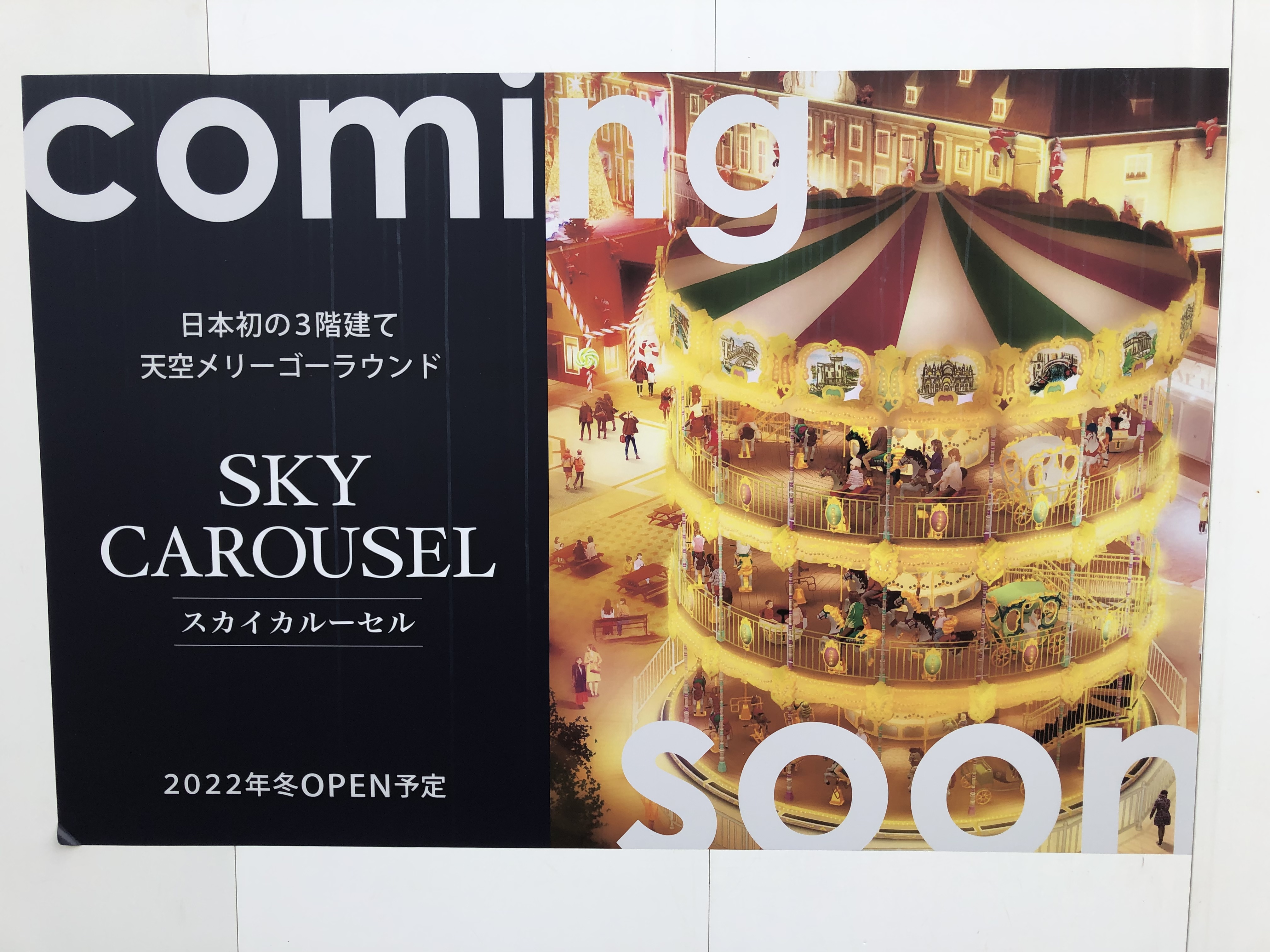
There is a second attraction I had wanted to see, the first 3-storey carousel in the world. The Huis Ten Bosch website stated that the Sky Carousel will be ready from November 11th, so I head over to Attraction Town section D-6 only to find that it’s still under construction, and by the looks of it, it won’t even be ready in time for Christmas; the labourers here still working on the first of its many storeys.

With all the things I had planned to see today not available, I decide to freely explore the park with no direction or cause. I pass gondolas floating down the many canals. Statues of Santa Claus and Christmas songs around every corner. On Van Gogh Street, a live band dressed as Christmas elves perform cover versions of the music of Elvis Presley.

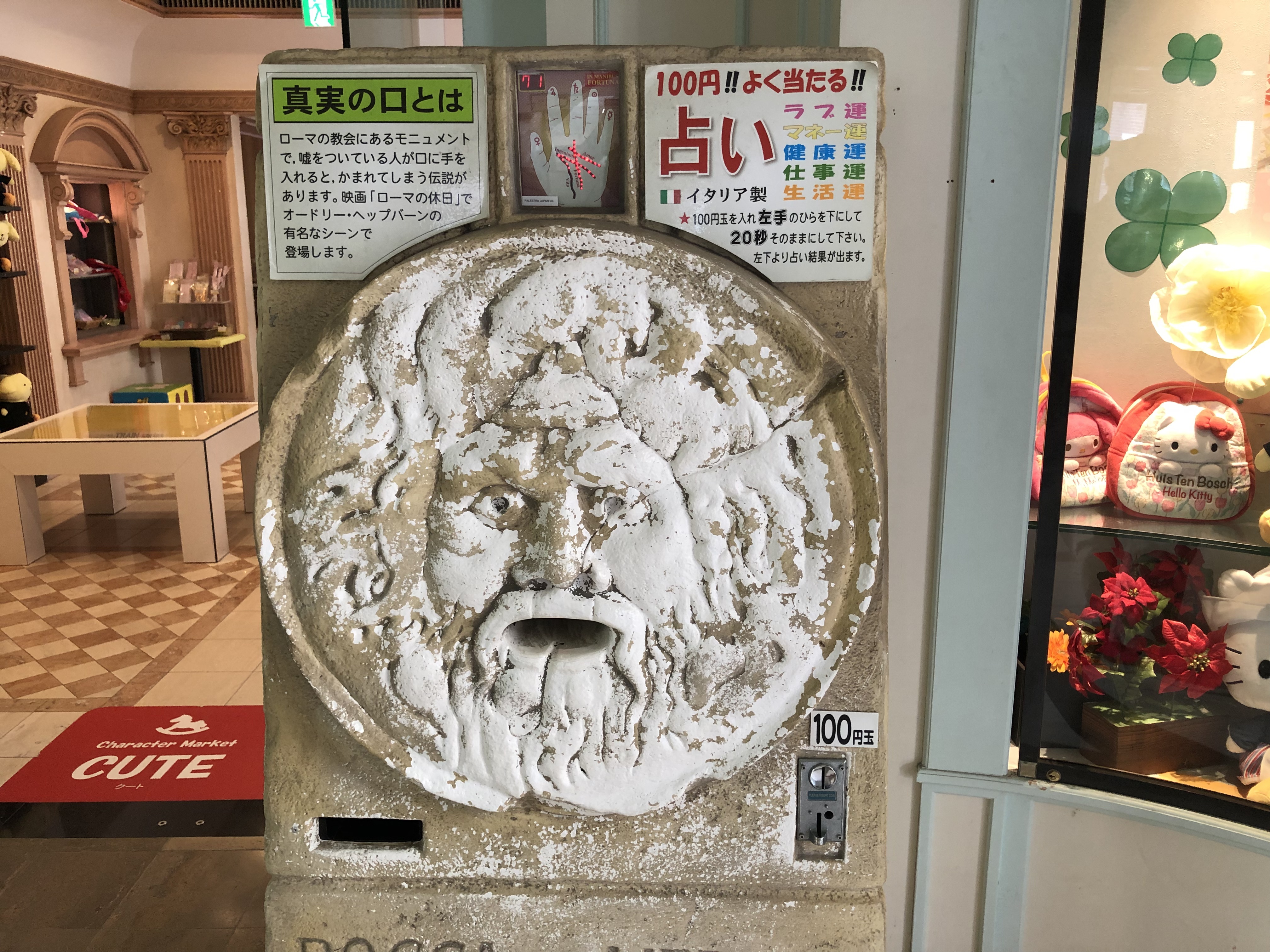
Over on Rembrandt Street, I find a marble mask that turns out to be a replica of the La Bocca della Verità, and that for ¥100 can give me a palm reading. Well as they say, when in Rome, but I’m not, and everything here so far has nothing to do with the Netherlands. The part of the statue that reads my palm is quite small, and I struggle to fit my whole hand on the screen. My reading tells me that I need to be less sardonic, and some other nonsense.

I continue to wander the park, passing a replica of Stadhuis, a building that might be a Dutch word meaning ‘City Hall’ but the building replicated here is actually found in Bruges, Belgium. I have to show my entrance ticket to enter Harbour Town, and again to enter Huis Ten Bosch Palace; it makes me wonder how these people think I even entered the park in the first place.

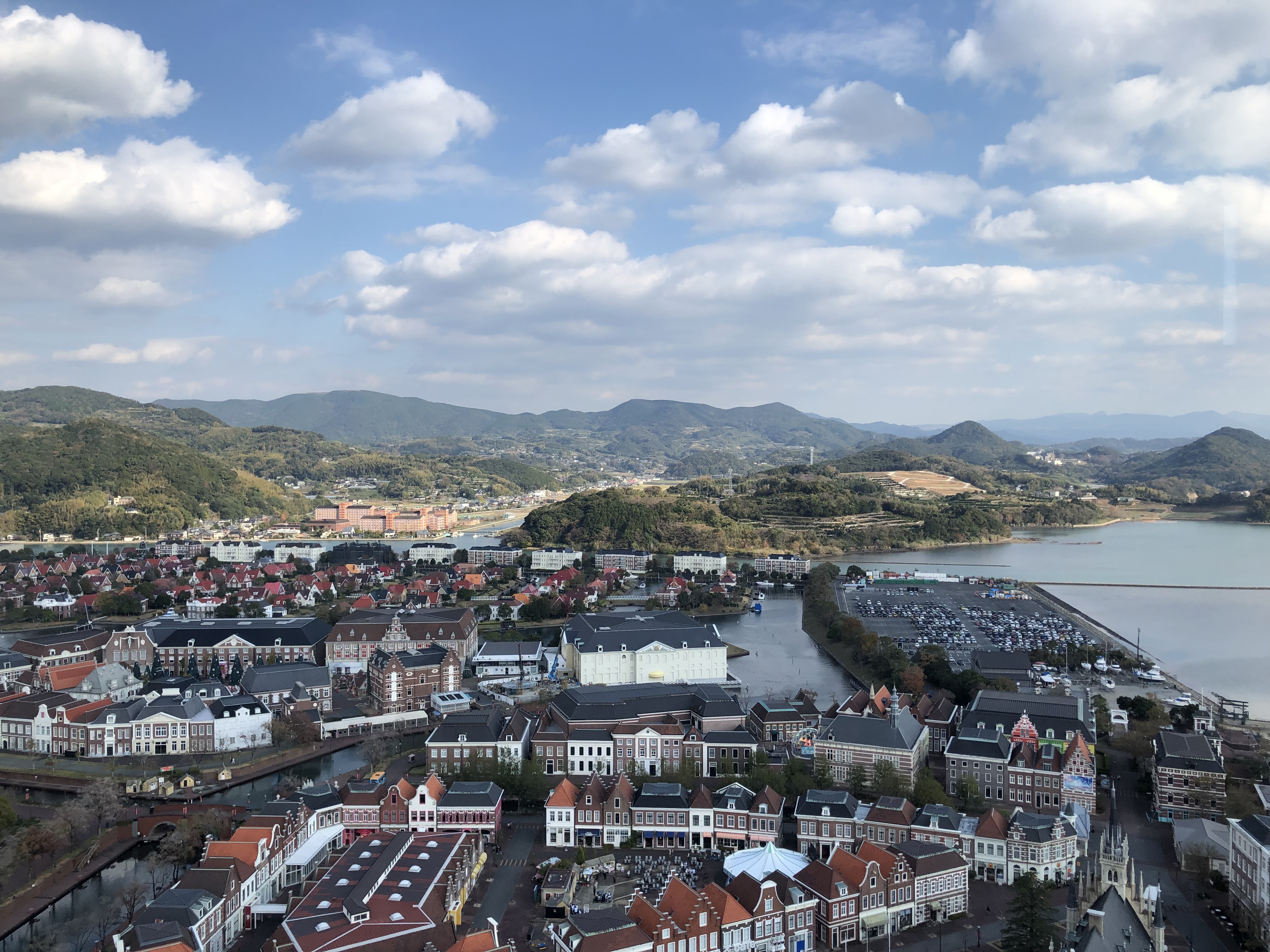
Huis Ten Bosch Palace is a replica of a palace with the same name, and I am relieved to find out is originally located in the Netherlands. I am told that it is a faithful recreation and I learn that even the bricks the Japanese used to create this building were flown in from Europe. After twice showing my ticket again to leave, I head over to yet another Dutch replica, Domtoren, a 105-metre tall tower with an observation deck.

As I continue to explore, I find even more things in this park that have absolutely nothing to do with Huis Ten Bosch, the whole place appears to be a mismatch of conflicting ideas. There is Jurassic Island, an augmented reality game but it isn’t included in the ticket price. There is a whole area dedicated to virtual reality. Horse Land. A shooting range with a fifty minute wait time. There is a chocolate mansion. A 300-metre long zipwire. There is even a trick-art museum.

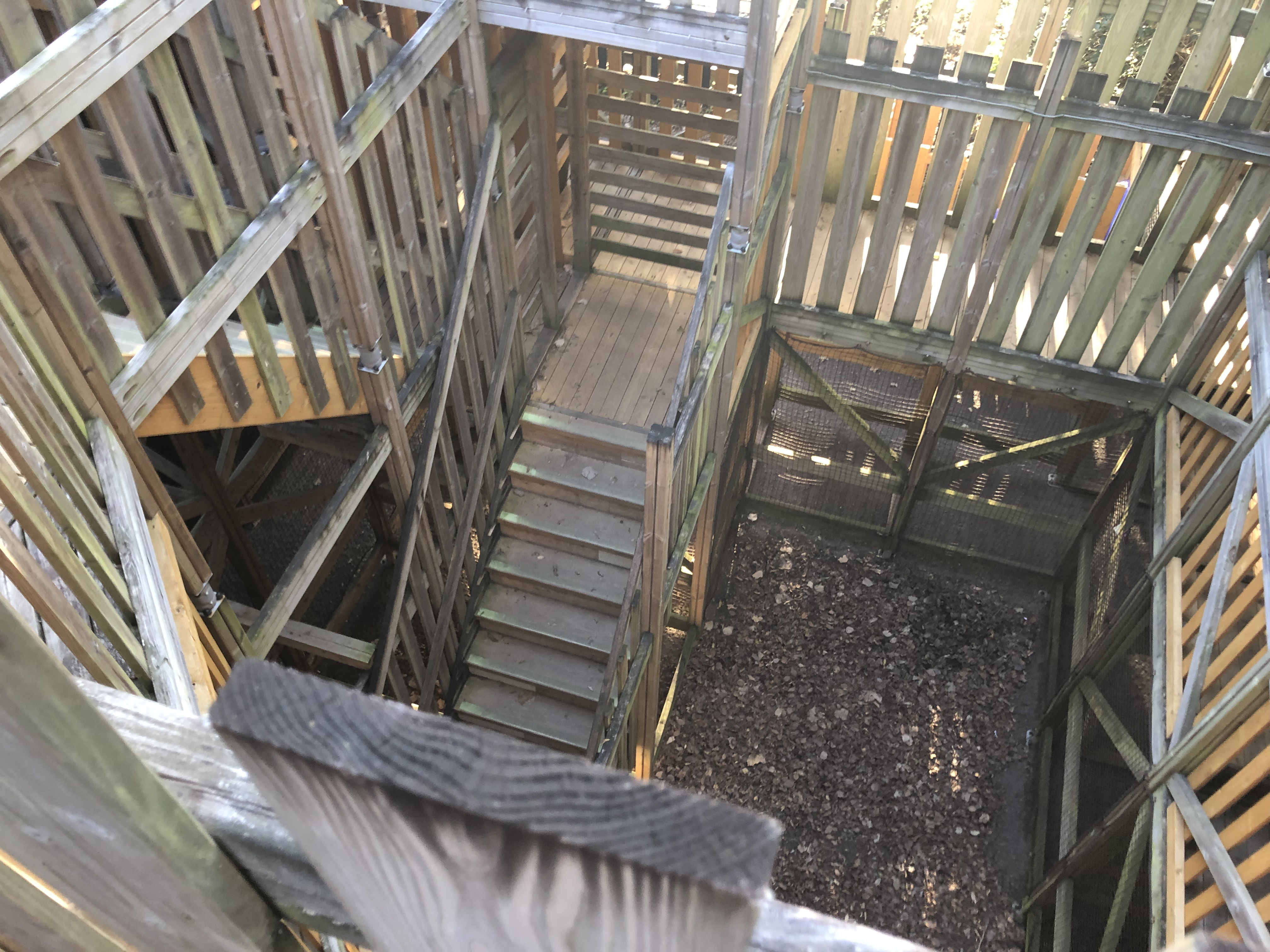
I check my map and find an attraction in Adventure Park called The Maze. The caption reads, “The biggest in the world! A huge maze inside a five-storey tree house.” The maze has a ninety kilogramme weight limit and a sign informs me that I can’t enter if I’ve been drinking. It doesn’t specify what I can’t have been drinking, I presume they mean alcohol, however, chance would be such a fine thing, as alcoholic beverages are impossible to find in this park.

The maze is rather easy and I think it’s mostly for children. I have to duck down beneath low hanging wooden beams and climb up narrow ladders and stairways. I somehow doubt the claim that it’s the largest maze in the world though, and after ten minutes of climbing up and down I reach the exit, a tunnel slide that goes from the fifth floor to the ground. Despite being reasonably below the weight limit, I can’t fit in the slide, so instead I have to follow signs for the ‘Surrendering Exit’ as there are no other ways for me to leave, thus meaning I have failed to complete the maze.

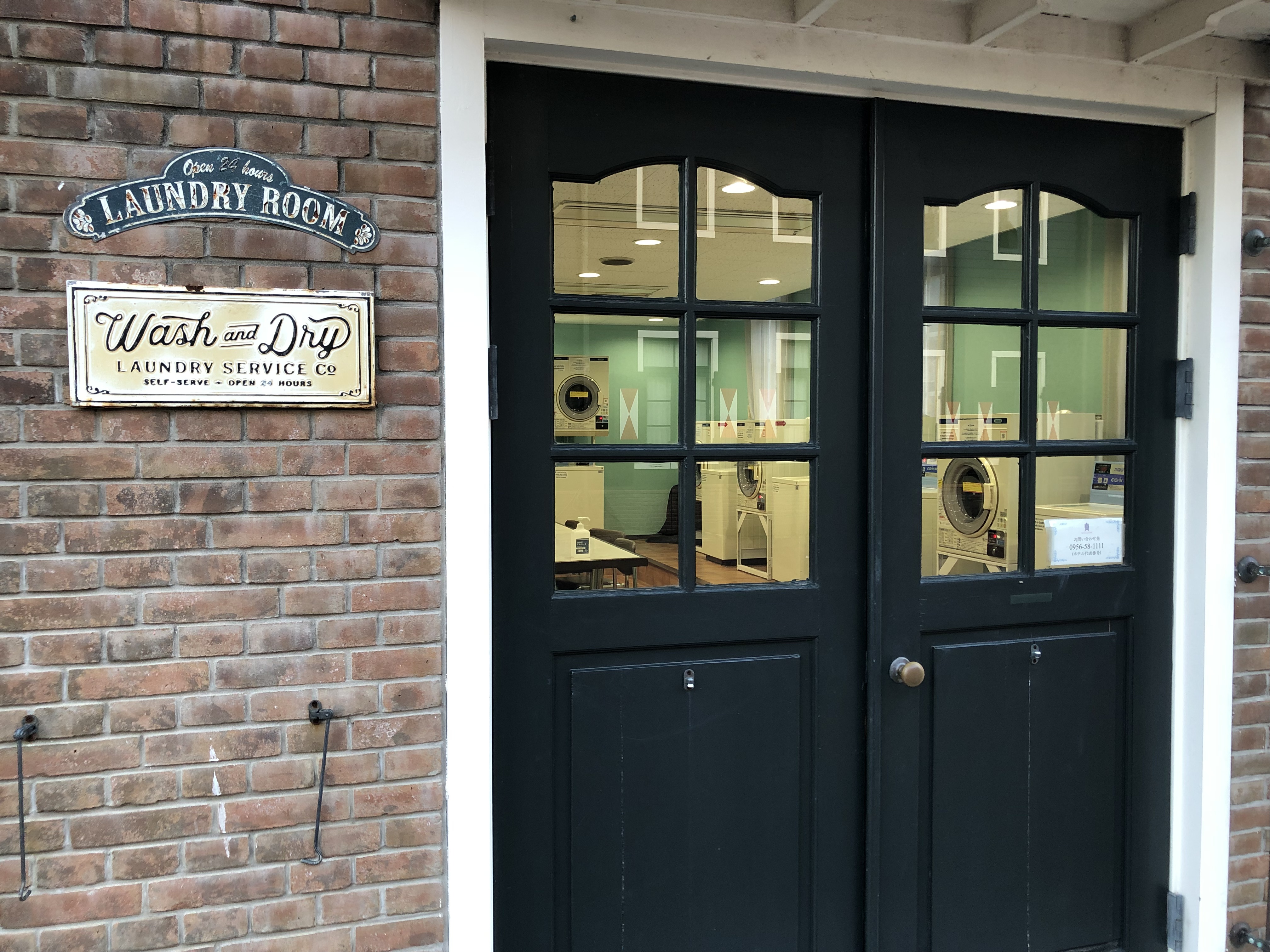
I wander a little more, exploring Fantasia City of Lights, but I’m saving that for a separate post. I consider riding the Ferris wheel, but there’s an extra charge so I decide not to bother. I pass small stalls selling cheeses and wines, decorated in fairly lights and miniature Christmas trees. I even find the most bizarre attraction of them all, a 24-hour coin laundry, in a theme park that closes at nine o’clock.

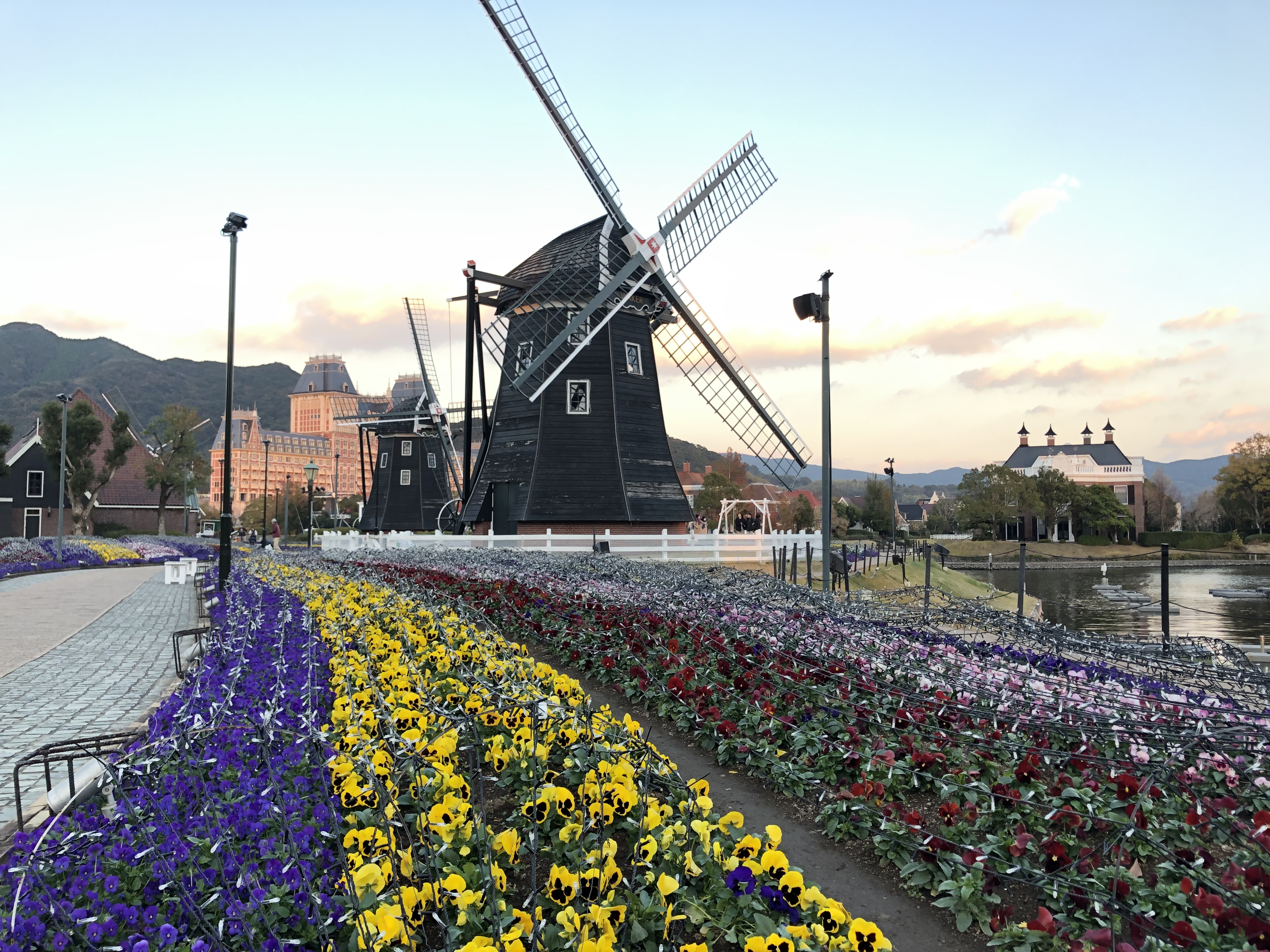
As it begins to get cold, I go to leave the park passing flowers and windmills; even the windmills here are playing Christmas songs. The route directs me into Schiphol Airport Terminal Gift Shop, I don’t buy anything. The very last shop before the exit is called ‘DogBox’ and is a dog grooming salon.

Heart-Shaped Rocks

The jaunty jingle on the bullet train signals my arrival in Nagasaki. It’s freezing cold as I leave the station. I enter a world of chaos and construction, maze-like fences guiding people around roadworks and frameworks for what looks like a development for a new plaza and station building. It takes me about ten minutes to escape the labyrinth and get out onto a main road.

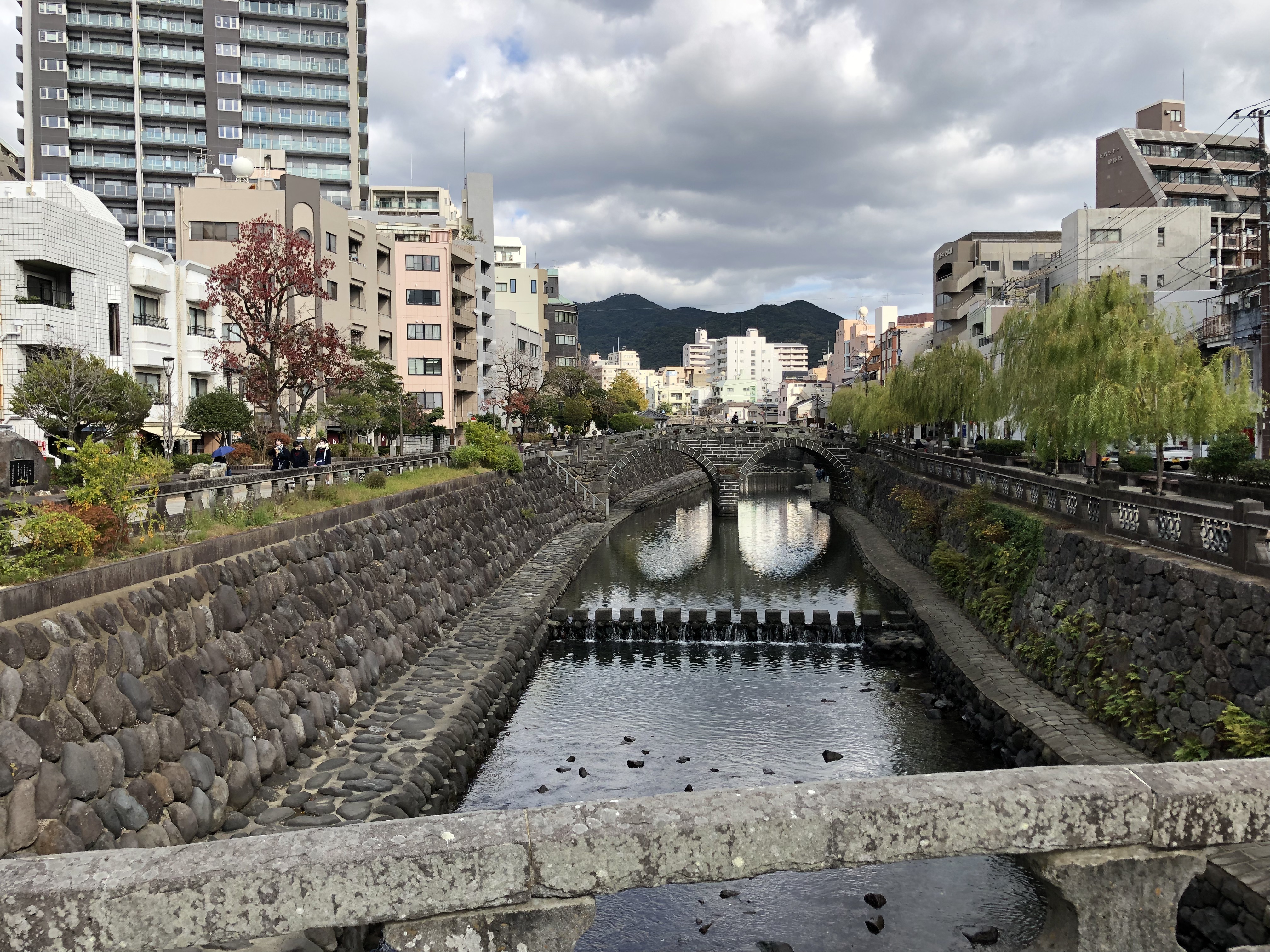
My first stop is along the Nakashima River, a river that runs through the middle of Nagasaki and divides the city into two. This river also features an abundance of historical stone bridges, including Fukuro Bridge. “It is unknown when it was built or who built it. It is said to be the second oldest stone arch bridge right after Meganebashi, but there is no evidence.”

Luckily for me, these two bridges are next to each other, so I photograph Meganebashi from Fukuro Bridge.

Built in 1634, Meganebashi Bridge is not only unique because it’s the oldest stone bridge in Japan, but also, because the reflection of the bridge on the river below makes it looks like a pair of glasses. Along with Nihonbashi Bridge in Tokyo and Kintai Bridge in Iwakuni, Yamaguchi Prefecture, this bridge is regarded as one of the three most famous bridges in Japan. It’s quite the spectacle.

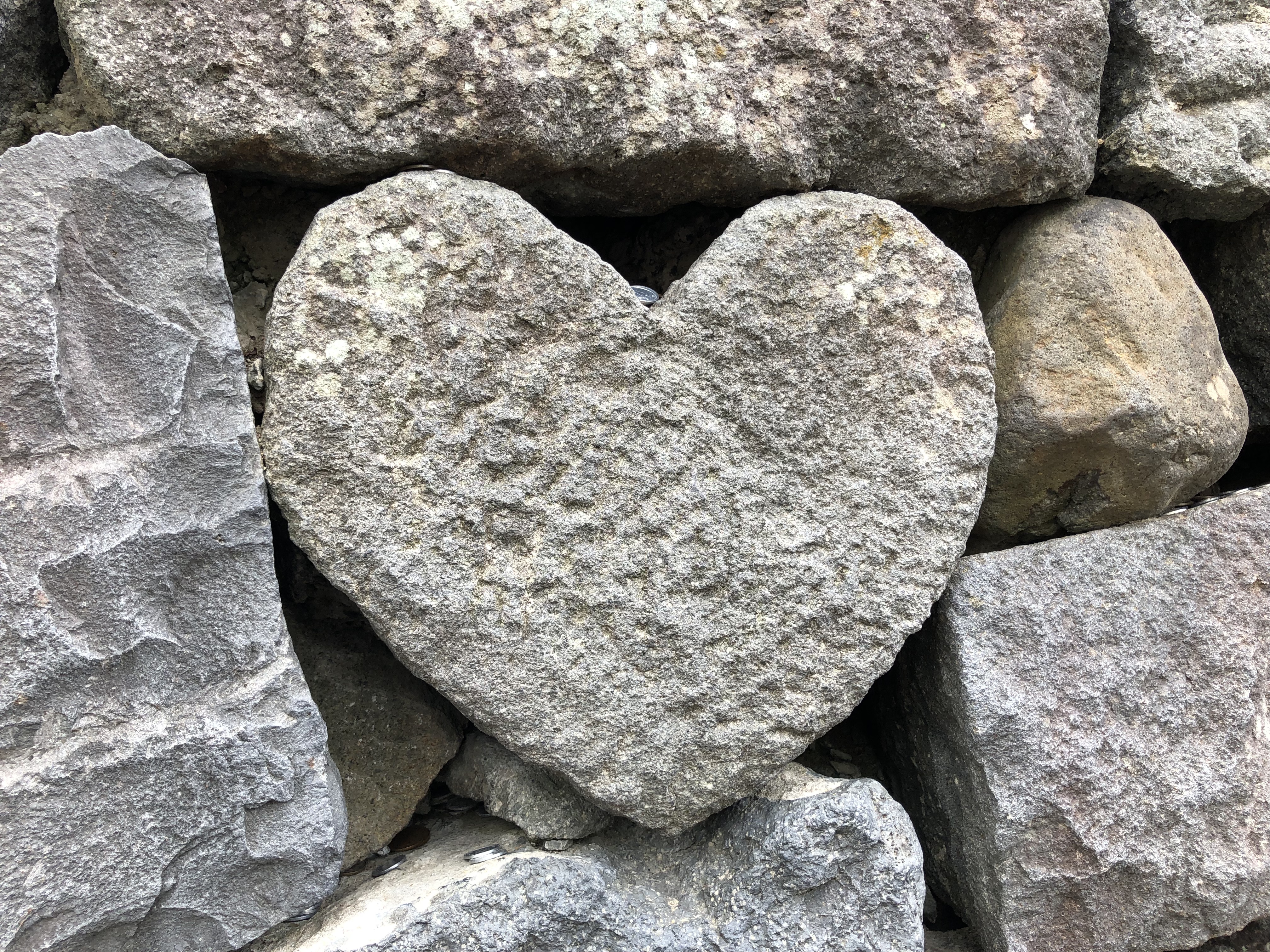
I wander further along the river and down some stone steps. Here I find four teenage girls posing in front of a wall, so I decide to see what all the fuss is about. It turns out they are making peace signs and taking photographs in front of a chunk of rock which is shaped like a heart.

I ask the girls to step aside so I can take a photograph. One of the girls says in Japanese, “That’s so cute!” Presumably because I, a man, am taking a photograph of a stone shaped like a heart, but I can’t be too sure. I find very little information on the origin of this stone, except that it’s just one of many hidden around Nagasaki.

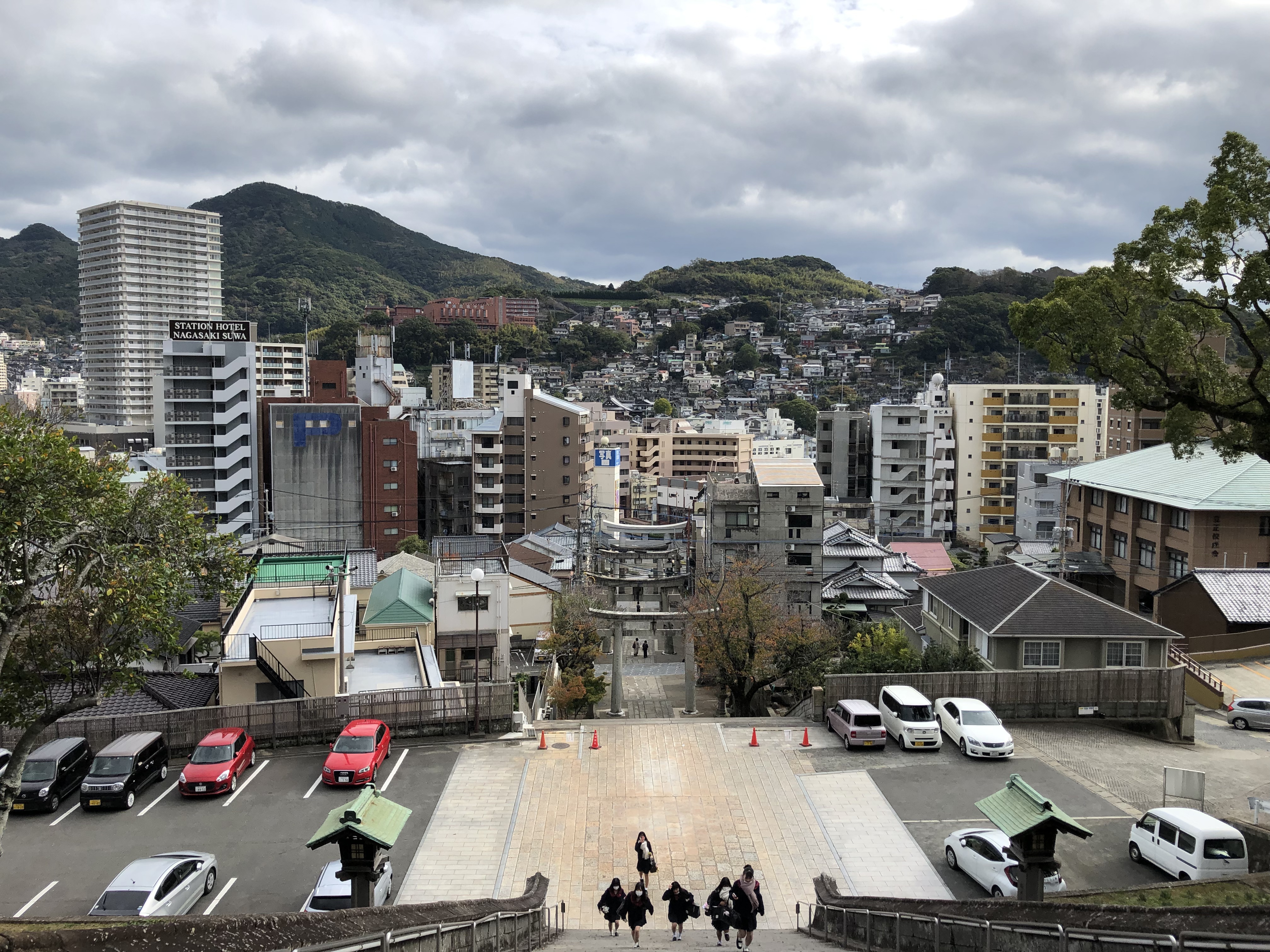
I walk back up the river to the entrance to Suwa Shrine. This shrine is one of the three most famous shrines in Nagasaki, and boasts a total of 277 steps that pass through four massive stone torii gates to reach the shrine complex. As I run up the 277 steps, in my head Bill Conti’s song ‘Gonna Fly Now’ spins around on my mind’s turntable.

Suwa Shrine doesn’t really have much to offer me, except for a one-hundred-year-old tea house, a nice little water feature, more steps, and a stunning view of the city and mountains beyond. The shrine was constructed in 1614 as a way to stop the spread of Christianity that was happening in Nagasaki at that time.

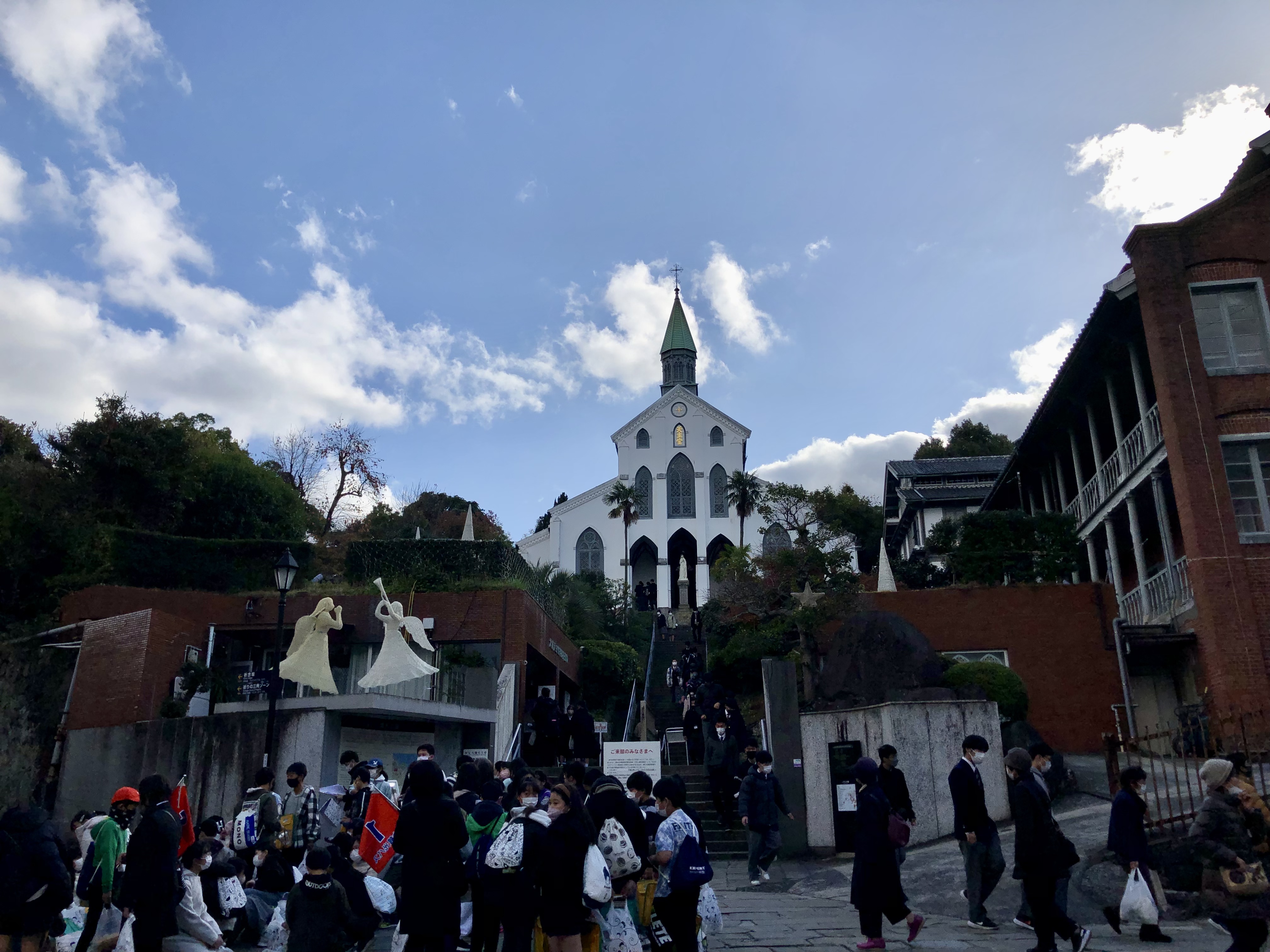
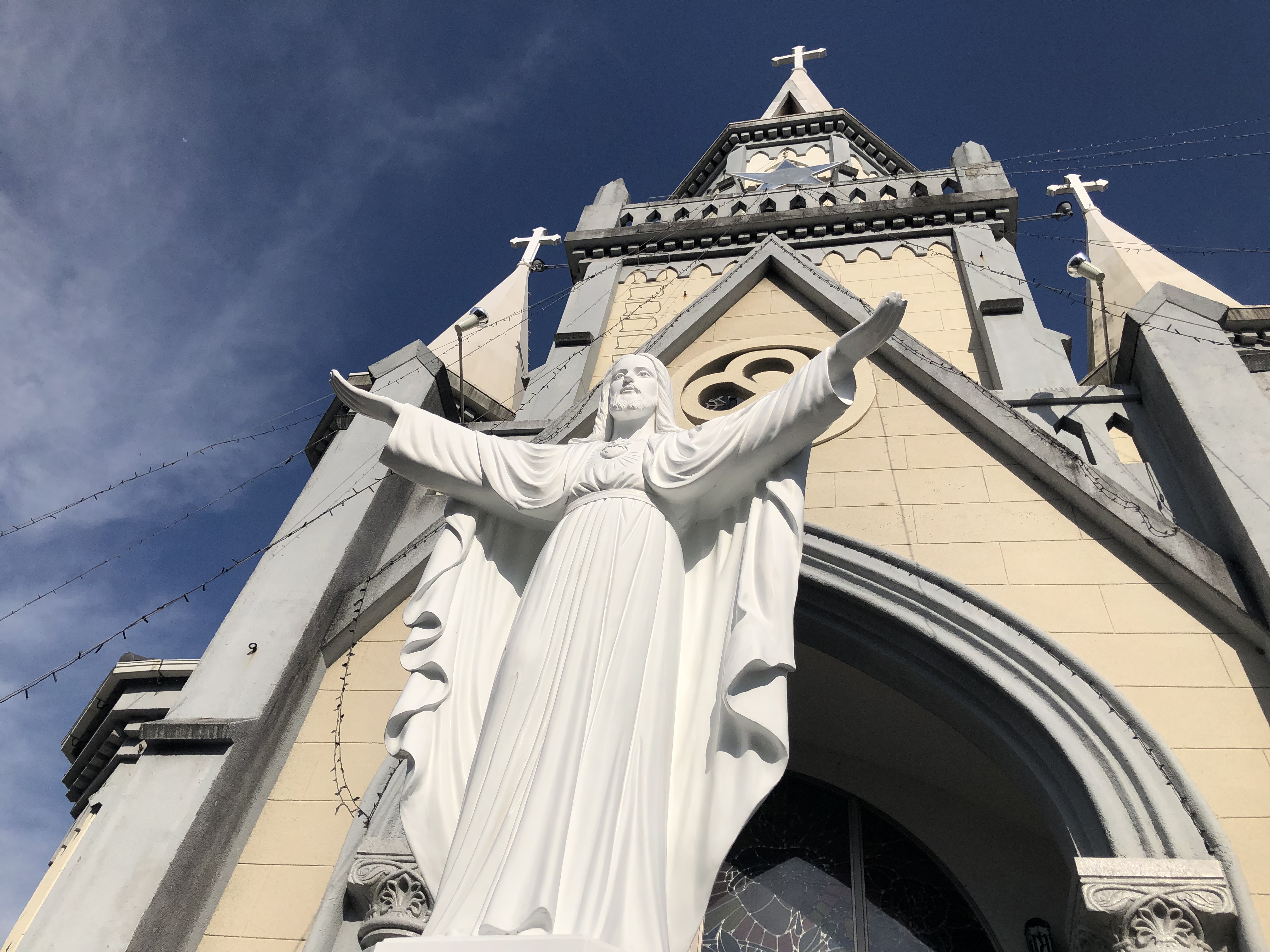
I leave the shrine down the stone steps, and wander four kilometres in the direction of Oura Catholic Church. A gothic-style church on a hill, overlooking Nagasaki Bay. I pay the steep ¥1000 entrance fee only to be greeted by signs saying no photographs. There’s a small museum, again no photographs. For whatever reason the area outside the church is extremely crowded. An extensive 28-page brochure written entirely in English is included in the ticket price, which does, in a way, make the ¥1000 cost somewhat tolerable.

Christianity first arrived on Japanese shores in 1549, but after learning that a Christian, Okamoto Daihachi, one of the trusted advisors to Shogun leader Tokugawa Ieyasu, had been secretly keeping his Christian faith hidden, Ieyasu ordered Okamoto to death by fire. This event also led to Nagasaki being the first place in Japan to ban all Christianity in 1612. Tokugawa Ieyasu later banned all Christianity across Japan two years later in 1614, the same year that Suwa Shrine was completed.

This led to an array of hidden Christians, especially in Nagasaki. Statues of the Virgin Mary were disguised as Kannon, the Goddess of Mercy; Christians posing as Buddhists to avoid execution. In 1853, Japan ended its policy of isolationism, and the borders opened for those from overseas. Foreigners residing in Japan were, at the time of this church’s construction, allowed to be Christian, but for the Japanese it remained to be illegal. Oura Catholic Church was built for those foreigners in 1864 and is the oldest surviving Catholic church in Japan.

The Japanese government finally lifted the ban on Christianity in 1873.

Parks and Simulation

It’s humid beneath my mask. It appears that it rained slightly this morning for the first time in weeks, but now it’s hot. I can’t begin to imagine what the summer will be like. I shouldn’t complain though, the unusually warm start to the winter is set to end later this week, and Japan will become enveloped in an icy-cold ambience.

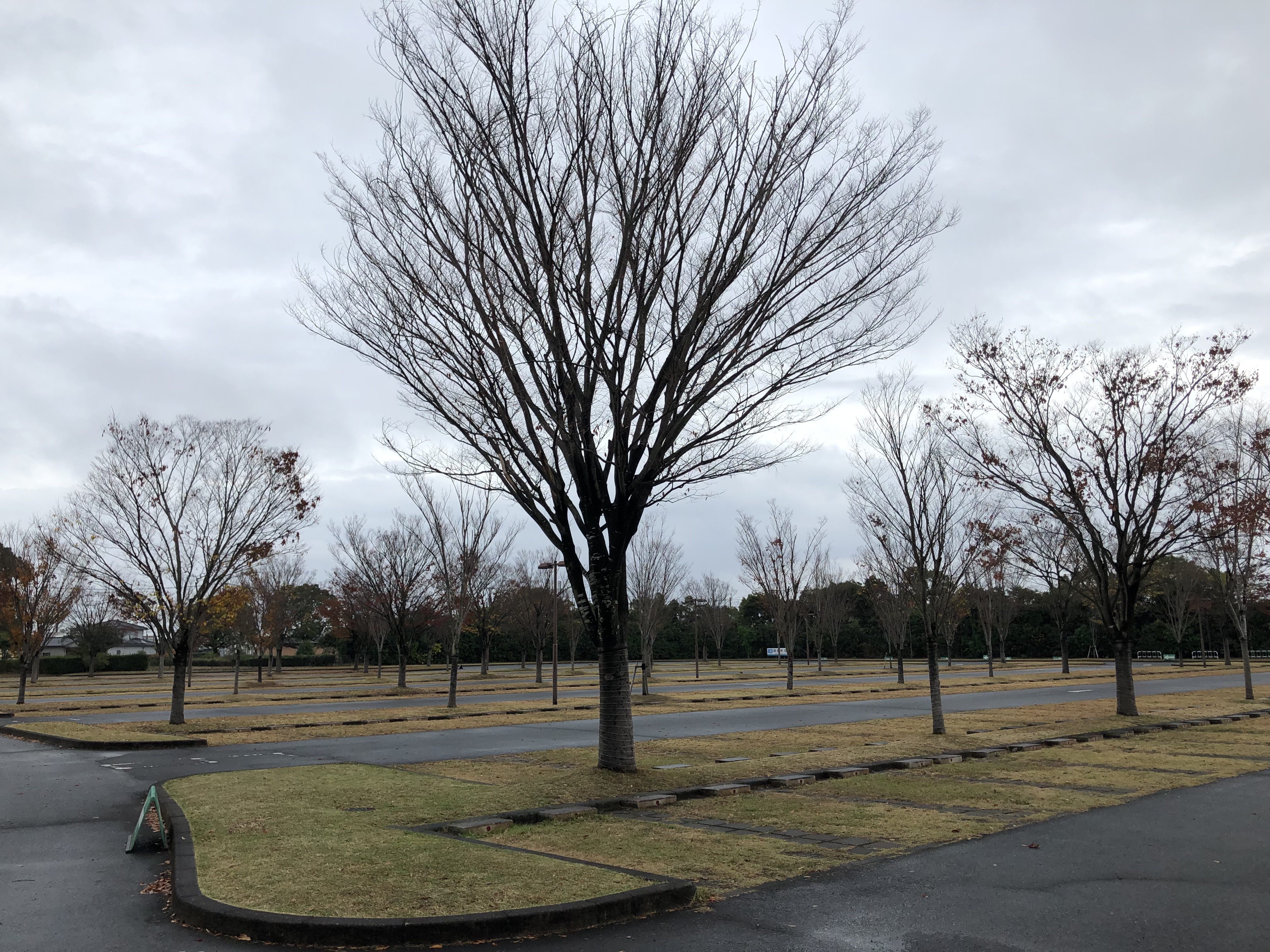
I take a train to Saga Prefecture, my first destination today, Yoshinogari Historical Park, an archæological site dating back to between the 3rd century BC and the 3rd century AD. I walk two kilometres from the nearest train station, and arrive at the entrance. The car park here is huge, empty, and covered in fallen leaves from the skeletal trees.

I arrive at the aptly named Entrance Zone. Each area of this park has a zone name. There is the Ancient Forest Zone, the Moat Encircled Village Zone, the Aztec Zone, and the Medieval Zone. I pay the ¥460 entrance fee, and note that the two day pass costs only slightly more, a reasonable ¥500.

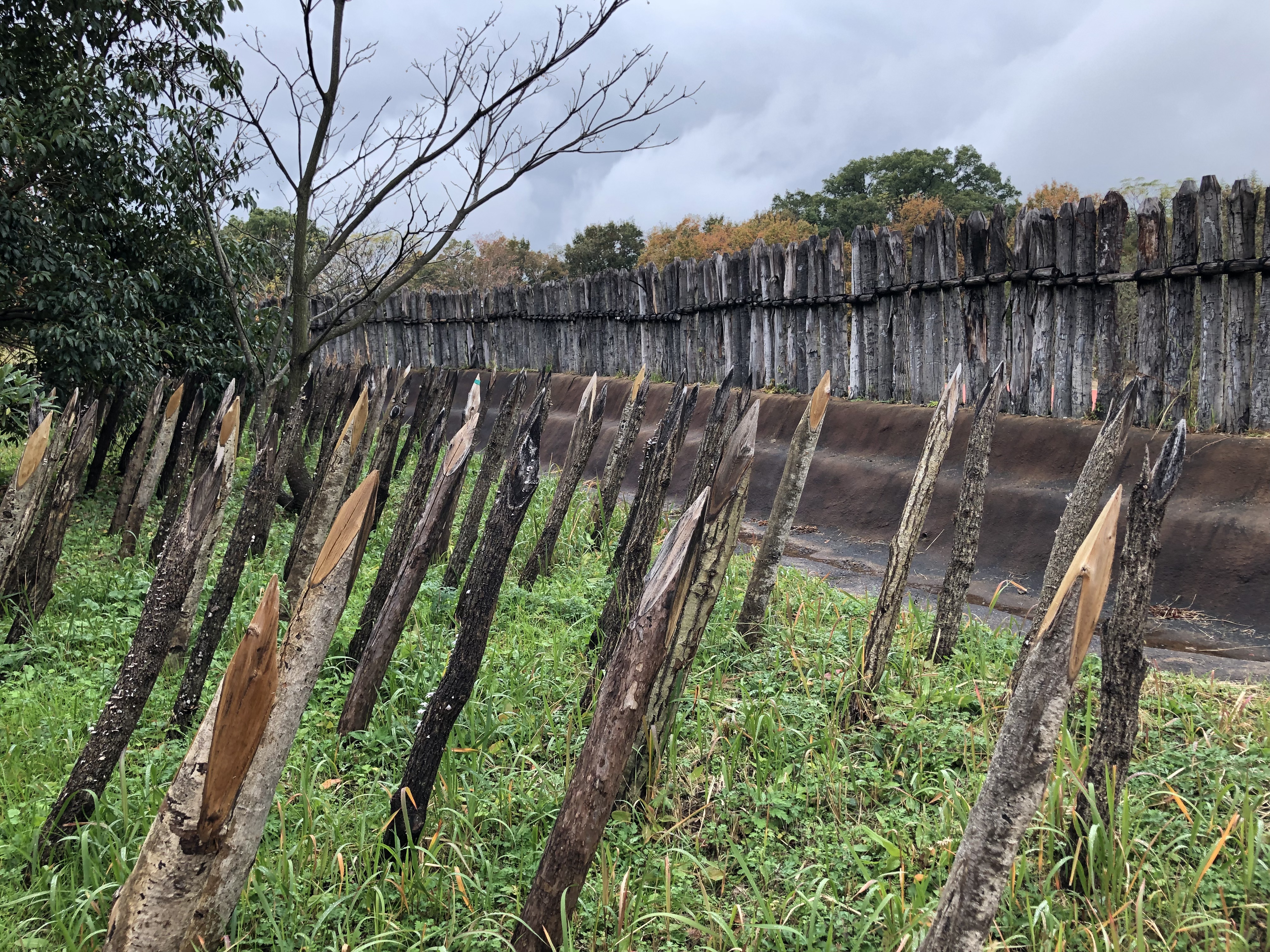
After crossing a massive red bridge, I arrive at the park. The first thing that draws my attention are what appear to be loads of large wooden spike traps.

As rice cultivation increased, more people fought one another to control the water and occupy the land. People set up barricades with sharpened posts or tree trunks, especially around strategic areas such as the entrance to the village in order to strictly protect their properties. These stakes are called sakamogi.

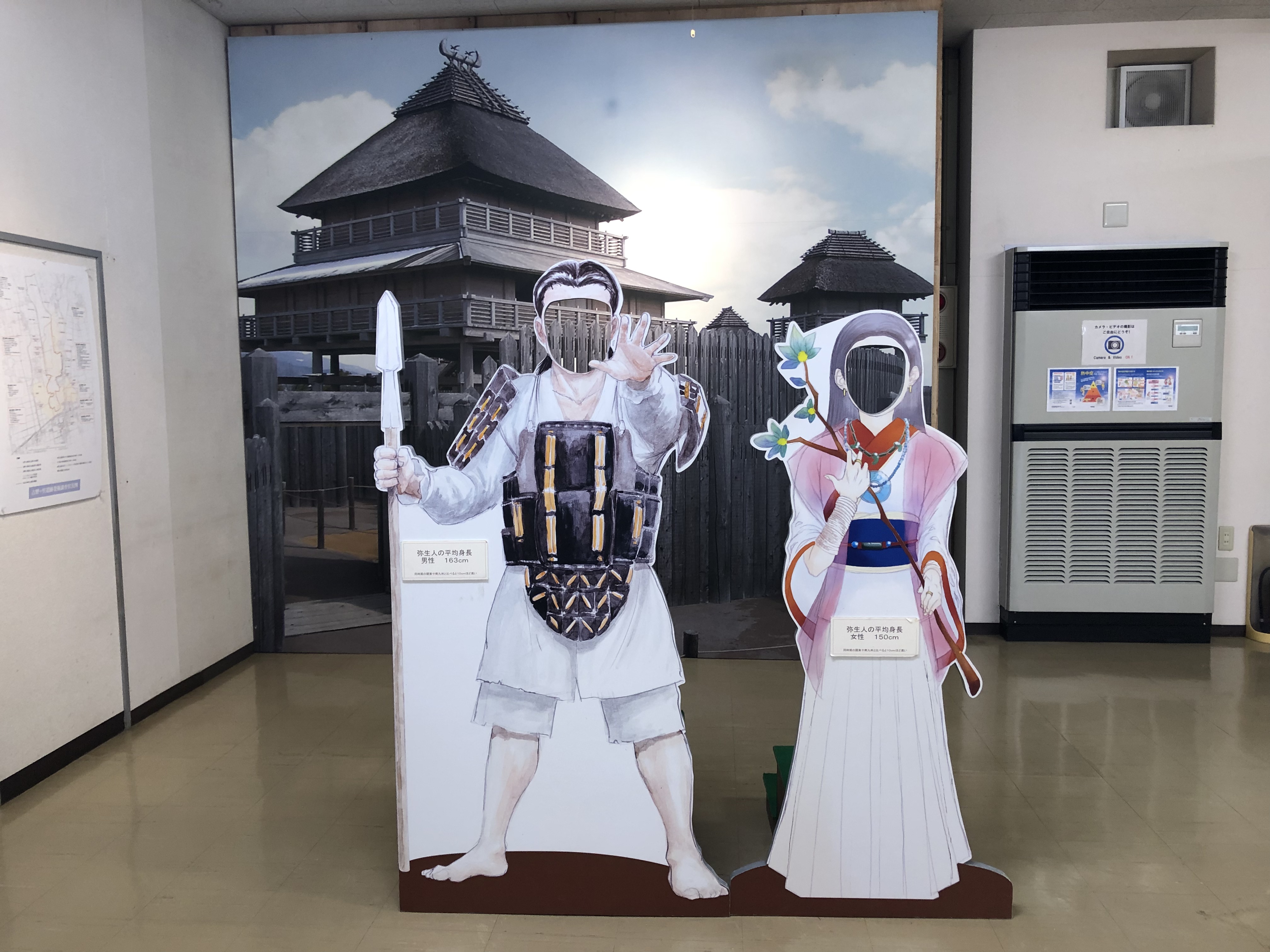
I leave the abatises and wander further along the tree-lined path, passing what looks like straw statues of wild boar, before finding a small museum. The first thing I notice when entering the museum is the eagerly awaited return of a small fascination of mine, Carnival Cutouts.

The museum itself contains loads of old pottery from the Jomon era, bronze daggers and bronze swords, the jaws of wild boar, deer skulls, hunting tools, arrowheads, stone daggers, and a 2,000-year-old human skeleton.

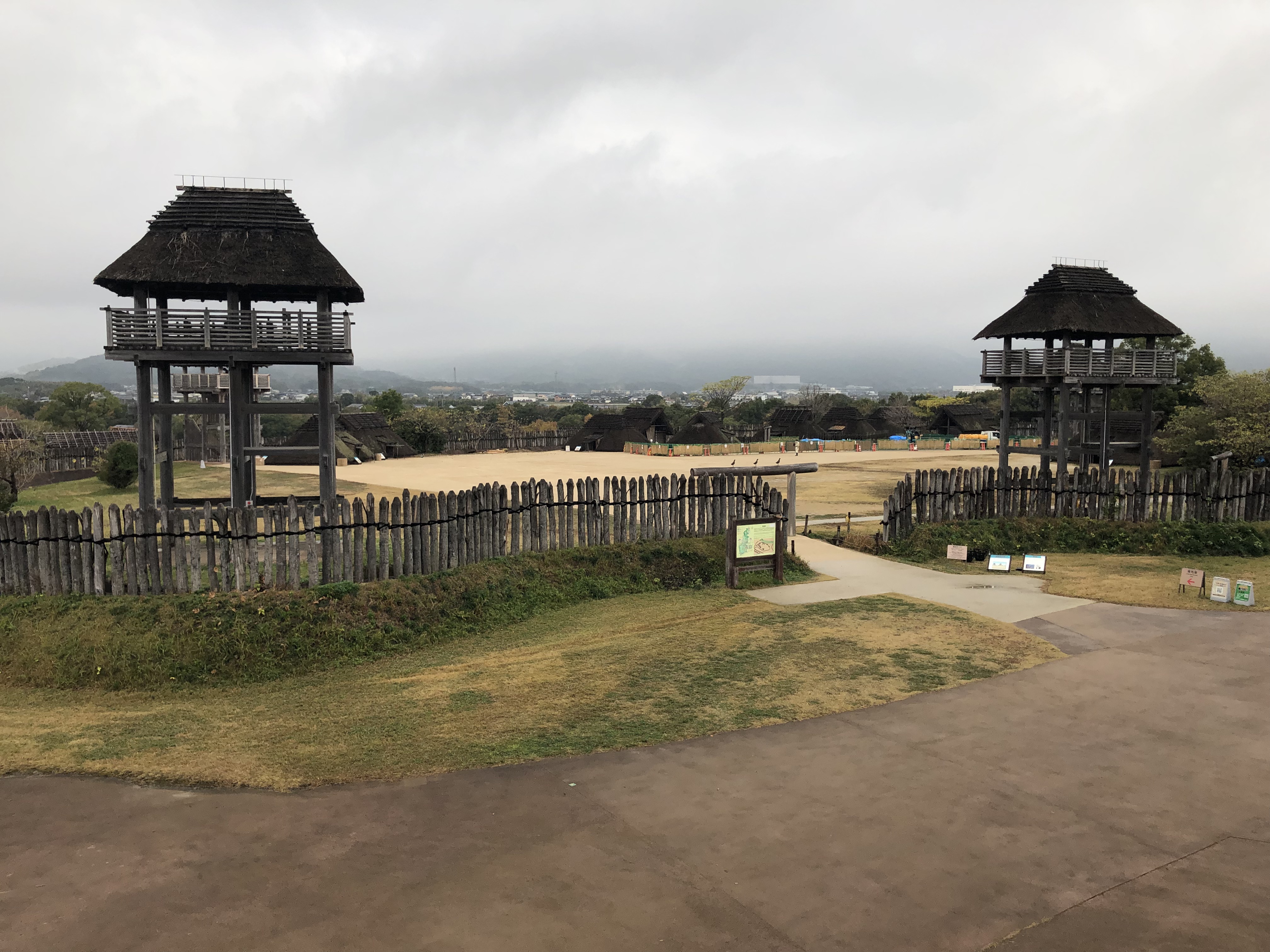
I leave the museum and in the distance I see some watchtowers. These watchtowers mark the entrance to the South Inner Palace, and were once manned by sentries.

I climb up the slippery wet wooden steps to the top of the Gate Tower, this tower had guards with shields at its four corners. The tower offers a good vantage point to watch for people entering and leaving the enclosure.

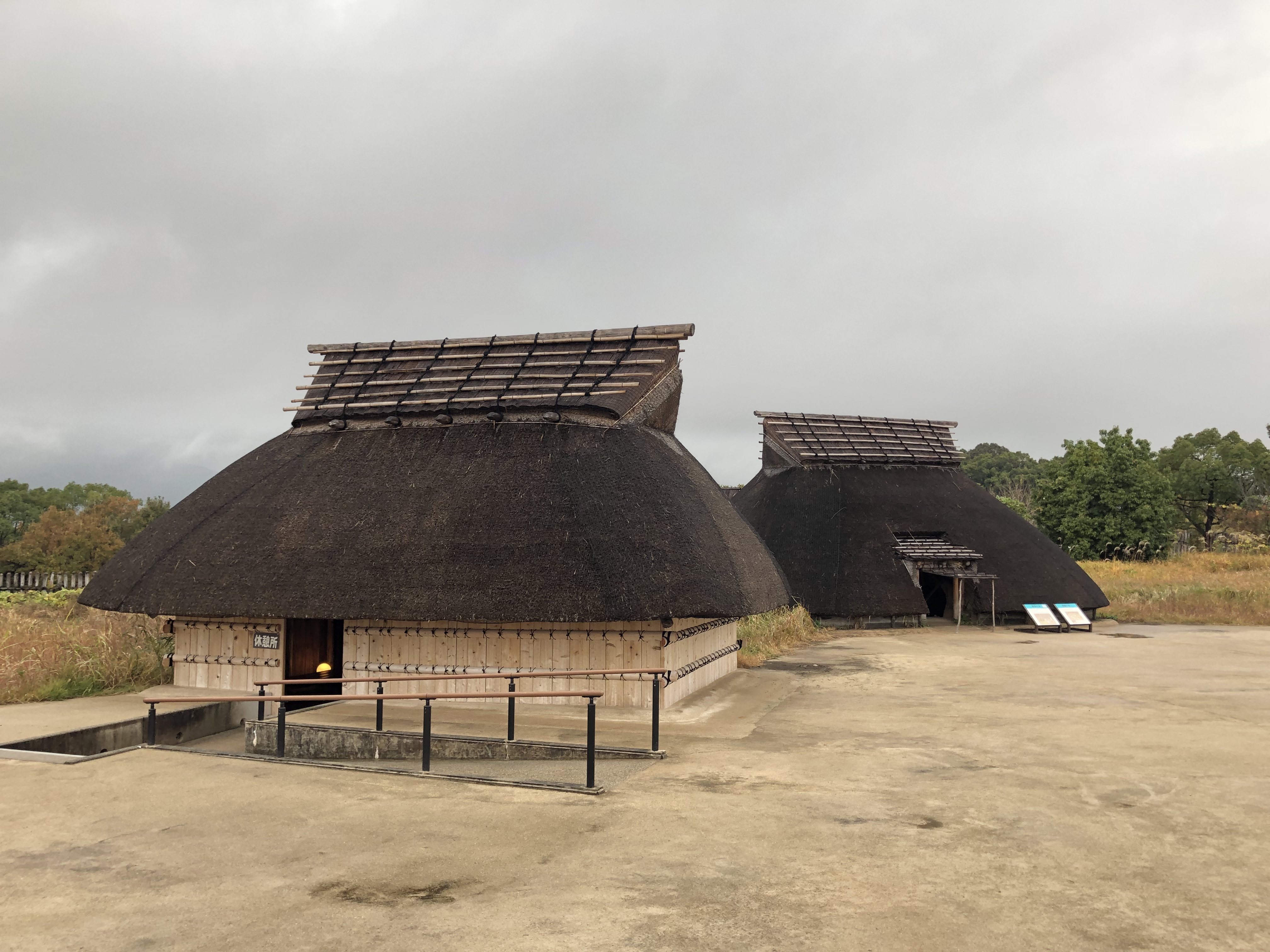
I wander further along, passing the moat and fences that guard the Palace, to the houses beyond, to the zone known as Moat Village. This area contains the village that once housed each of the residents. From the kitchens to the main assembly halls, each house can be entered and fully explored.

I visit the Brewery House, where women would brew sake for festivals and rituals by steaming rice from the years’ harvest. The Sericulture House, where precious silkworms were raised to produce silk thread to weave textiles. And finally, to the Barracks, where the soldiers who guarded the northern defences would rest.

I find a map only to realise that I’ve explored just a quarter of this giant historical site. Its sheer size is quite alarming. The map also shows that the park boasts four car parks, one at each corner of the site. Some Christmas lights are dotted around for good measure; evening illuminations, but I have other places to be. I wander in search of an exit and see a sign in desperate need of pluralisation.

Suddenly the clouds burst and the unforeseen downpour leaves me completely soaked. I see a man who has been given the arduous task of sweeping up the fallen leaves, he’s equally soaked. I pass a golf course, two full sized football pitches, and a petting zoo, and wonder if these such things were here 2,000 years ago too.

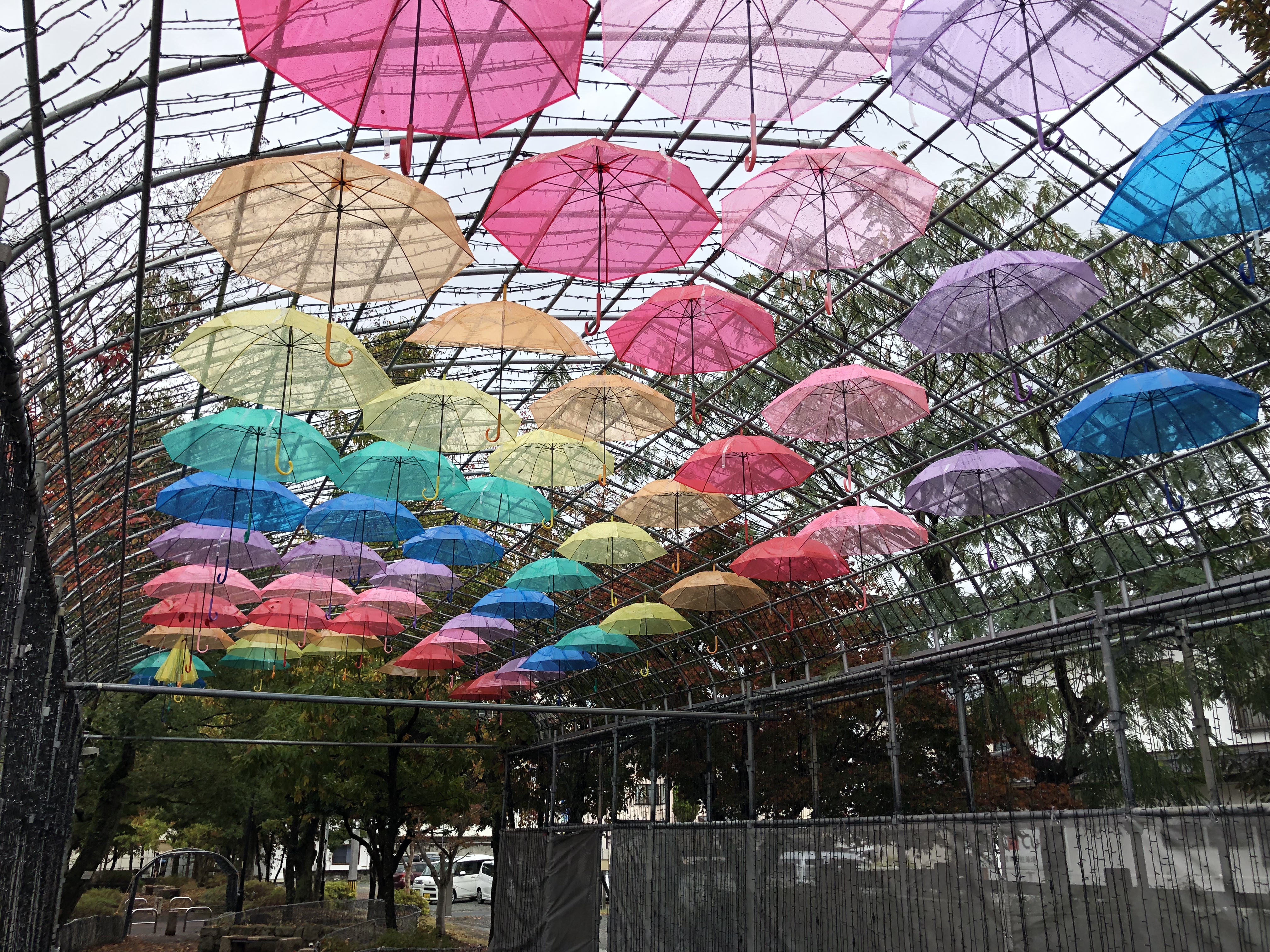
Eventually I find an exit, walk two kilometres to the nearest train station, and hop on a train bound for Saga City. At Saga, the rain has stopped. I walk twenty minutes in the direction of the Saga Balloon Museum. Before I arrive, I spot a canopy of umbrellas that might have been useful thirty minutes ago.

For some reason, Saga Prefecture is famous for hot air balloons. Inside the Saga Balloon Museum, I learn that the very first time a human being “flew in the sky like a bird” was in 1783, in Paris. In Japan, the first manned flight by a gas balloon was completed in 1877, in Kyoto, an event watched by 50,000 spectators. And in 1903, the Wright brothers flew an aeroplane, making the hot air balloon useless.

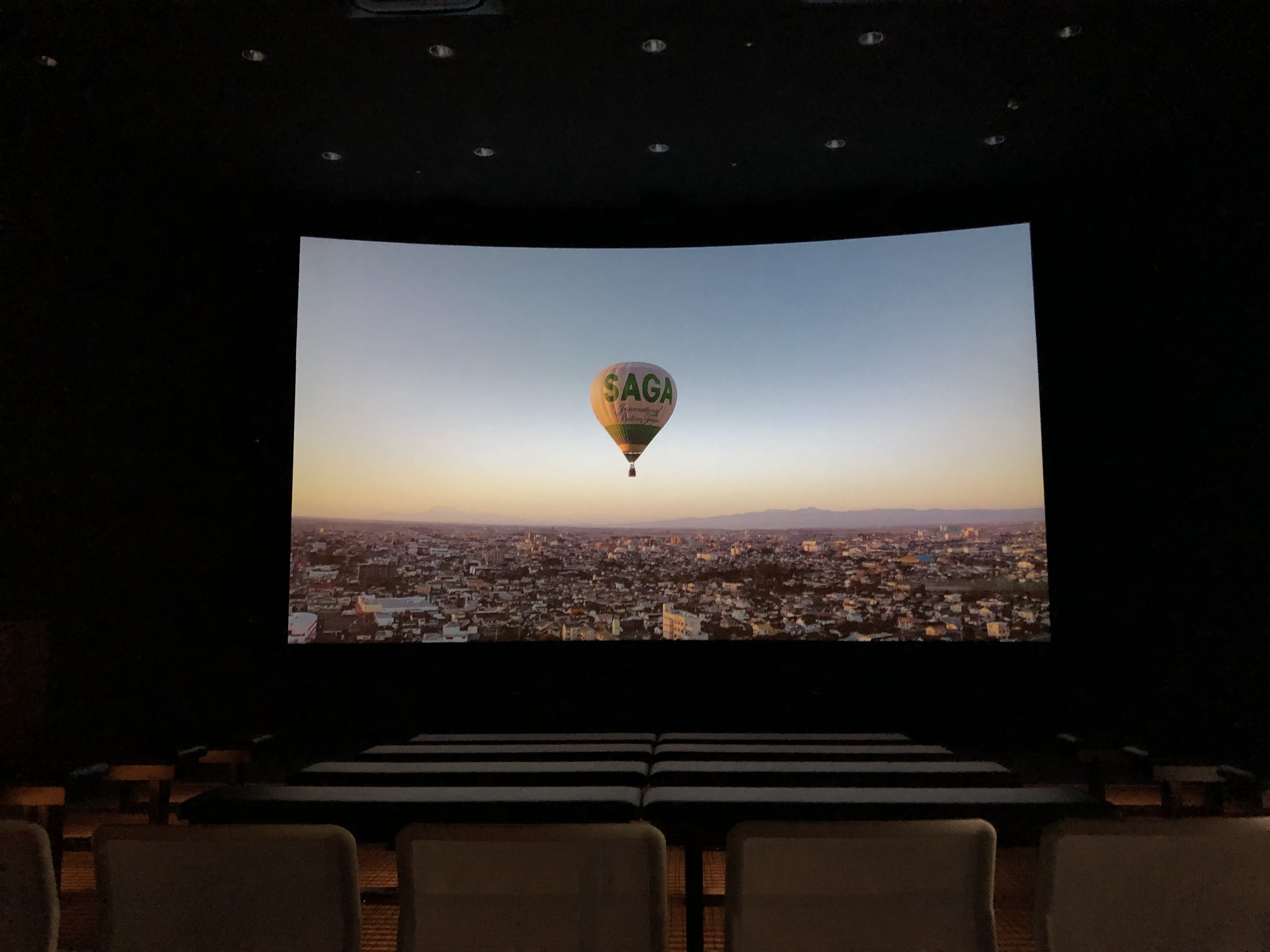
I take a seat in a small cinema describing itself as a “Super High-Vision Theatre” with a 280-inch screen. Here, I watch a film that claims to be so realistic that you will think that you’re there. I learn about balloons, what makes them fly, before leaving the cinema and heading up to the second floor. Here I get the opportunity to fly a hot air balloon myself, using the advanced simulator.

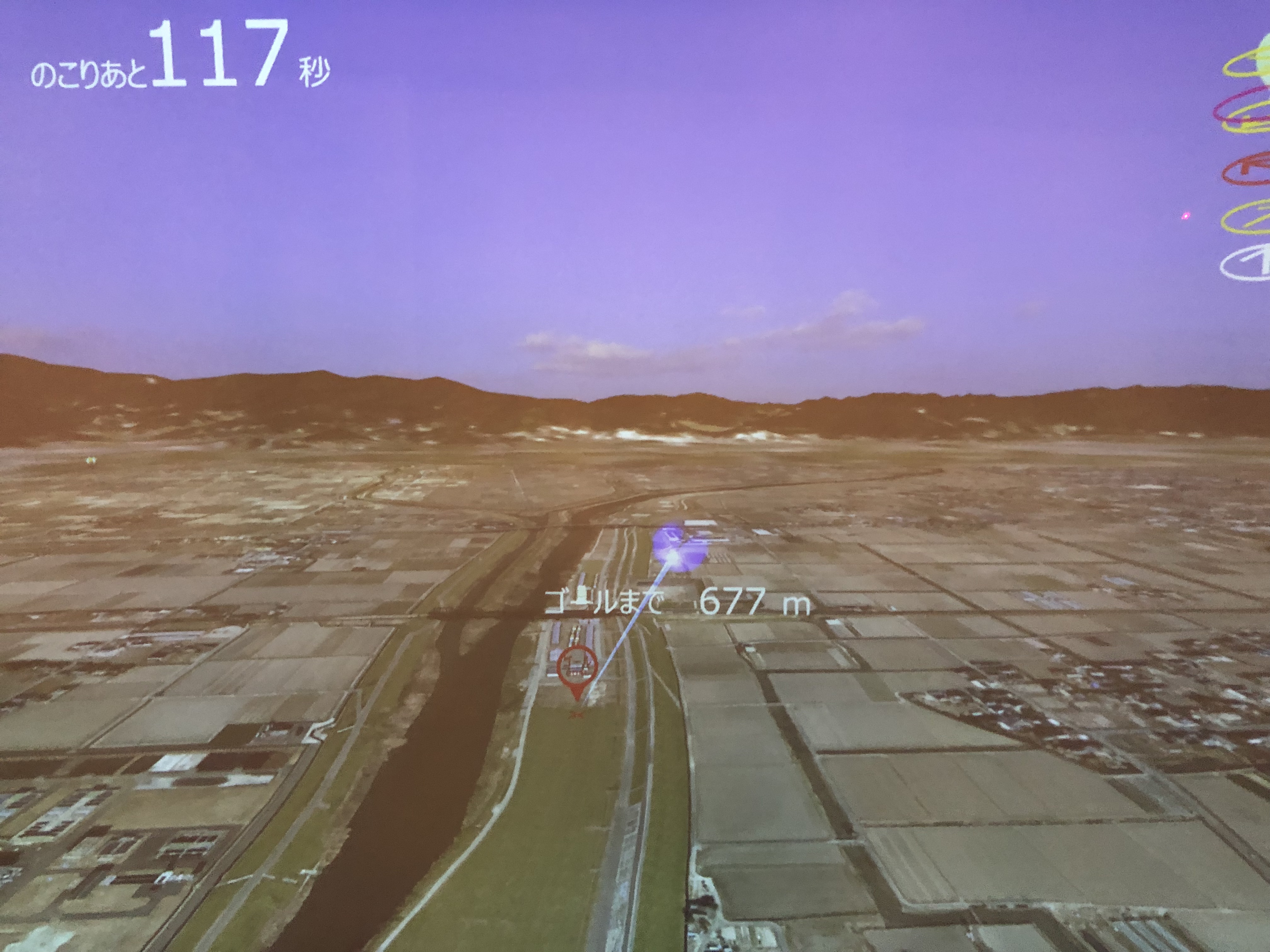
I stand inside the hot air balloon simulator and begin. I have 180-seconds to land the balloon in the target area, taking into account wind direction and wind speed, all the time sporadically pulling on a lever that releases pretend propane gas. When the lever is pressed down the balloon floats further upwards, when it’s released, the balloon slowly floats further downwards and catches in the wind. Apparently the trick is to control the lever early, anticipating the atmospheric conditions.

Landing the balloon within one metre of the target awards ‘S’ rank. The rest of the ranks rate down from ‘A’ to ‘E’ and the sign next to the machine offers the following encouragement, “Ride the wind and get a high rank!”

Obviously, I spectacularly crash the balloon into the sea.