Dance, Dance, Ambulance

It is humid today, a cool 31°C with patches of rain, the perfect weather for dancing in the street. I head over to Tawaramachi Station for a train to Shibuya. From Shibuya Station, I head to Yoyogi Park, stopping off at the Tobacco and Salt Museum. The sign in the window reassures me that the museum will relocate to Sumida in spring 2015. It closed almost a year ago. I begin to wonder why it takes almost a full two years to move the contents of a museum.

I continue my walk, taking a detour through a ‘Shopping road that is nice to people’ before eventually arriving at Yoyogi Park. This weekend, there is a festival held at the Yoyogi Park event open space, the ‘Battle of the Udon.’

udonfest[1]

There are nine different television stations here. There are nineteen different udon stands, each selling their own local variety of udon noodles. Stalls also sell various non-noodle-based drinks and snacks. The best noodles from all over Japan have come here to compete in the nation’s biggest food competition. Every bowl of noodles is charged at a flat rate of ¥500. When you order food at the Battle of the Udon, you are given a vote card with the name of the stall. On the final day of the event, the votes are tallied up, and the best udon in Tokyo is crowned.

The noise here is deafening; every store has a banner, mascot, and a guy with a megaphone shouting at me to visit their store. Some of the mascots are better than others. I really like stall number 18’s mascot from Nagoya; they are promoting their Kishimen-style udon noodles.

a18udon[1]

I go to stall number 19 from Saitama Prefecture, offering Shoji-style udon noodles. As I approach the store, the guy at the counter shouts, “Welcome!” in English and literally welcomes me with open arms. When I arrive, he reaches out his hand to shake mine. He looks genuinely pleased that I chose his store; most likely, he is proud of the food he makes. “Udon!” I exclaim, my smile matched by his.

After food, I head back to Asakusa. I exit Tawaramachi Station to the sound of tourism and the sight of umbrellas. The rain has started now, but the show will go on. Today is the 33rd Asakusa Samba Carnival, and half a million people are expected to attend. The streets are packed on every side, and the roads are closed to vehicles. The carnival is just about to start.

streetslined[1]

This festival first began in 1981 when the mayor of Taito Ward invited the winning team of the Brazilian Rio Carnival to perform on the streets of Asakusa. Each of the teams has its own theme, but in effect, they compete to be crowned the winner of a dancing contest. The parade starts behind Senso-ji temple, where a display of the floats is free to inspect, and conveniently finishes close to Tawaramachi Station.

The teams vary in style. There is a ‘Puzzles & Dragons’ float, loads of marching bands, women dancing Samba dressed in traditional Brazilian garb. Some teams even have a comedy aspect, like women with fish on their heads or dancing clowns. For the rest of the afternoon, every inch of Asakusa is alive with the sound of drums and loud music.

sambaclown[1]

At 5 p.m., I decide to eat some food from Seven Eleven before heading to Cafe Byron Bay to drink. Instead, the night takes a somewhat unexpected turn, and one of my friends from the cafe is in need of medical treatment. An ambulance is called, and we wait an age.

The owner of the cafe, our friend, and I sit in a parked ambulance for ten minutes. Here, her symptoms are explained, and the usual questions are answered. I think that this procedure could have been done during the journey to the hospital, but then again, I don’t have any medical training, so what do I know? Eventually, we are on the move. Something I have observed in the past is that ambulances in Japan move seemingly without any haste or purpose. They wait at traffic lights with sirens blazing. They move with absolutely no urgency.

ambulance[1]

We arrive at a small hospital in Ueno. Our friend is placed into the Emergency Room, and we wait outside. Sitting in the hospital, an overwhelming sense of exhaustion washes over me. The humming clock reads 20:20, but it’s boring, like the walls; once white, now stained yellow. We ask if there is any news on our friend, but we are politely told that they don’t know anything. Hospitals have a way of draining energy from people; sitting here any longer might just kill me. We decide to go for a walk.

We head to an Indian restaurant and eat some excellent food. I suggest to the cafe owner that she should serve similar food and rename her shop to Cafe Byron Bombay. Despite worrying about our friend in the hospital, we make the most of the situation and try to enjoy ourselves as much as we can. In the end, I don’t have such a terrible time.

After four hours, our friend is allowed to leave and is going to be alright; good news. We hop on the train at the nearby Ueno Station and head back to Tawaramachi Station before going our separate ways.

Siliconan the Ovarian

The previous three days drifted along to the tune of uneventfulness. I met old friends, went out for dinners, and had drinks. I didn’t even leave Asakusa once. Today, a sign in my hostel says, “Soba party today, come and enjoy Japanese noodles!” There is also a list of local artists that will be here to teach various arts and crafts. Free food and free crafts, excellent.

Outside, it is a blistering 36°C. I take the Tokyo Metro Ginza Line to Ginza. Ginza is a massive shopping district and fashion area. The kind of place you only drive through if you have an Aston Martin or a Bentley. If there is a Tokyo edition of the board game Monopoly, Ginza would be Mayfair. There is an array of well-dressed people, expensive fashion boutiques, and all the high-priced big brand stores.

My first stop in Ginza is the rather difficult-to-find Vanilla Gallery. Hidden away in a basement floor of a rather uninteresting building, it plays host to the Fourth Artificial Otome Expo: a Love Dolls exhibition. I shyly pay my ¥1000 entry fee to a young woman and shuffle through the gallery, trying to avoid eye contact with the other customers and the dolls. The dolls are made of silicone, are hauntingly childlike, and can be customised to the finest detail; every part of a doll can be ‘made to order’. Also in the exhibition is the mould that creates these dolls; a sign says, ‘Crystal craftsmanship to build the doll up to perfection.’

The Vanilla Gallery is small, and the exhibition is in just two little rooms. Orient Industry has been making these luxury Love Dolls for thirty-seven years, or so a video of the production process tells me. They also claim to make the most luxurious and expensive dolls; probably why they chose Ginza to showcase their creations. There is one doll that you can touch, ‘Feel her soft realistic skin,’ a sign says. I pass on the touching. I can only show the photograph of the sign, as there was a strict no-photography policy in place.

lovedolls[1]

I once saw a television interview with a Japanese man who said that he doesn’t want his wife to know about his collection of Love Dolls, so he rents a second apartment just for his dolls. I stay for no longer than five minutes. The life-size, realistic-looking dolls scare me. Their stillness makes me think of the dead.

Next in Ginza, I head to the nearby ‘Hello Kitty Toy Park.’ Here, there are so many toys, games, keyrings, plates, umbrellas—everything you can imagine featuring Hello Kitty. Five floors of toys, two floors of restaurants, a theatre, and a small theme park. I have never seen so many Hello Kitty items in one place. I don’t know which is more embarrassing, going to a Love Doll exhibition or entering a Hello Kitty store. Inside the store, I see a policeman on his break, inspecting the Hello Kitty toys.

kittytwo[1]

Next, I head in the direction of the Police Museum. On the way, I see a huge Yamaha store and decide to play on some very expensive-looking pianos for a while. I also spot the Pachinko Museum. A sign outside says, ‘We can teach you the basics about pachinko.’ It is adults only, but free. I head inside to find that they have forgotten the museum aspect. It’s just a regular pachinko parlour. ‘More enjoy more happy,’ a sign outside tells me as I leave.

The Police Museum doesn’t seem to exist. The building that houses it is under heavy construction and gated off. A shame, I was looking forward to doing something normal today. I see a sign for the nearby Kyobashi Station; lucky for me, I know this station is on the Ginza Line, so I take the train back to Asakusa.

Back at the hostel, I watch the news. A company called Shin-shin Foods has decided to stop its one-hundred-year-long pickle production and has converted its headquarters into a capsule hotel. I learn about a process called muon tomography, cosmic rays that detect radiation. Twenty-nine cats have mysteriously been found dead in Ota Ward; police think it was poison. The usual nonsense. I do some writing before heading out for a Shiatsu massage.

messageboard[1]

The place I go to was recommended to me by the owner of Cafe Byron Bay and is owned by her friend. When I enter the building, the woman at reception looks shocked to see me. I don’t think the place gets too many overseas visitors. I mention that I know her friend, and the tension in the room instantly fades away. After my thirty-minute massage, the tension in my shoulders also fades away. The man who performed the massage offers me a fifty percent discount, just ¥1500. I actually don’t think this is fair to him; the massage was good. I compromise and tell him to keep the ¥500 change, which he does. So much for not tipping in Japan. He thanks me and gives me a points card; I am nine more massages away from a free one-hour session.

Back at the hostel, the soba party is just starting. Soba are Japanese noodles made from buckwheat flour. This is actually my favourite type of noodle. There are stalls selling badges made from Instagram photographs. You can send them six of your photographs, and they’ll make them into high-quality badges or magnets. There is also a store where you can rent a kimono or a yukata. The word kimono inventively translates as ‘thing to wear’.

soba[1]

There is, of course, plenty of free food. Plates piled high with ice-cold soba noodles. Tiny plastic bowls are filled with sauce, and a selection of toppings is available. I eat my noodles with spring onion and seaweed. Delicious. There is also free rice wine to drink. When all the free sake has been consumed, I head to the hostel bar for more free drinks. The night crawls along. I eat soba noodles in the lounge and get considerably less sober at the bar. The night ends, and I crawl to my room.

When Haricot Met Celery

I wake up at 9 a.m. and head down to the lobby for my Japanese-style breakfast. The food is almost identical to yesterday. The grilled fish of the day is once again salmon. The only change is that my cooked seasonal vegetables today are haricot beans and peppers, mixed in with natto. My side salad includes corn on the cob, celery, and red onion. I gaze out of the window whilst I struggle with my breakfast, a meal I am not used to eating.

After breakfast, I take the subway from Shin-Osaka Station to Namba Station. Getting off the train, I head toward the famous Namba Grand Kagetsu Theatre, hoping to catch some manzai comedy. Osaka actually produces most of the comedians in Japan. Manzai is a type of stand-up comedy where two comedians perform a routine together. Even if in Japanese, good manzai can be very funny to watch because a big part of the show is the timings and actions on stage. Sadly, there is no performance happening at the moment.

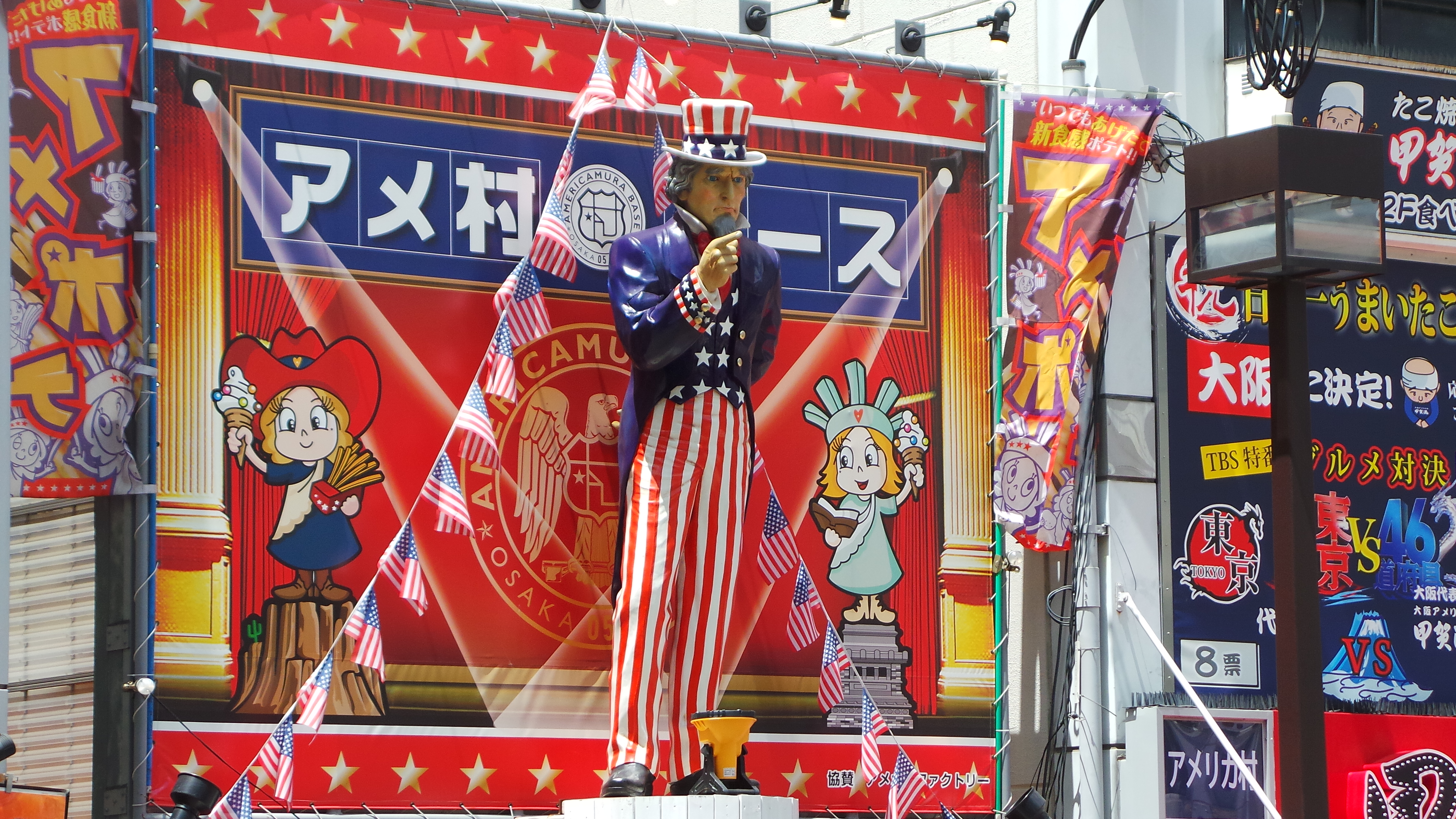
I check my map and decide to head to a place called ‘Americamura.’ I wonder what I will find there.
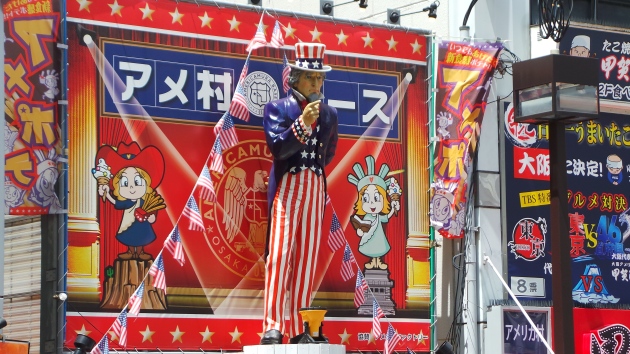
america

Shops here sell American clothing, some entirely dedicated to selling baseball hats or soccer jerseys. Mixed in with this madness are shops selling skate, punk, and retro clothing. I enter a bookshop that sells herbal teas, skateboards, and, of course, books.

All of the big brands have their own ‘flagship’ stores here. Mixed in with the clothing are some really cheap-looking bars selling inexpensive drinks. Surprisingly, all the tourists and shoppers here are Japanese; there isn’t an American in sight. I’m not quite sure how this place came to be. After a few blocks, I see a Tokyu Hands; the store marks for me where America ends and Japan begins again.

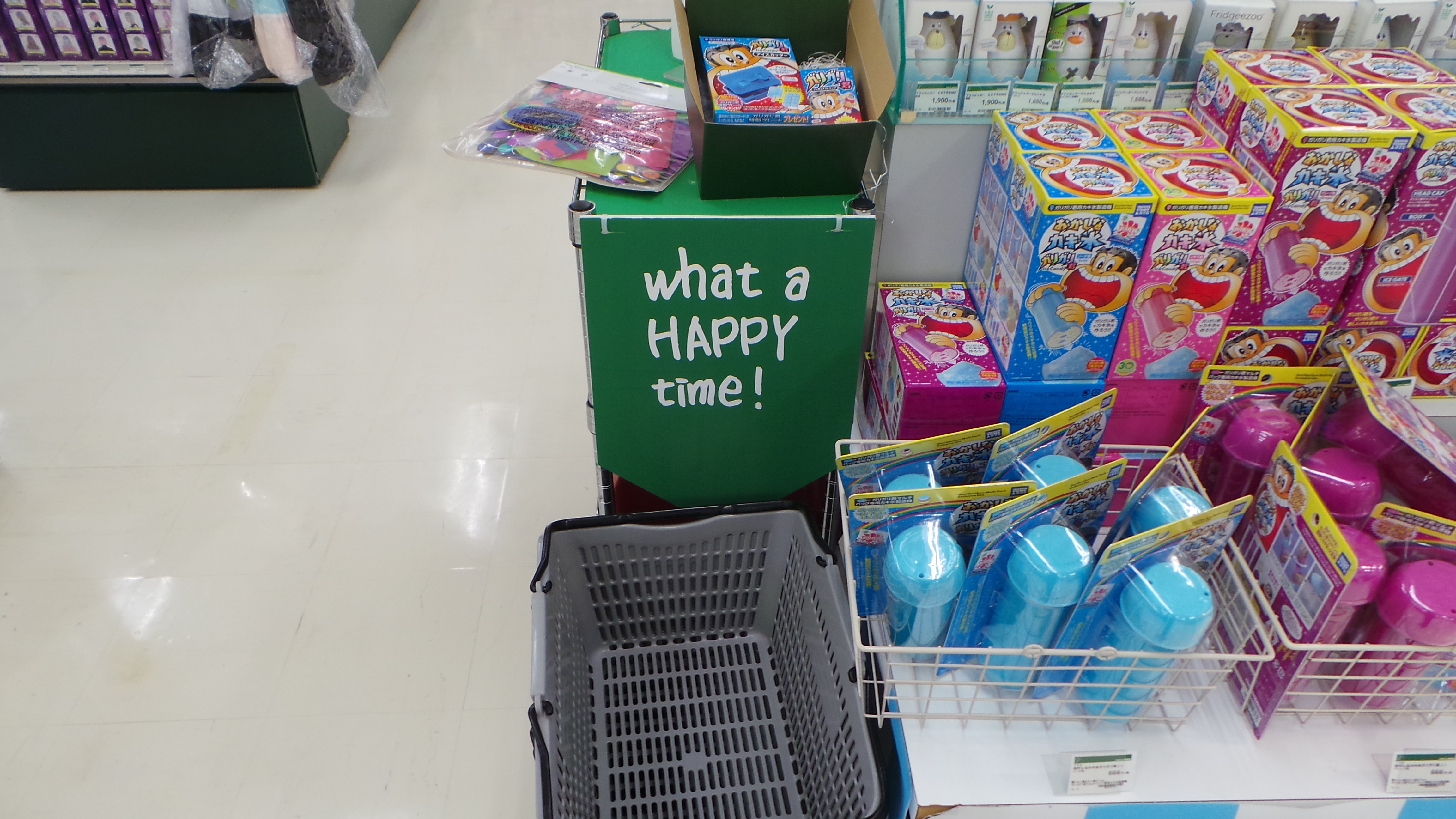
I decide to take a break from the heat and head to the fifth floor using the Tokyu Hands elevator. The shop describes itself as a ‘Creative Life Store’, offering a vast array of products. On this floor, they have party supplies, a variety of items, magician supplies, and bicycles. A song from the film ‘Frozen’ is playing, the Japanese version. I check out some of the cool gadgets, then glance at the prices of bicycles; they’re quite expensive here.
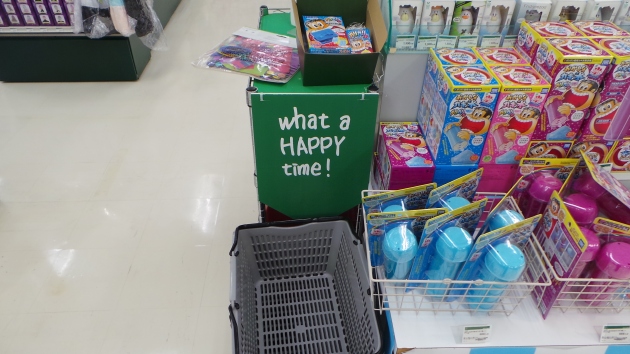
happytime

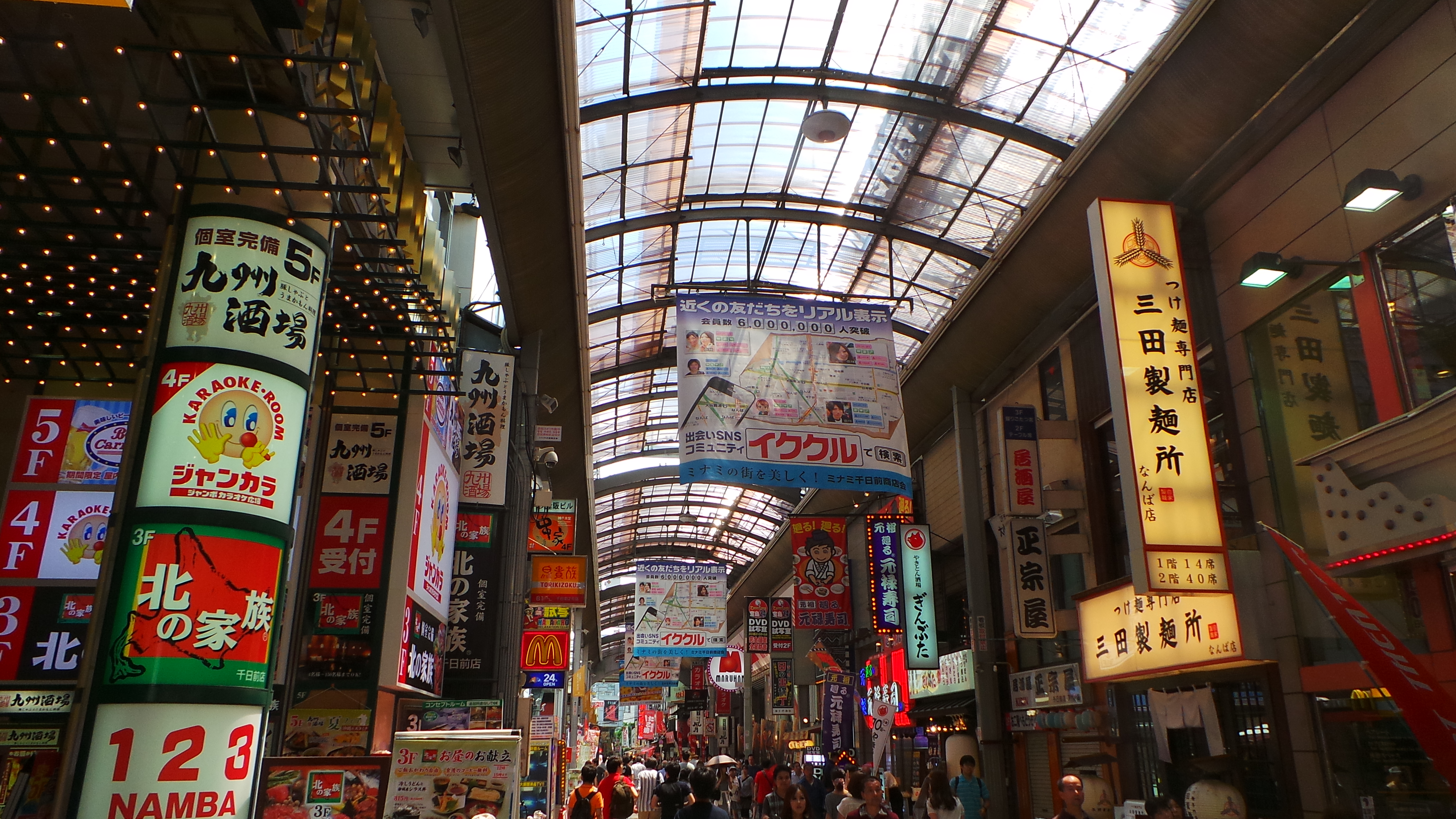
If you’re not particularly interested in shopping, today probably isn’t for you—or for me. I head into the Shin-sai-bashi shopping arcade. This is one of Osaka’s oldest and busiest shopping areas, stretching for approximately 600 metres. Everything you ever wanted is in this arcade.

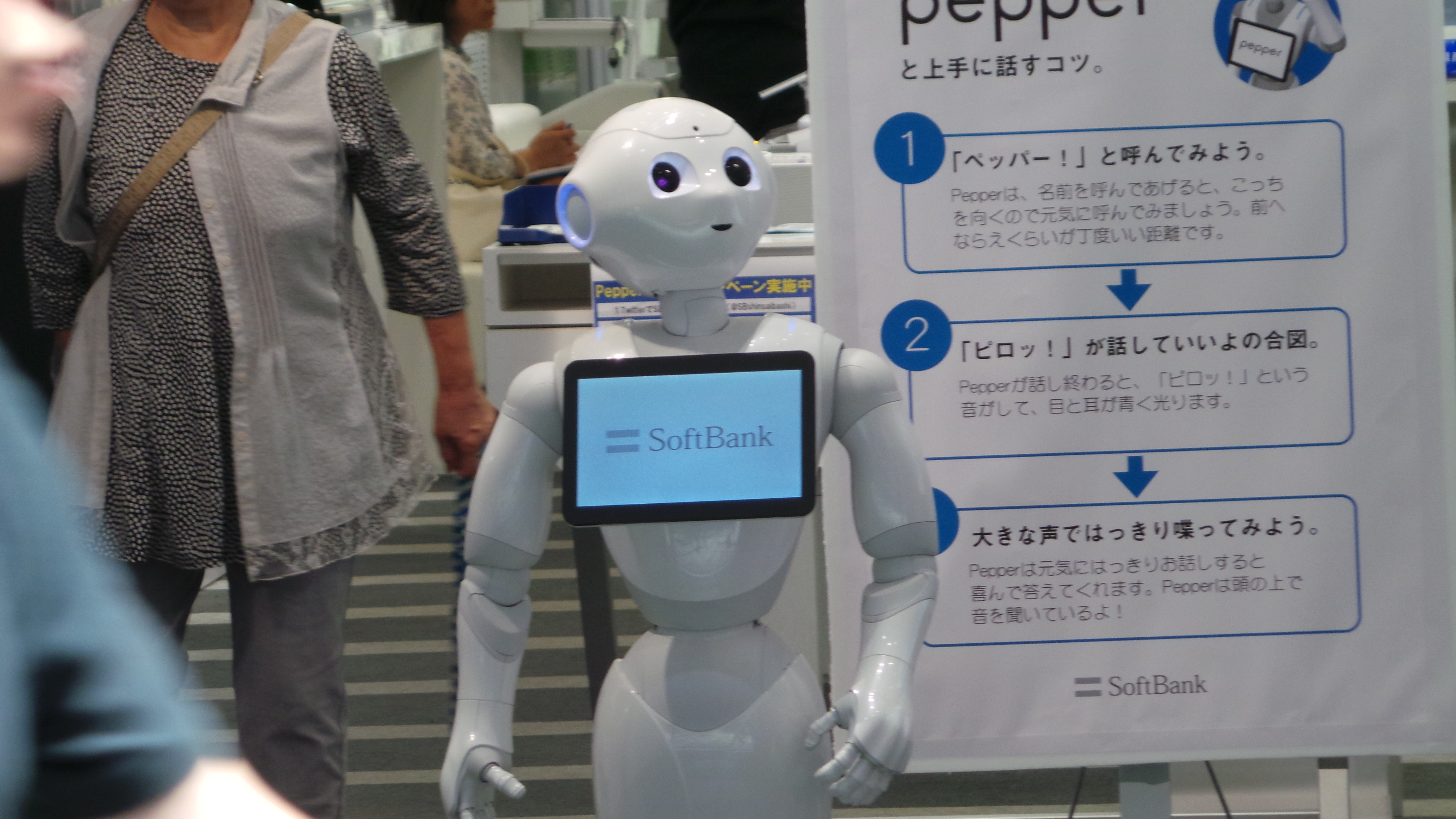
There is a shop that only sells ‘Hello Kitty’ goods, and another named ‘Pancakes, Teas, Coffee, and Happy.’ I’ve noticed that in Osaka, the word happy is used an awful lot. SoftBank, a Japanese telecommunications company, has its own robot. It moves around and engages in a conversation with me about their new products. His name is Pepper.
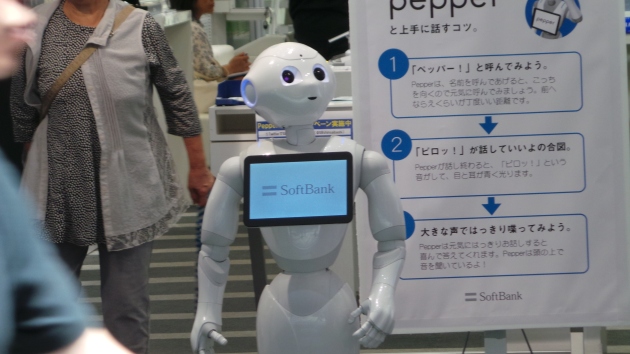
softbank

Also in the shopping arcade are the usual clothes shops, restaurants, and souvenir shops. I head into my second bookshop of the day, Junkudo. I’m searching for two specific books. I find one of them, ‘Pinball 1973,’ but it’s only available in the Japanese version. I’m trying to get hold of the English version printed for Japanese people to practice their English skills.

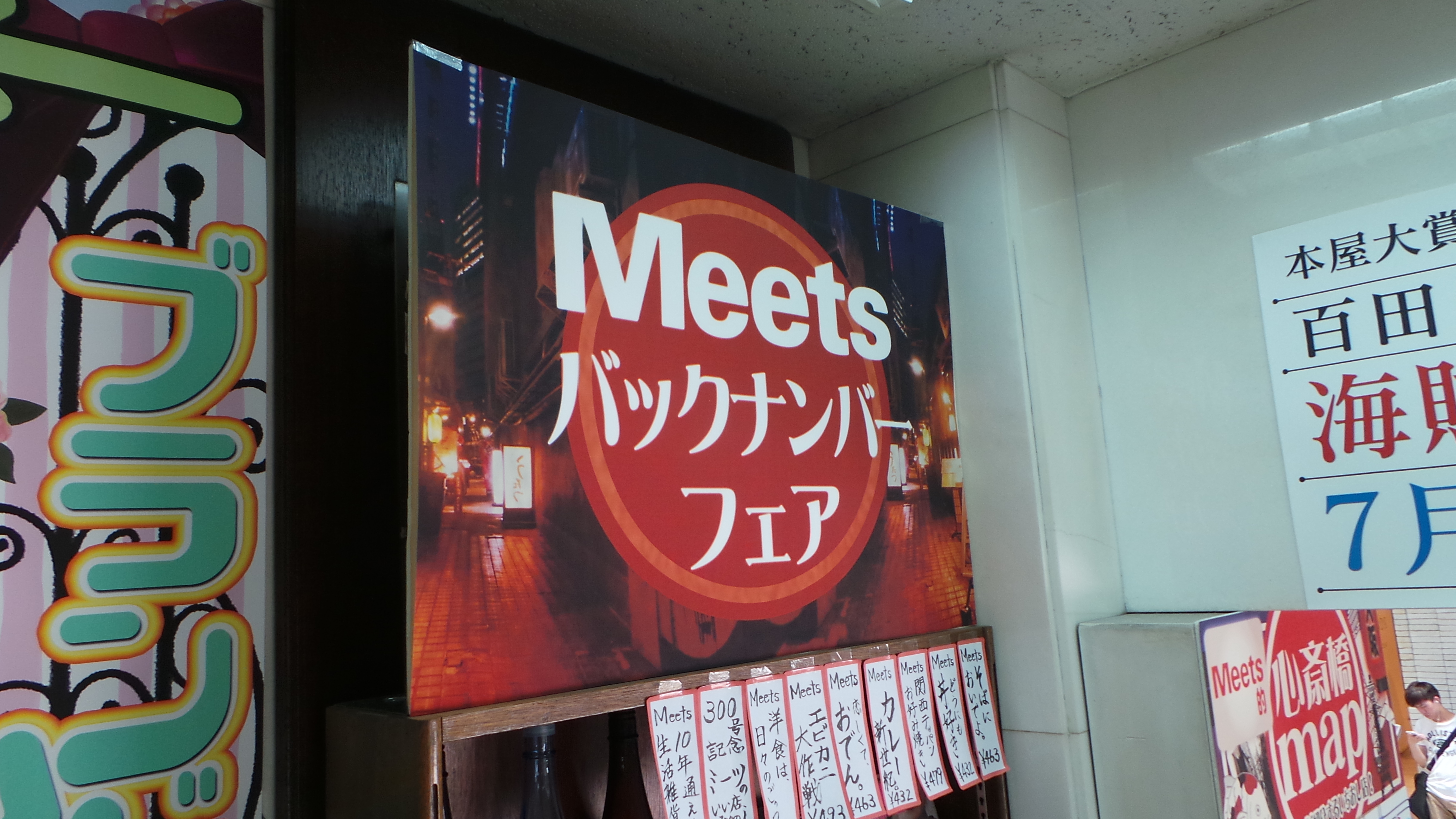
As I leave the bookshop, I’m taken slightly aback by a sign. At the bottom of the escalator, there’s an advertisement for ‘Meets,’ the bar I mentioned a few days ago. It displays a price list along with some other Japanese text. I take a photograph and add it to my folder of coincidences. Back in the arcade, that same song from the film ‘Frozen’ is playing.
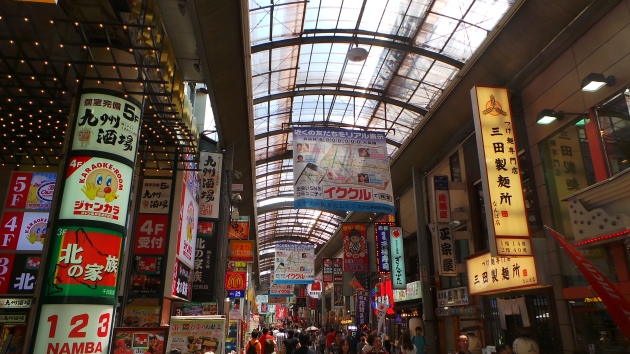
arcade

Next, I visit a place called Dotonbori. The pavement here is littered with small restaurants and pachinko parlours. Each restaurant is stacked high, adorned with brightly coloured signage that becomes illuminated in the evenings. It’s the sort of street that I imagine looks just like a scene from Blade Runner at dusk, especially when it’s raining.

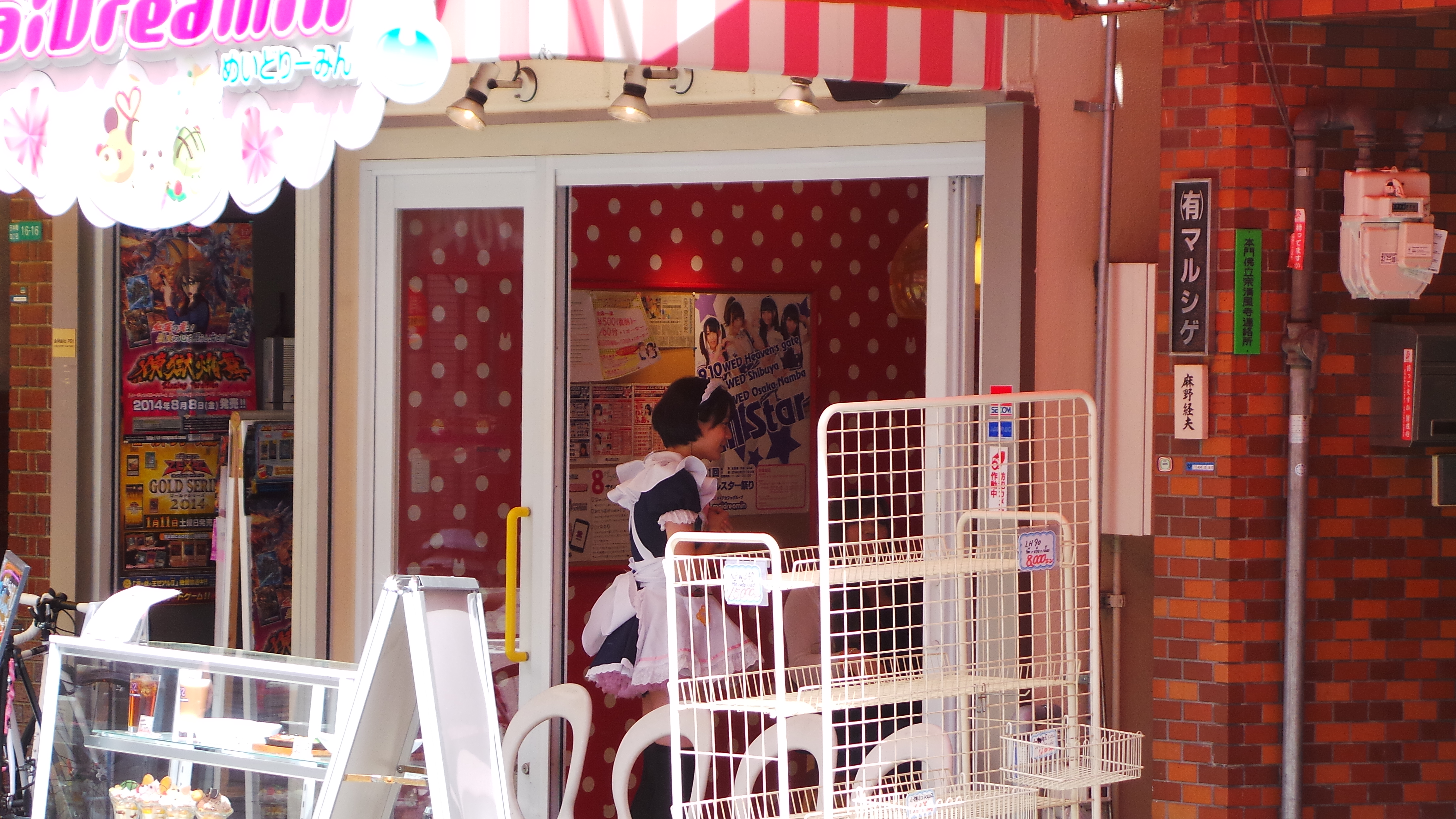
On the other side of Namba Station are shops selling manga and anime in an area known as Den Den Town. I spot two or three shops exclusively dedicated to selling Magic: The Gathering playing cards. Other shops offer model figurines and electronics. It reminds me of Akihabara, but on a much smaller scale. Girls dressed as maids stand on street corners, attempting to lure people into the many maid cafes.
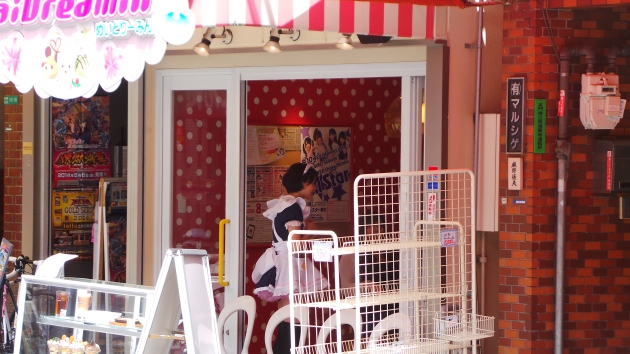
maidcafe

I waste a quick ¥500 in a Sega video game arcade before heading back to the train station. At the station, I have to walk through even more shops to reach the platform. I take the Koya Line just one stop to Shin-imamiya Station. I decide to check out a place called Spa World, but it seems luck isn’t on my side as there’s a fence around it, and it appears to be closed for construction.

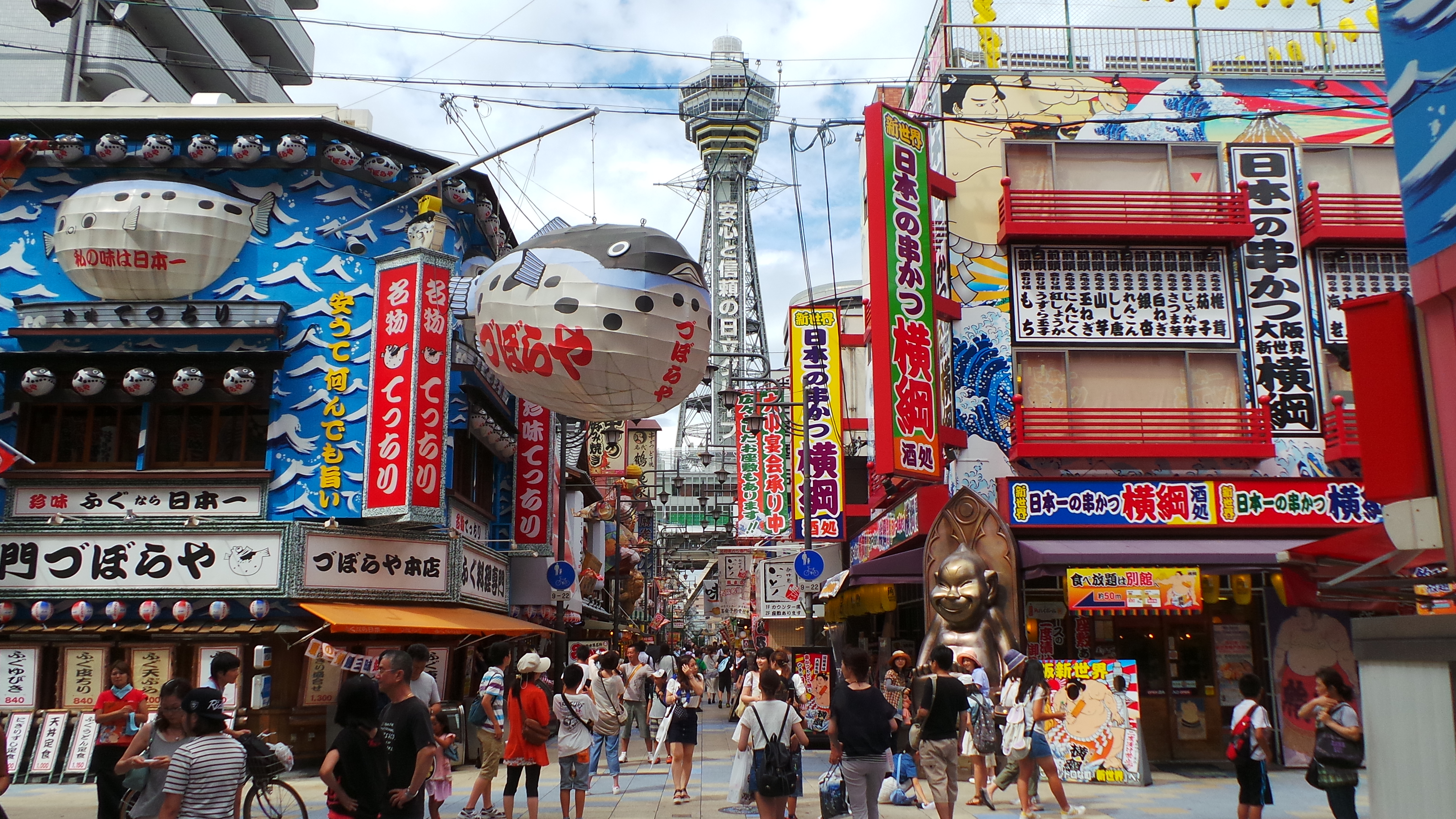
Instead, I head toward a tower in the distance. To reach the tower, I have to walk down yet another shopping street.
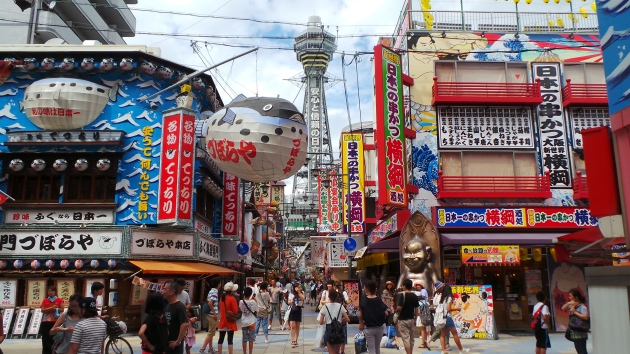
towerstreet

Unlike the other shopping streets, this one boasts a 103.3-metre-tall tower right in the middle—Tsutenkaku Tower, meaning ‘Tower reaching heaven.’ I also admire the Carnival Cutouts; one depicts what seems to be a sumo wrestler devouring a skewer of meat or wielding a rolling pin. It’s a bit ambiguous, but my guess would be a skewer, considering that’s all the restaurants in this area seem to be selling.

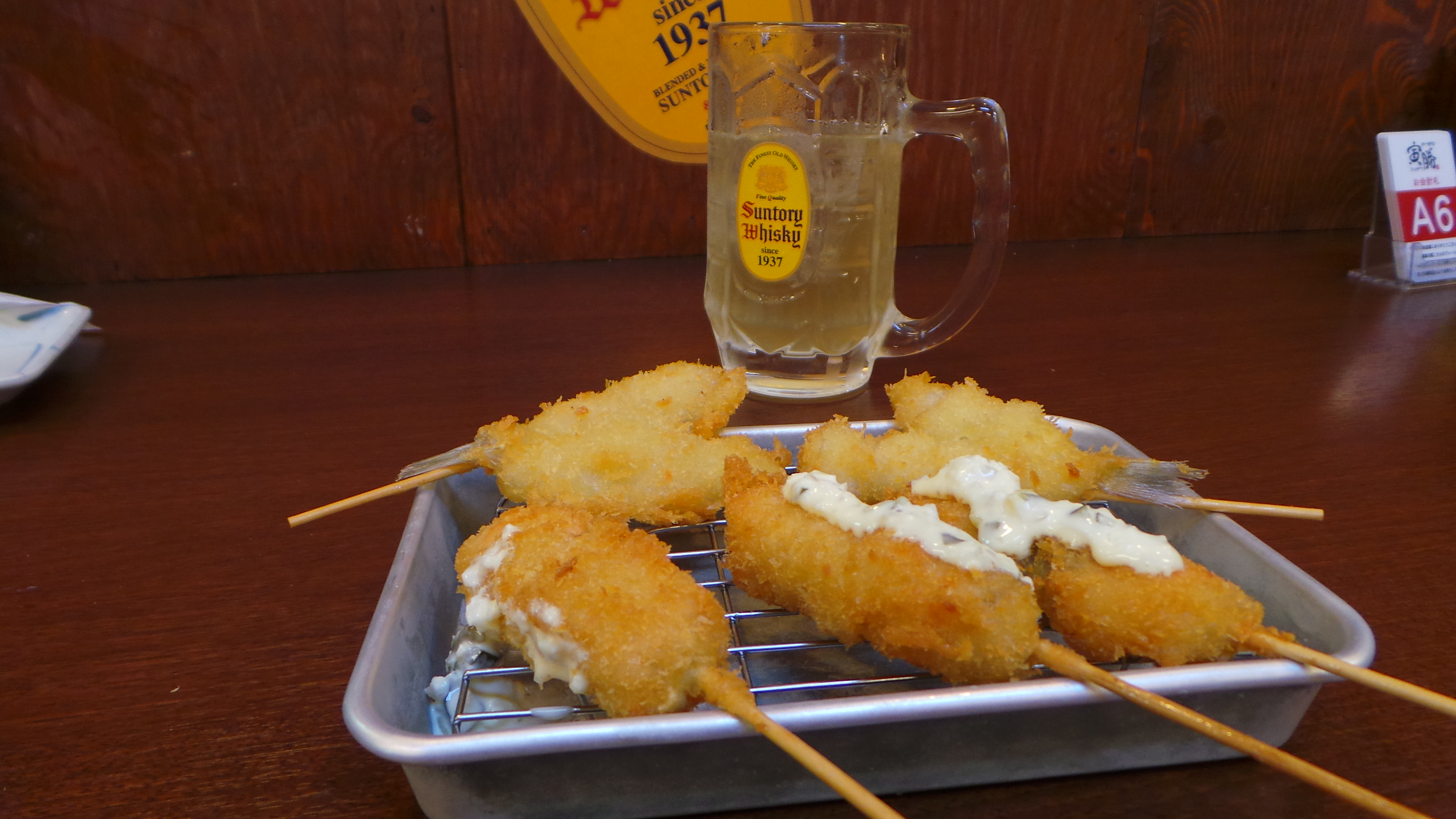
I choose a completely empty restaurant, taking a seat wherever I want, and order a Suntory whisky highball with lemon. With the number of times I’ve mentioned their whisky and coffee, I should probably get some commission money from Suntory. I opt for three salmon skewers and three white fish skewers. While I wait, I snack on the complimentary fresh lettuce and sip my highball.
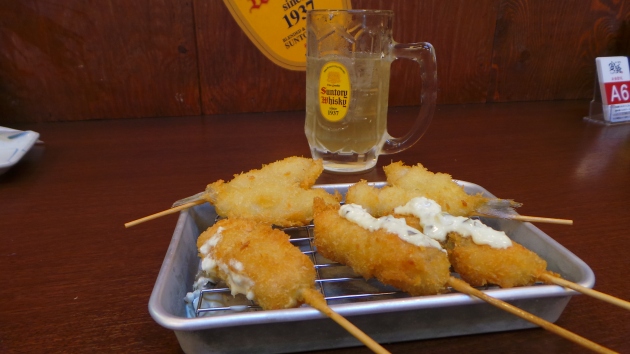
skewers

The white fish turns out to be haddock, while the salmon is fresh, served with a light tartare sauce dressing. The skewered meat is already prepared on the counter; all the chef needs to do is cover each fish with flour, egg, and breadcrumbs before deep frying each stick in oil. This restaurant has all sorts of crazy ideas, but the ones that stand out are cheesecake skewers, ice cream skewers, and banana skewers. I’d eat fried fish on sticks every day if it weren’t for the fact that it would probably kill me. At ¥1050, not bad with a drink.

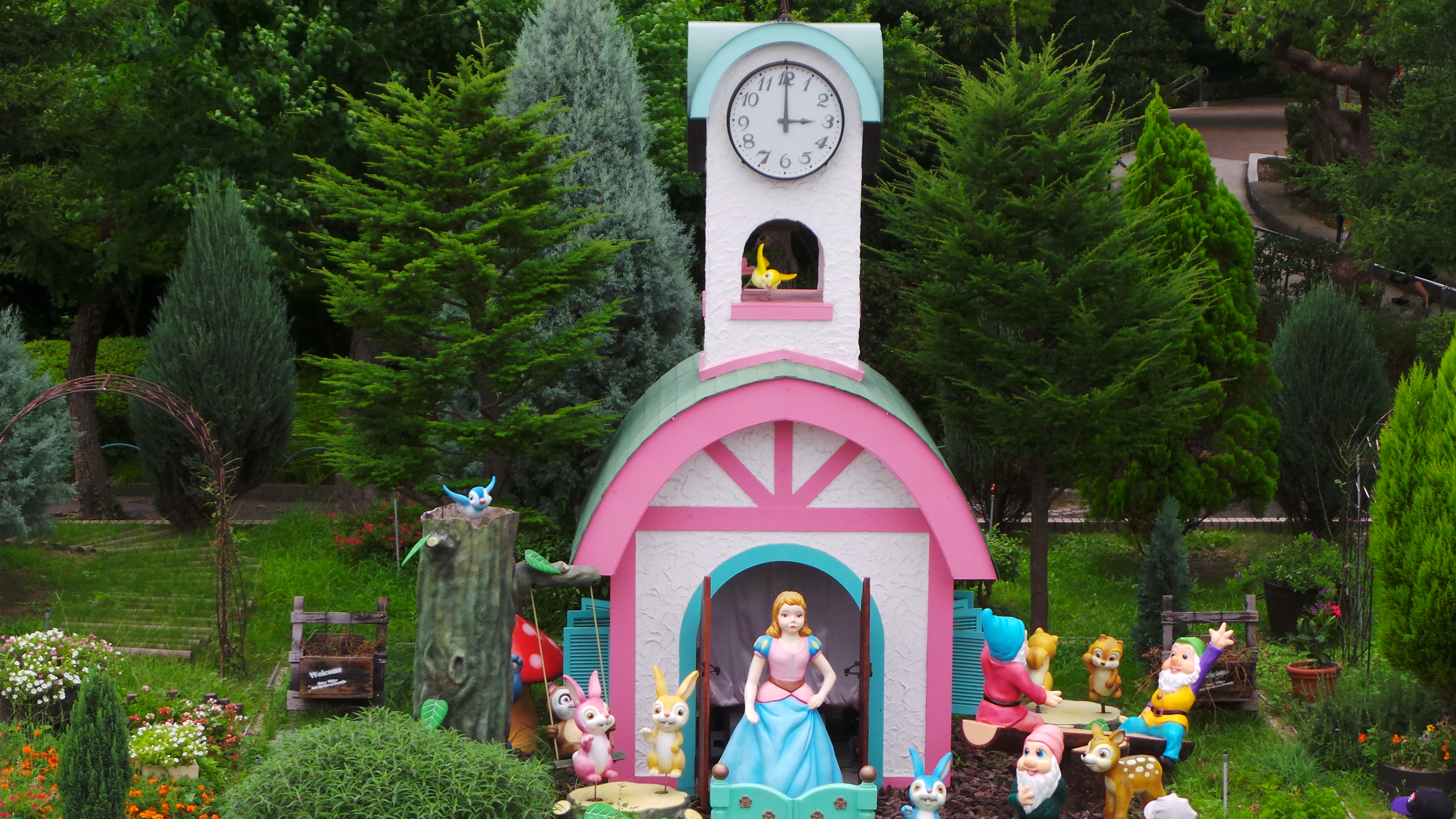
I head back out into the scorching sunshine. At the end of the shopping street is a zoo, complete with a Snow White Clock Tower. The time is now ten to three in the afternoon, so I decide to wait and see if anything happens on the hour. My life is that exciting. Sure enough, at three, everything starts moving, singing, and dancing, and then Snow White emerges from the clock. Not to be missed—the Tennoji Zoo.
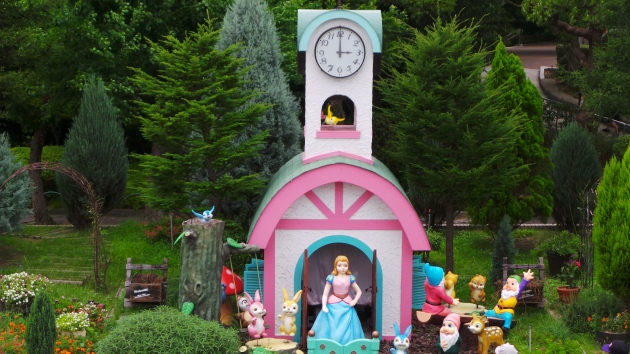
snowwhite

At Tennoji Station, I board what I believe is the Osaka Loop Line. As it turns out, it isn’t. After three stops, everyone disembarks. I find myself disoriented; there are no signs indicating my location. I board the train across the platform, which indicates it’s the Rapid Service bound for Nara. Fortunately, it stops back at Tennoji Station. Returning to where I started, I board the Osaka Loop Line to Osaka. From there, I transfer trains to Shin-Osaka, before deciding that six trains in a day are plenty.

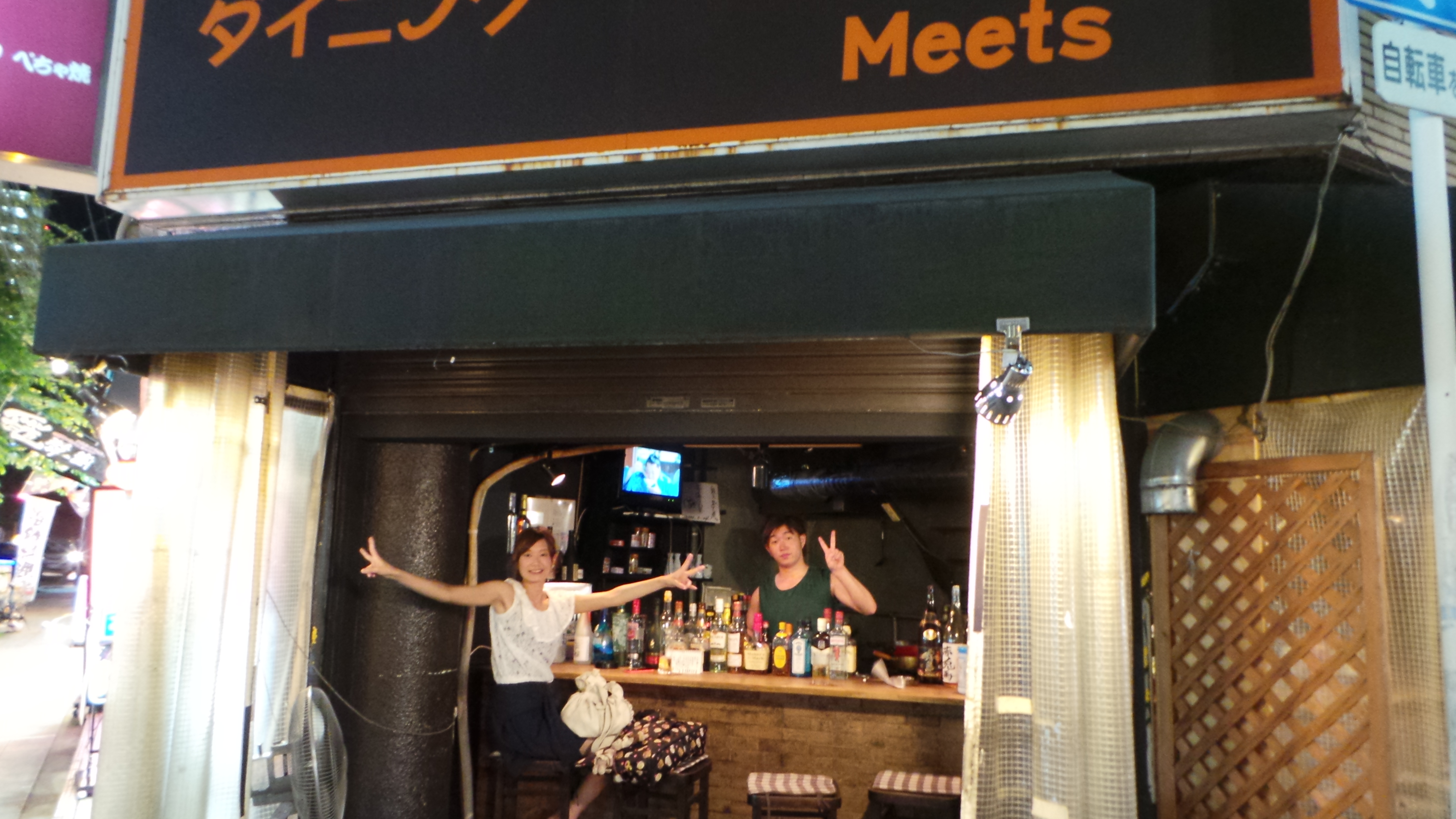
Back at the hotel, I read for a while before sorting through my photographs of the day. I stare at the sign I saw in the bookshop, advertising that same bar. I decide to head out and see if it is open tonight. I walk ten minutes to the bar and am pleased to see its shutters up.
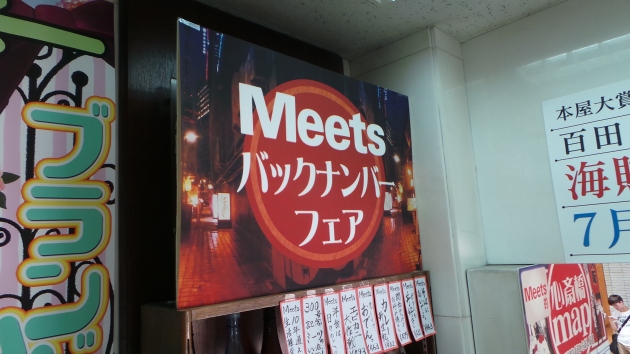
meets2

I first visited Meets when I was in Osaka in July 2012. The bar is L-shaped and has a total of seven seats. That night two years ago remains my favourite nightlife experience in Japan. Despite its small size, there were two members of staff working there: a man, and a young woman who bore a striking resemblance to Jennifer Aniston. I spent the whole evening talking to her. However, she didn’t speak a word of English, so we conversed in turns using her smartphone translation application. She would speak in Japanese, I would read the text, and then reply in English, and so on.

Anyway, back to today. Only one member of staff is working, a Japanese man called Ken. He’s the same guy who was working that night two years ago. I order a Suntory whisky highball and take a seat. I’m the only customer; a baseball game is playing on the television. At 8:50 p.m., Ken switches the television channel from baseball to the ending credits of a random show whose name I might never know. On-screen for no longer than three seconds appears Micaela Braithwaite, the woman I greeted in Fukuoka. I can’t snap a photograph fast enough.

The bar I saw advertised in a bookshop today, and he changes the channel at that exact moment. Ten seconds later, the credits stop and the adverts begin. What are the chances? Sometimes, it feels like I’m living inside my own memories. “I’ve worked here for three years now,” Ken tells me, chipping in with small talk.

Next, a girl named Mana enters the scene. She is from Taito, the same ward in Tokyo as Asakusa; we are practically neighbours, though a million miles away from home. We drink. Ken writes all of our names in kanji, while I write them in hiragana and katakana. We continue drinking. Mana and I talk about Asakusa, although our conversation is limited to basic English and basic Japanese. Unfortunately, there’s never a smartphone translation application around when you need one.
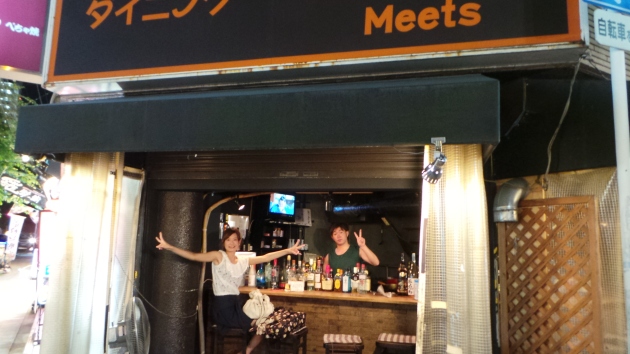
meets3

At 10 p.m., I finish my final highball, bid goodbye to Mana, and say farewell to Ken. My bill comes to ¥2500 for four singles and a double. “See you in two years,” I tell Ken, jokingly.

After Meets, I attempt to find some food; I haven’t eaten anything since the fish on sticks. The area around Nishinakajimaminamigata Station is littered with touts, neon lights, and shady massage parlours. I’ve been craving curry for perhaps a week. The first restaurant, simply named ‘Indian Restaurant,’ displays ‘Last Orders at 11:30 p.m.’ As I approach, the Japanese chef who’s taking in the sign informs me that they are closed.

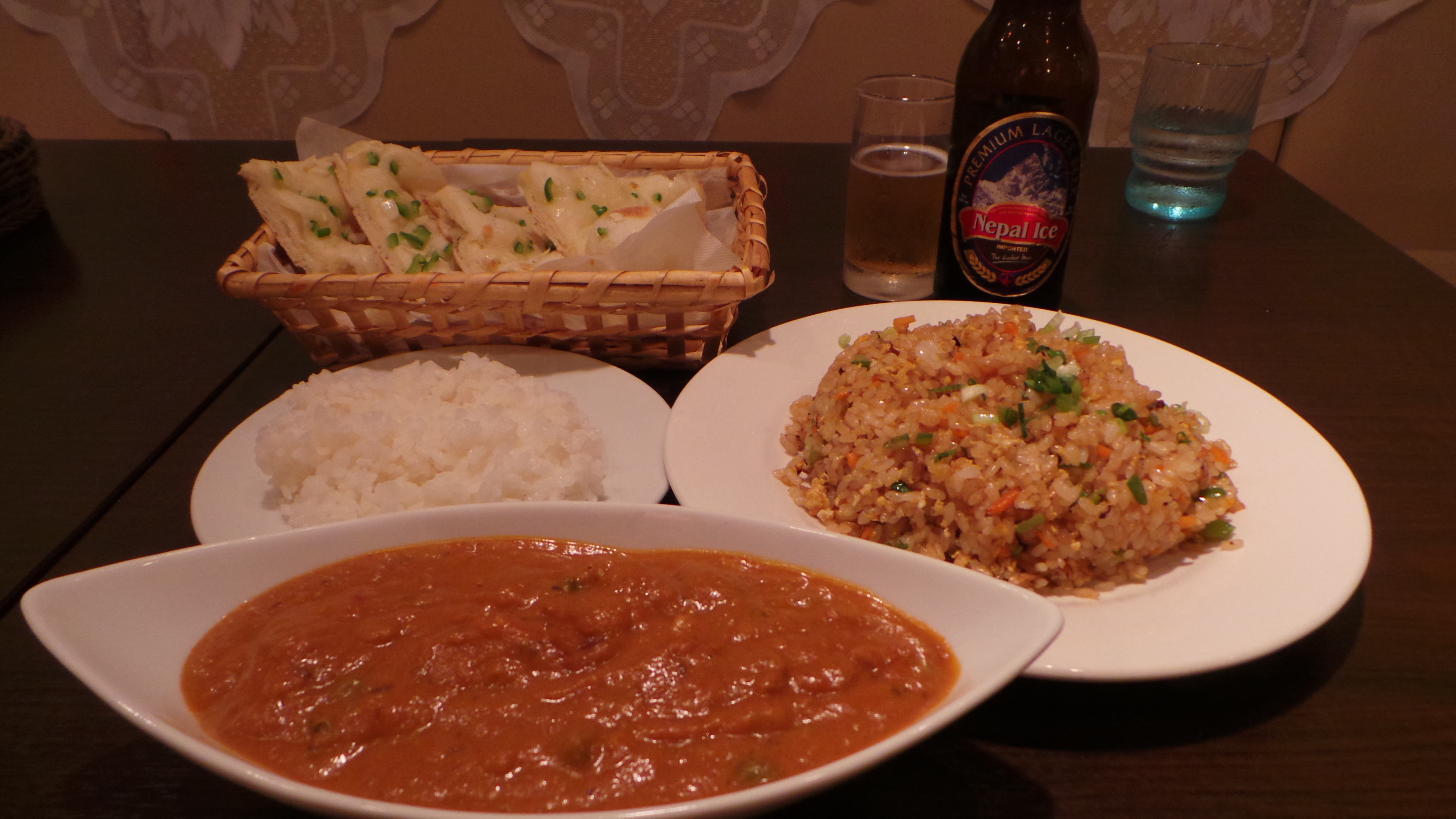
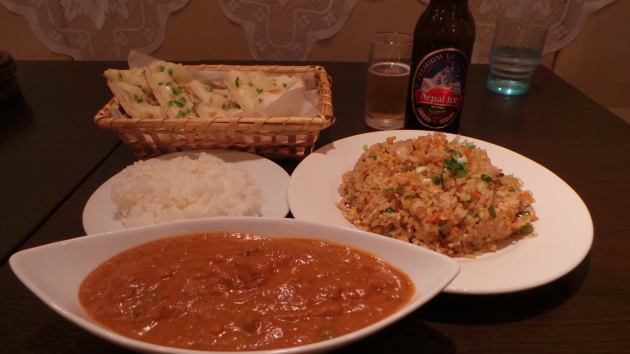
The second restaurant is owned by a Nepalese family and is open. Inside, I order a bottle of ‘Nepal Ice,’ having never tried it before; do as the Nepalese do, and all that. The beer boldly claims to be the ‘coolest beer.’ It’s pale with a slight bitterness, just like me.

I order the classic vegetable curry, egg rice, and garlic naan. The Nepalese waiter speaks English but habitually addresses me in Japanese. “Poppadom,” he says as he hands me a spicy poppadom.
“Arigatou gozaimasu,” I reply in Japanese, out of habit. The poppadom is a little stale but spicy; it will do. Hopefully, it isn’t a taste of things to come. The muskiness is slightly drowned out by the spice, and the spice itself is drowned out by the Nepal Ice.
nepalcurry

My food arrives, and I order a second bottle of beer. The spice level is almost perfect—perhaps it could be a tiny bit hotter, but I don’t mind much. I pay ¥2350 for two drinks and a really good curry.

Height of the Lifting Tread

Today, I woke up at 4 a.m. My sleep pattern is completely messed up from spending a week in a fourteen-bedroom dormitory room, constantly being disrupted by shuffling, case repacking, and inconsiderate chicken eaters. Anyway, for the next seven nights, I’ll be enjoying the luxury of a lonely hotel.

With little else to do, I decide to take a look at Japanese television for the first time in months. Honda is launching an aeroplane, the HondaJet, which might as well be a spaceship considering its appearance. Cristiano Ronaldo is advertising some weird gadget that you roll on your body, perhaps to release muscle tension, but its exact purpose remains unclear. A baseball match is rained off. There’s a game show where a member of the girl idol band AKB48 is being chased down a street by one hundred convicts who escaped from prison vans. Hilarious. I switch the TV off.

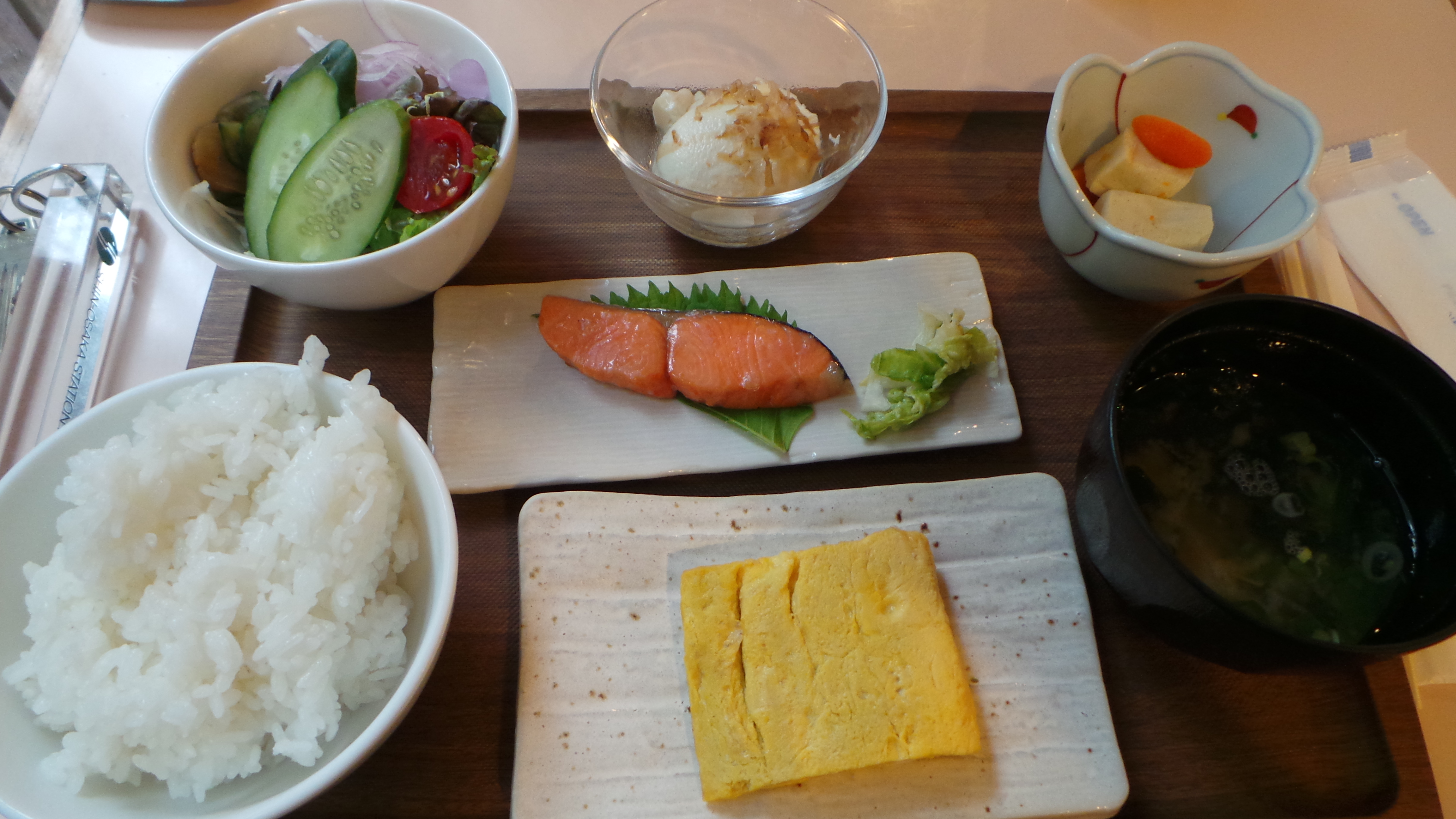
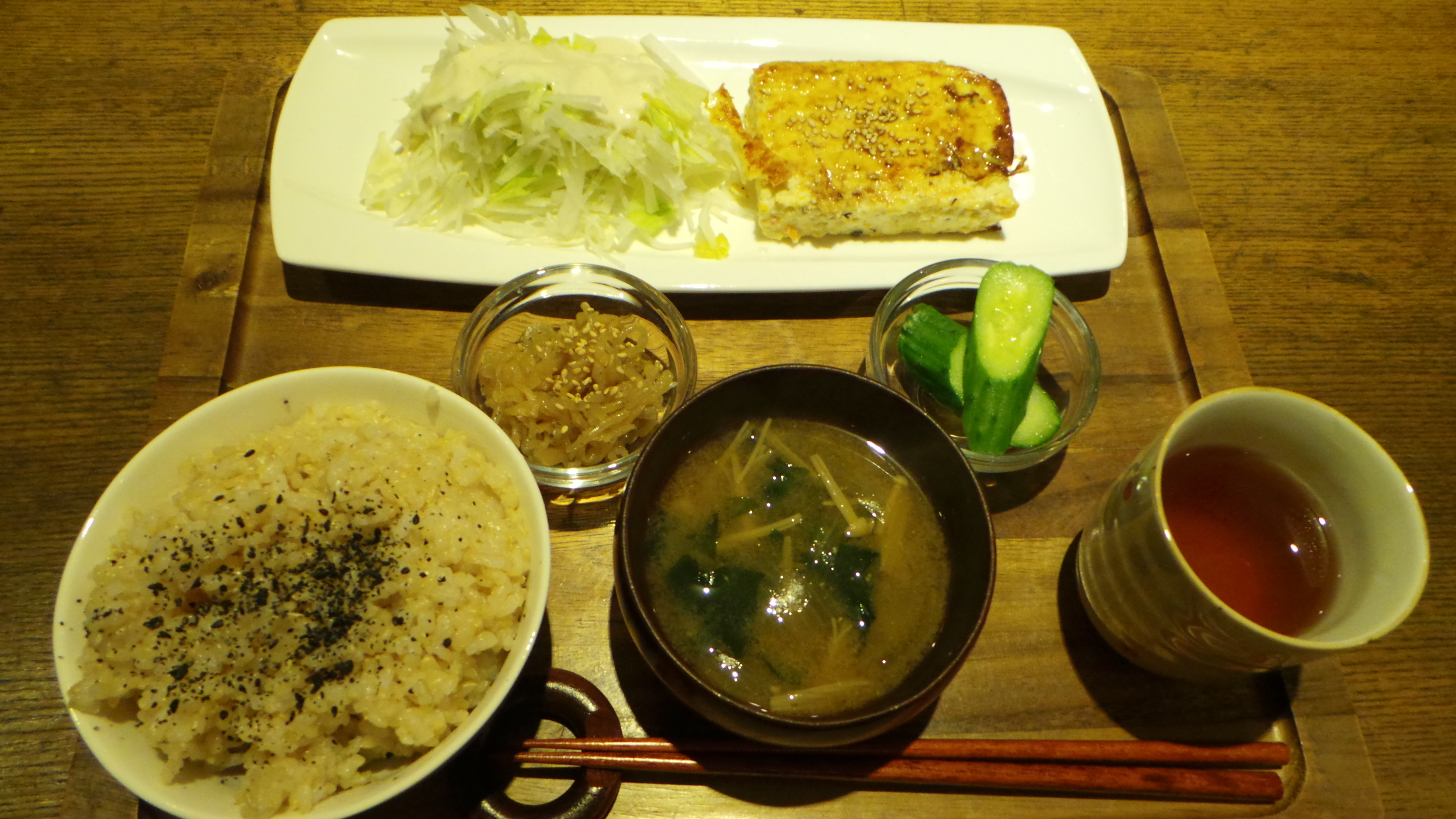
At 7 a.m. sharp, I head down for my ‘free’ breakfast. I am greeted by warm smiles, fastidious service, and first-class hospitality. My breakfast comprises a Japanese-style omelette, grilled fish of the day (salmon), salad with homemade dressing, cooked seasonal vegetables, homemade tofu, white rice, homemade pickles, and a pot of miso soup. Additionally, I help myself to drinks; opting for orange juice over coffee.

japanesebreakfast

The breakfast is a success, fitting my pescatarian diet as well. I enjoy everything except half of the tofu; it’s never been my preference. Although the rice and miso soup are self-service, allowing me to have more, I opt not to be greedy. Feeling satiated, I return to my room to read, but I find myself dozing off.

I wake up again just after 11 a.m.; I must have been really tired. I dry my shoes with a hairdryer, and ten minutes later, I’m out the hotel door, umbrella in hand. It’s the kind of hotel where you have to hand in your key at reception every time you leave. Works well for me—I hate carrying bulky hotel keys around anyway.

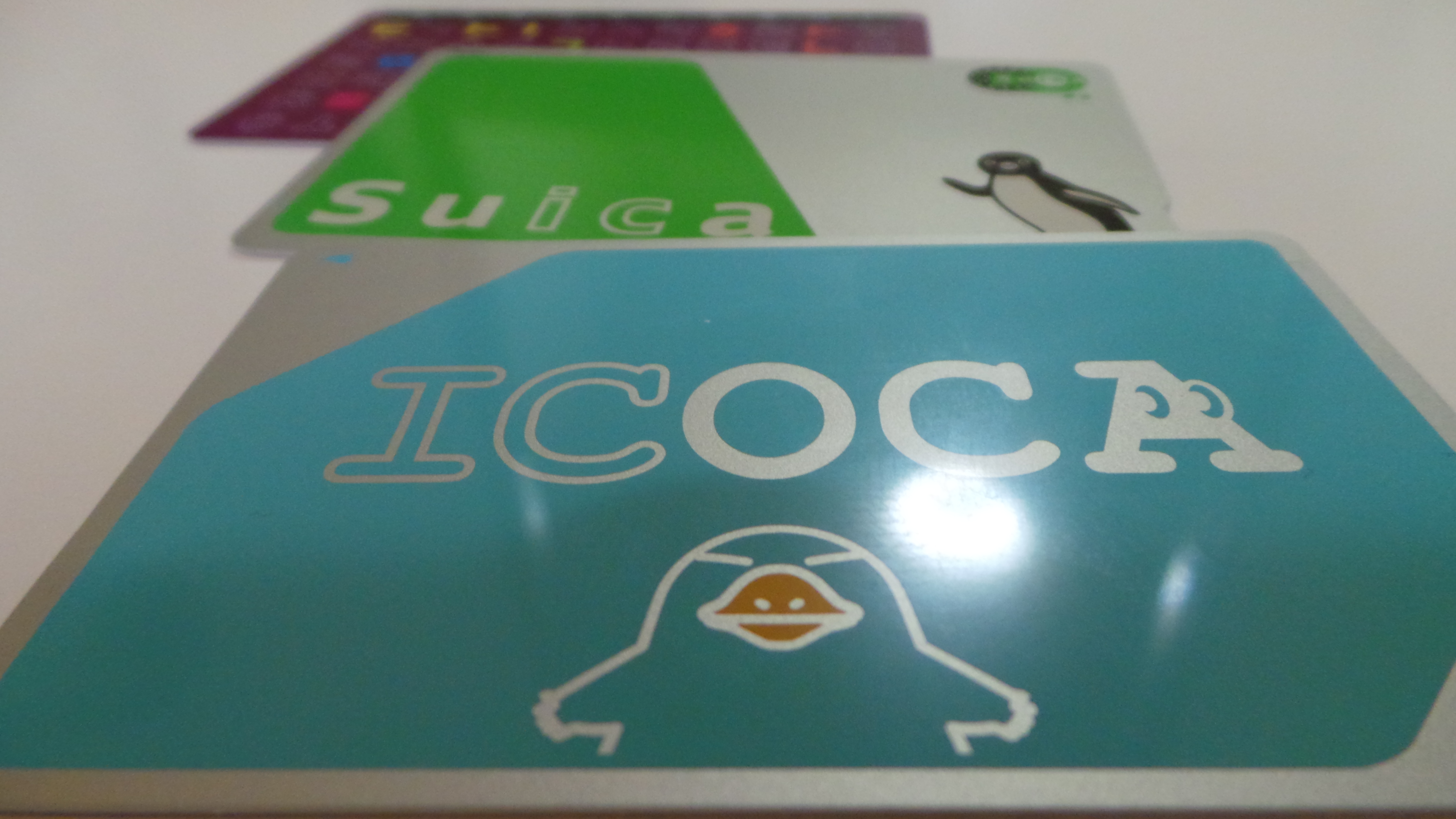
Outside, I take a train to Osaka Station for ¥160. Unfortunately, my Suica card randomly stops working, so I’m forced to buy an Icoca Card, the Osaka equivalent. The Icoca card is light blue and features Ico the Platypus. These cards often contain hidden puns. The ‘Super Urban Intelligent CArd’ is a play on the word ‘suika,’ meaning watermelon. ‘Sui sui’ is an ideophone signifying smooth movement. Much like a penguin swimming effortlessly in water, my card usually allows me to glide smoothly through the ticket gates—except when it randomly stops working at the gates.

20140806_091934

At Osaka Station, the Muzak drives me crazy. I keep hearing the same songs over and over. There’s this one Japanese song with a female vocalist and an incredibly catchy melody. I might even say I like it and want to find out its title. However, my issue is that every time it plays, it’s too quiet for me to catch any of the words. As usual, the tune will be stuck in my head for the next few hours, the jaunty music swirling around my head like a relentless earworm.

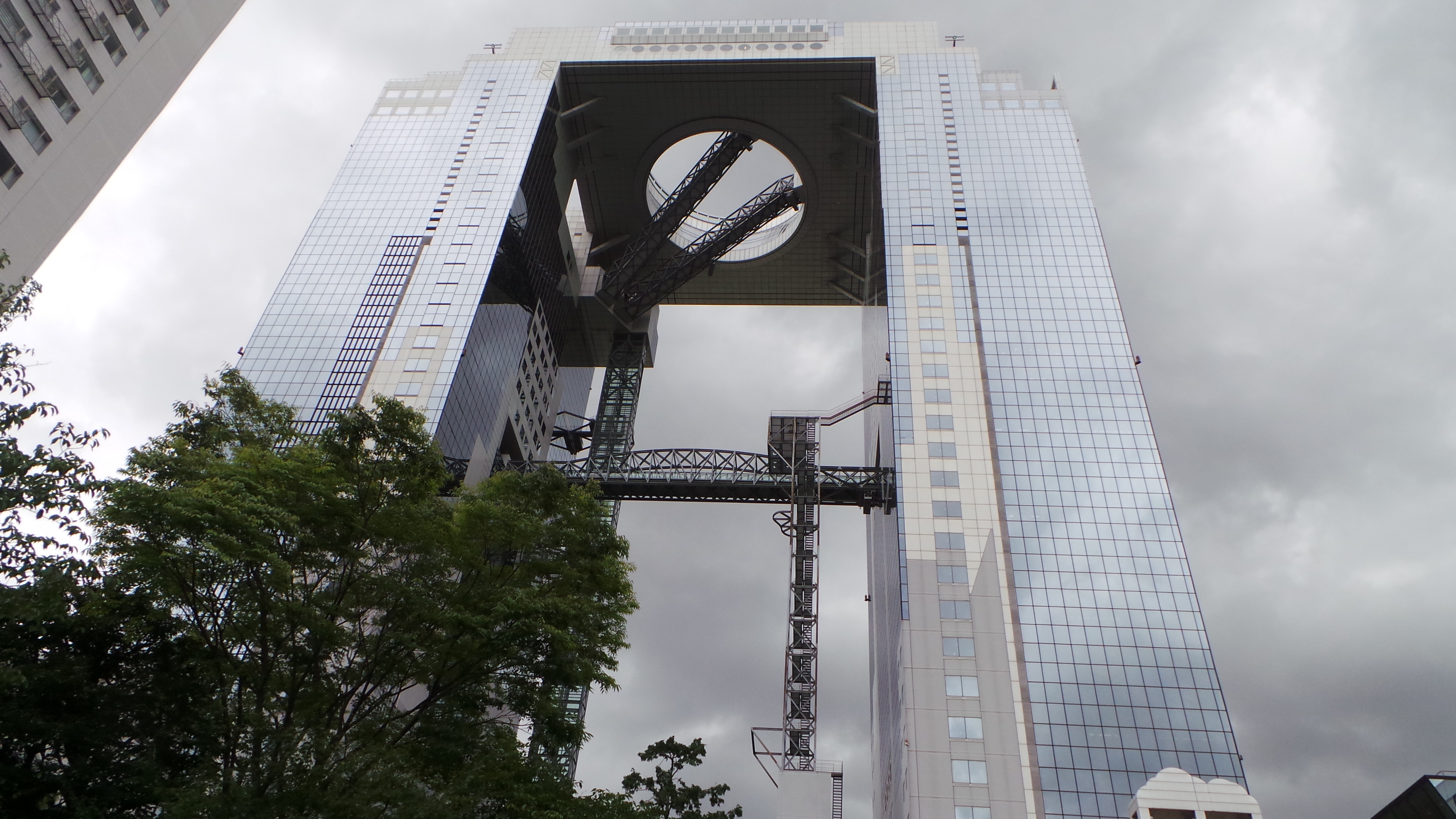
I escape the torture of the train station Muzak and head straight for the Umeda Sky Building. As I arrive, the rain stops. Just great — now I have to carry around a useless umbrella all day while humming the melody of that song. Spotting a sign for ‘Fun Fun Plaza’ cheers me right up.

skybuilding

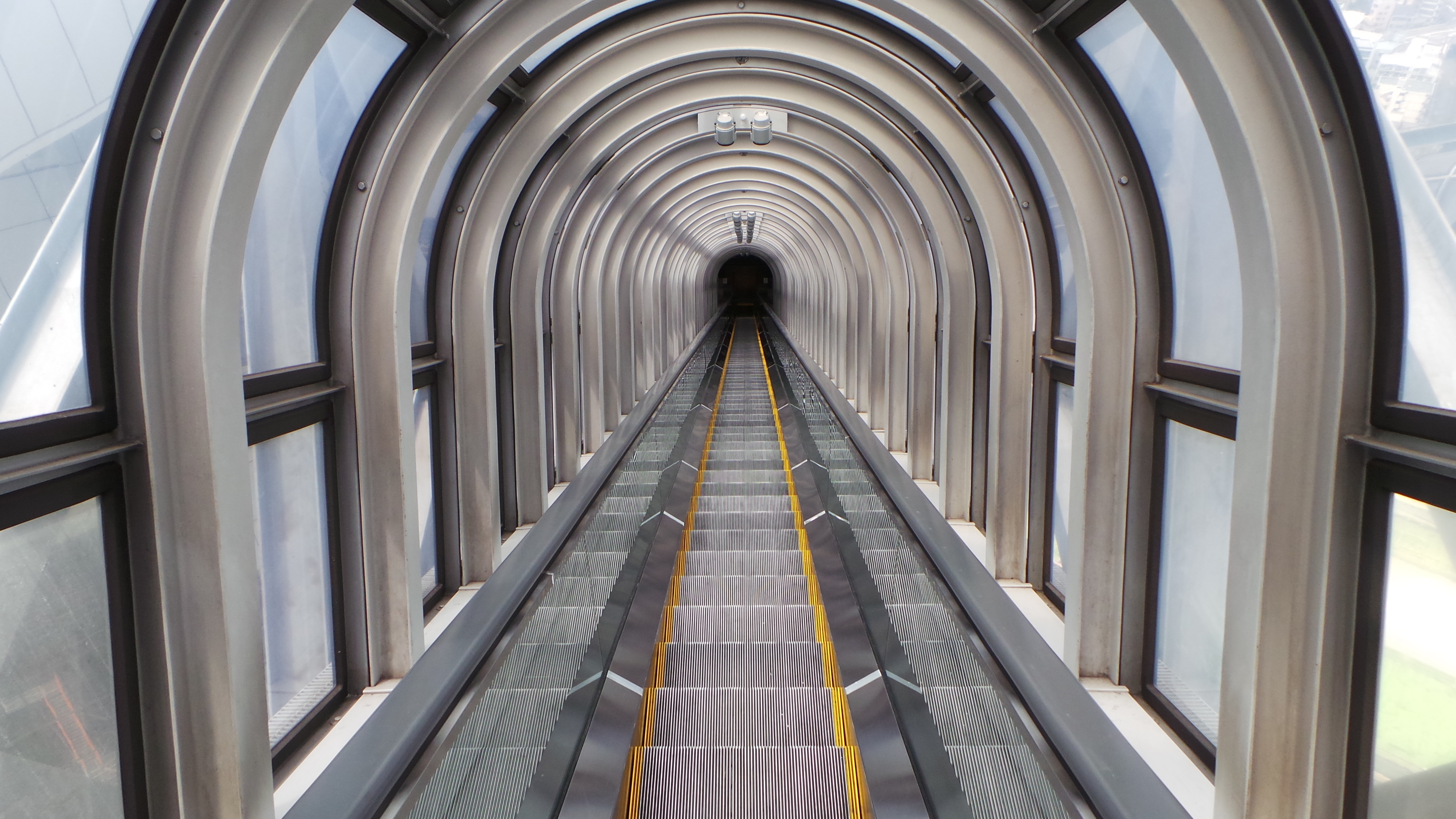
At the base of the Umeda Sky Building, there are numerous beautiful, well-cared-for gardens, and fountains. The building comprises two 40-storey skyscrapers connected near the top by two escalators that appear to float in mid-air. The rooftop terrace forms a floating sky garden.

To reach it, I have to take a glass elevator to the 39th floor. Interestingly, the building was designed by Hiroshi Hara, the same architect behind that lovely roof in Kyoto Station. Once I reach the 39th floor, I’m left with no option but to step onto the escalator. As my foot touches the moving walkway, I freeze. I could walk along the escalator and end this ordeal sooner, but I’m unable to move. The very top of the escalator stands at 173 metres above ground.

esc2

On the other side of the escalator, a woman greets me at reception, and I’m required to pay ¥700 to access the sky garden. There are various informative signs around. Interestingly, in 2008, Dorling Kindersley of ‘The Times’ newspaper mentioned that the Umeda Sky Building was among the top 20 buildings in the world, ranking it alongside the Parthenon and the Taj Mahal.

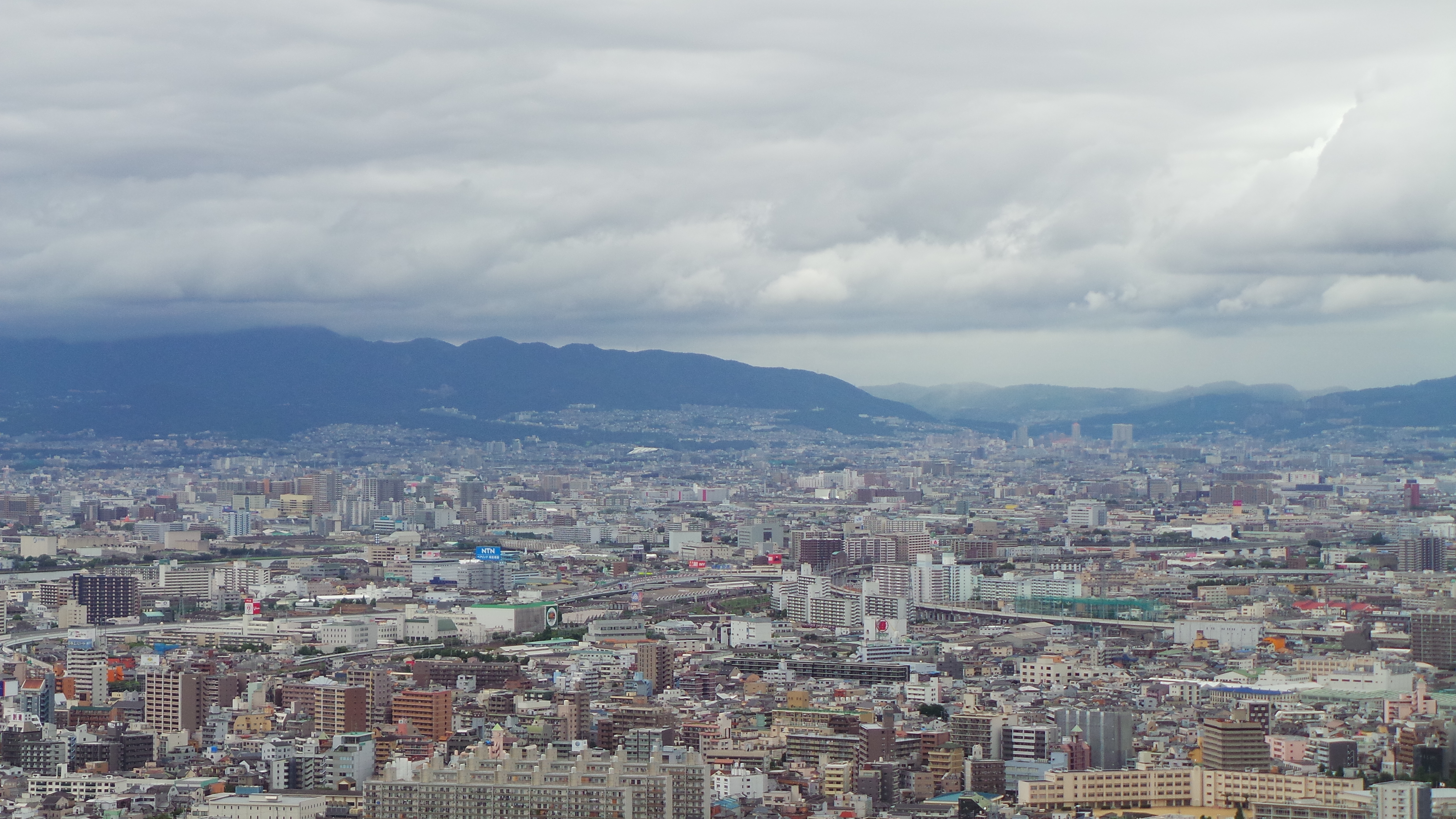
The route up to the sky garden showcases the history of tall buildings from the past, present, and, rather confusingly, the future. There’s information about a sky city in space, accompanied by to-scale models and concept artwork. The sky garden itself provides a complete 360-degree panoramic view of Osaka. Unlike other tall buildings or towers, the sky garden is outdoors, offering unobstructed views without reflective glass to spoil the magnificent scenery.

viewfromthesky

The strong winds up here feel incredibly refreshing. I snap a few photographs and leisurely stroll around, prolonging the inevitable return via the escalator. Eventually, it’s time to leave. As I traverse the slow-moving escalator steps again, surprisingly, it feels less challenging. I attempt to admire the view through the glass panels but struggle to focus. Descending in the see-through elevator, I decide that I’ve had enough of heights for the day.

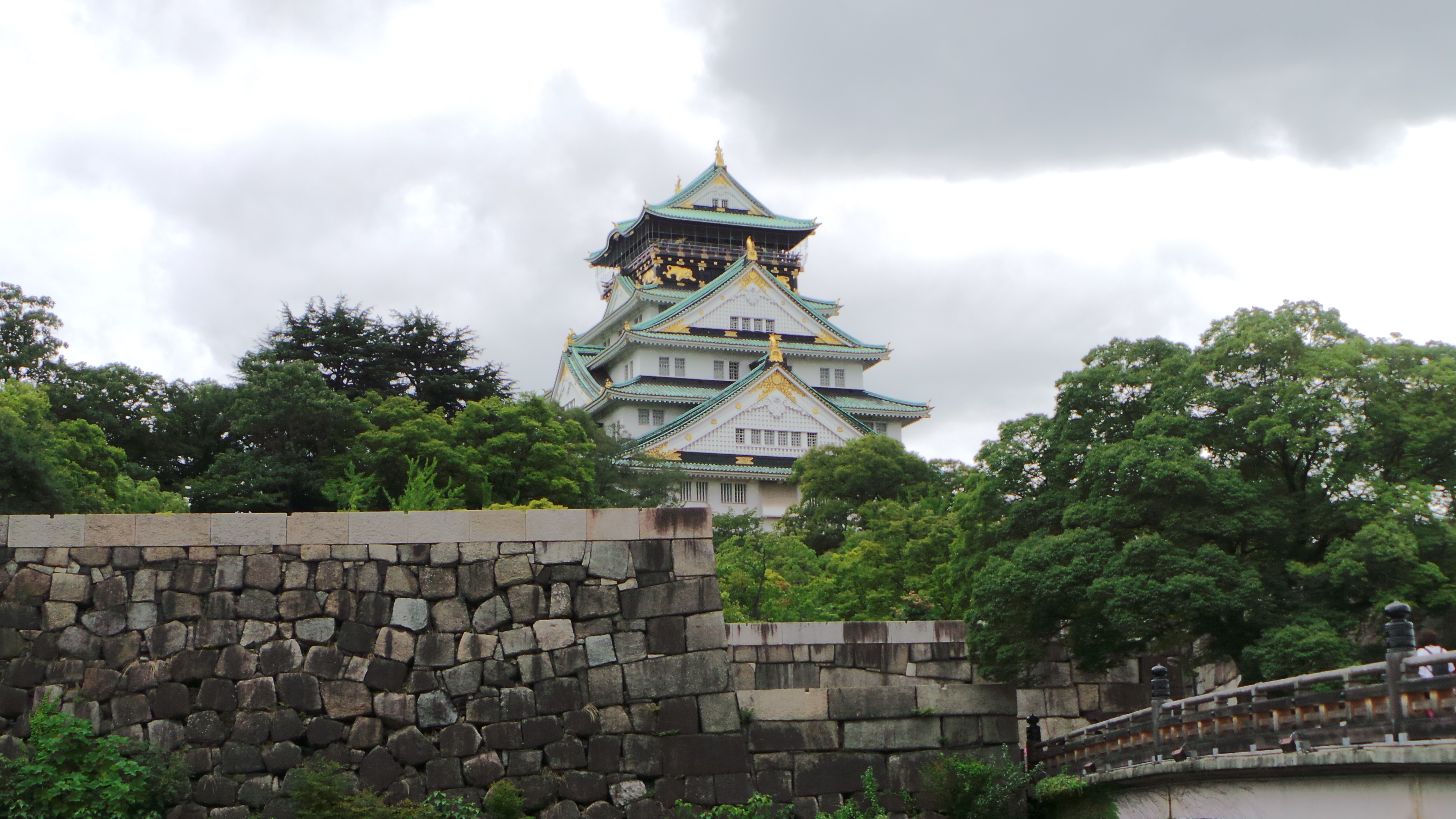
My next stop is Osaka Castle. I return to Osaka Station, take the loop line, and reach my destination, another ¥160 fare. Perched on stone and surrounded by moats, Osaka Castle sits at a considerable elevation. As usual, I climb numerous stone steps and finally reach the castle’s exterior. Unfortunately, someone has installed a small elevator and escalators that slightly obstruct the view from one side. Fortunately, I approached from the opposite direction and captured an unspoiled photograph. The castle is like a ‘TARDIS,’ appearing to have five stories on the outside but revealing eight stories inside. Very odd.

osakacastle

After visiting the castle, I take the trains back to Shin-Osaka. Upon reaching the hotel, I collect my key and am pleasantly surprised to receive a breakfast token for the next day—amazing, another free breakfast. Passing some time, I decide to take a short nap. At 6 p.m., I head out for dinner. Earlier, I had researched a nearby place that offers vegan food within walking distance. With my bearings in place, I cross the tracks and turn left at the graffiti

I find the restaurant with ease; it’s right next to Nishinakajimaminamigata Station. I take a seat inside, the only customer. The male owner is very welcoming but doesn’t speak English. A woman with a dog walks in, the owner’s wife. I already knew the restaurant was owned by a middle-aged couple. Independently run, organic, and vegan-friendly—although I’m not a vegan. I point vaguely at the menu, “Yasai,” I say, not quite sure what to expect.

veganosaka

The food looks amazing. As I take out my camera, the man who served me, also the chef, laughs and says, “Douzo,” indicating that I’m welcome to take a photograph. This is the first time I’ve been served brown rice, and its taste oddly reminds me of porridge, much better than the ‘dead’ white rice I’m used to. The main part of my dish puzzles me; it has a texture similar to quiche but without the pastry. It could be tofu, but I’d be very surprised; tofu could never taste this good. I pay just ¥880 for what turned out to be a really nice meal.

After eating, I head back to the hotel for another considerably early night.

Gion with the Finned

Today is my last day in Kyoto. Tomorrow I will go to Osaka for three days, before heading off to Nagoya. I still have one temple I want to see, a temple with a difference. I head through the arcade, the same French song is playing that I’ve heard about four other times this week. I know the song but can’t recall the name. There is a pachinko parlour with a picture of Rowan Atkinson on the advertising board. There is also a strange mascot wandering around the arcade, promoting a festival here this evening.

I start by walking through a district called Gion. Gion is the most famous place in Japan for spotting geisha, although here they use the local term ‘Geiko,’ which translates to mean a ‘person of the arts.’ Gion is filled with numerous traditional old streets lined with even older houses, alongside a mix of theatres and other traditional entertainment.

old_style_houses[1]

I head up the mountainside to my last Kyoto temple, Otowa-san Kiyomizu-dera, a UNESCO World Heritage Site and one of the seventeen Historical Monuments of Ancient Kyoto. There are some very interesting things to do here. One of them is walking from one sacred stone to the other with your eyes closed. If you succeed, you will supposedly be lucky in love. Another, which is actually prohibited now, is the chance to jump from a 13-metre-high stage. Surviving would mean your wish would be granted. This tradition dates back to the Edo period, where the survival rate was 85.4%.

The main reason I came here, though, was to experience the ‘womb’ of Daizuigu Bosatsu. This occurs not in the main temple building but in the smaller Tainai-meguri Hall. It costs me ¥100 to enter. I take off my shoes and walk down a few steps, all the while holding onto the handrail made of prayer beads. Beyond the steps, I take a right turn and enter a room of complete darkness.

wombtemple[1]

Daizuigu Bosatsu, a female Bodhisattva, possesses the mystical ability to fulfill any human wish. Alone, I navigate through a labyrinth of corridors shrouded in an abyss of blackness so consuming that it swallows all semblance of light. Oddly, it is somewhat peaceful, yet simultaneously horrifying. After an eternity of carefully navigating through the darkness, a distant glimmer pierces through the shadows—a radiant stone. It is at this stone that I make a wish.

Once outside, I continue to wander through this vast temple complex. Here, there’s a natural water spring available for ¥200, but I opt not to drink from it. After sufficient exploration, I decide it’s time to head back; the heat becomes a bit too overwhelming for me. As I descend the mountain, I catch sight of an incredible, bright red shrine: Yasaka Shrine.

lego[1]

My next destination today is along the Takase River, at The Birthplace of the Japanese Motion Pictures Industry. Inabata Katsutaro showcased the first experimental film in Japan. Following his visit to Paris in 1896 to attend the Paris Exposition, he returned to Japan with a cinematograph he acquired from the French inventor Auguste Lumière. In 1897, he screened the film in the garden of the building.

Unfortunately, the building is closed today.

I feel a little hungry and decide that today I’ll try grilled eel for the first time. After wandering for a while, I finally find the place and take a seat in the restaurant. There are probably eight or nine other people eating here. The restaurant plays no music, and there is absolutely no ambiance. Nobody talks either; everyone just sits in silence with their grilled eel, as if waiting for the end of the world.

eels[1]

The menu is a little pricey, so I opt for the small grilled eel on rice with pickles. It arrives with a teapot full of hot green tea. Had I known, I wouldn’t have ordered a beer. The dish, called ‘Unadon,’ is delicious. It’s not what I was expecting; the texture is somewhere between meat and fish, and the soy-based glaze is delicious. Even the rice is good; I savour every grain. In total, it costs me ¥2800, an expensive treat.

I head back to the hostel for a short while to write before heading out again for the Kyoto Tanabata Festival, which starts at 6 p.m.

The festival stretches all along the Kamo River, hosting around one hundred small stalls selling various Japanese snacks, little gifts, and the usual souvenirs. Dubbed the ‘Star Festival,’ it’s said that writing your wish on a special piece of paper here will magically make it come true. One side of the festival is adorned with paper lanterns, while the other side is lined with lanterns made of reflective coloured paper.

tanabatafest[1]

At the entrance to the festival, a female performer is essentially doing karaoke, while at the other end, people dance to music on a stage. For no apparent reason, one guy is dressed as a polar bear. As nothing particularly interests me about the festival, I walk its length and then leave.

I head back to the hostel, up to the roof terrace, to read my book.

The evening sky looks like the end of the world.

endoftheworld[1]