International Food and Beverage Exhibition

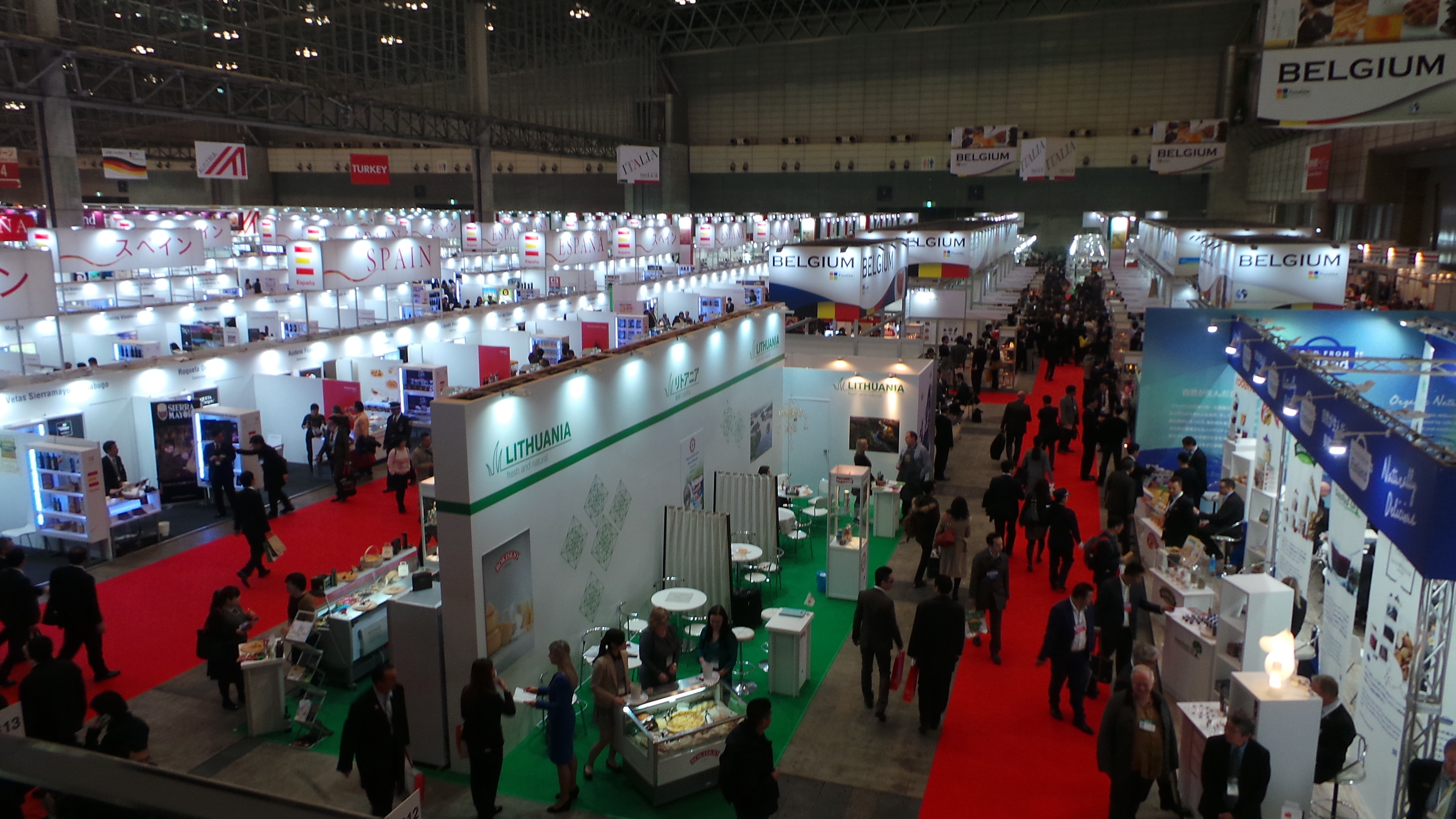
Today, I am at Makuhari Messe Convention Centre for Foodex Japan. In its 40th year, the event stands as the biggest trade show for food and beverage in Asia, featuring three thousand exhibitors from seventy-nine different countries. I received a private invitation, allowing me to hand over a business card at the entrance and receive my journalist pass, thus saving me the ¥5000 public entry fee. The first challenge I encounter at the event is their strict no-photography policy. They even threaten ejection from the event for anyone caught taking photographs, sneaking in animals, or attending solely for free food and drink.

Naturally, I adhere strictly to the rules, refraining from releasing any concealed animals into the exhibition halls or taking sneaky snaps of the event from a balcony above.  And, of course, my primary purpose for attending is certainly not to indulge in the free samples of food and drink offered by the three thousand exhibitors. Today, all food and drink are complimentary, with stallholders actively encouraging me to sample their offerings.
foodex5

I start with cheese. I seldom eat cheese in Japan, so when given the opportunity to be an official judge in a packaging and taste competition, I seize the chance. The competition involves comparing thirty-one cheeses from Japan. Just as I’m about to get serious about my judging responsibilities, the comedian in charge reminds me to take it seriously before asking me to select a wooden stick from a box. “Careful for electric shocks,” the man says, “this is high technology, like a supercomputer.” So much for taking things too seriously.

The cheese I have randomly selected is a Brazilian cream cheese made in Japan. I assess the packaging (somewhat basic) and evaluate the unique selling point of the product (non-existent). Next, I can choose any two other cheeses to rate in comparison. I opt for two cheeses that I’m eager to try. Following the rating, a taste test ensues, providing me with the opportunity to score the flavour and determine the likelihood of a future purchase. Interestingly, the cheese I selected, which appears to be the most expensive among the thirty-one, turns out to be the worst cheese I have ever tried.

After savouring the cheese, I crave a drink, prompting me to head for a cup of tea.
foodex3

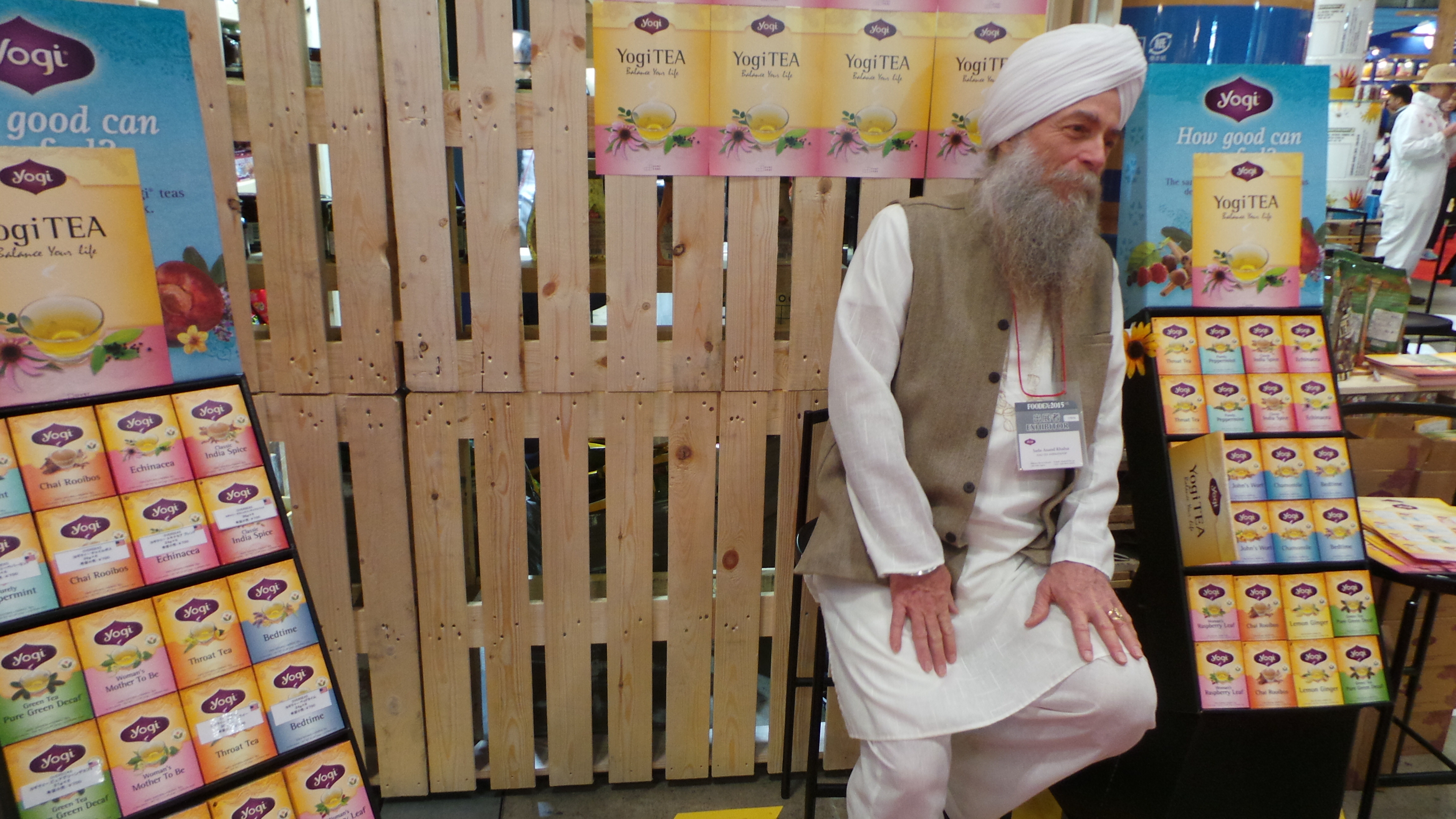
Unfortunately, the Yogi Tea stand offers their sample in the form of a tea bag. No hot water here. I have a chat with Sada-Anand Khalsa, a self proclaimed Yogi Tea Ambassador. His beard is better than mine, and his tea is apparently very wonderful. As I talk to him, he appears distracted, distant, and looks like he is about to fall off his stool. He’s probably had a few too many cups of his bedtime organic tea product, no doubt.

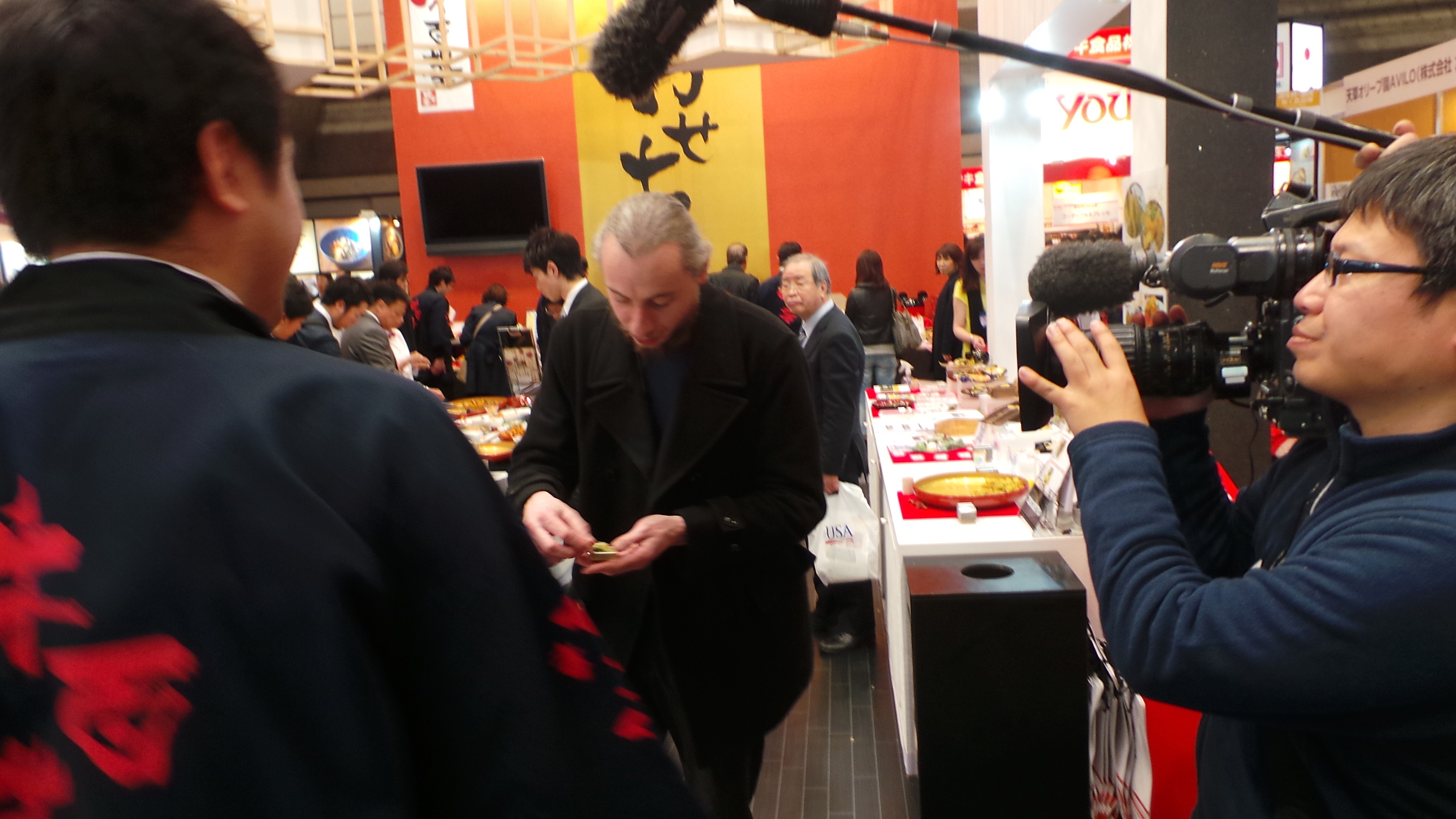
I continue exploring the red-carpeted route, treating myself to devil fruits and açaí berry smoothies. In Pakistan, I’m given the chance to try six-billion-year-old sea salt, and in Egypt, I indulge in some tasty salted peanuts. Upon reaching Japan, I find myself surrounded by microphones and cameras, as I become the subject of a television show—quite ironic, considering the event’s no photography or recording equipment policy. During the interview, I’m asked to sample Japanese food to capture my authentic reaction. However, they choose edamame, a dish I consume almost weekly, making it challenging for me to convey a genuine response to the familiar taste of beans.
foodex2

After the interview, I head to England to enjoy a scone. However, I notice that the stalls here are manned by individuals with uninviting expressions and disappointed faces. Unlike everywhere else I’ve stopped, where warm smiles and polite conversation welcomed me, it’s a different experience in England. Disheartened, I make the decision to leave and never return. Instead, I choose to visit the friendly land of Scotland for some delectable scallops. Later, I make my way to the welcoming Wales to enjoy a sample of a beer I’m already familiar with—Dark Side of the Moose.

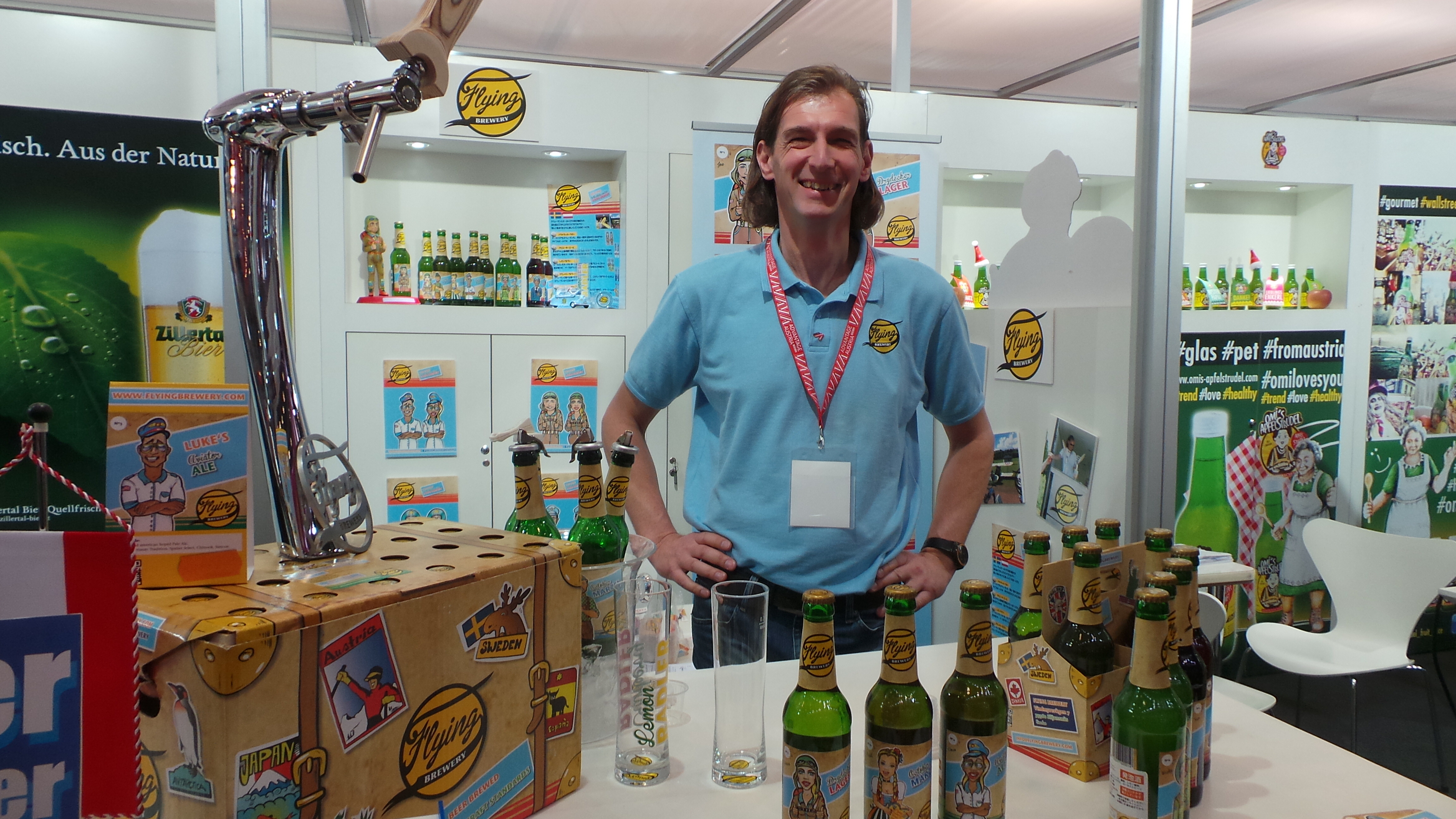
In Austria, I take a moment to chat with a friendly man about beer. The Flying Brewery proves to be wonderful and charming. After expressing a clear interest in sampling copious amounts of their free alcohol, the amiable man turns to his colleague and exclaims, “He wants to try them all!” This marks perhaps the turning point in my day, leading me into the delightful world of free alcohol. The beers here are fantastic, and I relish each and every one. The brewery even gifts me a set of twelve coasters and poses for a photograph. While a part of me considers that the journalist pass around my neck might have influenced their hospitality, another part of me believes that they are genuinely kind and passionate about their craft.
foodex4

With an ever-increasing thirst for beer, I head over to the only place that can satisfy my taste: Belgium. After wandering around in beer heaven for about an hour and sampling familiar delights such as Stella Artois and Hoegaarden, I move on to some of my favourite drinks—Delirium Tremens, Kriek, and Chimay.
“One more glass, sir?” says the man at the Chimay stand.
“Why, thank you, sir,” I reply, feeling very humbled and slightly drunk.

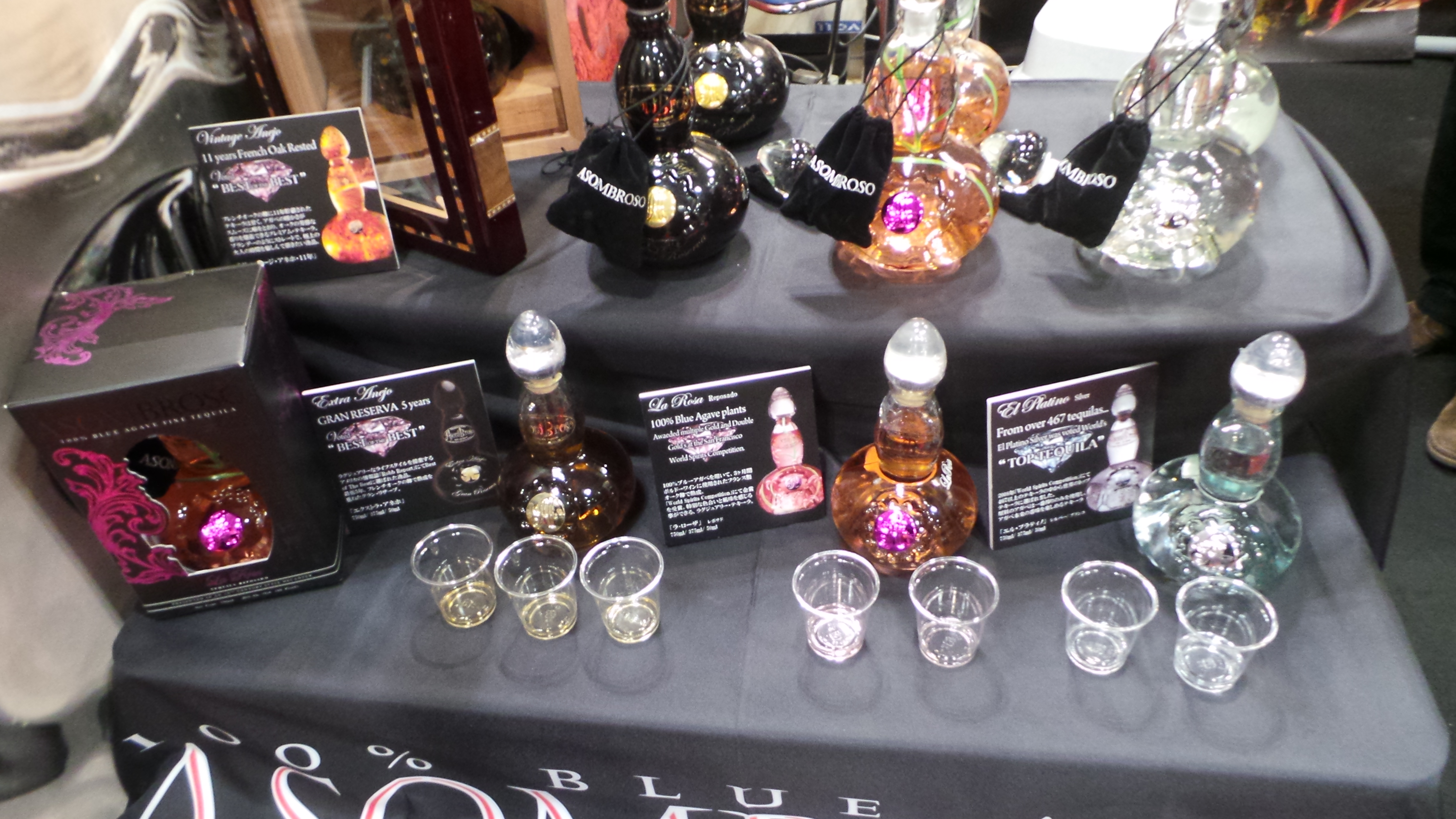
I continue to explore, observing snakes in bottles of miscellaneous liquid and engaging with companies solely present at the event to secure a Japanese distributor. After a bit of stumbling, I find myself in Mexico, enticed by amusingly shaped bottles of expensive tequila.
foodex1

AsomBroso is a luxury tequila from Tequila, Mexico, and one bottle costs around ¥7000. After sampling a small glass, I strike up a conversation with the friendly man manning the booth. A simple mention of the word ‘journalist’ earns me a second glass and an invitation to take a photograph of his display. The tequila is, in fact, the best I have ever tasted—good quality stuff.

In Finland, I chat with a nice lady about the health benefits of bilberry. In Indonesia, I indulge in fresh tuna sashimi. Thailand offers me samples of multiple hot sauces served with various delicious canapés. However, my favourite dish of the day comes from Malaysia—shrimp noodles in a spicy sauce broth that comes with a strong warning: ‘Extremely hot, eat carefully and very slowly.’ As I wander through multiple stores offering sweets, dried fruits, organic chocolate, and health products, I somehow take a wrong turn and end up in Australia. Unfortunately, there’s no attention from the yawning people here, no free samples, only misery.

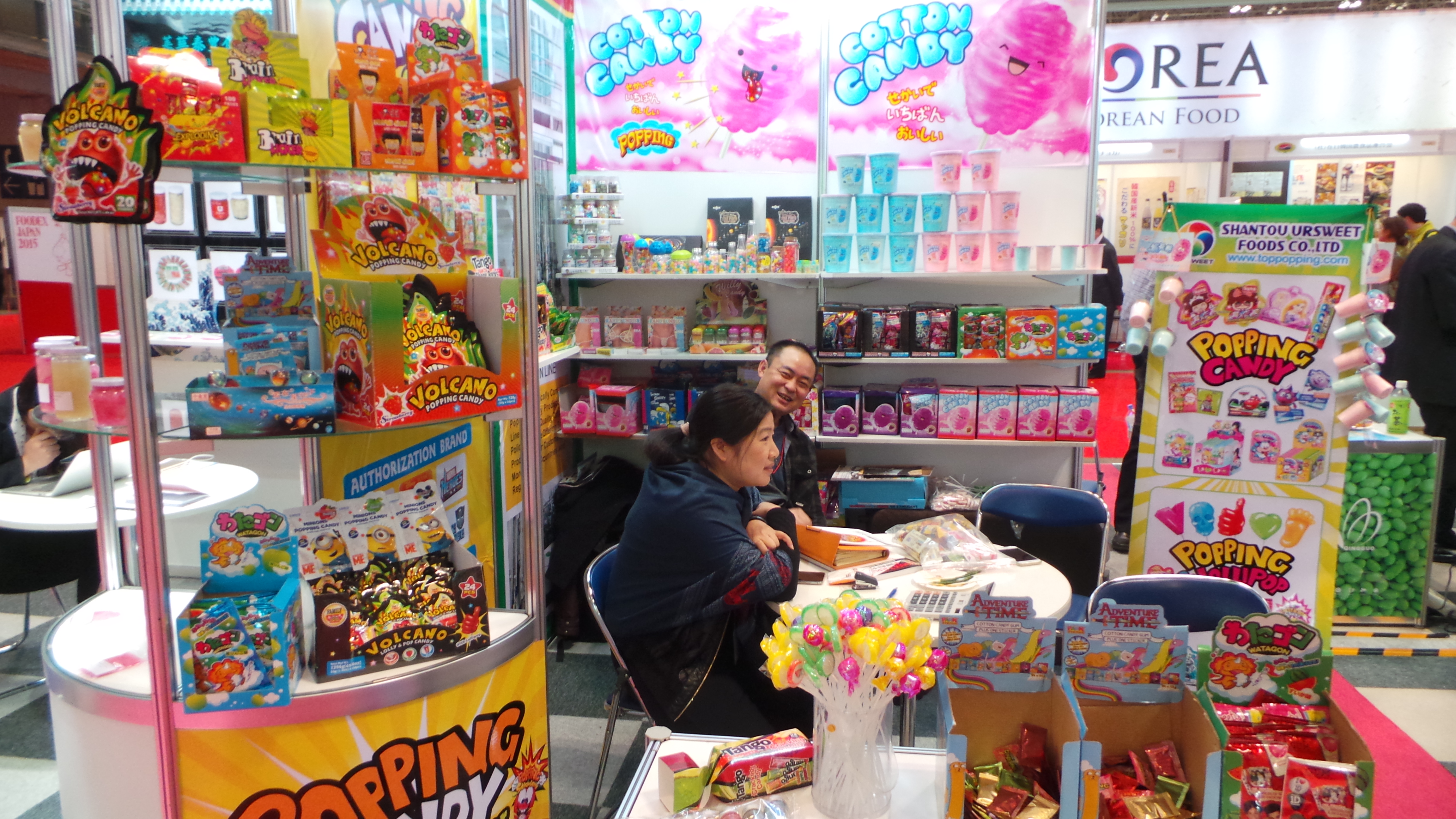
Finally, I explore what China has to offer. I am surprised by the contrast between China and Australia; the politeness expressed by the people here at such a late time in the day, and the complete lack of yawning and misery is a big surprise to me. Everyone wants to speak to me, everyone is friendly, and of course, everyone wants me to try their products. One store I particularly enjoyed was Shantou Sweet House Foodstuff.
foodex6

This Chinese confectioner offers many interestingly named products, such as Brain Licker, Nipple Lipstick Tooth Candy, and Plastic Fruity Sour Sour Stick. “Wait here for a moment,” says the stallholder, following our long conversation about sugar. He returns with a huge bag of sweets, including strawberry-flavoured popping candy that comes with two free stickers.

Leaving China, it feels like I’ve just been on a six-hour tour around the whole world. I exit the event and take the free shuttle bus over to Kaihin-Makuhari Station. For some reason, a woman in the train station hands me a free sample of a doughnut. Free samples are the last thing I can enjoy right now; food is the very last thing on my mind.
foodex7

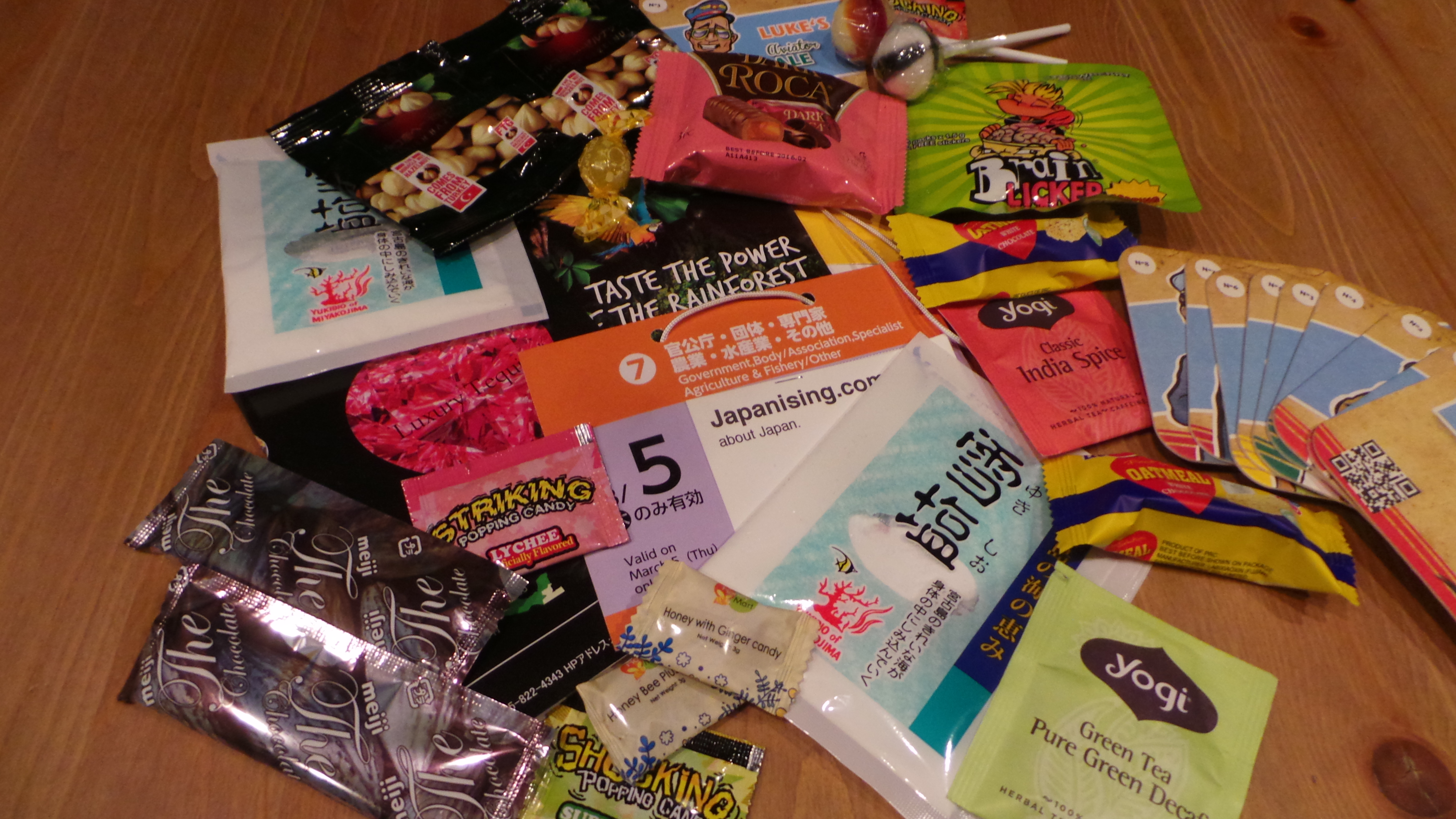
Back at home, as I empty out my full pockets of the many free gifts and brochures, it reminds me of a lost childhood memory of Halloween. I still have an awful lot more food to eat, but I can’t really complain. I enjoyed the event, the food, the beverages, on what has been quite a wonderful day in Chiba.

Schindler’s Lift

Recently I have been a little caught up with having a cold, taking numerous visits to the dentist, and a sudden urge to spend the remainder of my free time filling out multiple sheets of paperwork pertaining to banking and insurance. This morning, I head outside to discover that everything has fallen down. I lift my bicycle up from the floor, pulling it apart from the scattered mess of other fallen bikes. The temperature in Japan is freezing cold now. Two days ago, there was snow in central Tokyo. Today, a strong wind blows through the air. I take my bicycle, armed with winter clothes, and cycle to Asakusa.

I head over to Senso-ji, passing hordes of skeletal trees. For the next three days, a festival takes place. Something to do with badminton rackets, or so it seems.

badmin1[1]

Today is Hagoita-ichi, a festival of decorated battledores—old-style badminton rackets depicting characters from kabuki shows. There are about twelve different stores here, each selling these rackets at a high price. These decorated wooden boards are supposed to deflect evil; perhaps this is where the ‘bad’ comes from in badminton. The sport that these rackets are used for is something of a Japanese childhood game called ‘hanetsuki,’ very similar to badminton but played without a net. I suppose the evil is the shuttlecock, and hitting it toward your opponent is a way to deflect that evil upon others.

The traditional way that hanetsuki is played involves the use of face paint. If you lose a point, your opponent gets to rub paint on your face. If you were terrible at the game, I suppose after a while, your colourful face might begin to resemble one of the characters portrayed on the hagoita. These days, these rackets are mainly used for decoration purposes. Sandwiched between the stores selling badminton rackets are food shops, and one specific store that caught my eye because it looked so out of place.

daruma[1]

Daruma dolls are traditional Buddhist dolls depicting the image of Dharma, and they are considered a symbol of good luck. With white eyes that stare into nothingness, it is said that if you colour in one eye, you can make a wish. Once the wish comes true, colour in the second eye, and your Daruma is almost complete. The only thing left for the doll is to be returned to the temple it was bought from and burned. It feels slightly unfair to burn an object that has done its best to grant you a wish, but sadly, that’s just how these things go. As I am taking a photograph of the dolls, a man next to me is doing the same. His hat flies off his head in a gust of wind. Somehow, I manage to reach my hand up and catch his hat in mid-air, like a pro.

After the festival, I go to Akihabara for some Christmas shopping. In Japan, where Alcatraz-themed restaurants and robot cabaret shows are common, it’s no longer strange to find a cafe themed around a popular girl idol band. Akihabara is bustling with comic book stores, video game shops, and large electronic department stores. However, that’s not my reason for being here. Almost instinctively, I leave the station and head directly to the AKB48 Cafe and Shop.

akbcafe[1]

The last twenty-three single releases by AKB48 have consistently claimed the top spot on the charts, indicating their immense popularity among Japanese people. One clever marketing strategy involves including a ticket for a handshake with a band member with every CD purchase. Observing the guy in front of me in the queue buying over one hundred copies of the same CD, it’s clear that he’s a fan of handshaking. I exit the store with ten copies of ‘Kiboteki Refrain’, and I can’t help but feel like a weirdo. Nevertheless, I’ve managed to wrap up Christmas shopping for ten people in less than ten minutes.

Before returning to Asakusa, I make a detour to Yodobashi Camera to play some piano. However, after thirty minutes, I decide to leave because one of the staff members is giving me an ‘are you going to buy anything?’ sort of look. Outside Akihabara Station, somebody seems to have mixed their Christmas up with Easter.

dancingrabits[1]

For some unknown reason, it is not possible to open a bank account in Japan unless you have lived here for a minimum of six months. Since my time in the country has exceeded that quota by almost three weeks, I decide it’s about time to get my documents in order and take the plunge toward integration. But, I can’t just wander into a bank saying, “I have been here six months, give me a bank account!” First, I need to get myself a personal seal. Not the aquatic mammal I had been hoping for; this seal is more like a stamp and is known as an ‘inkan’.

I head over to a small inkan shop opposite Tawaramachi Station and take the escalator up to the second floor. The escalator provides me with amusement, and the title of this overdue blog post practically writes itself.

schindlerslift[1]

Inside the shop, there are wonderfully expensive stamps on display in high-priced cases. Since I am only getting this product for one reason – a bank account – I opt for the second cheapest option available. The woman draws a circle that takes up a whole page of A4 paper and asks me to write my name in the way I would like it to be engraved in the stamp. Horizontally or vertically? Kanji or katakana? I don’t really care, so I just scribble my name across the paper as quickly as possible, and with very little thought.

Next, I select a case, once again opting for one of the cheapest available, but still seemingly of high quality. Perhaps there is no such thing as bad quality inkan. I hand over ¥2950, the cost of both the inkan and the case. The woman informs me that it will be ready in thirty minutes, hands me a slip of paper, and asks me to bring it back with me when ‘my time is up’.

myinkan[1]

Half an hour later, I am the proud owner of my very own inkan. Naturally, I head home immediately and start stamping my name on everything I own.

Fuji in the Sky with Diamonds

Today marks an event that occurs only twice a year. In just five minutes, the sun will set behind the peak of Japan’s most well-known volcano, Mount Fuji, creating a phenomenon known as ‘Diamond Fuji.’ This rare event happens when the sun aligns perfectly with the summit of Mount Fuji during both sunrise and sunset. I’m not quite sure what to expect, other than the enchanting sight of diamonds.

I eagerly wait amongst the crowds of people gathered at the windows along the full length of the south side of the building. As the sun quietly begins its descent, a collective sense of disappointment fills the air.

diamondfuji1[1]

Today has been relatively clear in terms of the sky, but the air above Mount Fuji is filled with clouds, making it challenging to discern even the slightest outline of the mountain. No diamonds today, just a rather attractive sunset hanging above the miniature buildings that compose the endless Tokyo skyline. I can’t complain, though; I am witnessing a fantastic sunset. The sky looks amazing as it becomes illuminated by the setting sun.

I wait around for a while amongst other photographers and Japanese people making peace signs for their ‘sunset selfies.’ In one hour, the sky will be dark, so to make the most of my ¥620 ticket, I decide to linger. The observatory provides a fantastic vantage point for observing Tokyo, offering romantic and exotically beautiful views. The building remains open for night viewing, and my plan now is to spend some time at 251 metres, hoping to capture a few shots of Tokyo illuminated at night.

nightview2[1]

The night sets in, and I snap a few photographs before taking a leisurely stroll around the observatory. A vending machine catches my eye, offering an inexpensive blueberry cheesecake cone that I can’t resist. Nearby, a small cafe named ‘Air Ship’ sells food that, frankly, looks terrible. There’s also a small art gallery, a gift shop, and a place where professional artists draw caricatures—typical money-spinning attractions. Oddly, there are several small heart rate monitoring machines here, each costing ¥100. The idea of coming all this way just to check one’s heart rate seems beyond me.

After my exploration, I head back down the oddly named ‘Shining Elevator.’ As the lift descends at six hundred metres a minute, I can’t help but half-expect Jack Nicholson to burst through the door at any moment. However, the elevator surprises me by transforming into a planetarium, showcasing a light show that could be stars or underwater sparkles. The visuals are accompanied by relaxing space and ocean music.

actualdiamond[1]

At the bottom of the lift, a photograph mockingly displays the spectacle we all came here to view. Regrettably, what I witnessed was far from the captivating display promised by the poster – just another sunset.

Tourism is a Dancer

Today I wake up to find that the hostel has been decorated with ‘Happy Halloween’ signs, spooky spiders, and multicoloured pumpkins and bats. Thinking the staff might have got the date wrong, I ask, “You do realise that Halloween isn’t for another month?”
The reply from the receptionists, “We know, but it looks so cute!” Fair enough.

I take two different trains to Koto, to the Tokyo International Exhibition Centre, nicknamed ‘Tokyo Big Sight.’ Today is an event oddly called ‘Japan Travel and Tourism Association Tourism EXPO Japan.’ The annual event is to increase awareness of tourism in Japan and to promote different countries and cultures from around the world. The exhibition centre is massive, looks like a spaceship, and is about to take off.

TokyoBigSight[1]

Tokyo Big Sight opened up in 1996, and will be the main broadcasting centre for the Tokyo 2020 Summer Olympics. The area outside is flourishing with well kept plants, perfectly cut lawns, benches, art pieces, and sculptures. The area inside contains an eight-storey conference tower, the East Exhibition Halls, and the West Exhibition Halls.

Today I head to the East Halls, six in total but merged to form two massive halls for the event today. Inside I am greeted by megaphones and mega queues. I arrive just after 1 p.m., queue for half an hour, before paying ¥1300 entry fee. I begin my tourism journey in East Hall One.

tourismexpo[1]

The exhibition includes booths from 150 nations and regions, all here to promote tourism in their respective countries. Additionally, booths from the 47 prefectures of Japan aim to raise awareness of local culture. Everywhere I go, I’m handed bags of souvenirs, each emphasising a specific country or prefecture. Mock passports are available, encouraging visitors to collect fake air travel stamps from the various countries represented here.

As I wander around, I spot two Japanese geisha. I haven’t previously seen a geisha in Japan, so this is a nice bonus. They even smile and let me take a photograph.

geishas[1]

The geisha are here to promote the area of Nihonbashi. I am handed an envelope containing a fake boarding pass and loads of smaller flyers advertising their area. One of the flyers describes Nihonbashi as ‘The crossroad of past and present – diving into an array of unique Edo experiences.’ It also features advertisements for local food outlets in the area, coupons for tea ceremonies, and adverts for shops that sell traditional crafts and gifts.

East Hall Six contains a massive RV show, which is of no interest to me. East Hall Five is littered with stands from outside of Asia. East Hall four contains stands for the many Japanese airlines and corporate companies. I continue my wandering around, getting more and more free flyers and bags of promotional material. It seems every stand here has some form of entertainment or a weird mascot. The Okaniwa stand even has an aquarium showcasing many of their tropical fish.

fishokinawa[1]

There is a section promoting Japanese Traditional Crafts, along with another section commemorating the 400th anniversary of Tokugawa Ieyasu’s death. The Robot Restaurant even has a stand here, featuring robots and scantily clad women to attract business. Pocari Sweat is hosting a talk about their plans to land on the moon. Drums can be heard in the distance everywhere I walk.

In addition to the aquarium, Okinawa is hosting a live dance and drum show. Men from Kanazawa Prefecture are balancing on dangerous-looking ladders while wearing traditional robes. A renowned female vocalist is performing on stage, but photography is not permitted. The people of Switzerland are dancing, and a sign inviting to ‘Meet South Africa’ hosts a live percussion show.

meetsouthafrica[1]

Egyptians dance too. The Taiwanese perform a circus act. China showcases a folk dance. South Korea presents a performance from an all-female K-pop band, followed by a live talk show where, again, no photography is allowed. Many more stands are hosting talks. I have a nice chat with the people of Bhutan, a country I’ve been interested in visiting for quite some time. I also discuss Climate Change and their government’s decision to go carbon neutral with representatives from the Maldives. Additionally, I have a random chat with Brianna Acosta, better known as Miss Hawaii 2013.

misshawaii[1]

I wander around a bit longer, enjoying the diverse dances, playful mascots, and individuals dressed as samurai. Overall, the exhibition is quite enjoyable; it provides an excellent opportunity for the people of Japan to engage firsthand with other cultures. Simultaneously, there is also plenty to discover and learn about Japan here.

Eventually, I tire and take the two trains back to Asakusa. Here, I dine at an Italian restaurant. The Japanese owner comes to talk to me after my meal, asking loads of questions. Apparently, he sees me almost every day and wants to know where I am from and what I am doing in Asakusa; he’s just curious, I suppose. When I go to pay, he randomly gives me a ten percent discount. “Grazie!” I say to him, but ironically, he doesn’t speak any Italian. Unbelievable.

Eat Fish or Die Tryin’

I meet my friend Dagmar for breakfast at ten. At breakfast, I drink away my hangover with a bottle of a tasteless drink called ‘Delicious Water’ before heading out alone for the train. Someone told me yesterday that beneath the banks and office buildings between Mitsukoshimae Station and Otemachi Station, hidden deep underground, the Japanese government grows secret rice.

Somewhere along the Ginza Line, my train just powers down. All the lights extinguish, plunging the carriage into an abyss of darkness. The train drifts aimlessly towards Ueno Station and finally grinds to a haunting halt. The silence thickens, shrouding the dead train in an eerie stillness, an unsettling void that grips the carriage. Everyone remains silent, messing with their mobile phones, despite the obvious sorrow of the situation. It is all very worrying. About five minutes pass, and there is an announcement in Japanese, then nothing. A further five minutes, and the train starts up like nothing ever happened.

As I exit Mitsukoshimae Station, I accidentally wander into an adjacent department store.

maskmaskmask[1]

Inside the department store, there is a Mask Art Museum, and it is free. A nice but rather small exhibition. The store housing the museum is incredibly upmarket. I ask politely if I am allowed to take photographs, and lucky for me, it is fine. The exhibition actually ends today. Rather fittingly, all of the mannequins in this department store are wearing masks.

One thing I have noticed in Japan are the many strange museums. I believe I have previously mentioned the famous World Bags and Luggage Museum. A few other favourites of mine that I am yet to visit are the Gas Science Museum, the National Leprosy Museum, and the Parasite Museum.

I wander around for a while looking for the entrance to the secret underground rice bunker. It takes a while but I eventually find a huge office building that has every window on one side completely covered in plants. On the other side of the building I scare away an eagle pecking at a gold statue of Prometheus. This must be the place, I think to myself. It turns out it is.

prometheus[1]

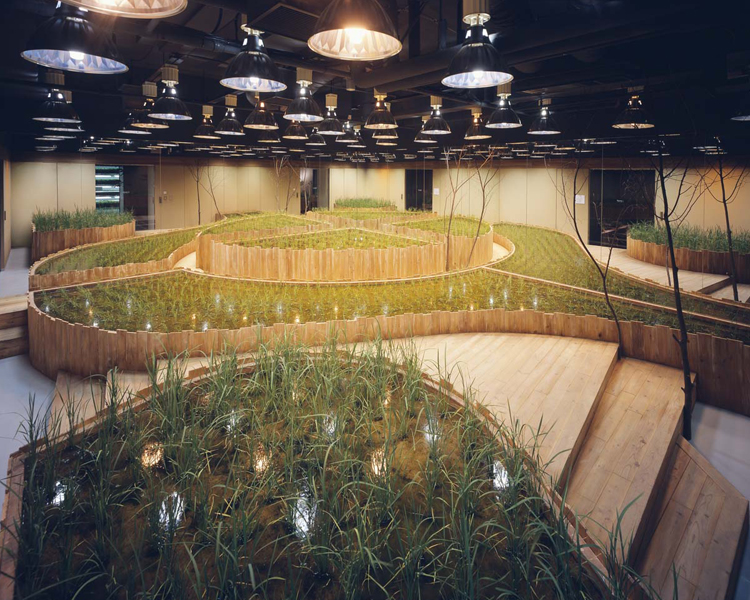
Deeply tucked away in the second basement level of a huge skyscraper, they grow rice. I am not entirely sure why they grow rice, but people are free to come and see it. Huge natural light shines from above. Rice grows. From what I was told, this area stretches under the whole business district, although it doesn’t. The size of the area was heavily exaggerated to me. The rice isn’t really that much of a secret; it’s not too well advertised, but no one is trying to hide the fact that it grows here either. In fact, I think it’s encouraged for people to come here and learn about rice cultivation. So, another urban myth shattered then.

ricetomeetyou

After looking at rice for a few minutes, I decide to walk to the Imperial Palace. I’m surprised by how close the stations are to each other in this area. Tokyo, Kanda, Shinbashi, and Nihonbashi Stations are literally within a five-minute walk of each other. Outside the Imperial Palace, about thirty elderly Japanese people are sitting and painting.

The Imperial Palace is home to Emperor Akihito, the last remaining monarch in the world to go by the name of Emperor. There isn’t really much else to see at the palace. The grass outside is cut immaculately, and the water fountains spray jets of water about two metres into the air. I notice there is a great view of Tokyo Station from the Palace car park, though. I wander to the nearby Ginza Station and take the train back to Asakusa.

tokyostation[1]

I decide to inspect a potential apartment. Small apartments in Japan are ironically referred to as “mansions.” These one-room coffin apartments offer little to no space and an equal amount of comfort. Another phenomenon in Japan is the grouping of shops, whole areas dedicated to selling one type of product. The area where the apartment is housed is completely surrounded by funeral shops. One street has eight shops in a row, all selling tombstones. I decide the area doesn’t quite feel right. Chimes sound from nowhere as I head back to the hostel, chiming five times signalling 5 p.m.

At 6 p.m., Richard, Luis, Remi, and I head to a nearby restaurant that serves fugu. Jokes are made about toxicity, tetrodotoxin, paralysis, and death. In reality, fugu poison is one-thousand two-hundred times stronger than cyanide; this is no laughing matter. The most poisonous part of the fish is the liver. Outside the restaurant, we watch our dinner for a while, graciously swimming around in a tank. In a moment, this beautiful blowfish will be killed on our behalf; we sure hope it doesn’t have a taste for revenge.

blowfishing[1]

There was a time when a fugu chef would have to pass a training course of ten years before being given certification to prepare fugu. These laws changed about three years ago, and now the rules state just a two or three-year course is required. We really hope that our chef today is of the older generation.

We take a seat in a tatami room. We order fresh blowfish sashimi. We also order diced blowfish sashimi just so I can make a pun about how we diced with death. Oddly, one of the options on the menu is hot sake with dried blowfish fin floating in the liquid. “We only serve the finest live domestic tiger blowfish,” says the menu. Served live? I certainly hope not. We wait anxiously for our food to arrive.

The poisonous fish is served in elegantly arranged translucent slices; it doesn’t look very threatening.

blowfish1[1]

A taste for revenge would be an overstatement. A taste of anything would be welcome. The food is the freshest fish I have ever tasted, of course; it has been dead just minutes. The food is also the least tasty fish I have ever had. It has no flavour at all; perhaps there is a subtle hint of death. I’m just glad we went to a cheap non-certified restaurant. It costs us just ¥5480 between the four of us for two dishes and four drinks.

I tried the sacred fugu of Japan and all I got was this lousy anecdote.