A Wild Frog Chase

My morning starts with an unexpected knock at my bedroom door. Upon opening it, I find one of the Japanese men who live in my house standing there with a white carrier bag full of bread. Normally, I would find this unusual – a man at my door, giving me bread at 10 a.m. when I should be sound asleep. However, nothing is usual in my apartment. This same man, two weeks ago, gave me a box of laundry powder for no particular reason. Moreover, he believes I am fluent in Japanese. Not once has he engaged in a conversation with me in English. I simply nod, mutter some of my limited Japanese in his direction, and accept the loaf of bread.

With the thought of the donated bread weighing on my mind, I decide to hop on my bicycle and head to the nearby Arakawa Park, a place I haven’t visited before.
Arakawapark

This park seems to have somehow partially escaped the shedding of its leaves. On one side, it is skeletally bare; on the other side, it flourishes with nature. Laundry powder and bread. It is no secret that since being in Japan, I have lost an extreme amount of weight. Week by week, I find myself becoming skinnier, although previously, I didn’t think such a possibility could even exist. Perhaps that offers an explanation for the bread. However, my clothes are in no way dirty and in need of additional laundry powder.

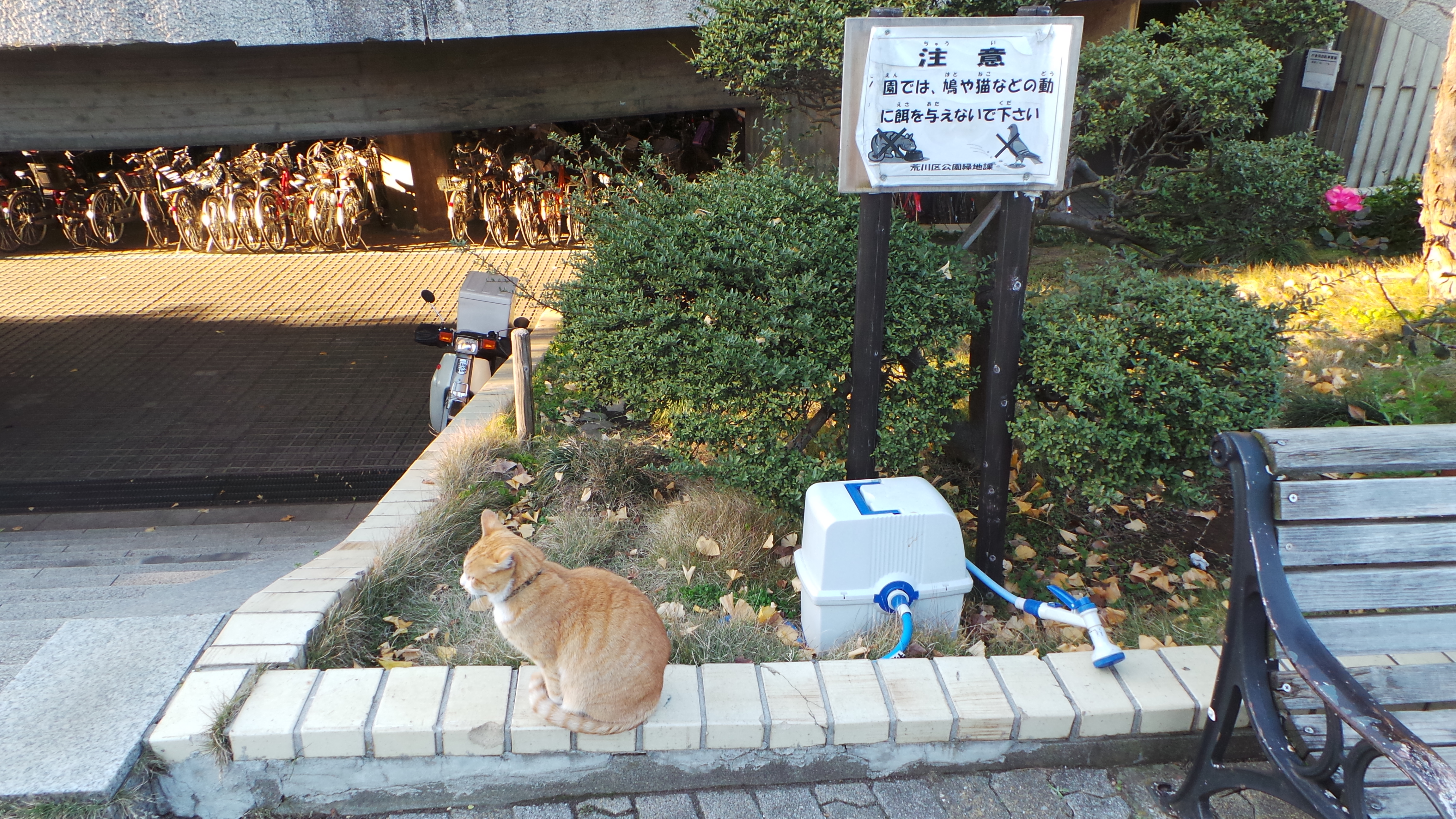
I park my bicycle and take a seat on a bench to read my book: Murakami’s ‘Super-Frog Saves Tokyo.’ After consuming the book from start to finish, I take a little wander around the park. I come across a sign that says, ‘Do not feed the cats or pigeons.’ Oddly enough, I’ve seen multiple signs about feeding pigeons, often adorned with amusing text in speech bubbles, such as, ‘Don’t feed me; I can get my own foods.’ However, this is the first time I’ve seen a sign specifically addressing not feeding felines. With perfect timing, a cat appears from nowhere and takes a seat directly in front of the sign.
dontfeedthecat

The ginger cat decides to follow me around the park, meowing at me for food. Cats of this colour seem to have a habit of trailing behind me. I wander amongst the threadbare trees and reach a stone gazebo. Beneath the shelter, the homeless roam – about ten in total, walking around seemingly without purpose, wearing threadbare clothing to match the trees. They resemble characters in the starting area of an online role-playing game: lost, confused, and not knowing where they’re supposed to go. It strikes me that these people, much like the poor cat, actually don’t have anywhere to go.

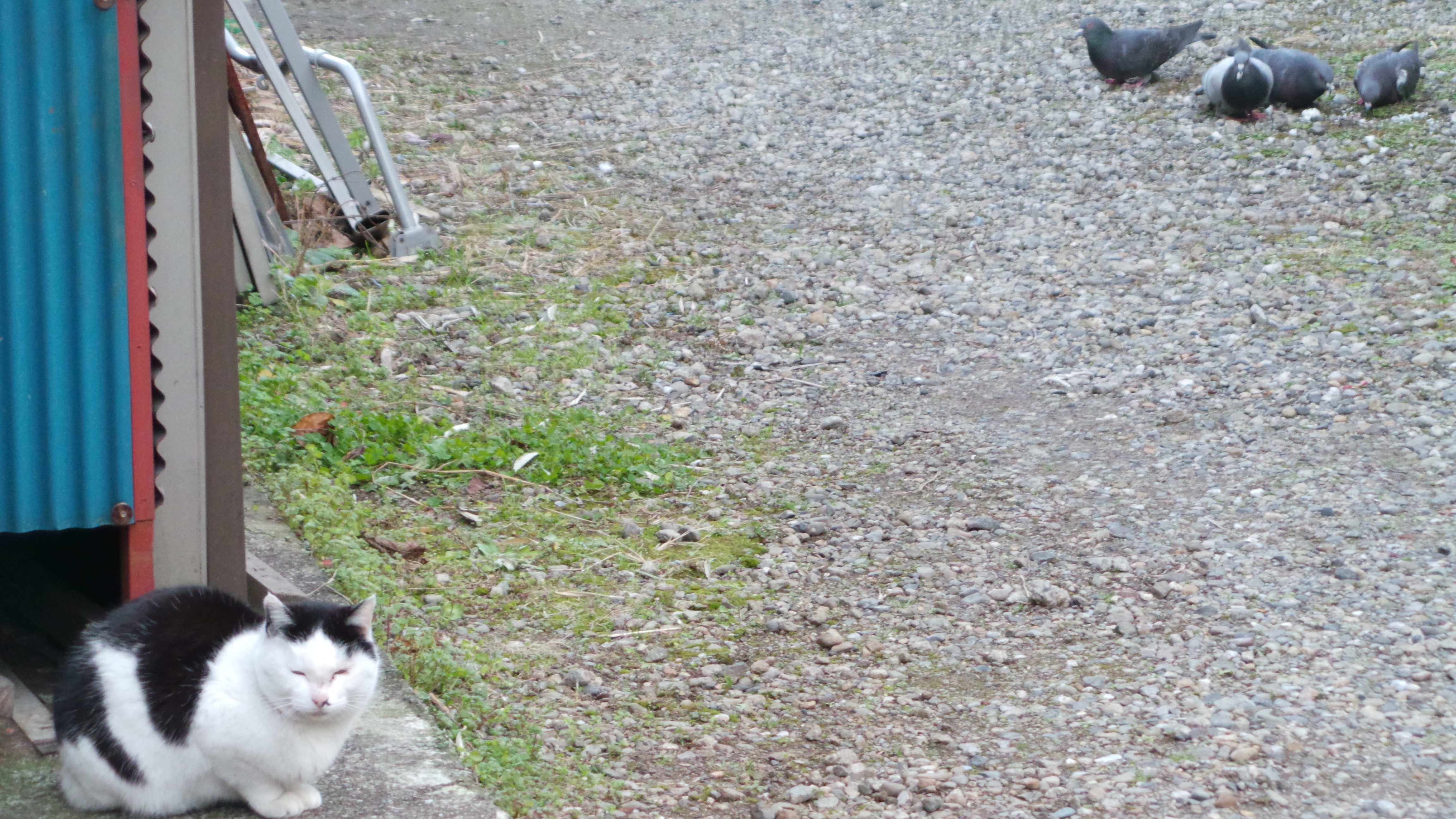
I leave the park and stop off at a nearby shrine, only to be chased away by two massive guard dogs on leashes. Clearly, this shrine doesn’t welcome tourists. A little further up the road, I realise that as this day becomes more about animals, a better choice of reading material today would have been Agatha Christie’s ‘Cat Among the Pigeons’ because, for a second time in an hour, that’s exactly what I see.
catsandpigeons

Leaving the stray cats behind, I cycle toward Nippori. One of my favourite things to do to keep myself occupied in Tokyo is cycling on warm days and exploring new areas. Without any real destination, I often pedal along, discovering random things that interest me. Today, the low winter sun provides the heat, and the opportunity to explore is seized.

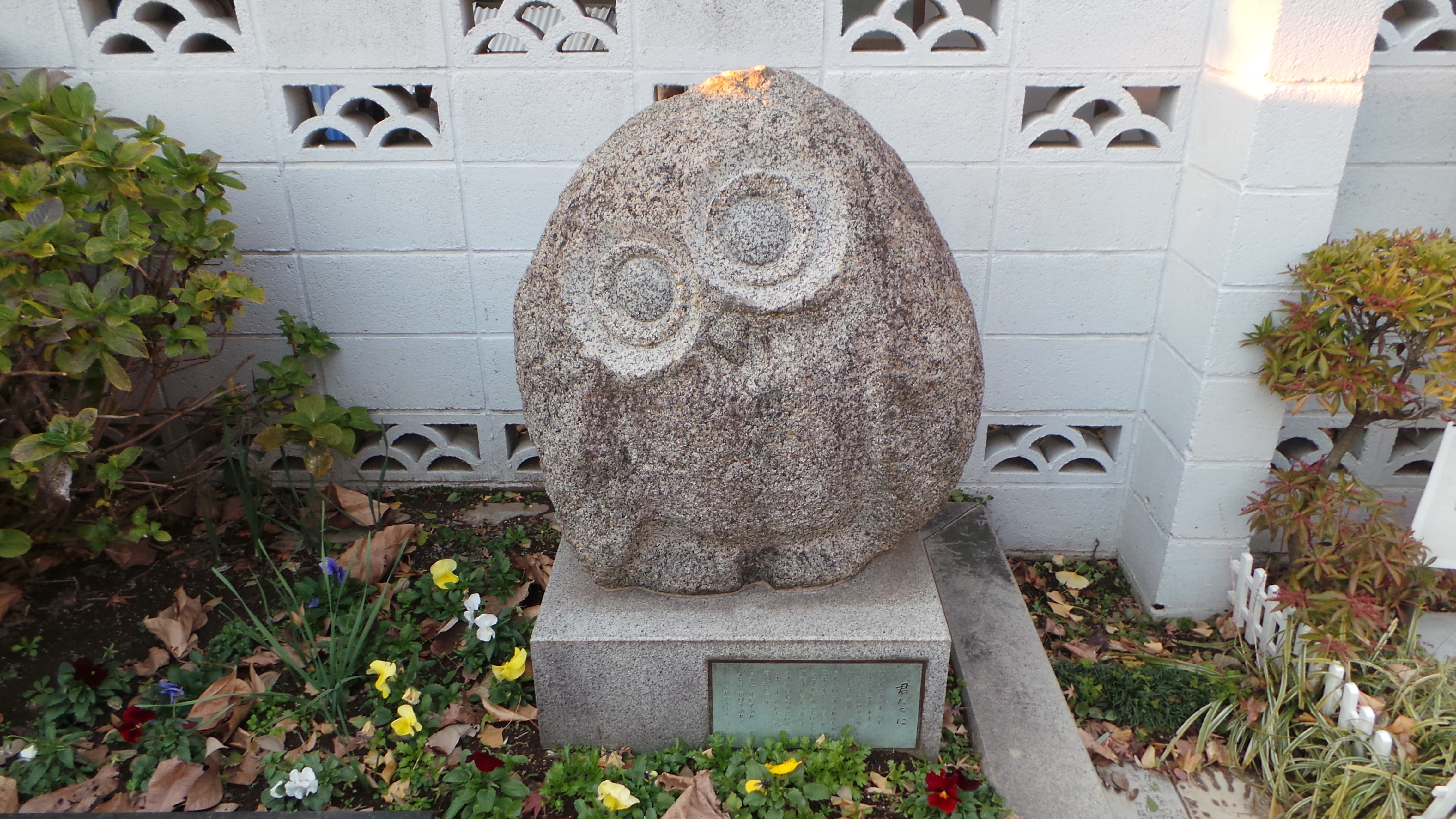
I cycle through Fabric Town, passing a couple of interesting shops along the way. Highlights include a leather shop called ‘Touch of Fleather,’ a shoe store named ‘And Shoes,’ and a textile shop simply called ‘Tomato.’ After arriving at Nippori Station, I carry my bicycle up some steps and over the tracks. On the other side of the tracks, I am greeted by another bird in the form of a giant stone owl.
owlmonument

The owl describes itself as a ‘Memorial Monument for Takamura Kotaro,’ a famous Japanese poet and sculptor. Why they chose to honour his life with a statue of an owl is beyond me, but it looks nice, so I thought I would include it. The owl sits on Suwadai Street, a peculiar street that is at an elevation higher than the skyscrapers beyond. Additionally, the street boasts fifteen different temples and shrines.

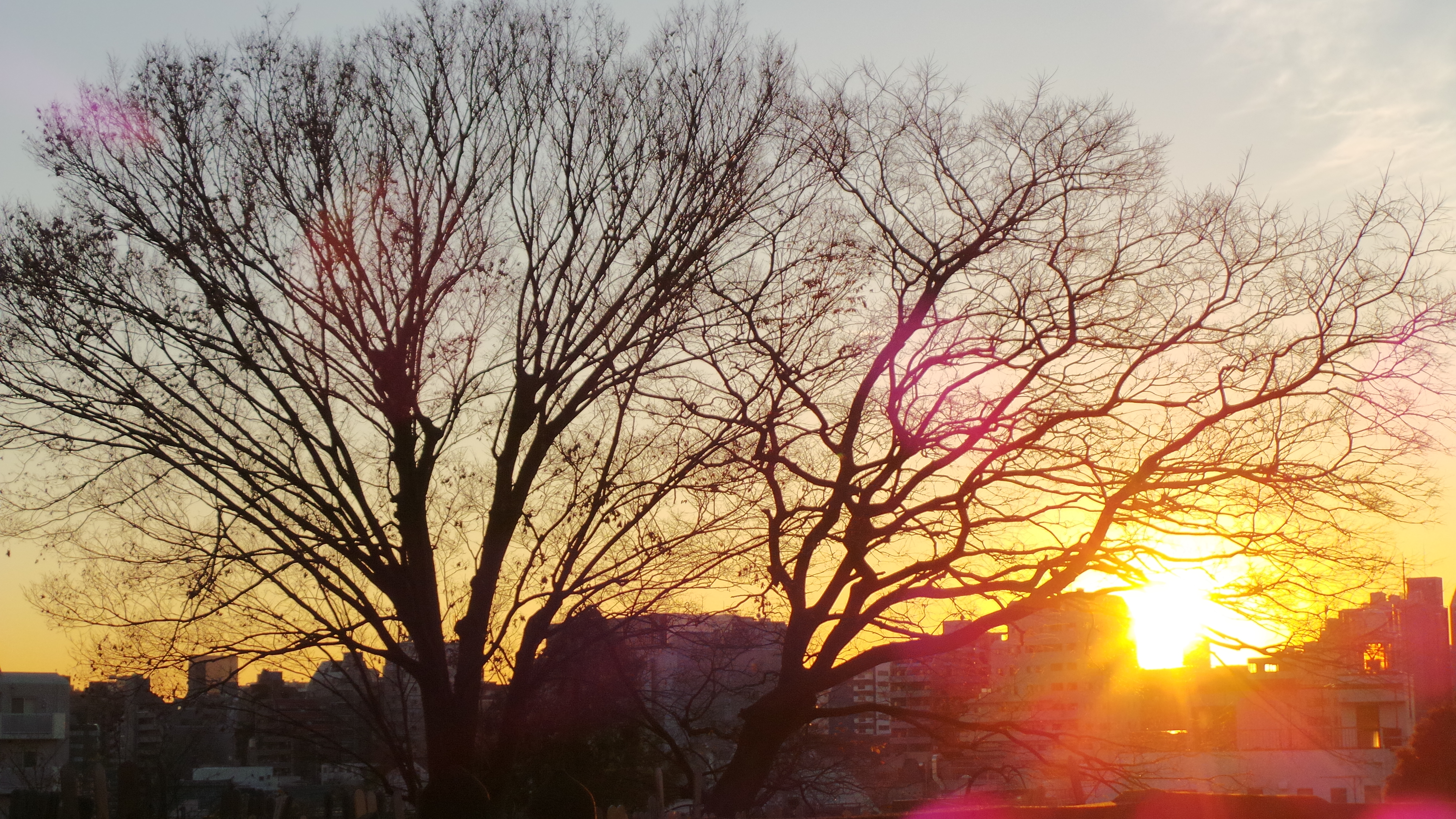
I check the GPS on my camera to make sure that I’m still in Tokyo. Up here, even though I am just twenty minutes from my house, it feels like I am in the middle of the countryside. The nature in this area is simply stunning. I see a few signs with directions to a viewing point. On a clear day, I can witness the spectacle of a Mount Fuji sunset, where the sun and the mountain share the horizon. Unfortunately, I can’t see Mount Fuji — the story of my life. Nevertheless, I do get to witness the setting sun over a distant Tokyo skyline.
Nipporisunset

I cycle away from the temples, shrines, and stunning views, heading into Yanaka. The area is still uphill and features many old houses surrounded by leafless trees. I end up at a small market along some narrow streets: Yanaka Ginza Street. Conveniently downhill, the opportunity to cruise along, engaging in window shopping, controlling the flow of bicycle wheels with intermittent braking, is an enjoyment in itself. Navigating between the crowds of people, I narrowly miss shoppers who are presumably there to buy things they don’t need to impress people they don’t care about. As I try to remember a quote from Palahniuk’s ‘Fight Club,’ I get distracted and almost crash into a woman carrying a baby. Naturally, the baby starts screaming in fits of hysteria, so naturally, I cycle away as fast as I can.

I continue cycling until I arrive at another new place, Nezu. The streets here are adorned with beautifully crafted old lampposts and festive Christmas lanterns.
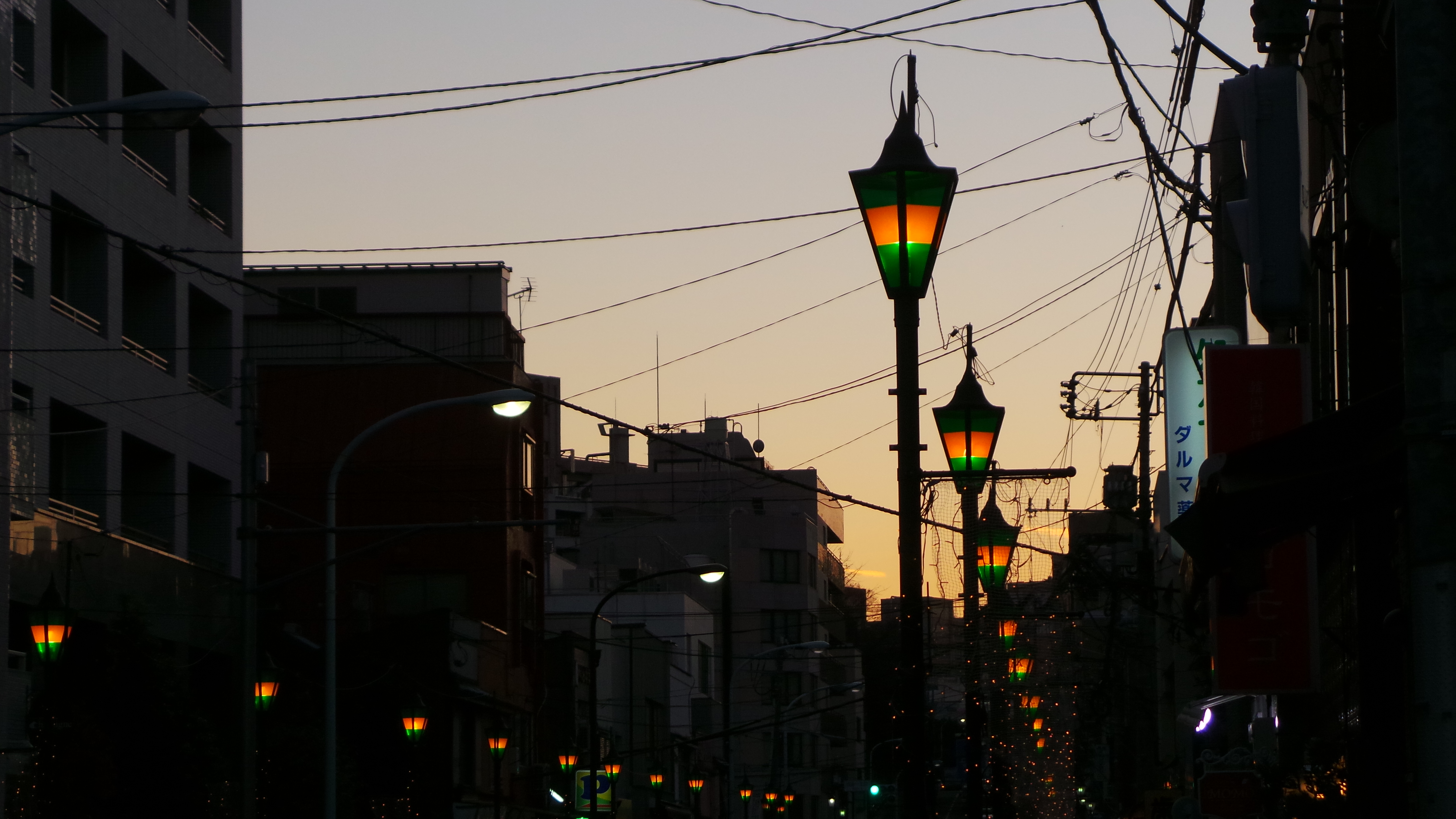
Nezu

Apart from a full-size train carriage parked randomly on the footpath, there isn’t much else to see in Nezu, so I head back toward familiarity. Outside Ueno Park, I study the map, desperately looking for something of interest. Four museums, but all presumably closed today; that’s how these things usually go. Then, something on the sign catches my eye. Perhaps it’s because I read about a character called ‘Frog’ today, or maybe some other intuition takes over, but the moment I spot a tiny dot on the huge map of Ueno Park below a caption saying ‘Fountain of Frog,’ I know that this will be my final destination today.

I search the park, passing dying crops and concrete views. After thirty minutes, the sun has completely set, and the weather has turned cold. Fierce winds chill the air but aren’t strong enough to dissuade my search. I cycle around the park, and each time I spot a map, I stop to double-check the location of the fountain. I often find that the fountain has changed its location from one map to the next, and on other maps, it has disappeared completely. Not one to give up on a personal challenge, I persist in my search for the elusive Fountain of Frog. Eventually, after forty-five minutes of cycling around Ueno Park, I find what I’ve been looking for.
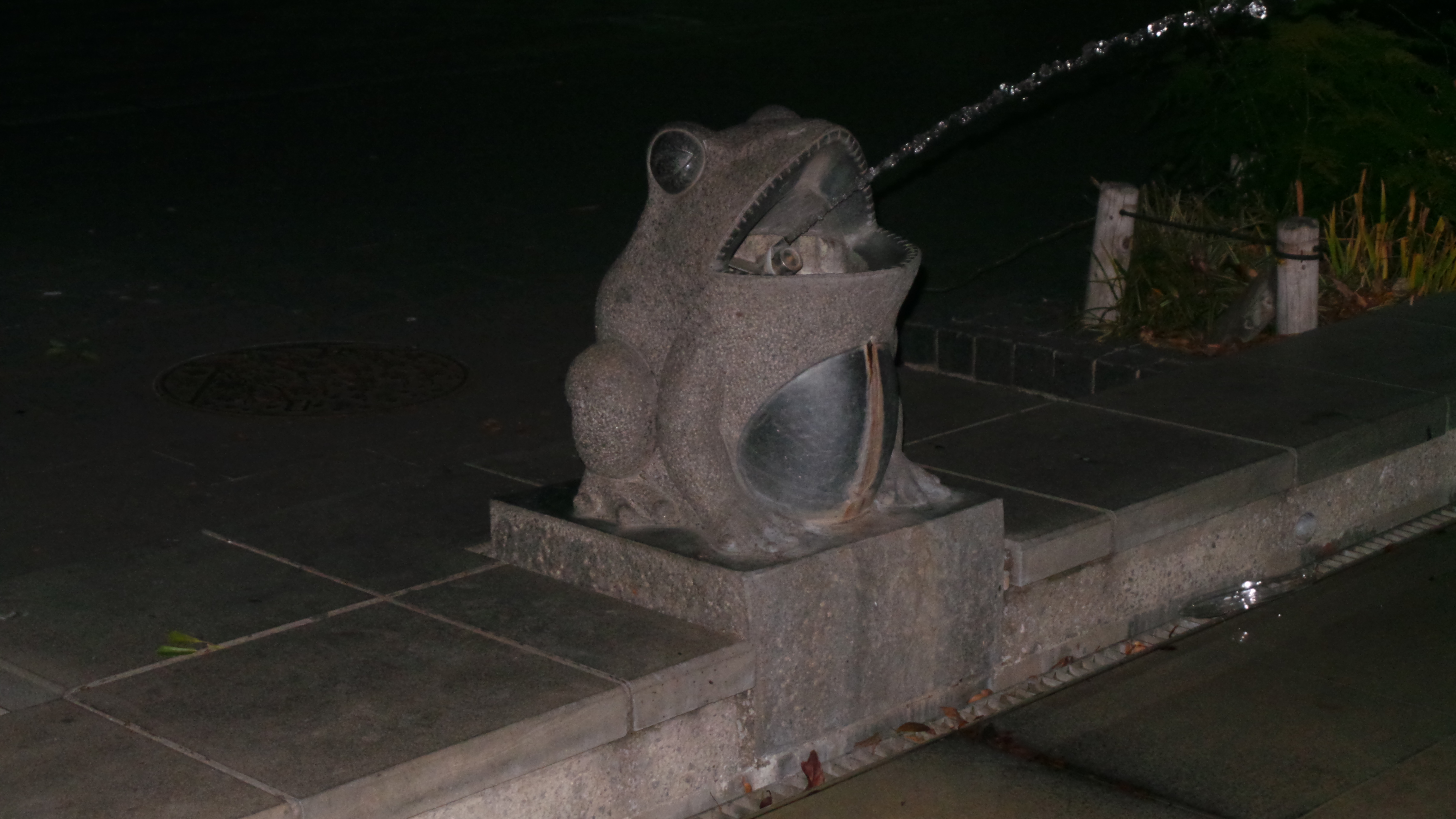
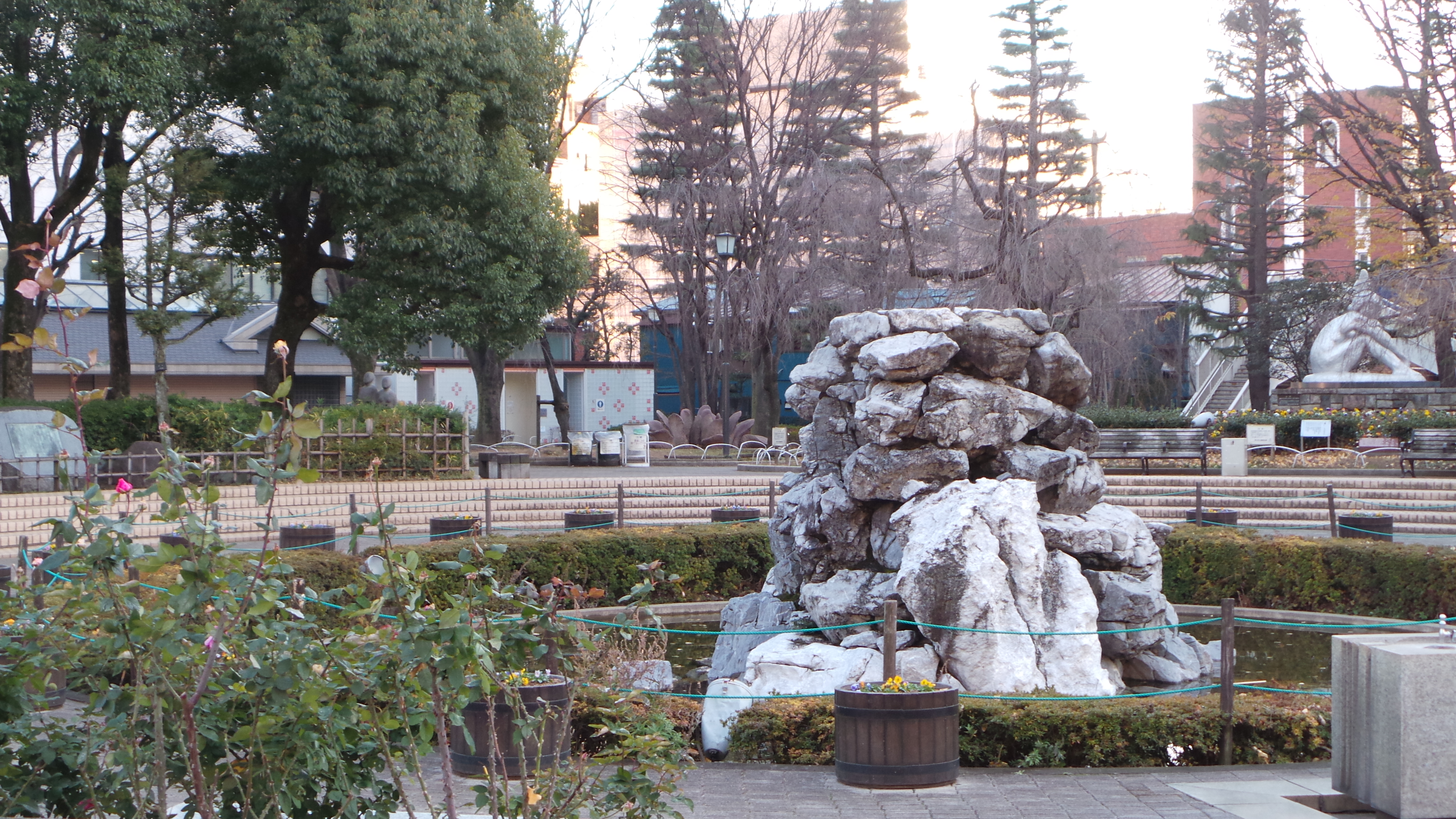
frog

As it turns out, the Fountain of Frog is exactly what it sounds like: a small statue of a frog spitting water into an even smaller fountain. I head home, my mind filled with a sense of disenchantment. It’s a rather disappointing end to the day, but at least I have bread.

Fuji in the Sky with Diamonds

Today marks an event that occurs only twice a year. In just five minutes, the sun will set behind the peak of Japan’s most well-known volcano, Mount Fuji, creating a phenomenon known as ‘Diamond Fuji.’ This rare event happens when the sun aligns perfectly with the summit of Mount Fuji during both sunrise and sunset. I’m not quite sure what to expect, other than the enchanting sight of diamonds.

I eagerly wait amongst the crowds of people gathered at the windows along the full length of the south side of the building. As the sun quietly begins its descent, a collective sense of disappointment fills the air.

diamondfuji1[1]

Today has been relatively clear in terms of the sky, but the air above Mount Fuji is filled with clouds, making it challenging to discern even the slightest outline of the mountain. No diamonds today, just a rather attractive sunset hanging above the miniature buildings that compose the endless Tokyo skyline. I can’t complain, though; I am witnessing a fantastic sunset. The sky looks amazing as it becomes illuminated by the setting sun.

I wait around for a while amongst other photographers and Japanese people making peace signs for their ‘sunset selfies.’ In one hour, the sky will be dark, so to make the most of my ¥620 ticket, I decide to linger. The observatory provides a fantastic vantage point for observing Tokyo, offering romantic and exotically beautiful views. The building remains open for night viewing, and my plan now is to spend some time at 251 metres, hoping to capture a few shots of Tokyo illuminated at night.

nightview2[1]

The night sets in, and I snap a few photographs before taking a leisurely stroll around the observatory. A vending machine catches my eye, offering an inexpensive blueberry cheesecake cone that I can’t resist. Nearby, a small cafe named ‘Air Ship’ sells food that, frankly, looks terrible. There’s also a small art gallery, a gift shop, and a place where professional artists draw caricatures—typical money-spinning attractions. Oddly, there are several small heart rate monitoring machines here, each costing ¥100. The idea of coming all this way just to check one’s heart rate seems beyond me.

After my exploration, I head back down the oddly named ‘Shining Elevator.’ As the lift descends at six hundred metres a minute, I can’t help but half-expect Jack Nicholson to burst through the door at any moment. However, the elevator surprises me by transforming into a planetarium, showcasing a light show that could be stars or underwater sparkles. The visuals are accompanied by relaxing space and ocean music.

actualdiamond[1]

At the bottom of the lift, a photograph mockingly displays the spectacle we all came here to view. Regrettably, what I witnessed was far from the captivating display promised by the poster – just another sunset.

Inoue Sake Brewery

Today I meet with Naoto, the English speaking organiser of the sake tour. I am the only person to sign up. Not wanting to waste his whole day, I ask whether we should still go on the tour. It turns out Naoto is still quite eager to visit the brewery. Naoto is passionate about sake, and wants to spread the word about this traditional Japanese drink, which dates back to two thousand years ago. So off we go.

We head to Tokyo Station, before taking the the Tokaido Line to Kozu Station. The journey takes about ninety minutes. We have to wait at Kozu for a while; the trains here appear just twice an hour. Eventually a train comes, and we take the Gotemba Line to our destination, Kami-Oi Station. From the train I can see the sea.

Kami-Oi Station is deserted, it is so quiet that there is no ticket gate. “What, so we just walk out without paying?” I ask.
“This is the countryside,” is the explanation Naoto gives. I am still confused. The area is definitely the countryside, mountains and the sea. Rice growing everywhere. The air is clean. We leave the station and head to the Inoue Sake Brewery.

cedar[1]

The cedar globe outside serves as a symbol for the current year’s sake production. When the new batch is made in late October, the globe will be replaced. Its changing colour from green to brown as the sake matures is a visual representation of the sake’s aging process. It’s a lovely tradition that mirrors the transformation of the drink itself.

Inoue Sake Brewery’s rich history since its establishment in 1789 during the Edo period is remarkable. Mister Inoue’s humility and passion shine through as he shares insights into the sake-making process, its history, and the diverse range of sake types. The tour of the brewery kicks off promptly, and Mister Inoue highlights how the cold Hakone air plays a crucial role in sake production. He emphasises the use of locally sourced rice and pristine water from a depth of 150 metres underground. Tasting the water confirms its anticipated qualities: cleanliness, freshness, and clarity.

sakewater[1]

Sake production resembles wine production, yet it involves an additional step before fermentation. Starch from the rice is combined with Koji, a diastatic enzyme that aids in breaking down the rice and converting its starch into sugar through a process called saccharification. Following this, sugar and yeast are added to commence fermentation. In contrast, grapes used in winemaking naturally contain sugars, so only yeast is added to initiate fermentation. Despite this difference, the subsequent processes in both sake and wine production follow a similar path.

We visit the room where the Koji is added to the rice and see the large tanks used for steaming, storage, and the mashing process. I’m surprised to learn that all these procedures are performed manually. For instance, the mashing process occurs in enormous 8,000-litre tanks. The masher stands atop a precarious-looking wooden platform above the tank, vigorously pounding a massive stick into the rice for four days.

saketanks[1]

The outcome is a liquid derived from starch. Subsequently, multiple parallel fermentations occur. The mixture rests for up to 32 days, enabling simultaneous saccharification and fermentation. Afterward, the sake undergoes pressing through cloth, filtration, and enters a pasteurisation phase. Finally, the sake ages for up to six months, is bottled, and eventually reaches the consumer for sale.

The sake is sold in 1.8 litre bottles, or 720 ml bottles. A much smaller bottle is also sold, however, the other two sizes are the most common. After the tour we sit down and try a few varieties of sake. My favourite is the gold-medal winning Hakone-yama Junmai. Junmaishu is a traditional style of sake, and often has a mellow bouquet with a rich, smooth flavour.

bottleitup[1]

Hakone-yama Junmai offers three different serving options: room temperature, cold, or hot. Initially, we try it at room temperature, finding it good with a subtle flavour. When served cold, it becomes much nicer, boasting a smoother texture. Lastly, the hot variety also impresses; the flavour expands, and the scent intensifies, offering a delightful experience.

After the tasting, I am given a masu as a souvenir, a small wooden box which was originally used to measure rice, but these days it is used as a container for drinking sake. Impressed with what I have seen and tasted today, I decide to buy a bottle of sake for ¥1200. After that we say goodbye to the owner and return to Kami-Oi Station.

fujievening[1]

From the train station I can see the base of Mount Fuji.

The Mountain: a story about climbing Mount Fuji

It is Wednesday 4th July 2012 and it’s very cold. I am at the top of Mount Fuji, 3,776 metres above sea level, and there is a fierce blizzard going on. Winds that appear somewhere between gale force and hurricane force on the Beaufort scale. Snow on the ground and snow falling fresh from the sky combined with freezing rain that can only be described as freezing rain. Then there is the thick cold fog that makes it impossible for me to see my hand in front of my face, despite the incredibly bright headlamp that for some reason can’t penetrate thick cold fog at a distance greater than 15 centimetres. Legs aching. Face aching. Losing count of the amount of times I’ve fallen over. Here we are at the top of the highest mountain in Japan. We’re contemplating waiting here until 4:40 a.m. to see the sunrise. There is however another problem …

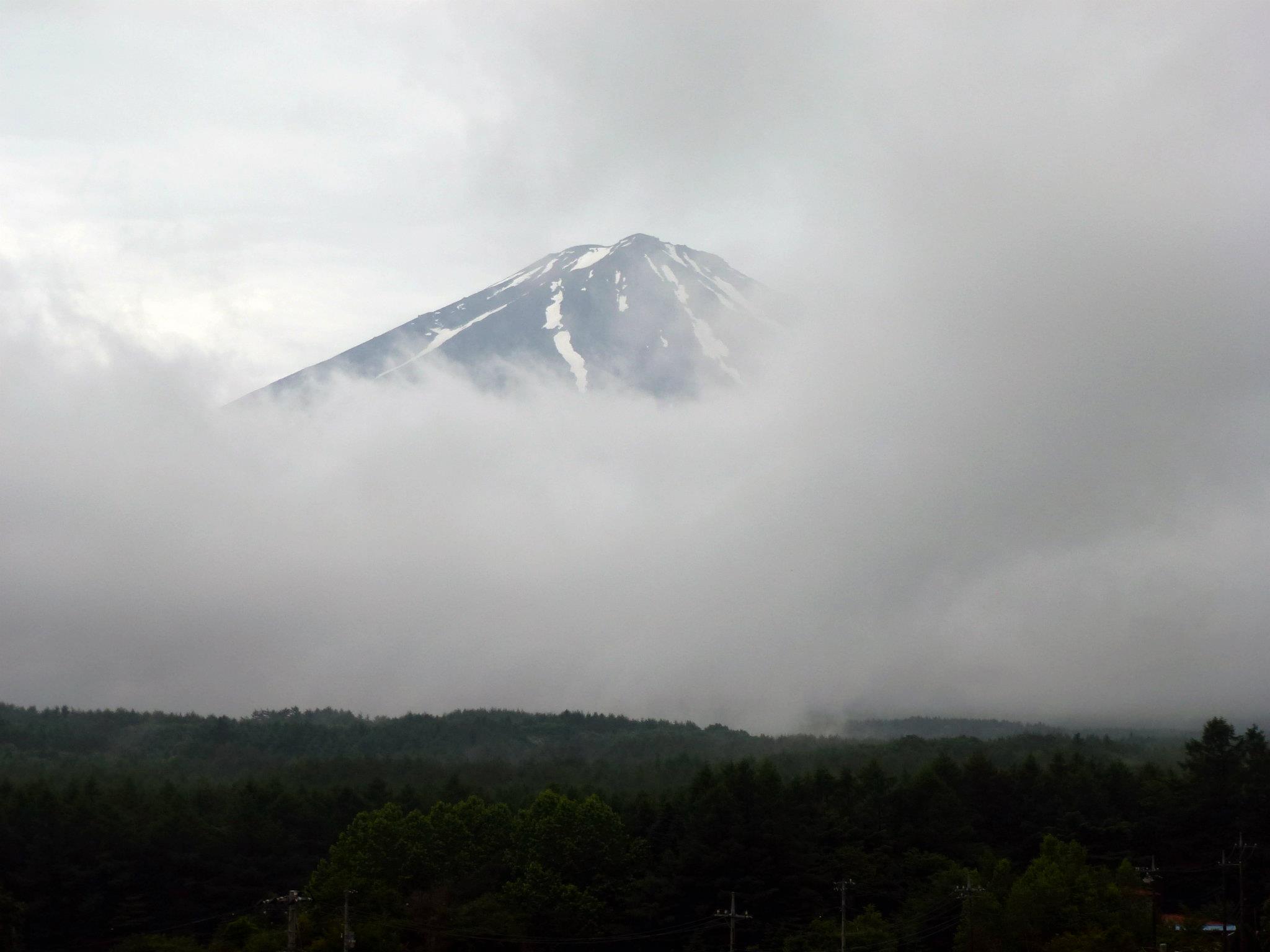
fujiview

We don’t have a clue what time it is.

Three days ago I couldn’t sleep. The excitement of visiting a foreign country often has that effect on me. Travelling across time zones, navigating planes, taxis, and a relentless journey left me smiling at an airport on the opposite side of the world, yet internally adrift.

I meet my friend Sean at the airport, we hop on a train for 2 hours, and finally arrive in Shinjuku. It’s lunchtime in Japan. I’ve been awake for about 31 hours, and we can’t check into the hotel for another four. After some sightseeing and food, it hits around 4 p.m., so we head to the hotel. I crash in my room and quickly fall asleep.

Tuesday rejuvenates my spirit, restoring me after what feels like the best sleep ever. Tokyo calls for exploration, and after a few trips on the Yamanote Line, it starts pouring. The sky darkens as massive clouds block most of the sunshine on what was a relatively hot July day. The rain pounds down, the air thick with humidity. Buying an umbrella becomes a solemn act, seeking shelter beneath it as if seeking refuge from the downpour of life’s uncertainties. We head back to the hotel a bit early to dry off and snag some extra sleep for tomorrow’s adventure: climbing Mount Fuji.

After some struggle finding the bus, finally, at 11:27 a.m., we’re ready to set off. The ¥2700 highway bus takes us through Japanese countryside, across bridges and valleys, until, a few hours later, we reach Mount Fuji Fifth Station—the starting point for climbers. There are ten stations in total, the tenth being the summit.

Here at the Fifth Station, the sun shines, and the mood is upbeat. Restaurants, souvenir shops, and gear stores line the area. I forgot warm clothing, so I grab a nice fleece for ¥6000. After a satisfying Japanese meal, it’s time to climb. We rent a coin locker and leave everything non-essential at Station Five, setting off promptly.

The hike to Station Six is pleasant, perhaps taking forty minutes or even less. We rest, snack on Kendal Mint Cake, then resume climbing. What’s heartening as we ascend is the warm greetings from every person we pass—each offering a smile and a ‘konnichiwa!’

Somewhere between Station Six and Seven, there are dreadful steps. Loads of them, sweeping from left to right, hindering progress. We take a break and chat with an American couple descending the Mountain. They joke that it’ll take another ten hours to reach the top. Hilarious, I hope.

A few hours pass since Station Six, and we arrive at Station Seven—equipped with a bench, a toilet, and a shop selling instant ramen. We pause to admire the view before continuing. Around this climb point, we’re engulfed in clouds, and it starts getting cooler. No more steps, thankfully … just rocks.

Endless rocks.

Arguably the worst part of the Mount Fuji climb is between the Seventh and Eighth stations. This stretch demands hand-climbing over endless slippery rocks. Thankfully, there are about eight or nine mountain huts interspersed, each with a bench, toilet, shop, and if needed, a place to sleep. I’m grateful for these intermittent rests, although the prices keep climbing higher with altitude. I recall one of the higher shops selling two cans of Coke and a Snickers bar for the equivalent of £10, though the exchange rate wasn’t as favourable back in 2012.

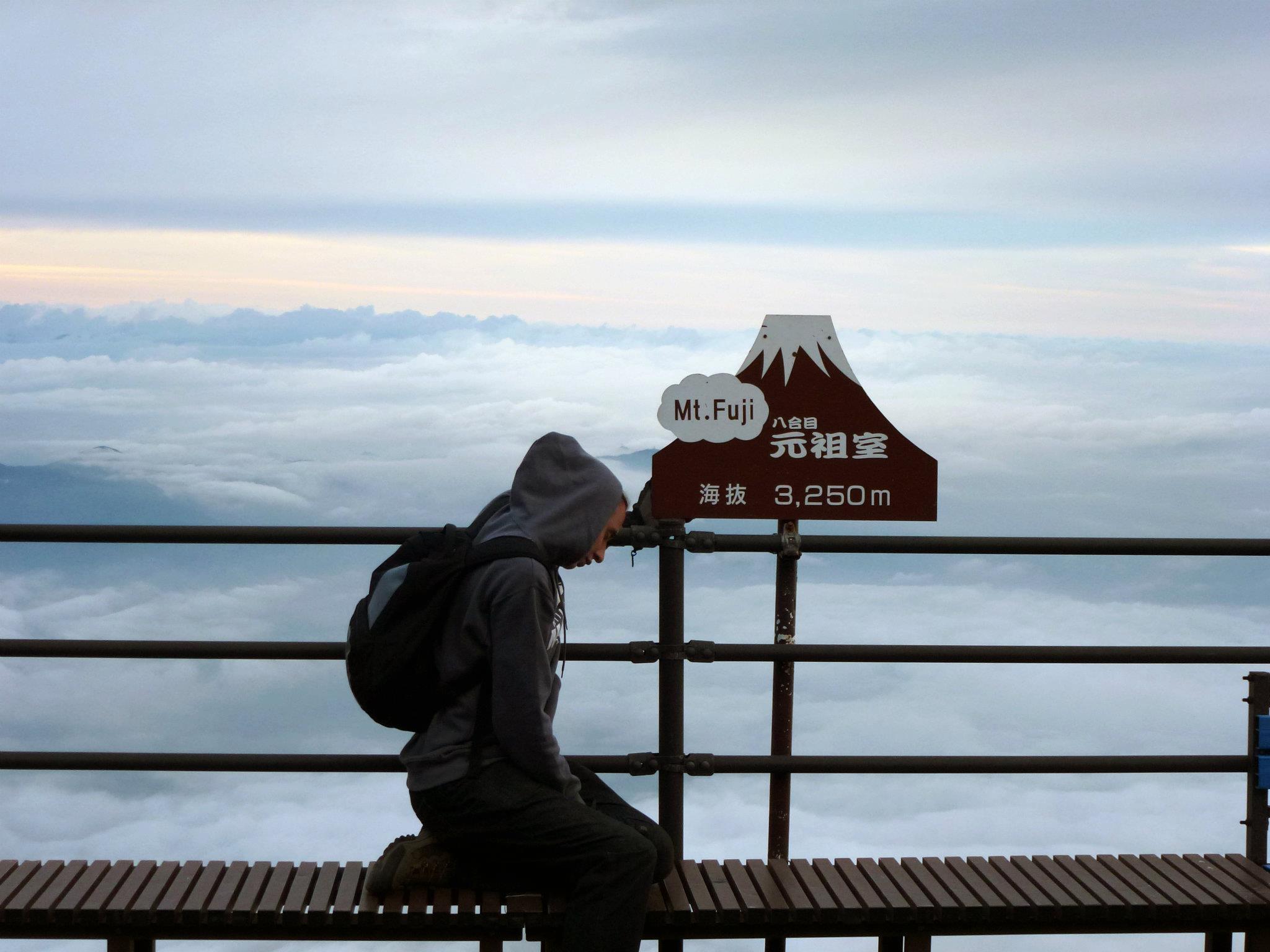
fujisan

After leaving the last hut at Station Eight, the skies begin to darken. This part of the climb features volcanic rock littering the trails—loads of smashed-up or small bits of rock and stone. Tricky to walk on, they slide around under our feet. The darkness doesn’t favour us here, so it’s time to put on the all-important headlamp.

Somewhere before the penultimate Ninth Station, we encounter a mountain hut. A Japanese man outside informs us that the mountain huts beyond this point are closed, urging us to stay for the night. Uncertain if he’s honest or aiming for extra business, it turns out he’s genuinely concerned for our safety.

At Station Nine, perched at 3,600 metres above sea level, the solitary mountain hut stands closed, swallowed by pitch-black darkness. Devoid of light, shops, or comfort, it echoes with the haunting symphony of wind and rain. An impending storm brews, casting a foreboding shadow over our proximity to the summit—just 176 metres away.

In daylight, this section of the Mountain might take about 40 minutes. In the dark amid increasing rain and wind, it takes us 2 hours. Passing through a torii gate, we venture deeper into darkness. Here, the volcanic rocky ground ends, and a very difficult climb begins. Bare rocks mark the path, and climbing these slippery, wet rocks is no fun at all. My vision reduces to a black screen with flickering white dots, snowfall illuminated by my headlamp. After navigating the treacherous rocks, a white torii gate signals the final steps, and we reach the summit. Exhausted, cold, wet, but relieved.

At Mount Fuji’s peak, all the shops are closed; no light, no life. The summit at night is bleak—snow falls, wind howls stronger. We huddle by a closed mountain hut, attempting to shield ourselves from the wind. Trying to calculate the time, as we have no devices or clocks, it becomes a futile exercise. Everything is in the coin locker back at Station Five, and with nobody around to ask, we are forced to do some calculations.

  • The sun set hours ago.
  • On Monday, we missed the sunset due to our late afternoon sleep.
  • Tuesday’s rain and sudden darkness hid the sunset.
  • We do know the sun rises at 4:40 a.m.
  • We set off from Station Five around 2 p.m.
  • The American couple said it takes at least ten hours.
  • It feels like we’ve been walking for at least ten hours.
  • We decide it’s probably around midnight, but we have no way to be sure.

Contemplating waiting for sunrise, hoping the sun would warm us, we realise the risk of freezing if we linger. We opt to head down the dark, slippery, snow-covered rocks.

Hours seem to pass, and eventually, we return to Station 8.5. A Japanese man and woman greet us, whispering, indicating that people are already asleep, planning to wake an hour before sunrise for the final climb. For ¥5500 each, we acquire a small bean bag pillow, a blanket, and space on the hard wooden floor. Cold and exhausted, I could’ve slept anywhere. A clock on the hut wall reads 10:47 p.m. Turns out, in summer in Japan, the sun sets just after 6 p.m.

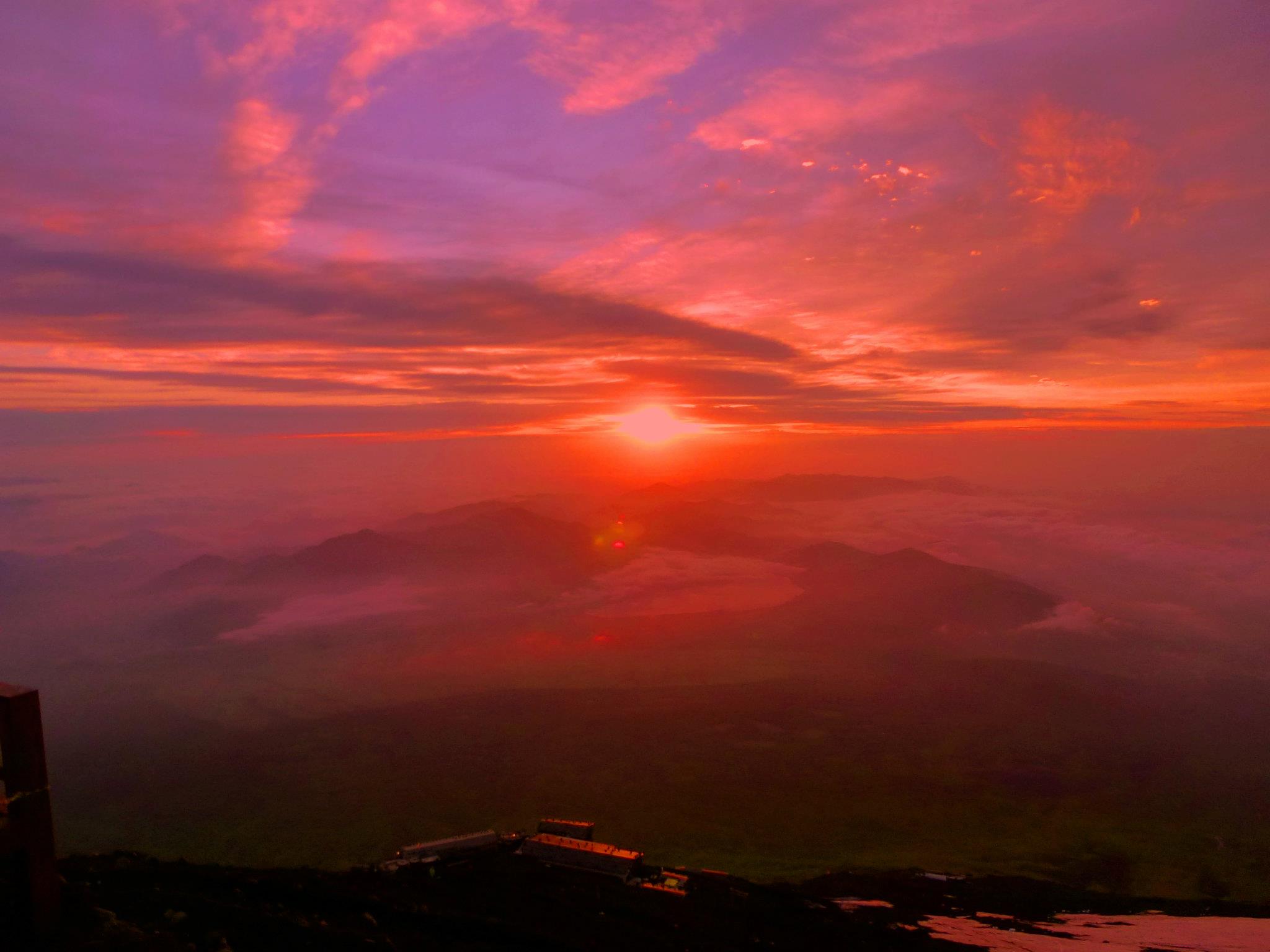
In the morning there was this:

sunrise

Descending the Mountain proves far easier than ascending it. There’s a twisted pleasure in knowing those we pass on the way down will face what we’ve just endured. I now understand why those descending greeted us with smiles and a cheerful ‘konnichiwa!’ as we ascended.

July and August mark Mount Fuji’s ‘climbing season.’ We tackled the Mountain just days into the season, hence the lingering snow on the summit and the closure of mountain huts past Station 8.5.

Returning to Station Five, we board a bus to Kawaguchiko Station, encountering a French lady and her daughters who scaled the Mountain that same night. She recounts a chilling warning from Station Five’s security, advising against venturing beyond Station 8.5 due to hazardous snow. In her narrative, a haunting reality unfolds: the Mountain’s icy grasp clung to mortality’s edge, our steps teetered on a malevolent dance with death. Each footfall echoed a grim refrain, a chilling symphony marking our unnerving closeness to an untimely encounter with the abyss.

In June 2013 Mount Fuji was granted UNESCO World Heritage status.