Willow Trees All The Way Down

Today, after almost nineteen weeks of living in mixed dormitories, I’ve finally moved out of hostel accommodation and into an apartment in Minowa, still within Taito Ward. The weather is clear and warm, prompting me to embark on a little exploration. Just a three-minute walk from my new place, I spot a shiny silver plaque near a Shell petrol station and decide to investigate. In the corner of the forecourt, I’m greeted by the sight of a massive weeping willow tree.

famouswillow[1]

The plaque informs me that the tree is named ‘Mikaeri Yanagi,’ translating to ‘looking-back willow tree.’ Its name stems from marking the entrance to Yoshiwara, a licensed red-light district that was relocated to this area in 1657. Legend has it that as people departed Yoshiwara, they would cast a sorrowful glance back at this tree, feeling painful reluctant to leave. Intrigued, I decide to take a little stroll.

Even under the bright daylight, numerous establishments have men in business suits, sporting earpieces, stationed outside, while the neon signs blaze at their brightest. As I stroll along, a grinning man asks, “Sex?” I politely shake my head and continue walking. The road is lined with smaller willow trees. After approximately ten minutes, I realise I’m in a familiar area—it’s the same road where my hostel used to be. It’s rather pleasing to discover that my new apartment is just a ten-minute walk from central Asakusa.

Deciding to make the most of my time, I hop on a train from Tawaramachi Station and make my way to Tokyo Big Sight. A friend has invited me to see his exhibition there today. However, upon arrival, I discover that the event operates on an ‘invite-only’ basis, with attendees exchanging forms for passes. Unfortunately, the only invite I received was verbal.

I decide to approach the information desk regardless and ask, “Can I see the exhibition, please?”
The young receptionist queries, “Do you have an invitation card?”
“Nope,” I reply.
“Well, you need an invitation card to enter,” she explains.
Pausing for a moment, I reach into my wallet and retrieve the business card of the friend who invited me, coincidentally the president of one of the exhibiting companies. Handing her the business card, I truthfully assert, “My friend invited me.”
She scrutinises the card for a while before saying, “Please fill out this form.” With a smile, I hand her the completed form, and in return, she hands me a laminated pass. I’m granted entry to the exhibition, completely free of charge. The power of business cards.

foodexpo2[1]

The exhibition is divided into two main sections. The first part highlights the advantages of health foods, particularly emphasising raw and organic foods, health supplements, enriched agricultural processes, health-beneficial rice cultivation methods, and natural seasonings aimed at enhancing taste.

On the other hand, the second part of the show delves into science and technology. This section showcases breakthrough technologies focused on food quality, packaging reduction methods, food safety and hygiene innovations, allergen test kits, and germ-preventive clothing.

Needless to say, everything is in Japanese, and I’m finding it quite challenging to understand what’s happening. The attendees seem to be either exhibitors or buyers, and they’re all dressed in suits. It’s evident that everyone here has a business card, except for me.

foodexpo[1]

After swinging by my friend’s stand, I briefly consider checking out the other three halls at Tokyo Big Sight. There’s an exhibition on packaging material today, but I have a feeling it might be a tad dull – almost like this post! So, I opt to skip it and make my way back to the train station instead.

After a relaxing break at home, dusk falls, and I venture out again in search of some liveliness. Exploring a new neighbourhood calls for a trusty companion—a can of Suntory whisky highball. Nearby stands a renowned tempura restaurant, crafted from wood and steeped in history. Established in the late 1800s, it’s among the oldest in the area, evidenced by the crowd outside patiently queueing, all with hearty appetites for tempura.

I stroll for about five minutes to reach the nearby Minowa Station. The area exudes a certain liveliness that could potentially make it my new go-to spot, but unfortunately, it seems to lack bars entirely. Among the occasional izakaya, what stands out are the abundance of hair salons, more per capita than any other place I’ve visited. Continuing my wandering, I somehow find myself back amidst the neon-lit streets of Yoshiwara. The traffic lights, like the moon this evening, an appropriate red.

redlights[1]

I swing by Seven Eleven for some food before heading home to eat. After eating, I’m completely at a loss about what to do with my rubbish. Hostels usually have just one bin for bottles and cans and another for everything else. However, my new place has seven different bins, all labelled in Japanese. I take some time to translate each one. One bin indicates it’s for ‘a leaf’, which is perfect timing as I’ve been waiting for an opportunity to dispose of my collection of leaves. Another bin, specifically for cans, confusingly instructs me to, ‘Crush the bottle as much as you can.’ Eventually, I divide the remains of my lunch into separate piles before throwing them into the appropriate bins.

I watch the usual array of Japanese television—a sports event, a sensational news report predicting the biggest typhoon hitting Tokyo this weekend, and even a game show involving pigeons. Eventually, feeling a bit bored with TV, I decide to order fifty personalised business cards. Before calling it a night, I capture a photograph of the red moon and then head to bed.

Last Day of Summer

Today is the Autumn Equinox; officially the day that summer ends and autumn begins. The weather seems to have forgotten about the shift in seasons, and has kindly gifted us with a clear sunny day and 27°C temperatures; the perfect day for say, a boat trip. Once a month, throughout summer, the people of Asakusa have a boat party. Fortunately for us, Dagmar and I have been given an invite.

The boat wasn’t cheap; we each paid ¥8640 in advance. This price includes ‘nomihodai’ and ‘tabehodai,’ which means ‘all-you-can-drink’ and ‘all-you-can-eat’. At half-past twelve, we meet up and head to Umayabashi Bridge, where our eagerly-awaited boat awaits us eagerly.

theboat[1]

The Japanese boat is referred to as ‘Yakatabune’, a traditional wooden boat with tatami flooring, primarily used for entertaining guests. The forty of us pile in and take a seat on the floor at a huge table where a banquet is already laid out. The boat gets moving along the Sumida River in the direction of Odaiba. Shuhei, the organiser, makes a speech, we toast, then start to eat. The meal initially consists of sliced raw fish, salad, edamame, rice, pickles, and prawn tempura.

Beer is passed around in huge bottles to fill small glasses. My glass is always kept topped up by someone else when it gets low; in turn I return the favour when I see someone else with a glass running absent of alcohol. The food is delicious, the beer ever flowing; a great start to the afternoon.

fromtheboat2[1]

We cruise along to excellent views of Tokyo, and I take photographs, eventually coining the word ‘boatographs’. As we head towards Tokyo Bay, more food is served: white fish tempura, eel tempura, sweet potato tempura, and finally, my favourite, mushroom tempura.

A few of the Japanese guys gather at the bow of the boat, cheering each other on to drink massive glasses of Japanese sake. I head over to take a photograph and am dragged into the madness. I’m handed a glass of sake, everyone cheers, and I drink. “No good, one more time,” they say. Great. After a second chant, I drink a second glass of strong sake.

anchored[1]

After about forty minutes, people seem quite drunk. We anchor in the middle of Tokyo Bay, opposite the Fuji TV Building.

Another speech is given, an endless supply of food continues to flow from the small kitchen. The beer just about stops, and people begin to take advantage of the all-you-can-drink spirits. There is a huge selection of shochu, wine, sake, and whisky. After a while, we all head to the upper deck for a group photograph, before heading back below for more food and drink.

diningarea[1]

Karaoke begins, bringing with it a drinking game. A microphone is passed around and everyone sings one line of the song. Whoever sings the last line of the verse has to drink. When the microphone lands in my hand, I improvise something in English to the same tune. People applaud, and somehow, I escape the fate of trying to sing broken Japanese lyrics.

We sing many songs and drink many drinks. I make some new friends and talk to the people I already know. The boat tilts from side to side, the party in full swing. Shuhei goes around pouring drinks into glasses, urging everyone to down them. It seems that everyone is determined to empty every bottle on the boat, and we indeed do just that.

The boat starts up again and cruises back toward Asakusa. More speeches are delivered, followed by more karaoke. We’re treated to a black bean dessert before finally docking back at the Umayabashi Bridge. A traditional clapping ritual signals the end of the festival, and we all disembark for one last group photograph. It’s only 4 p.m., but I’m already feeling a little drunk.

theboathatrocked[1]

A few of us share a taxi. The doors to the taxi magically open and close by themselves. Five minutes and ¥700 later, we arrive back at the hostel. One of the staff members hands me a piece of paper that says, ‘Last Summer Party.’ It turns out tonight, the hostel is hosting a Bon dance party—a traditional folk dance to commemorate the lives of loved ones who have passed away. Free food and drink are also available. Excellent.

I drink plenty of water and sober up ready for my second party of the day.

Shiitake My Breath Away

The hostel shared news of a festival at Mukojima-Hyakkaen Gardens. Today is Tsukimi-no-Kai, which means ‘Moon Viewing’ – a tradition marking its 210th year in these gardens. The goal tonight is to celebrate and enjoy the Harvest Moon. We’re set to meet up at 4 p.m. It’s cloudy outside; I doubt the moon will be visible, but the event sounds fun.

My first destination of the day is the brilliantly titled ‘Project Eat More Mushrooms,’ just an enticing eleven stations away on the Ginza Line. This year, it’s hosted at Ark Hills, a substantial office development in the heart of Akasaka. I hop on the train and disembark at mnemonic favourite, Toranamon, to run a marathon. I take a rather unhurried walk to the venue. Along the way I pass the Embassy of Micronesia and the Foundation of Miracles, before finally arriving at Project Eat More Mushrooms.

mushroommarket[1]

The mushroom festival here is disappointing, an absolute waste of thirty minutes each way on the train. Forget about eating more mushrooms; having more stores selling them would be a welcome start. I can hardly classify four market stalls as a festival. There are no miracles here, no mascots either, and certainly not many mushrooms. To salvage the journey from being a complete waste, I purchase some shiitake mushrooms and enoki mushrooms for a total of ¥450.

Back at the hostel, it dawns on me that these mushrooms are precisely the same ones I could have purchased from Seven Eleven. Considering the wasted time and train fares, these have turned out to be the most expensive mushrooms on the planet.

mushrooms3[1]

After the mushroom episode, I gather as planned at 4 p.m. The small group of seven comprises my friends Aram and Dagmar, along with two fantastic tour guides from the hostel, Keina and Gomez. We make our way to Asakusa Station and board the Tobu Skytree Line to Higashimukojima Station. Interestingly, the train deliberately slows to a crawl as it crosses the Sumida River to showcase the glorious view, or so we’re told. Upon reaching Sumida, we head straight to Mukojima-Hyakkaen Gardens, marking my third visit to these beautiful gardens during my time in Japan. The entrance fee remains the usual ¥150.

At the entrance, we’re requested to douse ourselves in mosquito repellent due to a Dengue fever outbreak in Tokyo. Just last week, Yoyogi Park was closed for extensive fumigation to eradicate mosquitoes and is likely to remain shut for several months. Similarly, Shinjuku Gyoen Park underwent the same treatment two days ago. It seems this week might be the least opportune time to visit an outdoor garden.

We enter the gardens, and inside, offerings are being made to the moon.

giftsforthemoon[1]

Television crews are setting up at the entrance to the Hagi Tunnel. Swarms of people are queueing up for the ¥2000 tea ceremony, the same ceremony I had previously enjoyed at no cost. The sound of chirping insects fills the air. We kill some time exploring the park before heading back to the wisteria trellis for the opening ceremony. Following a short opening speech, a performance of the shinobue begins.

A shinobue is a Japanese transverse flute made from hollow bamboo. Two performers play for almost thirty minutes. During their performance, I lose myself in meditation on a bench surrounded by foliage and mosquitoes.

fluteladies[1]

After the performance, it’s time to light the many lanterns scattered throughout the gardens. The paper lanterns are lit just as twilight sets in. In total, there are thirty-five lanterns, and volunteers are encouraged to participate in the event. Each lantern is decorated with a haiku.

Once the lanterns are lit, a curtain of dusk descends to the melodic tune of the koto, a traditional thirteen-stringed Japanese instrument. The five performers play in perfect harmony, and the sweet sound of the koto resonates throughout the gardens. Eventually, the earlier gifts presented and the beautiful music work their magic, transforming the overcast evening sky into a clear one. As if on cue, the clouds part ways, unveiling the face of the Harvest Moon.

festivalsounds[1]

We sit down and admire the sky. The moon is a ghostly white, brighter than I can ever recall; but it has been a while. Like the stars, the moon rarely appears above the Tokyo skyline. Tonight the moon doesn’t hide, it looks beautiful, it is breathtaking.

We eat snacks. The chatter combines with the music. The thought crosses my mind that this ceremony has been taking place exactly where I am right now, for the last two-hundred or so years. It probably hasn’t changed much since then either. My mind transported to another time.

I eat a bowl of oden, a Japanese winter food consisting of various fish and vegetables in a soy-flavoured broth. It costs ¥800 and is delicious. We chat for a while longer, enjoying the sound of the insects, the music from the koto performance, and the lull of the moon.

harvestmoon[1]

At 7 p.m., it feels much later than it is. Darkness arrives earlier now, but the weather is still warm—an atypical autumn. We all head back to Asakusa on the train before going our separate ways.

I take the Ginza Line for thirty minutes, and as I exit the station into the crowds of Shibuya Crossing, it begins to rain. At 9 p.m., I meet up with a friend from England, Laurence, and his two friends. We gather outside Hachiko, a statue of a dog. The dog belonged to Professor Ueno. Hachiko would wait for the professor at the end of each day outside Shibuya Station until one day, in 1925, the Professor died. Despite the professor’s absence, Hachiko continued to wait faithfully, but his owner never appeared. Legend says the dog returned to the station at the same time every day for nine years, yet Professor Ueno never returned. Then, sadly, in 1935, Hachiko passed away.

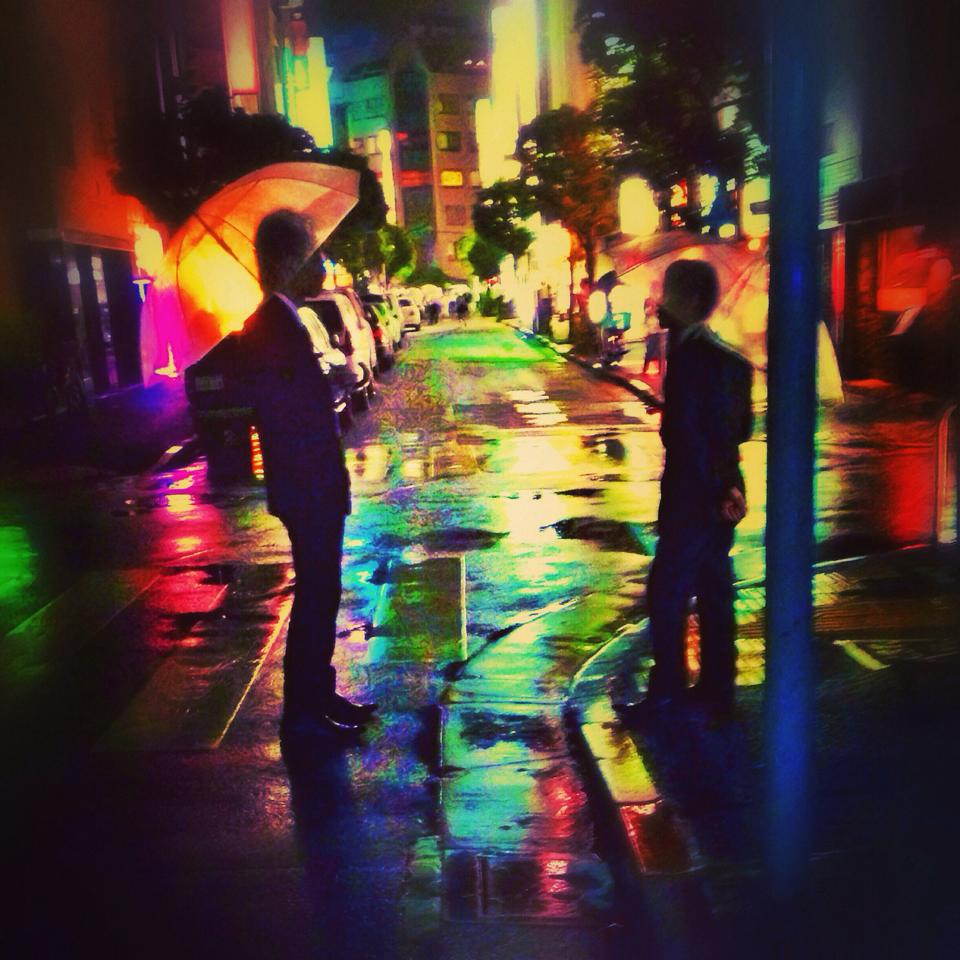
Our evening begins in an absinthe bar exclusively playing The Smiths’ music and ends in a cheap izakaya-style bar. Artwork and literature dominate our evening’s discussions. An enjoyable night washed away with rain and ¥450 Suntory whisky highballs. I don’t take a single photograph; much like Hachiko, my camera is dead. With no photographs of my own, Laurence kindly lets me use one of his: Neon Nirvana:

Neon nirvana

Eat Fish or Die Tryin’

I meet my friend Dagmar for breakfast at ten. At breakfast, I drink away my hangover with a bottle of a tasteless drink called ‘Delicious Water’ before heading out alone for the train. Someone told me yesterday that beneath the banks and office buildings between Mitsukoshimae Station and Otemachi Station, hidden deep underground, the Japanese government grows secret rice.

Somewhere along the Ginza Line, my train just powers down. All the lights extinguish, plunging the carriage into an abyss of darkness. The train drifts aimlessly towards Ueno Station and finally grinds to a haunting halt. The silence thickens, shrouding the dead train in an eerie stillness, an unsettling void that grips the carriage. Everyone remains silent, messing with their mobile phones, despite the obvious sorrow of the situation. It is all very worrying. About five minutes pass, and there is an announcement in Japanese, then nothing. A further five minutes, and the train starts up like nothing ever happened.

As I exit Mitsukoshimae Station, I accidentally wander into an adjacent department store.

maskmaskmask[1]

Inside the department store, there is a Mask Art Museum, and it is free. A nice but rather small exhibition. The store housing the museum is incredibly upmarket. I ask politely if I am allowed to take photographs, and lucky for me, it is fine. The exhibition actually ends today. Rather fittingly, all of the mannequins in this department store are wearing masks.

One thing I have noticed in Japan are the many strange museums. I believe I have previously mentioned the famous World Bags and Luggage Museum. A few other favourites of mine that I am yet to visit are the Gas Science Museum, the National Leprosy Museum, and the Parasite Museum.

I wander around for a while looking for the entrance to the secret underground rice bunker. It takes a while but I eventually find a huge office building that has every window on one side completely covered in plants. On the other side of the building I scare away an eagle pecking at a gold statue of Prometheus. This must be the place, I think to myself. It turns out it is.

prometheus[1]

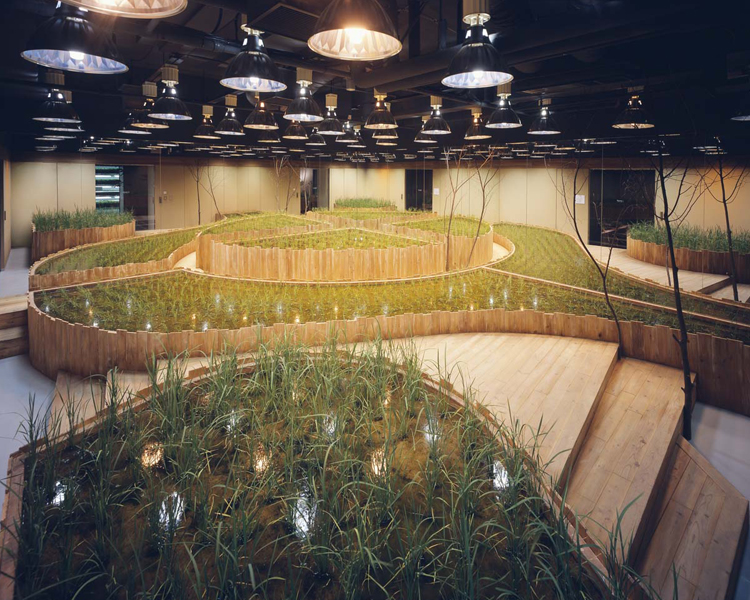
Deeply tucked away in the second basement level of a huge skyscraper, they grow rice. I am not entirely sure why they grow rice, but people are free to come and see it. Huge natural light shines from above. Rice grows. From what I was told, this area stretches under the whole business district, although it doesn’t. The size of the area was heavily exaggerated to me. The rice isn’t really that much of a secret; it’s not too well advertised, but no one is trying to hide the fact that it grows here either. In fact, I think it’s encouraged for people to come here and learn about rice cultivation. So, another urban myth shattered then.

ricetomeetyou

After looking at rice for a few minutes, I decide to walk to the Imperial Palace. I’m surprised by how close the stations are to each other in this area. Tokyo, Kanda, Shinbashi, and Nihonbashi Stations are literally within a five-minute walk of each other. Outside the Imperial Palace, about thirty elderly Japanese people are sitting and painting.

The Imperial Palace is home to Emperor Akihito, the last remaining monarch in the world to go by the name of Emperor. There isn’t really much else to see at the palace. The grass outside is cut immaculately, and the water fountains spray jets of water about two metres into the air. I notice there is a great view of Tokyo Station from the Palace car park, though. I wander to the nearby Ginza Station and take the train back to Asakusa.

tokyostation[1]

I decide to inspect a potential apartment. Small apartments in Japan are ironically referred to as “mansions.” These one-room coffin apartments offer little to no space and an equal amount of comfort. Another phenomenon in Japan is the grouping of shops, whole areas dedicated to selling one type of product. The area where the apartment is housed is completely surrounded by funeral shops. One street has eight shops in a row, all selling tombstones. I decide the area doesn’t quite feel right. Chimes sound from nowhere as I head back to the hostel, chiming five times signalling 5 p.m.

At 6 p.m., Richard, Luis, Remi, and I head to a nearby restaurant that serves fugu. Jokes are made about toxicity, tetrodotoxin, paralysis, and death. In reality, fugu poison is one-thousand two-hundred times stronger than cyanide; this is no laughing matter. The most poisonous part of the fish is the liver. Outside the restaurant, we watch our dinner for a while, graciously swimming around in a tank. In a moment, this beautiful blowfish will be killed on our behalf; we sure hope it doesn’t have a taste for revenge.

blowfishing[1]

There was a time when a fugu chef would have to pass a training course of ten years before being given certification to prepare fugu. These laws changed about three years ago, and now the rules state just a two or three-year course is required. We really hope that our chef today is of the older generation.

We take a seat in a tatami room. We order fresh blowfish sashimi. We also order diced blowfish sashimi just so I can make a pun about how we diced with death. Oddly, one of the options on the menu is hot sake with dried blowfish fin floating in the liquid. “We only serve the finest live domestic tiger blowfish,” says the menu. Served live? I certainly hope not. We wait anxiously for our food to arrive.

The poisonous fish is served in elegantly arranged translucent slices; it doesn’t look very threatening.

blowfish1[1]

A taste for revenge would be an overstatement. A taste of anything would be welcome. The food is the freshest fish I have ever tasted, of course; it has been dead just minutes. The food is also the least tasty fish I have ever had. It has no flavour at all; perhaps there is a subtle hint of death. I’m just glad we went to a cheap non-certified restaurant. It costs us just ¥5480 between the four of us for two dishes and four drinks.

I tried the sacred fugu of Japan and all I got was this lousy anecdote.

Pot, Kettle, Snack

Today, I take the Toei Asakusa Line for the first time in my life. Each time the train starts, it sounds as if there is music coming from beneath the carriages. It turns out that the music is the scraping of the train on the tracks; it does sound rather tuneful, though, perhaps this is the intention. It reminds me of an experience I often have on the Tokyo Metro Ginza Line; between Aoyama-itchome and Gaienmae, the train intermittently makes the sound of a dog being strangled.

I change trains at Shinbashi Station and depart in the direction of Yokohama. The journey time is an hour in total, and I arrive in Yokohama at 10 o’clock sharp. Outside the station, it is 21°C, cold in comparison to what I am used to. I search desperately for a Seven Eleven so I can update my maps using the free wireless Internet, but it seems Family Mart has the monopoly here. I eventually find a sketchy map and head toward Yokohama Bay.

yokohama[1]

There is a theme park here, Cosmo World. I contemplate riding the giant Ferris wheel (not pictured) to get a decent view of the area, but I remember that I am alone, so decide to give the solitary capsule ride a miss. I head to Yokohama F.Marinos MM21 Training Centre, the stadium for the football team ‘Yokohama F.Marinos’. Outside the stadium, two of the star players sign autographs for a small queue of fans.

The reason I came to Yokohama today is to visit the Cup Noodles Museum. For no reason that will ever become clear to anyone, a dinosaur stands guard at the entrance to the museum, a Deinonychus. This is the type of dinosaur that the raptors were based on in the movie Jurassic Park. I sneak past the Deinonychus and head to the ticket office. “How many people?” a young woman asks me. It is painstakingly obvious that it is just me.
“One person,” I say, looking around me for answers, “I think,” I add, deadpan. I pay the ¥500, and I am given a rather glossy museum guidebook.

dinocup[1]

Inside the museum, I am given a cardboard hat featuring a cartooned yellow bird, presumably a mascot of sorts. There is every packet of instant ramen and every type of Cup Noodle that has ever been created, arranged in a huge timeline. Just to clarify, this museum is for the brand of cup noodle called ‘Cup Noodle,’ made by Nissin; it is not a museum of cup noodles.

Momofuku Ando invented chicken instant ramen in his shed in 1958. With the overwhelming success of his chicken noodles, he went on to invent the cup noodle in September 1971. Not satisfied with his achievements, at the age of 96, he invented the first ramen that can be consumed in space. There is a wonderful exhibition of his life, a model replica of his famous shed, and loads of crazy noodle-based artwork here too.

cupnoodle[1]

There are noodle workshops where I can make ramen noodles from scratch or create my very own products. I pay an additional ¥300 and join the queue. I wait forty minutes, and eventually, I am given the opportunity to design my very own brand of Cup Noodle. First, I am given a blank Cup Noodle cup and am free to write or draw whatever I want. I graffiti the front of my cup, so where it once said, ‘Cup Noodle Museum,’ it now says, ‘Cook Pass Babtridge.’ I find the available pens to be of slightly poor quality, which spoils the whole experience for me.

Next, I get to choose the broth and toppings. A sign boasts that there are a total of 5,460 flavour combinations. “Gotta mismatch ’em all!” After toppings are added to the noodles, the lid is sealed in place, and the cup is vacuum-packed. After I finish making my lunch, I go to the top floor of the museum and check out the restaurants. No prizes for guessing what is on the menu.

After the museum, I stumble across a rather odd-looking building down some rather old-looking stone steps. It looks like a set from a science fiction movie; perhaps it once was.

bricksandstone[1]

I head into a Yodobashi Camera store. The place is silent; no crowds, no people shouting at me to buy their stuff. It is the complete opposite of the store in Akihabara. On the sixth floor, middle-aged men are queueing to buy AKB48’s 37th Single, ‘Senbatsu Sousenkyo,’ which was released today and will most likely be number one in the Billboard Japan Hot 100 chart by the weekend.

Outside, I grab a can of Suntory Black Boss coffee from a vending machine and make my way back toward the station. On the way, I pass a huge ship that looks amazing. It is actually part of the Yokohama Port Museum, sadly not a museum of fortified wine. The ship was built in 1930 and is used for training exercises. Even though there is a massive ship here, it doesn’t look out of place.

boatyokohama[1]

At the station, I take three different trains, and an hour later, I arrive back in Asakusa. I am actually completely exhausted but can’t sleep. I play video games for a while, then head out at six for a Dal Vindaloo at my favourite Indian restaurant. As I eat, I remind myself that I am in Japan and should maybe try Japanese food once in a while.

After food, I head to the hostel bar to conclude the day. A young Australian woman tells me that I sound like Russell Brand. I strongly disagree.