A Wild Frog Chase

My morning starts with an unexpected knock at my bedroom door. Upon opening it, I find one of the Japanese men who live in my house standing there with a white carrier bag full of bread. Normally, I would find this unusual – a man at my door, giving me bread at 10 a.m. when I should be sound asleep. However, nothing is usual in my apartment. This same man, two weeks ago, gave me a box of laundry powder for no particular reason. Moreover, he believes I am fluent in Japanese. Not once has he engaged in a conversation with me in English. I simply nod, mutter some of my limited Japanese in his direction, and accept the loaf of bread.

With the thought of the donated bread weighing on my mind, I decide to hop on my bicycle and head to the nearby Arakawa Park, a place I haven’t visited before.
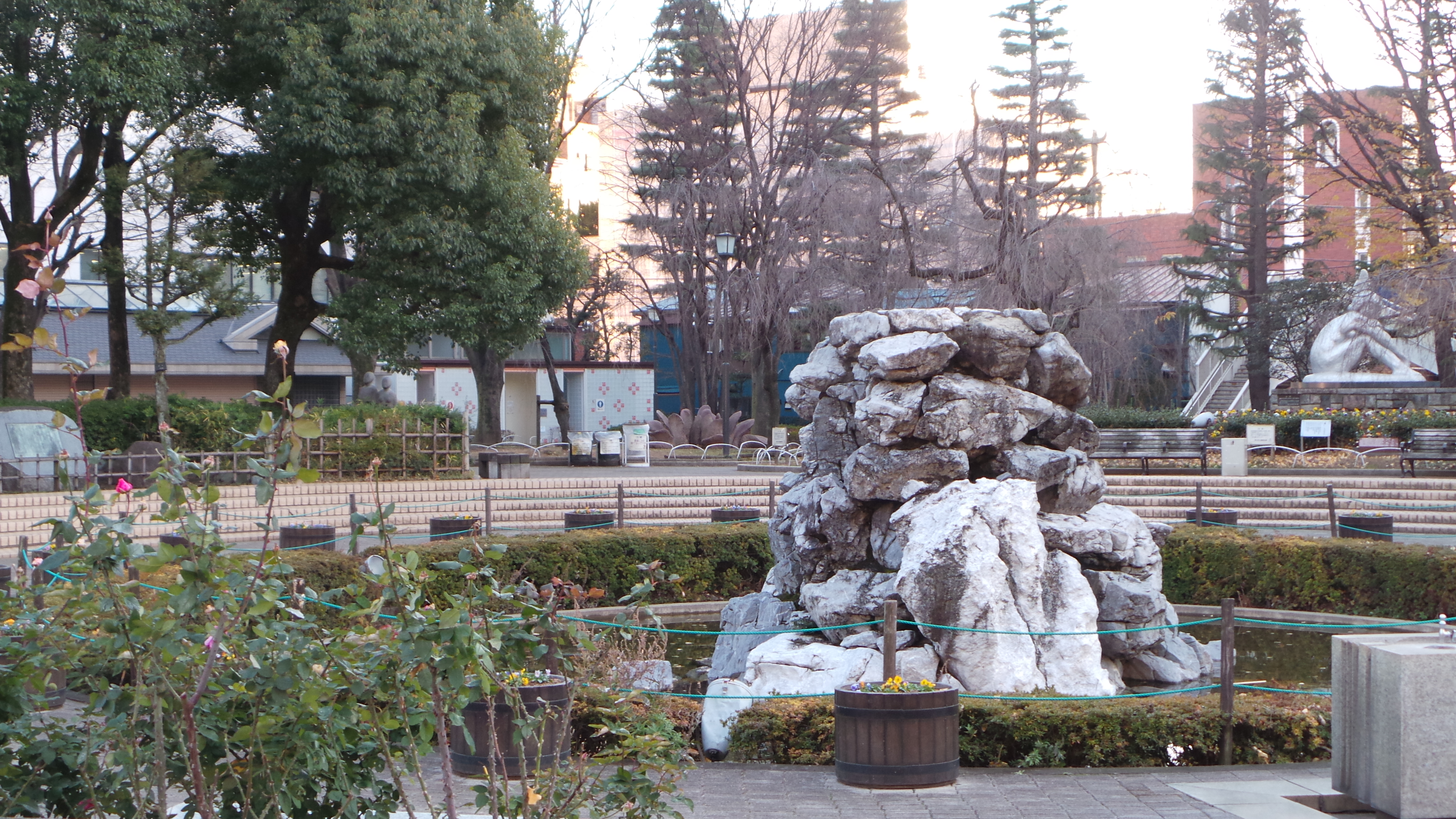
Arakawapark

This park seems to have somehow partially escaped the shedding of its leaves. On one side, it is skeletally bare; on the other side, it flourishes with nature. Laundry powder and bread. It is no secret that since being in Japan, I have lost an extreme amount of weight. Week by week, I find myself becoming skinnier, although previously, I didn’t think such a possibility could even exist. Perhaps that offers an explanation for the bread. However, my clothes are in no way dirty and in need of additional laundry powder.

I park my bicycle and take a seat on a bench to read my book: Murakami’s ‘Super-Frog Saves Tokyo.’ After consuming the book from start to finish, I take a little wander around the park. I come across a sign that says, ‘Do not feed the cats or pigeons.’ Oddly enough, I’ve seen multiple signs about feeding pigeons, often adorned with amusing text in speech bubbles, such as, ‘Don’t feed me; I can get my own foods.’ However, this is the first time I’ve seen a sign specifically addressing not feeding felines. With perfect timing, a cat appears from nowhere and takes a seat directly in front of the sign.
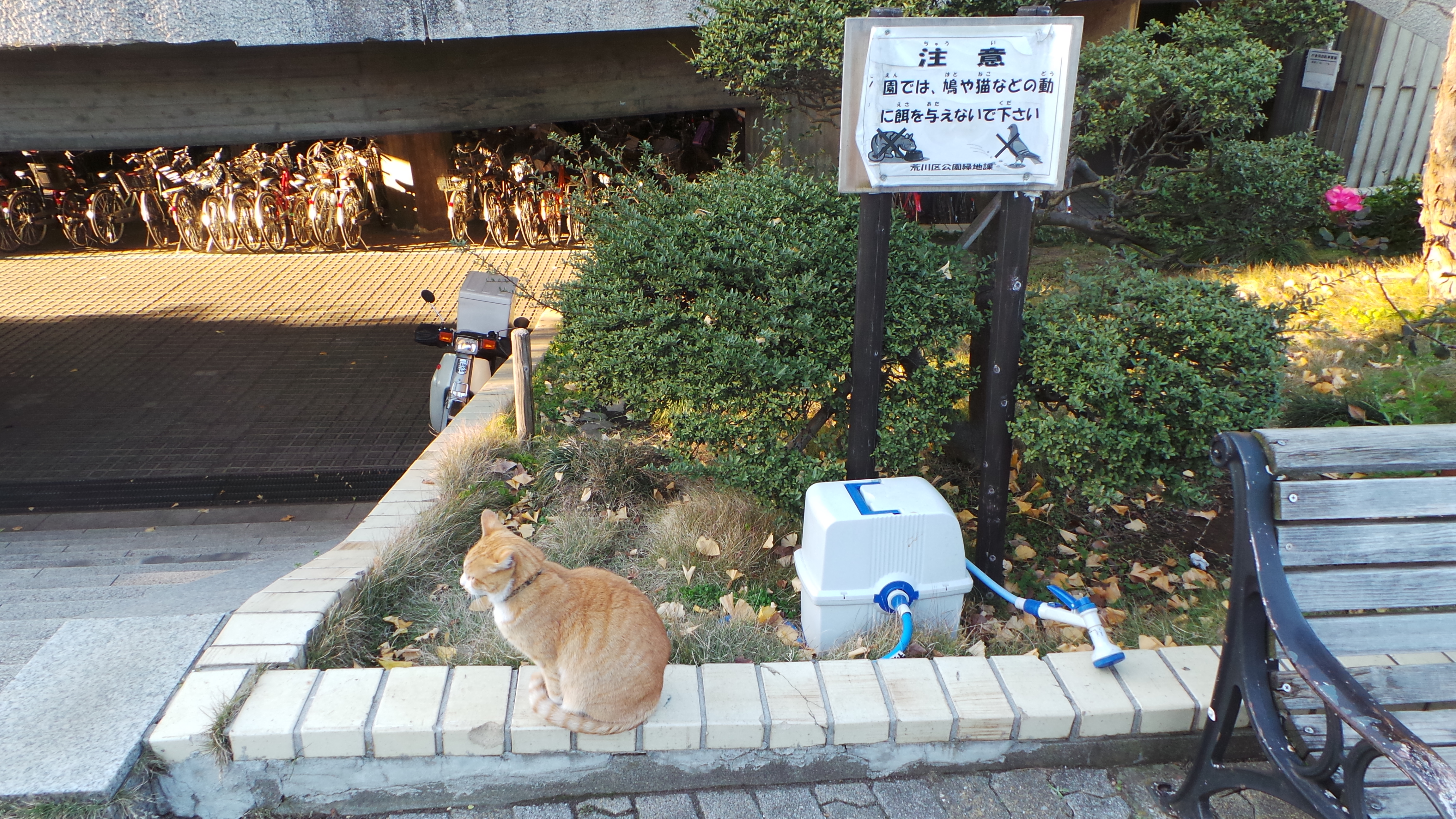
dontfeedthecat

The ginger cat decides to follow me around the park, meowing at me for food. Cats of this colour seem to have a habit of trailing behind me. I wander amongst the threadbare trees and reach a stone gazebo. Beneath the shelter, the homeless roam – about ten in total, walking around seemingly without purpose, wearing threadbare clothing to match the trees. They resemble characters in the starting area of an online role-playing game: lost, confused, and not knowing where they’re supposed to go. It strikes me that these people, much like the poor cat, actually don’t have anywhere to go.

I leave the park and stop off at a nearby shrine, only to be chased away by two massive guard dogs on leashes. Clearly, this shrine doesn’t welcome tourists. A little further up the road, I realise that as this day becomes more about animals, a better choice of reading material today would have been Agatha Christie’s ‘Cat Among the Pigeons’ because, for a second time in an hour, that’s exactly what I see.
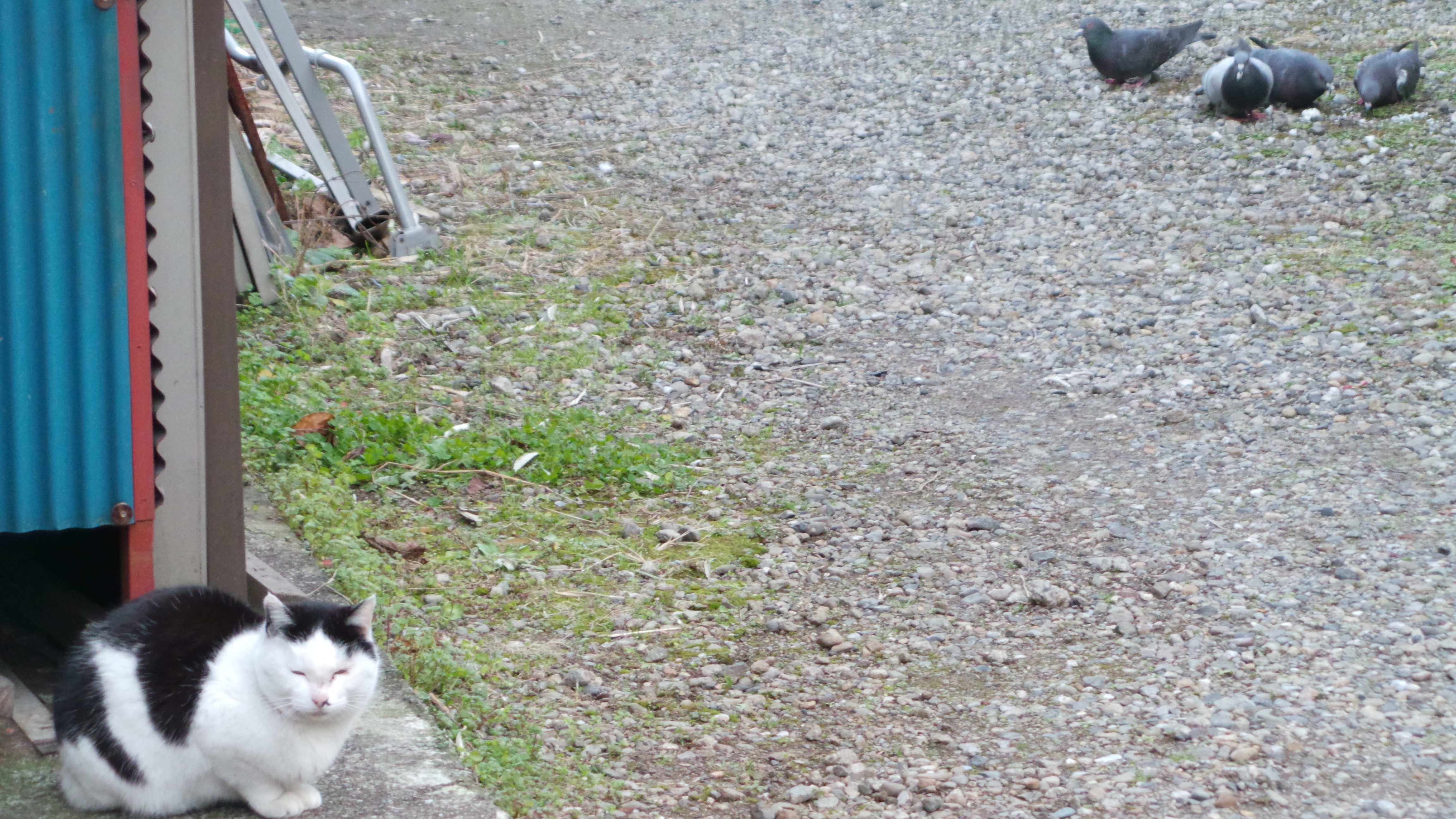
catsandpigeons

Leaving the stray cats behind, I cycle toward Nippori. One of my favourite things to do to keep myself occupied in Tokyo is cycling on warm days and exploring new areas. Without any real destination, I often pedal along, discovering random things that interest me. Today, the low winter sun provides the heat, and the opportunity to explore is seized.

I cycle through Fabric Town, passing a couple of interesting shops along the way. Highlights include a leather shop called ‘Touch of Fleather,’ a shoe store named ‘And Shoes,’ and a textile shop simply called ‘Tomato.’ After arriving at Nippori Station, I carry my bicycle up some steps and over the tracks. On the other side of the tracks, I am greeted by another bird in the form of a giant stone owl.
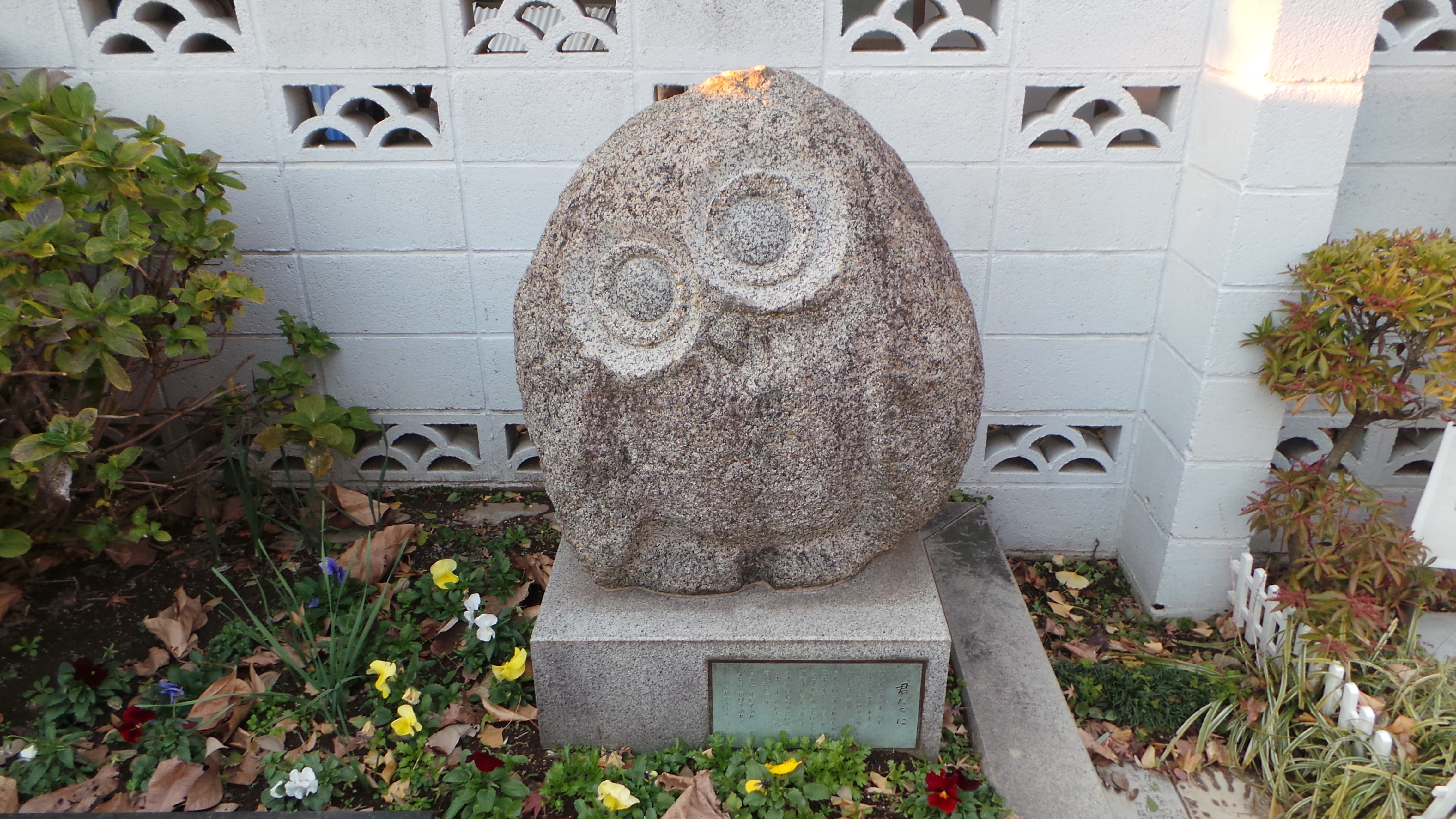
owlmonument

The owl describes itself as a ‘Memorial Monument for Takamura Kotaro,’ a famous Japanese poet and sculptor. Why they chose to honour his life with a statue of an owl is beyond me, but it looks nice, so I thought I would include it. The owl sits on Suwadai Street, a peculiar street that is at an elevation higher than the skyscrapers beyond. Additionally, the street boasts fifteen different temples and shrines.

I check the GPS on my camera to make sure that I’m still in Tokyo. Up here, even though I am just twenty minutes from my house, it feels like I am in the middle of the countryside. The nature in this area is simply stunning. I see a few signs with directions to a viewing point. On a clear day, I can witness the spectacle of a Mount Fuji sunset, where the sun and the mountain share the horizon. Unfortunately, I can’t see Mount Fuji — the story of my life. Nevertheless, I do get to witness the setting sun over a distant Tokyo skyline.
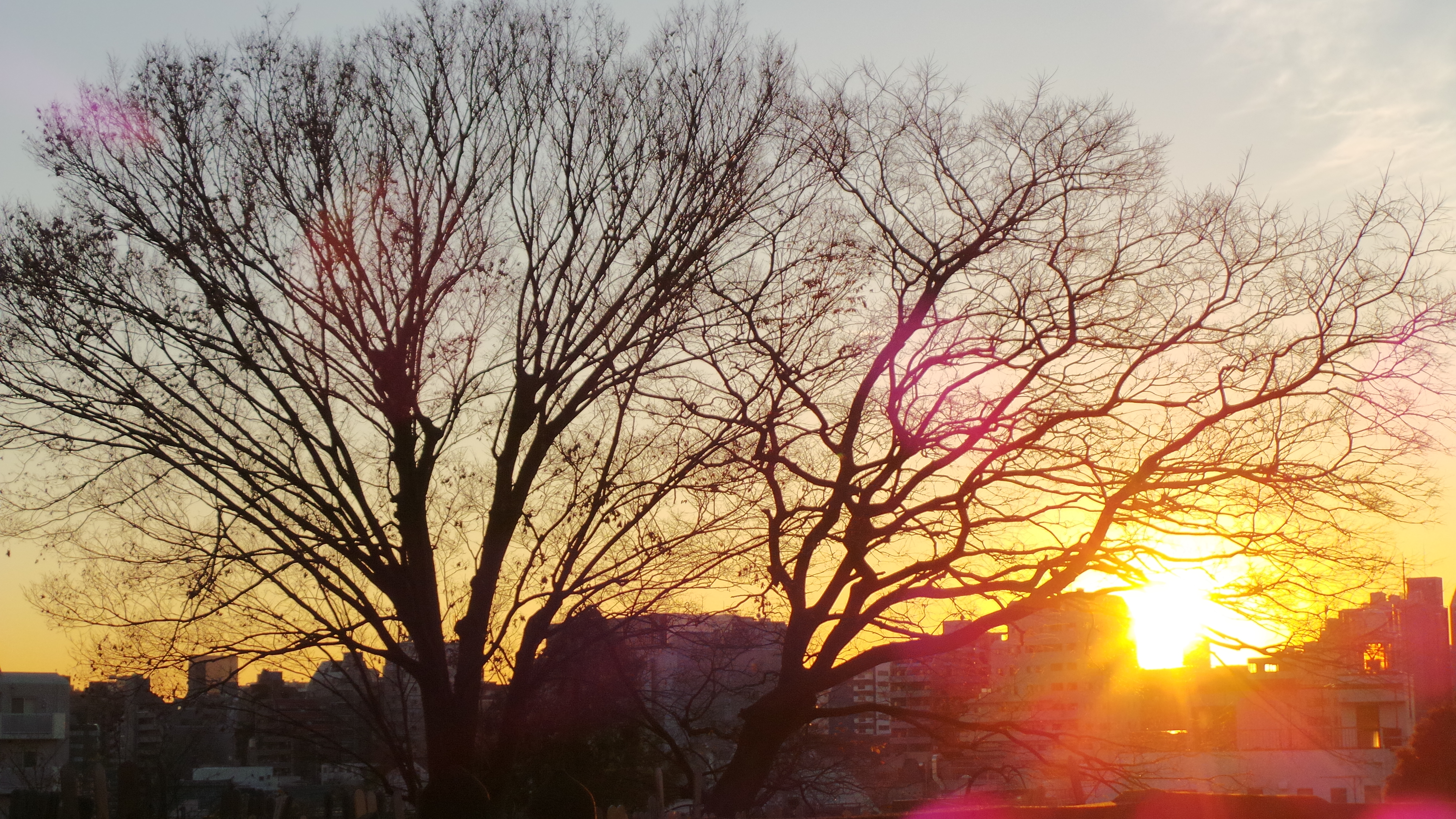
Nipporisunset

I cycle away from the temples, shrines, and stunning views, heading into Yanaka. The area is still uphill and features many old houses surrounded by leafless trees. I end up at a small market along some narrow streets: Yanaka Ginza Street. Conveniently downhill, the opportunity to cruise along, engaging in window shopping, controlling the flow of bicycle wheels with intermittent braking, is an enjoyment in itself. Navigating between the crowds of people, I narrowly miss shoppers who are presumably there to buy things they don’t need to impress people they don’t care about. As I try to remember a quote from Palahniuk’s ‘Fight Club,’ I get distracted and almost crash into a woman carrying a baby. Naturally, the baby starts screaming in fits of hysteria, so naturally, I cycle away as fast as I can.

I continue cycling until I arrive at another new place, Nezu. The streets here are adorned with beautifully crafted old lampposts and festive Christmas lanterns.
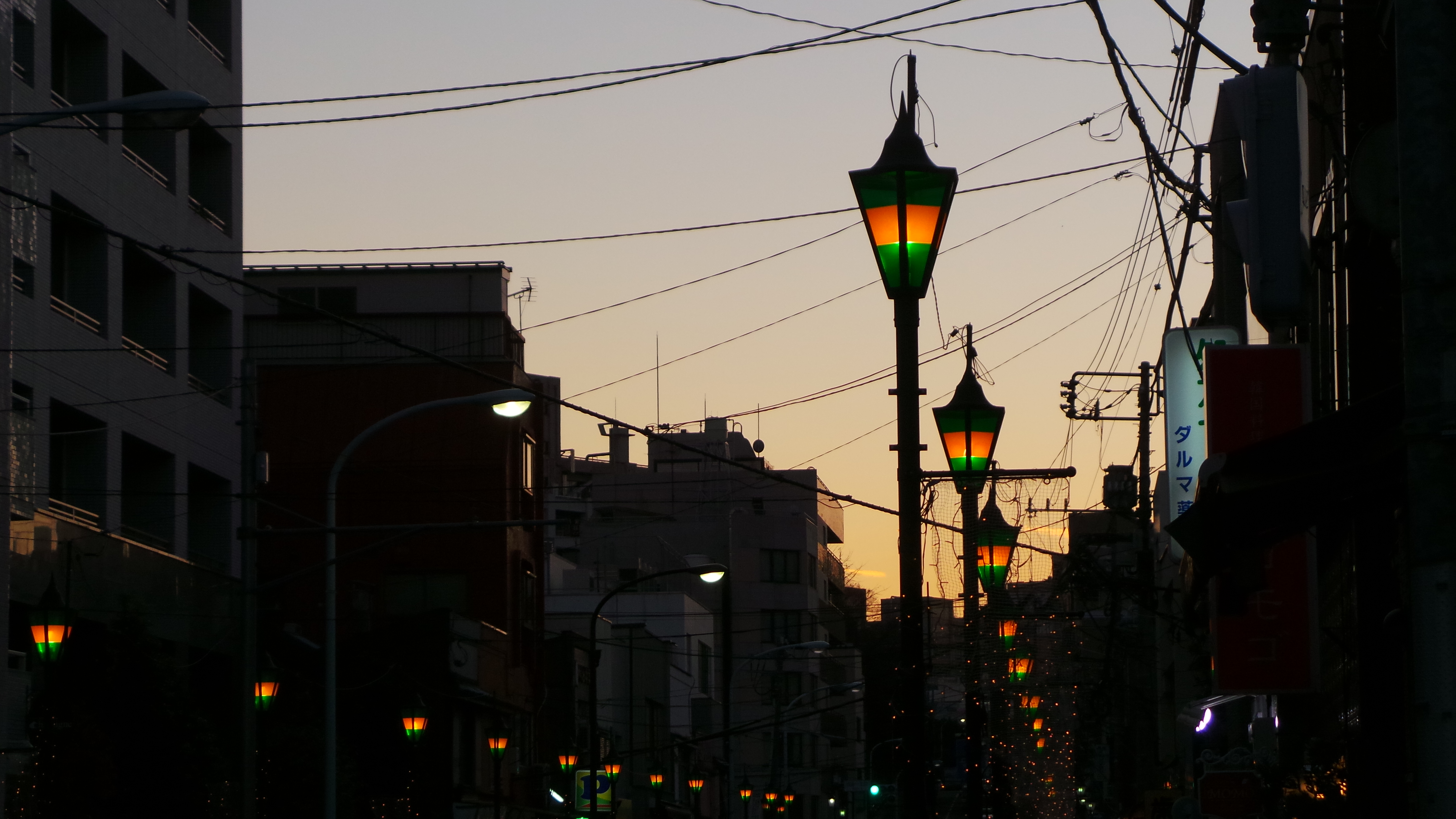
Nezu

Apart from a full-size train carriage parked randomly on the footpath, there isn’t much else to see in Nezu, so I head back toward familiarity. Outside Ueno Park, I study the map, desperately looking for something of interest. Four museums, but all presumably closed today; that’s how these things usually go. Then, something on the sign catches my eye. Perhaps it’s because I read about a character called ‘Frog’ today, or maybe some other intuition takes over, but the moment I spot a tiny dot on the huge map of Ueno Park below a caption saying ‘Fountain of Frog,’ I know that this will be my final destination today.

I search the park, passing dying crops and concrete views. After thirty minutes, the sun has completely set, and the weather has turned cold. Fierce winds chill the air but aren’t strong enough to dissuade my search. I cycle around the park, and each time I spot a map, I stop to double-check the location of the fountain. I often find that the fountain has changed its location from one map to the next, and on other maps, it has disappeared completely. Not one to give up on a personal challenge, I persist in my search for the elusive Fountain of Frog. Eventually, after forty-five minutes of cycling around Ueno Park, I find what I’ve been looking for.
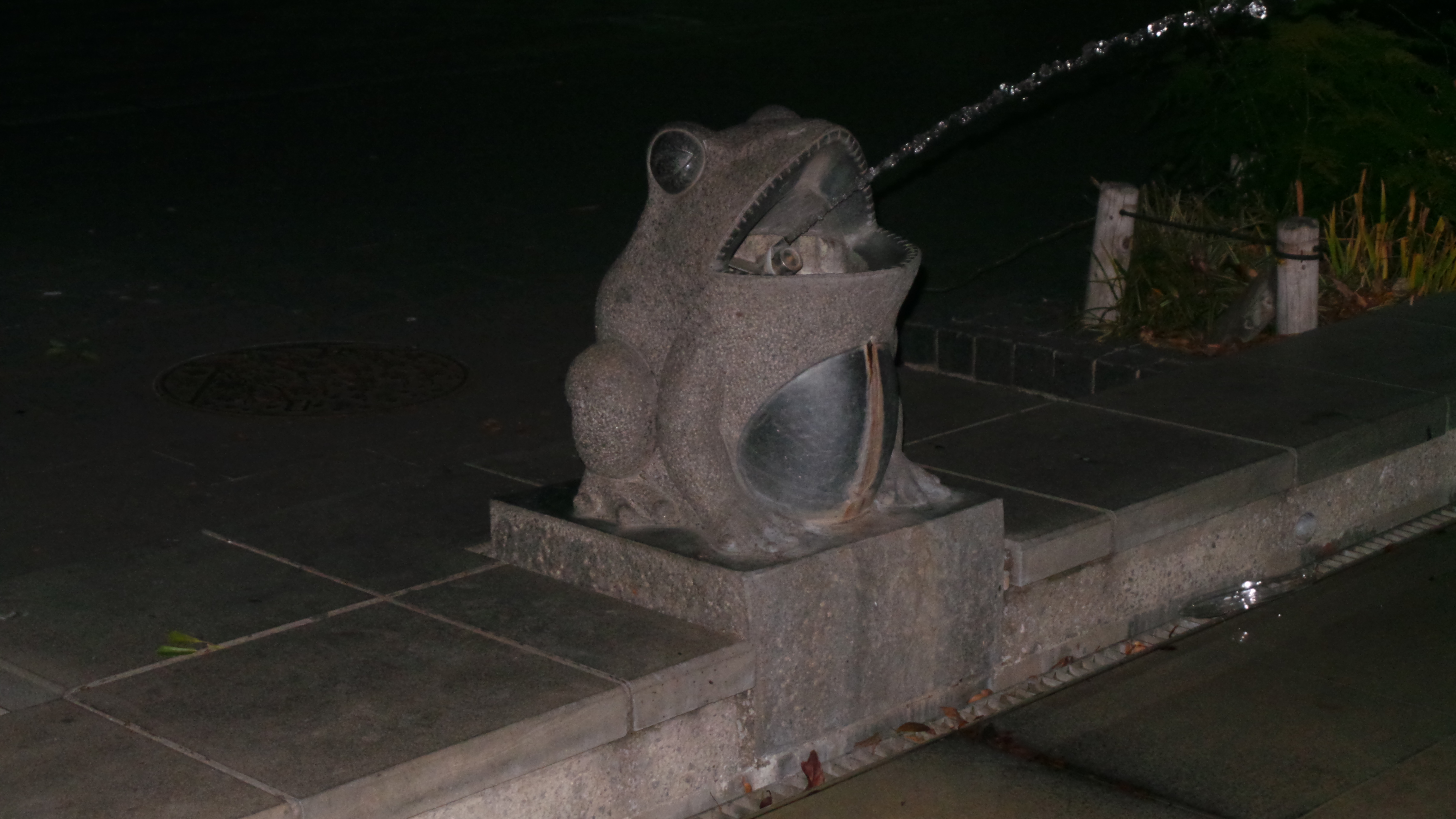
frog

As it turns out, the Fountain of Frog is exactly what it sounds like: a small statue of a frog spitting water into an even smaller fountain. I head home, my mind filled with a sense of disenchantment. It’s a rather disappointing end to the day, but at least I have bread.

Schindler’s Lift

Recently I have been a little caught up with having a cold, taking numerous visits to the dentist, and a sudden urge to spend the remainder of my free time filling out multiple sheets of paperwork pertaining to banking and insurance. This morning, I head outside to discover that everything has fallen down. I lift my bicycle up from the floor, pulling it apart from the scattered mess of other fallen bikes. The temperature in Japan is freezing cold now. Two days ago, there was snow in central Tokyo. Today, a strong wind blows through the air. I take my bicycle, armed with winter clothes, and cycle to Asakusa.

I head over to Senso-ji, passing hordes of skeletal trees. For the next three days, a festival takes place. Something to do with badminton rackets, or so it seems.

badmin1[1]

Today is Hagoita-ichi, a festival of decorated battledores—old-style badminton rackets depicting characters from kabuki shows. There are about twelve different stores here, each selling these rackets at a high price. These decorated wooden boards are supposed to deflect evil; perhaps this is where the ‘bad’ comes from in badminton. The sport that these rackets are used for is something of a Japanese childhood game called ‘hanetsuki,’ very similar to badminton but played without a net. I suppose the evil is the shuttlecock, and hitting it toward your opponent is a way to deflect that evil upon others.

The traditional way that hanetsuki is played involves the use of face paint. If you lose a point, your opponent gets to rub paint on your face. If you were terrible at the game, I suppose after a while, your colourful face might begin to resemble one of the characters portrayed on the hagoita. These days, these rackets are mainly used for decoration purposes. Sandwiched between the stores selling badminton rackets are food shops, and one specific store that caught my eye because it looked so out of place.

daruma[1]

Daruma dolls are traditional Buddhist dolls depicting the image of Dharma, and they are considered a symbol of good luck. With white eyes that stare into nothingness, it is said that if you colour in one eye, you can make a wish. Once the wish comes true, colour in the second eye, and your Daruma is almost complete. The only thing left for the doll is to be returned to the temple it was bought from and burned. It feels slightly unfair to burn an object that has done its best to grant you a wish, but sadly, that’s just how these things go. As I am taking a photograph of the dolls, a man next to me is doing the same. His hat flies off his head in a gust of wind. Somehow, I manage to reach my hand up and catch his hat in mid-air, like a pro.

After the festival, I go to Akihabara for some Christmas shopping. In Japan, where Alcatraz-themed restaurants and robot cabaret shows are common, it’s no longer strange to find a cafe themed around a popular girl idol band. Akihabara is bustling with comic book stores, video game shops, and large electronic department stores. However, that’s not my reason for being here. Almost instinctively, I leave the station and head directly to the AKB48 Cafe and Shop.

akbcafe[1]

The last twenty-three single releases by AKB48 have consistently claimed the top spot on the charts, indicating their immense popularity among Japanese people. One clever marketing strategy involves including a ticket for a handshake with a band member with every CD purchase. Observing the guy in front of me in the queue buying over one hundred copies of the same CD, it’s clear that he’s a fan of handshaking. I exit the store with ten copies of ‘Kiboteki Refrain’, and I can’t help but feel like a weirdo. Nevertheless, I’ve managed to wrap up Christmas shopping for ten people in less than ten minutes.

Before returning to Asakusa, I make a detour to Yodobashi Camera to play some piano. However, after thirty minutes, I decide to leave because one of the staff members is giving me an ‘are you going to buy anything?’ sort of look. Outside Akihabara Station, somebody seems to have mixed their Christmas up with Easter.

dancingrabits[1]

For some unknown reason, it is not possible to open a bank account in Japan unless you have lived here for a minimum of six months. Since my time in the country has exceeded that quota by almost three weeks, I decide it’s about time to get my documents in order and take the plunge toward integration. But, I can’t just wander into a bank saying, “I have been here six months, give me a bank account!” First, I need to get myself a personal seal. Not the aquatic mammal I had been hoping for; this seal is more like a stamp and is known as an ‘inkan’.

I head over to a small inkan shop opposite Tawaramachi Station and take the escalator up to the second floor. The escalator provides me with amusement, and the title of this overdue blog post practically writes itself.

schindlerslift[1]

Inside the shop, there are wonderfully expensive stamps on display in high-priced cases. Since I am only getting this product for one reason – a bank account – I opt for the second cheapest option available. The woman draws a circle that takes up a whole page of A4 paper and asks me to write my name in the way I would like it to be engraved in the stamp. Horizontally or vertically? Kanji or katakana? I don’t really care, so I just scribble my name across the paper as quickly as possible, and with very little thought.

Next, I select a case, once again opting for one of the cheapest available, but still seemingly of high quality. Perhaps there is no such thing as bad quality inkan. I hand over ¥2950, the cost of both the inkan and the case. The woman informs me that it will be ready in thirty minutes, hands me a slip of paper, and asks me to bring it back with me when ‘my time is up’.

myinkan[1]

Half an hour later, I am the proud owner of my very own inkan. Naturally, I head home immediately and start stamping my name on everything I own.

The Tooth Without Enamel

Today marks the final day in Japan to admire the autumn leaves. Abscission has commenced, and the leaves are poised to fall. It’s as if some secret internal clock, powered by nature, instructs the trees that today is the day to part ways with their foliage. Cascading like clockwork, fading like time. Today, the leaves will begin their descent, and there is no changing that fact. The Japanese people inform me that it starts today. The trees, too, are aware that it starts today. The ground outside is a wash of greens, yellows, and reds. A reflecting traffic light on a rain-swept road would complement the scene perfectly. Today is clear with sunshine, dry but with a light breeze. No rain, no reflections. I step outside for one last time to relish in the autumn colours. Tomorrow, there will be nothing left.

autumntrees[1]

Despite my obvious fascination with the tranquil joy of autumn colours, I am distracted—still suffering silently from a toothache. The dentist doesn’t open until half-past two, and with an afternoon lunch planned, I decide on a 4 p.m. appointment. I take the train to Harajuku. Today, two very different festivals are taking place in the space outside Yoyogi Park. The first is a vegan food festival, and the second is a Spanish food festival.

I exit the train at Harajuku Station. On the other side of the ticket barrier, a young Japanese man with a microphone awaits. Like an animal waiting to catch its prey, he stands silently until I draw near. Suddenly, he rushes into my path, stopping me in my tracks and interrupting my thoughts of dental disquiet. “Excuse me, can you speak English?” he asks, holding the microphone rather intrusively beneath my chin before pushing it toward my mouth, seeking a reply. I hesitate for a moment, unprepared for his question.
“No, sorry,” I tell him.
“Oh,” he says, looking at me with a mix of confusion and wry disappointment. “Okay, sorry then.” With that, he scans his Suica card on the ticket machine and heads through the barrier in the direction of the platform; his outline lost in seconds as he is swallowed up by the reckless crowds.

I arrive at Yoyogi Park to find the Spanish festival in full swing: various food stalls, eleven of which are selling paella, traditional Spanish clothing, and flamenco dancers performing on the large stage. The dancers appear to be genuinely enjoying themselves, their souls lost to the rhythm of the music.

espana[1]

I didn’t come all this way to be harassed by men with microphones or to listen to Spanish music, though. Today, my purpose is the vegan festival. As I wander from Spain, I inadvertently end up in Germany. Somewhere between the two food markets, car manufacturer BMW has a stage showcasing their newest electric car, the BMW i8. I can’t quite see what this has to do with the Spanish festival or a diet free from animal products. The BMW stage looks incredibly out of place; it is mostly ignored by the many people clearly here to eat food.

At the vegan food festival, there is a lot less hot food than I expected. Most of the stalls are selling organic and Fair Trade products—coffees, chocolates, teas, sugars, and various types of bread. There are only about ten hot food stalls, but almost all of the food has already sold out. I am spoiled for choice between a shop selling Indian curry and another selling vegan burgers.

¥500 later, and I’m sitting on a park bench, eating a burger, surrounded by fallen leaves that probably taste better than my food. If not for the sauce that adds at least a hint of flavour, I would likely discard the burger and rush back to Spain for some lukewarm paella instead. As I leave the festival, I notice that the people browsing the vegan stalls seem less happy than those over at the Spanish festival.

vegefestival[1]

Literally full of beans, I head back to Asakusa and to the dentist. I’ve chosen to visit a much smaller surgery than the one I had been to previously—an English-speaking dentist I met in a bar, and I’ve kept her business card for a day like today. At the dentist, I endure four separate x-rays before a quick fix is done on my tooth. I make an appointment to return in two weeks’ time. It looks like my tooth will face the same fate as the autumn leaves—an abscission of sorts. After an hour at the dentist, I pay ¥9720 and receive another packet of little yellow pills. I am told that if I apply for a Japanese insurance card, I can reclaim two-thirds of the cost of this treatment and all subsequent treatments—a welcome bonus and information they didn’t really have to disclose.

Tooth sorted, I head over to Cafe Byron Bay to play at an open mic night—my second time today before a microphone. At some point during the evening, I receive a phone call from my dentist. She is calling to check how my tooth is doing. I am surprised she made the effort to see how I am—an excellent example of customer service in Japan. Despite knowing that in two weeks, I’ll have my tooth severed without anæsthesia, her compassion somehow relaxes me. I forget about my fate and enjoy the rest of the evening, virtually pain-free.