The Age of the Gods

Today is National Foundation Day, the day that Emperor Jimmu was declared the very first Emperor of Japan, 2675 years ago. This marked a transitional period in the country’s history, ending what was known then as the Age of the Gods. It is often believed that before the accession of Emperor Jimmu, Japan was founded in an entirely different way.

It was once widely believed that the universe was engulfed in a chaos of sorts. The sound of particles moving around in a ball of confusion somehow created light. This light sat above the universe for a long time. Eventually, the particles began to fall, creating a blanket of clouds. From the clouds, five gods known collectively by the name Kotoamatsukami appeared from seemingly nowhere.
sunshinesumida

The five gods decided to cast four single droplets of water onto the oceans that formed on the planet below. Miraculously, these four drops materialised into huge land masses that are recognised today as the four main islands of the archipelago known as Japan.

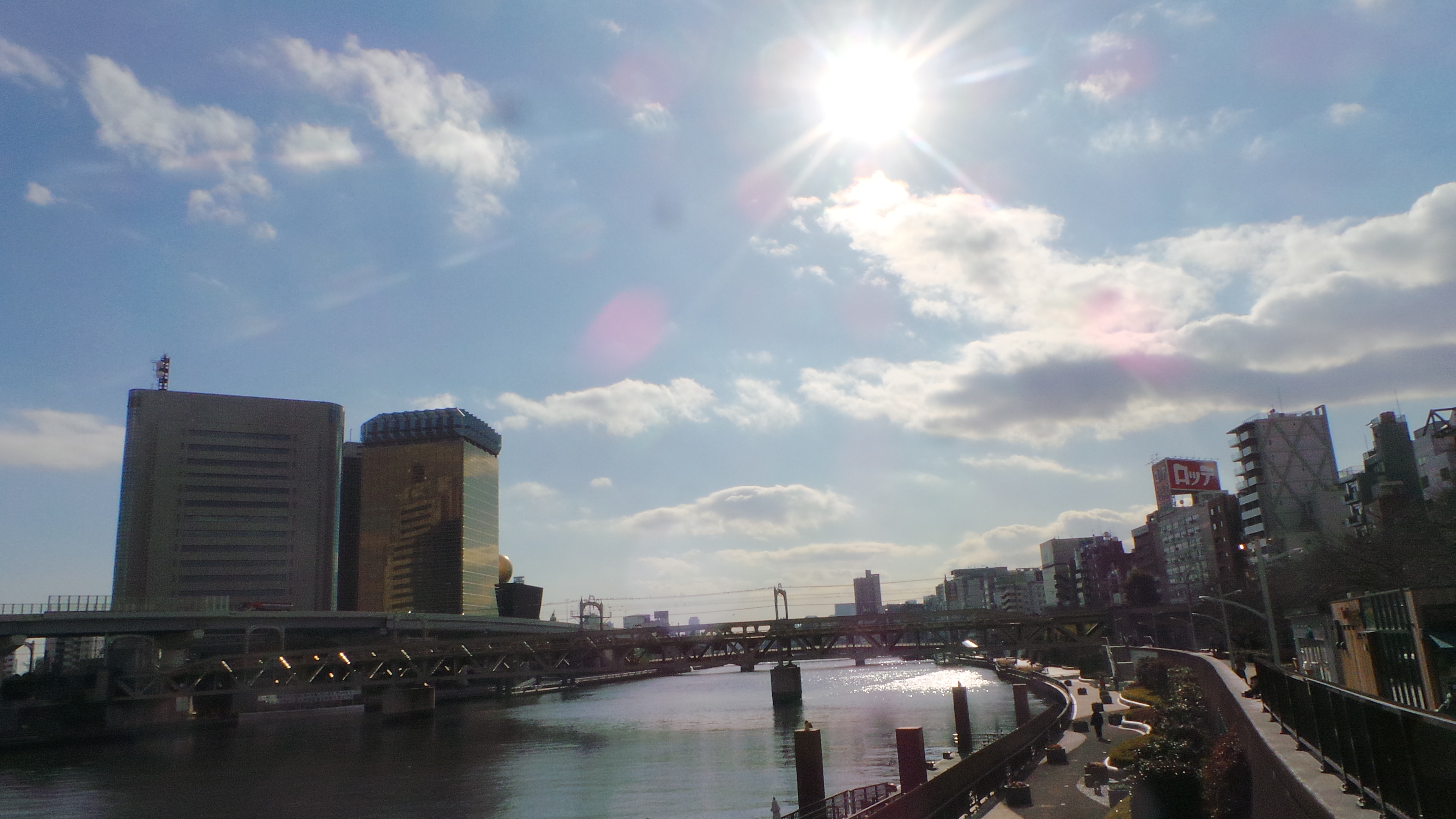
I take to the Sumida River to look at the sunshine and the clouds and think about the formation of the universe. The story of Japanese creation seems to completely exclude the genesis of all the other landmasses on the planet, but oddly, the theory is still believed today by some Japanese people. With no celebrations at all taking place, I decide to follow the path of the river in a new direction and end up in the area of Hashiba.
hashibagraff

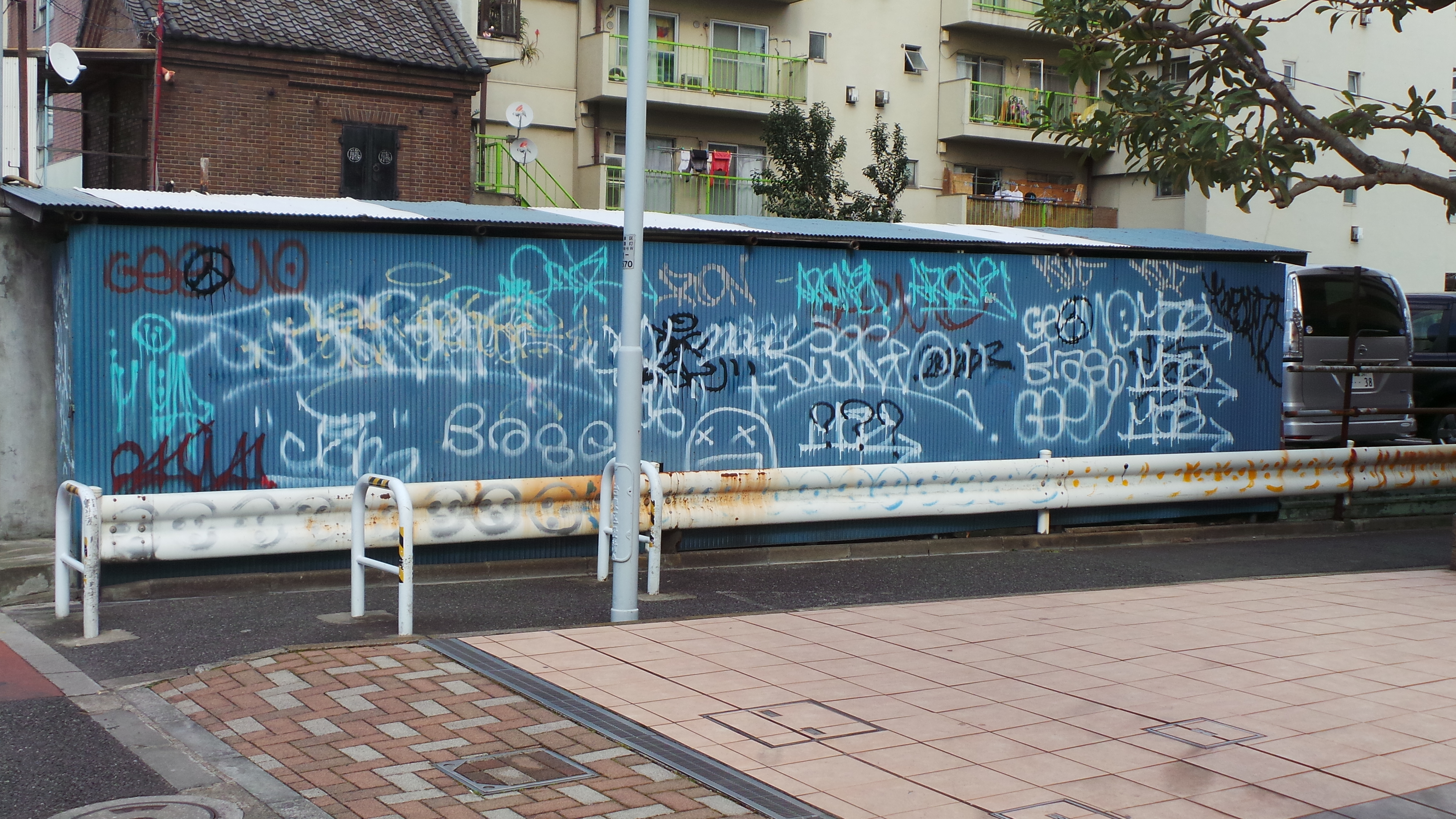
Hashiba is somewhat unusual. The first thing that strikes me is that there are no maps, no places of interest, and no tourists. Just plenty of graffiti. It always surprises me to see graffiti in Japan, something I had almost forgotten existed until today. The Hashiba area is connected to the river and was once used as a ferry terminal. A floating bridge existed here too, some time ago. Before that, this area was covered in overgrown fields.

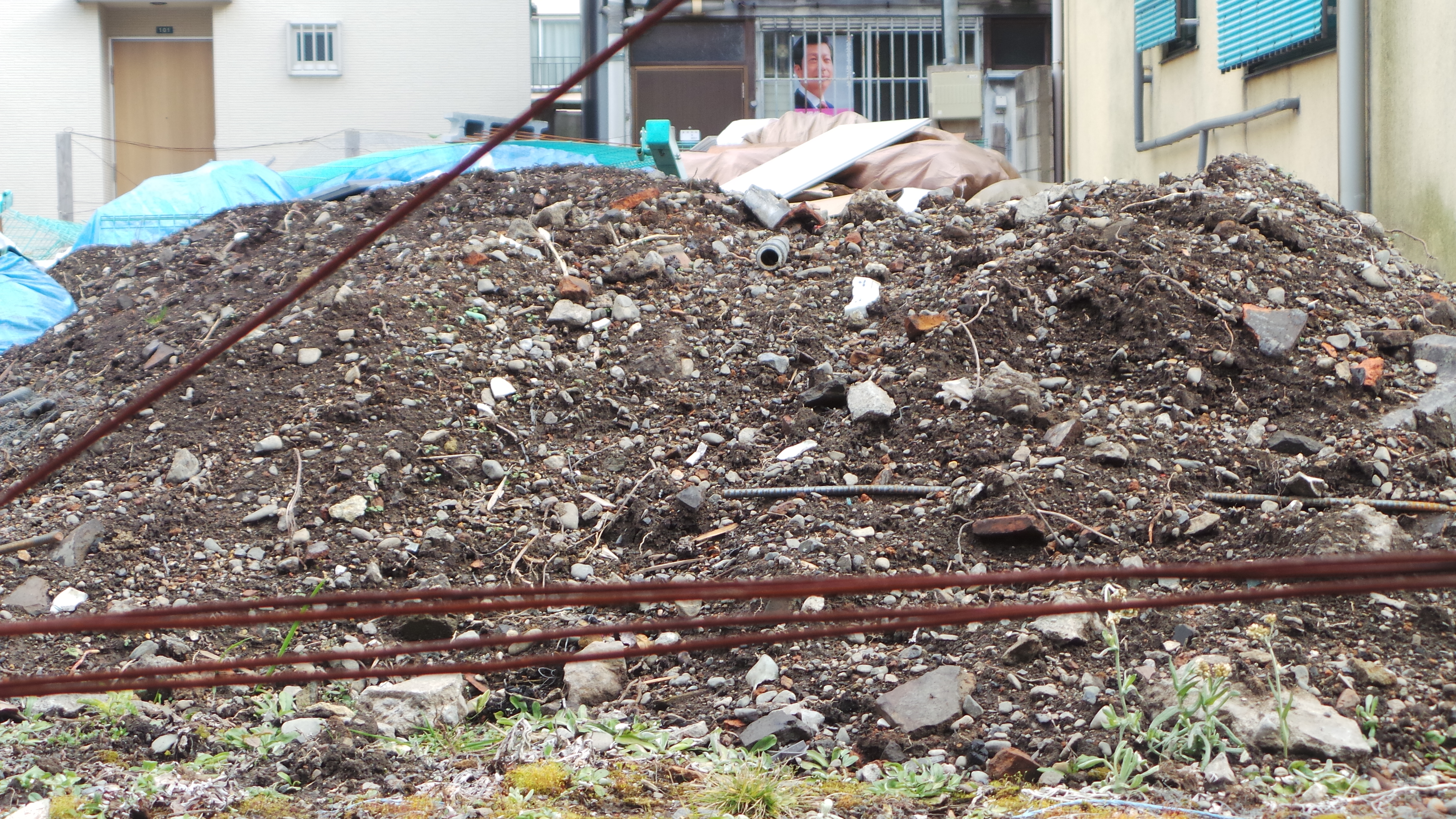
An older Japanese person I met with told me that he remembers coming here as a child to catch dragonflies and play in the long grass. The only sense of nature here now is the piles of dirt mixed with rubble, forgotten about and never removed.
nichirentrash

In this area, watching over the mounds of trash and the graffiti, sit election posters for the Komeito Political Party. The party was founded by members of the Nichiren sect of Buddhism and therefore does the unpopular act of mixing both politics with religion. I am not sure anyone is here to help Hashiba, though—a place that seems incredibly run down and feels almost absent of potential change.

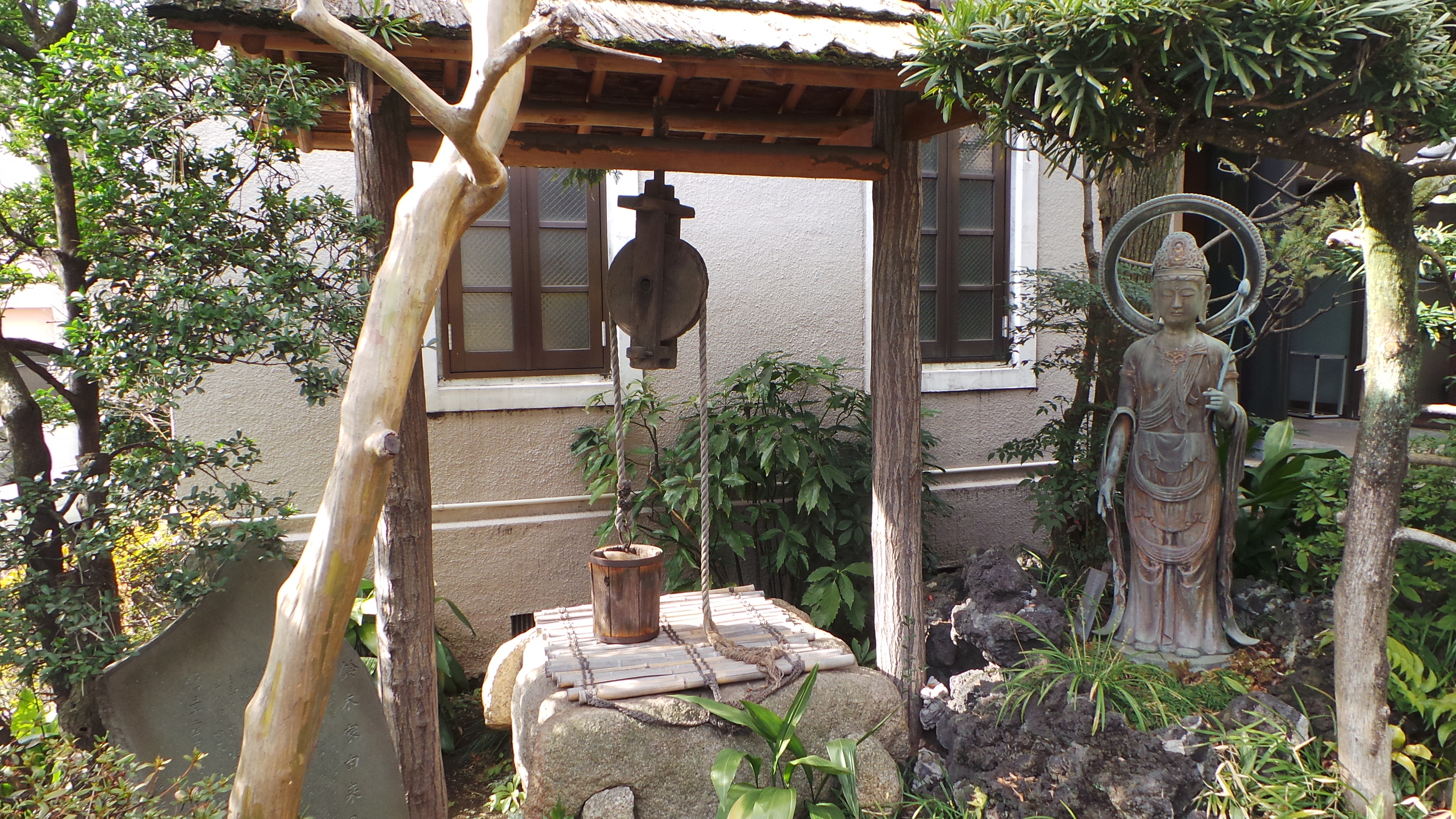
I decide to remain positive, to try to discover the good things about the area. Mixed amongst the negativity sits Hogenji Temple—a rather beautiful place with an old well, many stone statues, and a cemetery. For whatever reason, the grounds of the temple are filled with the sound of a loud chainsaw, disturbing the silence and further adding to my gloom-ridden impression of the area.
wellwell

Desperately trying to find a redeeming factor, I continue to explore. I wander around for a while until I eventually find a sign written in English. The sign is provided by the Tokyo Metropolitan Board of Education, which is usually a good indication that something important might be here. Finally, a point of interest. Finally, something to see.

What looks like another temple turns out to be a tomb. The tomb comes complete with its own nature in the form of beautiful trees and a huge aviary. As if deliberately trying to add to the contrast, the tomb also includes a basketball court.
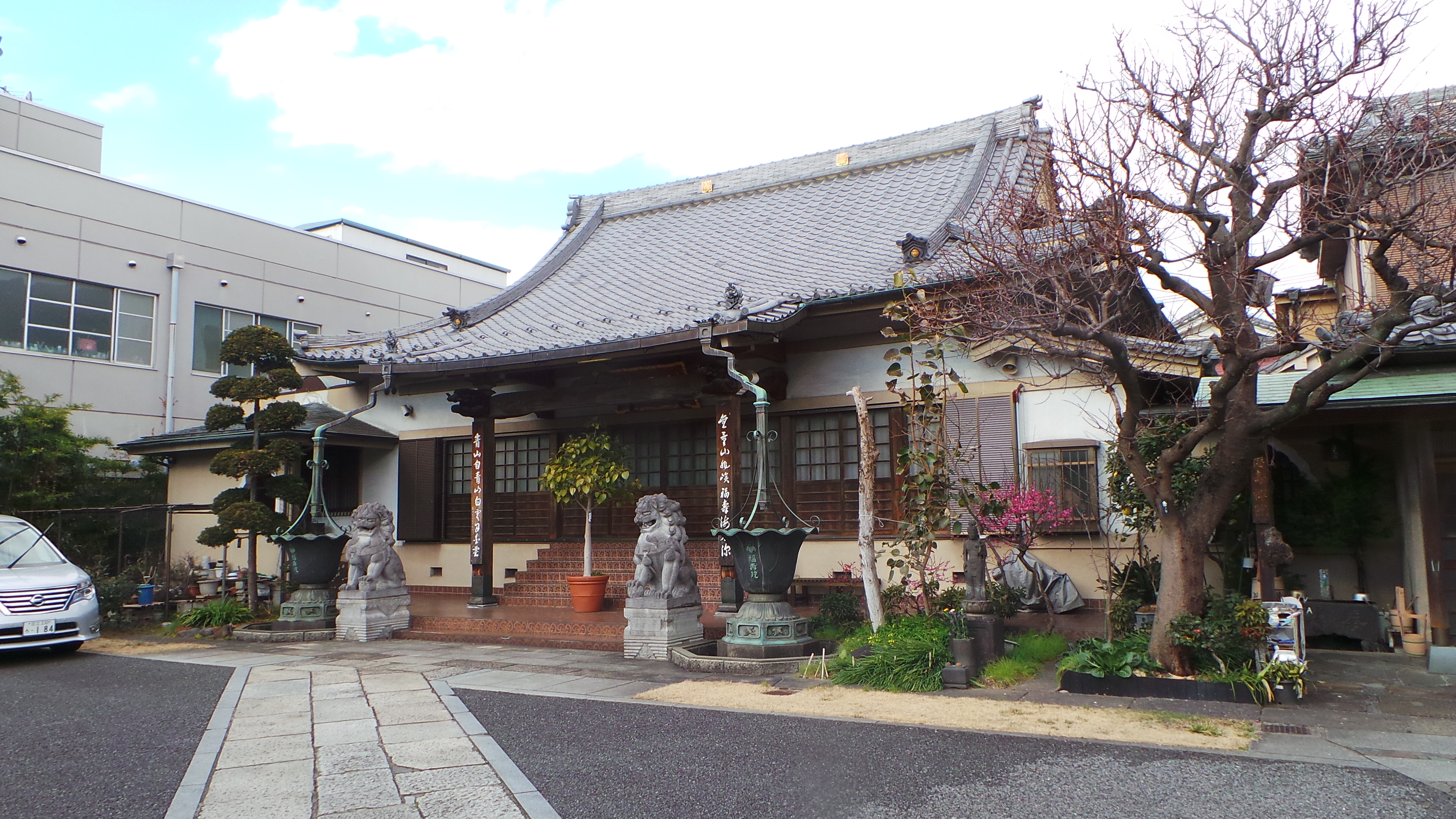
andotoya

I discover that this is the final resting place of Ando Toya, a famous Confucian scholar. He was known for his time spent studying the Chinese language and teaching it to the people of Japan. He once said about the Chinese language, “It sounds like the chirping of birds. I can write, but when I open my mouth, I truly cannot speak.” This doesn’t quite explain the need for a basketball court here, but it does perhaps explain the aviary.

I stand in the grounds of Ando Toya’s tomb, staring in silence at the birds for almost a full hour.
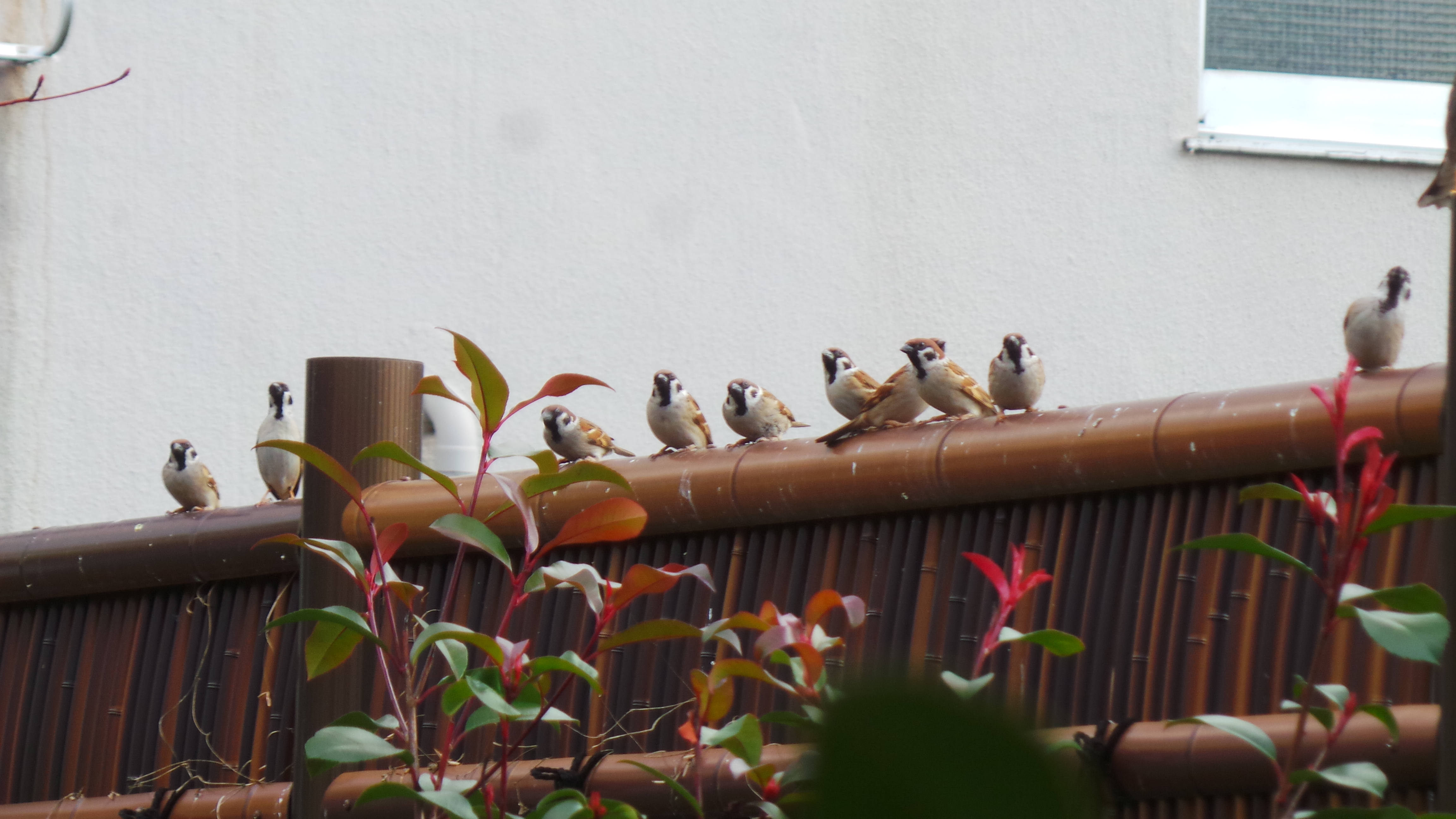
sparrows

The beautiful sparrows chirp in their hundreds. The echoing of those words spoken by Ando Toya flows around my head. It makes me wonder if the birds are secretly trying to communicate with me in Chinese. Maybe they are.

A Mime to Kill (With Beans)

The snow came and went faster than a fleeting thought on a cold February morning. Despite the chill, a very famous festival is set to take place across Japan in two days’ time, known as Setsubun. The festival involves throwing roasted beans at demons and marks the penultimate day of winter, according to the Japanese lunar calendar. However, it doesn’t feel like spring is coming anytime soon; outside, it is cold, and patches of frozen white snow cover the city of Tokyo. Perhaps it will stay this way for another two months, or perhaps the unpredictability of Japanese weather will strike again.

The bean-throwing festival will be taking place at most of the temples and shrines in Japan. However, I have decided not to attend. Instead, a group of performing artists, some of whom have been featured in my previous posts, and a couple of whom I have randomly become friends with, are celebrating Setsubun in a very different way—with comedy, clowns, and plenty of balloons.

baloonmonster[1]

I arrive just as the event starts. It begins with a man dressed as a ninja performing tricks. He jumps over chairs, stacks some chairs, balances on chairs (his performance very much focused on seating), before being randomly attacked by a man wearing a sheep costume. The sheep man throws a single bean at the ninja; he overreacts in a classic comedy style before falling over and playing dead for the remainder of the proceedings. The sheep man has a costume made up entirely of balloons, the handiwork of my balloon artist friend, no doubt.

After the ninja fight, two demons emerge. One is dressed in white, presumably to represent good, and the other is dressed in black. The demon in black wears a target on his back, seems far too happy for an evil spirit, and appears to be enjoying standing around on his high stilts, smiling at everyone.

beanevil[1]

Suddenly, the attention shifts to a group of clowns standing on a balcony above a pachinko parlour. They start shouting in Japanese using megaphones. After exchanges are made between the clowns and demons that I can’t quite comprehend, people in the audience begin to laugh, a lot. An elderly woman on a bicycle with an impossible number of shopping bags sighs as she tries to weave through the crowds. I might just add, this whole festival is taking place on a busy shopping street and is perhaps causing a little too much chaos for some of the locals who just want to get to where they need to be.

After the shouting, all hell breaks loose. Paper bags are dropped from the sky by clowns in their thousands. Children and adults alike scramble to collect them from the floor. I raise my arm and catch one in mid-air. Everyone is rushing around, trying to salvage one of the decorated paper pouches. People are crashing into each other, forgetting about the safety of others. Regardless of the carnage, it’s actually a lot of fun.

beans[1]

The pouch I caught predictably contains roasted beans. After a while, everyone goes silent before a chant occurs. Following the chant, people start pouring beans into their hands and throwing them as hard as they can at the demon. His smile is quickly wiped from his face by roasted beans.

As I run out of beans, a little girl walks over to me and smiles. She takes my hand and pours beans into my palm. “Quickly! Throw!” she says before giggling off and returning to her parents. Eventually, everyone runs out of ammunition, and the event draws to a close. As people start to leave, the floor becomes a hunting ground for hungry pigeons. A man with a megaphone starts shouting at the birds, and they eventually fly away. The last thing that happens is all of the performers, clowns, demons, and mimes begin to clean the streets.

mimesweeper[1]

Something about seeing a mime hard at work sweeping the streets fills me with a sense of disappointment. It kind of spoils the character and takes away from the magic. I offer to help sweep using one of the many brushes, but I am shooed away, just like the pigeons.

I still have some of the afternoon to kill, so I head over to Senso-ji. It is the weekend, and there is usually something taking place around the temple. Sure enough, I find a street market, the usual man with his performing monkey doing some tricks, and strangely, for the first time ever, the temples and shrines in the complex are each holding some sort of service. I head into the main hall of Senso-ji Temple, and although it is very difficult to get close enough, I manage to sneak a quick photograph before being told once again to move on.

sensomon[1]

With nothing much else to do, and Asakusa now mostly quiet, I head home to eat some demon-killing beans.

Japanese New Year’s Day

This morning, my plan is to wake up early to catch the first sunrise of the New Year. In my usual tardy fashion, I oversleep and wake up at 7 a.m. with the sun shining through my window. Always next year, I suppose. I head over to Asakusa to meet Christine. The fierce winds of last night have completely gone, but it is still cold outside. In fact, I might see my first Tokyo snow rather soon. I notice that the usual New Year’s Day kebab wrappers, vomit, people asleep in the gutter, and smashed beer bottles are missing from the street. Instead, people are cheerfully whistling on their way to work, and there isn’t a speck of litter on the immaculate Tokyo pavements.

I take Christine to the train station to see her off. Perhaps it’s tiredness or a hangover; who knows? But, I take her to the wrong train station. After rectifying my mistake, we rush to the correct station, but Christine misses her train by two minutes. Luckily, the next train will be arriving in half an hour, and she somehow manages to get to the airport in time for her flight. With the rest of the morning to kill, I head home to do a little writing before heading to Kudanshita Station.

I head over to Yasukuni Shrine and join the queue of thousands of other people there for Hatsumode.

nyd1[1]

Hatsumode is traditionally the first visit to a shrine of the New Year. During this visit, the first wish of the year is made, and it is said that this very first wish is always granted by the gods. The entrance to the shrine is lined with the usual market of delicious-smelling food—something to tempt me on the way out, no doubt.

After making my wish, I take a wander around Yasukuni Shrine. This shrine is steeped in controversy as it houses the spirits of people who died in combat while fighting for Japan in wars between 1867 and 1951. Additionally, the shrine honours the souls of deceased war criminals. There is a museum here where you can read letters written by kamikaze pilots that were left for their loved ones before they died.

After exploring the shrine, I decide to indulge in some sticks of fried cheese, along with my favourite street food: strange-looking but delicious yakisoba, layered in seaweed. I don’t care that my food looks like garden worms. ¥600 well spent.

nyd2[1]

I wander through the markets in the shrine and decide to purchase an omamori, a Japanese amulet sold at religious shrines. This talisman will find its place in my house, offering good fortune and protection from evil spirits. Next, I pay ¥100 to receive my second fortune of the year. Unfortunately for me, my fortune is written in Japanese. I attempt to translate it myself, and I get the following message:

“Whoever meets in this fortune is brought happiness that appeared by virtue of good people. I will be appearing, but the eye of devotion remains out of sight, like a ball hidden in the stone.”

nyd3[1]

On the way out of the temple, a man dressed as a dragon tries to ‘eat’ my head; apparently, this creature can devour the evil spirits residing inside me and cleanse my mind. Free sake is also offered, with donations welcome. I decide to leave the shrine and head back to Minowa to enjoy traditional New Year’s Day food.

My meal consists of shiitake mushrooms, carrots, lotus root, potatoes, burdock root, konnyaku, and taro potato, all generously given to me by one of the Japanese people who live in my apartment. The food is absolutely delicious.

After dinner, I decide to do something completely unrelated to Japanese New Year’s Day traditions. I open a cardboard stocking of weird snacks that my friend Marcus kindly gave me as a Christmas present. My snacks are as follows:

Tamago Boro, translating to mean ‘egg biscuits’, are crunchy round snacks that taste nothing like egg, only sugar. For no apparent reason, the packet features a giraffe kicking a football.

Chibichan Noodle claims, “Chicken I do eat as it is!” and suggests not adding any water. “Please make a sound when you eat. Pori pori.” Apparently, that’s the noise it makes when you chew on this treat. Imagine a packet of supermarket instant noodles that have been crushed. Add the little sachet of chicken seasoning, and then eat them raw. That’s what Chibichan Noodle tastes like to me. Horrible.

Pirate Candy: just seven individually wrapped orange-flavoured boiled sweets. Nothing exciting, and nothing that ties in with an association to pirates, as far as I can see. The Japanese text here says, “Let’s aim to reach Candy Island. Let’s go!

nyd4[1]

Abeseika Melon: these melon-flavoured snacks look like small headache tablets and have the texture of chalk. “Please enjoy as much as possible after opening!” Surprisingly, this is actually my favourite of the six snacks. The sweet quickly dissolves in my mouth, leaving behind a bitter lemon flavour and what can only be described as a ‘citrus blast’.

Kureyon Shin-chan: this snack features a popular anime character produced by TV Asahi. These little colourful balls of white, yellow, green, and orange taste just like gobstoppers. Perhaps they are. Oddly, the company that produces this particular snack is called Punishment, Inc. Although, I’ll happily admit that I have terrible translation skills.

Karappa: Finally, we have Karappa, which sounds to me like the English word ‘crap.’ This light and crunchy ring-shaped corn snack has the flavour of ‘famous’ Umauma Sauce. It has the same texture as Monster Munch and tastes a lot like beef. Although, I am led to believe Umauma Sauce is the flavour of horse meat.

Schindler’s Lift

Recently I have been a little caught up with having a cold, taking numerous visits to the dentist, and a sudden urge to spend the remainder of my free time filling out multiple sheets of paperwork pertaining to banking and insurance. This morning, I head outside to discover that everything has fallen down. I lift my bicycle up from the floor, pulling it apart from the scattered mess of other fallen bikes. The temperature in Japan is freezing cold now. Two days ago, there was snow in central Tokyo. Today, a strong wind blows through the air. I take my bicycle, armed with winter clothes, and cycle to Asakusa.

I head over to Senso-ji, passing hordes of skeletal trees. For the next three days, a festival takes place. Something to do with badminton rackets, or so it seems.

badmin1[1]

Today is Hagoita-ichi, a festival of decorated battledores—old-style badminton rackets depicting characters from kabuki shows. There are about twelve different stores here, each selling these rackets at a high price. These decorated wooden boards are supposed to deflect evil; perhaps this is where the ‘bad’ comes from in badminton. The sport that these rackets are used for is something of a Japanese childhood game called ‘hanetsuki,’ very similar to badminton but played without a net. I suppose the evil is the shuttlecock, and hitting it toward your opponent is a way to deflect that evil upon others.

The traditional way that hanetsuki is played involves the use of face paint. If you lose a point, your opponent gets to rub paint on your face. If you were terrible at the game, I suppose after a while, your colourful face might begin to resemble one of the characters portrayed on the hagoita. These days, these rackets are mainly used for decoration purposes. Sandwiched between the stores selling badminton rackets are food shops, and one specific store that caught my eye because it looked so out of place.

daruma[1]

Daruma dolls are traditional Buddhist dolls depicting the image of Dharma, and they are considered a symbol of good luck. With white eyes that stare into nothingness, it is said that if you colour in one eye, you can make a wish. Once the wish comes true, colour in the second eye, and your Daruma is almost complete. The only thing left for the doll is to be returned to the temple it was bought from and burned. It feels slightly unfair to burn an object that has done its best to grant you a wish, but sadly, that’s just how these things go. As I am taking a photograph of the dolls, a man next to me is doing the same. His hat flies off his head in a gust of wind. Somehow, I manage to reach my hand up and catch his hat in mid-air, like a pro.

After the festival, I go to Akihabara for some Christmas shopping. In Japan, where Alcatraz-themed restaurants and robot cabaret shows are common, it’s no longer strange to find a cafe themed around a popular girl idol band. Akihabara is bustling with comic book stores, video game shops, and large electronic department stores. However, that’s not my reason for being here. Almost instinctively, I leave the station and head directly to the AKB48 Cafe and Shop.

akbcafe[1]

The last twenty-three single releases by AKB48 have consistently claimed the top spot on the charts, indicating their immense popularity among Japanese people. One clever marketing strategy involves including a ticket for a handshake with a band member with every CD purchase. Observing the guy in front of me in the queue buying over one hundred copies of the same CD, it’s clear that he’s a fan of handshaking. I exit the store with ten copies of ‘Kiboteki Refrain’, and I can’t help but feel like a weirdo. Nevertheless, I’ve managed to wrap up Christmas shopping for ten people in less than ten minutes.

Before returning to Asakusa, I make a detour to Yodobashi Camera to play some piano. However, after thirty minutes, I decide to leave because one of the staff members is giving me an ‘are you going to buy anything?’ sort of look. Outside Akihabara Station, somebody seems to have mixed their Christmas up with Easter.

dancingrabits[1]

For some unknown reason, it is not possible to open a bank account in Japan unless you have lived here for a minimum of six months. Since my time in the country has exceeded that quota by almost three weeks, I decide it’s about time to get my documents in order and take the plunge toward integration. But, I can’t just wander into a bank saying, “I have been here six months, give me a bank account!” First, I need to get myself a personal seal. Not the aquatic mammal I had been hoping for; this seal is more like a stamp and is known as an ‘inkan’.

I head over to a small inkan shop opposite Tawaramachi Station and take the escalator up to the second floor. The escalator provides me with amusement, and the title of this overdue blog post practically writes itself.

schindlerslift[1]

Inside the shop, there are wonderfully expensive stamps on display in high-priced cases. Since I am only getting this product for one reason – a bank account – I opt for the second cheapest option available. The woman draws a circle that takes up a whole page of A4 paper and asks me to write my name in the way I would like it to be engraved in the stamp. Horizontally or vertically? Kanji or katakana? I don’t really care, so I just scribble my name across the paper as quickly as possible, and with very little thought.

Next, I select a case, once again opting for one of the cheapest available, but still seemingly of high quality. Perhaps there is no such thing as bad quality inkan. I hand over ¥2950, the cost of both the inkan and the case. The woman informs me that it will be ready in thirty minutes, hands me a slip of paper, and asks me to bring it back with me when ‘my time is up’.

myinkan[1]

Half an hour later, I am the proud owner of my very own inkan. Naturally, I head home immediately and start stamping my name on everything I own.

In the Land of Spuds and Money

Today, I overslept, and it’s 4 p.m. by the time I finally crawl out of bed. Having missed most of the day and without a plan, I decide to head to Asakusa to find something to do.

When I arrive in Asakusa, the rhythmic sound of banging drums instantly captures my attention. Following the music, I discover a lively festival underway—the Hirosaki Nebuta Festival. Although traditionally a summer event, the participants have brought their vibrant celebration to the more commercial area of Asakusa to garner attention for their unique tradition. The Nebuta floats, featuring a samurai and a golden dragon, are skilfully dragged on wheels across the lively festival grounds.

asakusa10th[1]

Until last year, these floats were carried in the air. Sadly, during an event in Hirosaki last year, a man was crushed to death when one of the floats collapsed. Due to safety reasons, the floats no longer soar in the air.

The parade features participants carrying lanterns, beating drums, and a chorus of flutes providing musical accompaniment. Notably, there are more individuals wielding red traffic-controlling light sticks gathered in one place than I have ever seen before. I continue to follow the procession through Asakusa until it passes Senso-ji. At this point, I decide I have seen enough and opt to head off in search of something to drink.

paradesensoji[1]

I head to Cafe Byron Bay for a chat with some locals. There, I meet a man who hasn’t had a day off for over a year, working an average of fourteen hours a day. In an unexpected turn of events, a man celebrating his birthday walks into the cafe dressed in a full Santa Claus outfit – quite an odd sight for the beginning of November. Undeterred by the unusual attire, he orders a bottle of champagne and generously pours everyone a glass.

As conversations flow, a few customers mention an event scheduled for tonight, beginning precisely at midnight. Intrigued, I decide to attend, realising that waking up at 4 p.m. isn’t as much of a waste of a day as I initially thought.

After a while of drinking, I head outside and discover that the department store Rox is putting up their Christmas decorations. However, these aren’t the only decorations outside; the route leading to the shrine for the festival is adorned with loads of little yellow paper lanterns. Intrigued, I follow the yellow-lit road, and it eventually leads me to the entrance of Otori Shrine.

torinoichi[1]

Tonight marks the Tori-no-Ichi event, a unique festival held every November on each day of the rooster. Over thirty Otori Shrines across Japan host this celebration, and today is the first part of the two-part festival; the second instalment will be held twelve days from now. The primary focus of the festival is on rakes, particularly a special one known as a ‘kumade.’ This unique rake is believed to harness the power of a god, bringing with it good financial fortune and prosperity in business.

Here, people are holding last year’s kumade, returning them to replace them with a slightly larger rake. There’s no refund for the rake they bought last year, and I’m not even sure what happens to them; presumably, they are resold in twelve days. These decorated rakes come in various sizes, starting from the smallest versions, which cost around ¥1000 each, to the largest rakes usually reserved for huge companies, costing around ¥800 million.

torigifts[1]

I find it somewhat ironic that the more you spend on a kumade, the more wealth you are said to acquire. However, I choose to take a small ¥1000 rake and keep my money, thanks. Every time a kumade is sold, a ritual of hand clapping known as ‘tejime’ is performed by the stallholder, and just about everyone else in the vicinity.

After walking through a vast market of shops, all selling the same thing, I no longer feel as though I am inside the grounds of a shrine. It feels like I am lost in a city of market stalls that stretches infinitely and indefinitely.

Pulled along by the wave of shuffling crowds, my route is decided for me, and somehow, I end up at the front of the main shrine. I decide to participate, throwing in a ¥100 coin (adding to the expense), ringing one of the huge bells. The ritual continues as I bow twice, clap twice, bow again, before praying, for nothing at all. After the brief ritual, I find myself pushed out of the shrine toward one of the side exits.

People leave the shrine happy, now in possession of their blessed kumade. The only thing left for them is to carry their massive rakes home. The shrine exits into yet another market.

markettwo[1]

The market smells incredible, with stalls mostly offering a variety of foods and beverages. For the third time today, I am reminded of Christmas. Intrigued, I approach a stall selling decorated bananas. Once again, etiquette dictates that I have to buy a souvenir, and I can’t think of a better gift than a chocolate-coated banana. After handing over ¥300 to the stallholder, he makes a fist with his hand. ‘One, two, three, rock,’ he says. I hold out my hand flat. ‘Ah, paper, you win!’ Brilliantly, for the second time this week, I win a banana.

Next, I come across a stall emitting the most enticing aroma I have ever experienced. Eager to try, I join a queue that takes about fifteen minutes. During the wait, I can’t help but salivate as I watch more and more of the delicious-looking hotcakes being baked before my eyes.

deliciousnacks[1]

Eventually, I reach the front of the queue. Excitedly, I hand over ¥300 and purchase a bag of twelve delicious hot kasutera. This sponge cake, made from milk, honey, eggs, sugar, and flour, has quickly become my favourite snack. I’m already considering returning for Tori-no-Ichi part two, if only to indulge in more of this delightful treat.

I head to a shop selling yakisoba, a type of Japanese fried noodle served with vegetables. The stallholder notices my exceptionally blue eyes and offers me a special, larger serving. I find a bench, sit down, and proceed to devour my yakisoba, surrounded by the sights and smells of this bustling market.

On my way home, I continue my walk through the stalls and come across a shop selling ¥400 baked potatoes. Still slightly hungry, I decide to make one final stop. Surprisingly, the stallholder here doesn’t know how to haggle. I ask for one potato, but he insists that I can have four for ¥300 instead—a discount of 25% for four times the potato I initially requested. I can’t argue with his wild logic.

hotpotatoes[1]

With my free banana, discounted potatoes, and an empty bag of kasutera, I realise that for me, the prosperity promised by this festival has instantly started to pay off.