Abandoned by Disney

The sun shines brightly as Christine and I make our way to Tokyo Disneyland, a 115-acre theme park located in Urayasu, Chiba Prefecture. It’s said to be a place where dreams come true, according to a somewhat poorly written but curiously popular guidebook. This guidebook suggests that the optimal time to visit Tokyo Disneyland is during the winter months, particularly toward the end of December. Today happens to fall within that timeframe, so off we go.

We change trains from the Yamanote Line at Tokyo Station to the hugely unpopular JR Keiyo Line. The Keiyo Line requires us to walk for twenty minutes through a busy train station and is highly inconvenient. Finally, after almost an hour on three trains, we arrive at the conveniently named Tokyo Disneyland Station. On the train, the windows and handles are shaped like Mickey Mouse.

Outside Tokyo Disneyland, what would usually cost ¥100 now costs over twice that. An early sign of the commercialism to come.

disney1[1]

Full of overpriced green tea and a pocket full of change, we queue to enter the park at around 9 a.m. Eventually, after twenty minutes in the queue, we pay ¥6400 each and enter.

We head for Critter Country to use our Fast Track ticket for Splash Mountain. Despite being here so early in the morning, our Fast Track ticket won’t allow us to ride this ‘Hair-raising flume adventure’ until quarter to six. A mere nine-hour wait. We can’t use another Fast Track ticket for two hours, so we decide to grab some breakfast.

It turns out that the only food on offer at Tokyo Disneyland is junk food and sugar. I buy a ¥310 strawberry sundae – the smallest ice cream in the world. In the bottom of the cup are Corn Flakes; something I’ve never associated with ice cream before, and something that I will never eat with ice cream again.

Disney6[1]

After breakfast, we decide to go on a ride. We head over to Fantasyland to queue for “It’s a Small World Presented by Nippon Express Co., Ltd.” I write the name of the ride with capitalisation, but in the park, they don’t bother; and this annoys me. We queue for forty minutes, and with me not knowing Disney too well, I have no idea what to expect.

In the queue, I try to discuss the Pinocchio paradox, but Christine, who had previously worked in Disneyland Florida, tells me to, “Stop talking! Stop ruining Disney.”

Finally, we enter the ride and sit in a boat. Instructions in the boat say, “The boat may stop suddenly, so please sit well back.” I don’t really have a choice thanks to the length of my legs. The ride describes itself as the “Happiest cruise that ever sailed,” so presumably, it is well good.

Disney2[1]

The overall experience is terrible; a riverboat cruise of rooms depicting dancing characters from various countries. In each room, the characters are singing the same song, Jingle Bells. At the end of the ride, we have to join a queue of boats to leave. If I am completely honest, after being on my feet for most of the morning, it is just nice to have a sit down.

Leaving the ride, a politically correct ‘happy holidays’ sign is also written in lower case, just to further add to my disappointment. Christine seems happy though; she was singing along during the ride. Afterwards, she waves at the other people queueing, and they wave back.

We accidentally stroll into a gift shop and find a crystal castle that costs an arbitrary ¥5,142,860.

Disney3[1]

After “It’s a Small World,” we discover that it’s a small park. It actually takes us just ten minutes to walk the entire length of Tokyo Disneyland, despite having to push through the ever-increasing crowds of people.

We check out Thunder Mountain, but it seems there is a 300-minute queue for the ride. We wander around at a loss as more people appear from nowhere, the park now becoming extremely busy. Our second ‘attraction’ comes almost three hours since we arrived and is quite possibly the least popular attraction in Tokyo Disneyland, and perhaps the world.

We wander into a tipi with almost impeccable timing and take a seat on some padded benches around a stage.

Disney4[1]

The ‘ride’ is the oddly named “The Enchanted Tiki Room: Stitch Presents, Aloha E Komo Mai!” Presented by Mizuho Securities Co., Ltd. The attraction describes itself as a fun-filled tropical music show.

Just like the photograph I took of the show before being told off for taking photographs, the whole thing was a disappointment. A few birds talking and singing in Japanese, a few flowers singing too. Just nothing that even offered the least bit of entertainment or anything that could be described as fun-filled or remotely tropical.

Outside, the queues have grown astronomically.

Disney5[1]

With two hours now elapsed since we first used our Fast Track tickets, we head to some of the other participating rides. We discover that all of the Fast Track tickets have now been issued, so only one Fast Track ride for us today. We spend some time queueing for toilets, queueing for vending machines, queueing for queues.

One thing we find scattered around the park are popcorn stands; eleven in total. They sell flavors such as caramel, soy sauce and butter, honey, and curry. Each stand appears to have an hour-long queue. Lucky for me, my friend is also from England, so we do what English people do best and moan about everything, together.

We head back to Adventureland to queue for the Western River Railroad Presented by TOMY Company, Ltd. “Three hours,” the woman tells us, remarking on the queue times. We brave it anyway. I came all this way, and certainly don’t wish to pass up on an opportunity to climb aboard a real steam train for a trip around the wilderness.

Disney7[1]

Once forever passes and time no longer exists, we eventually get on the ride. It is one of those annoying rides that hates tall people. The train passes through caverns and low-hanging beams of wood. Despite being in the safe, happy environment of Tokyo Disneyland, I can’t help but get the feeling I will hit my head. I end up ducking under every tunnel and beam.

After one minute of satisfaction and three hours in a queue, we leave the ride, bumping into Donald Duck. Close to one hundred people are waiting to take their photograph with what is basically a man in a duck costume. Ridiculous.

One of my biggest gripes with Tokyo Disneyland is the lack of shops selling vegetarian food, healthy options, and alcohol. Despite wandering to almost every restaurant, it is practically all junk. Eventually, we settle for food at Tomorrowland Terrace Presented by Coca-Cola (Japan) Company, Ltd.

Disney8[1]

I order French fries, corn soup, and a salad, an overpriced ¥730. The salad has little jellied carrots in the shape of Mickey Mouse. I squeeze the packet of soy dressing, aiming for my salad, but the packet bursts and squirts my coat with sauce. Embarrassed and soaked, I go and wipe away my tears, and the dressing, before returning to my salad. Hidden beneath the Mickey Mouse carrots is bacon.

I can’t eat the salad due to dietary I hate Disney. Instead, I eat my lukewarm French fries with ketchup, dropping one on my leg to further add to my misery. The cup of French fries mocks me with the catchphrase, “Where dreams come true.” At least they remembered to capitalise; but at this moment, it does very little to appease my trauma. Meanwhile, Christine dines on her ¥1010 burger, fries, and a drink; she eats it smugly and without dropping a single crumb. I finish my soup and want to scream.

We head back outside for the Happiness Is Here Parade Presented by NTT DOCOMO, Inc.

Disney9[1]

“This is the happiest parade ever! Enjoy the fun and excitement of this parade with all of your favourite Disney characters!” Right now, I am unhappy. I am not enjoying myself, but I try to remain optimistic. We try to get a decent viewing spot on the parade route, but keep getting told off by the unfriendly staff for sitting on benches or loitering. Eventually, we find a place to watch our favourite characters as they dance along the route, riding a series of increasingly elaborate floats.

All of the usual suspects are here. Snow White, Lilo and Stitch, Toy Story, a massive elephant, two giant six-armed caterpillars, Alice, a bright orange Tigger, Mickey Mouse with his stupid face that I want to punch, and my favourite float, Disney’s NTT DOCOMO, Inc. Presumably from the new Disney movie about mobile communication services.

Disney10[1]

After the parade, nothing can get any more horrible. Perhaps this is the turning point of the day. We still have a few hours before we can queue jump Splash Mountain, so we contemplate killing ourselves, but instead, we decide to go on a ride to kill time.

We head back to Adventureland for the Pirates of the Caribbean ride Presented by Kirin Brewery. The jolly band of marauding Caribbean buccaneers is joined by Captain Jack Sparrow, or so I am told. We queue for ninety minutes before, for a second time today, sit on a riverboat ride. Pirates of the Caribbean describes itself as, “A thrilling adventure cruise through dark mysterious caverns where dead men tell no tales.”

Our boat is called Patience, which I like. Irony being the least American thing we’ve found today. The ride passes by a restaurant, and Christine and I miss the first section of the cruise, as we are too busy peering in to see if anyone in the restaurant is drinking alcohol. Just soft drinks with straws.

When we started queueing for the ride, it was daylight. As we exit, night has fallen, and the castle in the middle of the park is illuminated.

Disney11[1]

We pass people asleep on benches, including a guy sleeping with his whole face covered by a three-eyed Alien mask from Toy Story. In the toilets, two unhappy ‘cast members’ are directing people to cubicles and urinals. It is almost quarter to six, and it is nearly time to finally use our Fast Track tickets.

As we walk toward Critter Country, four fireworks are let off above the castle. Perhaps the worst firework display I have ever seen. A projection mapping show is taking place, so presumably, the budget has been spent on that instead.

We arrive at Splash Mountain (not sponsored). As we flash our Fast Track tickets, we get to walk along, passing people who are enduring the three-hour queue; the most satisfying feeling of the whole day. The ride claims to have, “The wettest drop ever!” It doesn’t. “No splash, Captain.” This is the third ride on a boat today and is the best one I’ve experienced.

splashmountain[1]

The excitement on my face sums up the day nicely.

In just under two hours time, the final parade of the day is taking place. With two-hour queues for every ride, we risk it and head to Fantasyland for the Haunted Mansion (not sponsored). “Ride through an eerie Gothic mansion with 999 ghostly inhabitants.” While we wait for 110 minutes to ride the Haunted House, I teach Christine some basic Japanese, until she feels the need to repeat the same one phrase over and over. Not irritating in the slightest.

Disney13[1]

The Haunted Mansion turns out to be a Nightmare Before Christmas ride. It starts with two rooms where our group has to stand around. We listen to speeches from Jack Skellington. It turns out Jack Skellington is fluent in Japanese. Next, we take a seat in a chair shaped like a chocolate egg. This isn’t a roller coaster though, more of a tour through the animatronic world of the Nightmare Before Christmas.

After the ride, we head out into the crowded carnival that is the Tokyo Disneyland Electrical Parade, Dreamlights Presented by Nihon Unisys, Ltd. “Don’t miss this spectacular night-time parade when the Park comes alive with millions of dazzling lights to the magical tunes of Disney music.”

Disney14[1]

Sadly, we only catch the last three floats of the parade, including the one for Nihon Unisys, Ltd.

After the parade, the park begins to empty out. We decide to sit down for a time and dine on more sugar in the form of a strawberry-filled Mickey Mouse-shaped cake, which tastes frankly weird. As we head toward the exit, we find that the queues for the popcorn stands have completely vanished. I order a box of regular-sized ¥360 Orange Marmalade popcorn. The serving size is actually quite generous for something that costs about ¥10 to make.

Disney15[1]

We explore one of the many gift shops, stocked with needless rubbish for a high price. Despite being almost closing time, the gift shops are packed full of people, and Frozen merchandise has almost sold out. Not that I care. We eventually leave empty-handed. The noise of fourteen hours in Tokyo Disneyland, the constant flashing of lights, cartoon characters, and the overall brightness leaves me with only a headache.

As we endure the one-hour train ride back to Asakusa, I drift into dark Disney nightmares. If all of this was a bad dream, this day, and I woke up again this morning having never been to Tokyo Disneyland, I would certainly keep it that way.

At home, I feel tired and disjointed. I am angry and disappointed. I am certainly disgusted. Disney is a commercial success that exploits children and adults alike. Heavy sponsorship, overpriced snacks, no consideration for the queueing that people have to endure, a lack of drink vendors, no quality food, and a complete lack of alcohol. These things all add to the horror that is a trip to Tokyo Disneyland.

Paint and Gunpowder

The four of us from last night absorb a new person into our group, a guy called Josh. We head out on foot toward Ueno Park. Today, the National Museum of Western Art is having a free admission day, and despite being in Japan, we consider it worth a look. We stroll inside and are asked to show our tickets. “Free admission day,” I tell the lady.
“You still need to get a ticket,” she informs me. We head out of the museum and to the ticket office. We ask for five tickets, and hand over no money before heading back inside and handing over the tickets to the lady. A rather trivial exercise.

museum[1]

The Museum of Western Art is the primary institution of its kind in Japan, emphasising paintings with a few sculptures thrown in for good measure. The museum is adorned with an abundance of macabre Baroque works, where death and torture seem to be popular themes. Amidst the horror, notable pieces include ‘The Last Supper’ painted by Marten de Vos, Vincent van Gogh’s ‘Roses’, and a rather disappointing collection of Claude Monet paintings. Not one to truly appreciate art, I find that Monet’s work looks terrible up close, especially ‘Water Lilies’, which, in my opinion, looks plain awful.

My favourite piece on display is Pablo Picasso’s ‘Couple’. Abstract expressionism has always been a preference of mine; I’ll take this over a bowl of fruit or a basket of flowers any day. Picasso painted this incredible piece at eighty-eight years old.

pablo[1]

We leave the museum and take a Yamanote Line train from Ueno to Ikebukuro. Outside the station, we need to head east. Josh turns out to be well-prepared, pulling out an actual compass and casually guiding us in the direction of east. This earns him the nickname ‘Compass Josh’ for the rest of the day, and he seems to take to the idea quite fondly.

The reason we are here is to visit a shop run by a company that has faced criticism for its practices, including accusations of contributing to infant mortality in underdeveloped countries due to its reluctance to spend extra profit on proper labelling for its baby milk formula. The shop sells a specific type of confectionery that is hugely popular in Japan. This two-fingered chocolate-covered wafer bar confection is available in many remarkable flavours, such as wasabi, strawberry cheesecake, and sakura.

While the others queue for their chocolate, I wander around outside and admire the street art.

ikart[1]

We head to a small coffee shop before making our way back to the train station. On the platform, two men are fighting. One guy stands up and walks away, his face dripping with blood, his eyes bruised. This is the first time I witness violence like this in Japan, and it comes as a bit of a shock.

I head home for a while to prepare for a performance this evening before meeting the others in Odaiba. Compass Josh’s partner, Jessica, has joined us, expanding our group to six. We explore the giant statue of Gundam before settling in the food court of Diver City, enjoying overpriced wine in undersized glasses. Outside Diver City, an extraordinary bus stop catches my eye, begging to be photographed.

extr[1]

Tonight in Odaiba, a special fireworks display is scheduled for 7 p.m. We wander around the area, with the evening darkness stolen by extravagant illuminations. There’s a feeling of forgotten Christmas lights here, and decorations that will likely remain year-round. Trees glisten, Tokyo Tower in the distance shines orange, and the Rainbow Bridge is bathed in a spectrum of light from red to violet.

We position ourselves on the balcony of the Decks building, a vast shopping mall offering a spectacular view of Tokyo Bay. At exactly seven o’clock, fireworks shoot into the sky, creating a dazzling display that lasts for ten minutes. Below us, boats are illuminated in various colours, their reflections shimmering on the water alongside the radiant Rainbow Bridge. Tokyo Tower continues to shine in the distance. The backdrop consists of a sea of lights from office buildings, adding to the immersive experience. In the foreground, the glow from the massive firework display warms the air, completing the enchanting scene.

odaibafireworks[1]

After the fireworks, we take the train back to Asakusa, passing by the Fuji TV building as it displays bright flashing text: ‘What a cool we are!’

Back in Asakusa, we part ways. I head to Cafe Byron Bay for a bonenkai, a ‘forget the year’ party widely celebrated here. The tap-dancing balloon artist, whom I first saw performing on the streets of Asakusa during my first week in Japan, is here to entertain. A belly dancer is also putting on a show. I perform with trumpet and guitar. Food is free and all-you-can-eat. Everyone gets very drunk. After the entertainment, we each give a speech about the year we’ve had and what we hope to achieve in 2015. My resolution and absolute aim are to publish a science-fiction novel.

After the end-of-year party, I head out with seven Japanese friends for a second night in a row of karaoke.

I Warm Duck Smoke

I wake to the sound of helicopters and sirens, more than one of each. I look out of my apartment window and see a pillar of billowing smoke that seems to be attracting the attention of five helicopters; they circle around the black cloud like flies. An ambulance buzzes by at speed, its sirens adding to the cacophony of early morning racket.

I head outside into the slums, making my way toward Minowa Station. Today, I have the pleasure of buying a Halloween costume, and the only place that offers any sort of choice, I am led to believe, is Tokyu Hands in Shibuya. At Minowa Station, there are seventeen fire engines.

fire[1]

I take the Hibiya Line. Distracted, I miss my stop at Ueno, so I stay on the train until Akihabara Station. I walk ten minutes through the crowd of young women in maid outfits trying to tempt me and head for Suehirocho Station. Here, I take the Ginza Line, Shibuya-bound.

It seems I have been drastically misled. Tokyu Hands has a Halloween range, albeit rather small. I begrudgingly spend ¥4800 on some awful ghoulish nonsense that I will only use once before heading back to the train station, Minowa-bound.

Outside Minowa Station, firefighters are still tackling the huge blaze, the smoke so thick that it chokes me. Helicopters armed with television cameras continue to drone on. Unbelievably, an advertising blimp for the insurance company ‘MetLife’ floats above the disaster, cashing in on some extra television airtime.

metlife[1]

At home, I grab my bicycle and cycle toward Kanda. I get as far as Asakusa and run into my good friend and fellow bicycle enthusiast, Khin. He asks me if I’ve had lunch yet. Realising that I am actually quite hungry, I agree to join him, and we head to a gyoza restaurant. I finally get to eat one of my favourite foods, vegetable dumplings—the first time I have had this food since coming to Japan. Delicious.

After the meal, we head over to Senso-ji to get our fortunes. I luck out and receive ‘Good Fortune.’ Khin doesn’t do so well and gets ‘Regular Fortune,’ so he ties it up for the gods to deal with. My fortune says, “It is a good sign to dream of a young horse in spring and a dream of a swift horse will bee [sic] a much better sign.”

goodfortune[1]

Next, we head over to the Edo Shitamachi Traditional Crafts Museum, an excellent little museum discreetly tucked away inside an indoor shopping arcade. Free entry seals the deal, and in we go. Inside, we find ourselves the only visitors. On display are fishing rods, fans, hand-forged cutters, paper lanterns, badminton rackets depicting kabuki characters, Buddhist statues, pottery, leather bags, and paintings. There is also a rack of very straight arrows.

Winter is coming, apparently. To celebrate, a small truck with a little stove on the back is circling around, selling hot sweet potatoes. As it passes by, it plays a little jingle in Japanese known as the baked potato song: ‘Ishiyaki imo, yaki imo, yaki imooooo,’ literally translating as ‘Baked sweet potatoes, sweet potatoes, sweet potatoooooes.’ I chase after the truck but waste time taking a photograph before it turns left and blazes off into the distance.

bakedpotato[1]

Khin and I head over to Cafe Byron Bay to meet some friends before heading out as a group of eight to a fish izakaya. Tonight is Dagmar’s last evening in Japan, so we are having a little leaving party for her. At the izakaya, we take off our shoes and sit at a nice table with tatami mat flooring. I am handed an English menu, and it just so happens to be the best menu I have ever seen.

The menu boasts the following delicious highlights:

Dirt Japanese bluefish drying a fish whole firing, ¥380
Wall thickness, taste are plentiful, and grease appears! ¥980
Semigrow and drag knob salad, ¥580
Tatami mat sardine, ¥280
Butter charcoal fire firing of the nettle tree, ¥380

ducksmoke[1]

The butter charcoal fire firing of the nettle tree turns out to be mushrooms, and the tatami mat sardine ends up on the floor. We eat plenty, drink plenty, and drink plenty, before going our separate ways, bidding our last goodbyes.

At home, I dream of horses in the spring.

Partly Mechanical, Hardly Human

Today I have a meeting with a robot. I take the Tokyo Metro Ginza Line to Aoyama-itchome Station. My destination is the Honda Aoyama Building. I arrive an hour early, so I decide to wander for a bit. I head to the NHK building but it doesn’t look like it’s for tourists, so I leave. I walk the length of Aoyama Cemetery. I kill time in the park. Eventually it is 3 o’clock, robot time!

I enter the Honda cafe. The ground floor of the building features a small stage, and a display of cars and motorcycles. As I wander around, every member of staff greets me with a cheery, “Hello,” and an overly practiced smile. The Honda Aoyama Building is free of charge to enter. There is a small shop selling surprisingly cheap drinks, the coffee is just ¥200 a cup, and hot too!

I take a seat five minutes before the exhibition is scheduled to begin. I am the only person here not wearing a business suit. Although there are thirty chairs, more than half remain empty. A factory construction line, depicting the process of building a car, plays on a large screen. I eagerly await its conclusion. Finally, when it ends, a woman appears, a door opens, and a strange machine drives itself onto the centre of the stage.

unicub[1]

The woman speaks only in Japanese, but luckily, the display screen shows English text. What I’m witnessing is a new Honda product called the ‘Uni Cub.’ This mobility device can travel at 6km/h. The machine cruises around the stage for a while before the woman giving the talk takes a seat on the device to demonstrate its capabilities.

I’m unsure of the control mechanism; she simply tilts her body in a particular direction, and the device responds by moving accordingly. It’s quite impressive, and I find myself wanting one. I snap a few photographs, but the other attendees seem less interested, probably here solely for the main event. After the Uni Cub’s display, the woman drives off the stage, vanishing into darkness through a doorway. The video screen then showcases some information about the Uni Cub. Two minutes later, ASIMO makes its appearance.

asimowaves[1]

ASIMO stands for Advanced Step in Innovative MObility, a humanoid robot integrated with Artificial Intelligence. Designed to assist people, ASIMO embodies Honda’s vision of harmonious coexistence between robots and humans. A concept drawing displayed on the screen illustrates a robot helping by carrying boxes up stairs—a representation of their goal. This aligns with Honda’s advertising slogan, ‘The Power of Dreams.’ However, despite their aspirations, ‘The Power of Dreams’ doesn’t seem to extend to comfortable seating. The chair I’m in during this demonstration happens to be the most uncomfortable seat I’ve ever experienced.

ASIMO demonstrates an array of skills: dancing, balancing on one leg, performing jumps with both feet off the ground, and showcasing impressive speed—he can run fast. His walking pace reaches 7km/h, slightly swifter than the Uni Cub. Interestingly, both ASIMO and the Uni Cub are constructed using the same technology. ASIMO stands at a height of 130 centimetres and weighs merely 50 kilogrammes.

asimolooks[1]

The presentation continues in Japanese, detailing Honda’s pioneering work in robotics, which commenced back in 1986. The earlier models—E1, E2, and E3—were primarily aimed at achieving human-like walking capabilities. Subsequent models, E4, E5, and E6, focused on mastering stair climbing. Gradually, a body, arms, and a head were integrated, culminating in Honda’s inaugural humanoid robot, P1. Subsequent iterations, P2 and P3, involved refining and automating various functionalities. Then, in October 2000, ASIMO made its debut, marking the pinnacle of Honda’s robotic advancements.

After additional discussions and visuals, ASIMO surprises us by showcasing its singing abilities. ASIMO’s remarkable skill in sign language communication comes to the forefront as it performs an original sign language song titled ‘Making Dreams Come True.’ A truly remarkable display of its multifaceted capabilities!

asimosings[1]

“The sky looks lovely today, The clouds flying lightly above.
I wonder, will tomorrow’s sky will [sic] be just as nice?
And how will our sky look in the future?
Let’s cherish our dreams today, and fulfil our dreams tomorrow.
Let’s combine our strength, and achieve our dreams together!”

After his song, ASIMO bids us farewell with a wave and a ‘Thank you.’ An opportunity arises for me to take a photograph alongside the humanoid robot. ASIMO stands, exhibiting human-like head movements and occasional speech. It appears that ASIMO can discern between Japanese and non-Japanese individuals. When a Japanese person approaches for a photographs, ASIMO addresses them in Japanese. However, when it’s my turn, he speaks to me in English, encouraging me to ‘Smile, smile,’ in a voice reminiscent of Pinocchio, the beloved Disney character, before counting down, ‘3 … 2 … 1 …’

hondastage[1]

The entire presentation lasted about twenty-five minutes. It was gratifying to witness the most advanced robot in existence. Following the presentation, I explore the small souvenir shop, which offers ASIMO stuffed toys, key rings, and other assorted junk.

On the train ride back to Asakusa, I think about the future of robotics. I really hope that someday in the near future, I will be cruising around on my Uni Cub with my very own ASIMO running alongside me.

Nothing Happens Until Something Moves

I have to walk ten minutes from my hotel to a different hotel with my laundry. The rain is heavy; a super typhoon has hit, making the rain and wind stronger than any I’ve ever experienced. However, I need to do my laundry. The sky outside is the darkest grey. Eventually, I find the other hotel. Fortunately, the coin laundry is accessible directly from the street, saving me the awkwardness of entering a hotel where I’m not staying just to use their facilities.

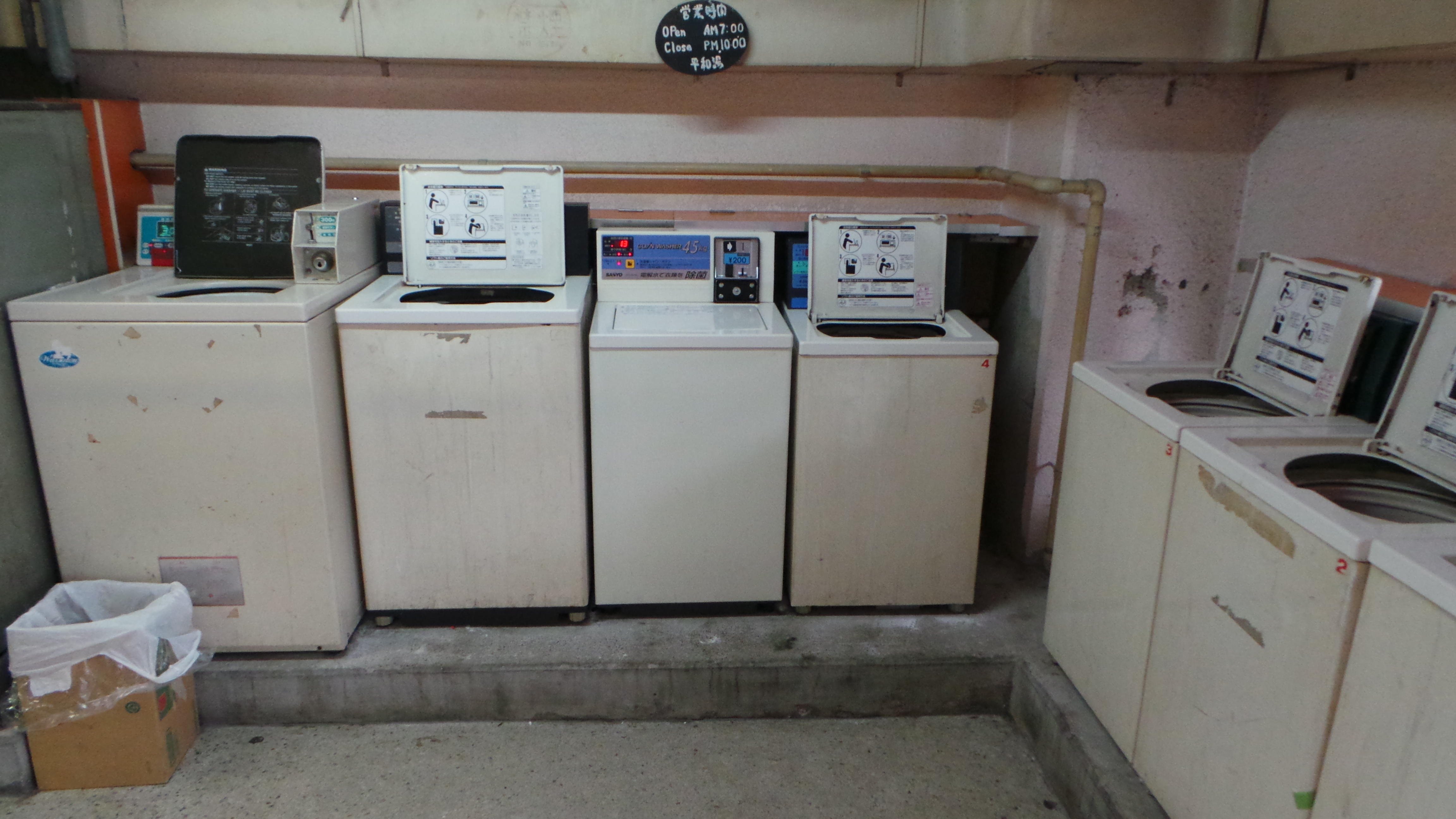
The laundry room is accessed through a shutter door currently pried open by what looks like a rotten plank of wood, which is a little worrying. Outside, noisy construction work is taking place despite the weather. The noise makes it rather difficult to concentrate on my book. I plan to spend as little time as possible outside today, so there is no point traipsing back through the storm just yet.

Inside the coin laundry, the room is dirty. The old vending machines no longer dispense detergent; luckily for me, I bought a ¥28 single-wash-sized pouch on the way here. I sit reading, waiting for my clothes, occasionally glancing up at the dirty walls.

laundrydecay

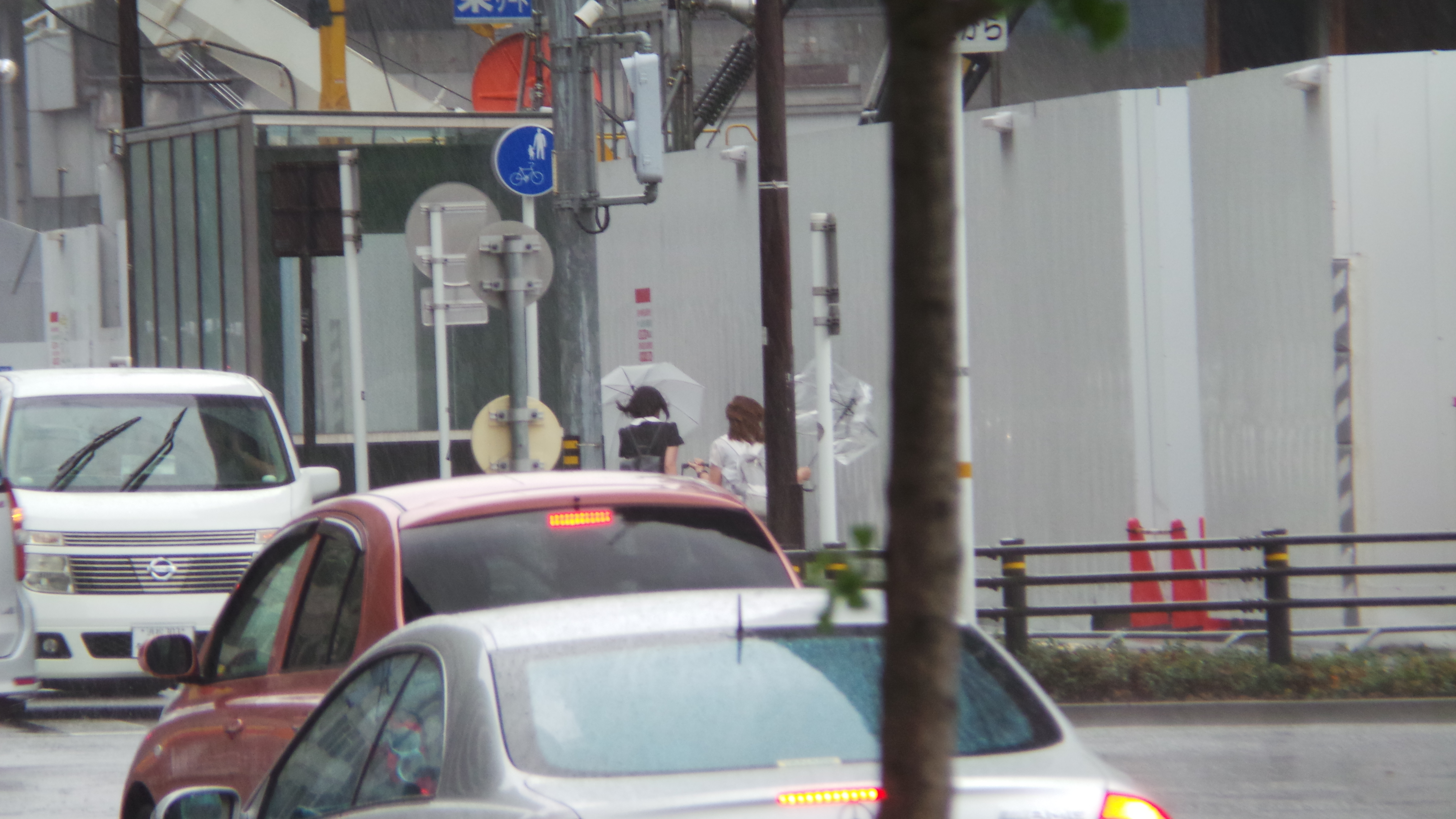
With the laundry done, I head back to the hotel as fast as I can. On the way, I notice abandoned inside-out umbrellas dumped on the street. I observe people ducking and diving into shelter, and I see areas of the pavement completely flooded. Meanwhile, the sound of sirens fills the air.

Back at the hotel, I sit by the balcony on the second floor of the lobby, quietly reading my book. I don’t mind rainy days, actually; I quite like the peace of sitting in silence and reading. It appears that a lot of people are holed up in the hotel today. Every now and then, someone walks to the window, sees that it is still raining, and then goes back to sit down. We are all waiting for the typhoon to pass.

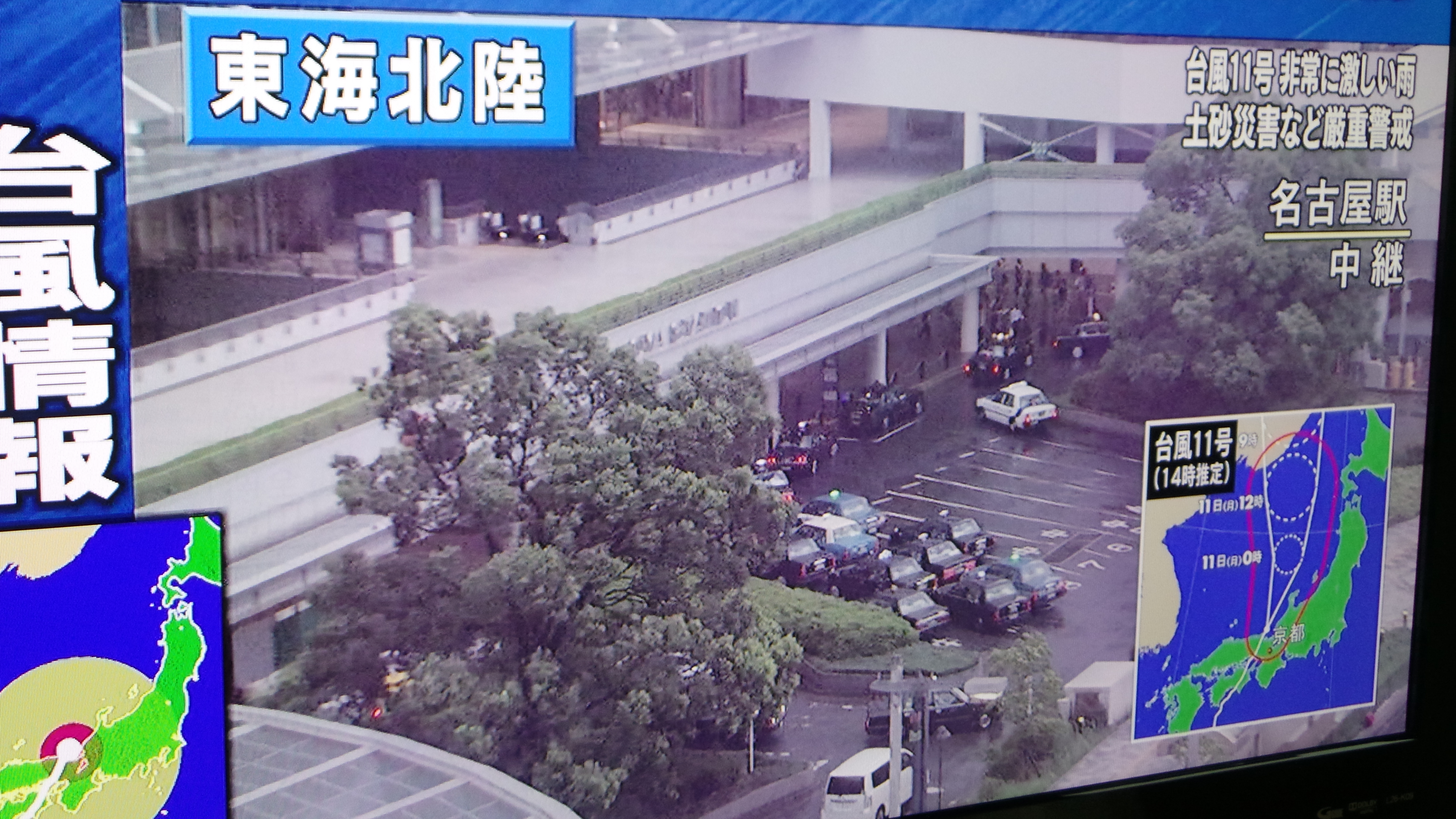
At 3 p.m., I am allowed back into my room. As I use the hairdryer on my shoes, I keep an eye on the news. After a short while, I hear the words, ‘Nagoya Station.’

nagoyast

There on the news is the train station, with taxis parked outside and rain falling. The typhoon has moved north, but the backlash of rain still falls. The bullet trains have all been cancelled.

Japan’s biggest broadcaster NHK seems to love this sort of stuff; for the next two hours, all they talk about is the typhoon. Cut to: Windscreen wipers frantically moving back and forth. Cut to: Drains overflowing. Cut to: Businessmen trying to juggle briefcases and carry an umbrella, only for it to whoosh inside-out. Cut to: All the bicycles blown over by the wind. Cut to: Rivers overflowing. Cut to: Trees shaking in the wind. This is about all I see for twenty minutes, then the footage repeats, and then repeats.

insideout

Outside, the rain looks like a white sheet being hung over the skyline. The wind is stronger now, blowing the rain sideways, making it very difficult to see the buildings in the distance. The last super typhoon I experienced passed miserably through the night; I never really got to see the chaos that it caused. Sitting here, I realise just how gloomy and grey today has been.

Eventually, the rain stops, and the wind dies down. At 7 p.m., I head out to the twenty-four-hour supermarket. On the way, I pass a sign about littering: a ten million yen fine and five years’ imprisonment. Inside the supermarket, a digitally transposed version of ‘Dreams’ by the Cranberries is playing. I buy some cheese and a small bottle of wine. At the self-service checkout, I scan the wine; a message pops up, ‘Are you over twenty? Yes/No.’ I press ‘yes’ and then finish and pay. There’s no one around to check, just press ‘yes.’ Honesty is the best policy.

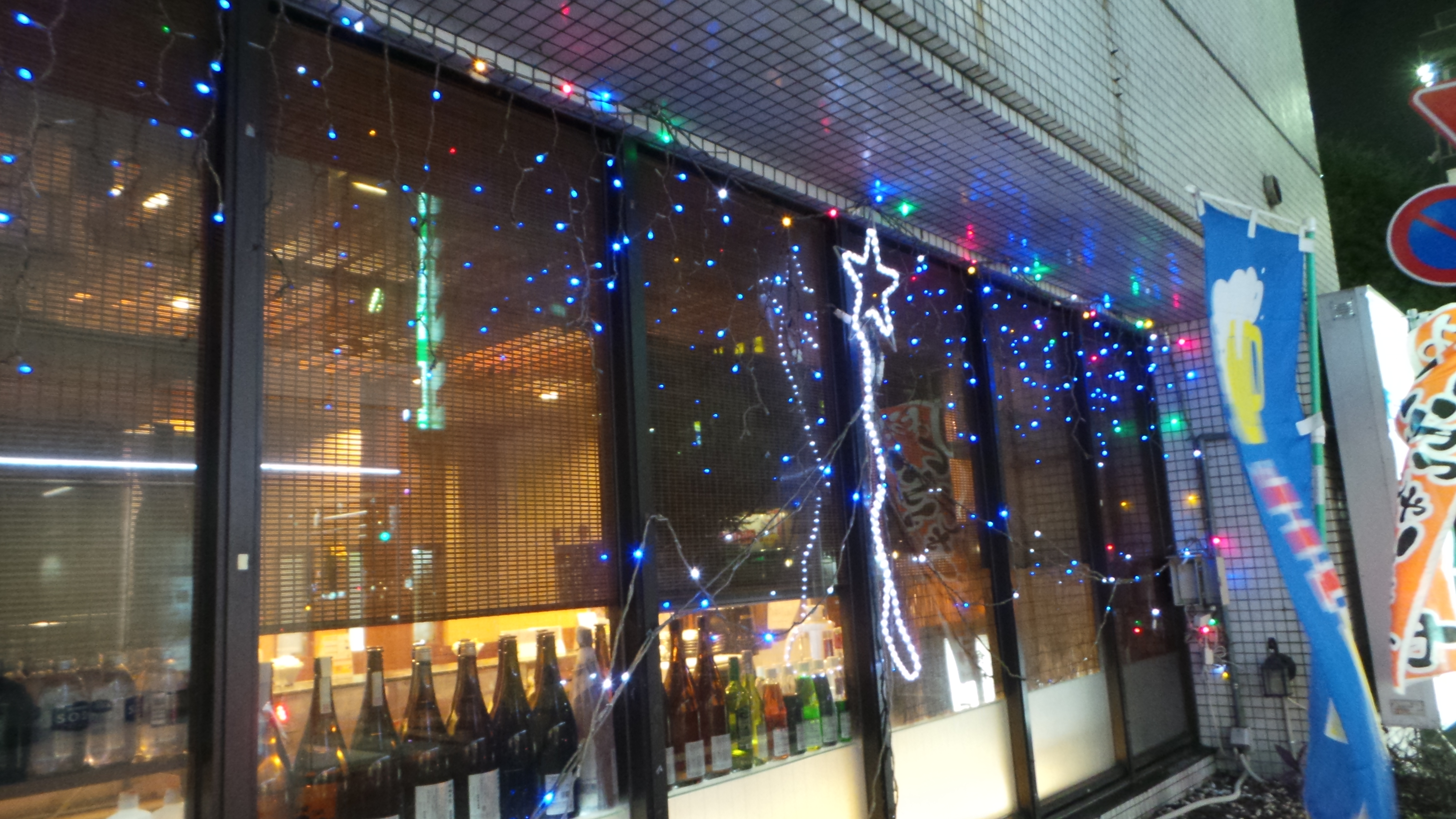
On the way back I pass a restaurant with a full set of Christmas lights. The full works.

christmaswine

Back at the hotel, I Skype with a friend from England. After that, I get deep into my reading until I finish my book. At 10 p.m., I head out to my nearest Family Mart to pick up some food. Inside Family Mart, that same Japanese song with the nice melody is playing. I can just make out a few words; hopefully, it will be enough to find out what it is.

When I return, I turn my attention to Japanese pop music. I listen to the top 30 songs in this week’s Billboard Japan Hot 100 chart. Oddly, Pharrell Williams with ‘Happy’ is at 29th. At 9th and 10th positions are two different songs from the same artist. A song from the anime Sailor Moon is in the top ten. AKB48 sister-band, SKE48, is number one. The song I am trying to find is nowhere to be heard.

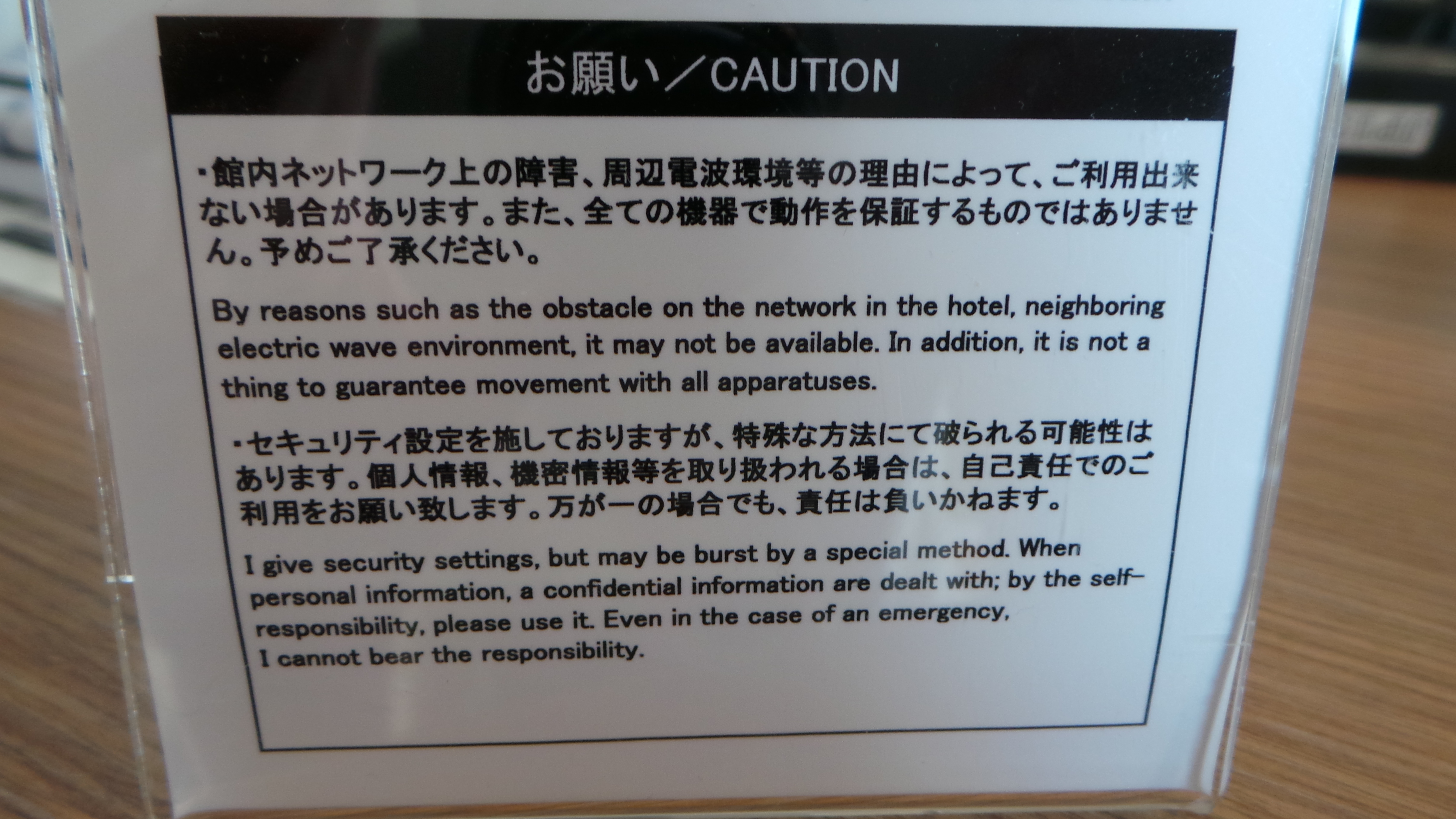
Instead, I find myself staring at this sign in my hotel room:

wirelessinternet

I do eventually find out the name of the song I keep hearing. It turns out to be a cover version of the other song I’ve been hearing, the one from Disney’s Frozen: ‘Let it Go’. It’s a Japanese version played on the piano, sounding very different from the English version—and a lot better, too. I spend the rest of my evening listening to various Japanese versions of ‘Let it Go’ on YouTube but can’t find the particular version I like. Maybe I shouldn’t have admitted that, though. I cannot bear the responsibility.