I’ve come to Mount Hoju in Yamagata Prefecture to experience one of the best views in Japan. At the base of the mountain is the usual buzzing of tourist-targeted shops selling shaved ice, overpriced noodles, and fish-shaped waffles. Beyond that is the oldest beech wood building in Japan, home to a massive wooden statue of Buddha.
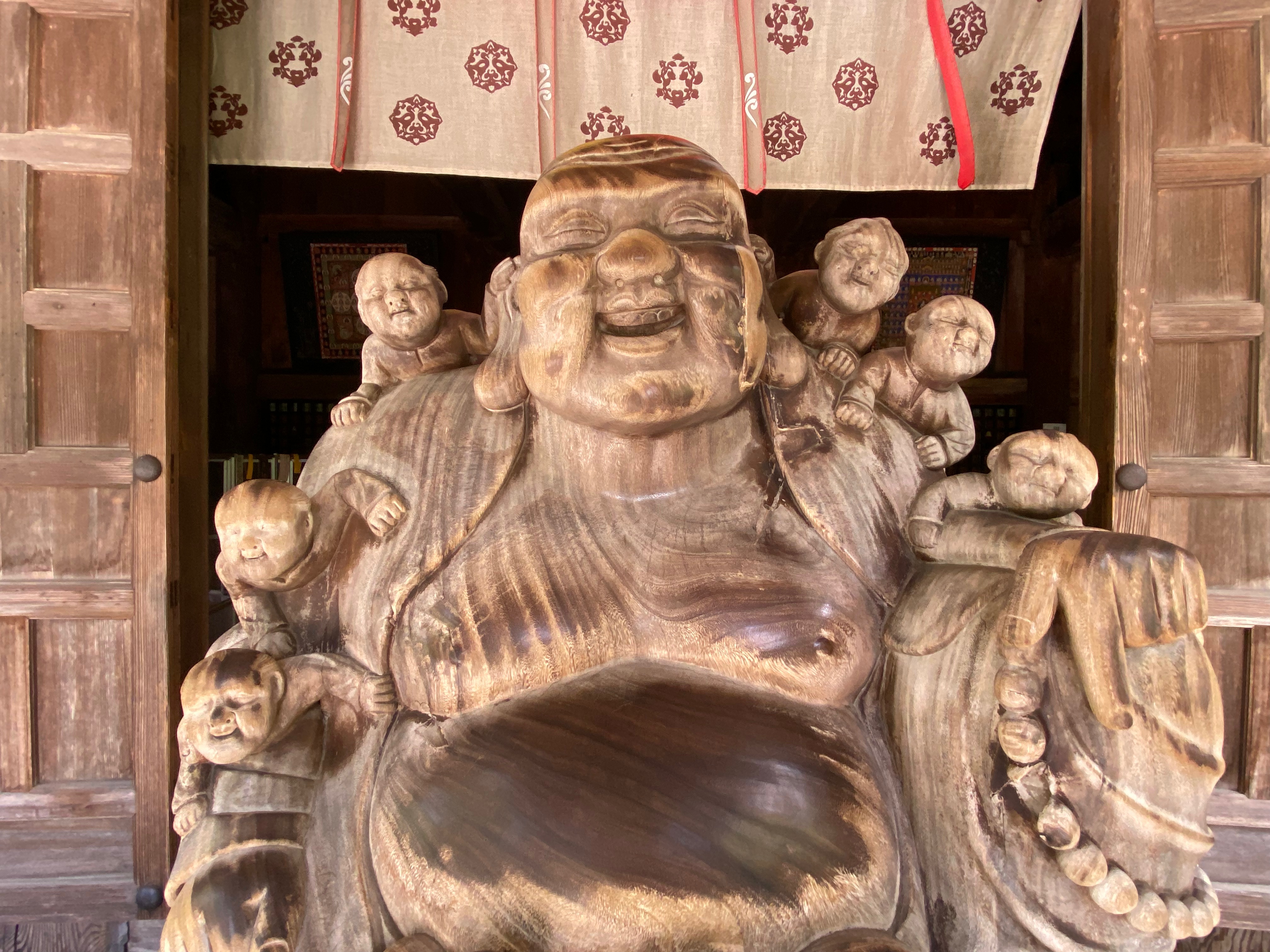
The statue is Yakushi Nyorai, the Buddha of healing. They say that if you have an illness or ailment, something you want cured, you rub that part of the Buddha, then climb to the top of the mountain and you will be miraculously healed. Naturally, I rub the Buddha on the neck and hope my scars fade.
Next, it’s time to climb the mountain. The road to the temple is 1,015 stone steps surrounded by thick woods and strangely shaped rocks. Cedar trees make up the mountain forest. The Risshakuji Temple at the top of the mountain means “Mountain Temple,” which is the perfect name for it, considering it is atop a mountain.
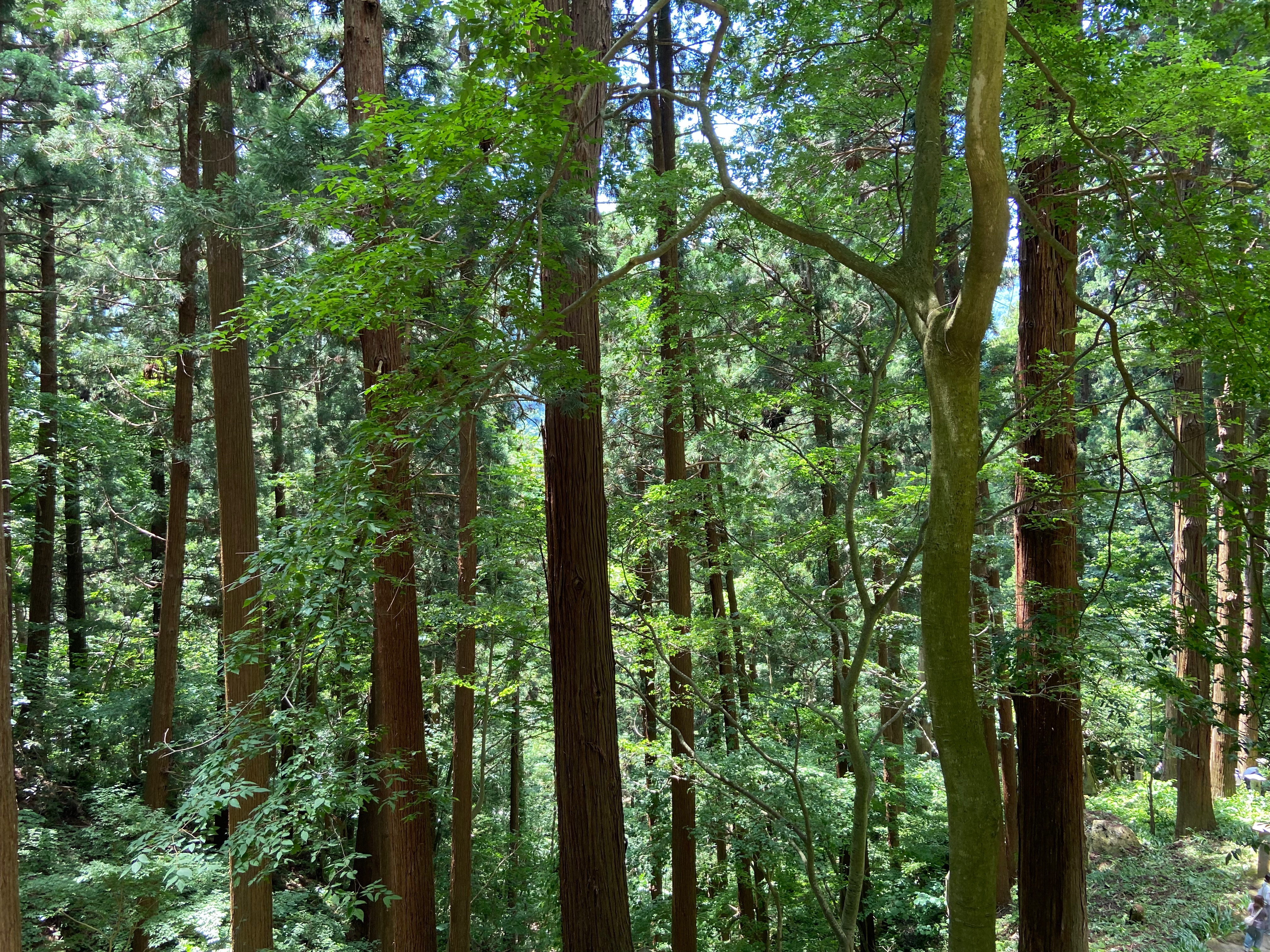
Some of the steps are in sections of 108, to represent the 108 Buddhist sins. There are Jizo statues scattered throughout the ascent adorned with coins. There’s a monument engraved with another poem by Basho, and it’s a famous one:
Such stillness,
the cicadas’ cries,
sink into the rocks.
After the second set of 108 steps I’m already worn out. Half a million steps last month, I now find myself humbled by a mere 216. I’m already close to spiritual defeat. The day is hot, the air quality poor, and it’s very humid. It has a way of wearing me out, I suppose.
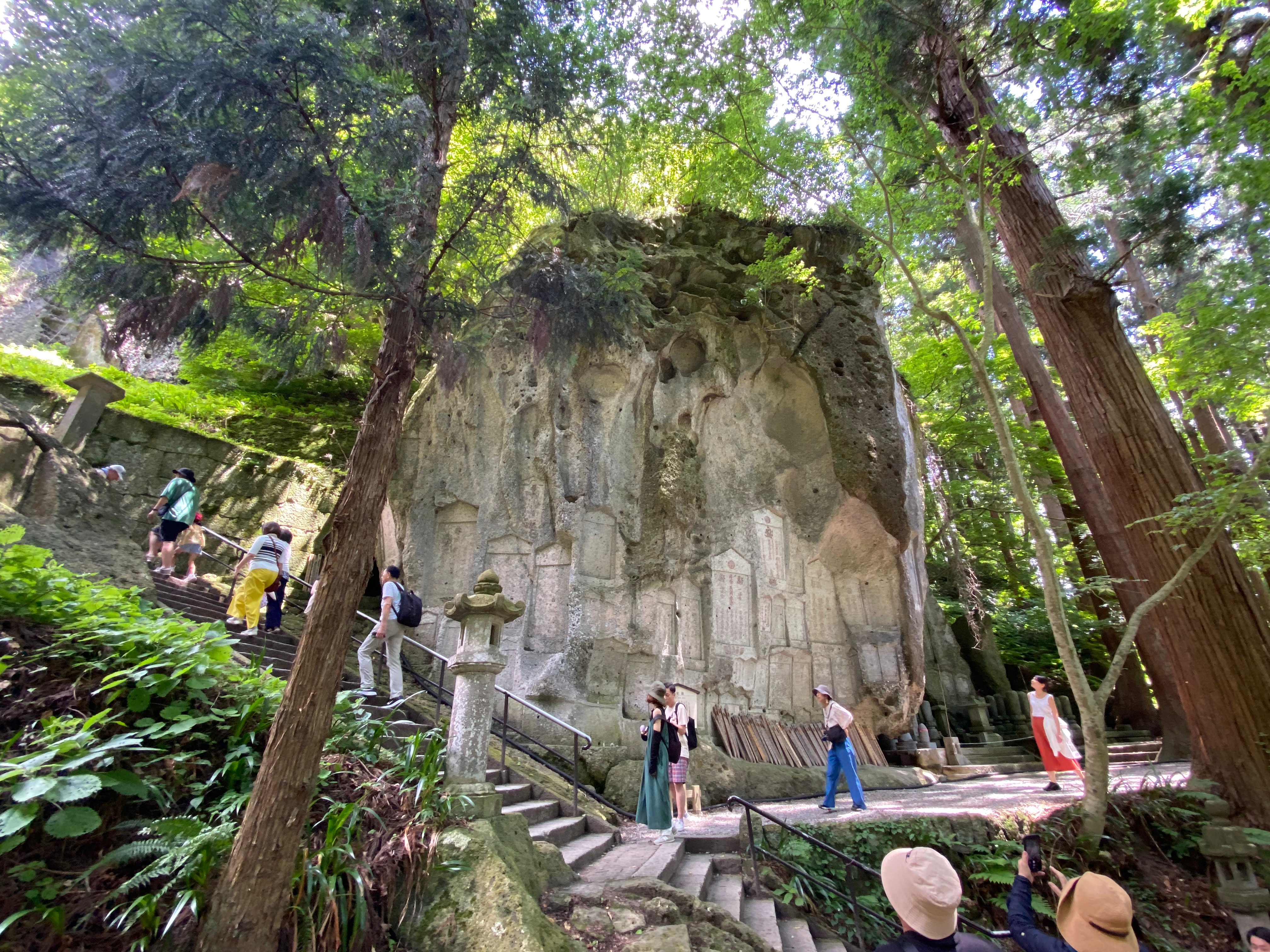
It’s so hot that every now and again there will be an ever-so-slight breeze, and every time there is, I notice it. A lot of the Japanese people are carrying these little portable electric handheld fans. A country famous for fans, so it makes sense. At about 550 steps there’s a massive rock that everyone is photographing.
Further up, there’s Risshakuji, founded in 860 AD, a small temple of minimalist qualities. From here I realise just how high up I am, that I can make out the city below. The thing that’s unusual is there is no barrier here. I could fall off the mountain in an earthquake, and that’s exactly what almost happens.
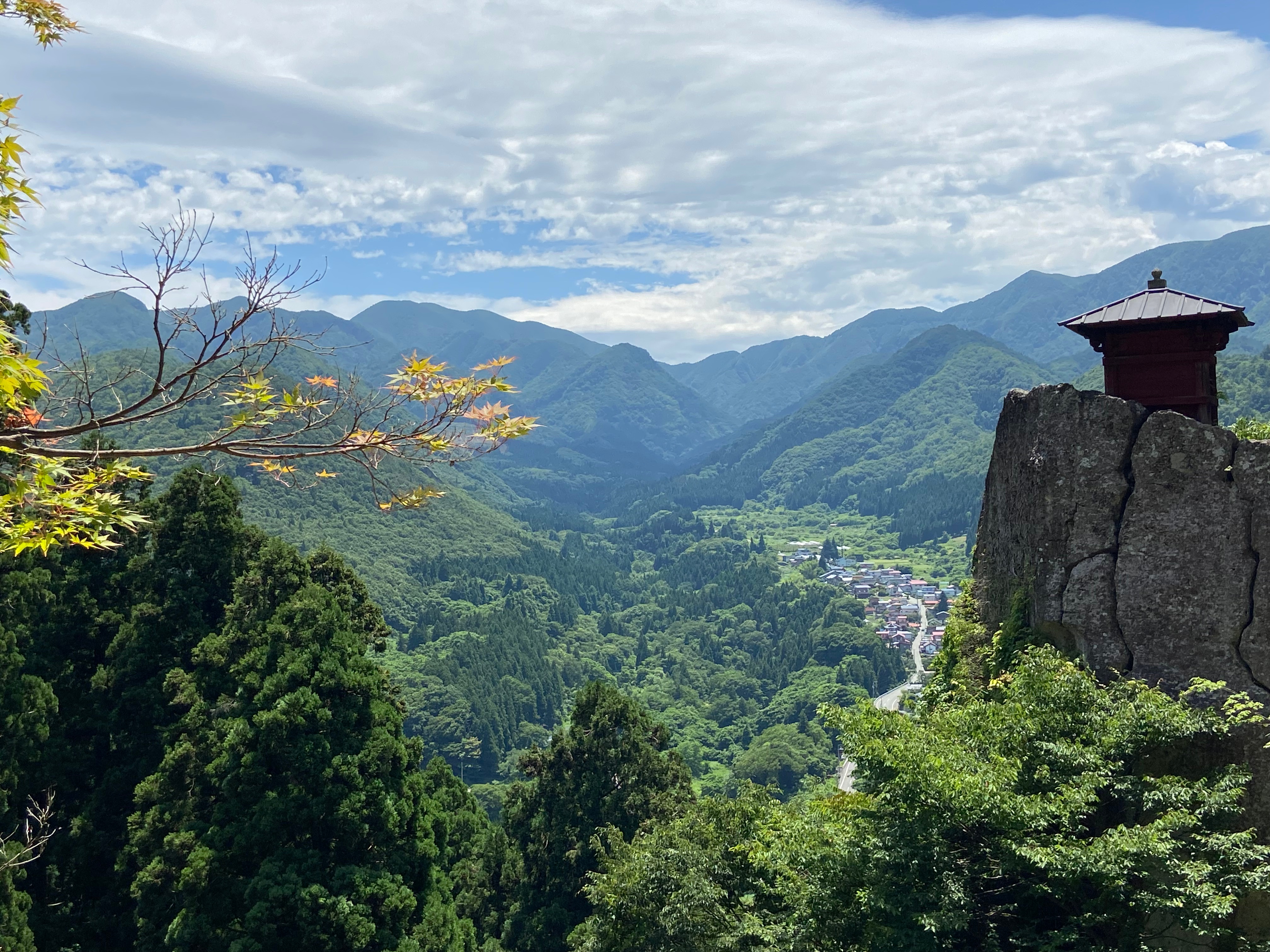
The mountain shakes, ever so slightly. A shift. Nobody else seems to react or notice. It’s just the subtle shift. The whole thing took a tiny step to the side. The mountain itself… adjusts. It’s not dramatic. Nothing tumbles. There’s no sound. But I feel it. And for a moment I am filled with dread. Then it stops. I wonder if being on a mountain is the worst place to be during an earthquake.
Very close to the top of the mountain is a post box. At the bottom of the mountain there is a post office, a mere 940 steps away. I naturally feel sorry for the postman whose job it is to walk up and down a mountain every day to collect what is likely just the odd piece of mail.
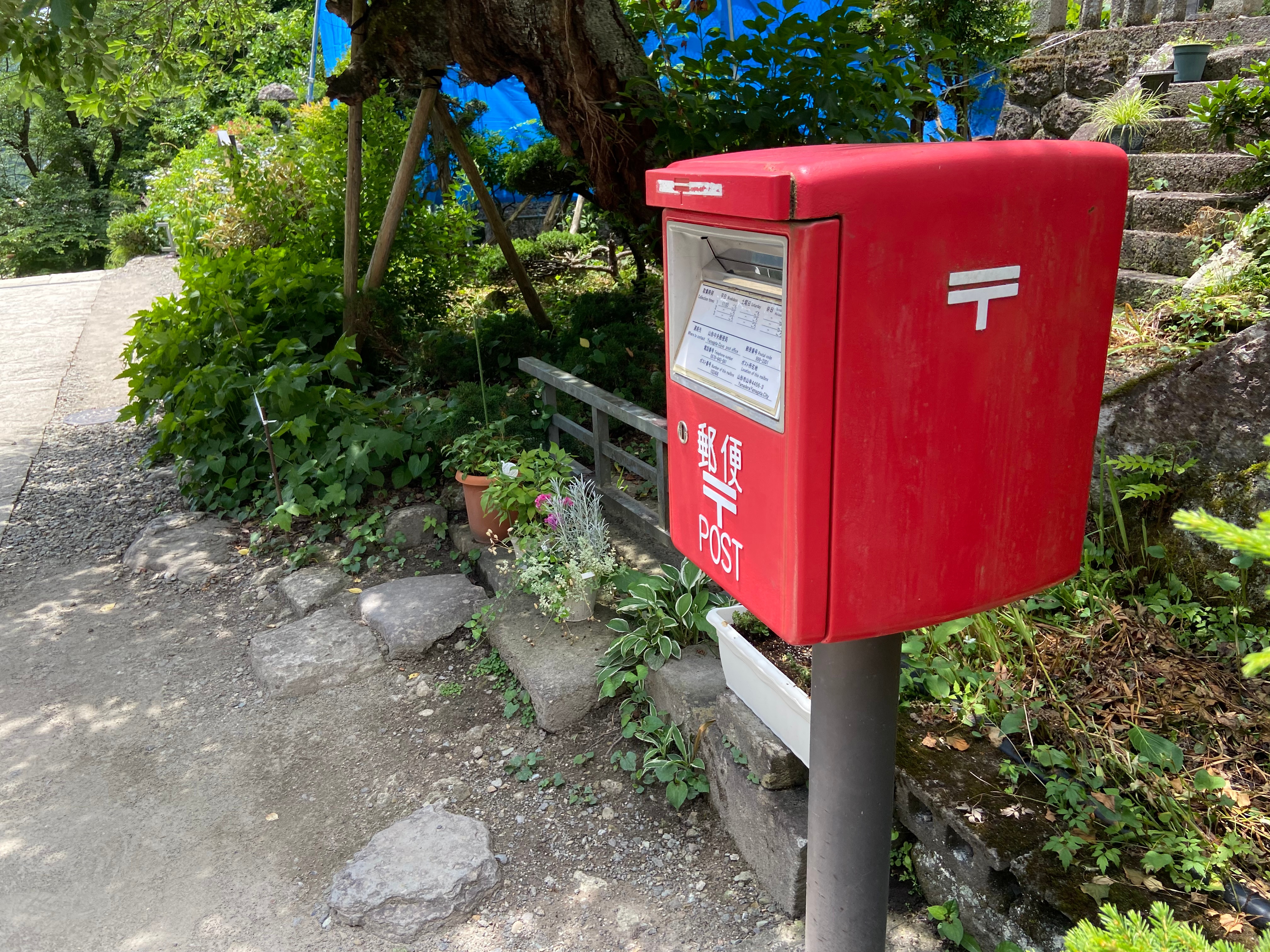
1,015 steps. I reach the top. The cicadas’ song fills the humid afternoon here, sharp and piercing, like needles being driven into a heart. Their cries echo, sinking into the ancient rock.
A cemetery at the top concludes the climb. Crooked gravestones pushing through moss. Everything here is slanted, aged, dignified in its entropy. I sit beside the tombs, trying not to melt into them. The mountain temple echoes these themes of death, decay, and transcendence as it climbs through cemetery terraces and silence.
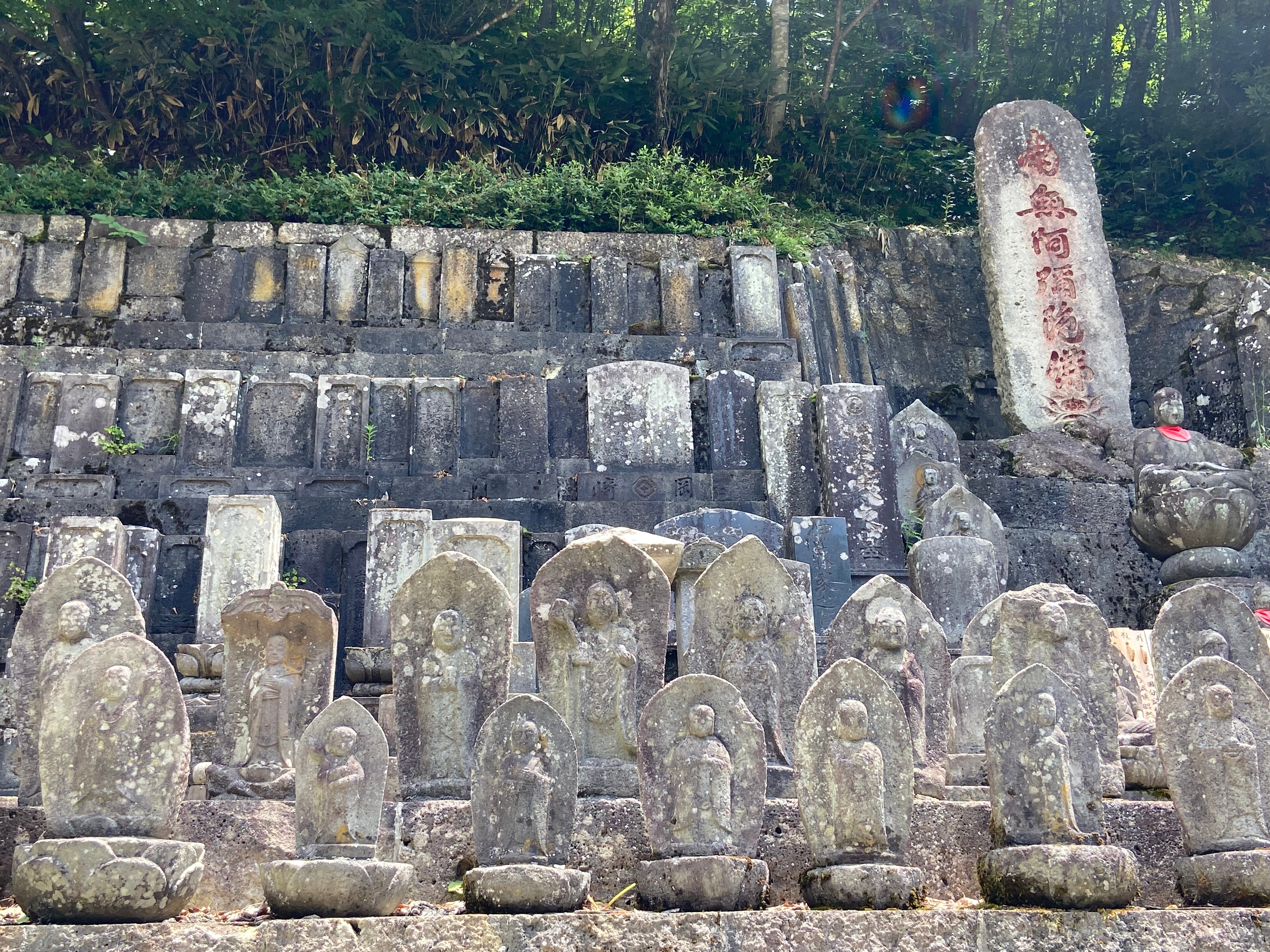
I stand to rest, to catch my breath, to take it in. My shirt clinging to me like skin, thirst calling me to a vending machine back at the base of the mountain. But I linger. Amongst the graves, everything feels tilted. Stones, time, even thought.
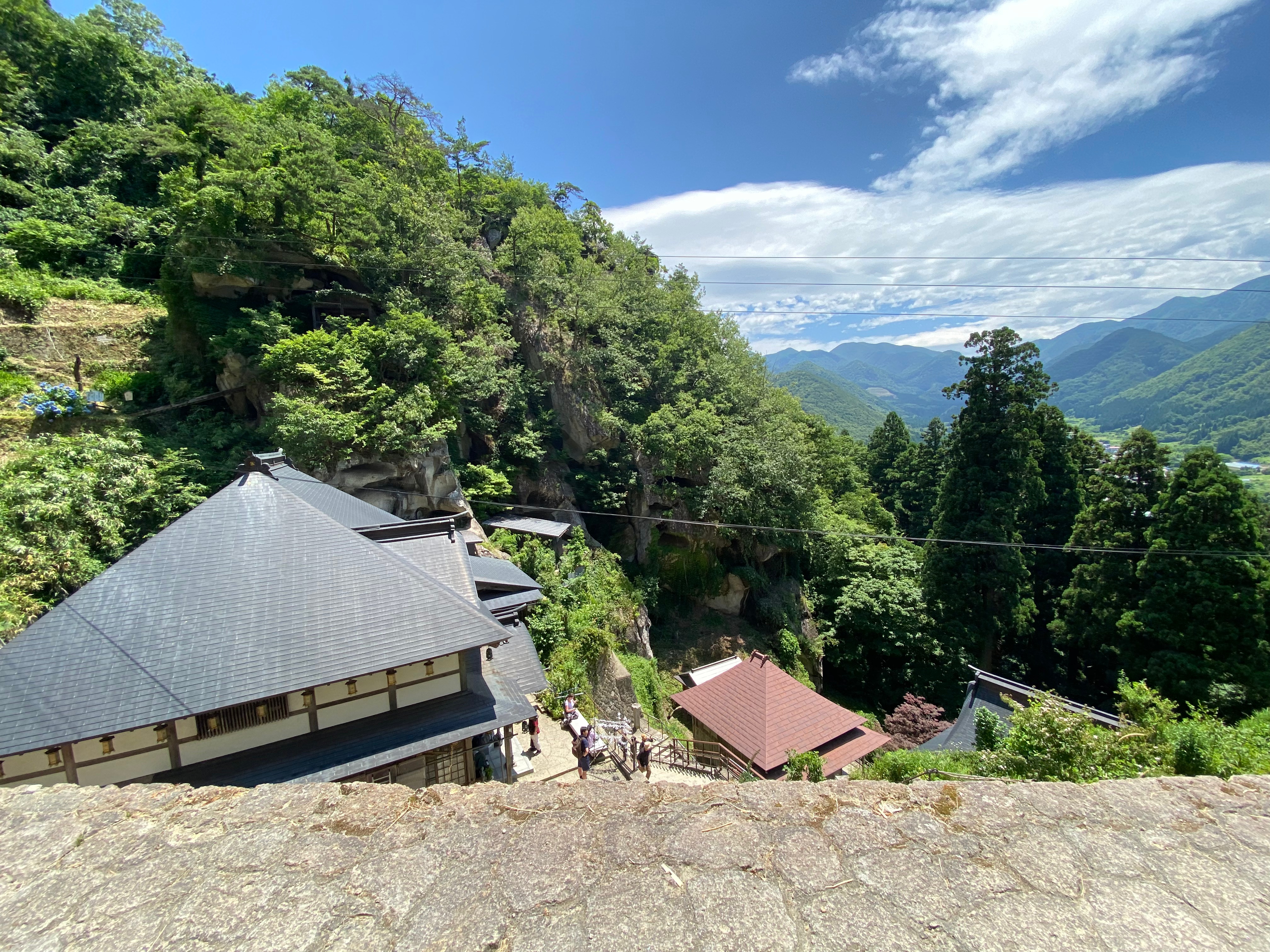
Walking down is the reward as I can see it all. All the views, all the way down. There’s something about a good vista. I say goodbye to the top of the mountain, and goodbye to the vista. Hasta la vista. Until I see the view again, opening like lungs exhaling. I can see the whole valley now, softened by haze.
Back at my capsule hotel, I voluntarily entomb myself in a plastic drawer like a very polite corpse.
 Japanising.com
You must be logged in to post a comment.