There’s a frog at Hiraizumi Station with the title of World Heritage Advertising Manager. His name is Kero-Hira. A speech bubble on the Carnival Cutouts cheerfully instructs, “Make lots of memories and relax!” He stands beside what appears to be a member of the Fujiwara clan riding a horse next to a woman riding a pig.
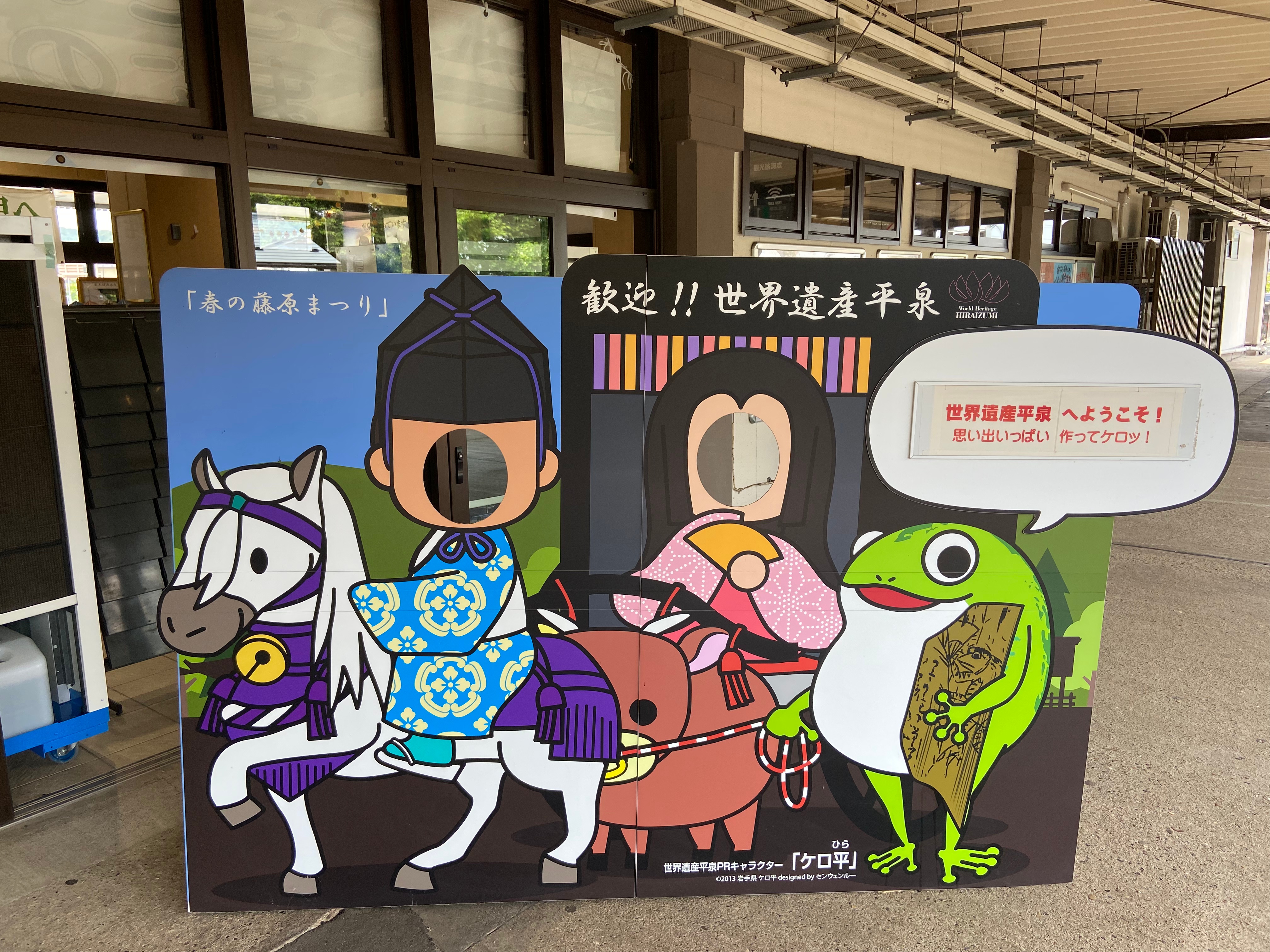
Today I’ve travelled a little further south, to Iwate Prefecture, in search of old ghosts and even older gold. I’m here to visit Chuson-ji Temple. Stepping past the frog and out of the station, the first thing I notice is the view of rice fields stretching out toward the distant mountains. The second thing I notice is the rack of travel pamphlets for Iwate Prefecture. One of them is familiar. Too familiar. It’s the same pamphlet I wrote ten years ago for a travel company I was working for at that time.
Having never set foot in Iwate Prefecture until now, it feels strange having already written about it in the past. That’s unfortunately how those travel companies operate, stock photographs and regurgitated information. I’m just fortunate enough to be able to visit these places as I am now, and use my own words and my own photographs.
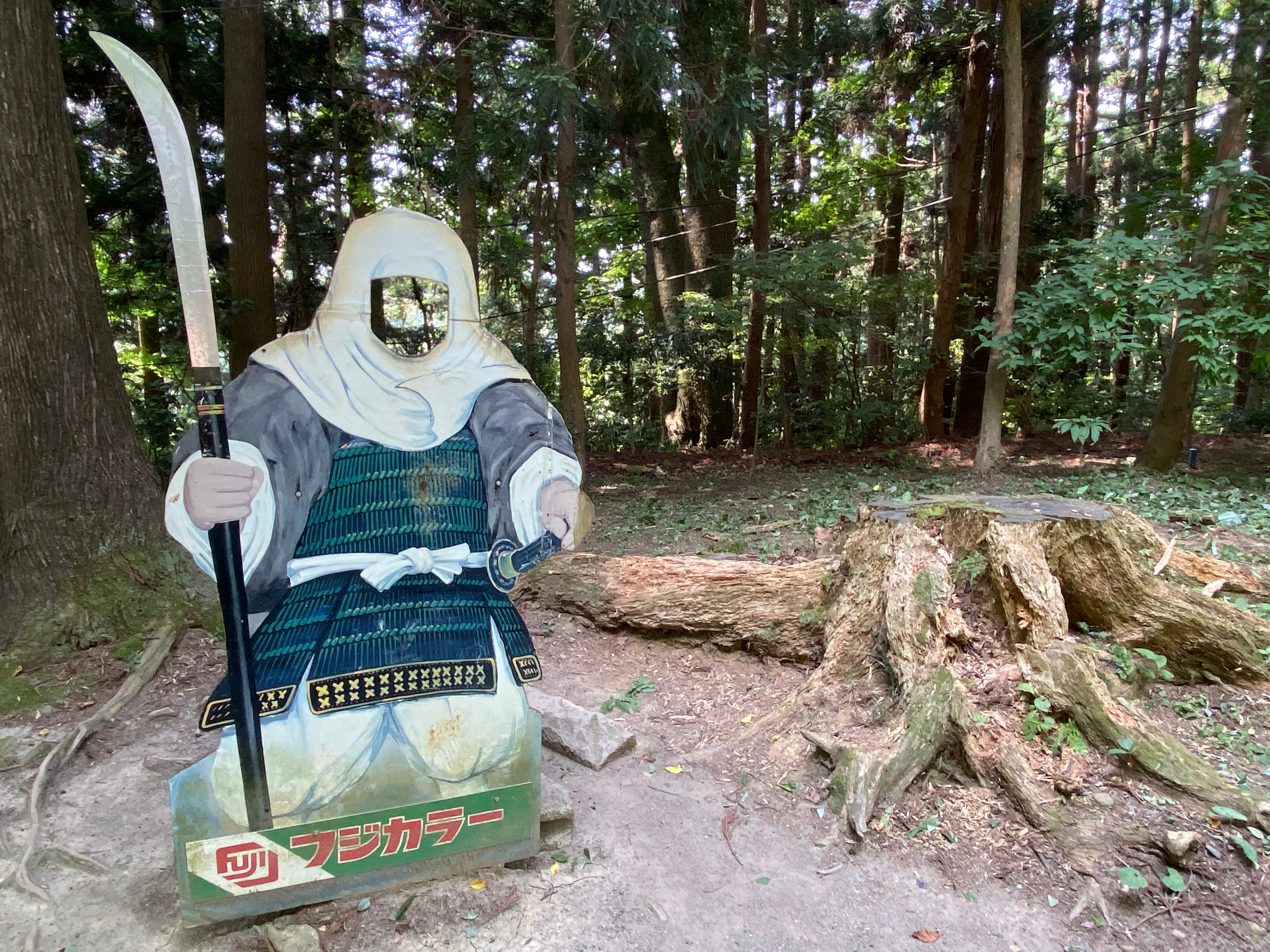
It’s a twenty-minute walk to Chuson-ji Temple but I don’t mind it. The scorching summer sunshine is brutal and the humidity is high. Chuson-ji is a UNESCO World Heritage site that boasts two car parks, so I expect it to be busy. To enter, I must hike about ten minutes up a shaded forest path, lined with lush verdant trees of the cryptomeria variety. If I’m honest, I’m just pleased to be in the shade.
Before the main temple hall, there is Jizo-in, a smaller sub-temple. This temple features a picturesque Japanese garden. However, and as is often the case in life, the moment can’t be truly enjoyed. A man and a woman with leaf blowers fill the splendour of the garden with mechanical shrieking. The serenity is soundtracked by smug futility.

Entry to the Konjikido, or “Golden Hall,” costs ¥1000. It’s unassuming from the outside, just a rectangular building in weathered wood, but inside it’s another world entirely. No photos are allowed. Inside the hall is gilded in gold leaf, with three golden statues of Amida Nyorai flanked by bodhisattvas, all encased in a protective hall to preserve the original 12th-century architecture. The Golden Hall sits inside a larger protective concrete building, almost like a shrine within a shrine, carefully sealed off from time.
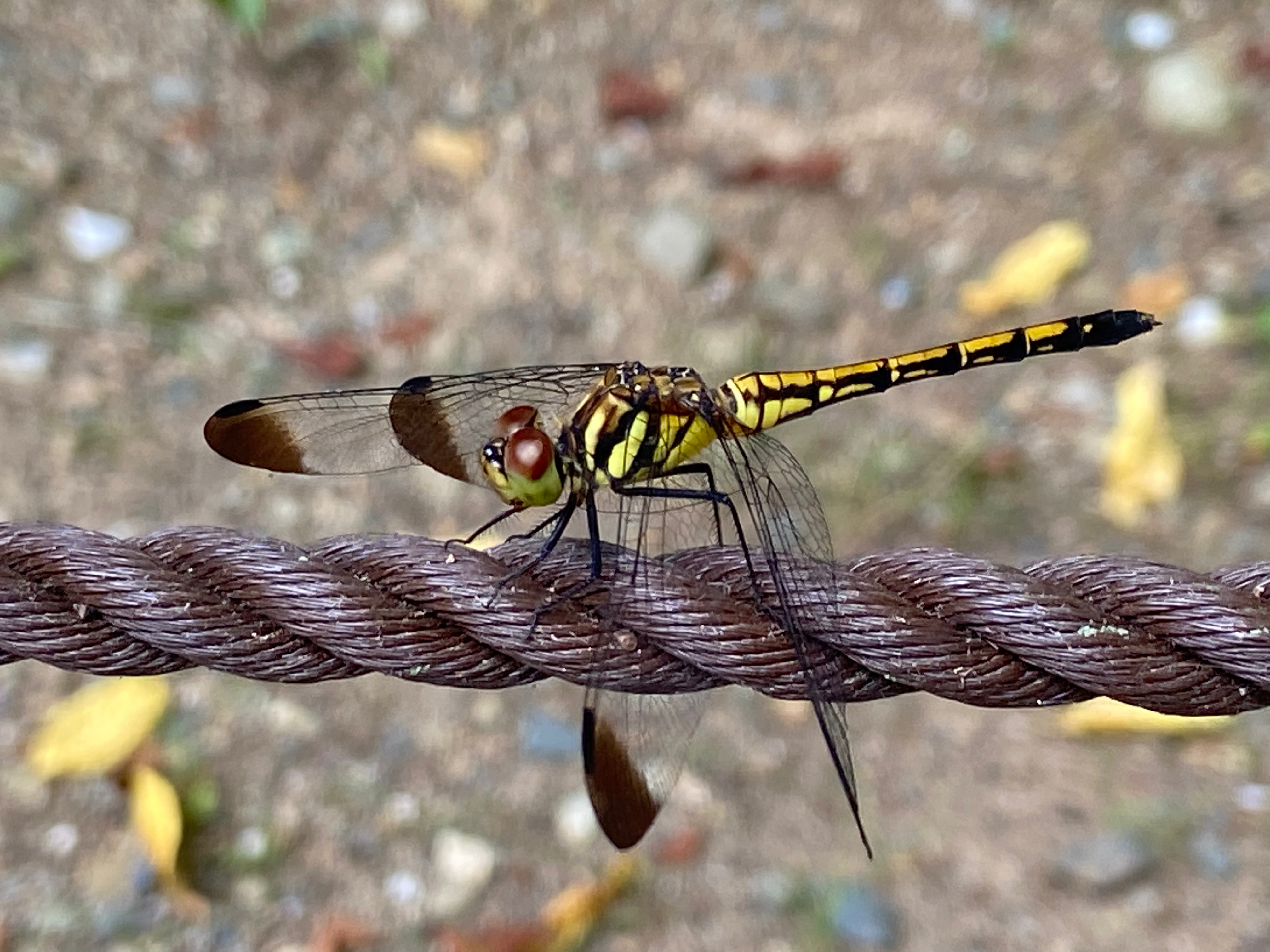
Because I couldn’t take any photographs of anything inside the Golden Hall, here is a photograph I took outside the hall, of a golden dragonfly:
On the way out, I draw an omikuji fortune slip. Once again, I pull “Excellent Luck.” I always seem to get the best one. It comes with a small Fortune Arrow trinket that is said to invite happiness and fulfilment of my wish, because an arrow hits the target. I tuck the trinket into my wallet for prosperity and fulfilment, a wish taking aim, and keep reading. It says that on travel, I will have an impactful journey, and that my lucky item is still dried flowers.
As I stand reading my fortune, I hear a voice. “Hey you! Come here,” shouts a Japanese man. I wander over to the man. He appears to be pointing at a large tree. It’s not until he speaks again that I realise what he is pointing at. “Look, a snake,” he says. “Very dangerous.”

After failing to take a decent photograph of a snake crawling into a tree, I wander to the final part of the complex, where the dead have clearly been hard at work. More stacked pebbles. Castaways from another world, trying to build their way back. The resemblance to Osorezan is uncanny. It turns out this temple was founded by Ennin, the same monk.
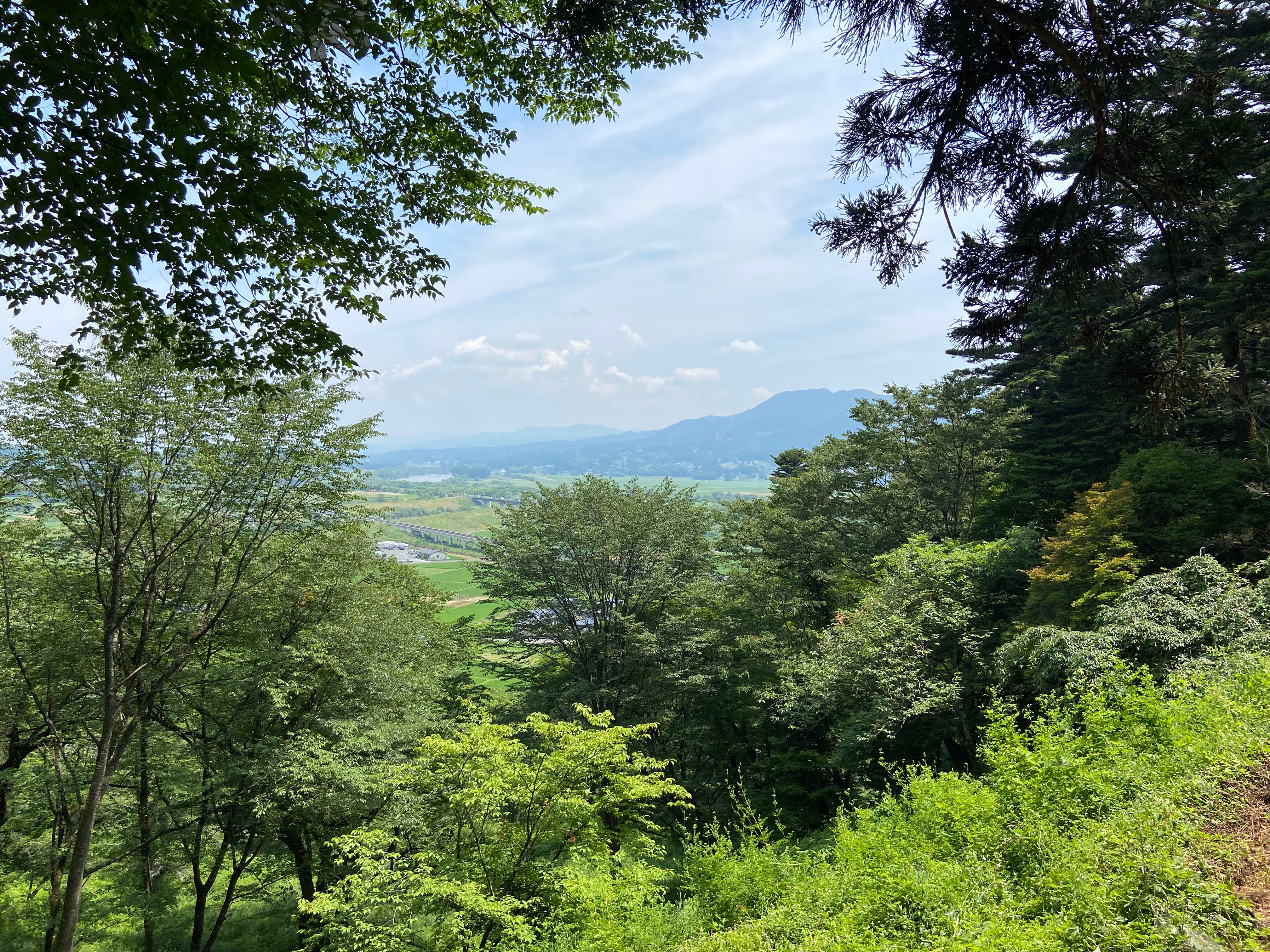
On the way down, the view opens up to a sweeping panorama of green hills and sky. It is simply stunning.
Leaving Chuson-ji, I walk another twenty minutes through thick heat and dense sunlight to reach Motsu-ji, another World Heritage Site. This will be the third temple this week founded by Ennin, and I have a fourth planned for later this week.
The famous haiku poet Basho visited this temple and left behind a haiku carved into stone:
Summer grasses—
all that remain of
warriors’ dreams.
Motsu-ji was mostly destroyed by fire, and the poem mourns the fallen glory of the Fujiwara clan and the entropy of all things. Since then, some of the buildings have been restored, like the main hall, but many of the structures are just rocks or sticks marking what used to occupy the now empty spaces.
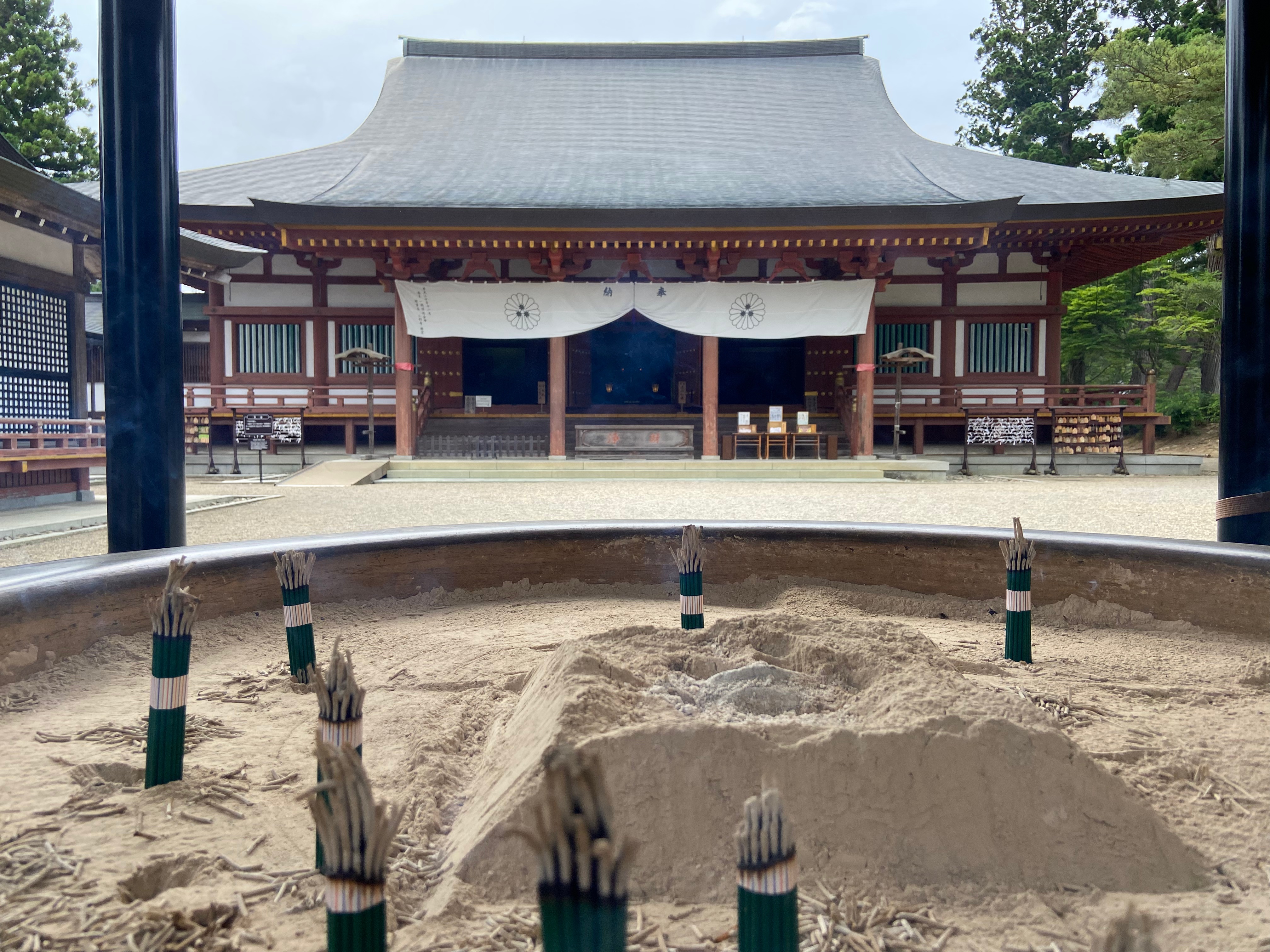
Motsu-ji’s most enduring feature is its Jodo Garden, a symbolic recreation of the Buddhist paradise. It stands in quiet contrast to the ruins around it. The lake, said to evoke the Pure Land, now feels more like a mirror for dreams long since cast away.
I wander into the gardens. Aside from the lake, they are vast yet empty. There’s a small lily garden, the remains of what once was, and some immaculately cut grass. A single lawnmower sits abandoned atop summer grass, having half completed its job. It now lies idle in the heat.

I leave the gardens and return to the station, waving a silent goodbye to Kero-Hira, who is still smiling. I take the train north to Morioka. On the way to my hotel, I spot a sign for “Demon’s Hand Prints in the Rocks.” I decide to check it out.
At the small temple sit three massive boulders, wrapped in rope and chain, said to have been thrown down when Mount Iwate erupted in a fit of rage. Locals once lived in fear of a demon who tormented the area, and they prayed each day for protection. One morning, the demon was discovered bound to these very stones, condemned to cause harm no more. Before his power faded, he struck one of the rocks with his hand, leaving behind a print that remains sealed in stone to this day.
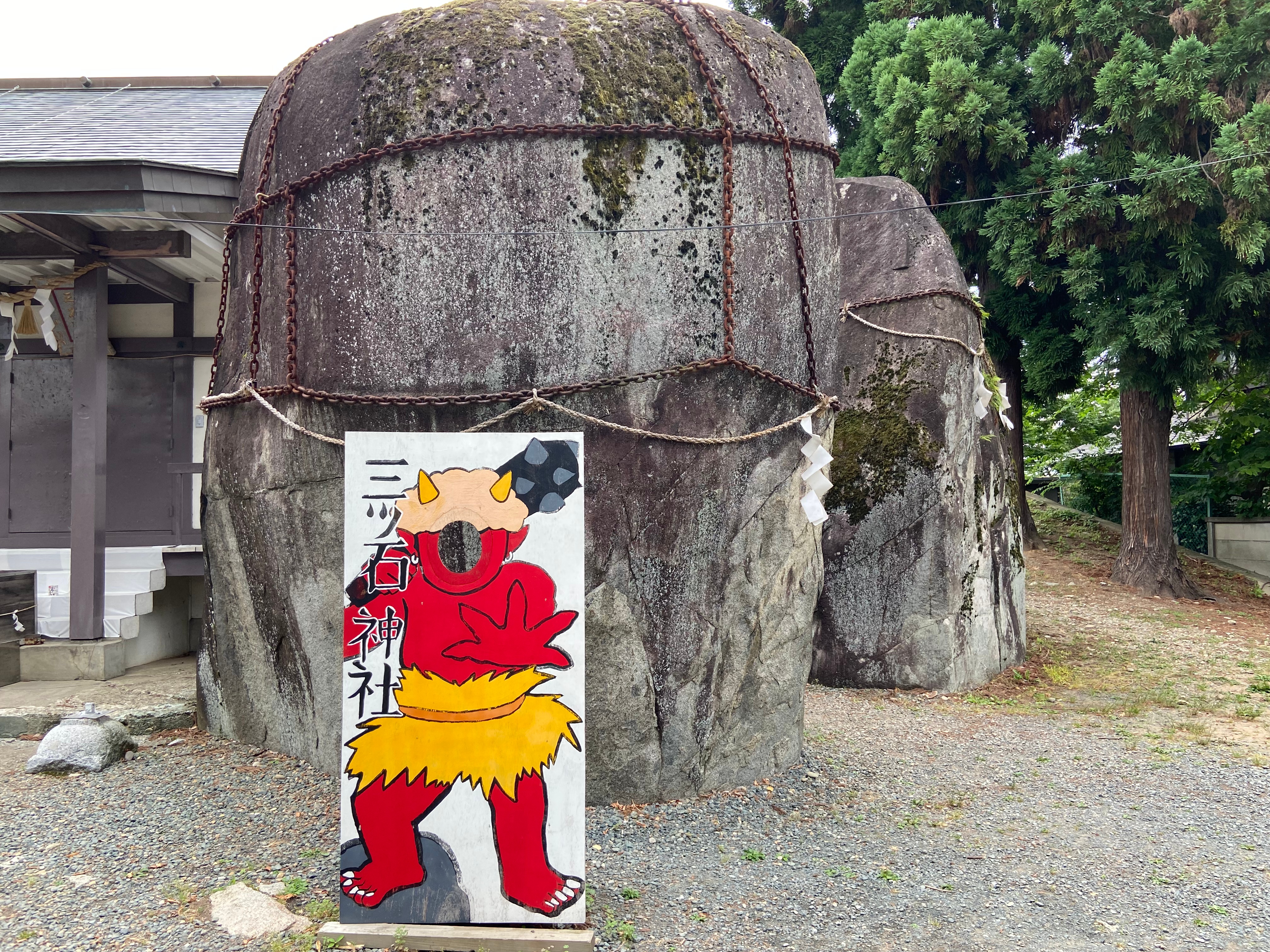
I look at the rocks but don’t find any handprints. I do, to nobody’s surprise, find the customary Carnival Cutouts.
 Japanising.com
You must be logged in to post a comment.