Once Upon a Timeline

Today, I’m in Yoro, a town in Gifu Prefecture.
I’m here to change my destiny.
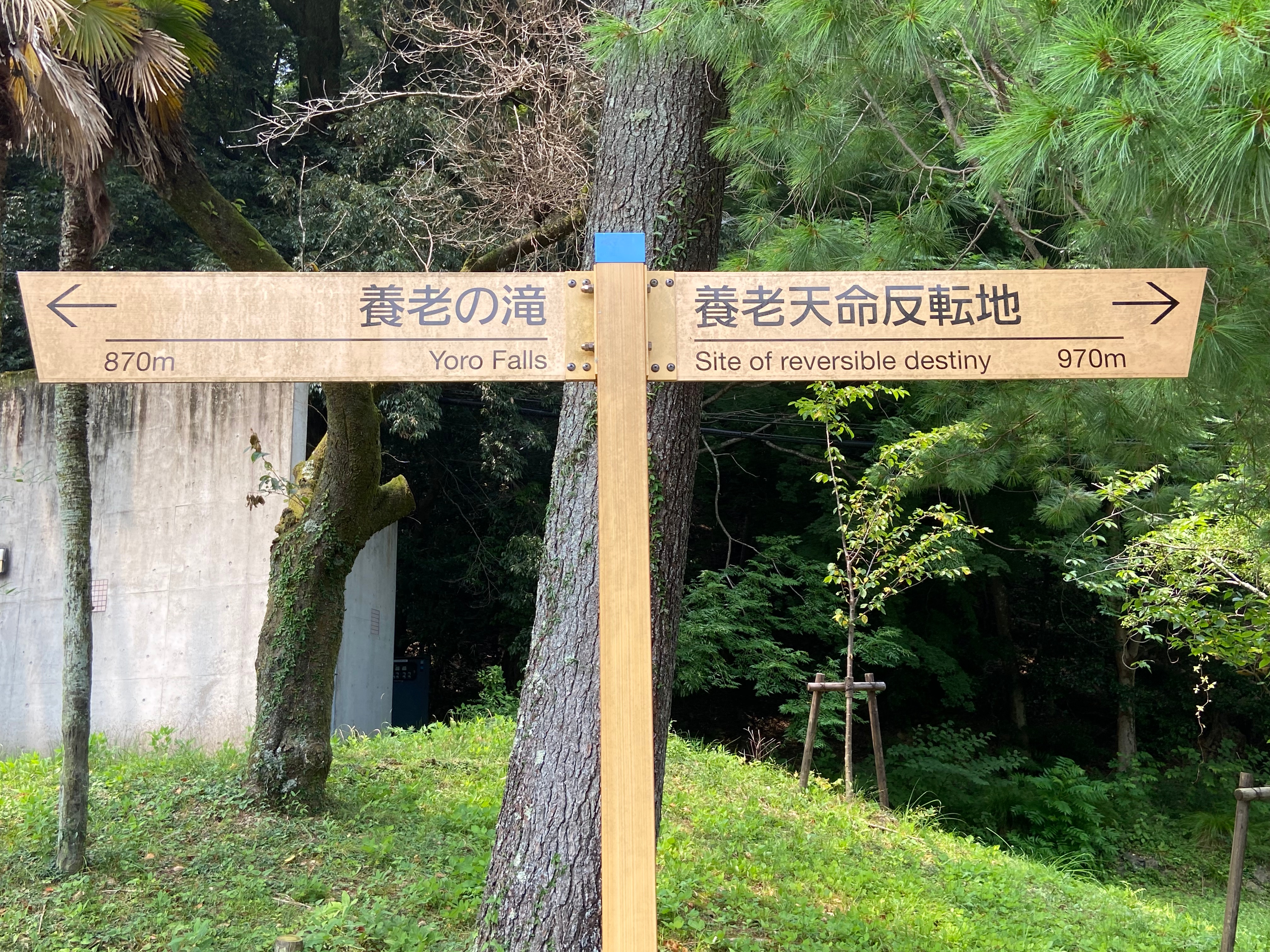
First, I decide to take a thirty-minute stroll along the edge of a cliff to visit a famous waterfall. This waterfall is said to be made entirely of flowing alcohol, specifically Japanese sake.

The story goes that there was once a poor lumberjack with a very old, ill father. On his deathbed, the father requested his favourite Japanese sake, but the lumberjack couldn’t afford it on his meagre income. One day, the son walked the treacherous path near the waterfall.
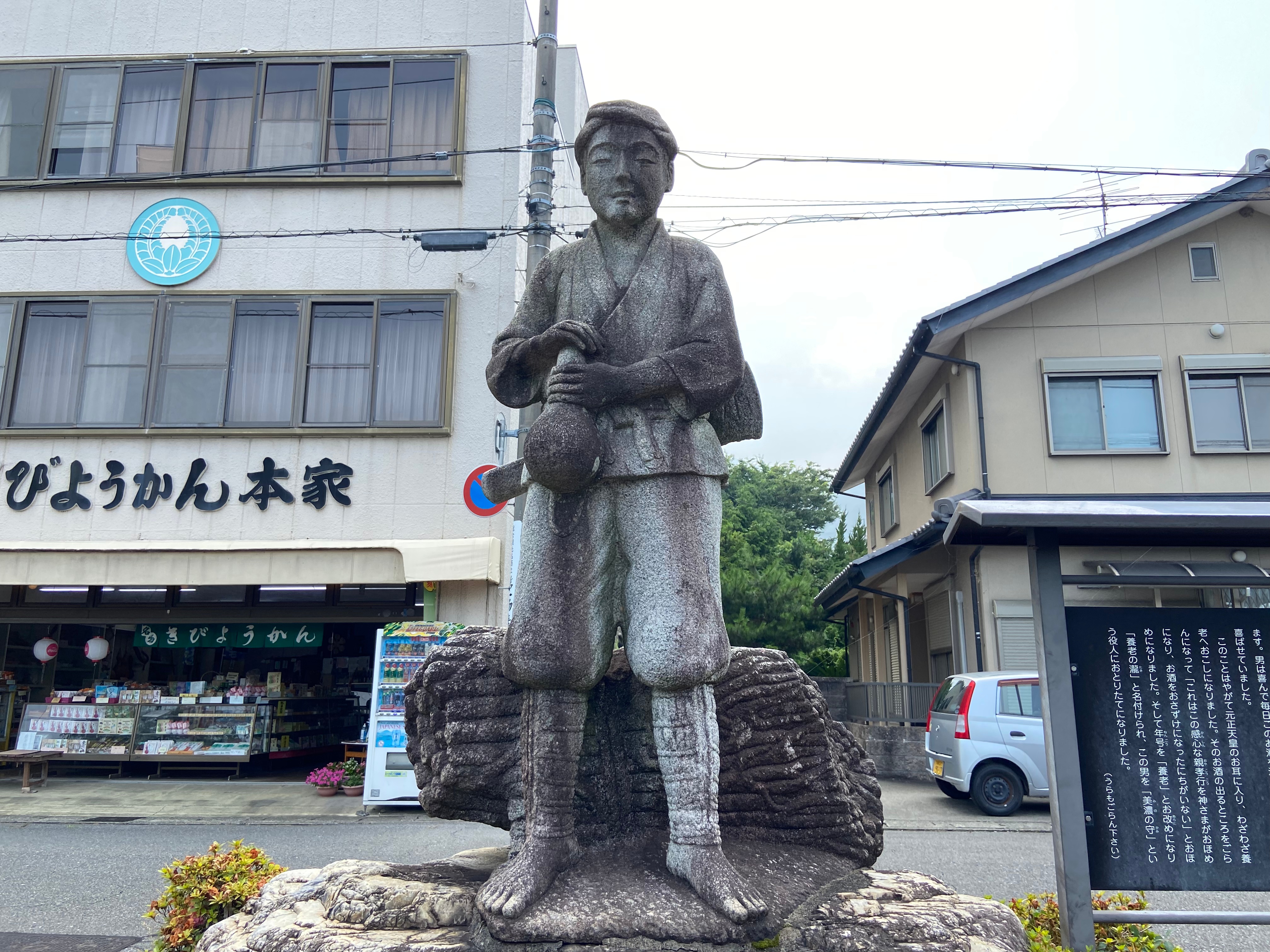
Some say he was out looking for wood for a fire, but he was a woodcutter, so any tree would have sufficed. Others say he was simply thirsty. Regardless, he fell in the woods and definitely made a sound, and after falling and lying on the dirty ground, the poor lumberjack could smell the sweet scent of sake.

It was here that he discovered the water from the waterfall was not water at all.

He returned home with a gourd full of sake, and his father drank it. The transformation was instant, and he miraculously became younger and healthier.

News of this reached the ancient capital of Nara, and Empress Gensho visited the waterfall herself. She was so impressed by the beauty of the area and the magical water that she declared it a sacred site and renamed the area Yoro, meaning elderly care.
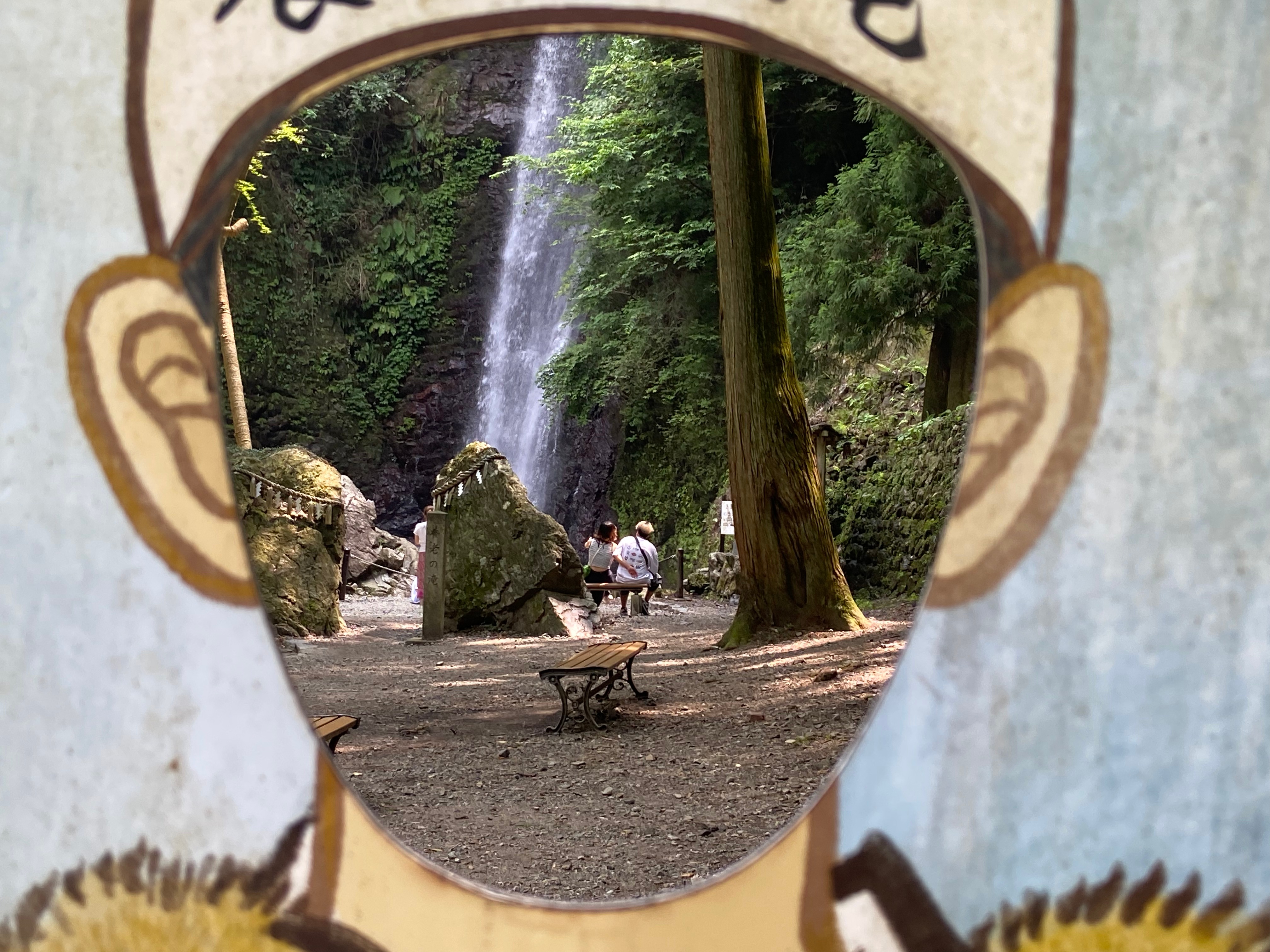
It takes me about an hour to reach the waterfall despite it being advertised as a thirty-minute stroll. It’s a tough hike too, up a mountain. It’s humid; it feels like 40 degrees. I’ve probably sweated more water than I’ve seen flow down the falls. I can only imagine how hard it must have been for the lumberjack, carrying that gourd and heavy axe to the top.

Next to the waterfall, a faded poem engraved on stone in Japanese reads:

“Listening to the flow of Yoro Falls,
One’s heart is healed and refreshed,
Like the pure sake that rejuvenated the old man,
Flowing eternally, blessing those who visit.”
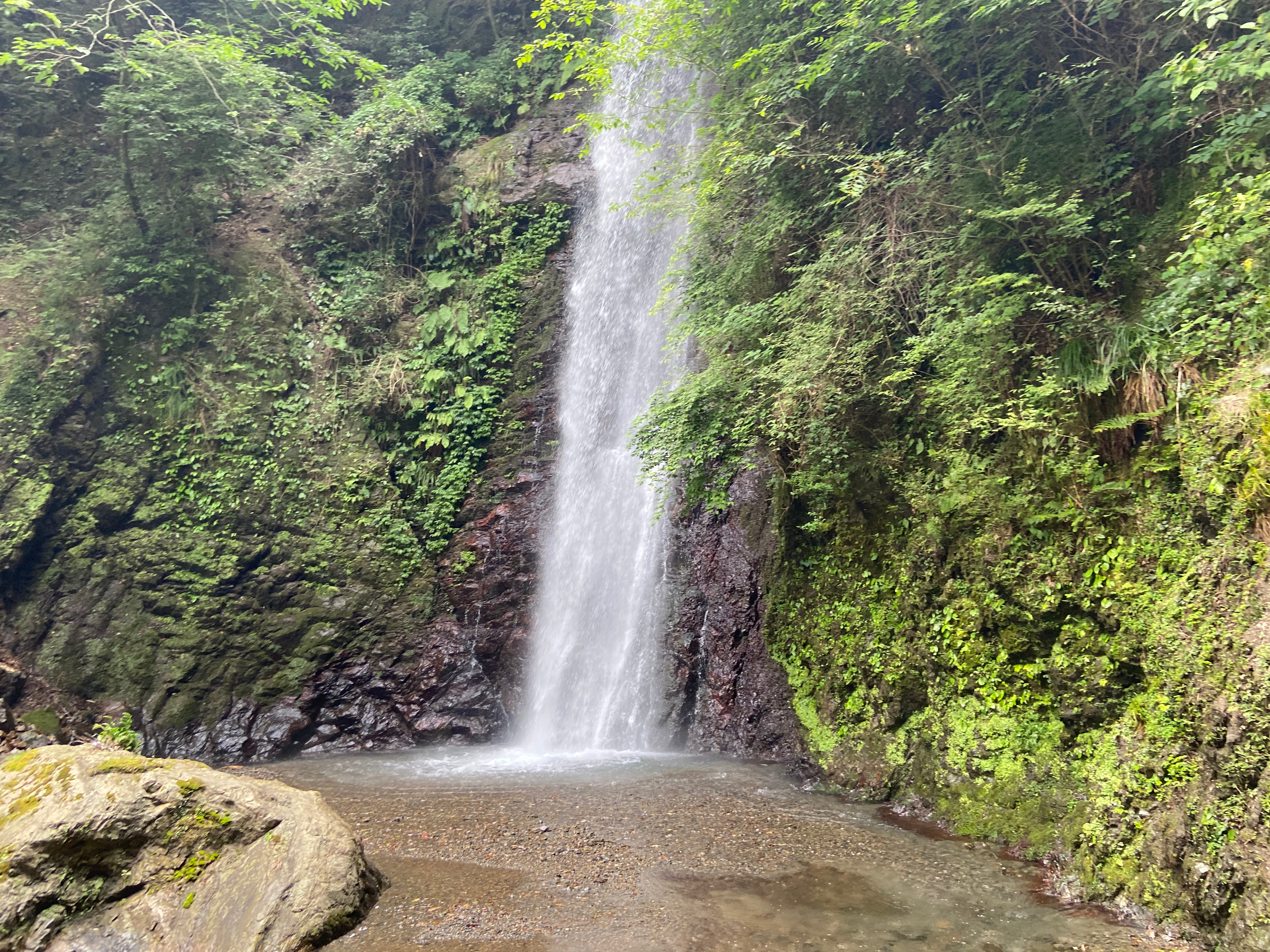
I stand looking at the waterfall for a time, enveloped in tranquillity. I think about water flowing down a river, following a predestined path. It cascades over the falls, flows further south, and meets a tributary, where its path diverges and its destination shifts, a choice not made but followed.

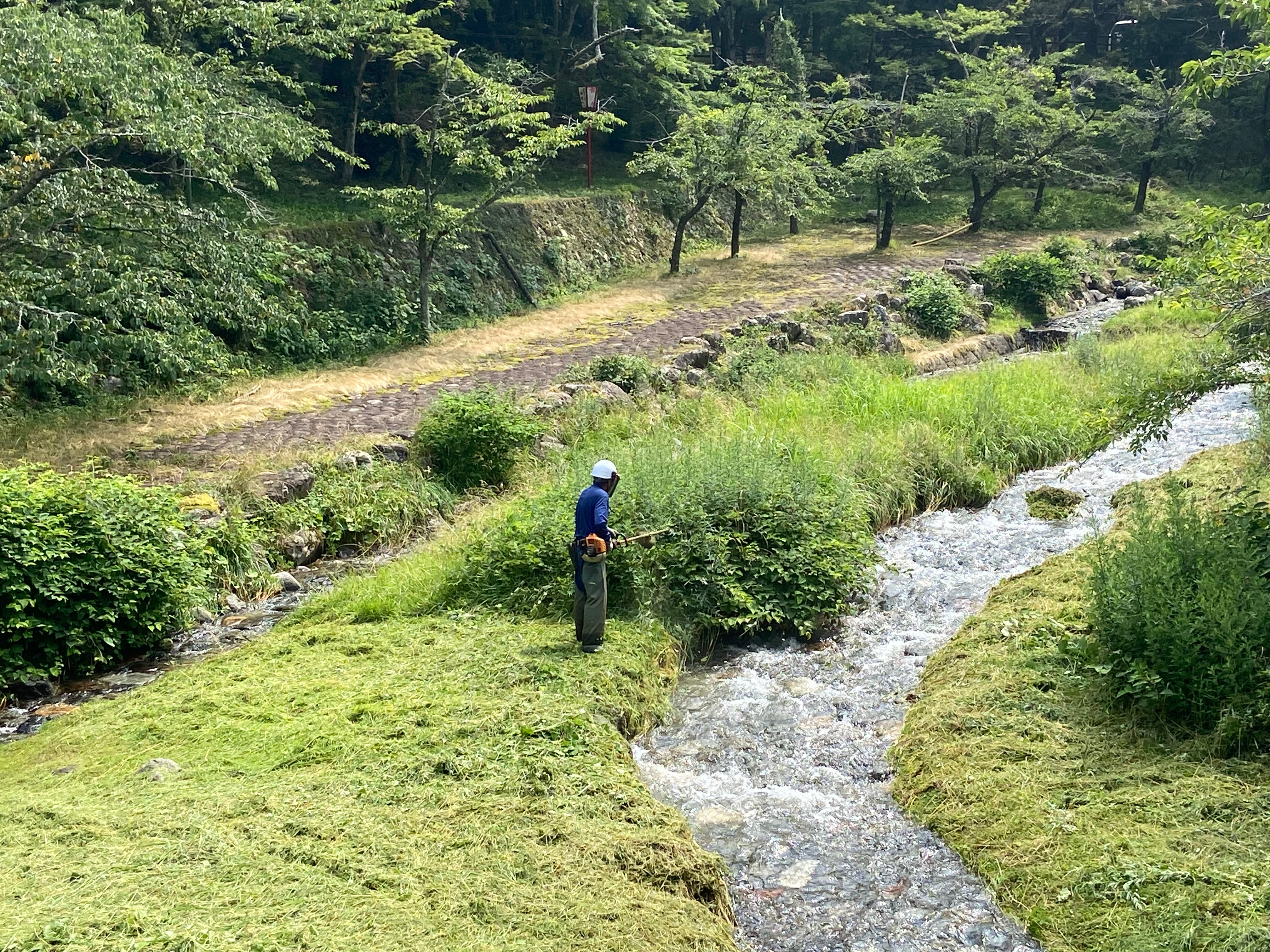
Somewhere, after leaving Yoro Falls, a butterfly shivers against the wind. At the bottom of the waterfall, the tranquillity ends and is swamped by the sound of a man with a grass strimmer.
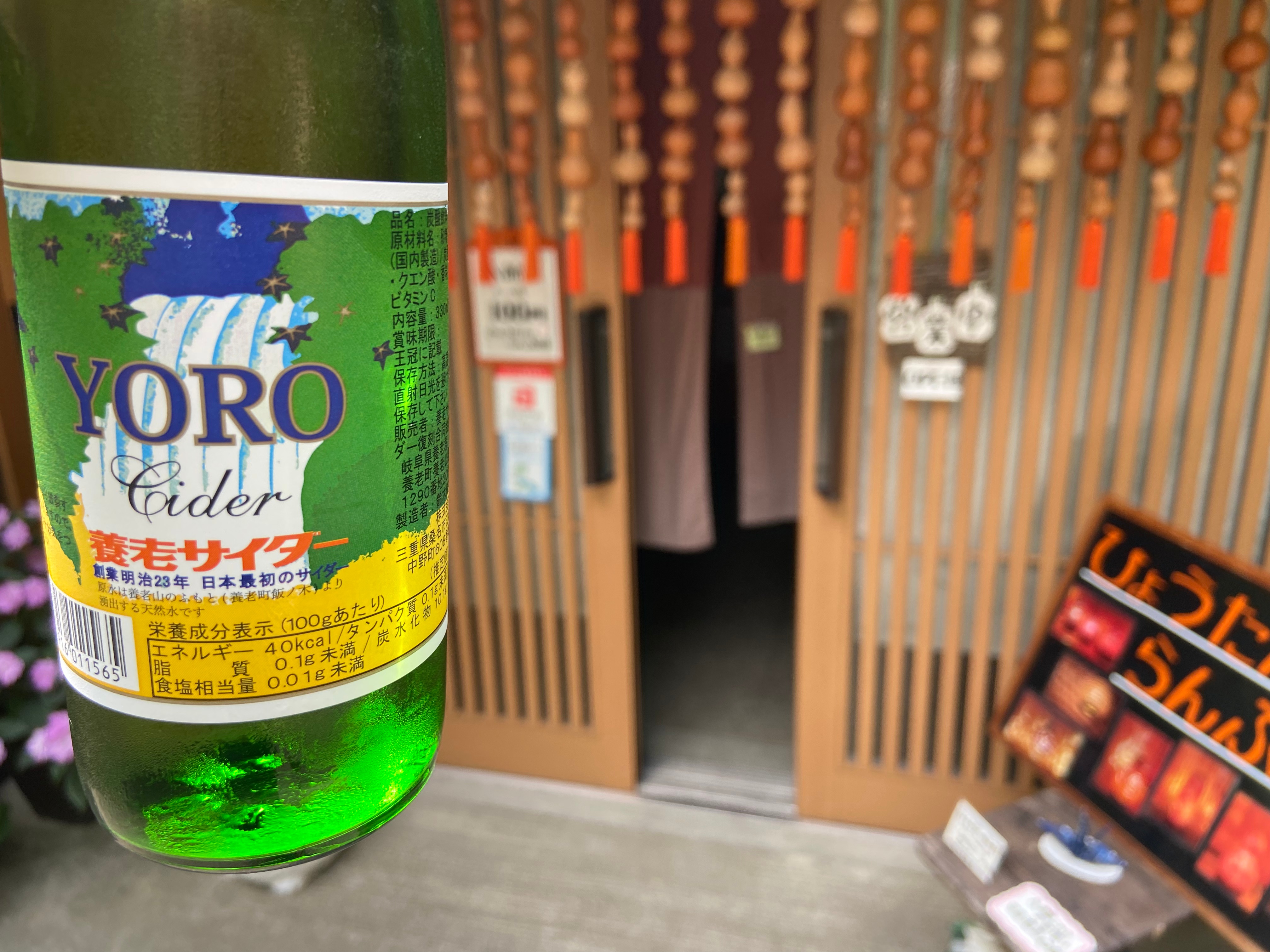
I stumble upon a small souvenir shop selling bottles of carbonated cider made with the magical sake water. The cider tastes delicious. Unlike in England, cider in Japan is a soft drink, so despite the falls apparently being made of alcohol, this drink somehow contains none.

I leave with a healed heart, feeling blessed. Eternally refreshed. Next to the small shop is the Yoro Gourd Museum. I look at a few gourds made into artwork and lamps before moving on.
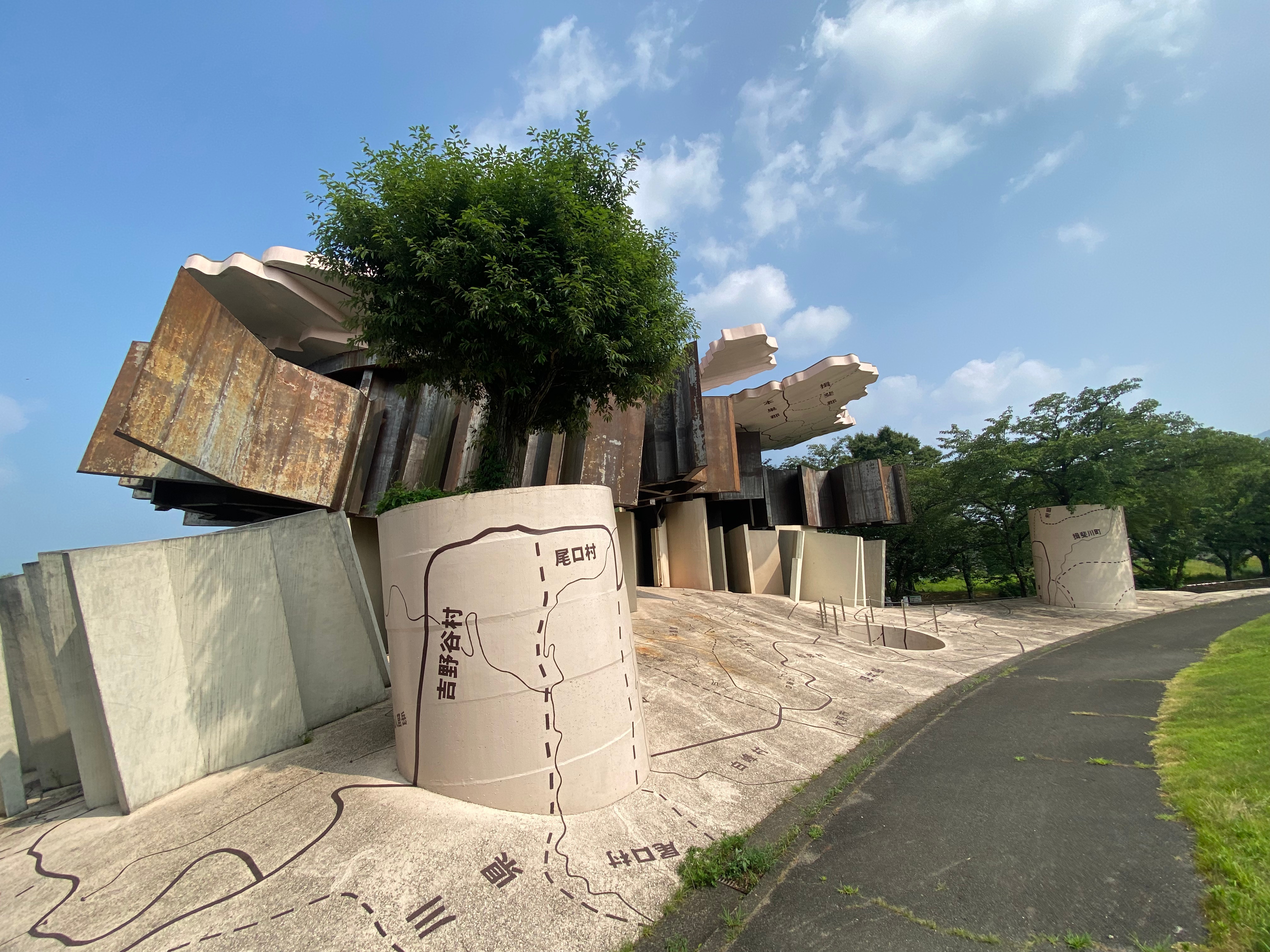
My final stop today is within Yoro Park, a place known as the Site of Reversible Destiny. A massive outdoor interactive art park dreamed up by Shusaku Arakawa.

It’s quite bizarre, funny, and downright unusual. There’s a house that is a road and a road that is a house. There’s a nostalgia generator, a few mazes, and some piles of things that I don’t even understand.
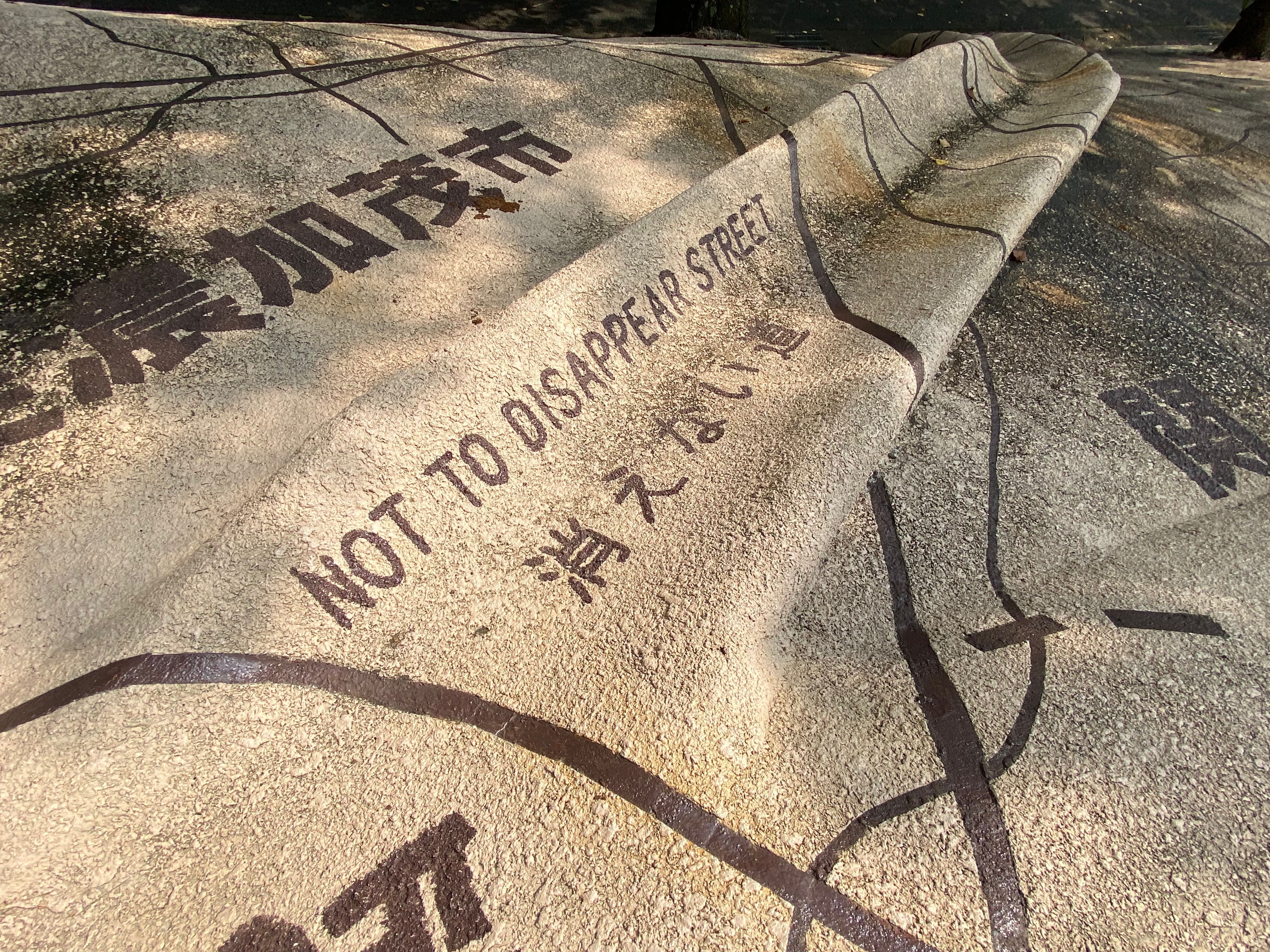
I pass Not To Disappear Street, the Gate of Non-Dying, and an area known as Geographic Ghost. I climb over the Zone of Clearest Confusion, leave through the Trajectory Membrane Gate, before getting lost in the multicolour of Destiny House.

Shusaku Arakawa was obsessed with the idea of death and destiny. He built this site with his wife, Madeline Gins, as a challenge to mortality itself. That’s the point of the Site of Reversible Destiny: to confuse your soul and reroute your path. When Arakawa died in 2010, his wife said, “This mortality thing is bad news.”
With fate as mutable as the weather, or the seeds of a dandelion, you blow away, only to take root in unexpected soil. My destiny begins to unravel. The sun still rises in the morning and sets in the west, but the days no longer feel the same. Each moment becomes a whispered echo of a choice that altered everything, carried on a timeless breeze.

The concept of a multiverse unfolds like a kaleidoscope of infinite reflections, where certainty and uncertainty intertwine like vines in an ancient forest, tangling into something that resembles fate.

Yet, if every possible outcome and path exists, there must also be a universe where the notion of such multiverses is impossible. It is here that we find ourselves staring into the paradoxical abyss.

Sweeping aside the contradiction of parallel worlds, it is on the train that I ponder the existence of a universe where I do not exist. As the train changes track to a branching line, the landscape blurs past, indifferent to my absence. My reflection in the window shimmers, quantum-thin.

For a moment, I am here and not here, observed and unobserved, a wave function waiting to collapse. I step off the train. I step into the world. And the world, impossibly, steps into me.

A Spiral, a Darkness, a Fever, and a Staircase

I wake up in pain. Cramp. My leg screams. I’m in Fukushima Prefecture, Aizu-Wakamatsu, an old samurai town with a historical past. I’ve been here for a few days. I feel oddly connected to this place in a way I’m really not sure how to describe. Aizu is famous for its samurai and a red cow named Akabeko (translated to mean red cow).

I leave my hotel. The sun is so bright that the sky isn’t blue, but white, yet there are no clouds. It’s like walking through a thick fog of heat. Imagine you’re a little tiny person the size of an ant, walking through an oven set to 180 degrees. That’s what it feels like. I walk across the sheet pan in the direction of the mountains, vaguely knowing that I will arrive somewhere spirally important.

In Aizu, the legendary red Akabeko cow can be rubbed and is said to heal illness or sickness. The thing I like about Akabeko is that they have bobbing heads, so every time I walk past one I push its head down and smile as it nods up and down.

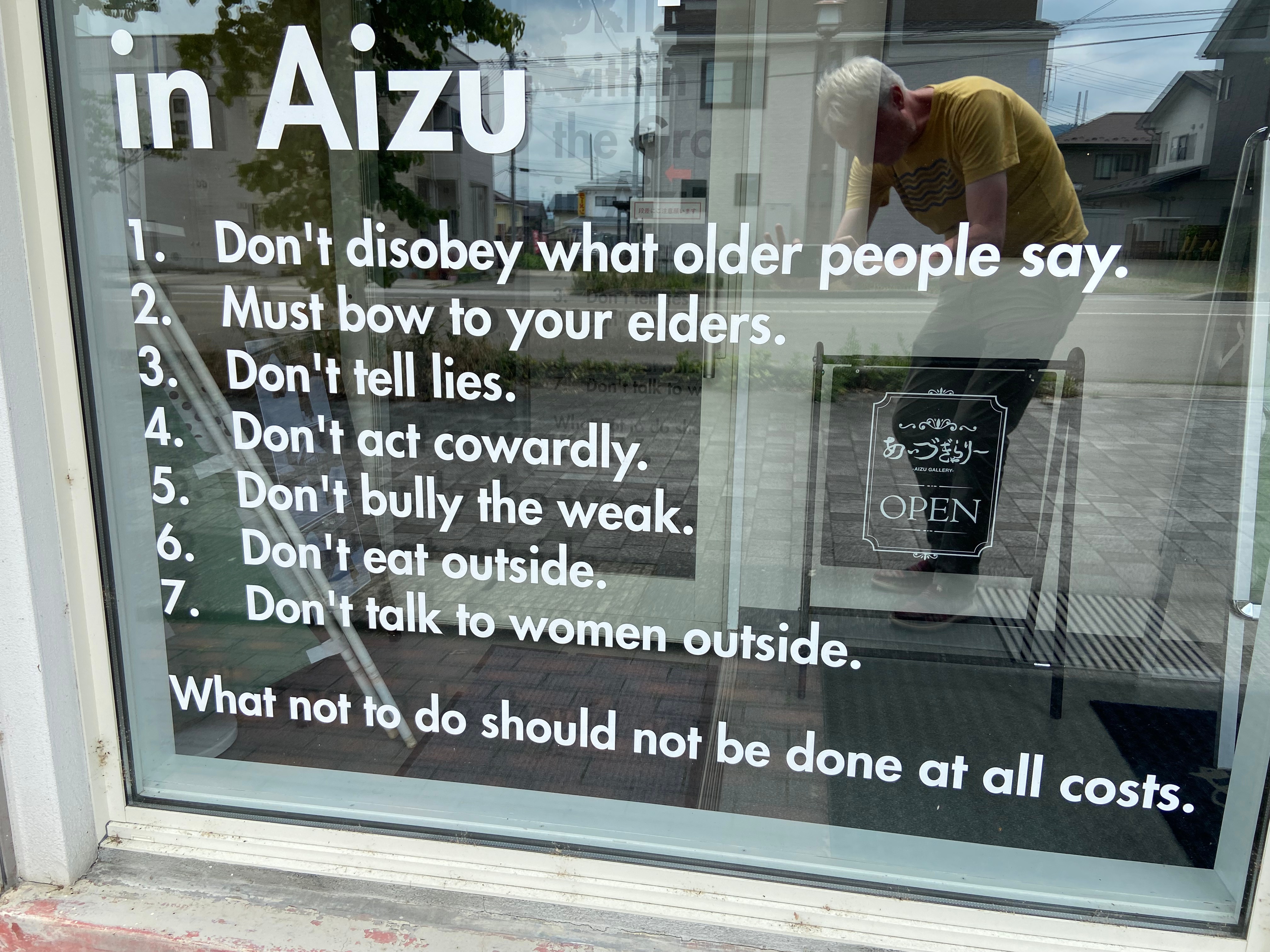
A little further up the road, Aizu-Wakamatsu is offering politeness lessons:

Don’t talk to women outside. Must bow to your elders. The two conflicting lines bother me, because as I photograph the sign, an elderly Japanese woman starts speaking to me in Japanese. Obeying the rules, I just bow my head and walk away.

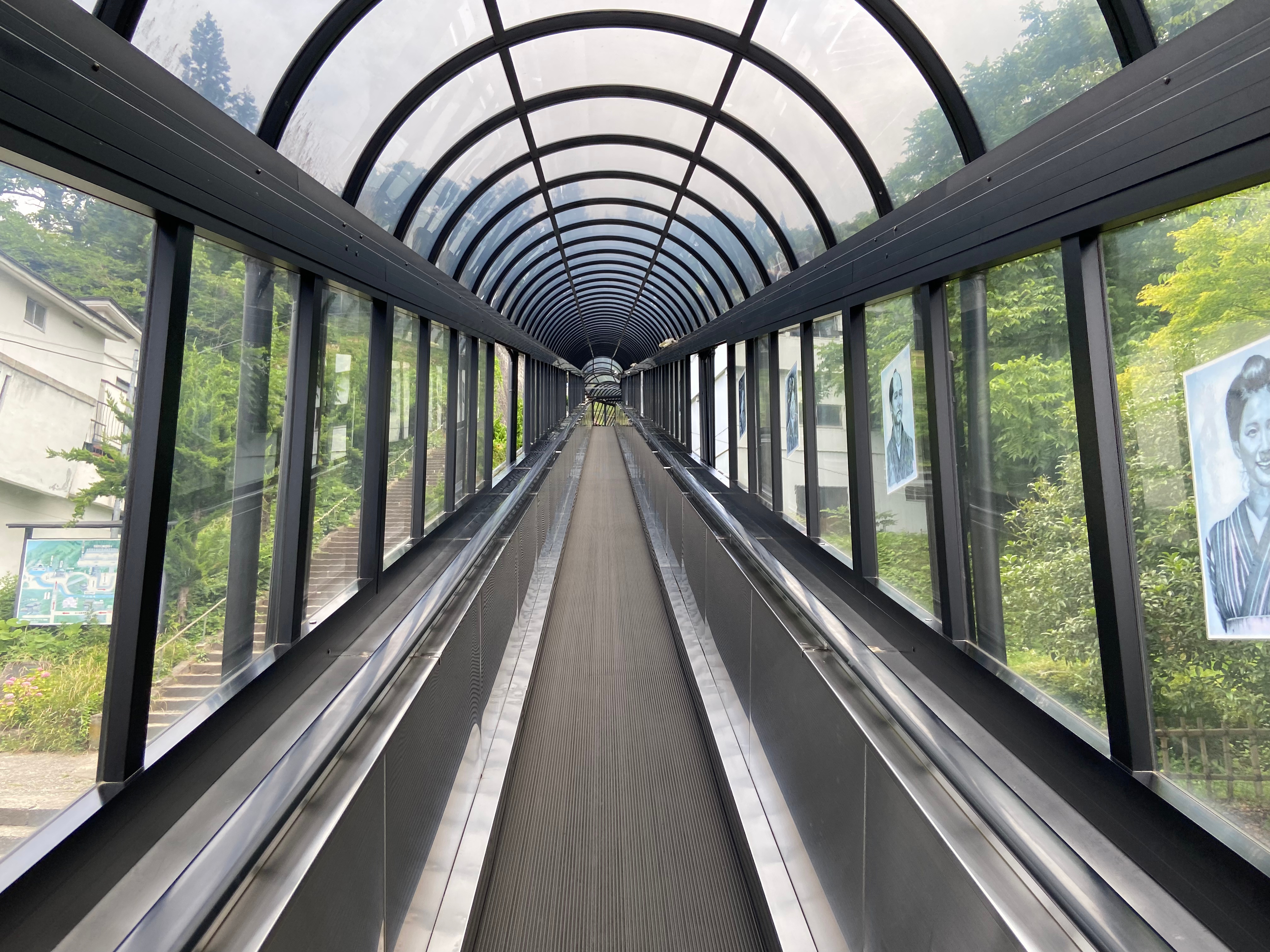
A black Seven Eleven with none of the usual green and red stripes greets me funereally; I’ll soon find out why it’s black. The cascading sunshine and the black stripes make me feel as though my eyes are glitching. Outside the entrance to Sazae-do Temple, there are sweeping steps that twist all the way up, but someone has placed an escalator to one side. You have to pay 250 yen to ride it, but the cramp is threatening to return.

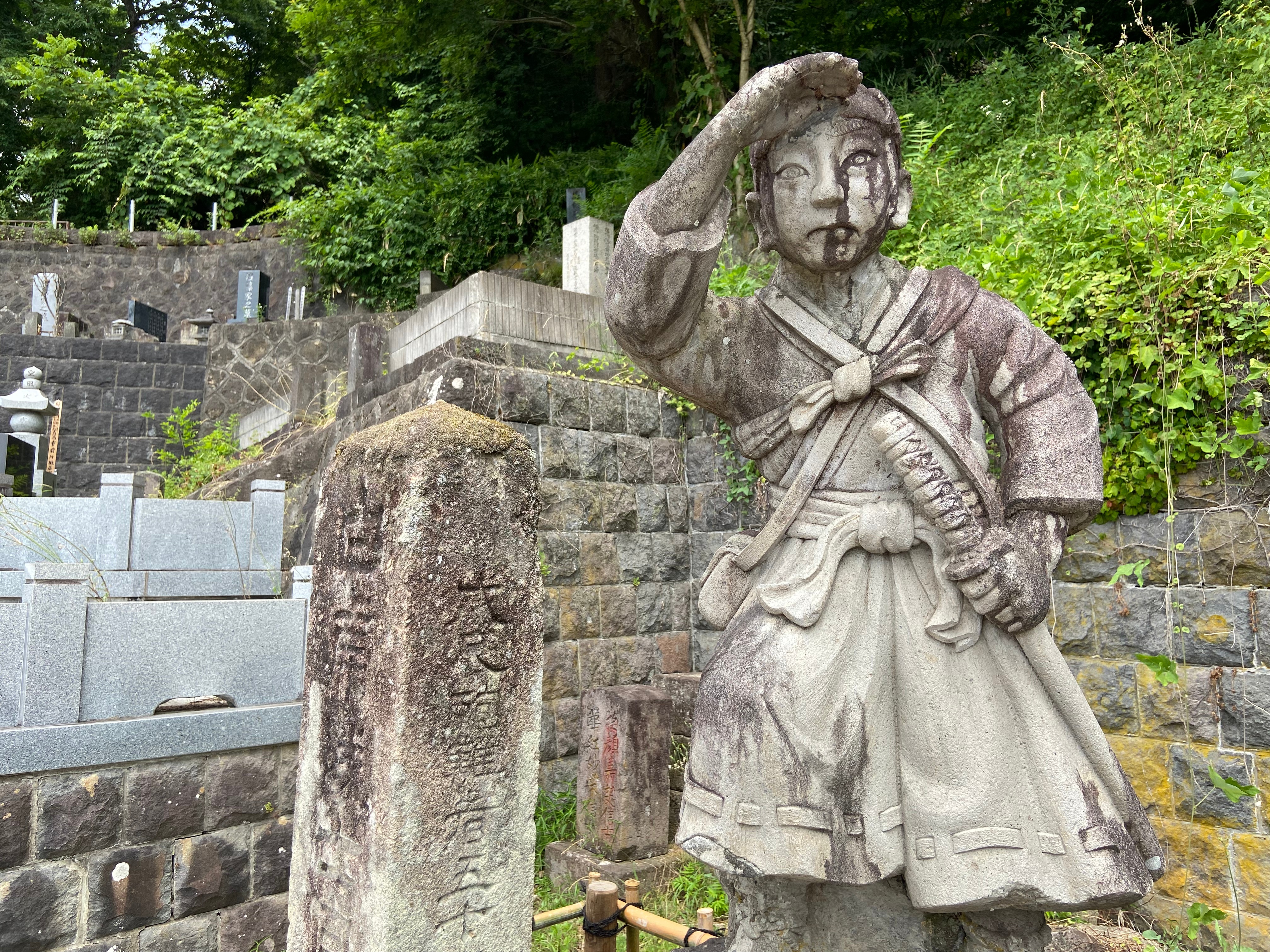
I don’t know what it is about today, but as soon as I step off the escalator and into an open area of monuments, the suddenness of place hits me, catching me off guard. To summarise what happened: on October 30, 1868, during the Battle of Aizu, the Byakkotai, a group of teenage samurai thought they had lost the civil war. They saw smoke in the distance, thought the castle had been sieged, so they killed themselves, not far from where I stand. Learning this, I become swallowed by sadness.

Their bodies were left outside for days, until a man, Isoji Yoshida, decided to take it upon himself to move the bodies of the dead children and bury them. For this, he was arrested. Katamori Matsudaira, the 9th lord of Aizu, wrote a poem in their honour. It goes:

“People will visit, and their tears will fall upon your graves. You will not be forgotten.”

There are monuments here for everyone involved. For the dead children, for all who died. The tomb of sixty-two fourteen- to seventeen-year-old samurai. It’s devastating. I try not to bring myself too much into these stories. But this place, these dead children, their story found its way in. I think what gets me is they don’t mention the word suicide, they explicitly state every time that they killed themselves.

I weep my way around a cemetery before turning toward the temple I originally came up this hill to see. There is a prayer wheel that, when you turn it, creates a mournful sound said to be heard in the underworld, comforting the spirits of the Byakkotai warriors. “Please turn it quietly with your heart.”

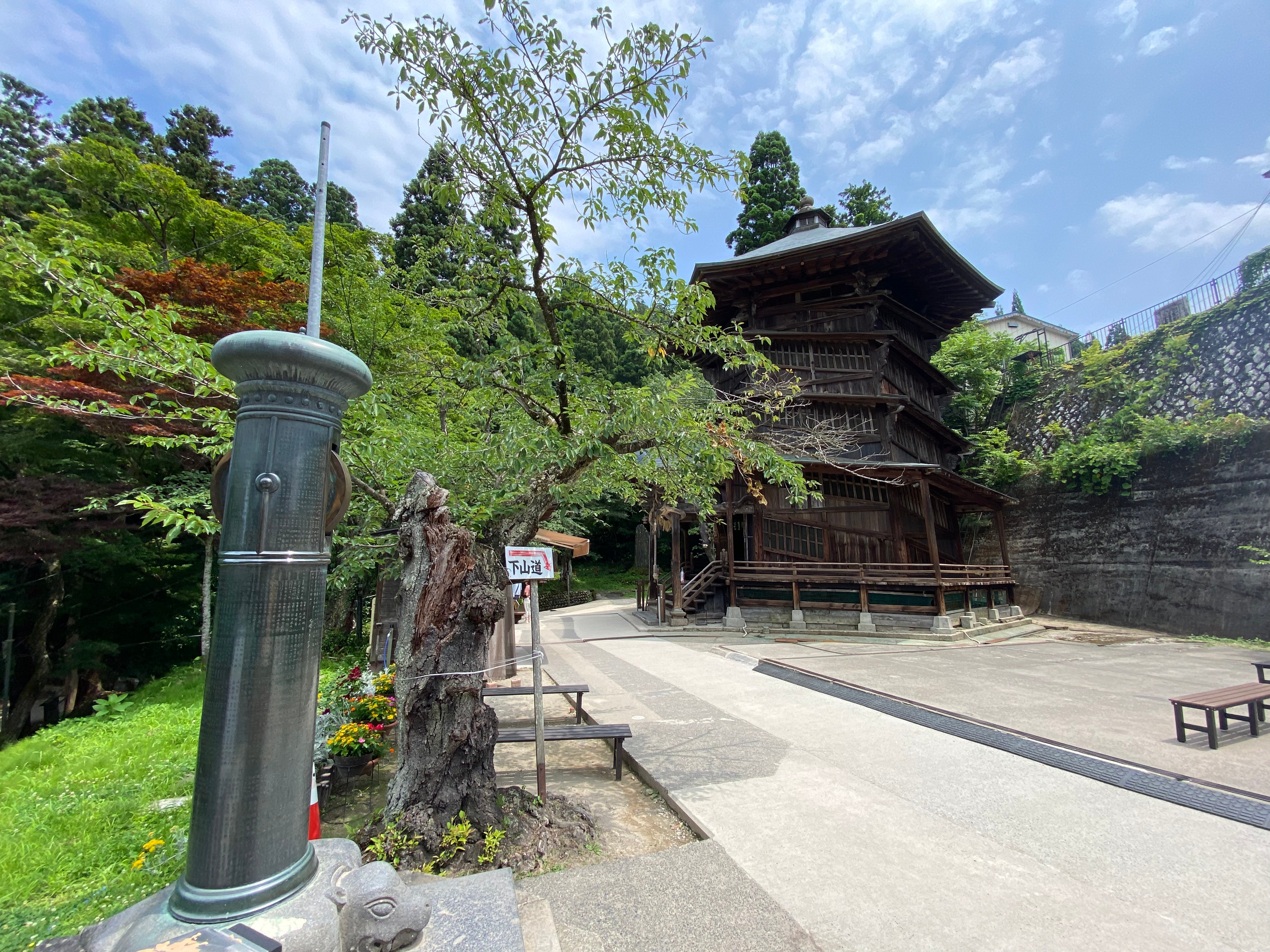
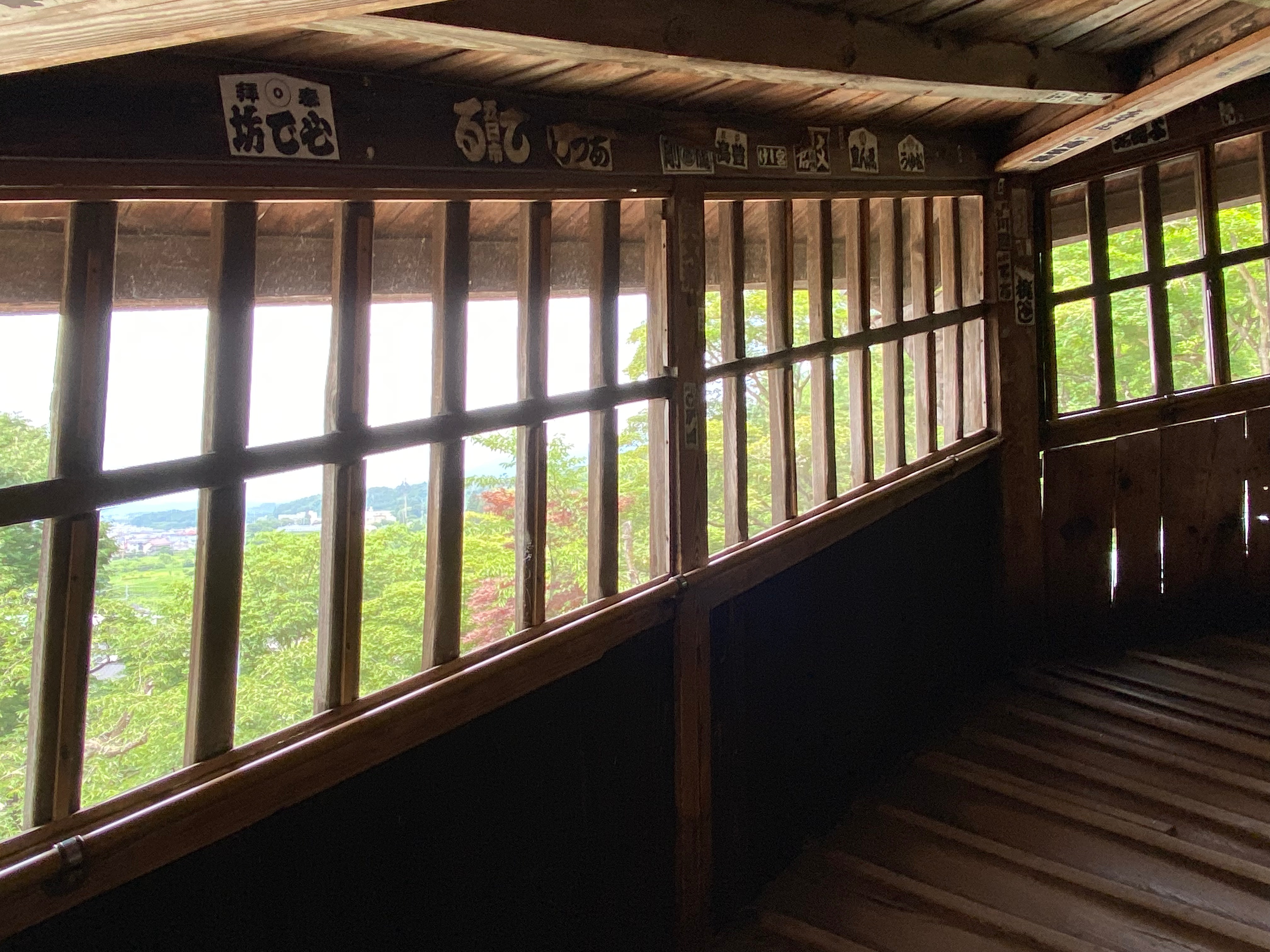
Sazae-do, a wooden Buddhist temple constructed in 1796, is famed for its distinctive spiral staircase that ascends and descends in an intricate, intertwining path. Encircling the ramp are 33 Kannon statues, each believed to grant the same spiritual merit as completing the entire Aizu Pilgrimage route to anyone who passes by them.

At 16.5 metres tall, three storeys, and shaped like a hexagon, you enter from the right side, climb the spiral staircase, and exit back down another way. You never see another soul. This valuable structure is the only wooden building of its kind from the mid-Edo period still standing in the world. It’s also the only known double-helix-shaped wooden structure in existence.

I breathe a heavy sigh before exiting through the gift shop and buying a shirt featuring Akabeko. I think about people, those loved and lost, on days when we exist together, and days when we don’t. At five o’clock, Yuyake Koyake starts playing, the song that tells the children to go back home. It elevates my sadness.

I head to a steak restaurant for dinner. I eat the red cow’s bleeding heart.

Quivering Heights

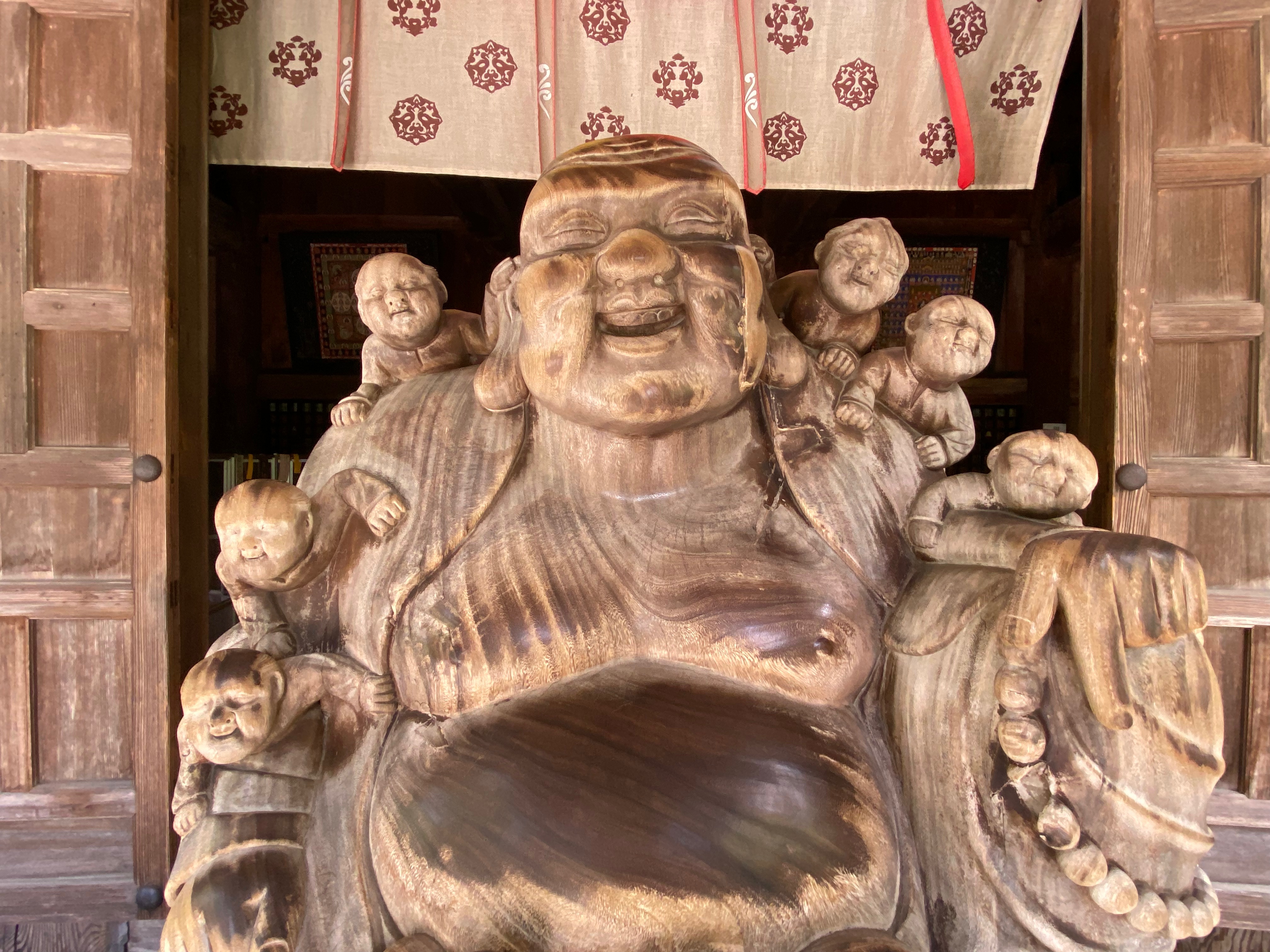
I’ve come to Mount Hoju in Yamagata Prefecture to experience one of the best views in Japan. At the base of the mountain is the usual buzzing of tourist-targeted shops selling shaved ice, overpriced noodles, and fish-shaped waffles. Beyond that is the oldest beech wood building in Japan, home to a massive wooden statue of Buddha.

The statue is Yakushi Nyorai, the Buddha of healing. They say that if you have an illness or ailment, something you want cured, you rub that part of the Buddha, then climb to the top of the mountain and you will be miraculously healed. Naturally, I rub the Buddha on the neck and hope my scars fade.

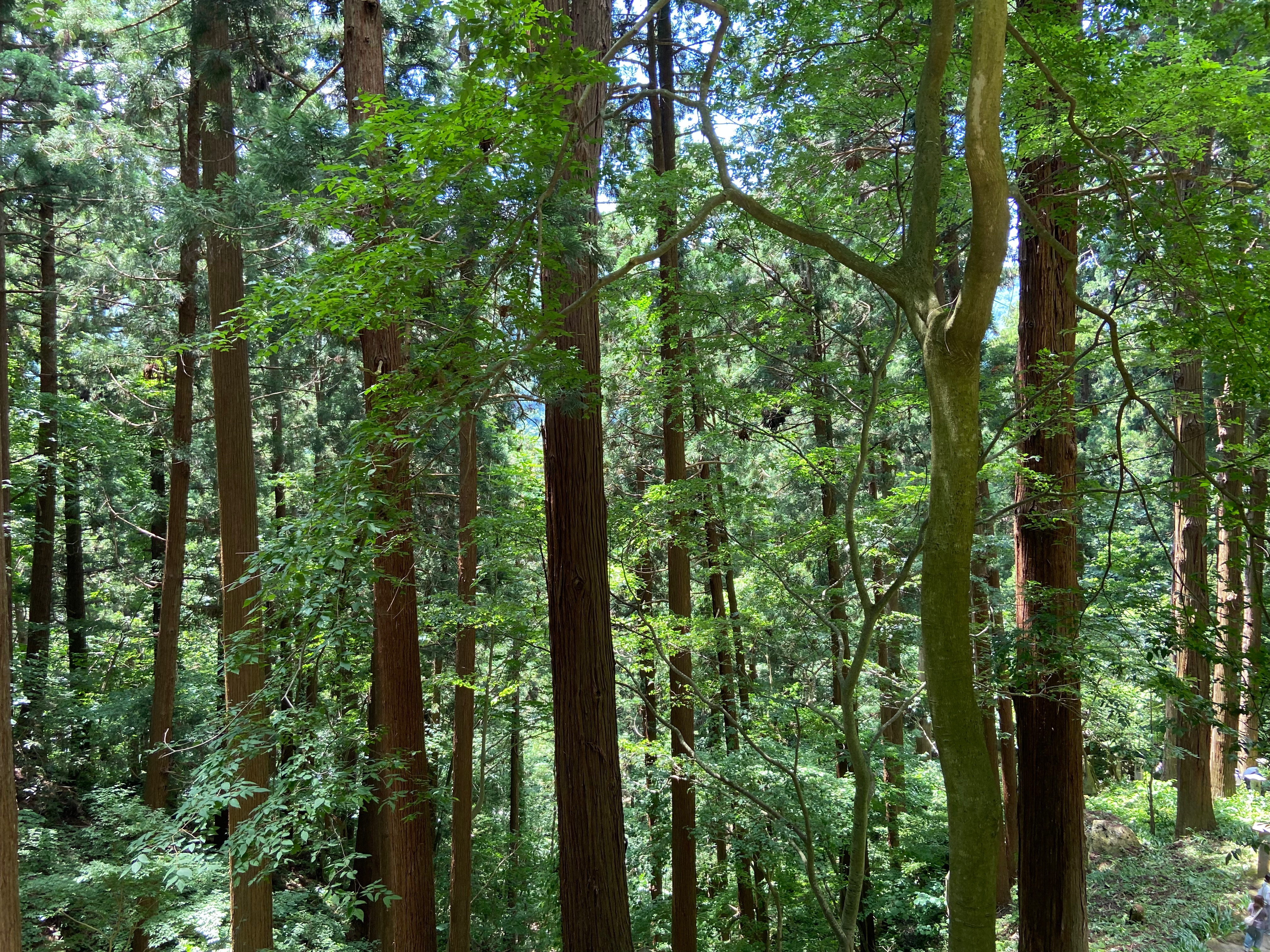
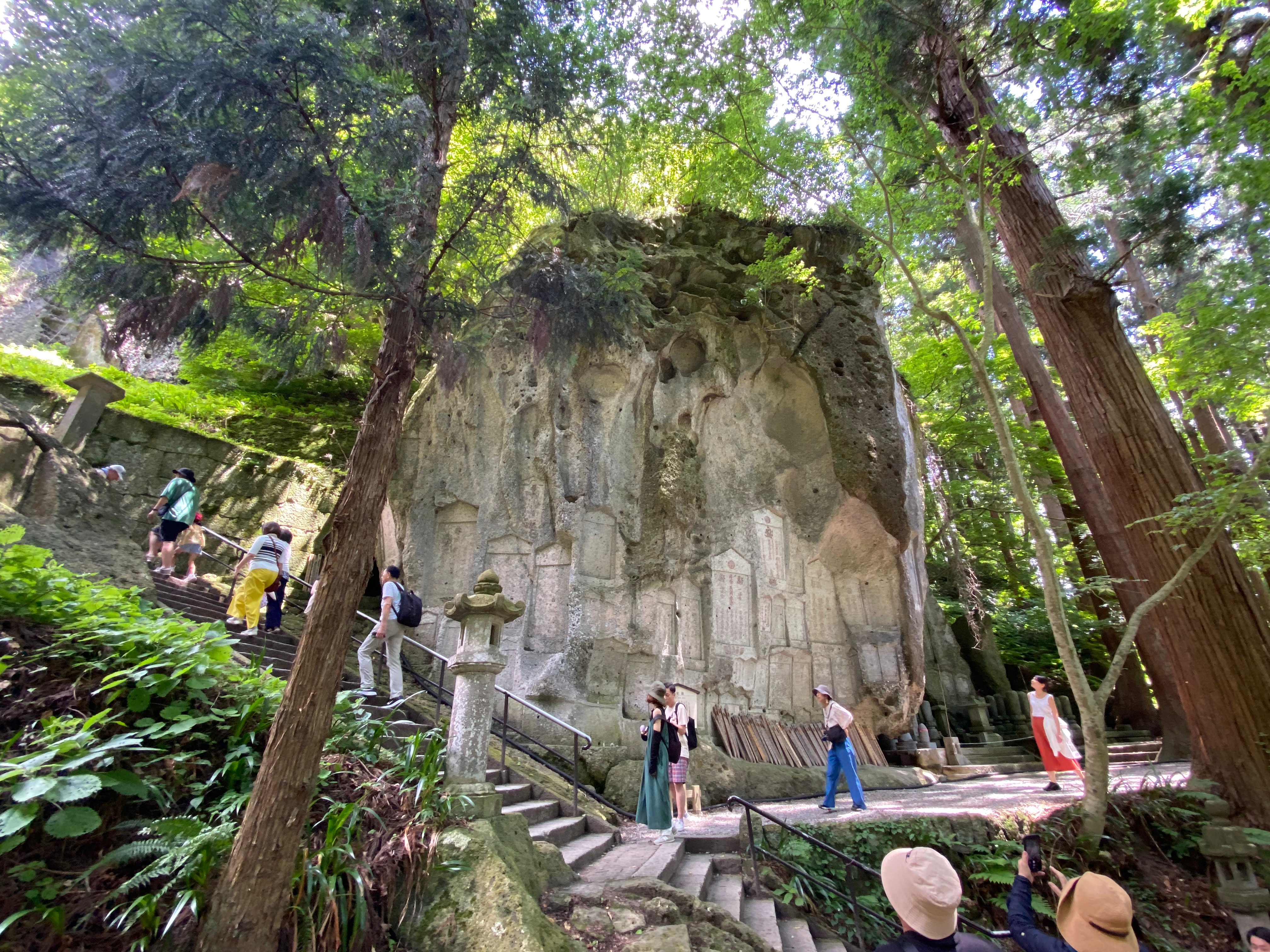
Next, it’s time to climb the mountain. The road to the temple is 1,015 stone steps surrounded by thick woods and strangely shaped rocks. Cedar trees make up the mountain forest. The Risshakuji Temple at the top of the mountain means “Mountain Temple,” which is the perfect name for it, considering it is atop a mountain.

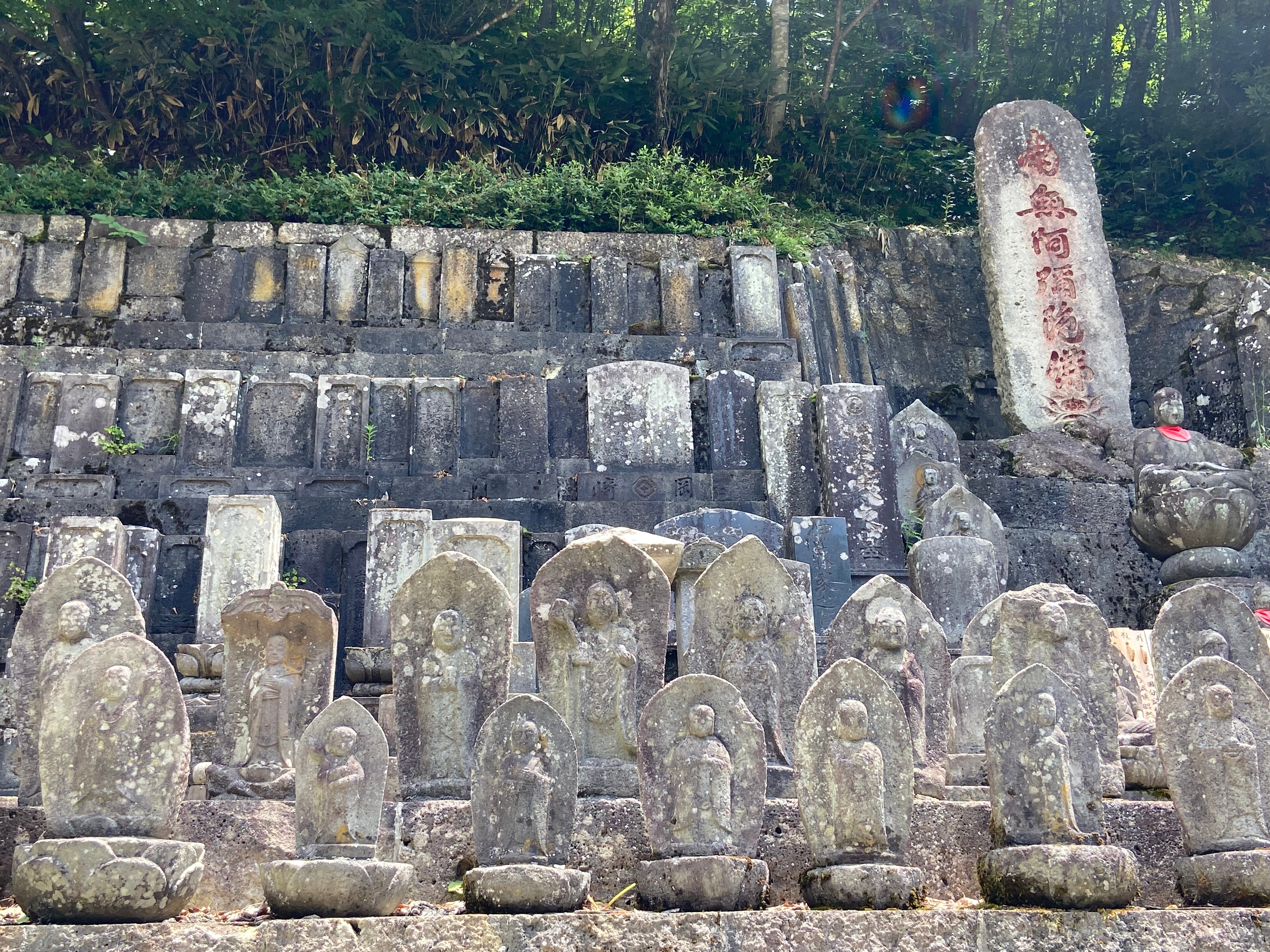
Some of the steps are in sections of 108, to represent the 108 Buddhist sins. There are Jizo statues scattered throughout the ascent adorned with coins. There’s a monument engraved with another poem by Basho, and it’s a famous one:

Such stillness,
the cicadas’ cries,
sink into the rocks.

After the second set of 108 steps I’m already worn out. Half a million steps last month, I now find myself humbled by a mere 216. I’m already close to spiritual defeat. The day is hot, the air quality poor, and it’s very humid. It has a way of wearing me out, I suppose.

It’s so hot that every now and again there will be an ever-so-slight breeze, and every time there is, I notice it. A lot of the Japanese people are carrying these little portable electric handheld fans. A country famous for fans, so it makes sense. At about 550 steps there’s a massive rock that everyone is photographing.

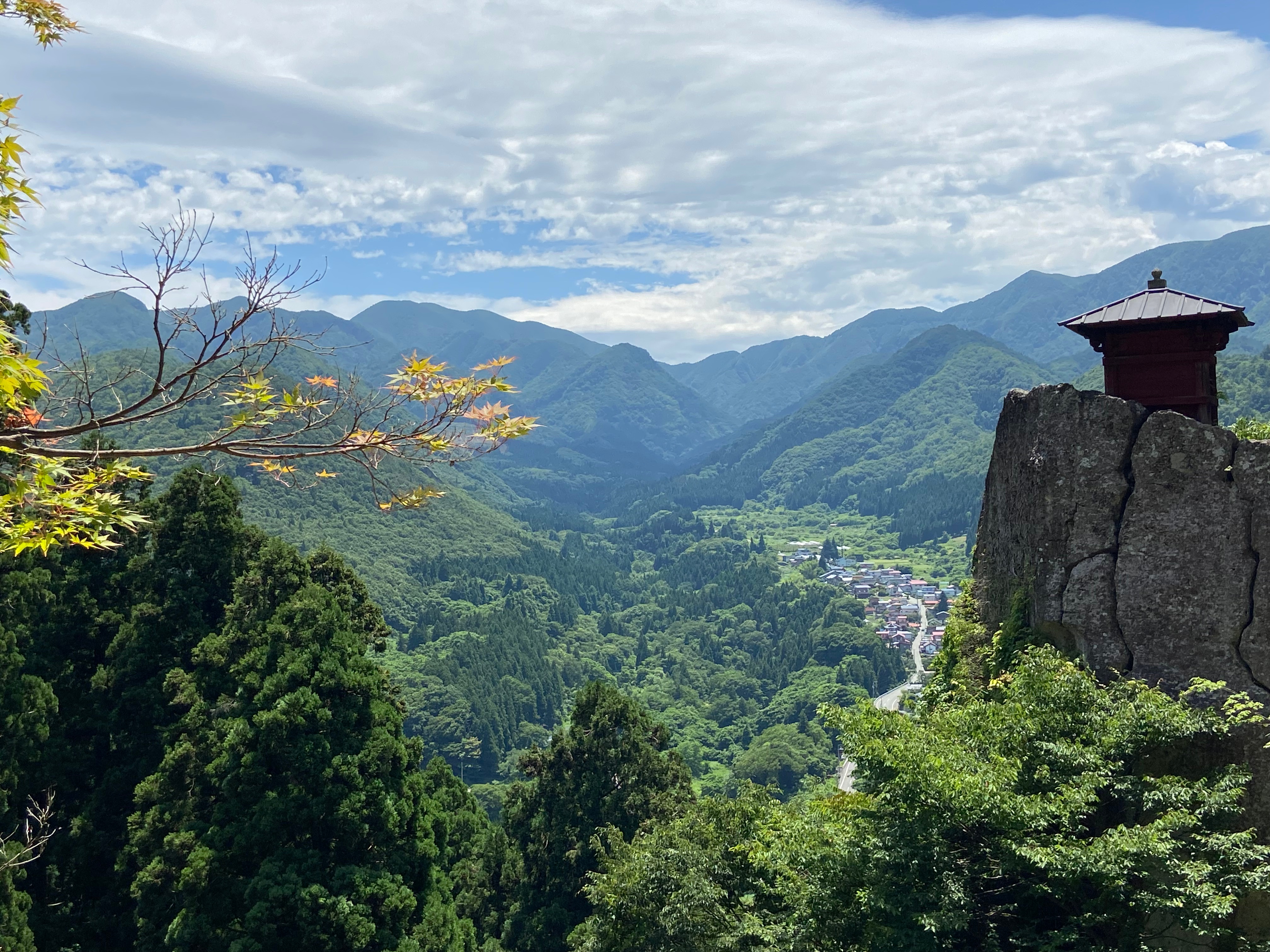
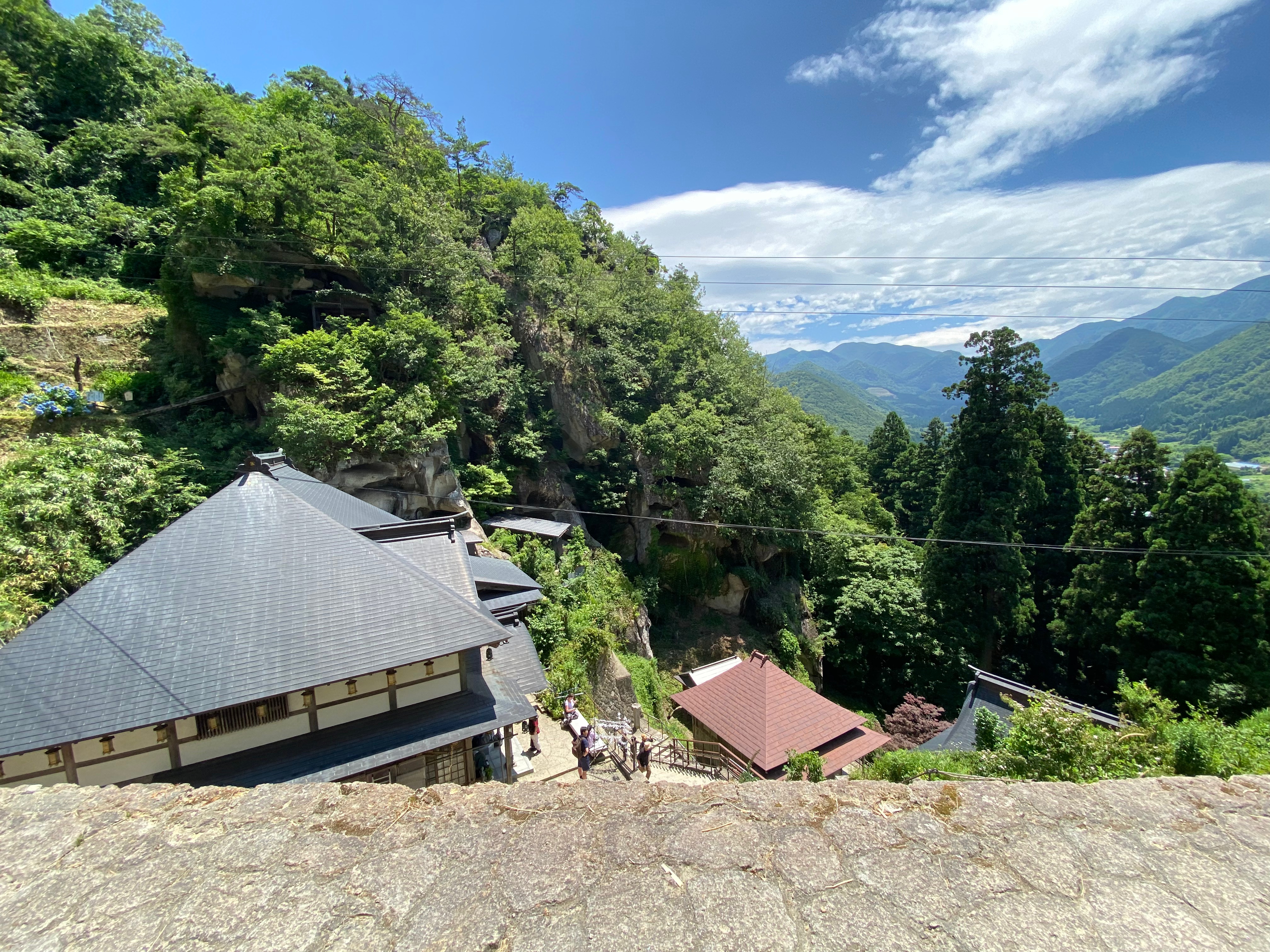
Further up, there’s Risshakuji, founded in 860 AD, a small temple of minimalist qualities. From here I realise just how high up I am, that I can make out the city below. The thing that’s unusual is there is no barrier here. I could fall off the mountain in an earthquake, and that’s exactly what almost happens.

The mountain shakes, ever so slightly. A shift. Nobody else seems to react or notice. It’s just the subtle shift. The whole thing took a tiny step to the side. The mountain itself… adjusts. It’s not dramatic. Nothing tumbles. There’s no sound. But I feel it. And for a moment I am filled with dread. Then it stops. I wonder if being on a mountain is the worst place to be during an earthquake.

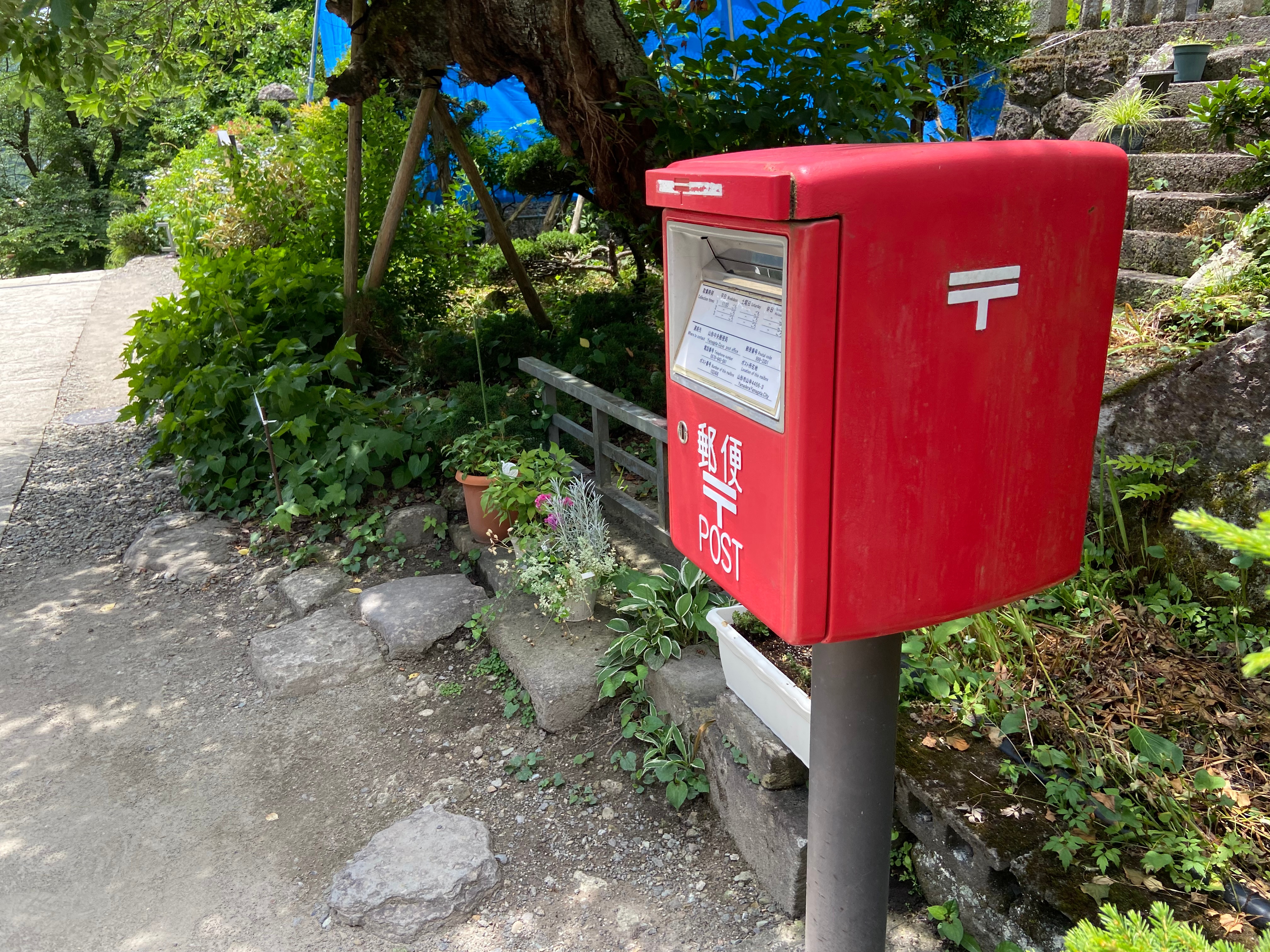
Very close to the top of the mountain is a post box. At the bottom of the mountain there is a post office, a mere 940 steps away. I naturally feel sorry for the postman whose job it is to walk up and down a mountain every day to collect what is likely just the odd piece of mail.

1,015 steps. I reach the top. The cicadas’ song fills the humid afternoon here, sharp and piercing, like needles being driven into a heart. Their cries echo, sinking into the ancient rock.

A cemetery at the top concludes the climb. Crooked gravestones pushing through moss. Everything here is slanted, aged, dignified in its entropy. I sit beside the tombs, trying not to melt into them. The mountain temple echoes these themes of death, decay, and transcendence as it climbs through cemetery terraces and silence.

I stand to rest, to catch my breath, to take it in. My shirt clinging to me like skin, thirst calling me to a vending machine back at the base of the mountain. But I linger. Amongst the graves, everything feels tilted. Stones, time, even thought.

Walking down is the reward as I can see it all. All the views, all the way down. There’s something about a good vista. I say goodbye to the top of the mountain, and goodbye to the vista. Hasta la vista. Until I see the view again, opening like lungs exhaling. I can see the whole valley now, softened by haze.

Back at my capsule hotel, I voluntarily entomb myself in a plastic drawer like a very polite corpse.

We Are Nowhere and It’s Now

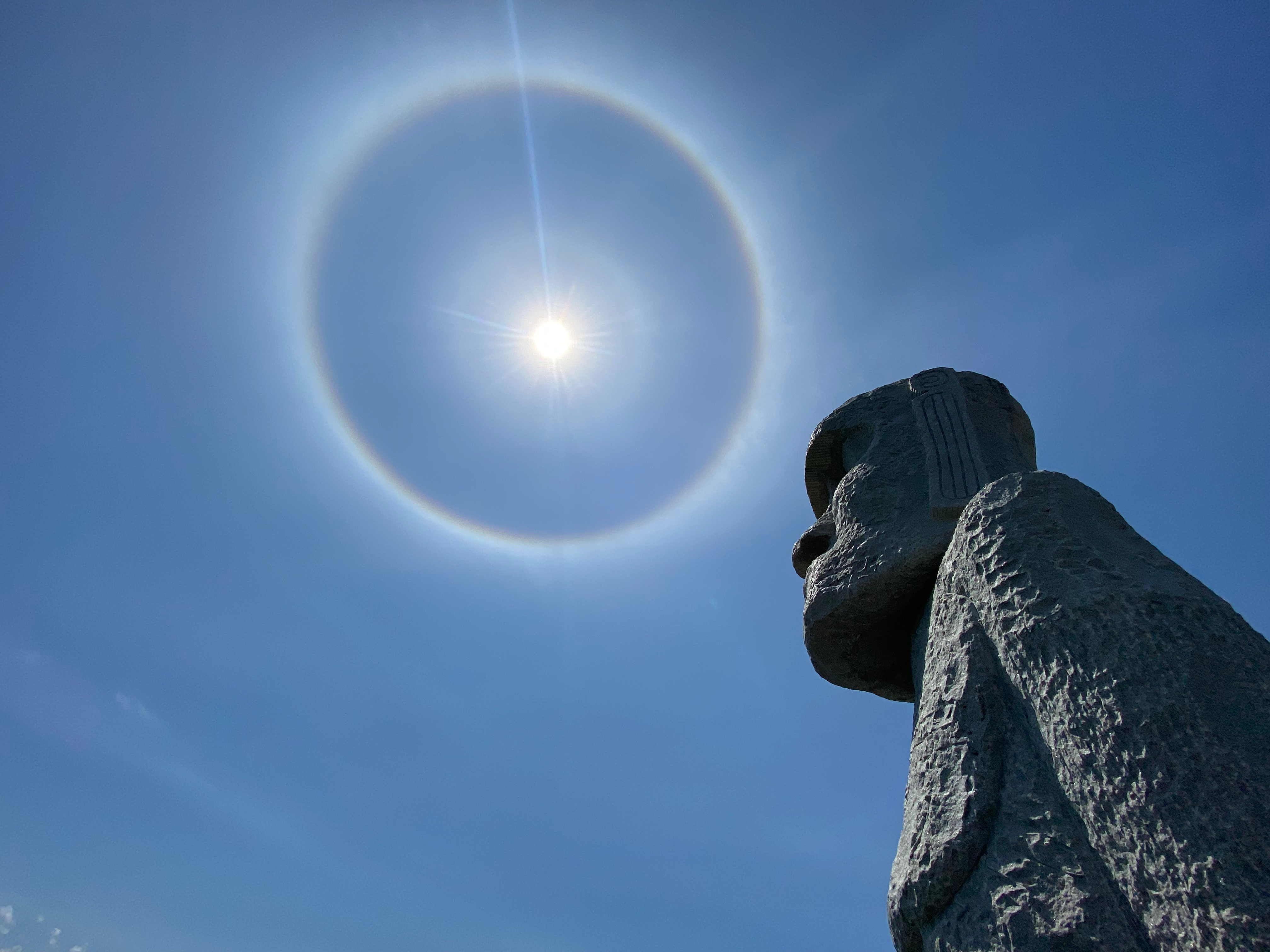
I arrive at Makomanai Takino Cemetery at the exact moment a halo appears around the sun; a 22-degree circle of refracted light caused by ice crystals high in the stratosphere.

A solemn Moai statue gazes skyward beneath a 22-degree halo—Makomanai Takino Cemetery, Sapporo, Japan.

A Moai, still and solemn, gazes upward as the ring completes itself overhead; an accidental alignment of atmosphere and awe. I stare with it for a while. Both of us do. Neither of us understands.

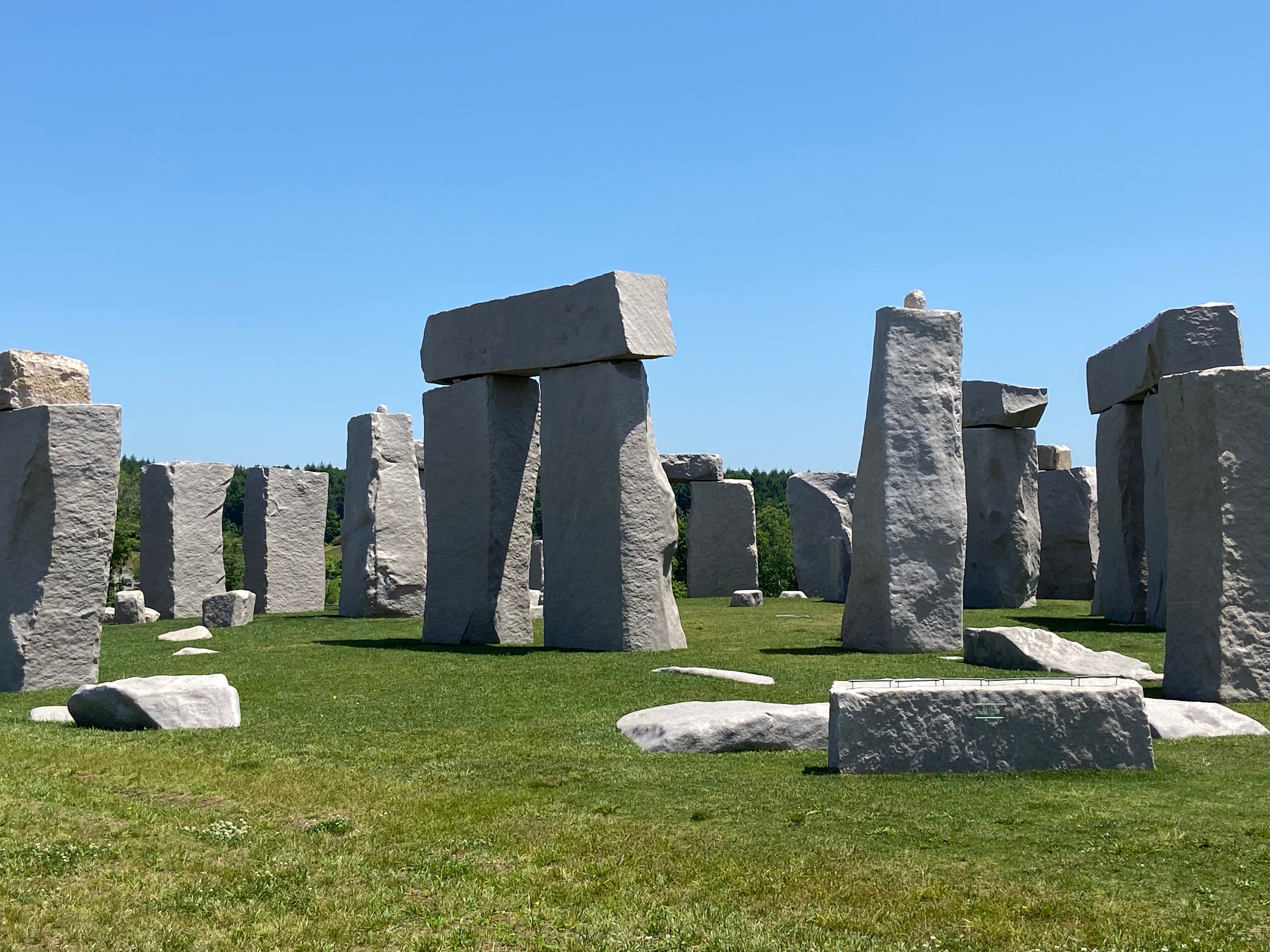
Makomanai Takino Cemetery features a skateboard park, a row of Easter Island Moai, a lavender vending machine, and a full-size replica of Stonehenge, which also contains a secret underground mausoleum. But I’m not actually here for any of that.

A full-size replica of Stonehenge stands solemnly within the cemetery grounds—Makomanai Takino’s surreal side.

“If you’re going to see the Buddha, go directly there.” That’s what the sign says. That’s what the “tourist information” office tells me. Back outside, I can just about make out the head of the Buddha poking out above a hill of lavender, so I go directly there.

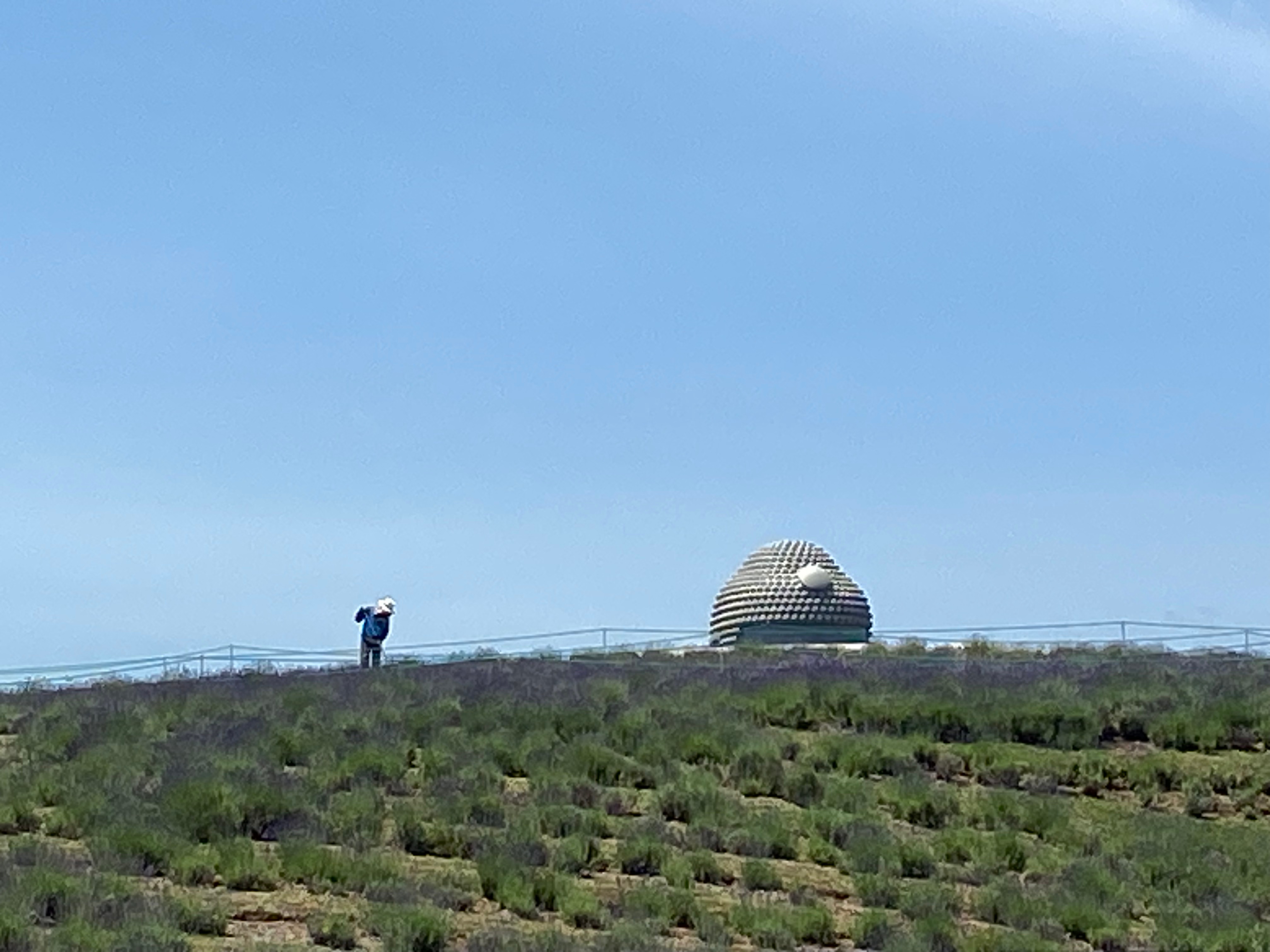
July in Japan is lavender season. Tens of thousands of lavender plants surround the “Hill of the Buddha”, designed by world-renowned architect Tadao Ando. They’re so magnificent I have to remind myself that I’m in a cemetery.

The Hill of the Buddha peeks above blooming lavender as a lone gardener tends the flowers—Tadao Ando’s design in midsummer.

One sole member of staff has been given the arduous task of tending to the tens of thousands of lavender plants, whilst the Buddha looks on, watching over a world in slow collapse.

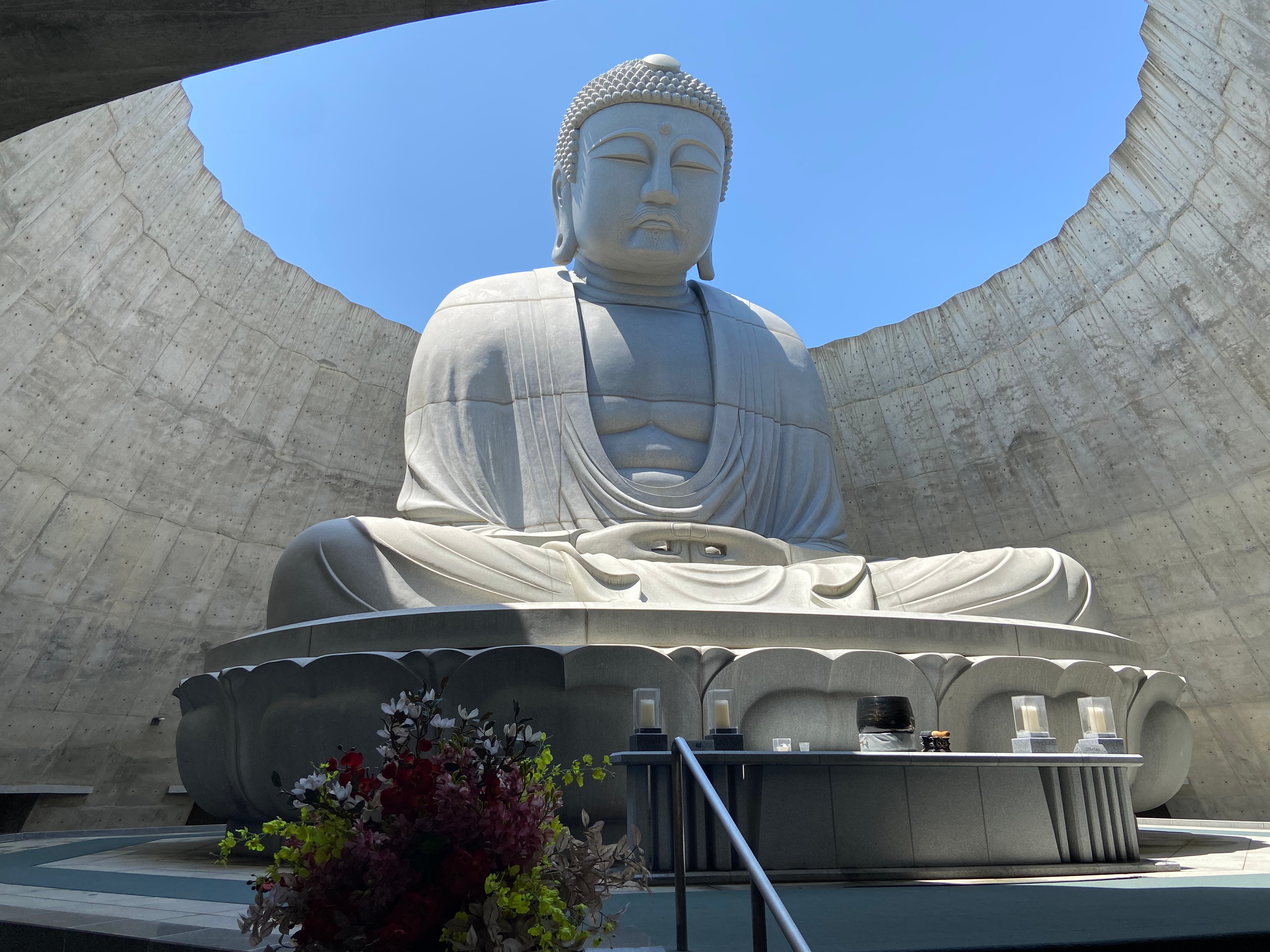
I enter the chamber that houses the Buddha and instantly notice the silence. The closest thing to silence I’ve experienced in a while. I just stand there, motionless, staring at the Buddha. It’s the kind of place that wants you to contemplate something. I’m never quite sure what. The permanence of stone. The impermanence of memory?

Inside the lavender-covered hill, a seated stone Buddha rests in quiet contemplation—Makomanai Takino’s hidden sanctuary.

I pull an oracle fortune slip from a basket by the prayer wall. It says: Very Good Luck. With success anything can be accomplished. It also says that my lucky item is dried flowers. I consider making a bouquet from the ones outside but decide against it.

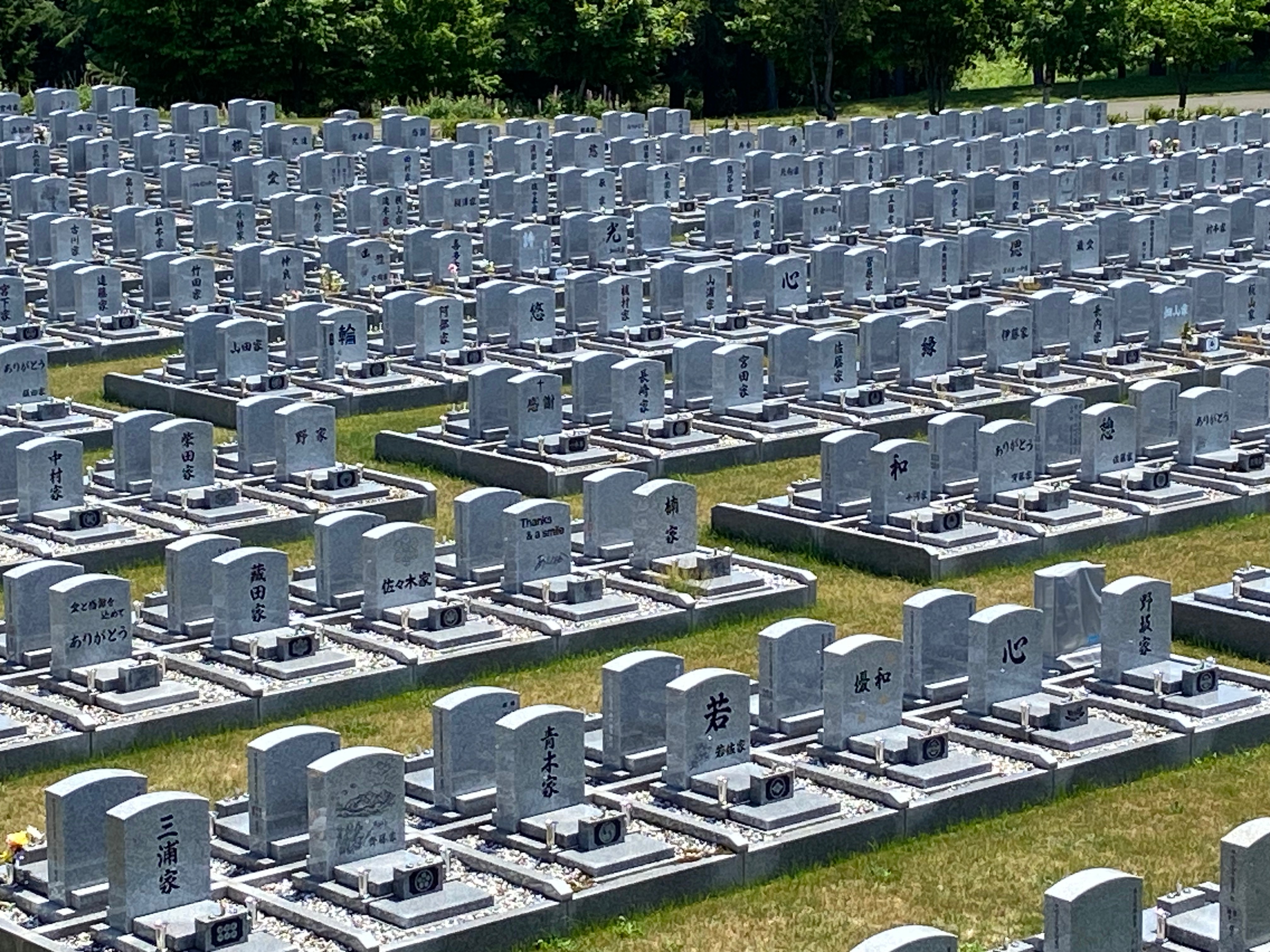
Makomanai Takino Cemetery is one of the largest in the country; 180 hectares of death and flowers. As I stroll through the many interconnected burial areas, I pass by multiple funeral processions in progress, and my thoughts turn to death.

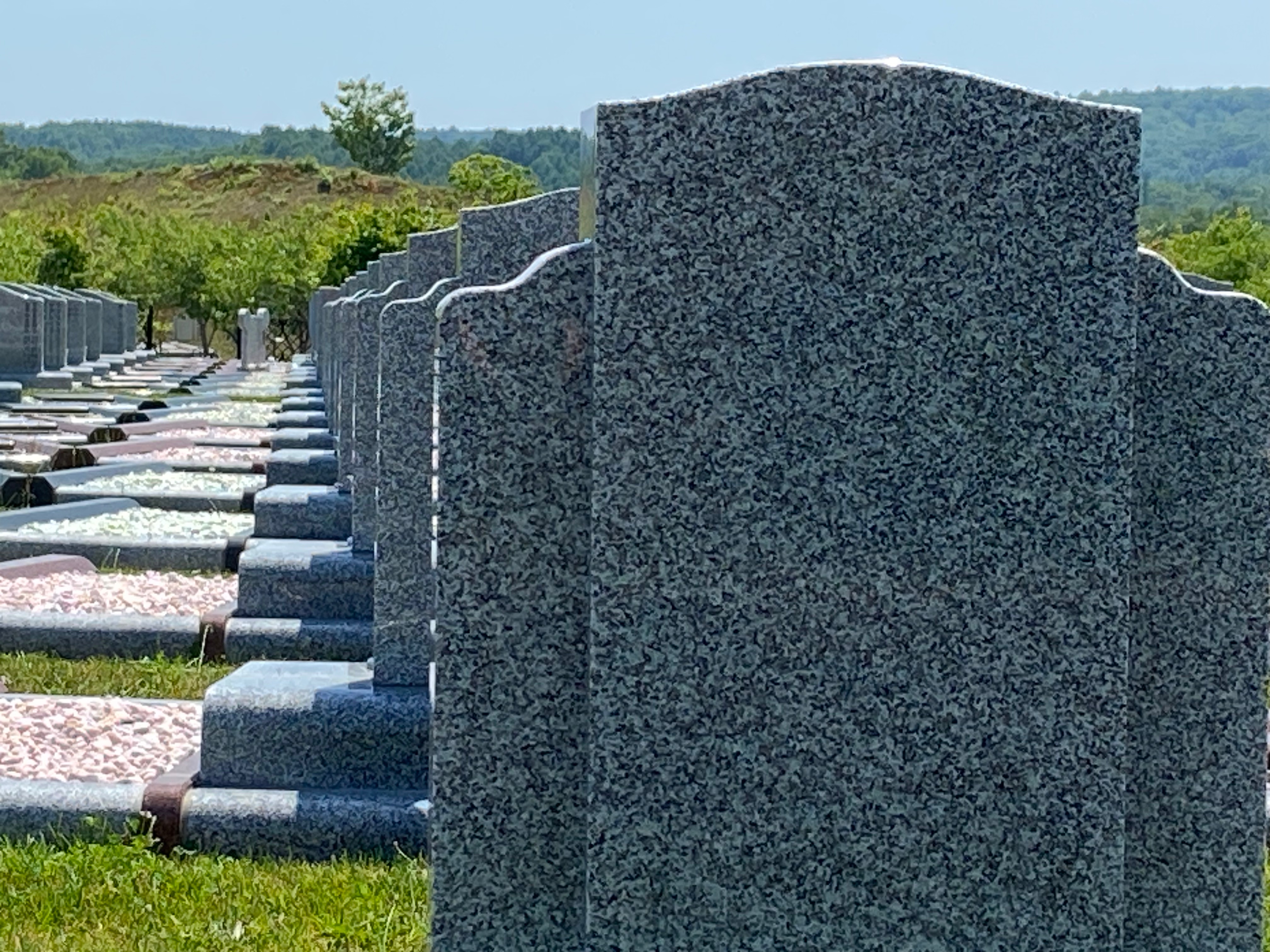
Endless rows of gravestones stretch across Makomanai Takino Cemetery—flowers, silence, and summer wind.

I pass a row of graves with the kanji worn away, lost to time, like everything else. I begin to wonder what memory becomes when the last person who remembers it is gone. When even the names are unreadable.

And for a while,
there is no past.
No next.
Only this.

The moment stretches, fragile and full of forgetting.

A weathered gravestone with no visible name—time and memory eroded in Makomanai Takino Cemetery.

Then a memory.
Then not even that.
Then a stone.
Then not even that.

Where I End And You Begin

I decide to do some sightseeing for the final time in a while. After taking three different trains, I arrive at Mitsumineguchi Station, the last stop. It’s almost three hours from Tokyo, and at times I wonder why I have made this journey into the middle of nowhere. Stepping off the empty train, I find the station is completely unmanned, so I place my ticket into a wooden box. I notice that the ticket machine doesn’t appear to be working either, so there is no way for me to purchase a ticket for the way back. I wonder if that’s to stop anyone else from leaving.

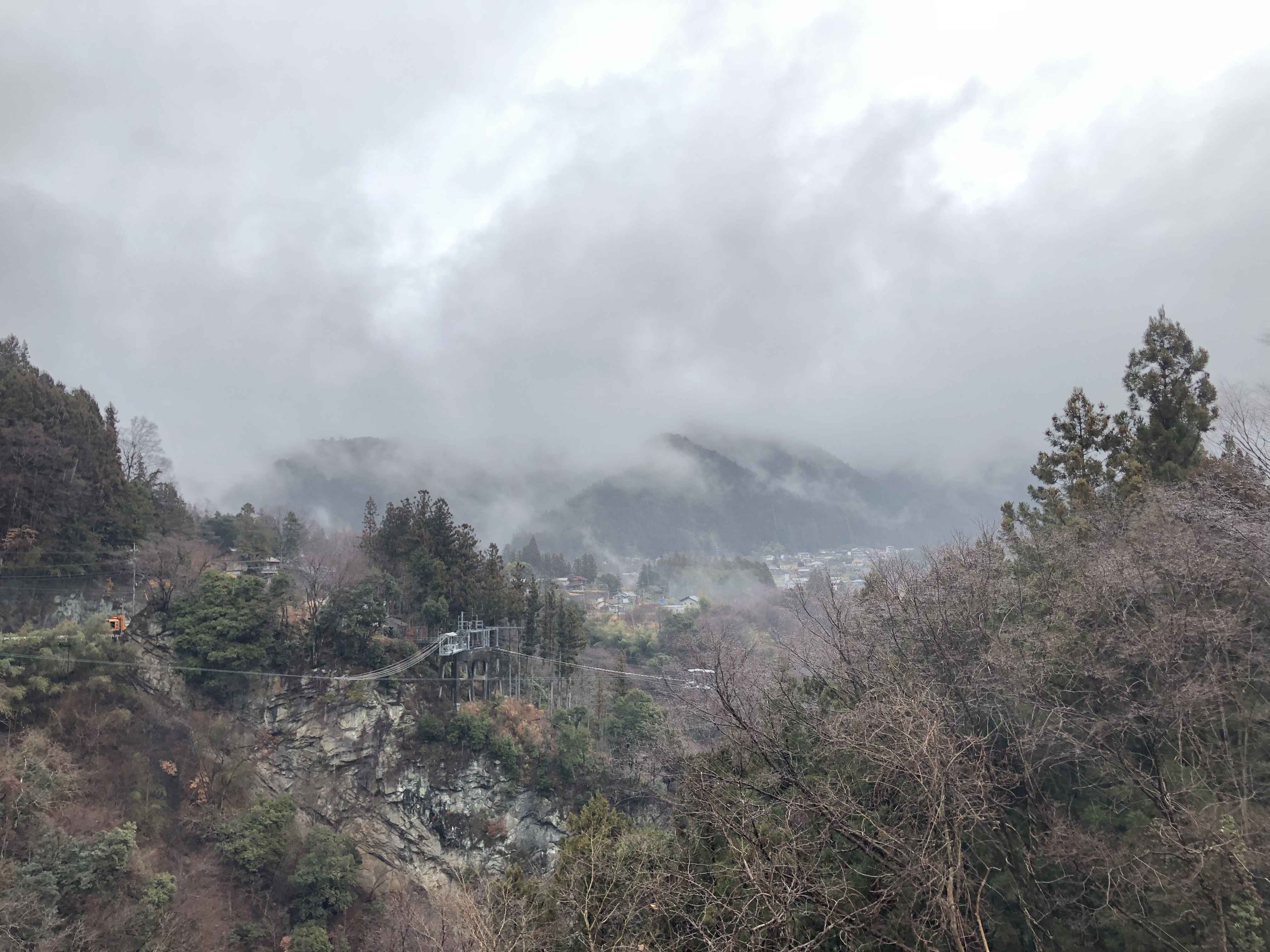
Stepping out into the cold, the fog casts a haunting shadow over the hills and village below, a thick, dense mist that seems to swallow everything in its path. The kind of ghostly white fog you would expect to find in a horror movie; a sign of things to come. As I wander across a bridge, I stop for a moment to take in the breathtaking yet unsettling scenery.

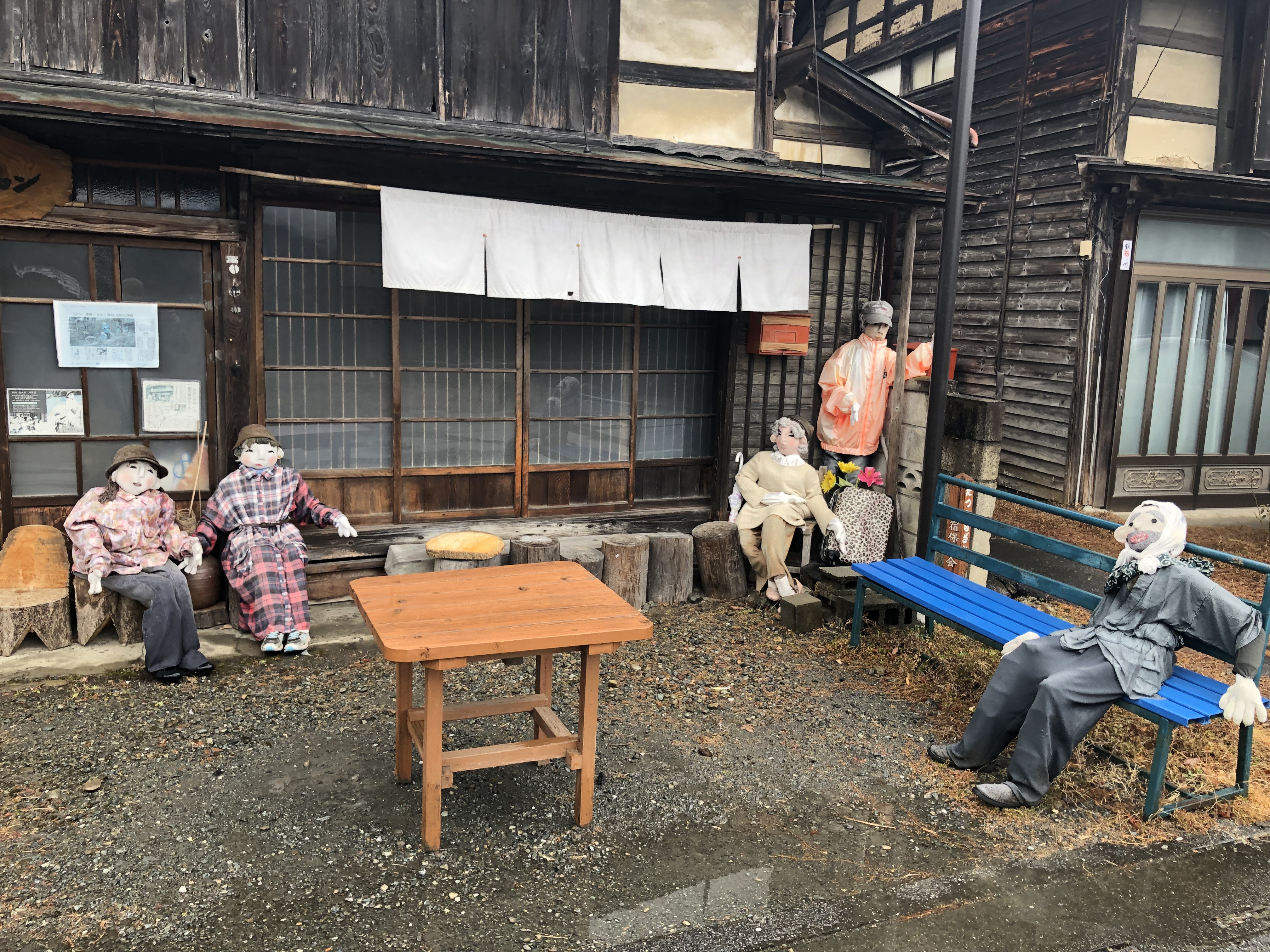
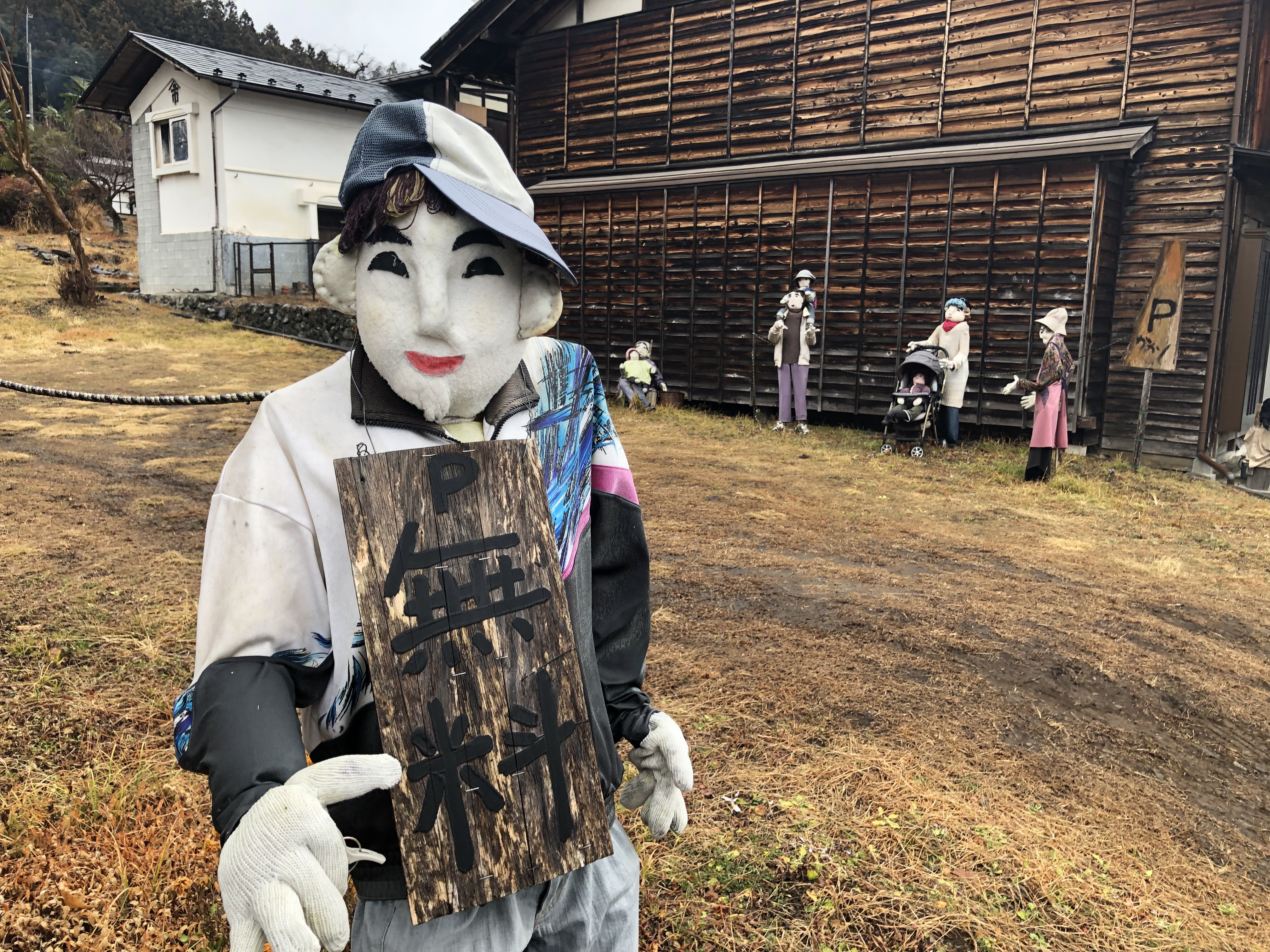
As I continue my stroll from the bridge, I am enveloped by an eerie silence. The only thing that breaks the stillness is the soft whisper of the wind blowing through the fields. A village stretches out before me, a ghost town. Scarecrows line the streets, their lifeless eyes following my every move. They stand outside almost every house, yet the village is deserted, there’s not a soul in sight.

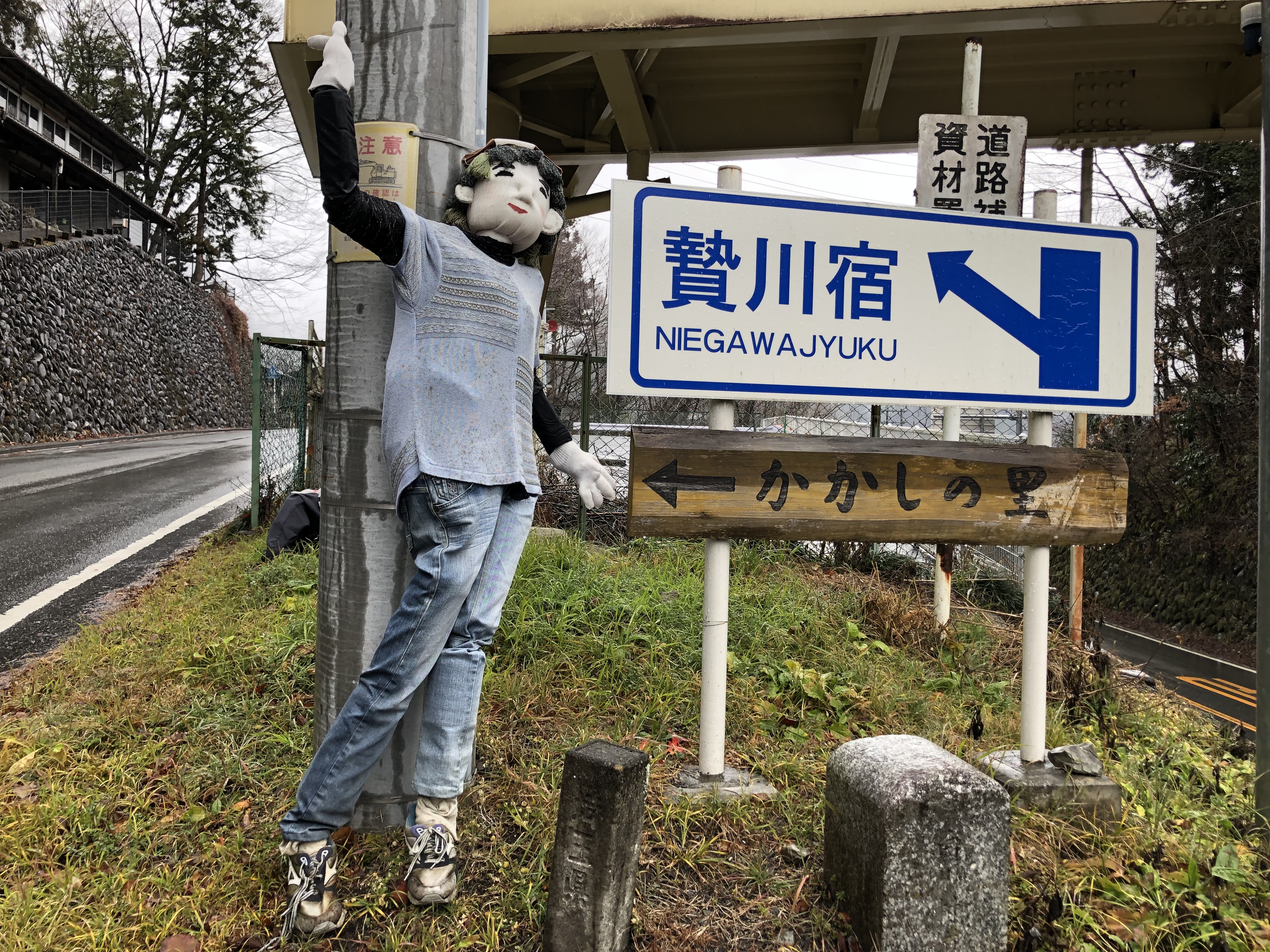
I feel a shiver run down my spine as I realise that I haven’t seen a single person since five stops ago on the train. I can’t shake off the feeling that I am being watched, that these scarecrows are somehow alive. I wonder what kind of village I have stumbled upon. As I wander deeper into the village, I eventually find a sign with a scarecrow standing proudly beside it, ‘Niegawajuku.’

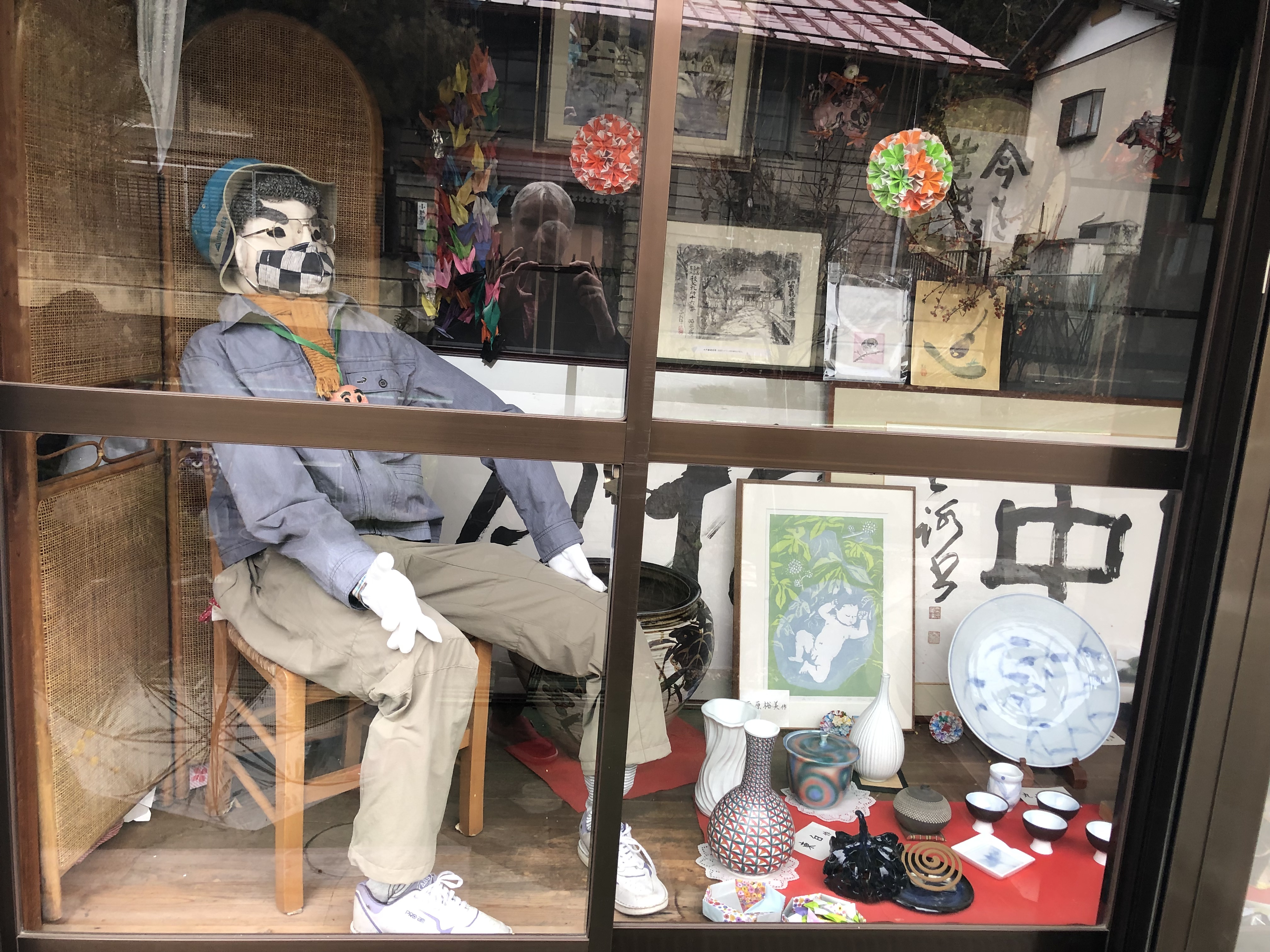
Scarecrow villages are rural communities in Japan that create mannequins in the likeness of their residents as a form of folk art. These scarecrows are often dressed in traditional clothing and placed throughout the village. Specifically, the population of Niegawajuku Scarecrow Village has been decreasing over the years, as many residents have moved to Tokyo and other urban areas in search of better job opportunities and a higher standard of living.

To address this problem, a group of local farmers came up with the idea of creating scarecrows in the likeness of the villagers who had left, in order to remember and honour them, and to attract tourists like me to the village. Niegawajuku Scarecrow Village, once a lively and bustling community, now stands like a twisted fairy tale, where the villagers have been replaced by their eerie replicas. The scarecrows, with their lifeless eyes and frozen grins, seem like twisted versions of the villagers they represent.

Once teeming with the laughter of children and the chatter of adults, the village now stands abandoned. The only sounds are the soft rustling of leaves and the creaking of the scarecrows. The place feels like a forgotten graveyard, lost to the passage of time. The village is a mere relic of a bygone era, and the scarecrows, with their blank, lifeless eyes, serve only to emphasise the emptiness of this place.

I inspect the scarecrows, their faces weathered and their garments tattered. At times, they are grouped together, yet they remain so alone, like guardians of a lost world, preserving the memories of the village and its people, frozen in time. As I continue to wander through the streets of Niegawajuku, I feel as though I am traversing a dreamlike realm. The village is a labyrinth of memories, where each scarecrow holds a piece of the past, and each step I take draws me deeper into the mystery.

The only thing left here is the echo of bittersweet memories, of what once was and what will never be again. Time passes, and the sun begins to sink behind the skyline, painting the sky in hues of orange, pink, and purple, casting an eerie glow over the village. In the dying light, the scarecrows seem to come alive, their shadows stretching out, reaching toward me.

I leave the village with a sense of longing and loss, the memories of Niegawajuku etched in my mind like a faded photograph.

As I board the train, I ponder whether my transient form will one day be forever immortalised as a scarecrow, or fade into the annals of time like the villagers before me.